Categories
War

Dr. Dabbs – Why Ukraine Matters

Here’s a glimpse into the sausage factory that is my writing for GunsAmerica. I’ve been banging these columns out for years now. Crafting these things is the highlight of my week. It is indeed such a privilege. Thanks for acting interested–I literally couldn’t do it without you.

Some are pure history. Others focus on a certain gun or particular weapon system. Periodically I’ll slip in something that’s just a wee bit silly. And then some sport a thin patina of politics. It is the political columns that always stimulate the most discussion.

For me at least, the comments are the best part.

Comments Are the Best Part

I can’t wait for the commentary at the bottom. I read every word. I have had my grammar corrected, my history tweaked, my motives questioned, and my honor impugned. I do love it all.

Today we are going to explore what I hope will be a fairly controversial subject. If you have opinions I’d love to read them down below. These are mine. Fortunately for me, I am unimportant so I can speak my mind without caring about offending anybody.

The War in Ukraine Represents a Unique Opportunity
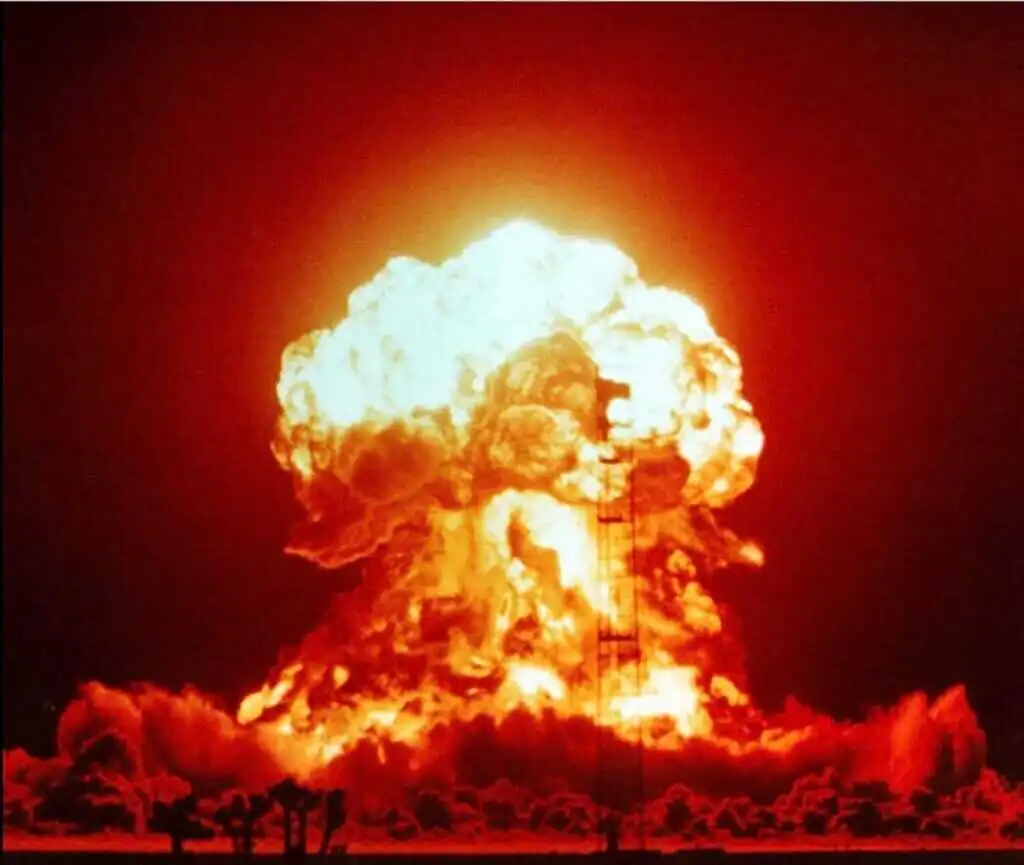
Living with these things is the only world I have ever known.

I was born in 1966. I have lived under the threat of nuclear annihilation by the Russians ever since I first drew breath. Like-minded buddies and I used to design subterranean fallout shelters in the margins of our notebooks in High School.

In 1989 the wall fell, and everything changed. For the first time in my life, we faced the possibility of a world not defined by the pervasive threat of nuclear war. Moreso than at any time since the end of WW2, there was hope and an expectation of a brighter, more peaceful future. And then Vladimir Putin happened.

Anatomy of a Monster
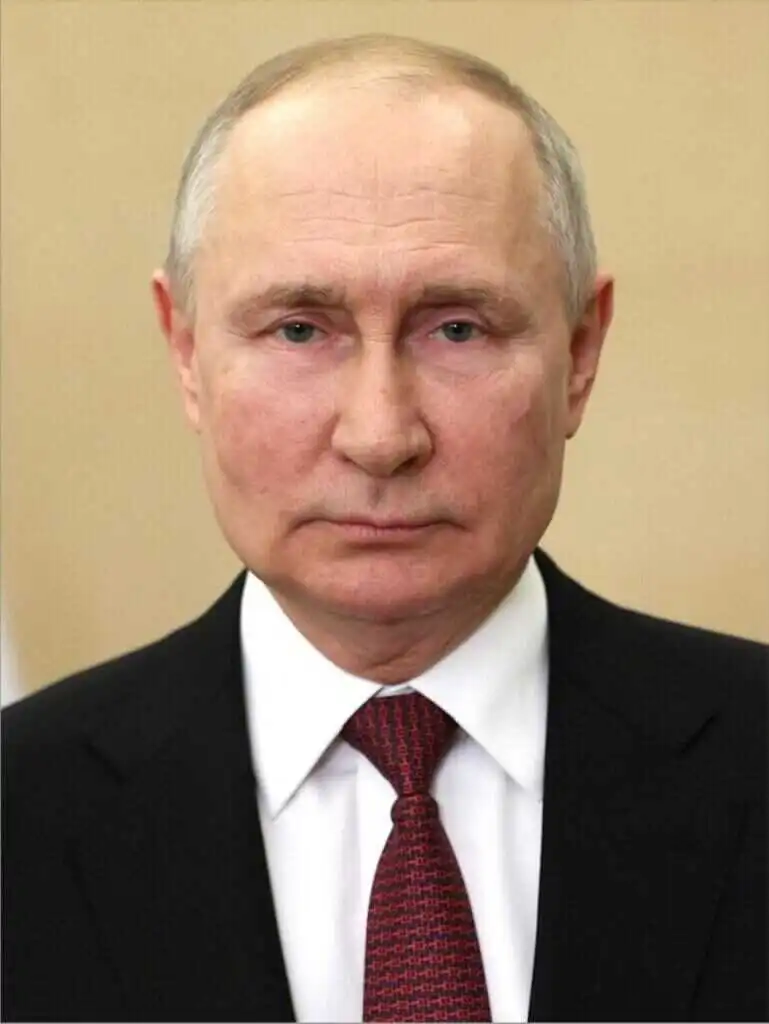
Vladimir Putin is 71 years old and has been the grand potentate of Russia for a quarter century. He’s not a terribly nice person.

Vladimir Putin began work as a foreign intelligence officer in 1975. He resigned from the KGB in 1991 and dove headfirst into politics. For a time he helmed the Federal Security Service (FSB, the successor to the KGB). Putin was appointed Prime Minister in the summer of 1999.

Putin has had a stranglehold on power ever since, walking away with every election in which he has participated. He suspiciously won the most recent March 2024 plebiscite with 87.97% of the popular vote. Of course, his political enemies have a curious habit of falling out of windows, blowing up in airplanes, or being inexplicably contaminated with toxic Polonium-210. That might have something to do with it.

Perhaps He’s Compensating for Something…
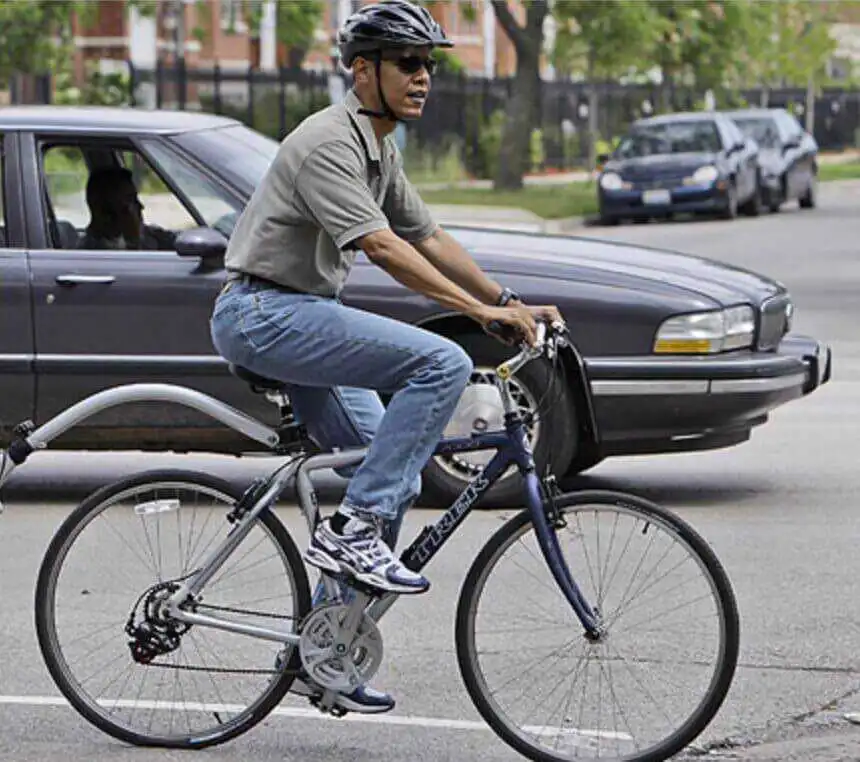
President Obama caught a lot of flak for this picture. It’s plenty safe and all. It just doesn’t look terribly manly.

I will admit that there was a time when I thought Putin was kind of cool. While our own President Clinton was chasing interns and President Obama didn’t get within a hundred yards of a bicycle without donning one of those lame-looking helmets, Putin was burning meat with friends, pumping iron, flying an ultralight airplane, and wrangling polar bears.
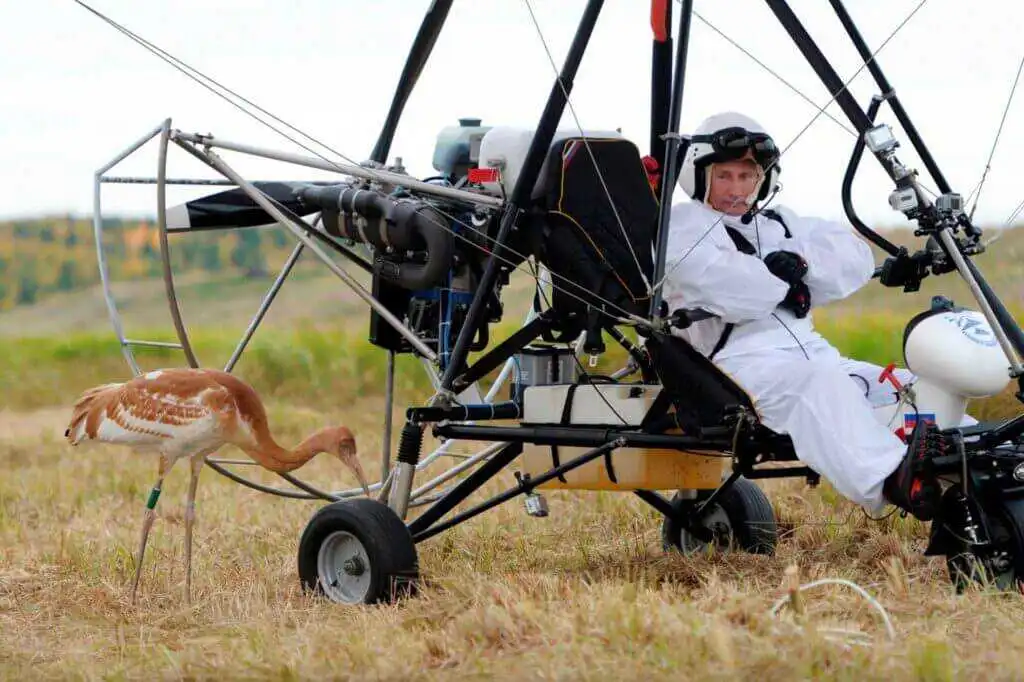
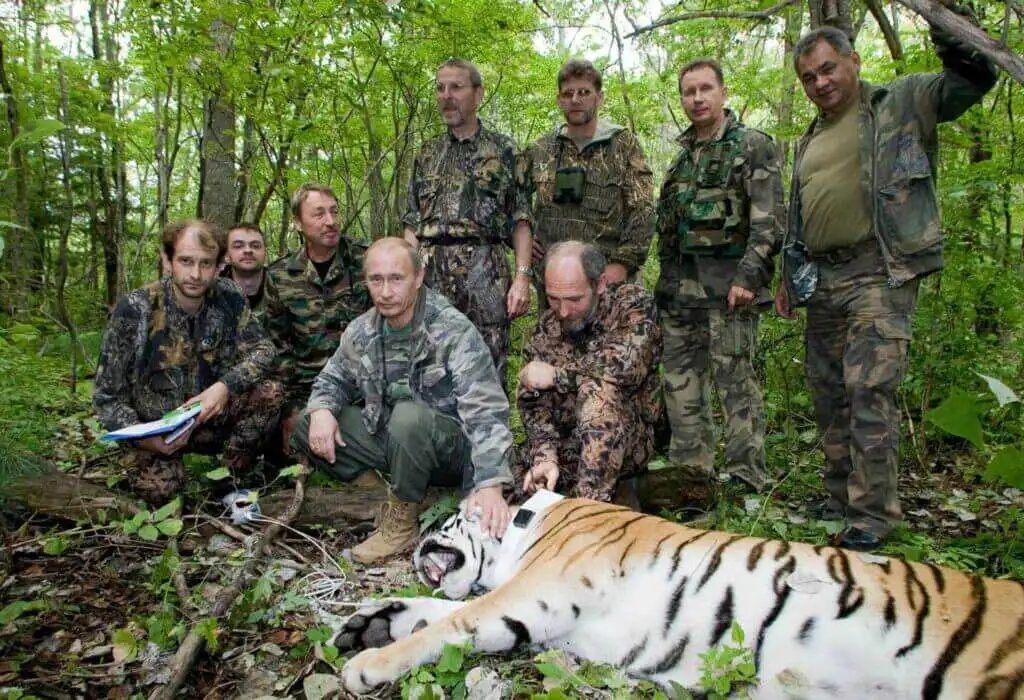
I can’t much see President Biden doing something like this.
Putin went out hunting tigers with a dart gun while he was the sitting President of Russia. Right, wrong, or otherwise, that’s a pretty studly thing to do.
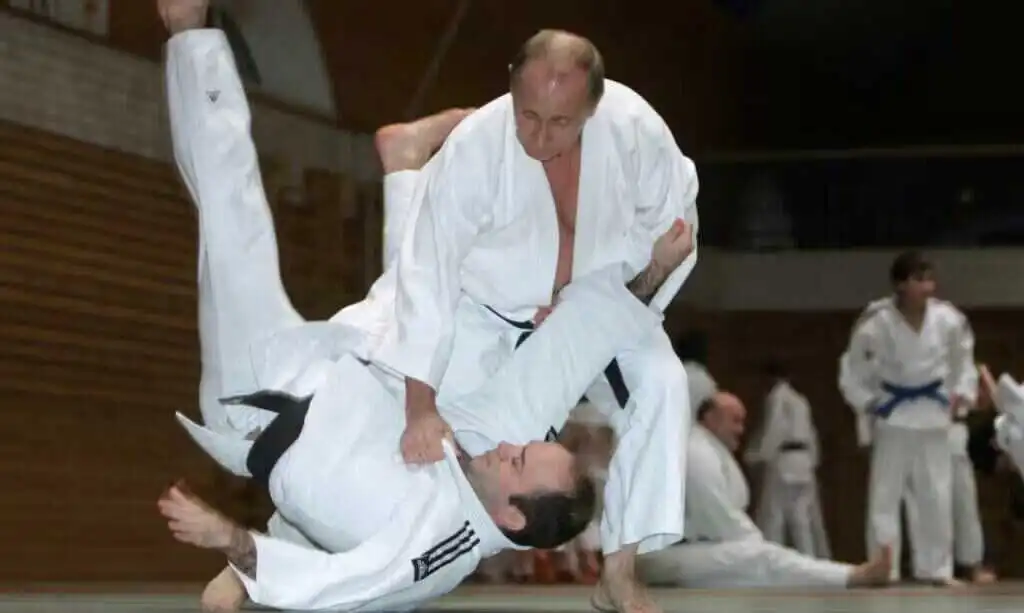
Vladimir Putin has long been a martial arts enthusiast. This dates back to his days as a KGB spy.

Megalomaniacal Nutjob

That’s not hyperbole. In 2013, he took a bathyscaphe to the seabed to explore the remains of the Russian naval frigate Oleg that sank in 1869. He went on expeditions to tranquilize Siberian tigers and polar bears before fitting them with radio collars. Putin holds a black belt in Judo and has authored a book on the subject titled, Judo: History, Theory, and Practice (3.9/5 on Goodreads). But, throughout it all, Vladimir Putin was actually a megalomaniacal nutjob.

Putin first showed his true colors in 1999 when he oversaw the Second Chechen War that claimed between 50,000 and 80,000 civilian lives. In 2014, he invaded Crimea, but President Obama didn’t really take him seriously. Thusly emboldened, in February of 2022 Putin massed some 180,000 combat troops on the border with Ukraine.
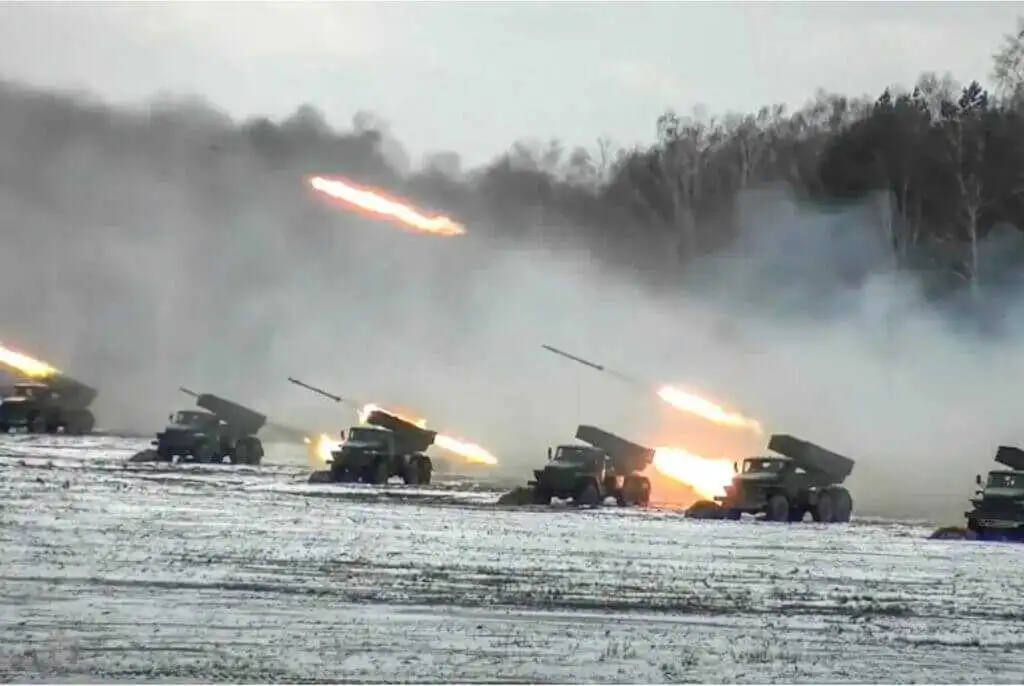
Putin expected his invasion of Ukraine to be a walk in the park. It wasn’t.

His stated goals were to rid Ukraine of imaginary Nazis and create a buffer between Russia and NATO. His war plan had his triumphant forces marching victoriously through the streets of Kiev in three days. However, a certain Ukrainian television comedian had something to say about that.

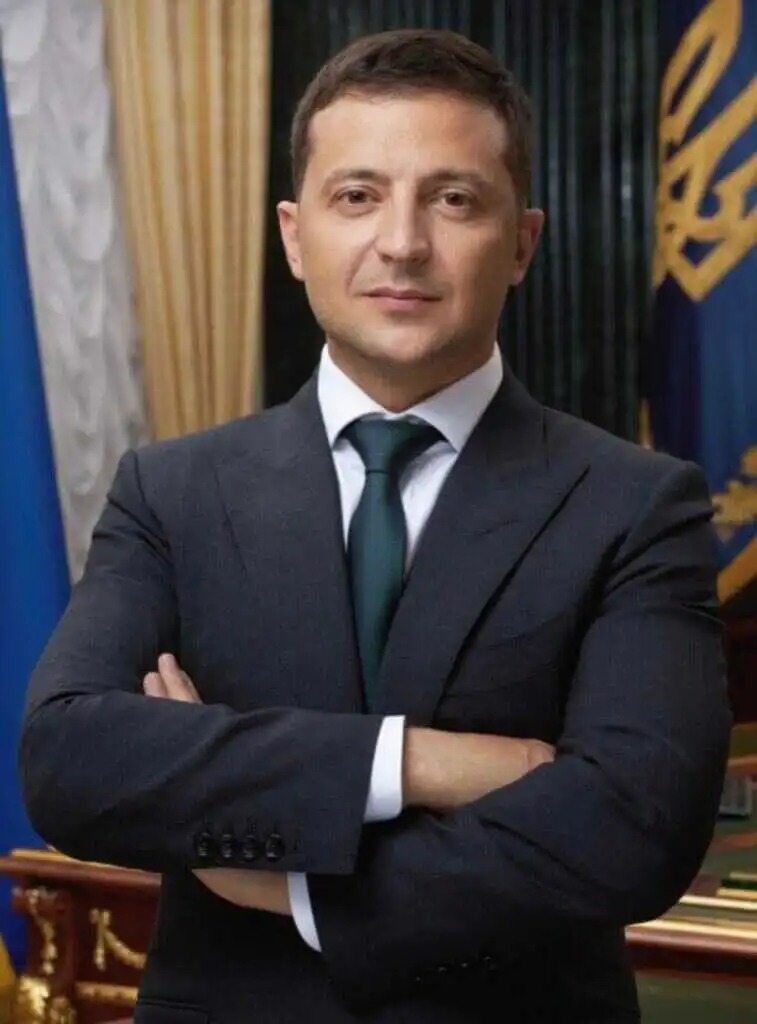
Volodymyr Zelensky: The Archetypal Underdog

By all accounts, Volodymyr Zelensky loves his family and wants what’s best for them. That I can identify with.

Volodymyr Zelensky is 49 years old. He is married and has two kids. Zelensky is Jewish and had relatives who perished in the Holocaust. His grandfather was an infantry Colonel in the Red Army during WW2.

Volodymyr Zelensky’s comedy troupe, Kvartal 95, has been immensely popular in Ukraine. Some of their comedy sketches are pretty racy.

Zelensky began his show business career at age seventeen, forming a comedy troupe called Kvartal 95. Kvartal 95 was a sort-of Ukrainian Saturday Night Live. Most of the videos of Zelensky circulating on the Internet that make him look androgynous or show him in a compromising light are taken from Kvartal 95 comedy sketches. That’s why there is always laughter in the background.

Zelensky’s extensive filmography includes a voiceover as Paddington Bear in the Ukrainian dubbing of the two Paddington movies. He said the objective of Kvartal 95 was to, “Make the world a better place, a kinder and more joyful place with the help of those tools that we have, which are humor and creativity.”

A Weird Segue To President of Ukraine

Volodymyr Zelensky’s fake TV show about being President of Ukraine eventually got him elected President of Ukraine. That’s honestly pretty weird, but I did my part to help elect Donald Trump. We don’t have much room to talk.

What got seriously strange was his sitcom Servant of the People. This show runs on Netflix, and it is surreal. Zelensky plays a school teacher whose students surreptitiously get his name on the ballot for President of Ukraine. In the show, his pupils record him ranting against government corruption and oligarchs without his knowledge, post the video online, and, against all odds, get him elected President. What follows is an amusing fish-out-of-water trope wherein the humble schoolteacher tries to adapt to the trappings of power and run a country. The Ukrainian people loved it.

Zelensky is a shrewd businessman and a strategic thinker. In 2018, his television production company formed a new political party named, aptly enough, Servant of the People. In a classic example of life imitating art, Zelensky ran a low-key virtual campaign and won the presidency with 73% of the vote.

The War In Ukraine

The comedian-turned-politician has transformed into a remarkably charismatic wartime leader.

Zelensky’s political life has been defined by the Russian invasion. In the chaotic days following the initial assault, President Biden famously called Zelensky to offer safe passage for him and his family out of Ukraine on an American helicopter. Zelensky’s immortal response was, “The fight is here; I need ammunition, not a ride.”

In the subsequent two years, the United States has provided around $74 billion in total aid to Ukraine. $46.3 billion of that has been for weapons, training, and military support. That’s a pretty epic chunk of change, but let’s dissect that number for context.
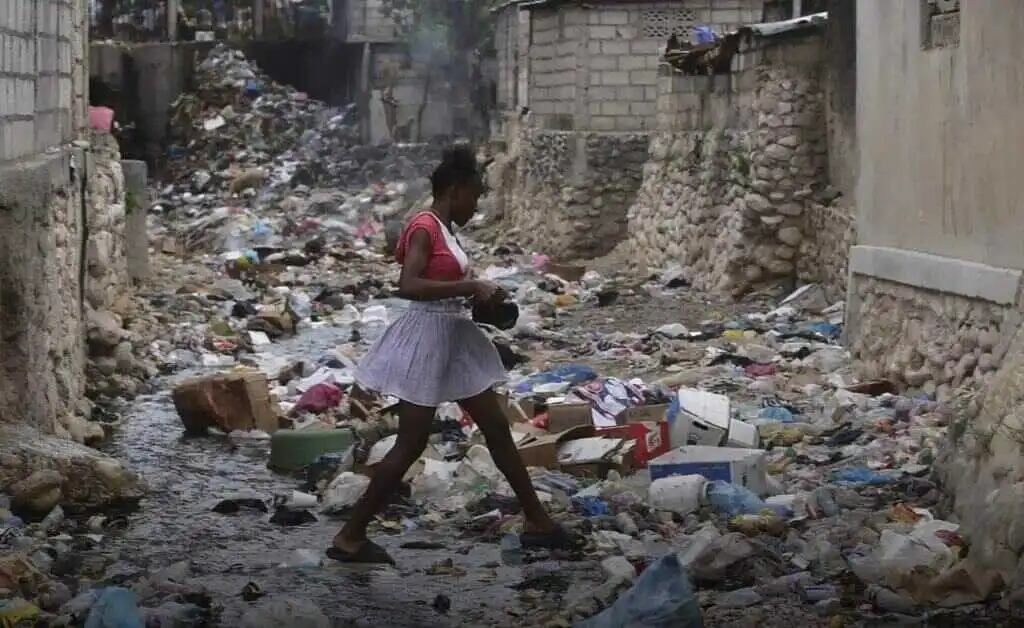
Despite dumping $13.5 billion in cash into the impoverished nation of Haiti, the place remains an unlivable hellhole today. Legit, the power recently went out in Port-au-Prince because looters broke into the power stations and stole everything.

Since the 2010 earthquake, we have pumped some $13.5 billion into Haiti. That money is just gone. Haiti is a lawless failed state today. We sent $3 billion to Somalia, and I still can’t get too worked up about vacationing there.

We spent $72.7 billion in Afghanistan between 2001 and 2020. In the two decades since 911 we dumped an eye-popping $8 trillion on the Global War on Terror while directly or indirectly killing nearly a million people. That’s $24,000 for every man, woman, and child in our country. The money we have spent in Ukraine is undeniably substantial, but it pales in comparison to some of Uncle Sam’s other boondoggles. However, what do we actually get for this not-insubstantial investment?

The Devil is Always in the Details
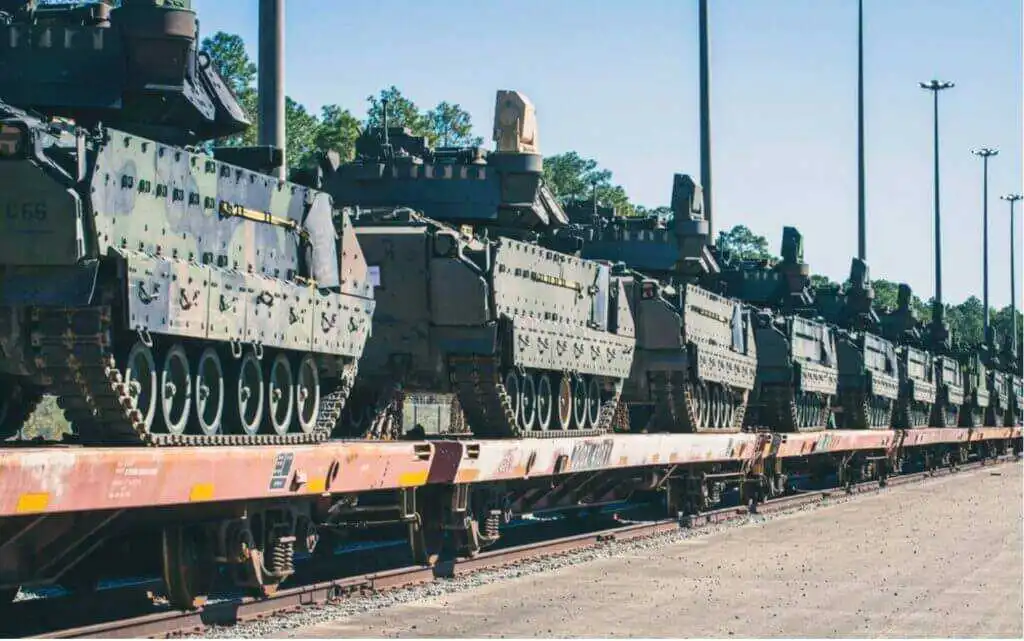
We’ve sent thousands of military vehicles to Ukraine in support of their war effort.

$46.3 billion sounds like a lot of money, because it is a lot of money. However, that figure is misleading. Much of that cash was actually spent ages ago.

We have provided the Ukrainians with 31 M1A1 Abrams Main Battle Tanks, 186 M2A2 Bradley Infantry Fighting Vehicles, 300 obsolete M113 Armored Personnel Carriers, 157 Stryker vehicles, and about 2,000 Humvees along with a variety of other trucks and tracks.

We sent them 180 M777 towed 155mm howitzers, 18 M109A6 Paladin self-propelled howitzers, and 20 of the famed 227mm HIMARS launchers. Ukraine has also received more than 2,000 Stinger missiles and a single Patriot battery which they have wielded as deftly as a surgeon’s scalpel.

Tactical Relativity for Ukraine
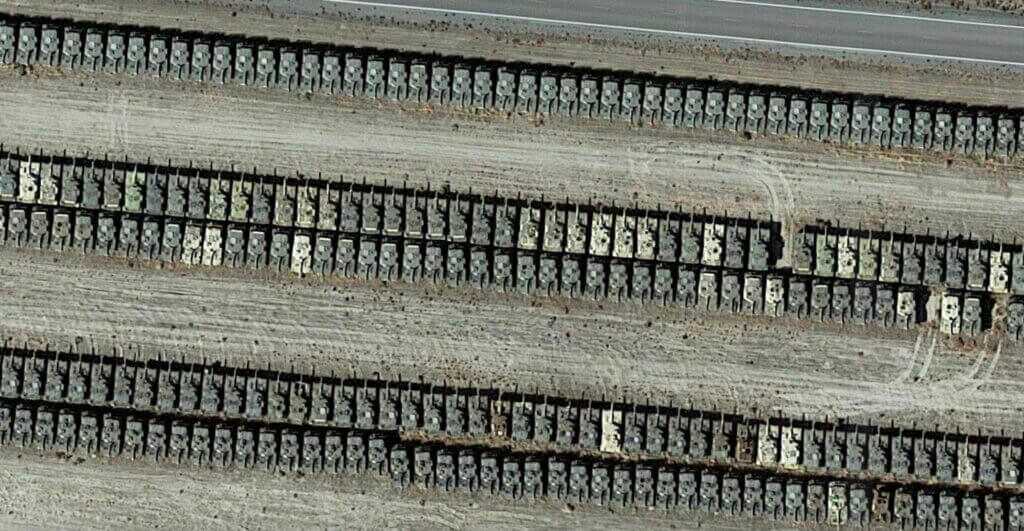
This is an aerial photo of M1 tanks in storage at the Sierra Army Depot. Trust me, we’ve got more than we need, and they’re already paid for.

There’s a lot of other stuff on the list, but most of the big-ticket items were surplus left over from the Cold War. We sent the Ukrainians those 31 Abrams tanks, but we still have roughly 3,000 more sitting idle in the desert over and above the 2,000 or so we maintain in active inventory. The same goes for Bradleys, Humvees, and dozens of other combat vehicle types. While those numbers sound astronomical, in a manner of speaking what we are really doing is cleaning out our basement.

And that brings me to my main point. The United States spent enough on defense between the end of WW2 and the fall of the Iron Curtain to raze and rebuild every manmade structure in North America. We built all this stuff to fight the Russians in the first place. Thankfully we eventually just parked most of it in the desert waiting for a rainy day. Well, this is that rainy day.

Big Picture
Historically speaking, Ukraine has had a longstanding corruption problem. However, I’m not convinced this guy is just squeaky clean, either.

Yes, Ukraine has a corruption problem. However, that’s nothing compared to Afghanistan, Somalia, and dozens of other tinpot fiefdoms we have propped up in recent times. Heck, our own political leaders are hardly paragons of altruistic virtue themselves.

Money is tight in America, tighter than it has been in ages. I agree that it seems insane to pump billions into countries overseas while our own infrastructure crumbles and our countrymen live homeless on the streets. However, this is the chance we have been waiting for ever since 1945. We now have a once-in-a-century opportunity to drive a knife into the heart of the Russian bear without spilling a drop of American blood. We would actually be insane not to take advantage of it.

Putin did this all by his lonesome. His invasion of Ukraine will go down in history as the greatest geopolitical blunder of the modern age. And all because he underestimated a Ukrainian comedian and the people who voted him into office.

The fight in Ukraine could indeed theoretically precipitate nuclear war. I certainly acknowledge that. However, the Russians have been threatening to nuke us every day for the last 75 years. I’m ready to get this done.

Ruminations On the War in Ukraine
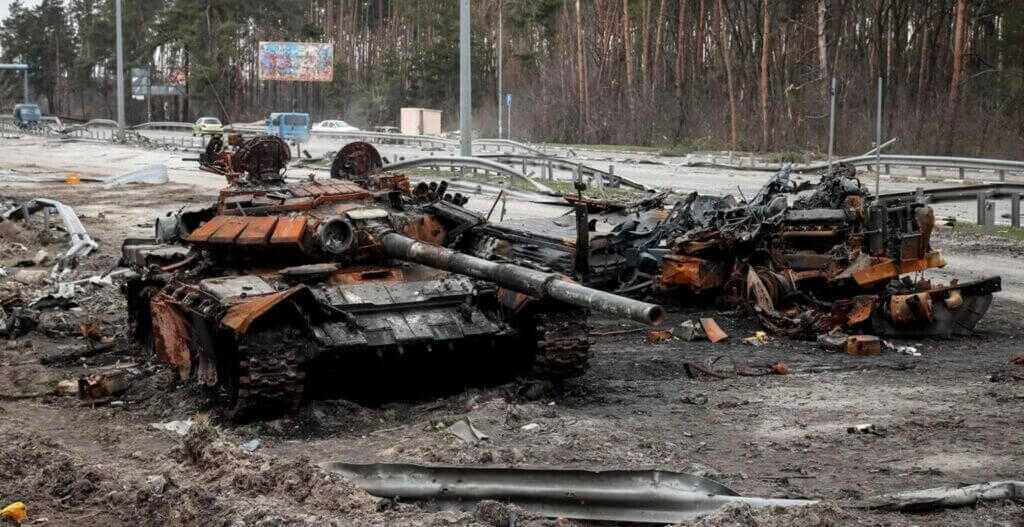
Russia is paying in blood for every inch of stolen Ukrainian soil.

Depending upon what you read, Russia has already lost 3,000 tanks, 20 naval vessels, and 294 combat aircraft. US government sources say the Russians have suffered a mindboggling 315,000 troops killed or wounded. The Ukrainians purportedly killed 10,000 Russians in February 2024 alone.

Now is not the time to falter. The Russian military was and is formidable, but the Ukrainians are currently bleeding them white. Zelensky is no saint, but I think we should give him absolutely anything he asks for. We didn’t start this war, but we may never get another opportunity like this.
Categories
Some Scary thoughts War You have to be kidding, right!?!

This Is How Most People Will Die When There Is A Large Scale Nuclear War Between The U.S. And Russia by Michael

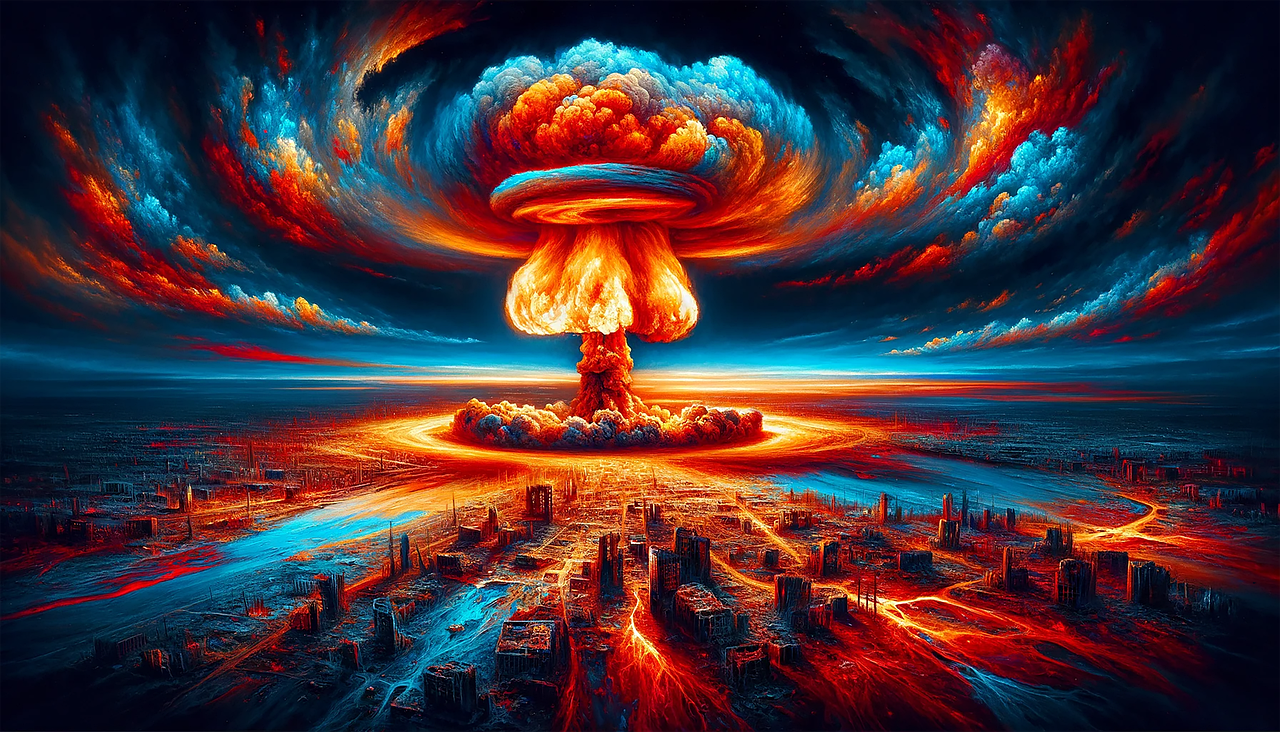
We have never been closer to nuclear war than we are right now.  If the conflict in Ukraine sparks a large scale nuclear war between the United States and Russia, billions of people could die.

This is why so many of us desperately want leaders from both sides to sit down at the negotiating table and try to work out their differences peacefully.  Perhaps a peaceful solution is not possible, but for the good of humanity they should at least make an attempt.  Because as things stand right now, all it is going to take is one mistake for the world to be plunged into an unthinkable nuclear cataclysm.

According to author Annie Jacobsen, the U.S. has a network of satellites that is constantly watching for an ICBM launch from one of our enemies…

“The US Defense Department has a early warning system. And the system in space is called SBIRS, a constellation of satellites that is keeping an eye on all of America’s enemies.”


“So the moment an ICBM launches, they see the hot rocket exhaust on the ICBM a fraction of a second after it launches. And so there begins this horrifying policy called launch on warning, and that’s the US counterattack.


“The reason that the United States is so ferociously watching for a nuclear launch somewhere around the globe is so that the nuclear command and control system in the US can move into action to immediately make a counterstrike.


“That policy, launch on warning, is exactly like it says, it means the United States will not wait to absorb a nuclear attack. It will launch nuclear weapons in response before the bomb actually hits.”

In the event of a surprise first strike, there would only be a handful of minutes to get the president out of bed and decide what to do.

Needless to say, the president would not want to launch a counterstrike if it is a false alarm.

Because once the missiles are in the air, there is no calling them back.

When a nuclear warhead explodes, a fireball is created that is unimaginably hot.  The following comes from the Bulletin of the Atomic Scientists

Microseconds into the explosion of a nuclear weapon, energy released in the form of X-rays heats the surrounding environment, forming a fireball of superheated air. Inside the fireball, the temperature and pressure are so extreme that all matter is rendered into a hot plasma of bare nuclei and subatomic particles, as is the case in the Sun’s multi-million-degree core.


The fireball following the airburst explosion of a 300-kiloton nuclear weapon—like the W87 thermonuclear warhead deployed on the Minuteman III missiles currently in service in the US nuclear arsenal—can grow to more than 600 meters (2,000 feet) in diameter and stays blindingly luminous for several seconds, before its surface cools.


The light radiated by the fireball’s heat—accounting for more than one-third of the thermonuclear weapon’s explosive energy—will be so intense that it ignites fires and causes severe burns at great distances. The thermal flash from a 300-kiloton nuclear weapon could cause first-degree burns as far as 13 kilometers (8 miles) from ground zero.

If you are at ground zero, you will have zero chance of surviving.

According to a study that was conducted several years ago, approximately 34 million people would die during the first few hours of a large scale nuclear war between the United States and Russia.

But that would be just the first wave of death.

In the aftermath of a nuclear exchange, radioactive fallout would spread over much of the continental United States

Using archived weather data over 48-hour periods across a number of dates in 2021 to simulate the expected radioactive plume, the scientists found that the West Coast states were the lowest risk due to a prevailing easterly wind.


However, depending on the exact wind direction, the worst fallout could fall over any part of the U.S. and Canada east of Idaho. Based on weather patterns on December 2, 2021, Chicago, Illinois and D.C., among other population centers, would be in the direct path of a fatal dose of radiation.


In a worst-case scenario, almost all of Montana and North Dakota, as well as parts of Nebraska, Colorado, Wyoming, South Dakota and Kansas would receive a dose more than 10 times what is considered lethal, resulting in deaths in a matter of days. Most of the Midwest would receive a lethal dose, while elsewhere would see deaths occur in weeks.

Radioactive fallout would kill far more people than the initial explosions would.

But the “good news” is that radiation levels would dissipate fairly rapidly.

So if you are far enough away from a ground zero and you are able to survive the initial tsunami of radioactive fallout, it will eventually be safe to go outside again.

But at that point there will be no more supply chains, people will be fighting for whatever dwindling resources are left, and “famine alone could be more than 10 times as deadly as the hundreds of bomb blasts involved in the war itself”

As horrific as those statistics are, the tens to hundreds of millions of people dead and injured within the first few days of a nuclear conflict would only be the beginnings of a catastrophe that eventually will encompass the whole world.


Global climatic changes, widespread radioactive contamination, and societal collapse virtually everywhere could be the reality that survivors of a nuclear war would contend with for many decades.


Two years after any nuclear war—small or large—famine alone could be more than 10 times as deadly as the hundreds of bomb blasts involved in the war itself.

Ultimately, nuclear winter will kill more people than anything else.

For those of us that live in the northern hemisphere, it will be exceedingly difficult to grow much of anything once temperatures drop far below normal

This makes Earth freezing cold even during the summer, with farmland in Kansas cooling by about 20 degrees centigrade (about 40 degrees Fahrenheit), and other regions cooling almost twice as much. A recent scientific paper estimates that over 5 billion people could starve to death, including around 99% of those in the US, Europe, Russia, and China – because most black carbon smoke stays in the Northern hemisphere where it’s produced, and because temperature drops harm agriculture more at high latitudes.

Can you imagine what our world would look like if such a war actually happened?


Unfortunately, relations between the United States and Russia are the worst that they have ever been, and we are getting closer to a nuclear war with each passing day.

Politicians in the western world assume that the Russians would never risk a nuclear war because the consequences would be so apocalyptic for everyone.

But Russian politicians have warned us over and over again that if we push Russia too far there will be a nuclear war.

And as I detailed in my new book entitled “Chaos”, the Russians have been feverishly preparing to fight a nuclear war for many years.

They know that there are no “winners” in a nuclear war.

But they also know that whoever strikes first will have the best chance of surviving one.

Right now, Russian forces are advancing and Ukrainian leaders are becoming increasingly desperate

“Western leaders are bracing for the Ukrainian army’s collapse as it has only been able to slow the advance of Russian forces amid weapons and ammunition shortages, the Times writes.


In its editorial, titled ‘It’s time we talked about the fall of Kiev’, the paper points out that ‘contrary to the predominant view that this is a perpetual frozen conflict, with neither side able to win a decisive advantage, the front line is bitterly contested and there is a real risk of Ukrainian forces being pushed back’.


‘This is the nightmare scenario now being contemplated by western policymakers’, the Times notes.

Russia’s advance ‘would obviously be disastrous for the Ukrainians’. ‘It would also confront the West with all manner of tough challenges’, the newspaper says. ‘The consequences of a partial or complete defeat would be calamitous in ways western populations have barely begun to understand.


But we have a lazy habit in the comfortable West – away from Europe’s front line in east and south Ukraine – of wishful thinking and being unprepared for bad surprises’, the Times emphasizes.”

Ukrainian officials realize that the only way they can win the war is for NATO forces to intervene, and some western leaders such as French President Emmanuel Macron are very open to the idea.

But Vladimir Putin has warned that this will put us one step away from nuclear war, and he has decided to conscript another 150,000 men into the Russian military…

Vladimir Putin has called up another 150,000 men for Russian army conscription, the highest figure for eight years.

This comes as Orthodox priests have been ordered to say prayers in church for the dictator’s victory in the war.

The recruits are aged 18 to 30 and will be conscripted between 1 April and 15 July amid his war against Ukraine.

The Russians are convinced that western leaders want to bring down the Russian government and divide Russia up into a bunch of smaller pieces.

On the other side, politicians in the western world are determined to do “whatever it takes” to keep the Russians from winning in Ukraine.

Both sides are being unreasonable and paranoid, and that is a recipe for disaster.

All it is going to take is one mistake to unleash a nuclear cataclysm, and billions of lives hang in the balance.

Categories
All About Guns War

Maxim PomPom 37mm Machine Gun

Categories
All About Guns Soldiering War

The Man Who Flew For Four Air Forces (And Scored Kills For Three)

Categories
One Hell of a Good Fight Real men This great Nation & Its People War

USS Johnston’s Last Stand

 Now there was a ship full of studs! Grumpy

Categories
All About Guns War

First to the Fight: The Marines’ Reising M50 SMG

Categories
War

The Crippling Long Term Effects Of The First World War | The Long Shadow Full Series | Timeline

Categories
War

The True Power Unleashed: Unraveling the Mystery of the TSAR Bomb.

Categories
War

Combat Vets from Israel Explain Urban Warfare, Drones, Insurgency tactics

Categories
The Green Machine This great Nation & Its People War

Frozen Indecision: American Intervention In Siberian Russia 1918 by TOM LAEMLEIN

sib_lead_8-us-troops-outside-vladivostok.jpg

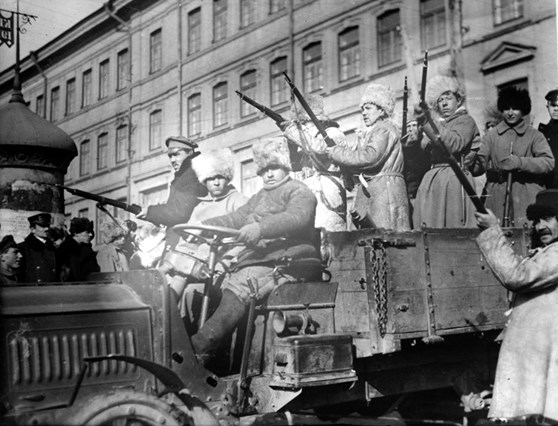
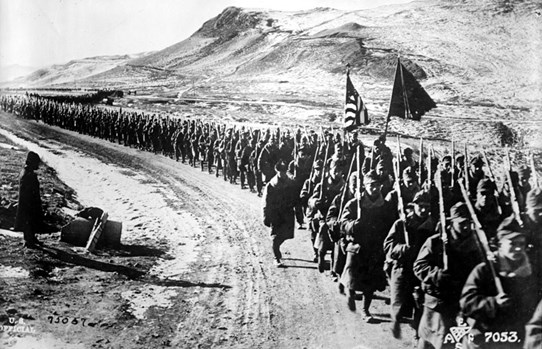
America’s interaction with Russia is quite the hot topic these days. Many Americans wonder, are the Russians friends or are they foes? In that light, little has changed from a century ago. In the summer of 1918, President Wilson committed American troops to Russia, and the country wasn’t sure what to make of it then either.


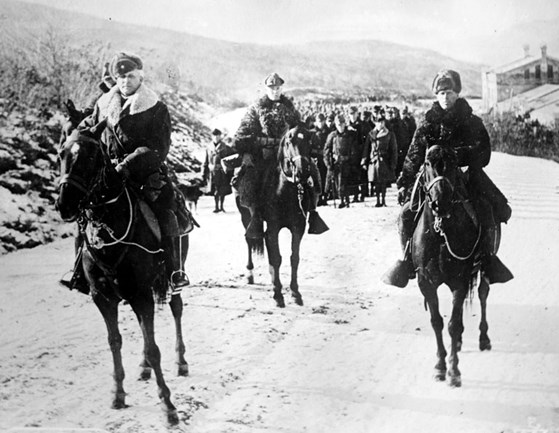
U.S. and allied troops on the march in Siberia.

The more time I spent researching the actions of the American Expeditionary Force Siberia, the more confusing their story became. The details, like names and places and dates, are relatively easy to come by. The big questions, like “why,” are much more difficult to answer. Apparently those questions were just as difficult to answer in 1918-1920.

The longer the intervention went on, the less that Uncle Sam’s frozen doughboys understood their mission. With the success of their deployment so poorly defined and their enemies growing in number by the hour, our troops were brought home. American intervention in Russia was quickly forgotten, and has rarely been discussed ever since.

When you think about it, the whole idea is rather shocking, then or now. American combat troops were stationed in tumultuous Russia, at that time a nation in the throes of a bloody civil war. While ostensibly protecting “Allied interests” in Siberia, one of the most inhospitable regions on the planet, U.S. troops traded shots with Bolshevik forces and occasionally with renegade Cossacks, all while trying to keep the peace among bitterly divided Russians and holding together a strange multi-national coalition of uncertain Allies. Small wonder that your high school history teacher never mentioned this in class. No worries, there will be no quiz at the end of this article either.

America Joins the Allies
As World War I wore on, Germany dreaded the prospect of America’s muscle bolstering the strength of the Allied nations. In April 1917, their fears were realized and the United States declared war on Germany. But America’s military would not be ready to make a difference on the battlefield for many months. In the meantime, Germany looked to break the stalemate in France before the arrival of American troops could tip the scales to the Allied side.

On Germany’s eastern front, the collapse of Czar Nicholas II’s Russian autocracy in October 1917 gave the Kaiser the break he had been looking for. The Russian front had kept 40 German divisions occupied in the east. The signing of the Treaty of Brest-Litovsk in March 1918 meant that the Russians were completely out of the war, allowing the Germans to fully concentrate on the western front. The German Army immediately launched a major offensive to bring their newfound divisions into action. England and France, dangerously short on men and resources, appealed to President Wilson to intervene in Russia to re-open the Easter Front and help relieve the growing pressure in Western Europe.


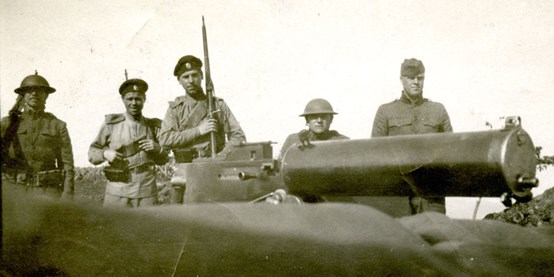
Browning M1917 MG position: U.S. troops pose with men of the Czechoslovakian Legion. It appears that the Czechs are armed with Japanese Arisaka rifles.

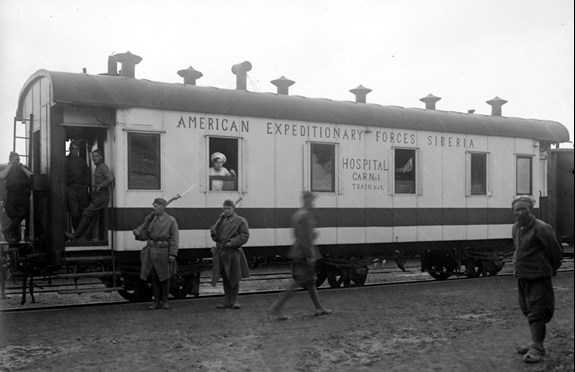
Allied intervention in Russia began with the best intentions, but with very little understanding of what was really going on inside that giant nation. The initial focus remained on defeating the Central Powers and ending World War I, thus the idea of reestablishing the eastern front and maintaining pressure on Germany and their Austro-Hungarian partners from both ends of Europe. There was also a significant amount of valuable military supplies kept in both Western Russia (Archangel) and in Far Eastern Russia (Vladivostok). Allied troops were deployed to secure them, and also to assist the Czechoslovak Legion, a large and effective group of troops that had been fighting alongside Russian forces for some time.

The Czechoslovak Legion had declared neutrality towards the communist Bolshevik forces, and thus had been granted safe passage home, albeit through Siberia. The 50,000-strong Czechoslovak Legion was taking the long way home, and they ultimately needed to be rescued from a country in the midst of a growing civil war.

Deployed to Russia


Lieutenant Colonel Nichols of the U.S. 31st Infantry Regiment, outside of Vladivostok.

In July 1918, President Wilson, despite the exhortations of his war advisors, agreed to send 5,000 U.S. Army troops, known as the “American North Russia Expeditionary Force” (also called the Polar Bear Expedition) to Archangel. Another group, numbering about 8,000, called the “American Expeditionary Force, Siberia”, would be sent to Vladivostok. American troops were soon on their way and going to war in Russia.


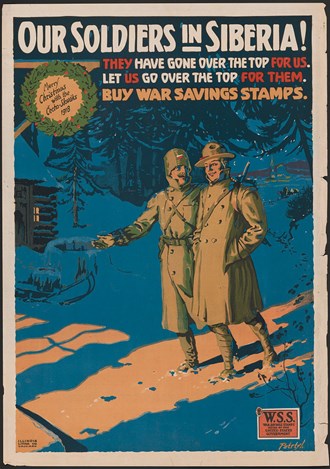
Christmas greetings from Siberia: U.S. War Stamps poster highlighting the American troop deployment to Russia in 1918.

U.S. troops would not be alone in Siberia. Allied intervention in far eastern Russia also included groups of a few thousand British, Canadian, French, Italian and Chinese troops. Then came the Japanese. Originally expected to deploy about 7,000 troops, the Japanese ultimately sent a force of 70,000 men to Siberia.

Japan’s strange commitment of such a large force for a “rescue mission” heightened mistrust of their ultimate intentions in the region. Major General William Sidney Graves, the U.S. commander in Siberia, kept a close eye on his Japanese allies. Even so, by November 1918 the Japanese had occupied the ports and major towns throughout the Russian Maritime Provinces and they also occupied all of Siberia east of the city of Chita. They would keep much of this territory for several years after the other Allied troops had been withdrawn.


Bolsheviks: Russian communists fighting against the White government of Siberia led by Admiral Kolchak.

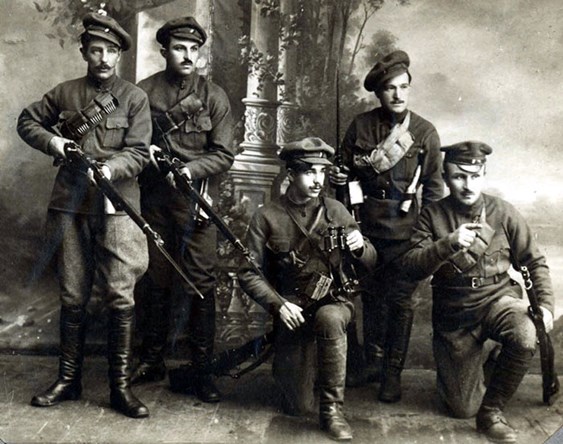
As for the Russians in Siberia, there were an increasing number of Reds, the communist Bolsheviks. During the first few months of the intervention there were an equal number of White forces—anti-communist troops that were greatly strengthened by the combat-hardened Czech Legion. Unfortunately, the White Russians were frequently at odds with each other.

The recognized White Russian government was led by Admiral Alexander Kolchak, and the anti-communist Cossacks were led by Grigory Semyonov and Ivan Kalmykov. Both groups were generally brutal to anyone in their path, and the Cossacks were notably unpredictable in any situation. If politics makes strange bedfellows, then Siberia was an orgy of ideological confusion.


Hardened veterans of the Czech Legion armed with the Mosin-Nagant M1891 rifle. The surviving members of the Legion finally made it home in the summer of 1920.

President Wilson defined the objectives of U.S. policy in the Russian intervention within a short, and not particularly detailed, memo that Major General Graves adhered to for the most part. Wilson’s basic points were:

  • The primary objective is to win the war against Germany.
  • The U.S. will not interfere in Russian internal affairs.
  • Military action is admissible to help the Czechoslovakian Legion.
  • American troops will be employed to guard military stores.
  • The United States will not limit the actions or policies of its allies.
  • American forces will be withdrawn if and when necessary.


American Troops in Siberia


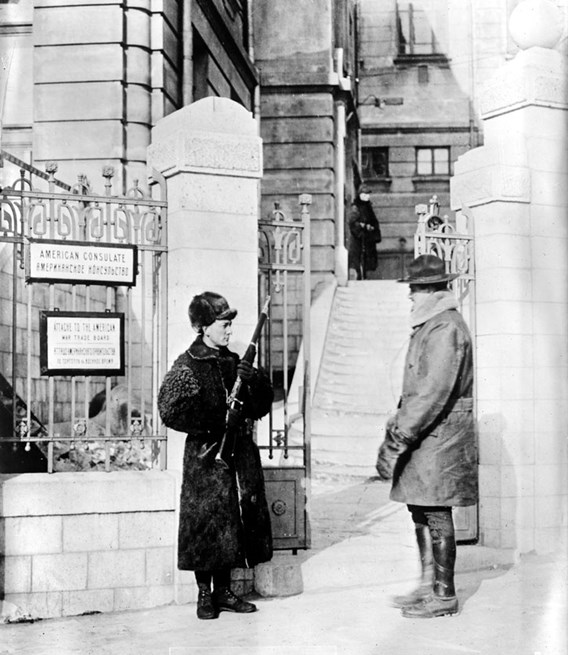
On guard at the U.S. consulate in Vladivostok. Note the locally sourced cold-weather gear.

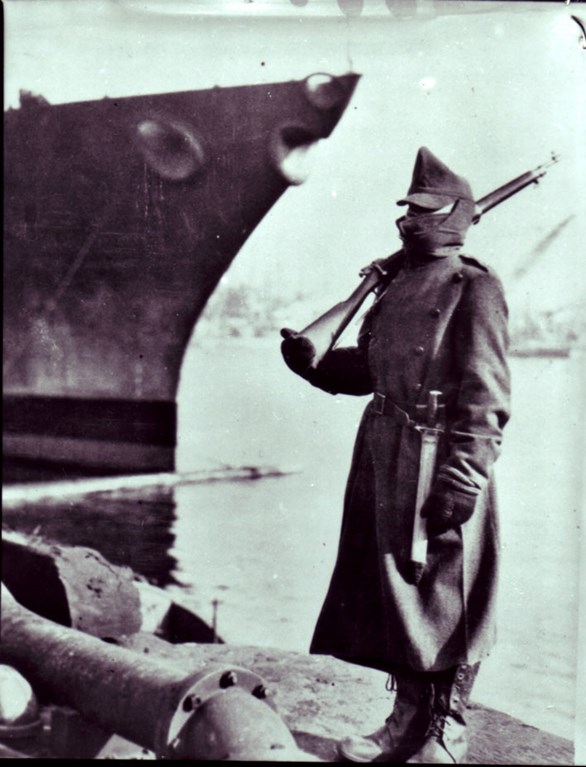
As American troops began to arrive in Siberia in September 1918, it was already turning cold, and it was quickly apparent that the expedition was not properly equipped for the harsh climate. Antique cold-weather gear, even relics of the Indian Wars of the late 19th century, was issued to some of the men. Other warm clothing had to be procured locally until proper supplies from home could be obtained.


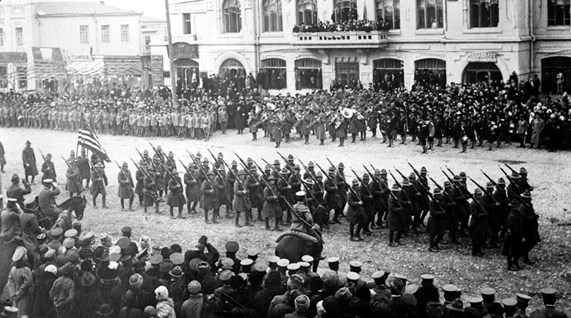
One of the many parades in Vladivostok. American troops march while Japanese troops stand in review.

Duty in Siberia was as tedious as it was cold. Pointless parades on the streets of Vladivostok, along with continuous drilling, became the order of the day. The unyielding cold wore the men down. Unrelenting boredom eroded morale. Uncertain of their allies, and restricted from fully engaging any enemies they encountered, the expedition foundered—but still they stayed.

Confusion and dissention about the intervention mission distracted U.S. officials. General Graves commented: “Representatives of the War Department and the State Department were carrying out entirely different policies at the same time in the same place. There can be no difference of opinion as to the accuracy of this statement, and the results were bitter criticism of all United States agents.”


Working on the railroad: Guarding the railways was of critical importance in Siberia.

General Graves stayed consistent in his interpretation and execution of President Wilson’s intervention policy memo. This meant that American troops in Siberia guarded the stocks of war supplies around Vladivostok and also protected the Trans-Siberian Railroad. As compared with their counterparts in Northern Russia, the troops in Siberia rarely fought with the Bolsheviks. However, when American troops did engage the communists in Siberia, the Reds paid a stiff price.


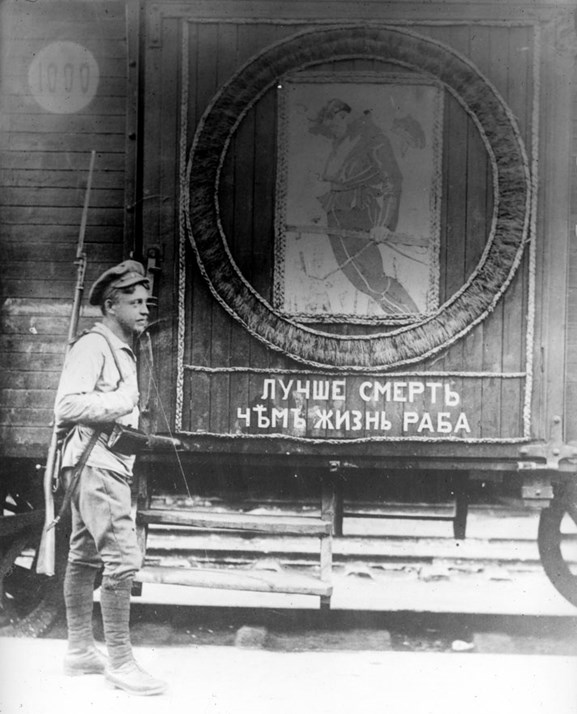
Czech Legion train, veteran of their Trans-Siberian rail trek. The graphic roughly translates to: “Better to fight and die than to live as a slave.”

So too did the Cossacks, when American troops’ sense of justice and human decency was stretched to the breaking point. Cossack groups refused to answer to any authority, and they ranged throughout Siberia, occasionally fighting the Bolsheviks, but most frequently they were engaged in raping and pillaging the locals. As time went on, the Cossacks played both sides, alternately fighting under Red banners or White, whichever served their purposes at the moment.


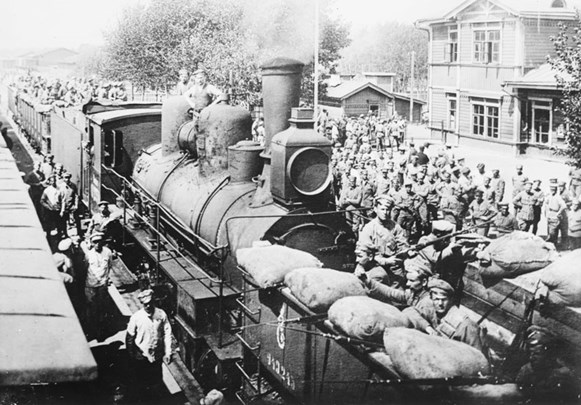
Czech Legion train: Armed and armored trains were a dominant force in Siberia.

During the early morning of January 10, 1920, the Bolshevik armored train “Destroyer,” under the command of Cossack General Ataman Semionoff, attacked a train station guarded by American troops. Fighting in temperatures that had fallen to 30 degrees below zero, the American platoon resisted fiercely, holding off forces superior in number and firepower. Their subsequent counterattack disabled the armored train and captured its crew. Two Americans died and one was wounded in this final combat action for American troops in the World War I era.


Cold weather duty: U.S. soldier with a M1903 rifle, standing guard in Vladivostok during late 1918.

All told, 48 American soldiers lost their lives during the intervention in Siberia. Many more were casualties of severe frostbite and a collection of diseases, ranging from virulent flu to a form of plague. Many men suffered from venereal disease. Keeping the soldiers warm, as well as entertained, apparently came at some great cost in Siberia.

The End of the Intervention
During the summer of 1919, Admiral Kolchak was captured by the Red Army and executed. With his death, the White Russian regime in Siberia disintegrated. During the next 10 months, most Allied forces began to withdraw. With the war in Western Europe over, and a new homeland to return to, the Czechoslovak Legion was finally evacuated. By June of 1920, all of the Allied forces (with the exception of the Japanese) had left Siberia. Japanese troops would stay on until October 1922, when diplomatic pressure from England and the United States, as well as opposition from their own people, forced them to call their troops home.

Defrosted Weapons Report: American Arms in Russia
American troops deployed to Siberia with a full complement of modern small arms. The backbone of U.S. forces was the excellent M1903 Springfield rifle. Supporting arms included the new M1917 Browning .30-cal. machine gun and the Browning Automatic Rifle. Troops carried the .45-cal. M1911 pistol as their sidearm.


Springfield rifles in Russia: U.S. infantry in Siberia in the spring of 1919.

There was no shortage of weapons or ammunition. Records indicate that more 10 million rounds of .30-cal. ammunition were sent to Siberia, along with 350,000 rounds of .45-cal. ammo. There was plenty of ammunition to feed the 16 Browning M1917 machine guns, 46 M1915 Vickers machine guns, 370 Browning Automatic Rifles, more than 1,000 M911 pistols and approximately 7,000 M1903 rifles that armed the troops in Siberia.


The M1915 (.30 cal.) Colt-Vickers machine gun. The Siberian intervention force had nearly 50 of these highly effective MGs in their arsenal.

The 27th and 31st Infantry Regiments arrived in Vladivostok equipped with the Model 1909 Benet-Mercie light machine guns, but these were quickly replaced by BARs and the Benet-Mercie MGs were returned to the Philippines.


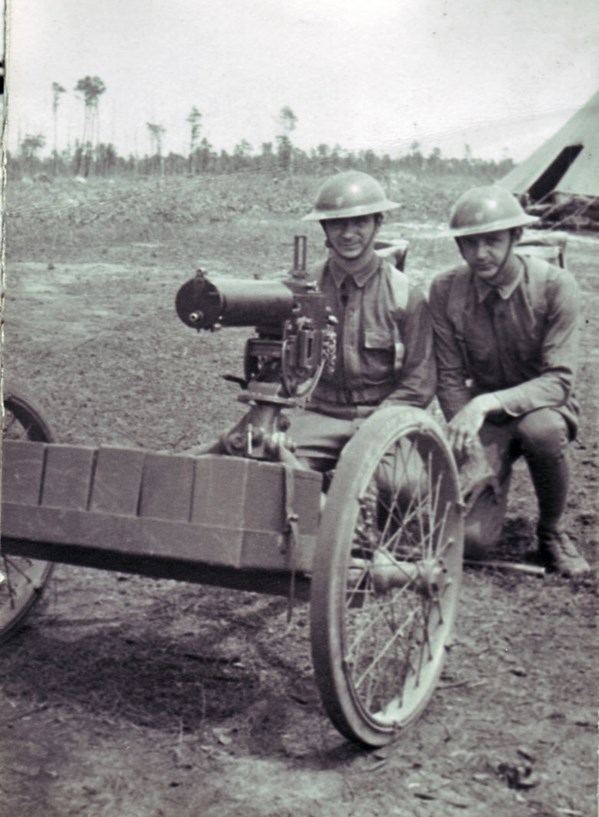
The machine gun cart for the M1917 Browning machine gun proved popular among the troops stationed in Siberia.

The M1903 rifles and BARs received high marks from the infantry as well as the ordnance specialists. The Vickers and Browning heavy machine guns operated flawlessly, and their supporting “machine gun carts” (normally towed by a mule) were highly valued. A metal towing pole and rope were provided so that the MG carts could be towed by hand if needed.


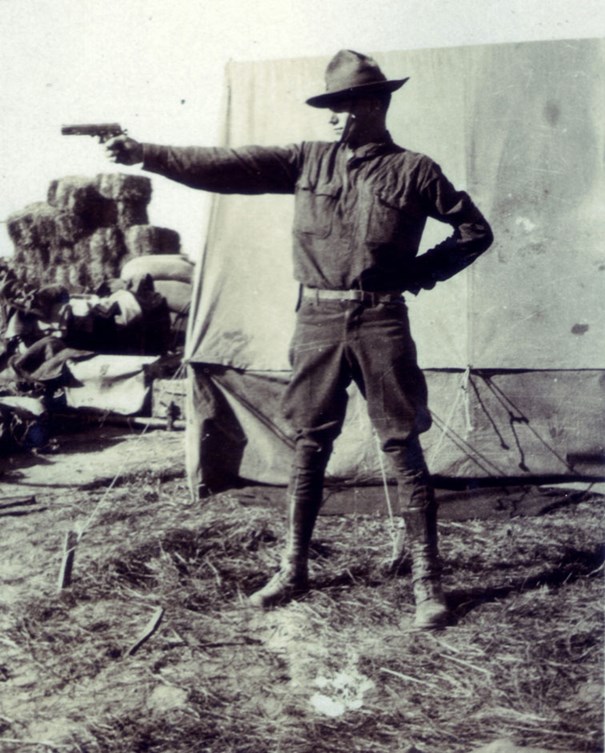
The “Amerikanski Colt,” The M1911 pistol developed an intimidating reputation among the Russians on both sides in Siberia.

Apparently, the M1911 pistol gained quite a reputation during its service in Siberia. There are claims that the “Amerikanski Colt” could disperse unruly crowds with just the mention of its name. Those big .45 slugs could make equally big holes in “Reds” or “Whites” alike and provide a fitting testament for America’s attempt to bring peace to Russia through superior firepower.

Additional Reading:
Cold Front: American Troops in Russia 1918-1919