Category: War
 We drape our wars in a thin layer of respectability, but we are still just bloodthirsty animals at heart.
Estimated reading time: 11 minutes
War is the most uncivilized of human pursuits. If you think about it, it is mind-boggling we’re still doing it. One nation-state gets cross with another, and the next thing you know we are slaughtering each other’s young folks wholesale. It seems there’s not such a grand gulf between us and the beasts of the fields after all.
Table of contents
We couch the practice underneath a veneer of respectability. Our finest strategists earn advanced degrees in the prosecution of modern war, and our military-industrial complex drives technical innovation on an unrivaled scale. And yet at its heart, the true mission of the military is to simply rip the very life out of other human beings who would, in general, really sooner not be there.
Martial Philosophy
If I’m coming across as a pacifist, I’m not. The world is a dangerous place, and our adversaries are frankly insane. Whether it is ISIS, Hamas, Boko Haram, al Qaeda, or the Russians you happen to see over your rifle sights, you’d best be metaphorically ready to pull that trigger. Rest assured were the roles reversed those guys would not be particularly morally encumbered.
It is, however, essentially impossible to excise emotion from that equation. No matter how civilized we claim to be, the very act of war is an innately barbaric unrestrained thing. It is for this reason I am philosophically opposed to embedded reporters in war zones.
War is ugly, horrifying, and bad. Our young studs have enough on their minds without having to fret about their actions being broadcast into living rooms across America. If it is important enough to go to war I think we should just get out of the way and let our warriors take care of business. Turns out I’m not the first guy to feel that way.
Setting the Stage For Baralong
World War 1 was a transformational event in human history. This vast conflict was the planet’s rude introduction to combat on a truly industrial scale. The learning curve was steep.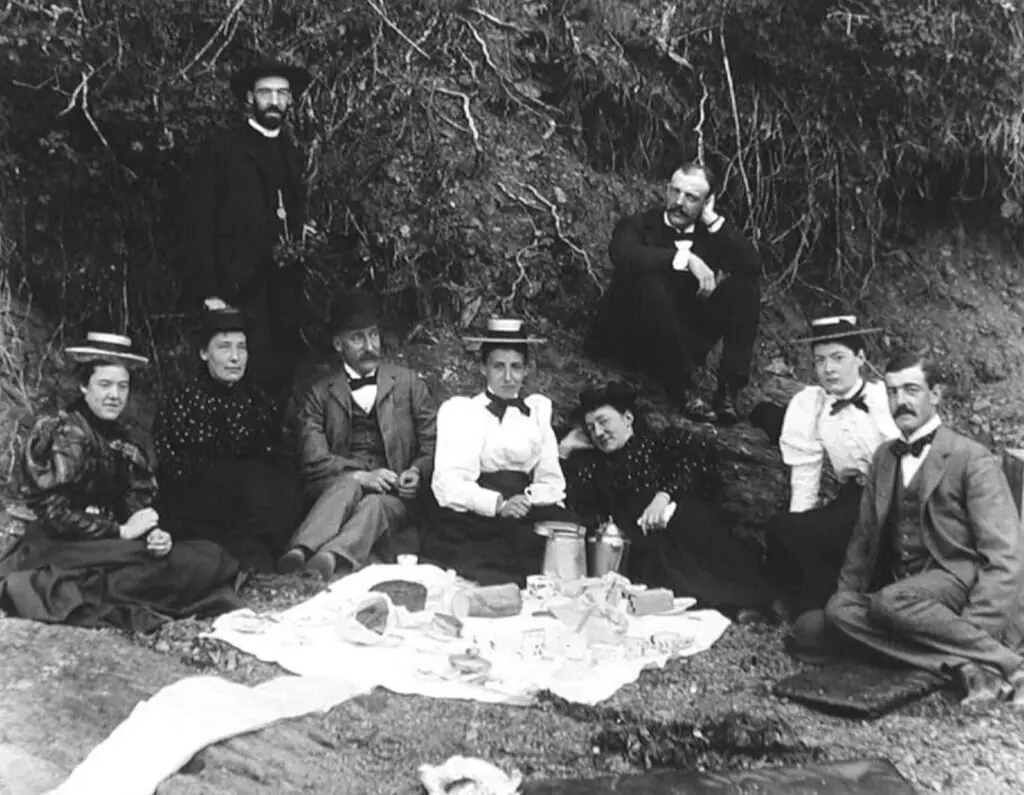
Previously it was a fairly straightforward thing to fractionate war into combatants and everyone else. On 21 July 1861, droves of civilians showed up with food to spectate during the First Battle of Bull Run. They arrived expecting a gay holiday, initially referring to the ominously pending event as the “Picnic Battle.”
The end result was more than 4,000 killed and wounded and an irretrievable loss of innocence for all involved. Come World War 1, all pretense of civility was gone. Technology had rendered chivalry and restraint obsolete.
The U-boat Scourge
In no place was this lamentable reality more starkly manifest than in the burgeoning art of submarine warfare. The concept of the combat submarine was brand spanking new, and the Kaiser’s Navy led the technological charge. Now a warship could approach a target submerged and strike from a position of stealthy advantage.
It also became increasingly difficult to differentiate between men of war and transport ships fat with civilians. Sometimes those transport vessels had their staterooms packed with civilians and their holds full of war materiel. The end result was the perfect recipe for tragedy.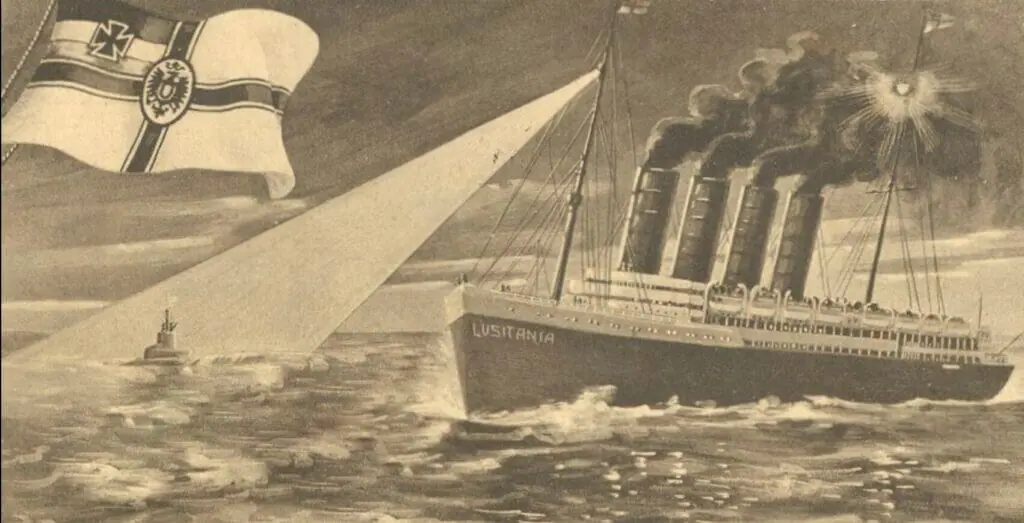
That tragedy struck in May of 1915 with the sinking of the RMS Lusitania by U-20, a German U-boat. The Lusitania was a passenger liner on its 202d transit across the Atlantic carrying some 1,962 passengers and crew. U-20 centerpunched the fast liner with a single torpedo just beneath the wheelhouse.
The massive ship sank eighteen minutes later, carrying 1,199 souls to the bottom with her. That number included a great many British women and children as well as 123 Americans. Once word of this attack made the rounds, the sailors of the Royal Navy were disinclined to show much mercy to German U-boat men.
The Rules Change
This bloodlust was fairly institutionalized. In the aftermath of the Lusitania sinking, two officers of the Admiralty’s Secret Service branch approached Lieutenant Commander Godfrey Herbert, skipper of the British Q-ship HMS Baralong, saying, “This Lusitania business is shocking. Unofficially, we are telling you…take no prisoners from U-boats.” Herbert took his new directive quite literally.
At this point in the war, the Q-ship was England’s best weapon against U-boat attacks. These heavily armed merchant vessels masqueraded as helpless transports to lure U-boats in close before exposing hidden guns and sending many a submarine to the bottom. Torpedo technology was still in its infancy, so much of a U-boat’s firepower came from its deck guns. U-boats would often approach a target ship via stealth and then surface to prosecute the attack. Q-boats were designed to feed that right back to the Kaiserliche Marine.
Personalities In the Baralong Incident
LCDR Herbert was not your typical Royal Navy ship’s Captain. He purportedly encouraged his men to terrorize the countryside in drunken binges while on shore leave.
In one sordid incident in Dartmouth, several of his sailors destroyed a local pub and were arrested. Herbert paid their bail personally and then returned to sea as soon as everyone was accounted for. He also inexplicably insisted on his crew calling him “Captain William McBride” to his face.
In August of 1915, a German U-boat sank the liner SS Arabic while within 20 miles of the Baralong’s patrol area. The Baralong made haste to the site but failed to recover any survivors. This left Herbert’s crew in a proper state. Meanwhile, about seventy miles away, the German U-boat U-27 had intercepted the British steamer Nicosian.
Battle is Joined
The skipper of U-27, Kapitanleutnant Bernd Wegener, led a six-man boarding party to search the Nicosian. They discovered war materiel and 250 American mules making the transit over to assist with the war effort. As a result, Wegener ordered the crew off the Nicosian and prepared to sink her with his deck guns.
HMS Baralong arrived at the site of this little nautical dustup intentionally flying an American flag. Under the false guise of neutrality, the Baralong maneuvered within 600 yards of the U-boat, claiming their mission was to rescue survivors. U-27 held fire and assumed a course parallel to the stricken Nicosian.
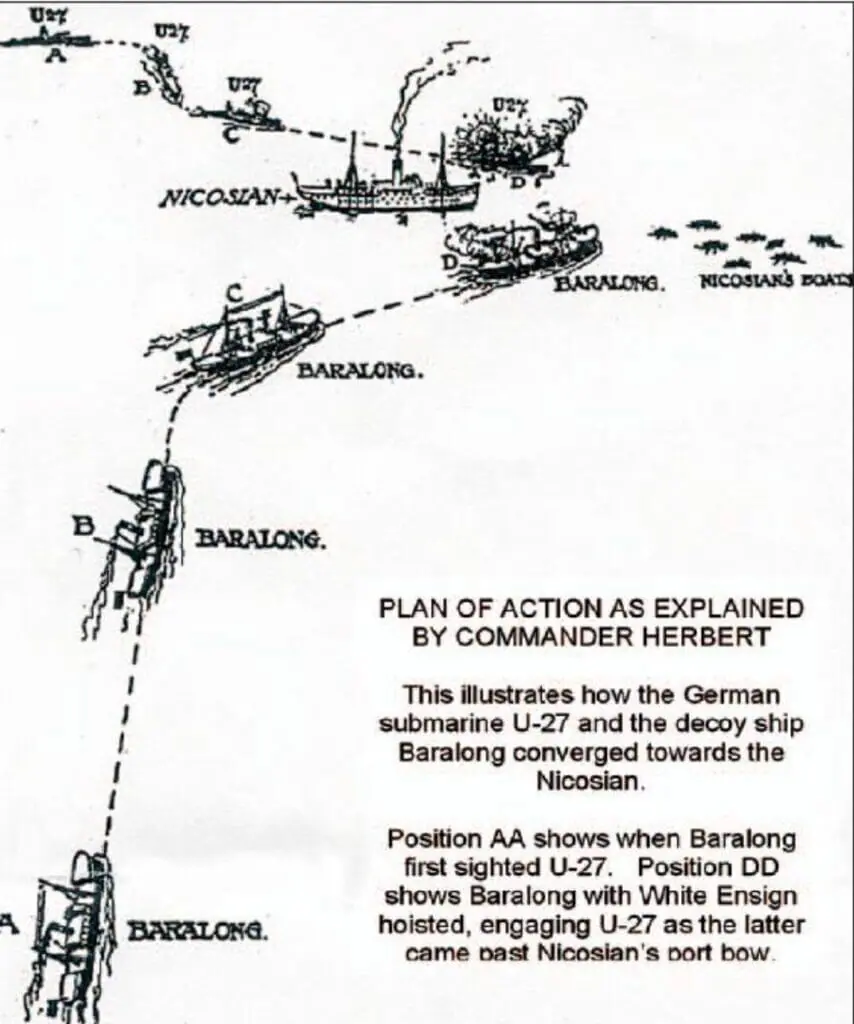 LCDR Herbert was an unscrupulous brigand who managed his warship beautifully. He approached the scene of the battle under a flag of truce.
Meanwhile, the Baralong adopted an identical course on the opposite side of the doomed British ship. Once the Nicosian effectively masked the Baralong, Herbert exposed his guns and prepared for surface action. As soon as she cleared the Nicosian, the Baralong opened up with everything she had.
Raw Firepower Trumps Absolutely Everything
Baralong was equipped with three big 12-pounder guns. These quick-firing 76mm cannon could fire a blistering 15 rounds per minute. Their withering fusillade overwhelmed the wallowing U-boat in short order.
Once the engagement was decided, Herbert called for a cease-fire. However, his crew ignored the order, incensed as they were over the recent loss of civilian life to the cowardly U-boats. The Baralong got off 34 rounds for the U-boat’s one. Now thoroughly ventilated, U-27 rolled over and began to sink.
Up until this point, things were sort-of unfolding according to accepted convention, the confusion over the spurious American ensign notwithstanding. However, the Nicosian crew was goading the British sailors from their lifeboats, shouting, “If any of those bastard Huns come up, lads, hit ’em with an oar!”
A Dark Turn
Twelve German sailors escaped the stricken U-boat before it slipped under. These were the deck gun crews and those men on duty in the conning tower. They dove into the water and swam for the Nicosian, now occupied solely by the German boarding party.
Herbert later claimed at an inquiry that he feared the Germans would scuttle the defenseless civilian vessel. As a result, he ordered his men to gun down the U-boat survivors with small arms. They did so willingly, killing every last one of them as they floundered in the sea.
Herbert then dispatched his 12-man contingent of Royal Marines in a small boat under a Corporal Collins to the Nicosian to root out the surviving Germans. As they departed the Baralong, Herbert publicly ordered them to, “Take no prisoners.”
It Gets Worse For The Germans
The Germans had taken refuge in the freighter’s engine room. Collins and his Marines cut them down to a man. Some reports had Kapitan Wegener having hidden in a bathroom. The Royal Marines supposedly broke down the door with their rifle butts, and the German officer dove into the water. Collins then purportedly took careful aim with his revolver and shot the German U-boat skipper through the head.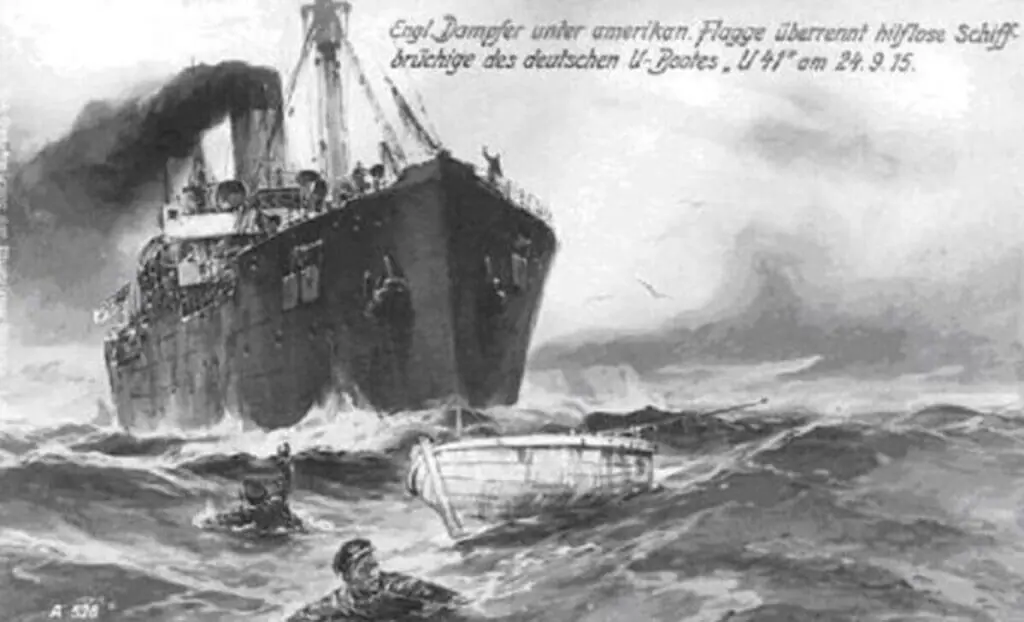
In the aftermath of the massacre, the British Admiralty ordered the report suppressed. However, there had been Americans among the Nicosian’s survivors in the lifeboats, and they spoke with newspaper reporters upon their return home. The sordid details of the exchange soon circled the globe.
Not unexpectedly, the Germans had a veritable conniption, threatening a variety of unspecified reprisals. However, the two nations were already at war. This seminal event did, however, drive the German Navy to abandon the accepted Prize Rules wherein some modicum of restraint was shown toward target crews and embrace unrestricted submarine warfare. Countless more subsequently perished as a result.
Damage Control On the Baralong
To help protect the Baralong and her crew from the Germans should she ever be captured, the ship was renamed HMS Wyandra. The name Baralong was deleted from the Lloyd’s Register, and the vessel was assigned new duties in the Mediterranean. Regardless of their having committed unfettered murder, the crew of the Baralong along with her Captain were awarded a 185-pound bounty for having sunk the German U-Boat U-27.
It has been said that, in war, the victors write the history. This is undoubtedly true. LCDR Herbert and his crew certainly committed a war crime in machinegunning the helpless survivors of U-27 after crippling their vessel. However, the Germans were sinking ocean liners filled with civilians at the time. As a result, nobody really much cared.
Categories
Guntō – WW2 Japanese Swords
I have always believed that war is a come as you are affair and that there is no substitute for what we used to call the Fleet-in-Being. If we didn’t have all the line of battle ships and craft we needed to fight off the likeliest adversary then we would likely not have the time to build them or train crews to operate them and the same pretty much goes for all the weapon systems and ammo stockpiles. You better start your next war with a massive surplus of all that before you let your mouth and State Department imbeciles talk you into a war that you cannot win.
Well I don’t think it will surprise anybody to learn that we simply don’t have any of that any more and despite the shrieking you hear from over by the Pentagon it has been like this since roughly 2005 when the War ended and the spatter of all those idiot Victory-thru-Powerpoint slides started to fade into the rear view mirror. The Navy had spent the previous 2 decades building utterly worthless ships that simply have no role in any kind of warfare. The aviation crowd had gone big on replacing the long range aviation assets we had in an integrated and deadly air wing and turned it into a sort of one fighter boutique shop where one plane could drop a bomb, dogfight a dog, tank a buddy to go the extra mile but no more than that, and land on carriers. It was an amazing letdown from the carrier air wings we had before Tailhook started the long and painful decline of naval aviation.
I don’t think the Army is in any better shape and since I mention it, this is the Army that could not meet its minimum recruiting goals for years, lowered its standards to the ‘see lightning/hear thunder’ category and offered stupid people the chance to go to Pre-Boot Camp so they could meet the rigors of modern combat with the sort of intelligence one finds in a petri dish. Unable to meet their recruiting goals the Army simply wrote off a whole infantry division as excess to needs since they couldn’t begin to fill its billets and since they don’t have the weapons or ammo anyway it kind of saved all the hassle of trying to find them. A lot of the missing gear was last seen some say parked in neat rows in Afghanistan but some say it shipped to Ukraine along with 3 fusion reactors, 12 submarines and most of the Navy’s expeditionary warfare capability. The Marine portion of that almost extinct capability can now safely fit in the local Hyatt-Regency Hotel without causing the local fire marshal any distress.
But this is the old war comrade and the new war bears very little resemblance to this old dog and pony show. People started writing books about 5th generation warfare a long while ago. Nobody in power reads them and let’s be honest, none of them ever will and you know why? There is no money in 5th generation warfare for the giant defense contractors and their supporters and for all the congresscritters that float their boats and stock portfolios on their continued acquisition of pathetic scrappy hardware with procurement dollars unmatched by any Operations and Maintenance dollars so all that shiny new stuff turns into rust covered bayfill clogging the waterfronts at the few remaining naval bases we have.
Half the submarines cannot get underway and the same goes for all the rest. The drydocks they need were all sold away by admirals keen to trim the budgets and get on board with the Base Realignment and Closure crowd and so ships wait for years to get into a drydock and get their engines and reactors serviced and their weapons and sensors repaired or upgraded. It got so bad starting 20 years ago that the Navy went back to Classifying all the Reports of the Board of Inspection and Survey of the ships, submarines etc of the fleet. It because painfully obvious that the ships were turning to shit and that nothing was being done about it and that was clear when the required maintenance dollars and time simply never even showed up in the President’s Budget and it wasn’t sexy enough to get shoved in as Pork and then the Pork went away. “Don’t worry kids, it’s back in now so the ships will get the pink paint jobs they need in order to comply with fleet directives to look good.”
Well you ask, what is this 5th Generation Warfare you just made up? It’s really pretty simple. It baldly states that there is no reason to go all kinetic and lay waste to the fleets and aircraft because some simple and really comprehensive cyber attacks will simply destroy or disable anything attached to the computer networks. You know what? Everything is connected these days and when the bad guys turn off all the power by attacking the network controlling the electric grid in this country they can not just take it down for a day or two, if they bypass certain safety interlocks they can send a devastating cascade of blackout and brownouts down the line that will knock out the power generation facilities for months.
When people bleat about some mythical need to rebuild the fleet and military to counter Chinese being Chinese in China and around China they never really consider the most fundamental question of all time. How EXACTLY are they going to win a war with China? Let’s be honest, the last time we won a war we bombed the enemy’s cities into ruins, laid a blockade on them that strangled all imports and most essentially strangled all food imports so the people starved and were in such bad shape they kept starving for years after we relaxed the blockades and we carried out massive regime changes right down to the policeman in the street.
Do you think we have the WILL to do that to China? I guarantee we don’t have the means to do it so it isn’t really an issue. Thanks to the nitwits running this country and the greater darkness that is the West none of the countries in NATO or the EU are capable of taking on the equivalent of Baden Powell’s boy scouts with any chance of success. On top of not having the gear or the men to fight with the countries all lack the WILL. The foolish british snobs and elites that declared that they would not fight for king or country are now thick on the ground at every level in every city in the West and remember, it’s a come as you are war and they don’t have any war materials at all. Seriously they’re in worse condition then Canada or the Netherlands. Unready, unable and unwilling, is no way to fight a war.
The forces of darkness and evil have arranged it this way. Men like Soros have labored for this end for decades and spent their fortunes to make the conditions that prevail across the West today and nobody can wake up the people to the effect or get them to care. They cannot even get them to care that their countries are vanishing into the 3rd World Hell and that their own daughters aren’t going to make it out alive. All these stupid and indoctrinated people really truly believe that those other chaps are all just like us and you cannot even get them to examine the evidence that reveals that they are not.

If you import the 3rd World you become the 3rd World. This is not some sort of harmless prank like colonizing stone age areas of the world and bringing them into the light, the word of God and the Industrial Revolution, this is working the other way now and it is leading to rape gangs and their enablers running the governments of the US and UK and where the hell is the list of all the scum that stayed at Epstein’s Island? Why are so many conservatives turned into total squishes after they report to Congress or Washington for duty? What the Hell happened to turn the FBI into the KGB?
People see elements of the coming cyber war and they all now know that nation/states out there have the capability, ability and means to simply turn off the power grid and leave the entire continent shivering in the cold.
Do they do anything about it? Have the utilities launched any actual for real processes for disconnecting the entire grid from the networks? Is there a quick disconnect switch anywhere that has been tested? Does anybody actually read through every line of code that controls and stabilizes the power network and grid?
I took note locally of a couple of things that happened in just the last 2 years around here. One that struck me was how, thanks to the morons who believe they can save the world from global warming, the local university has greatly revised it’s stand-alone power plant.
The thing about that of course is that it didn’t just provide power and heat to the universities, it also provided power to 2 major hospitals and trauma centers. One of the local cities up the road on the coast also shut down it’s own power plant and shifted over to the ‘national’ grid. Their plant may be in layup but it also might be just so much scrap metal rusting in place. Don’t worry though little town, from your beach you can easily see the cooling towers of a couple of nuclear reactors…..
 |
Fukishima really went to Hell when they lost power and the grid went down and then the tsunami knocked out most of their standby backup generators and a reactor without power is nearly infinitely dangerous. So we have a couple reactors about 25 miles from here plus the other 2 about 50 miles in the other direction. I wonder if they have quick disconnects to a suddenly gone rogue network and collapsing power grid and how often they test the trips….
If you read this far you see where I talked about 5th generation warfare as if it is real. Well guess what? It is.
That said, we have let in so many enemy agents and terrorists that we simply cannot deal with them at all short of spending years finding them, rounding them up and sending them home but in the meantime if the mother country calls these are also the guys that are going to get in their trucks and vans and drive over to the vicinity of the perimeter fence of various installations and bases and fly their drones into those priceless aircraft we used to think of as national assets and we won’t be using them for anything at all.
They won’t have too much trouble arranging for similar things to inconvenience a navy that has made itself at home in ports on the wrong side of the most vulnerable infrastructure on the planet. You know what I mean, you saw it happen in Baltimore when a ship collided with and dropped the bridge and bottled up the port for weeks. San Diego naval base is on the wrong side of the Coronado Bay Bridge and Norfolk and Little Creek are on the wrong side of the Bay Bridge.
Oddly enough, the USN does not have a single mine sweeping ship in the United States. The tiny handful that remain are in Japan and Bahrain and there are no others closer than NATO Europe and the odds aren’t good that they can cross the Atlantic. I can’t recall a single visit by a NATO country Mine Countermeasures Ship or Squadron, ever happening in the United States or Canada.
But all that is kind of moot anyway dear reader because all that is necessary to stop the whole battle group in its tracks is to damage or sink the handful of oilers and supply ships that sustain those warships whenever they leave port.
Since the USN for some foul reason now hustles all of its newly decommissioned ships to the breakers for immediate scrapping we don’t even have backups that might be brought on-line in a few weeks or months. Nope, they all went to Texas and other ports to be scrapped as soon as humanly possible after they were retired.
You know when I joined the Navy we still had hundreds of ships, some of them dating back to World War II that were anchored out in the James River and Suisun Bay and other places where they could be brought back to life if needed. The battleships were such ships.
 |
| Suisun Bay Reserve Fleet in 1975 |
If If you worked diligently, studied very hard and applied yourself every single day for many years you could not have more thoroughly destroyed and disarmed the West then it is now today and yet all these buffoons and professionals carry on and act as if 8th century tribesmen did not defeat and run out of town the very last Western military force left standing in the 21st century.
I find that one of the nice things about all this is that bringing back the draft is futile at this point. However ugly it gets we simply cannot build the weapons to arm the unwilling, unfit, drugged and stupid men we plan to throw at the next enemy coming down the pike.
You see, we sent all that manufacturing capability to China along with the pharmaceutical, electronics, and heavy industry. Why it’s almost like some fiendish interlocking plan….. I simply stood up 3 more security squadrons in the last century and it took the entire USN more than 3 years to produce the men, the weapons to arm them with and longer than that to procure and deliver the boats and other gear.
MOBILIZATION ORDER BY EMPEROR HAILE SELASSIE-ABYSSINIA in 1935
Everyone will now be mobilized and all boys old enough to carry a spear will be sent to Addis Ababa. Married men will take their wives to carry food and to cook. Those without wives will take a woman without a husband. Women with small babies need not go. The blind, those who cannot walk or for any reason cannot carry a spear are exempted. Anyone found at home after receipt of this order will be hanged.
You know it’s not all that dire but on the gripping hand, consider that the Italians were so overwhelmed by those guys with spears (and the others with better weapons) that they felt compelled to use poison gas on the Ethiopian army and people. The last note heard on earth is going to be one of the weapons of mass destruction because the class of people ruling the West today are more than willing to take down the whole world and the men of the East and the barbarians don’t care.
With the added horror of burning alive while falling to Earth thrown in. No Thankee Grumpy

