Category: War

Top Photo: USS Missouri (BB-63) Gunner’s Mate Second Class Charles J. Hansen working on a 40mm quad machine gun mount, during the battleship’s shakedown period, circa August 1944. Note his tattoos, commemorating service on USS Vincennes (CA-44) and shipmates lost with her in the Battle of Savo Island on 9 August 1942. Official U.S. Navy Photograph, now in the collections of the National Archives.
Life in the service during World War II was trying and difficult in the best of times. We know this from heartfelt letters sent home by young men to their wives and mothers, from the countless pieces of intense literature and art that emerged during and after the war, and from the depictions in famous movies and TV shows that continue to grace our screens.
But what about the men themselves? What stories of war can we glean from their faces and skin? At first glance, you may only see the tired face of a young man aged by war, but a closer look reveals a very different story. In fact, just a look at the arms, legs, or chests of these troops would remind us of their patriotism, their pride, and, in many cases, the naivety of youth. After all, how might an 18-year-old sailor explain the half-nude woman tattooed on his arm when he returned home to his mother after the war.
Today, it is typical—even expected—that servicemembers have tattoos. But this underappreciated art form was still rare in the 1940s. During World War I, troops tattooed their service numbers, and later social security numbers, on their skin as a means of identifying them in the event of injury or death in battle. However, during World War II, tattoo culture began to change as ink became a source of expression rather than survival—especially amid fears that the intimate details of identification tattoos could fall into enemy hands.
Hearkening back to their ancient purpose, tattoos during World War II were symbols of pride and patriotism, something troops could literally wear on their skin. Most received their tattoos right before shipping out overseas; many of these servicemembers knew they might never return home, and their tattoos acted as a final confirmation of their courage for the fight ahead. Tattoo shops near military bases and in port cities San Diego and Honolulu became hotspots for men in the US Armed Forces as well as civilian wartime workers, including the occasional woman.
America’s Greatest Tattoo Artists
Honolulu became an epicenter for the growing tattoo culture in the United States during the war. In fact, the tattoo industry dominated the city. An American reporter who traveled to Honolulu in 1944 estimated that the city’s eight tattoo parlors brought in around $60,000 each year.
At one establishment known as Miller’s Tattoo Emporium, the 15-year-old operator, Eugene Miller, tattooed around 300 people a day; prices ranged from 25 cents to $30 for larger pieces. The Hawaii native was the self-proclaimed “world’s youngest and greatest tattoo artist”1 and represented one way that Hawaiians engaged with the servicemembers who had become new inhabitants of their islands.
Around 65 percent of Miller’s clientele were US Navy men stationed in Hawaii before being sent overseas, and tattoos offered wearable evidence that the individual was “salty,” or a sea-faring man. Many sailors preferred the simple “USN” with an anchor through it to demonstrate their devotion to their branch and country.
An additional 25 percent of Miller’s clients were enlisted US Army men who opted for more traditional phrases like “Remember Pearl Harbor” or simply “Hawaii 1944,” a reminder of their time there during the most consequential conflict in history.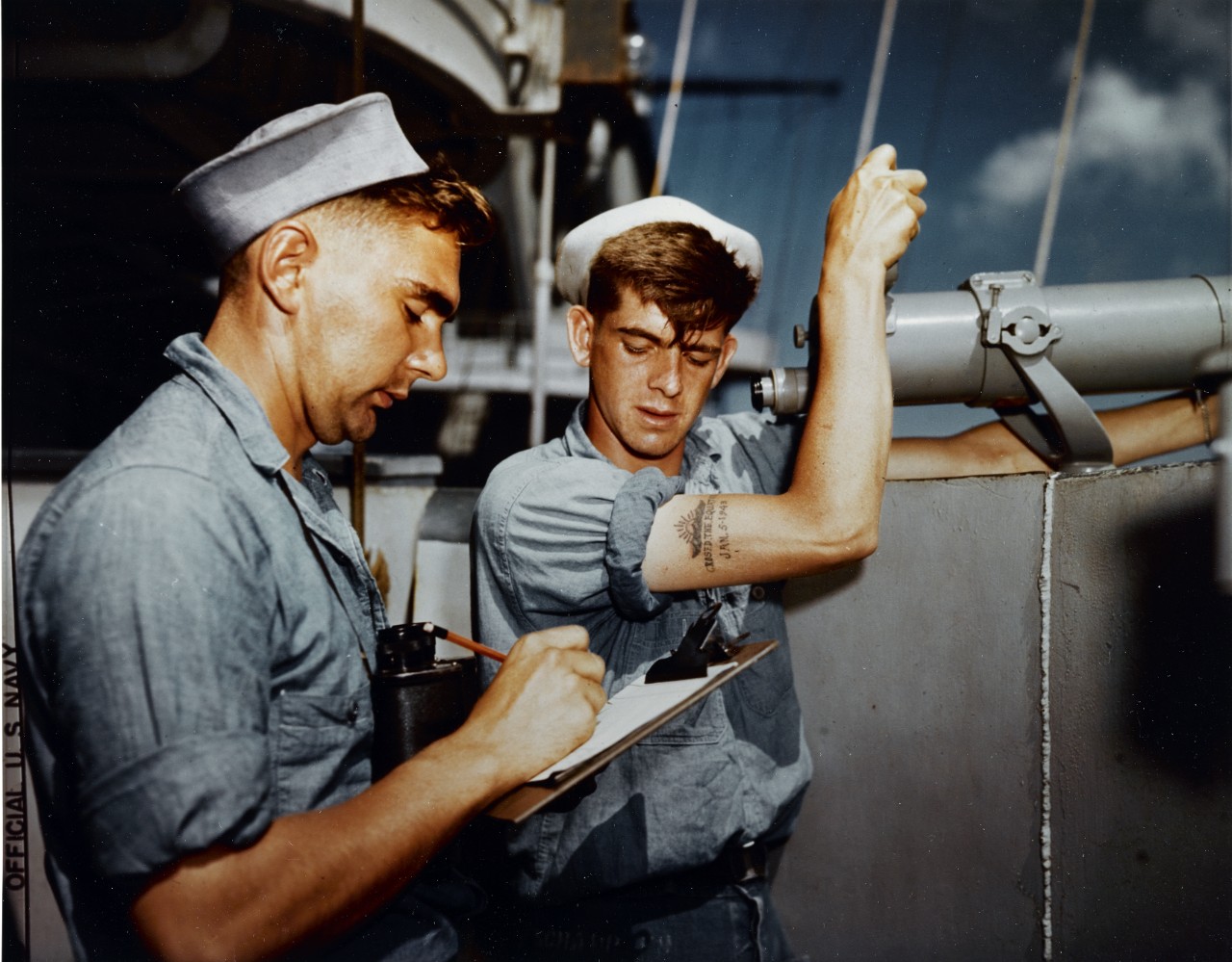
Another notable tattoo artist of the time was Bert Grimm, a Missouri native who held a monopoly on the St. Louis tattoo scene for over two decades and was known as the “godfather of modern tattoos.”
Grimm was known for his bright colors and defined lines, as well as the rumored work he did on American bank robbers Pretty Boy Floyd and the infamous Bonnie and Clyde. However, much of his income during the height of his career came from tattooing the servicemembers who landed in his shop during the war.
Grimm didn’t just act as a tattoo artist; he was an acute observer of the desires of desperate men who believed getting a tattoo might be one of the last things they ever did. In 1942, Grimm told the St. Louis Observer:
“The main difference between the soldiers and sailors is that when a sailor comes in to get tattooed, it’s always something with an anchor or a battleship, and the soldiers go more for flags and eagles. I’ve been watching their tastes and drawing new designs to suit them.
Oh yes, sweetheart and love designs are going good now, too. […] And here’s a Red Cross Nurse; they lost out in popularity but they are back now.”2
Grimm’s simple comments on the preferences of his clientele reveal how military men of varying branches decorated themselves. Looking at the tribal roots of tattooing, members of a tribe would receive specific designs to signify their lineage or status, demonstrating the hierarchies within these specific social systems. This practice was mirrored by the different tattoos received by members of different Armed Forces branches and of different ranks during World War II.
What WWII Tattoos Meant
One staple tattoo for sailors was the swallow, a design that could only be earned after the sailor had traveled 5,000 nautical miles. The more swallows a sailor had inked onto his skin, the greater respect he commanded from fellow sailors, as it demonstrated his well-earned sea legs.
The iconography of the swallow in tattoos on WWII servicemembers was also often used as a symbol of devotion. While the swallow’s ability to travel long distances became an important aspect of naval tattooing, the bird’s penchant for always returning to its original nesting place was not lost on military men.
Thus, the swallow also became a symbol of love and the notion that the sailor would always return home to his loved ones, no matter how far he traveled. The most common design depicted a swallow with a ribbon and a heart with a lover’s name written on it.
These “sweetheart” tattoos reminded servicemembers of who they were fighting for and would return to, as they kept their sweethearts close to them during the war.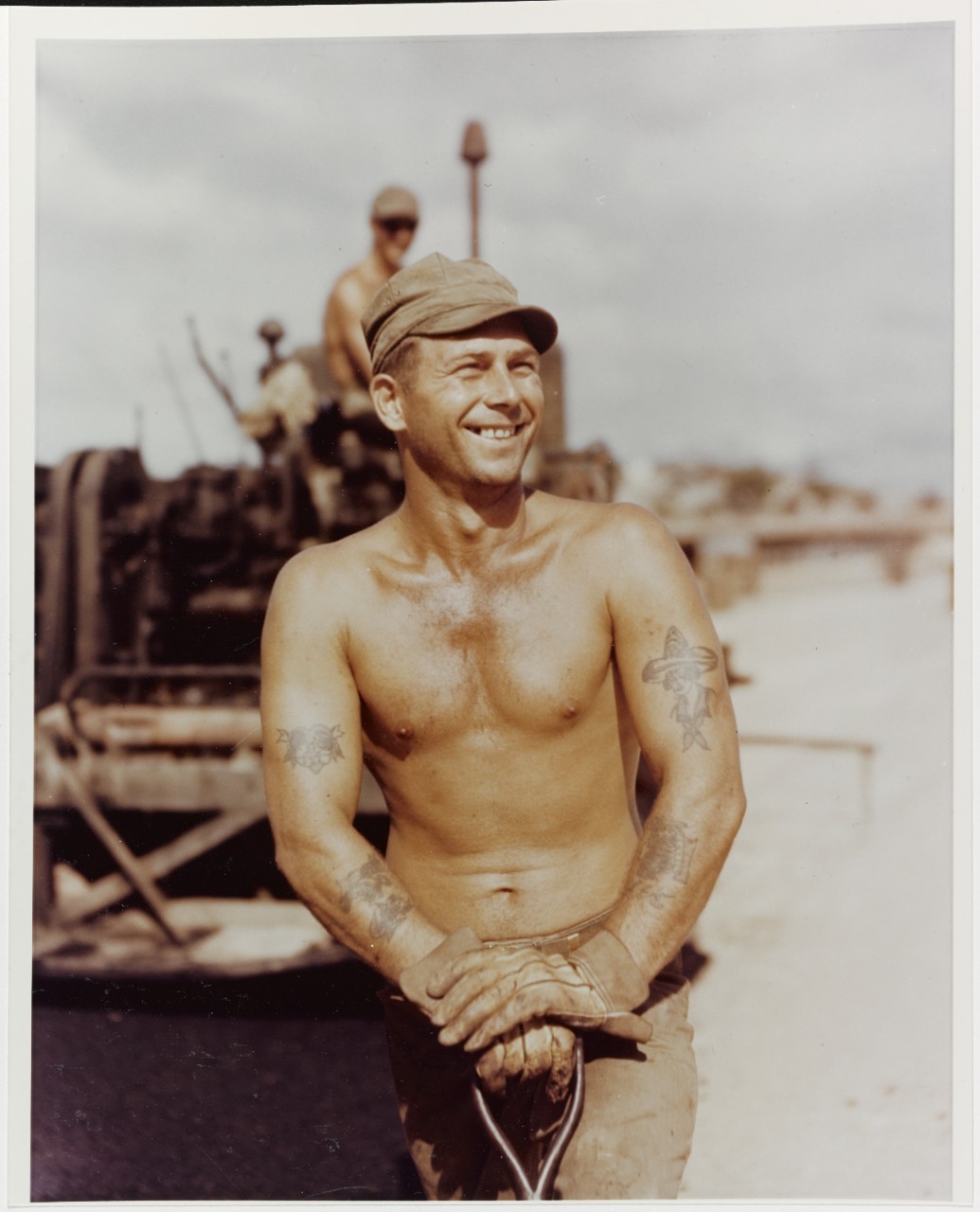
When a soldier named Benjamin Franklin was shot down in enemy territory, his body suffered severe physical trauma that left him unidentifiable. However, his personalized sweetheart tattoo eventually led to his identification:
“Fingerprints, tooth chart, or photograph cannot be taken, as both hands and head are missing. The remains consist of the lower abdominal region down.
The upper portion of the body was hit directly by (High Explosive). All that remains above the lower abdomen is a portion of the skin on the left side of the body extending to the shoulder. The stub of the left arm, from the shoulder to the elbow, remains.
There is a tattoo on this stub of the left arm, on the outer side, midway between elbow and shoulder, as follows: two squares, two red hearts, side by side, with a red bird in flight directly above. Two names written in blue on a wavy banner across the hearts. Name on the left heart appears to be Benjamin. Name across the heart on the right side of the tattoo is clearly ‘Ruby’.”3
While Benjamin and Ruby’s love story ended all too soon, it is a testament to the reality of war, the practicality of tattoos, and the endurance of love even when one is far from home.
Of course, one of the most well-known and well-appreciated designs to have graced the skin of our nation’s military members is that of a woman, often nude.
While these tattoos were not as heartwarming as the sweetheart tattoos, they remained a popular image for troops for decades. Tattoos of nude women existed long before World War II. In 1909, the US military released a recruiting circular that stated tattoos of nude women were strictly prohibited.
Thus began the influx of men coming into tattoo shops to give their tattooed women brassieres, bikinis, skirts—any kind of clothing that would meet the military’s standards.
This increase was particularly notable in the months that followed the Pearl Harbor attack when American men enlisted in large numbers. In 1944, popular New York tattoo artist Charlie Wagner was brought to the New York Magistrate Court for violating sanitary code in his shop. However, Wagner’s defense claimed that he was simply doing “[his] Patriotic Duty by putting clothes on nude figures ornamenting would-be sailors to meet Navy standards.”4 Wagner was let off with a $10 fine and was told to clean his shop up.
While many tattoos hold meaning in their simple, straightforward designs—like the popular “USN,” American flags, or even “Remember Pearl Harbor”—others take more digging to fully understand.
One example is the timeless dagger through a rose tattoo, which indicated a relentless dedication to a soldier’s duty, to the point that he would injure something as beautiful as a rose in order to defend his country.
Often, these tattoos would feature a skull or the powerful phrase “Death Before Dishonor,” further developing the idea that these servicemembers were prepared to die for their country.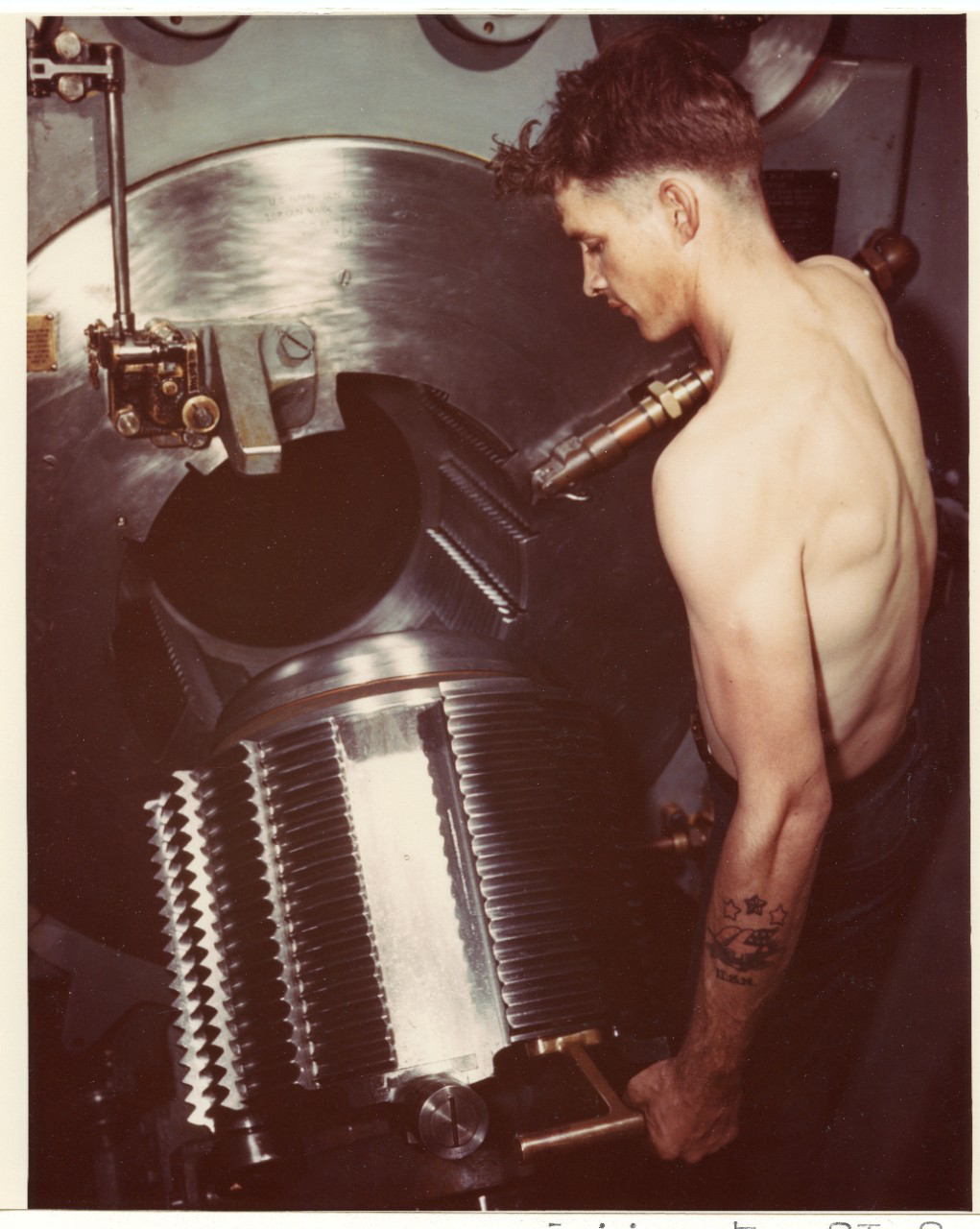
In the same vein, Bert Grimm told the St. Louis Dispatch that another popular tattoo was a dagger through the skull of a Japanese man. These rather disturbing images echo American sentiments of the era: ones of hate, distrust, and vengeance.
Tattoos of this nature are no longer permitted in any branch of the military, but they serve as an important reminder that not all tattoos were symbols of patriotism and love, but rather something much more complex and disturbing.
Legacy of WWII Tattoos
Each tattoo inked on the skin of those who lived through World War II tells a unique story, reflecting both personal experiences and collective history. The deep cultural and emotional significance of these tattoos goes beyond simply marking the intensity of the war—they symbolize the resilience of the people who endured it and the lasting impact of their sacrifices.
Whether worn as proud mementos, symbols of survival, or armor against trauma, each tattoo holds profound meaning. These markings have not only left an indelible imprint on popular culture but have also shaped the military’s traditions, influencing the generations that followed.
The tattoos of WWII veterans continue to inspire, reminding us to carry their pride both on our sleeves and in the ink on our skin. This tradition serves as a timeless reminder of the history that shaped them—and us—never to be forgotten.
- 1Arnot, Charles. (1944, April 19th). Tattoo Business in Honolulu Runs Into Big Money. Our Mountain Home, Talladega, Alabama. Page 2.
- 2Start, Clarissa (1942, May 29th). Boom In The Tattoo Business. The St Louis Post-Dispatch. Page 21.
- 3Official Military Personnel File of Benjamin Franklin, USAGF, 34761993; National Archives and Records Administration, National Archives at St. Louis.
- 4Tattoo Archive. (2017). Charlie Wagner. Tattoo Archive. https://www.tattooarchive.com/history/wagner_charlie.php

Contributor
Bridget Gibbons
Bridget Gibbons is an institute intern at the Jenny Craig Institute for the Study of War and Democracy.
Categories
5 American Military Defeats
Categories
Each tattoo inked on the skin of those who lived through World War II tells a unique story, reflecting both personal experiences and collective history.