“Once is happenstance. Twice is coincidence. The third time it’s enemy action.” 
Category: Uncategorized

By Sean Davis
Unfortunately, the debate between the two sides is rarely illuminating, as it usually devolves into tired recitations of worn-out talking points about the issue. These talking points are invariably littered with myths and factual inaccuracies. Here are 7 myths about gun control that just won’t die.
1) The ‘Gun Show Loophole’ Allows Anyone, Even Criminals, To Get Guns
In reality, the so-called “gun show loophole” is a myth. It does not exist. There is no loophole in federal law that specifically exempts gun show transactions from any other laws normally applied to gun sales. Not one.
If you purchase a firearm from a federal firearms licensee (FFL) regardless of the location of the transaction — a gun store, a gun show, a gun dealer’s car trunk, etc. — that FFL must confirm that you are legally allowed to purchase that gun. That means the FFL must either run a background check on you via the federal NICS database, or confirm that you have passed a background check by examining your state-issued concealed carry permit or your government-issued purchase permit. There are zero exceptions to this federal requirement.
If an individual purchases a gun across state lines — from an individual or FFL which resides in a different state than the buyer — the buyer must undergo a background check, and the sale must be processed by an FFL in the buyer’s home state.
What does exist, however, is a federal exemption for sales between two private, non-FFL residents of the same state, regardless of whether that transaction happens at a gun show or not. The identity of the parties involved in the transaction, not the venue of the sale, is what matters under federal law. This federal exemption makes perfect sense: there’s no federal nexus for a purely private transaction between two private individuals who reside in the same state. Many states, including Oregon, Colorado, and Illinois, have enacted universal background checks in order to eliminate the exemption for same-state private firearms transactions.
Federal universal background checks may or may not be a wise idea — the U.S. Senate in 2013 explicitly refused to enact them — but referring to the federal exemption for private, same-state sales as a “gun show loophole” is misleading and factually inaccurate.
2) Nobody’s Demanding Gun Confiscation
We’ve all seen how this one plays out. In the wake of a shooting, a politician demands “common sense gun regulations.” Gun rights supporters then respond with something along the lines of, “He just wants to take our guns!” That criticism is then followed by mockery from various corners of progressive blogdom that no, you stupid hick, nobody wants to take your guns.
But that’s not true. A number of progressives do actually want to take your guns.
TPM’s Josh Marshall finally admitted earlier this week that progressives care a whole lot more about gun confiscation than they do about nibbling around the edges of existing gun laws.
“In other words, yes, we really do want to take your guns,” he wrote. “Maybe not all of them. But a lot of them.”
He’s not the only one. There’s also E.J. Dionne at the Washington Post, who scolded Republicans for refusing to endorse a nationwide gun confiscation program similar to one instituted in Australia in the mid-1990’s.
It’s not just leftist bloggers pushing for gun confiscation, though.
Take the president of the United States, for example. After the shooting at Umpqua Community College in Oregon, President Barack Obama made a statement that “we should politicize” shootings. He then cited radical gun confiscation laws in Australia and Great Britain as examples that the U.S. should follow:
We know that other countries, in response to one mass shooting, have been able to craft laws that almost eliminate mass shootings. Friends of ours, allies of ours — Great Britain, Australia, countries like ours. So we know there are ways to prevent it.
The intent of Obama’s reference to Australia’s nationwide gun confiscation law, its ineffectiveness notwithstanding, couldn’t have been more clear. Yes, they really do want to take your guns.
3) Buying A Gun Is As Easy As Buying Groceries
Last March, President Barack Obama was asked about guns during a press conference, and he responded by saying, “It’s easier for you to buy a handgun and clips than it is for you to buy a fresh vegetable.” Ignoring for the moment that the president does not understand the difference between a clip and a magazine, his claim is not true.
It is not easier to buy a gun than it is to buy a fresh vegetable, or any canned vegetable for that matter. Never in my life have I been required to fill out federal form 4473 and have the cashier run a background check on me before being allowed to buy an onion.
There are no federal laws requiring onion dealers to register with the federal government prior to selling onions. There are no state laws requiring that you apply for and receive an onion purchase permit, complete with background check, prior to purchasing an onion. There are no onion waiting periods or limits on how many onions you can purchase within a certain period of time. Nor are there, to my knowledge, any state or local laws prohibiting the possession of onions in schools or government buildings.
Firearm manufacturing and sales are highly regulated by the federal government. Numerous complicated laws govern virtually every aspect of the process. Anyone who has purchased a gun before can you tell you in great detail that it is not as easy as buying a vegetable at a grocery store. It is an expensive and time-consuming process.
Some people may think gun control is a great idea and that it should be harder to buy a gun than it currently is, but they should refrain from suggesting that legally purchasing a firearm is easier, cheaper, and less time-consuming than buying a carrot. Because it’s not.
4) Concealed Carriers Don’t Prevent Mass Shootings
“Do armed civilians stop mass shooters?” the liberal magazine Mother Jones asked in 2012. “Actually, no.”
Mother Jones justified its assertion by citing its own analysis that of the 62 mass shootings between 1982 and 2012, not one was stopped by a civilian with a gun. Shocking, right? Not really, once you consider the logical fallacy underlying the Mother Jones claim.
The fact of the matter is that shootings that happen in an area where concealed carriers can immediately respond don’t generally become mass shootings. It’s a bit like saying locked doors and alarms don’t prevent burglaries by only citing burglaries that happened in buildings with no locked doors or alarms as proof of your thesis. It’s no coincidence that so many mass shootings happen in areas declared to be “gun-free zones” by authorities.
Instances of concealed carriers stopping shooters in their tracks are too numerous to count. Here are just a few examples found from a few seconds of Googling.
A 62-year-old man with a gun in each hand fired at four people – including a 1-year-old boy – before a civilian with a concealed carry permit returned fire and wounded the shooter, cops told FOX19.
Authorities say no charges will be filed against an Uber driver who shot and wounded a gunman who opened fire on a crowd of people in Logan Square over the weekend.
The driver had a concealed-carry permit and acted in the defense of himself and others, Assistant State’s Attorney Barry Quinn said in court Sunday.
A group of people had been walking in front of the driver around 11:50 p.m. Friday in the 2900 block of North Milwaukee Avenue when Everardo Custodio, 22, began firing into the crowd, Quinn said.
The driver pulled out a handgun and fired six shots at Custodio, hitting him several times, according to court records. Responding officers found Custodio lying on the ground, bleeding, Quinn said. No other injuries were reported.
A 63-year-old autoworker with a concealed weapons license shot a gunman who was robbing a Warren, Michigan, bank, according to Fox 2 Detroit.
Concealed carriers can’t be expected to stop every shooting, just as police can’t be expected to prevent all crime. It is a fact, though, that concealed carriers regularly put an end to violent shootings.
5) The Second Amendment Only Applies To Muskets
This trope is a popular one among gun control advocates who imagine themselves as strict constructionists when it comes to Constitutional interpretation. Piers Morgan, the failed CNN host and British tabloid editor accused of hacking into celebrity voicemails in search of tabloid gossip, is the foremost advocate of the notion that the Second Amendment protects only the rights of Americans to carry muskets:
Friends don’t let friends follow in Piers Morgan’s footsteps. pic.twitter.com/eMyzlowSYC
Sean Davis (@seanmdav) October 4, 2015
As Carol Roth noted, the refusal of the Founding Fathers to precisely name the types of arms which citizens have a right to keep and bear was intentional. The same can be said of their refusal to constrain our right of free expression to quill pens and bulky printing presses. The Second Amendment protects our right to own handguns just like the First Amendment protects our right to criticize the government using the Internet.
Both the text of the Second Amendment and the intent behind it are clear: the right of the people to keep and bear arms shall not be infringed. Law-abiding citizens have the right not only to own weapons, but to carry them as well. The Second Amendment isn’t about muskets or bayonets. It’s about the right of a free people to defend themselves with arms if necessary.
6) Gun Violence Is Skyrocketing
If you’ve spent any time on social media, you’ve seen the lamentations: gun violence is skyrocketing. It is an epidemic. Constant TV coverage of shootings can certainly make it seem that way. But the truth of the matter is that gun violence is actually way down. It hasn’t skyrocketed; it’s plummeted.
A 2013 study from the Pew Research Center found that gun violence had fallen by nearly 50 percent since its 1993 peak:
Compared with 1993, the peak of U.S. gun homicides, the firearm homicide rate was 49% lower in 2010, and there were fewer deaths, even though the nation’s population grew. The victimization rate for other violent crimes with a firearm—assaults, robberies and sex crimes—was 75% lower in 2011 than in 1993. Violent non-fatal crime victimization overall (with or without a firearm) also is down markedly (72%) over two decades.
A 2014 analysis from the Federal Bureau of Investigation (FBI) showed a significant decline in violent crime over the last five years:

In 2013, the latest year for which complete data are available, the number of homicides in which a firearm was involved totaled 8,454, representing a 12 percent drop compared to the number of gun homicides in 2003. And the 2003 figure represented a 41 percent drop from the gun homicide total in 1994, the earliest year for which data are readily accessible on the FBI’s website.
All told, the number of gun homicides in the U.S. has fallen by nearly 50 percent over the last two decades. Any amount of violent crime is too much, but it’s wrong to assert in the face of all evidence that gun violence in the U.S. is skyrocketing.
7) Gun-Free Zones Prevent Gun Violence
Nothing represents wishful thinking in the face of evidence like the proliferation of so-called gun-free zones. These are areas in which guns have been explicitly banned by law, or banned by property owners or local authorities. They are almost always accompanied by a sign notifying passersby that guns are banned on the premises. The intent behind the idea of gun-free zones is simple and noble: what better way to prevent gun violence than by banning guns?
Unfortunately, the reality of human nature tends to stomp all over those good intentions. Time and again, deadly mass shootings occur in gun-free zones. Why? Because the evil mind intent on wreaking havoc wants nothing more than the ability to do so without getting shot back. What better place to go than a gun-free zone?
The sad fact of the matter is that gun-free zones are anything but.

The Oregon shooting happened in a gun-free zone. The Lafayette movie theater shooting happened in a gun-free zone. The Chattanooga shootings happened in gun-free zones. The Ft. Hood massacre even happened in a gun-free zone, believe it or not.
Gun-free zones may be backed by pure intentions, but the reality is that they just end up being soft targets for evil killers hellbent on destruction.
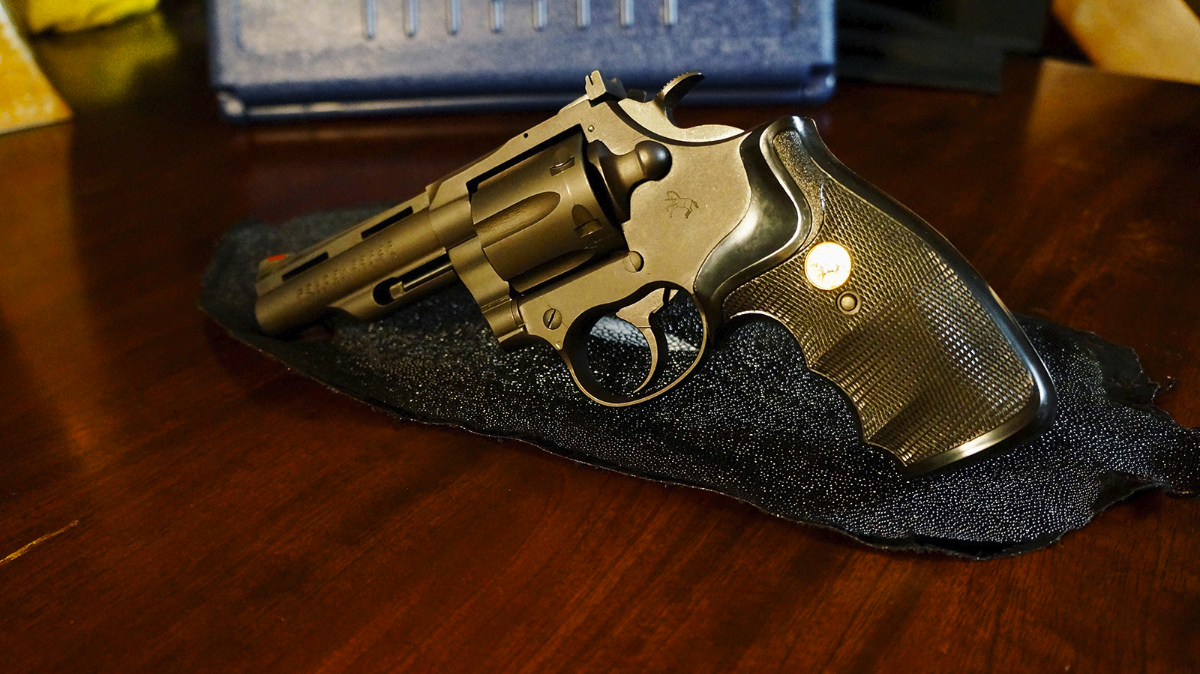
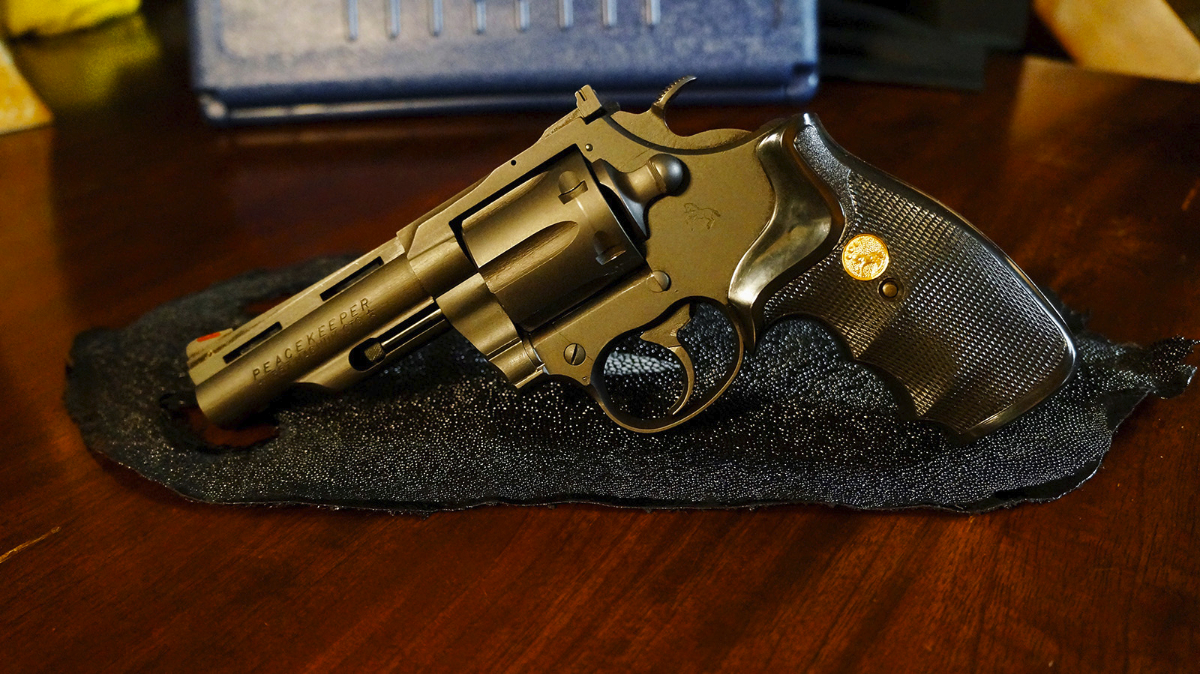
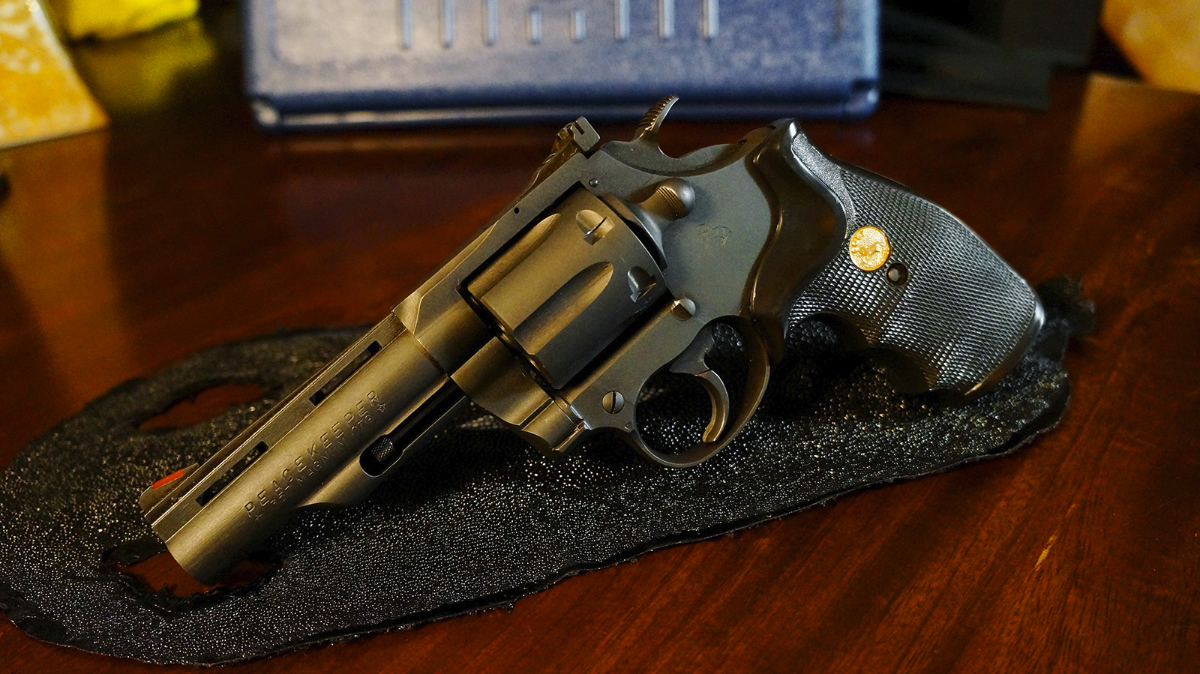
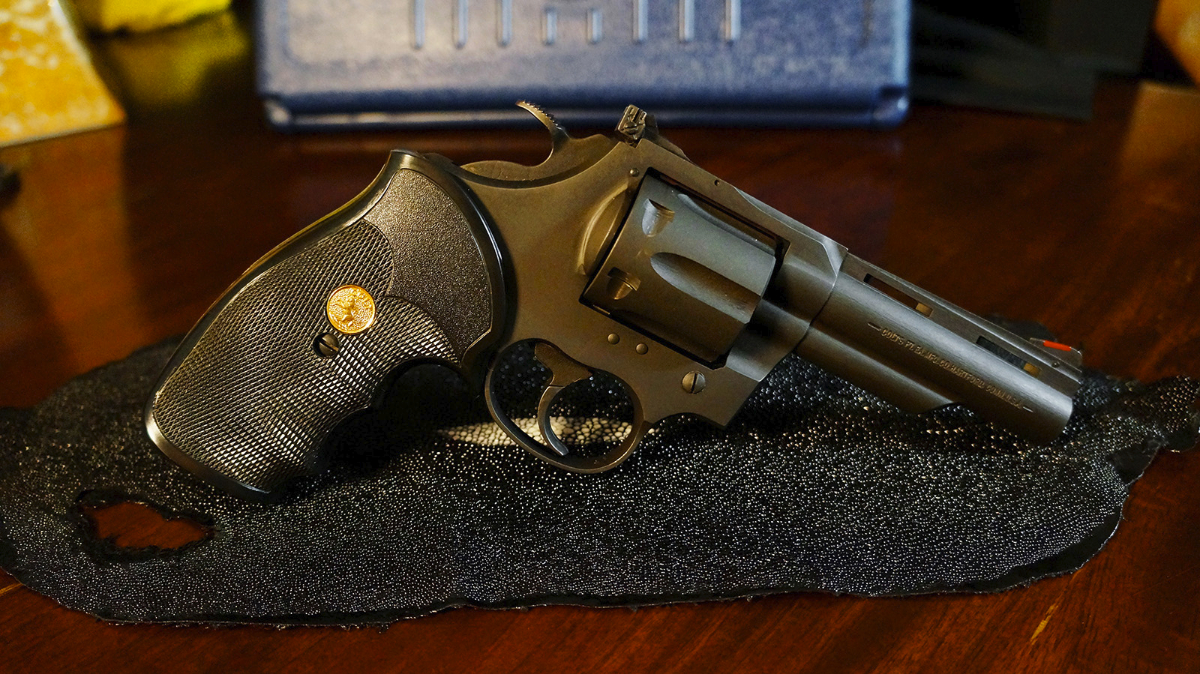
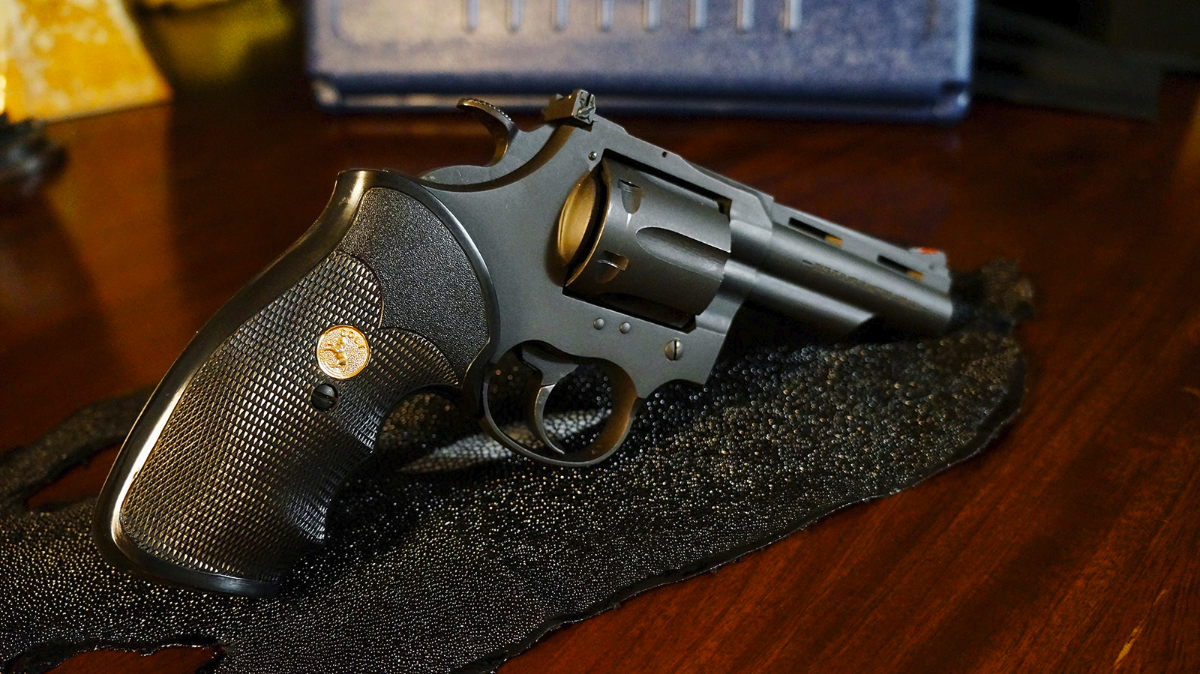
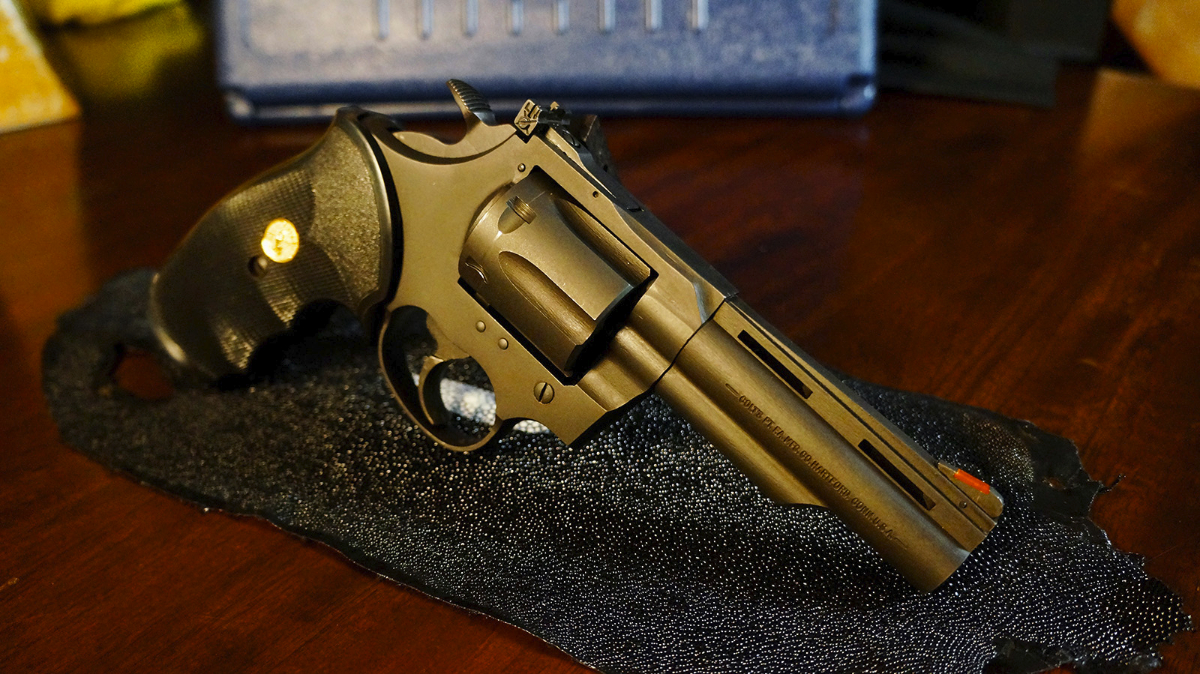
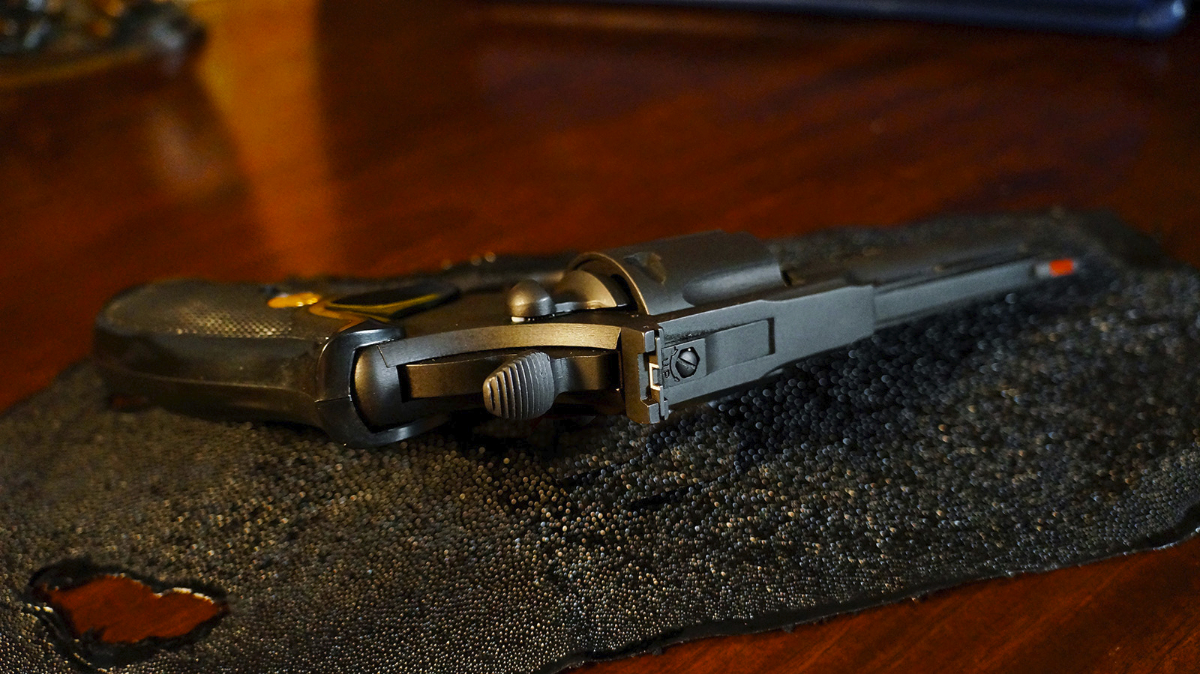
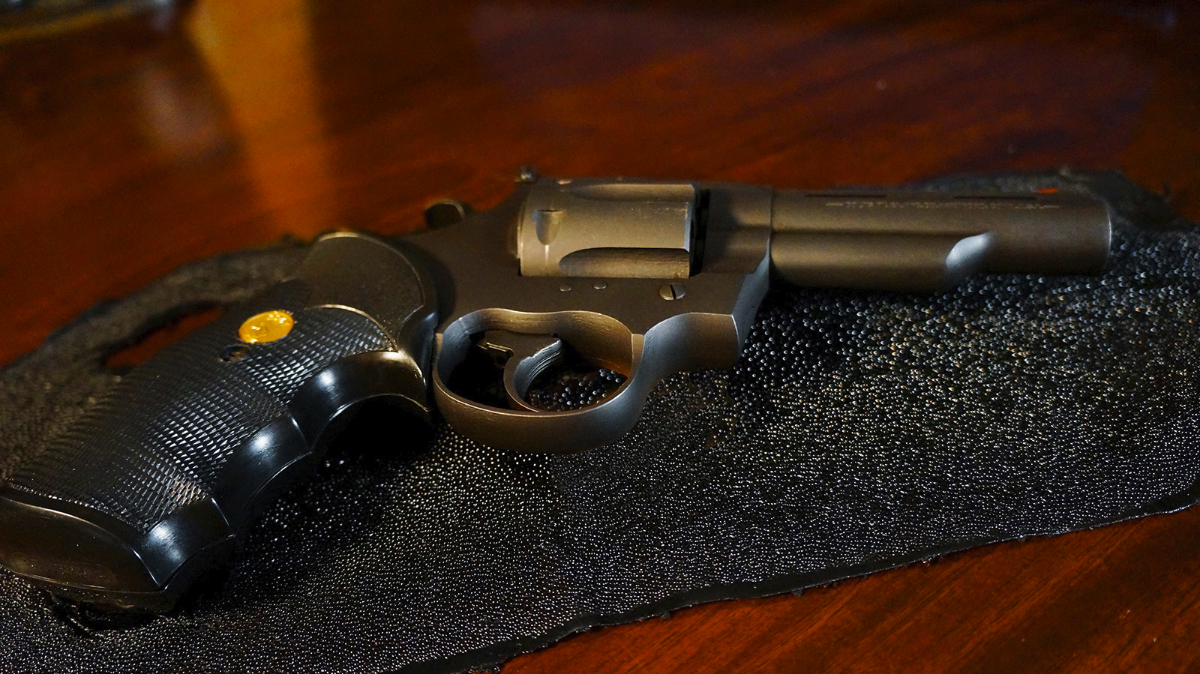
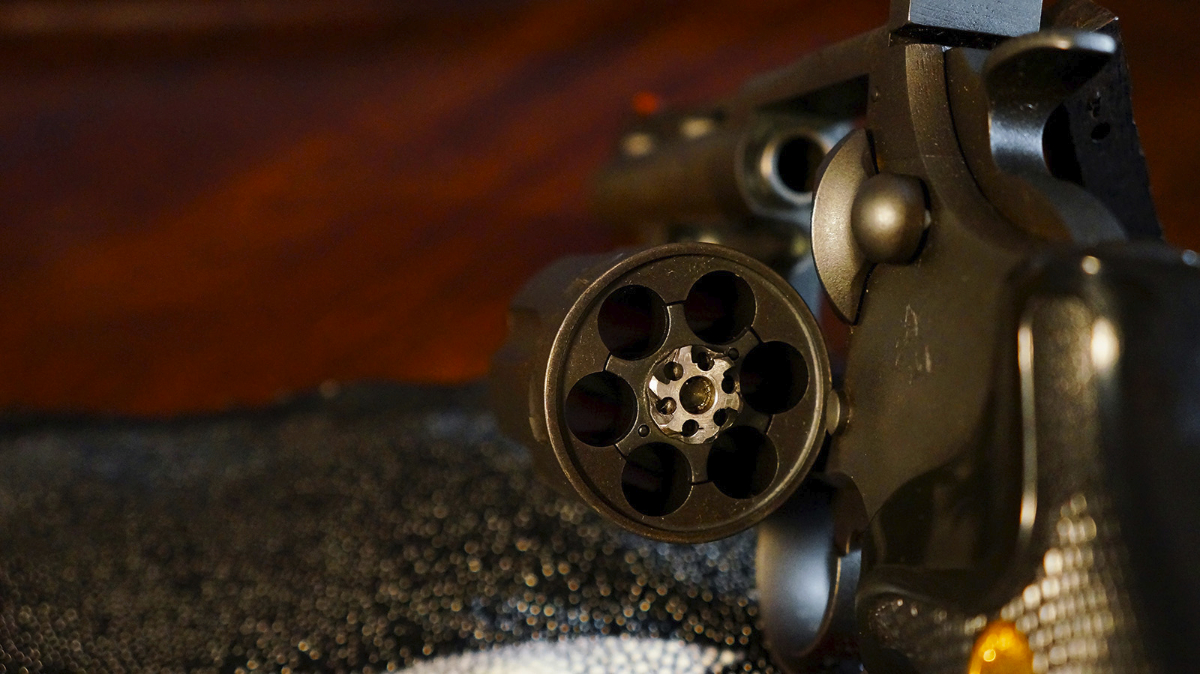
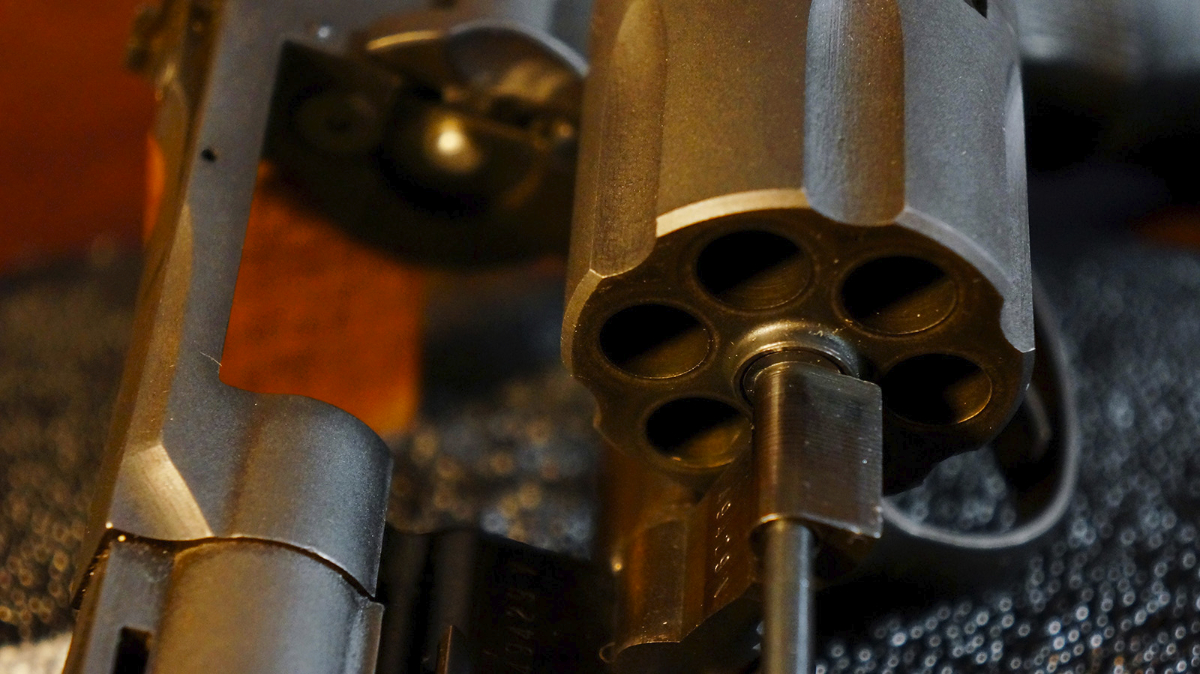
A Colt Anaconda 6″ in 44 magnum
Another someday I will get one for my sweating paws! Grumpy


Here’s to you Guys!


Some USMC Humor


And they make a Good Rifles too!
A hundred years ago, in New York City, 20,000 people marched down Fifth Avenue in protest against one of the greatest public health policy experiments in history. One of them was wearing a sign featuring an image of Leonardo da Vinci’s “The Last Supper,” beside the slogan, “Wine was served.” There were posters of George Washington, Thomas Jefferson and Abraham Lincoln. Another read: “Tyranny in the name of righteousness is the worst of all tyrannies.”
For a year, beer, wine and spirits had been illegal throughout the United States. From a public health perspective, it seemed a reasonable enough measure. That alcohol was a dangerous substance was clear: disease, violence, poverty and crime were intimately bound up with it. Even now, despite its failure, it is known as the “noble experiment”. But was it right to prevent people from making drinks they not only enjoyed, but that also served important cultural and religious purposes? Not for the first time, Americans found themselves torn in a balance between freedom and security — nor for the last.
Until recently, prohibition remained the largest experiment in social engineering a democracy had ever undertaken. And then, in early 2020, a new virus began to spread from China. Faced with this threat, the world’s governments responded by closing schools, banning people from meeting, forcing entrepreneurs to shut their businesses and making ordinary people wear face masks. Like prohibition, this experiment provoked a debate. In all the democracies of the world, freedom was weighed against what was perceived as security; individual rights versus what was considered best for public health.
Few now remember that for most of 2020, the word “experiment” had negative connotations. That was what Swedes were accused of conducting when we — unlike the rest of the world — maintained some semblance of normality. The citizens of this country generally didn’t have to wear face masks; young children continued going to school; leisure activities were largely allowed to continue unhindered.
This experiment was judged early on as “a disaster” (Time magazine), a “the world’s cautionary tale” (New York Times), “deadly folly” (the Guardian). In Germany, Focus magazine described the policy as “sloppiness”; Italy’s La Repubblica concluded that the “Nordic model country” had made a dangerous mistake. But these countries — all countries — were also conducting an experiment, in that they were testing unprecedented measures to prevent the spread of a virus. Sweden simply chose one path, the rest of Europe another.
The hypothesis of the outside world was that Sweden’s freedom would be costly. The absence of restrictions, open schools, reliance on recommendations instead of mandates and police enforcement would result in higher deaths than other countries. Meanwhile, the lack of freedom endured by the citizens of other countries would “save lives.”
Many Swedes were persuaded by this hypothesis. “Shut down Sweden to protect the country,” wrote Peter Wolodarski, perhaps the country’s most powerful journalist. Renowned infectious diseases experts, microbiologists and epidemiologists from all over the country warned of the consequences of the government’s policy. Researchers from Uppsala University, the Karolinska Institute and the Royal Institute of Technology in Stockholm produced a model powered by supercomputers that predicted 96,000 Swedes would die before the summer of 2020.
At this stage, it was not unreasonable to conclude that Sweden would pay a high price for its freedom. Throughout the spring of 2020, Sweden’s death toll per capita was higher than most other countries.
But the experiment didn’t end there. During the year that followed, the virus continued to ravage the world and, one by one, the death tolls in countries that had locked down began to surpass Sweden’s. Britain, the US, France, Poland, Portugal, the Czech Republic, Hungary, Spain, Argentina, Belgium — countries that had variously shut down playgrounds, forced their children to wear facemasks, closed schools, fined citizens for hanging out on the beach and guarded parks with drones — have all been hit worse than Sweden. At the time of writing, more than 50 countries have a higher death rate. If you measure excess mortality for the whole of 2020, Sweden (according to Eurostat) will end up in 21st place out of 31 European countries. If Sweden was a part of the US, its death rate would rank number 43 of the 50 states.
This fact is shockingly underreported. Consider the sheer number of articles and TV segments devoted to Sweden’s foolishly liberal attitude to the pandemic last year — and the daily reference to figures that are forgotten today. Suddenly, it is as if Sweden doesn’t exist. When the Wall Street Journal recently published a report from Portugal, it described how the country “offered a glimpse” of what it would be like to live with the virus. This new normal involved, among other things, vaccine passports and face masks at large events like football matches. Nowhere in the report was it mentioned that in Sweden you can go to football matches without wearing a facemask, or that Sweden — with a smaller proportion of Covid deaths over the course of the pandemic — had ended virtually all restrictions. Sweden has been living with the virus for some time.
The WSJ is far from alone in its selective reporting. The New York Times, Guardian, BBC, The Times, all cheerleaders for lockdowns, can’t fathom casting doubt on their efficacy.
And those who’ve followed Sweden’s example have also come in for a lot of criticism. When the state of Florida — more than a year ago and strongly inspired by Sweden — removed most of its restrictions and allowed schools, restaurant and leisure parks to reopen, the judgement from the American media was swift. The state’s Republican governor was predicted to “lead his state to the morgue” (The New Republic). The media was outraged by images of Floridians swimming and sunbathing at the beach.
DeSantis’s counterpart in New York, the embattled Democrat Andrew Cuomo, on the other hand, was offered a book deal for his “Leadership lessons from the Covid-19 pandemic”. A few months ago, he was forced to resign after harassing a dozen women. But the result of his “leadership lesson” lives on: 0.29% of his state’s residents died of Covid-19. The equivalent figure for Florida — the state that not only allowed the most freedom, but also has the second highest proportion of pensioners in the country — is 0.27%.
Once again, an underreported fact.
From a human perspective, it is easy to understand the reluctance to face these numbers. It is hard to avoid the conclusion that millions of people have been deprived of their freedom, and millions of children have had their education gravely damaged, for little demonstrable gain. Who wants to admit that they were complicit in this? But what one American judge called the “laboratories of democracy” have conducted their experiment — and the result is increasingly clear.
Exactly why it turned out this way is harder to explain, but perhaps the “noble experiment” of the 1920s in the US can offer some clues. Prohibition didn’t win because the freedom argument prevailed. Nor was it because the substance itself had become any less harmful to people’s health. The reason for the eventual demise of the alcohol ban was that it simply didn’t work. No matter what the law said, Americans didn’t stop drinking alcohol. It simply moved from bars to “speakeasies”. People learned to brew their own spirits or smuggle it in from Canada. And the American mafia had a field day.
The mistake the American authorities made was to underestimate the complexity of society. Just because they banned alcohol did not mean that alcohol disappeared. People’s drives, desires and behaviours were impossible to predict or fit into a plan. A hundred years later, a new set of authorities made the same mistake. Closing schools didn’t stop children meeting in other settings; when life was extinguished in cities, many fled them, spreading the infection to new places; the authorities urged their citizens to buy food online, without thinking about who would transport the goods from home to home.
If the politicians had been honest with themselves, they might have foreseen what would happen. For just as American politicians were constantly caught drinking alcohol during the prohibition, their successors were caught 100 years later breaking precisely the restrictions they had imposed on everyone else. The mayors of New York and Chicago, the British government’s top advisor, the Dutch Minister of Justice, the EU Trade Commissioner, the Governor of California all broke their own rules.
It isn’t easy to control other people’s lives. It isn’t easy to dictate desirable behaviours in a population via centralised command. These are lessons that many dictators have learned. During the Covid pandemic, many democracies have learned it too. The lesson has perhaps not yet sunk in, but hopefully it will eventually. Then perhaps it will be another 100 years before we make the same mistake again.
This is an edited translation of an article that first appeared in Sydsvenskan.
The Gibbs Rifle Company is known in the past for their Lee Enfield recreations and modifications. They focus on ’03 Springfields now, but up until 2004 they had an interesting line of Lee Enfields. Val Forgett and his father, Val III, started Gibbs Rifle Company in 1991, and having just bought the Parker Hale concern in England were uniquely situated to produce a modified Lee Enfield line of rifles. They started with surplus rifles and made some cool guns, sadly they build them no more.
Gibbs built their version of the No. 5 Jungle Carbine from a No. 4 barrelled action. A new stock and flash hider with bayonet lug were added to the trimmed down barrel, still in .303. By using the No. 4 receiver they cured the “wandering zero” problem of the original No. 5, which finally was traced to lightening the action a little too much. Their No. 7 Carbine starts with an Enfield 2A barrelled action and is in .308.
They also built 2 Sport Specialty rifles. The first, the Quest II Extreme Carbine, was built on an Enfield 2A action in .308 and had a nickel finish throughout. A flash hider/compensator helped to tame the recoil and included a see through scope mount. A new hardwood stock and a survival kit in the butt made this a weatherproof all around carbine. The last Lee Enfield rifle they turned out is my favorite. Starting out as a No.4, The Summit Carbine is chambered in 45/70, and the blued action is bedded in a new hardwood stock. The mag holds 3 and is perfect for anything on 4 legs in North America. They also had a Frontier Carbine which was similar, but based on a No. 1 Mk. III action. These rifles are an interesting take on the Lee Enfield.
Lots of folks like their Gibb’s rifles. Ron Card discusses the strength of the Enfield 45/70 conversion, which he thinks is ample, and is even entertaining the possibility of converting his 45/70 to 45/90! It looks like they’ll even fit in the mag. Another happy owner, Jamie Mangrum, likens his Summit Frontier carbine to shooting an accurate cannon. Throwing 400 grain bullets brings back the heyday of the British Empire, and let’s not forget the early Lee guns were chambered for 45/70 in the early 1880’s. About the only faults he noted was the trigger could have used some work, and he had some feeding problems with the 3rd round in the mag.
45/70 and the .303
PHILADELPHIA (CBS Philly) — The Philadelphia School District is investigating after a parent says a teacher let his child make a gun-shaped wooden toy. That shop class project now has a teacher in the hot seat and a father demanding both answers and accountability.
“He was coloring it in getting ready to put all the shapes on it. All the patterns on here. And there’s a little clip on the bottom,” Chariez Scott said, showing KYW-TV in Philly the wooden gun.
READ MORE:2 Street Vendors Killed After Car Went Off Roadway Into North Highlands Parking LotScott said his 14-year-old son was horsing around with his brother, playing with this wooden replica of a handgun. The problem? Scott doesn’t let his boys play with these types of toys. “If he had colored this in like he wanted to, you would’ve never knew what it was. You would’ve said he had a pistol in his hand,” Scott said. “And this is what he made in shop in class.”
The Philadelphia School District acknowledges a complaint was made on Oct. 4 against a carpentry teacher at Austin Meehan Middle School who allegedly allowed a student to produce a wooden weapon in class. Per the district’s policy, “any weapons, including simulated, replica, toy or look-alikes are prohibited from all school property.”
Scott said of the teacher, “He’s an adult, he has a strong responsibility over those children. Do the same thing for him. Hold him accountable for what he did.”
READ MORE:Father, Stepmother Of Roman Lopez Now Facing Murder Charges In Boy’s DeathOther parents weighed in, and many are concerned after this week’s lockdown following a second shooting near a school. The latest one was just blocks away outside Lincoln High School.
“A teacher let him do it in school. It’s not right, it’s not right, it’s not right,” one parent told Eyewitness News.
“That’s definitely bad,” another parent said. “Why would a teacher help make a gun? It’s stupid.”
MORE NEWS:Sacramento Bride ‘Can’t Believe That Happened’ After Wedding Photos Were StolenWhen asked what his biggest fear would be if his son’s wooden gun was colored in or painted, Scott said, “That he would’ve been killed.” The district says they are investigating and will not comment any further.