


HARRIS COUNTY, Texas – Texas Lt. Governor Dan Patrick is looking to give prosecutors in the Lone Star State a powerful tool against violent criminals.
“We have to put these people in jail a mandatory decade. Use a gun in a crime, ten years mandatory,” said Patrick.
SUGGESTED: Facebook parent Meta threatens to remove news from social media site
Patrick’s calling the crack-down measure a “priority” in the coming legislative session.
“We’ve got to get the guns out of the hands of criminals, this Wild West nonsense out there,” said Patrick.
The concept of additional time for gun crime is drawing support from Harris County’s District Attorney Kim Ogg.
“Mandatory minimums work wonders when it comes to actually holding people accountable for certain crimes. They are always expensive because a mandatory minimum means a person will serve a certain sentence when convicted of a violation of that law. Where it will help is keeping the truly dangerous, the most dangerous criminals off the street longer,” said Ogg.
By inclination and necessity, a crusader against violent crime, Ogg says more than 1,300 accused murderers are currently free on bond in Harris County, representing a clear and present threat to public safety.
She believes a majority of crime weary Harris County residents, both Democrat and Republican, are likely to support Patrick’s proposal.
“I think that people are so upset. They are suffering from crime that has plagued our urban areas, especially violent crime, that they may want this. It is a sign of the times,” said Ogg, who says Patrick’s legislation should include prosecutorial discretion.
every liberal news show pic.twitter.com/APQiQG8ysp
— Tyler Fischer (@TyTheFisch) July 3, 2022
This was so like almost all my in services when I was pretending to be a teacher out here! Grumpy
Elvis Revolver Memorabilia
One of the people in American history least likely in need of an introduction is Elvis Aaron Presley. His life is one of constant dichotomy: down-home country boy and provocative rock-n-roll superstar. The dusty roads of Tupelo, Mississippi, contrasted with the neon and rhinestones of Las Vegas. Military fatigues to pink Cadillacs. He also blurred lines musically, combining country, blues, gospel, and R&B into a rock and roll style that made him The King.
It resulted in an unmatchable career. 150 albums that reached gold, platinum, or multiplatinum status, 114 Top 40 hits, 31 feature films, 14 Grammy nominations, three TV specials, and numerous performances in Las Vegas. But even numbers as lofty as these fail to capture the man’s musical influence, charisma, charitable nature, sensuality, good looks, magnetism, or kindness. Nor do they come anywhere close to indicating his social significance in the realms of modesty, race, musical stylings, and sheer pop stardom. It is perhaps ironic then, that a man so difficult to categorize is readily identified by first name alone.
It is with this immense significance that Rock Island Auction Company is proud to present Elvis revolver memorabilia and other significant pieces of memorabilia in their May 2017 Premiere Firearms Auction.
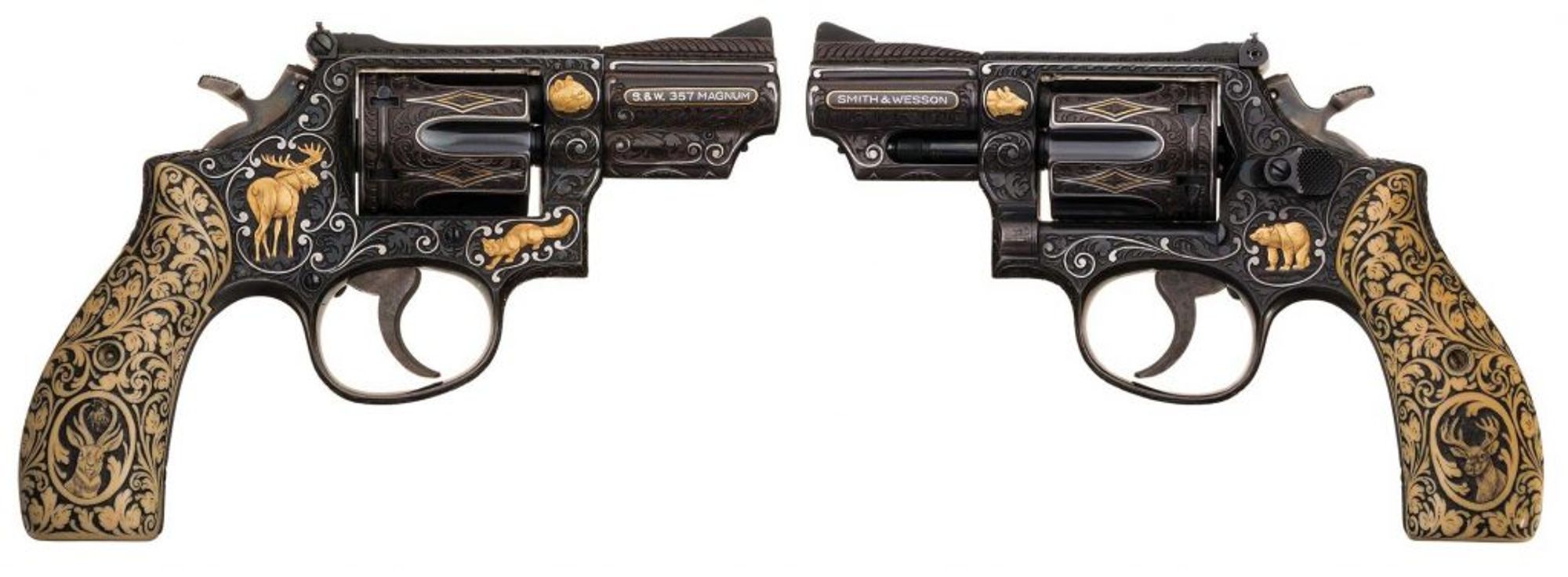
This elaborate, exhibition grade .357 magnum revolver was once part of the personal collection of Elvis Presley. It is accompanied by a mountain of documents and receipts establishing its direct and unbroken line of provenance. This gun was licensed to the King by serial number on Nov 6, 1970. Likely already planning the handgun’s presentation, he then had it sent to Friedrick Wilhelm Heym Co. in Germany for custom embellishment. They clearly spared no expense, slathering the little K-frame revolver with relief leaf and scroll engraving, gold and silver inlaid borders, and five incredible raised gold North American game animals. An expected sight on a fine large game rifle perhaps, but a rare and opulent touch for this small Smith & Wesson.
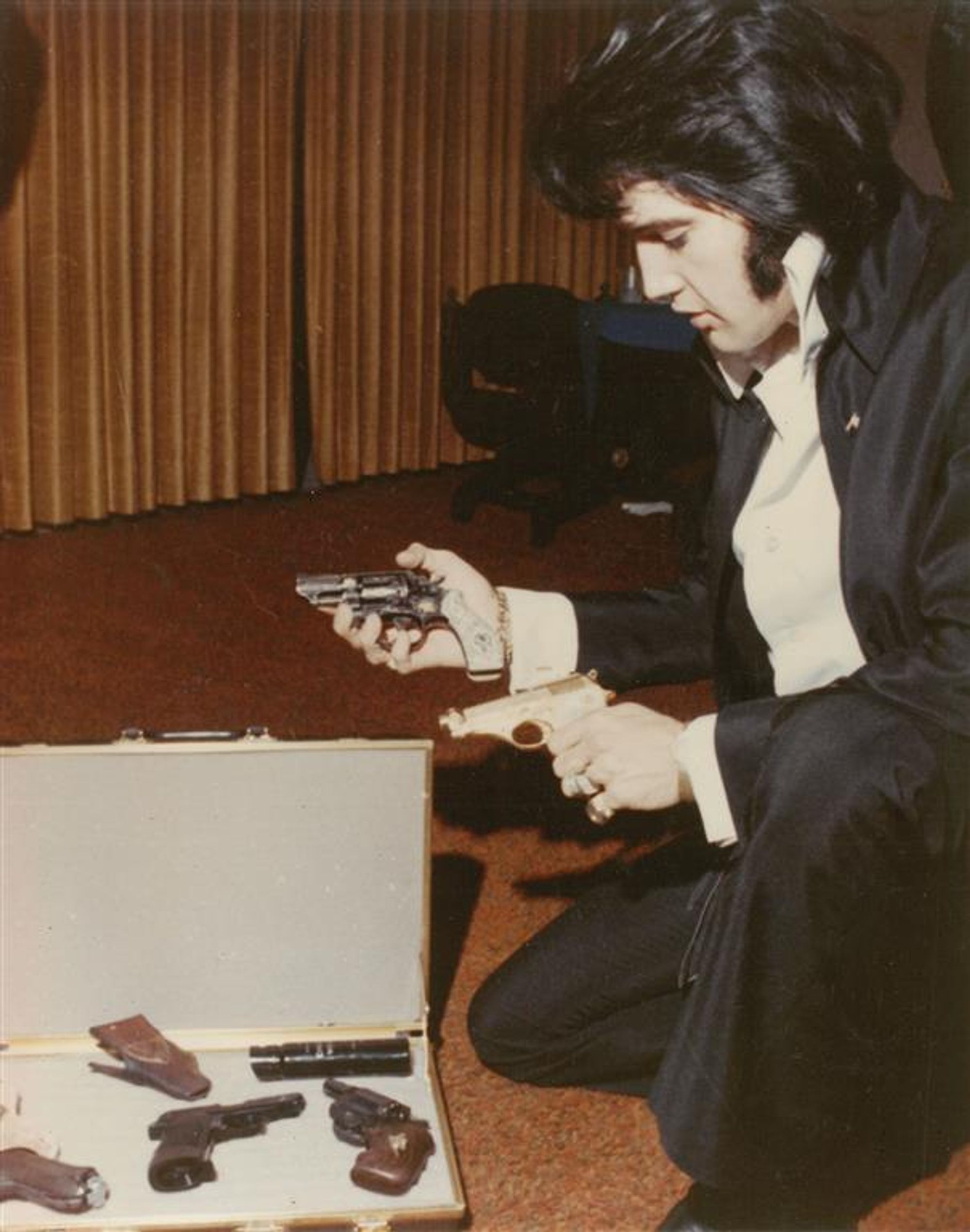
Such exquisite work also extends to the staghorn grips which have been elaborately engraved in a similar vine and scroll pattern and feature two engraved game animals of their own. Not a square inch of this gun was left undecorated, a feat not unsurprising to those familiar with Elvis’ style during that time. Once completed, he brought the Smith & Wesson along on a trip to Washington D.C. and presented it to Vice President Spiro Agnew that same year. Unfortunately for Agnew, he was only able to keep the presentation revolver for a short period of time before returning it as he was under investigation for corruption, which would eventually result in his resignation and other penalties.
With the Smith & Wesson back in the King’s possession, it was only a matter of time before he would find occasion to present the handgun created for such a purpose. That opportunity came when some of Elvis’ friends were going to be stranded at a local airport. Elvis called the sheriff, Gene Barksdale, to call in a favor and have his friends picked up. Such close communication was not irregular as Presley was a great friend to law enforcement, frequently gifting local departments donations, cars, equipment and uniforms for their softball team, and even paying the funeral expenses for a fallen officer. That night, Sheriff Barksdale left with his nephew, an administrative assistant, picked up the hapless travelers and shuttled them to Graceland. While Elvis was talking to Sheriff Barksdale the subject of guns was brought up, and before long he said, “Well, sheriff, I got something for ya.” The King left the room and when he came back, he had this very Smith & Wesson Model 19-2 in his hand and presented it to Sheriff Barksdale, much to the sheriff’s complete surprise. At a later date, Sheriff Barksdale passed that Smith & Wesson Model 19 on to his nephew, the administrative assistant who helped ferry the travelers that night. From that nephew, this incredible Elvis revolver memorabilia comes to Rock Island Auction Company and to gun collectors and Elvis enthusiasts around the world.
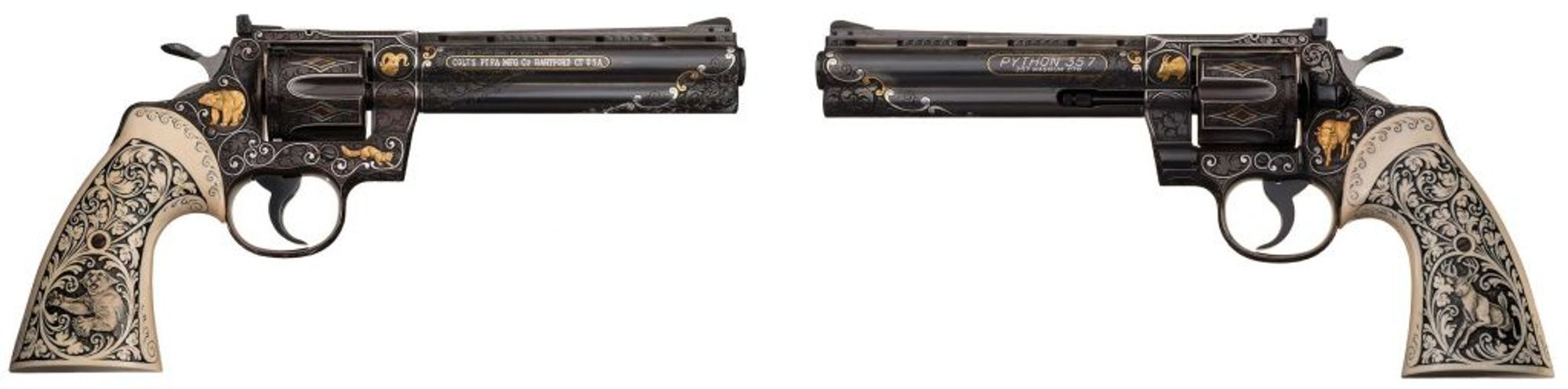
Lot 472: Historic Extremely Well-Documented Exhibition Quality Engraved, Inlaid and Carved Colt Python Double Action Revolver Presented by The King of Rock & Roll Elvis Presley to Employee Richard Grob. The Elvis revolver memorabilia sold for $172,500 in May 2017.
It’s no secret that in recent years the popularity, and resultant prices, of Colt Python double action revolvers has skyrocketed. Add to that the ever-present demand and the consistently high prices of Elvis memorabilia and you’ve set the stage for a bidding war at auction. This Colt Python was also owned by Presley and is accompanied by its original registration to the King. Even as early as 1973, the Elvis revolver memorabilia was featured in Guns Magazine so while it has been in the public eye for some time. But, it has not been available for public sale since Elvis himself bought it. Until now.
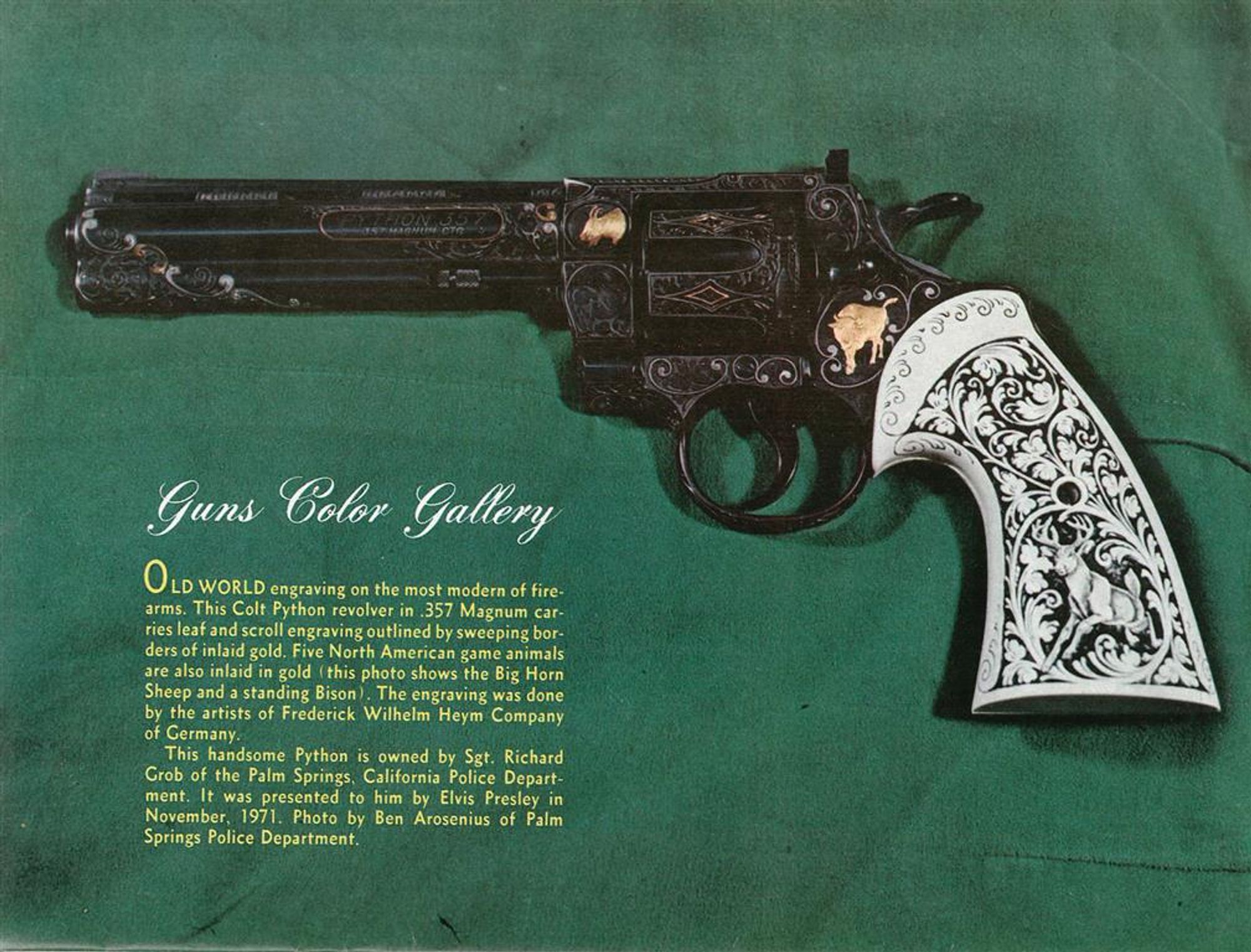
As can be seen, it is decorated in the same style as the Smith & Wesson Model 19-2, with the work again performed by Friedrick Wilhelm Heym Co. in Germany. This sumptuous snake gun was presented by Elvis to Richard Grob, the Director of Security and Operations for Elvis Presley Enterprises. Grob worked for Presley from 1967 until his death in 1977 and in that time became a close personal friend and confidant. He advised the King on many of his firearm purchases and frequently accompanied him to firing ranges. We may have him to thank for some of the wonderful Elvis revolver memorabilia that exists today!
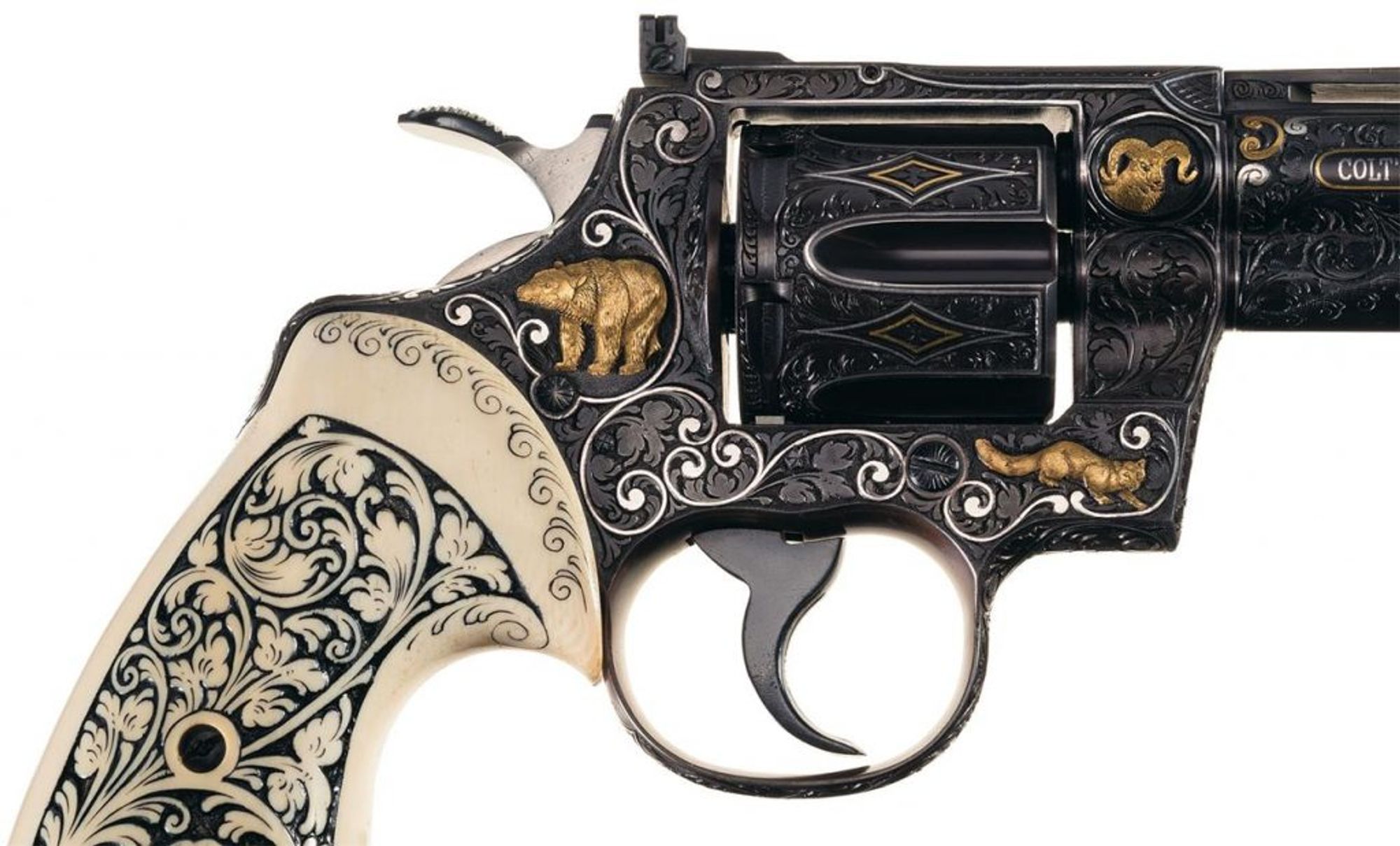
This Colt Python enjoys 95% coverage of the same masterfully executed relief leaf and scroll engraving that was ordered on his Smith & Wesson Model 19. Silver and gold inlays abound, often serving as borders, and again five raised gold North American big game animals make their presence known around the frame. The scrimshaw-esque grips are again a perfect compliment with their sweeping scrollwork framing a leaping stag on one side and a pouncing mountain lion on the other.
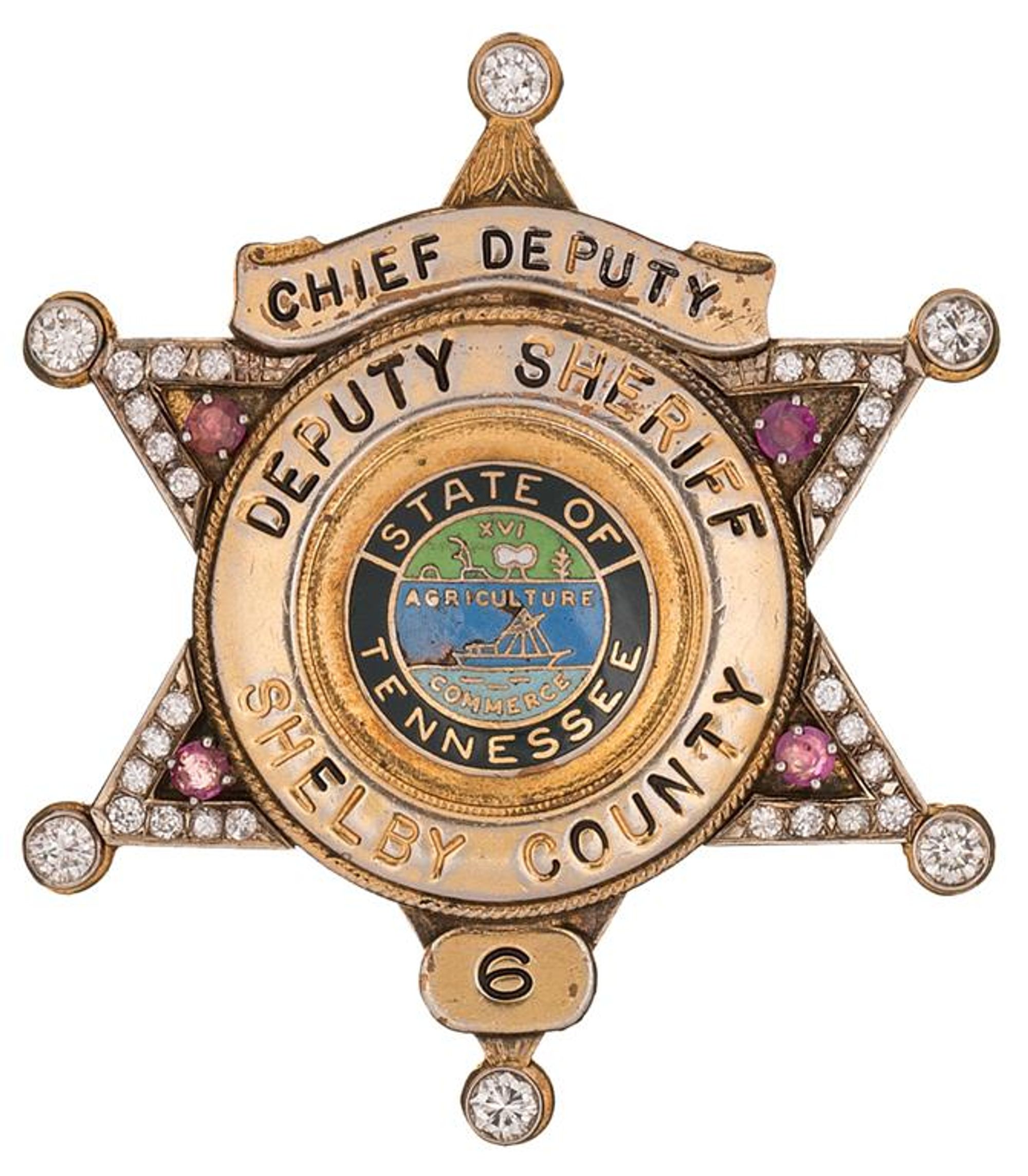
Now, this may not be Elvis revolver memorabilia, but it is still an iconic piece of for collectors. As aforementioned, Elvis was a big supporter of law enforcement, frequently donating to police departments in a number of different ways, adding yet another layer of complexity to the man. One might expect him to be close with and support law enforcement. After all, they often escorted him during his tours and performances. However, given Elvis’ rock-n-roll persona of sexuality and rebellion, along with his playing of music from both sides of a then very real color line, it is all too plausible to see how he could have clashed with authority.
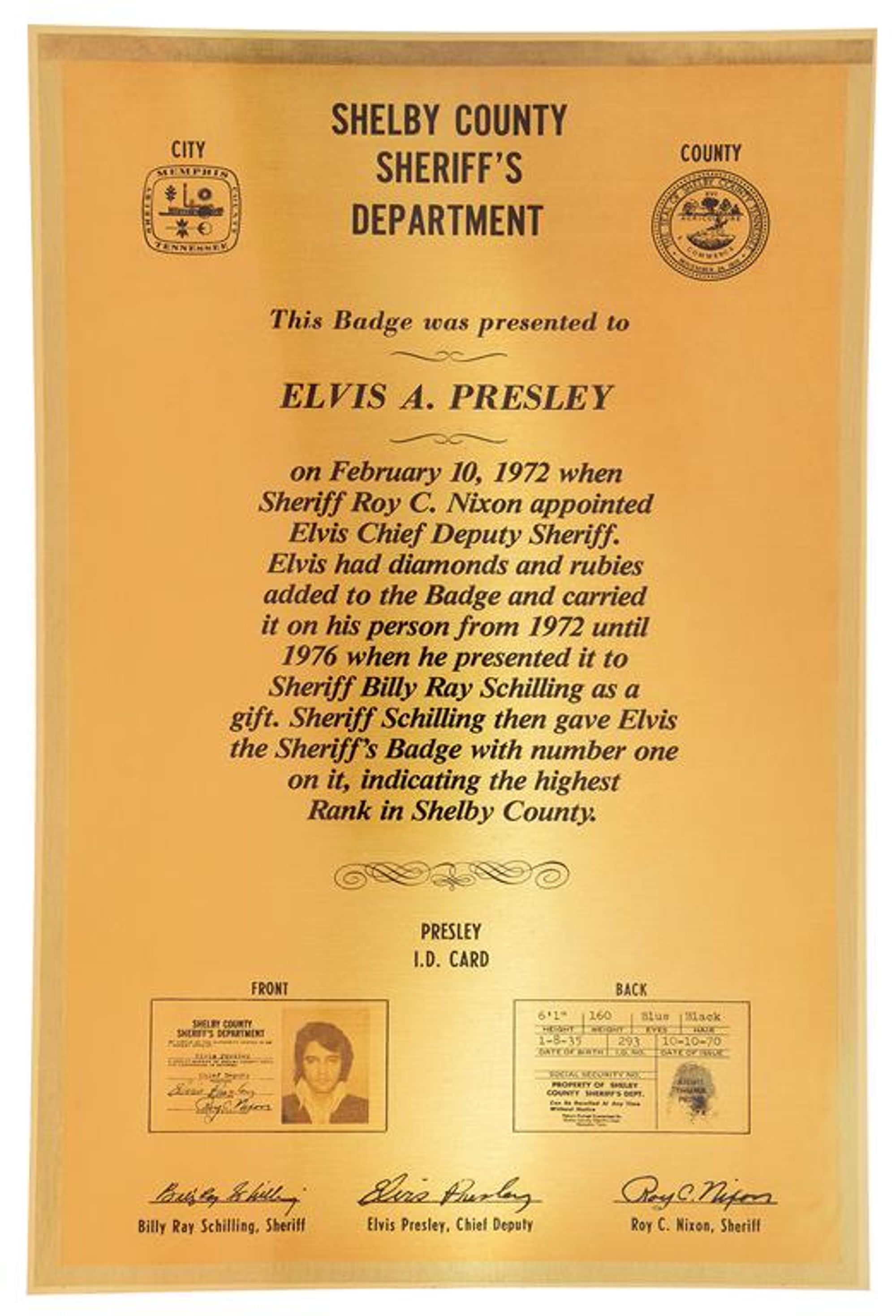
Elvis’ respect and admiration of the profession led to a collection of badges, with this particular one being presented to Presley by Shelby County Sheriff Roy Nixon on February 10, 1972, when he was also appointed chief deputy sheriff. He then took the badge, number six, added the diamonds and rubies to it, and carried it with him for four years until he presented it to Nixon’s successor Billy Ray Schilling. Sheriff Schilling then removed his own Sheriff’s Badge with the number one on it, indicating the highest rank in Shelby County, and presented it to the King.
This badge is a perfect microcosm of Elvis’ glitz and glam, his deep appreciation for law enforcement, plus the charity and concern he showed to the community of Memphis, TN.
Mount Vernon, Monticello, Falling Water, Graceland. When pressed to name famous American homes, Graceland is a name that invariably rises to the top. It is synonymous with Elvis Presley and his legend. This contract, offered by Rock Island Auction Company, is the real estate transaction for Graceland dated March 17, 1957. Surprising that such an estate could be transacted on two simple pages, it represents a pivotal moment in the life of the King.
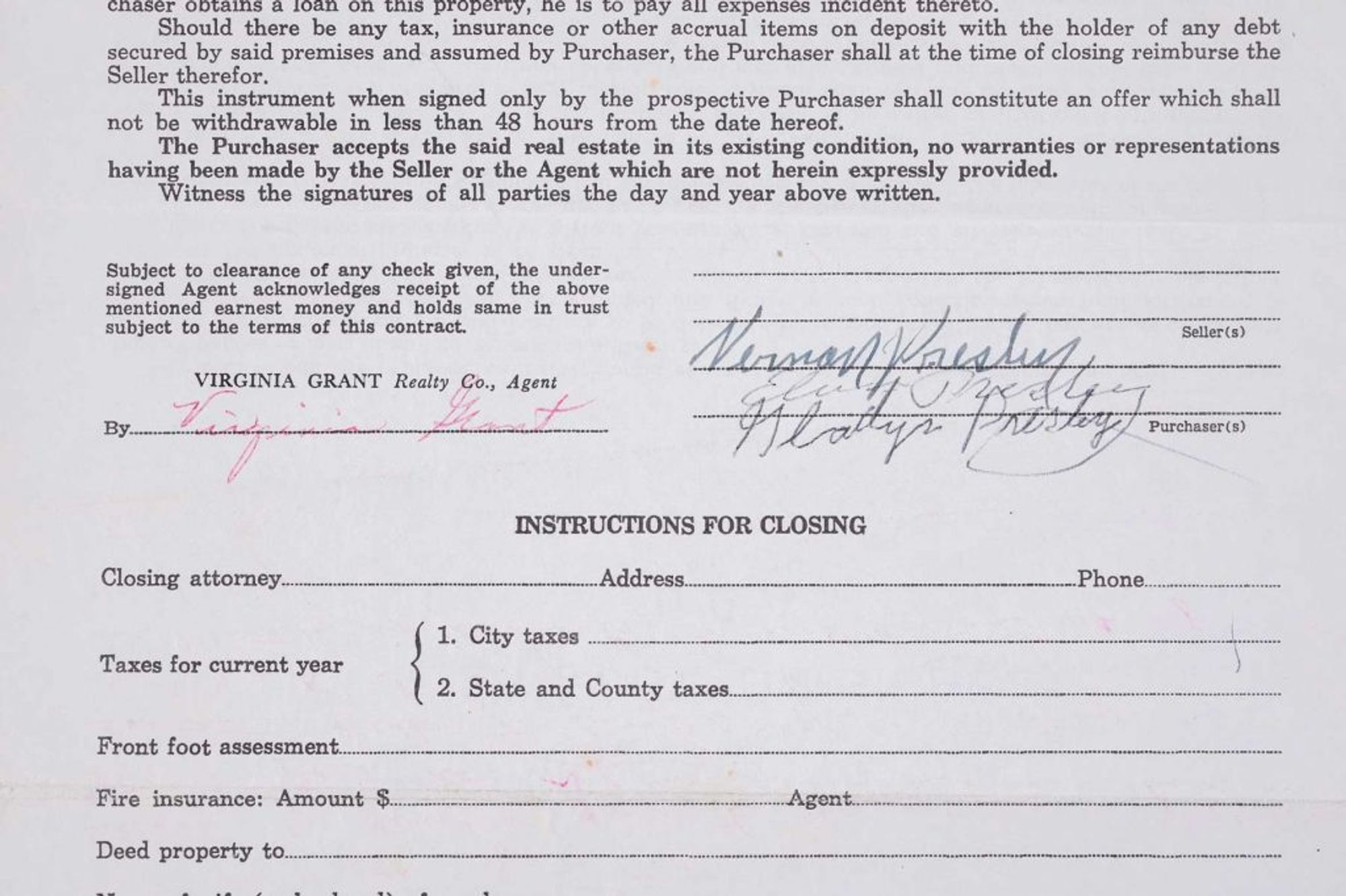
It is signed by Elvis, his parents, Vernon and Gladys Presley, and his real estate agent, Virginia Grant, who kept the contract from March 21, 1957 until May 25, 1995. Handwritten in red ink, Grant calls it the “first contract” in several accompanying documents. Also included with the documents is Grant’s book recounting the story of the sale, How Elvis Bought Graceland. The paperwork indicates that Elvis purchased Graceland for $102,500 at the age of 22 making it a great piece of Elvis memorabilia. As part of the offer, he traded the Presley’s home at 1034 Audubon Drive for $55,000. The remainder of the purchase was funded by a $10,000 cash deposit and a $35,500 mortgage.

Photo courtesy of Graceland.com
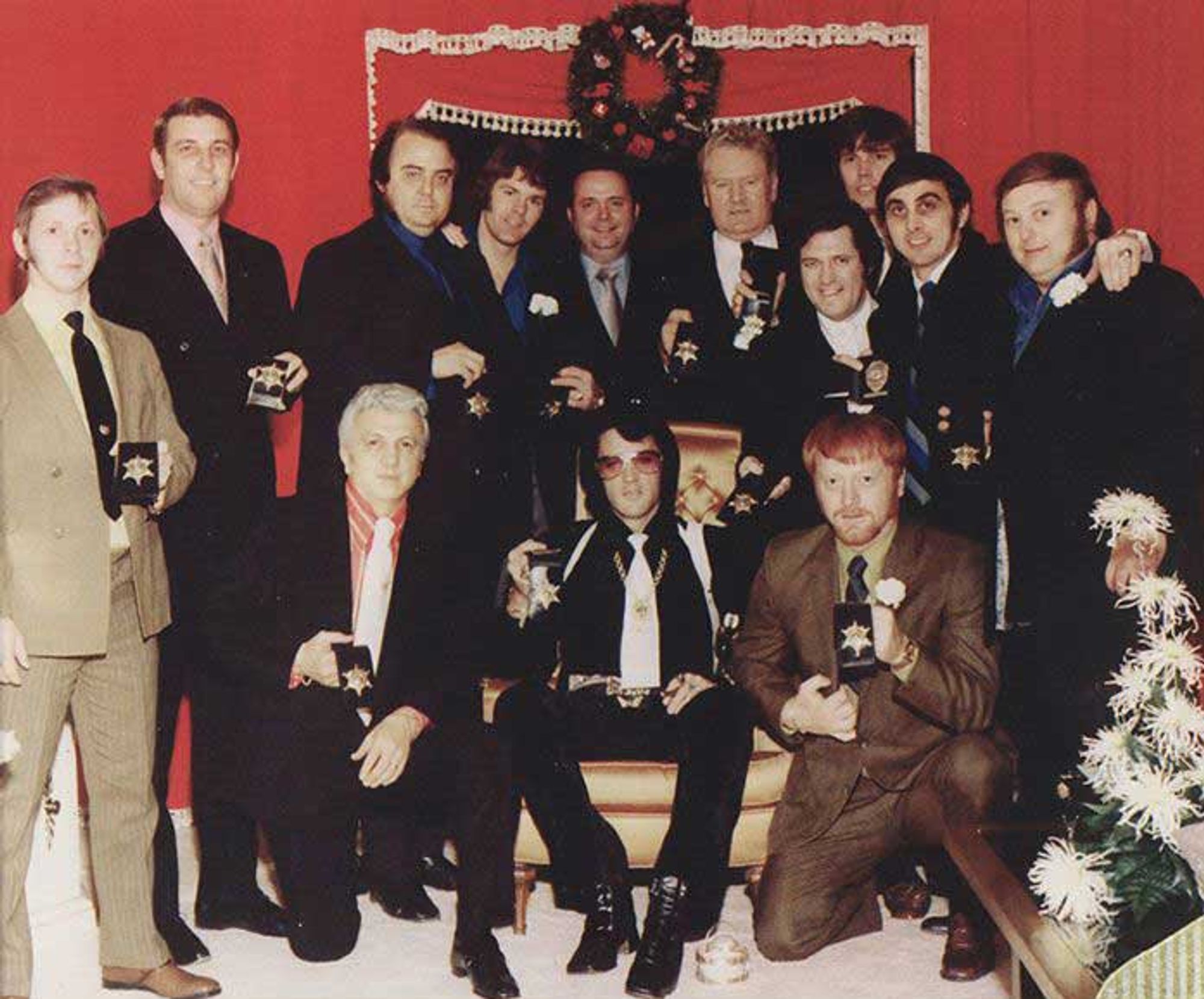
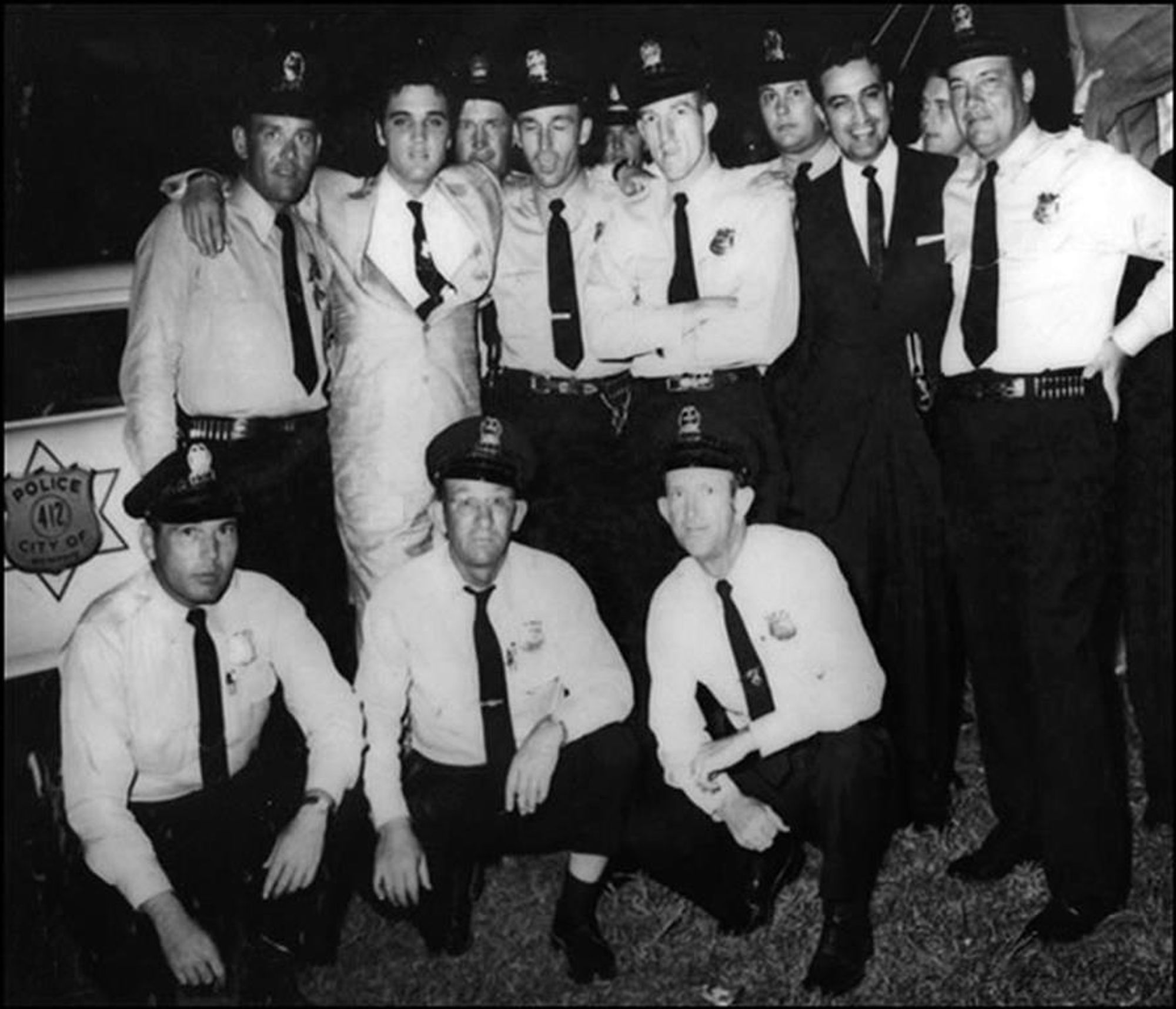
The “Memphis Mafia” is the nickname given by the media to Elvis and several of his closest friends who were deputized by the Shelby County Sheriff’s Department. He liked the name and it stuck. Think of them as a “Rat Pack” of boyhood friends, fellow musicians, and trusted associates. They were on Elvis’ payroll for a myriad of specific tasks and helped the King maintain an air of privacy, as well as a lifestyle of long nights often fueled by pharmaceutical drugs.
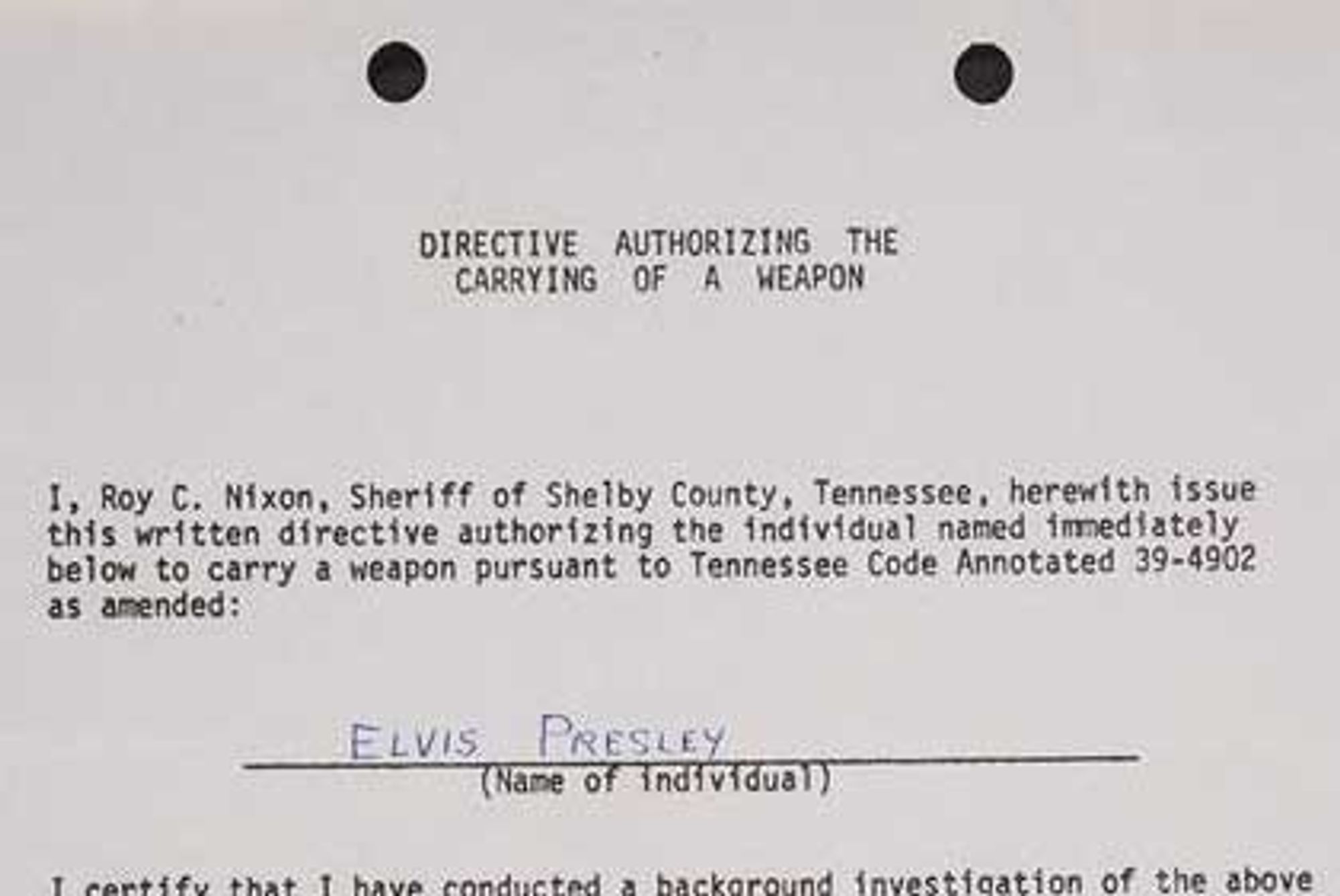
In this lot are dozens of documents, six of which are signed by Elvis himself. They include Elvis’ special deputy applications, affidavits, cover letters, Elvis’ authorization to carry a firearm, a rail travel card, special deputy ID cards, numerous documents related to his father, and much more. Please keep an eye out for the publishing of our online catalog for a full description of the numerous items included in this lot.

American Sniper; Shooter; Enemy at the Gates; the public’s fascination with sniper movies is both old and well-documented. Of course, this is not without reason. From old Jack Hinson to more well-known figures like Vasily Zaytsev, men and women who can hit targets at fantastic distances have gained a mythic status, even amongst other shooters, who attribute an almost black-magic ethos to practitioners of the art. This being America however, the home of competitive spirit, we’ve decided to take our admiration one step further on this Throwback Thursday. Of four of the best-known snipers—Chris Kyle, Carlos Hathcock, Simo Häyhä and Lyudmila Pavlichenko—who would come out on top in a friendly, but realistic, shoot-off?
To properly hold a contest of course, we’ll need some basic parameters by which to judge our contestants. So why not mimic the current real-world test of sniping skill, the International Sniper Competition, held annually at Fort Benning, Georgia? Not simply a test of shooting prowess, the International Sniper Competition tests mental and physical endurance, as well as the ability to evade detection. Thus we will use anecdotes from the careers of our contestants to roughly evaluate the following three parameters: accuracy; endurance; and stealth.
Fourth Place-Chris Kyle
The protagonist of American Sniper, Chief Petty Officer Chris Kyle is undoubtedly the most well-known sniper of recent years. With a Silver Star and four Bronze Stars with valor (among other awards), it’s not hard to see why. Kyle grew up hunting the Texas countryside with his father, before becoming a rodeo rider and attending several years of college. Having already lived more in 25 years than most have in 60, Kyle then joined the Navy SEALS, where he was assigned to SEAL Team-3, sniper element, Platoon “Charlie.”
Serving in many of the major battles of the Iraq war, Kyle stacked up more than 150 confirmed kills, earning him a bounty on his head that started at $20,000, and was later increased to $80,000. His most impressive was what he described as a “straight-up luck shot” from 2,100 yards, using his McMillan TAC-338 sniper rifle. Chris served four tours of duty in the Iraq War, which he survived despite being shot twice, and being involved in six IED detonations.
All of the above means Kyle was one impressive shooter, but on this list that’s almost a prerequisite. For endurance, the man served four tours despite being wounded multiple times, so he earns some definite points there. As far as stealth is concerned, however, there are no reported instances (at least, not available to us civilians) which attest to any particular ability to stay hidden. In fact, given that he often served as overwatch for teams of door-kickers, it’s reasonable to assume that concealing himself was never something of especial concern (relative to the other snipers we will come to, who often worked alone and behind enemy lines). Thus, Chief Petty Officer Kyle occupies position four on this list.
Third Place- Lyudmila Pavlichenko
The infamous “Lady Death,” bane of Nazi existence, comes next. Lyudmila Pavilchenko was born in Bila Tserkva, in what is now Ukraine. He early shooting skills were molded in the local OSOAVIAKhIM paramilitary youth program, where she achieved the “Voroshilov Marksman” badge, second degree, entailing not just sharpshooting, but also but also navigation, grenade throwing and physical training. While she left the program in her early adulthood, she returned to it as the clouds of war formed over Europe, enrolling in the two-year OSOAVIAKhIM sniper course in Kiev which familiarized her with the Mosin model 1891/1930 she was later to carry.
When Pavilchenko first attempted to enlist in the armed forces in 1941, she was turned away with an admonishment to try nursing. Luckily for the USSR, she was far too persistent to listen, and enrolled the next day in the 25th Chapayev Rifle Division. When she finally got her hands on an old Mosin (she had to take it from a fallen comrade), Lyudmila already knew its intricacies and weaknesses. She removed wood from the forend allowing her to better bed the barrel, filed the gunstock tip, padded where the receiver and magazine join and filed the bolt mechanism to ensure reliability.
Once the rifle was up and running, Pavilchenko wreaked a line of havoc across Odessa, Moldavia and Sevastopol. In just 11 months, she notched 309 confirmed kills, 36 of which were enemy snipers she stalked and dispatched. The most famous instance of this saw a three-day cat-and-mouse battle between her and an enemy sniper. When she felled him on the third day, Pavilchenko simply remarked, “he made one move too many.” Pavilchenko became such a thorn in the Germans’ side that they attempted to affect her defection by offering her chocolate and an officer’s rank over loudspeakers. When that didn’t work, they turned their rhetoric to naked threats, warning she would be torn to shreds. The Russians however, as ecstatic with her performance as the Germans were annoyed, promoted her all the way to Junior Lieutenant.
Unfortunately, this increased attention eventually caught up with Junior Lieutenant Pavilchenko. In June 1942, she was grievously wounded when an artillery barrage blew off half her right ear. She spent the rest of the war touring the USSR and the USA, in an attempt to inspire morale, and convince America to open a second front in Europe.
Junior Lieutenant Pavilchenko’s marksmanship, not to mention her technical know-how in reconstructing her rifle, are quite impressive. Staying hidden from a sniper on her trail for three days, ultimately besting him, is even more so. For these reasons alone, Junior Lieutenant Pavilchenko arrives at third place on our list.
Second Place-Carlos Hathcock
I can hear the angry Marines at my door already. Please keep in mind that second-best among some of the most legendary combat shooters in history is still rarified air by any stretch of the imagination, and Gunnery Sergeant Hathcock certainly has the lungs to breathe it. Utilizing a self-converted M21 Springfield variant he dubbed the M25 “White Feather”, after the nickname given him by the People’s Army of Vietnam (PAVN) for the tall feather he wore in his bush hat, Hathcock made his presence well known in-country. Already an experienced shooter prior to combat service, Hathcock grew up hunting on visits to his relatives in Mississippi, and later shot competitively. This culminated in his winning the Wimbledon Cup at Camp Perry in 1965.
On the battlefield, these skills served Hathcock well. He racked up a deadly reputation, with his fellow Marines dubbing him “the Legend” for countless incredible deeds. While his sheer number of downed enemy is certainly impressive, sitting at 93 confirmed (but more likely between 300 and 400, considering no third party was ever present to “confirm” things when he was behind enemy lines), his skill and tenacity is far more so. The PAVN themselves placed a $30,000 bounty on his head for killing so many of their own snipers. One of his most famous deeds occurred in just such a counter-sniping scenario, when seeing the glint off an enemy sniper’s scope, he shot him directly through the scope’s tube. While he claimed the damaged rifle, hoping to bring it home as a trophy, it was unfortunately stolen from the armory and lost to history. Another display of skill, not to mention sheer grit, came when he inched his way over 1,500 yards across a field, over four sleepless days and three nights, to eliminate a PAVN general. During this ordeal, he remained hidden despite almost being bitten by a bamboo viper, and stepped on by an enemy patrol
In 1969, Hathcock’s wartime career came to an unfortunate end when his LVT-5 struck an anti-tank mine. While the burns he sustained were too severe for him to return to combat, Hathcock continued his work on the home front, helping to establish the Marine Corps Scout Sniper School at the Marine base in Quantico, Virginia.
While he may never have made a shot at 2,100 yards like Chris Kyle, Hathcock’s skill with the old M21 was impressive. After all, placing a bullet through another’s scope, a feat so incredible it was officially “busted” on the Discovery Channel program Mythbusters, cannot be overstated. As far as mental and physical endurance is concerned … have you ever stayed awake for 84 hours to crawl across a field of snakes? Has ANYONE else, for that matter?? He also managed to stay fully hidden during this feat, earning him high marks across both our final two categories. Gunnery Sergeant Hathcock, therefore, sits at position two on our list.
First Place-Simo Häyhä
Simo Häyhä, the unassuming wintertime warrior from Finland, unquestionably wins this contest. Born in the rural Küskinen, Rautjärvi province (which is now Russian territory), Häyhä honed his skills from a young age, hunting in the Finish woods around his home. At the age of 17, he joined the Rautjärvi Civil Guard, and later served mandatory conscription in the Army from 1925-1927, in Bicycle Battalions 1 & 2. After being discharged, he continued on in the Civil Guard, winning numerous Viipuri Civil Guard regional competitions throughout the 1930s. Outside of the guard, his primary living was made as a hunter and trapper, meaning that in all areas of his life, a rifle rarely left Häyhä’s hands.
When the Winter War began, with Russia conducting a false-flag shelling of its own village of Manilla to initiate conflict, 450,000 Soviet troops poured over the Finnish border. His abilities quickly recognized, Häyhä was immediately relied upon to take out high-value targets others could not reach. Counter sniping, therefore, became his primary responsibility. This particular duty meant Häyhä conducted his business primarily with iron sights, an unthinkable method for a 20th century sharpshooter. He did this to prevent other snipers from spotting him in the snow, where the telltale glint of a scope could prove fatal. At one point, Häyhä even dislodged a well dug-in enemy sniper at 400 yards with such a setup. Eschewing any and all comforts in pursuit of his craft, Simo regularly removed his gloves to use them as a rifle rest, despite weather that dipped to -43 degrees Celsius, and filled his mouth with snow to eliminate the steam from his breath.
As the small ranks of the Finnish military required even snipers to pull double duty, Häyhä was sometimes called upon to fight in close. During one such occasion, he crawled silently with his comrades almost to the light of a Russian campfire, before opening fire on the unsuspecting soldiers and making off with their weaponry. All this technique, daring and skill led Häyhä to rack up 542 confirmed kills over just 98 days on the Kollaa front. The Soviets became so frustrated with the devastation he wreaked that they began to call down artillery strikes onto his suspected positions. But Häyhä always escaped into the safety of the forests, leading the Finnish media to bestow upon him the moniker of “White Death,” for his ability to materialize, kill, and vanish into the snow without a trace.
Finally, on March 6, 1940, Häyhä was grievously wounded in close-quarters combat in the forests of Ulismaa. A Russian infantryman hit Häyhä in the jaw with an exploding bullet, shattering the bone and half his face. Despite being taken for dead and thrown onto a pile of corpses (according to one story, anyway), Häyhä was recognized as alive when someone saw his boot twitching around, and was transported to the hospital on a sleigh. There Häyhä remained in a coma for seven days, until March 13. By the time he awoke, the war was over.
Häyhä ‘s prowess not just with a rifle, but with a fully unmagnified one, puts him atop our list for sharpshooting skill. The endurance displayed despite the bitter cold and long odds lend him high marks there as well, while finally, his total evasion of airstrikes and counter-snipers, only eventually being wounded when acting as infantry in a pitched battle, combine to thrust Second Lieutenant Häyhä to the top of our list.
We hope you’ve enjoyed this Throwback Thursday sniper shoot-off. For more on Simo Häyhä and Lyudmila Pavilchenko in particular, check out the following stories right here at nrafamily.org:
.gif)

.gif)
.gif)
.gif)


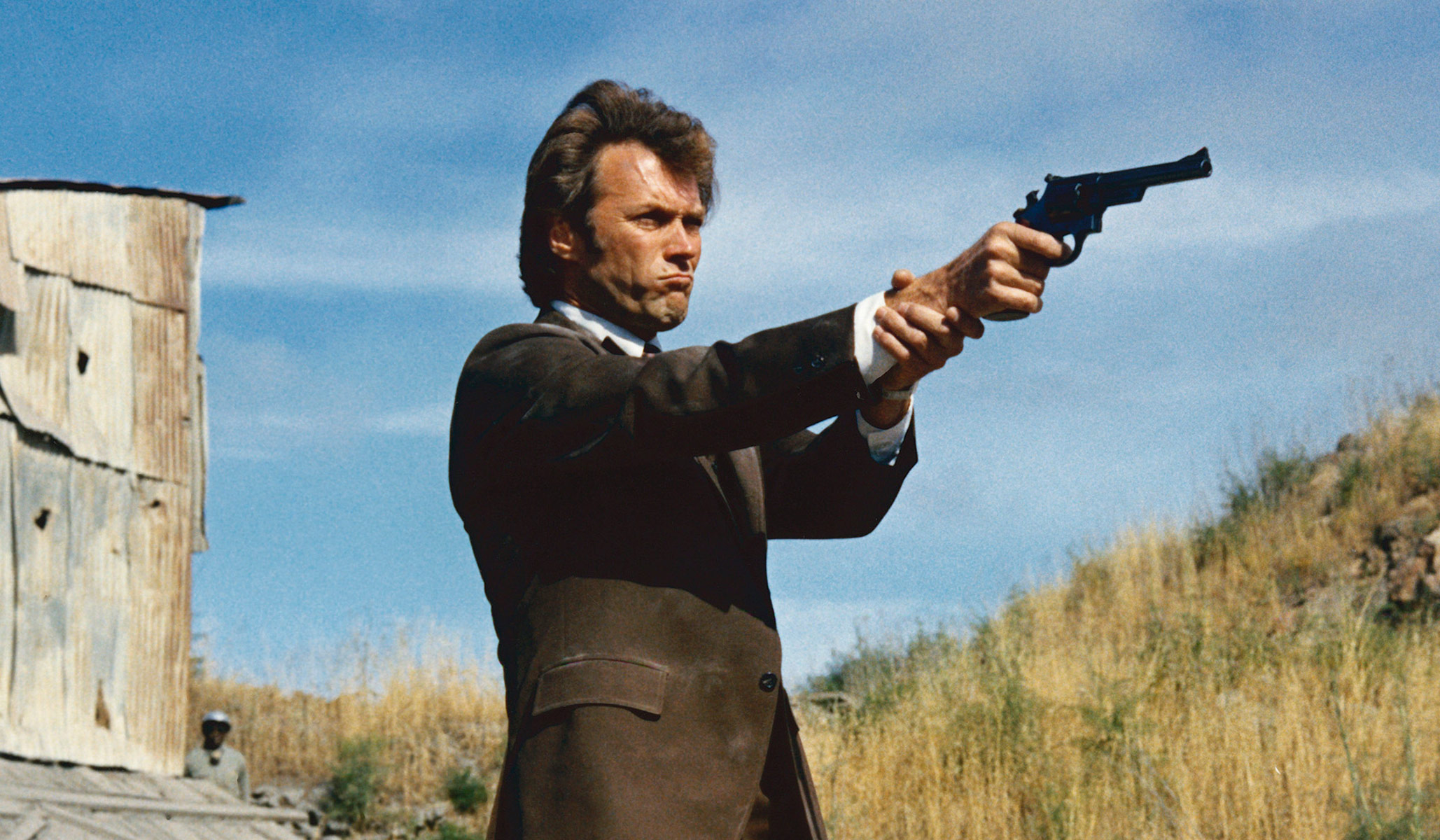
Down these mean streets a man must go who is not himself mean, who is neither tarnished nor afraid. The detective in this kind of story must be such a man. He is the hero; he is everything. He must be a complete man and a common man and yet an unusual man. He must be, to use a rather weathered phrase, a man of honor — by instinct, by inevitability, without the thought of it, and certainly without saying it.
So wrote Raymond Chandler in a 1944 Atlantic Monthly essay, “The Simple Art of Murder,” in which he defended the fiction genre he had come to master, the detective story. Chandler died in 1959, eleven years before the first screen appearance of the detective he surely would have admired and who almost precisely fit this description: Inspector Harry Callahan of the San Francisco Police Department, better known as “Dirty Harry,” played by Clint Eastwood.
Dirty Harry premiered 50 years ago in a time of social upheaval and rising crime, conditions very much resembling today’s. Inspector Callahan was a man whose feet were planted in one era while his eyes beheld another, one he did not find pleasing. He harbored a smoldering contempt not only for the criminals whom he saw unraveling society’s fabric, but also — and perhaps even more so — for those he viewed as abettors in the unraveling, the spineless police brass and inordinately legalistic district attorneys and judges.
I say Harry Callahan almost precisely fit Chandler’s description because he was in fact tarnished, willingly, even eagerly so. He was not tarnished in the sense that he was corrupt — perish the thought! — but because, in performing his job as a homicide detective, unlike the office-dwellers he disdained, he sometimes entered situations in which his only choice was between the commission of two wrong acts, one illegal, the other immoral. He accepted the stain of having acted illegally as the price of acting morally.
The main storyline of Dirty Harry involves Callahan’s pursuit of “Scorpio,” a serial killer loosely modeled on the still-unsolved “Zodiac” murders committed in and around San Francisco in the late 1960s. Chillingly played by the harmless-looking Andy Robinson, Scorpio holds the city in fear after randomly shooting two people with a sniper rifle. When he kidnaps a teenage girl and holds her for ransom, claiming she is hidden underground with only a few hours of breathable air left to her, Callahan is dispatched to deliver the payment.
Scorpio directs Callahan from one payphone to another across the city before they finally meet face to face near the cross on Mount Davidson. Rather than accept the ransom and release the girl, Scorpio brutally assaults Callahan and tells him he’s going to let the kidnapped girl die. Callahan produces a hidden knife and stabs Scorpio in the leg, but Scorpio escapes.
Callahan tracks him down to the abandoned Kezar Stadium, former home of the San Francisco 49ers. Entering the killer’s lair without a search warrant, Callahan pursues Scorpio onto the football field, where in a cinematically brilliant scene he shoots him in the leg.
It is here that Callahan must choose between doing what is legal and what is moral. Aware that the kidnapped girl will die if not found soon, Callahan extracts a confession from Scorpio by stepping on his wounded leg. The girl is found, though already dead, and Callahan is upbraided by the district attorney and a judge, who tell him that no case can be brought because of his transgressions. “The suspect’s rights were violated,” says the judge, “under the Fourth and Fifth and probably the Sixth and Fourteenth Amendments.”
“And Ann Mary Deacon,” says Callahan, of the murder victim. “What about her rights?”
With this, Callahan speaks for many today who see the criminal-justice pendulum as having once again swung too far in the direction of coddling criminals. San Francisco is home to district attorney Chesa Boudin, one of the George Soros–funded “progressive” prosecutors lately installed here and there across the country, overseeing dramatic crime surges in their respective cities. San Francisco’s homicides have increased 17 percent so far this year, coming on top of a similar increase in 2020. What would an updated Harry Callahan have to say about that?
But of course there will be no updated Harry Callahan, no matter how eager the moviegoing public might be to embrace one. In today’s Hollywood, where woke reigns supreme, it is unthinkable that such a character would be brought to the screen, though one can imagine a studio pitch meeting where Callahan is envisioned as a woman or gay or transsexual or some acceptable amalgam of all three. “How about,” a screenwriter might propose, “if we have Harry take up ‘Alice’ on his offer of a quickie on Mount Davidson?”
No, thank you. I’ll stick with the original.
Raymond Chandler concludes his description of the ideal detective thus:
He is a relatively poor man, or he would not be a detective at all. He is a common man or he could not go among common people. . . . He will take no man’s money dishonestly and no man’s insolence without a due and dispassionate revenge. . . . He has a range of awareness that startles you, but it belongs to him by right, because it belongs to the world he lives in. If there were enough like him, the world would be a very safe place to live in, without becoming too dull to be worth living in.
That is Harry Callahan, whose exploits in Dirty Harry and its four succeeding films in the franchise are as enjoyable today as ever. He remains, 50 years later, a supremely entertaining man of honor.
