



Category: Uncategorized

This is an early Colt SP1 AR15, similar to my first one bought
after year’s toil as a janitor in a print shop.
God designed us to work. Anything outside that paradigm is innately deleterious to the human psyche. I got a job about 10 minutes after I got my driver’s license and I’ve worked pretty much every day since.
Back in my day, you got your license at your fifteenth birthday. I wouldn’t trust today’s 15-year-old boys unsupervised with underarm deodorant, much less an automobile, but it was a different time. I actually took my first solo jaunt behind the wheel at 13-years-old, but that’s a story for a different time.
My very first job was arguably the coolest I have ever had. I was a janitor in a print shop and got to wear any raggedy clothes that might cover my gangly carcass. I learned to operate an offset press, run a Heidelberg windmill and clean the heck out of a toilet. I also came to appreciate that smoking can be very bad for you.
My partner in crime was a delightful soul named Maurice. Maurice was unimaginably cool, but he was also a heavy smoker. We maintained big drums of some kind of cleaning fluid used to clean the presses. It was kerosene, or nitroglycerine, or pure liquified plutonium or something. I, myself, was a bit afraid of the stuff. We dispensed it from those squirt bottles that restaurants use for ketchup.
This was the Mississippi Delta in summertime, so it was Africa-hot. The air was so thick you could tear off a chunk and gnaw on it. There was no air conditioning, so we kept the doors standing open. There was a fan, as I recall, but stirring around superheated air doesn’t help much, thermodynamically speaking.
Maurice hovered over a printing press fretting with something or other, the ubiquitous cigarette dangling from his lips. I was on the other side of the shop but glanced up just in time to appreciate the setting. As luck would have it, he was standing with his back to the open door.
Maurice squirted some of that vile elixir across the top of the press just as he took a quick inhale on his smoldering coffin nail. Gasoline is actually 15-times more energetic per unit gram that Trinitrotoluene (TNT). Though I don’t know exactly what this stuff was, it was something like that.
The explosion produced a palpable overpressure within the building. The force lifted Maurice up and propelled him backwards out through the open door. When I got to his side he was on his back and a bit singed, but otherwise unhurt, the cigarette still dangled from his lips. We even got the fire put out on the printing press without any lasting deleterious effects.
My experience working at that print shop taught me both the value of hard work and the dangers of smoking.
A Man On A Mission
I toiled away under such conditions as those for a full year, scraping and saving to buy my first black rifle. I bought that SP1 AR15 in 1982; my dad had to do the 4473 for me. It cost me $486, or the equivalent of $1,329 today — wow!
I stripped that rifle down to pins and springs and learned every nuance of its design. I bought ammo every time I could afford it — a box or two at a time — and shot it into the side of the old levee out near the Mississippi River. I didn’t own a set of ear plugs, so it’s a wonder I can hear at all today.
I once shot a squirrel with that thing but immediately wished I hadn’t. I am a strict adherent to the axiom that one should not kill anything one isn’t planning to eat, and afterwards this particular tree rat was no longer comestible. However, I did get to the point where I could run the weapon both quickly and well, skills that held me in good stead later when I was issued something similar.
Ruminations
I brought that rifle to school on occasion, most commonly to show off either to fellow students or faculty. As Satan had not yet invented school shootings, I even had my picture taken for the yearbook with it. Innocence once lost can never again be regained.
In a fit of insensate stupidity, I traded that rifle for a SIG SAUER P226 at a gun show. I have since replaced it with another made in 1966, the year of my birth, but it’s just not the same. That black rifle represented the fruits of an entire year’s toil replete with copious heat, sweat and filth. In retrospect, I think it was a steal.
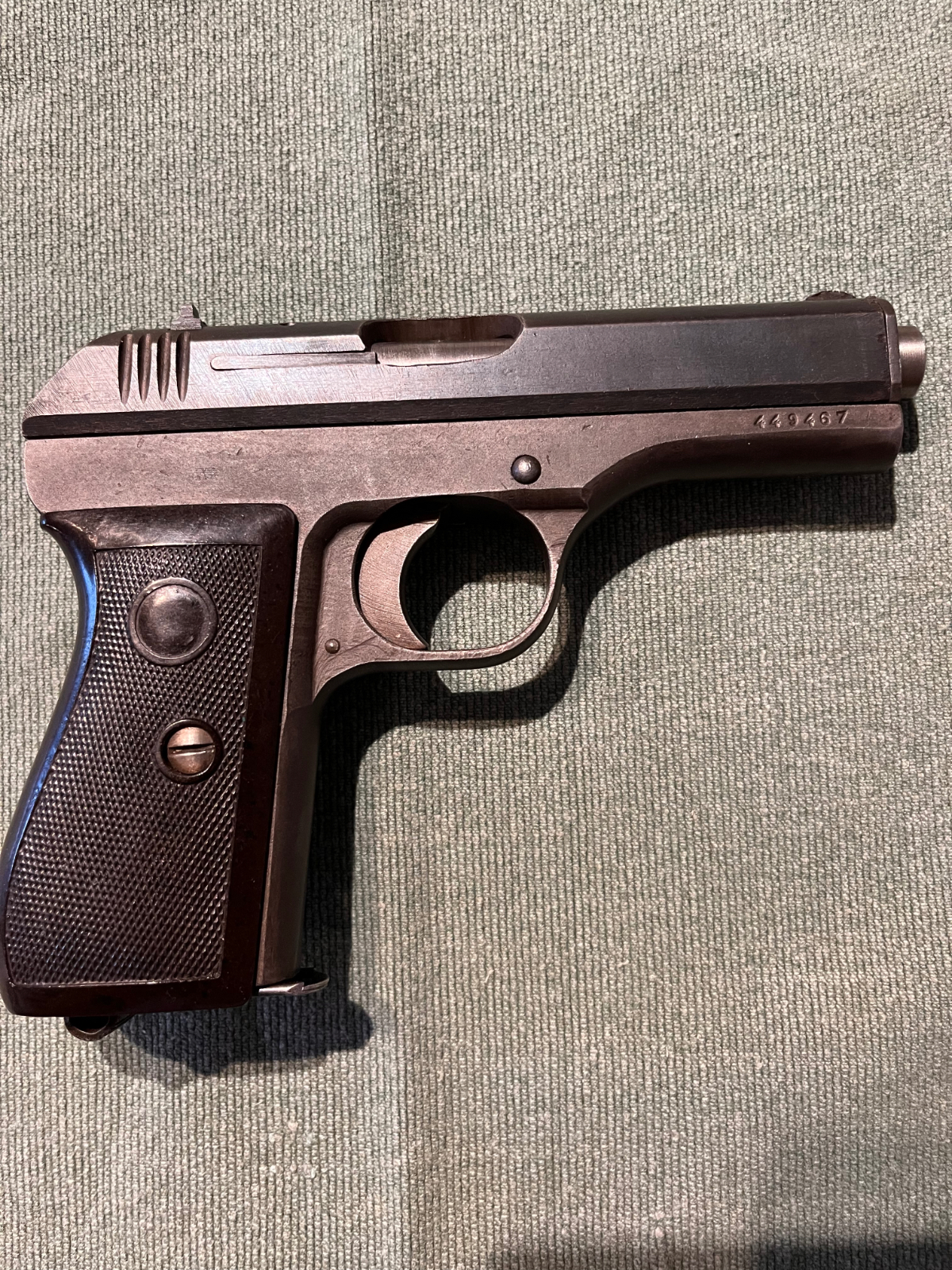
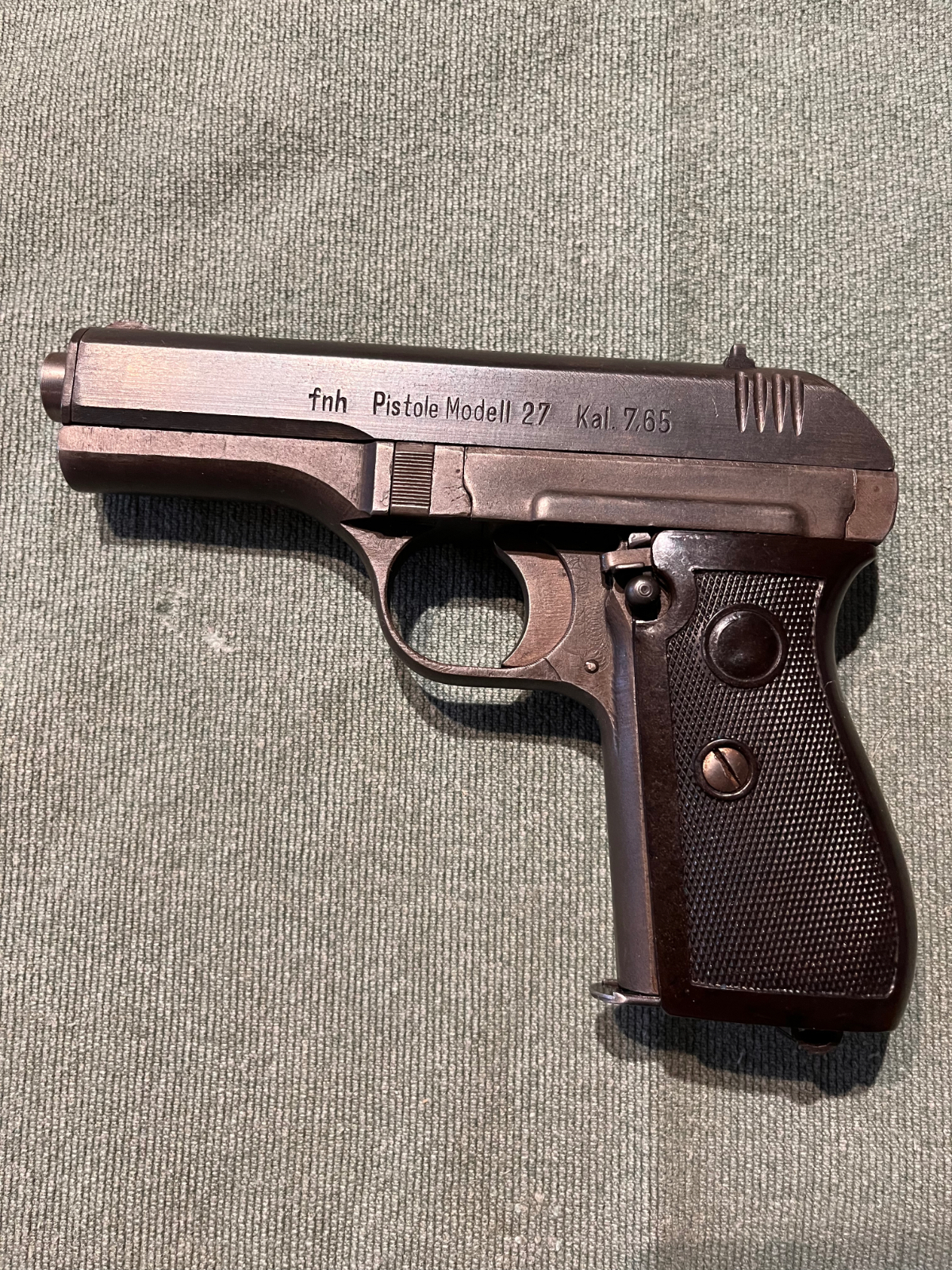

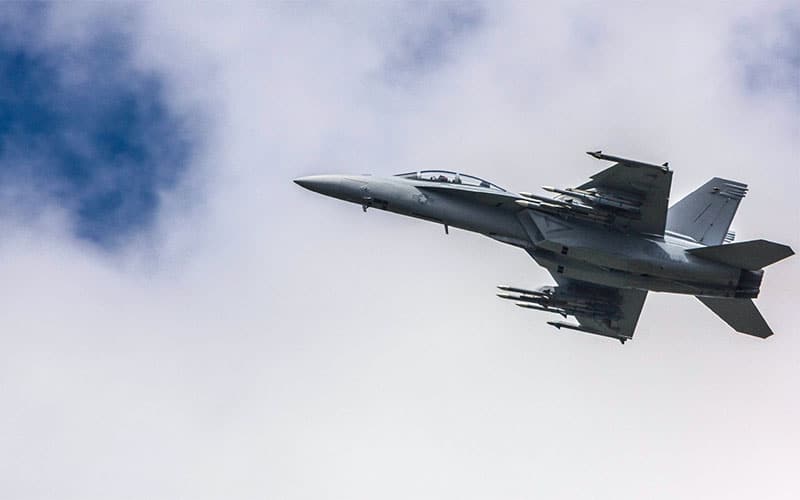
The F/A-18 Super Hornet is the backbone of deployed Naval aviation.
(Source: Cibi Chakravarthi, Unsplash)
Today, we try a spot of fiction. If you like it, let us know and I’ll sprinkle in some more on occasion. If you hate it, please do likewise and you’ll never see it again.
T-Mas was a Navy Lieutenant Commander flying F/A-18F Super Hornets off of the USS Theodore Roosevelt. A graduate of Top Gun and career fighter pilot, the call sign “T-Mas” was short for “Toxic Masculinity,” something he had been saddled with as a midshipman at Annapolis. A professional playboy, T-Mas was hard, single and at the top of his game. However, at this particular moment, he was about to die.
This fight was truly righteous. An Air Force C130 carrying the Dallas Cowboys cheerleaders to a USO gig had been engaged in international airspace by North Korean fighters and brought down over the Pacific. Uncle Sam had tolerated Kim Jong Un’s sophomoric tantrums long enough. Rattle sabers and test fire missiles if you like but murder a military airplane full of American’s finest cheerleaders and POTUS drags out his ‘Big Stick.’
The Commander in Chief deployed the Teddy Roosevelt battle group with the directive to make things right. Two weeks later, T-Mas was an ace — the first since the Vietnam War. It turned out flaming obsolete North Korean fighter planes was positively recreational. Then this happened.
It was some kind of long-range SAM system, and it was butt nasty. His wingman had been pulverized, but T-Mas hadn’t time to mourn. He torqued his powerful fighter around in the fight of his life. Bitching Betty squawked in his ears, and he rippled off flares by rote. His jet then shook as though throttled by the hand of God and the world started spinning. The last thing he remembered was groping for the black and yellow handles between his legs.
Ejection from a high-performance fighter plane at warp speed is one of the most violent events the human body can endure. The good folks at Boeing appreciated this fact and designed their ejection system accordingly. Once you tug those rings the plane spits you out and your parachute deploys of its own accord. Upon contact with the water your life vest activates to keep you from drowning even if you’re in no shape to help out. The synergistic melding of all that tech was the only reason T-Mas still drew breath.
He dreamt he was at home asleep in his hammock. He had come of age in the piney woods of South Mississippi and the hammock in his parents’ backyard had been the place he found refuge as a kid. On some primal level, it passed for heaven now. The gentle rocking was a soothing balm. Then he slid up against something hard.

Being stuck on an otherwise-deserted island wouldn’t be so bad with the proper company.
(Source: Kurt Cotoaga, Unsplash)
His consciousness returned like a dim light gradually penetrating a fog. The warm surf sloshed over his head and displaced the darkness while the wet sand felt firm and substantial underneath. He found he lacked the strength to sit up and was subsequently at the mercy of the waves.
As he regained his wits, he slid his hands weakly across his chest. Everything moved, and, despite hurting pretty much everywhere, nothing appeared to be broken or irrevocably damaged. His heart sank as his fingers slid across his vest. His sidearm and survival radio were gone, torn away in the violence of the ejection. Before he could assimilate the significance of that discovery, he heard voices.
High-pitched and strangely familiar, the sounds grew closer. T-Mas struggled yet failed to press himself up in the surf. This part of the Pacific was dotted with islands, many of them uninhabited. His lizard brain wandered to images of North Korean interrogators or cannibals, but the higher bits pressed those thoughts aside. Strong small fingers took hold of his vest from both sides and gently dragged him out of the waves and up onto the sand before rolling him carefully over onto his back. T-Mas tried to raise his arms against the blinding sun but failed. Whoever these people were, they were soon to have their way with him. Fighter pilot and trained warrior, T-Mas was as helpless as a child.
He squinted against the blistering sun to make out the figures who knelt above him. The nearest was tanned and windblown but an undeniable looker, the kind of face on the kind of woman that graced magazine covers. Her tattered baseball cap sported a blue star and the word “Dallas” across the top. The several excited female voices melded together as T-Mas let his head drop limply back into the sand. He suddenly wasn’t so terribly distressed over the loss of his sidearm and radio.
Categories
The Death Of The Marine Corps
THE WAR IN 2039
>GySgt Knight is an Infantry Unit Leader (0369) currently serving as an Operations Chief. He has served as every billet from Rifleman through Platoon Sergeant in support of Operations IRAQI FREEDOM and ENDURING FREEDOM. He has also served as Heavy Machinegun Platoon Sergeant, Scout Sniper Platoon Sergeant, and Weapons Company Operations Chief in support of Unit Deployment Program Okinawa.
The Marine Corps was rendered combat ineffective during the opening weeks of the U.S.-China War in December of 2039. First, Second, and Third MarDivs were systematically engaged by the Chinese People’s Liberation Army (PLA) navy, air, and ground forces, which resulted in the reduction of these divisions by a combined 75 percent. China had used a specific and effective strategy to cripple the U.S. military. This process was the development of a worldwide trade route controlled by them, ceasing all trade with the United States and forcing military funding cuts.
In 2013, Chinese President Xi Jinping proposed the development of the Belt and Road Initiative. Seventy-one countries pledged to join in the endeavor.1 China quickly began making deals with these countries to build rail lines, improve roads, and build seaports in strategic locations. They would loan the money to the host country to build each project with only one stipulation, Chinese contracted companies would be hired to assist in the construction. China knew these countries would not be able to repay the accrued debts which allowed China to employ debt-trap diplomacy to gain strategic advantages in some of these areas.
2 By 2017, the countries along the Belt received 35 percent of global foreign direct investments and accounted for 40 percent of global merchandise exports.
3 This had all been part of China’s bigger concept of Tian Xia or world domination.
4 The ground and maritime trade routes expanded their reach throughout the entire globe. This opened the trade routes and allowed China to influence a dominating portion of the trade deals made in the world. China began slowly arranging for resources to be acquisitioned from the countries along the Belt to reduce the number of materials they would need from U.S. suppliers.
During a press release in 2036, President Xi Jinping announced China would no longer receive any imports from the United States effectively gouging the U.S. gross domestic product (GDP) by fourteen percent. China again used debt-trap diplomacy to convince many of its partner countries to do the same.
In total, the U.S. GDP was reduced by 24 percent over the next two years. This drastically affected the markets in the United States and caused an unexpected recession for which the American people were not prepared. Many companies that relied on exports went bankrupt and millions of Americans were laid off.
The unemployment rate rose to eleven percent and the government was forced to start cutting its spending. By 2038, the defense budget was reduced by fifteen percent forcing the different branches to begin tightening their belts.
Due to these budget cuts much of the equipment the military used, including ships, could not be maintained. The Joint Chiefs of Staff decided to reduce the number of personnel in each of the branches to free up some funds to maintain its gear.
The Marine Corps was reduced to 165,000. This forced the Marine Corps to disband all three battalions of the Fourth Marine Regiment and both battalions of the Eighth Marine Regiment as well as numerous support battalions. The Navy was also required to put 30 ships in long-term storage.
The Third and Seventh Fleets took the brunt of the reduction as their ships had seen more use and required the most maintenance. This left a crucial gap in the maritime defenses in the Pacific, which Chinese military leaders exploited when they attacked the West Coast of the United States.
On 7 December 2039, U.S. Navy ships from the Third and Seventh Fleets came under fire from Chinese DF21D anti-ship ballistic missiles. These missiles were simultaneously launched from PLA Navy ships, cargo ships, and ground bases. The missiles were controlled by the Yaogan family of defense satellites they had launched between 2009 and 2012.
The PLA Navy was able to target U.S. ships by monitoring their electronic emissions from the 8G personal electronic devices used by sailors aboard the ships. This attack successfully rendered both fleets’ combat ineffective.
The PLA Navy then moved eight group armies (approximately 650,000 troops) from the PLA Ground Force to the West Coast of the United States unimpeded by utilizing ships that had been pre-staged and trade routes they had already established. Simultaneous with the attack on the U.S. Navy, the PLA Air Force conducted a massive aerial bombardment of Marine Corps Base Hawaii and Camp Butler Okinawa Japan.
This raid was conducted by Xian H-6 long-range bombers launched from the Chinese Xi Jinping Air Station on the man-made Mischief Reef Island in the South China Sea. The raid effectively targeted the infrastructure and equipment of 3rd MarDiv resulting in a reduction of 90 percent.
The PLA Ground Force invasion was contested by the 1st MarDiv as well as the U.S. Army’s 40th Infantry Division and the California National Guard. This joint task force, named Task Force Bear, was able to hold the PLA Ground Force in California until they could be reinforced by the 2nd MarDiv and the rest of the U.S. Army but not before being reduced by 85 percent. The 2nd MarDiv took 50 percent casualties during the intense fighting that followed. The loss of two of the three divisions was a fatal blow to the Marine Corps as a fighting force.
In the aftermath of the bloody U.S.-China war, Congress established a policy to prevent the country from becoming reliant on exports for such a large percentage of the GDP. This would prevent an adversary country from being able to reduce our GDP and defense budget just by monopolizing trade.
When it came to the Marine Corps, Congress was also left with a choice. Re-constitute the divisions or amend Title X thereby dissolving and abolishing the Marine Corps. Ultimately, they chose the latter. On 10 November 2040, the Marine Corps Colors were retired for the final time. The remaining personnel and equipment were absorbed into the other branches.
Notes
1. Lily Kuo and Niko Kommenda, “What Is China’s Belt and Road Initiative?” The Guardian, July 30, 2018, https://www.theguardian.com/cities/ng-interactive/2018/jul/30/what-china-belt-road-initiative-silk-road-explainer.
2. Ibid.
3. Caroline Freund and Michele Ruta, “Belt and Road Initiative,” The World Bank, March 29, 2018. https://www.worldbank.org/en/topic/regional-integration/brief/belt-and-road-initiative.
4. Howard W. French, Everything Under the Heavens: How the Past Helps Shape Chinas Push for Global Power (New York: Vintage Books, 2018).



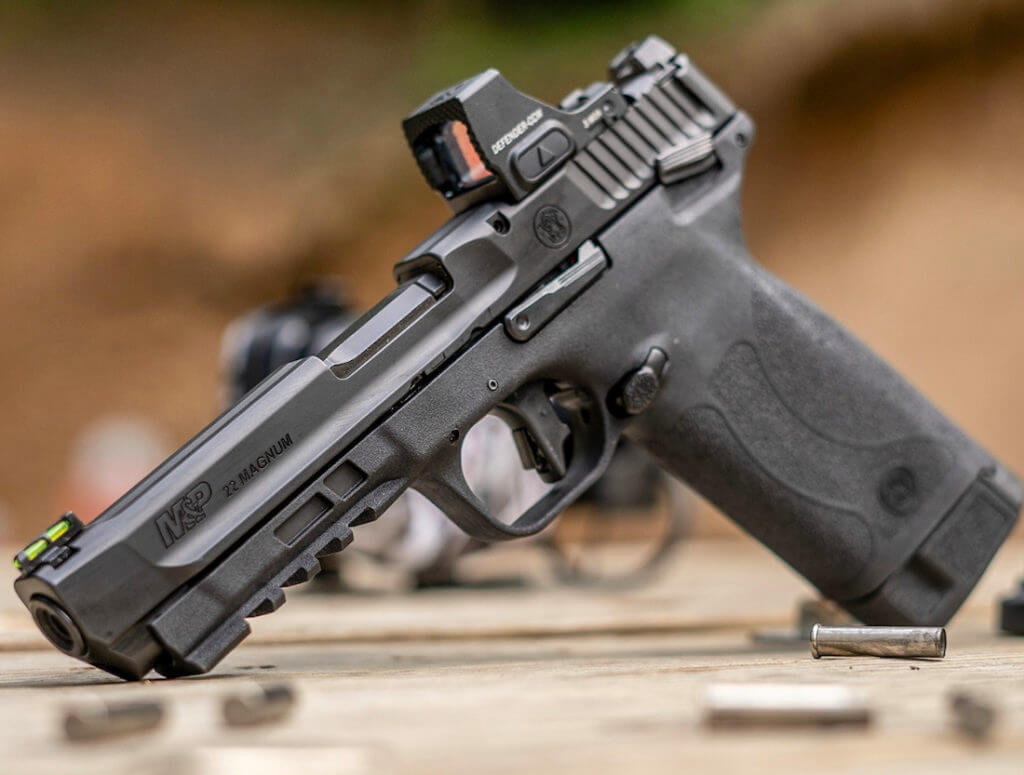
SPRINGFIELD, MA., (7/11/2023) – Smith & Wesson Brands, Inc. (NASDAQ Global Select: SWBI), a leader in firearm manufacturing and design, today announces the release of the new M&P22 MAGNUM pistol, chambered in 22 WMR.
This latest addition to the M&P series is all about bringing more. More capacity, more reliability, and more features. Its internal hammer-fired design, paired with the TEMPO gas-operated barrel system, keeps components locked in place until the bullet passes the gas port, increasing performance.
With a staggering 30-round capacity, the full-size polymer frame M&P22 MAGNUM ships with two magazines so you can spend less time reloading and more time training. It comes with a fiber optic front sight, black notched rear sight, and is optics-ready, allowing you to direct-mount most of the popular micro red dots available today.
Features
- Internal hammer-fired, gas-operated, locked-breech TEMPO™ barrel system (barrel doesn’t cam open until bullet passes gas port).
- Fiber optic (green) front sight with black notched rear sight
- Slim, textured grip.
- Ambidextrous Slide Stop and Manual Thumb Safety
- Flat-face trigger for consistent finger placement allows for more accurate and repeatable shooting.
- Picatinny-style rails
- Made in U.S.A

“The M&P22 MAGNUM combines the best features of our internal hammer fire control system with the patented TEMPO barrel design, creating a smooth operating experience for the shooter.
The 22 WMR is a versatile and field-savvy cartridge that has been a legacy among American shooters, hunters, and trappers for decades. Smith & Wesson is proud to offer a new pistol that further supports the use of this cartridge outdoors or on the range,” said John Myles, Senior Manager of New Products.
Specs:
- WIDTH 1.13 in
- LENGTH 8.4 in
- HEIGHT 5.9 in
- WEIGHT 22 oz
- CALIBER 22 WMR
- SIZE FULL
- CAPACITY 30
- ACTION INTERNAL HAMMER FIRED
- BARREL LENGTH 4.35
- GRIP POLYMER
- SIGHTS FIBER OPTIC
- OPTIC READY YES
- SAFETY THUMB SAFETY
- COLOR/FINISH BLACK
- STATE COMPLIANCE N/A
- THREADED BARREL NO
- FRAME POLYMER
- LASER NO
- PERFORMANCE CENTER NO
- NUMBER OF MAGAZINES 2
- 10LB TRIGGER NO
- BARREL MATERIAL STAINLESS STEEL
The M&P22 MAGNUM is fully ambidextrous, has a 4.35-inch stainless steel barrel with Armornite® finish, includes a flat-face trigger, and Picatinny-style rail for mounting accessories.
This pistol is proudly made in the U.S.A. and has an MSRP of $649.00. To learn more, visit smith-wesson.com.
I am weeping. Weeping with laughter. Former red team planner for the government here. FYI these are the threads they monitor the most
If there ‘was/ a revolution in the U.S. the rest of the world would get involved fast. And depending on the type of uprising, there is a large chance that it would not be a quick affair. It would be brutal, it would be bloody for the U.S. Government and it could start a global scale war. Here are the top ten issues that came up in red gaming
1. The LIS powergrid could be taken down by a series of “surgical strikes” with the exception of the texas grid. By surgical strikes, a few marksmen (IE LIS army tier Marksmen- the min requirement) hitting certain spots on the grid would fuck a lot of the military and government because they
need the grid more than bubba and friends do. Additionally, while ALL government agencies have backup generators- they will be hard pressed dealing with the resultant looting and other madness that would come with power outages. This would effectively create another front for the military. It
would also turn the people against the government quicker and paralyze the government’s propaganda machine. Worse still- the key points of the LIS powergrid are public obtainable information and not only are the points too many to be effectively guarded- they are not guarded anyways. This was always the number 1 issue.
2. An estimated desertion rate in case of a civil war is 75% in the case of a left wing president. 50% of that would be assumed to immediately betray the president. The army would be fighting it’s own. Yet another front created in this war. Additionally, there is an assumed 25-50% desertion or
outright betrayal rate in three letter government agencies. Additionally there is also an assumed 5% of the 50% betrayers would stay in their job and become sabateurs. Additionally 10% of that 50% would contain key information that would be of critical danger to the LIS government. Of that
10%, 1% would be able to deliever that information to the LIS’s foreign enemies. What you should get from this is that the second the LIS declares war on it’s own- is the second it ceases to exist as the state and we know it.
3. “tbaggers” and “right-wing extremists” and “oathkeepers” which are considered untrained racists who arent “good with a gun” often are a) veterans who now have more time to have fun at the range, sometimes more than some army units or marine units. In addition to previous military
training b) often camp and do other outdoor activites, more than many in the military do as the focus has gone away from field exericisec and c) often have better equipment outside of armor and heavy weapons than the military. However c) is kind of irrelevant because many of the places these
people could hide would make the kind of war the LIS fights with the equipment they use pointless.
4. Outside influence is a huge fucking problem. Russia has already stated they would back any texas seperation movement, and right now we already have enough problem keeping radical islam in check. The second the LIS has to fight in a “Civil War” is the second it becomes a proxy war
between NATO and whoever wants to fuck with america. While America has amazing nuclear defence and air defence- if it comes to a civil war you have to assume that in a best cast scenario the LIS military is going to be operating at 75% at best. Shit would go down. Hard. And fast. And if
Russia, spoiler alert one of the best militaries in the world at fighting in an urban environment, sent fucking trainers and helpers to rebels- you can reliably bet that they would also possibly deliver weapons to the rebels. So instead of fighting “Timmy Tea8aggei’ you are fighting “TimmyTea8agger who is buddies with Vlad.”
Based Russia bro has stated the number one reason why a ‘civil war’ is not just the LIS versus the rebels. There will be looting. There will be rioting. Cities will burn. The national guard cannot fight both the rebelions and rioters in a city that would also kill off their supplies. Additionally if you
dont think that the rebels will send in instigators into the cities or worse stand alone actors (A Lone Wolf on steroids. Think Timothy McVeigh but instead of one van they have a whole god damn fleet of them. A good movie example would be Bane) would be god damn mistaken. Additionally, if
the LIS government cannot even help it’s own people, why would it’s own people support it’s military. Worse yet, if someone emptied out prisons (There are a FLICK TON of prisoners in the us, about the size of oh- I dunno THE ENTIRE CHINESE ARMY) you would have more crime than the police could ever handle.
6. Logistics and infrastructure in the LIS are crumbling and failing. Any war fought against a rebellion in the LIS would be a logistical nightmare even before the rebels stated going full Al-Qaida and putting IEDs in the road. A fucking retired general who was contracting with us on the team said
“the only thing holding together the LIS’s interstructure is basically duct tape and the will of the department of transporation. And often enough there isnt enough ductape.” Your most loyal cities to the LIS government, as we polled, are also the most logistically easy to cut off. NY CQ SF? LA?
DC? Baltimore? Most of them require crossing water to get into from certain directions. Most of them have critical air ports. Some of them have critical ocean ports. If anything happened to just Two of the cities on the list it would create a logistical clusterfuck.
7. Your “Johnny Reb” and “Timmy Tea8aggef’ states/ red states all have something most of your “oh so progressive” “Arent we so european” “oh my god we are just like Sweden” blue states are for the most part consumer states and not producer states. Urban areas dont have farms. The second shit goes down- realize a lot of those blue areas are likely to starve. In a civil war scenario we predicted that at least 10,000 people would die of starvation if the war was not finished in a year. The numbers get worse after that.
& The LIS has way too many choke points, and the government forces would often be on the wrong side of them. This ties into the logistical nightmare- but it also has todo with an odd phenomena. Liberals like to live near the ocean. Many of the dividers of the country, like the rocky
mountains, the Mississippi River, Appalacia, The Missouri River (Fun fact: the bigggest choke point for the LIS Government is in Missouri) are red state areas. Sure Air travel is a thing, but a majority of the LIS government’s needs would have to travel by ground and even still many of the major
airports are outside of the city. Of course the LIS would use military base air fields, but if civil war did break out- which bases would be safe? Which ones would have fallen to traitors?
9. PR Nightmare. Every rebel killed on CNN would be spun as “The LIS government killed X Civilians today in a strike.” on RT. That is- as it was pointed out earlier- if the LIS media could even function in a civil war or an uprising. Your “Rebel Scum” know that the main thing that holds together
the LIS, nay life in the LIS as we know it is the 24 hour news cycle and the media. The second it’s gone you are going to have urban anarchy. If you are from America, can you imagine a day without TV, Newspaper or Internet? Your average urban youth cant and if you dont think that isnt
going to cause rioting you must have a real high regard for how much restraint they have. Assume that in a civil war- that your ability to talk to the people is compromised. Also assume that in the case of a civil war- that rebels may know how to monitor conversations like the LIS does- as there
are manuals online on how to do so.
10. This one is either one or ten, depending on who is asked. The LIS will never nuke its own. The Second it does they have lost the civil war and other countries come to “liberate” the LIS from it’s own “repressive regime.” Additionally, if anny general, minuteman, nuke tech, or Nuke sub
captain, decided to side with the rebellion is the second the LIS government is SOL.
tl;dr version, The second that a “civilian uprising” or “extremist group terrorist attack” turns into “Civil War” is the second the LIS loses. As a result you Will never see a “Civil War”. You will see Waco, you will see Bundy Ranch, you will see all sorts of militant group confrontations and maybe even
some skirmishes, but the LIS government fears it’s own people way the fuck too much to ever start a civil war.
The North American P-51 Mustang is arguably one of the coolest fighter planes ever flown in the United States military. In today’s article, Dr. Will Dabbs invites you to crawl in the cockpit and learn a few things about the classic plane you may not have known. — Editor
When I was an Army Aviator, nothing was cooler than doing airshows. We’d fly in for a long weekend filled with pressing the flesh and a little gratuitous hero worship. The hosts were invariably gracious and the fellowship with other aviators sublime. It’s tough to do something like that and actually claim it’s work.

Ever since the genesis of manned flight it has always been thus. Cool flying machines invariably draw a crowd. However, there is also great danger to be found there. Most military pilots are, by definition, young, bulletproof and immortal. As a result, there is ever the temptation to push our machines farther than we should for the edification of an adoring public. So it was at a particular English airfield in the lead-up to D-Day.

Overlord and the Mustang
Operation Overlord was the largest amphibious invasion in human history. 156,000 Allied soldiers supported by another 195,700 sailors stood poised to breach Festung Europa while hundreds of dedicated combat aircraft kept the peace overhead. However, with all those guys and all those guns, the potential for fratricide was never far from anybody’s mind.

The Allies would enjoy air superiority over the invasion beaches, but that didn’t mean that a few Axis aircraft might not slip through. As a result, somebody decided it would be a good idea to introduce ground troops to the most common American close support aircraft that they might encounter once they hit the beaches. It was hoped that by letting the G.I.’s see them up close, they might hesitate to shoot if they spotted one of these friendly machines flying over in the combat zone.

The concept of the operation was for one example of each aircraft included to be dispatched from their squadrons to a large British airbase. Several tens of thousands of ground troops would be trucked to the site to paw over the planes and then watch a quick aerial demonstration. The basic idea was quite sound.

The leadership at each of these squadrons was busy planning for the invasion, so they dispatched brand-new Second Lieutenant aviators on the mission. These young pilots knew where to report and when but had no further guidance. They had never met before.

Once on the ground the three pilots held a confab. They were all the same rank, and their specific command guidance was sparse. The P-51 Mustang driver was purportedly a short man who was quite full of himself. He immediately took charge and began issuing orders. They would knock out the static portion of the day and then take off in series.

He would then put on an impromptu aerobatic display above the runway for the accumulated troops while the others loitered nearby waiting their turn to do likewise. They would coordinate cycling in and out of the airspace via radio. The other drivers had no issues with the plan, so they played along.
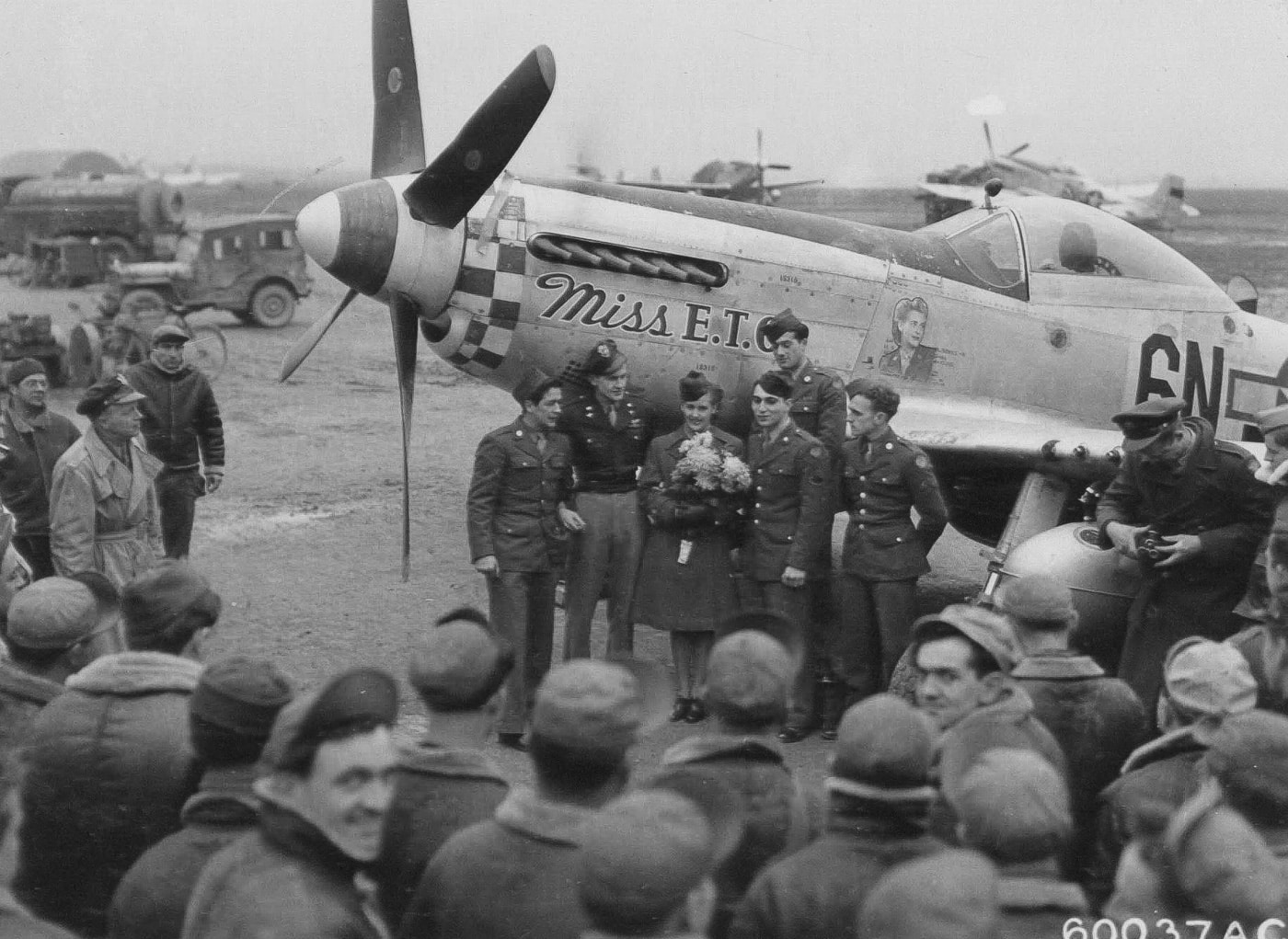
He would then put on an impromptu aerobatic display above the runway for the accumulated troops while the others loitered nearby waiting their turn to do likewise. They would coordinate cycling in and out of the airspace via radio. The other drivers had no issues with the plan, so they played along.
All went swimmingly right up until the Mustang did an extreme low pass right over the runway centerline. The P-51 pilot pulled up hard at the end of the tarmac into a beautiful vertical climb. He then laid the plane on its back to describe a loop intending to level out essentially where he started. He rightfully assumed the crowd would go wild.

Alas, military aviation can be terribly unforgiving of stupidity. The Mustang driver misjudged his altitude in the loop and ran out space for the pull out, splashing his plane and himself into a zillion tiny little bits amidst a massive fireball of conflagrating avgas. Thankfully no one was injured on the ground.

The other pilots felt that little else could be done to add to the event and, after a brief conference over the radio, wisely just headed home. The accumulated troops returned to their staging areas and did indeed ultimately wrest Europe back from the clutches of a madman. I’m sure the family of the over-zealous P-51 pilot got a somber but sincere letter from his exasperated CO.
The P-51
While the P-51 Mustang was not necessarily the most capable piston-driven fighter aircraft of World War II, it was indeed fast, fuel-efficient and deadly. However, many German fighters packed more firepower, and a few of them were faster both in level flight as well as in the climb.

What the Mustang had that the Axis could not hope to match was numbers, along with exquisitely well-trained pilots. By the war’s end, American industry had built some 15,000 copies of the nimble little plane. Mustangs accounted for 4,950 downed enemy aircraft. Produced by North American Aviation, the esteemed P-51 nonetheless had a rocky start.

In 1940, the British were starving for fighter aircraft. The British Purchasing Commission led by Sir Henry Self scoured the U.S. aviation industry looking for a suitable combat plane that could be produced in America and deployed for RAF service in Europe both in quantity and in a hurry.

At the time the Curtiss P-40 Warhawk was essentially the only show in town, and P-40 production was already maxed out meeting American requirements. As a result, Sir Henry approached North American about producing a fresh new design from scratch. The original discussions orbited around a series of drawings scrawled freehand on a piece of paper.

The first prototype titled the NA-73X rolled out of the factory a mere 102 days after the order had been inked. This radical plane incorporated such advanced features as low-drag laminar-flow airfoils for exceptional performance at high speeds and an unusual single ducted radiator for both oil and engine coolant.

This design took advantage of the Meredith Effect wherein ram air through the radiator provided just a bit of jet thrust to the airframe. Those early machines were armed with a pair of Browning fifties in the engine cowling and four .30-caliber guns in the wings. They were powered by Allison engines similar to those found in the P-38 and P-40.

The resulting plane had much to commend it, but performance fell off badly above 15,000 feet. As the RAF needed a fighter that could hold its own with the Luftwaffe at high altitudes, this was potentially a show-stopper. The answer came from a Rolls Royce test pilot named Ronald Harker. He suggested they fit the Rolls Royce Merlin engine from the Spitfire Mk IX to the new airframe and see how she flew. The resulting hybrid plane could reach 440 mph at 28,000 feet, breathtaking performance for its day.

The American Packard Company began producing Merlin engines under license from Rolls Royce, and the whole world moved just a little bit. The original A, B and C-model Mustangs evolved into the definitive D-model with its distinctive bubble canopy, and North American started churning them out day and night. The final operational versions fitted half a dozen AN/M2 fifty-caliber guns in the wings.
Impressions of the Fighter
The Mustang’s sexy lines and impressive performance create a timeless allure. The P-51 that Tom Cruise flew at the end of the latest Top Gun movie actually belongs to him. He originally christened it Kiss Me Kate back when he was married to Katie Holmes. I suspect he calls it something else these days.

Though I have never had the pleasure myself, I am told that the Mustang is pure joy to fly. The plane has ample power and rolls faster than a Spitfire. However, the Mustang’s turning radius was not quite as tight as was that of the British Spit, the Bf-109 Messerschmitt, or the FW-190 Focke Wulf. The laminar flow wing had its own eccentricities, but the P-51 was a generally stable and forgiving machine.

In addition to pure numbers, when equipped with drop tanks the Mustang enjoyed a simply breathtaking range. It was the P-51 that allowed fighter escorts to remain with attacking heavy bombers all the way to their targets in Germany and back.

Luftwaffe commander Herman Goering purportedly acknowledged to close friends that the war was over the day he saw Mustangs in the skies above Berlin. Nimble, fast, deadly and cool, the Mustang was a critical part of the Allied victory during World War II.
Special thanks to www.flyaspitfire.com for their support with this project.