Categories
Uncategorized

Al Biesen .270 Winchester Not Just Another Custom Mauser

 By: Terry Wieland

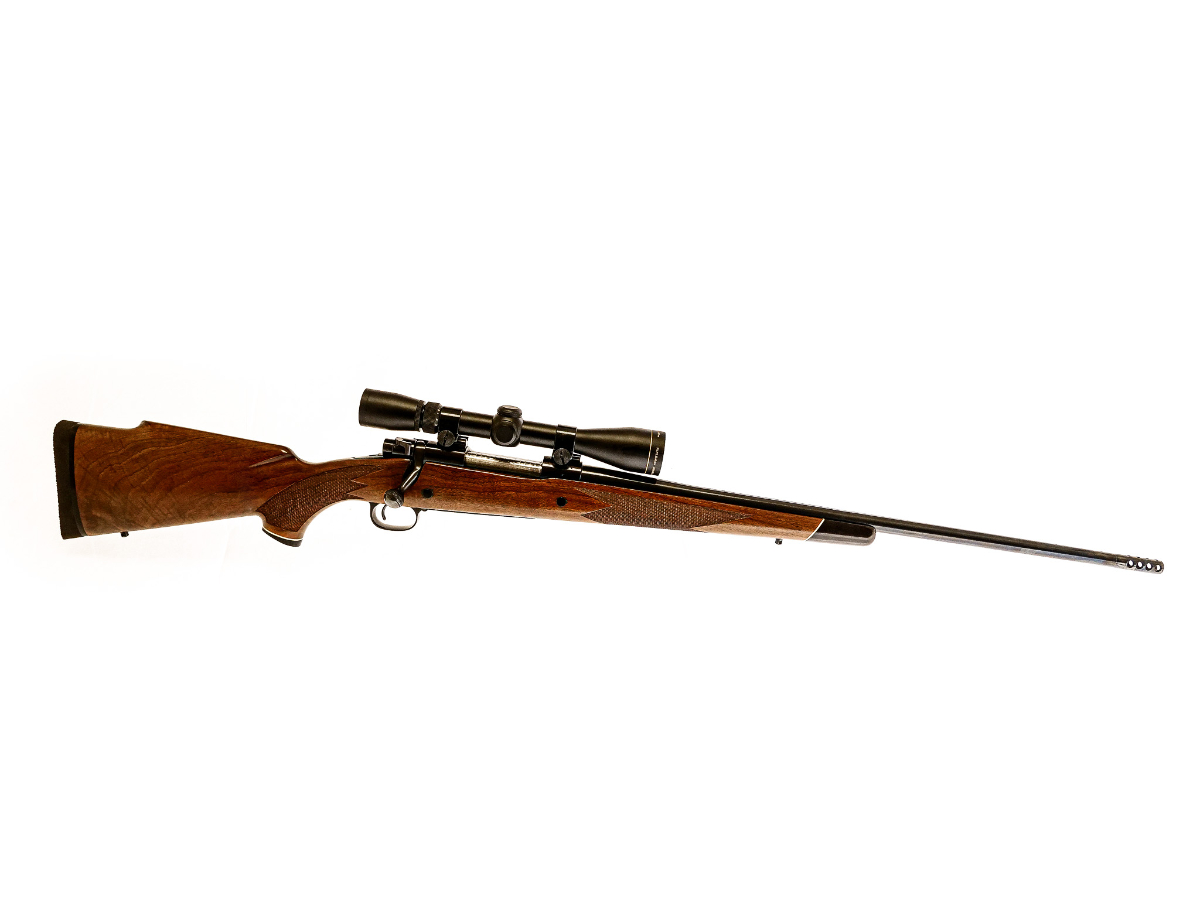
Built on an FN Deluxe action by Al Biesen around 1985, with a 3-10x 42mm Swarovski scope, unloaded and without a sling, the rifle weighs 8 pounds, 2 ounces.

Since 1945, tens of thousands of Mauser 98s have been sporterized, customized and otherwise turned into hunting rifles in America. The term “custom” is a vague appellation that can refer to any alteration carried out by anyone, regardless of skill. These range in quality from utilitarian conversions by a guy in a garage to superb examples of the gunmaker’s art.

Biesen was one of the few custom riflemakers to put his name on his creations. This not only allows positive identification, but it also enhances the value.

Biesen was one of the few custom riflemakers to put his name on his creations. This not only allows positive identification, but it also enhances the value.

As an experiment, I logged onto Gun Broker, typed in “custom Mauser” and waited to see what would turn up. It came back with 141 items for sale with those words in the title and, searching through one by one, found were some of the most outlandish creations imaginable. Leaving aside exaggerations and outright lies – some, perhaps, unintentional or the result of ignorance – at a rough estimate maybe half were worth buying for a few bucks in order to get the action and start over. Most of the others were a complete waste of time, unless collecting grotesqueries.


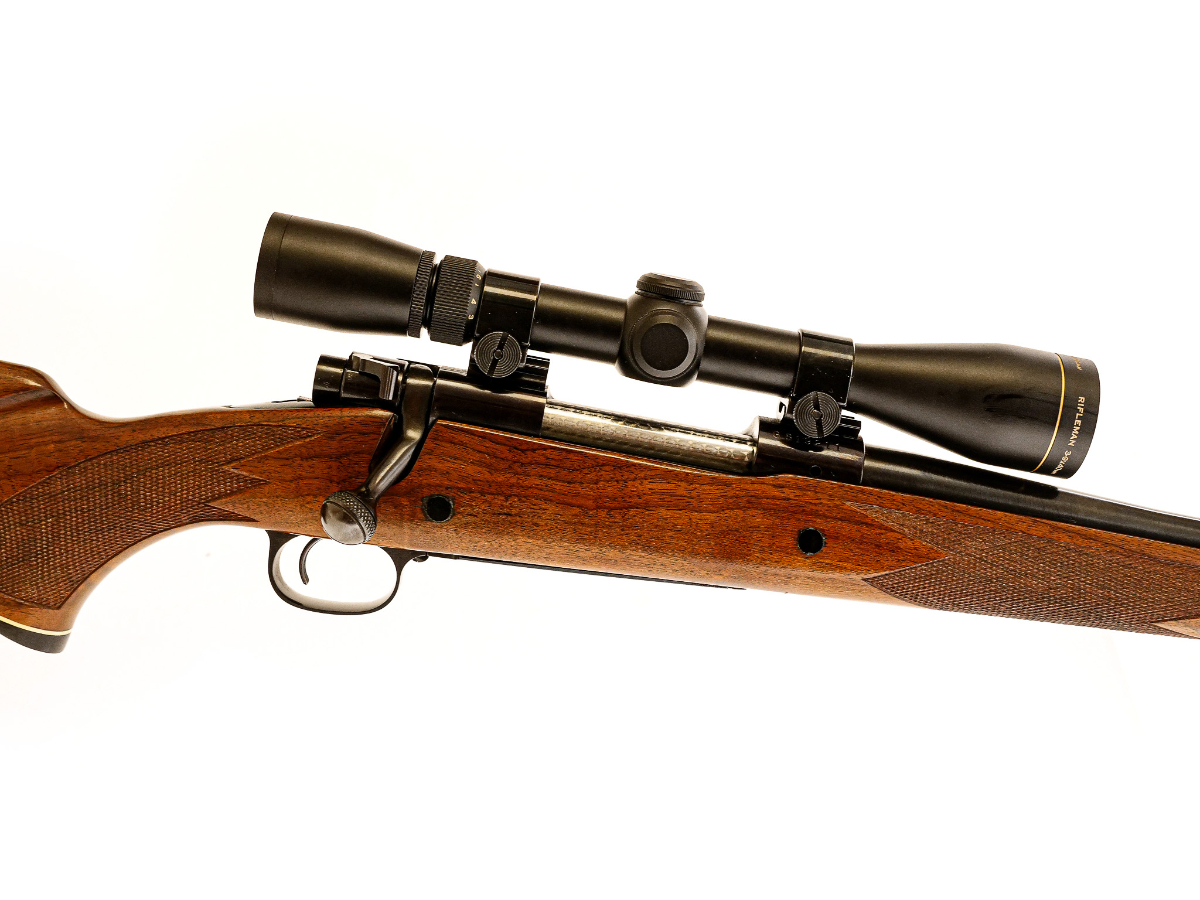
The Biesen .270 Winchester features superb recessed checkering, a knurled bolt knob and a modified bolt shroud fitted with a three-position wing safety.

The Biesen .270 Winchester features superb recessed checkering, a knurled bolt knob and a modified bolt shroud fitted with a three-position wing safety.

While the majority of “custom Mausers” do not rate a second look, there are huge exceptions, and this story is about one of the latter – a jewel of a rifle made by America’s preeminent custom gunmaker of the last 50 years, Al Biesen. The “Spokane genius,” as Jack O’Connor described him, died in early 2016 at the age of 98. Reportedly, he worked almost to the end, in the company of his gunmaker-son Roger and granddaughter Paula, an engraver.


Biesen came by his reputation honestly. His work ranked with the very finest, there is no question about that. His fame – and the reason I described him as “preeminent” – came about because O’Connor, the most respected gun writer of the postwar years, wrote about Biesen in both books and magazines right up to his death in 1978. As a result, O’Connor’s readers lined up to order a Biesen rifle. Having “a Biesen” became a serious hunting status symbol. It showed you were not only serious about hunting, but about your hunting rifles as well.

There are certainly other custom riflemakers whose individual skills matched those of Al Biesen, but – and it’s a large but – I don’t know of any who had all the skills that Biesen possessed, and then used them to construct beautifully functional hunting rifles as he did.

The grip cap is knurled steel in the style made popular by Alvin Linden’s metal-working colleague Emil Koshollek and complements the checkering beautifully.

The grip cap is knurled steel in the style made popular by Alvin Linden’s metal-working colleague Emil Koshollek and complements the checkering beautifully.


Al Biesen was both a stockmaker and a superb metal man. He could fashion a rifle stock from a blank using hand tools and then apply checkering that was breathtaking. At the same time, he could shorten barrels and turn them down, rework safeties, shorten actions, even make complete bottom metal in his own shop, and all to the highest standard of custom quality. Although such men exist today, in an age of specialization, they are increasingly rare.

Generally speaking, the custom trade has become so refined that most top craftsmen do only one or two things. A stockmaker might not even do his own checkering; instead, it’s turned over to a checkerer. In metal, there are bluing and casehardening specialists who handle the finishing, while a metal man may order in everything from replacement triggers to bolt shrouds with three-position safeties to a complete set of bottom metal.


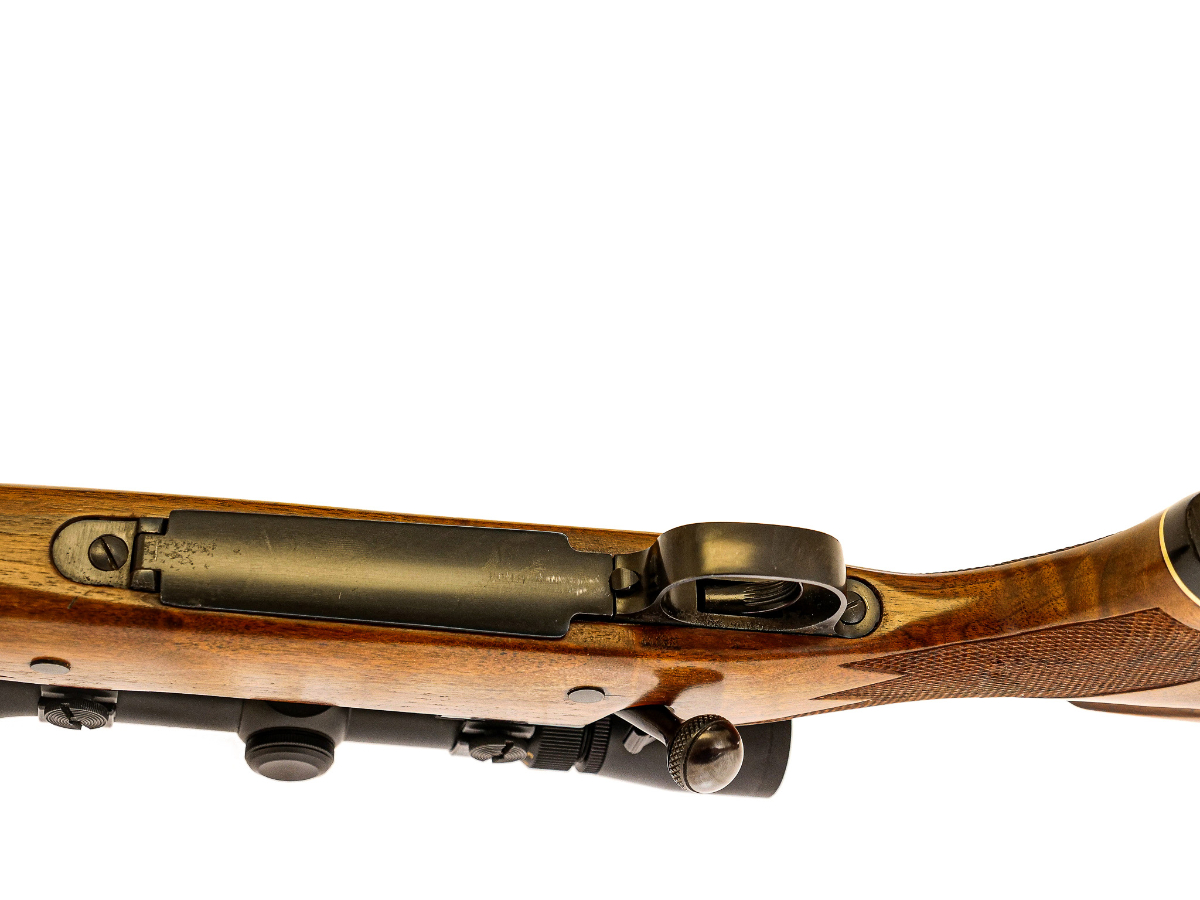
The rifle is fitted with a Canjar trigger. The floorplate release has been altered to an Oberndorf-style catch in the trigger guard.

The rifle is fitted with a Canjar trigger. The floorplate release has been altered to an Oberndorf-style catch in the trigger guard.


This is nothing new. Even Alvin Linden, the most famous stockmaker of them all, did only rudimentary metalwork himself; mostly, he collaborated with his neighbor in Wisconsin, Emil Koshollek. Larger custom firms such as Griffin & Howe employ specialists. In fact, Seymour Griffin was a stockmaker, and his partner, James V. Howe, a metalworker. A.O. Niedner’s stock man was Tom Shelhamer, and so on. This system can work very well, but in my opinion nothing can quite match a product turned out by one man who does it all, making every tiny adjustment as he goes along, matching weight to length to balance with the aim of producing a rifle that becomes like an extension of the shooter – allowing him, as O’Connor put it, “to do his best work” as a hunter.

Having read O’Connor since childhood, and fallen in love with fine custom rifles many years ago, I always dreamt of owning a genuine Biesen. It was unlikely I could ever afford a new one, and the odds of finding a used one, in a desirable caliber at a price I could manage, was remote at best. Then, one evening while casually browsing a few gun-dealer websites that I frequent, I came across a listing of a “custom Mauser sporter” for $2,500. Such a rifle could be anything from atrocious to delicious, but this was a dealer who knows his stuff, and at that price it was worth a look.

The forend checkering (26 lines to the inch) shows Biesen’s signature fleur-de-lis checkering pattern.

The forend checkering (26 lines to the inch) shows Biesen’s signature fleur-de-lis checkering pattern.


The rifle in question was a .270 Winchester (wonderful!) and buried in the description it noted that engraved on the barrel were the words “Al Beisen, Gunmaker” [sic]. The misspelling would have warded off anyone doing automated searches, and the rifle had been listed only that afternoon. The shop was closed until 10 o’clock the next morning, so at 9:59 a.m., I dialed the number; by 10:04, the prize was mine.

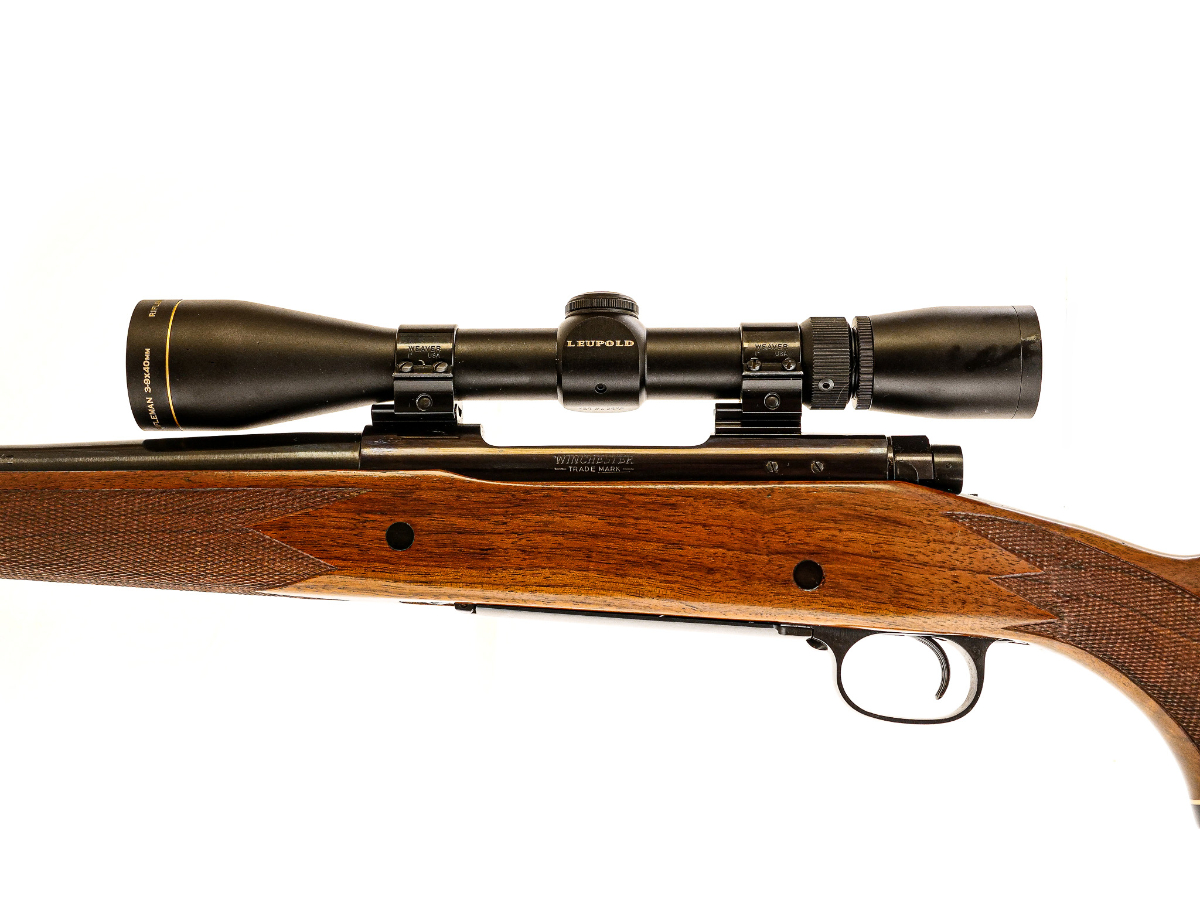
The rifle’s specifications are as follows: It’s a .270 Winchester built on a modified FN Deluxe action with a 22-inch Douglas barrel. The bolt shroud has been altered, probably by Biesen himself, and a three-position wing safety added. The floorplate release has been changed to an Oberndorf-style catch in the trigger guard. The trigger is a Canjar.

The bolt, extractor and magazine follower are all finely jeweled.

The bolt, extractor and magazine follower are all finely jeweled.


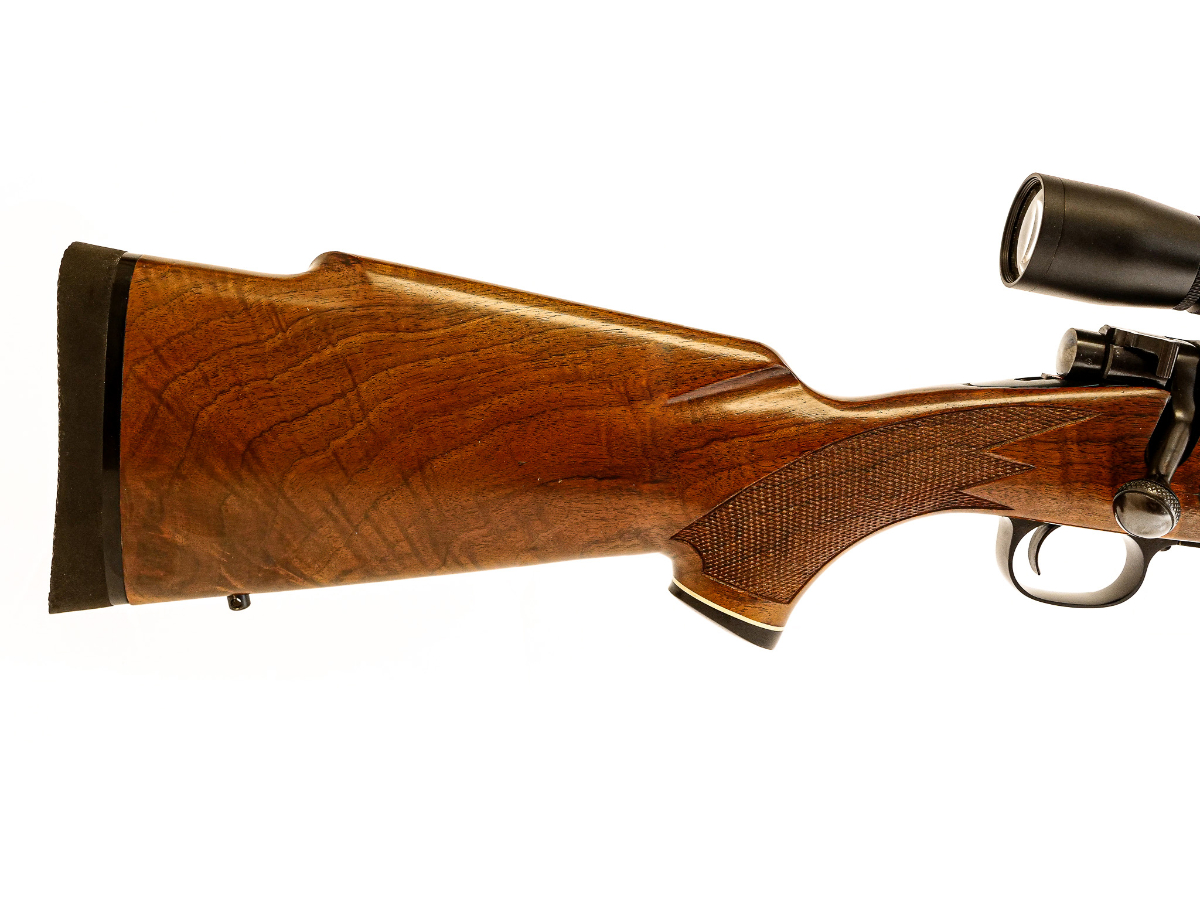
The stock is a lovely, warm piece of walnut with fiddleback end to end; it has a thin English recoil pad, a knurled steel grip cap and a horn forend tip. The full cheekpiece is supported by a modest Monte Carlo. The rifle is very finely inletted, with part of the action glass-bedded – whether by client request or because Biesen encountered a spongy spot is impossible to say.

The barreled action is a glossy blue, and Biesen jeweled the bolt, including the extractor and magazine follower, with tiny, exact machine turning. The bolt knob is knurled top and bottom. The checkering is Al Biesen’s trademark recessed fleur-de-lis pattern, 26 lines to the inch, and the stock has what appears to be a glossy oil finish comparable to a London gun. Fitted with a Swarovski 3-10x 42mm scope, unloaded and without a sling, the rifle weighs 8 pounds, 2 ounces.

Al Biesen did not keep detailed chronological records of his creations, but his granddaughter Paula Biesen-Malicki believes the rifle was built for a client in Louisiana around 1985. In some ways, it does not adhere to Jack O’Connor’s rules for a custom rifle; for example, there is the Monte Carlo comb (albeit very discreet) and the recoil pad, which O’Connor equated to a man in evening dress wearing rubber boots. Personally, a thin recoil pad is preferable to a knurled steel buttplate in any number of ways, even on the finest of rifles. They are simply more practical.

The rifle has a shadow-line cheekpiece that rolls smoothly into a discreet Monte Carlo comb.

The rifle has a shadow-line cheekpiece that rolls smoothly into a discreet Monte Carlo comb.


In other ways, however, this Biesen stock would gain O’Connor’s wholehearted approval. The forend is very slim and shaped, in cross-section, like a pear. This allows a firm grip without having to press the fingers hard into the checkering. One of my biggest complaints about custom rifles today is that the forends are a vertical oval in cross-section. This offers a flat surface on the sides for ease of checkering but is not comfortable to hold. This is putting the cart before the horse in a big way.

The wrist on this Biesen rifle is also very slim, oval in cross-section and measures just 4.5 inches in circumference. Most factory rifles today have wrists at least five inches in circumference and feel bulky. On the right-hand side, the comb is generously fluted to allow room for the shooter’s thumb while, on the left, the cheekpiece flows into the comb without fluting. Everyone who has picked up this rifle has said “Wow!” or words to that effect. Rarely do you get to hold a rifle that feels and handles so naturally. It’s the same as handing a shotgunner his first London side-by-side – nothing feels quite like it, and nothing’s ever the same again.

At this point, the big question is, how does it shoot? Answer: So far, so good, but not conclusive. With a variety of factory .270 Winchester ammunition I had around, it shot pretty well – certainly well enough to go hunting and shoot out to 350 yards.

Measuring the chamber, I found that with a Nosler 130-grain Partition seated to the lands of the rifling, my maximum overall cartridge length would be 3.34 inches – exactly the SAAMI specification for the .270 Winchester. As well, seated to that depth, the base of the Partition bullet is even with the base of the cartridge neck. In chambering this rifle, Biesen may well have had that exact bullet in mind. It also gives a tailored fit in the magazine with just enough room for easy loading but not allowing the cartridges to slam back and forth under recoil.

Tom Turpin, who has been a .270 aficionado for years, suggested trying a load of 59.5 grains of H-4831, a load he says has never failed him, provided you use a good 130-grain bullet. Accordingly, I loaded 10 rounds each with the Partition, Swift’s Scirocco II and the Sierra GameKing spitzer boat-tail. Average velocities were 3,072 fps (Scirocco II), 3,046 (Partition) and 2,998 (Sierra). The Sierra put four shots into .77 inch, but a flyer opened the group up to 1.4 inches; the Scirocco II delivered a nice 1.25-inch, five-shot group, while the Partition spaced out five shots over 3 inches! The last is an anomaly for which I have no explanation.

As velocities varied, the groups moved up and down on the paper like clockwork, and although the barrel heated up considerably during the course of shooting almost 40 rounds, there was absolutely no sign of vertical stringing. Increasing the loads by half a grain at a time, the Partition groups tightened, the Scirocco II stayed about the same, while the Sierras loosened up slightly. Overall, the rifle delivers five-shot groups between an inch and 1.5 inches with almost everything tried. It shows a consistency that suggests I should be able to find a razor-sharp load for it when hunting season is over and the snow disappears.

This is not to bow too deeply to today’s excessive preoccupation with accuracy. There are many, many other factors that contribute to a good big- game rifle: Weight, balance, handiness and feel are all essential if you are to do “your best work,” to say nothing of smooth and reliable functioning. The Biesen rifle has them all. Some gunmakers have an uncanny knack for producing rifles that just feel right, and Al Biesen was one of them. Jack O’Connor did not call him the “Spokane genius” for nothing.

Categories
Uncategorized

Panache By Skeeter Skelton

This article first appeared in the July 1978 issue of Shooting Times.

Gun writers are supposed to know everything, especially a whole bunch of words. I remember when I was first starting out in this racket and had to learn thousands of words like “barrel,” “cylinder,” “cartridge,” “grips,” “holster,” and even more technical stuff than that. Over the years, I’ve built up what I think is a pretty good vocabulary of gun terms. A lot of these I steal from the works of other gun writers because I avidly read their stories for any good, new gun words I can lift.

A new one has been rearing its head and then ducking back out of sight during the last year in several of the better shooting publications. It showed up in one guy’s column, then I saw it in a piece about a fancy rifle. It even slipped into a couple of well-written pro-gun articles I read. The way it was used was rather slippery, and I couldn’t get a good hold on it. But since everybody else was using it, I knew I had to get it on my working list.

The word is panache. It looked to me like it ought to be pronounced “pawnatch,” and I had a vague impression it meant something along the lines of “slumgullion” or maybe “mishmash.” In the end, I had to do something that always hurts my pride: I looked it up in my Webster’s Collegiate, which has had uncut pages in it ever since I got kicked out of college in 1948.

Here’s what panache means: (pe´näsh) n. 1: an ornamental tuft (as of feathers) esp. on a helmet 2: dash or flamboyance in style or action: VERVE.

Hell, I’d been missing out on using some of my best stories for years because I didn’t know the meaning of the firearms word panache. I’ve held back dozens of them from publication simply because I was unfamiliar with a two-syllable word that would qualify them for inclusion in the gun rags.

An example is a tale I’ve heard for years that took place in one of our Western states during the height of conflict between us and the Axis. The names used are absolutely nothing like the names of the real-life players.

One was an ex-federal officer on military leave to the Army Air Force as a bomber pilot and trainer of bomber crews. Let’s call him “Tim.” Tim had been a sharp and aggressive, if sometimes restless, law enforcement official. He carried these qualities with him into the air arm where his sometimes stultifying duties mainly consisted of flying green crews over the monotonous desert terrain so they might drop lightly charged practice bombs on, or at, targets of opportunity.

Now Tim was from an old ranching family; he had a revered uncle named Jack, a past middle-aged wiry cowpoke who ran a goodly number of cows and fair-to-sorry horses on a spread only about 50 miles or so from the bum brothers’ practice range.

In need of diversion, Tim decided to fly over Uncle Jack’s spread one spring morning to see how the old duffer’s place was greening up. Making a low pass, he was pleased to see his relative accompanied by a couple of Mexican cowboys, hazing about 50 or 60 head of coyote-wild crowbaits down the side of a mountain toward the main horse pasture. The jaded attitude of riders and beasts suggested that there had been several days of argument before the caballada had given up its wild, free mountain home and agreed to plod back to the domesticity of the home pasture.

Tim and Jack loved practical jokes–as long as they were on somebody else. Making a slow, low-altitude approach, Tim opened his bomb bays and instructed his trainer bombardier to let a couple go about 200 yards behind the horse herd.

He chuckled as he heard the puny-powered eggs slip out of the plane’s belly and then made a quick turn to starboard, the better to view the ensuing stampede.

The intercom blasted his ears as the young bombardier screamed his report, “Migawd, sir, I hit right in the middle of ’em.”

The alarmed pilot made a 180 and another lower pass to assess the damages. There was a big cloud of dust, horses running so as to box the compass, and one horse (a bald-faced mare that later was found to be permanently fistulowed) was down.

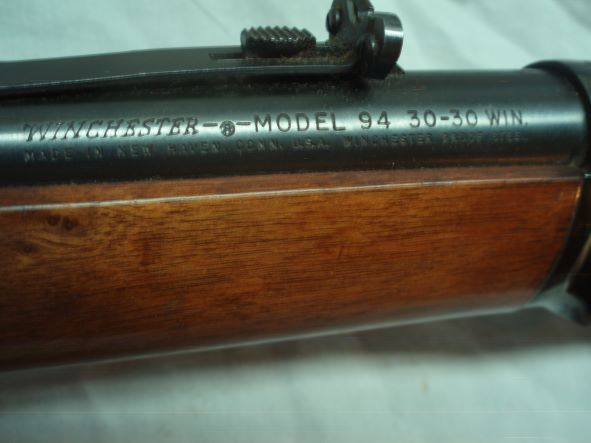
So was Uncle Jack, but Tim watched in horror as he arose and ran limping to the side of his well-trained, stock-still cowhorse and slipped a Model 94 Winchester from the scabbard.

As he passed over the melee, Tim caught a last glimpse of Uncle Jack opening fire at the big, silver bird with his .30-30.

A week passed, during which no attempt at contact was made between the errant nephew and irate uncle. Suspense mounted and finally Uncle Jack gave in, visiting the federal offices of Lefty Day, Tim’s former boss and an ex-partner of Jack’s.

Lefty kept his finger on the pulse of his assigned piece of country and frequently received bits of information that he kept secret until they could be used. He knew about the bombing incident through one of the Mexican cowboys.

But no one knew he knew.

As usual, Lefty was a jovial host, providing coffee and talk about the drought and the sorry calf crop to Jack. The small talk dribbled and died, and finally the Levied Jack inquired in what he hoped was a casual manner, “What you hear from Tim?”

Lefty’s face showed open-faced surprise, then solicitude. “Why hell, Jack, that’s what I thought you were in town for. Ain’t you heard? Tim took a bombin’ crew on an unauthorized run over somebody’s place–he won’t tell whose–and got his plane shot full of holes. They got him in the stockade for all kinds of charges and are lookin’ hard for some jasper that shot up that plane. I thought you were in town to get him a lawyer.

“Well I’ll be damned,” Jack replied. “Didn’t hear nothin’ about it. Well, I got some sick heifers and better be headin’ back to the place. Tell Tim I hope everything comes out okay.” Jack left, not to be seen for several months.

Within a couple of days, Tim, smartly uniformed and ostensibly hale and unworried, paid a visit to Lefty’s office. Coffee was served up.

Lefty complained that all his good men had gone to the service. Tim countered with good news about the Sicilian campaign. He had just been promoted to captain, although he confided in Lefty that the promotion board had had some sticky questions about some mysterious bullet holes in the tail assembly of his aircraft.

“Must have been some screwball around the gunnery range,” mused the pilot. Getting down to domestic matters, Tim politely inquired about his esteemed uncle.

Lefty managed to make his face blanch. “Lord, Tim, I thought that’s why you were here. They buried Jack yesterday down on his place. I thought you knew or I’d have called.” With an expression held in the clean, rigid lines of a death mask, Tim asked what had happened.

“All we know is that his vaqueros said an enemy aircraft bombed them while they were moving a bunch of horses. Got old Jack. Lot of people trying to make it a Doolittle-type Jap raid, but every government and military intelligence unit in the area is working. Has to have been some nut in a stolen U.S. plane. One of the cowboys got a couple of numbers off it. We’ll get ’em, don’t you worry.”

Tim placed his full coffee cup on the desk. “Lefty, this is hard to take, but I’ve got my job to do at the base. If you get a line on the SOBs that did this, let me in on it.” The two officers sadly shook hands, and Tim departed for the base.

As good an example of panache as I’ve ever heard. I don’t employ a great deal of panache in my day-to-day activities, but there have been moments.

A few years ago, I was a U.S. Customs special agent. My fellows were all good men but with differing personal preferences. Many enjoyed hanging all the various diplomas and letters of commendation they had received on the walls of their offices. Others considered this ostentatious and hung western desert scenes or other ornamental tapestries. One guy I knew always kept his latest EKG pinned up behind his desk.

My own idiosyncrasies sometimes become apparent when related to the way I decorate my surroundings. I am an inveterate W.C. Fields devotee. Transferring into one large office on the Mexican border, I promptly tacked up a 3×5-foot poster of Fields in his classic poker player pose–sitting at the edge of a chip-laden table, concealing his five-card draw hand behind dainty silk gloves and peering suspiciously from beneath the brim of a gray top hat at his opponents.

I took solace and gained strength and fortitude by standing reverently before my poster each morning, summoning the strength to do that which must be done. Some of my more literate superiors offered the opinion that more suitable adornment might be found for the walls of an office of investigations of the United States Treasury Department.

I persisted. A staunch ally was found in the person of one supervisory agent who, it developed, was also a follower of the career of the great juggler. We spent many after-hour sessions in local bistros, applauding the deeds of the inspirational entertainer and exchanging our wealth of Fields’ anecdotes.

As it always must, our profession claimed most of our time. One dark night we were called on to join in a Herculean effort to serve about 50 arrest and search warrants, the results of months of “buys” of undercover narcotic agents who had been clandestinely operating in our area.

The project was a series of nighttime raids to be made as simultaneously as possible so as to let no dopers be forewarned and escape the net. This took the combined efforts of a great many officers and turned out to be a textbook example of cooperation between local, state, and federal enforcement officers.

One of my team’s several assignments that night was to hit a third-floor apartment. We had been alerted by the undercover men that the accused pot peddlers were armed with .357 revolvers and had stated they would “smoke” any “heat” that bothered them. I was elected to go in the front door with others equally blessed–there was no back exit.

After dutifully knocking and shouting “Federal officers with a search warrant!”, waiting a reasonable time, and hearing scuffling sounds inside, I kicked the door loose with a boot heel and confronted a young gentleman clad only in a Sir Galahad hairdo. His right hand was dipped into a paper bag. I introduced his bellybutton to the Cutts Compensator on the muzzle of my Thompson.

His .357 fell to the floor, and after a flurry of activity, his codefendants were secured, giving us time to inspect and search the premises. There was a combined aroma of incense and marijuana smoke. There were large packages of the weed and illicit pills. There were the loud strains of hard rock emanating from a stolen stereo. There were beaded curtains.

The punks lived well. Their walls were decorated with large posters of the Beatles and similar celebrities.

But to my surprise and disappointment, I found a smaller version of my W.C. Fields poster in a secluded corner. I viewed it in dismay. Soft footsteps approached, and my fellow W.C. Fields buff stood beside me, a .45 automatic hanging loosely at his side. He silently gazed with me and whispered, “Is nothing sacred?”

The furnishings of the rooms were all “hot” property. We assisted city police in seizing them. All but for one.

The next day, my colleague entered his barren office only to find a small poster taped on the wall across from the desk. It was of a big-nosed man in a top hat squinting over a poker hand.

I didn’t know what you called it then, but now I’m happily aware that I got panache, too.

Categories
Uncategorized

A little something for my Wonderful Readers out there! With my humble Thanks Grumpy NSFW

Categories
Uncategorized

If you can read this than you survived Hump Day!! Well done & NSFW

Categories
Uncategorized

RUGER MODEL 44 CARBINE

Categories
Uncategorized

I bet that it has one Hell of a headache later on~

That and who ever took the shot was an idiot too! Grumpy

Categories
Uncategorized

Minute of Mae: Italian Bodeo Officer’s Model Type B

Categories
Uncategorized

The Long & Short Of Sixgun Barrels By Skeeter Skelton – Shooting Times Magazine June 1970

Revolvers are now offered in barrel lengths that include 2″, 2½”, 3″, 3½”, 4″, 4¾”, 4 5/8″, 5″, 5½”, 6″, 6½”, 7½”, 8 3/8″, and 12″. It hasn’t been long since the Colt New Service was offered with individualistic 4½” tubes, and Smith’s longest 357 used to be 8¾” instead of its present 8 3/8″. Until recently Ruger answered Buntline competition with a 10″ barrel on their 357 and 44 Blackhawks, and Colt made a Frontier Scout 22 with a 9″ barrel. Choosing the correct stretch of pipe for your own peculiar uses is a matter that deserves some careful consideration.

Barrel length affects numerous qualities inherent in your handgun: concealability, comfort in carrying, muzzle heaviness or balance, accuracy, and power. The barrel length that will serve you best in one department frequently scores low in another and the best compromise can be reached only by measuring the gun against the actual work to which it will be put.

The 2″ 38 Specials have become the standard for plainclothes detectives, federal agents, and off-duty harness bulls. While it is true that they will fit into a coat pocket better than a 4″ version of the same gun, how many of these officers carry their stingy gun in a pocket? Almost invariably you will find the little snubbie sacked out in some sort of belt or shoulder holster. Thus carried, this shortest of sixguns is no more easily hidden than the same model with a more positive-handling 4″ barrel.

With the longer barrel, the belly gin enjoys a greater sight radius for easier hits, along with a slight increase in knock-down potential. This latter can become pretty vital, depending on the loads you use.

The standard 38 Special police load shoots a 158 gr. bullet at a velocity of around 870 fps. At least this is the figure generally bandied around by the cartridge makers. In practice, this load will develop about 780 fps when fired from a 6″ revolver. The same cartridge fired from a Smith & Wesson or Colt with 2″ barrel, will clock close to 690 fps. As a practical matter, the factory specs of 870 fps are beyond the means of an 8 3/8″ barrel, which registers only a few feet over 800 fps with the standard 38 Special round.

A 4″ barrel will develop, with the standard 38 Special load, something like 750 fps. The total spread between a2″ barrel and an 8 3/8″ barrel is approximately 120 fps. When only the 38 Spl. police service cartridge is considered, this is a relatively unimportant velocity differential.

It should be noted, though, that the velocity loss is not constant as barrels are progressively shortened. A 6″ barrel throws the standard 158 gr. 38 bullet at about 770 fps, only30 fps less than the 8 3/8″, and hardly an argument for the extra 2 3/8″ of iron. But cut two inches off your 4″ 38 Special and you more than double the loss suffered between the longer barrels, the snubbie guns, forfeiting approximately 60-65 fps to their 4″ counterparts.

Velocity loss is perhaps a more important factor in the magnum calibers, which are more often chosen for hunting or law enforcement work. One lot of namebrand 357 stuff was tested in a Smith & Wesson revolver, the barrel being sawed off gradually and clocked at different lengths. Listed by its manufacturer as giving its 158 gr. bullet a muzzle velocity of 1450 fps in an 8 3/8″ barrel, it actually had a chronographed velocity of 1328 fps, 15 feet from the muzzle of the 8 3/8″ test revolver. As the barrel was shortened, the following 15 foot velocities were obtained:

6½” – 1290 fps

6″    – 1270 fps

5″    – 1232 fps

4″    – 1206 fps

3½” – 1185 fps

2″    – 1093 fps

In the same tests, another popular brand of 357 Magnum ammo registered a lowly 928 fps in the 2″ Smith & Wesson, and clocked only 1183 fps at the 8 3/8″ length, although advertised at 1450 fps.

This reflects a significant loss in velocity, which in turn affects both flatness of trajectory and wounding power. The difference of 100 fps or so can become crucial as velocity is lowered to the 1000 fps mark, which is generally accepted as the minimum at which hollowpoint bullets can be made to expand.

All things being equal, a short barrel is essentially as accurate as a long barrel. Put a good gun in a machine rest and start shortening the barrel. Little difference in group sizes can be expected. Unfortunately, none of the shooters I know can hold quite as closely as a machine rest. Within reason, you will find that you are able to hold a long barrel steadier than a short one. The extra weight out in front of the gun helps dampen sideward movement, and the increased sight radius does not allow minute changes in sight picture to be so distractingly apparent. Shooters with weak wrists sometimes find that barrels in excess of 7½” are too much for them, bringing on quick fatigue and shakiness.

Ease of concealment s almost always the factor that leads a handgunner to the choice of one of the 2″ snubbies. Yet when they are carried under a coat in either a belt holster or shoulder rig, these midgets can be as easily spotted as a longer revolver simply because they have the same thickness and cause just as much bulge as the more efficient gun.

I often carry my gun without any holster at all, simply jamming into my waistband under a snug belt. The 2″ 38 Special is the least secure when packed in this fashion. If it shifts even an inch upward from the belt, its barrel is too short to bear against the wearer’s body and hold the gun in place, leaving it in real danger of toppling over the edge of the belt.

A long barreled gun may be carried inside the pants with much more aplomb. I have frequently carried 7½” Colt single actions in the right front of my waist, the barrel passing diagonally across my lower abdomen. When I sit down, the front of my left thigh pushes the gun barrel up and the butt down, causing no discomfort at all. The butt of the sixgun rides flat against the belly and Can’t be seen under a buttoned jacket. During strenuous activity, the loading gate of the single action is flipped open to prevent the gun’s sliding down the inside of a pants leg.

Another good way of carrying a longer revolver under a coat is in a crossdraw holster. Considered slow and old fashioned by many jet-agers who haven’t bothered to try it, the crossdraw is the fastest carry yet devised for a seated person to draw and shoot from. For the right-handed officer driving a car, it keeps the sixgun on the far side of his body from prisoners, and carries a large gun with less tell-tale bulge than a conventional hip holster when it is slipped forward of the hipbone.

Long barreled revolvers, however more efficient they may be, are a nuisance when they must be carried continually in a car. The average cop who wears a Sam Browne belt finds that a revolver longer than 4″ – 5″ pokes the car seat with its muzzle, forcing the gunbelt upward in the direction of his armpits. Some officers, whose own choice or that of their superiors is to pack a 6″ gun, solve their problems with a swivel holster. This permits them to lay the gun muzzle forward on the seat, but is a dubious compromise since it also puts the gun butt in an almost inaccessible position.

The horseman and the hiker need not be concerned much with barrel length insofar as it affects their comfort. The mounted man’s holster hangs easily down against his saddle skirts, getting in the way of nothing he may want to do while on horseback. Afoot the long barrel can hamper movement only if the holster is slung so low that it slaps against the knee or lower leg.

If I had to choose one barrel length for all my sixgun work, it would probably be 5″, a length not often seen today. Ruger’s 4 5/8″ and Colt’s 4 3/4″ and 5½” single actions are close to this compromise, and Smith & Wesson still offers their M27 357 and M10 38 Special with 5″ barrels. Users of such revolvers as the Colt Python or Mark III Trooper, or the M19 S&W Combat Magnum must chose between 4″ and 6″ lengths to approach this intermediate barrel size – I could live with either if necessary.

Your politics are your own business, but when you’re selecting a sixgun stay away from extremist barrel lengths. You’ll be better armed and better satisfied. Me, I’m a conservative.

Categories
Uncategorized

Something for my Fantastic Readers out there! Grumpy NSFW


Now get to work as somebody has to pay for my Teachers Pension! Grumpy

Categories
Uncategorized

One of my heros General Matthew Ridgeway (He made the 8th US Army into one of the best we ever fielded)

https://www.facebook.com/watch/?v=638821767155901