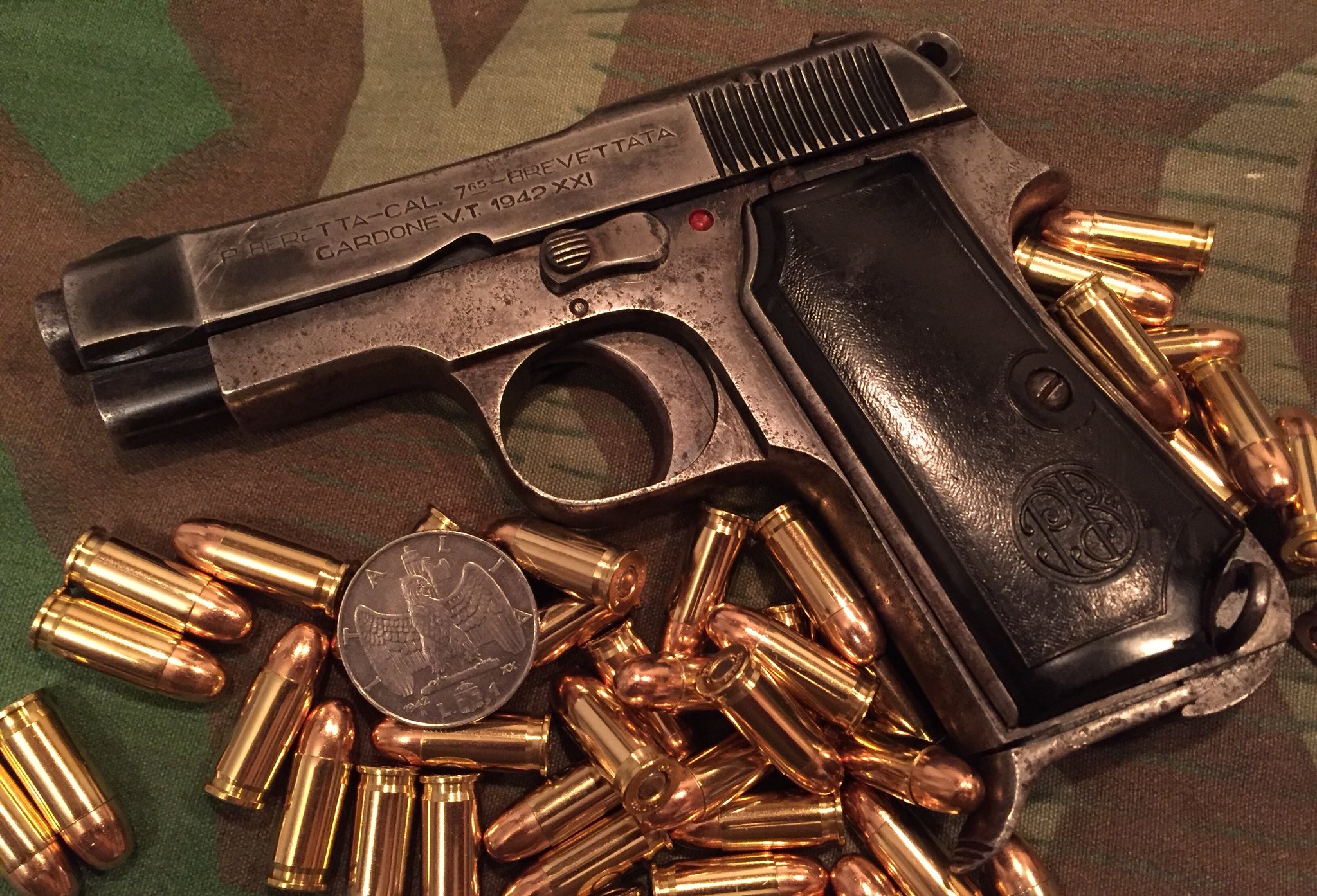
 The stories that this salty old sweat could tell us! Grumpy
Category: Uncategorized

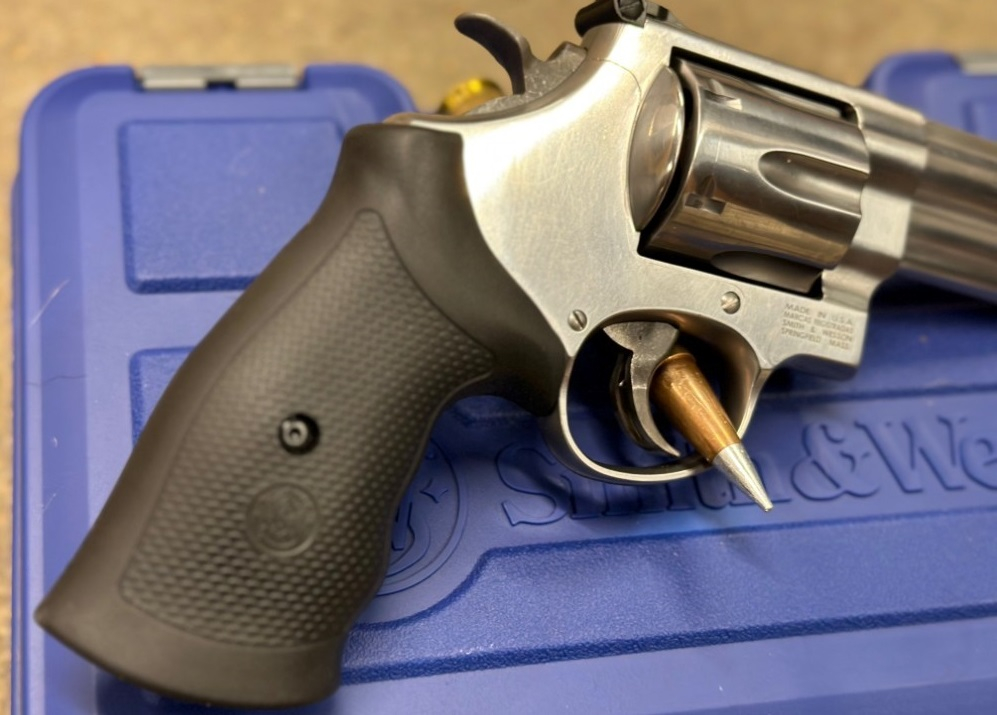
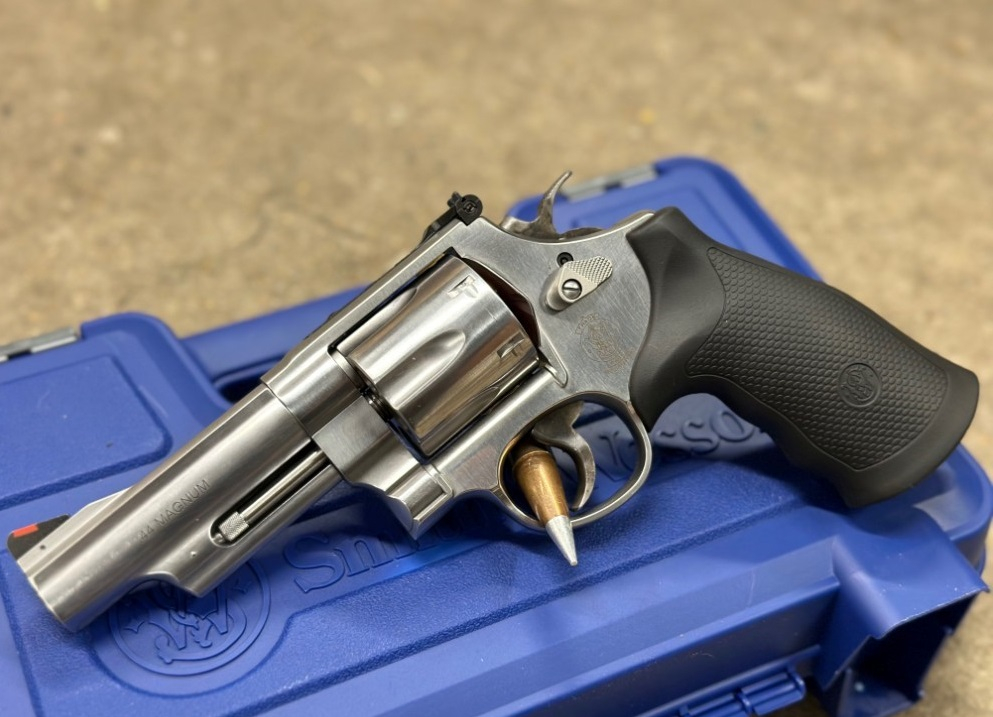
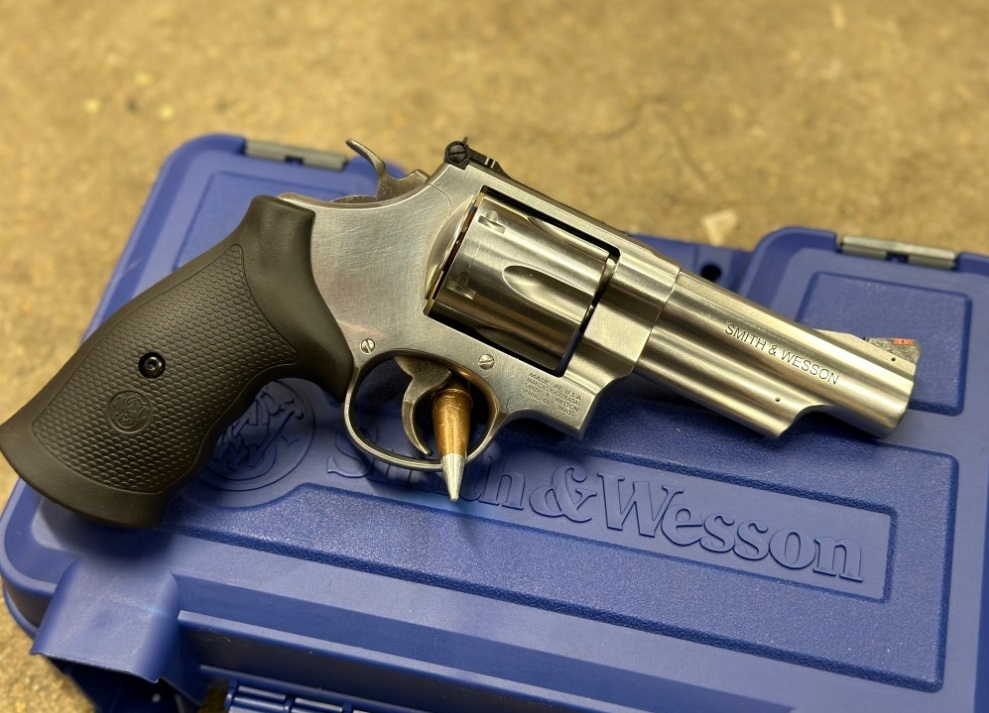















Lesson: What was legal then can be illegal now. Some principles are ephemeral, but some are eternal.

Source: Adobe Stock
Andrew Jackson (1767-1845) served two terms, from 1828 through 1837, as the seventh President of the United States. Controversial in his own time and perhaps more so today than ever, he was a complicated person — a classic example of the fact great men tend to have great strengths, but also great weaknesses. Few would dispute he was the architect of the great victory in the Battle of New Orleans, allowing the U.S. to win the War of 1812. He figured prominently in the long chain of conflicts known as the Indian Wars, accepting the surrender of the Creeks, and engineering the defeat of the Seminoles in Florida, including his time as Commander-in-Chief during the Second Seminole War. There were documented atrocities by both sides in the course of those Indian Wars.
Today, his statues are removed, and he is seen as a racist, yet he adopted an orphan Indian boy and raised him as his own. At the time, American settlers saw themselves as the visiting team in battle against the home team, the Native Americans, and celebrated Jackson’s victories. Historians James Cusick and Sherry Johnson would later claim, “… it is possible to conclude that while New Orleans made Andrew Jackson a hero, it was Florida that put him in the White House.” (1)
He saw himself first and foremost as a fighting man. At his instruction, his tomb bears no mention of having held his country’s highest office, nor that he was recognized as the first “common man” to serve there. Instead, the inscription simply reads “General Andrew Jackson.”
It was something he didn’t limit to times when he wore a uniform. Andrew Jackson fought other men physically, up to and including death, as a private individual. Those are the instances in his life we’ll examine here.
First Encounter
An orphan boy of 14, Andrew Jackson took part in the War of Independence as a scout and was captured by the redcoats. When an imperious British officer contemptuously ordered young Jackson to polish his boots, the lad replied with dignity, “I am a prisoner of war, and claim to be treated as such.” The Englishman didn’t appreciate that and took a sword to the unarmed teen. Young Jackson came away from that with scars on his hand and arm, a crease in his skull from the blade, and an absolute abiding hatred of the British.
The Sevier Shootout …
Jackson married his wife Rachel, the love of his life, in the mistaken belief her first husband had divorced her. In fact, the divorce had not yet been granted, making the couple technically bigamists. Throughout the rest of his life, political opponents would harp on this. In Knoxville, Tenn. in 1803, Jackson found himself face-to-face with Tennessee Governor John Sevier, debating which of them should be named to lead the state militia. Jackson said he felt his own services to the unit qualified him. Sevier sniffed, “I know of no great service you have rendered the country except taking a trip to Natchez with another man’s wife.”
“Great God!” Jackson exploded. “Do you mention her sacred name?” Historian Jon Meacham picks it up from there: “Then, according to a contemporary’s recollection, ‘several shots were fired in a crowded street. One man was grazed by a bullet; many were scared; but luckily, no one was hurt.’” (2) Neither of the principals had fired a shot: Judge Jackson was armed only with a cane during the brawl, and Governor Sevier, with a cutlass.
… and the Sevier Face-off
Feeling his wife’s honor had not been sufficiently upheld in the encounter recited above, in the custom of the time, Jackson challenged Sevier to a duel. Older, arguably wiser, and aware the state he governed had banned dueling the year before, Sevier also apparently felt a need to save face and tried to stall the deadly appointment Jackson sought. They agreed to meet at a point just over the border of Virginia. Sevier didn’t show.
Riding back to Knoxville, with his friend and “second,” an Army surgeon’s assistant named Thomas Van Dyke, Jackson met Governor Sevier and his son James riding in the other direction. They stopped their horses and Jackson, now on foot with a pistol in each hand, advanced toward Sevier, who armed himself likewise. Van Dyke successfully made a temporary peace, convincing each man to holster his guns and get back on his horse. They complied, but cussed each other out as they did so. Finally, Jackson seemed to snap. He dismounted again and, now with a drawn gun in one hand and a sword cane in the other, advanced on Sevier. Sevier got off his horse with a drawn sword; the saber frightened his mount, which ran off with his guns apparently still holstered on the saddle.
At this point the Governor’s son drew down on Jackson with his own pistol, to protect his father. Van Dyke, in turn, pulled his pistol and leveled it at the younger Sevier to protect his friend Jackson. Finally, people seemed to come to their senses. With the trash talk still spewing, but no guns blazing and no blood flowing, both sides mounted up one last time and went their separate ways.
First Duel
In 1788 Jackson, then a young attorney, fought what appears to have been his first duel, evolving from his challenge to a prosecutor named Waightstill Avery who was called by one historian “the dean of the North Carolina bar.” Avery had apparently bested him to an embarrassing degree in the trial of a civil lawsuit.
History tells us duels, being grandiosely called “affairs of honor,” were highly formulated and were often shams. If the duel was not called off entirely with a handshake, the participants might deliberately “waste their shot,” intentionally aiming away from their opponent. Face was saved on both sides by this ritual, and bloodshed avoided.
So it was on the day of the Jackson/Avery duel. History professor H.W. Brands writes, “By now Jackson’s anger had cooled, and he apparently acceded to the advice of the seconds that honor would be assuaged even if no blood flowed. At any rate, after Jackson and Avery stepped off the agreed-upon distance, they fired, and both deliberately missed. ‘General Jackson acknowledged himself satisfied,’ Avery’s son concluded. ‘They shook hands and were friendly ever after.’” (3)
Gunpoint Arrest
Jackson was apparently a quick study. He began studying law in his mid-teens, apprenticed to an attorney at 17, and was licensed to practice law at age 20. He soon earned a position as circuit judge. Circa 1800, he ordered the arrest of a man named Russell Bean. Bean was a local badass with many claims to fame. He was said to be the first white child born in what became Tennessee; he was the biggest, strongest man in the area; and he was absolutely the local bully. His mean streak reached the height of its cruelty when he found out his wife’s new baby was not his.
He cut the infant’s ears off, sneering that now he could tell this one from his own.
A warrant was issued for his arrest. Bean, who habitually wore two pistols and a Bowie knife, told the sheriff he wouldn’t submit to arrest. When the sheriff came back with a posse, Bean cowed them too. The frustrated sheriff came to court to announce to Judge Jackson what had happened. Jackson told him to deputize every man in the courthouse for a posse, and perhaps to save face, the sheriff responded he would start the posse by enlisting Jackson himself. Stung, the judge did indeed lead the posse to Bean’s residence, where he found the wanted man wearing his knife and guns.
But Andrew Jackson had also armed himself — by one account, with a pistol in each hand. He drew down on Bean and advanced on him shouting, “Now, surrender, you infernal villain, this very instant or I’ll blow you through!”
Bean meekly surrendered, muttering a face-saving “I will surrender to you, sir, but no one else.” When asked later why he submitted only to Jackson, he said it was because he was certain that the judge, unlike the others who had come for him, actually would kill him if he didn’t give up. “I looked in his eyes and saw ‘shoot,’” Bean was quoted as saying. (4)
Blows Instead Of Bullets
It seemed to some observers of the day Jackson would duel at the slightest provocation. In 1805, Jackson, nearing age 40, traded insults with a young provocateur named Thomas Swann from Nashville. Historians seem to agree Swann was a showoff trying to make a name for himself when he challenged Jackson over what may have been an imagined slight to one of his friends; Jackson simply blew it off. But when Swann challenged him again, it apparently became too irritating. Historian Brands explains, “Jackson paid no more attention to this than to Swann’s earlier challenge. He declined to recognize Swann as a gentleman and threatened to thrash him rather than trade pistol fire. Swann confronted Jackson at a Nashville tavern, where Jackson began beating him with a cane. Onlookers broke up the fight, and Jackson strode off.” (5)
Deadly Duel
Legend has Andrew Jackson being a prolific duelist of his day, but I can only find two Jackson duels where shots were fired, and only one that was fatal. In 1806, after an argument over a horse race bet some six months earlier, one Charles Dickinson publicly called him “a worthless coward, a paltroon (sic) and a coward,” and by some accounts disparaged Rachel Jackson. That was a mortal offense to Jackson, who challenged him to a duel. It took place in late May in Kentucky, where dueling was still essentially ignored by the law.
Brands relates the rules: “It is agreed that the distance shall be 24 feet, the parties to stand facing each other with their pistols down perpendicularly. When they are ready, the single word ‘fire’ to be given, at which they are to fire as soon as they please. Should either fire before the word given, we (the duelists’ “seconds”) pledge ourselves to shoot him down instantly.”
Jackson challenging Dickinson would be like one of us today challenging Tiger Woods to a golf match, placing our lives as the bet. Dickinson was famous for his marksmanship skill and his coolness with gun in hand, and it was claimed he had killed 26 men in duels: one for each year of his life.
On the “fire” command, Dickinson fired first. Jackson stood erect, his free hand rising to his chest. Shocked his opponent was still on his feet, Dickinson blurted, “God, have I missed him?” The implacable Jackson merely aimed at him, carefully pressing his trigger.
Click.
Nonchalantly, Andrew Jackson cocked the weapon, then extended it again at the end of his right arm. He took his time with an achingly long trigger squeeze. This time, the pistol discharged, and Charles Dickinson collapsed.
The bullet had struck Dickinson center mass in the upper abdomen. The seconds quickly learned why Jackson had brought his left hand to his breast: Dickinson’s bullet had smashed through rib and lung deep into his chest, stopping an inch from the heart. Blood was pouring down Jackson’s body so profusely it filled one of his boots.
Dickinson died hours later. Jackson lived with a long but incomplete convalescence that left him in constant chest pain and coughing up blood until the end of his days.
Gunfight In Nashville
Jackson’s long-time frenemy Thomas Hart Benton has bad-mouthed him, and Jackson has sworn to horsewhip Benton the next time he sees him. That encounter takes place outside the City Hotel in Nashville in 1813. Jackson is accompanied by his friend John Coffee, and Benton by his brother Jesse. All are armed with concealed pistols, and Jackson also has an edged weapon and, in hand, the promised riding whip.
The two principals go for their guns.
Jackson’s is out first. Moment by moment accounts differ. In their book on the Indian Wars in which Jackson figured so prominently, Bill O’Reilly and Martin Dugard maintain Jackson got his gun out first, pressed the muzzle against Thomas Benton’s chest, and drove him backward inside the hotel. (6)
What all accounts of the incident seem to agree on is Jesse Benton fires first, his bullet shattering Jackson’s left shoulder and cutting an artery. As the gunfire erupts between the various opponents, Jackson’s left arm takes another lead ball. He falls, and as he is going down, he fires his own pistol. The bullet strikes no one, but some believe the muzzle blast scorches Thomas Hart Benton, causing him to stagger back; in any case, Benton falls down a flight of stairs as he backs away from the gunfire, and is out of the fight. Thomas Coffee’s gunfire joins the cacophony.
Brand, the history professor, writes: “Then the daggers came out. Stockley Hays, a nephew of Rachel Jackson, was passing by and heard the shooting. Seeing his uncle in danger, he dove upon Jesse and slashed him several times. Jesse pressed a pistol against Hays’ heart and pulled the trigger, but the gun misfired.” (7).
Their single-shot pistols having run dry, the men were separated by hotel staff and shocked bystanders, ending the fight. Lapsing in and out of consciousness, and told by doctors they had to amputate to save his life, Andrew Jackson replied coldly, “I’ll keep my arm.”
He did, but the effects of the wound would haunt him for the rest of his life. He had unarguably lost the fight: Thomas Hart Benton retrieved Jackson’s sword from the fight scene and triumphantly broke it over his knee in a public square. (8)
Assassin!
In January 1835, Andrew Jackson had the dubious distinction of being the first American President to undergo an assassination attempt. Long before Secret Service, he was walking out of the Capitol building when a British lunatic named Richard Lawrence — who believed himself to be Richard the Third, the rightful king of England — lunged at him and from eight to 10 feet away, leveled a pistol at Jackson’s center chest and pulled the trigger.
Click. The pistol misfired. Before Jackson could react, Lawrence brought up a second pistol. Click!
Now, if there was any man in America who knew how deadly a pistol could be, even after it had misfired, it was Andrew Jackson. In an instant, he was on Lawrence, ferociously clubbing him to the ground with his cane. Onlookers rushed Lawrence, swarming him, and probably saving his life by getting between him and the President’s cane. When the would-be assassin’s pistols were tested later by authorities, they both fired on the first try.
Lessons
Death battles seem glamorous until the shooting starts. Andrew Jackson’s three gunshot wounds were permanent injuries, which made his life miserable to the end of his 80 years. Pride is a two-edged sword, and many of the experiences detailed above remind us why pride is so often called a deadly sin.
Mutual combat isn’t lawful self-defense. In the last days of dueling, note how hard it was for Jackson to find a place to do it legally. No such place exists today. In consensual mutual combat, the rule is the loser leaves in the meat wagon and the winner in the paddy wagon. The killing of Dickinson — shot dead while helplessly holding an empty pistol, by a man who admitted later he intended to slay him — would be seen today as clear-cut premeditated murder … and was even seen as such by Jackson’s enemies then.
Be certain you can pull the trigger if you must. The arrest of Bean teaches a lesson about gunpoint that remains valid. Bean was a quintessential predator. One definition of “predator” could be “expert in prey selection.” By Bean’s own admission, when he realized — from Jackson’s stance, face and speech — the judge was fully prepared to end him, he surrendered without bloodshed on either side.
Fights that last seconds leave much longer aftermaths. Historians and even observers present at the time seem uncertain whether in the Dickinson duel, Jackson’s pistol initially was only half-cocked, or the hammer fell and caught on the half-cock notch, a mechanical malfunction. The rules of the day said a misfire constituted a shot, and to this day there are those who claim Jackson cheated when he re-cocked the gun and fired the fatal round. It is worth noting both Dickinson himself, on his deathbed, and his second announced the fight to have been fair. (9) One would think that would have settled the matter, but the “cheating killer” cloud still hangs over Andrew Jackson’s memory more than two centuries later.
If you’re hit, keep fighting, and expect your opponent to do the same. When asked later how he could stay on his feet and slay the man who’d shot him in the chest, Jackson famously replied even if he had been shot in the brain, he still would have killed Dickinson.
Speed is fine, but accuracy is final. Before Wyatt Earp, Texas Ranger John Hughes, and the legendary Bill Jordan gave that advice, Jackson came to the same conclusion. Circa 1817, when asked for advice about dueling, Jackson replied in part, “… charge your friend to preserve his fire until he shoots his antagonist through the brain for if he fires and does not kill his antagonist, he leaves himself fully in his power.” (10) Jackson was speaking, clearly, as a voice of experience.
Footnotes: (1) Cusick, James G and Johnson, Sherry, Andrew Jackson in Florida, Florida Historical Society Press, 2016, P. 312. (2) Meacham, John, American Lion: Andrew Jackson in the White House, Random House, 2008, P. 25. (3) Brands, H.W., Andrew Jackson: His Life and Times, Doubleday, 2005, P. 54. (4) https://www.vice.com/en/article/8qkq5a/these-wild-obscure-tales-of-past-presidents-are-stuffed-full-of-american-badassery (5) Brands, op. cit., P. 133. (6) O’Reilly, Bill and Dugard, Martin, Killing Crazy Horse: the Merciless Indian Wars in America, Henry Holt & Co., 2020, Pp. 26-27. (7) Brands, op. cit., P. 190. (8) American Heritage Magazine, “Now Defend Yourself, You Damned Rascal,” by Elbert Smith, February 1958 issue.(9) Brands, op. cit., Pp. 140–141. (10) Brands, ibid., P. 350.
Categories
S&W Model 66 No Dash Revolver


The .500/465 Nitro Express is one of several rounds (including the .470 Nitro Express, .475 Nitro Express, .475 No. 2 Nitro Express and .476 Nitro Express) developed as a replacement for the .500/450 Nitro Express following the British authorities’ 1907 ban of military caliber ammunition in India and the Sudan, all with comparable performance.[3]
Holland & Holland created the .500/465 Nitro Express by necking down the .500 Nitro Express 3+1⁄4 in.[4]
The .500/465 Nitro Express is designed for use in single-shot and double rifles.