Categories
Category: Uncategorized

The SIG Sauer P365 Fuse represents a groundbreaking fusion of micro-compact concealability and full-size performance in a single handgun. This innovative pistol bridges the gap between easily concealed carry guns and high-capacity, full-featured firearms.
The P365 Fuse features an optic-ready slide, allowing users to mount their preferred red dot sight for enhanced target acquisition. Despite its compact footprint, the pistol boasts a 4.3″ carbon steel barrel with a durable DLC finish, providing excellent accuracy and longevity.
The stainless steel slide incorporates aggressive serrations for improved manipulation, while the polymer LXG grip module features a laser-engraved texture for enhanced control. In addition, the grip module includes a 1913 accessory rail for mounting lights or lasers and a removable mag well for faster reloads.
Customization is a key aspect of the P365 Fuse, with interchangeable small, medium, and large backstraps included to ensure a perfect fit for various hand sizes. The nickel-plated, flat-faced trigger offers a crisp break and short reset for improved shooting performance.
Sighting options include a fiber-optic front sight paired with a black serrated rear sight, providing a clear sight picture in various lighting conditions. The slide is ready to accept popular red dot sights for those who prefer optics.
The P365 Fuse has impressive magazine capacity, shipping with two 21-round and one 17-round steel magazine. Bolstering high capacity, combined with its compact size, makes it an excellent choice for both concealed carry and home defense.
As a bonus, the P365 Fuse comes holstered in the Photon Holster by Alien Gear Holsters, ensuring users have a quality carry option right out of the box.
The SIG Sauer P365 Fuse truly delivers on its promise of combining micro-compact concealability with full-size performance and capability, making it a versatile option for shooters seeking a do-it-all pistol.
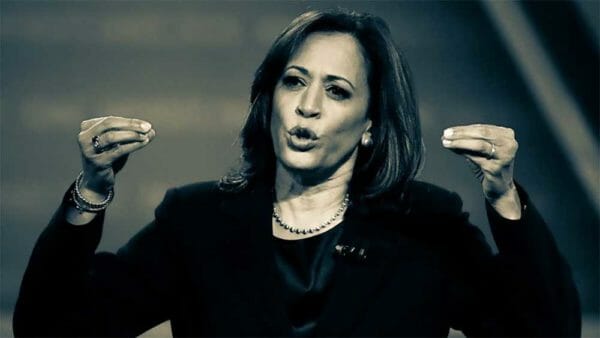 Why the corporate media is salivating over Kamala Harris’ radical anti-gun views, image NRA-ILA
When Kamala Harris ran for president in 2020, she called for a mandatory buyback of “assault weapons,” which is political-speak for a compulsory confiscation of personal property by armed agents of the government.
The media never pressed Harris about the details, such as how she planned to define “assault weapons,” how she intended to skirt the Second, Fourth, Fifth, and Fourteenth Amendments of the United States Constitution, or how far she was willing to go if law-abiding gun owners refused to surrender their arms to the government. It didn’t matter. Harris was tabbed as an anti-gun radical, which forever endeared her to the legacy media and their corporate bosses.
Harris hasn’t mentioned her armed confiscation plans recently, but she doesn’t need to. After Joe Biden resigned from the presidential race via social media and Harris was given the frontrunner mantle, of course the media jumped to offer whatever assistance they could. After all, here is a politician who advocated seizing “assault weapons” by force, which fits the media’s anti-gun narrative 100 percent.
Case in point: When March for Our Lives – the New York City-based nonprofit with $1.3 million in assets that pays its secretary David Hogg an annual salary of $56,974 for a mere 10-hour work week – decided to endorse a political candidate, Harris, for the first time in its six-year history, the media absolutely erupted with support.
Even Rolling Stone published a glowing report, which was based entirely on a written statement from the nonprofit. Evidently, the March kids were too busy marching to answer the phone.
“Harris leads the who leads [sic] the new White House Office of Gun Violence Prevention, and in March visited Marjory Stoneman Douglas High School in Parkland, touring the classroom where the mass shooting took place. March for Our Lives lauded Harris as a lawmaker actively engaged with their mission,” Rolling Stone wrote.
In an interview with ABC News, Natalie Fall, executive director of March for Our Lives, said, “We see a lot of energy around Vice President Harris in this election; there’s no denying that. I think everybody’s seeing it right now.”
England’s Sky News, which is owned by Comcast, couldn’t get an interview with Harris but still wanted to offer their support. In a story published Monday, Sky News cited comments from one of Harris’ previous speeches.
“Our nation is being torn apart by the tragedy of it all and torn apart by the fear and trauma that results from gun violence,” Harris said in a 2023 speech. “President Biden and I believe in the second amendment, [sic] but we also know common sense solutions are at hand.”
Betsy Reed, a U.S.-based editor for The Guardian, also British, published a story Thursday in support of Harris’ first campaign ad – a television ad.
“Throughout that ad, a Law & Order SVU-like deep male voice directly compares Harris and Trump, beginning, ‘He’s a world leader in temper tantrums. She never loses her cool. She prosecuted sex predators. He is one.’ It ends by calling Harris the ‘anti-Trump,’” Reed wrote.
Media bias explained
Why is the corporate media so slavish in its support of Harris? Why are reporters, editors and producers so willing to go to the mattresses for a one-term Veep who even the Dems admit hasn’t done a whole lot? The answer is simple: Guns are bad, the media believes, so any politician who opposes civilian firearm ownership is a hero.
Today’s corporate media practices a groupthink that vilifies anyone who supports the Second Amendment. Over the years, I’ve tracked examples of this collective thinking. Here are the most current examples.
This is what the media actually believes:
Guns are evil. All guns should be banned. No one needs a gun.
- All gun owners are gun-nuts, rubes, hicks and hillbillies.
- All pro-gun lawmakers are crazy. Vilify them at will. Anything goes.
- All anti-gun lawmakers are heroes. They should be praised and protected from scorn.
- All anti-gun legislation – even if its unworkable, such as micro-stamping or “smart gun” technology – should be mandatory and strongly supported.
- All pro-gun legislation should be framed as crazy and ridiculed using outright lies and extreme examples.
- All pro-gun groups are obstructing the goal of total civilian disarmament and should be ridiculed and vilified. No mention should ever be made of their training, hunter education and gun safety programs.
- Concealed carry – especially Constitutional Carry – is deadly and leads to more violence. It should be criticized at every opportunity, as should those who carry concealed firearms.
- If a concealed carrier uses their firearm to save a life, it should not be reported unless they’re sued or criminally charged.
- Anyone who challenges this accepted conventional wisdom – especially another journalist – is the enemy.
This story is presented by the Second Amendment Foundation’s Investigative Journalism Project and wouldn’t be possible without you. Please click here to make a tax-deductible donation to support more pro-gun stories like this.
About Lee Williams
Lee Williams, who is also known as “The Gun Writer,” is the chief editor of the Second Amendment Foundation’s Investigative Journalism Project. Until recently, he was also an editor for a daily newspaper in Florida. Before becoming an editor, Lee was an investigative reporter at newspapers in three states and a U.S. Territory. Before becoming a journalist, he worked as a police officer. Before becoming a cop, Lee served in the Army. He’s earned more than a dozen national journalism awards as a reporter, and three medals of valor as a cop. Lee is an avid tactical shooter.
Categories
A MOSSBERG 42M-C 22 CAL RIFLE


REQUIEM FOR A LEGEND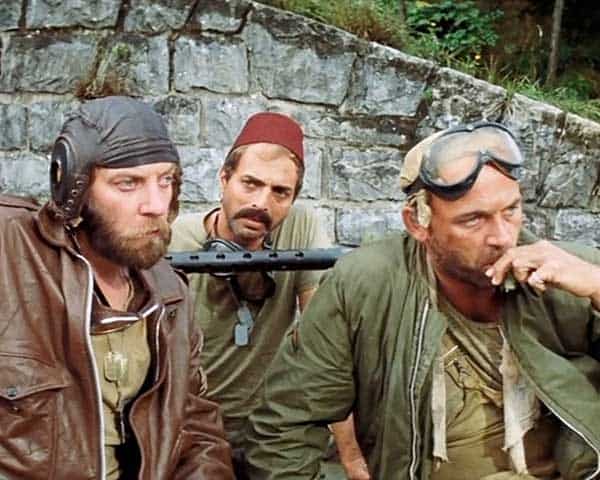
Kelly’s Heroes featured an ensemble cast of superb actors. Source: Internet Movie Stills Database
Kelly’s Heroes is one of the best movies ever filmed. Film critics will extol the many manifest virtues of such classic works as Sophie’s Choice and The Sound of Music. Forget that. Great movies shouldn’t make you sleepy, weepy, or thoughtful. Truly epic films should make you laugh uproariously or stand up in the theater and shout, “’Merica!” Kelly’s Heroes punches all the right buttons.
If you haven’t seen Kelly’s Heroes yet you need to drop what you are doing and fix that, like right now. I don’t care if you are flying an airplane, delivering a baby or being tried for embezzlement. You’ll thank me later.
Now, wasn’t that awesome? The film debuted in 1970 when antiwar sentiment in America was at its most intense. A goofy counter-culture ethos perfuses the production. The movie is at once funny, poignant, exciting and cool. What made the film work was its ensemble cast.
Details
Kelly is played by the inimitable Clint Eastwood. A former Infantry Lieutenant, Kelly lost his rank and is destined to serve out the rest of the war as an enlisted grunt. His foil is Telly Savales’ character, Big Joe. Big Joe is the company’s First Sergeant who just wants to get his guys back home safely.
The cast also includes Don Rickles as Crap Game, the conniving supply sergeant hustler; Harry Dean Stanton and Jeff Morris as the lovable rednecks; Carol O’Conner as the self-absorbed megalomaniacal American General; Gavin McLeod as the acerbic tank crewman, and many more. And then there was Donald Sutherland’s Oddball.
Donald Sutherland has played a wide variety of characters across a wildly successful acting career that spans decades. His unhinged tank commander, Oddball, eclipses them all. Oddball is equal parts cynic, lunatic and stoner. I kind of want to be Oddball when I grow up.
Kelly’s Heroes sported some epic vintage weaponry.
Story Arc
Spoiler alert — you’ve been warned. The narrative has Kelly’s armored infantry unit, the 35th ID — National Guard division drawn from Missouri, Nebraska and Kansas — getting hammered as it slogs its way across France after D-Day. Kelly and Big Joe serendipitously capture a German Colonel in Army Intelligence.
Big Joe knows they are approaching the French town of Nancy and demands that Kelly interrogate the Kraut Colonel about the best hotels, restaurants and brothels. As he does so, Kelley discovers that the German officer is carrying several gold bars. He gets the German drunk and finds that there are fourteen thousand more stored in a bank behind German lines in a French town called Clermont.
Stealing a massive pile of Nazi gold seems like the perfect crime. Big Joe is a hard sell, but Kelly’s guys eventually strike out along with Oddball’s three Sherman tanks to rob the German-held bank. There results chaos aplenty, much of it genuinely hilarious.
Packing a captured Luger in his M1916 leather holster, Oddball steals the show. We discover that his commander was previously decapitated by a German 88, but Oddball has neglected to report him dead. Instead, he just keeps his tanks out of the way while going to great lengths to make them all look battle-worn so the brass will leave them alone. The movie drips with amazing Oddball moments. However, the antics behind the camera were arguably more entertaining than what we saw in the film.
Background
Clint Eastwood agreed to do the movie because his friend Don Siegel was directing. When Siegel could not wrap Two Mules for Sister Sara in time and had to be replaced at the last minute by Brian Hutton, the ink was already dry on Eastwood’s contract. Hutton also helmed Where Eagles Dare.
Kelly’s Heroes was filmed in Yugoslavia in 1969. In the midst of filming, Eastwood read a news item reporting that Sutherland’s wife, Shirley Douglas, had been arrested for attempting to purchase hand grenades for the Black Panthers. Douglas actually tried to pay for the illicit ordnance using a personal check. When Eastwood reported this to Sutherland it was the first he had heard of it.
When he got to the part about the personal check, Eastwood supposedly laughed so hard he could no longer stand. He then wrapped his arm around his friend’s shoulders and assured him of his complete support.
Donald Sutherland and Shirley Douglas were parents to Kiefer Sutherland and his twin sister Rachel. However, they divorced the following year. Apparently using family funds to buy ordnance for terrorists was a deal breaker.
John Landis was a production assistant on the movie and developed a friendship with Sutherland. Landis admitted that he aspired to become a director himself. Sutherland promised that, should he actually someday make movies of his own, he would happily appear in them. Sutherland kept his promise and had parts in The Kentucky Fried Movie in 1977 and Animal House a year later. He also had a cameo on a billboard in The Blues Brothers in 1980. It was also while working on Kelly’s Heroes that Landis first had the idea to make An American Werewolf in London.
The incompetent artilleryman Mulligan was played to perfection by Telly Savales’ real-life brother, George. Mike Curb wrote the lyrics to the iconic theme song Burning Bridges. Curb went on to serve as Lieutenant Governor of California from 1978 through 1982. A contemporary 45-rpm record was released of Burning Bridges as sung by Clint Eastwood. Eastwood also recorded the forgettable B-side tune, Where I Loved Her, which was written by Kris Kristofferson.
The tanks in Kelly’s Heroes would warrant a column unto themselves. Oddball’s Shermans were Yugoslavian Army surplus M4A3E4’s featuring 76mm guns installed in original 75mm turrets. The three magnificent PzKpfw VI Tigers were bodged together out of Soviet T-34’s. The conversions were superb, but true tank nerds will notice that the bogeys are wrong and the turrets are a bit too far forward.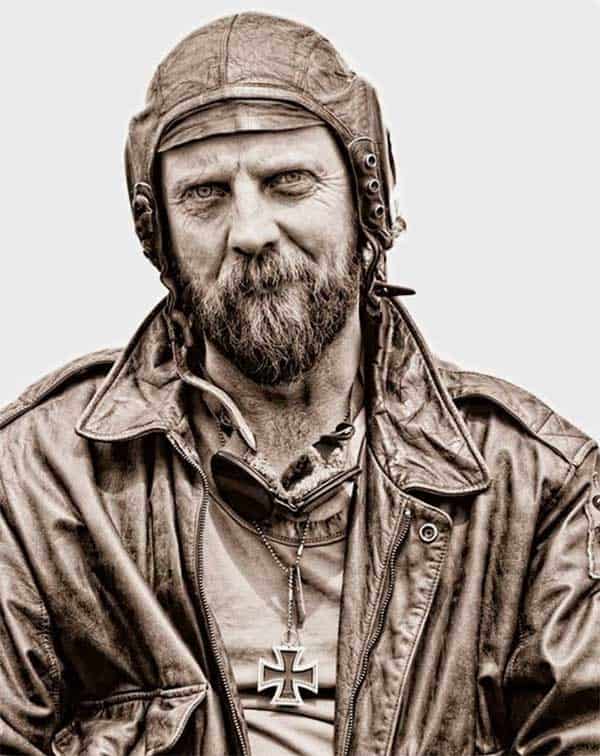
Kelly’s Heroes has become a cultural phenomenon.
This is not actually Donald Sutherland’s character Oddball.
This is a period reenactor in costume as Oddball. Wow.
Ruminations
Inspired by a true story, Kelly’s Heroes was an epic black comedy. It only returned $5.2 million against a $4 million budget but has since gained a massive cult following. For anyone interested in guns, tanks, military history or great guy movies, Kelly’s Heroes is indeed a timeless classic.
As an aside, Kelly’s Heroes is also a wealth of some remarkably quotable dialogue. Here are some of my favorite lines, “To a New Yorker like you, a hero is some kind of weird sandwich, not some nut who takes on three Tigers,” “Get the underwear off of your head, enough is enough,” and “Why don’t you knock it off with them negative waves!”
Donald Sutherland died last week at 88 after a protracted illness. During his long and successful career, he has played an astronaut, an alien-infected monster, a Roman aristocrat, a Korean War-era Army surgeon and a WWII German spy. However, Oddball eclipsed them all.

Categories