Categories
Uncategorized

Beginner Basics #3 How To Mount a Rifle Scope

Attachments area
Preview YouTube video Beginner Basics #3 How To Mount a Rifle Scope

Categories
Uncategorized

Damascus steel or W.T.F.I.T. ?

Image result for Damascus steel guns
Related image
Image result for Damascus steel
This is one of the earliest and most beautiful steels made by man. Here is it’s story below:
 

https://youtu.be/shWWo4d-uP0?t=3

Damascus steel
From Wikipedia, the free encyclopedia
For Damascus Twist barrels, see Skelp. For the album of the same name, see Damascus Steel (album).
Close-up of an 18th-century Persian-forged Damascus steel sword
Damascus steel was a type of steel used for manufacturing sword blades in the Near East made with wootz steel.[1] These swords are characterized by distinctive patterns of banding and mottling reminiscent of flowing water. Such blades were reputed to be tough, resistant to shattering, and capable of being honed to a sharp, resilient edge.[2]
The steel is named after Damascus, the capital city of Syria. It may either refer to swords made or sold in Damascus directly, or it may just refer to the aspect of the typical patterns, by comparison with Damask fabrics (which are themselves named after Damascus).[3][4]
The original method of producing Damascus steel is not known. Modern attempts to duplicate the metal have not been entirely successful due to differences in raw materials and manufacturing techniques. Several individuals in modern times have claimed that they have rediscovered the methods by which the original Damascus steel was produced.[5][6]
The reputation and history of Damascus steel has given rise to many legends, such as the ability to cut through a rifle barrel or to cut a hair falling across the blade.[7] A research team in Germany published a report in 2006 revealing nanowires and carbon nanotubes in a blade forged from Damascus steel.[8][9][10] Although many types of modern steel outperform ancient Damascus alloys, chemical reactions in the production process made the blades extraordinary for their time, as Damascus steel was superplastic and very hard at the same time. During the smelting process to obtain Wootz steel ingots, woody biomass and leaves are known to have been used as carburizing additives along with certain specific types of iron rich in microalloying elements. These ingots would then be further forged and worked into Damascus steel blades. Research now shows that carbon nanotubes can be derived from plant fibers,[11] suggesting how the nanotubes were formed in the steel. Some experts expect to discover such nanotubes in more relics as they are analyzed more closely.[9]
Contents  [hide]
1 History
1.1 Loss of the technique
2 Reproduction
2.1 Moran: billet welding
2.2 Verhoeven and Pendray: crucible
2.3 Anosov, Wadsworth and Sherby: bulat
2.4 Additional research
2.5 In gunmaking
3 See also
4 References
5 External links
History[edit]
See also: Wootz steel
A bladesmith from Damascus, c. 1900
Damascus blades were first manufactured in the Near East from ingots of wootz steel that were imported from India,[1] as well as Sri Lanka.[12] The Arabs introduced the wootz steel to Damascus, where a weapons industry thrived.[13] From the 3rd century to the 17th century, steel ingots were being shipped to the Middle East from India.[14]
Loss of the technique[edit]
Production of these patterned swords gradually declined, ceasing by around 1750, and the process was lost to metalsmiths. Several modern theories have ventured to explain this decline, including the breakdown of trade routes to supply the needed metals, the lack of trace impurities in the metals, the possible loss of knowledge on the crafting techniques through secrecy and lack of transmission, suppression of the industry in India by the British Raj,[15] or a combination of all the above.[5][6][16]
The original wootz was imported from India to Damascus, where Middle Eastern bladesmiths forged them into swords.[5][6] Due to the distance of trade for this steel, a sufficiently lengthy disruption of the trade routes could have ended the production of Damascus steel and eventually led to the loss of the technique in India. As well, the need for key trace impurities of tungsten or vanadium within the materials needed for production of the steel may be absent if this material was acquired from different production regions or smelted from ores lacking these key trace elements.[5] The technique for controlled thermal cycling after the initial forging at a specific temperature could also have been lost, thereby preventing the final damask pattern in the steel from occurring.[5][6]
The discovery of carbon nanotubes in the Damascus steel’s composition supports this hypothesis, since the precipitation of carbon nanotubes probably resulted from a specific process that may be difficult to replicate should the production technique or raw materials used be significantly altered.[16]
Reproduction[edit]
A bladesmith forging a Damascus blade
Recreating Damascus steel is a subfield of experimental archaeology. Many have attempted to discover or reverse-engineer the process by which it was made.
Moran: billet welding[edit]
Characteristic “organic”[citation needed] pattern of Damascus steel
Since the well-known technique of pattern welding produced surface patterns similar to those found on Damascus blades, some blacksmiths were erroneously led to believe that Damascus blades were made using this technique, but today, the difference between wootz steel and pattern welding is fully documented and well understood.[17][18][19] Pattern-welded steel has been referred to as “Damascus steel” since 1973 when Bladesmith William F. Moran unveiled his “Damascus knives” at the Knifemakers’ Guild Show.[20][21]
This “Modern Damascus” is made from several types of steel and iron slices welded together to form a billet, and currently the term “damascus” (although technically incorrect) is widely accepted to describe modern pattern welded steel blades in the trade.[22] The patterns vary depending on how the smith works the billet.[21] The billet is drawn out and folded until the desired number of layers are formed.[21] To attain a Master Smith rating with the American Bladesmith Society that Moran founded, the smith must forge a damascus blade with a minimum of 300 layers.[23]
Verhoeven and Pendray: crucible[edit]
Question book-new.svg
This section relies largely or entirely upon a single source. Relevant discussion may be found on the talk page. Please help improve this article by introducing citations to additional sources. (April 2016) (Learn how and when to remove this template message)
J. D. Verhoeven and A. H. Pendray published an article on their attempts to reproduce the elemental, structural, and visual characteristics of Damascus steel.[5] They started with a cake of steel that matched the properties of the original wootz steel from India, which also matched a number of original Damascus swords that Verhoeven and Pendray had access to. The wootz was in a soft, annealed state, with a grain structure and beads of pure iron carbide, which resulted from its hypereutectoid state. Verhoeven and Pendray had already determined that the grains on the surface of the steel were grains of iron carbide—their goal was to reproduce the iron carbide patterns they saw in the Damascus blades from the grains in the wootz.
Although such material could be worked at low temperatures to produce the striated Damascene pattern of intermixed ferrite and cementite bands in a manner identical to pattern-welded Damascus steel, any heat treatment sufficient to dissolve the carbides would permanently destroy the pattern. However, Verhoeven and Pendray discovered that in samples of true Damascus steel, the Damascene pattern could be recovered by aging at a moderate temperature. They found that certain carbide forming elements, one of which was vanadium, did not disperse until the steel reached higher temperatures than those needed to dissolve the carbides. Therefore, a high heat treatment could remove the visual evidence of patterning associated with carbides but did not remove the underlying patterning of the carbide forming elements; a subsequent lower-temperature heat treatment, at a temperature at which the carbides were again stable, could recover the structure by the binding of carbon by those elements.
Anosov, Wadsworth and Sherby: bulat[edit]
Question book-new.svg
This section relies largely or entirely upon a single source. Relevant discussion may be found on the talk page. Please help improve this article by introducing citations to additional sources. (April 2016) (Learn how and when to remove this template message)
In Russia, chronicles record the use of a material known as bulat steel to make highly valued weapons, including swords, knives and axes. Tsar Michael of Russia reportedly had a bulat helmet made for him in 1621. The exact origin or the manufacturing process of bulat is unknown, but it was likely imported to Russia via Persia and Turkestan, and it was similar and possibly the same as damascus steel. Pavel Petrovich Anosov made several attempts to reproduce the process in the mid-19th century. Wadsworth and Sherby also researched [6] the reproduction of Bulat steel and published their results in 1980.
Cementite crystal structure. Iron atoms are in blue, carbon atoms are in black.
Additional research[edit]
A team of researchers based at the Technical University of Dresden that used x-rays and electron microscopy to examine Damascus steel discovered the presence of cementite nanowires[24] and carbon nanotubes.[25] Peter Paufler, a member of the Dresden team, says that these nanostructures are a result of the forging process.[9][26]
Sanderson proposes that the process of forging and annealing accounts for the nano-scale structures.[26]
In gunmaking[edit]
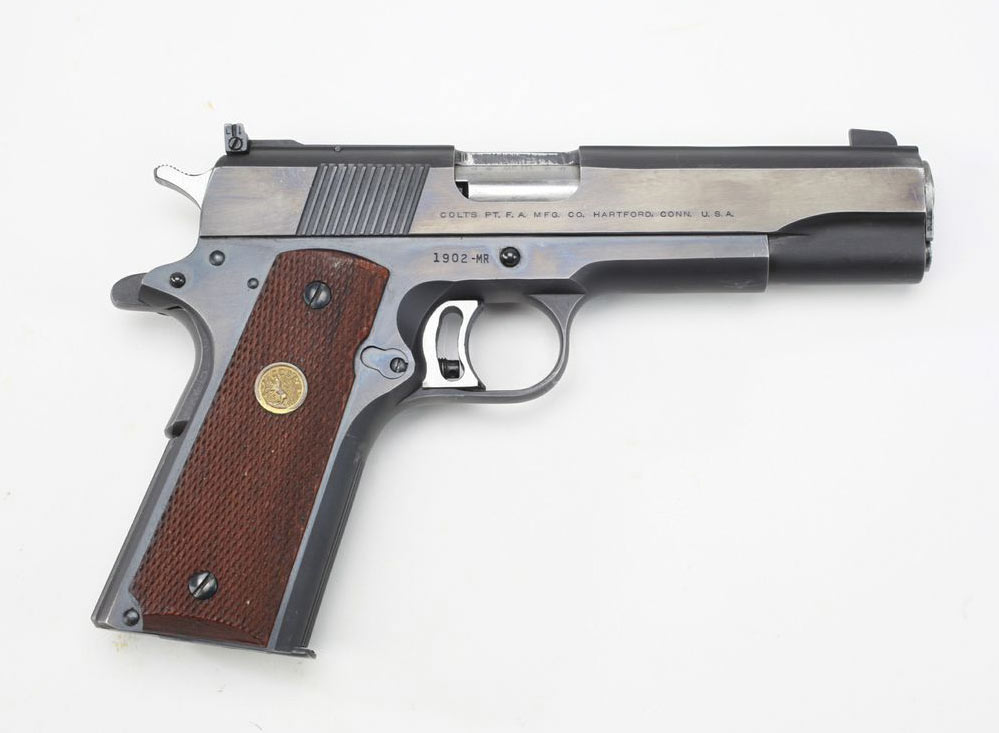
Prior to the early 20th century, all shotgun barrels were forged by heating narrow strips of iron and steel and shaping them around a mandrel.[27][28] This process was referred to as “laminating” or “Damascus”.[27][28] These types of barrels earned a reputation for weakness and were never meant to be used with modern smokeless powder, or any kind of moderately powerful explosive.[28] Because of the resemblance to Damascus steel, higher-end barrels were made by Belgian and British gun makers.[27][28] These barrels are proof marked and meant to be used with light pressure loads.[27] Current gun manufacturers make slide assemblies and small parts such as triggers and safeties for Colt M1911 pistols from powdered Swedish steel resulting in a swirling two-toned effect; these parts are often referred to as “Stainless Damascus”.[29]
Attachments area
Preview YouTube video What Is Damascus Steel?

Preview YouTube video ONE MILLION LAYER DAMASCUS STEEL!!!! Will it work!?!?

Preview YouTube video Damascus steel from Grover washers – blade

Categories
Uncategorized

NSFW

Inline image 8
Inline image 9
Inline image 1
Inline image 3
Inline image 10
Inline image 3
Inline image 5
Inline image 7
Inline image 2
Inline image 2
Inline image 2
Inline image 11
Inline image 1

Categories
Uncategorized

How to Recognize Poison Ivy, Oak, & Sumac and Treat Their Rashes

Jeremy Anderberg | August 27, 2015

Manly SkillsOutdoors

vintage illustration poison ivy oak sumac

A stroll in the woods is nearly always an enjoyable endeavor; what’s not so enjoyable is discovering a red, itchy rash the next day. Each year, millions of Americans come in contact with poison ivy, poison oak, or poison sumac. While there are numerous other poisonous plants, these three are grouped together because they share a common irritant: an oily resin/sap called urushiol. This resin is potent — it only takes 1 nanogram to cause a reaction. And unfortunately, it coats all parts of these plants.
While some of the characteristics we describe below aren’t necessarily unique to these plants, we’ll get you enough information to avoid these poisonous foes and confidently walk your favorite trails (or create your own!).

Identifying Poison Ivy

The old saying is true: “Leaves of three, let them be!” While there are other plants which have leaf clusters in threes, both poison ivy and poison oak share this trait, making it best to avoid plants with this feature altogether. What you’ll most likely encounter with poison ivy is a stem with a larger leaf at the end, and two smaller leaves shooting off the sides. The leaves can be notched or smooth on the edges, and they have pointed tips. The plant is reddish in the spring, green in summer, and yellow/orange in the fall. It’s not uncommon to see clusters of greenish-white berries on poison ivy through the spring and summer, as well as green/yellow flowers.
poison ivy red pointed leaves of three
Poison_Ivy_in_Perrot_State_Park
poison ivy in the fall
large poison ivy hedge
Poison ivy can take the form of a vine or a shrub. The plant’s appearance varies widely based on the region and specific environment where it grows, which is everywhere in the US with the exceptions of Hawaii, Alaska, and parts of the southwest deserts.

Identifying Poison Oak

Like poison ivy, this plant most often grows leaves in clusters of three, although some varieties display five or seven per cluster. The defining feature is that the leaves have a lobed, wavy appearance (also described as scalloped), similar to oak tree leaves, but more subdued. Another characteristic that sets it apart from poison ivy is that the tips of the leaves are rounded rather than pointed. Its leaves are bright green in spring, turn yellow-green or pink in summer, and finally turn yellow into dark brown in the fall.
poison oak leaves green
poison oak orange leaves fall
poison oak shrub green leaves
Poison oak is generally a shrub, averaging about 3 feet tall, but shoots of it can also grow as a vine. Not commonly found in the middle part of the U.S., poison oak is primarily situated on the West coast, and the East coast/Southeast.

Identifying Poison Sumac

Poison sumac stems (which are generally red — another of the defining features) have 7-13 leaves, in pairs, with a lone leaf at the end. Leaves are oval, elongated, and smooth-edged, usually 2-4 inches long. They are bright orange in spring, dark green in summer, and red-orange in fall.
poison sumac in the summer green leaves
poison sumac sapling tree
poison sumac in the fall red leaves
tall poison sumac tree
Poison sumac thrives in watery, swampy environs, present mostly in the Midwest and Southeastern U.S., where high humidity is common. It grows as a tree or tall shrub, 5-20 feet tall.

Allergic Reactions to Poison Ivy, Oak, or Sumac

An allergic reaction to poison ivy, oak, or sumac can occur when your skin makes direct contact with the plant, when you touch something that has been in contact with the plant, and even when the plant is burned, as particles of urushiol can make their way into your eyes, nose, and throat. Urushiol is very sticky and tenacious, so it easily adheres to firewood, dog fur, and gardening tools, and then transfers itself to your skin once you lift, pet, and pick up these things. Because urushiol is present in the plants’ roots, stems, and leaves, it remains potentially poisonous even in the wintertime.
Anyone can get an allergic reaction if exposed to urushiol in a large enough dose. But some folks are more sensitive than others. About 85% of the population is fairly to extremely susceptible to getting an allergic reaction, while 15% of lucky folks are resistant to reaction. One’s sensitivity/resistance is thought to be largely genetic in origin, so if your parents have had severe reactions to poisonous plants, take extra care to avoid contact yourself.
Sometimes you only get a rash after being exposed to the plant numerous times. So don’t automatically assume that you’re resistant because you touched poison ivy/oak/sumac once, and didn’t get a rash.
On the other hand, sensitivity to these poisonous plants can lessen over time. So if you had a bad reaction as a child, you may have developed more resistance over the years.

How to Treat a Rash From Poison Ivy, Oak, or Sumac

If you know you’ve touched one of these poisonous plants, you have about 10 minutes before the sap penetrates the lower layers of your skin and binds to its cells, at which point an allergic reaction will set in. So you can head off this reaction by immediately rinsing the exposed area with running water. Use a mild detergent soap if you have it; fatty soaps can spread the urushiol oil, creating a worse reaction. Rinsing with rubbing alcohol is also effective. If wipes are all you have to clean the area, that’s better than nothing.
If you don’t wash off the resin in time, and you’re sensitive to ivy/oak/sumac, then a rash will develop. Rashes from all three of these plants appear in the same form and are treated in the same way since the irritating agent in all of them is urushiol. If you’ve been outdoors and have the following symptoms appear, you may have a rash from one of these plants:

  • patches of swollen redness
  • outbreak of blisters
  • intense itching

These are the primary symptoms, and they generally appear within 12-72 hours of contact. Luckily, if the rash isn’t severe, it can be treated at home without having to see a dermatologist.
The American Academy of Dermatology recommends the following treatment plan:

  • Immediately rinse your skin with lukewarm, soapy water. Urushiol is an oil, so if not washed off, it can continue to spread. (Note: there are special washes out there that claim to remove urushiol more effectively and to lesson the severity of a rash once a reaction has set in; Zanfel is a popular one, but Mean Green Scrub uses the same ingredients/composition but costs way less per ounce.)
  • Wash your clothing and anything else the oil may have touched, including tools, pets, car seats, etc.
  • Do not scratch; doing so can open the skin and possibly cause an infection.
  • Leave blisters alone; do not peel overlying skin, as it protects the wound underneath from infection.
  • Apply calamine lotion or hydrocortisone cream/lotion.
  • Apply a cool washcloth to skin to ease burning and itching.

The rash should heal in about 1-2 weeks. Though it may look gross, it’s not contagious. If the rash is particularly large or painful, or doesn’t heal in that timeframe, it’s best to see a dermatologist who may prescribe a round of oral steroids or other treatments.
Above all, wearing long clothing when you go out is recommended — especially pants to guard against brushing these plants while wandering around. Be sure to wash these clothes right when you get home.
You’re now equipped to head out to the woods and avoid these itchy fiends!

Categories
Uncategorized

No Shit

Categories
Uncategorized

May the Force be with you! NSFW

Image result for may you have a great weekend funny
Related image
Image result for beach nude women hd pinterest
Image result for slim busty nude hd pinterest
Related image
Related image
Image result for page 3 nudes hd
Related image
Related image

Categories
Uncategorized

First aide videos

Hopefully you will not need this, so Good Luck!                Grumpy


Attachments area
Preview YouTube video My First Aid Kit and Wilderness Safety Ideas

Preview YouTube video What’s inside my Car First Aid Kit

Preview YouTube video Organizing the Kitchen – Making a First Aid Kit

Preview YouTube video Basic First Aid Kit – Pelican 1460 EMS Case

Preview YouTube video What you should have in a First Aid Kit for the home

Categories
Uncategorized

The Biggest & Most Dangerous Immigrants

Inline image 1

Categories
Uncategorized

R. F. Sedgley, Inc. Baby Hammerless Ejector Model 1929. .22 Short

Say this poor thing has had a rough life?
R. F. Sedgley, Inc. - Baby Hammereless Ejector Model 1929. - Picture 1
R. F. Sedgley, Inc. - Baby Hammereless Ejector Model 1929. - Picture 2
R. F. Sedgley, Inc. - Baby Hammereless Ejector Model 1929. - Picture 3
R. F. Sedgley, Inc. - Baby Hammereless Ejector Model 1929. - Picture 4
R. F. Sedgley, Inc. - Baby Hammereless Ejector Model 1929. - Picture 5

The Baby Hammerless Revolver
by Ed Buffaloe
Foehl & Weeks 1891 Patent
The early history of the Baby Hammerless revolver is a bit murky, but the variants of the gun are well documented.  My original intent was simply to document the Kolb specimen I collected, but there is so little information about the Baby Hammerless on the internet that I thought I should at least record the various manufacturers and types, and provide what history I can find.
Foehl & Weeks
Charles G.W. Foehl engaged in the business of making firearms in Philadelphia for a number of years.  He was born in the state of Würtemberg, Germany in September of 1840, and immigrated to the United States in 1859.  Foehl was apprenticed to Philadelphia gunsmith John Wurfflein, and is said to have worked for Henry Deringer, Jr. before the U.S. Civil War.  After the war Foehl worked for the Deringer Rifle and Pistol Works, which was owned by a great-grandson of Henry Deringer, Jr.  The firm made cartridge firearms, and its First Model Deringer Revolver utilized some features from Foehl’s first firearms patent, U.S. patent #139,461.  The firm also manufactured single shot rifles based on Foehl’s next two patents, which were variants of the Martini action rifle.  Foehl died on 4 October 1913, at the age of 73.
In 1889 Foehl formed a company with a Philadelphia machinist, Charles A Weeks, to make guns based on Foehl’s patents.  They called their company the Foehl & Weeks Firearms Manufacturing Company.  In the next few years, they took out several patents together for various features of the revolvers they produced, including U.S. patents  #447,219, #468,243, and #471,112.  Their revolvers were mostly top-break, in .32 and .38 caliber, some with a grip safety on the front of the grip, some with a safety behind the trigger guard.  They were usually marked “THE FOEHL & WEEKS F. A. MFG. CO.”  Some were marked “PERFECT” on the topstrap.
Foehl & Weeks may have never actually manufactured the Baby Hammerless under their own name, since the company went bankrupt in the financial panic of 1893, and while they continued to be listed in city directories until 1896, there are no Baby Hammerless other than prototypes that can be definitively traced to this period.  The two patent dates on the Baby Hammerless are February 2, 1892 and February 4, 1896.  The 1892 patent applied to the Baby Hammerless Revolver was Foehl & Weeks’ patent #468,243, and the 1896 patent was Foehl’s patent #554,058.  Frank Sellers, in his book Baby Hammerless Pistols, estimates that the entire production of all types of Foehl & Weeks revolvers was no more than a few thousand.
The Columbian Firearms Manufacturing Company
Columbian was probably formed in 1893, soon after the financial difficulties of Foehl & Weeks became apparent, and almost certainly named in honor of the World’s Columbian Exhibition, held in Chicago in 1893.  The president of Columbian Firearms was Henry Ruhland, a Philadelphia financier who just happened to be the bankruptcy referee for Foehl & Weeks (the equivalent of a modern bankruptcy judge).  Foehl managed the company, which occupied the same factory that had been previously used by Foehl & Weeks.  Essentially, Ruhland and Foehl created a new legal entity which could continue producing firearms using Foehl’s patents, without being liable for Foehl & Weeks’ debts.  Later, a half interest in two of Foehl’s patents (#530,759 of 1894 and #554,058 of 1896, the latter of which was on the Baby Hammerless) was assigned to Henry Ruhland.  The firm manufactured top-break revolvers nearly identical to those manufactured by Foehl & Weeks.  Some were marked “COLUMBIAN F. A. MFG. CO. PHILA. PA. U.S.A./ PAT. DEC. 11.1894 PAT.PDG.”  Others were marked “COLUMBIAN AUTOMATIC PAT.PDG./ NEW YORK ARMS CO.”
The Baby Hammerless was probably first manufactured by Columbian, though some knowledgeable collectors maintain that all Baby Hammerless models were manufactured after Henry Kolb took over.  However, there remains the fact that the early Baby Hammerless had hard rubber grips with vines or scrollwork in the upper circle, whereas Kolb’s revolvers all had a K in the circle.  I can’t help but think that if Kolb had made them all, they would all display Kolb’s K.  Columbian apparently went out of business in 1897 or 1898, and their guns are rather scarce.
Henry M. Kolb
Henry M. Kolb was born 16 January 1861 in the Würtemburg state of southern Germany, and was first listed in the Philadelphia city directory in 1895 as a machinist.  He claimed in his ads that he founded his firearms company in 1897, which was also the last year the Columbian Firearms Company was listed in the city directory.  It is known that Kolb opened a model shop in 1899 and a machinery business in 1900.  There is no evidence he ever occupied the address of the old Foehl & Weeks/Columbian com- panies, nor is there any record that he purchased their machinery, though it is possible that he may have done so.  Here lies the root of the question as to who made the Baby Hammerless.  Other than the hard rubber grips, there are no differences between the Columbian and Kolb Baby Hammerless revolvers–they were probably made with the same equipment.
Charles Foehl was also associated with Henry Kolb–they took out several patents together after Kolb entered the firearms business, though none of them were related to the Baby Hammerless.  Kolb himself took out two patents in 1910 that relate directly to the Baby Hammerless revolver.  The first was #954,190, for a “firing-pin for hammers for firearms,” and the second was #954,191, for a means of mounting and locking the cylinder.
Kolb’s business, which apparetly was simply called Henry M. Kolb, became Henry M. Kolb & Company in 1910, and this change may mark the occasion of Reginald F. Sedgley becoming manager of the firm, though this is an inference with no hard data to back it up.
R. F. Sedgley, Incorporated
Reginald Sedgley was born in England on 3 September 1876 and arrived in the U.S. on 9 May 1894.   He is believed to have worked in Philadelphia as a machinist as early as 1896.  There is no documentation to show exactly when he worked for Kolb, but it is probable that he began working for him before 1910, several years before Charles Foehl’s death.  Sedgley bought out Kolb’s business in 1916, and Kolb returned to the machine shop business by 1917.  Sedgley marked his catalogues “R.F. Sedgley, Inc., Established 1897.” Having bought the company, he adopted Kolb’s founding date.  While it is possible that Sedgley worked for Kolb as early as 1897, Sellers does not consider it likely.
Sedgley was granted two patents for improvements to the Baby Hammerless.  The first, #1,216,001, was granted on 13 February 1917 for a new combination mainspring.  The second, #1,236,608, was granted 14 August 1917 for a cylinder ejection system.  He was also well known for custom gunsmith work, converting 1903 Springfields into sporting guns and sniper rifles, and for his flare gun.  Sedgley died on 30 March 1938.
Variants of the Baby Hammerless Revolver
I despair of making a complete list of Baby Hammerless variations, because the sheer number of them is overwhelming and sometimes confusing.  For the most complete coverage available please see Frank Sellers’ book, Baby Hammerless Revolvers.  I will cover the high points here.  Serial numbers for the Baby Hammerless revolvers are usually found stamped into the frame under the right grip plate.

  • Kolb First Model Baby Hammerless
    Kolb First Model Baby Hammerless .22

    Small Frame First Model:  .22 caliber short, 6-shot.  Birdshead grips in hard rubber: the Columbian with a vine pattern in the top circle, the Kolb with a K in the top circle.  Approximately 25% had pearl grips, which were indistinguishable between makes.  Nickel was the standard finish, but 10-20% were blued.  There was a headspace adjustment screw on the front of frame just beneath the cylinder pin.  The Cylinder pin catch was mounted in the frame.  Mainspring adjustment screw on front of grip strap.  Length was 4 inches overall, with a 1-5/16 inch barrel.  Marked: PAT. FEB.2.92-FEB.4.96 / BABY HAMMERLESS / PATENTS PENDING.  Three different hammers were installed, which can only be distinguished by disassembling the guns.  Probably over 50,000 of these were produced.  Duplicate serial numbers are common.  Some of the late production first model small frame guns were marked NEW MODEL on the top strap and on the box–according to Frank Sellers this indicates that it had “the last type of hammer, with Kolb’s patented pivoting firing pin.”  The same marking was used on the early 1910 small frame revolvers.

  • Western Arms .32
    Large Frame Western Arms .32

    Large Frame First Model:  .32 caliber S&W short, 5-shot; or .22 caliber long, 8-shot.  There are lots of variations.  The .32 caliber guns were made with and without loading gates, and the .22 caliber were made with and without loading slots.  Birdshead grips in hard rubber: the Columbian with a vine pattern in the top circle, the Kolb with a K in the top circle.  The Cylinder pin catch was mounted in the frame.   Nickel was the standard finish, but 10% were blued.  Length was 5-1/4 inches overall, with a 1-3/4 inch barrel.  Markings include:  PAT. FEB.2.92-FEB.4.96 / BABY HAMMERLESS / PHILA. PA.; or PAT. FEB.2.92-FEB.4.96 / WESTERN ARMS CO. / PATENTS PENDING; or PAT. FEB.2.92-FEB.4.96 / SPECIAL / PATENTS PENDING.  Total production of all types was probably about 12,500, only about 2,500 of which were in .22.  The lowest production was of the .22 with no loading slot (about 500), followed by the Special and the .32 with the loading gate (about 1000 each).  Those marked Western Arms were the most common, with approximately 3,000 made.

  • Small Frame Model 1910:  .22 caliber short, 6-shot.  Also known as the New Model.  The frame was slightly larger than the First Model.  The grip was redesigned with a larger, square butt, and the headspace adjustment screw was eliminated.  The cylinder pin catch was mounted in the pin itself, rather than in the frame, and it had a larger head.  The trigger was lengthened and the knob on the end was removed.  Early issue guns were marked:  PAT. FEB.2.92-FEB.4.96 / BABY HAMMERLESS / NEW MODEL, with PAT’s PENDING on the butt.  Later guns were marked:  PAT. FEB.2.92-FEB.4.96 / BABY HAMMERLESS / MODEL 1910, with PAT’s PENDING on the butt.  Later still, the gun carried Kolb’s 1910 patent date:  FEB.4.96–APR.5.10 / BABY HAMMERLESS / MODEL 1910.  The last and most common markings eliminated the earlier patent date:  PATS.APRIL 5.10 / BABY HAMMERLESS / MODEL 1910.  Over 50,000 of these guns are estimated to have been made.
  • Large Frame Model 1910:  .32 caliber S&W short, 5-shot; or .22 caliber long, 8-shot.  The frame was the same size as the First Model, but the grip was enlarged and had a square butt.  Various internal changes were made to the hammer and trigger design over the years of production, but I will not detail them here.  The cylinder stops were redesigned.  The cylinder pin catch was mounted in the pin itself, and it had a larger head.  There are four different markings.  The earliest guns were marked:  PAT. FEB.2.92-FEB.4.96 / BABY HAMMERLESS / MODEL 1910; some have PAT’S PENDING on the butt and some do not.  Later guns carried Kolb’s 1910 patent date:  FEB.4.96–APR.5.10 / BABY HAMMERLESS / MODEL 1910.  The next markings eliminated the earlier patent date:  PATS.APRIL 5.10 / BABY HAMMERLESS / MODEL 1910.  Finally, the Konqueror model, which had a two-inch barrel, was marked:  PATS.APRIL 5.10 / KONQUEROR / MODEL 1910.  Only about 6,000 total of the Large Frame Model 1910 guns are estimated to have been made, the Konqueror model being the most rare (100 estimated).
  • Small Frame “Transition” Model, first type:  .22 caliber short, 6-shot.  The primary distinguishing feature of the “Transition” model Baby Hammerless is the lack of a mainspring adjustment screw on the front of the gripstrap, which indicates that the new style mainspring was in use.  The first type retained the cylinder pin catch that was built into the cylinder pin.  The grips all had square butts.  Some of these guns had the K on the hard rubber grips, and some had the S.  A few of the S grips had four jewels inset, to appeal to the ladies.  The earliest of these pistols (probably the first few thousand) were marked just like the previous model:  PATS.APRIL 5.10 / BABY HAMMERLESS / MODEL 1910.  Later they were marked:  PATS.APRIL 5.10 / BABY HAMMERLESS / MODEL 1916.  And later still they were marked:  PAT 4.5.10-2.13.17 / BABY HAMMERLESS / MODEL 1918;  or PAT 4.5.10-2.13.17 / BABY HAMMERLESS / MODEL 1920 U.S.A.  The ones marked 1916 and 1920 are the most common.  Approximately 3,000 were marked 1910; 20,000 were marked 1916; 2,000 were marked 1918; and 25,000 were marked 1920.
  • 1920 Sedgley
    Blued 1920 Sedgley w/ Pull Release

    Small Frame “Transition” Model, pull release:  .22 caliber short, 6-shot.  The distinguishing feature of this model was the cylinder pin pull release, eliminating the cylinder pin catch.  A rare few of these guns had a threaded cylinder pin.  As best I can tell, all these guns were made by Sedgley and had the hard rubber S grips or pearl grips with a square butt.  The earliest of these guns were marked just like the last of the first type:  PAT 4.5.10-2.13.17 / BABY HAMMERLESS / MODEL 1920 U.S.A.   As the years rolled by, the markings stayed the same, but the model dates changed:  1921, 1922, and 1924.  Approximately 1,000 were made with the 1920 date; 15,000 with the 1921 date; 7,000 with the 1922 date; and 1,000 with the 1924 date.

  • Small Frame Ejector Model:  .22 caliber long, 6-shot.  Sedgley had designed a cylinder with a built in ejector, which he had patented in 1917, but apparently didn’t begin installing until about 1924, possibly because it required a redesign of the frame.  The cylinder didn’t swing out, but had a pull release, and considerably simplified cartridge ejection.  This was the first small frame Baby Hammerless to be chambered for the .22 long cartridge.  The cylinder was lengthened slightly to 7/8 inch, the frame was modified accordingly, and the barrel was shortened to keep the overall length of the gun the same.  These guns were all made by Sedgley and had square butts with the S in the circle at the top of the hard rubber grips.  Later models had a double loop mainspring, but were externally identical.  The guns were marked with three patent dates, as follows:  PATENTED / 4.5.10-2.13.17-8.14 .17 / BABY HAMMERLESS / EJECTOR MODEL / 1924 U.S.A.  Later markings were identical except for the model date:  1927, 1928, 1929, 1930.  Approximately 3,000 were made with the 1924 date; 7,000 with the 1927 date; 5,000 with the 1928 date; 10,000 with the 1929 date; and 2,000 with the 1930 date.
  • New Baby Revolvers:  .22 caliber short, 6-shot.  The New Baby top-break revolvers were all manufactured by Kolb, based on Foehl’s patents.  They show many resemblances to the early large frame Foehl & Weeks top-break revolvers.  The original top latch looks a lot like an old Smith & Wesson or Iver Johnson, but was actually based on a Foehl patent.  About 90% of them were nickel plated.  I haven’t been able to determine a date for the beginning of manufacture, but the last model was dated 1911, and its manufacture probably continued for several years.  Since production estimates for the first three models together only total about 6,500, I suggest production began sometime between 1900 and 1905, though it certainly could have been earlier.  I can’t help but see Foehl’s influence in the New Baby.  Foehl was still alive during most of this gun’s production, as he didn’t die until 1913.  There are four distinct “models,” though only the last has an official model designation.
    • Kolb New Baby 1911
      Second Model Kolb “New Baby”

      First Model New Baby:  The first model had a cylinder retaining latch based on Foehl’s patent #530,759 of 1894.  It is distinguished by a small button on the left-side forward portion of the top strap that is used to release the cylinder so it can be cleaned.  The latch is sometimes called a Z-bar because of the pattern cut into it.  These guns all had birdshead grips in hard rubber or pearl.  The rubber grips displayed Kolb’s K in a circle.  They were marked:  NEW BABY / PAT.2.2.92–12.11.94–2.4.96.  About 1,000 of the first model were made.

    • Second Model New Baby:  The second model eliminated the Z latch in favor of a simpler, cheaper solution.  The top button was eliminated and the cylinder could be turned backward to remove it for cleaning.  These guns had birdshead grips in hard rubber or pearl.  They were also marked:  NEW BABY / PAT.2.2.92–12.11.94- -2.4.96.  About 5,000 of the second model were made.
    • Third Model New Baby:  The third model was identical to the second but it had a very sharp square butt frame profile in the area above the grips,on the top surface beneath which the hammer is hidden, whereas the earlier models had been slightly rounded, with the top surface angled downward on the edges.
      Kolb New Baby 1911
      Kolb “New Baby” of 1911

      It was marked identically to the first two models.  Only about 500 of the third model were made.

    • Model 1911 New Baby:  The Model 1911 was based on Kolb’s patent #995,156 of 1911.  It was distinguished by a square butt, like the Model 1910 Baby Hammerless, and the new barrel release catch which was the subject of Kolb’s patent.  The left side button was pressed to the right to release the barrel and eject the cartridges.  Probably more than 90% of the Model 1911 were nickel plated, and about a third of them had pearl grips.  The Model 1911 was marked:  NEW BABY / MOD. 1911 PATS.4.5.10,6.18.11.  This is the most common New Baby model, with an estimated production of about 20,000.  Duplicate serial numbers are common.
Kolb Baby Hammerless Revolver

The gun shown here had both grips broken.  I was able to repair them with black epoxy putty, which you can easily see on the rear portion of the left side grip.  The gun must have been reasonably well made, as it still functions despite its age.  This one is marked with serial number 475.  However, Sellers states that duplicate serial numbers are often encountered.  It seems that numbers regularly ran from 1 to 999, and then started again at 1.
Someone wrote to me inquiring if these guns had rifled barrels, as his gun has only vague traces of what might have been rifling.  My gun is the same way.  However, Sellars states clearly:  “Both sizes were rifled; the 22 caliber with five grooves and the 32 caliber with six grooves, both right hand twist.”
 

Author’s Note:  I only own a single example of the First Model small frame, so all my descriptions and other information come from Frank Sellers’ book.  I’m not an expert on these guns by any means, but I’d be happy to help you identify your model if you will provide me with some photographs I can add to this article.
Please do not ask for help with parts or repairs.  I don’t sell parts, nor do I know how to repair these guns.


References
Baby Hammerless Revolvers, by Frank M. Sellers.  Privately Printed:  2004.
Pistols of the World
, by Ian V. Hogg & John Walter.  Krause Publications, Iola, WI:  2004.
“R.F. Sedgley, Inc.,” by Pete Dickey.  American Rifleman, June 1984.
Special thanks to Homer R. Ficken for researching information about Charles Foehl.
Copyright 2008-2011 by Ed Buffaloe.  All rights reserved.
Click on the pictures to open a larger version in a new window.
Categories
Uncategorized Well I thought it was funny!

This one took a couple of seconds

Image result for sig sauer funny memes