Category: This great Nation & Its People
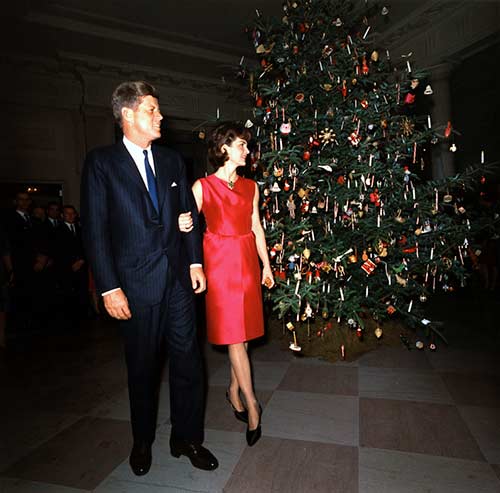 The Christmas season has become so many formal things that
seem so vapid and shallow. Reality is much deeper and more profound.
Our great nation was built by rugged individualists who bent the world to their will. These days, it seems populated by professional victims whose day jobs often orbit around self-flagellation and pity. As I didn’t want to miss that gravy train myself, today, I thought I’d lament my sordid state.
It’s tough being a Mississippian. Our firearms mortality rate is 28.6 per 100,000 people, while that of New York is 5.3. We rank 47th in literacy, though we did beat out Texas, California and New Mexico. We are the whipping boys for the entire country. Most of America, particularly those on the enlightened coasts, views us as unwashed shoeless hicks clinging dogmatically to our guns and God. Well, perhaps …
The reality is that if you subtract the 18 impoverished Delta counties, Mississippi is safe, literate and prosperous. Statistically speaking, we are about in the middle for all the good stuff. I grew up in the Delta, and that’s a column unto itself. However, central Mississippi is a simply delightful place. We are flush with industry, and we produce lyrically beautiful women. If your metric is burnt-down neighborhoods, our race relations are massively more cordial than those of the more enlightened states as well. We also have the nation’s friendliest folks.
Now, it is easy to make that claim. In the following instance, my sample size is admittedly just one. However, I am proud of my people, my state and my tribe. Here’s why.

Oxford, Mississippi, is a simply delightful place. Provided/Visit Oxford
Wise Life Choices
I recently met a gentleman in my medical clinic. He and I are about the same age, but he has made better life choices than I have. As a result, he and his wife had retired from their tech jobs in California and were looking for someplace else to settle. The astronomical taxes, rampant drugs, unfettered homelessness and general social justice insanity had driven him from his home of 27 years in search of something more sensible. He has plenty of company in that regard.
This man and his wife had narrowed their potential retirement spots down to Florida, South Carolina, and Oxford, Mississippi. As they now had both time and resources, they resolved to spend a month in each place before making a decision and buying a home. I asked how the competition was coming.
 We modern Americans have veered way off from the original
meaning of Christmas. It’s really about friends, family, and faith.
‘Tis the Season …
This was early January. The man told me that on Christmas Eve, he had been in the checkout line at the local Walmart picking up some things to improvise Christmas in his hotel room with his wife. As the store was crowded, the stranger ahead of him in the line struck up a conversation just to pass the time (we often still do that here). Recognizing that his accent was “not from around here,” the local citizen asked his story. Hearing it, he inquired regarding my new friend’s Christmas plans.
When my buddy explained that he and his wife were intending a quiet holiday at the local Hampton Inn, the man said, “Nonsense. Here’s my address. We start at 6. I’ll see you there.”
With some trepidation, my California buddy and his wife took this stranger up on his offer and appeared as directed at 6 o’clock, not really knowing what to expect. He said the evening was simply delightful with three generations in attendance. There were stories, food, laughter and Jesus aplenty. As the evening wound down and they were disengaging, the man they met at Walmart then asked what their plans were for the following Christmas morning. When they admitted they had none, the local gentleman gave him his mom’s address and said lunch started at 11. He expected to see them there.
Lunch was typical Deep South soul food — sinfully delicious, though terribly unhealthy. My new friend said he and his wife had a simply magnificent time. He actually admitted that at the end of those two days, he knew more about these strangers he met in the checkout line at Walmart than he did about his neighbors beside whom he had lived for 27 years in California. Needless to say, Mississippi enjoyed a resounding lead in the competition for retirement destinations.
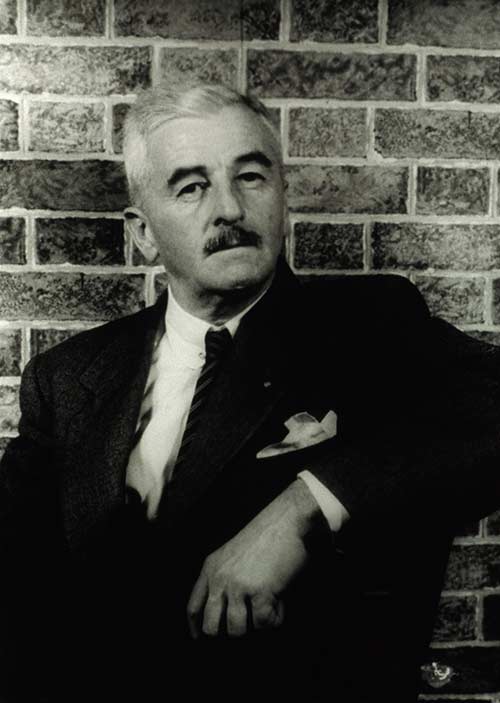
Mississippians are indeed literate. A few of us can actually write.
Ruminations
I was a soldier. I have lived all over the world. There is no finer place on the planet than my little piece of Mississippi. Taxes are low, real estate is still sort of affordable relative to the rest of America, and our churches are full. There are no extraneous gun laws, and a few of us are actually literate.
California’s Governor Gavin Newsom is quick to point out that his state is poised to become the fourth-largest economy in the world here directly. They’ll be beating out Germany to get there. Good for him. However, what good is money if you don’t know your neighbors? Mississippi is still what America used to be.

Santa Claus, wearing red shorts on a 90 degree day, visited a field hospital during the Guadalcanal campaign, 1942. He toured hospitals around the island in a Chevrolet captured from Japanese forces and gave out presents supplied by the Red Cross.
Ralph Morse/Life Picture Collection/Shutterstock
The Allies’ first land campaign in the Pacific during World War II took place at Guadalcanal. The siege, led by U.S. Marines but involving every branch of the military, began on Aug. 7, 1942 and continued for about six months, until Japanese forces abandoned the island on Feb. 3, 1943.
Guadalcanal was an important early win for the Allies in World War II, but victory came at a high cost; 1,592 Americans were killed in action, another 4,183 were wounded and many more suffered from tropical diseases. On the Japanese side the toll was even greater, with 14,800 killed in action.
In Guadancanal, war was indeed hell. It’s something to keep in mind when viewing these photos of the joyful Christmas celebrations that the troops were able to muster on that remote and battle-torn island.
The pictures shot by LIFE staff photographer Ralph Morse ran in LIFE’s issue of March 1, 1943, when the campaign was over. The photos were part of a much larger story that was built around an excerpt from a book that would become a classic of war reporting, Guadalcanal Diary.
The Guadalcanal Christmas featured touches that American soldiers would have found familiar. A chaplain led midnight mass, a choir performed songs, and the troops were served a holiday meal that included turkey and pie.
Of course there were differences too. Santa was walking around in shorts because they were in the tropics and it was 90 degrees out. He wore a military helmet instead of a red stocking cap. The presents he distributed were provided by the Red Cross. The only family these soldiers could be with was the found family they had made with each other.
And if the energy in the photos is any indication, they were grateful for all of it.
American soldiers celebrating Christmas in Guadalcanal, 1942; one soldier held a sign with a message for Japanese prime minister Hideki Tojo.
Ralph Morse/Life Picture Collection/Shutterstock
Santa Claus, wearing red shorts on a 90 degree day, visited a field hospital during the Guadalcanal campaign, 1942. He toured hospitals around the island in a Chevrolet captured from Japanese forces and gave out presents supplied by the Red Cross.
Ralph Morse/Life Picture Collection/Shutterstock
Soldiers prepared turkeys to be cooked for a Christmas meal during the Guadalcanal campaign, 1942.
Ralph Morse/Life Picture Collection/Shutterstock
U.S. soldiers cut up mince pies in preparation for a Christmas celebration in Guadalcanal, 1942.
Ralph Morse/Life Picture Collection/Shutterstock
A church flag flew above the stars and stripes during Christmas celebrations for the American forces in Guadalcanal, 1942.
Ralph Morse/Life Picture Collection/Shutterstock
American soldiers celebrated midnight mass on Christmas eve in Guadalcanal, 1942.
Ralph Morse/Life Picture Collection/Shutterstock
A choir sang on Christmas eve in Guadalcanal, 1942; this group toured the island with Santa to perform for soldiers during the holiday.
Ralph Morse/Life Picture Collection Shutterstock
Obit Pearl Harbor Survivor Ira Schab© Mengshin Lin
World War II Navy veteran Ira “Ike” Schab, one of the dwindling number of survivors of the 1941 Japanese bombing of Pearl Harbor, has died. He was 105.
Daughter Kimberlee Heinrichs told The Associated Press that Schab died at home early Saturday in the presence of her and her husband.
With his passing, there remain only about a dozen survivors of the surprise attack, which killed just over 2,400 troops and propelled the United States into the war.
Obit Pearl Harbor Survivor Ira Schab© Audrey McAvoy
Schab was a sailor of just 21 at the time of the attack, and for decades he rarely spoke about the experience.
But in recent years, aware that the corps of survivors was dwindling, the centenarian made a point of traveling from his home in Beaverton, Oregon, to the annual observance at the Hawaii military base.
Obit Pearl Harbor Survivor Ira Schab© Eugene Tanner
“To pay honor to the guys that didn’t make it,” he said in 2023.
For last year’s commemoration, Schab spent weeks building up the strength to be able to stand and salute.
But this year he did not feel well enough to attend, and less than three weeks later, he passed away.
Born on Independence Day in 1920 in Chicago, Schab was the eldest of three brothers.
He joined the Navy at 18, following in the footsteps of his father, he said in a February interview for Pacific Historic Parks.
On what began as a peaceful Sunday, Dec. 7, 1941, Schab, who played the tuba in the USS Dobbin’s band, was expecting a visit from his brother, a fellow service member assigned to a nearby naval radio station. Schab had just showered and donned a clean uniform when he heard a call for fire rescue.
He went topside and saw another ship, the USS Utah, capsizing. Japanese planes roared through the air.
“We were pretty startled. Startled and scared to death,” Schab recalled in 2023. “We didn’t know what to expect, and we knew that if anything happened to us, that would be it.”
He scurried back below deck to grab boxes of ammunition and joined a daisy chain of sailors feeding shells to an anti-aircraft gun above.
His ship lost three sailors, according to Navy records. One was killed in action, and two died later of fragment wounds from a bomb that struck the stern. All had been manning an anti-aircraft gun.
Schab spent most of the war with the Navy in the Pacific, going to the New Hebrides, now known as Vanuatu, and then the Mariana Islands and Okinawa, Japan.
After the war he studied aerospace engineering and worked on the Apollo spaceflight program as an electrical engineer for General Dynamics, helping send astronauts to the moon.
Schab’s son also joined the Navy and is a retired commander.
Speaking at a 2022 ceremony, Schab asked people to honor those who served at Pearl Harbor.
“Remember what they’re here for. Remember and honor those that are left. They did a hell of a job,” he said. “Those who are still here, dead or alive.”

By COL. JOHN W. THOMASON, JR., USMC 1936