No one on board the USS Indianapolis (CA-35) knew anything about the cargo they were carrying. What they did know was that the veteran cruiser (launched in 1931) made the trip from San Francisco to the island of Tinian in the Marianas in just ten days.
The USS Indianapolis is shown here off Mare Island on July 10, 1945. Image: NARA
The crew was proud of the “Indy”, and for good reason. She had been Admiral Spruance’s flagship for two years, as American forces battled across the Central Pacific from 1943 to 1945. In the summer of 1945, the Indianapolis was made ready for an ultra-secret mission that would end the war.
In Action from the Beginning
The Indianapolis record was exemplary — she began the war by searching for the Japanese carrier group that attacked Pearl Harbor, and when Indianapolis returned to base on December 13th, she joined Task Force 11. From then on, she was rarely out of action.
The USS Indianapolis tied up at Mare Island Naval Shipyard in California on July 12, 1945. Image: NARA
The Indianapolis fought in the campaign to secure New Guinea, and in defense of the Aleutian Islands. She bombarded Kwajalein atoll in February 1944, attacked Japanese positions in the Carolines, and her 8-inch guns had a significant role in the bombardment of Saipan in June 1944. She also participated in the Battle of the Philippine Sea and then bombarded Tinian and Peleliu. By October 1944, the ship needed an overhaul, and the Indianapolis traveled to the Mare Island Naval Shipyard in California for refitting.
On February 14, 1945, following her significant overhaul (including the addition of more anti-aircraft guns), the Indianapolis joined Vice Admiral Mitscher’s carrier task force. This fast group attacked air bases and other targets in the Japanese home islands, to help provide cover for the invasion of Iwo Jima. When the strikes were complete, the task force moved to support the invasion fleet at Iwo Jima.
The USS Indianapolis is shown here in September 1939. It was commissioned on November 15, 1932. Image: NARA
Beginning on March 24, 1945, the Indianapolis’ 8-inch guns blasted Japanese beach defenses on Okinawa while waves of Kamikaze aircraft repeatedly attacked the U.S. invasion fleet. The USS Indianapolis’ war diary describes the actions of March 31st as her lookouts suddenly spotted an enemy aircraft closing rapidly in the early morning light:
“At 0708 an enemy single engine fighter (“Oscar”) emerged from the clouds on the starboard quarter, position angle 65 degrees, altitude about 3,000 feet. It immediately winged over and dived for the ship.
Eight 20mm guns opened fire immediately, expending 392 rounds of ammunition (on magazine per gun) but there was insufficient time to change magazines or bring any of the larger caliber guns to bear. Tracers were seen to enter the plane as it dived, and the latter part of the dive seemed uncontrolled.
It is believed that the fire deflected the plane in its path and resulted in less serious damage than what otherwise might have been the case had the plane crashed the bridge which was apparently the original intention. The plane struck the port side of the main deck aft, close to the side of the ship, at frame 113, and disintegrated. The bomb was not released prior to the crash, but on impact penetrated through the ship and exploded outside.
There was some flooding and damage. Nine men were killed in action and twenty wounded, all enlisted. The ship proceeded under her own power to a position inside the anti-submarine screen in Fire Support Area #6 and lay to while the damage was isolated, and our capabilities and limitations ascertained.”
USS Indianapolis with President Franklin D. Roosevelt on board during the fleet review off New York City, May 1934. Martin T4M torpedo planes pass overhead. Image: U.S. Navy
One aircraft — one ship. The war with Japan had become a desperate fight to finish, with many of the emperor’s pilots ready to sacrifice their aircraft and their lives. The Indianapolis had fought the Kamikazes and survived, and this set the stage for the Indy’s fateful last mission. The suicide attacker damaged the cruiser’s propeller shafts, ruptured her fuel tanks, and wrecked her water-distilling gear. With emergency repairs in place, the Indianapolis steamed as best she could to the Mare Island Naval Shipyard for repairs.
“Greetings to the Emperor…”
At Mare Island, the damage to the Indianapolis was repaired, and she also received a significant overhaul to her machinery along with a few unique additions. All of this was in preparation for a top-secret mission that would have the cruiser transport the parts for the “Little Boy” atomic bomb to the U.S. base at Tinian in the Northern Marianas Islands. Two officers from the Manhattan Project were quietly added to the crew for the journey.
USS Indianapolis anchored off San Pedro, California, during April 1935. Terminal Island is in the background on the left. Long Beach is in the distance to the right. Image: U.S. Navy
Little Boy was a 15-kiloton, gun-type fission bomb that used uranium-235 to generate the atomic explosion. During Indianapolis’ delivery mission, the external bomb components and sensitive testing instruments were stored in the hold. Meanwhile, 85-pounds of enriched uranium was stored in a special lead-lined metal container secured to the floor of Captain McVay’s quarters.
Just hours after the successful “Trinity” atomic test near Socorro, New Mexico, the Indianapolis left San Francisco on July 16, 1945. By July 19th, she had arrived in Pearl Harbor in only 74½ hours — a naval speed record at that time. Indianapolis delivered her deadly cargo to Tinian on July 26th, averaging 29 knots (approximately 33 mph) for much of the trip. Little Boy was assembled by special crews on Tinian, with an additional 56 pounds of enriched uranium flown in by three C-54 Globemaster transport planes originating in Albuquerque.
The world was stunned, but the war did not end as Japan refused to surrender. Another bomb was needed to bring about the peace, as “Fat Man” was dropped on Nagasaki on August 9th. Nearly 40,000 Japanese died, and more than 25,000 were injured.
Well before Colonel Tibbett’s and the crew of Enola Gay returned to Tinian to a hero’s welcome, the Indianapolis was steaming towards Guam, where a group of new crew members came aboard. By July 28th, the Indy was sailing for scheduled training at Leyte before she was to join Task Force 58 assembling at Okinawa.
The Little Boy atomic bomb is numbered prior to transport to the Pacific Theater. Image: NARA
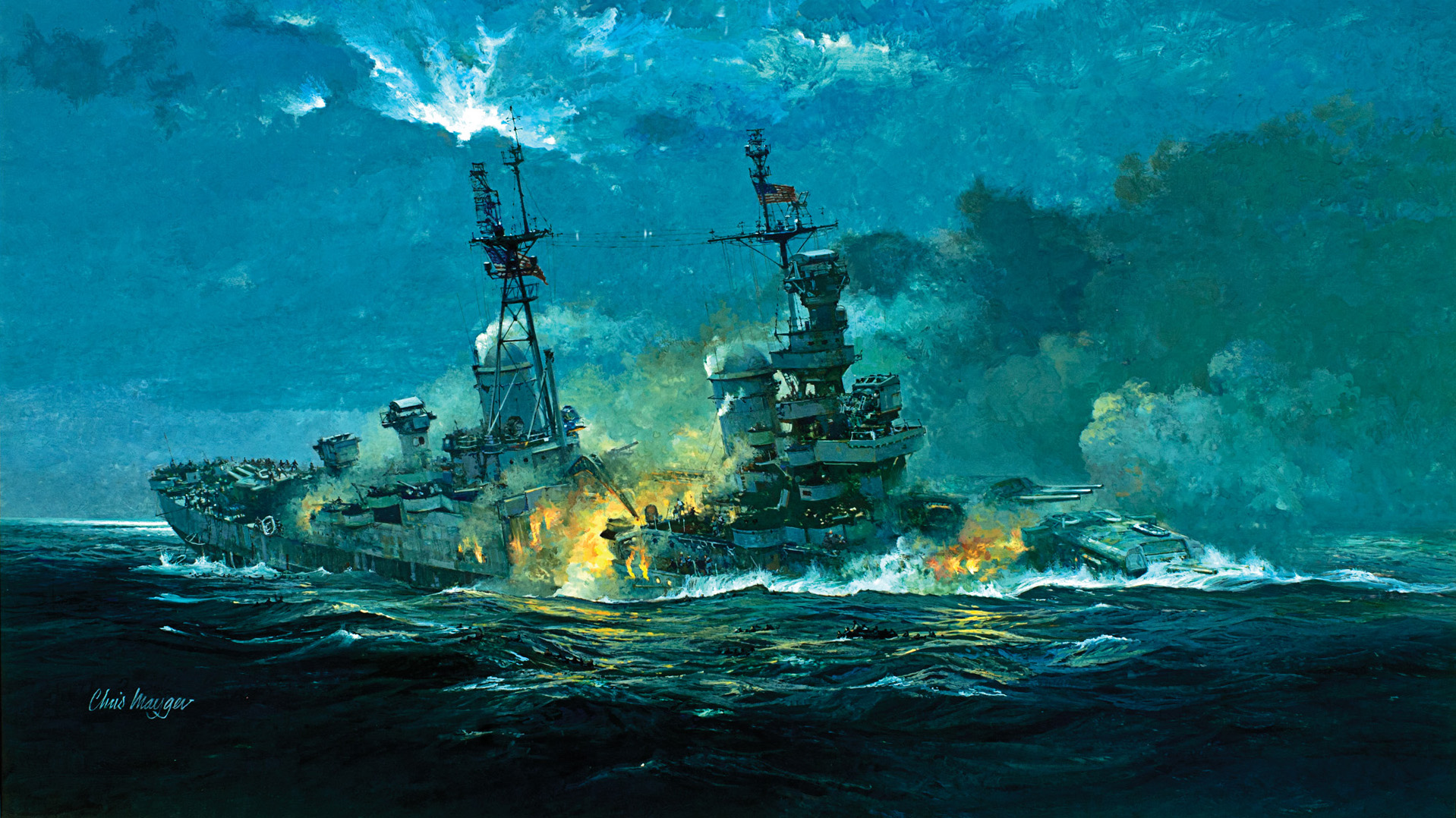
On July 30th, disaster struck. The Indianapolis had sailed into the patrol area of the Japanese submarine I-58, and Commander Hashimoto fired two torpedoes into her starboard side — one amidships and one in the bow. The ship listed heavily, and within 12 minutes, she rolled over and sank, taking 300 of her crew down with her. The rest went into the water, and there were only a handful of lifeboats and rafts, and not enough life preservers.
Aboard the rapidly sinking cruiser, Captain McVay ordered Radio Room 1 to send out an SOS message — but Radio 1 was out of action. However, in Radio 2 Chief Warrant Officer Leonard Woods did send out an SOS. As the Indianapolis sank, he stayed at his post and continued to transmit, ultimately going down with the ship. Years after the war, it was finally revealed that the Indianapolis had sent distress signals, and that Navy radio operators at Leyte had received them and reported. But to add incompetence to tragedy, the messages were ignored or dismissed by duty officers.
The Japanese submarine I-58 at sea. I-58 is the boat that sank the USS Indianapolis in 1945. Image: Author’s collection
Unbelievably, the survivors of the overdue Indianapolis were in the water for three days before they were accidentally discovered by a U.S. Navy PV-1 Ventura patrol bomber on the morning of August 2nd. The Indianapolis crewmen had suffered greatly in the water, wounded men driven insane by thirst, attacked by sharks, or succumbing to exhaustion. By the time rescue operations concluded, just 316 of the original crew of 1,195 were pulled from the Pacific. Two of the rescued sailors died shortly after.
The Rescue Pilot’s Perspective
The Indianapolis survivors were found mostly by accident. The initial patrol bomber thought the oil slick he spotted was connected to a damaged Japanese submarine. As the pilot dropped low to investigate, he found something quite different. War correspondents interviewed Lieutenant (JG) W.G. Gwinn USNR on August 6, 1945. Gwin was piloting the Lockheed PV-1 Ventura patrol aircraft that first spotted the survivors. The following is a portion of that interview:
Q: Were you the first person to see survivors?
A: Yes, I was.
Q: Will you describe how it happened?
A: I took off at 0910 for my regular sector search, carrying a crew of five men. While flying at 3,000 feet, I noticed an oil slick on the water and went down to 900 feet, following the oil slick to a group of survivors. We estimated the first group of survivors seen to be about 30.
Lt. j.g. W.G. Gwinn, the PV-1 Ventura pilot who initially spotted the USS Indianapolis survivors. NARA
Q: How long did it take you to reach the first group of survivors?
A: The oil slick covered a radius of about 30 miles.
Q: What time did you spot the oil slick?
A: We spotted the survivors at 11:18 and got a dispatch off at 11:25.
Q: Could you see the survivors waving?
A: Yes, very easily. At 900 feet we could see them waving. From that time until about 12:45, we investigated the whole area, finding about 150 personnel in the water. We dropped emergency rations and equipment.
Q: What was your first impression when you saw the survivors?
A: I don’t know — it was a funny feeling. The oil slick was large, seeming to indicate that a large vessel had sunk. I didn’t know of any large craft being lost or going down, and didn’t know just what kind of vessel it was.
A Consolidated PBY Catalina is shown floating on the water. The PBY was a flying boat, which meant it had a true hull and could be landed on the open seas. Image: NARA
Q: Was there any doubt in your mind that they were our people?
A: No.
Q: What information was in the message you sent back?
A: 30 survivors sighted — position — send assistance.
Q: After 12:45, what happened?
A: After that, we circled survivors until the first assistance came, which was at 14:15. The first plane to the scene was a Ventura piloted by Lt. Commander George C. Atteberry.
Q: Were any PBYs there at the same time as Lt. Commander Atteberry? [Editor’s Note: The PBY referenced here is the Consolidated PBY Catalina, a flying boat used extensively in World War II.]
A: Lt. Marks arrived shortly after in a PBY.
Lt. R.A. Marks of Patrol Bombing Squadron Twenty Three (VPB-23), in front of his PBY Catalina flying boat on August 8, 1945. Image: NARA
At this point, the PBY pilot, Lt. Marks picks up the story:
“After takeoff at 14:10, I picked up the second message from the PV aircraft about the report of 150 survivors. At first, I thought the message was garbled, but I thought it would be a good idea to get to the scene as quickly as possible.
At 15:03, I began picking up signals from the PV, and at 15:50, I made visual contact with Commander Atteberry and established voice communication with him via radio. I sighted the survivors at once, and the Commander advised me that there were a great number of survivors scattered around, and asked me not to drop any equipment until I was shown the whole area — otherwise I might have dropped the whole lot to the first group, not realizing there were any more. So, I followed him on a tour of the area and looked over the situation.
Scattered small groups were everywhere, without any help except life jackets, and I thought they needed assistance more than those in the life rafts. I knew that no ship would be on the scene until midnight, so after looking over the area, at 16:05 I commenced dropping survival equipment in view of getting assistance to the small groups who had nothing but life jackets.
I dropped all extra equipment as well as all my plane’s equipment except for one life raft, necessary for emergency.
Q: Did you make up your mind to go down at that time?
A: I figured that the only way we could save the single groups would be to land near them if possible.
At 16:25, I sent a message to the base advising of the number of survivors, asking for survival equipment, etc., about 16:30 I decided that a landing would be necessary to gather in the single ones. This decision was based partly on the number of single survivors and the fact that they were bothered by sharks. We did observe bodies being eaten by sharks.
At 16:30, I notified Commander Atteberry that I was going to attempt an open-sea landing. I made all necessary preparations for landing.
These Indianapolis survivors were rescued after days in the water. At the time of this photo, they were being transported to Peleliu for treatment. Image: NARA
Q: Was this your first open sea landing?
A: Yes. An area for the landing was selected with the purpose of picking up the most survivors and Commander Atteberry was to fly above me to assist in this. At 17:05 a power stall was made into the wind. The wind was due north, and swells were about 12 feet high. The plane landed in three bounces, the first bounce being about 15 feet high.
…Immediately after landing, a survey of damage done to the plane showed rivets pulled loose and some seams ripped open. My plane captain and engineer effected emergency repairs, plugging rivet holes with pencils and stuffing the seams with cotton.
The radio compartment took on water slowly and would have to be bailed out during the night — 10 to 12 buckets per hour. The hull of the ship survived very well. While the Navigator was inspecting the damage, my Co-Pilot went aft to organize the rescue party.
We proceeded to locate survivors, the single ones, aided by Commander Atteberry advising me by radio just where to go. It was very difficult to see because of the high swells and without a doubt we would have missed many if it hadn’t been for Commander Atteberry directing our actions. We tried to bring the survivors close to our port side and throw a life raft to them. Considerable difficulty was encountered because of the speed of our taxiing and the survivors were dragged through the water. We had to cut the motors quite a few times, and much time was lost in starting and stopping. We got better at picking people up as time went by. We had the ladder out and I had a man on it to grab anyone who drifted by. The survivors could not help themselves very much as they were terribly weakened and could not grab the ladder and climb up by themselves.
Many of the men were burned and every time we grabbed them it caused extreme pain. Some had broken limbs and extreme care had to be used in handling them. Every effort was made to pick up the single ones, and it was necessary to avoid passing near the ones on life rafts because they would jump on the plane. Between our landing and darkness, we picked up more than 30 individuals, most of them in critical condition who would not have survived the night. Men brought aboard were given water and provided with limited treatment by our first aid group.
Just before dark, we headed for a group of men on life rafts which had been dropped to them. We were later told by the doctor from Indianapolis that it was fortunate we headed for this particular group of survivors, as they were in the worst shape, and had been put on the life rafts by the doctor due to their serious condition.
We brought the plane alongside the rafts and took the men aboard. They were put on the wing, given water, and covered with parachutes. There were about 25 men on the wing. During the process of putting the men on the wing, the fabric was broken in many places. After dark, several shouts for help were heard nearby and my radioman and another crewman volunteered to go out in a rubber boat and pick them up. I wished them luck, and they cast off. It wasn’t long before they were back with two additional survivors. It was very difficult for them to locate the plane after they shoved off because the auxiliary unit had gone out and we had no lights on the PBY, but we did have some carbide lights that worked to good advantage.
Indianapolis survivors arrive on Guam, August 14, 1945. Image: NARA
At 23:15, we sighted the searchlight of the Destroyer Escort Doyle. There was a plane circling us at the same time, dropping flares to help the Doyle locate us. The ship came up to us immediately upon arriving at the scene, which was about 0015. They dispatched a motor whale boat with a doctor and a first aid party and commenced to transfer survivors. Due to the heavy swells, the process was difficult. The men from the Doyle displayed great skill and seamanship throughout the entire job. We counted 56 survivors who were transferred to the Doyle. To transfer the survivors, it was necessary for the Doyle’s boat to lay next to the plane and the boat did considerable damage to the plane.
I inspected the plane and decided that a take-off was extremely hazardous and was not justified. I requested that all salvageable gear be removed and ordered that the aircraft be destroyed. At 0600, the crew and myself were picked up, and at 0800, the plane was destroyed by 40mm gunfire from the Doyle.”
Triumph and Tragedy
The story of the USS Indianapolis is almost beyond description. She was a long-serving, accomplished ship with a talented crew. She secretly delivered the first atomic bomb. What if that Japanese submarine had caught her on her trip to deliver that bomb rather than on the way back? Could the war have lasted even longer?
One way or the other, the ship was met with disaster. To make matters worse, beyond the sinking, it seemed that no one was concerned or even alerted to the fact that Indianapolis was three days overdue at Leyte.
USS Indianapolis enters the New York City harbor during Fleet Week 1934. Image: U.S. Navy
Strangely, the Navy seemed eager to find a scapegoat, and Captain McVay was court-martialed because he did not “zig-zag” on his voyage to Leyte — despite the fact that zig-zagging was left to his discretion, the Indianapolis had never been warned of Japanese submarine activity in the area and had no destroyer screen, and the commander of I-58 testified in McVay’s defense. Admiral Nimitz disagreed with the court, issued Captain McVay a simple reprimand, and restored him to active duty.
McVay retired from the U.S. Navy in 1949 as a Rear Admiral. But his personal nightmare did not end there. McVay endured years of torture as he received hate mail from grieving family members of the sailors lost aboard the Indianapolis. The guilt and the pain added up, and McVay took his own life in 1968. The Captain of the Indianapolis had drowned in sorrow.
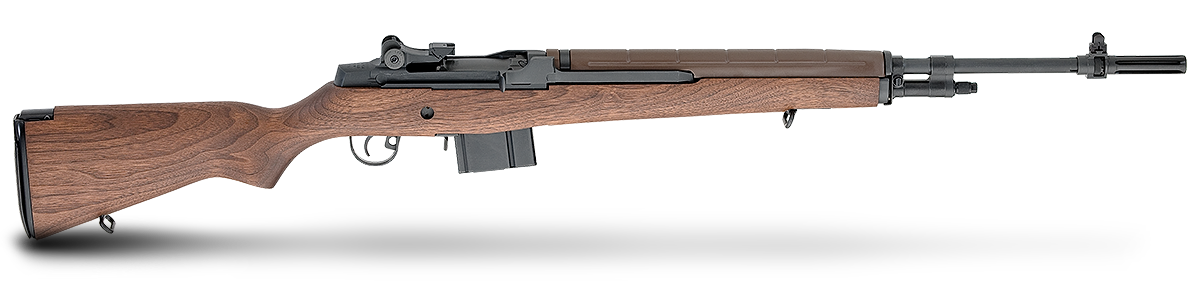
The renowned M14 service rifle has a complex history: it was the U.S. military’s shortest-lived service rifle yet one of the longest in service. While its time as a standard-issue rifle for G.I.s was brief, its power and performance have ensured its continued use as a sniper and Designated Marksman Rifle (DMR), cementing its legacy.
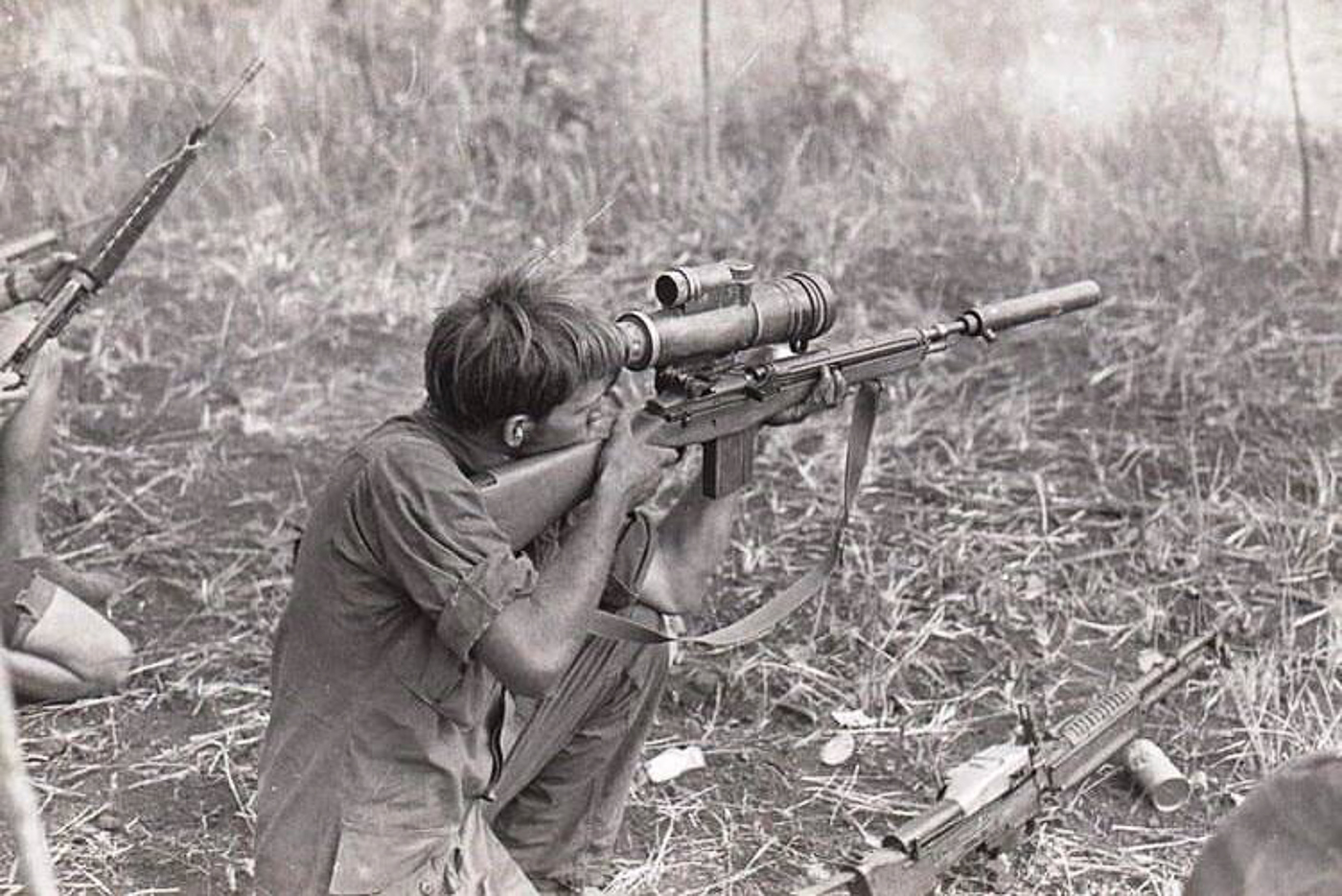
One well-known M21 setup during the Vietnam War included the addition of the PVS2 Starlight night optic. Image: DVIDS
In Vietnam, the U.S. military quickly recognized the need for accurate long-range fire to engage distant targets and conduct counter-sniper operations. Early in the Vietnam conflict, marksmen relied on aging M1C and D Garands from World War II. Some fortunate snipers received accurized M14 rifles used in marksmanship competitions.
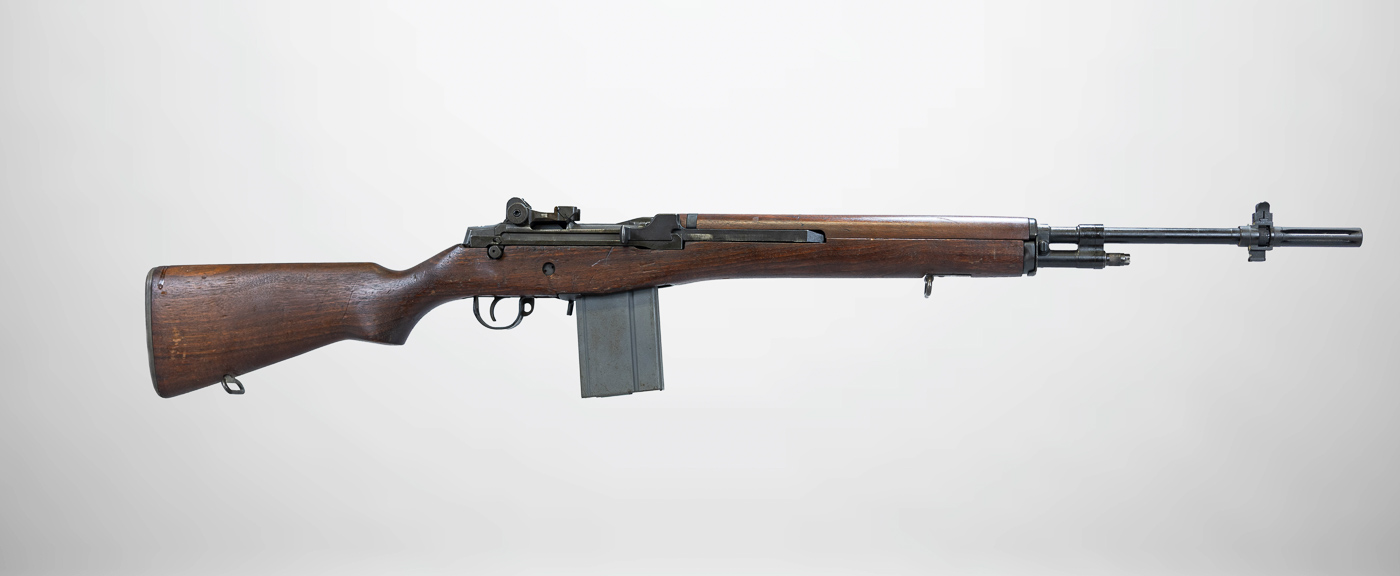
The M14 was the standard infantry rifle during the early years of Vietnam. However, its use as an infantry rifle was short-lived. Its staying power, instead, was its use as a precision instrument. Image: DVIDS
The Army was slow to develop sniper doctrine, especially compared to the Marine Corps. This slow progress finally sped up on February 23, 1967, when the Headquarters, U.S. Army, Vietnam, issued a “Letter of Instruction” to the Army Concept Team in Vietnam (ACTIV) to “determine the organizational, doctrinal, and material requirements for sniper operations by U.S. Army units in the Republic of Vietnam.” All ahead full.
Early Development
Army leadership now recognized the strategic value and need for snipers. The Army adopted a systematic approach to selecting rifles and establishing training standards. After issuing instructions to ACTIV, an information-gathering campaign began.
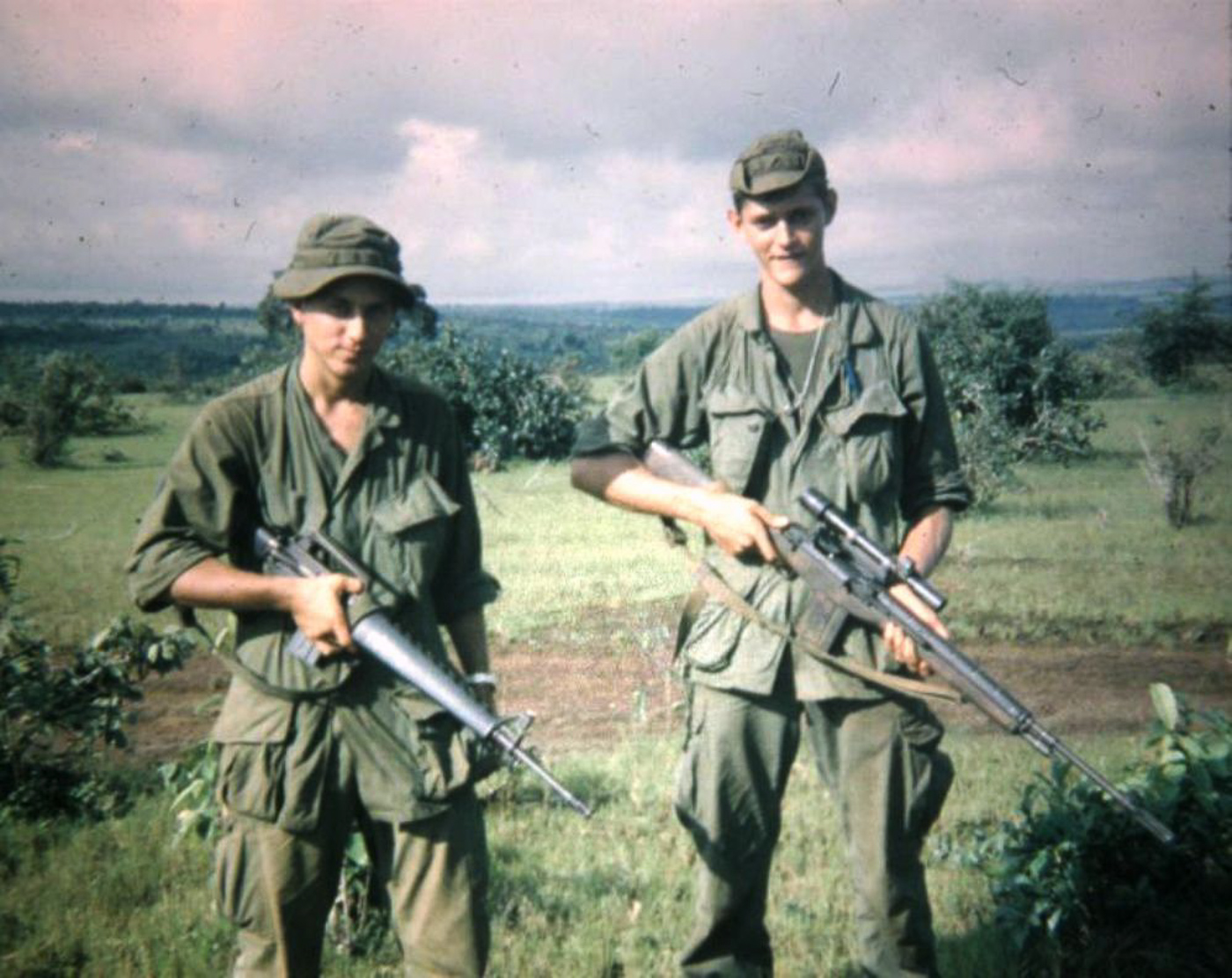
Two U.S. soldiers, one with an M16 (on left) and the other with the M21 Sniper rifle (right). Image: NARA
ACTIV worked diligently to collect information, evidence, and firsthand accounts from field commanders who used snipers, even when those commanders had limited sniping resources.
This also included communication with the Army Marksmanship Unit at Fort Benning, Georgia (USAMU). While not snipers learned in the art of stalking, these shooters were the Army’s top marksmen and experts on rifles and riflery. The USAMU provided advice on rifles, precision shooting techniques, and other essential equipment.
That spring, Winchester Model 70 and M14 rifles arrived. Over the next six months, ACTIV observed and gathered data as they worked to develop a clear understanding of sniper operations in Vietnam. In 1968 — one year later — ACTIV’s findings were released in the classified document titled “Sniper Operations and Equipment.” In it, ACTIV recommended:
Divisions and separate command brigades were to be authorized sniper equipment in addition to TOE weapons.
Organization for sniper operations is tailored by divisions and brigades in accordance with their requirements.
(3) The accurized M14 was to be designated as the standard sniper rifle in Vietnam.
(4) A standard sniper telescope was to be designated.
(5) A sniper-training program was to be provided for units in Vietnam.
(6) Expand doctrine for employment of snipers to be developed and included in appropriate field manuals.
ACTIV’s listings were further expanded in an official document titled “Equipment for the American Sniper.” In it, it stated, “It is safe to say that the American sniper could be regarded as the greatest all-around rifleman the world has ever known, and his equipment should include the best aids to his dangerous calling that the inventive genius of the United States can produce.” For American snipers to succeed, they relied on the United States’ military-industrial strength.
Rifle Testing
The Army, which aimed to develop sniper tactics, training, and systems in-country (rather than in the U.S.), needed a ready-made rifle option. This had to be either existing military hardware or civilian-built. The first four rifles reviewed included an accurized M14 with a 2.5X M84 riflescope, the M14 National Match Rifle (used by the USAMTU) equipped with a Redfield scope, an M16 with a 3X Realist sight, and finally, the Winchester Model 70 with a 3X Weaver scope.
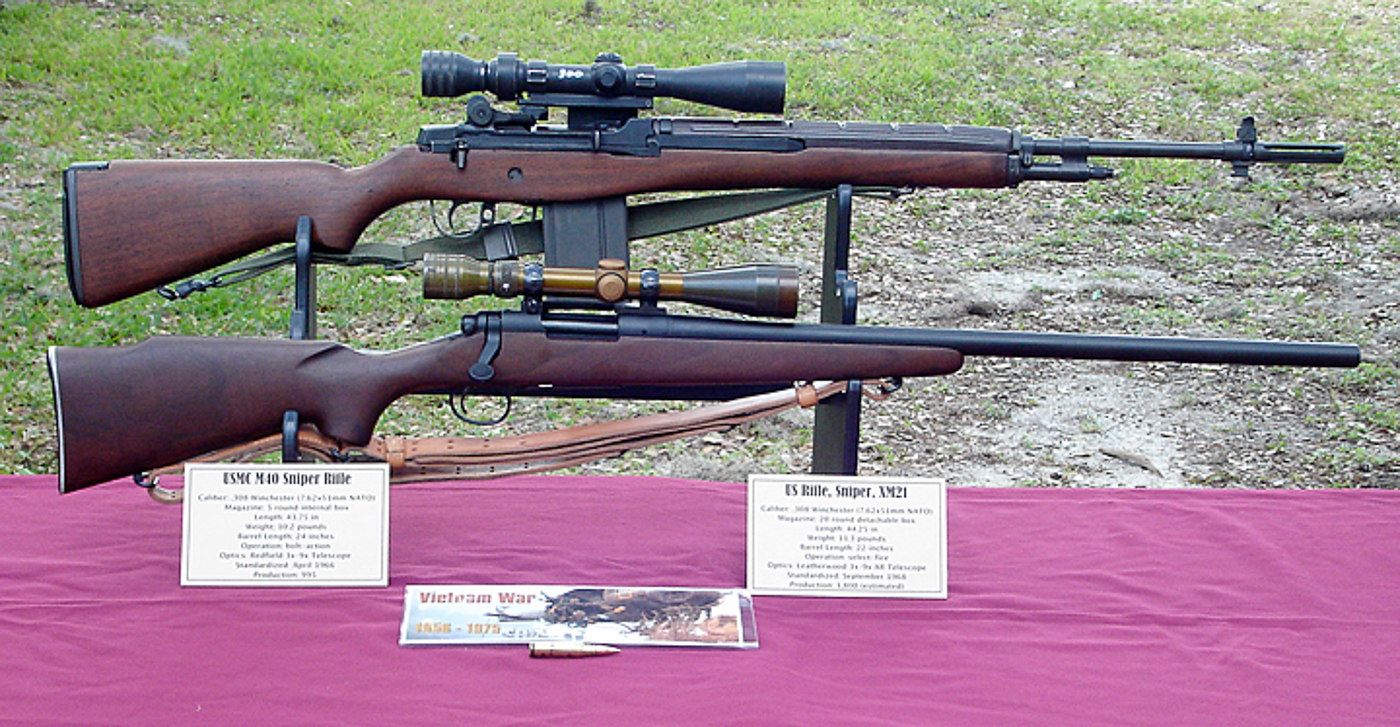
Shown here are replicas of XM21 and M40 rifles from the Vietnam War-era. Image: Curiosandrelics/CC BY-SA 3.0
For similar reasons to the Marine Corps, the Model 70 was quickly relegated because of its .30-06 Springfield chambering. Additionally, without access to competition-level ammunition for the M16, the platform faltered, though the idea of an accurized M16 platform persisted for later development.
As for the two M14 variants, there was not much that distinguished them. The only difference was the mounting systems for their respective optics. Selected M14 rifles received match-grade barrels, unitized gas systems, trimmed handguards, and reamed flash suppressors. The rifle’s triggers were adjusted to slightly over 4.5 pounds, National Match sights were fitted, and actions were glass bedded. The Army also had access to the renowned Lake City M118 7.62x51mm match ammunition used by the Marine Corps.
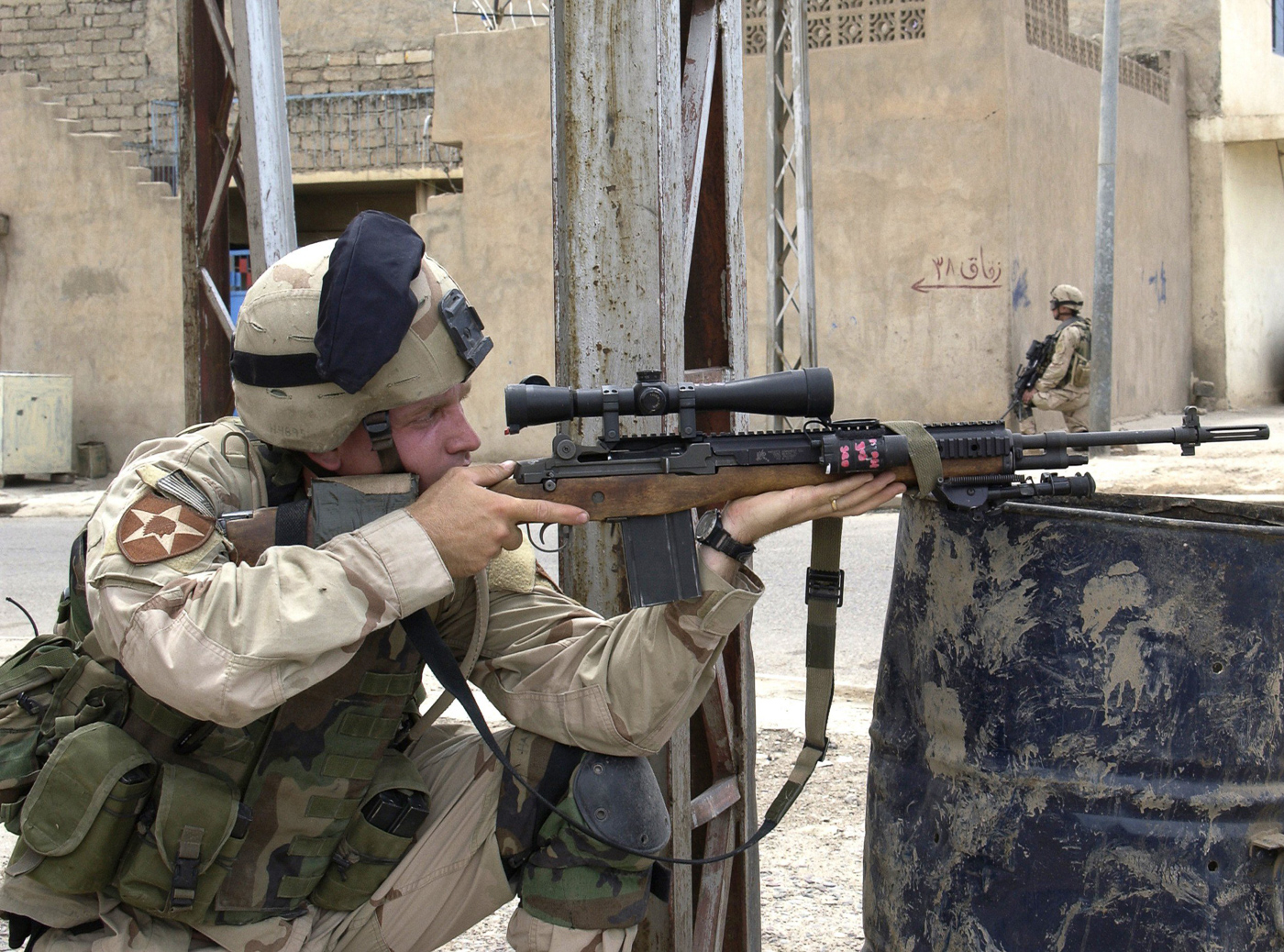
A sniper assigned to Company C, 1st Battalion, 23d Infantry, peers through the scope of his M14-based precision rifle during a mission in Mosul, Iraq. Image: DVIDS
During testing, end users were 75%-100% confident in the M14 system, with the optic option receiving high praise. In ACTIV’s final report, examiners stated, “The major reason for the preference of the M14 was greater range and accuracy.
The limited number of commanders who had experience with the M14 w/ ART preferred it to the M14 w/ M84 because of the power and the range-finding feature of the telescope.” ACTIV concluded that the Accurized M14 should “be designated as the standard sniper rifle for Vietnam.” (This, of course, was not limited to the Vietnam conflict, but to global units).
In February of 1969, the M14 was adopted as the XM-21, and Rock Island Arsenal quickly went to work. Throughout the war, Rock Island built more than 1,200 rifles. In 1972, the XM21 was officially adopted as the Rifle, 7.62mm Sniper 21, or simply, the M21.
Legacy
The M21 received both praise and criticism. Its service life extended well beyond the Fall of Saigon. However, the original rifle was never designed to be a sniper rifle. The main flaw was the nature of the system itself. Its accuracy was adequate for general infantry use, but to get the most out of the platform, it required the services of actual armorers. This made field servicing difficult. That said, the M21 did have notable successes.
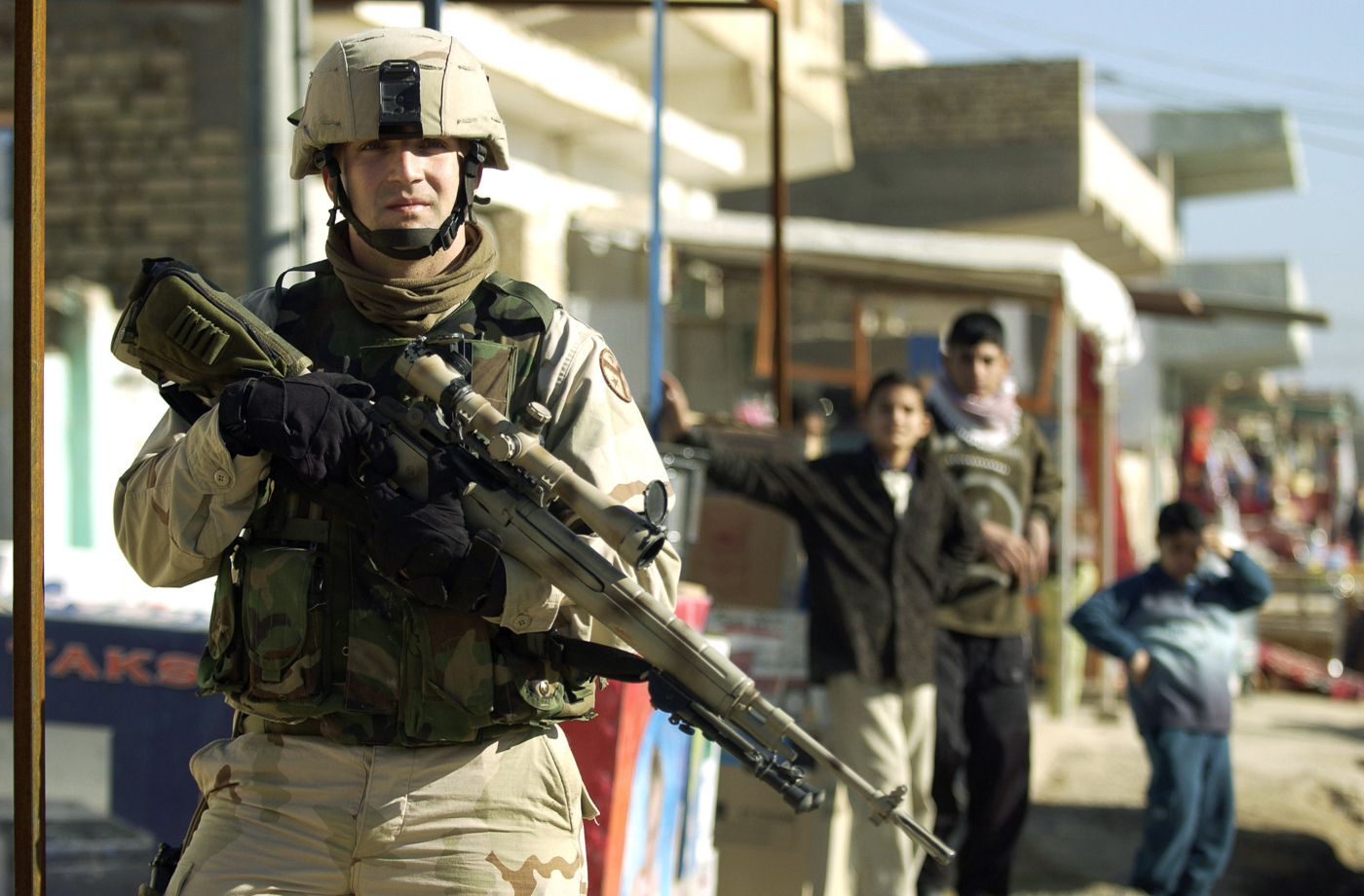
U.S. Army Sgt. Eddie Mathis of the 1st Infantry Division holds his rifle at the ready while pulling security during a dismounted patrol at Balad Ruz, Iraq, on Dec. 31, 2004. Image: NARA
The legacy of the M21 is murky. Like previous conflicts, after the withdrawal from Vietnam, the Army’s sniper program went dormant. However, in the late 1970s, renewed interest emerged in establishing a dedicated sniper school amid Cold War tensions.
The M21 competed with the M40A1 and other commercially available rifles, eventually maintaining its status as the Army’s primary sniper rifle. While the rifle performed well, in 1988, after a longer-than-expected service life, it was replaced by the M24 bolt-action rifle, similar to the Marines’ M40A1.
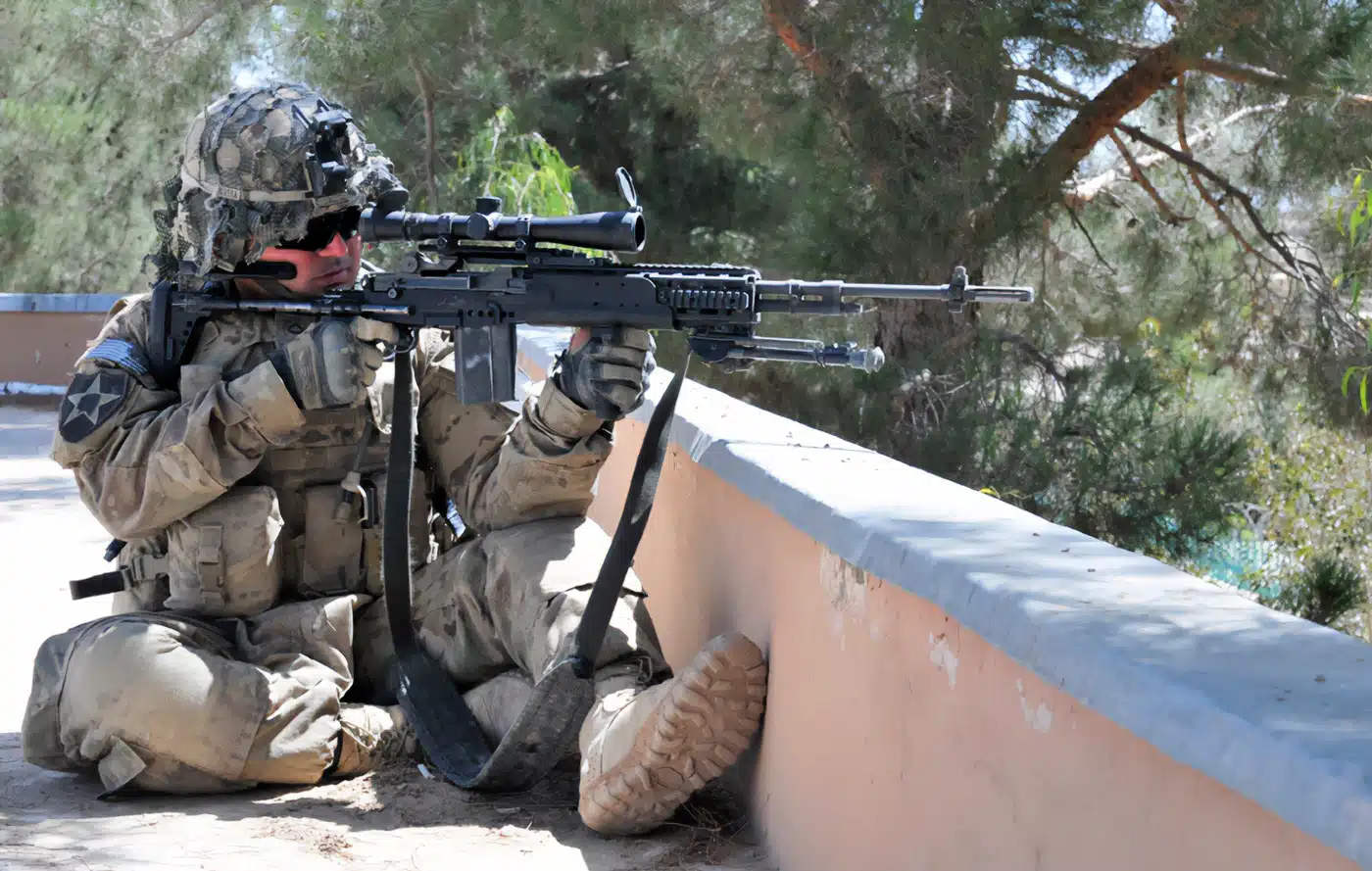
Pfc. Carlos Rivera, a squad designated marksman, scans his sector with his EBR while providing security in the district of Spin Boldak, Afghanistan on July 30, 2012. Image: Staff Sgt. Brendan Mackie/U.S. Army
Interestingly, the M21 is a rifle that refuses to go quietly. As the 21st-century conflicts in Afghanistan and Iraq expanded in scope and complexity, the U.S. Army needed a force multiplier weapon. The M21 was once again pressed into combat by both snipers and newly formed Designated Marksman Units to provide precision fire support for small infantry units in the Global War on Terror (GWOT). A notable part of the rifle’s history was the development and deployment of the M14 EBR (Enhanced Battle Rifle).
The M14 EBR featured a chassis made from lightweight aircraft aluminum (developed by Sage International). This chassis was designed to support night vision devices mounted in front of the day optic, along with various combat accessories never before used in modern warfare. The system was designed to be ready for soldiers right out of the box. Pentagon officials viewed the M14 EBR-RI as an interim solution and eventually replaced it with the M110.
Conclusion
The M21 is a crucial rifle to study when exploring the history of American snipers. The M21 was developed during the height of sniper evolution. While earlier conflicts employed snipers in different roles, it was in Vietnam’s jungles that military strategists truly recognized their battlefield importance.
The M14, while a short-lived battle rifle, became one of history’s most influential weapons, helping shape the American sniper community. First with the Cold War and through the Global War on Terror, the M14 performance has cemented the rifle as one of the most unique and significant sniper rifles in America’s arsenal. Today’s version of the rifle continues in service as the M21A5 Crazy Horse where is has served around the globe including in combat operations in Iraq and Afghanistan.
Editor’s Note: Please be sure to check out The Armory Life Forum, where you can comment about our daily articles, as well as just talk guns and gear. Click the “Go To Forum Thread” link below to jump in!
 N
N