Categories
The Green Machine This great Nation & Its People War Well I thought it was neat!

The Nasty Guard

Eight Times the National Guard Saved the Day

The Siege of Louisbourg by Domenick d’Andrea and Rick Reeves (National Guard Heritage Series)

There’s this thing in the Army where the Active Component is always looking down its nose at the Reserve Component, specifically the National Guard. Why? Because the National Guard is part-time, of course, “weekend warriors” and all that. But also because the Active Component has some real fears that it can never actually live up to the incredible history that the National Guard has and is suffering from a rather embarrassing inferiority complex.
You’re probably at this point saying, “ASO, you’re off your rocker on this one, the National Guard has never saved anything other than discount beer.”
Let’s go back and take a look, shall we?

Louisbourg, 1745

Okay, so it’s 1744, and New England has suffered attacks and raids from the French forces from what now is Canada for over fifty years.  The central base of the French is Louisbourg, a massive walled fortification on Cape Breton that provided a good defense to the inner harbors of New France and was strong enough that it could not be attacked from the sea.  Now there had already been multiple colonial wars between England in France that had spilled over into their colonies. In these wars, British and French Regulars fought each other, augmented by their provincial forces and Native American allies.  It was sort of an article of faith for the English that the colonial militias could not mount a sustained campaign by themselves; they were only considered effective if paired with Regulars.
New England was pretty ticked off about the constant raids from New France and the lack of support from the Crown to do anything about it. So Massachusetts Governor William Shirley decided to take care of things himself. He talks with his neighboring colonies and everyone agrees to pitch in: Massachusetts provides the bulk of the expedition, with about 3,200 militia from Massachusetts and Maine, while Connecticut and New Hampshire pitch in about 500 militia each. The other colonies provide cannons or funds and hey presto! There’s a suddenly a militia expeditionary force of over 4,200, commanded by Sir William Pepperell from Kittery, Maine, heading out on board their very own militia fleet of 90 ships in March of 1745.
They reach New Breton in May of 1745 and conduct a link-up with a Royal Navy force. Then they conduct an amphibious landing on May 11, covered by light infantry from Gorham’s Rangers. After some skirmishing with French defenders, the main force is able to land over 2,000 troops on the landward side behind the fort. The French retreat inside the fortress and the siege begins. Now, sieges are things that are supposed to be done by professional armies, not by untrained provincials. And yet, the tough New Englanders kept building batteries, constructing saps, and generally doing the whole siege thing wicked well. After several attempts by the French to force the militia off the point, they surrender their fortress on June 28 when they realize that there is no longer any hope of reinforcing it.
New England went nuts with celebration while London and Paris couldn’t believe their collective ears that an untrained militia force had conducted an amphibious assault, siege, and reduction of a proper European fortress. However, the rejoicing was short-lived, because in 1748 England traded Louisbourg back to the French in exchange for the Indian city of Madras that the French had captured.  Figures.

The Formation of the Continental Army

Alright, we all know that the militia kicked off this whole American Revolution thing in 1775 with the running battles of Lexington and Concord. And then we all know how the militia – those undisciplined yokels – completely wrecked the British at Bunker Hill. But the thing is, they were far from undisciplined yokels. Because of the Colonial Wars, many of the militia regiments across New England had more combat experience than the British Regulars that they were facing.
Not only that, New England had united by April 23, 1775 to field what was called the New England Army. Nearly 20,000 soldiers had assembled around Boston to form this force. The fundamental basis for this force was from the longstanding militia regiments. In the New England tradition, each county was responsible for providing a regiment. During the chaotic early days of the revolution, a portion of each regiment was retained at home for local defense while the rest of it was sent off to the main Army outside Boston. So when George Washington arrived, he found that the basics needed for the creation of a Continental Army were right in front of him.

The American Soldier by Hugh Charles McBarron, Jr. Shows George Washington surveying the troops at the Siege of Boston.

On June 14, 1775, the Continental Congress voted to create a Continental Army, authorizing colonies outside New England to raise ten companies of riflemen – partially a ploy to get the Middle Atlantic colonies to start committing troops. At the same time, it basically made all the colonial organizations then at Boston part of the Continental Army.  Essentially federalizing the militia – not for the first or last time, either. Congress appointed generals for the new Continental Army, and the majority were drawn from the militia.
Now, it would take time to grow a professional standing force – not until 1777-1778 could you say that the Continental Army was more than a part-time force, since enlistments kept running out, occasional desertion (run home, plants crops, return to the Army, run home, harvest crops, return to the Army) was rampant, and the Continental Congress was having a hard time actually paying anyone. But the seeds were there, and because of the pre-war militia system, we were able to actually field an army.

Little Round Top

Don Troiani’s “Lions of the Round Top”

Fast forward to 1863, when this whole American experiment is in trouble. Two armies clash at Gettysburg in July, and on the second day of the month, the battle hangs in the balance as Confederate assaults threaten to overwhelm the blue lines in the Pennsylvania hills and woods. Two Confederate regiments from Alabama are able to push around the left flank of the U.S. Army and strike right at the exposed left flank, where one single regiment stands in their way: the 20th Maine Volunteer Infantry Regiment.
Now, the 20th was not a militia organization. It was composed of volunteers from around Maine. It brought 386 men to the fight that hot afternoon on Little Round Top. But 120 of those men were new to the regiment, but not new to the military. They had come from the 2nd Maine Volunteer Infantry Regiment, which had been inactivated in 1863 because the majority of the men had signed two-year enlistments. Save for these 120 men, who had signed for three years, and now found themselves in this new outfit.
While the 20th was not a militia organization, the 2nd most definitely was. It was formed out of the existing volunteer militia companies from Bangor, Maine and the towns outside of it. It was the first regiment from the state to see combat, taking part in the Battle of Bull Run in 1861 where it was one of the few U.S. units not to hightail it back to D.C.
During the fighting on Little Round Top, the extra 120 rifles in the ranks tipped the scales in favor of the bluecoats, allowing them to keep fighting even after taking 125 casualties. Without the additional firepower, it is unlikely that the 20th could have held on as long as it did. The 2nd also brought an unlikely asset with them: seafarer-turned-soldier, Sergeant Andrew Tozier. As a sign of his trust in these additions to the regiment, the 20th’s commander, Lieutenant Colonel Joshua “Bayonets” Chamberlain made Tozier the regimental color bearer. At one point in the fighting on Little Round Top, Chamberlain recalled looking through the smoke and seeing Tozier standing alone – the color guard shot away – with the colors in the crook of his arm, loading and firing his rifle. The regiment reformed on the colors and – bereft of ammunition – attacked with the bayonet, driving the confused Alabamans down the hill. Tozier would later receive the Medal of Honor for his bravery. The National Guard had come in at just the right time once again.

World War I

Members of Company C, 147th Infantry, 37th Division, who captured the first German prisoners for the 37th Division, back from the trenches for a rest near Brouville, France, Aug. 14, 1918. Pictured are: Cpl. J. V. Ewan (from left) and Pvts. G. L. Fisher, L. S. Thompson, Eddie Downey, W. T. Frank and Phillip Herman. April 6 commemorates the 100th anniversary of the U.S. entry into World War I. (37th Division Veterans Association Collection/Ohio Army National Guard Historical Collections)

When the U.S. entered World War I, the Regular Army numbered around 130,000 men. In military power, the U.S. ranked somewhere around 35th in the world. Suffice it to say, we were not ready to enter the most lethal war in human history to that point. What the U.S. did have, however, was a very strong National Guard, which fielded 17 divisions that would eventually go to France (as opposed to the seven Regular infantry divisions that took part in combat operations). And since many of the Regular units were made up of mostly new recruits, the Guard could actually boast more veteran soldiers in their ranks, who had either come off active duty to join the Guard, had participated in the Mexican Border call-up of 1916, or were veterans of the fighting in the Philippines at the early part of the 20th century.
Out of the first four divisions in France, two were National Guard – with the Guard’s 26th Division from New England being the first full U.S. division in France.  While the 1st U.S. Division was the first to see combat in the late fall of 1917, the 26th Division was not far behind in February of 1918. The 42nd Division (from twenty-six states) would quickly follow, as would the 32nd Division, from Wisconsin and Michigan, and then the 37th, from Ohio. Without the Guard, the U.S. would not have been able to get enough troops into France to help the allies stabilize their lines after the German Spring Offensives of 1918, and then to counterattack. It was the Guard that enabled the U.S. to be able to hold the line long enough for the divisions formed of selective service draftees to enter the mix and begin the great push to end the war in the fall of 1918.
Throughout the war, the German general staff would rate eight U.S. divisions as “superior;” six of those were National Guard divisions. ‘Nuff said.

Guard Tanks the First to Fight in WWII

Company A, 192nd Tank Battalion – Survivors, late-1940’s (Rock County Genealogical Society)

Ever hear of the 192nd Tank Battalion? Probably not. Mainly due to its not existing for very long. But what an existence it had. See, in 1941, Army Chief of Staff George Marshall could tell that Bad Things were in the offing, specifically in the Pacific. So he routed as many of the Army’s available M-3 Stuart Light Tanks as he could to the Pacific. But where to find available units? The National Guard, of course. One unit was the 194th Tank Battalion of the California National Guard, and the other was the 192nd Tank Battalion from, well, from National Guards all over the place. Company Acame from Janesville, WI, Company B from Maywood, IL, Company C from Port Clinton, OH, and Company D from Harrodsburg, KY.
The 192nd reached Manila in the Philippines in November of 1941, which just is not a great time to be in the Philippines because Bad Things are about to happen. The Japanese invaded in December, and the 192nd was ordered to counterattack. On December 22, elements from Company B made first contact with the Japanese 4th Tank Regiment, who were equipped with the Type 95 light tank. Both sides were equally matched when it came to armament – having a 37mm main gun – but the M3 was gas powered while the Type 95 was diesel. Predictably, the first U.S. tank that took a direct hit cooked off because of the gas. In the first tank engagement of the U.S. in WWII, the results were inconclusive. The U.S. lost one tank while the remainder took several hits and were able to draw back – until being destroyed by Japanese aircraft later that day, because of course.
The 192nd and 194th would fight on as long as they could, trying to support the beleaguered U.S. infantry units. On April 9, 1942, the U.S. garrison surrendered. The officers and men of the 192nd would spend the rest of the war trying to survive. Most did not. Of the 593 men that arrived in Manila in 1941, 328 would not survive to see the end of the war.

34th Division in North Africa

Stand To! Here, members of the 34th Infantry Division take a break during a training exercise in Northern Ireland. (WW2 Signal Corps Photograph Collection). (Photo Credit: USAMHI)

At the outset of World War II, the 34th “Red Bull” Division (from North Dakota, South Dakota, Iowa and Minnesota) was rated as one of the most combat-ready elements of the U.S. Army – unsurprising because Midwesterners just like to fight. When the U.S. entered WWII, the 34th Division was quickly shipped to Ireland in order to help secure Britain from German attack, as part of a previously established war plan. The first elements reached northern Ireland in January of 1942.
While in northern Ireland, the commander of the 34th, Major General Russell Hartle, was tasked with forming a commander unit. He assigned his aide Captain William Darby to head up this new unit, which would eventually become the 1st Ranger Battalion. 281 men from the Red Bulls transferred into this new unit, forming the core of it. That’s right, Big Army, you don’t even get to claim the Rangers as your own; it was a National Guard thing.
The 34th Division formed part of the Eastern Task Force during Operation Torch, landing in Algiers on November 8, 1942.  From then on, the division would be on the attack until the end of the war, amassing 517 days of front line combat – second only to the 654 days of the 32nd Division in the Pacific, also a National Guard outfit. Without the ability to rapidly deploy the Guard as part of the initial war plan, the U.S. could not have projected power so quickly into two theaters of war.

29th Infantry Division on D-Day

Photograph of American troops approaching Omaha Beach, Normandy, on D-Day. (UNIVERSAL HISTORY ARCHIVE/UIG VIA GETTY)

The amphibious invasion to break open Fortress Europe in 1944 was one of the most ambitious military operations in U.S. history. The toughest objective would be the landing at Omaha Beach. This mission was given to the 1st Infantry Division – veterans of fighting in North Africa – and the Virginia and Maryland National Guard’s 29th Infantry Division.
On June 6, 1944, two regimental combat teams (three battalions of infantry, augmented by engineers, field artillery, and armor) hit Omaha Beach. One was the 16th RCT and the other was the 116th RCT of the Virginia National Guard. As the day wore on, both units struggled to gain a beachhead, suffering horrendous casualties.  Alpha Company of the 116th was almost completely wiped out, leaving a gaping hole in the community of Bedford, Virginia, where most of the men were from.  For this reason, the decision was made to build the National D-Day Memorial here. Combat engineers from the 121st Engineer Battalion – nominally the D.C. National Guard, but in actuality composed mostly of engineers from the Ohio National Guard that day – worked feverishly to create breaches in the enemy defenses.
By mid-morning, troops from Companies B and F, 116th RCT joined with Ranger elements to gain the heights, and soon small parties of GIs worked their way through the maze of enemy bunkers and defensive positions, knocking them out one by one. By nightfall, the Big Red One and the Blue and Gray Division had punched a hole in the Atlantic Wall – Regulars and Guardsmen, fighting side by side.

Iraq and Afghanistan

Taji, Baghdad Province, Iraq – Spc. Adam Feldon, center, talks with an Iraqi boy, May 4, as a patrol of Pennsylvania Army National Guard Soldiers and Iraqi police officers moves through Taji market, north of Baghdad. The Keystone Guardsmen are from Company C, 1st Battalion, 112th Infantry Regiment, 56th Stryker Brigade Combat Team.  (Photo By: Sgt. Doug Roles, Pennsylvania National Guard)

So remember that time we did the whole invasion of Afghanistan in 2001 and the whole Iraq thing in 2003? Well, the invasions went pretty damn well, all things considered. Then came that really awkward occupation part that got kinda messy. Well anyways, the National Guard played a role in the invasion, but where they really came to the forefront was in supplying units during the occupation.
See, the way the Army is set up, there’s simply not enough Active soldiers to conduct rotations through Iraq and Afghanistan, support missions around the rest of the world, train, and get a few days to see their families. So that’s why all of a sudden the Guard became one of the keys to fighting the conflicts in Iraq and Afghanistan. Guard units have filled every role, from combat to combat support, in both theaters. Simply put, OIF and OEF would have been impossible without the National Guard.
Which is why in 2014, when General Ray Odierno (now retired, then the Army Chief of Staff) disparaged the service of the Guard in OIF/OEF – and was then followed by more Active officers voicing similar opinions – it felt like a slap in the face. Not just to those of us who supported those operations, but to the hundreds of years where the Guard has more than carried its operational weight.


Enjoy what you just read? Please share on social media or email utilizing the buttons below.


About the Author: Angry Staff Officer is an Army engineer officer who is adrift in a sea of doctrine and staff operations and uses writing as a means to retain his sanity. He also collaborates on a podcast with Adin Dobkin entitled War Stories, which examines key moments in the history of warfare. Support this blog’s Patreon here.

Categories
Allies Darwin would of approved of this! Dear Grumpy Advice on Teaching in Today's Classroom Interesting stuff This great Nation & Its People

What Pure Class looks like!

Categories
This great Nation & Its People Well I thought it was funny!

My America (Well I liked it)

Categories
Hard Nosed Folks Both Good & Bad Interesting stuff Leadership of the highest kind The Green Machine This great Nation & Its People

Some very good Leadership advice that is really universal – How to Fail as a Major, A Guest Post by Terron Wharton

wharton-photo.jpg

October 30, 2013 – Photo by Staff Sgt.Tim Chacon

 
“…the expectations of a Major are very different than those of a captain, and not everyone knows what these expectations are or the impact they have on personal and professional success.”
-MG(R) Tony Cucolo, “In Case You Didn’t Know It, Things Are Very Different Now: Part 1
While attending the Command and General Staff College (CGSC), instructors and mentors constantly drove two points home. First, transitioning to the rank of Major and the expectations of a Field Grade Officer is a difficult and steep learning curve. Second, what made an officer successful at the company grade level does not necessarily translate to success as a Major.
I have been a combined arms battalion S3 for ten months now and during this period I’ve planned, resourced, and executed field training exercises, live fire events, gunneries, an NTC rotation, and spent enough hours on my Blackberry that I never want to see one again.
However, I can definitively say two things about my instructors’ advice: They weren’t kidding about either point … and they vastly downplayed both.
The transition to Major is less of a learning curve and more of a sheer cliff. There is less tolerance for officers who need to “grow into it,” and the expectation is you are value added on day one.
Finally, the room for mistakes grows smaller and smaller. What follows are the hard lessons I’ve learned either through personal shortcomings or watching peers fall by the wayside.
Failure #1: Believe Help is Coming
When things became supremely difficult or complex as a captain or lieutenant, we would often look for a field grade to give refined guidance and direction. The Major knows the answer.
They are the responsible adult in the room. The Major may get cranky and hand out a butt chewing, but they would bring resources to bear on the problem. They were help when we needed it.
As a Major, YOU are now that responsible adult who has the answers and can bring resources to bear. You ARE the help that’s coming.
There is no help coming for YOU. Majors are the Army’s problem solvers and workhorses. If a room of Majors looks around and cannot tell who among them is lead on an issue, then the issue is probably not being addressed.
Majors don’t get to look around and wonder who will solve the problem. They must own the problems as they appear and work with peers to solve them.
Failure #2: Burn Bridges and Fail to Cultivate and Maintain Relationships
Early on in my time as a BN S3 something went wrong during our FTX. A situation changed that was outside of my control and I blamed the brigade.
Over the phone, I got into a heated discussion with the BDE S3 and XO and lost my temper and composure.
When I was done venting, the BDE S3 said something I will never forget: “Do you want to keep complaining or do you want to solve the problem?” Those words stuck with me. I apologized, we moved on, and we fixed the issue.
The argumentative Major, the one who picks fights, protects their own rice bowl, and never gives an inch will quickly find themselves isolated without a seat at the table.
In the end, their unit will suffer for it. Conversely, the Major is willing to give more than they take, willing to put the brigade’s success over what’s easier for their battalion and work well with peers to find solutions and compromises will succeed.
Leaders do not have time for personality conflicts, especially Majors.
The biggest power Majors have is that knowing where to look, who to call, and having a network of friends, peers, classmates, warrants, and NCOs that can be leveraged to solve problems.
Most problems in a brigade are solved by the S3s and XOs sitting around the table, developing a course of action, and moving out to attack the challenge at hand.
That requires well-cultivated and maintained relationships. More than anything, those relationships and connections are the most powerful resource at your disposal.
This is also the point in our careers where many of us will begin to regularly interact with DA Civilians. Do not forget about them.
The GS-14 serving as your Division Chief of Training could well be a retired LTC and former Battalion Commander. They have either been where you are now, or they have seen many in your position come and go, and they often serve as the long-term continuity in higher headquarters and support functions that are critical to your success.
Stop by and talk to your peers regularly. Take time to talk to DA Civilian, get away from email, and drop by offices.
Come to meetings early and stay a little after to talk to each other, even if it’s just letting each other vent for five mins. It will pay dividends when you need to move a mountain and get a short notice task done.
You cannot afford to have personality conflicts or fight with your peers. Ever. Period. Learn to swallow your pride and be the first one to apologize or mend a relationship after a heated exchange.
Failure #3: Confusing Leadership and Management 
Leadership and management are not the same thing and are easily confused when assuming organizational level leadership for the first time.
Leadership is about people while management is about systems. While these concepts may appear obvious, it took me about three months to learn this and I am still working to improve my management skills.
As a Major, your primary concerns are building and managing systems. Majors are about touch points. Identify critical touch points for your organization, develop systems to manage that information, and use those systems to recognize where the train wrecks and pitfalls are.
The Major’s aperture is so wide that there is no way you can directly affect it all with personal involvement or presence. If you try, you will fail.
Time is now your most precious resource. Systems help manage the information flow so you can focus your limited time on things that are commander priorities, mission-critical, or something only YOU can do based on knowledge, skills, or relationships.
For everything else, develop your staff to handle routine business, empower them to make the routine decisions, and train them to know when things require your personal involvement. If you don’t develop systems to manage the massive amounts of information coming in, you will quickly become overwhelmed and remain in crisis management.
This is not to say that personal leadership is not important as a Major. It simply means the balance has shifted. Your personal leadership is still critical in two areas: training your staff and mentorship.
Do not expect to walk into a staff that can do MDMP perfectly with just an occasional guiding nudge from you. You will have to train your staff.
MDMP is just the beginning. How to write emails, brief the commander, write orders, develop courses of action, work as a team, interact with the higher headquarters staff, Army culture and expectations of officers, and a thousand other things you now take for granted after over a decade of service.
All of this requires your personal presence, time, and effort. If you do not teach them, no one else will.
The Major is also a mentor to younger officers, especially the staff officers they interact with daily. This mentorship requires personal leadership and is just as important to the Army’s success as the next round of MDMP is to your unit’s training event.
I am wearing an oak leaf because of the mentorship two Majors provided at critical junctures in my career. Officers in your organization will look to you as a model for future service: how to act, how to look, and the path they should chart through the Army, just as I looked to those Majors when I was a Lieutenant and a Captain.
Failure #4: Fail to Predict the Future
Majors must forecast out, identify implied tasks, determine conditions that need setting, and execute without guidance, FRAGOs, or WARNOs from BDE or higher.
If you fail to do this, the train wreck is waiting and, remember, no help is coming. Your higher HQ may give some guidance, but never enough, and never on the timeline you want it. If you wait, it will be too late.
Predicting the future allows planning to occur that can mitigate future problems. This is critical because at the battalion and brigade level dynamic re-tasking is never dynamic.
As a BN S3, I can pick up the phone and redirect the work, efforts, and lives of 700 Soldiers, officers, warrant officers, leaders, and their families.
However, a battalion has a certain organizational momentum and inertia that is hard to overcome and shift on a dime. Every dynamic shift exponentially increases the chance of details being missed, mistakes being made, and can push you into crisis management.
Look deep, develop a concept, and address potential gaps through FRAGOs, IPRs, and update briefs as necessary.
As Majors our words, actions, and decisions carry serious weight as BN and BDE S3s/XOs, planners, and action officers.
An errant email, simple misspeak, or a rash outburst will affect entire organizations exponentially more than when we were company commanders or staff captains.
As such, the tolerance for those who fail to grasp this and make the transition is low.  Unfortunately, many Majors step into these pitfalls, sometimes irrevocably, without ever knowing they have made a fatal error.
Fortunately, the Army is a learning organization and just maybe sharing my own shortcomings can help another Major avoid failure as they climb the cliff and make the transition.
Terron Wharton is currently serving as the BN S3 for 4-6 IN, 3/1ABCT at Fort Bliss, TX.  An Armor Officer, he has served in Armor and Stryker Brigade Combat Teams with operational experience in Iraq and Afghanistan. 
He is also the author of “High Risk Soldier: Trauma and Triumph in the Global War on Terror,” a work dealing with overcoming the effects of PTSD.  His other works include “Becoming Multilingual”, discussing being multifaceted within the Army profession, “The Overlooked Mentors” which speaks to NCOs as mentors for junior officers, and “Viral Conflict: Proposing the Information Warfighting Function” which proposes establishing an Information Warfighting Function.

Categories
All About Guns The Green Machine This great Nation & Its People

Some Good Shit here – 7 Characteristics of Highly Successful Non-Commissioned Officers by ANGRY STAFF OFFICER

Related image
As an Army officer, I tend to spend a lot of time talking about, well, talking about officer things. And no, that does not mean discussing polo, the price of cufflinks, sipping brandy, and thinking of ways to make our NCOs lives harder, as some circles might believe.
Although the brandy thing isn’t too far off since it sometimes feels like officers spend an inordinate amount of time discussing craft beers and the like than enlisted do. But I’m getting away from myself here.

army1_1.jpg
“Well now that you’re all officers,chaps, you’re all now experts on IPAs and have a duty to disseminate the gospel of craft beers far and wide. Polo is at 1600; don’t be late.” (East Carolina University photo credit)

Most of my writing on military leadership has been geared towards the officer realm since that’s what I know. I made the move from enlisted to officer seven years ago now, and while I try to keep the perspective of an E-4, it’s safe to say that my brain has finally made the move over to the officer side of the house.
But that’s not to say that I don’t spend a lot of time thinking about the corps of the non-commissioned officer. NCOs will literally either make or break your career and/or unit. For all the training that officers receive, the single most important part of it often is “listen to your NCOs.”
And let me say here, I’ve gotten incredibly lucky: all the NCOs that I’ve been paired with in leadership positions have been some of the best I’ve ever seen. From platoon sergeant to operations sergeant to first sergeant, I’ve had NCOs that exceeded every standard put in front of them.
Any success that I might have as an officer is a direct reflection on the type of mentorship I received from my NCOs. Now, that doesn’t mean I’ve never seen bad NCOs; I’ve seen and dealt with more than my share.
Like officers, when NCOs go bad it’s a terrible thing to see. But by and large, the NCOs in my direct supervision have been outstanding.
So that said, here’s a few characteristics of highly effective NCOs that I’ve observed over the years.

Proactive

Whether you’re on a patrol or back in garrison, an NCO that both understands and anticipates implied tasks is worth their weight in gold. As a platoon leader, executive officer, or commander, time is a precious commodity. We’re usually running this way and that, like chickens with our proverbial heads cut off.
It’s the NCOs that ensure that the basic tasks are completed that can allow a mission to go forward or to keep a unit running. They are the oil in the machine that is the Army.
And when NCOs stop being proactive and become reactive, then the unit basically grinds to a halt. It’s always painfully obvious when that kind of breakdown occurs. A unit can survive a poor officer; it cannot survive poor NCOs.

Know the Duty Position

It goes without saying, I suppose, that officers and NCOs have different responsibilities. But just exactly what some of those are and how they are split between the two can be a bone of contention for many people.
It’s not just that officers plan and NCOs execute; there’s more to it. Take for example the relationship between the platoon leader and the squad leaders.
Yes, the platoon sergeant mentors, guides, and directs the squad leaders, but those E-6’s are not the platoon sergeant’s. Successful squad leaders work closely with the platoon leader to execute her or his plans.
Successful platoon sergeants know this and work closely in the background to ensure that everything is fully resourced, all troops are where they need to be, and in the right uniform. But even more than this, platoon sergeants, first sergeants, and sergeants major are the senior enlisted advisers for their organizations.
If officers are not using them as sounding boards and guideposts, then that officer is bound to fail. When officers and NCOs understand their roles and stay out of each others way, it’s a beautiful thing to see.
That’s when an organization can function with maximum efficiency. Otherwise, it’s just everyone tripping over each others’ feet, and if we wanted to see that we’d just ask the Navy to do some drill and ceremony.

coast-guard-challenge-482
For the love of God, do not ask the Coast Guard to D&C; they will put you in a bayonet pen, apparently. (Photo credit Military.com)

Mentor Soldiers

NCOs are the backbone of the Army. But they are also the trainers, the confidants, the institutional knowledge, the conscience, and the teachers of the Army.
One of the finest squad leaders I ever had was a quiet individual who just had the sheer presence of leadership that he carried with him everywhere.
He didn’t brag, he didn’t shout; he just was. Multiple deployments, sniper qualified, he could most often be found teaching his Soldiers.
Everything from marksmanship to demolition knots, he would work with them one-on-one until he saw the light of understanding come on in their eyes.
I sat back and watched him one day after he had told me that he was going to get out soon; while I understood that he needed a change, I was still upset to lose such a good NCO.
But as I watched him, I realized that I wouldn’t be losing him at all. He was training up a whole squad to be like him. And sure enough, those leaders have gone on to excel – and became mentors in their own right.

Know When to Step Back

This one is hard. So many NCOs are outstanding team and squad leaders, and so when they finally pin E-7, stepping back is a tough adjustment.
Same with first sergeant. But in order to allow younger NCOs to grow, you have to be able to step back. Of course, you can jump in if asked or if things are about to go dramatically sideways, but leaders need to learn by doing.
The best NCOs know that as they advance up the chain they have to become less hands on and pass the torch to the NCOs taking their place. Otherwise you get micromanagement, which isn’t pretty from officers and is downright ugly in NCOs.

Guide their Officers

I’m not saying that NCOs are there to babysit officers because otherwise I wouldn’t have had to initiate disciplinary procedures for an E-6 that acted like an E-1 (he was so bad that this is actually an insult to E-1’s) – but there is a certain amount of truth to that statement. Officers need a built in mentor and guide with more experience than they have.
And even more than that, officers need to have someone there who’s not afraid to tell them when they’re on the wrong track. I use my first sergeant and executive officer as sounding boards – and they usually end up red-teaming my ideas, which works out incredibly well.
But without that individual, there’s no check on officers who are the proverbial good idea fairy. And with new officers, it’s even more important, because they don’t know what they don’t know.
It’s up to that NCO to teach them and put them on the right track for their careers. NCOs that fail to work alongside their officers do a grave damage to not only that officer’s development as a leader but also to all future Soldiers they will work with. Therefore it is a grave responsibility which should not be taken lightly.

Protect their Profession

NCOs carry the standard in the Army for discipline. But they also should embody the Army ethos, values, and creed. Yes, they should steward our profession, but they should also protect it; protect the profession from those who would undermine it with toxic leadership or by breaking faith with our Soldiers and the American people.
Successful NCOs understand that they set the standard that they wish to see. They also take ownership of their roles and guard them fiercely.
For example, my first sergeant has taken ownership of the unit manning report and personnel actions, because he understands that the overall strength of the unit is part of our joint responsibility. While I focus on training, he focuses on personnel.
We both run ideas and plans by each other, and he ensures that as commander I have final say; it is an arrangement that works exceedingly well.
He safeguards the profession by working with the platoon leadership to make sure that the right people are in the right positions.
Understanding personnel actions is one of the key indicators I’ve seen in highly successful first sergeants. And a first sergeant that can effectively manage personnel is worth their weight in Rip Its.

Passion

Lastly, NCOs need to have a passion for the Army and for their job. While this holds true for leaders at all levels, it is especially important for NCOs. Enlisted Soldiers will see their officers but most of the time will not be working directly with them 24/7.
The NCO is the one that they see and model their behavior off of – or take notes on how not to be when they reach that level. In this way, the team leader and squad leader positions are the most powerful in the Army for effecting change.
Passionate leaders imbue their own troops with that drive for excellence. Passionate, knowledgeable, driven, and empathetic NCOs can be one of the most dynamic forces for good in a unit.
Especially empathetic. Yes, good NCOs uphold the standards and traditions of the Army and are fair disciplinarians, but they also realize that the Army is made up of Soldiers and that it is their duty to care for those Soldiers.
Without empathy, the NCO cannot truly connect with their Soldiers and make them feel like part of the larger whole.
This was by no means an exhaustive list, but when you come across an NCO that Soldiers want to work for and officers want to work with, they by and large have these characteristics. And they make you want to hang on to them forever.


Enjoy what you just read? Please share on social media or email utilizing the buttons below.

Categories
Dear Grumpy Advice on Teaching in Today's Classroom Hard Nosed Folks Both Good & Bad This great Nation & Its People

One of the Greatest Moments in American History!


“On February 20, 1962, Glenn piloted the Mercury-Atlas 6 “Friendship 7” spacecraft on the first manned orbital mission of the United States. Launched from Cape Canaveral (Florida)

Categories
A Victory! Dear Grumpy Advice on Teaching in Today's Classroom Hard Nosed Folks Both Good & Bad I am so grateful!! Leadership of the highest kind Stand & Deliver This great Nation & Its People Well I thought it was funny!

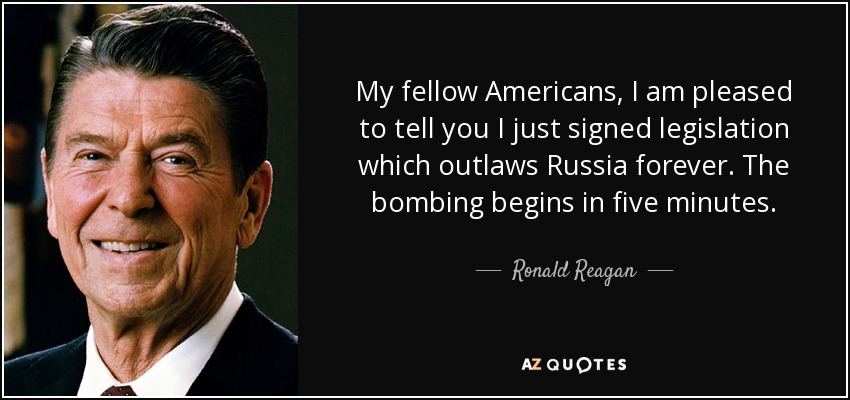
Remember this one? Ronald magnus could give lessons to a certain POTS

Image result for reagan outlaw russia forever
 
My Dad & I almost pissed our pants from this one. Because we were  laughing out loud so hard!
I miss you Dad! Grumpy

Anyways Happy 107th Birthday Sir! I am sure that God is having a good time with you! Grumpy

Categories
All About Guns The Green Machine This great Nation & Its People

Outlaws and Gunslingers

https://youtu.be/mtQZkYGiEOQ

Categories
This great Nation & Its People Well I thought it was neat!

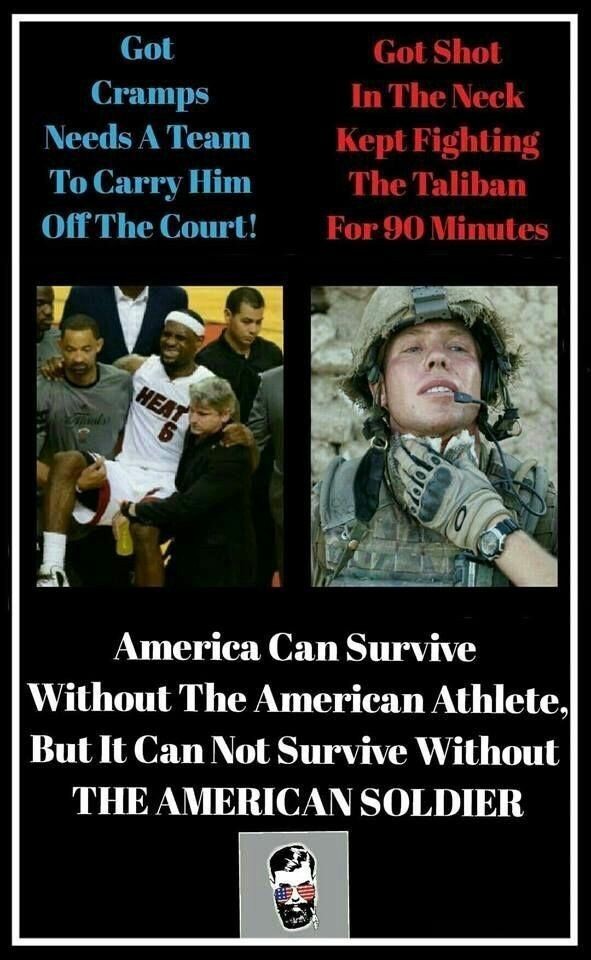
Some Red Hot Gospel there!

Image result for lebron james and soldier meme

Categories
The Green Machine This great Nation & Its People Well I thought it was funny!

Only a Veteran will get this! But he would be my 1st choice for a RTO