:quality(70)/cloudfront-us-east-1.images.arcpublishing.com/archetype/SLUIGWPTYBE7PBOZ42B2DWGNCE.jpg)
Category: The Green Machine
Categories
Run Charlie!
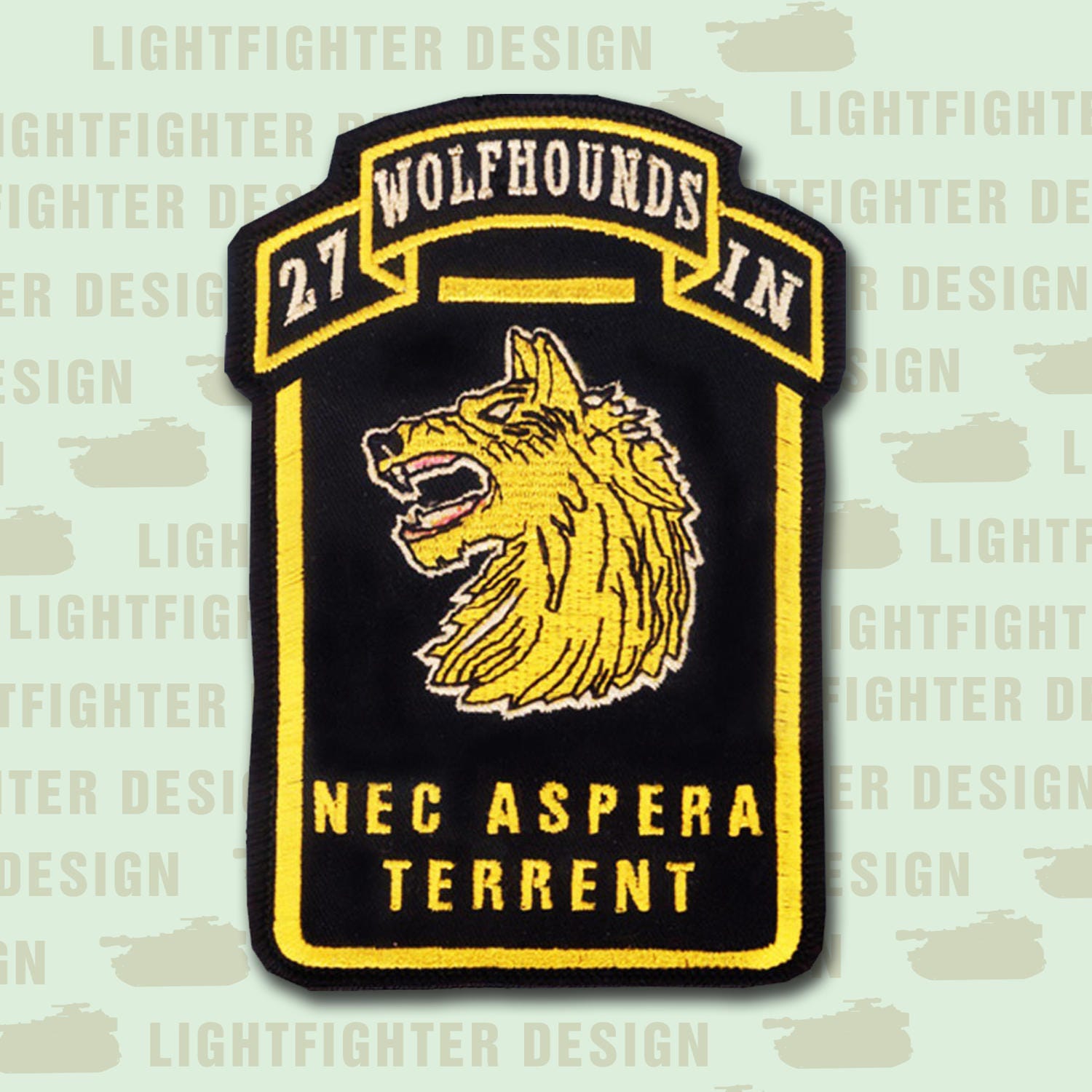
 On 19 July 1966, the Wolfhounds of A Company, 1st Battalion, 27th Infantry, were fighting for their lives near Trang Bang, Vietnam. They had air-assaulted into a smoking hot LZ in the Tay Ninh Province and immediately realized they had dropped checks they couldn’t cash. The VC pummeled their positions with B40 rockets along with suffocating AK and SKS rifle fire. The medics were overwhelmed, and they were down to their last few magazines. Fear spread like a contagion.
Amidst the chaos and the panic, the survivors could just make out the distinctive sound of CH47 cargo helicopters. With a little experience, it’s not hard to identify a military helicopter in seconds at a great distance. Apparently some rocket surgeon had foolishly sent a couple of big, fat Chinooks into the middle of a full-bore gunfight. Then the entire world exploded.
Two enormous experimental twin-rotor gunships roared in at treetop level. They opened up with fast-firing 20mm autocannon, screaming 2.75-inch rockets, explosive 40mm automatic grenade launcher rounds, and a veritable hurricane of .50-caliber pain. The attacking VC had just received their rude introduction to Guns-A-Go-Go.
The two A/ACH-47A (later designated ACH-47A) Chinook gunships that broke the back of that VC assault in 1966 were modified versions of the standard CH-47 Chinook. A/ACH-47A stood for Armored/Attack Cargo Helicopter. There’s never been anything like them before or since.
Origin Story
This curious live fire experiment saw four standard A-model CH-47 heavy lift Chinooks converted into gunships. They always worked in pairs and were based at Vung Tau and An Khe. The Army referred to this merry mob as the 53d Aviation Detachment. The earth pigs knew them as Guns-A-Go-Go.
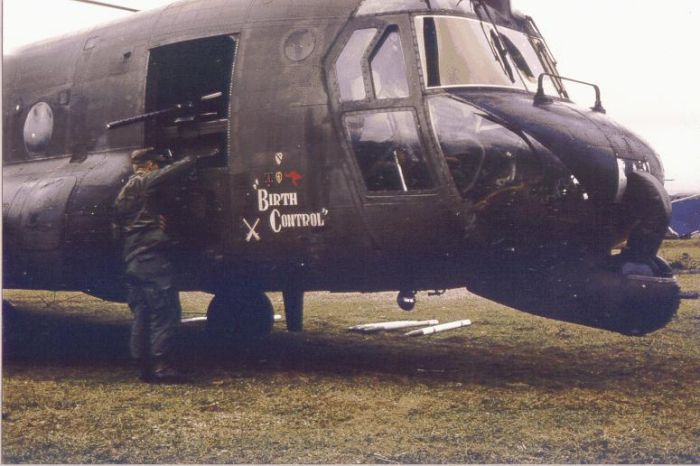
Three aircraft operated in country while a fourth remained behind in the States for further testing at Edwards Air Force Base. The first three were titled “Easy Money,” “Stump Jumper,” and “Birth Control.” The fourth was christened “Co$t of Living.” These massive warplanes absolutely bristled with weapons.
Details
Each ACH-47A carried 3,000 pounds of expendable ordnance along with extra applique armor protecting the crew and vital mechanical components. This spare boron carbide allowed these hulking aircraft to take a beating while operating in close proximity to supported ground troops. Each aircraft carried five fast-firing AN/M3 .50-caliber machineguns, the aircraft version of John Moses Browning’s legendary Ma Deuce.
The AN/M3 was the same weapon used on WW2 fighter planes like the Mustang, Lightning, Thunderbolt, and Corsair. They each cycled at around 1,100 rounds per minute. There were two per side of the A/ACH-47 firing through the windows and a fifth gun fitted in a stinger mount on the aft ramp.
A fixed XM34 M24A1 20mm automatic cannon rode on each side of the aircraft. An evolutionary development of the HS.404 Hispano-Suiza 20mm cannon, each of these recoil-operated guns fired 20x100mm high explosive rounds at 700 rounds per minute. Similar weapons served in deck mounts for antiaircraft defense on Navy warships.
Sponsons built into each side of the aircraft included mounting points for either 19-shot XM159 2.75-inch rocket launchers or M18 7.62x51mm Minigun pods. 2.75-inch FFAR (Folding Fin Aerial Rockets) typically carried either ten or seventeen-pound high explosive warheads. White phosphorus or flechette loads were also on the menu.
The M5 40mm automatic grenade launcher rode in a bulbous chin mount and fired high-velocity 40x53mm HE grenades. These rounds were not interchangeable with the 40x46mm grenades fired by the M79 and M203 launchers. The M5 was an air-cooled, electrically-driven gun system that featured a 225rpm rate of fire and a maximum effective range of 1,870 meters. The gun gimbled and could therefore be fired off-axis from the aircraft. Everyone knew it as the “Chunker.”
Practical Tactical
In August of 1966, “Stump Jumper” was involved in a ground taxi accident with another Chinook and burned. As a result, the Army fetched “Co$t of Living” from California and deployed it to Vietnam as a replacement. The following Spring, one of the M24A1 20mm guns on “Co$t of Living” vibrated loose on its mount during a fire support mission. The big cannon pivoted upward and discharged into the rotor system. High explosive rounds struck the forward rotors and blew them to pieces. All eight crewmembers perished.
A year later, “Birth Control” was badly shot up during a gun run and autorotated into a dry rice paddy near Hue. The crew of “Easy Money” immediately positioned themselves between the disabled gunship and attacking enemy, providing ample cover fire so that the crew of “Birth Control” could extricate themselves.
NVA mortars ultimately found the range and destroyed “Birth Control” before it could be salvaged. With only the single airframe remaining intact, the Guns-A-Go-Go project was no more. AH-1G Cobras rightfully stepped in to fill that role.
Epilogue
After the Vietnam War, “Easy Money” relocated to Fort Eustis in Virginia to be used as a sheet metal trainer. In the late 1990s, “Easy Money” was restored to her wartime configuration. In 2000 she went on permanent display at Redstone Arsenal in Huntsville, Alabama.
The idea of a massive gun truck that could slather hellfire across the countryside for literally hours on end had merit back in 1966. Given the proliferation of shoulder-fired MANPADS (Man-Portable Air Defense Systems) missiles, these enormous testosterone-charged monsters would be easy meat nowadays.
Regardless, “Easy Money” stands in Huntsville, Alabama, today in mute tribute to the era when Army innovators took a cargo helicopter, strapped on as much ordnance as the thing could carry, and then unleashed it on the VC and NVA. As a former Chinook pilot myself, I think Guns-A-Go-Go might just be the sexiest aircraft ever made.


| Thanks to Skip –
From his text – “Senior officers and NCOs, I am telling you right now if things if don’t change you will have the blood of your soldiers on your hands.” “There is an enemy out there who is determined, and he is not concerned about individual feelings, or time out. If you don’t train them hard now, and demand from them now what in the hell do you think the enemy is going to do to them. If they can’t take the heat in training how are they going to take it on the battlefield? Technology my ass, soldiers win wars.” Before you read this…Command Sergeant Major (CSM) Purdy is quite possible one of the most legendary warriors in recent Army history. This guy redefines hard-ass, and I am sure that some of you have heard of him. He survived 3 tours in Vietnam in LRP / Ranger Units (on the wrong side of a few near ambushes and Purple Hearts), served as a Son Tay Raider, was at Desert One, …… He retired after serving as the CSM of the 75th (after, most notably, serving as the CSM of the 187th (Rakkasans!) He is a fixture at Fort Benning, and as a recently retired CSM, was hazing students in my Ranger class when he decided to stop by the camp in Jan 1996 to make sure that standards hadn’t slipped. |
|
 |
|
| TO: Whom it May Concern FROM: CSM Don Purdy, Retired, USA SUBJECT: WARRIORS I would like to give an (Army) NCO perspective on this issue. I am a retired CSM with 27 years of service. Most of it in Ranger companies, and the Ranger Regiment. I am a Vietnam Veteran, and a veteran of special operations. I retired in 1995 but have done mostly contract work out of Fort Benning involving experimentation on MOUT Operations. I got to work around a lot of soldiers, and had to keep up with current trends and tactics. I am currently working in Saudi Arabia training Saudi paratroopers and Rangers. 1. Some senior NCOs are nothing more than boot lickers who sing the Army of One song to their superior officers every day. Commanders need to hear the good, bad and the ugly, and then be given good solid recommendations. They need their senior NCOs to be TRAINERS. LEAD BY EXAMPLE. DO as the troops do. LEAD FROM THE FRONT. GET IN THE DIRT. This bullshit of “I have done that” is garbage. What you are doing now is what counts. Quit worrying about your next assignment. Focus on your mission now. Your mission is to train soldiers for war, and it’s damned hard work. If you do it right, you will leave the Army in worse shape physically than when you came in. BE HARD BUT BE FAIR. You must have MORAL COURAGE. 2. Training is a word they can’t spell. Chief trainer means chief boot licker. TICKET PUNCHERS. 3. “Moral courage” means telling your commander what he wants to hear these days. I was condemned by my peers and superiors for speaking up and telling it like it was. I was called a relic from the past that should be put in a glass case. I was focused on training for war, not peace. Discipline was my watchword, and the soldiers did not decide what punishment was right or wrong where I served as CSM. I was the Chief Trainer. The buck stopped with me. I participated in all training and lead by example. I was told by a Division CSM that I would never serve above BN level because I was too intrusive. That means I scared commanders with the truth. The next thing he asked was why do you train with your soldiers? The question was shocking, but the answer was simple. When I speak everyone listens. That went over his head like a tent. I carried a rifle, not a pistol, and I damned well knew how to use that weapon and my soldiers knew how to use their weapons as well. 4. Combatives are important. Boxing, wrestling and bayonet fighting are not antiquated. CQB is just what that means. Close Quarters Battle. MOUT, trench systems and bunkers must be cleared, and you had better be aggressive and prepared to do bayonet or hand to hand fighting. When others were laughing at my unit for doing this, my soldiers were prepared and understood what fix bayonets meant. They were aggressive and well disciplined. Sub standard performers were put out immediately. My First Sergeants were not mail men or chow deliverers, they were the Chief Trainers of their companies. 5. We trained for war, not peace. Live fires were a priority, and were not canned. Leaders, and soldiers had to react. Maneuver elements maneuvered, and had to rely on the SBF not to shoot them but only the enemy. Bayonets were fixed and there were dummy targets for the soldiers to engage with those bayonets. Resupply mission were planned and executed. The battlefield had to be policed of casualties, and equipment by any means available, even if it meant driving vehicle cross country or physically carrying the wounded. Reload drills, dead gunner drills, and crew drills were executed over and over and over again. These were executed night and day. NODS went on your face when the sun went down. They weren’t hanging around your neck. We executed live fires at night with NODS in the woods, and the live fires were not canned. Raids, ambushes, search and attack were all executed at night up to company size. This took us over one year to get to that level. Mortars could hit their targets. Units could move silently day or night and didn’t get lost. We did not rely on GPS. WE USED MAP AND COMPASSES. We lived out of our rucksacks, slept on the ground in all types of weather from the BN CDR on down. We did not look like bums. We shaved everyday, wore our equipment properly, camouflaged our face, and hands when necessary, soldiers knew how to maintain themselves and their equipment in the field and uniformity was important. Soldiers knew what a cat hole was, and that trash was carried in the rucks not thrown on the ground or buried for the hogs to dig up. Uniforms were worn properly. The companies received one hot meal a day and understood how to conduct tactical feeding. Our cooks knew how to function in the environment. The combat trains did not live in tents. Their perimeter was secure, weapons were clean, and noise and light discipline was maintained. Cooks, clerks and all other support personnel knew how to use their weapons and were trained in the basic infantry skills. Misfires were damned well rare, and punishment was swift when it did happen. We suffered no live fire deaths because we trained properly, and used good old-fashioned common sense. We never had the soldiers execute missions they were not properly trained for. The NCOs trained the soldiers, the officers commanded. Our motto was what ever you do, do it right. Rate of sick call in the field was almost zero. Moral was high because of good hard leadership from the front, and realistic tough training. We even executed a day of live fire training during support cycles. You need a strong CSM who understands discipline and training. He can talk it and walk it. 6. There is no such thing as a good field soldier. You are either a soldier or not a soldier. Everything from appearance to police call is important. This bull shit about my space and my rights is just that BULL SHIT. Barracks are not his or her home it’s a place for them to live. For saying this I was told I had a mess kit mentality. This individuality BS of “I need my own room” is garbage. We waste more money building these condos so soldiers can feel good, and not be part of a team is sickening. They should live in fire team bays. It builds cohesion. Key control alone is a nightmare. Of course don’t bother the poor soldier just let him live like a pig, and when he gets sick or you find out he or she is a drug dealer then blame it on the NCO Corps even though you the illustrious BN CDR, BDE CDR said leave the soldiers alone in their precious rooms. Soldiers are owed a place to sleep, their pay and the best leadership and training that can be provided. 7. DISCIPLINE is the key. DRILL AND CEREMONY is the foundation of discipline. When I say fall in I want to hear your heels coming together. When I speak you jump. All ceremonies should be executed with weapons so each unit can execute the 15-count manual of arms. Carrying a card around in your pocket does not develop good morals. Morals are developed through solid leadership not gimmicks and headgear. 8. You want to be politically correct stay on the block. You want to be different or an individual looking to be a victim stay on the block. If you’re a pervert and proud of it stay on the block. You want to be a soldier then become part of a disciplined team. This is not a job it’s a profession. You’re here to fight our countries war not be a gut eating self-serving individual. Senior officers and NCOs I am telling you right now if things don’t change you will have the blood of your soldiers on your hands. There is an enemy out there who is determined, and he is not concerned about individual feelings, or time out. If you don’t train them hard now, and demand from them now what in the hell do you think the enemy is going to do to them. If they can’t take the heat in training how are they going to take it on the battlefield? Technology my ass, soldiers win wars. Be hard on them now or watch them die, or worse break and run. BE HARD BUT BE FAIR! Being fair does not mean they dictate punishment or babying them. A Russian General said “Hard on the training field, easy on the battlefield.” General Patton said “Leading from the rear is like trying to push spaghetti uphill.” You want you soldiers to respect you not love you. When they look at you they should see a competent leader. The best compliment I ever received was from a soldier who was PCSing. I was a PLT Sergeant in the First Ranger BN. He said “Sergeant Purdy I hated to hear you come in, in the morning, and sometimes I just hated you, but I would follow you to hell with gasoline drawers on.” Signed, CSM Don Purdy, Retired, USA |
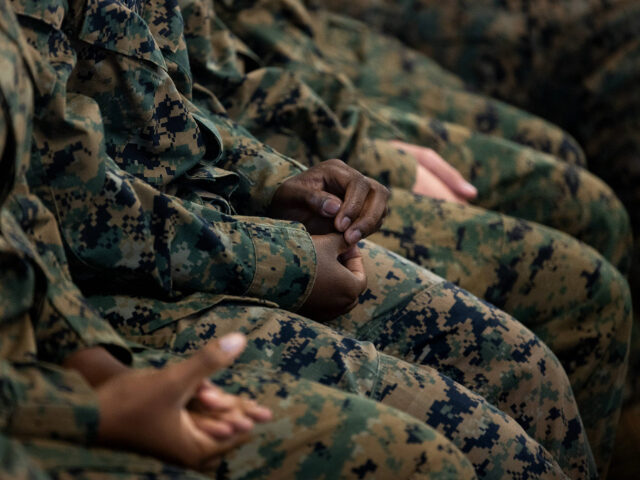
The Army’s recruiting of white soldiers in 2023 had dropped almost by half in the last five years, according to a report.
That dramatic decline has coincided with a push by the service to increase recruitment of a more diverse population, according to a report.
The decline of white recruits has also coincided with the Army missing its target of 65,000 recruits in 2023 by 10,000.Military.com reported Wednesday that Army internal data showed that a total of 44,042 new Army recruits were categorized by the service as white in 2018, but that number has fallen consistently each year to a “low” or 25,070 in 2023. The outlet reported a six percent dip from 2022 to 2023 was the most significant drop. No other demographic group has seen such a precipitous decline, it added.
There has been largely “flat” recruitment of black and Hispanic recruits, according to the report. However, due to the decline of white recruits during that time — 56.4 to 44 percent — the percentage of those demographic groups went up by four and seven percent, respectively.
At least some Army officials appeared to blame Republicans and conservative media for calling out wokeness in the military, as well as obesity and the public education system.
The article recalled the Army’s campaign to recruit Gen Z, which featured a soldier with two moms, as well as other minority populations, that attracted flak from Republicans.
“There’s a level of prestige in parts of conservative America with service that has degraded,” one Army official told Military.com. “Now, you can say you don’t want to join, for whatever reason, or bad-mouth the service without any cultural guilt associated for the first time in those areas.”
However, it said the drop in white recruitment has “baffled Army staff and isn’t easily explained by any one particular factor.”
Military.com cited statistics of white men declining in the labor force and at civilian universities as well, quoting an economist from the American Enterprise Institute.
“Men have been in trouble in the workforce for two generations. The greatest risk of being a labor dropout is being a native-born, low education, unmarried guy,” said economist Nicholas Eberstadt. “Like with any other big historic change, it’s kind of hard to attribute to a single magic bullet.”
The SKS has a powerful history across the world, but especially in Vietnam. Take a look at its history on the infamous “Hamburger Hill” and its potential today.
May 02, 2023
On May 10, 1969, ten Allied Infantry battalions launched Operation Apache Snow into the A Shau Valley in Vietnam’s Thura Thien-Hue Province west of the city of Hue. Friendly combat elements included portions of the ARVN 1st Division, the 9th Marine Regiment, and the 187th, 501st, and 506th Infantry Regiments of the 101st Airborne Division.
The storied 101st Airborne Division has deep historical roots reaching all the way back to the Second World War. The 506th Infantry Regiment, as an example, was the unit depicted in the powerful miniseries Band of Brothers. In Vietnam, the VC and NVA referred to 101st sky troopers as the “Chicken Men” based upon their distinctive Screaming Eagle shoulder patch. Enemy commanders were said to have avoided combat with the “Chicken Men” whenever possible due to their legendary fierceness in battle.
The mission of Operation Apache Snow was cold and calculating. The A Shau Valley was a conduit for troops and supplies infiltrating into South Vietnam from Laos. American forces had little use for terrain. With hundreds of helicopters at their disposal American commanders could seize most any piece of dirt they wished. Apache Snow was about corpses. The overarching plan was to block escape routes into Laos as well as to find, fix, and destroy enemy combat units in the valley.
This operation involved some of the fiercest ground combat of the war. American artillery, helicopter gunships, and close air support worked synergistically with the ground elements to crush NVA units when and where they could be found. Over a ten-day period the 3d Battalion of the 187th Infantry Regiment made eleven assaults up Hill 937, destroying NVA fortifications and grappling with enemy units at close range.
The men involved in this grueling pitiless fight came to refer to this often hand-to-hand conflict as the Battle for Hamburger Hill. After roughly four weeks of bitter combat American forces withdrew and abandoned their hard-fought territorial gains. American forces lost 113 killed while the ARVN 1st Division lost another 31. On the other side of the balance sheet American forces recovered the bodies of 977 NVA regulars and took five prisoners.
Mike was a typical American teenager. He enlisted in the U.S. Army at age eighteen in search of adventure, camaraderie, and relief from the drudgery of rural Michigan.
In late 1968, as an Infantryman in Vietnam, he found all those things and more. Mike was a rifleman with the Screaming Eagles during Operation Apache Snow. He fought in the A Shau Valley and became intimately familiar with the rich black dirt of Hamburger Hill. Some of those 113 young, strong, brave Americans lost on that forgotten hillside were his dearest friends.
At one point while assaulting through a trench line Mike and his buddies came under intense small arms fire. The NVA were masterful jungle fighters, and rooting them out of fixed defensive works was a formidable task. The 101st Sky Soldiers had been fighting these particular NVA for days. Mike’s rifle platoon pinned the NVA defenders in place with murderous suppressive fire from their M60 machineguns supported by M61A1 rifles and M79 grenade launchers.
Their attention held by the platoon’s steady base of fire, Mike slipped around the periphery of the fight and crouched behind a heavy tree trunk. He retrieved an M61 frag grenade from alongside his magazine pouch, thumbed off the safety clip, pulled the pin, and tossed it over the edge of the trench. Mike ducked back behind the heavy tree and, for a pregnant moment, just waited. Four seconds is an eternity when you’re waiting on a grenade to go off. The little bomb detonated with a dirty crump and gray-black smoke billowed up from the NVA trench. Mike leapt up and vaulted over the edge, his M16 tracking for movement.
There were three figures lying jumbled on the floor of the trench, their black pajamas torn and wet with gore. Two were inert, but the third moved. Mike reflexively pivoted his M16 and triggered an eighteen-round burst on rock and roll. Suddenly everything was still. (Troops in Vietnam frequently loaded their 20-round box magazines with eighteen rounds to improve reliability.) Mike’s breath came in ragged gasps, his ears rang, and his hands shook. He swapped out his empty magazine for a fresh box containing another eighteen rounds and studied the area around the trench for any signs of enemy activity. Satisfied that the area was secure, his squad consolidated the position, took stock of the weapons, equipment, and intelligence material, and held in place while the rest of the company assaulted forward.
The three NVA soldiers looked pitifully small. Most dead men seem small, but these were also young. The man Mike had killed with his last long burst had been carrying a Chicom SKS rifle. Mike lifted the weapon up from the chaos and filth of the trench and held it aloft. The weapon was mechanically intact, and the barrel was still uncomfortably hot to the touch. A fragment from his grenade had penetrated the side of the box magazine, and a portion of the stock was shattered. Despite this damage the weapon remained functional, a sour testament to the resilience of their foes and the firearms they wielded.
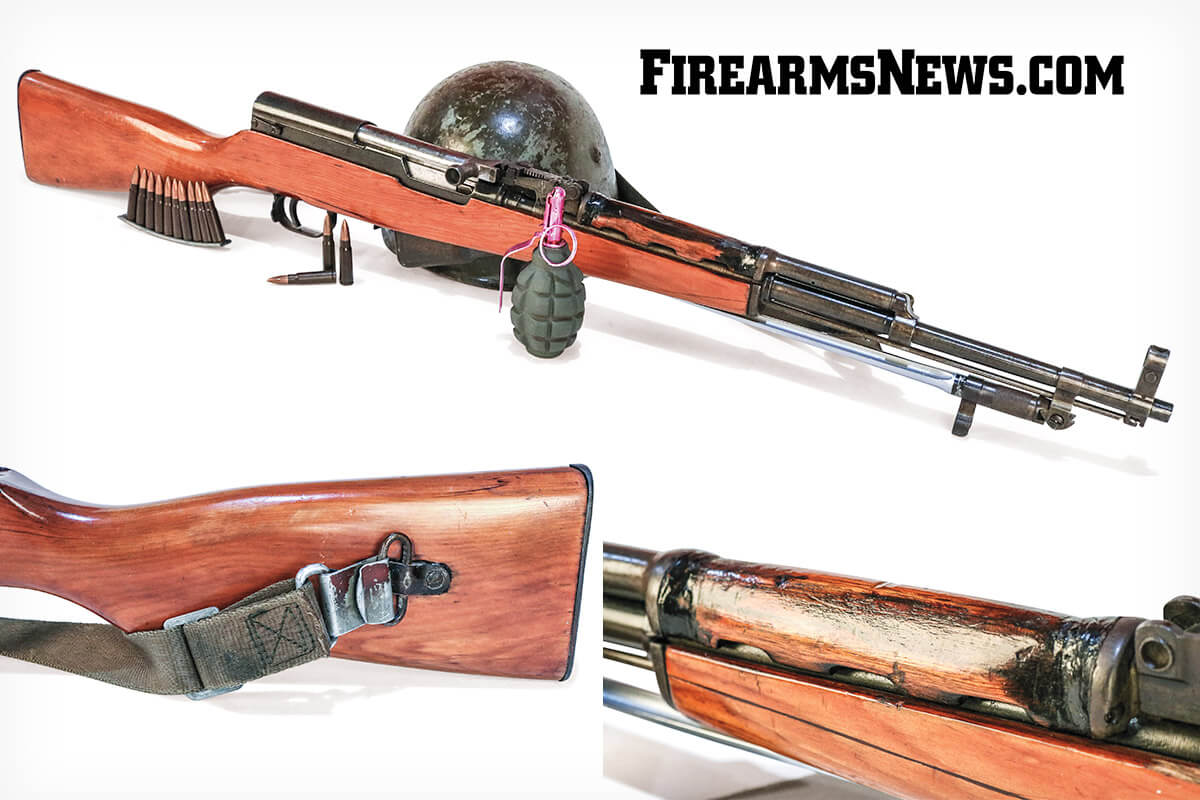
The upper handguard was literally burnt to a crisp, and the bottom of the trench was dirty with shell casings. There was no telling how many rounds this NVA soldier had fired through his weapon in the preceding few days. Mike laid claim to the gun and tagged it with the cooks for safe keeping. When his year-long tour was finally up he filled out the obligatory paperwork, begged his Company Commander for a signature, and brought the beat-up Chinese rifle home in his duffle bag, a poignant memento of the most horrible and exciting time of his young life.
The Rest of the Story
Like so many combat veterans of that generation, Mike had a rocky return to the World. In 1969, America was sick of war in Southeast Asia, and misguided activists stupidly vented their frustrations on the young men who served there. After three years on active duty Mike married and transferred to the Michigan National Guard as the NBC NCO of an Infantry unit. Military service is nothing if not a brotherhood, and Mike made new friends in his Guard unit. Over time they grew close. Eventually in the late eighties Mike’s marriage went sour, and he fell on hard financial times.
Desperate for cash during the divorce, in 1987 Mike offered the beat-up Chinese rifle to a buddy in the Guard for $200. The friend accepted with the caveat that Mike could buy it back any time he wanted for its purchase price. Two years later Mike developed cancer from his exposure to Agent Orange during the war. In 1991, Vietnam ultimately killed Mike at age 41, a continent and a lifetime away from his tour in-country.
The Phone Call
Last year, my friend and editor here at Firearms News, Vince DeNiro, let me work up an article about a Japanese Type 99 rifle damaged during the island campaigns of the Pacific War in WWII. A gentleman read that article and tracked me down at the medical clinic where I work. This man, himself a Vietnam combat veteran, was the Michigan National Guardsman who bought the SKS rifle from Mike.
As is so often the case among gun guys, what began as a transaction ended as a friendship. He related the story behind the gun and explained that there wasn’t anyone in his life with a sufficiently deep interest in the weapon to venerate it with the respect it deserved. As such, we struck a deal, and I assumed stewardship of this most remarkable treasure.
The Gun
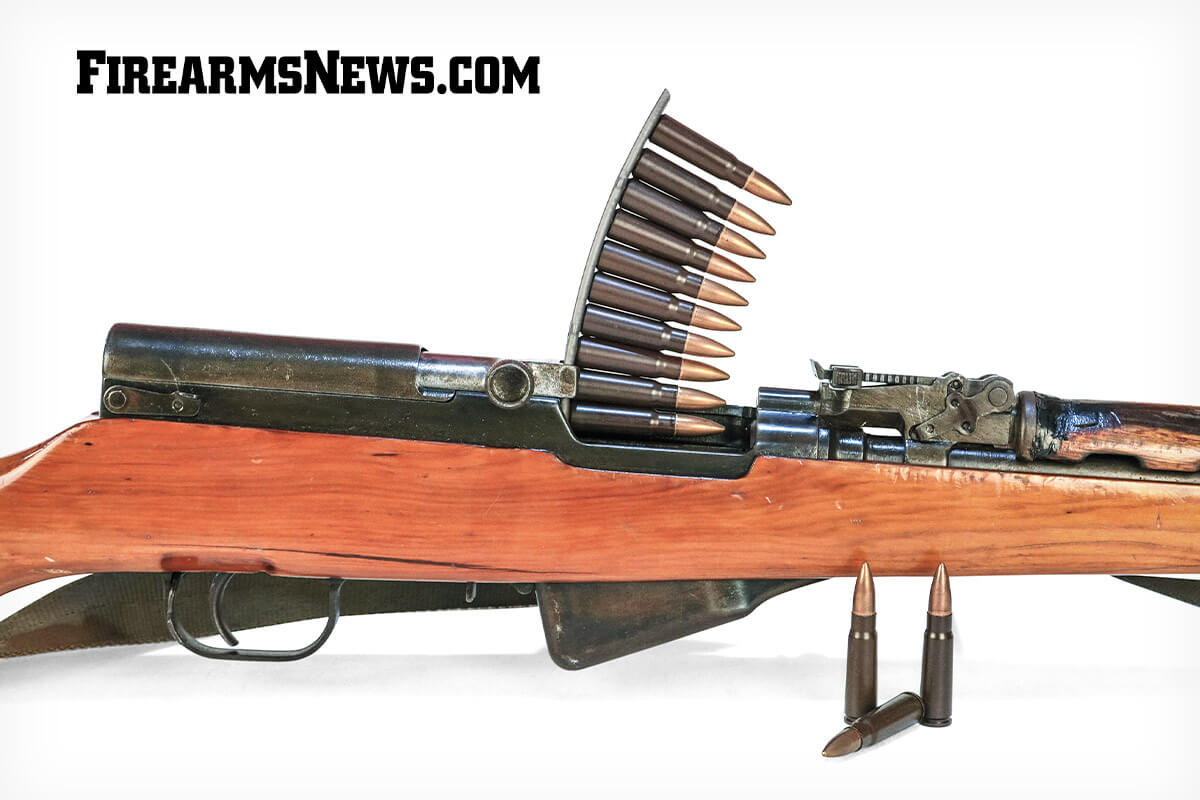
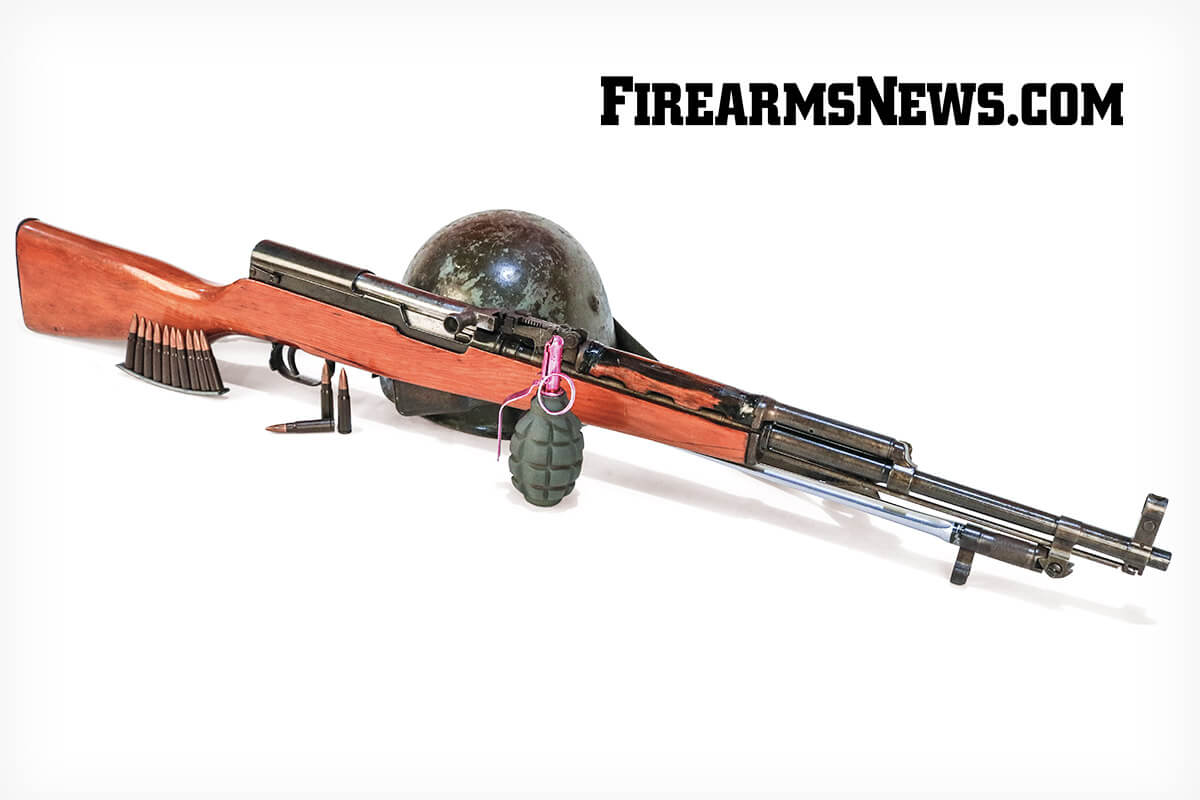
The SKS was designed in 1943 by Sergei Gavrilovich Simonov and formally entered service in 1949. A rugged and maneuverable carbine, the SKS was actually obsolete at the time of its introduction. The AK47 that entered service around the same time offered everything the SKS did and more. The Soviets still ultimately produced some 2.7 million SKS Carbines. Variations were manufactured in China, Yugoslavia, Romania, Albania, North Vietnam, North Korea, and East Germany. More than fifteen million total copies were produced.
The SKS is a self-loading, semiautomatic rifle with a tilting bolt and a short-stroke gas piston action. The weapon features an integral 10-round box magazine, and the bolt locks to the rear automatically on the last round fired. To load the piece the operator opens the bolt, sets a 10-round stripper clip into the stripper clip guide on the top of the weapon, and presses the rounds into the magazine. With a little practice reloading the weapon is quick and intuitive.
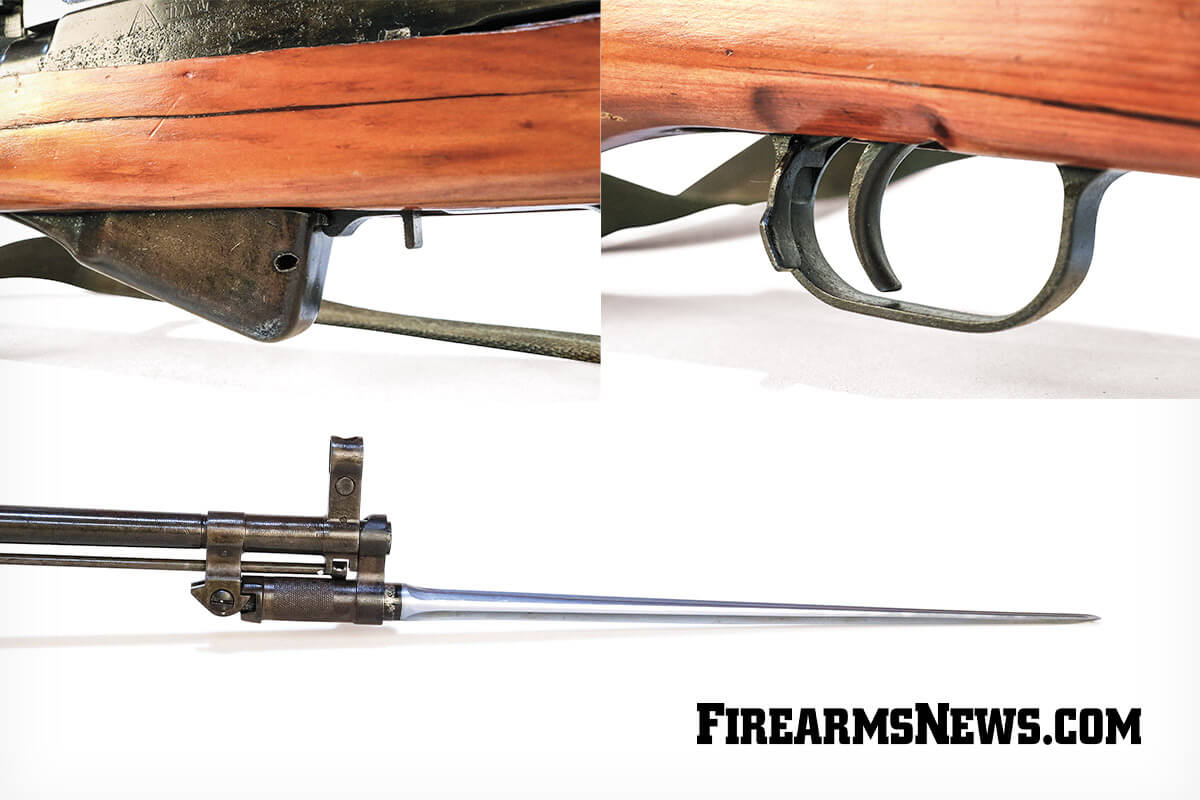
The safety is a pivoting lever on the right side just behind the trigger. Forward is safe. Back is fire. It’s easy to manipulate the safety with your trigger finger. The charging handle is an integral part of the bolt carrier and reciprocates with the action. The magazine is fixed to the chassis of the weapon but can be readily pivoted forward for service via a sliding latch just ahead of the trigger guard.
The SKS is as much a cartridge as a rifle. Early in WWII it became obvious that the full-sized rifle rounds of the day were grossly overpowered for most Infantry combat engagements. Most soldiers in the field packed bolt-action rifles capable of delivering accurate fire out to two kilometers. However, typical infantry engagements were found to be executed at three hundred meters or less. This observation sparked a sea change in military weapons design. The Germans responded with the 7.92×33 kurz round and the StG44 rifle to fire it. Every modern Infantry weapon draws inspiration from this remarkable gun. Meanwhile, the Soviets developed the M43 7.62x39mm intermediate round.
A committee of experienced gun designers came together to craft this new round in 1943. From a possible 314 cartridge designs they winnowed the field down to the 7.62x39mm. This radical new intermediate round was originally intended to feed a semiautomatic carbine, a selective-fire assault rifle, and a belt-fed light machinegun. In the SKS, AK47, and RPD the Soviets filled those requirements.
Specifics
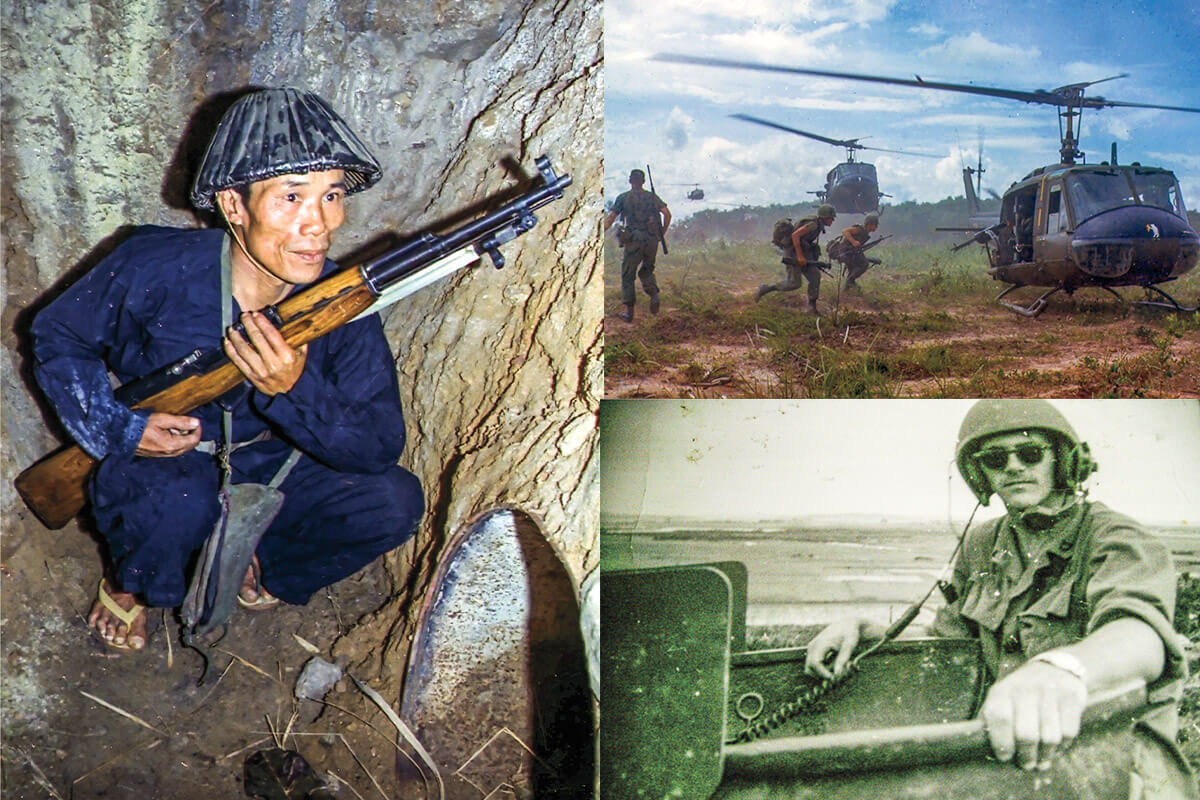
Built in the Jianshe Arsenal in 1966, this particular SKS has had a fascinating life. The Chinese began production in 1956 and referred to the gun as the Type 56 as a result. This can be confusing as the Chicom AK47 is also referred to as the Type 56 as well. The Chicom Type 56 SKS went through a variety of tweaks between 1956 and the present. Sometimes you will find two examples from the same factory that differ significantly in their details. Milled versus stamped receivers, variations in safety levers, and sundry different stocks differentiate the various strata. Most military weapons feature stocks cut from a dark wood, while the civilian counterparts are built around stocks made from a blonde material called Qiu wood.
The buttstock on this rifle appears to be a locally made replacement for the factory original. The fit is good but not perfect, and the buttstock trap for the cleaning kit was never bored out. The wood is heavily varnished but relatively soft. Chicom Type 56 rifles with serial numbers less than 9 million typically sported the Soviet-style folding blade bayonet.
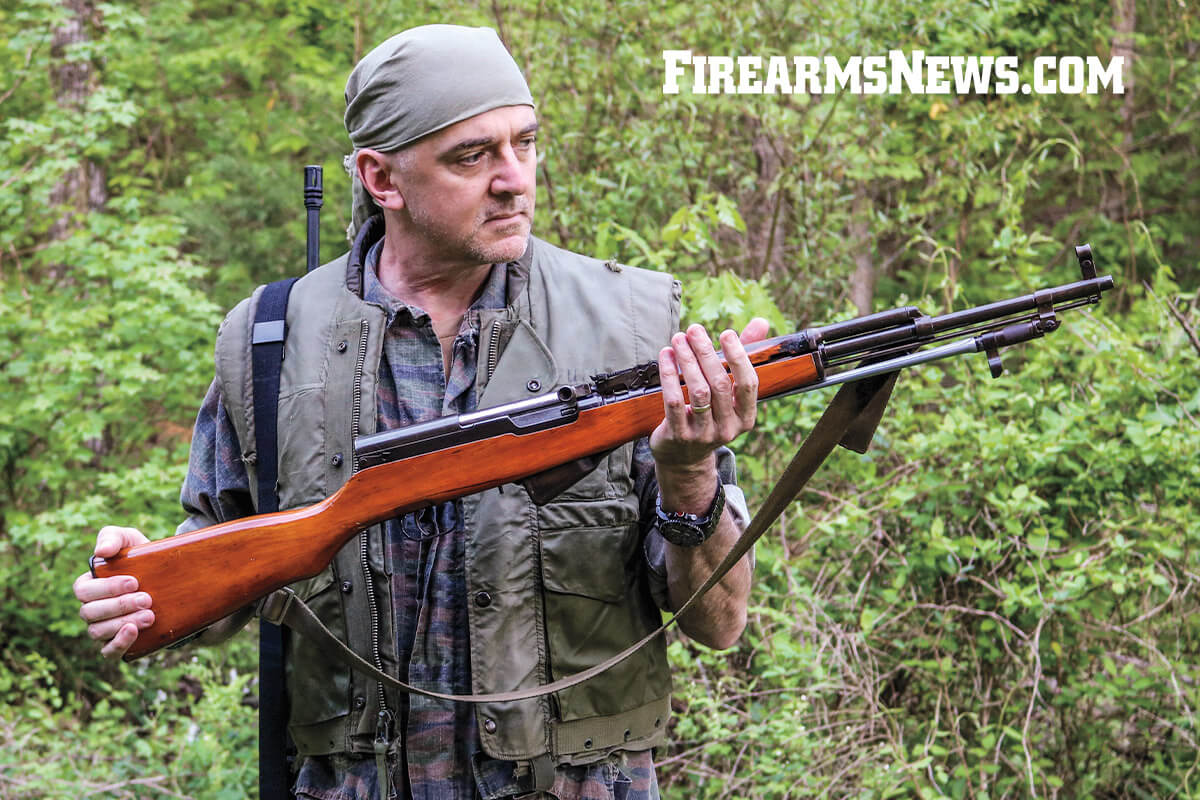
Most guns above that serial number cutoff were fitted with the spike-style cruciform bayonet. I’d sooner not get poked with either. The buttstock on the SKS is a bit short for many corn-fed Americans, but the gun remains nonetheless comfortable and pleasant on the range. Recoil is mild, and the trigger is good enough. The sights are optimistically graduated out to 1,000 meters.
While SKS rifles have appreciated markedly in value in the past couple of decades, they were once absolutely dirt cheap. I recall a time back in the eighties when you could walk out of an American gun show with a case of Chinese 7.62x39mm ammo and the dealer would throw in a brand-new Chicom SKS for free like a Happy Meal. In its heyday the SKS was the poor man’s Kalashnikov.
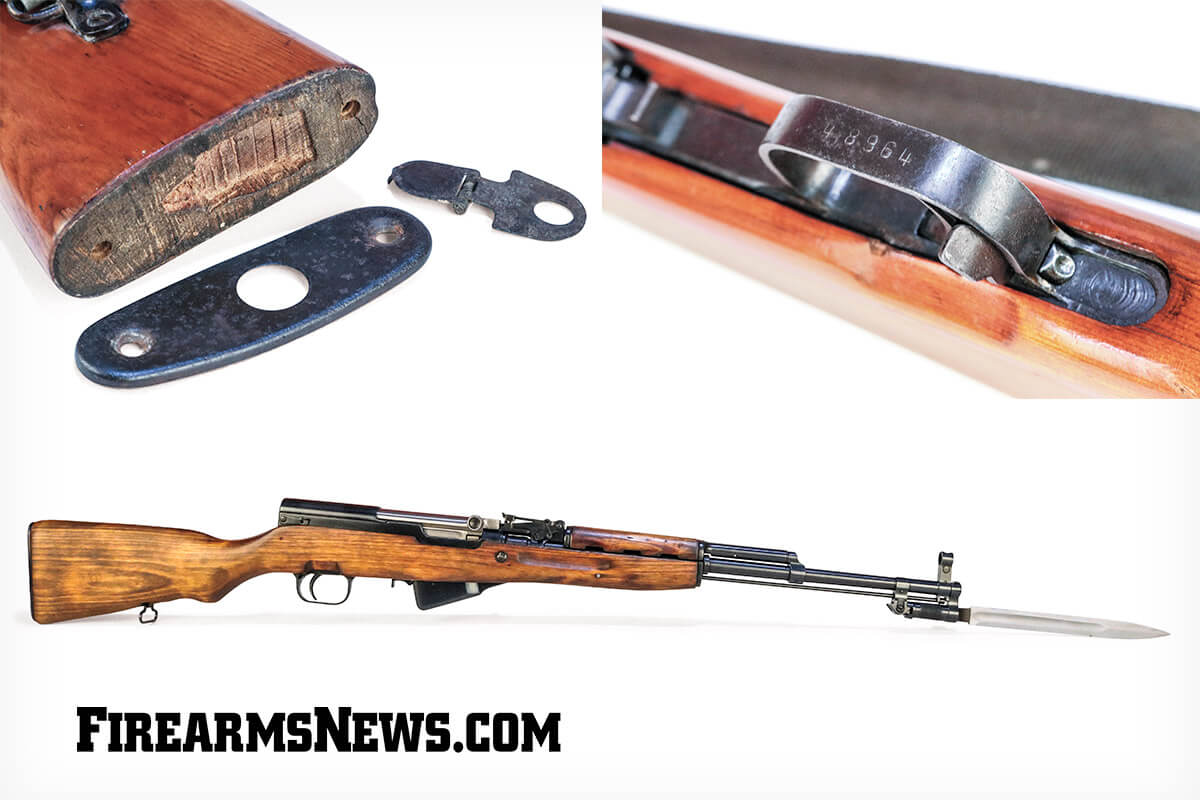
There are scads of accessories all designed to enhance and upgrade the SKS. However, I like the original milspec ambience myself. At the time of this writing, J&G Sales had a supply of early Jianshe Chicom Type 56 SKS rifles in serviceable condition at a sweet price.
These guns are high mileage combat weapons with scads of character still awash in cosmoline. It is one thing to read about history from a safe, comfortable distance. Cold facts and dispassionate numbers conspire to excise the passion and emotion from some of history’s most significant episodes. However, hefting the guns that were actually there brings home the power of these events in a much more moving way.
A young man died clutching this battered old rifle. His lifeblood spilled out on the side of Hamburger Hill as he gave his last full measure of devotion for a cause he felt was just. Similarly, the young man who took his life was fighting for a cause of his own. At a certain level both men fought for their comrades alongside them. That one lived and the other died was a function of the cruel vagaries of Fate.
This rifle was fired in anger so profusely as to char the handguard. Through the fog of history there is literally no telling the mayhem it wreaked. Now it sits quietly with me, a mute testament to a most remarkable time. Want a surplus Chicom SKS rifle of your own? J&G Sales has them in stock at a reasonable price. They’re also C&R eligible. These veteran rifles show the cool stigmata of hard use and are slathered in cosmoline.

About the Author
Will is a mechanical engineer who flew UH1H, OH58A/C, CH47D and AH1S aircraft as an Army Aviator. He is airborne and scuba qualified and summited Mount McKinley, Alaska, six times…at the controls of an Army helicopter. After eight years in the Regular Army, Major Dabbs attended medical school. He works in his urgent care clinic, shares a business building precision rifles and sound suppressors, and has written for the gun press since 1989.