The 26th Cavalry Regiment, consisting mostly of Philippine Scouts, was the last US cavalry regiment to engage in horse-mounted warfare. When Troop G encountered Japanese forces at the village of Morong on 16 January 1942, Lieutenant Edwin P. Ramsey ordered the last cavalry charge in American history.Ramsey quickly signaled his men to deploy into forager formation. Then he raised his pistol and shouted, “Charge!” With troops firing their pistols, the galloping cavalry horses smashed into the surprised enemy soldiers, routing them.
High-tempo Special Operations training can cause brain injuries that accumulate unnoticed. One soldier says that is why he snapped and killed three people.
Sgt. First Class Duke Webb was an active-duty Green Beret with seven deployments and a flawless record when he entered a bowling alley in Rockford, Ill., one night and started shooting people.
No one had done anything to provoke him. He just seemed to snap. He shot a 14-year-old boy in the face by the front door, and a 16-year-old girl in the shoulder when she tried to hide. Then he walked into the snack bar and continued to fire.
By the time the police tackled him that evening in 2020, three people were wounded and three were dead. He has been awaiting trial for first-degree murder ever since.
He has admitted that he pulled the trigger. The question is why.
PTSD is the obvious guess. But there is little in Sergeant Webb’s record to support it. He was only in one real firefight, and no one on his team was hit by enemy fire that day.
The real cause, Sergeant Webb and people close to him say, had nothing to do with combat — but everything to do with his Army service.
Special Operations troops train relentlessly, jumping from planes, firing shoulder-fired rockets and setting off explosives. The years of training exposes them to so many weapons blasts and knocks to the head that it can erode their ability to do the job, or even to function normally. Many end up with significant brain injuries — injuries that are often missed by the Army.
That is what Sergeant Webb says happened to him. After 12 years in uniform, he was having splitting headaches and developed a facial tic. He often lost his train of thought and became so consumed by strange, conspiratorial anxiety that he began insisting that his girlfriend use a code name.
The Army never diagnosed a brain injury, but medical officers grew so concerned that they prescribed for the sergeant a drug used to treat advanced Alzheimer’s disease. He was 37 years old.
When he walked into the bowling alley 16 days later, he told the police afterward, he didn’t understand where he was or what he was doing.
Image
Duke Webb shot six people at a bowling alley in Rockford, Ill., in 2020, killing three. He has admitted to the shooting but has pleaded not guilty.Credit…Jamie Kelter Davis for The New York Times
His lawyers have argued in court filings that the Alzheimer’s drug, called memantine, pushed his already injured brain past its limits, and that when he opened fire, he was in the grip of psychosis caused by the medication. He has pleaded not guilty.
“I know what I did was wrong, and I deserve to be in here suffering,” Sergeant Webb said in a telephone interview in the fall, in which he sometimes lost his train of thought and rambled. “But the military used me up, then abandoned me,” he said. “I feel left behind.”
Instead of trying to understand whether off-label medication and years of blast exposure had contributed to the killings, the Army quickly cut ties with Sergeant Webb.
Shortly after the bowling alley shooting, it sent a psychologist to assess Sergeant Webb in jail. The military wanted to force him out of the Army, but federal law required it to first determine whether he was medically fit to be discharged, or had a service-related injury that required Army care. The psychologist wrote that Sergeant Webb probably had experienced a “brief psychotic disorder,” and showed signs of PTSD and a brain injury. The Green Beret was not fit to be discharged, he wrote.
The Army discharged him anyway. The paperwork rated his service as “other than honorable,” cutting him off from veterans’ medical care and benefits.
There are now three possible outcomes for Sergeant Webb’s criminal case. A jury could find him guilty and send him to prison for life. It could find him not guilty by reason of insanity, and send him to be confined in a state hospital where he would be treated and perhaps eventually released. Or it could decide that the drug prescribed by the Army temporarily made him insane through no fault of his own, and let him walk free.
In none of those scenarios, though, would the Army learn whether blast exposure in training played a role in what happened, or how that training may be hurting other soldiers.
Sergeant Webb has been in jail for five years, much of it in solitary confinement. In part because of his rattled mental state, he has replaced his legal team several times, delaying his trial and exhausting his savings — about $400,000. He has grown hopeless and at times suicidal.
“I just get tired of living with myself,” Sergeant Webb said. “The people I served with, most of them seem to have forgotten about me. What I did was so horrible, no one wants to take the time to try to understand why it happened.”
Constant Training, Constant Exposure
Sergeant Webb joined the Green Berets in 2010 after two years in the regular Army. He was assigned to 7th Special Forces Group at Eglin Air Force Base in Florida and began a grueling decade of training and deployment.
The Army sent him to explosives school, sniper school, jump school and dive school. He learned to fire mortars and other heavy weapons that can cause brain injuries. He deployed three times to Latin America and four times to Afghanistan. Though combat exposure was minimal, blast exposure was constant.
In Latin America, he taught partner armies how to create landing zones in the forest using explosives. In Afghanistan, he trained local troops to detonate mines, and blew up abandoned American military equipment to keep it out of Taliban hands.
“None of those blasts completely rocked you — they didn’t hurt,” Sergeant Webb said in the interview. “But you could feel them in every part of your body.”
In interviews, Sergeant Webb and several other Green Berets estimated that only 10 to 20 percent of their overall blast exposure had come in combat. The vast majority was from training, not war.
Image
Sgt. First Class Duke Webb, pictured with colleagues, is one of a number of career troops with blast exposure who developed a pattern of cognitive and other symptoms sometimes called Operator Syndrome. Credit…Jamie Kelter Davis for The New York Times
The brain is an exceptionally delicate network of some 100 trillion neural connections. Blast waves surging through repeatedly can fray its tiny fibers or break them. When damage piles up, the brain’s reactions can become hard to predict.
Early in his career, Sergeant Webb had a reputation in Special Forces for being meticulous, calm and motivated. “He was a go-getter, very smart, well spoken, squared away, never in trouble,” said his former team leader, retired Master Sgt. Duane Flores.
But over time, Sergeant Webb started to unravel. It began with restless sleep and disturbing dreams, then headaches so severe that he worried he might have a brain tumor. His thoughts grew scattered, and he struggled to retain information.
The Army treated the symptoms without diagnosing a larger cause. He got medicine for his headaches, and the stimulant Adderall for concentration.
His girlfriend at the time, Monica Gonzales, watched him gradually grow so fearful and suspicious that he started to refer to her outside the house only by the code name Matilda.
“It got worse over time, to the point that it was really making me nervous,” she said.
‘Driving With the Engine Light On’
Sergeant Webb is an extreme case of a much larger problem in Special Operations that the military is largely blind to.
Years of intense training and exposure to weapons blast waves can cause profound scarring in the brain that makes top-performing soldiers fall apart. But in caseaftercase, the military has missed the onset of these kinds of brain injuries, in part because there is usually no obvious single accident or attack to point to as a cause, and in part because the symptoms can resemble those of PTSD.
In career Special Operations troops, insomnia, anxiety, confusion and other problems are so common that the pattern has been given a name: Operator Syndrome.
Murder and other violent crimes are a rare outcome, but when they occur, the military does little to understand whether brain injuries played a role. If troops are arrested in the civilian world, the military simply discharges them and moves on.
In response to questions from The New York Times, Special Operations Command, which oversees all Green Berets and Navy SEALs, acknowledged that “years of routine training and weapons use, particularly exposure to blast overpressure, can pose risks for brain injuries in career operators.”
A spokeswoman for the command, Col. Allie Weiskopf, said it was changing some training to reduce exposure, and increasing screening for injuries. The changes, she said, exemplify Special Operations Command’s “commitment to supporting the well-being of its personnel throughout their entire careers.”
When blast-exposed troops have turned violent, though, the military has repeatedly dismissed the possible role of cumulative brain injury, in favor of explanations that don’t implicate its training or equipment.
In 2002, four soldiers at Fort Bragg murdered their wives in a six-week span. Three were senior enlisted Special Forces soldiers just back from Afghanistan. The fourth was a combat engineer in a unit that had done extensive explosive disposal work in Kosovo.
An Army investigation initially focused on whether a malaria drug could be at fault, and eventually concluded that pre-existing marital problems were largely to blame. It never considered blast exposure.
In 2023, an Army National Guard staff sergeant who had spent years as a grenade instructor killed 18 people in Maine, and then died by suicide. A civilian laboratory that examined tissue from his brain found damage that it said was consistent with repeated blast exposure. The Army said it saw no connection.
Image
Brain injuries can accumulate in troops frequently exposed to blast waves in training. A laboratory found signs of such injuries in brain tissue from a Maine gunman who worked as a grenade instructor. Credit…Hilary Swift for The New York Times
Sergeant Webb wasn’t the only member of his Special Forces team who was struggling. His communications sergeant, Aaron Tugmon, started to have crippling panic attacks and insomnia. Reading became a struggle, and remembering nearly impossible. The Army prescribed drugs for sleep, anxiety, depression, and headaches, plus Adderall for concentration.
“Before I knew it, I was on, like, eight pills, and the Army never really looked at the cause,” said Mr. Tugmon, who retired as a chief warrant officer in 2024.
Their former team leader, Sergeant Flores, had many of the same problems, and the Army put him on many of the same drugs. He fought to control his emotions, and one morning, he chased a man who had been tailgating him and got into a physical confrontation.
“It was clear something ain’t right,” he recalled in an interview. “That’s when I went for help.”
He was medically retired from the Army in 2020. Afterward, he worked as a civilian for a Special Operations program that encourages soldiers to seek health care. The job revealed to him how widespread the problems were.
“I would say, 90 percent of our operators are driving with the engine light on, trying to ignore their problems until they can’t anymore,” he said. “Very little of it rises to the level of murder, but there are assaults, suicides, drugs, domestic problems. A lot of people are hurting.”
The problems also show up in career Navy SEALs, said Chris Frueh, a psychology professor at the University of Hawaii who encountered the pattern when working with SEALs transitioning to civilian life. Unsure how to properly categorize what he was seeing, in 2020 he proposed the “Operator Syndrome” designation.
There are probably many contributing causes, including chronic stress, sleep disturbance and exposure to combat, Mr. Frueh said, “but maybe the biggest factor is brain injury.”
‘I Could Feel the Synapses Misfiring’
By his seventh deployment in 2020, Sergeant Webb was a wreck. He was in an intelligence job at a secure base in Afghanistan, working largely at a desk, but his headaches grew so intense that he often had to stop and lie down in a dark room.
“I felt like I could feel the synapses misfiring, like my brain was just scrambled eggs,” he recalled.
When he got home in August 2020, he seemed different in ways that friends found hard to explain. He had always been meticulously neat, but now his house was cluttered with unfinished projects. Commuting to work one morning, he saw a cardboard box on the roadside and was so sure the logo on it was a sign of communist activity that he filed a report with Special Forces.
“He would cry over all sorts of things,” said Ms. Gonzales, who remained friends with him after they separated in 2019. “He was sure people were out to get him.”
In December 2020, the pain and confusion grew so bad that he sought help from a Special Forces psychiatrist. The doctor scheduled him to come back in a month for a brain injury assessment, and prescribed memantine.
The drug is approved to treat late-stage Alzheimer’s, and is sometimes prescribed off-label for other forms of dementia and for headaches. But patients must be monitored carefully, because in rare cases, it can cause serious side effects, including psychotic delusions.
Sergeant Webb never made it to his follow-up appointment.
Image
Early in his career, Duke Webb was known as a meticulous, squared-away soldier. His mother, Janice Webb, held a portrait of him as she waited in November for a video call with him from jail. Credit…Jamie Kelter Davis for The New York Times
A few days after starting to take memantine, he traveled to Rockford, where his father was in a coma after an auto accident. He stayed with his half brother, Anthony Gonzales, who immediately noticed that something was off. The Green Beret had developed a stutter, blinked hard while speaking and peered constantly out windows.
“I figured it was PTSD or something, and just tried to let him know it was all OK,” Mr. Gonzales said in an interview.
Sergeant Webb stayed in Illinois through Christmas. During that time, he said in an interview, he became convinced that the federal government had been replaced by a shadowy conspiracy of Communists, Russian operatives and violent street gangs, and that ordinary people he encountered — hospital workers, waitresses, delivery drivers — were in on the plot.
On Christmas night, he told the police, he sat awake with a gun, afraid that someone was going to attack.
The day before Sergeant Webb was scheduled to return to Florida, Mr. Gonzales had to go to work at a bowling alley called Don Carter Lanes, where he was the cook and night manager. He asked Sergeant Webb to come along.
At the alley, Mr. Gonzales took his half brother to the snack bar, gave him a menu and told him to pick something out. Mr. Gonzales went to the kitchen to cook. Sergeant Webb quietly scanned the room, his thoughts reeling.
“It was like the most extraordinarily vivid combat dream I’ve ever had, and I felt everyone was trying to kill me,” he said later.
He became so agitated that he vomited in the snack bar, and then went to find his half brother in the kitchen. As he did, he pulled out a concealed handgun.
“I tried to calm him down,” Mr. Gonzales recalled. “I said, ‘You’re surrounded by good people. Ain’t nobody gonna hurt you.’”
Sergeant Webb put his gun away, took a few deep breaths and appeared to relax. He left the kitchen.
A minute later, Mr. Gonzales heard a loud bang, as if someone had dropped a bowling ball. Then several more.
From the kitchen, he saw his brother pointing a gun. “I yelled, ‘Duke, no!’” Mr. Gonzales said. “He snapped his head and looked at me. But you could tell by his look that it wasn’t really him. I saw that look, and I took off running.”
A correction was made on
An earlier version of this article misspelled the surname of a University of Hawaii psychology professor. He is Chris Frueh, not Freuh.
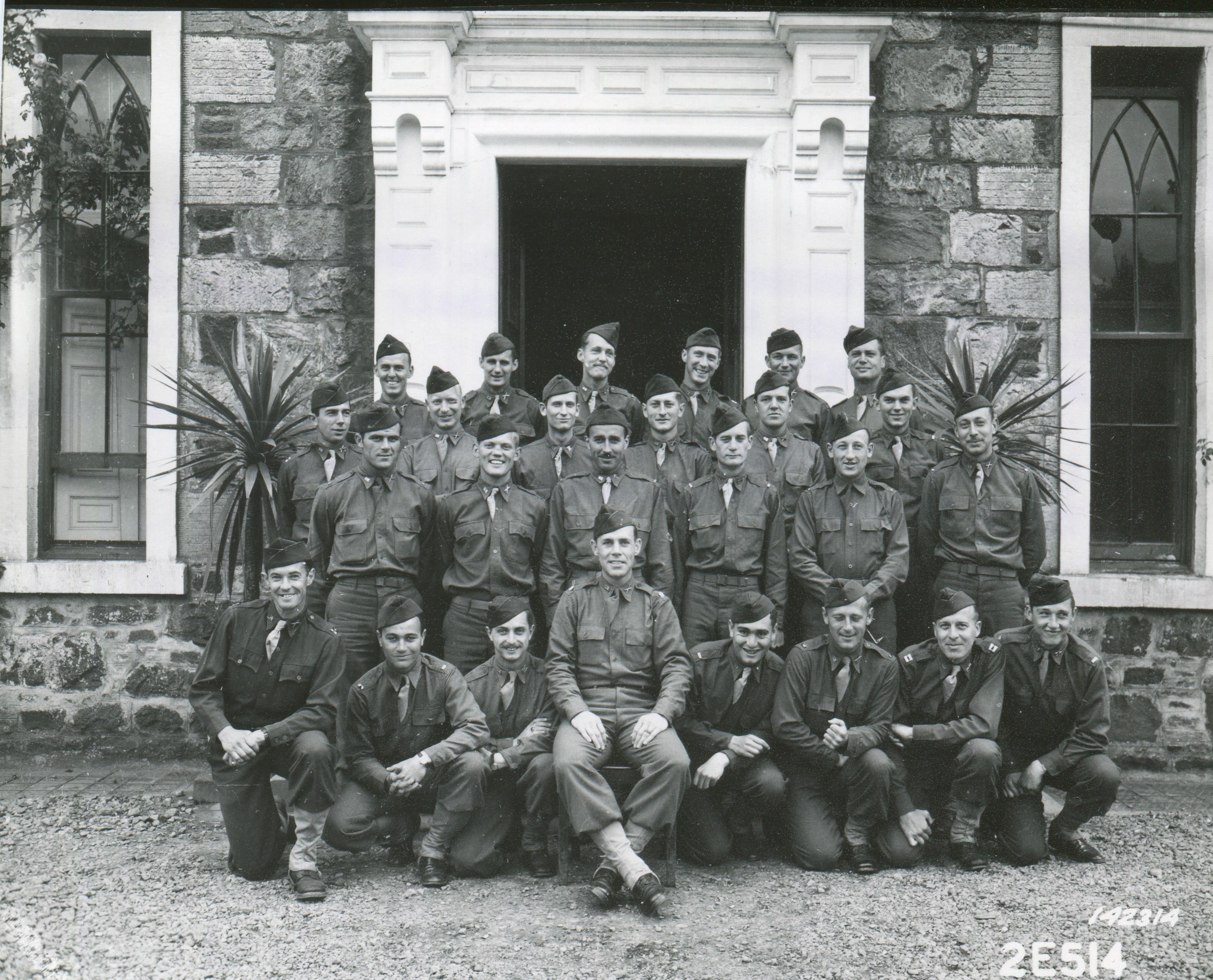
FORT BRAGG, N.C. – From Europe to North Africa to the Pacific, U.S. Army Rangers played a crucial role in many of World War II’s most pivotal moments, laying down roots for today’s 75th Ranger Regiment. At the onset of the war, the Army had no units capable of performing specialized commando missions. By the end of the war, the Army had fielded seven Ranger battalions, beginning with the activation of the 1st Ranger Battalion in Northern Ireland on June 19, 1942.
Major William O. Darby, an artillery officer, was hand-picked to recruit volunteers for the battalion, designed to replicate the capability of British commandos. The volunteers underwent a strenuous selection program to identify and train the best candidates. On Aug. 19, 1942, 50 of these specially selected soldiers participated in Operation Jubilee, a Canadian-led amphibious assault on the English Channel port of Dieppe, France. The Rangers helped destroy one of the enemy batteries, at the cost of three of their own. Following the raid, the 1st Ranger Battalion participated in the U.S.-led invasion of North Africa.
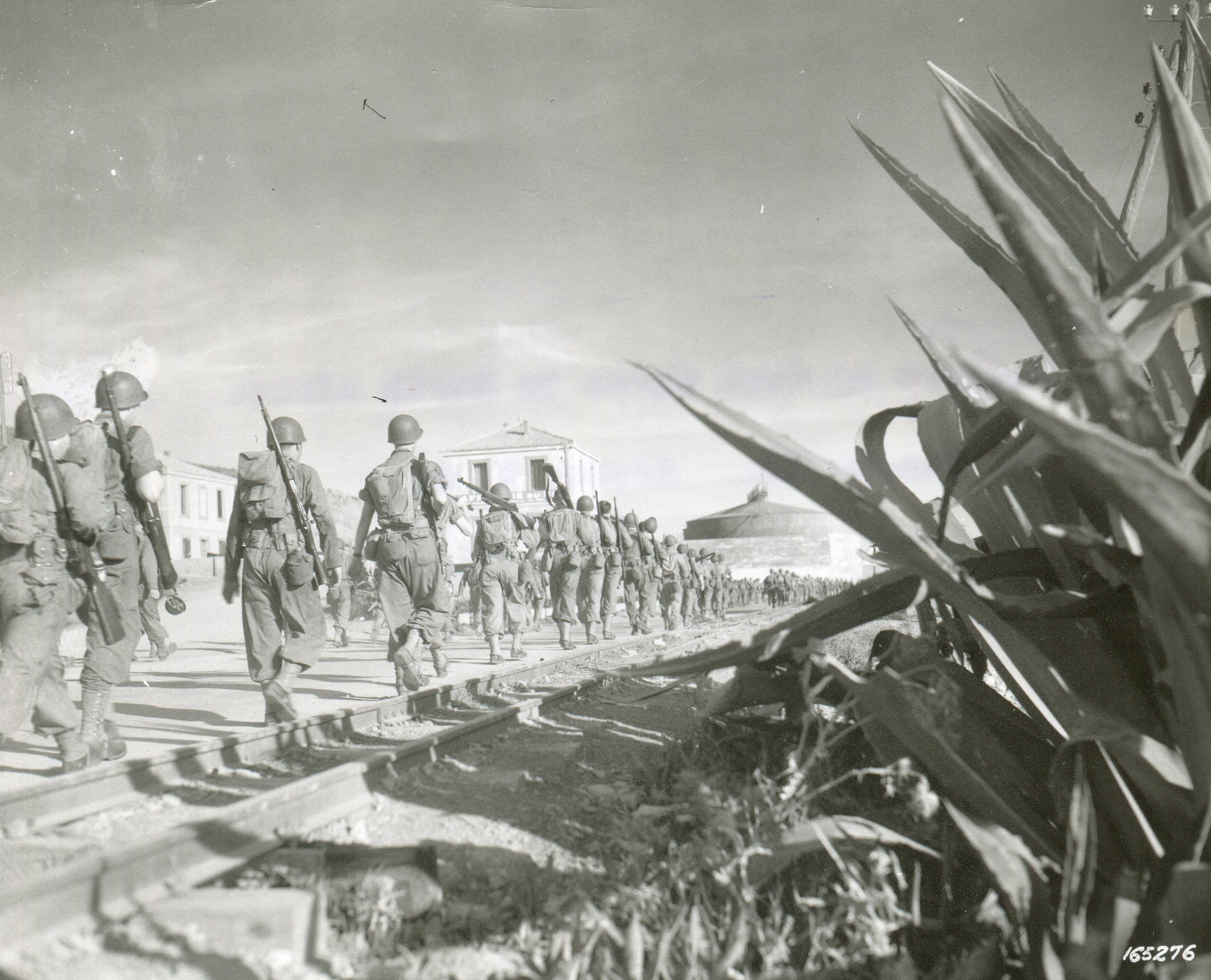
In the early morning hours of Nov. 8, 1942, Operation Torch commenced with attacks on the Algerian port in Arzew. As two Ranger companies led by Maj. Herman Dammer assaulted the port, three others led by Darby assaulted enemy cannons overlooking the harbor, capturing them within 15 minutes. Two Rangers died and eight were wounded during the action, but the Rangers’ success helped the Allies secure a foothold on the continent.
The 29th Ranger Battalion (Provisional) was formed on Dec. 20, 1942 in England. The volunteers came from the 29th Infantry Division. Attached to British commandos for additional training, several of the Rangers from the 29th participated in combat raids and reconnaissance missions into Norway before being disbanded on Oct. 15, 1943.
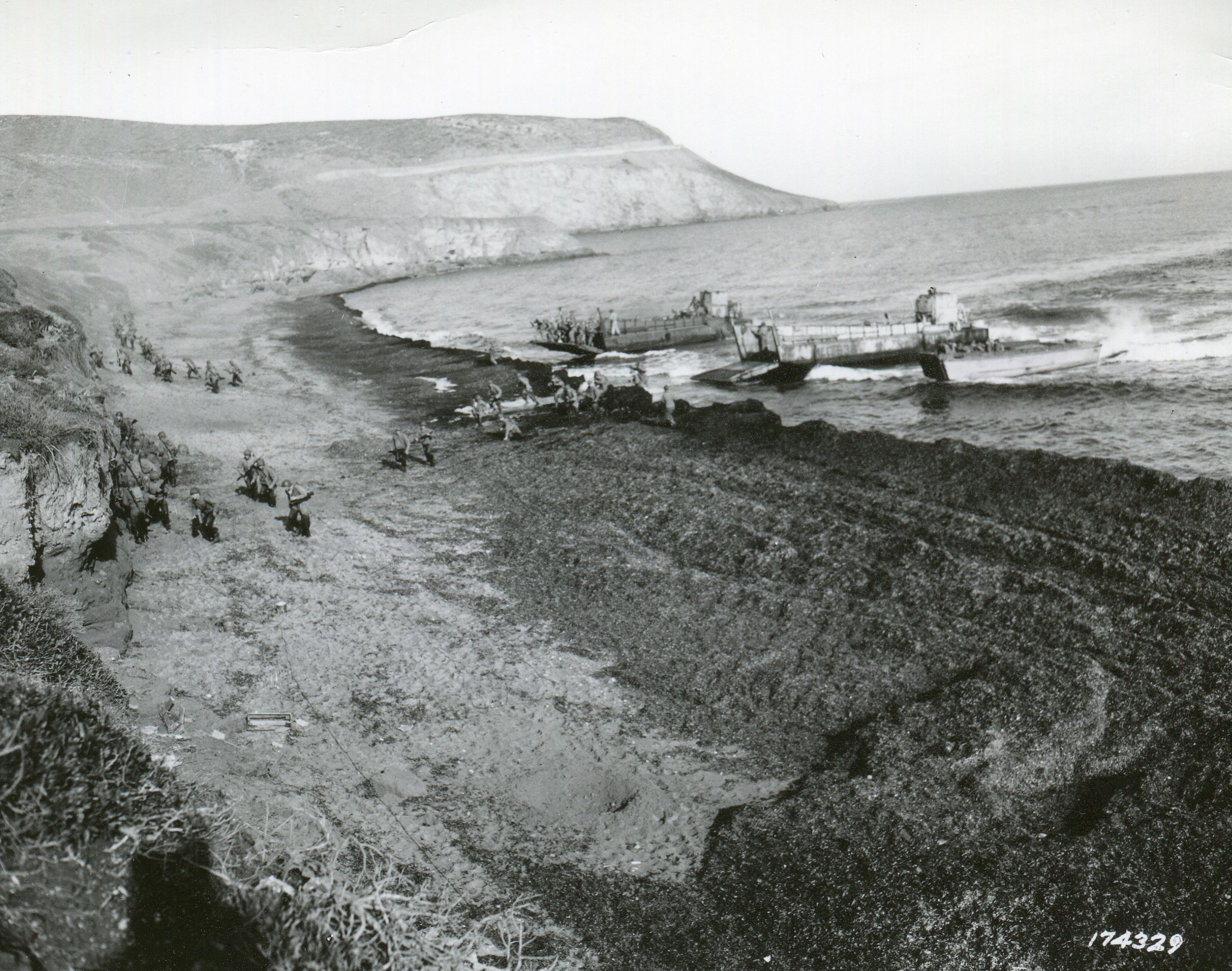
The 1st Ranger Battalion’s encouraging performance in Africa led the Army in 1943 to activate four more Ranger Battalions – the 2nd, 3rd, 4th, and 5th. Attached to the 1st Infantry Division of Lt. Gen. George S. Patton’s U.S. Seventh Army, Darby led a Ranger Force consisting of the 1st, 3rd, and 4th Ranger battalions that spearheaded Operation Husky, the American landings in Sicily on July 10, 1943.
With Sicily secured, the Rangers turned their attention to mainland Italy and Operation Avalanche. Before daylight on Sept. 9, 1943, the Ranger Force hit the beach west of Salerno on the far-left flank of the Allied landing. The 4th Battalion, led by Maj. Roy Murray, quickly secured the beach, and cleared the way for the 1st and 3rd battalions to move inland. The Rangers rapidly gained their objectives by midmorning of the first day. The Ranger Force later participated in the Anzio operation, where they conducted a daring but ill-fated raid into the Italian town of Cisterna on January 30, 1944.
The 2nd and 5th entered the war on June 6, 1944, on the beaches of Normandy, France, during Operation Overlord. Three companies of 2nd Battalion Rangers, led by Lt. Col. James E. Rudder, daringly scaled the cliffs of Pointe du Hoc, overlooking Omaha Beach, to destroy German gun emplacements targeting troops landing on the beachhead. Meanwhile, the remainder of 2nd Battalion and the entirety of 5th Ranger Battalion fought their way ashore Omaha Beach alongside the 1st and 29th Infantry Division. The D-Day missions earned the Rangers their motto, “Rangers, lead the way!” The 2nd and 5th Rangers fought in the Allied campaign in western Europe until the end of the war.
In the China-Burma-India Theater of Operations, another legendary Ranger lineage unit was organized on Oct. 3, 1943: the 5307th Composite Unit (Provisional). Better known as “Merrill’s Marauders” after its commander, Brig. Gen. Frank D. Merrill, the 5307th, a Long-Range Penetration Group, fought a grueling campaign in the mountainous jungles of Burma that lasted until mid-1944. Following the capture of Myitkyina, Burma, the remnants of the 5307th were consolidated with the 475th Infantry Regiment on Aug. 10, 1944. The 475th was part the second Long Range Penetration Group formed for service in Burma, the 5332nd Brigade (Provisional). Better known as the MARS Task Force, the 5332nd helped secure the last stretches of the Burma Road remaining in Japanese hands, before moving on to service in China.
In mid-1944, one more Ranger Battalion was activated, with the mission of supporting U.S. Sixth Army operations in the Southwest Pacific. Lieutenant Colonel Henry A. Mucci was selected to organize, train, and command the 6th Ranger Battalion, which was formed out of the 98th Field Artillery Battalion, the 6th Rangers played a prominent role in the recapture of the Philippines, starting with the amphibious assault on Leyte in October 1944. On neighboring Luzon, in January 1945, Company A, 6th Rangers, supported by the Sixth Army Special Reconnaissance Unit, also known as the “Alamo Scouts,” and Philippine guerrillas, executed its most famous action when it raided a Japanese Prisoner-of-War camp near Cabanatuan, Philippines. Against overwhelming odds, the operation freed more than five hundred Allied prisoners.
It’s for these and many other actions that the Ranger units of World War II would go on to earn multiple unit citations prior to being disbanded in 1945.Their legacy endured long beyond the war, with their courage and audacity setting the example for future generations of U.S. Army Rangers.
To learn more about the U.S. Army Rangers of World War II, go to arsof-history.org.
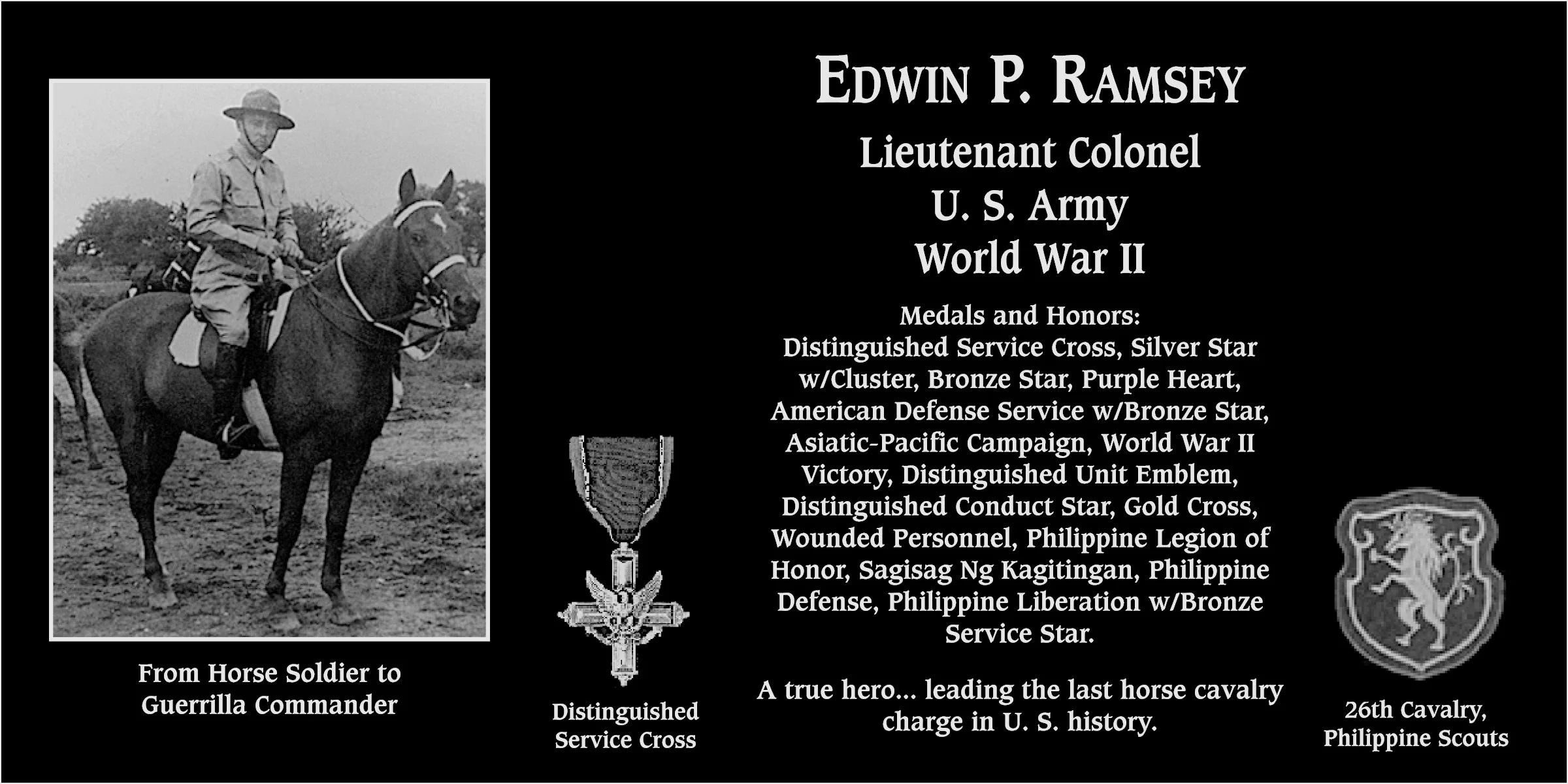 Ramsey quickly signaled his men to deploy into forager formation. Then he raised his pistol and shouted, “Charge!” With troops firing their pistols, the galloping cavalry horses smashed into the surprised enemy soldiers, routing them.
 High-tempo Special Operations training can cause brain injuries that accumulate unnoticed. One soldier says that is why he snapped and killed three people.




 10 / 10