Categories
Soldiering The Green Machine

7 unexpected downsides to deploying to a combat zone By Eric Milzarski

Afghanistan War photo

Deploying is just one of those things every troop knows will happen eventually. There are two ways troops look at this: Either they’re gung-ho about getting into what they’ve been training to do for years or they’re scared that they’ll have to do what they’ve been training years to do for years. No judgement either way, but it’s bound to happen.

The truth is, combat only makes up a fraction of a fraction of what troops do while deployed. There are some troops who take on an unequal share of that burden when compared to the next, but everyone shares some of the same downsides of deployment.

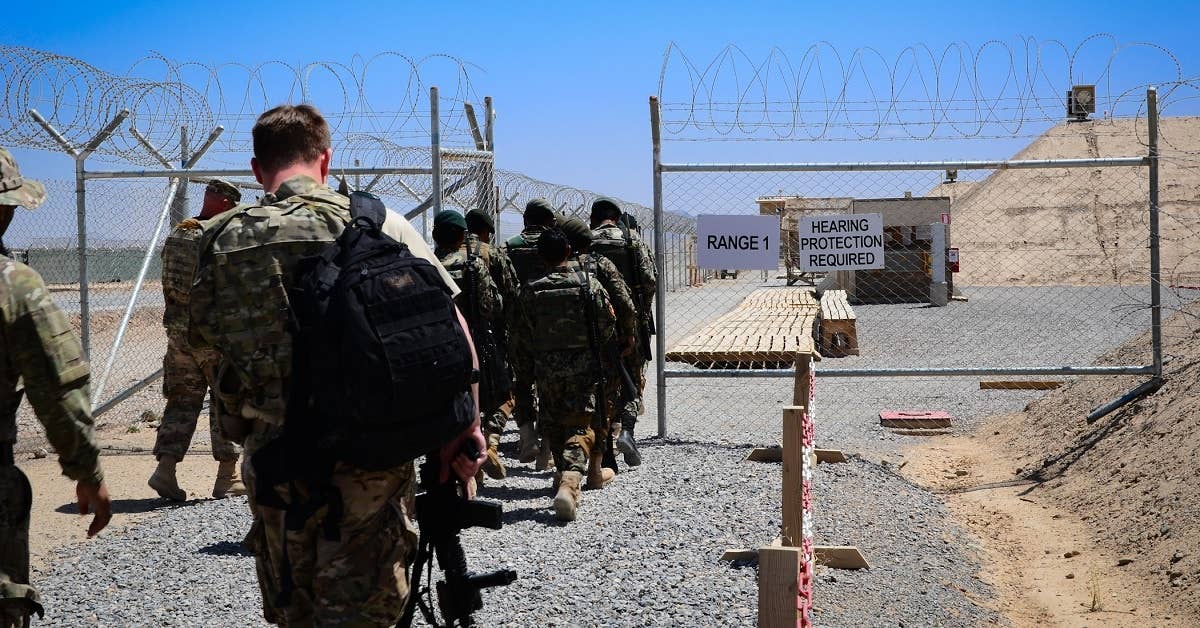
Today’s troops have it nicer than those that came before them and some units may inherently have an easier time of things. Still, everyone has to deal with the same smell of the “open air sanitation pits” that are lovingly called “sh*t ponds.”


Afghanistan War photo

Yep. And the VA is still debating whether this is unhealthy or not.

(Photo by Sgt. 1st Class Erick Studenicka)

Sanitation

Speaking of open pits of disposed human filth that are totally not going to cause health problems down the road, the rest of your deployment won’t be much cleaner.

Sand will get everywhere no matter how many times you sweep. Black mold will always creep into your living areas and cause everyone to go to sick call. That’s normal.

What’s not normal is the amount of lazy, disgusting Blue Falcons that decide that using Gatorade bottles as piss pots is more convenient than walking their ass to a proper latrine but get embarrassed by their disgusting lifestyle so they horde that sh*t under their bunk in some sick, twisted collection. True story.
Afghanistan War photo

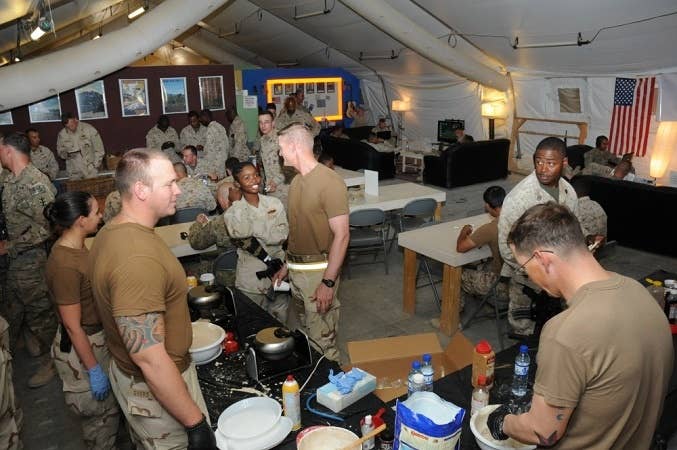
That is, if you can get to an uncrowded USO tent to actually talk to your folks back home.

(U.S. Navy photo by Petty Officer 1st Class Jonathan Carmichael)

OPSEC

Everyone knows they’re going to have to be away from their family, but no one really prepares you for the moments when you’re going to have to tell them you can’t talk a few days because something happened — “Comms Blackouts.” They’re totally normal and it freaks out everyone back home. it’s up to the troops to explain the situation without providing any info that would incur the wrath of the chain of command.

We’ve all heard the constant, nebulous threats. “The enemy is always listening!” “All it takes is one puzzle piece to lose the war!” Such concerns aren’t unfounded — and it leaves troops clammed up, essentially without anything interesting to talk about while deployed.
Afghanistan War photo

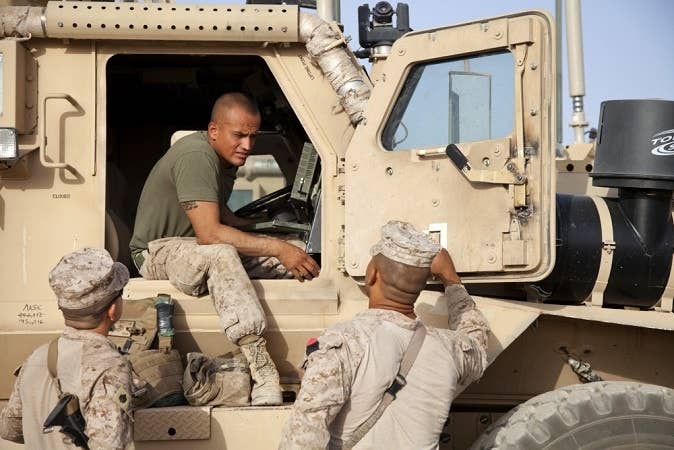
I’m just saying, we’re doing you a favor by not saluting you where there could be snipers…

(U.S. Marine Corps photo by Cpl. Alejandro Pena)

Other units’ officers

Every unit falls under the same overarching rules as set forth by the Uniform Code of Military Justice. So, if someone’s doing something that breaks said code, any troop can (and should) step in to defuse the situation. That being said, every unit functions on their own SOPs while downrange and there’s always going to be a smart-ass butterbar who raises hell about not being saluted in a combat zone.

Afghanistan War photo

Don’t worry, though. This guy will probably have a a “totally legitimate” copy of all the seasons of ‘Game of Thrones’ on DVD.

(Official Marine Corps Photo by Eric S. Wilterdink)

Everything you’re going to miss out on

Being deployed is kind of like being put in a time capsule when it comes to pop culture. Any movie or television show that you would normally be catching the night of the release is going to end up on a long checklist of things to catch up on later.

To make matters worse, troops today still have an internet connection — just not a very good one. So, if some big thing happened on that show you watch, it’s going to get spoiled eventually because people assume that, after a few weeks, it’s all fair game to discuss. Meanwhile, you’re still 36 weeks away from seeing it yourself.
Afghanistan War photo

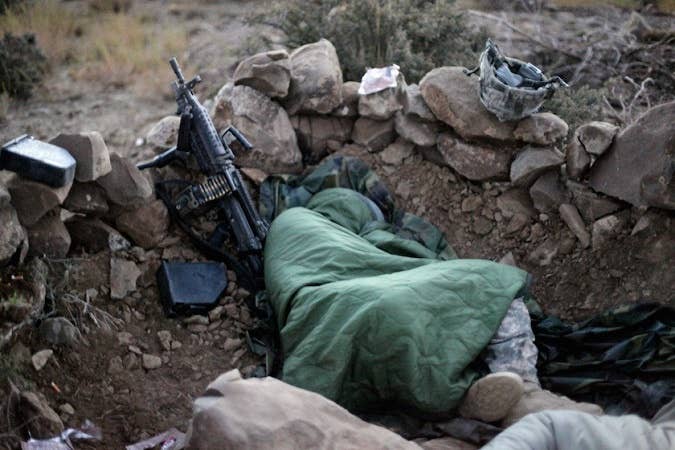
You’d think this isn’t comfy. But it is.

(U.S. Army)

Sleep (or lack thereof)

Some doctors say that seven to nine hours of sleep are required for the human body to function. You will soon laugh in the face of said doctors. You’ll be at your physical peak and do just fine on five hours of constantly interrupted sleep.

War is very loud and missions occur at all hours of the day. What this means is just as soon as you get tucked in for the night, you’re going to hear a chopper buzz your tent while a barely-working generator keeps turning over which is then drowned out by the sounds of artillery going off. Needless to say, when the eventual IDF siren goes off, you’ll legitimately debate whether you should get out of bed or sleep through it.
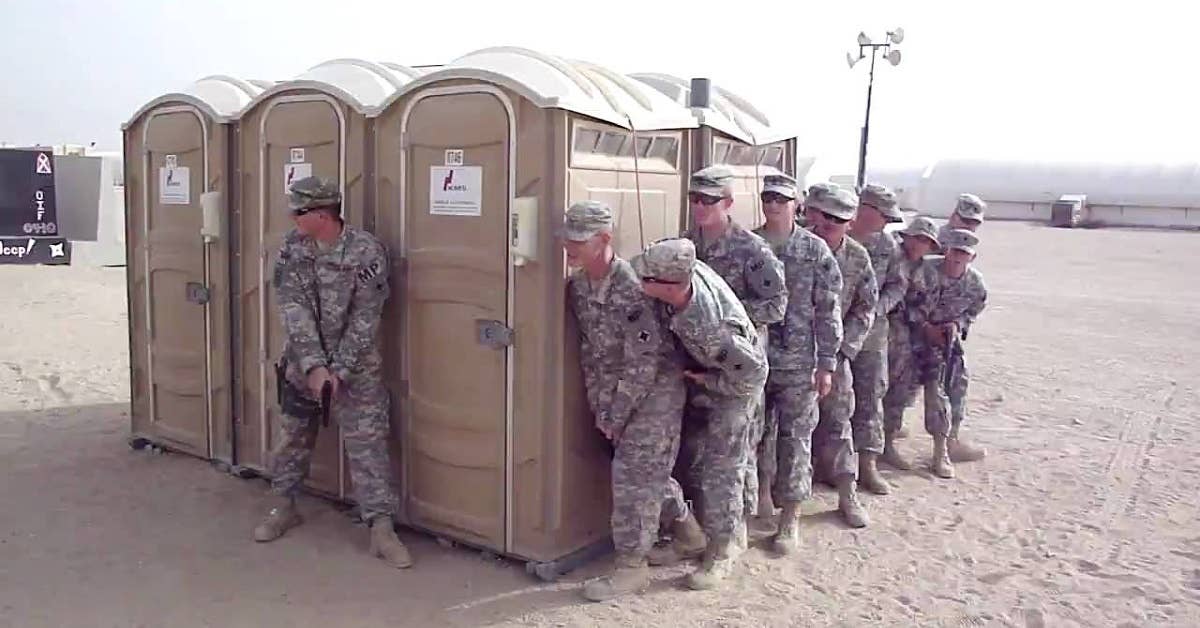
Afghanistan War photo

Ever wonder why so many troops make stupid films while in the sandbox? Because we’re bored out of our freakin’ minds!

Boredom

The fact that you’re actually working 12-hour days won’t bother you. The fact that you’re going to get an average of five hours of sleep won’t bother you. Those remaining seven hours of your day are what will drive you insane.

You could go to the gym and get to looking good for your eventual return stateside. You could pick up a hobby, like learning to play the guitar, but you’d only be kidding yourself. 75 percent of your time will be spent in the smoke pit (regardless if you smoke or not) and the other trying to watch whatever show is on at the DFAC.
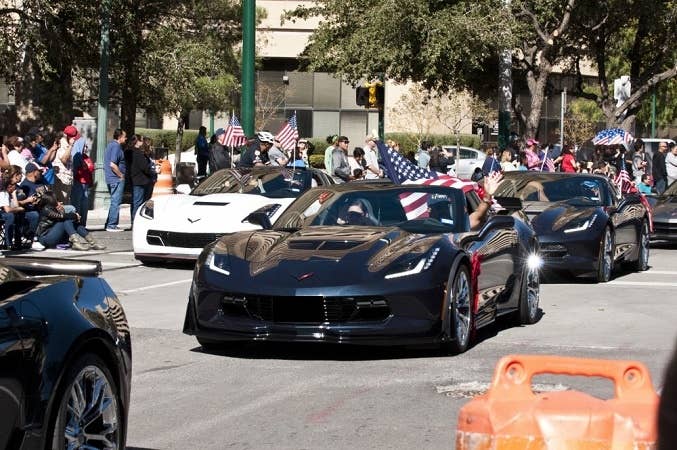
Afghanistan War photo

“Oh, look! It seems like everyone came back from deployment!”

(U.S. Army)

All that money (and nothing to spend it on)

Think of that episode of The Twilight Zone where the world’s end comes and that one dude just wants to read his books. He finally finds a library but — plot twist — he breaks his glasses and learns that life is unfair. That’s basically how it feels when troops finally get deployment money. It’ll be a lot more than usual, since combat pay and all those other incentives are awesome, but it’s not like you can really spend any of it while in Afghanistan.

If you’re married, that money you’re be making is going to be used to take care of your family. Single troops will just keep seeing their bank accounts rise until they blow it all in one weekend upon returning.

Categories
All About Guns The Green Machine

US Army Rifle and Carbine Adoption 1865-1900

Courtesy of reader Mike, we have today a copy of a Master’s thesis written by Major John Davis in 2007, as a part of a Staff College degree. The title of the paper is “U.S. Army Rifle and Carbine Adoption Between 1865 and 1900”, and the first two thirds of it comprise a pretty good history of the rifle adoption process at the time. It begins with the Allin conversions of the Springfield (colloquially called the Trapdoor Springfield), and goes through the adoption of the Krag rifles and carbines.

During that time there were several testing boards convened to investigate new rifle designs, including many with magazines. Davis’ thesis covers these series of tests well, and gives some insight into why the Trapdoor remained the official US rifle for so long. Several of the competing designs are pretty interesting guns in their own right, including the Winchester-Hotchkiss, Remington-Lee, Chaffee-Reese, and others.

The final third of the paper left me a bit flat, though. I expect the thesis was required to apply a historical study to a current day military issue, and Davis makes the argument that the rationale for maintaining the Springfield in the face of newer technology is parallel to the rationale for the modern Army not replacing the AR platform.

To this end he discusses the various replacement options like the XM-8 and HK 416, and cites a couple anecdotal cases of M4 carbines malfunctioning in battle (although apparently not arguing with the stated 5000 average rounds between failures for the weapon, which is extremely good).

Whether Davis effectively makes the argument for replacing the M4 I will leave up to you – but his coverage of the 1870 and 1880s trials is excellent, and well worth reading:

https://www.forgottenweapons.com/wp-content/uploads/2013/10/U.S.-Army-Rifle-and-Carbine-Adoption-1865-1900.pdf

Categories
Ammo Anti Civil Rights ideas & "Friends" The Green Machine

Army Ammunition Factory Tied to Mass Shootings Faces New Scrutin

Army Ammunition Factory Tied to Mass Shootings Faces New Scrutiny

An agreement between the Army and one of the nation’s largest ammunition manufacturers is receiving new scrutiny because of a little-known provision allowing a government facility to produce hundreds of millions of rounds for the retail market.

Over more than a decade, contracts between the Pentagon and a series of private companies have permitted an Army site, the Lake City Army Ammunition Plant, to become one of the world’s largest commercial suppliers of cartridges for AR-15-style guns.

Built during World War II near Kansas City, Mo., to supply the U.S. military, the plant has in recent years directed a majority of its production toward the commercial market, including sales to retailers, law enforcement agencies and foreign governments.

A New York Times investigation published this month traced rounds from Lake City to a dozen mass shootings and many other crimes across the country since 2012.

After the Times article, several members of Congress questioned the benefits of the Army’s arrangement with Olin Winchester, the current contractor, and demanded more information from the Army.

In a letter to the Army Secretary on Friday, Representative Robert Garcia, a Democrat from California, said that “federal subsidies may be artificially increasing the availability of ammunition in the civilian marketplace and contributing to serious violence by private citizens.”

The letter continued, “This raises serious questions about the role the Department of the Army has played in subsidizing the firearms industry and the level of oversight that the Department has exercised in supporting the plant’s operations.”

Mr. Garcia cited The Times’s reporting, as well as a subsequently published Bloomberg article about Lake City.

Another Democratic member of the House, Betty McCollum of Minnesota, also expressed concern about “the disturbing use” of Lake City ammunition in mass shootings.

“More questions need to be asked and answered about how this ammunition is being marketed to the American public,” she said in a statement. “I will be requesting a briefing from the Army on how the contracts are issued at this plant.”

While the Army has been public about the production of commercial ammunition at Lake City, it has obfuscated the scale, arguing that the information is confidential and can be released only by the contractor. That secrecy has prevented substantive public oversight of the contract.

The Army says that the arrangement, which requires contractors to maintain the ability to produce around 1.6 billion rounds of ammunition a year, is vital for national security and has saved taxpayers hundreds of millions of dollars. The Pentagon has invested more than $860 million in improving and maintaining the plant over the past two decades, The Times reported earlier.

The Times investigation found that Lake City rounds, which are typically stamped with the plant’s initials, “LC,” were used in massacres including at a movie theater in Aurora, Colo.; a church in Sutherland Springs, Texas; a high school in Parkland, Fla.; and an elementary school in Uvalde, Texas. They have also turned up in a variety of other criminal investigations, from robberies to the murder of police officers. Authorities have seized the rounds from drug dealers, biker gangs, violent felons and rioters at the U.S. Capitol.

Earlier this month Mr. Garcia, along with Senators Elizabeth Warren of Massachusetts and Richard Blumenthal of Connecticut and Representative Debbie Wasserman Schultz of Florida, introduced a bill aimed at putting more controls on ammunition sales — which are largely unregulated — by requiring sellers to obtain a federal license and to conduct background checks on buyers. It would also limit bulk sales of ammunition and prevent so-called straw purchases, in which a buyer with a clean record turns around and sells to someone else.

In a statement, Ms. Warren criticized the Lake City contract and called for “meaningful oversight” by Congress.

“It’s unconscionable for the U.S. government to be in the business of making military-grade ammunition to sell to civilians,” she said.

The revelations have also drawn outrage from gun control advocates and families of shooting victims.

Fred Guttenberg, the father of a high school student killed in Parkland, Fla., wrote on social media, “To learn Lake City Rounds like this were possibly used to kill my daughter & the sale may have been subsidized by the US Govt is hard to comprehend.”

The post Army Ammunition Factory Tied to Mass Shootings Faces New Scrutiny appeared first on New York Times.

Categories
All About Guns The Green Machine

I get the feeling that you could REALLY reach out & touch somebody with that!!

Categories
Hard Nosed Folks Both Good & Bad Leadership of the highest kind Our Great Kids Soldiering Stand & Deliver The Green Machine This great Nation & Its People War

Happy Birthday, General George S. Patton, C.O. 3rd US Army ETO


Categories
All About Guns The Green Machine War

From the Vault: Winchester-Built M1917 Enfield Rifle

Categories
The Green Machine

Some pretty impressive Stomp & Troop there!

Categories
The Green Machine This great Nation & Its People War

Top 5 US WW1 Sites

Categories
Allies The Green Machine

I of course am completely unbiased on this subject (Hysterical laughter in the background to be ignored)

       & another bigger, better Outfit


Categories
The Green Machine This great Nation & Its People

A Triumph of Tragedy: The Life of Charles Young