Categories
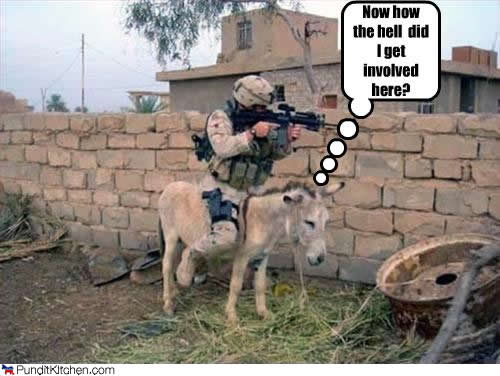
Born again Cynic! The Green Machine War Well I thought it was funny!

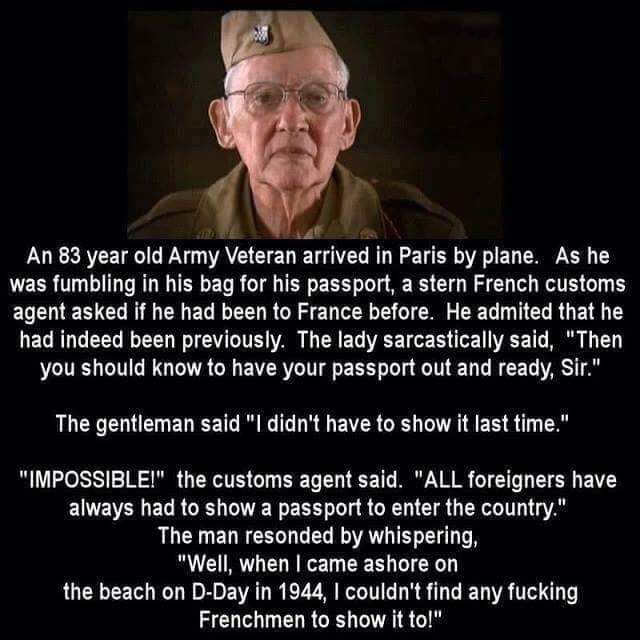
French Passport!

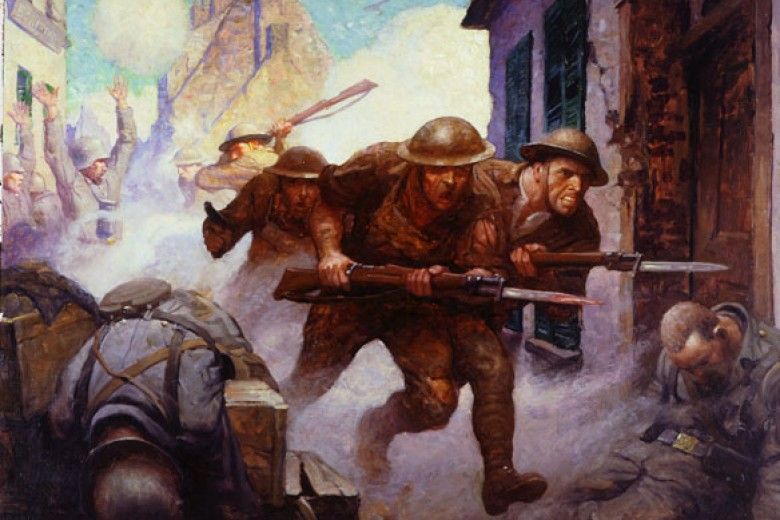
Related image

Categories
The Green Machine War

THE BATTLE FOR BELLEAU WOOD (1918) One Hundred Years ago today!

Image result for battle of chateau thierry
The Battle of Château-Thierry was fought on July 18, 1918 and was one of the first actions of the American Expeditionary Forces (AEF) under General John J. “Black Jack” Pershing.
Scott Belleau Wood.jpg
It was a battle in World War I as part of the Second Battle of the Marne, initially prompted by a German offensive launched on 15 July against the AEF, an expeditionary force consisting of troops from both the Army and Marine Corps, and the newest troops on the front.Related image
On the morning of 18 July 1918, the French (some of them colonial)   and American forces between Fontenoy and Château-Thierry launched a counter-assault under the overall direction of Allied généralissime Ferdinand Foch against the German positions.
This assault on a 40 km (25 mi) wide front was the first in over a year. The American army played a role fighting for the regions around Soissons and Château-Thierry, in collaboration with predominantly French forces.
The allied forces had managed to keep their plans a secret, and their attack at 04:45 took the Germans by surprise when the troops went “Over the Top” without a preparatory artillery bombardment, but instead followed closely behind a rolling barrage which began with great synchronized precision.
Eventually, the two opposing assaults (lines) inter-penetrated and individual American units exercised initiative and continued fighting despite being nominally behind enemy lines.[2]

Background

Despite the revolution in Russia, fortune seemed to favor the Allies with the arrival of the Americans to France. However, these troops needed time to train before they could be combat effective.
Recognizing the window of opportunity, Ludendorff consolidated the manpower freed up from the Eastern Front to conduct Operation Michael in order to split the Allies’ lines. The successes of the German Stormtroopers infiltration tactics earned Germany approximately 40 miles of territory. But the offensive lost momentum when it surpassed its supply lines.
Up to this point, American General Pershing refused to hand over American divisions to either the British or French armies, insisting on keeping them together as one army. But in the face of the German onslaught, Pershing relented and sent a portion of his army to assist the French in blocking the German advance.[3]:7–10

Prelude[edit]

Looking to defeat the British occupied in Flanders, Ludendorff sought to divert the Allies’ French reserves away from the region. In his Operation Blucher, Ludendorff aimed some of his forces at the Chemin des Dames and took the French Sixth Army by surprise.
Driving on, the Germans were soon at the Marne River, situated under 50 miles from Paris. With Marshal Ferdinand Foch unable to acquire British assistance, General Pershing’s chief of operation, Colonel Fox Conner, recognized the gravity of the situation and ordered the 3rd Division to block them.[3]:39–41[4]

Battle

The 3rd Division occupied the main bridge on the south bank of the Marne that led in Chateau Thierry on May 31 as the French 10th Colonial Division rendezvoused with them from the north bank. The Americans positioned their machine guns to cover the French retreat, and had a unit led by Lt John Bissell situated north of the second bridge. The French spent the night adding explosives to the bridges to destroy them. Early the following morning, on June 1, the Germans advanced into Chateau Thierry from the north, forcing the French to the main bridge, which they defended with the support of American machine-gun fire. The French succeeded in destroying the bridge as the Americans kept up their fire on the Germans. Lt. Bissell’s group was still on the north side of the Marne. They worked their way back to the secondary bridge in-between American machine-gun fire and made it across, along with a group of Germans that were captured shortly afterwards. From the north of the Marne on June 2, the Germans engaged in heavy artillery and sniper fire against the Allies. They made an attempt to take the remaining bridge but were forced to end the assault as the casualties rose.[3]:41–42

Memorials[edit]

After World War I, a memorial was built on Hill 204, 2 miles (3 km.) west of the town for which it is named. The Château-Thierry Monument, designed by Paul P. Cret of Philadelphia, was constructed by the American Battle Monuments Commission “to commemorate the sacrifices and achievements of American and French fighting men in the region, and the friendship and cooperation of French and American forces during World War I.”[5]
There is also a monument in front of the Bronx County Courthouse in New York City that was presented by the American Legion on November 11, 1940. The monument consists of the “Keystone from an arch of the old bridge at Chateau Thierry,” which the monument notes was “Gloriously and successfully defended by American troops.”[6]
The first Filipino to die in World War I was Private Tomas Mateo Claudio who served with the U.S. Army as part of the American Expeditionary Forces to Europe. He died in the Battle of Chateau Thierry in France on June 29, 1918.[7][8] The Tomas Claudio Memorial College in Morong Rizal, Philippines, which was founded in 1950, was named in his honor.[9]

References[edit]

  1. Jump up^ http://www.kumc.edu/wwi/index-of-essays/american-military-operations-and-casualties.html
  2. Jump up^ Edwin L. James (1918). “A Description of the Battle of Chateau-Thierry”. New York Times Current History. New York Times. Archived from the original on 6 June 2009. Retrieved 2009-06-22.
  3. ^ Jump up to:a b c David Bonk (2007). Chateau Thierry and Belleau Wood 1918: America’s baptism of fire on the Marne. Great Britain: Osprey Publishing. ISBN 978-1-84603-034-5. Retrieved 31 October 2016.
  4. Jump up^ Eisenhower, John S.D. (2001). Yanks: The Epic Story of the American Army in World War I. New York: The Free Press. pp. 136–137. ISBN 0-684-86304-9.
  5. Jump up^ “Aisne-Marne American Cemetery and Memorial” (PDF). American Battle Monuments Commission, U.S. Government. Archived from the original (PDF) on 2009-07-04. Retrieved 2009-06-22.
  6. Jump up^ “An overlooked memorial”. Matt at I’m Just Walkin’. Retrieved 2014-11-15.
  7. Jump up^ Zena Sultana-Babao, America’s Thanksgiving and the Philippines’ National Heroes Day: Two Holidays Rooted in History and Tradition, Asian Journal, retrieved 2008-01-12
  8. Jump up^ Source: Philippine Military Academy
  9. Jump up^ “Schools, colleges and Universities: Tomas Claudio Memorial College”. Manila Bulletin Online. Archived from the original on 2007-07-07. Retrieved 2007-07-04.
    – “Tomas Claudio Memorial College”. www.tcmc.edu.ph. Retrieved 2007-07-04.

The Story of the American Expeditionary Forces


CHATEAU – THIERRY

U.S. Marine Corps

THE    BATTLE

FOR
BELLEAU  WOOD


At Belleau Wood


| Quick Facts | Background  | Chronology |
| A First Hand Account |

Quick Facts

Where:    The Aisne-Marne Sector, 5 miles immediately northwest of the town of Chateau-Thierry on the River Marne.
Check the Location on a Map of the Western Front
When:    June 1 – 26, 1918
AEF Units Participating:   Under command of the XXI Corps of the Sixth French Army – Second Division: 4th [Marine] Brigade, 2nd Engineers; Third Division: Elements of 7th Infantry Regiment
Click Here To See the disposition of 2nd Forces around Belleau Wood.
Opposing Forces:    From German Army Group Crown Prince – In Belleau Wood – the 461st Regiment of the German 237th Division; At Bouresches – elements of the 10th Division; Later reinforcements included elements of the 197th, 87th and 28th German Divisions.
Memorable As:      The first battle where the AEF experienced the heavy casualties associated with the Great War; the embodiment of U.S. Marine Corps determination and dedication; and a signal to both allies and adversaries that America was on the Western Front to fight.

Background

The Hunting Lodge within Belleau Wood
Note the Temporary US Graves

Explaining the Battle for Belleau Wood is a doubly difficult challenge. The three-week long action was simply a confused mess tactically. None of the participants ever quite knew where they, the front line or the enemy were inside that mile-square dark forest. This has made it almost impossible to create an hour-by-hour account of what transpired during the action.
Also, for eighty years, Belleau Wood has been the source of a number of disputes and controversies. Some writers, like Historian/Novelist Thomas Fleming, feel the battle should have never been fought, that American commanders should have seen the predictable outcome given the bloody results of similar assaults against other densely wooded patches on the Somme and in the Ypres Salient. Thus, the American generals should have resisted French orders to mount the attack. When the fight was still being waged, Army regulars began resenting the way the Marine Corps circumvented AEF news management to get their story told while the contributions of army units at Chateau-Thierry were unreported. Thus, military historians have put the tactics and methods applied at Belleau Wood under a very strong microscope. But also, there is considerable criticism laid at the feet of 4th Brigade Commander James Harbord, a Pershing favorite from the Army, for his lack of appreciation for the need to apply concentrated artillery fire to the task of clearing the wood and his piecemeal tactics.
The Editors of the Doughboy Center cannot resolve any of these issues. But, we want to give the readers an appreciation of what transpired at Belleau Wood during those grim days and we also want to make sure the contributions of all the participants are respected. We will try to do this by giving a day-by-day chronology of the major events of the battle and also share excerpts from the first hand account of one of its best known participants. Also, in our standard Sources and Thanks sections, we will list some of the best resources on Belleau Wood including some internet links.

Chronology: Belleau Wood, Day-by-Day

1 June 1918
2nd Division troops dig in along a defensive line just north of the village of Lucy-le-Bocage. Marine Captain Lloyd Williams when advised to withdraw, replies, “Retreat, Hell! We just got here!” Capt. Williams would not survive the ensuing battle.
The line was centered on Lucy-le-Bocage. Although the initial disposition of troops was haphazard at first due the emergency, the front settled eventually with the 5th Marines to the west and the 6th Marines to the east. Most of the units deployed without machineguns in support. At Les Mares Farm, members of 2nd Bn, 5th Marines began to show the Germans the effects of long distance marksmanship.
2 June 1918
Vanguard of the German advance reaches Belleau Wood.
3 June 1918
Units of German 237th Division occupy Belleau Wood.
4 June 1918
Determined German assault against American line turned back. .There as significant failure in coordination between 2dn Bn, 5th Marines around Les Mares Farm and 1st Bn, 5th Marine, on the right of 2/5’s position near Champillon. The German attack failed to take advantage of this gap between the units and attacked directly against the farm. By this time, the divisional artillery brigade and machinegun battalions had arrived. Many Marines, however, were feeling hungry because their kitchens were still stuck on the road trying to catchup. The failure of the attack on 4 June at the farm is generally acknowledged a the high water mark of the German offensive. It is the closest the Germans got to Paris, about 50 miles away. Future Commandant, Lt. Lemuel Shepard distinguished himself as the 55th Company defended the farm itself.
5 June 1918
French XXI Corps commander orders the 2nd Division to recapture of Belleau Wood indicating the enemy only holds a corner of the Wood. The main assault falls to the unit in that sector, the 4th [Marine] Brigade of the 2nd Division. Actually, the German Army had taken the entire wood and turned it into a bastion. No reconnaissance is made to confirm the position of the opposition.
6 June 1918
Arguably, this was the most catastrophic day in Marine Corps history to this date. Two assaults take place. At 0500, the 1st Battalion, 5th Marine Regiment attacks west of Belleau Wood straightening the front and capturing strategic Hill 142 to support an assault on the wooded area. The attack was successful despite the lack of preparation and poor timing. It went off with only 2 companies and timely arrival of the other two avoided a defeat. Gunnery Sgt E. A. Janson’s was awarded a Medal of Honor for his service in this assault. A member of Capt. Hamilton’s 49th Co., he was responsible for effectively stopping a German counterattack.
Twelve hours later battalions of the 5th and 6th Marine Regiments frontally assault the woods from the south and west and attempt to capture Bouresches on the east edge of the woods. This afternoon attack was to be coordinated between the 3rd Batt, 5th Marines [3/5] and 3rd Batt, 6th Marines [3/6] with the latter eventually taking the village of Bouresches.
The attack against the woods proper goes grimly. Crossing a wheat field where they are exposed to machine gun fire. Gunnery Sgt Dan Daly asks his men, “Come on ya sons-of-bitches, ya want to live forever?’ The attack is only able to seize a small corner of the wood. The army 2nd Engineer Regiment is called on to provide reinforcements.
The poorly coordinated attack on the woods left the 3/5 decimated and the 3/6 struggling to get into the southern edge of the woods. The Brigade order was amended and the 2/6 (in reserve around Triangle Farm) was directed to take Bouresches. Capt Duncan’s 96th Company led the way with future Corps Commandant Lt. Clifton Cates. Lead elements of the company got into the village and were then reinforced by Capt Zane’s 79th Company. The retention of the village was a real struggle due to the fact that the Marine flanks were wide-open fields and any attempt to reinforce received heavy German fire. Personal bravery kept the Marines supplied with needed supplies. US Navy Dental Service Officer Lt. JG. Weedon Osborne’s received the Medal of Honor after being killed trying to save Capt Duncan. Today there is street in Bouresches named for him.
In addition to the village, the Brigade was directed to take the railroad station just outside. However, it was heavily manned and protected by a railroad embankment providing the Germans excellent fields of fire and the attack failed. On this day, the Marine Brigade suffered the worst single day’s casualties in USMC history with 1087 men killed or wounded.
7 June 1918
Mostly a quiet day as US forces prepare to renew the offensive and the German units bring in relief.
8 June 1918
A renewed American assault fails to gain ground.
9 June 1918
Orders are issued for an attack the next morning. Late in the evening the assault units move into position.
10 June 1918
New attacks at 4:30 am with first use of heavy artillery. Units deep in the woods are ordered to withdraw to the south edge of the trees to avoid the shelling.
11 June 1918
The assault following the bombardment succeeds in capturing two-thirds of Belleau Wood, but again with heavy casualties. A battalion commander, Lt. Col. Frederick Wise erroneously reports his men were in control of the woods, but has misread his maps and position. Brigade Commander James Harbord requests relief for his men reporting their near physical exhaustion. Another Navy medical officer Lt Orlando Petty received the Medal of Honor for his service this day.
12 June 1918
Brigade command holds a council of war and conclude the German hold on the northern third of the wood is tenuous. An attack at 6 pm achieves a breakthrough, but they are now exposed.
13 June 1918
Marines plug the line in their exposed area. German counterattack begins supported by the artillery from three divisions and almost recaptures Bouresches. Heavy gas casualties. A planned relief of 2/5 goes for naught as 2/6 is caught in the open by a artillery barrage with gas. Gunnery Sgt F. Stockham is nominated for the Medal of Honor for putting his gas mask on a wounded Marine while continuing to assist others. Stockham died a few days later from the effects of the gas, but his medal was not awarded until 1939 following a unit reunion at which it was discovered that the recommendation from the then Lt. Clifton Cates was never acted on.
14 June 1918
Continued German counterattack fails. The 23rd Infantry extends its line to the edge of Bouresches freeing up Marines for the woods.
15 June 1918
Heavy bombardment from Germans.

Marines from Belleau Being Relieved June 16th

16 June 1918
Relief of Marine Units by 3rd Division’s 7th Infantry.
17 June 1918
Three battalions of the 7th Infantry deploy in the woods under 5th Marines commander Colonel Wendell Neville.
18 June 1918
Series attacks and maneuvers by 7th Infantry begin, All fail with Army officers complaining about tactics ordered of them.
19 June 1918
Continuous operations by 7th Infantry.
20 June 1918
French III Corps assumes direction of the sector.
21 June 1918
The last battalion-scale attack by Army units fail leaving the woods open. 7th Infantry deployments hit with heavy bombardment and machine gun fire.
22 June 1918
Marine units back in line replacing 7th Infantry relief forces. French commanders reiterate demands that the woods be seized.
23 June 1918
3rd Battalion of 5th Regiment begins final assault with minimal gains and terrible losses. Two hundred ambulances are needed to evacuate the wounded.
24 June 1918
French command commits sufficient artillery to reduce the woods. The guns are brought in to prepare for a renewed assault.
25 June 1918
Major 14-hour bombardment starting at 0300 makes clearance of the remaining woods possible. The following attack swamps the remaining machine gun outposts of the enemy. Marines and Army machine-gunners participate in the assault.
26 June 1918
After beating off some early morning counterattacks, Major Maurice Shearer sends signal, “Woods now entirely — US Marine Corps.”

The Battle for Belleau Wood –
A First Hand Account

From Colonel Frederick May Wise’s description of Bois de Belleau. Newly promoted Lt. Col. Wise was the commander of the 2nd Battalion of the 5th Marines at Belleau Wood. His incorrect report that the woods were occupied on June 11th was a serious error. He was, however, a fine combat reporter. Excerpts from his account of the battle are included here to give the reader a sense of the experience of the Battle for Belleau Wood. Wise’s remarks have been considerably abridged and the action line is somewhat disjointed in what follows.

Fifth Marine Mascot Jimmy the Anteater
with a Leatherneck Pal in Calmer Times

Just past noon, a runner came up the road with orders from Colonel Neville. We were to proceed to the northeast edge of the woods, which were northwest of Lucy-le-Bocage, and await orders.
By two o’clock that afternoon we were under way, going across open fields. High in the air I saw several German sausages (observation balloons). I knew those woods were going to catch hell shortly. In about an hour we were newly established on their edge. This time I had the men scatter well among the trees. I warned them especially against bunching up. We settled down again to wait for orders.
Along toward ten o’clock that night the German shelling started. They gave those woods hell. The Germans were pouring everything they had into that ridge. It didn’t take any urging for the Marines to get into fox holes the minute they knew we were going to hold it. But though the Germans didn’t launch any infantry attack, they kept up a continuous shelling with all the artillery in range, and poured an unceasing stream of machine-gun and rifle fire against that ridge. Everywhere up and down the line, masses of earth, chunks of rock, splinters of trees, leaped into the air as the shells exploded. Machine-gun and rifle bullets thudded into the earth unendingly. That place was getting warm.
Clinging to the crest of that ridge, we found the German shells bad enough. But there was worse to come. They had trench mortars in the Bois de Belleau, and presently they began to cut loose on us with them. Those aerial torpedoes, nearly four feet long, packed with T.N.T., would come sailing through the air and land on the ridge. That whole ridge literally shook every time one of them exploded.
All that day the bombardment kept up. It was the most terrific fire I had ever experienced. At night it slackened somewhat, only to resume next morning. It kept up all next day. Some gas shells fell, too, but the gas wasn’t bad enough to make us put on our masks. Why the Germans didn’t attack and break through that line of ours I never will be able to understand. All that second day we took the shelling in our faces and held the line. That night, thank God, it slackened again.
From where we sat we could see the ground where the attack was to be formed, and they’d have plenty of time to explain to the junior officers and men exactly what was to be done. The whole thing depended on getting across the Lucy-Torcy road before daybreak and making a rapid advance to the northern edge of the woods. The First Battalion was to relieve us at midnight. I had seen Major Turrill about it personally, so that the relief would be made rapidly and without noise.
Late that afternoon . . . I also went over and saw Major John A. Hughes, commanding the First Battalion of the Sixth Marines, who had made the last attack on the southern edge of Bois de Belleau and was still holding it. Major Hughes confirmed my idea that it was almost an impossible task to take that position by frontal attack. He told me a lot, too, about what the German defenses were. In that clump of woods covering a knoll a mile long and a half mile wide, rising sharply from the fields that surrounded it, was an outcrop of huge boulders cut with gullies and ravines, and with underbrush so thick in it that men could pass a few feet from each other, unseen. In that tangle were machine-guns camouflaged behind brush heaps and woodpiles, back of boulders and in shell proof pits under boulders. Snipers on the ground and in the tree tops. Picked German veterans who were fighting desperately.
I went back to the ridge after my talk with him, thankful that I had a free hand and could hit them from the rear instead of having to make a frontal attack.” “Night came on. I sat there under the trees, going over all the details in my mind, waiting for four A.M. to come.
Through the dark a runner showed up, asking for me. “A message, sir,” he said, when I called to him. I looked at my wrist watch. Midnight. Four hours more to wait. I unfolded the message he handed me, crouched down, and turned the light of my electric torch on the paper. I read those typewritten lines. I couldn’t believe my eyes. It was an attack order.
My battalion was ordered to attack the Bois de Belleau FROM THE SOUTHERN EDGE at four o’clock that morning, behind a rolling barrage. It was signed “Harbord.” I was dumfounded. All my plans were up in the air. I knew that piece of paper I held in my hand meant the needless death of most of my battalion. “The plans have been changed,” I [had to tell my subordinates].
[Later] I stood there under some trees by a ditch on the southern edge of the Bois de Belleau, and in the growing light watched my battalion march into position. It was getting lighter every minute. Suddenly the barrage dropped, several hundred yards in front of our lines. . . Amid the explosions of the bursting shells we could hear the German machine guns in the woods come to life. They couldn’t see us yet, but they knew from the barrage that the attack was coming.”
“The barrage lifted and crawled ahead. The whistles of our platoon leaders sounded up and down the line. The battalion rose to its feet. Bayonets fixed, rifles at the ready, the men started their slow advance.
I stood there watching them go forward. The Germans could see us now. They had the range. Here and there men were dropping. But the line went steadily on. The Germans couldn’t have had better targets if they had ordered the attack themselves. The barrage kept crawling on. About two hundred and fifty yards behind it the battalion went on, men dropping, men dropping, men dropping. Yard by yard they advanced. Minutes after, I saw them disappear into the woods. Those woods seemed to have swallowed up the barrage without an effort. Now they swallowed up the battalion.
As the Marines vanished into the undergrowth beneath the trees, the German machine-gun fire slackened. The detonations of the barrage had ceased. Across those fields from the woods I could distinguish machine-gun fire, rifle fire. A sudden ripping burst of machine-gun fire would break out. That meant the Marines were advancing on a nest. It would die down. That meant the nest was taken. Back across that open field wounded men began crawling to the rear. There was a dressing station at Lucy, about a mile away.
Marine Memorial at Belleau Wood Glade – Detail
Company runners began to come back out of the woods with reports. Messages hastily scrawled in pencil. This objective attained. That objective attained. Heavy casualties. Prisoners commenced to come back. Convoys of twenty, thirty, fifty Germans, herded along by some single Marine – generally a wounded one at that.
From time to time company runners kept coming out of the woods with reports of objectives gained and held, about mid-afternoon I figured it was time for me to go and take a look-see. I left Legendre at the P.C., took Coutra with me, and went over to the edge of the woods. There were paths I could follow through the undergrowth.
Just inside the edge of the woods I came upon one of those German machine-guns camouflaged behind a brush pile. Dead Marines lay in front of it. Dead Germans lay about it. A strange silence held in the woods. The youngster in command told me of the terrific fighting they’d had. Foot by foot they had pushed their way through the underbrush in the face of a continuous machine-gun and rifle fire. Snipers had shot them from brush piles on the ground; from perches high in the trees. Germans they had left sprawled on the ground for dead as they went on, had risen and shot them in the back.
I went on down the line. Lieutenant Cook was unwounded, but he had lost several of his juniors and a lot of his men. . . “Whenever we took a machine-gun nest,” he said, “another one opened up on their flank. That happened many times. The second one would never fire a shot until we had taken the first. Then they opened up on us.” His outfit, too, were in fox holes and waiting for the expected German counterattack. . .Captain Dunbeck told me how Lieutenant Heiser had died. Leading an attack on a German machine-gun nest, Heiser had been literally decapitated. His head had been cut clean from his body by a stream of machine-gun bullets that caught him in the throat.
Capt. Wass told me of. . . the difficulties they had in orienting themselves in that heavy underbrush. There were no landmarks, once you got into those woods. If you turned around twice you lost all sense of direction and only your compass could straighten you out. “The German machine-gunners are braver than the infantry,” Wass said. “But when you once get within bayonet reach of any of them, they’re eager enough to surrender.”
Nothing in all our training had foreseen fighting like this. If there was any strategy in it, it was the strategy of the Red Indian. The only thing that drove those Marines through those woods in the face of such resistance as they met was their individual, elemental guts, plus the hardening of the training through which they had gone. I passed nest after nest of German machine-guns. Out in front of every gun lay Marines where they had fallen. Around the guns themselves there weren’t so very many dead Germans. They had worked their guns up to the moment the Marines got among them with the bayonet — and then they had surrendered. Most of my wounded had been worked out. Here and there through the woods stretcher bearers were searching for more. There was some little evidence of that rolling barrage under which we had advanced, in a few shell holes and splintered trees. But not much. It hadn’t hurt the Germans enough to mention. But it had given them plenty of notice that we were coming.
Though everywhere I could see Marines who had been killed by machine guns and snipers, though there were plenty of dead Germans, killed by rifle fire, nowhere was there any sign that the Germans had stood face to face with Marines at close quarters and fought it out. Always when it got hot and hand to hand, they had surrendered. But now the German artillery stepped in. They had a pretty thorough idea of our position in those woods. About ten o’clock that night they sounded off. They gave us an awful pounding. It lasted for about two hours.
. . . The Bois de Belleau was an unforgettable sight that night. I had dozed off in the dark during a lull. The explosions of renewed shelling woke me to see the blackness rent and torn everywhere with those terrific flashes of bluish flame from the bursting shells. Silhouetted in that ghastly light I could see splintered tree trunks and twisted limbs and the black mass of the forest stretching off on both sides. Then for minutes those flashes would come so fast that it looked as if a great ragged searchlight was playing up and down in the dark, so continuous would be the illumination. And all the time the shattering impact of the bursts would hammer on your ears.
By daybreak next morning I was out on inspection again. The woods were strangely silent. I found to my amazement that the terrific barrage of the night before had done comparatively little damage to our front line. It had torn the woods just behind the line to pieces. If we’d had supports in those woods, they would have been annihilated.
At the battle’s end. . .I lined the men up and looked them over. It was enough to break your heart. I had left Courcelles May 31st with nine hundred and sixty-five men and twenty six officers — the best battalion I ever saw anywhere. I had taken them, raw recruits for the most. Ten months I had trained them. I had seen them grow into Marines. Now before me stood three hundred and fifty men and six officers. Six hundred and fifteen men and nineteen officers were gone.
Click here to visit Part III of Chateau-Thierry:
The Capture of Vaux

Sources and thanks: A half dozen works were consulted for this page including E.M. Coffman’s War to End All Wars, Stalling’s The Doughboys, Friedel’s Over There, SLA Marshall text in the American Heritage History of World War I and American Armies and Battlefields in Europe. The most valuable resource for the chronology was the Official 2nd Division History which is now available on CD from our friends at the Digital Bookshelf. A forgotten Marine contributor sent the Frederick Wise comments which are from the memoir, A MARINE TELLS IT TO YOU. The top illustration is a detail from a Leatherneck Magazine cover. Regular contributors Herb Stickel and Ray Mentzer helped with the other photos.All of the above are recommended for deeper study of the battle as well as two interesting websites:
Bradley Omanson’s Scuttlebutt & Small Chow: A Salty Old Harbor of Marine Corps History 
Great War Society Member Edward Swaim’s Belleau Wood Today Photo Essay
Last, a special thanks for Col. Bill Anderson, USMC, a Great War Society Member and student of the battle who caught some serious errors of omission in my original draft.
MH
To find other Doughboy Features visit ourDirectory Page For Great War Society
Membership InformationClick on Icon
For further information on the events of 1914-1918 visit the homepage of
The Great War Society

Additions and comments on these pages may be directed to:
Michael E. Hanlon (medwardh@hotmail.com)

Categories
The Green Machine

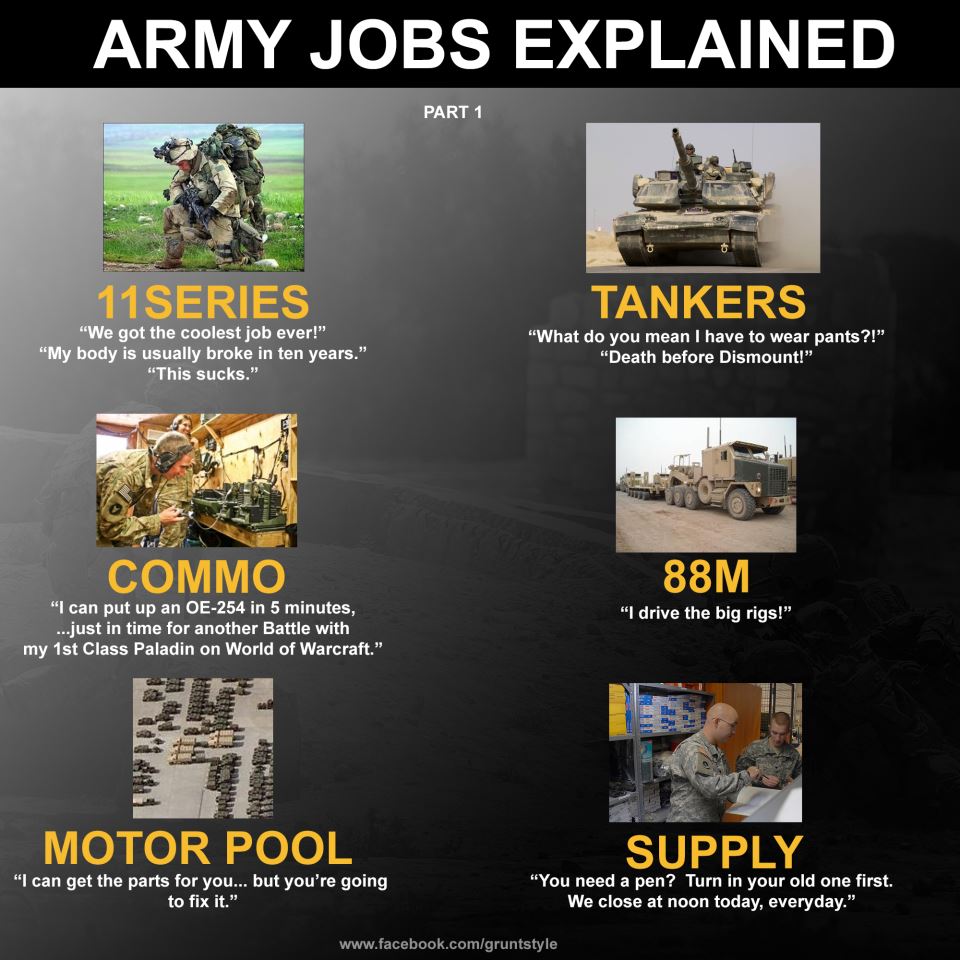
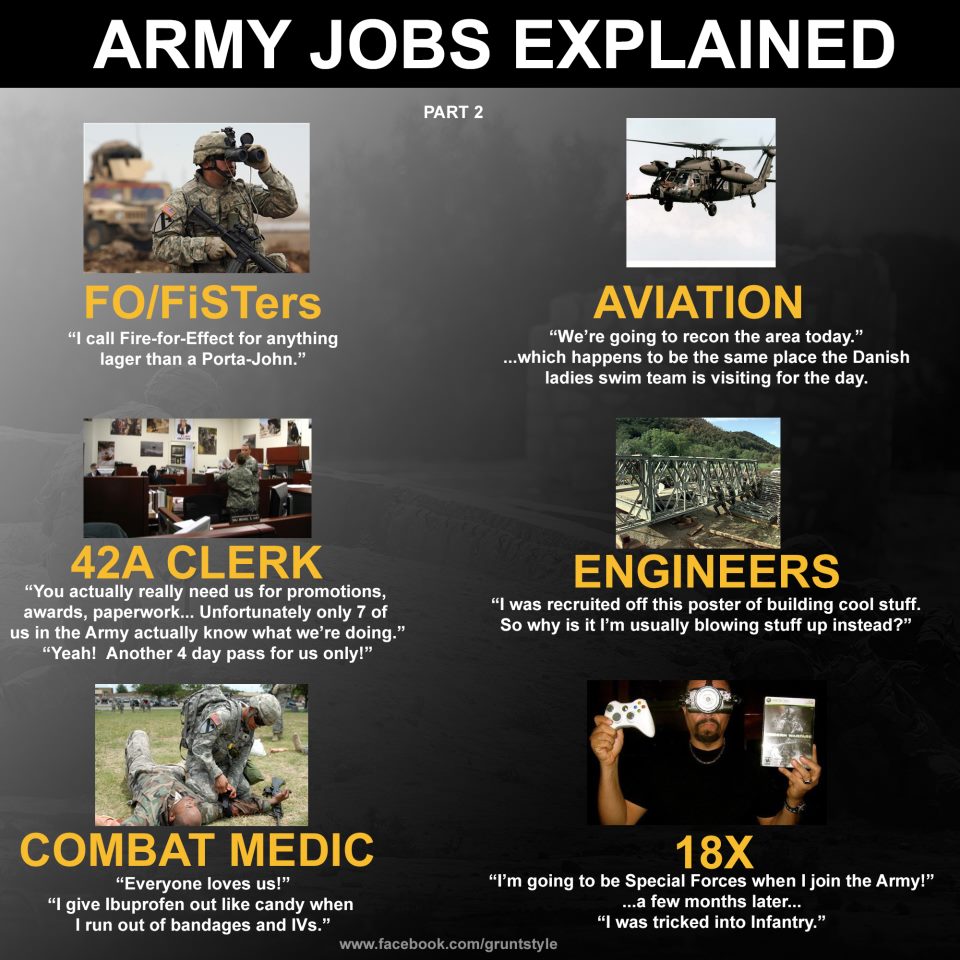
US Army Memes that I thought were funny

 
Related image
Related image
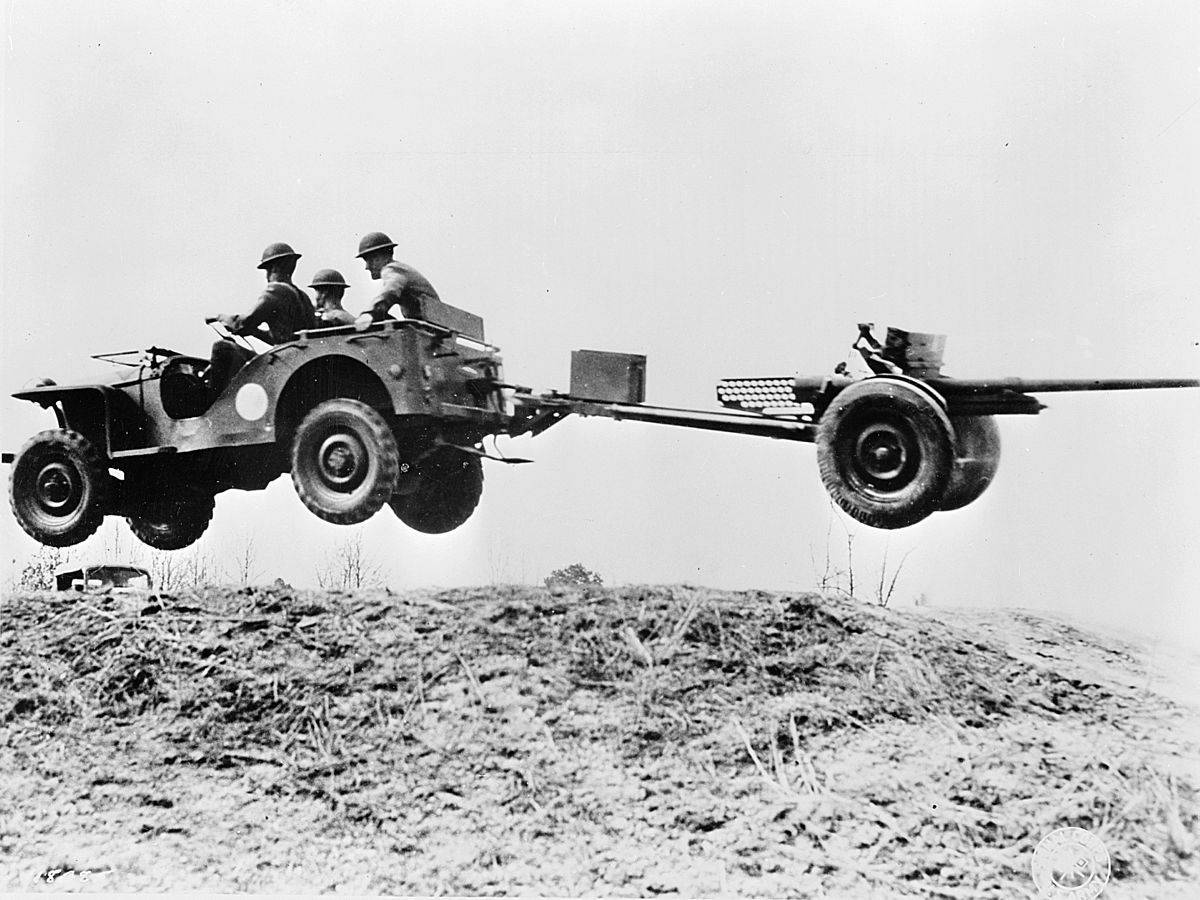
Image result for field artillery meme
Related image
Image result for field artillery meme
 
Related image
 
Related image
 

Categories
Allies The Green Machine War Well I thought it was funny!

Well I liked it!


Categories
The Green Machine War

The Unlucky Pvt. John J. Williams

John J. Williams (last soldier to die in the American Civil War).jpg
John Jefferson Williams (1843 – May 13, 1865) was a Union soldier and private in Company B the 34th Regiment Indiana Infantry.
He was killed at the Battle of Palmito Ranch, the last land battle of the Civil War, and is generally recognized as the last soldier killed in the American Civil War.
Every Soldier does not want to be either the 1st or last to die in a war for obvious reason.

Categories
The Green Machine

One thing that never changes – The US Army


When I was in so long ago. I saw troops doing the same stuff all the time. Then somebody would say “What is the main difference between the Boy Scouts & the Army? The Boy Scouts have adult supervision.”

Categories
The Green Machine

The Grunt / Line Animals best friend in time of need!

The Warthog! Pity the AF Brass is always trying to kill it.

Categories
The Green Machine Well I thought it was funny!

This actually True!

Soldier gets permission to wear beard for Norse Pagan faith

blob:https://www.armytimes.com/7f431d89-1fea-4798-bea3-e1a67ce519a7
A soldier was recently granted permission to wear a beard in accordance with his Norse Pagan faith in a rare exception for facial hair for religious reasons.
 

When the Army authorized beards for religious soldiers in early 2017, the move was a response to years of requests — and a lawsuit — from Sikh soldiers seeking to both serve and adhere to the tenets of their faith.

But the directive, technically, applied to all religions.

And that includes Norse pagans, also known as heathens, according to an undated memo from the 14th Military Police Brigade at Fort Leonard Wood, Missouri.

“I grant your accommodation, subject to the standards and limitations described below,” commander Col. Curtis Shroeder wrote to a 795th Military Police Battalion soldier, whose name is redacted from a copy of the memo circulating on Facebook.

“In observance of your Heathen; Norse Pagan faith, you may wear a beard, in accordance with Army uniform and grooming standards for soldiers with approved religious accommodations.”

Per the latest version of AR 670-1, beards with approved accommodations must be less than 2 inches long, measured from the bottom of the chin, and cannot be groomed with any petroleum-based products.

While beards are required by religious tenet for practicing Sikhs, the rules are murkier for heathens.

The Hammer of Thor is an emblem that's part of the Norse Pagan faith. It is available to be placed on government headstones and markers in the United States. (File photo)
The Hammer of Thor is an emblem that’s part of the Norse Pagan faith. It is available to be placed on government headstones and markers in the United States. (File photo)

According to the Open Halls Project, an advocacy group for heathens serving in the military, the beard is a beloved tradition, but not a requirement.

“There is no religious requirement for beards in Heathenry,” according to a 2017 post about beards. “Sikhs are allowed to wear beards and turbans because it actually is a religious requirement of their faith that they do so. Kesh, or ‘uncut hair’ is one of the five religious requirements of baptized Sikhs. We, as Heathens, have no such religious requirement with regards to hair.”

A Fort Leonard Wood, Missouri, spokeswoman confirmed to Army Times the memo’s authenticity.

“All proper procedures outlined in Army Directives 2017-03 and 2016-34 were followed when requesting and approving this religious accommodation,” Tiffany Wood told Army Times on Monday.

Going legit

Authorizing a heathen beard is a big step in a long road for soldiers who practice Norse paganism.

As of 2015, the Army had accepted a request to add the religion to its list of faith codes, but before final approval, the Pentagon initiated a review of all religions recognized by the Defense Department.

However, the Hammer of Thor is still authorized for placement on military cemetery headstones, per a 2013 decision.

As for beards in general, the Army has not announced a final decision on authorizing facial hair across the service.

Categories
The Green Machine

Somebody done lied to you boy!


Myself  it was Ft. Dix, N.J.(Fort Dick in the Mouth) back in the Day. I wouldn’t do it again for a Million Bucks nor would I sell my memories of it for a Million Bucks.
It was also one of the best things that happened to me! Thanks SFC Holmes, SFC Boyaye & Sgt. Howard!

Categories
Related Topics The Green Machine

The man who could of Shot Hitler? Maybe

World War One: The British hero who did not shoot Hitler

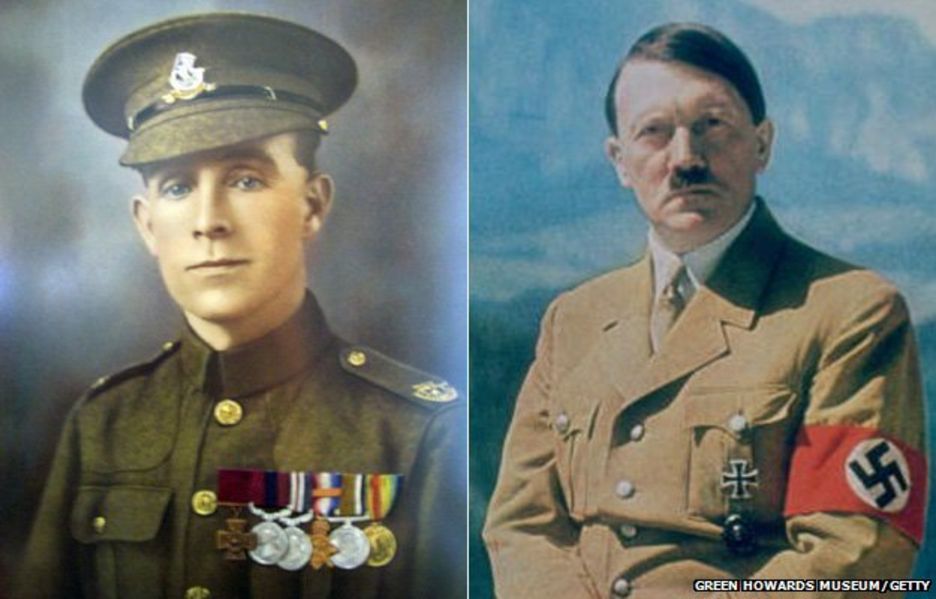
Tandey and HitlerImage copyright GREEN HOWARDS MUSEUM/GETTY
Image caption In 1938, Adolf Hitler himself is said to have told British Prime Minister Neville Chamberlain that Pte Henry Tandey had spared his life 20 years before

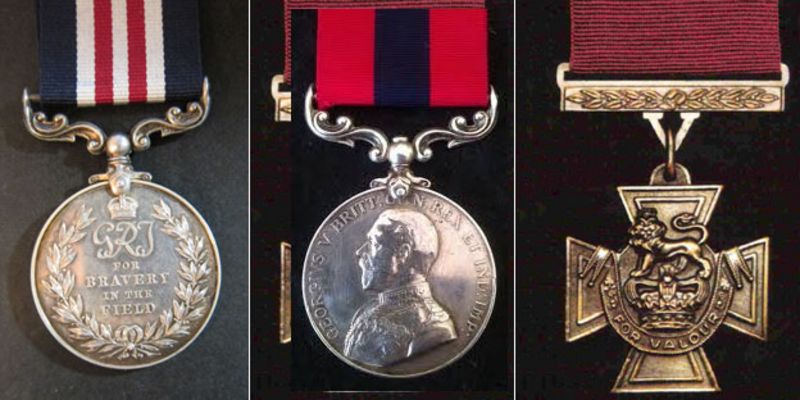
Henry Tandey became the most decorated private soldier in World War One. His bravery though, would be eclipsed in the run up to World War Two by allegations he had spared Adolf Hitler’s life, in 1918. But, is the story accurate?

The two events were separated by 20 years. On 28 September 1918, Pte Tandey earned the Victoria Cross “for most conspicuous bravery and initiative” at the fifth Battle of Ypres.
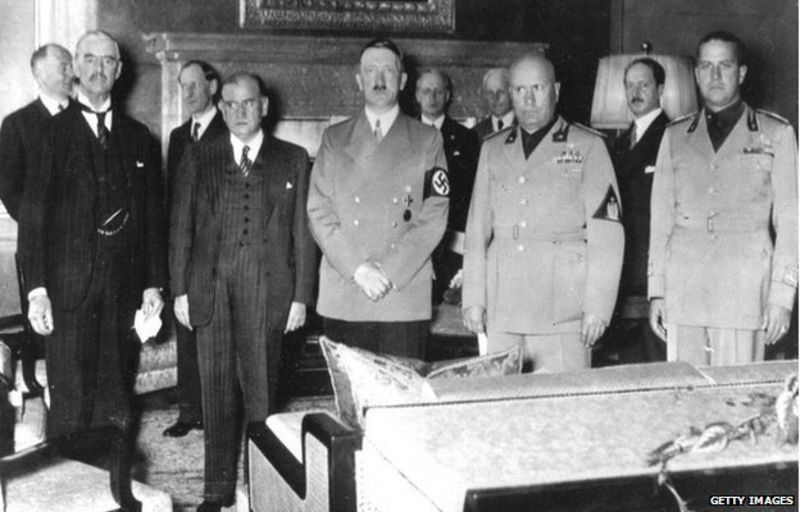
Twenty years later, Hitler himself is said to have planted the seeds of the legend during a visit to the Fuhrer by British Prime Minister Neville Chamberlain, in his doomed attempt to secure “peace for our time”.
He apparently seized on the fact that along with many of his fellow soldiers, Pte Tandey had tempered justice with mercy, refusing to kill unarmed, injured men in cold blood. The leader of the Third Reich claimed he was one of those spared.

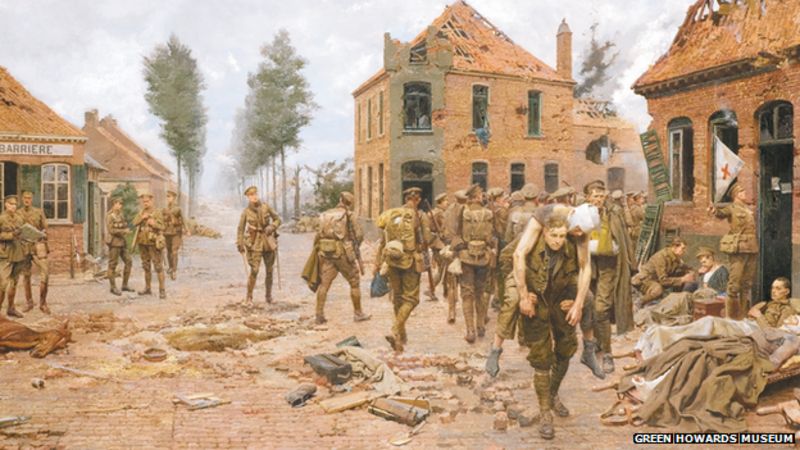
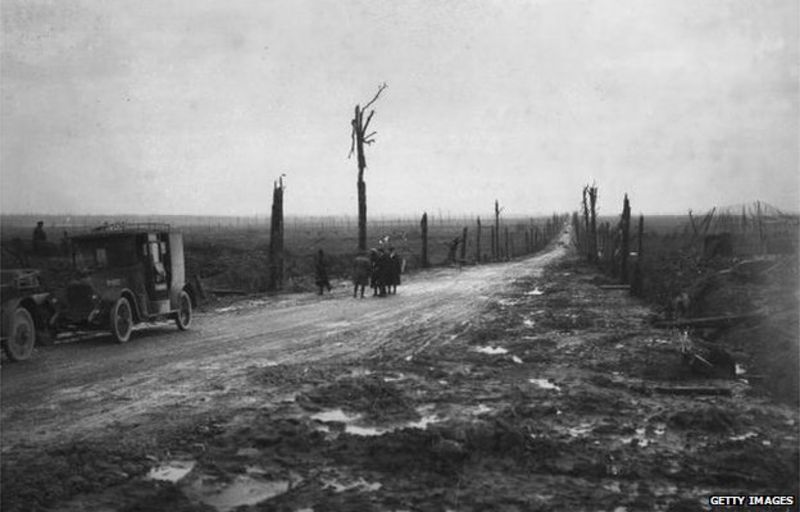
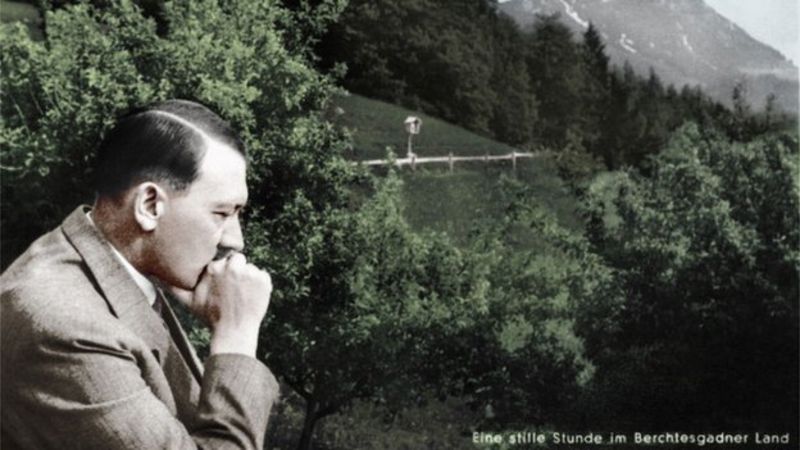
At his Bavarian retreat the Berghof, Chamberlain noticed a picture on the wall of Hitler’s study, depicting a scene from a battle at Menin crossroads in 1914. The soldier in the foreground was apparently Pte Tandey, carrying a fellow soldier to safety.
Hitler told Chamberlain the soldier had pointed a gun at him but spared him.
“That man came so near to killing me that I thought I should never see Germany again,” Hitler is alleged to have said.
“Providence saved me from such devilish accurate fire as those English boys were aiming at us.”
The museum of the Green Howards – Pte Tandey’s regiment, which commissioned the painting in 1923 from Italian war artist Fortunino Matania – confirmed a copy was hanging at Hitler’s retreat.

Newspaper-style clipping
Image captionThe story created compelling headlines

The museum has a letter from Hitler’s adjutant, Capt Fritz Weidemann, thanking them: “The Fuehrer is naturally very interested in things connected with his own war experiences. He was obviously moved when I showed him the picture.”
The painting’s route to Hitler’s wall was fairly convoluted, centring on one of his staff, a Dr Otto Schwend, who had received a postcard of the painting from a British soldier whom he had befriended in WW1.

Painting of Menin crossroadsImage copyrightGREEN HOWARDS MUSEUM
Image captionHitler owned a copy of Fortunino Matania’s painting of a post-battle scene at Menin crossroads

Hitler had apparently claimed to recognise in it a soldier he met in 1918, but the painting depicts a battle that actually took place in 1914.
Dr David Johnson, Pte Tandey’s biographer, throws more doubt on the story.

Military medal, DCM (medal) Victoria Cross (medal)Image copyrightFAIR USAGE
Image captionPte Tandey was awarded the Military Medal, the Distinguished Conduct Medal, and the Victoria Cross. He was also mentioned five times in despatches

He pointed out that even if the date were accurate it would have been unlikely for Pte Tandey to have been recognisable from the painting. He had been injured during the 1918 battle, and in contrast to the painting, would have been “extremely dishevelled and covered in mud and blood”.
Perhaps even more compellingly, Dr Johnson argues there was no way Pte Tandey and L/Cpl Hitler could have crossed paths.
On 17 September, Hitler’s unit had been moved about 50 miles (80km) north of Pte Tandey’s, which was in Marcoing, near Cambrai in northern France.

Photograph of Menin RoadImage copyrightGETTY IMAGES
Image captionMenin Road in the aftermath of battle. Fortunino Matania’s painting depicts Pte Tandey at Menin crossroads, where a first-aid station was based

The meeting of the men was supposed to have happened on 28 September 1918, but papers at the Bavarian State Archive show Hitler had been on leave between 25 September and 27 September.
“This means that Hitler was either on leave or returning from leave at the time or with his regiment 50 miles north of Marcoing,” Dr Johnson said.
He also said it was not likely that Hitler had been simply confused.

Hitler looking pensiveImage copyrightGETTY IMAGES
Image captionThe Matania painting was seen by Chamberlain when he visited Hitler’s Bavarian house in 1938

“It’s likely he chose that date because he knew Tandey had become one of the most decorated soldiers in the war,” said Dr Johnson.
“If he was going to have his life spared by a British soldier, who better than a famous war hero who had won a Victoria Cross, Military Medal and a Distinguished Conduct Medal in a matter of weeks?

“With his god-like self-perception, the story added to his own myth – that he had been spared for something greater, that he was somehow “chosen”. His story embellished his reputation nicely.”
It was another detail that also set alarm bells ringing, Dr Johnson said.

No telephone

On returning to Britain, Mr Chamberlain is alleged to have phoned Pte Tandey to pass on details of the exchange he had with Hitler.
He was out at the time, so a nephew apparently took the call.
Dr Johnson is highly sceptical the call was made, not least because Mr Chamberlain was a very busy man.
“I can’t see him spending time tracking down and telephoning a Private,” he said.
“He also sent long and detailed letters to his sisters and kept diaries. Nowhere in his papers was the Tandey affair mentioned.”
British Telecom archives add more doubt – Pte Tandey did not have a telephone.
But the story has persisted, having probably first come to light at a regimental event in 1938 where, Dr Johnson said, Pte Tandey was told by an officer who had heard it from Mr Chamberlain.
“We don’t know whether Tandey was taken to one side and told privately – or whether it was a jocular part of an after-dinner speech, or something like that,” he said.
Pte Tandey himself was noncommittal about it. He acknowledged he had spared soldiers on 28 September, and was initially prepared to entertain the idea – but always made a point of saying he needed more information to confirm it.

Chamberlain and Hitler conferenceImage copyrightGETTY IMAGES
Image captionPreparing to sign the 1938 Munich Agreement: (l-r) Chamberlain; French Prime Minister Daladier; Hitler; Mussolini and Italian Foreign Minister Count Ciano

He was quoted in an August 1939 edition of the Coventry Herald as saying: “According to them, I’ve met Adolf Hitler.
“Maybe they’re right but I can’t remember him.”
But a year later, he appeared to be more certain, when a journalist approached him outside his bombed Coventry home, asking him about his alleged encounter with Hitler.
“If only I had known what he would turn out to be,” Pte Tandey is quoted as saying.

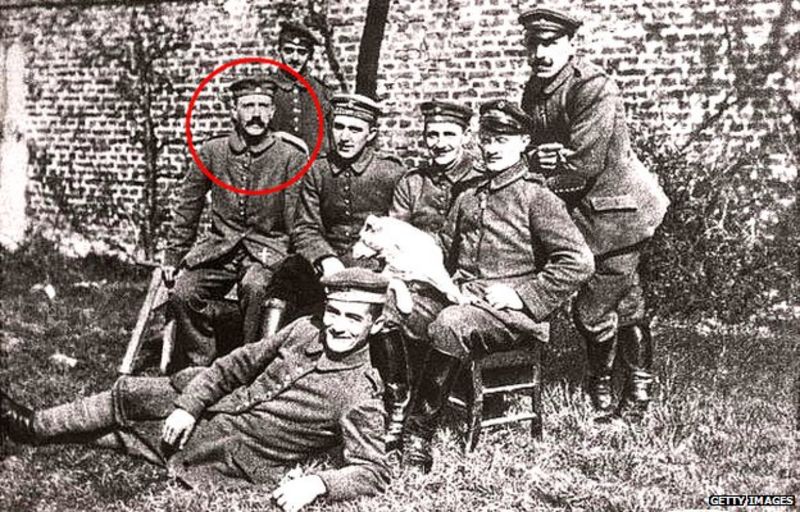
Hitler and his WW1 comrade soldiersImage copyrightGETTY IMAGES
Image captionAdolf Hitler would look considerably different 20 years later

“When I saw all the people and women and children he had killed and wounded I was sorry to God I let him go.”
The newspapers seemed to say it all:
“Nothing Henry did that night could ease his sickening sense of guilt.”
“It was a stigma that Tandey lived with until his death”
“He could have stopped this. He could have changed the course of history”
However, there is no evidence, not even anecdotal, he was either hounded or avoided after the claims.

‘Extremely dishevelled’

“It must be remembered that this was a low point for the country and for Coventry, and Henry can be excused for feeling a little sorry for himself and emotional after the sights he had witnessed,” Dr Johnson said.
“We must not forget that in 1918, no-one knew who Hitler was. Why would Henry remember and regret that specific encounter, especially when Hitler would also have been extremely dishevelled and covered in mud and blood, not looking like he did 20 years later.
“It might be equally true that the journalist concerned took Henry’s comments out of context, which might go some way to explaining his distrust of the press.”

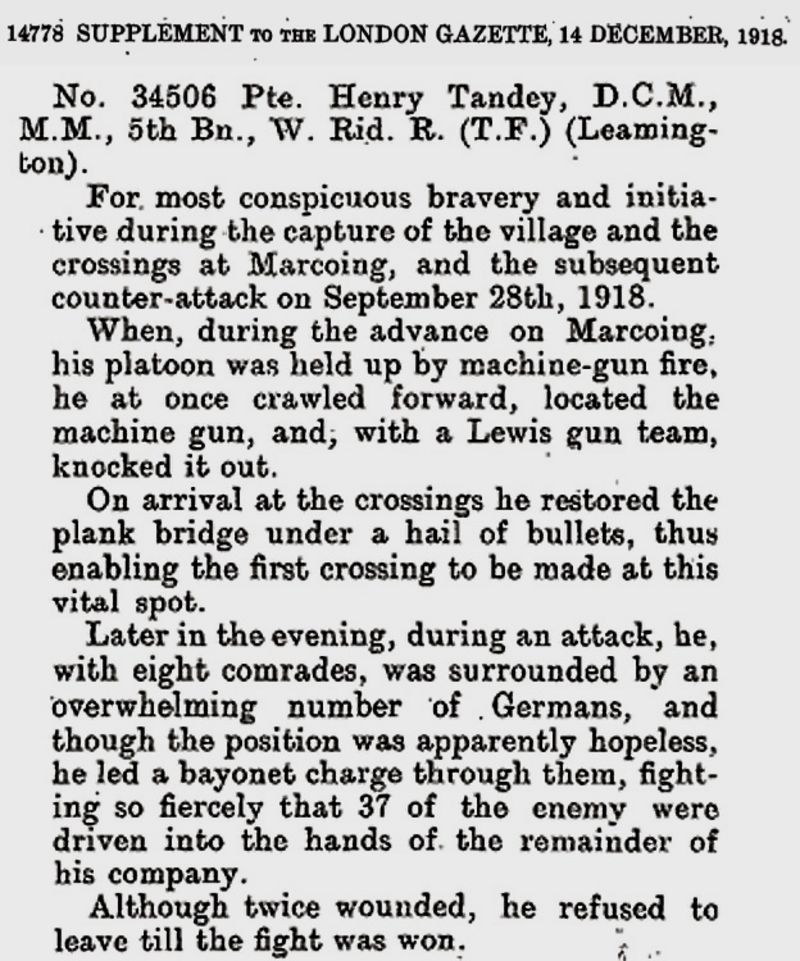
London Gazette clippingImage copyrightLONDON GAZETTE
Image captionPte Tandey’s bravery was documented in the London Gazette


Henry Tandey

From Wikipedia, the free encyclopedia
Henry Tandey
Pte Tandey VC DCM MM.JPG

Private Henry Tandey VC, DCM, MM
Birth name Henry Tandy
Born 30 August 1891
Leamington, Warwickshire
Died 20 December 1977 (aged 86)
Coventry, West Midlands
Allegiance  United Kingdom
Service/branch  British Army
Years of service 1910–1926
Rank Sergeant
Unit The Yorkshire Regiment (Green Howards) (1910–18)
West Riding Regiment (Duke of Wellington’s Regiment) (1918–26)
Battles/wars World War I
Awards Victoria Cross
Distinguished Conduct Medal
Military Medal
Mentioned in Despatches (5)

Henry Tandey VC, DCM, MM (born Tandy, 30 August 1891 – 20 December 1977) was an English recipient of the Victoria Cross, the highest award for gallantry in the face of the enemy that can be awarded to British and Commonwealth forces. He was the most highly decorated British private of the First World War and is most commonly remembered as the soldier who spared Adolf Hitler’s life during the war. Born with the family name of Tandy, he later changed his surname to Tandey after problems with his father,[1][vague]therefore some military records have a different spelling of his name.

Early life[edit]

Henry Tandey was born in Leamington, Warwickshire, the son of a former soldier whose wife had died early in their child’s life. He spent part of his childhood in an orphanage before becoming a boiler attendant at a hotel.

Military service[edit]

Tandey enlisted into the Green Howards Regiment on 12 August 1910. After basic training he was posted to their 2nd Battalion on 23 January 1911, serving with them in Guernsey and South Africa prior to the outbreak of World War I.[2] He took part in the Battle of Ypres in October 1914, and was wounded on 24 October 1916, at the Battle of the Somme. On discharge from hospital he was posted to the 3rd Battalion on 5 May 1917, before moving to the 9th Battalion on 11 June 1917. He was wounded a second time on 27 November 1917, during the Battle of Passchendaele. After his 2nd period of hospital treatment he returned to the 3rd Battalion, on 23 January 1918, before being posted to the 12th Battalion on 15 March 1918, where he remained until 26 July 1918. On 26 July 1918 Tandey transferred from the Green Howards to The Duke of Wellington’s (West Riding Regiment). He was posted to their 5th Battalion on 27 July 1918.

Distinguished Conduct Medal[edit]

On 28 August 1918, during the 2nd Battle of Cambrai, the 5th Battalion was in action to the west of the Canal du Nord. Tandey was in charge of one of several bombing parties on the German trenches. As the forward parties were being held up Tandey took two men and dashed across open ground (No man’s land) under fire and bombed a trench. He returned with twenty prisoners. This action led to the capture of the German positions and Tandey was awarded the Distinguished Conduct Medal (DCM) on 5 December 1918, the citation read:

34506 Pte. H. Tandey, 5th Bn., W. Rid. R.
(T.F.) (Leamington). He was in charge of a reserve bombing party in action, and finding the advance temporarily held up, he called on two other men of his party, and working across the open in rear of the enemy, he rushed a post, returning with twenty prisoners, having killed several of the enemy. He was an example of daring courage throughout the whole of the operations.[3]

On 12 September the 5th Battalion was involved in an attack at Havrincourt, where Tandey again distinguished himself. Having rescued several wounded men under fire the previous day,[4] Tandey again led a bombing party into the German trenches, returning with more prisoners. For this action Tandey was awarded the Military Medal (MM) on 13 March 1919.[5]

Victoria Cross[edit]

Tandey was 27 years old and a private in the 5th Battalion Duke of Wellington’s (West Riding) Regiment when he performed the actions which earned him the Victoria Cross (VC).
On 28 September 1918, during a counter-attack at the canal, following the capture of Marcoing, France, his platoon was stopped by machine-gun fire. Tandey crawled forward, located the gun position and with a Lewis gun team, silenced it. Reaching the canal crossing, he restored the plank bridge under heavy fire. In the evening, he and eight comrades were surrounded by an overwhelming number of the enemy. Tandey led a bayonet charge, fighting so fiercely that 37 of the enemy were driven into the hands of the remainder of his company. Although twice wounded, Tandey refused to leave until the fight was won,[6] eventually going into hospital for the third time on 4 October 1918.
An eyewitness, Private H Lister, recounted the episode:

On 28th September 1918 during the taking of the crossing over the Canal de St. Quentin at Marcoing, I was No.1 of the Lewis gun team of my platoon. I witnessed the whole of the gallantry of Private Tandey throughout the day. Under intensely heavy fire he crawled forward in the village when we were held up by the enemy MG and found where it was, and then led myself and comrades with the gun into a house from where we were able to bring Lewis gun fire on the MG and knock it out of action. Later when we got to the canal crossings and the bridge was down, Pte Tandey, under the fiercest of aimed MG fire went forward and replaced planks over the bad part of the bridge to enable us all to cross without delay, which would otherwise have ensued. On the same evening when we made another attack we were completely surrounded by Germans, and we thought the position might be lost. Pte Tandey, without hesitation, though he was twice wounded very nastily, took the leading part in our bayonet charge on the enemy, to get clear. Though absolutely faint he refused to leave us until we had completely finished our job, collected our prisoners and restored the line.[4]

His VC was gazetted on 14 December 1918, the citation read:

No. 34506 Pte. Henry Tandey, D.C.M., M.M., 5th Bn., W. Rid. R. (T.F.) (Leamington).
For most conspicuous bravery and initiative during the capture of the village and the crossings at Marcoing, and the subsequent counter-attack on September 28th, 1918. When, during the advance on Marcoing, his platoon was held up by machine-gun fire, he at once crawled forward, located the machine gun, and, with a Lewis gun team, knocked it out. On arrival at the crossings he restored the plank bridge under a hail of bullets, thus enabling the first crossing to be made at this vital spot.
Later in the evening, during an attack, he, with eight comrades, was surrounded by an overwhelming number of Germans, and though the position was apparently hopeless, he led a bayonet charge through them, fighting so fiercely that 37 of the enemy were driven into the hands of the remainder of his company.
Although twice wounded, he refused to leave till the fight was won.[7]

Hitler incident[edit]

Although disputed, Adolf Hitler and Tandey allegedly encountered each other at the French village of Marcoing. The story is set on 28 September 1918, while Tandey was serving with the 5th Duke of Wellington’s Regiment, and relates that a weary German soldier wandered into Tandey’s line of fire. The enemy soldier was wounded and did not even attempt to raise his own rifle. Tandey chose not to shoot. The German soldier saw him lower his rifle and nodded his thanks before wandering off. That soldier is purported to have been Adolf Hitler.[8][9][10] The author David Johnson, who wrote a book on Henry Tandey,[11] believes this story was an urban legend.[12]
Hitler apparently saw a newspaper report about Tandey being awarded the VC (in October 1918, whilst serving with the 5th Battalion Duke of Wellington’s (West Riding) Regiment), recognized him, and clipped the article.[10]
In 1937, Hitler was made aware of a particular Fortunino Matania painting[13] by Dr Otto Schwend, a member of his staff. Schwend had been a medical officer during the First Battle of Ypres in 1914. He had been sent a copy of the painting by a Lieutenant Colonel Earle in 1936. Earle had been treated by Schwend in a medical post at the Menin Crossroads and they remained in touch after the war.[14]
The painting was commissioned by the Green Howards Regiment from the Italian artist in 1923, showing a soldier purported to be Tandey carrying a wounded man at the Kruiseke Crossroads in 1918, northwest of Menin. The painting was made from a sketch, provided to Matania, by the regiment, based on an actual event at that crossroads. A building shown behind Tandey in the painting belonged to the Van Den Broucke family, who were presented with a copy of the painting by the Green Howard’s Regiment.[15]
Schwend obtained a large photo of the painting. Captain Weidemann, Hitler’s adjutant, wrote the following response:

“I beg to acknowledge your friendly gift which has been sent to Berlin through the good offices of Dr. Schwend. The Führer is naturally very interested in things connected with his own war experiences, and he was obviously moved when I showed him the photograph and explained the thought which you had in causing it to be sent to him. He was obviously moved when I showed him the picture. He has directed me to send you his best thanks for your friendly gift which is so rich in memories.”

Apparently Hitler identified the soldier carrying the wounded man as Tandey from the photo of him in the newspaper clipping he had obtained in 1918.[16]
In 1938, when Neville Chamberlain visited Hitler at his alpine retreat, the Berghof, for the discussions that led to the Munich Agreement, he noticed the painting and asked about it. Hitler replied:

“That man came so near to killing me that I thought I should never see Germany again; Providence saved me from such devilishly accurate fire as those English boys were aiming at us.”[17]

According to the story, Hitler asked Chamberlain to convey his best wishes and gratitude to Tandey. Chamberlain promised to phone Tandey in person on his return, which apparently he did. The Cadbury Research Centre, which holds copies of Chamberlain’s papers and diaries, has no references relating to Tandey from the records of the 1938 meeting.[18][19] The story further states that the phone was answered by a nine-year-old child called William Whateley.[20]William was related to Tandey’s wife Edith. However, Tandey at that time lived at 22 Cope Street, Coventry, and worked for the Triumph Motor Company. According to the company records, they only had three phone lines, none of which was at Tandey’s address. British Telecommunications archive records also have no telephones registered to that address in 1938.[21]

Post-war service[edit]

On 13 March 1919 a supplement to the London Gazette announced that Tandey had been awarded the Military Medal(MM).[5] The following day he was discharged from service and only one day later he re-enlisted into the Duke of Wellington’s 3rd Battalion on a ‘Short Service Engagement’. Three days later (18 March 1919) he was promoted to acting lance corporal. He remained with the 3rd Battalion on ‘Home Service’ until 4 February 1921, when he transferred to the 2nd Battalion. Four days later on 8 February 1921 he requested to revert to the rank of private.
Tandey served with the 2nd Battalion in Gibraltar from 11 April 1922 to 18 February 1923, in Turkey from 19 February – 23 August 1923 and finally in Egypt from 24 August 1923 until 29 September 1925. He was finally discharged from the army on 5 January 1926.
In addition to his major awards Tandey had also been Mentioned in Despatches on five occasions. He was personally decorated by King George V at Buckingham Palace on 17 December 1919.[2]

Post-war years[edit]

Tandey returned to Leamington and married. In 1940, during the Coventry Blitz, his home was bombed by the Luftwaffe. A journalist approached him outside his bombed Coventry home, asking him about his alleged encounter with Hitler. “If only I had known what he would turn out to be,” Tandey is quoted as saying. “When I saw all the people and women and children he had killed and wounded I was sorry to God I let him go.” However, there is no evidence, not even anecdotal, he was either hounded or avoided after the claims.[22]
Tandey became a Police sergeant at the Standard Triumph Works, Fletchamstead a position he held for 38 years. [23]
Tandey died in 1977, childless, at the age of 86. At his request, he was cremated and his ashes buried in the Masnieres British Cemetery at Marcoing, France, on 23 May 1978, by his undertaker Pargetter and Son.[24] Due to French laws it was not permissible for his ashes to be scattered, or any form of ceremony or commemoration made to him.[25]
Henry Tandey Court, on Union Road, in Leamington, is named after him. It was originally a workshop and builders yard of Mr. G.F.Smith, who built St. Marks Church and Vicarage.[26]
A blue plaque was installed outside the Angel Hotel in Regent Street, where Henry Tandey was born in 1891 and where he attended the local St Peter’s School.[27][28]

Medals[edit]

Tandey donated his medals to the Duke of Wellington’s Regiment Museum in Halifax, West Yorkshire. On special occasions and parades he would sign them out to wear. During the last period that he had signed them out, he died. Unaware that the medals should have been returned to the museum, the medals were auctioned at Sotheby’s in London by his wife and a private collector subsequently purchased them. They were presented to the Green Howards Regimental Museum (the regiment in which he had earlier served), by Sir Ernest Harrison OBE, at a ceremony in the Tower of Londonon 11 November 1997, twenty years after Tandey died.[29]
A copy of Tandey’s Victoria Cross is now displayed at the Green Howards Regimental Museum in Richmond, North Yorkshire. Along with others, the original VC is kept in a local bank vault.
On 6 June 2006 The Green Howards and the Duke of Wellington’s (West Riding) Regiment amalgamated with the Prince of Wales’s Own Regiment of Yorkshire to form the Yorkshire Regiment.

UK Victoria Cross ribbon bar.svg UK Distinguished Conduct Medal ribbon.svg UK Military Medal ribbon.svg 1914 Star BAR.svg
British War Medal BAR.svg Victory Medal MID ribbon bar.svg Defence Medal BAR.svg GeorgeVICoronationRibbon.png
UK Queen EII Coronation Medal ribbon.svg QEII Silver Jubilee Medal ribbon.png[30] [31]

Ribbon Description Notes
UK Victoria Cross ribbon bar.svg Victoria Cross (VC) 14 December 1918
UK Distinguished Conduct Medal ribbon.svg Distinguished Conduct Medal(DCM) 5 December 1918
UK Military Medal ribbon.svg Military Medal (MM) 13 March 1919
1914 Star BAR.svg 1914 Star With Clasp “5th Aug – 22nd Nov 1914”
British War Medal BAR.svg British War Medal
Victory Medal MID ribbon bar.svg Victory Medal With Mentioned in dispatches Oakleaf
Defence Medal BAR.svg Defence Medal Awarded for his Service as an Air Raid Warden in Coventry during the Blitz.
GeorgeVICoronationRibbon.png King George VI Coronation Medal 1937 – Given to all living recipients of the Victoria Cross.
UK Queen EII Coronation Medal ribbon.svg Queen Elizabeth II Coronation Medal 1953 – Given to all living recipients of the Victoria Cross and the George Cross.
QEII Silver Jubilee Medal ribbon.png Queen Elizabeth II Silver Jubilee Medal 1977 – Given to all living recipients of the Victoria Cross and the George Cross.

References[edit]

  1. Jump up^ Johnson, David (2012). One Soldier And Hitler, 1918. Gloucestershire: the History Press. p. 20. ISBN 978 0 7524 6613 2.
  2. ^ Jump up to:a b http://www.firstworldwar.com/features/tandey.htm
  3. Jump up^ “No. 31052”. The London Gazette (Supplement). 3 December 1918. p. 14454.
  4. ^ Jump up to:a b Brereton, JM; Savory, ACS (1993). “World War 1, 1918”. The History of the Duke of Wellingtons (West Riding) 1702–1992. Halifax : The Duke of Wellington’s Regiment. p. 254. ISBN 0-9521552-0-6.
  5. ^ Jump up to:a b “No. 31227”. The London Gazette. 11 March 1919. p. 3430.
  6. Jump up^ Brereton, JM; Savory, ACS (1993). “”34507 Pte Henry Tandey”, appendix IV”. The History of the Duke of Wellingtons (West Riding) 1702–1992. Halifax : The Duke of Wellington’s Regiment. p. 396. ISBN 0-9521552-0-6.
  7. Jump up^ “No. 31067”. The London Gazette (Supplement). 13 December 1918. p. 14778.
  8. Jump up^ “World War I 1918 British soldier allegedly spares the life of an injured Adolf Hitler”. This Day in History. History.com. Retrieved 3 October 2015.
  9. Jump up^ Morpurgo, Michael (3 October 2015). “Michael Morpurgo on the soldier who could have stopped a world war with one shot”. The Times Newspaper. Retrieved 3 October 2015.
  10. ^ Jump up to:a b Godl, John (22 August 2009). “How a Right Can Make a Wrong”. FirstWorldWar.com. Retrieved 3 October 2015.
  11. Jump up^ Johnson, David (1 October 2013). One Soldier and Hitler, 1918: The Story of Henry Tandey VC DCM MM. Spellmount Publishers Ltd. ISBN 978-0752466132.
  12. Jump up^ “Did British soldier spare Hitler’s life in WWI?”. BBC News. 2 March 2014. Retrieved 3 October 2015.
  13. Jump up^ http://victoriacross.files.wordpress.com/2007/03/tandey.jpg
  14. Jump up^ Johnson, David (2012). One Soldier And Hitler, 1918. Gloucestershire: the History Press. p. 149. ISBN 978 0 7524 6613 2.
  15. Jump up^ Johnson, David (2012). One Soldier And Hitler, 1918. Gloucestershire: the History Press. pp. 149–150. ISBN 978 0 7524 6613 2.
  16. Jump up^ gazettelive.co.uk
  17. Jump up^ Johnson, David (2012). One Soldier And Hitler, 1918. Gloucestershire: the History Press. p. 150. ISBN 978 0 7524 6613 2.
  18. Jump up^ http://www.birmingham.ac.uk/facilities/cadbury/documents/personal-archives-guide.pdf
  19. Jump up^ Johnson, David (2012). One Soldier And Hitler, 1918. Gloucestershire: the History Press. p. 146. ISBN 978 0 7524 6613 2.
  20. Jump up^ Johnson, David (2012). One Soldier And Hitler, 1918. Gloucestershire: the History Press. p. 144. ISBN 978 0 7524 6613 2.
  21. Jump up^ Johnson, David (2012). One Soldier And Hitler, 1918. Только правда ли всё это судите сами. Gloucestershire: the History Press. p. 145. ISBN 978 0 7524 6613 2.
  22. Jump up^ http://www.bbc.co.uk/news/uk-england-28593256
  23. Jump up^ Triumph Works Archive
  24. Jump up^ Johnson, David (2012). One Soldier And Hitler, 1918. Gloucestershire: the History Press. p. 127. ISBN 978 0 7524 6613 2.
  25. Jump up^ Johnson, David (2012). One Soldier And Hitler, 1918. Gloucestershire: the History Press. p. 128. ISBN 978 0 7524 6613 2.
  26. Jump up^ St Marks Church – Early Leamington
  27. Jump up^ Lemington Courier, 2 Oct 2012 – Hero soldier permanently remembered in Leamington
  28. Jump up^ Courier, 28 Aug 2011 – Birthplace of Leamington hero to be given blue plaque
  29. Jump up^ “Henry Tandy”. firstworldwar.com. Retrieved 2010-06-29.
  30. Jump up^ Duke of Wellington’s Regiment Website, VC Recipients. List of medals awarded – Henry Tandy Archived 3 February 2014 at the Wayback Machine.
  31. Jump up^ [1]
General

External links[edit]