Categories
A Victory! Hard Nosed Folks Both Good & Bad Leadership of the highest kind The Green Machine War

U.S. Marines in Battle of Tarawa | 1943 | WW II Documentary in Color


Now Tarawa was one hell of fight & The US Marines can be rightly very proud of it! Grumpy
Categories
The Green Machine War

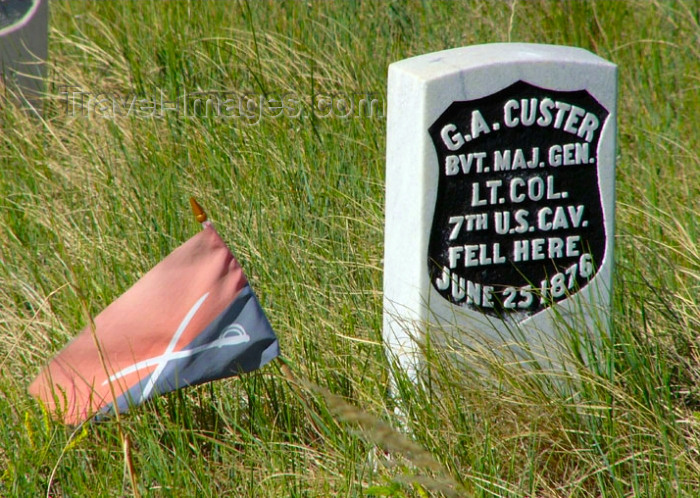
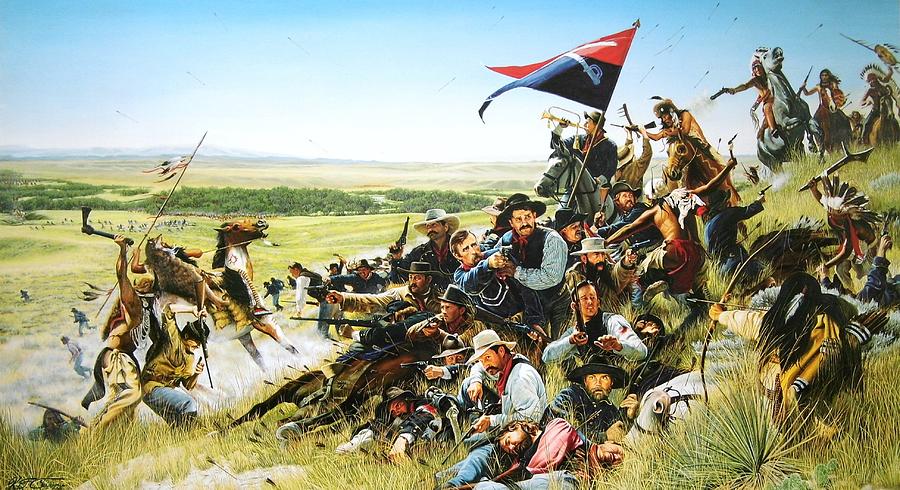
Today, One Hundred & Forty Three years ago, George A. Custer and the 7th Cavalry had a bad day at the hands of Sitting Bull in 1876.

Image result for George A. Custer and the 7th Cavalry
Related image
 

The Boy’s of ’76Seventh Cavalry Letters and Recollections

taylorThe men who served in the Seventh Cavalry in 1876 came from all walks of life. Some used the army for their own means; men who were one step ahead of the law. Others yearned for the excitement and adventure that the frontier army could provide.

Forty-two percent of the Seventh Cavalry ranks were foreign-born, with Irish and Germans predominating. Ironically, many western Europeans fled to the United States to escape military conscription. The army offered hope and a unique opportunity to learn English, to read and write, and learn the customs of their newly adopted country. The isolated life of a soldier could best be described as glittering misery. The caste between officers and enlistedmen was strictly adhered to. Here then, is part of the remarkable and poignant story of the 1876 Sioux War, told in their own words.
Fort A. Lincoln

Mar. 5, 1876

Dear Sister:

. . . we expect to leave here any day now . . . The boys are all making blanket shirts. I had a green blanket and so I made [a shirt]. . . I am going to bring it home when my time is out. We expect to go out after Sitting Bull and his cut throats, and if old Custer gets after him he will give him the fits for all the boys are spoiling for a fight. I only hope they will put it off until about the first of May and then we will not run the risk of freezing to death for its cold weather here now and I had rather be in quarters than out on the prairies in tents. Tell Irwin to write . . . I wish he were out here for awhile I would let him ride Dan Tucker. He is fat as a pig and feels so good he ran away with me yesterday and ran two miles before I could stop him . . . will say goodbye.

Henry

Henry Allen Bailey, a Blacksmith in Company I, was and killed with the Custer Battalion 25 June 1876 during the Battle of the Little Big Horn. Born in Foster, Rhode Island, his previous occupation was blacksmith. He enlisted on October 24, 1872 at the age of 22 in Springfield, Massachusetts. He had gray eyes, fair complexion, brown hair, and was 5’7 1/4” tall.

Ft. Totten, D.T.

March 5th, 1876

Dear Sister:

I take the preseant [sic] oppertunity [sic] of letting you no [sic] that I will soon be on the move again. We are to start the 10th of this month for the Big Horn country. The Indians are getting bad again. I think that we will have some hard times this summer. The old chief Sitting Bull says he will not make peace with the whites as long as he has a man to fight. The weather very cold hear [sic] at preasent [sic] and very likely to stay so for two months yet.Ella, you need not rite [sic] me again until you hear from me again. Give my love to Sister & Brother Jonny. Remember me to your husband. As soon as I got back of the campaign I will write you. That is if I do not get my hair lifted by some Indian. Well I will close, so no more at preasant [sic],

From your loving brother,

T.P. Eagan

P.S.
If you hear from Hubert tell him not to write until he hears from me.

Thomas P. Eagan was a Corporal in Company E and killed with the Custer Battalion during the Battle of the Little Big Horn June 25, 1876. His previous occupation was laborer. He enlisted on September 12, 1873, at the age of 25 at St. Louis Barracks, Missouri. He had gray eyes, light complexion, and was 5’5 1/2” tall.

William C. Slaper shared an interesting and humorous account of his experience as a young cavalry recruit enroute from Jefferson Barracks Missouri to Ft. Abraham Lincoln, Dakota Territory aboard a Northern Pacific Railroad car:

Jamestown, D.T.

March 25th, 1876

Ft. A. Lincoln. D.T.

April 20th 1876

“While stopping for coffee and something to eat at Fargo, Dakota, we had about two hours to wait. An Irish sergeant in charge of our car—seemingly an old veteran—instructed a bunch of recruits to go to a certain saloon not far from the station, take their canteens and guns, and pawn or trade the weapons for liquor, and to bring the liquor back in their canteens. On our return with the whiskey, he then took a squad of recruits, armed them as guards, and marched them over to the saloon. Here he threatened the proprietor for buying government arms and immediately confiscated the pawned weapons!. . . from Fargo to Bismarck that night, the sergeant’s car contained a bunch of noisy and hilarious troopers.”

William C. Slaper was a private in Company M and took part in the valley fight and subsequent two day battle on Reno Hill, and survived the Battle of the Little Big Horn. He was born in Cincinnati, Ohio and enlisted on September 10, 1875 in Cincinnati. His previous occupation was safemaker. He had blue eyes, brown hair, fair complexion, and was 5’8 1/2” tall. After the battle he was appointed corporal and received an honorable discharge on expiration of service on September 9, 1880 at Ft. Meade, D.T. as a corporal of good character. He died November 13, 1931.

The following is a vivid twentieth-century account by German immigrant Charles A. Windolph describing the departure of the Dakota Column from Ft. Abraham Lincoln, May 17, 1876:

“The wagon train was headed west, the wheels of the heavy outfits making big ruts in the rain soaked ground. General Terry suggested that Custer parade to the fort so that the worried women and children there could see for themselves what a strong fighting force it was. The band on white horses led off and we paraded around the inner area. Then married men and officers were allowed to leave their troops and say good-by to their families. In a few minutes ‘Boots and Saddles’ was sounded, and the troopers returned to their companions. Then the regiment, its guidons snapping in the morning breeze, marched off, while the band played over and over again ‘The Girl I Left Behind Me’ . . . You felt like you were somebody when you were on a good horse, with a carbine dangling from its small leather ring socket on your McClelland [sic] saddle, and a Colt army revolver strapped on your hip; and a hundred rounds of ammunition in your web belt and in your saddle pockets. You were a cavalryman of the Seventh regiment. You were a part of a proud outfit that had a fighting reputation, and you were ready for a fight or a frolic.”

Charles A. Windolph, aka Charles Wrangel, a German immigrant, was a private in Company H, and a recipient of the Medal of Honor at the Battle of the Little Big Horn with the citation: “With three comrades, during the entire engagement, courageously held a position that secured water for the command.” He was promoted to corporal on September 1, 1876. He had brown eyes, brown hair, dark complexion, and was 5’ 6” tall. He was the last surviving Seventh Cavalryman from the battle when he died at the age of 98 on March 11, 1950 in Lead, South Dakota.

Camp Powder River

June 8, 1876

My Dear Wife,

I received your letter today and was glad to hear from you and them little children. I was a great deal troubled about it, that I didn’t get no letter from you. I am all right if I only know that you and them children are all well. We are 250 miles from Lincoln on the Powder River but we don’t see a sign of an Indian but we expecting every day to meet with them. We had terrible bad weather and a terrible snow storm the first and second June.

The Command is stopping here on Powder River and resting two days. We are going to leave here in the morning 5 o’clock for the Yellowstone. The ration [sic] are running out very near, and so we have to hurry to get to the Yellowstone. Myself and Hageman and Weis got some antelopes[sic] meat from them Indian Scouts, but had to pay $2 for a quarter of it. I spended [sic] already $8 for eating. General Tarry [sic] said if we get Sitting Bull and his tribe soon, then we are going home, but if we don’t, we will stay three months and hunt for him. I wish for mine part we would meet him tomorrow. Serg Botzer and me came to the conclusion, it is better anyhow to be home and baking flapjacks, when we get home we will pay up for this and bake flapjacks all the time.

Dear Lizze I cannot forget Harry. I don’t know how it is but he is in my min [sic] all the time, and sometime I worry a great deal about him. The best thing for you to do is to go to the carpenter and get him to make a fraling fenz rows (German) and don’t forget to send for that tombstone, for we don’t know [sic] if we got any time to spare after we get back again.

Take good care of yourself and Hetty and Charly and don’t forget Your Husband And wrighth [sic] to me when [sic] ever you get a change, [sic] for I am lonely her [sic] to hear from You.

Serg Botzer, Hagemann, Weis, Serg Fortny, others and very near the hole [sic] Camp Send their best regards to You and Hetty and Charly. I for myself send my love And a Kiss to You and one to Hetty and Charly. My best Regards to Mrs. Hughes And her Children and to Klein and Mrs Klein and Mrs James and to Serg Loyd, Lawler and Luther.

I remain Your True and Loving Husband.

Henry C. Dose

Trumpeter Troop G 7 Cavalry.

Henry C. Dose, a Trumpeter in Company G, was killed with the Custer Battalion June 25, 1876 during the Battle of the Little Big Horn. Born in Holstein, Germany, his previous occupation was artificer. He enlisted for the second time on February 1, 1875 at age 25 in Shreveport, LA. He had gray eyes, brown hair, fair complexion, and was 5’6” tall. He left a widow Elizabeth, and his two children Hattie and Charles.

No Date: probably early July 1876, Mouth of the Big Horn River.

“When the Red devils got Custer they cut the heart out of this Regiment. It is not often a soldier wastes tears over an Officer But I saw maney [sic] an old hand wipe his blouse sleeve (we had no handerchiefs) [sic] The day we bureyed [sic] Custer. “

D.E.Dawsey

Troop D 7th Cav.

Custer’s last letter to Libbie:

June 22, 1876

Camp at Junction of Yellowstone and Rosebud Rivers

My Darling – I have but a few moments to write as we start at twelve, and I have my hands full of preparations for the scout. Do not be anxious about me. You would be pleased how closely I obey your instructions about keeping with the column. I hope to have a good report to send you by the next mail. A success will start us all toward Lincoln.

I send you an extract from Genl, Terry’s official order, knowing how keenly you appreciate words of commendation and confidence in your dear Bo: “It is of course impossible to give you any definite instructions in regard to this movement, and, were it not impossible to do so, the Department Commander places too much confidence in your zeal, energy and ability to impose on you precise orders which might hamper your action when nearly in contact with the enemy.”

Your devoted boy Autie.

This was the last letter written by Lt. Col. George Armstrong Custer to his wife Elizabeth in his “A” tent from the Seventh Cavalry Headquarters bivouac just below the mouth of Rosebud Creek, on the Yellowstone River. Shortly after he finished the letter, Autie, dressed in his familiar buckskins, dark blue shirt, high topped cavalry boots, canvas cartridge belt, holstered pair of Webley R.I.C. white handled revolvers and his familiar white wide brimmed low crowned hat, rode into history and legend at the head of his regiment, marching up Rosebud Creek to the Little Big Horn. Mrs. Custer received the letter after she heard the news of her husbands fate back at Ft. Lincoln. She kept it sealed until she finally gained the courage to read his last words to her.

This last personal recollection is by William O. Taylor who vividly recalled the Seventh Cavalry’s last camp on Rosebud Creek on Saturday June 24, 1876:

Orange Mass.

May 29th 1910

“Our Last Camp on the Rosebud”

It was about sundown on the 24th of June and we had marched nearly Thirty miles along the river following a trail that seemed to grow larger and fresher as we advanced. Emerging from a heavy growth of timber into an opening the command went into camp in one of the most beautiful spots that we had yet seen. On our right rose a high and for a short distance almost perpendicular Bluff. Between that and the river some two or three hundred [sic] away, were great masses of Wild Rose bushes in full bloom, with here and there a tree to add to the park like effect. It was easy to see how the river came by its name, Rosebud, fringed as it was with fragrent [sic] Rose bushes and low willows; it was just such a place for a camp that Custer was in the habit of selecting, when possible, a spot of great beauty, It has ever seemed to me most fitting that what was to be the last camp for so many should be such a beautiful place.

The horses having been fed and rubbed down the men prepared their frugal supper, a cup of hot coffee and a few hardtack, the fires were then put out and most of the men spreading down their piece of Shelter tent and Blanket a few yards in rear of their horses, lay down as they supposed for a nights rest. My troop was quite near to Custer’s Headquarters which consisted of a single A tent close up to the high bluff and facing the river. Before the tent he sat for a long time alone, and apparently in deep thought. I was lying on my side a short distance away, facing him. Was it my fancy, or the gathering twglight, [sic] that made me think that he looked very sad, an expression I had never seen on his face before, were his thoughts far away, back to Fort Lincoln where he had left a most beloved wife, and was he feeling a premonition of what was to happen the morrow.”

William Othneil Taylor was a private in Company A and survived the Battle of the Little Big Horn. Born in Canandaigua, New York his previous occupation was cutler. He enlisted on January 17, 1872 at age 21 in Troy, New York. He had hazel eyes, brown hair, fair complexion, and was 5’5 3/4” tall. Discharged upon expiration of service on January 17, 1877 at Ft. Rice, D.T. as a soldier of poor character.

The “Boy’s of ‘76” left a lasting legacy on the history of America’s westward expansion helping to shape the American experience. Little appreciated by their fellow countrymen—underpaid, under-trained, and often ill equipped—they proudly followed the guidon, enforcing the policies of the United States, and soon faded into history. Today, 125 years later, they continue to capture our imagination. They will forever ride into both history and legend behind their colorful commander, Lt. Col. George Armstrong Custer; onward to the Little Big Horn in Garry Owen and glory.


JOHN A. DOERNER is chief historian at the Little Big Horn Battlefield National Monument.

Categories
Allies Hard Nosed Folks Both Good & Bad Leadership of the highest kind Soldiering The Green Machine Useful Shit War Well I thought it was neat!

For all the Folks who wonder why we Lost in Nam – Some interesting thoughts to ponder upon

Why America Is Losing Its Wars

William Slim

William Slim

Daniel N. White.  Introduction by William Astore.
Unbeknownst to most Americans, the U.S. military has embraced special forces (SEALs, Green Berets, and the like) and has been deploying them globally to at least eighty different countries.  There’s an allure to special forces and the special ops community captured in the country’s admiration of SEAL Team 6 and Hollywood productions like Act of Valor. 
Yet some of history’s finest military leaders haven’t been as enamored of special forces as Hollywood and the American public.  Count William Slim among their ranks.  Slim was a British field marshal who rescued Britain from certain defeat in Burma during World War II, a man deeply respected within military circles for his leadership and wisdom. 
Slim, as Dan White shows, has a lot to teach the US military about the danger of placing too much faith in special ops, especially when larger political and strategic purposes are misguided or lacking.  W.J. Astore
Why America Is Losing Its Wars
Daniel N. White
There are two big reasons why the US military continues to lose its wars.  The first is an uncritical embrace of special forces; the second is a complete lack of clear and achievable political and military objectives.  Both reasons are best exposed through the writings of one of the great military leaders of the 20th (or any other) century: Field Marshal Viscount William Slim.
Let’s take the first point first.  Currently, the US military is undergoing an unprecedented boom in special forces manpower.  Special forces now number a stupendous 63,000 (with expansion plans to 72,000) when the US Army numbers only 546,000.  This push to create a huge special forces establishment and to make it the apex of the US military’s operational forces has gone largely unnoticed and uncommented on.  And that’s a shame, since it’s perilous both for our military and our country.
In this conclusion I’m supported by Field Marshal Slim.  Slim led the Imperial British forces in Burma, a composite army of more than a dozen nationalities, from defeat in 1942 to an overwhelming victory in 1945.
Americans celebrate our defeats of the Japanese in World War II, but our battles—tough as they were—were against Japanese forces outnumbered and cut off from supply and reinforcement on Pacific island battles.
Slim inflicted the largest defeat ever in the history of the Japanese military, and did it on an open battlefield with no great superiority in men and materiel with a defeated army he personally rebuilt and retrained.
Slim’s thoughtful critique of special ops, based on hard-won military experience, is worth quoting at length:
Special forces, according to Slim, “formations, trained, equipped, and mentally adjusted for one kind of operation only, were wasteful.  They did not give, militarily, a worthwhile return for the resources in men, material, and time that they absorbed.”
“To begin with, they were usually formed by attracting the best men from normal units by better conditions, promise of excitement, and not a little propaganda.
Even on the rare occasions when normal units were converted into special ones without the option of volunteering, the same process went on in reverse.  Men thought to be below the standards set or over an arbitrary age limit were weeded out to less favored corps.
The result of these methods was undoubtedly to lower the quality of the rest of the Army, especially of the infantry, not only by skimming the cream off it, but by encouraging the idea that certain of the normal operations of war were so difficult that only specially equipped corps d’elite could be expected to undertake them.”
“Armies do not win wars by means of a few bodies of super-soldiers but by the average quality of their standard units.  Anything, whatever short cuts to victory it may promise, which thus weakens the Army spirit is dangerous.
Commanders who have used these special forces have found, as we did in Burma, that they have another grave disadvantage—they can be employed actively for only restricted periods.
Then they demand to be taken out of the battle to recuperate, while normal formations are expected to have no such limits to their employment.  In Burma, the time spent in action with the enemy by special forces was only a fraction of that endured by the normal divisions.”
“The rush to form special forces arose from confused thinking on what were, or were not, normal operations of war…The level of initiative, individual training, and weapon skill required in, say, a commando, is admirable; what is not admirable is that it should be confined to a few small units.
Any well trained infantry battalion should be able to do what a commando can do; in the Fourteenth Army they could and did.  The cult of special forces is as sensible as to form a Royal Corps of Tree Climbers and say that no soldier who does not wear its green hat with a bunch of oak leaves stuck in it should be expected to climb a tree.”
Let’s recap.  We have the US military, the Army in particular, embarked on an unprecedented explosion of special forces within its ranks.
One of the great military leaders of the 20th century says that special forces are expensive in resources and generally don’t deliver on what they promise.  This doesn’t look good.
It looks worse when you consider that this explosion of special forces has coincided with two military defeats against what charitably must be called third rate opponents in Iraq and Afghanistan.
Slim provides additional reasons why our military’s excessive reliance on special forces contributed to these defeats:
“The question of control of these clandestine bodies is not without its pitfalls.  In the last war among the allies, cloak-and-dagger organizations multiplied until to commanders in the field—at least in my theater—they became an embarrassment.
The trouble was that each was controlled from some distant headquarters of its own, and such was the secrecy and mutual suspicion in which they operated that they sometimes acted in close proximity to our troops without the knowledge of any commander in the field, with a complete lack of coordination among themselves, and in dangerous ignorance of local tactical developments.
It was not until the activities of all clandestine bodies operating in or near our troops were coordinated and where necessary controlled, through a senior officer on the staff of the commander on the area, that confusion, ineffectiveness, and lost opportunities were avoided.”
Special forces, with their unique and often secretive lines of command, generate severe operational problems in the field, a problem which the US military has experienced in its own, most recent, wars in Iraq and Afghanistan.
Slim’s critique supports the notion that the US military’s recent rush to special forces has contributed to its defeats of late.  The question is why this rush to special forces occurred.   The major reason is our confused thinking about war.  Any war as incoherent and objectiveless as a global war on “terror” must inevitably spawn confused thinking about what normal military operations are in such a war.
The US military simply has no coherent military or political objective for these wars.  I’ve written elsewhere about this, see HERE and HERE.
For the US military, confused thinking at the higher echelons provided special forces enthusiasts with their chance to expand beyond all necessity because they claimed (falsely) to have all the answers for the current uncharted seas we were sailing. They had a plan when others didn’t, and that’s a large part of the rush to special forces—no firm hand was on the tiller.
Here again we should turn to Slim, because he brings to the fore the dire consequence of fighting without coherent objectives:
“For the poor showing we made during the first phase of  the war in Burma, the Retreat, there may have been few excuses, but there were many causes, some of them beyond the control of local commanders.
Of these causes, one affected all our efforts and contributed much to turning our defeat into disaster—the failure, after the fall of Rangoon, to give the forces in the field a clear strategic object for the campaign….
Yet a realistic assessment of possibilities there and a firm, clear directive would have made a great deal of difference to us and to the way we fought.  Burma was not the first, nor was it to be the last, campaign that had been launched on no very clear realization of its political or military objects.  A study of such campaigns points emphatically to the almost inevitable disaster that must follow.  (Italics mine)   Commanders in the field, in fairness to them and their troops, must be clear and definitely told what is the object they are locally to attain.”
Future discussions of why the US has been defeated in its two most recent wars should use these words of Slim as the starting point for any explanation of US failure.  The US military’s rush to special forces is a contributing factor to our current military defeats, but the lead cause is as painfully obvious as it is almost completely ignored: the total lack of clear and coherent political and military objectives for our wars.
The US military’s mania for special forces bothers no one in Washington’s political circles, let alone within the Pentagon.  But from what Slim has taught us, it’s all going to end badly.  Just how badly depends on our future military adventures.
We will certainly have a less effective military because of our special forces mania.  In peacetime that’s regrettable but not fatal.  But come wartime we will ask too much of our special forces and they will fail.  Meanwhile, the regular military, weakened by years of special forces mania, may fail as well.  It’s a sure-fire recipe for defeat.
Unlike Slim, the US military—weakened by structural faults driven by special forces mania and befuddled by a lack of clear and achievable objectives—won’t be able to turn defeat into victory.
Daniel N. White has lived in Austin, Texas, for a lot longer than he originally planned to.  He reads a lot more than we are supposed to, particularly about topics that we really aren’t supposed to worry about.  He works blue-collar for a living–you can be honest doing that–but is somewhat fed up with it right now.  He will gladly respond to all comments that aren’t too insulting or dumb.  He can be reached at Louis_14_le_roi_soleil@hotmail.com.

Categories
A Victory! Hard Nosed Folks Both Good & Bad I am so grateful!! Leadership of the highest kind Manly Stuff Soldiering Stand & Deliver The Green Machine This great Nation & Its People War Well I thought it was neat!

A Great Story about the Rangers

They Didn’t Do It for Medals
 8th Ranger Company during the Korean War (courtesy of U.S. Army Heritage & Education Center in Carlisle, PA)
“Only you — only you! — could manage to get shot in the ass!”
The year was 1987. A group of middle-aged men sat under the umbrellas at the cheap fiberglass tables of the Holiday Inn in Columbus, Georgia not far from Fort Benning. They deserved a Ritz-Carlton, but this would have to do. The sign out in front of the hotel, the letters hanging somewhat askew, read:

WELCOME 8TH AIRBORNE RANGER COMPANY

The comment about taking an unfortunate enemy round in the gluteus maximus was an affectionate jab from one member of the company to another, and it was met with howls of protest and laughter.
“Son,” a grizzled old veteran said gripping my shoulder while the other men tried to interrupt him. “Hush! Hush!” he said to them in mock annoyance before turning back to me. “I mean it went in one cheek and came out of the other just as neatly as could be! No bone, just flesh!”

The index finger of his right hand poked one of his own cheeks while the thumb of his left hand moved up and out on the other side, indicating the bullet’s exit.
The conversation turned to a man with an even more unfortunate war wound.
“I tell ya, he thought his life with the ladies was over.” The other men listened expectantly for the ending of a story they knew well. “There was so much blood, we feared he had been gut shot! But, nooo!”
“No!” bellowed another, like a member of the choir in a good Pentecostal church.
The teller of the story continued: “So, I pull his pants down and guess what? It was just nicked!”
Again, howls of laughter.
My father finished the story: “We just told him he’d have a good story to tell when it came to explaining how he got that scar.”
Men wiped their eyes and guffawed.
This was a reunion of the 8th Airborne Ranger Company, or what remained of it. The end of the American spear in Korea 1950-51, they were the handpicked elite from all airborne and subsequent Ranger units. Not surprisingly, 8th Company had the highest qualification scores in the history of the Ranger Training Command (RTC).
Over the course of that weekend, the Ranger School at Fort Benning would honor them with a demonstration of modern Ranger skills and tactics. The latest generation of Rangers would rappel from helicopters, make a practice jump, and tour them around Benning, the place where 8th Company was born in 1950. And, not coincidentally, it was where I was born.
The men of 8th Company were much older now and not as lean as the men — boys, really — who appeared in the photos from 1950-51. Most carried extra weight around the middle, had the leathery skin that came with years of overexposure to the sun, and old tattoos that had purpled with age on biceps and calves that were not as hard and chiseled as they once were — but you didn’t try to tell them that. Like old athletes, they spoke with as much bravado as ever.
I had to smile. It had been my privilege to be raised in the company of such men. They could be profane and the jokes were always off-color. They were, to a man, hard-drinking and chain-smoking. They incessantly complained about the army and were fiercely proud of their part in it. Ornery and ready to fight each other, they were nonetheless ready to die for each other, too. Their vices were ever near the surface and yet, I cannot imagine where America would be without their kind.
I was 20 years old and sat silently watching and listening as I so often did when my father swapped war stories with other veterans. But this time it was different. These weren’t just any veterans; these were the men with whom he had shed blood. This would be his last reunion and it was important to him that I be there. As the son of an 8th Company Ranger, I was, like other sons, an honorary member of this very exclusive club and therefore allowed to participate on the periphery of their banter — and fetch them beer. Lots of beer. Ranger reunions were impossible without beer. And with middle-aged men, that meant frequent trips to the bathroom.
With my father away for a moment on just that sort of mission, one of his old buddies leaned in as if to tell me a secret:
“If any man was ever born to be a soldier, it was your father. Some men have an instinct for the battlefield, and he damn sure did. Absolutely the best shot I ever saw. Could hit flies at a hundred yards. And, man, he was fearless…”
My father, returning, rolled his eyes: “That’s bulls–t, Mike. I was as afraid as any man.”
He turned to me. “It’s as I’ve told you before, son, a man who is truly fearless will get you killed. There’s something wrong with him. His instincts don’t tell him to be afraid when he should be. You want a man on point who wants to stay alive just like you do and whose senses are telling him ‘something’s not right here’ when there’s reason to believe you’re walking into an ambush. Now Mike here, was a helluva point man…” This was all very typical. They extolled each other’s battlefield heroics, but not their own.
Graduates of the 1950 RTC should not be confused with the more than 10,000 military personnel who wear Ranger tabs today and who do not serve in Ranger units. This is no slight to those who wear them. But as any Ranger will tell you, there is a difference between passing the Ranger course and serving as a Ranger, especially today where the standards have been watered down for political reasons. These men were truly elite as indicated by the high washout rate and the fact that of the 500,000 soldiers of the United Nations serving in the Korean War, there were never more than 700 Rangers.
Just as my father indicated, I had heard stories like this before, this old battlefield wisdom. My whole life, in fact. More stories followed. More laughter, backslapping, and beer. Indeed, the cans in the center of the table began to pile up and lips became looser.
Those of us who have heard a lot of old war stories, the wives, the sons and daughters, learn to distinguish the authentic from the fictional. Because the men who did the real fighting as these men had — and I mean the really brutal, prolonged, on the ground stuff where the sight and smell of the dead forever sears memories — they don’t like to talk about the details. Not even with each other. The guy who talks casually about what he did in combat? You can bet that he’s either a fraud or that battle has unhinged him.
“When your dad came home from Korea,” my Uncle recently told me, “he had a chest full of ribbons. He was a hero. But he wouldn’t talk about it in anything but general terms.” And nor did the rest of 8th Company who had their share of ribbons, too. The stories they told on this reunion weekend were mostly amusing, but to the veteran listener of veterans’ stories, you knew that the humor masked a horror.
All of these men dealt with the psychological wounds of war whether they ever received a Purple Heart or not. My mother tells me that my father suffered from hideous nightmares to the day he died, a recurring one being that he had fallen into a thinly covered mass grave full of bodies in a state of decomposition. Though he fights to climb out over the bodies, the rotten flesh slides off the bones as he grips them and their flesh remained on him for days until he could bathe, a luxury not afforded to men behind enemy lines. Though he would never say, she thinks the nightmare reflected an actual occurrence. I wager all of these men had nightmares of war.
Years later, as he lay on his deathbed delirious from the heavy doses of morphine, he returned to the battlefield. I will never forget his words, a command shouted with urgency and authority: “Cover the left flank! Cover the left flank! Move! Move! Move!” The order was repeated along with something about laying down suppression fire. Whatever the battle he was in, he was reliving it and he was determined to hold the line. In that moment, I prayed that the Lord would take him. He was suffering the horror of war all over again.
The next afternoon, his chest, heaving and belabored for days, relaxed and the air left his lungs in one long sigh. My father was dead.
A few days later, I sat solemnly with my mother going through his things. It was a joyless task. Buried among his memorabilia we found a letter from a fellow member of 8th Ranger Company, Thomas Nicholson. It was an award of sorts, but deadly earnest, and, again, the humor here serves a purpose — it makes a terrifying memory more tolerable to recollect. It read:

During combat operations in the Republic of South Korea, Charles Taunton bravely, but unknowingly, earned life membership in The Noble & Ancient Order of the Combat Boot…. He deserves the acclaim and friendship of all who learn that he unselfishly, and with little regard for his own safety, went behind enemy lines to assist a fellow soldier. This act of courage, which epitomizes the U.S. Army tradition of ‘never leaving an injured or deceased soldier in enemy territory,’ is worthy of great praise. Be it therefore known that I, Thomas Nicholson, was the injured soldier he carried back to friendly lines, and that it is with everlasting gratitude that I certify the truth of this citation.

Napoleon said that “Men will fight long and hard for a bit of colored ribbon.” Some men perhaps. But I never got the impression that the men of 8th Company cared about such things. They valued, above all, the opinions of the other men in 8th Company. To have the respect of the man who fought to your right and to your left, well, that meant something. In an interview with NBC News many years later, radio operator E.C. Rivera spoke with great emotion about his fellow Rangers and other Korean War veterans: “Nobody gave a rat’s ass about us. Nobody cared. They [i.e., people in America] were very cold to us.”
On July 27, 2013, the surviving members of the 8th Airborne Ranger Company gathered at the Army Heritage and Education Center in Carlisle, Pennsylvania. Led once again by their former captain, James Herbert, who was now a retired Brigadier General, the half dozen men sat with their wives and families. Before them stood Son Se-joo, the Consul General for the Republic of Korea, who had come to honor them:

In the face of overwhelming danger, your stories of valor and sacrifice saved our country and made it what it is today. As we pay tribute to you, I can confirm that the Korean War is not a ‘Forgotten War’ and that the victory is not a forgotten victory. The Korean people will never forget your sacrifice.

It was an honor long overdue, but too late for most. Coming as it did sixty years after the end of the war, most of the men of 8th Company were, by now, dead. Many had died on hills with no names, only numbers, in a country that was not their own, but in defense of principles they held dear. Others died later from wounds received in battle. And still more passed away as old men who fought in a war no one seemed to care about. Historian Thomas H. Taylor writes of 8th Ranger Company:

[Their] only tribute has been from their own post-war lives. Their collective lack of bitterness. Their forbearance from bitching about the lack of deserved recognition. This may be because they were mobilized but their nation was not. They went to war while their countrymen remained at peace. They fought, they bled, they won. Then they returned. Having given their all, they asked for nothing — and that’s just what they got.

I would add to this that satisfaction for the men of 8th Airborne Ranger Company came from something much more important to them than ribbons or recognition. It is something that only those who have known the battlefield can fully appreciate, but that the rest of us can glimpse in the terrible and inspiring story behind Thomas Nicholson’s humorous letter.
According to the Ranger Hall of Fame at Fort Benning:

On the 22nd of April 1951, 350,000 CCF [Chinese Communist Forces] troops launched their largest offensive of the Korean War. The attack broke the 6th Republic of [South] Korea Division that retreated 21 miles, leaving the right flank of the U.S. 24th Infantry Division exposed. The Commanding General of the 24th Infantry Division sent the 90 men of the 8th Ranger Infantry Company into this void.

It was in that void, on Hill 628, a godforsaken, bleak mass, that Thomas Nicholson was shot up badly. Wounded and expecting to die as the battle raged around him, he sat propped against a tree, bleeding to death and holding a hand grenade. His plan was to pull the pin when the enemy that surrounded them drew near, thus killing himself and as many of the CCF as possible.
But that’s not what happened.
Instead, his fellow Rangers came for him just as they came for every other wounded or dead American on that hill. Calculating that the CCF who surrounded them would not expect them to abandon their fixed positions on 628 and attack, the Rangers closed ranks, formed a spearhead, put the wounded in the middle, and assaulted the side of the hill between them and a company of tanks in the valley below (see no. 2 on this list of most heroic acts of bravery). One platoon remained on the hill to provide cover fire as the other two platoons slammed into the unsuspecting Chinese. The effect was devastating. Writes Taylor: “As the Rangers approached, Chinese came out of their holes in a banzai attack. They were mowed down — nothing was going to stop 8th Company unless every man took a bullet.”
They carried him off of Hill 628 just as a U.S. Navy gull wing Corsair fighter bomber descended, banked, and hit the mountain with napalm. Ranger Robert Black recalled it years later: “A black canister fell from beneath the plane and a moment later a towering gout of flame erupted from behind the hill.” For over a mile the Rangers fought their way through CCF lines until they reached the tanks where their wounded could be evacuated.
Thomas Nicholson spent the next 18 months in hospitals. He never rejoined 8th Company, but he did live to become a husband and father. He also became a helicopter pilot in Vietnam. Thirty years after the war was over, he issued “citations” to the men responsible for his rescue. My guess is that this included every man who fought to get all of the dead and wounded — a third of 8th Company — off of Hill 628.
When my father spoke with pride of his war record, it was never with a medal in mind. It was not in the recollection of some heroic act or a promotion. And it wasn’t in the body count of enemy dead, a statistic of which he never spoke. If I may borrow a phrase from E.C. Rivera, my father “didn’t give a rat’s ass” about any of that. No, he took great pride in one simple fact: in the history of 8th Ranger Company, they never left a man behind be he wounded or dead. Never. And if I had to bet, I would wager that the rest of the men in this remarkable company felt the same way.
Perhaps that explains why his mind went back to a specific moment in battle as death, the enemy he could not escape, closed in on him. Even in dying, the men of the 8th Airborne Ranger Company maneuvered to protect:
“Cover the left flank! Cover the left flank! Move! Move! Move!”
Larry Alex Taunton is an author, cultural commentator, and freelance columnist contributing to The American Spectator, USA Today, Fox News, First Things, the Atlantic, and CNN. You can subscribe to his blog at larryalextaunton.com.
Categories
All About Guns The Green Machine

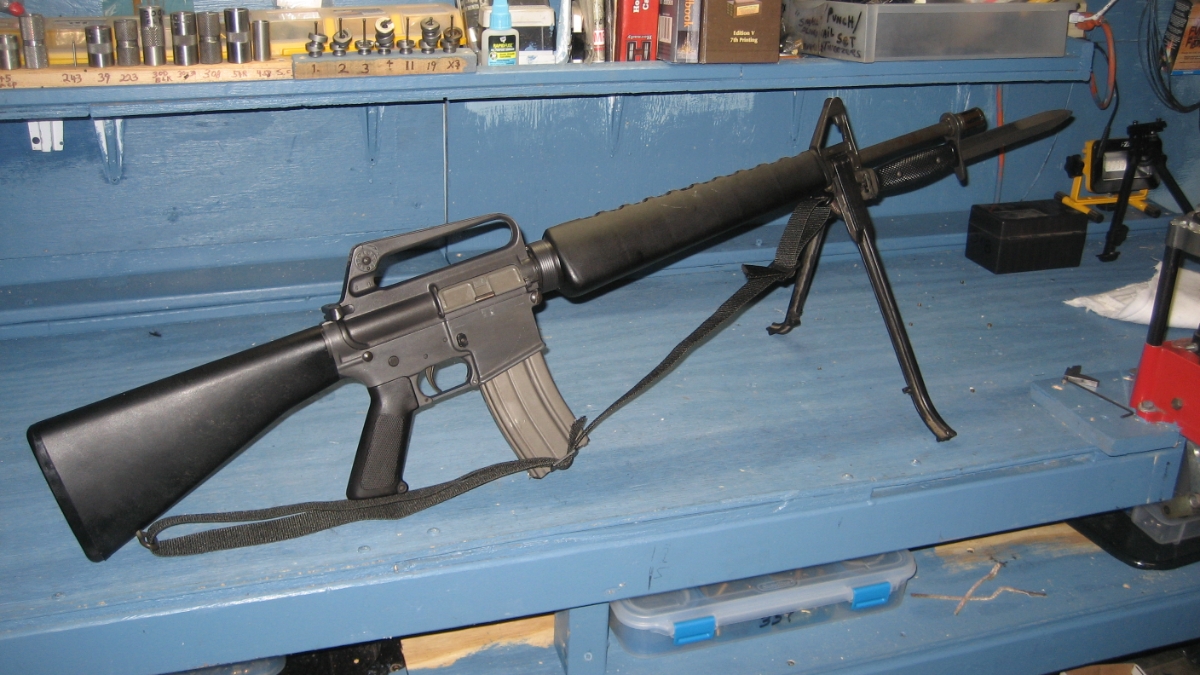
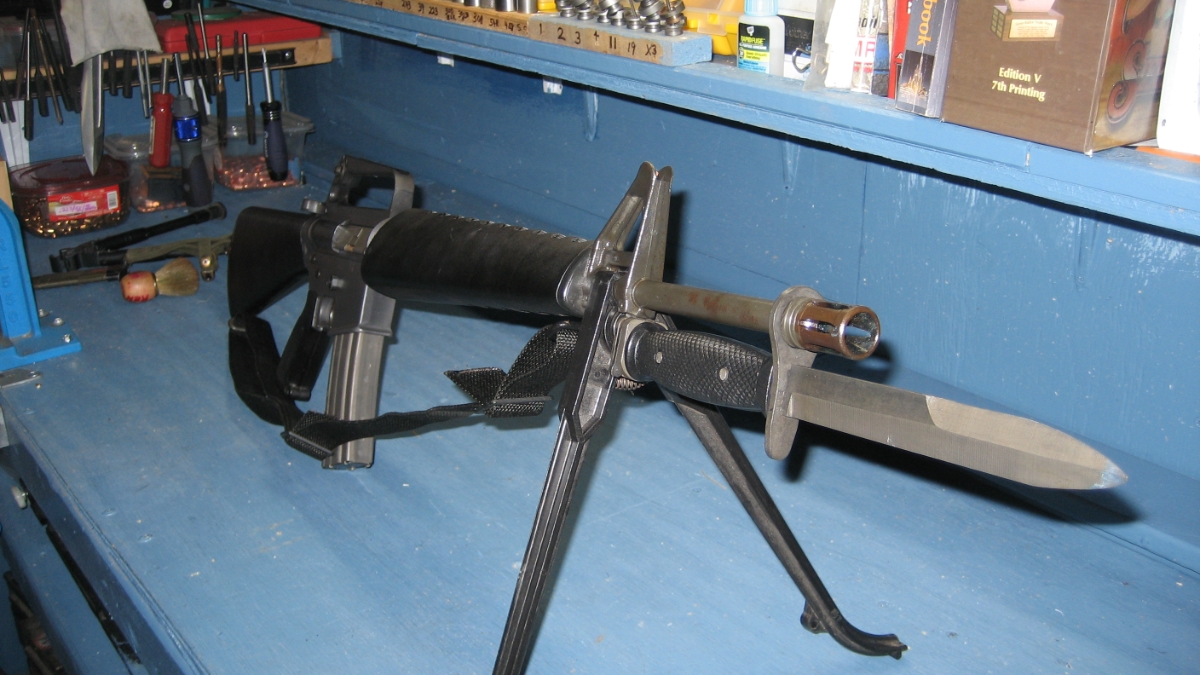
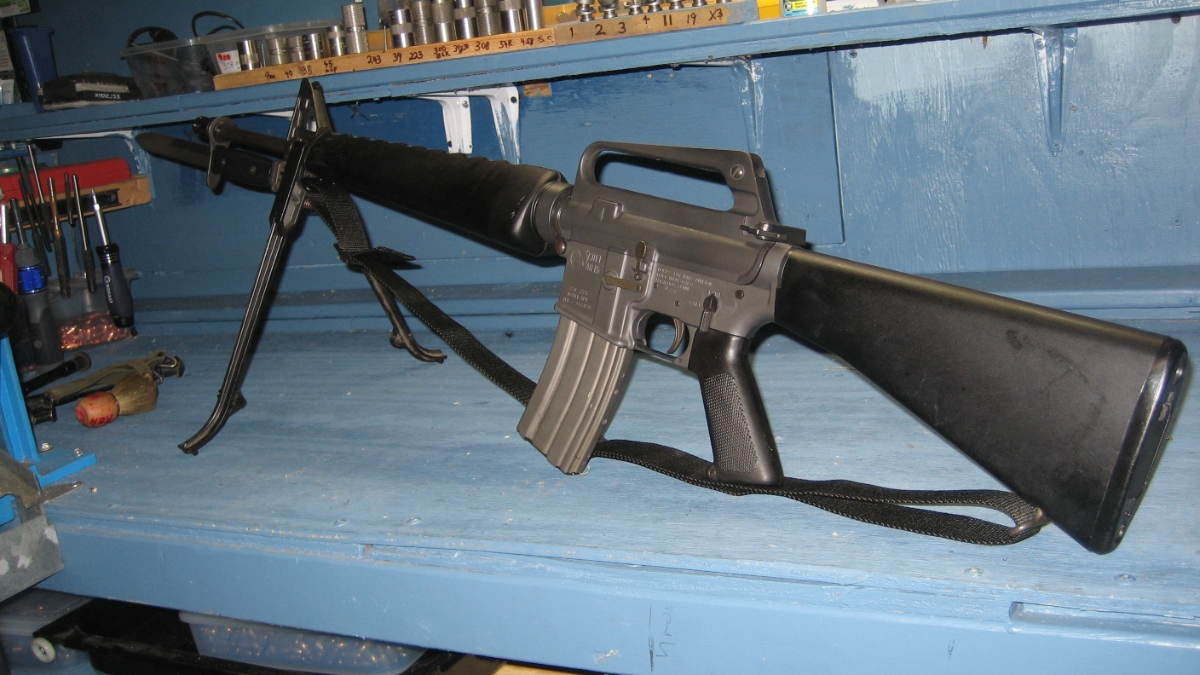
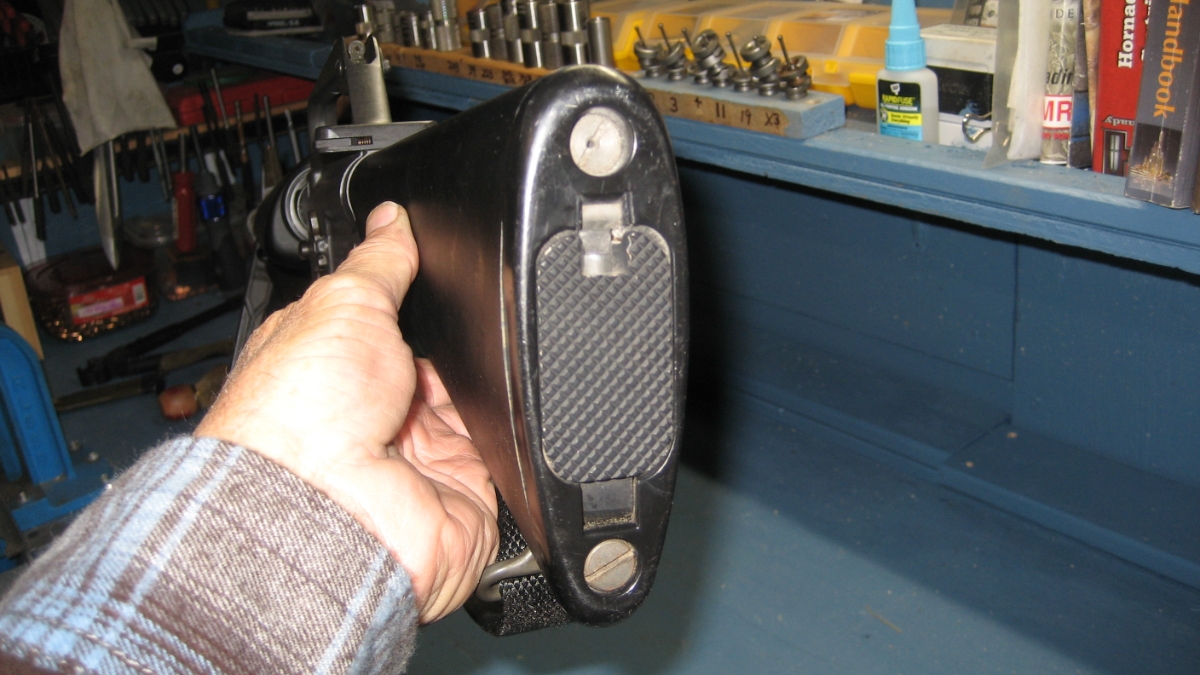
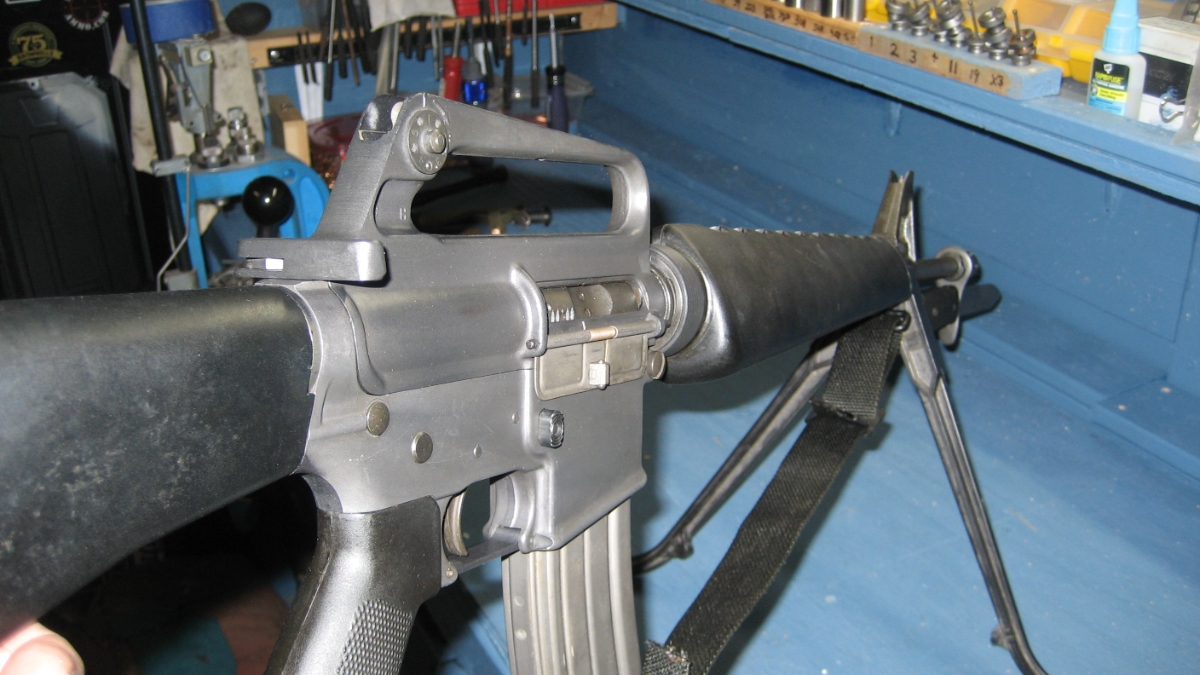
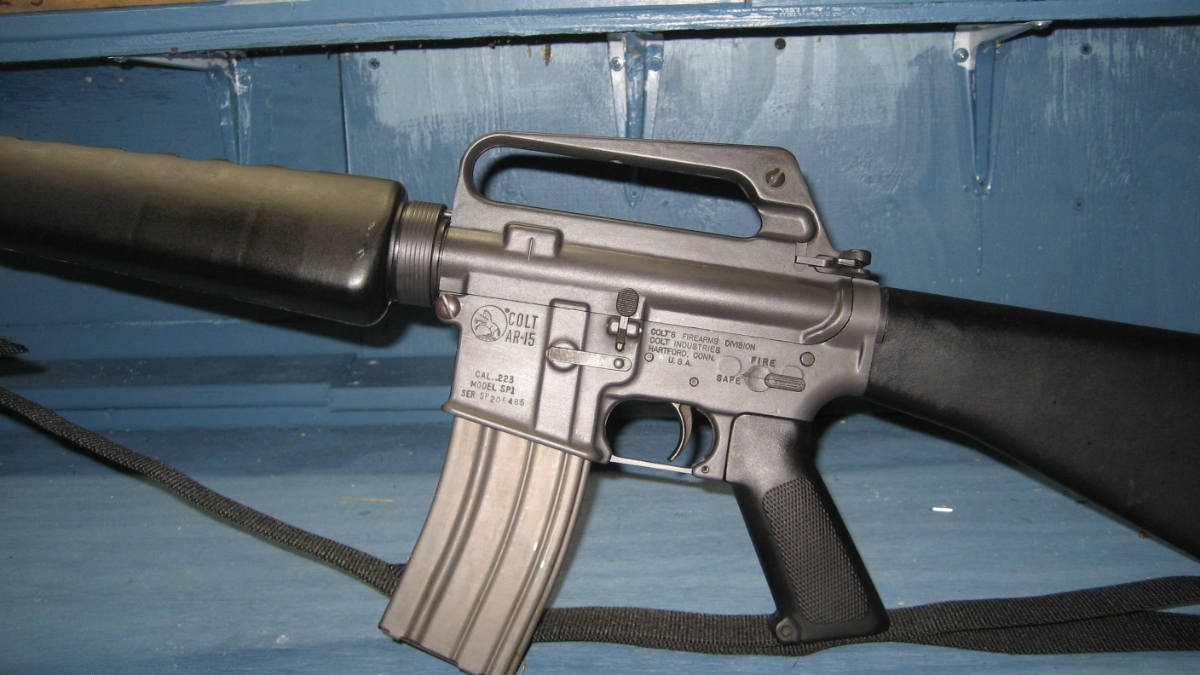
Ah I remember you well old Girl as I humped you around a lot back in the 1980's! a lot back in the Day!

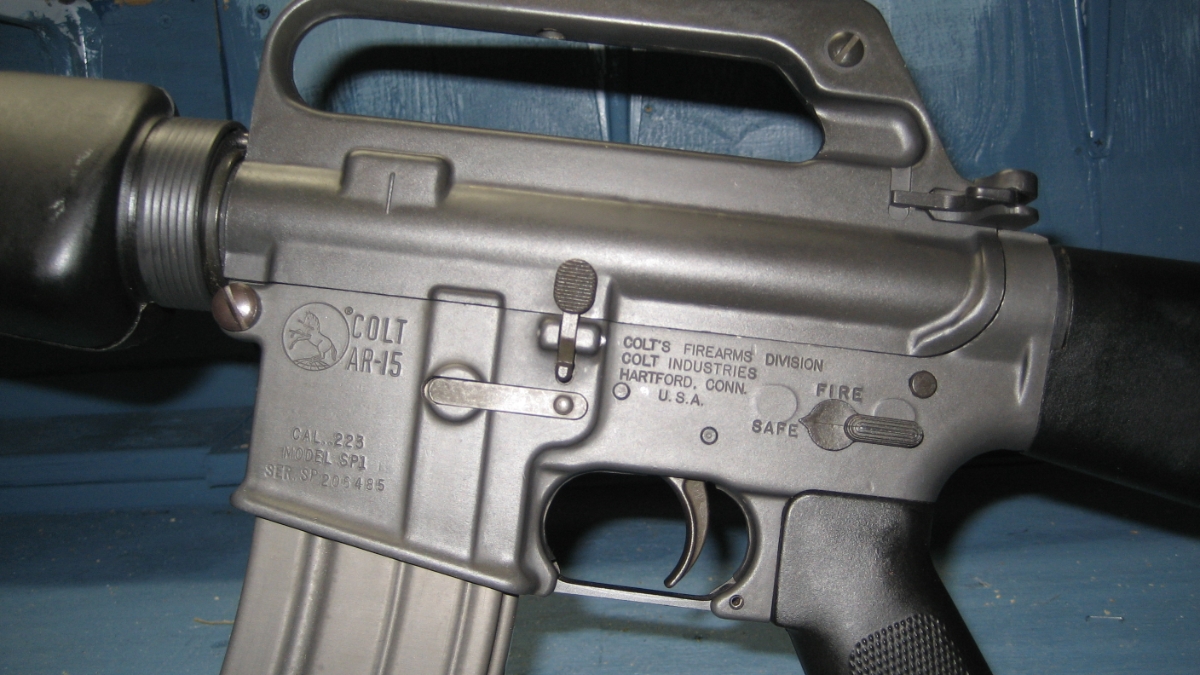
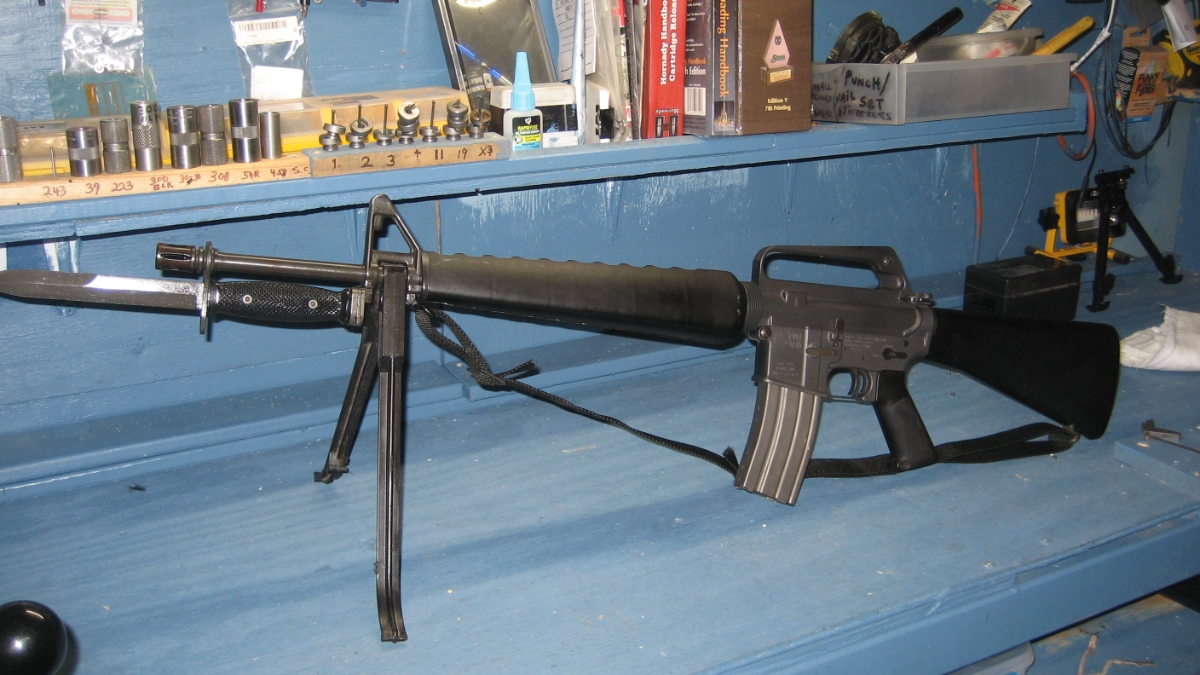
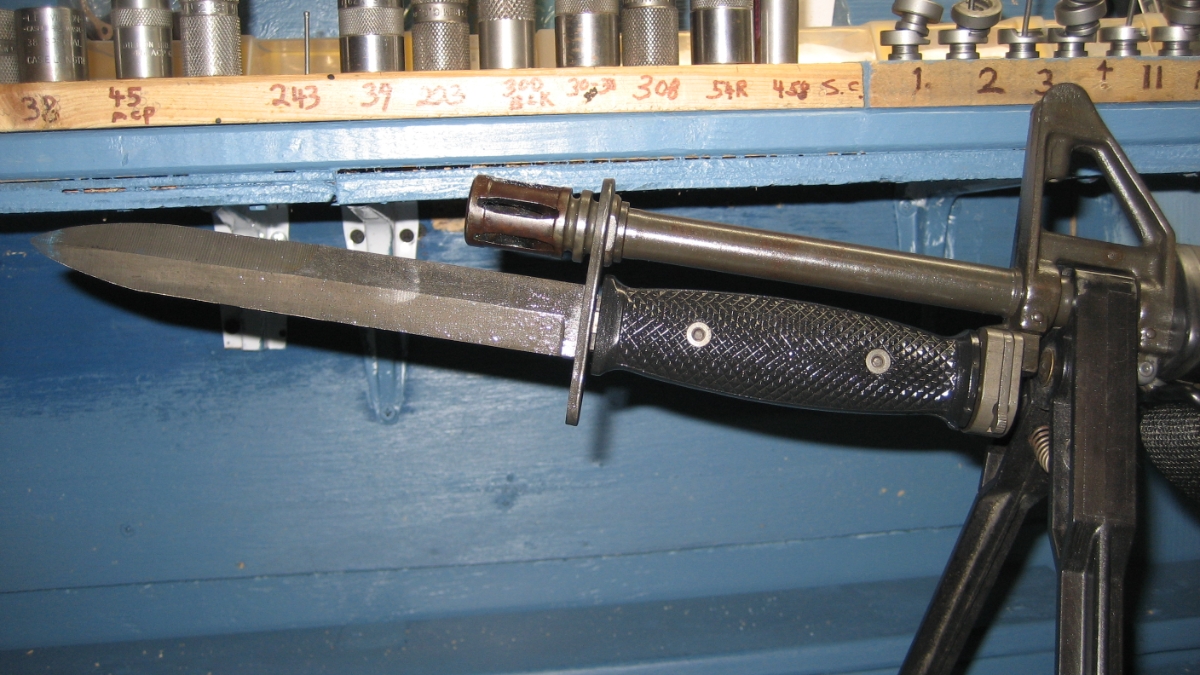
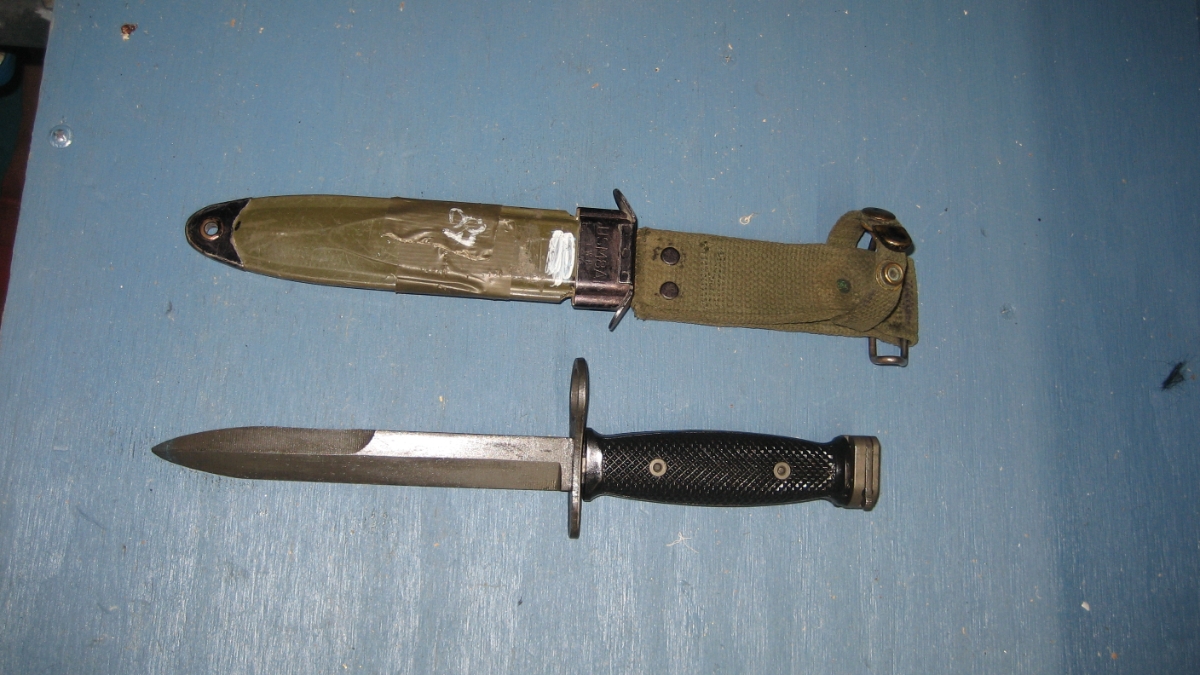
 - Colt M16/ SP1, 5.56 mm NATO, With Sling and Bayonet, Semi version - Picture 1
Colt M16/ Sp1, 5.56 Mm NATO, With Sling And Bayonet, Semi Automatic Version in caliber 5.56mm NATO

 - Colt M16/ SP1, 5.56 mm NATO, With Sling and Bayonet, Semi version - Picture 2
 - Colt M16/ SP1, 5.56 mm NATO, With Sling and Bayonet, Semi version - Picture 3
 - Colt M16/ SP1, 5.56 mm NATO, With Sling and Bayonet, Semi version - Picture 4
 - Colt M16/ SP1, 5.56 mm NATO, With Sling and Bayonet, Semi version - Picture 5
 - Colt M16/ SP1, 5.56 mm NATO, With Sling and Bayonet, Semi version - Picture 6
 - Colt M16/ SP1, 5.56 mm NATO, With Sling and Bayonet, Semi version - Picture 7
 - Colt M16/ SP1, 5.56 mm NATO, With Sling and Bayonet, Semi version - Picture 8
 - Colt M16/ SP1, 5.56 mm NATO, With Sling and Bayonet, Semi version - Picture 9
 - Colt M16/ SP1, 5.56 mm NATO, With Sling and Bayonet, Semi version - Picture 10

Categories
Gear & Stuff The Green Machine

The Army is Gearing Up for a Large-Scale War with Its ‘Big Six’ by MAX SLOWIK on MARCH 21, 2019

The 1st Combat Aviation Brigade, 1st Infantry Division providing air support at the 7th Army Training Command’s Grafenwoehr Training Area, Germany. (Photo: U.S. Army/Matthias Fruth)

Military leaders are putting new munitions programs into gear to prepare for a bigger fight. The Army, specifically, is canceling hundreds of weapons programs to free up cash for what it’s calling the “Big Six.”

The Army has cut or canceled 186 different smaller weapons programs to focus on artillery and surface-to-surface weapons and munitions, improving their howitzers and rocket systems, developing their next-generation combat vehicles, replacing their vertical lift aircraft, developing a military-wide communications system, shoring up their surface-to-air defense networks and finally, completing their future soldier programs.
All of these are to prepare for war with a near-peer military, such as Russia or China. By focusing on these six major fronts the Army is moving away from its counter-insurgency role.

The Army is now focused more on research and development, and improving its ability to mobilize in large numbers. Part of that will include strategic placement of munitions and how Army depots are organized in the U.S.
“This means having the right munitions – small-caliber to precision munitions – where we need them at the right time and the right place,” said Gen. Gus Perna. “That means we must first ensure that the capability we have here in [the U.S.] can receive, store and issue munitions in a timely, effective manner.”

“We know where they are going to distribute ammunition when the time comes, and we know what they have to replace in time of war. This is the first time this has been done, and I am very proud of where we are at” said Perna. “With that said, we have a lot of work to do.”

A U.S. Army Paratrooper during a live-fire exercise in Postonja, Slovenia. (Photo: U.S. Army/Paolo Bovo)

Perna credited the National Guard for doing the bulk of the lifting. “They are lined up to support us,” Perna said. “They are executing moves around the country as we relocate ammunition … where it needs to be.”
The Army expects to buy 5,112 Hellfire missiles this year, up from 2,309 last year. The Army is also upping its small- and medium-caliber munitions budget from $382 million last year to $508 million this year.
“The Army has had challenges with major defense acquisition programs in the last 20 or so years, because we don’t lock in threat, operating concept and ultimately material and have it all come together,” said Army under-secretary Ryan McCarthy.
“That’s where you see big weapons systems fail, is if the operators aren’t saying how we’re going to use it to prosecute a target in this type of fight,” said McCarthy. Each of the Big Six programs has a 1- or 2-star combat veteran as the lead.
The Army has laid out a five-year plan to heavily invest in those six programs. The long-range precision fire program is their top priority and will receive $5.7 billion over 2020-2024.
The Next-Generation Combat Vehicle program will receive $13.2 billion over the five-year course and the Army has earmarked $4.7 billion for the Future Vertical Lift program.
The network is the biggest expense and will receive $12.5 billion. One important aspect of the network is that the Army is building it in-house using commercial, off-the-shelf hardware and will no longer use government-led IT programs.
The Air and Missile Defense program will get a 90 percent boost and receive $8.8 billion over five years, starting with $1.4 billion in 2020.
The Soldier Lethality program also gets a 90 percent increase to $6.7 billion through 2020-2024.
 
____________________________________ Sounds like the Snuffies are not going to get any new & improved Rifles soon to me! Grumpy

Categories
The Green Machine

Johnny Cash – I Won't Back Down – US Army

https://youtu.be/tzulr8cfY-Y

Happy 244 th Birthday US Army!
Related image

Categories
The Green Machine

Happy Birthday – The Green machine / US Army

https://youtu.be/07-RnI8W4xY

Categories
All About Guns The Green Machine

US Army Researchers Developing New Ultra-Light-Weight, High-Velocity Machine Gun by JORDAN MICHAELS

The machine gun is designed to be compact and lightweight like the FN P90 (shown here) while achieving muzzle velocities that rival the full-sized M4.

The United States Army is reportedly developing a new machine gun capable of withstanding higher chamber pressures and allowing for rifle-like bullet velocities out of firearms both lighter and shorter than the M4.
The firearm will use a new breech and bolt design that allows the action to cycle even under extremely high chamber pressures. This added pressure will, in turn, allow projectile velocities to increase, improving terminal ballistics even in compact, short-barreled weapons. In one test, Army researchers achieved a muzzle velocity of 2,900 feet-per-second from a 10-inch barrel using a cartridge holding only 15 grains of powder. For context, most rifles with 10-inch barrels can only push a 5.56 NATO round 2,500 fps, which limits the round’s effectiveness.

“The goal is to get rifle-like velocities out of a very small weapon that is high capacity, that’s either adaptable for room-clearing or confined spaces,” Zac Wingard, a mechanical engineer at the Combat Capabilities Development Command’s Army Research Laboratory, told TechLink. “Like you’re getting in and out of vehicles or a subterranean environment, but also applicable for remotely operated systems, so think like perimeter security or ground robot or even a drone.”
The Army is hoping the technologies can be developed for use both in small, lightweight firearms like the FN P90 and in full-size sniper rifles and belt-fed machineguns. The breech and bolt design would make smaller firearms more effective and would substantially increase the muzzle velocities of larger firearms.

According to TechLink, the U.S. Army’s new 24-inch prototype barrel produced muzzle velocities of 4,600 to 5,750 feet per second. The combustion chamber pressure was increased from 65 ksi to 100 ksi (100,000 pounds per square inch), almost double the pressure seen in the M4 carbine.
“The powder used now in most ammunitions can be tweaked, so it runs at a higher pressure, but the guns can’t handle it,” Alex Michlin, the Army research engineer who invented the new design, told TechLink. “That’s why we designed the new breech, so we can take existing propellant and turn the knob all the way up to 11.”

To accommodate these higher pressures, Michlin developed a bolt that screws into the barrel breech. He also developed a collet that surrounds the cartridge while it’s seated in the chamber, which allows the spent casing to be extracted after firing. The tapered wedges, according to TechLink, reduce extraction forces by 50%, leaving more energy for cycling the bolt.

Photo: TechLink/ Zac Wingard/ARL

Velocity matters because, as Clay Martin outlined in a 2016 article, short-barreled rifles chambered in 5.56 struggle to push rounds fast enough (around 2,700 fps) to turn the .22-caliber projectile into a “tissue blender.” If researchers can increase velocities, infantrymen can enjoy the benefits of small calibers like the 5.56 without having to carry rifles with 16+-inch barrels.
 
___________________________________
One weird looking piece if you ask me! But if it works, why not!?! Grumpy

Categories
A Victory! Dear Grumpy Advice on Teaching in Today's Classroom Good News for a change! Hard Nosed Folks Both Good & Bad I am so grateful!! Leadership of the highest kind Stand & Deliver The Green Machine This great Nation & Its People War Well I thought it was neat!

What a Stud!!

Your Army

Medal of Honor announced for soldier who fought through three floors of insurgents in Fallujah

The president will award the Medal of Honor on June 25 to a soldier who fought through a nest of insurgents during the second Battle of Fallujah in 2004, the White House officially announced Monday.

Then-Staff Sgt. David G. Bellavia originally received the Silver Star for his actions, but his citation was revisited as part of a review of valor awards and determined worthy of the nation’s highest combat award.

The award will give Bellavia one of now seven Operation Iraqi Freedom Medals of Honor, and make him the only living recipient from the Iraq War.

During the battle, Bellavia single-handedly killed multiple insurgents, including one during hand-to-hand combat.

A squad leader at the time, Bellavia, now 43, was clearing a block of buildings when his platoon was pinned down on Nov. 10, 2004, in Fallujah, Iraq.

The first nine buildings were found to be unoccupied, but were filled with rockets, grenade launchers and other weapons. When Bellavia and four others entered the 10th building, they came under fire from insurgents in the house, according to his Silver Star citation.

The ensuing gun battle injured several soldiers. Bellavia switched out his M16 rifle for an M249 SAW gun and entered one room where the insurgents were located to spray it with gunfire, forcing the Jihadists to take cover and allowing the squad to move out into the street.

Other insurgents on the rooftop of the building began firing on his squad below, forcing them to seek cover in a nearby building. Bellavia then went back to the street and called in a Bradley Fighting Vehicle to shell the houses before re-entering the building to assess the scene.

Upon entering, Bellavia gunned down one insurgent who was loading an RPG launcher. A second enemy fighter began firing as he ran toward the kitchen and Bellavia fired back, wounding him in the shoulder. A third insurgent then began yelling from the second floor.

Cache of weapons confiscated in Fallujah by Staff Sgt. David Bellavia and his unit. (Army)

Cache of weapons confiscated in Fallujah by Staff Sgt. David Bellavia and his unit. (Army)

Bellavia then entered the uncleared master bedroom and emptied gunfire into all the corners, at which point the wounded insurgent entered the room, yelling and firing his weapon, the citation reads. Bellavia fired back, killing the man. Bellavia was then shot at by another insurgent upstairs and the staff sergeant returned the fire, killing him as well.

“At that point, a Jihadist hiding in a wardrobe in a bedroom jumped out, firing wildly around the room and knocking over the wardrobe. As the man leaped over the bed he tripped and Sergeant Bellavia shot him several times, wounding but not killing him,” the citation reads. “Another insurgent was yelling from upstairs, and the wounded Jihadist escaped the bedroom and ran upstairs. Sergeant Bellavia pursued, but slipped on the blood-soaked stairs.”

Bellavia followed the bloody tracks of the insurgent up the stairs to a room on his left. Hearing the wounded insurgent inside, he threw a fragmentary grenade into the room, which caused the insurgent to flee to the roof. Two more insurgents began yelling from the third story of the building.

Bellavia grabbed the wounded insurgent and put him in a choke hold to keep him from giving away their position.

“The wounded Jihadist then bit Sergeant Bellavia on the arm and smacked him in the face with the butt of his AK-47. In the wild scuffle that followed, Sergeant Bellavia took out his knife and slit the Jihadist’s throat,” the Silver Star citation reads. “Two other insurgents who were trying to come to their comrade’s rescue, fired at Bellavia, but he had slipped out of the room, which was now full of smoke and fire.”

A final insurgent dropped from the third story to the second-story roof. Bellavia saw the fleeing man and fired at him, hitting him in the back and the legs and causing him to fall off the roof and die.

By this point, five members of the platoon had entered the house and took control of the first floor. Before they would finish off the remaining insurgent fighters, however, they were ordered to move out of the area because close air support had been called in by a nearby unit.

The White House release said that Bellavia’s actions that day rescued an entire squad, cleared an insurgent strongpoint, and saved many members of his platoon from possible death.

Bellavia originally enlisted in the Army in 1999 and served in Kosovo, before deploying to Iraq in 2004 with Company A, Task Force 2-2, 1st Infantry Division. After leaving the service on Aug. 16, 2005, he has engaged in New York state politics and continued to serve the military and veteran communities through various advocacy groups.

Bellavia now has his own daily radio talk show for WBEN in Buffalo.