Category: The Green Machine

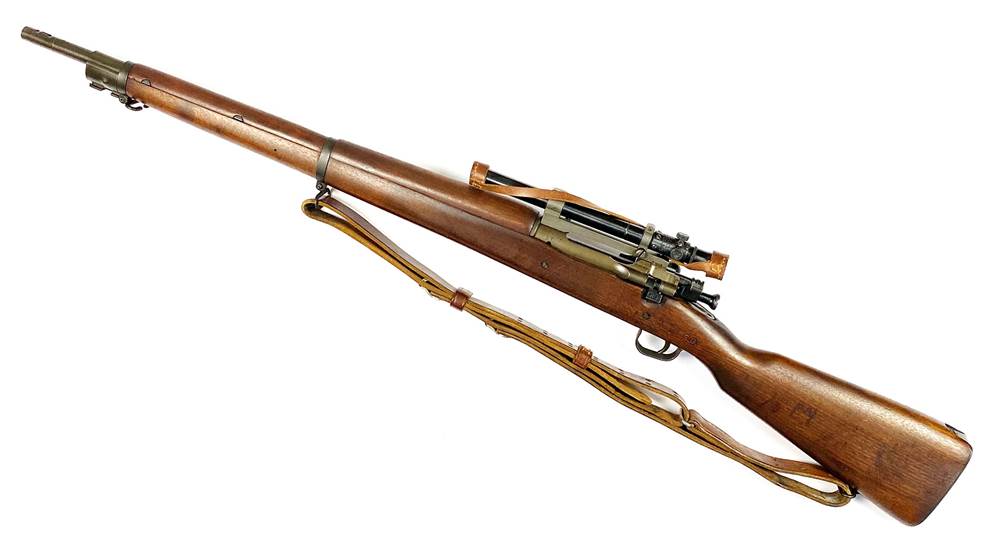
After World War I proved the utility of scoped rifles on the modern battlefield, the U.S. Army realized that it should build off the lessons learned in the mud and blood of the trenches and begin evaluating scopes and scoped rifles for future conflicts. Fortunately, the National Archives have records of some of these tests, both those conducted during the relative peace of the interwar years and the early years of World War II, when the need for a suitable sniper rifle was more acute.
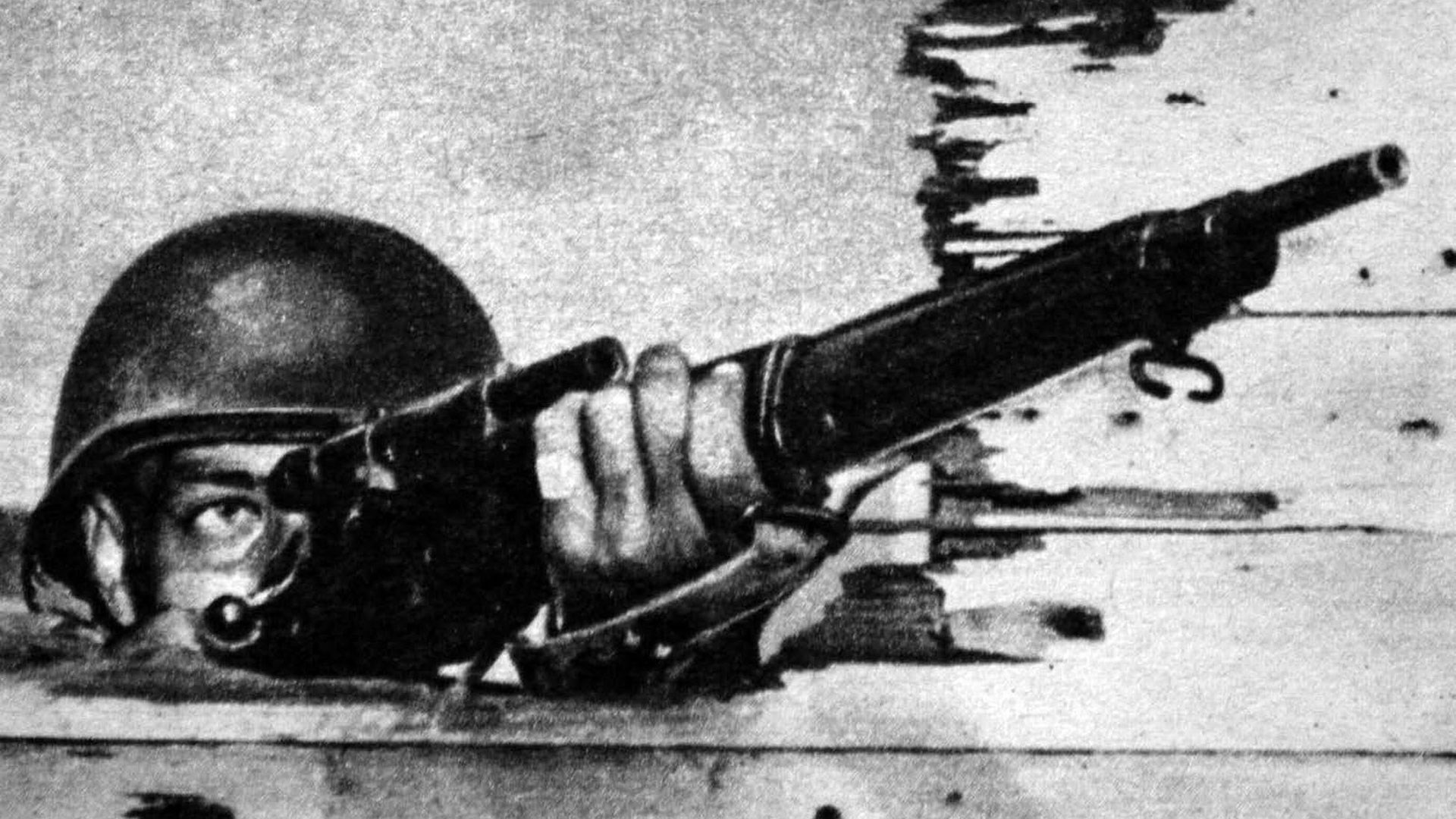 A U.S. soldier takes aim with his M1903A4 sniper rifle.
Even better, the fine folks at Archival Research Group have started the herculean task of digitizing many of these fascinating primary source records for the casual armchair historian to pore over.
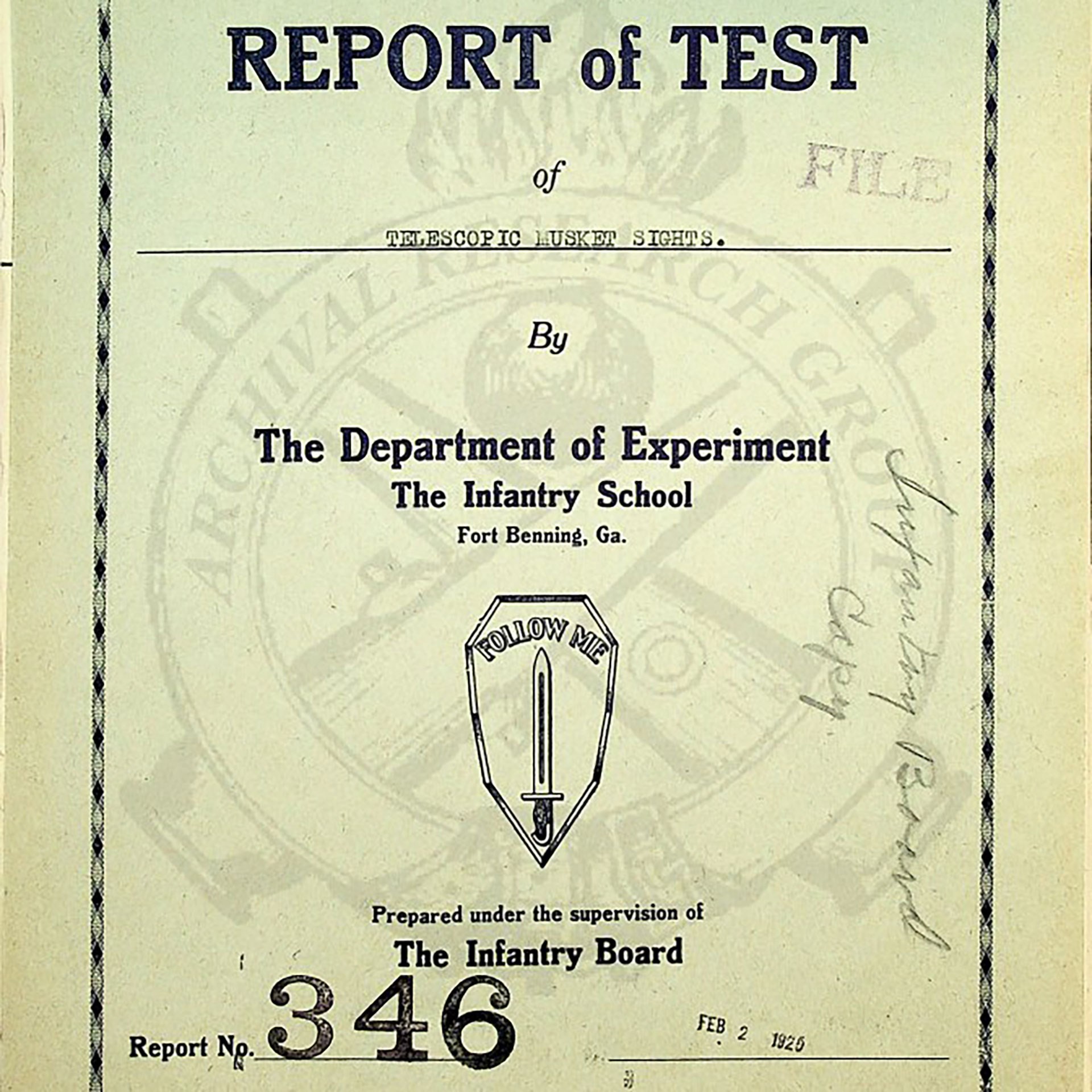
The 1925 Test
A test conducted by the Army’s “Department of Experiment” at Fort Benning, Ga., in 1925 determined that a “telescopic sight should be mounted and issued on a specially accurate rifle having a specially constructed stock with high comb and less drop at the heel…” and one also featuring a longer length of pull than the standard service stock. They felt these changes were necessary to get the greatest advantage out of the scoped rifle, and to make it more comfortable for a range of shooting positions.
 (Photo courtesy of Archival Research Group)
Interestingly, they singled out a weapon already in production at Springfield Armory – the NRA “sporting type” rifle – as the ideal candidate. They noted it as the most accurate of all the Model 1903 rifles (even more so than ones specially selected for the National Matches they claimed), and further stated that “it is provided with the Model 1922 stock, having exactly that high comb, small drop at the heel, and length which experience indicates will be most satisfactory with a telescopic sight.”
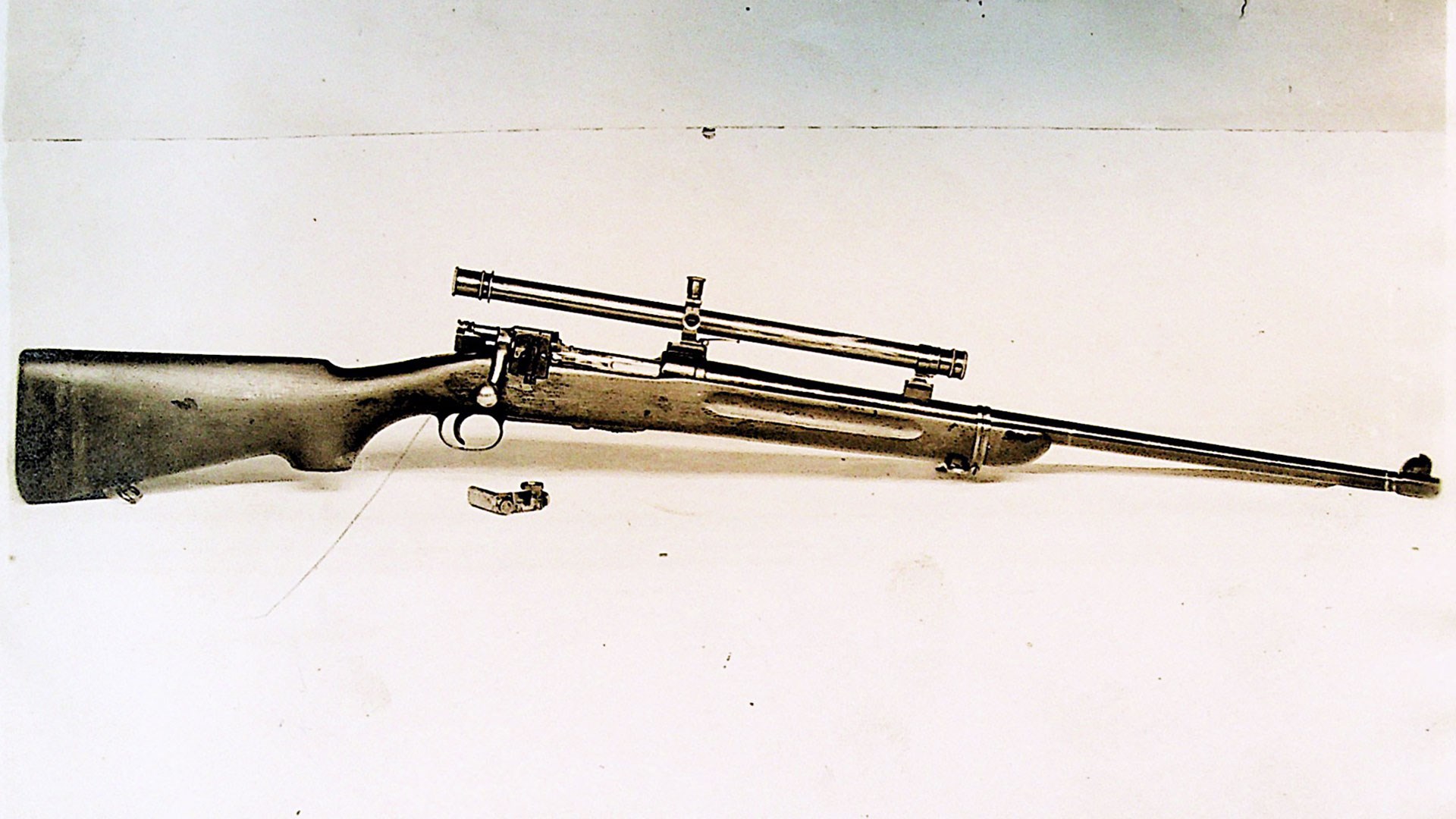 A Springfield Armory Model 1922, .22-Cal., rifle with Winchester A5 Scope mounted. The NRA M1903 “sporting type” rifles looked very similar, and the stock of the Model 1922 was desired. (Photo courtesy of Archival Research Group)
In the end they came down on the side of the sniper rifle, stating that “In any future war it may or may not have a decided usefulness, depending on local conditions. It is therefore felt that this instrument [rifle scope] should be developed to an ultimate successful type”.
Despite this apparent interest in fielding standardized scoped rifles, the U.S. Army allowed its peacetime sniper rifle program to atrophy into functional non-existence. Only the Marine Corps fielded any real number of scoped rifles, and unlike the more compact scopes favored by the Army, they chose to use 16″ long target-style scopes produced first by Winchester and later by Lyman.
The 1942 Test
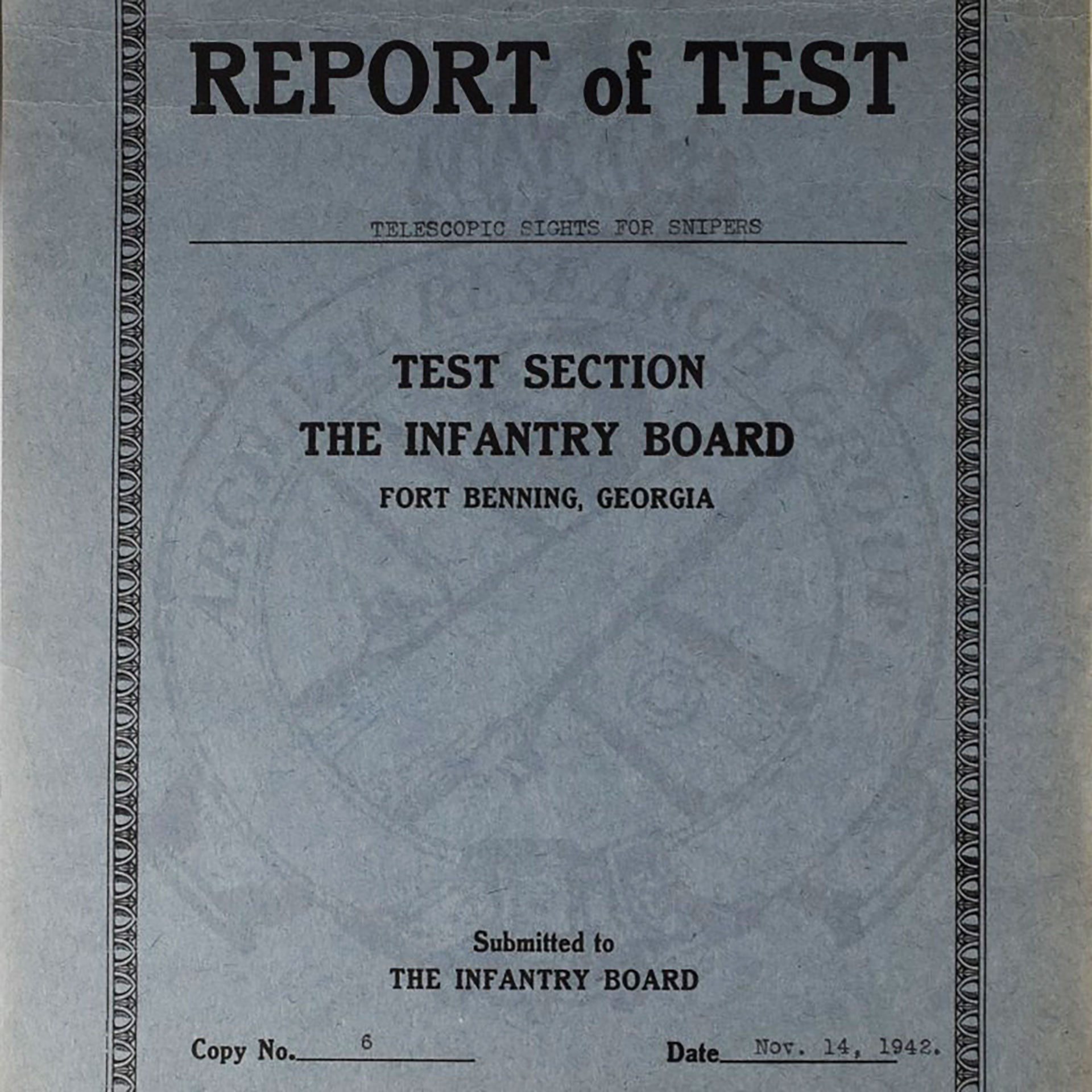
After the U.S. entry into World War II, the Army once again faced the reality that there was a need for a scoped rifle for use by snipers and other marksman on the battlefield. Unlike 1925, there was a pressing need to get an effective sniper rifle into the hands of soldiers and marines in a timely fashion. To determine what form that rifle should take, they once again embarked upon a series of tests at Fort Benning, now conducted by the Test Section of the Infantry Board. In these tests, dated Nov. 1942, they set out to settle three primary things: the rifle, the optic and the mounting location.
 (Photo courtesy of Archival Research Group)
The Rifle
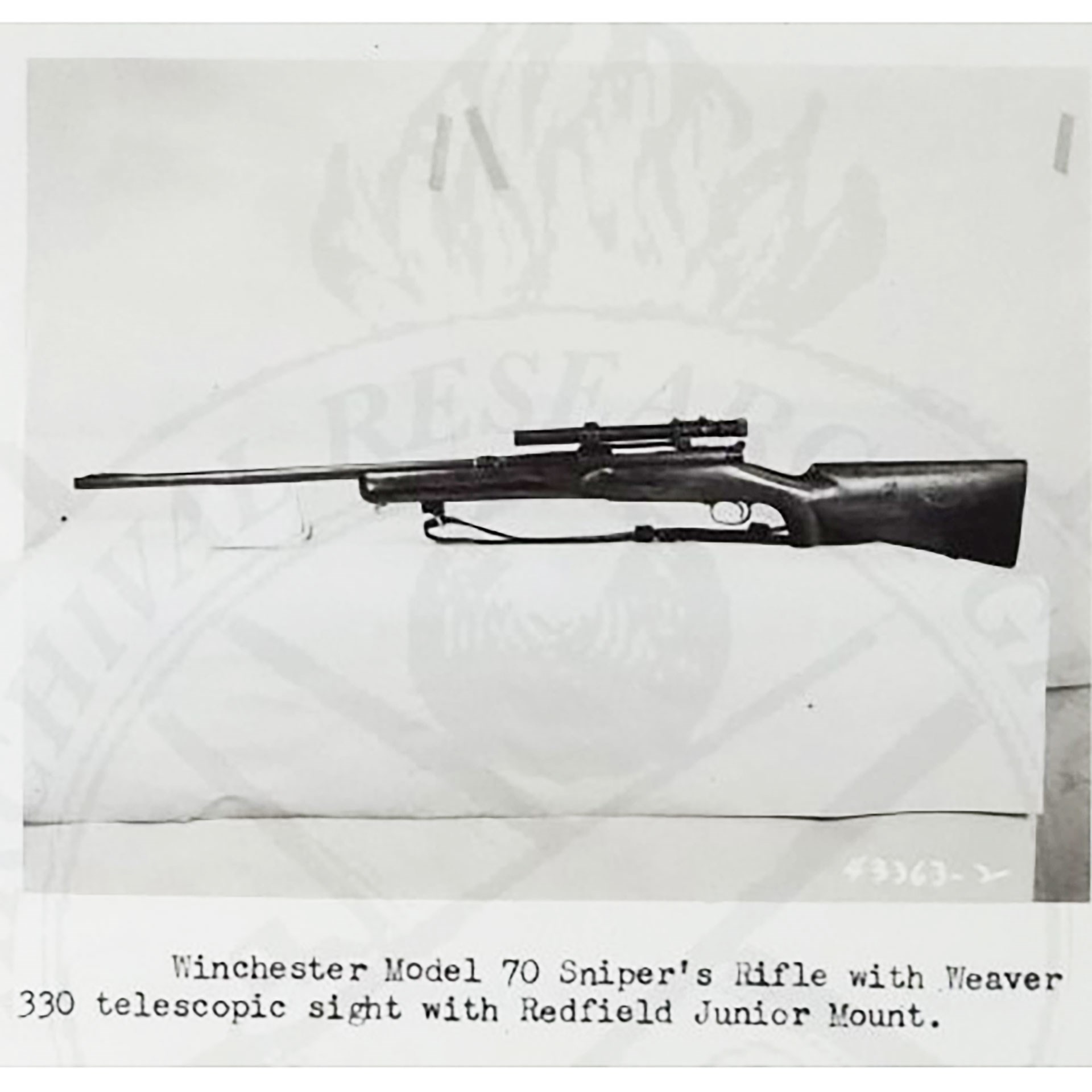
The first task was determining “the type of service rifle most suitable for the use of telescopic sights.” As the NRA Sporters had been discontinued, and the M1 Garand had officially supplanted the M1903 as the Army’s standard rifle, the Army test now considered three contenders: commercial style rifles, the M1903, and the M1. The Test Section received four Winchester Model 70 rifles, which came mounted with Weaver hunting style scopes. While pre-64 Model 70s are beloved and sought-after weapons today, the Army wanted nothing to do with them for simple logistical reasons (although the USMC, and eventually even the Army, would field small numbers of them).
 (Photo courtesy of Archival Research Group)
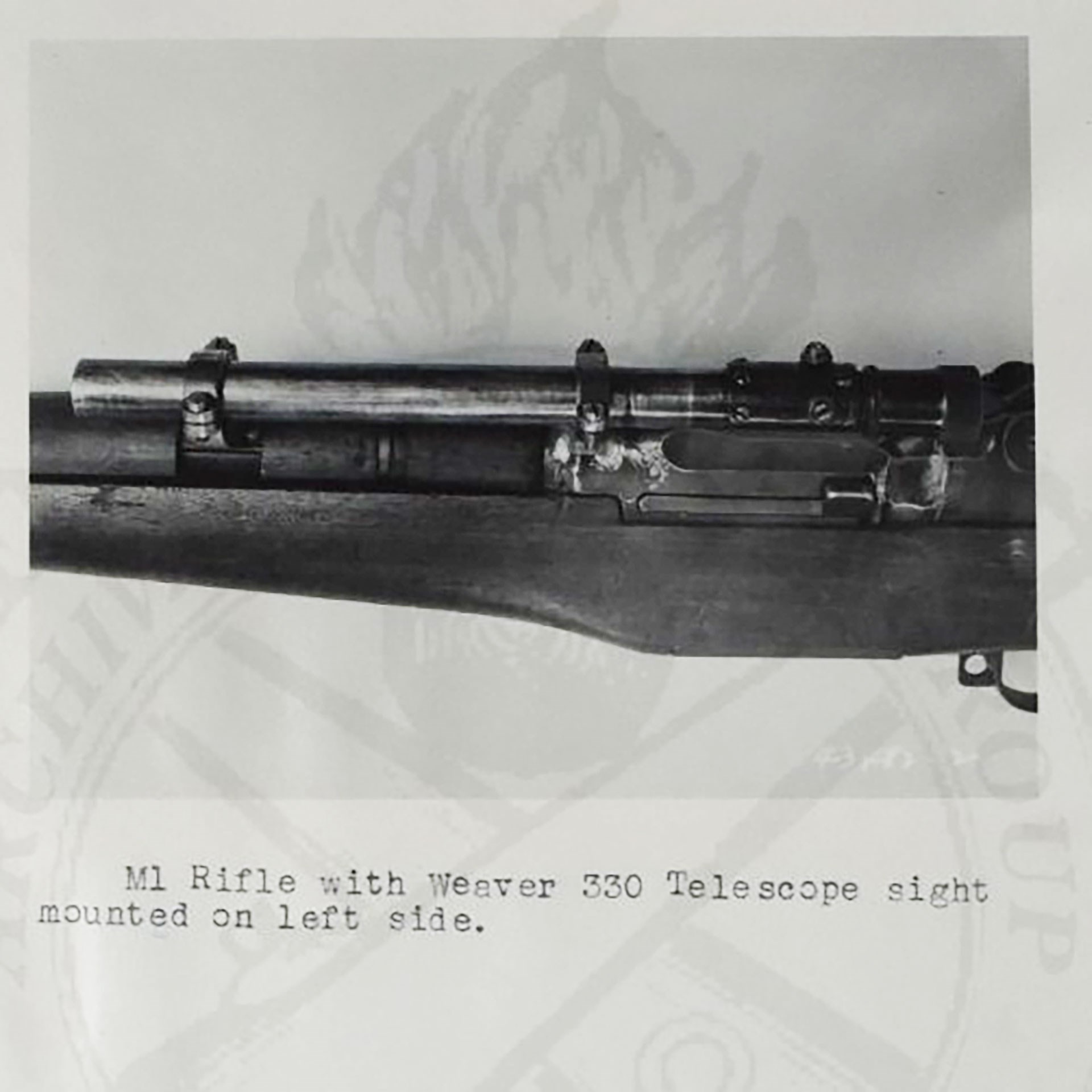
In the 1942 report, they brusquely dispensed with them by stating “Manifestly, this equipment is not what is desired for the reason that the Winchester rifle is not standard and it is not desirable to add another weapon of this type to the rifle company.” Instead, they determined that both the M1903 and M1 were suitable for use by snipers due to them being “extremely accurate” and already part of the standard inventory. They did set forth certain criteria however, and stated that the rifles should be hand selected based on shot group size, and their actions be hand finished.
 (Photo courtesy of Archival Research Group)
While they no longer desired the Model 1922 stocks from the NRA Sporters, they stated that “Stocks should be selected and carefully fitted” and that “In the case of the M1903, the National Match rifles with type ‘C’ stocks would be most desirable.” The “C” stocks featured a full pistol grip, instead of the original service rifle’s straight stock, and had found great favor with competition shooters during the inter-war years. As far as the rifle was concerned, the Test Section’s feelings were summed up when they said “All things should be done to insure smooth operation and greatest accuracy.”
The Optic
Now that they figured out the platform, they would have to “determine the most satisfactory type of telescope for sniping use.” In the end they would compare two scope designs: the higher magnification target style scopes used by the Marines, and the more compact but much lower magnification hunting type scopes. Alongside choosing what scope to use, they had to “determine the type of reticle to be used in the sniper’s telescope.”
 (Photo courtesy of Archival Research Group)
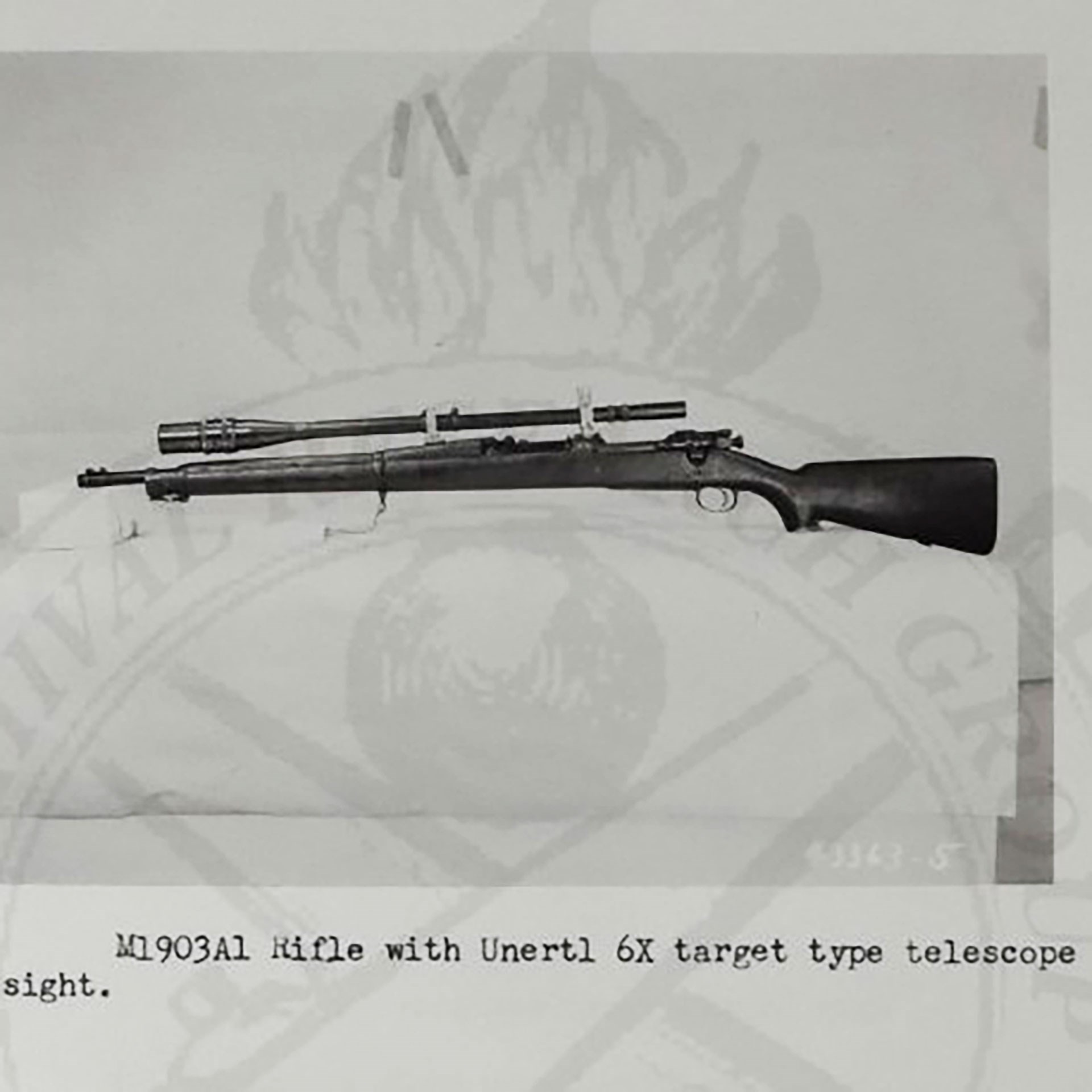
The target type optic that was tested was a Unertl 6X magnification scope mounted on a M1903A1 rifle (the A1 basically being a standard M1903 mounted in a full pistol grip C stock). The Army testers quickly determined that the target style scope would not fit their needs, and noted two main issues that “preclude[d] its use as a ‘field service’ sight.”
First was the overall bulk and fragility of the scope, which while acceptable for the competition firing line, raised concerns about how they would hold up in harsh field conditions. Second was the size of the objective lens, and the type of mount required to attach it to a rifle. In the view of the testers this combined to force the shooter to adopt “awkward firing positions,” which were “uncomfortable, unsteady and slower” than other designs.
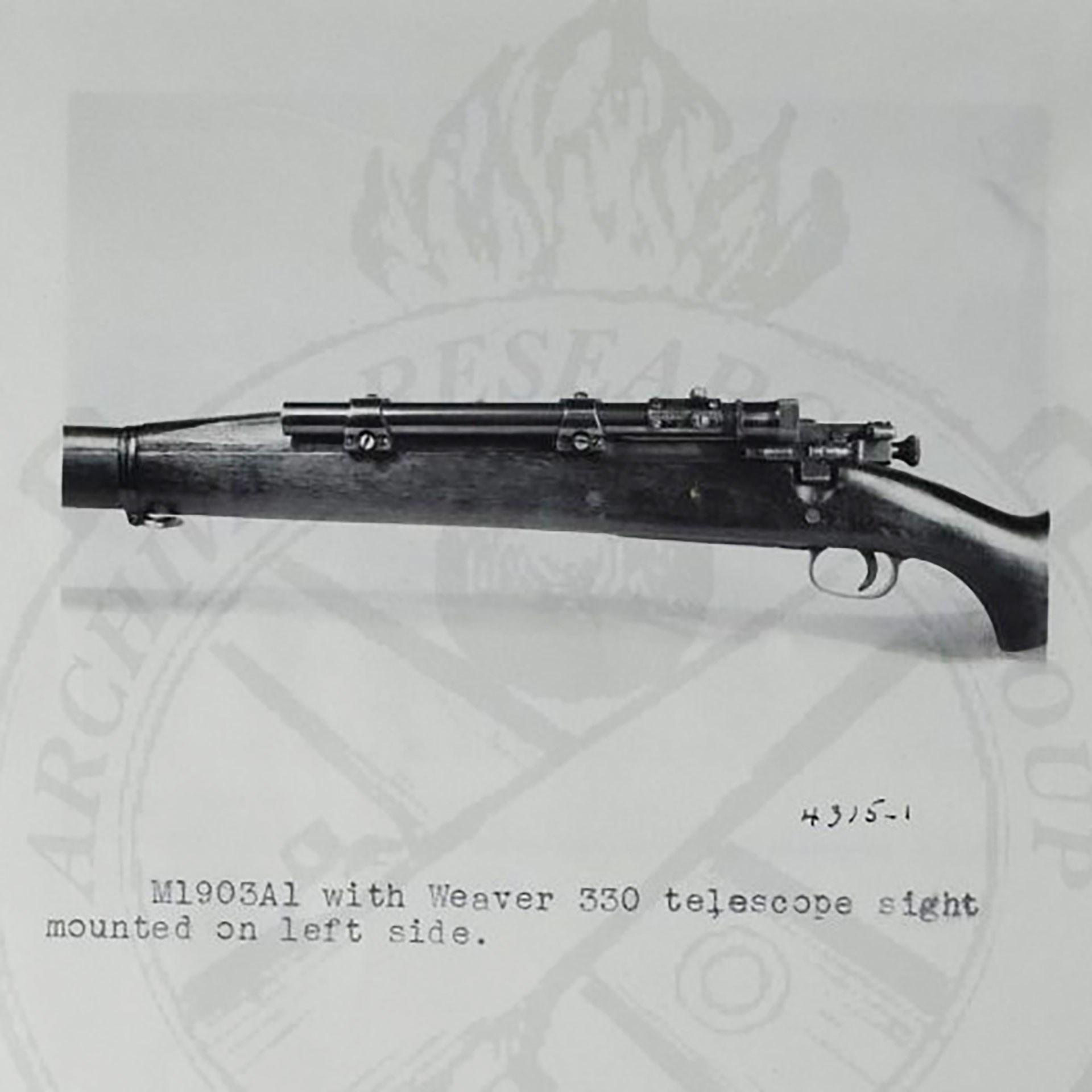 (Photo courtesy of Archival Research Group)
For the “hunting-type scope” however, they had high praise, calling it a “very compact, sturdy sight” which “has been used extensively by sportsmen in all climates and on all sorts of terrain.” The particular scope they used in the testing was a 2.5X magnification Weaver 330, but they noted that “prior study of other makes of hunting telescope indicates that any of the American makes of the same type would be satisfactory for sniper use,” and specifically called out Weaver, Lyman, Noske and Unertl as known suitable manufacturers.
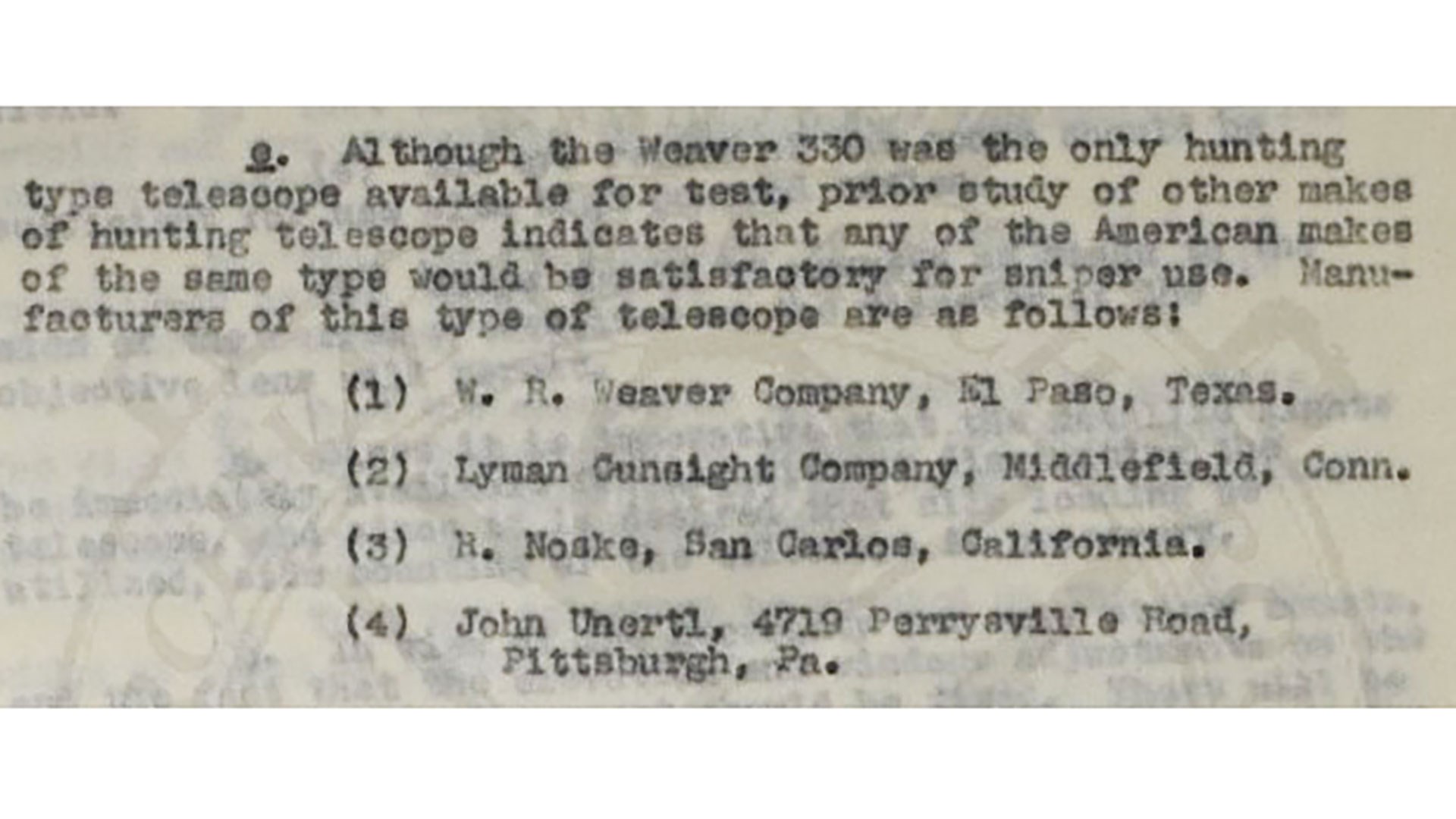 (Photo courtesy of Archival Research Group)
The testers felt that this simple sight was rugged enough to withstand conditions in the field and, somewhat optimistically perhaps, hoped that “many inducted soldiers will already be trained in its use.” They also specially mentioned that the adopted scope should have “elevation and windage screws [with] knobs and clicks similar to the Weaver 330C,” something that would provide the shooter with tactile feedback when adjusting the scope, and allow them to make adjustments without having to closely eyeball hashmarks as they went.
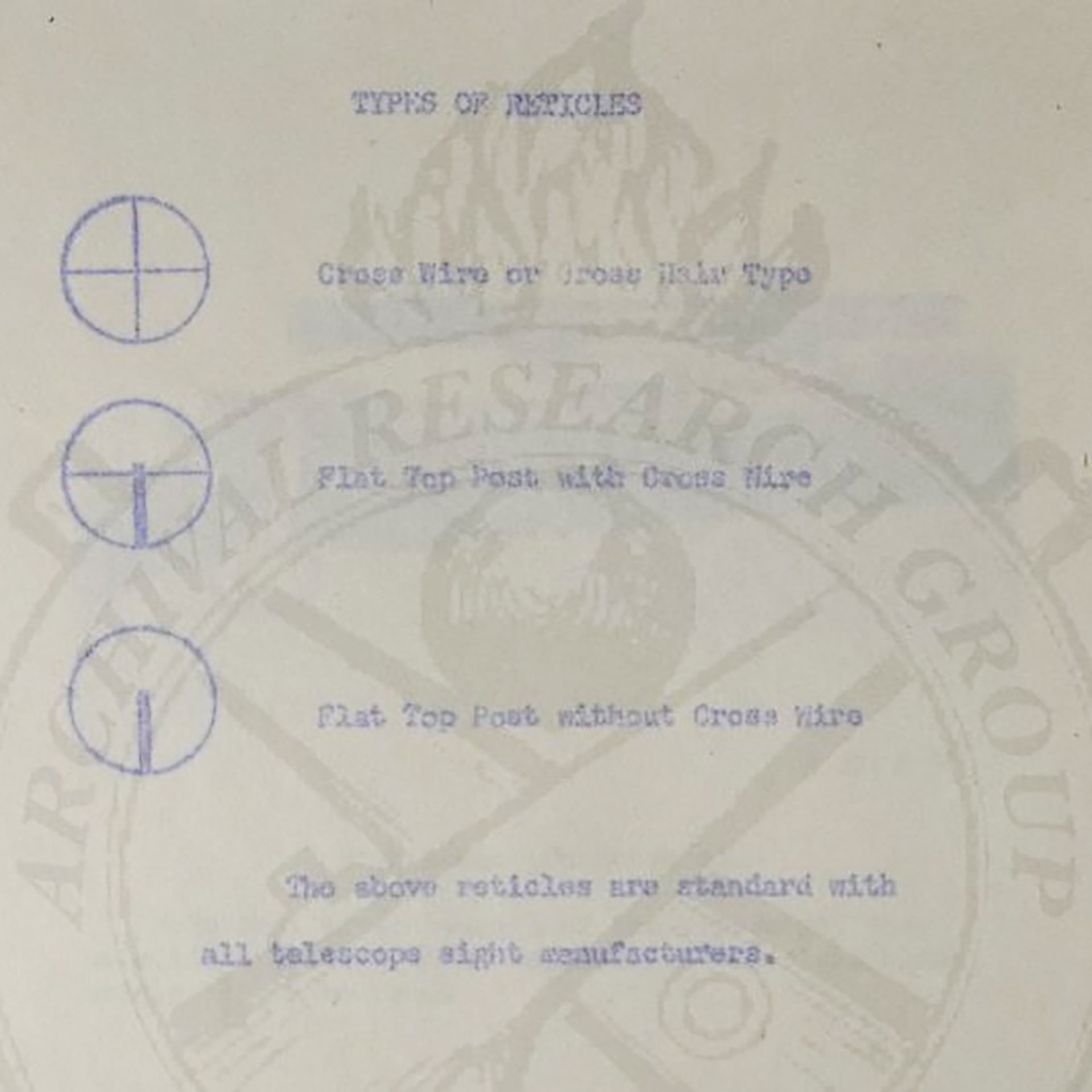 (Photo courtesy of Archival Research Group)
As to the issue of reticle, the Test Section looked at three types: standard crosshair, flat top post and flat top post with a cross wire. While the report notes a preference for the crosshair type with medium thickness wires, it noted that the others would be suitable substitutes.
The Mounting Location
Finally, with the rifle and scope sorted out, the Test Section need to work out the most advantageous way to marry them together. In determined the following factors to be essential:
“(1) That due to the possibility of injury to the scope without disabling the rifle, the metallic sights must be instantly available for use with the scope mounted. (2) Mounts must be sturdy and rigid. (3) Since […] after dismounting and remounting it is necessary to make slight corrections from the former zero, the telescope should not be dismounted in the field. (4) The eye relief of the scope should be sufficient for use with high power rifles. (5) Scope should be mounted as close to the side of the barrel or receiver as the diameter of the objective lens will permit.”
(Photo courtesy of Archival Research Group)
Recognizing that even the hunting-style scopes of the day were still fairly fragile pieces of equipment, and that clip-loading was desirable (and essential on the M1), the Test Section deemed that a side mounted scope was necessary to free up the top of the rifle for aiming with iron sights and loading. They also departed from other nations’ designs by stating that instead of a detachable scope that would be stored in a protective case when not in use, the scope would be permanently fixed in a non-adjustable mount, with all windage and elevation adjustments being internal to the scope itself.
The Birth of the M1903A4 – And Some Significant Deviations from the Recommendations
Like any government acquisitions program, there will typically be some deviation from what the requesting agency asks for and what they ultimately receive. While the reasons for such differences can be legion, so often it boils down to time, simplicity, and money – which appears to be the driving factors behind what became the most common sniper rifle that was fielded to American forces in World War II and Korea.
The Rifle
The first concession to ultimately be made when actually producing the new sniper rifle was the selection of the M1903A3 instead of the M1903 or M1903A1 as the bolt-action sniper platform. While a fundamentally similar rifle, the M1903A3 was created an expedient variation to increase production speed and decrease cost during the war, and generally isn’t quite as finely fitted and finished as peace-time production M1903s. In particular it makes extensive use of stamped parts, to include the integral triggerguard and floorplate, barrel bands and sling swivels.
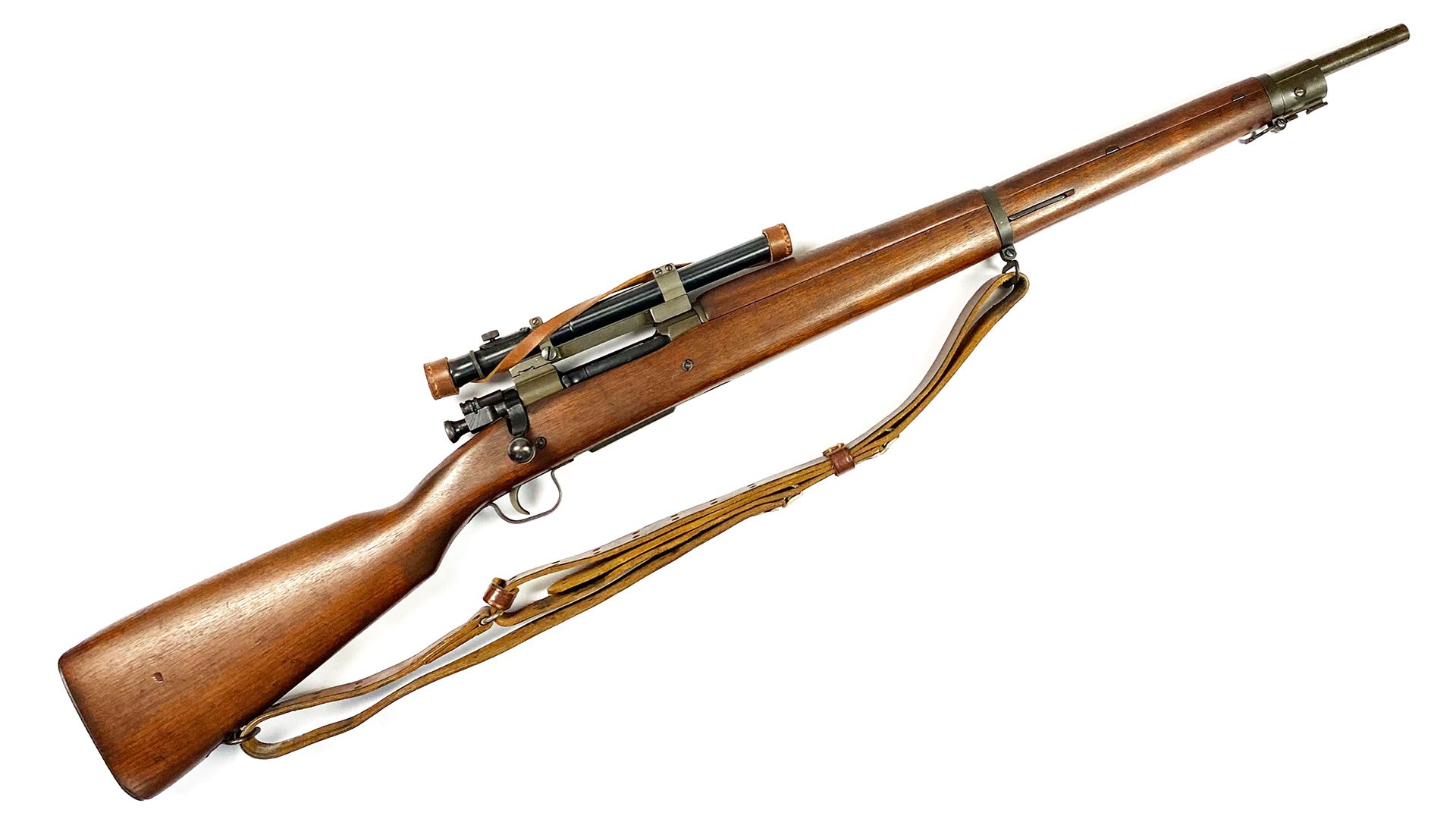 The Author’s Remington M1903A4 sniper rifle.
The feature most notable from a distance is the substitution of a rear receiver mounted aperture sight, something that removed the need for the traditional ladder-type sight, which had its space filled with an extended hand-guard. And since M1903 production had long since ended at Springfield and Rock Island, two commercial firms had been selected to produce the M1903A3 – Remington and Smith-Corona. In the end, only Remington would be contracted to produce sniper variants, while Smith-Corona only produced the regular service rifle.
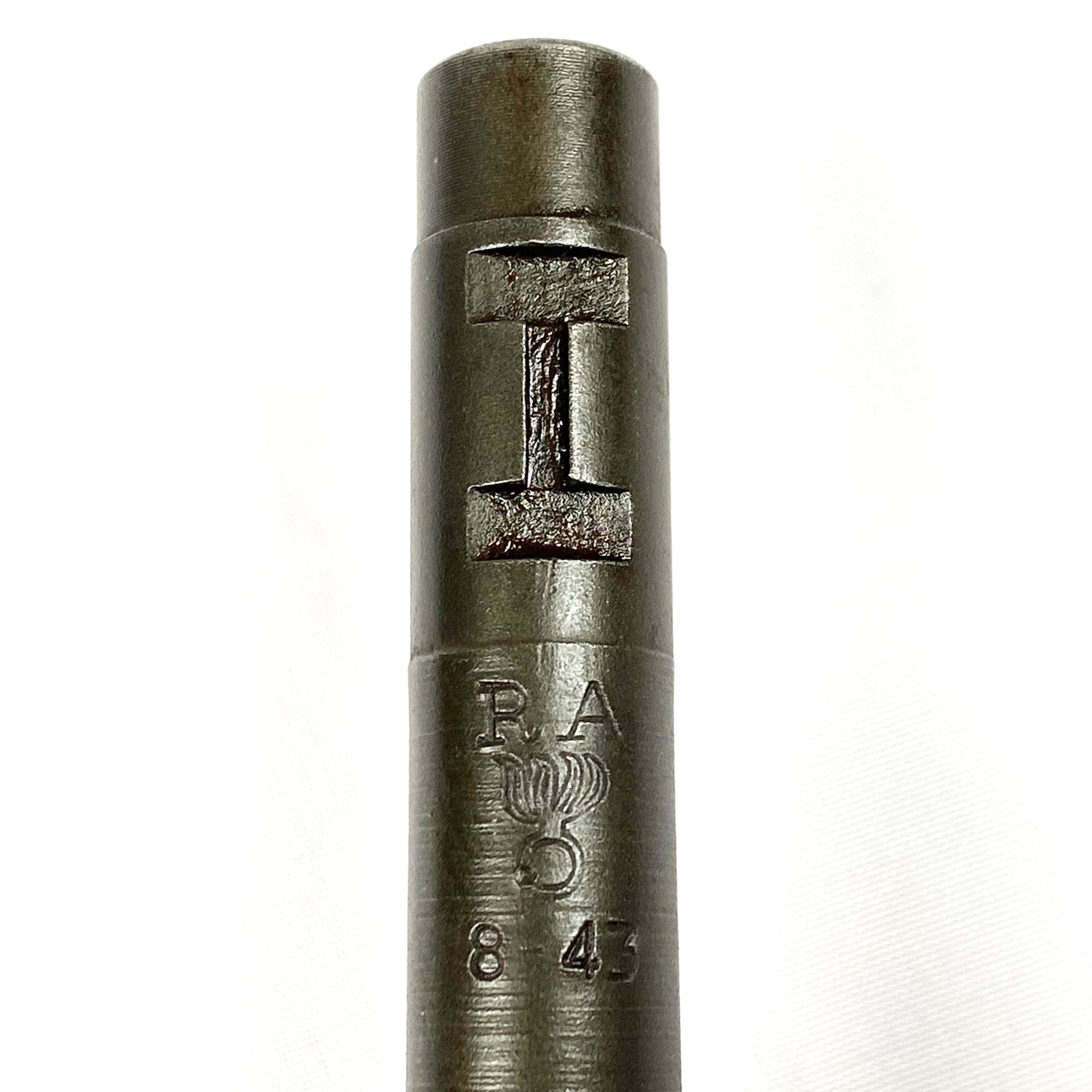 A close-up view of the barrel markings on the author’s M1903A4, with “RA” for Remington Arms, ordnance bomb and Aug. 1943 production date.
Also, despite the recommendations that rifles be hand-selected for accuracy, have their actions hand finished and be carefully fitted with specially selected stocks, there is no indication that any of this was done, with Brophy noting in his seminal work “The Springfield 1903 Rifles,” “[t]he rifle was a Model 1903A3 without any special attention paid to its accuracy, or suitability for such use.”
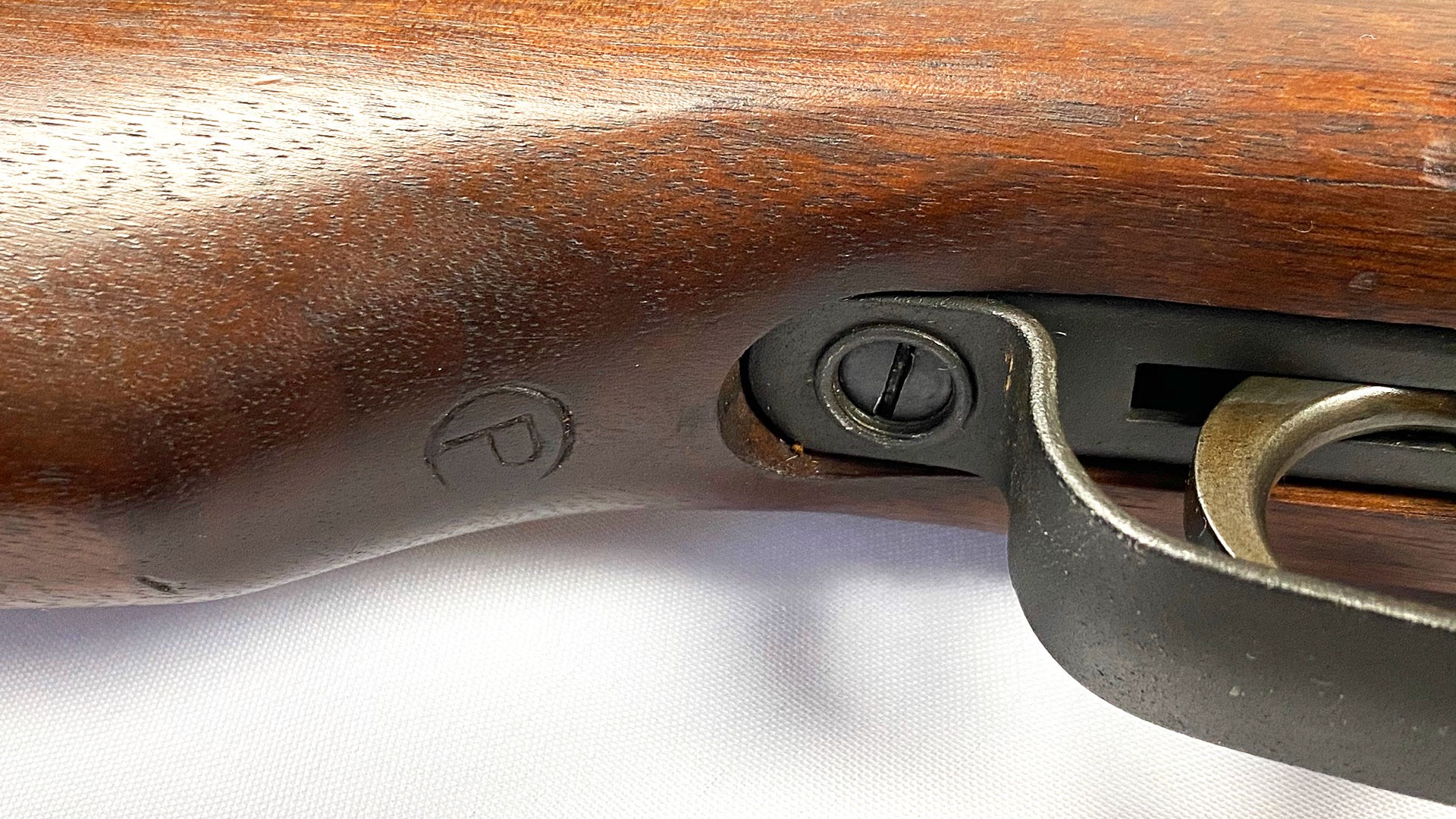 A circled “P” firing proof cartouche at the bottom of the “scant” semi-pistol grip stock.
Additionally, while many M1903A4s were fitted with the full pistol grip “C” stocks as called for, a fair number were (like the main example photographed here from the author’s collection) were placed in the “scant” semi-pistol grip stocks. The stocks had their own interesting story of government frugality and compromise born from stock blanks cut too shallow (in the style of the original straight stocks) to accept a full “C” pistol grip.
The Optic
The scope itself generally followed the specifications dictated, with the final optic being a militarized variant of the Weaver 330C, named the M73B1 (although some standard 330Cs were fitted to the earliest rifles). Having a relatively low fixed 2.5x (some say 2.20x) magnification, and a narrow 0.75″ diameter tube, it is completely archaic by today’s standards both for magnification and light transmission.
Even when compared to the common foreign sniper scopes of the day, it certainly would not come in as best-of-show, but was in the end an available and economic optic. It did however prove to be somewhat fragile in field conditions, prone to moisture seepage and difficult to use in low-light situations.
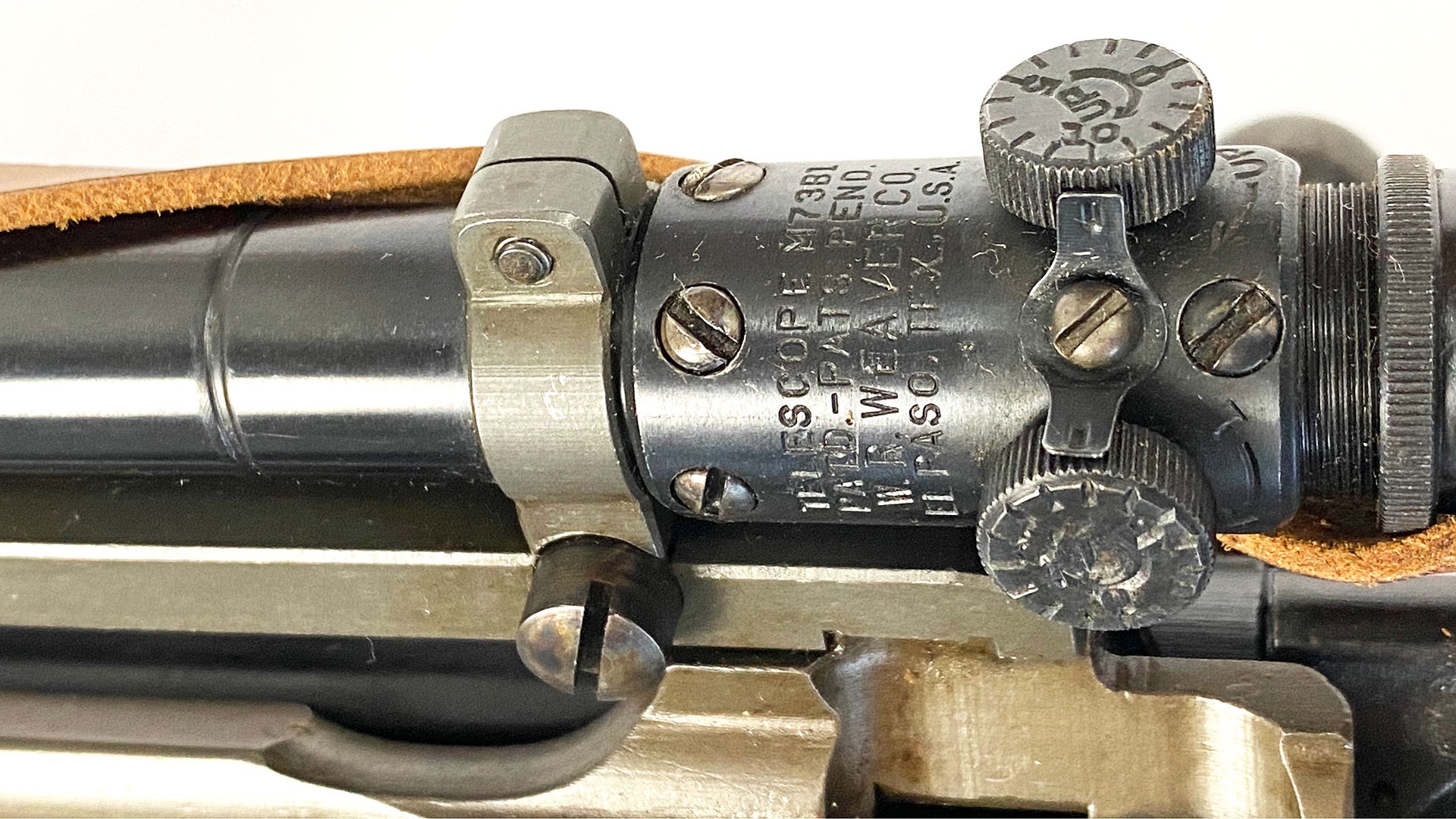 A closer look at the World War II era M73B1, a militarized variant of the Weaver 330C, mounted to the author’s M1903A4.
While the M73B1 would serve as the primary optic for the duration of World War II, as the service life of the M1903A4 continued, it would also occasionally mount the M81, M82 or M84 telescopes. While each was an incremental improvements over the last, they all were narrow-diameter and low-magnification optics that were generally not widely beloved.
The Mounting Location
Probably the most obvious departure from the Test Section’s recommendations was the location of the scope itself. Despite the Test Section stating that a side mounting was “necessary” because “it is imperative that the metallic sights be immediately available for use…,” and that clip loading was desired, the decision was ultimately made to mount the scope in a low “scope over bore” configuration.
The mount chosen was a Redfield Jr. model, which was attached on the front via a hole drilled into the receiver and at the rear via a dovetail type base that is integral to the rifle. The mount and mounting location did present a unique problem to Remington, the solution to which still helps collectors to this day.
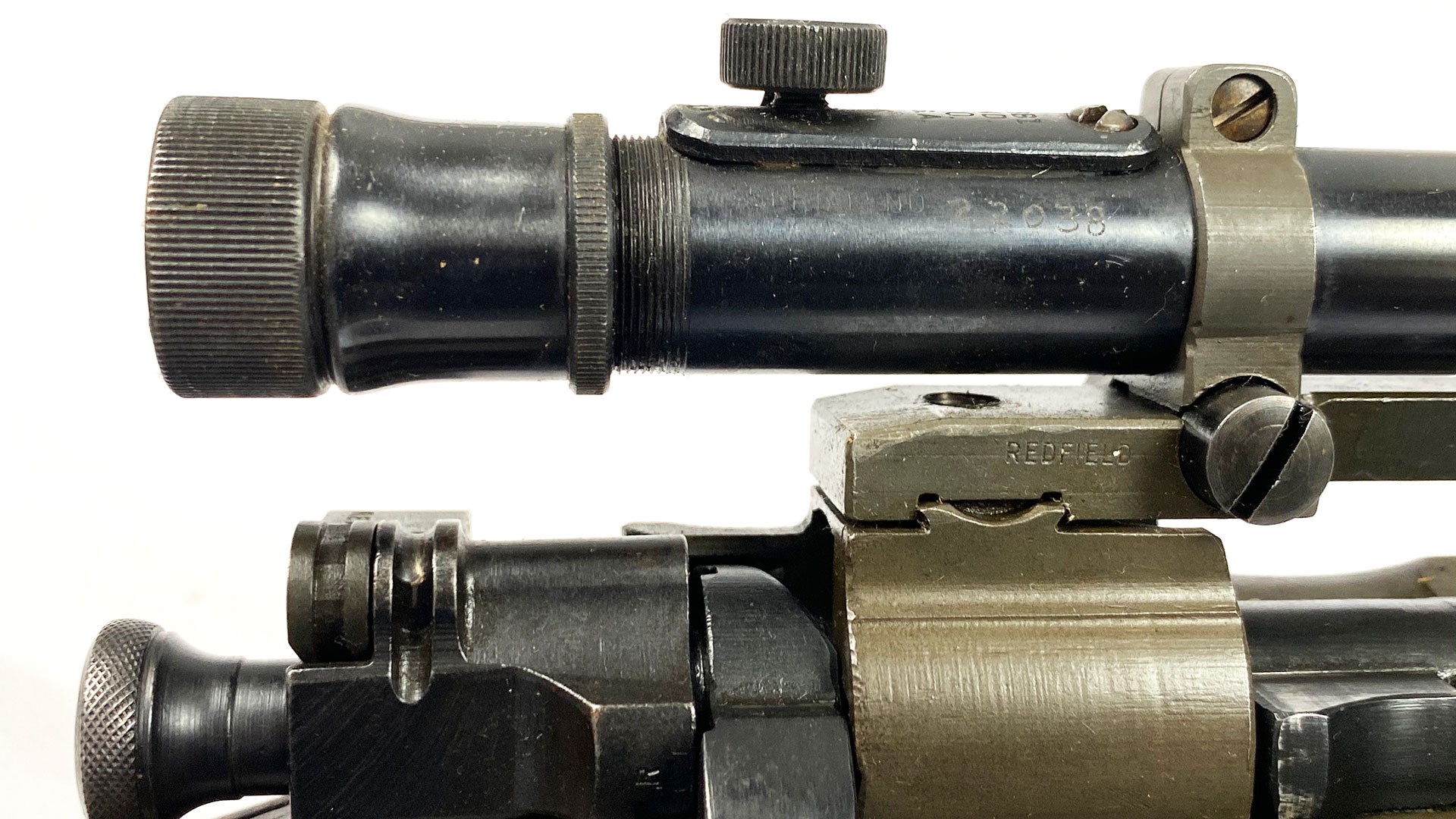 A close-up view of the back-rear portion of the receiver, with the back end of the Redfield Jr. mount dovetailed into what would have been the spot for the adjustable peep sight on a standard M1903A3.
Because the mount would fully obscure the standard service rifle markings, Remington chose to dramatically offset their manufacturers info and rifle model to the left side of the mount, and the serial number to the far right, in order to ensure that all were fully visible. This leaves, when the mount is removed, a large blank space smack-dab in the middle of the receiver (in addition to the mounting hole).
A modern collector can be sure they have a rifle originally configured as a M1903A4, and not a more recent “clone”, if it features this unique stamping pattern. Interestingly, Remington chose not to change the stamped nomenclature on these rifles, and all will bear factory “MODEL 03-A3” markings, although it’s not unheard of for rifles to have a hand-stamped “4”, possibly added later either during the refurbishment process, or by a diligent unit armorer seeking to square his rifles with his supply record.
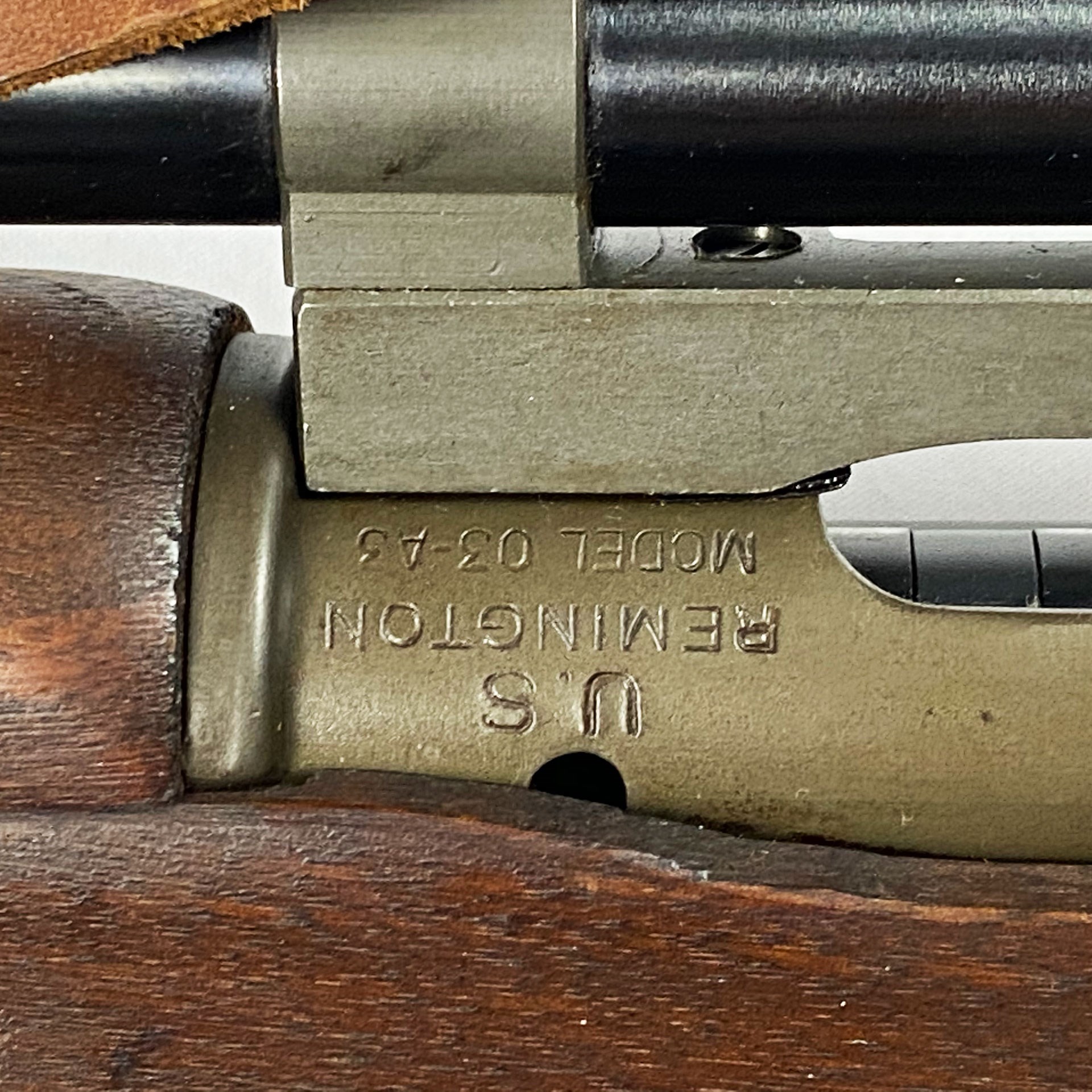 A closer look at the moved receiver roll marks on the left side of the receiver.
While the scope over bore positioning did present less risk of damage when compared to the high mount, it did prevent the use of both the iron sights and clip loading. In fact, on the M1903A4 the Army decided to omit iron sights entirely, leading to the rifle becoming mostly useless if the comparatively fragile scope became damaged by rough handling or environmental conditions. One other interesting side effect of the scope position is that it interferes with the safety operation, while you can wedge the safety into a 3/4 vertical position, it if far from secure or ideal.
This Rifle
The pictured rifle was produced in 1943, with a barrel dated from August of that year. It shows a correct mix of parkerized and blued parts, as well as the “scant stock“ variant that provides a semi-pistol grip. It has a number of clear cartouches, including “RA” – Remington Arms, “FJA” – Frank J. Atwood (the inspector), an ordnance wheel, and “S.A.” in a 3-sided box.
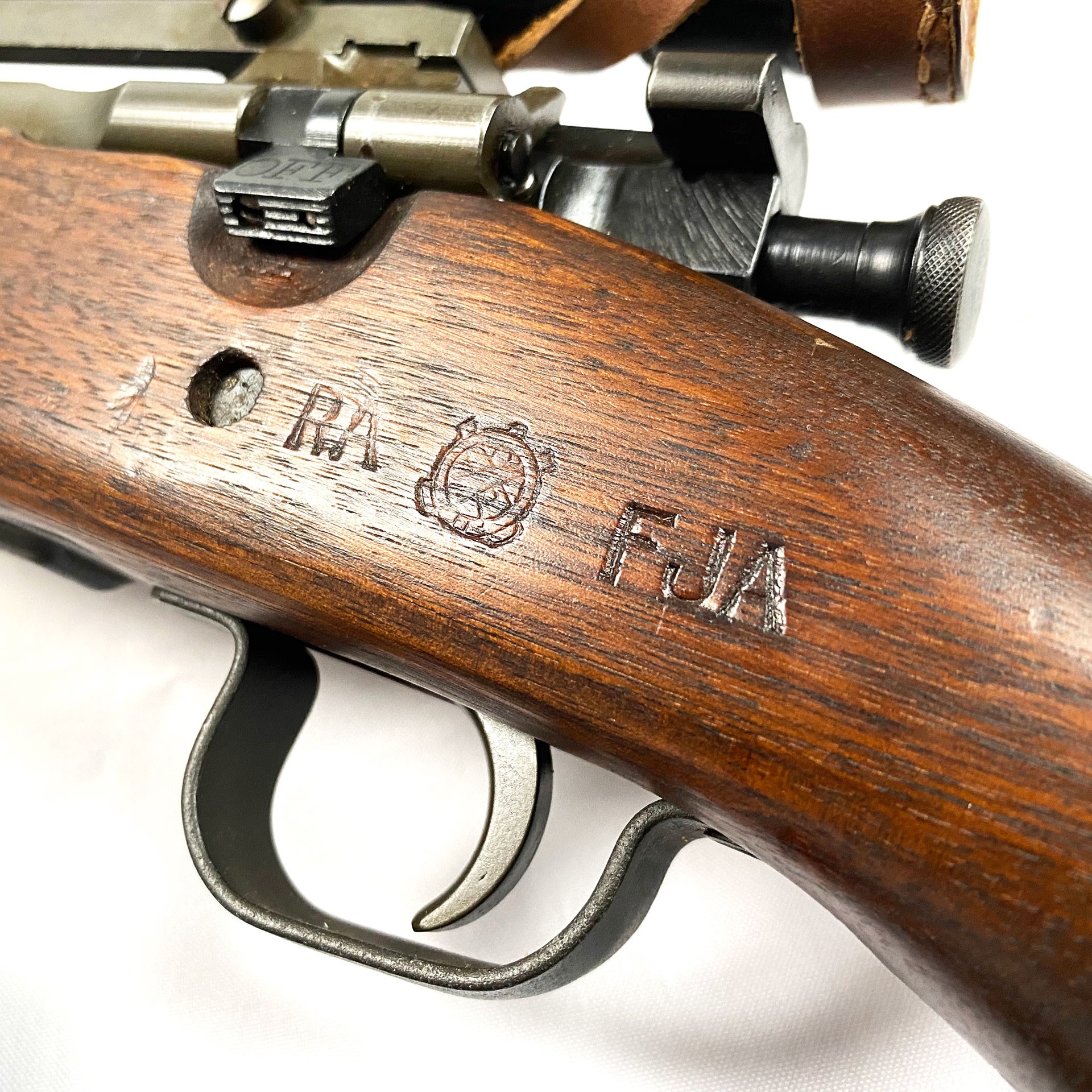 A closer look at the three main cartouches on the left side of the stock ahead of the wrist, with “RA” standing for Remington Arms, an ordnance wheel and “FJA” – Frank J. Atwood – inspector mark.
The final cartouche indicates that it was inspected / overhauled at Springfield Armory post-war, although it doesn’t look like too much refurbishment was done given the condition of the stock and the metal finish being generally consistent with wartime production.
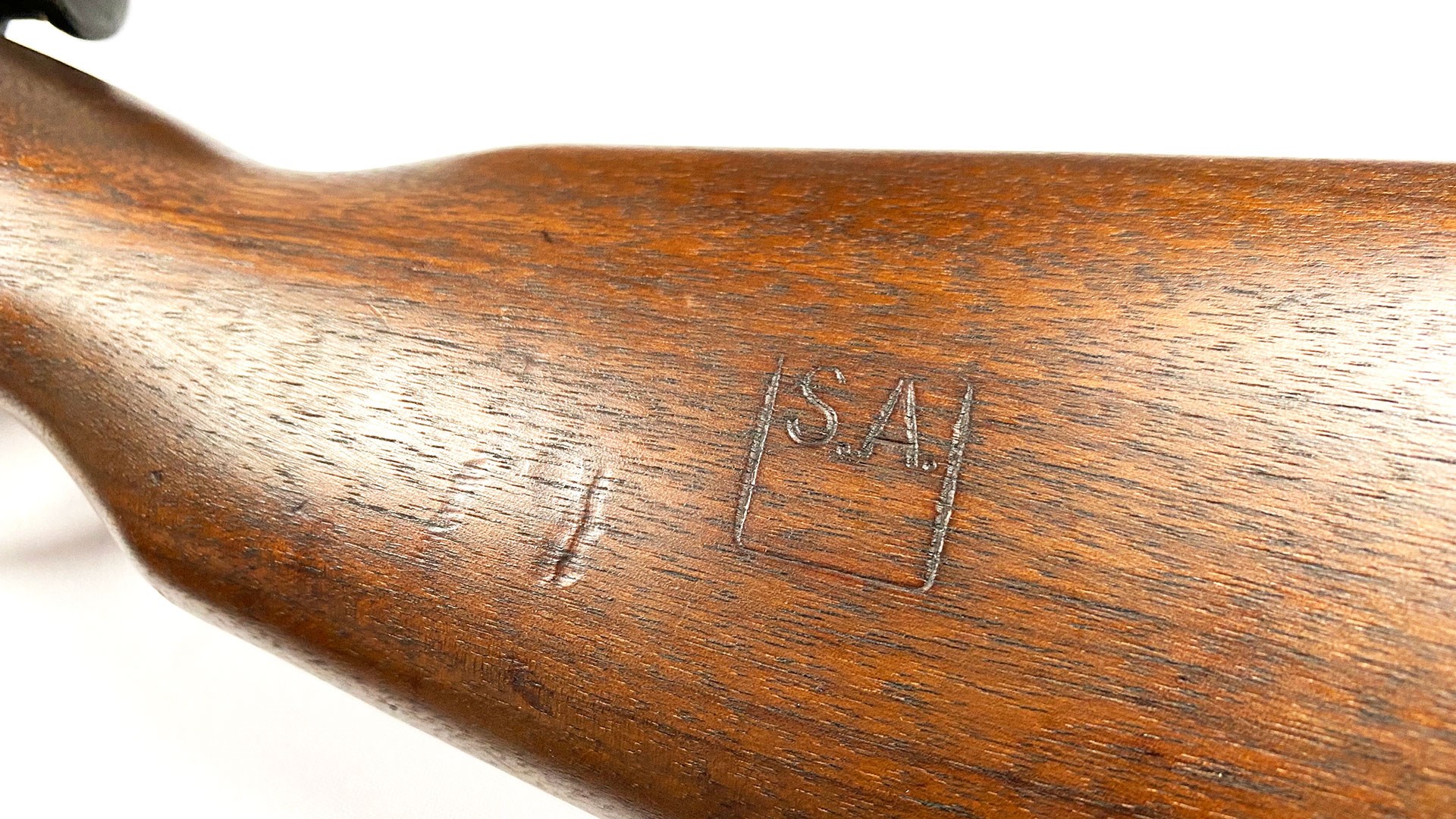 The “S.A.” cartouche inside an open square on the stock, indicating a post-war rebuild at Springfield Armory.
WW2’s Best Sniper Rifle?
Was the m1903A4 the perfect sniper rifle? No, absolutely not. In fact, Colonel Brophy considered it “at best a poor excuse for a sniper rifle”. But I’d suggest that, in light of the failure to adopt a superior sniper rifle and develop a sniper training program during the inter-war years, it was a suitable response by an Army that needed to put functional scoped rifles into the hands of soldiers rapidly and in great numbers.
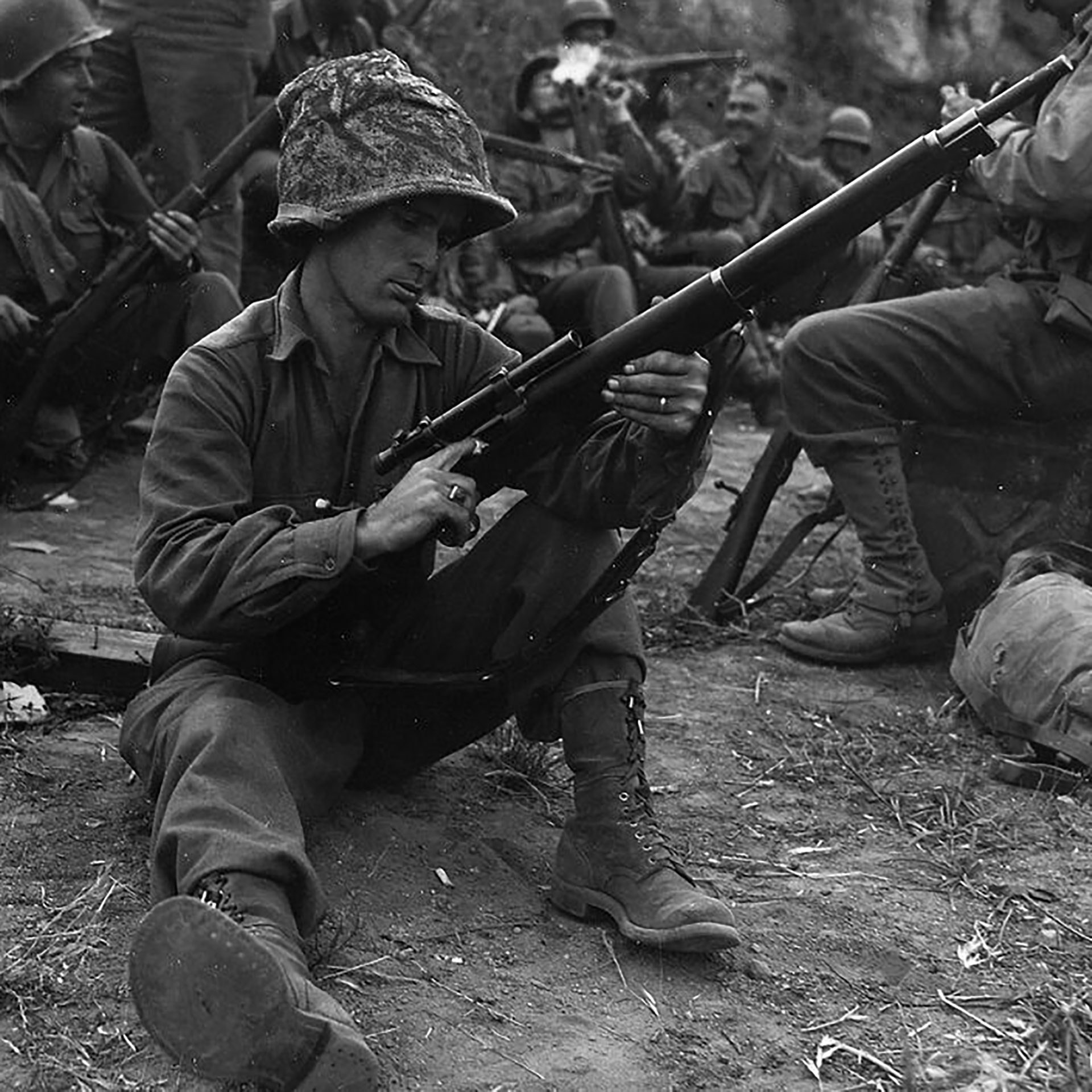 A U.S. soldier cleaning his M1903A4 during World War II. Note the standard M1903 rifles in the hand of the others in the background.
While entering the war with a well-developed and thoroughly tested sniper would have unquestionably been better, having this imperfect but serviceable rifle in the field during the bulk of US combat operations was certainly better than fielding the ultimate sniper system in Aug. 1945.
I beg to differ in that all things considered. I think that this “imperfect but serviceable rifle” was the best that we could do. Also since I own a couple of Sporterized 1903 myself. I have found them to be absolutely fine and really accurate rifles. Which hopefully (NOT) if it were to SHTF , I would gladly grab one of them over a whole lot of other firearms out there. Grumpy
Categories
Interesting !

The American Doughboy, immortalized in photo, film and statuary, is almost exclusively depicted wielding either the classic M1903 Springfield or the quickly adopted and fielded M1917 bolt-action rifles. While other iconic weapons of the era certainly loom large in the American consciousness, such as the M1911 pistol and M1897 shotgun, the two rifles have a special place in the hearts of historians, collectors and sportsmen the world over.
This is perhaps because World War I was arguably the last rifleman’s war, during which the rifle’s place as the most lethal arm on the battlefield was completely eclipsed by artillery, machine guns and all manner of other technological contraptions.
While the M1903’s total production numbers reached 914,625 by Nov. 30, 1918, the 587,468 M1903 rifles on hand when hostilities started (as tallied by the Ordnance Department after the war) were woefully inadequate to supply the vast number of men that would eventually be drawn into service during the war. Famously, this caused Brig. Gen. William Crozier, the U.S. Army’s Chief of Ordnance, to request authority to being the “[e]mergency procurement of small arms other than of U.S. design.”
This led to the adoption of a slightly modified British P14 Enfield rifle, re-chambered for the U.S. standard Model 1906 cartridge (.30-’06 Sprg.) and designated the Model of 1917.
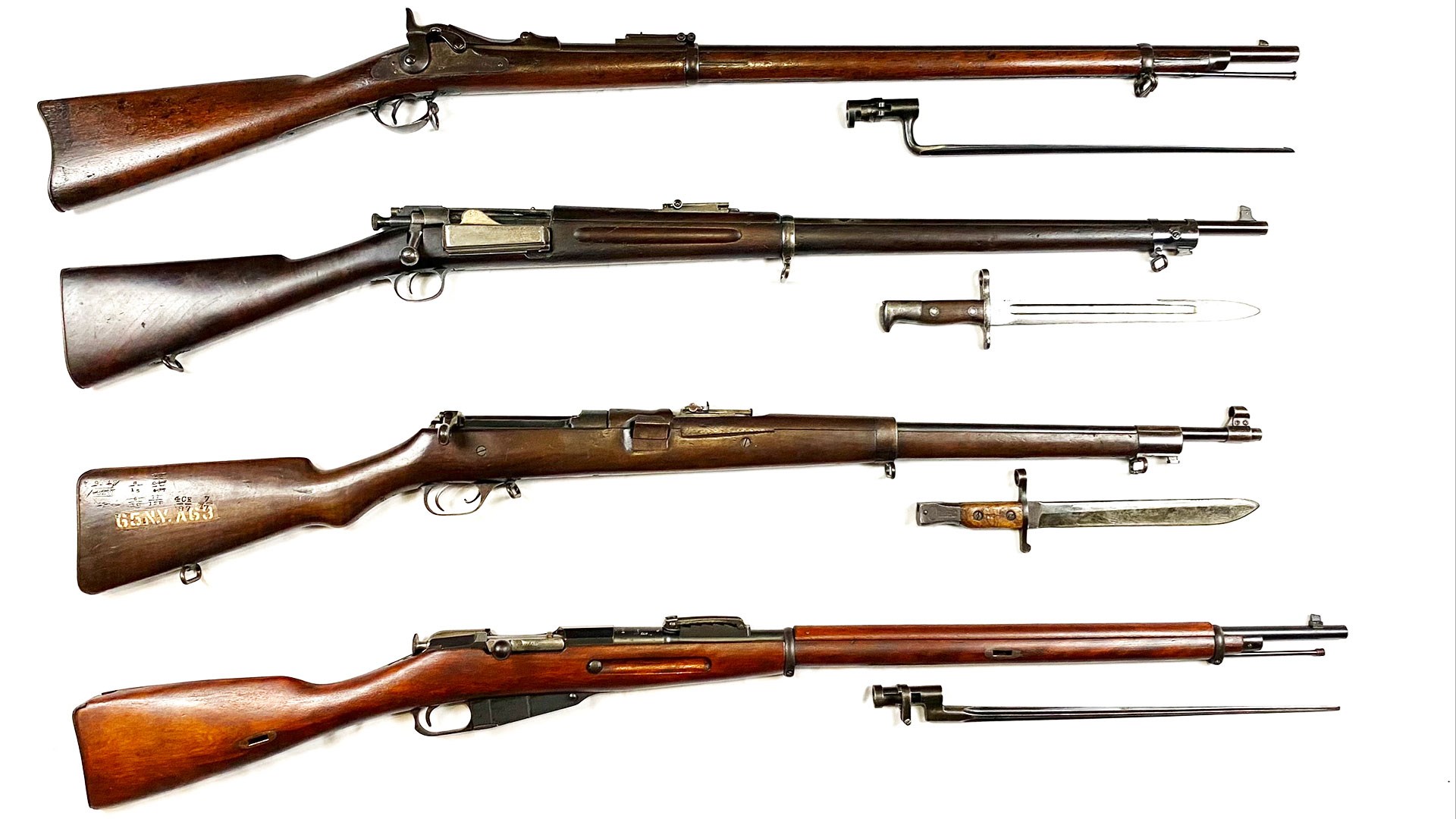 Four largely forgotten infantry rifles that were used in some capacity by the U.S. during World War I. From top to bottom: Springfield Trapdoor, Krag-Jorgenson, Ross Mk II*** and an American-made M1891 Mosin-Nagant rifle.
But this was not a painless or fast process, and between military and bureaucratic tangles along with serious parts interchangeability issues, the first production rifles didn’t start rolling off the line until September – approximately five months after both the decision was made to adopt it and the official US entry into the war.
While the fielding of the M1917 is rightly regarded as an impressive industrial feat by the three commercial factories tasked with its production (indeed more M1917s saw field service than M1903s), the fact remained that in the meantime more rifles were still desperately needed to train recruits, guard stateside infrastructure and even deploy overseas.
“Very serviceable weapons, although not of the present standard model for the United States Army”
The first and most obvious choice to supplement the shortfall of “modern” rifles was the Krag-Jorgenson pattern of rifles, produced between 1894 and 1903 by Springfield Armory. While not quite as excellent as the M1903 that replaced them (the Krag lacks a charger loading system, utilizes a ballistically inferior cartridge and is overall longer), they were still very suitable weapons for use by an early 20th century military, as they fit the mold of small-bore and smokeless powder that had become the practical requirement.
After the adoption of the M1903s, Krag rifles remained the primary arm of many state military units as the M1903s slowly trickled out to the entire force. In addition, many were disbursed to various organizations that had a need for a recently obsolete military rifle for marksmanship training, drill practice or ceremonial use. A majority, however, were simply recalled to and stored in government arsenals awaiting either future use or disposition.
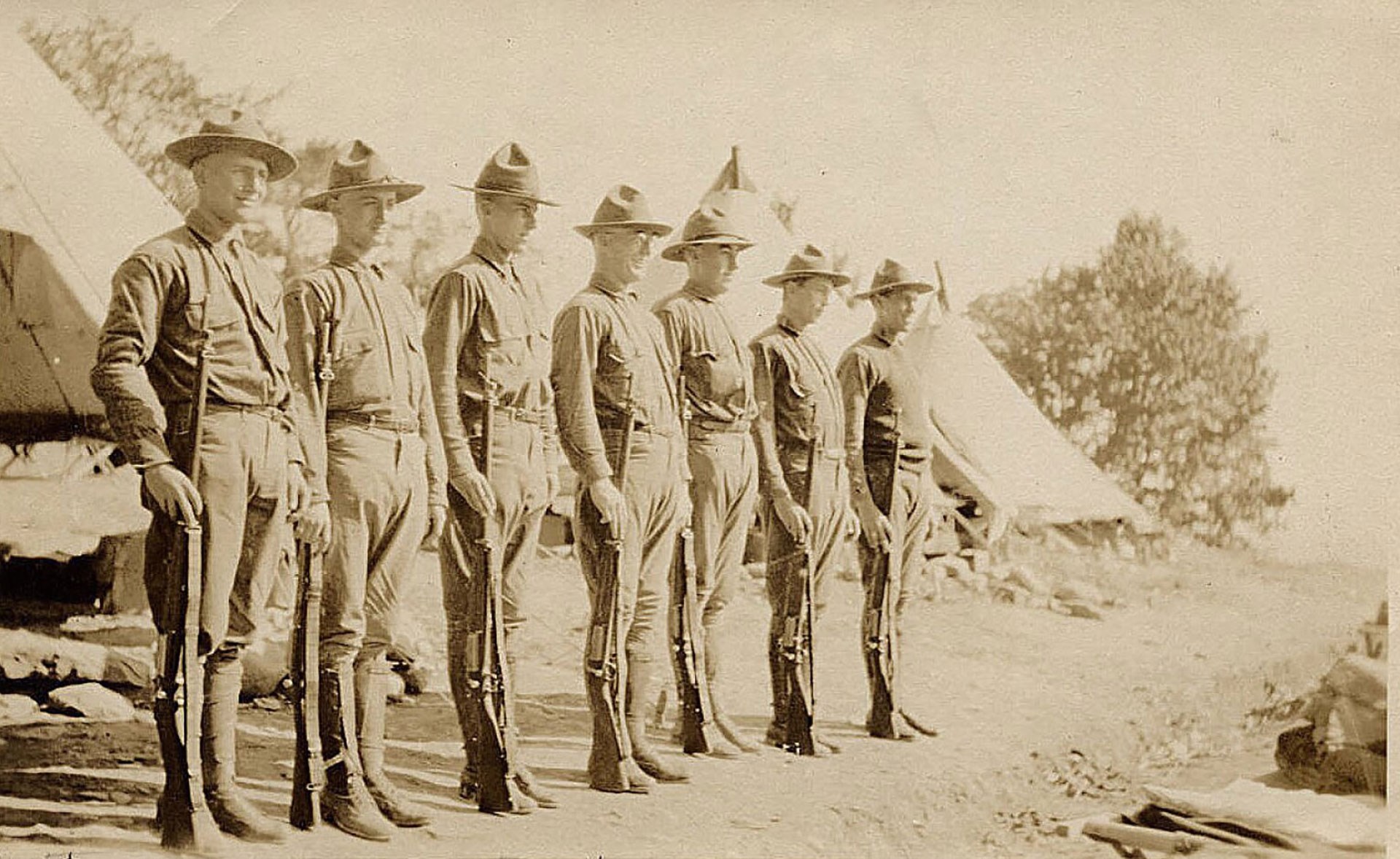 Men of the New York Guard standing at attention with their Krag-Jorgenson rifles.
In a May 17, 1917, memorandum from the Office of the Chief of Ordnance, they report that, “there are in in the possession of Educational Institutions 44,708 Krags and in the possession of Rifle Clubs 7,421.” Because the shortage of rifles was apparent early on, Brig. Gen. Crozier stated that even though “it is not necessary that troops shall go into campaign armed with the [Krag] rifle, it is possible that some of these rifles may be required for drill and target practice,” and he recommended that the issue of Krag rifles to groups “other than federal forces be suspended.” Almost certainly acting under this advisement, the Secretary of War cut off rifle clubs, schools and colleges in an order dated May 9, 1917.
One would think that the rifles held by the federal government would be the easiest to put into immediate service, since they just needed to be brought out of storage – yet they weren’t always in “fighting ready” condition. In the same May 17 memorandum, the Ordnance Department reported that, “There are on hand approximately 210,000 Krag rifles and carbines, of which 102,000 are serviceable,” and that, “The unserviceable guns and ammunition require overhauling and putting in shape.”
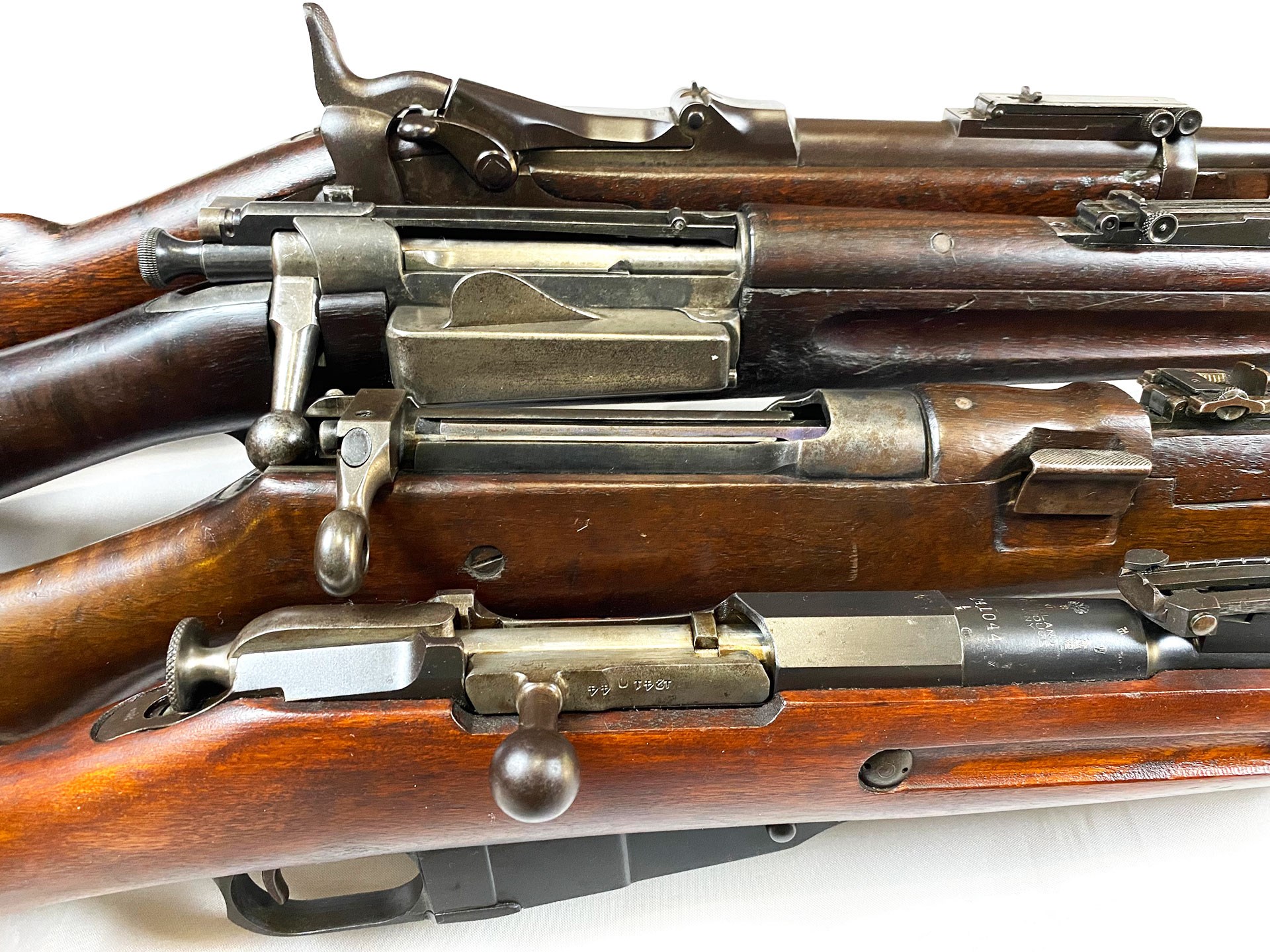 A comparison between the four rifles’ actions.
A rapid series of messages back and forth between the Ordnance Office, and the commanders of both Springfield Armory and Watervliet Arsenal details some of this process. In the correspondence, the three parties work out the particulars of sending some 88,952 unserviceable Krag rifles and carbines, along with Springfield’s supply of spare parts, to Watervliet for overhaul. This included not only the M1898 rifles, but also approximately 2,500 M1892 and M1896 rifles as well as “bayonets and appendages.”
As discussed above, and as envisioned by Ordnance officials at the time, the Krag saw heavy use training the ever-growing body of American fighting men as they prepared to deploy to Europe. The broader population had become aware of the rifle shortage, however, and many wrote to their elected officials to express their concern that their sons might be forced to drill with broomsticks or wooden rifles.
The Krag was often used to allay these fears, with Brig. Gen. Crozier pointing out to one worried mother that, “There have been for some time at each cantonment of the National Army 55,000 Krag Jorgenson rifles for training; these were soon after their supply followed by an additional 2,000 of these rifles, which are very serviceable weapons, although not of the present standard model for the United States Army.”
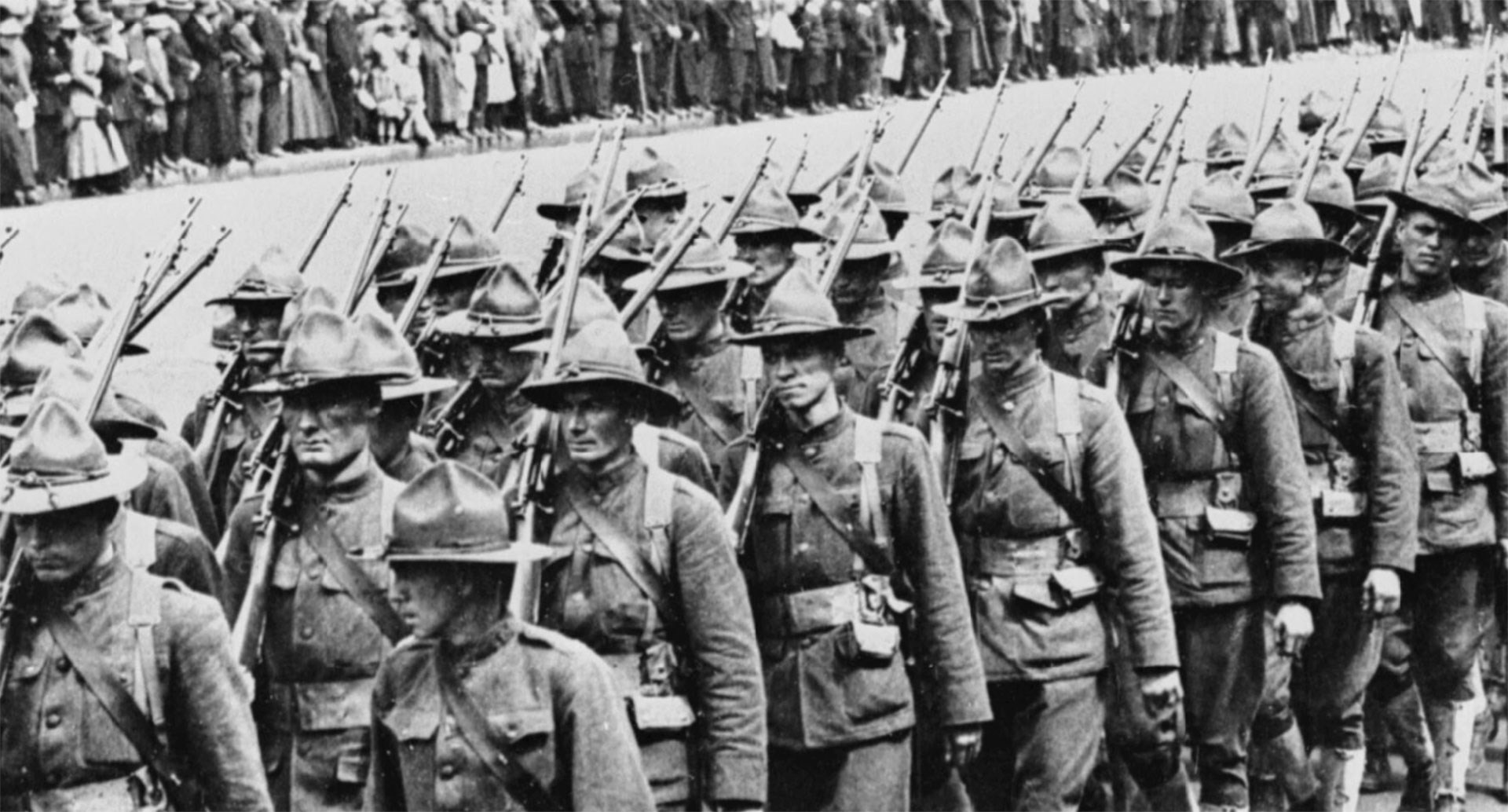 Krag rifles being carried by men of the American Expeditionary Force during World War I.
Some Krags did see limited service overseas during the war, with at least the 14th United States Engineers carrying them all the way into France. By July 1918 however, they had been switched out for M1903 rifles and the II Corps Ordnance Officer reported disbursing 1,157 M1903s in exchange for at least 972 Krag rifles. The stated reason for the switch was to ensure ammunition standardization in whatever area the unit was assigned to.
“When will they be put on Flintlocks”?
Even older US military rifles were brought back into service to help alleviate the acute shortage of functional weaponry. On Aug. 23, 1917, an officer from the Small Arms Division of the Ordnance Department instructed the commanding officer of the Rock Island Arsenal to “put into good condition” the 2,927 unserviceable Trapdoor Springfield rifles on hand at the arsenal. This action, along with the work on Krag rifles and carbines, earned the scorn of some of the workers – as reflected in one anonymous complaint written to U.S. Senator G.M. Hitchcock and forwarded to the Chief of Ordnance:
Dear Sir:
Of my own personal knowledge I know that there is a force of men at work at R. I. A. on worn-out Krag-Jorgenson rifles used in the Philippine campaign of ’99 and 1900 – also another force on caliber .45 Springfields discarded at that time.
It’s a standing joke among these employees as to when they will be put on Flintlocks.
Now I don’t know if this will put me in jail, but I think it should be asked of Mr. Baker [the Secretary of War] if this can in any way assist in arming our men to defeat the Huns.
Despite this anonymous worker’s skepticism about the usefulness of Trapdoors to the war effort, they were actually in high demand by a number of states which wanted rifles for stateside security use. New York in particular, while angling to acquire more modern arms from Canadian sources, articulated a need to guard “lines of transportation and communication over which are sent Federal Supplies” and that the “Prospect of [a] shipping strike on water front N.Y. makes [the shortage of rifles] serious.” Brig. Gen. Crozier, somewhat tersely, reminded the writer that “the governor of the State of New York was authorized to requisition guns from educational institutions and rifles clubs of New York,” and that he had not drawn all that he was able.
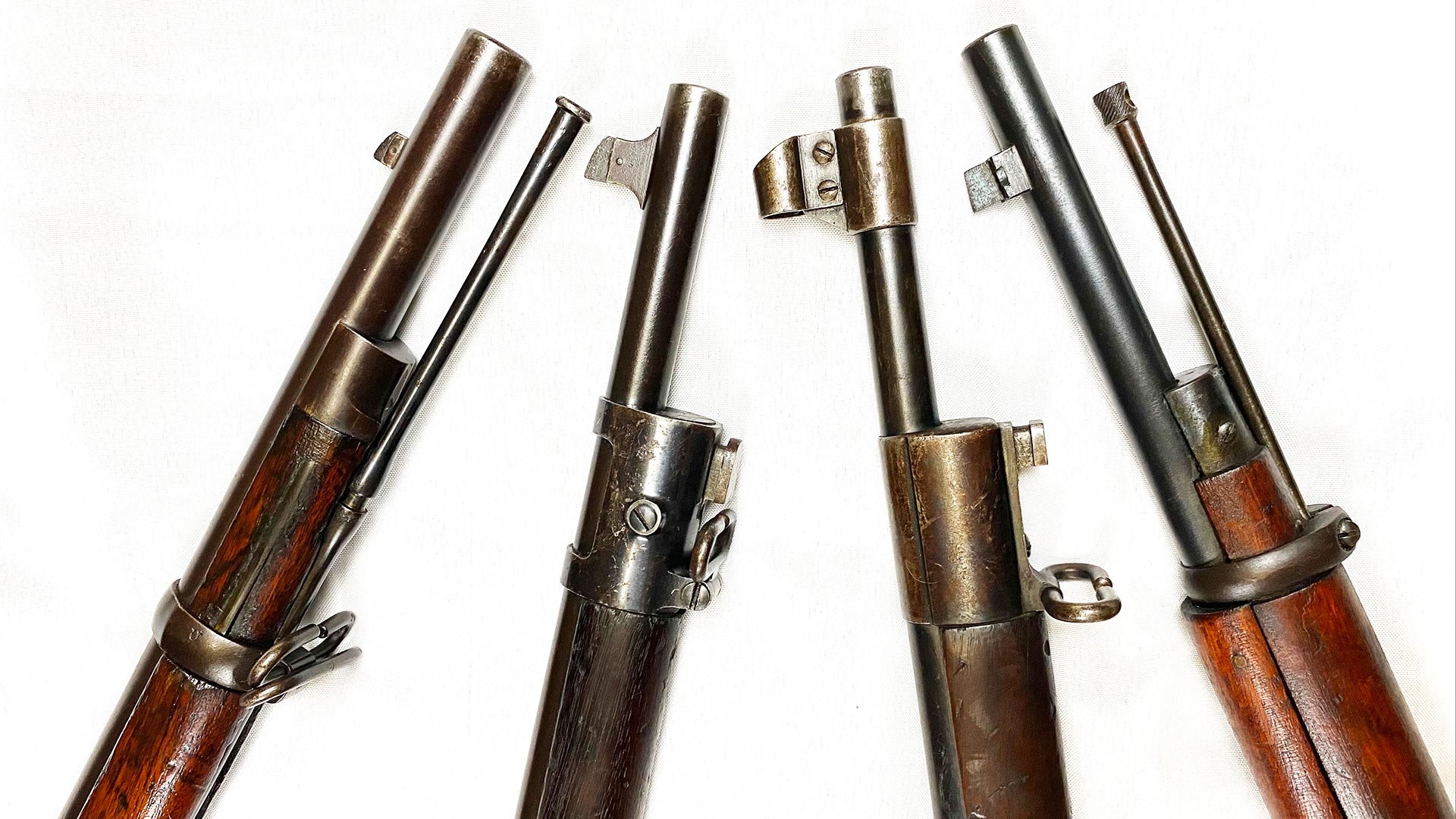 The muzzles of the four rifles compared. From left to right: Springfield Trapdoor, Krag-Jorgenson, Ross Mk II*** and an American-made M1891 Mosin-Nagant rifle.
Additionally, he stated that the governor was issued 500 Trapdoor Springfields on Aug. 11, 1917, and that, “There are on hand, not already allotted to state organizations, 7,979 rifles of caliber .45. The demand is very heavy for this character of equipment for use of home guard organizations; about 30 states have not as yet been supplied, and no more rifles can properly be issued to this state. The former Adjutant General was fully advised as to this.”
So even though the Trapdoor was thoroughly out of modern military fashion by 1917, being not only a single-shot breechloader, but also blackpowder and large bore; thousands of them still played a role in the process of getting American fighting men and their equipment safely across the country and loaded onto ships bound for France.
“War Department has no objection to State of New York purchasing rifles from Dominion Government”
While Trapdoors were useful in certain roles, there still existed a stateside need for “modern” rifles more akin to the M1903 and M1917 rifles that were to be used against the Hun (and the RIA workers were, after all, not going to be tasked with refurbishing flintlocks). As mentioned above, New York was especially interested in obtaining additional rifles, particularly since its harbors were a key point of embarkation. Fortunately, America’s neighbor to the north had a number of older pattern Ross Rifles that they were willing to sell across the border to help Uncle Sam.
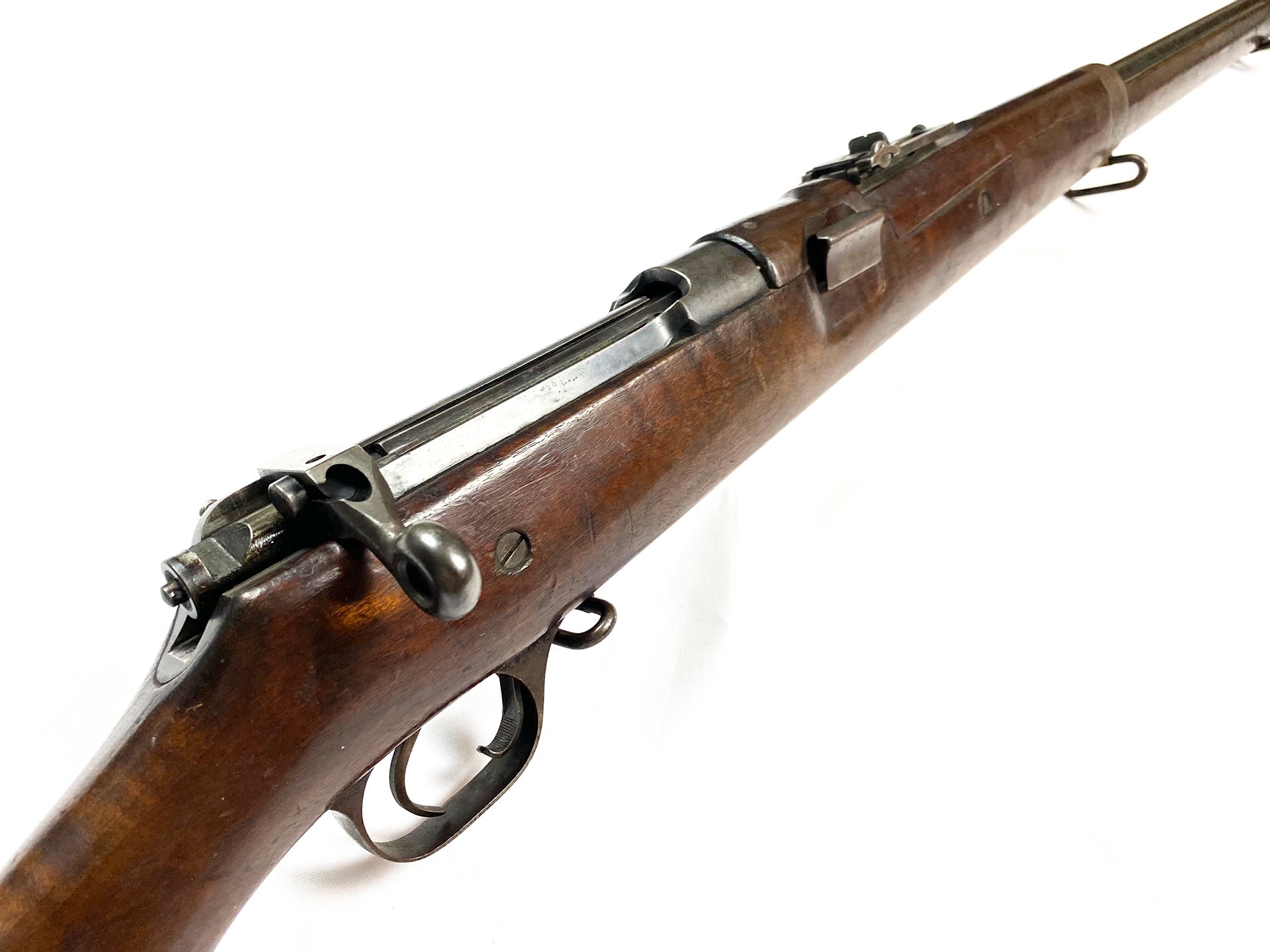 A closer look at the features of the action on the Ross Mk II*** rifle.
These took the form of Ross Mk II*** rifles, also known as the Model 1905. Featuring a straight-pull action, the Ross fires the .303 British cartridge from an internal magazine.
While the later Ross Rifles were charger fed, the Mk II*** featured a follower depressing lever on the side of the rifle that allows the user to “dump” the cartridges into the rifle, instead of inserting them singly. Even though the Mk II*** was already obsolete by Canadian standards, Ross Rifles as a species also ran into problems in the harsh fighting conditions of the trenches.
This, combined with tight tolerances better suited for a target rifle and loose British ammunition tolerances, resulted in a majority of Ross Rifles being withdrawn from frontline service in Europe and replaced by the Short, Magazine Lee-Enfield.
Despite these issues, the rifles were certainly suitable for stateside use, and more importantly, were actually available for transfer south in September 1917. New York was so eager to get their hands on these rifles that they actually started negotiations directly with Canada and secured the ability to purchase 15,000 Ross Rifles and ammunition for them, with the purchase price recorded as being $12.50 for the rifle, bayonet and scabbard. Their plans hit a snag however, as the rifles would be subject to an import duty of 35 percent, making a relatively good deal suddenly less appealing.
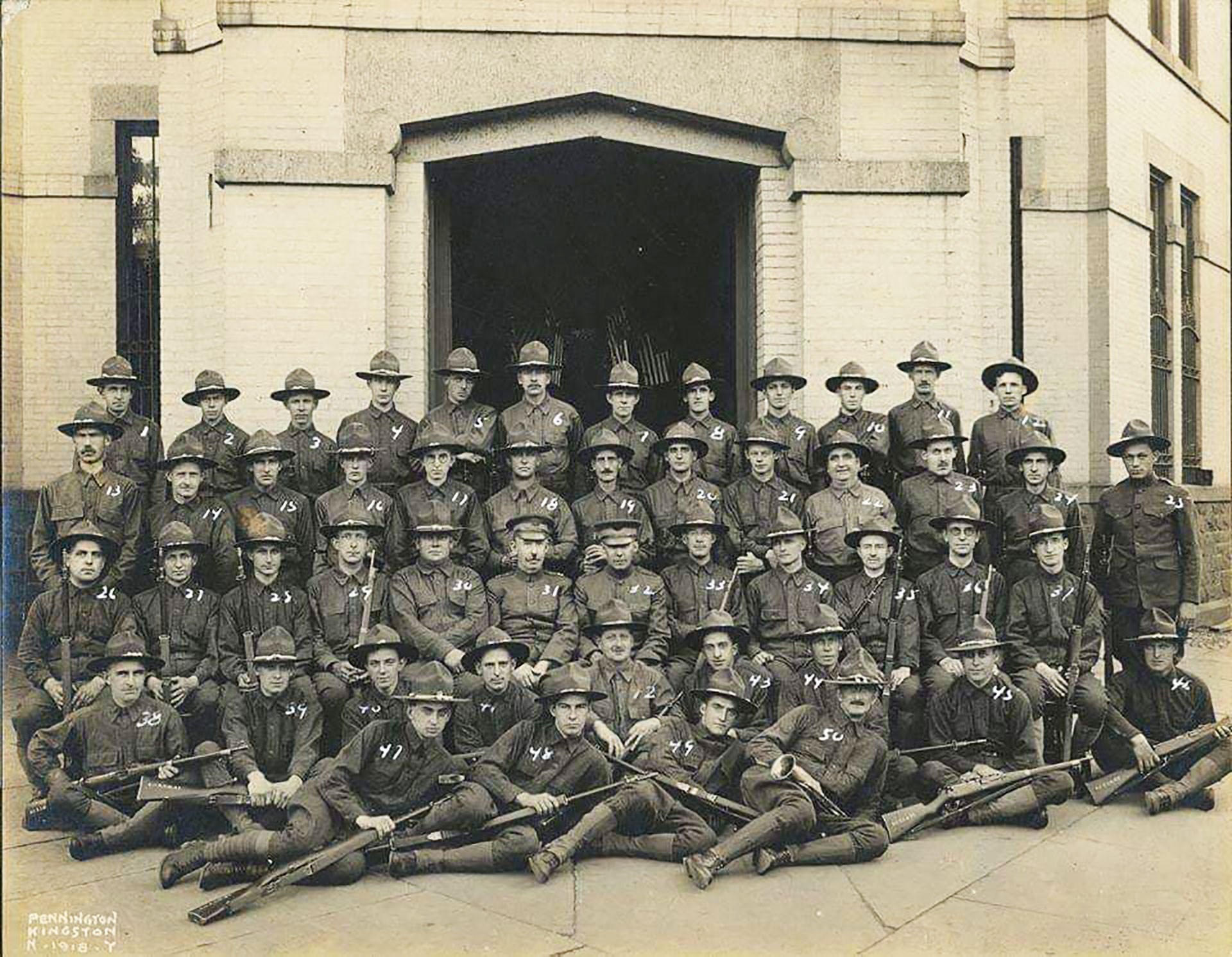 Men of the New York Guard armed with Ross Rifles.
New York requested either an exemption to the tax, or reimbursement for the fee through the federal government. Instead, Brig. Gen. Crozier informed the Adjutant General for New York that he was already in talks with the Canadians for rifles, and that he would be able to sell some quantity of the procured rifles to the state. In the end, the ordnance department was able to procure some 20,000 Ross Rifles for use, with 10,000 of them going to New York and the difference being used for training troops in federal service.
The rifles acquired under this contract are identified by a “U.S.” stamping on the underside of the wrist, and “flaming bomb” stamps in the wood both fore and aft of the trigger guard and magazine assembly. Additionally, a new inventory or serial number was also added to the underside of the wrist. This broke from the Canadian practice of marking model, serial number, and unit assignment on the right side of the buttstock, and many of the rifles feature multiple struck through markings denoting the rifle changing hands.
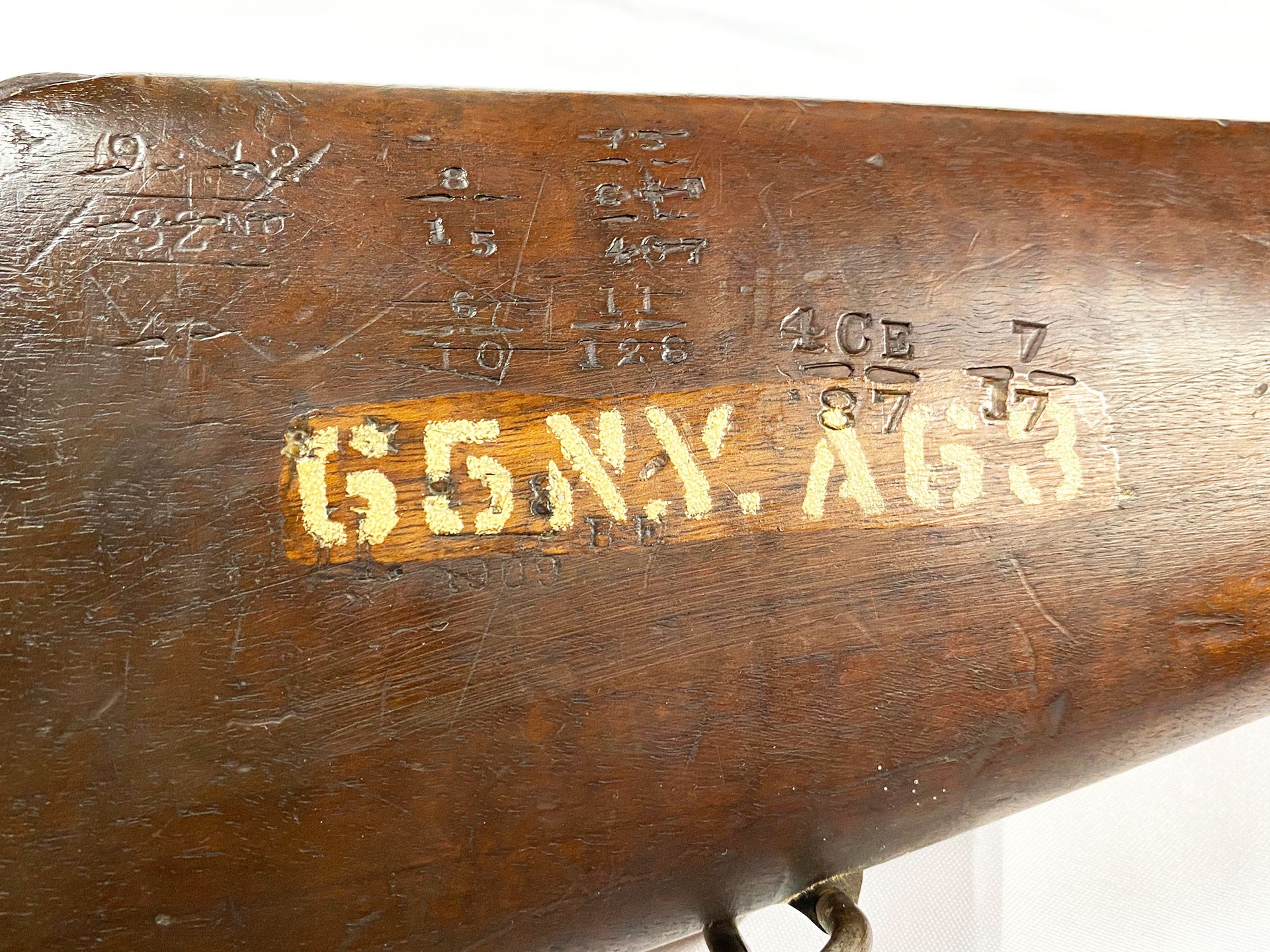 New York Guard markings painted over older Canadian service stamps on a Ross Mk II*** rifle.
The rifles that made it to New York primarily found themselves in the hands of the New York Guard (not to be confused with the New York National Guard). Since the New York Guard was a purely state organization, it was not subject to being called into federal service and was used by the state for protecting infrastructure and other critical internal security roles. As the pictured rifle and period unit photograph shows, rifles distributed to the NYG often received painted on unit markings done right over top of the original Canadian stampings.
“The rifle will be known as the Russian 3 Line Rifle”
While the government looked across its northern border for the Ross rifle, they didn’t have to look nearly as far for another foreign service rifle to supplement their supply of rifles. That is because two U.S. firearm makers – the New Remington Rifle Company in Bridgeport, Conn., and New England Westinghouse in East Springfield, Mass. – had been hard at work producing Model 1891 Mosin-Nagant rifles. Both of the companies were subsidiary organizations to their more famous parent companies, and had been designed almost exclusively to handle the massive Russian contracts.
On June 6, 1917, the vice president of Westinghouse Electric and Manufacturing Company wrote to the Ordnance Department with a proposal. The company had “been successful in adapting the Russian type of military rifle to the use of U.S. ammunition, with very slight changes.” All of the existing forgings could be used, with the goal to “develop a military rifle of about the same length as the Springfield rifle and one which [the company] experts feel could in an emergency be usefully employed by our own troops.”
Ten days later, a polite but lukewarm response was composed by a major from the Small Arms Division, stating that “it is not deemed advisable to have a third model of rifle in the service, at the present time,” although he did suggest that the rifle could be sent to Springfield Armory for further evaluation.
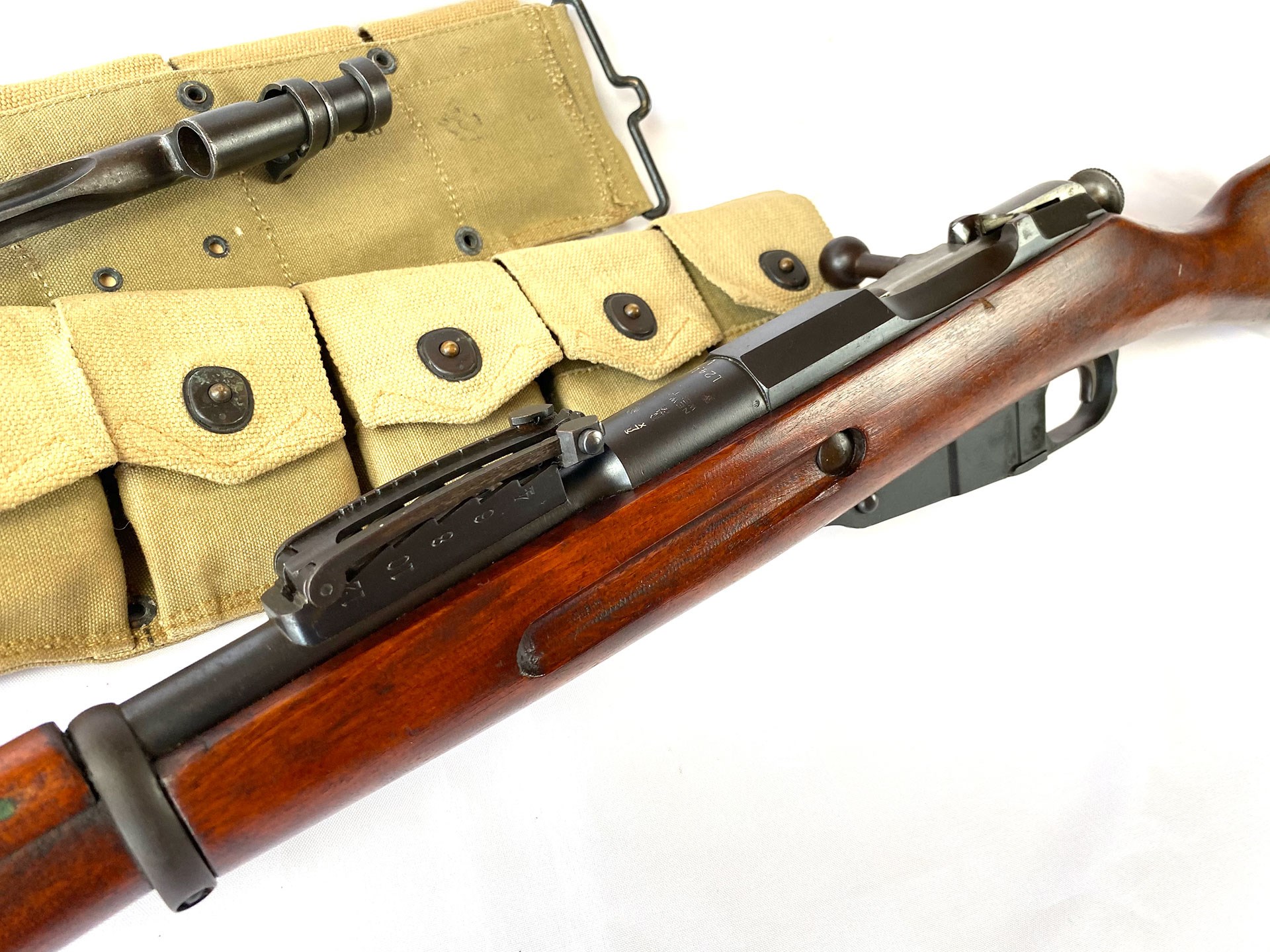 A left-side view of a New England Westinghouse manufactured Model 1891 Mosin-Nagant rifle, which was commonly referred to as the “Russian rifle.”
In the closing days of 1917, however, the War Department circled back to the idea of using the Russian rifles – albeit in their original caliber of 7.62×54 mm R. The new Soviet government had entered into an armistice with the Central Powers on Dec. 15, 1917, and began formal peace negotiations on December 22 at Brest-Litovsk in Ukraine. It was likely at this point that American War Department and Ordnance officials felt safe in assuming that the new Russian government’s demand (and willingness to pay) for the rifles would be greatly reduced as they exited the war and turned their attentions inward.
The loss of this contract would economically harm the companies of course, as they had been created almost exclusively to handle the Russian contracts. The U.S. decision to order Russian rifles has sometimes been framed solely as a “too big to fail” bail out of sorts, designed to prop up floundering US companies. However, primary source documents from the era reveal a bit more nuance and show that there were serious war material production concerns at stake as well.
The New England Westinghouse Contract is particularly interesting, because the ultimate plan was to convert the factory over for the production of 15,000 heavy machine guns — something indispensable on the modern battlefield.
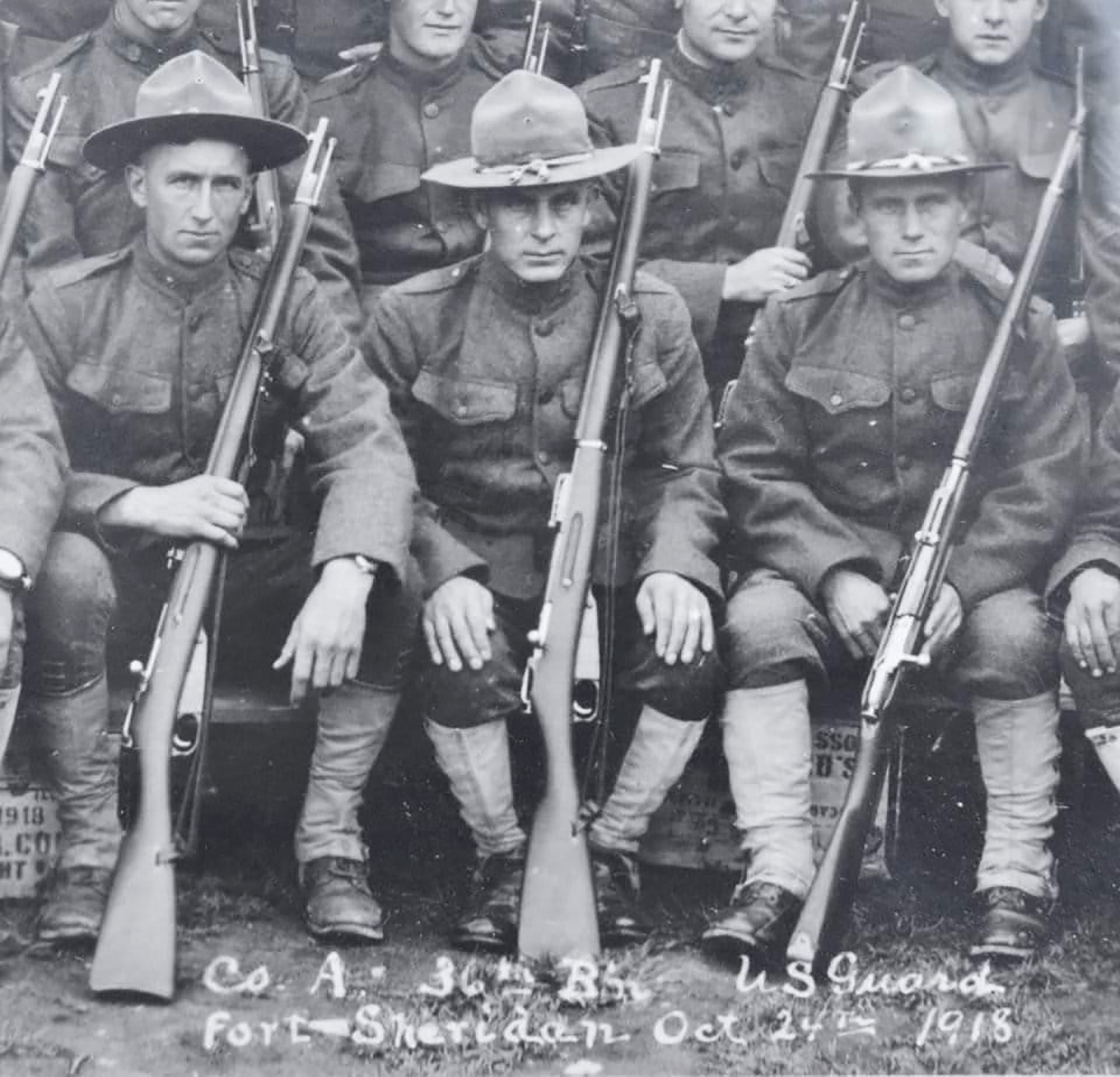 Men of the U.S. Guards armed with Model 1891 rifles.
In order to, “insure production it was found necessary to provide means of preserving the organization of [N.E.W.] until such a time as the manufacture of the machine guns could be started.” As one could imagine, the loss of skilled laborers, managers and inspectors would have an extremely harmful effect on the ability of the company to transition over to an entirely new set of weapons. While the companies certainly benefited from government picking up their contract for Russian rifles, the government war effort was at least an equal beneficiary.
Losing no further time, the Secretary of War placed an order with the New England Westinghouse Company of Springfield Massachusetts on Dec. 29, 1917, for “the manufacture of 200,000 Russian rifles on the basis of cost without profit to [the] company,” which equated a contract price of $15 per rifle. Hedging their bets a little bit, it was “stated that an option was given to the Russian Government until May 1, 1918, to purchase such Russian rifles as [produced by N.E.W.].” The plan was that the company would continue manufacturing the Russian rifles, and the government would pay New England Westinghouse $600,000 per-month until May 1918, at which time $3 million would be expended and the machine gun production lines were scheduled to be operational.
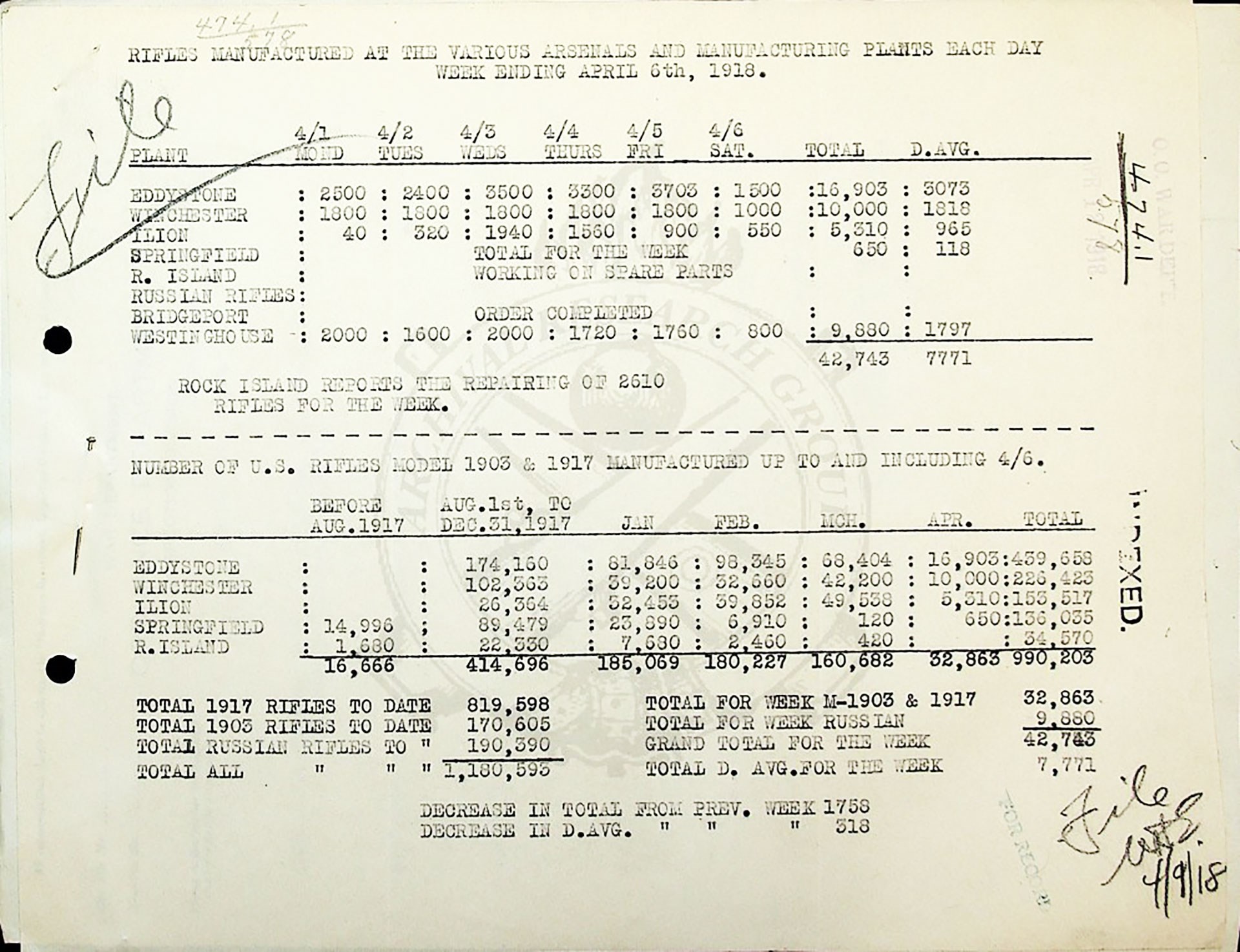 A document comparing production numbers of the M1903, M1917 and M1891 rifles from their various manufacturers. Photo courtesy of Archival Research Group.
The New Remington Rifle Company of Bridgeport, Conn., wasn’t far behind, with the Acting Chief of Ordnance placing an order on Jan. 7, 1918 for 78,950 already produced rifles. The cost would be set at $30 per rifle, for a total contract price of “$2,368,500 to be paid […] upon delivery and acceptance of said rifles.” Remington did continue to make rifles for the Russian government as well, but downward adjustments to the contract by the Russians caused Remington to reduce the number of men on the job. As in the case of New England Westinghouse, the purchases made by the U.S. government appear to have been made to allow the company “to keep a substantial portion of its organization together until it can be gradually diverted from work on the Russian rifles to work on the United States Government’s orders.”
Regarding nomenclature, there seems to have been some attempt by the Ordnance Department to give the M1891 in U.S. service the name “Russian 3 Line Rifle,” although in the vast majority of official correspondence they are simply referred to as “Russian rifles.” When it comes to weapons produced primarily for U.S. service, you perhaps would think that rifles of the same type would have the same inspection process when it came time to certifying their suitability for use. This was not the case with the Russian rifles.
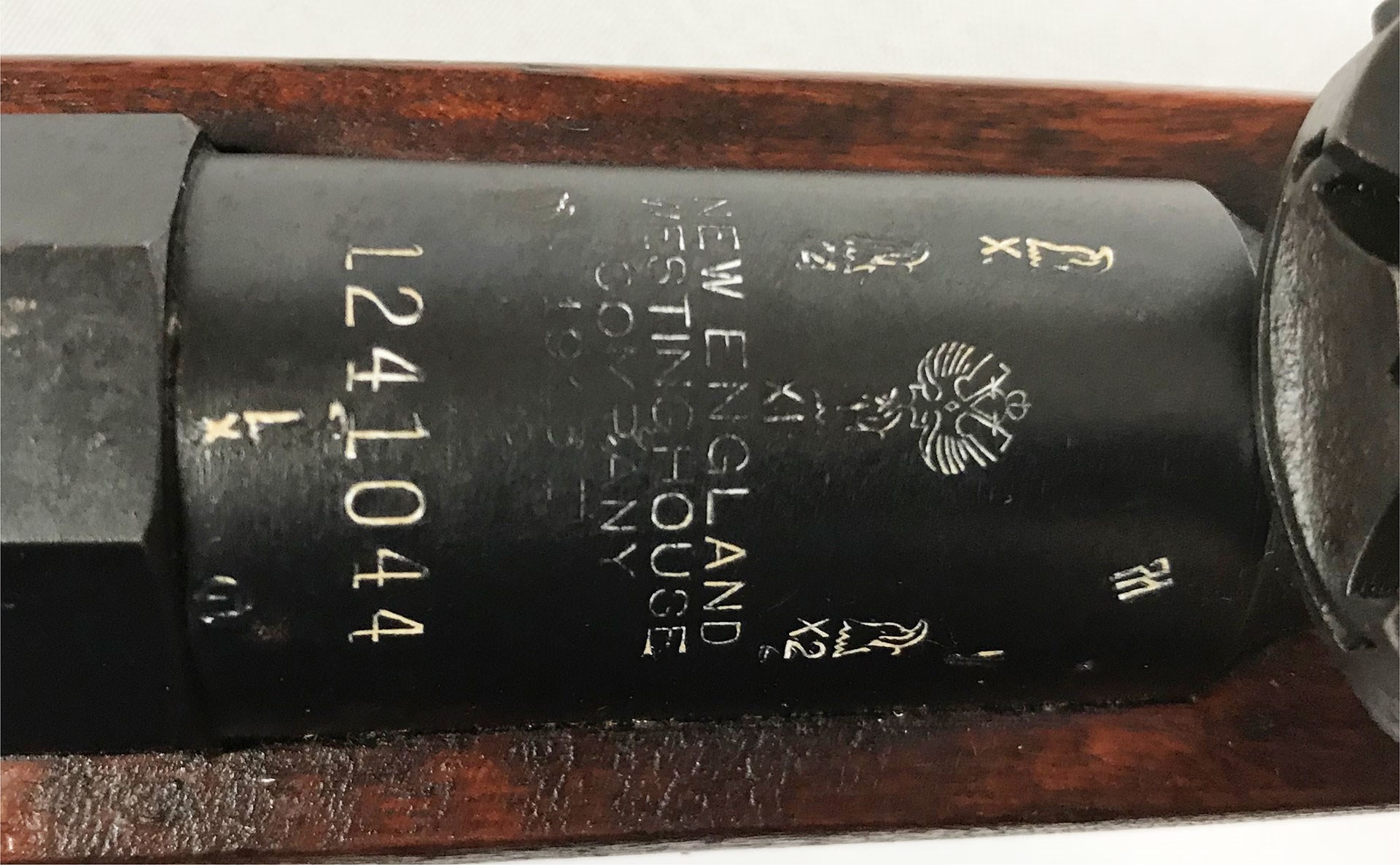 A closer look at the receiver markings of a Westinghouse manufactured M1891 rifle.
In general, Remington took a relatively minimalist approach and usually chose to simply stamp a flaming ordnance bomb and maybe an eagle head over “U.S.” on the bottom of the stock, just forward of the magazine. The inspection team at New England Westinghouse, on the other hand, must have decided to put their inspectors to work, as the rifles produced during this contract run are covered by a bevy of eagle head stampings on both the wood and the metal.
Documents drafted shortly after the war indicate that many thousands of these rifles were shipped across the United States for use as training weapons and stateside guard duty, with 12,954 being issued to the National Guard, 41,705 to various Home Guard organizations and approximately 25,000 to the U.S. Guards (a Federal military internal security organization composed of men aged between 31 and 40). On Governor’s Island in the New York Harbor for instance, the 300 men of the 9th U.S. Guards stationed at that post were armed exclusively with “266 Russian type rifles.” Post-war, Camp Logan, Texas, reported it had “532 Rifles, Russian”, along with an equal number of M1898 Krags that it wanted to divest itself of.
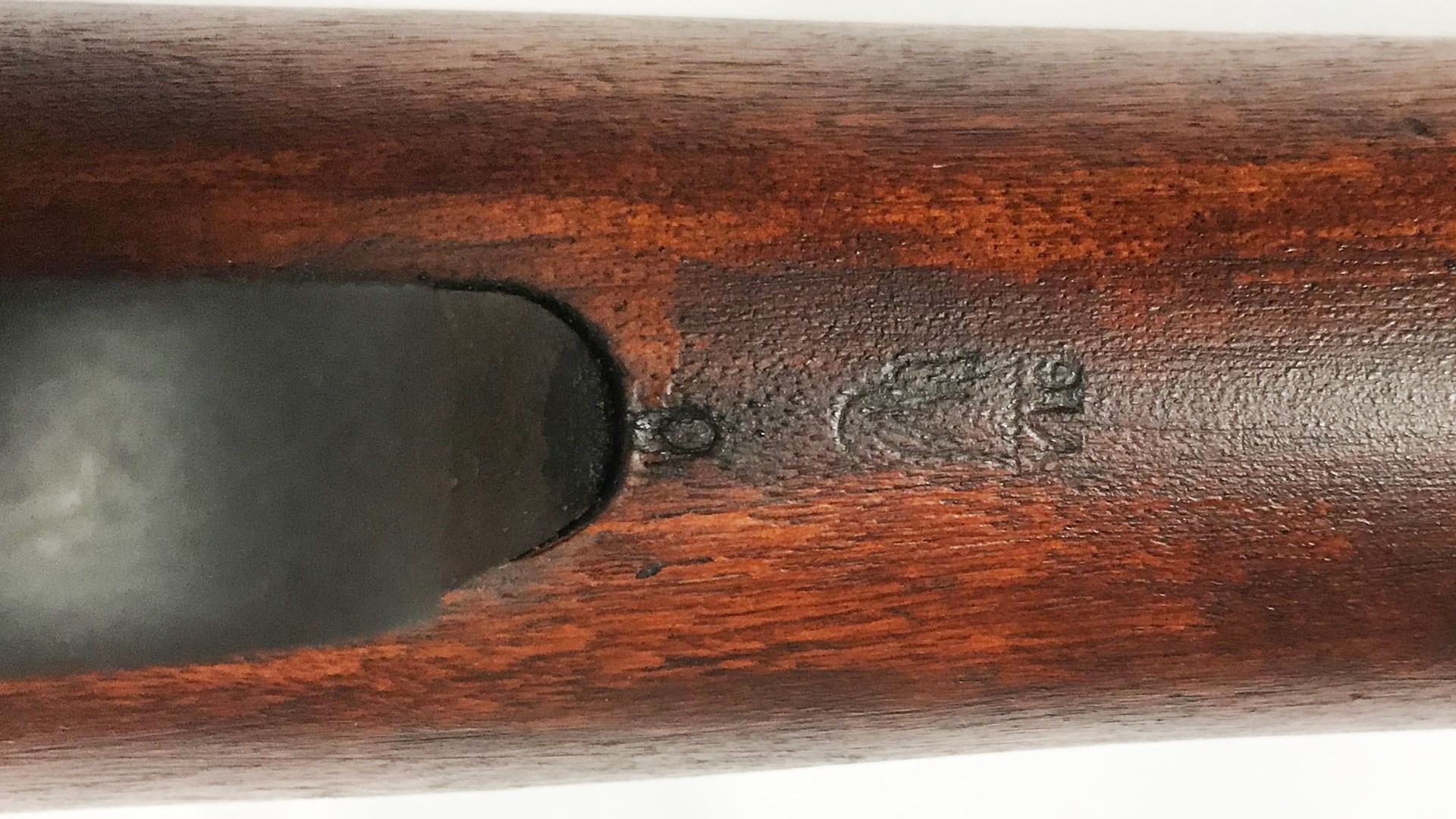 An eagle head inspection stamp in the wood of the Westinghouse manufactured M1891.
The largest number of Russian rifles were shipped to schools and colleges with programs of military instruction. Many of these had been forced to give up their Krags or other weapons during the early days following the U.S. entry into the war, and would likely have welcomed brand new (although non-standard) firearms into their arms rooms. Student Army Training Corps (S.A.T.C.) detachments received a staggering 109,700 rifles, while Reserve Officer Training Corps (R.O.T.C.) programs received 5,597.
That’s not to say they were always received with open arms however, and the Commanding Officer of the 5th Battalion, U.S. Guards stationed at Fort Robinson, Neb., had some critiques:
Subject: Russian Rifles
Stating a few apparent defects in the construction of Russian rifle, due perhaps to lack of knowledge of its nomenclature:
Can be safety locked only by pulling back knob of cocking piece with fingers and turning it to the left which makes it impossible to pull trigger or open chamber.
Examination has failed to reveal a cut off.
Apparently there is no provision for stacking arms.
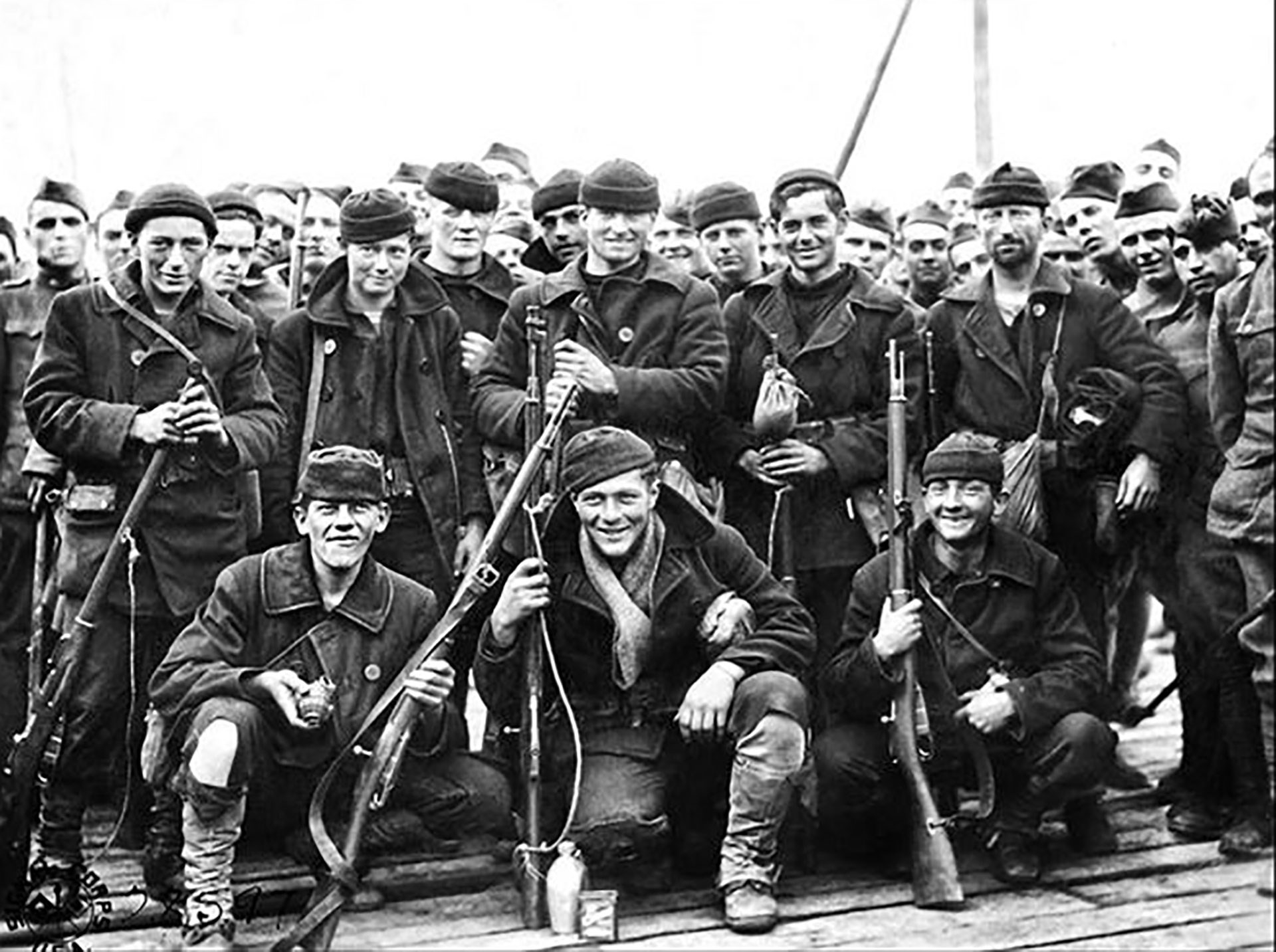 Sailors from the U.S.S. Olympia’s shore party armed with M1891 rifles during the U.S. intervention in the Russian civil war in September 1918.
Despite its inferiority to the M1903 and M1917, the Russian rifles did actually see combat service with the United States military. A large portion of the U.S. soldiers and sailors tasked with the controversial intervention in the Russian Civil War were armed with American made Mosin-Nagants, something that undoubtedly simplified logistics when it came to spare parts and ammunition. Those rifles didn’t sail home with the troops in June 1919, however, as a telegram from Brig. Gen. Wilds P. Richardson, the man tasked with organizing the withdrawal of U.S. forces from Russia, reported that the Russian rifles had been turned over to the British by the departing “Polar Bear” personnel.
All Pulling for Victory
Although not designed as a military rifle like the others, an honorable mention should also go to the 1,800 Winchester Model 1894 lever action rifles chambered in .30 W.C.F. that were put into service in the Pacific Northwest guarding the pine forests. These so called “Spruce Guns” were used by the U.S. Army Signal Corps to secure this critical national resource from possible work stoppages or sabotage.
Although the vast majority of the non-standard rifles detailed above did not see overseas service, they did free up a staggering number of M1903s and M1917s for service abroad. They further provided security for the home front, not only guarding physical places and things, but also providing peace of mind to a nation newly at war. While they may not be enshrined in small town statues or immortalized in film being held by the square-jawed doughboy, they allowed the United States to quickly mass critical resources overseas and help bring about the end of World War I.
A special thanks is owed to Archival Research Group for providing high quality scans of the primary source documents used to write this article.

Soldiers of the 3rd Infantry Division participate in an esprit de corps run around Fort Stewart, June 13. The run is in celebration of the Army’s 239th birthday on June 14.
POWER BELTS, EYE PROTECTION, AND HAND GRENADES — LEADERSHIP LESSONS FROM THE FRONT
Power belts, eye protection, and hand grenades — oh my! And all the sergeants major said, “Hell yeah!” While the staff sergeants rolled their eyes.
Let me explain.
In the Army, the senior enlisted service member of any (battalion-level or above) unit is the command sergeant major (CSM), the “Smaj” (rhymes with badge). But never call a CSM “Smaj” to their face.
The CSM has the most experience, has been around the longest, and is typically the oldest and most likely the crabbiest of all the soldiers in the unit. The CSM is typically around 40 with 20 to 22 years in service. They’ve seen it all. As top adviser and “Ranger buddy” to the commanding officer, they are big difference makers.
But why is the CSM crabby all the time? Well, because the CSM is typically roaming the unit area spot-checking for compliance to unit standards, which inevitably drives the staff sergeants (SSGs) bananas. They typically lead nine-soldier squads, composed of the SSG, two sergeants, and six soldiers. Squad leaders are the closest “leader of leaders” to the fight. They are tactically maneuvering fighting elements, are typically focused on the mission at hand, and tend to care little about the “rules” they feel don’t apply to them. The mean age is 25 with four to seven years in service.
The credo of the SSG is “Follow the rules you agree with.” If you don’t agree with it, change the standard when you’re out of sight, or claim “shooter preference” or “non-mission essential” when you’re caught outside of the standard. Better to ask forgiveness than permission.
This is the part that really chafes CSMs because “shooter preference” is typically soldier code for “I don’t wanna.”
But “shooter preference” conflicts with a standard if (and only if) someone is monitoring for compliance to the prescribed standard. And in the Army, someone is always watching for the standards because you cannot expect what you do not inspect. Any prescribed expectation left unmonitored is merely a suggestion, not a standard.
A lot of people don’t like being told what to do, even in the Army, which is why monitoring standards — especially safety standards — is important. Here are three examples that highlight three common categories of negative responses to prescribed safety standards:
Power Belts (Negative Response Category: “I don’t like” the safety standard)
Power belts are night reflectors that soldiers wear when running or ruck marching on the road. They are often part of the standard physical training (PT) uniform. Soldiers hate them.
I hated my power belt. Some of the more common affronts against the power belt are to claim “It’s not tactical,” or “It’s not like it’s car repellent,” or the ever famous “If I’m going to get hit by a car, I’m going to get hit by a car! This power belt is stupid!”
Looking back in my 40s, I know that as a young soldier I didn’t want to wear a power belt for two simple reasons: because someone told me to and because they look dorky.
I thought power belts were dumb until a Ranger on a tactical march got hit on a highway at night by a speeding car and was injured so badly it ended his military career. Turns out CSM was right about the power belts. Looking lame is a small price to pay for not getting run over. 
EYE PROTECTION (NEGATIVE RESPONSE CATEGORY: THE SAFETY STANDARD “IMPEDES MY ABILITY TO WORK”)
Ballistic eyewear that protects the eyes from debris and shrapnel — eye protection — is also infamous for capturing the heat and sweat coming off your face and fogging up to obstruct your vision. Typically, it happens right during the decisive point of the operation when you’re most amped up and your need to see the target is the most critical. It’s also typically the moment when you are most likely to encounter debris and shrapnel.
It’s not that eye pro is really hated, especially if you’re rocking Oakleys. In fact, though it was cool to rag on eye pro before the war, all of us got really happy about wearing our glasses once the GWOT started. Especially after that “wear your eye pro” photo with the 2-inch piece of shrapnel sticking out of the dude’s lens started circulating circa 2006.
I hate that photo because it made me love eye pro, and I had one less thing to drive the CSM crazy about.
Though I had good reason to pull off my eye pro from time to time to see the battlefield, my Oakleys saved my vision more times than I care to recollect, and I’m thankful to have my sight today.
CSM was also right about eye pro, but don’t tell him I said that. I have a reputation as a Ranger to uphold. Which leads me to hand grenades. (You’re welcome.)
Hand Grenades (Negative Response Category: “I don’t agree with” the safety standard)
This may be the trickiest category of all because it’s genuinely founded in a disagreement about right versus wrong. This is where thoughtful perspectives actually collide with one another creating friction if an idea becomes an ideology — a thought that becomes the fixation of the whole.
In 2002, Bagram, Afghanistan, was a tent city on an abandoned Soviet airfield surrounded by Hesco barriers and soldiers on guard. Down the center of the base, paralleling the airfield, was a long, hard-packed dirt road that we were authorized to run on when we left our corner compound.
When we ran on that road, we were required to have a weapon in hand. A weapon to run on a road surrounded by barriers and well-trained American soldiers guarding those of us inside the barriers.
I thought it was dumb, and I was willing to share my rationale.

Why would I need to shoot if we have soldiers on guard? Who am I going to shoot at on the inside of the base? If we are so overrun by the enemy that the guards have been eliminated, I’ll pick up an M4 and get to the fight. And most important, who the hell wants to run while carrying a gun?!?
Ultimately, the CSM was not persuaded by SSG Young’s thoughtful argument, and the safety standard remained in effect. So in one of my finest acts of smartassery, my squad and I complied — kind of.
After the weapons were issued, the boys and I went on a run, as prescribed, with one LAW (Light Anti-tank Weapon, a collapsible rocket launcher) tied up with a piece of 550 cord to one man’s back and eight M67 fragmentation grenades. Every hand had a weapon — a hand grenade.
We were pretty proud of ourselves. The CSMs on Bagram were not amused.
During the next rotation to Afghanistan, sometime in the middle of the night, we got attacked and a Hesco barrier saved many Rangers’ lives (including mine) by taking the full blast of the 107 mm rocket fired at us. I was pleased to have my rifle to return fire from the barrier, especially since none of the guards were reacting to contact. About two squads of Rangers were happy to oblige instead.
Obviously, being armed in the middle of a war is valuable, even if you’re surrounded by well-trained American soldiers. Someone (probably a CSM) made a decision — an unpopular one — about running with weapons that was founded in the best interests of all soldiers.
That’s the challenge with many safety standards, rules, and expectations that create some level of discomfort or disagreement. Many times safety standards feel ridiculous until the moment you need them and you discover why they exist in the first place.
It’s typically in those moments that SSGs and CSMs stop shaking their heads at each other and start thanking the Lord that one of their soldiers is still alive.
Today, I’m a little older, a little wiser, and a little less inclined to fight over something that someone else made a thoughtful decision about in the interest of others’ safety. I still may not “wanna.” It still might “impede my ability to work,” and I still “may not agree with it.” But these days I’m far more likely to just do it for a few reasons. It’s most likely not that big of a deal, it probably doesn’t really disrupt my life (or infringe upon my freedoms), and because I assume the person who made the decision most likely has more information than I do.
I’m still happy to submit a thoughtful response to rules that don’t seem to make sense, but I am more likely to comply with a safety standard because enduring a minor discomfort or inconvenience demonstrates more about my character than it does about anything else.
Namely, that I value discipline more than opinion, and compassion more than comfort.
In doing so, I’ve learned that it’s far better to be known for my character and my actions than for my attitude or opinions. And I’ve learned that showing respect for the governing authorities over minor inconveniences is a simple way to love others through my deeds, not my words.
Read Next: ‘Keep It Between the Ditches’ — Effective Leaders Are Peacemakers


BRANDON YOUNG
Brandon Young is a former US Army Ranger and co-founder/principal at Applied Leadership Partners, helping leaders create tightly knit, high-performing teams through executive coaching, speaking, and workshops. He has spent more than 20 years building and leading teams in the military, corporate healthcare, and nonprofit sectors. He’s been published in various peer-reviewed academic journals for his work as a co-developer of the Enriched Life Scale and is currently pursuing a Masters of Divinity in Leadership at Denver Seminary (2023). His passion is faith, family, community, people, and family adventures!
:quality(70)/arc-anglerfish-arc2-prod-mco.s3.amazonaws.com/public/KNOA6DFEHFGSTA2UXUI5UZMY7Y.png)
| US Dragoons during Mexican-American War |