Category: The Green Machine
The Cost

Feral pigs can grow to fairly enormous proportions. Photo By Max Saeling
The world seemed awfully dire back during the Cold War. Nowadays, Vladimir Putin keeps busy rubbing Novichok nerve agent into his political opponents’ underpants (No kidding. Google it). However, nobody seriously expects clouds of thermonuclear warheads to interrupt our socially distanced family gatherings these days. That wasn’t always the case.
An Army buddy was an enlisted soldier assigned to an attack helicopter unit billeted in Cold War Germany. In the event the balloon went up, their Cobras would sortie out in a hopeless attempt to stem the overwhelming tide of advancing Soviet armor. They appreciated that their bases would be obliterated by tactical nukes in short order. As a result, they needed some way to keep these combat aircraft in the fight without fixed support facilities. Some rocket scientist came up with the idea of the Poor Man’s FARRP.
FARRP is mil-speak for “Forward Area Refuel/Rearm Point.” In this case, the Army just secured a little open piece of dirt big enough to accommodate an attack helicopter and stacked up a bunch of crated ammunition in a big pile underneath tarps. They then surrounded the stack with concertina wire leaving a single opening for access. As abandoning several tons of unsecured military-grade ordnance in a field seems stupid, two Army privates were assigned to stand guard 24/7. The detail rotated in 12-hour shifts.
These two soldiers were each issued an M16 rifle and ten rounds of ammunition, meticulously accounted for. If you didn’t have each and every one at the end of your shift, something particularly vile would happen to you.
Personal comfort is not a thing in the US military, so chow was MREs. MRE technically stands for “Meals Ready-to-Eat,” but we always called them “Meals Refused-by-Ethiopians.”
As anyone who has ever met one can attest, a bored Army Private without any meaningful supervision is the chemical formula for mischief. For the most part, this duty was the very manifestation of tedium. However, late one evening the guards heard an ominous rustling in the surrounding forest. The noise grew louder and more intimidating. By the light of an ample moon they could barely make out the massive hairy shapes of a veritable army of monstrous beasts emerging from the wood line, moving inexorably closer. In short order, a large sounder of tremendous feral swine chased the two young soldiers up on top of the rocket crates.
A big male European boar reaches more than six feet long and weighs around 220 pounds. These animals are grouchy, mean and ravenous. Lured by the smell of the MREs, they eventually arrived every evening and chased the soldiers up onto the ammo crates in search of food. My buddy grew weary of this in short order.
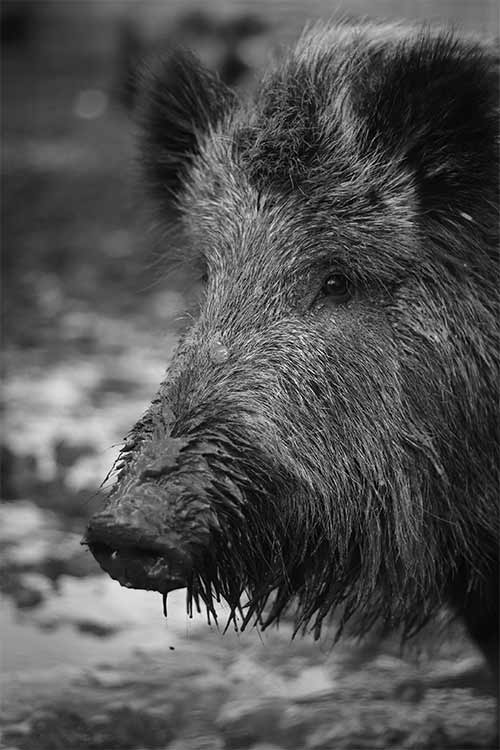
In the last two centuries, there have been 665 humans attacked by
these vile creatures in the wild. Photo By Kevin Jackson
Al Gore had not yet invented the Internet, so a phone call home produced a care package that included, among other things, a Wrist Rocket slingshot. For those who grew up someplace other than the Deep South, a Wrist Rocket uses rubber surgical tubing to accelerate a marble to simply breathtaking velocities. The next time my friend came up on the duty roster he was ready.
He baited the area around the ammo stack with MRE detritus, climbed atop the rockets, and waited. The pigs were happily munching on the Army chow in short order. He leaned over the biggest, meanest boar of the lot, oriented the slingshot just above his massive hairy head, drew the thing back as far and he was able, and let fly.
That standard glass marble caught the beast squarely between the ears from a slant range of maybe six inches. All four of the pig’s legs went in four different directions, and the big boar squealed like he was being skinned. He started running around in insensate circles, knocking into the ammo crates and running afoul of the concertina. His swine buddies just looked confused until my pal went to town bouncing high velocity marbles off pigs at his weapon’s maximum cyclic rate.
The porkers still returned regularly looking for trouble, but my buddy and his pals stood ready to give it to them. Slingshots poured into the barracks via the post, and the First Sergeant was surprised to find these young studs volunteering for the onerous guard duty by the bushel. You might take the boys out of Second Grade, but you’ll never take the Second Grade out of the boys.
Delbert Waldron III, “Bert” to those that knew him, was the most accomplished U.S. sniper during the Vietnam conflict. Adelbert originally joined the U.S. Navy in 1953 where he served for twelve years and left as an E-5 in 1965. In 1968 Sgt. Waldron enlisted in the US Army as a Sergeant and headed to Vietnam as part of Company B, 3rd Battalion, 60th Infantry of the 9th Infantry Division. Sgt. Waldron qualified as an expert marksman and was sent to the now famous 9th ID sniper school that was run in country by the Army Marksmanship Unit (AMU) with the support of the 9th ID commander, General Julian Ewell. Once graduated, Sgt. Waldron then found himself back working with the Navy in the Mekong Delta in the brown water ‘Tango Boats’ and PBRs. It was in this very hostile area that Sgt. Waldron operated as a sniper.
At the end of his tour in mid 1969 the 36 year old Sgt. Waldron had 109 confirmed kills, highest among all U.S. servicemen during the Vietnam conflict. Sgt. Waldron primarily used the M-21 SWS during his time as a sniper and on occasion would use a starlight equipped M-14 or M-21 for nighttime operations. General Ewell also credited Sgt. Waldron with making a single shot confirmed kill at 900 yards from a moving Tango Boat. Adelbert ended his tour in Vietnam as a Staff Sergeant E-6 and had been awarded a Silver Star, a Bronze Star, a Presidential Unit Citation, and two Distinguished Service Crosses.
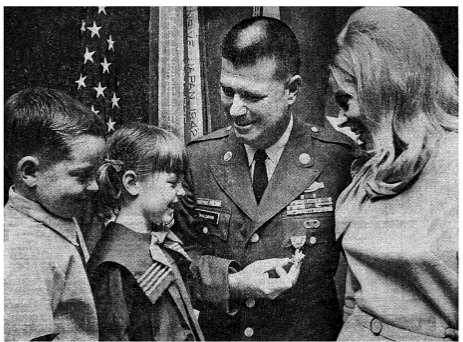
After his time in Vietnam, Sgt Waldron taught at the US Army Marksmanship Unit before leaving the Army in 1970. He worked with several questionable contractors and eventually he divorced as well. Staff Sergeant Adelbert Waldron III died on October 18, 1995 in California at the age of 62. Not much else is known about Sgt. Waldron or his military career, which was the way he wanted it. He did not publish any books or do lectures and refused many requests for interviews, he simply did not want the notoriety for what he did. Notoriety or not, he was an excellent sniper.
After 30 Years, Genetic Study Confirms Sarin Nerve Gas As Cause of Gulf War Illness
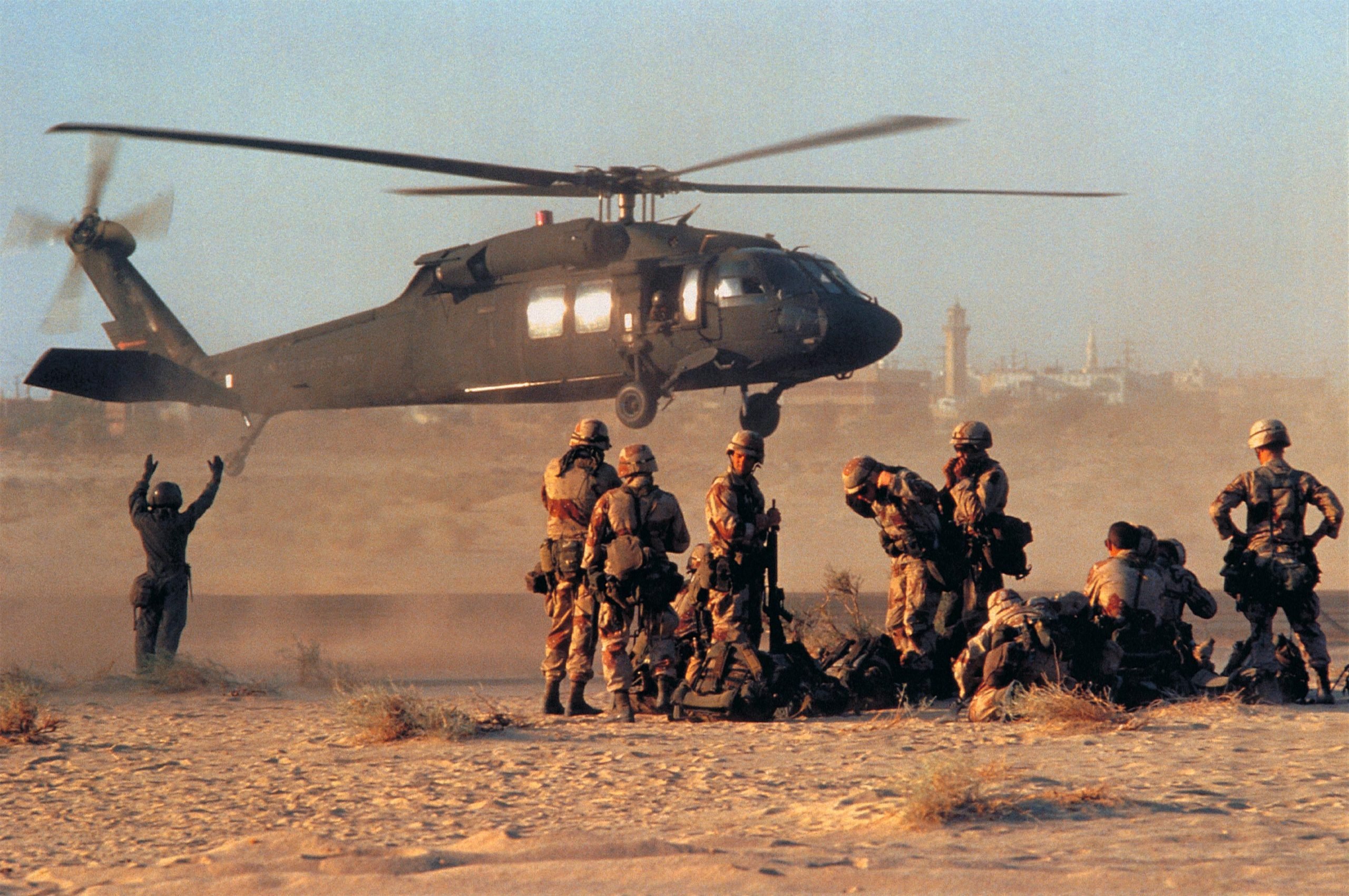
Troops who had genes that help metabolize sarin nerve gas were less likely to develop symptoms.
For three decades, scientists have debated the underlying cause of Gulf War illness (GWI), a collection of unexplained and chronic symptoms affecting veterans of the Persian Gulf War. Now researchers led by Robert Haley, M.D., Professor of Internal Medicine and Director of the Division of Epidemiology at The University of Texas Southwestern Medical Center (UT Southwestern), have solved the mystery, showing through a detailed genetic study that the nerve gas sarin was largely responsible for the syndrome.
The findings were published on May 11, 2022, in Environmental Health Perspectives, a peer-reviewed journal supported by the National Institute of Environmental Health Sciences, with an accompanying editorial on the paper by leading environmental epidemiologists.
Dr. Haley’s research group not only identified that veterans with exposure to sarin were more likely to develop GWI, but also found that the risk was modulated by a gene that normally allows some people’s bodies to better break down the nerve gas. Gulf War soldiers with a weak variant of the gene who were exposed to sarin were more likely to develop symptoms of GWI than other exposed veterans who had the strong form of the gene.
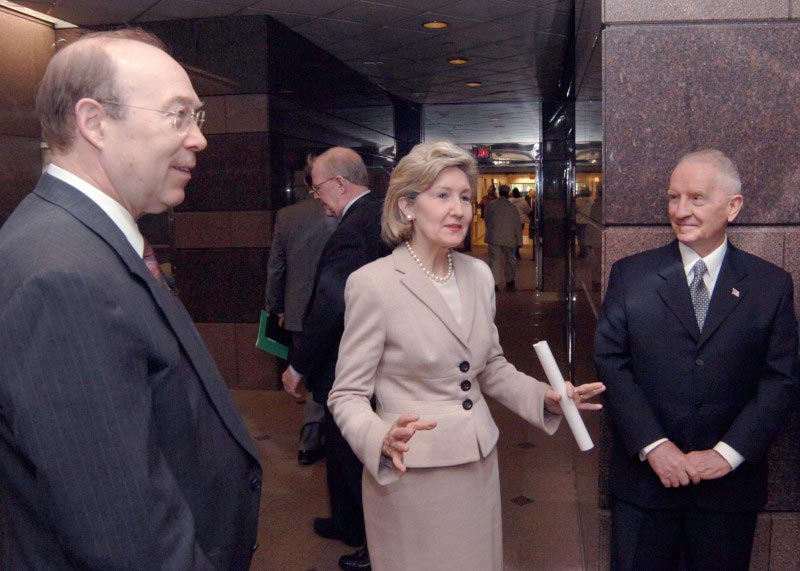
Robert Haley, M.D. (left) visits with two longtime GWI research supporters, former Sen. Kay Bailey Hutchison and the late Ross Perot, at a campus event in 2006. Credit: UT Southwestern Medical Center
“Quite simply, our findings prove that Gulf War illness was caused by sarin, which was released when we bombed Iraqi chemical weapons storage and production facilities,” said Dr. Haley, a medical epidemiologist who has been investigating GWI for 28 years. “There are still more than 100,000 Gulf War veterans who are not getting help for this illness and our hope is that these findings will accelerate the search for better treatment.”
In the years immediately following the Gulf War, more than a quarter of the U.S. and coalition veterans who served in the war began reporting a range of chronic symptoms, including fatigue, fever, night sweats, memory and concentration problems, difficulty finding words, diarrhea, sexual dysfunction, and chronic body pain. Since then, both academic researchers and those within the military and Department of Veterans Affairs have studied a list of possible causes of GWI, ranging from stress, vaccinations, and burning oil wells to exposure to pesticides, nerve gas, anti-nerve gas medication, and depleted uranium.
Over the years, these studies have identified statistical associations with several of these, but no cause has been widely accepted. Most recently, Dr. Haley and a colleague reported a large study testing veterans’ urine for depleted uranium that would still be present if it had caused GWI and found none.
“As far back as 1995, when we first defined Gulf War illness, the evidence was pointing toward nerve agent exposure, but it has taken many years to build an irrefutable case,” said Dr. Haley, who holds the U.S. Armed Forces Veterans Distinguished Chair for Medical Research, Honoring Robert Haley, M.D., and America’s Gulf War Veterans.
Sarin is a toxic man-made nerve agent, first developed as a pesticide, that has been used in chemical warfare; its production was banned in 1997. When people are exposed to either the liquid or gas form, sarin enters the body through the skin or breathing and attacks the nervous system. High-level sarin often results in death, but studies on survivors have revealed that lower-level sarin exposure can lead to long-term impairment of brain function. The U.S. military has confirmed that chemical agents, including sarin, were detected in Iraq during the Gulf War. In particular, satellite imagery documented a large debris cloud rising from an Iraqi chemical weapons storage site bombed by U.S. and coalition aircraft and transiting over U.S. ground troop positions where it set off thousands of nerve gas alarms and was confirmed to contain sarin.
Previous studies have found an association between Gulf War veterans who self-reported exposure to sarin and GWI symptoms. However, critics have raised questions of recall bias, including whether veterans with GWI are simply more likely to remember and report exposure due to their assumption that it may be linked to their illness. “What makes this new study a game-changer is that it links GWI with a very strong gene-environment interaction that cannot be explained away by errors in recalling the environmental exposure or other biases in the data,” Dr. Haley said.
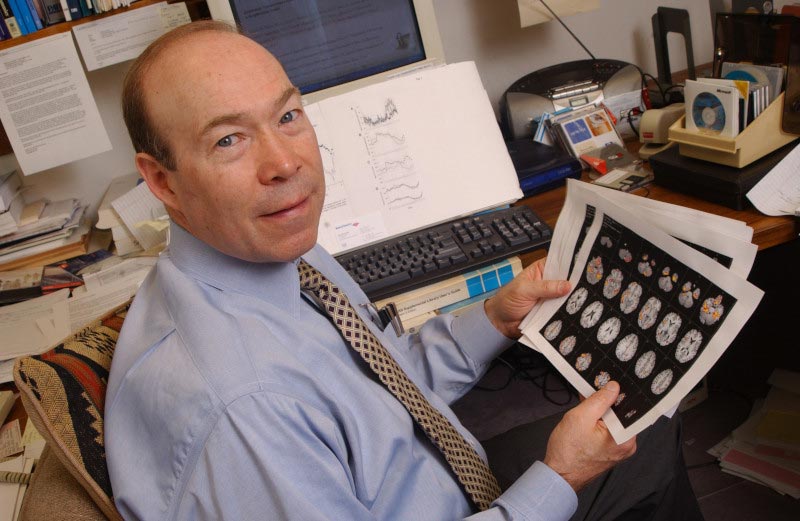
Robert Haley, M.D., here reviewing brain scans of Gulf War veterans, has been studying the illness for 27 years. Credit: UT Southwestern Medical Center
In the new paper, Dr. Haley and his colleagues studied 508 deployed veterans with GWI and 508 deployed veterans who did not develop any GWI symptoms, all randomly selected from more than 8,000 representative Gulf War-era veterans who completed the U.S. Military Health Survey. They not only gauged sarin exposure – by asking whether the veterans had heard chemical nerve gas alarms sound during their deployment – but also collected blood and DNA samples from each veteran
The researchers tested the samples for variants of a gene called PON1. There are two versions of PON1: the Q variant generates a blood enzyme that efficiently breaks down sarin while the R variant helps the body break down other chemicals but is not efficient at destroying sarin. Everyone carries two copies of PON1, giving them either a QQ, RR or QR genotype.
For Gulf War veterans with the QQ genotype, hearing nerve agent alarms – a proxy for chemical exposure – raised their chance of developing GWI by 3.75 times. For those with the QR genotype, the alarms raised their chance of GWI by 4.43 times. And for those with two copies of the R gene, inefficient at breaking down sarin, the chance of GWI increased by 8.91 times. Those soldiers with both the RR genotype and low-level sarin exposure were over seven times more likely to get GWI due to the interaction per se, over and above the increase in risk from both risk factors acting alone. For genetic epidemiologists, this number leads to a high degree of confidence that sarin is a causative agent of GWI.
“Your risk is going up step by step depending on your genotype, because those genes are mediating how well your body inactivates sarin,” said Dr. Haley. “It doesn’t mean you can’t get Gulf War illness if you have the QQ genotype, because even the highest-level genetic protection can be overwhelmed by higher intensity exposure.”
This kind of strong gene-environment interaction is considered a gold standard for showing that an illness like GWI was caused by a particular environmental toxic exposure, he added. The research doesn’t rule out that other chemical exposures could be responsible for a small number of cases of Gulf War illness. However, Dr. Haley and his team carried out additional genetic analyses on the new data, testing other factors that could be related, and found no other contributing causes.
“There’s no other risk factor coming anywhere close to having this level of causal evidence for Gulf War illness,” said Dr. Haley.
The team is continuing research on how GWI impacts the body, particularly the immune system, whether any of its effects are reversible, and whether there are biomarkers to detect prior sarin exposure or GWI.
References:
“Evaluation of a Gene–Environment Interaction of PON1 and Low-Level Nerve Agent Exposure with Gulf War Illness: A Prevalence Case–Control Study Drawn from the U.S. Military Health Survey’s National Population Sample” by Robert W. Haley, Gerald Kramer, Junhui Xiao, Jill A. Dever and John F. Teiber, 11 May 2022, Environmental Health Perspectives.
DOI: 10.1289/EHP9009
“Invited Perspective: Causal Implications of Gene by Environment Studies Applied to Gulf War Illness” Marc G. Weisskopf and Kimberly A. Sullivan, 11 May 2022, Environmental Health Perspectives.
DOI: 10.1289/EHP11057
Other UTSW researchers who contributed to this study include John Teiber, Gerald Kramer, and Junhui Xiao. The U.S. Military Health Survey was a collaborative effort of UTSW and a large survey research team at RTI International including Jill Dever, who also contributed to this paper. The study was funded by the U.S. Departments of Defense and Veterans Affairs. Opinions, interpretations, conclusions, and recommendations are those of the authors and are not necessarily endorsed by the U.S. Departments of Defense or Veterans Affairs.