Yeah I knows its the Marines but there is still some good stuff here- Grumpy
Yeah I knows its the Marines but there is still some good stuff here- Grumpy

“Many GIs in Vietnam thought the night belonged to the enemy, but in the Mekong Delta, darkness belonged to Bert Waldron.” –Major John Plaster

Think back to the last time you felt truly frustrated and helpless. At some point in their lives, everybody finds themselves in circumstances utterly beyond their control. It’s a terrifying sensation.

Perhaps you were the subject of bullying. Maybe you were a little kid and got lost. For the Vietcong in the Mekong Delta in 1969, the engine behind their nightmares was SSG Bert Waldron.

SSG Waldron was a broken man imbued with a dark gift. Born in Syracuse, New York, in 1933, Waldron came of age amidst chaos and despair. The product of a dysfunctional home, young Bert despised his stepfather. This antipathy drove the kid into the nearby forest in search of peace and solitude. There Bert Waldron came to think of the wilderness as home.

Bert Waldron’s life could be a case study of the effects of nature versus nurture. By his 23rd birthday, the man had been married three times. His unique emotional milieu apparently made him all but impossible to live with. Waldron enlisted in the US Navy and served during the Korean War. He left the Navy in 1965 after twelve years to try his hand at civilian life.

With the country embroiled in an increasingly bitter land war in Southeast Asia and life out of uniform not to his liking, Waldron enlisted again, this time in the Army. He completed Basic Training at Fort Benning and five months later was in Vietnam.

Waldron’s prior service in the Navy earned him Staff Sergeant’s stripes, but he still had very little experience with practical soldiering. Once in country, SSG Waldron attended a brief eighteen-day sniper course taught by members of the Army Marksmanship Unit. I don’t know exactly what they taught during those two and one-half weeks, but it took. In short order, SSG Bert Waldron became a holy terror behind a sniper rifle.

SSG Waldron was assigned to the 3d Battalion, 60th Infantry, Regiment, 9th Infantry Division under LTG Julian Ewell. Operating in close conjunction with the Navy’s Mobile Riverine Force, SSG Waldron and his fellow snipers cruised the murky waterways of the Mekong looking for trouble. Waldron’s prior service as a sailor made him a perfect fit for this joint operation with the Brown Water Navy. More often than not Waldron staged onboard ATC’s or Armored Troop Carriers. These heavily armed and armored riverine vessels were called Tango Boats and offered US forces a prickly platform for operations throughout the myriad shallow waterways of the Mekong Delta.

The Mekong was heavily populated and teeming with VC. Charlie typically played to his own strengths, conducting many operations under cover of darkness when American air power and artillery support could not be readily brought to bear. Then Bert Waldrop and his snipers hit the battlefield with high-tech sniper rifles equipped with starlight scopes. The result was unfettered carnage.

It takes unimaginable courage to strike out alone into the jungle in the middle of a firefight, but that was exactly Bert Waldron’s forte. In January of 1969, Waldron and his unit came under intense night attack by a force of forty well-armed VC. When his unit found itself in danger of being overrun SSG Waldron pressed out into the jungle alone to hunt. Using his accurized M21 sniper rifle and AN-PVS-2 starlight scope he could spot the enemy maneuvering in the deep foliage and pick them off as opportunity allowed. During the course of the engagement, SSG Waldron savaged the attacking force and broke the back of the assault. This fight earned him a Bronze Star with “V” device.

Three nights later SSG Waldron discovered a large VC force moving tactically. He tracked the enemy unit using his night vision system until he gained an advantageous position to attack. SSG Waldron then sniped and maneuvered, engaging from various angles to convince the VC they were facing a larger, more organized force. Three hours later he had killed eleven of the Cong and forced them to leave the field. This night’s work earned him the Silver Star.

Eight days later SSG Waldron and his spotter were set up near Ben Tre scanning the darkness around their rice paddy with their starlight equipment. They encountered a seventeen-man VC patrol and took out their lead scout as he emerged from the treeline. Calls for artillery support were denied because of a nearby friendly village. At a range of more than 500 meters and under cover of darkness SSG Waldron killed eight VC with eight rounds from his sniper rifle. The surviving members of the VC combat patrol melted back into the jungle to safety.

Four days after that SSG Waldron was deployed in support of an ARVN unit in contact. He discovered a group of six VC attempting to outflank the ARVNs and gain a position of advantage. SSG Waldron then meticulously killed all six of the insurgents, picking them off one by one in the darkness with his sniper rifle and night vision gear.

In one nineteen-day period, SSG Bert Waldron conducted fourteen successful nocturnal sniper operations. For his dedication, valor, and ruthlessness he was awarded his first Distinguished Service Cross. By now the VC were beginning to appreciate that horrible feeling of helplessness. Where previously they could move and operate in the darkness with relative impunity, now SSG Waldron and his snipers brought death from unexpected quarters. Their efforts began to take a toll.

SSG Waldron’s effectiveness as a sniper clearly spawned from some innate skill. He had only had eighteen days’ worth of formal sniper training. During one engagement a VC sniper was peppering a passing Tango Boat from the top of a coconut tree some 900 meters distant. While the boat’s crew struggled to find the hidden sniper with their heavy crew-served weapons, SSG Waldron killed the man with a single round from his M21 rifle…while the boat was in motion. The Physics behind making a one-round kill from a moving boat against a camouflaged adversary nearly a kilometer distant strains credulity. However, the details were verified.

For these and similar actions SSG Waldron was awarded his second Distinguished Service Cross. Waldron’s reputation exploded among both Allied forces and the Cong, earning him the respectful nickname Daniel Boone. After eight months in country, the 9th ID rotated home and SSG Waldron with them. By the time he left Vietnam Bert Waldron had 109 confirmed kills, fully 12% of all the kills logged by all of the division’s snipers. Until Navy SEAL sniper Chris Kyle broke his record in 2006, SSG Bert Waldron was the deadliest American sniper in history.

The Army adopted the M14 rifle as a replacement for the WW2-era M1 Garand in 1959. A gas-operated, magazine-fed design, the M14 really reflected the previous generation’s technology. At 44 inches long the M14 was found to be unduly bulky for the bitter close-range jungle fighting that characterized the war in Vietnam. By the mid-1960’s the M14 was being replaced in SE Asia by the lighter, more maneuverable M16.

The US Army is indeed a majestically cumbersome beast. In 1955 the US Army Marksmanship Training Unit (USAMTU) embarked on a quest to incorporate snipers into the Infantry squad. In the malaise of the early 1960s, this initiative was discontinued. However, the exigencies of combat in Vietnam renewed interest in the art. That exposed the need for a dedicated precision sniper rifle.

While the Marines were using modified bolt-action hunting rifles, the Army contracted with Rock Island Armory to build up 1,435 National Match M14 rifles with Redfield 3-9x Adjustable Ranging Telescope (ART) sights. The ART was the brainchild of 2LT James Leatherwood and included both range finding and bullet drop compensation in its mechanism. This new rifle was formally designated the XM21 and first issued in 1969. An improved version with a fiberglass stock was classified the M21 in 1975 and served until 1988 when it was replaced by the bolt-action M24.

The AN/PVS-2 starlight scope was the first truly successful man-portable passive night vision weapon sight fielded by the US Army. This device amplified ambient starlight to produce a usable image in the absence of an active IR emitter. While such stuff is commonplace today, it was radical indeed in 1967 when it was first deployed to Vietnam. When combined with the early SIONICS suppressors fielded in 1969 the AN/PVS-2 offered American snipers a literally unprecedented capacity to own the night in Vietnam.

Like so many true professional warriors, Bert Waldron found himself ill-suited to peacetime life at home. He served as a senior instructor for the US Army Marksmanship Training Unit (USAMTU) until his discharge in 1970. Along the way he met Mitch WerBell III through the commander of the USAMTU, COL Robert Bayard. and accepted a position as a counter-sniper advisor with Cobray International, WerBell’s weird creepy paramilitary training school in Georgia.

Mitch WerBell dabbled in overthrowing third world governments for a time and made quite a few enemies along the way. In 1975 COL Bayard was found murdered outside an Atlanta shopping mall. His killer was never apprehended. Throughout it all Bert Waldron’s name was a persistent fixture.

For the next two decades, Waldron worked in the shadows, plying the dark skills he mastered in Vietnam into a livelihood. Along the way his final marriage self-destructed and he was investigated by the FBI. In October of 1995, Bert Waldron died of a heart attack at age 62. His ex-wife Betty said this of him, “Bert was a wonderful soldier. He loved his country, he would have died for his country, but he had a lot of problems as a human being.”

Bert Waldron was a “Break Glass in Case of War” type of soldier. America desperately needs such men. It is simply figuring out what to do with them when the bullets aren’t flying that seems to be the perennial challenge.

Combat is never what you expect it to be! Grumpy

The U.S. Army has selected the Griffin II as its first new tank since the Cold War.
But will the new platform give the Army a lightweight but heavily armed vehicle that can support the infantry? Or like the history of light tanks suggests, it will be a liability on the battlefield? That depends on how you view the future of tanks – and the weapons that destroy them.
At the least, America buying a new tank is notable. The backbone of the Army’s armored fleet – the M1 Abrams – dates back to the late 1970s. Although much upgraded since then, it is essentially the same vehicle that was designed to take on waves of Soviet tanks pouring through the Fulda Gap.
The Army awarded a $1.1-billion contract to General Dynamics Land Systems (GDLS) for the new vehicle. GDLS’s Griffin II design weighs 40 tons – about half the weight of a 70-ton M1A2 Abrams – and has a four-person crew. It has a 105-millimeter cannon, rather than the 120-millimeter gun found in Western main battle tanks like the M-1, Germany’s Leopard 2, and Israel’s Merkava 4.
The new tank borrows much from the M1A2, including its fire control system and a turret that resembles that of the Abrams.
The new tank is part of the Army’s Mobile Protected Firepower (MPF) program, which aims to develop a tank to bolster Infantry Brigade Combat Teams and allow for better destruction of enemy tanks and bunkers. The two contenders for the award were GDLS and its Griffin II – whose chassis is based on the Austro-Spanish ASCOD armored vehicle — and BAE, whose design traced back to the 1980s-proposed M8 Buford.
“GDLS offered a new, lightweight chassis with a high-performance power pack and an advanced suspension, combined with a turret featuring the latest version of the fire control system found in the Abrams main battle tank,” noted Defense News.
The Army plans to buy 504 light tanks by 2035, as part of a program that may eventually total $17 billion in procurement and sustainment costs, according to Army officials.
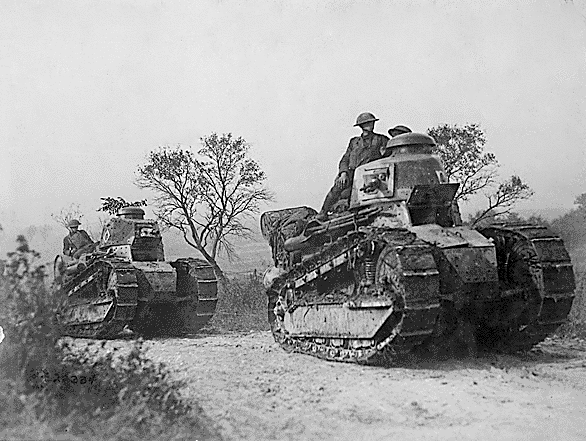
Tanks should support infantry. In fact, that’s why the tank was invented back in the First World War, as a means to destroy the machine guns and barbed wire that had decimated infantry attacking across No Man’s Land. But tanks, like battleships, are compromises between three requirements: firepower, protection, and mobility. You can favor one or perhaps two of those factors, but only at the cost of the third.
And the Army’s MPF light tank sacrifices protection, given that it weighs only 40 tons. Even if it mounts an Active Protection System to shoot down incoming anti-tank rockets, the tank would seem likely to have protection closer to an infantry fighting vehicle like the M2 Bradley than a main battle tank like the Abrams.
Then there is the troubled history of the light tank concept. The major powers all used light tanks in World War II. The tanks included the U.S. M3 and M5 Stuart, the German Panzerkampfwagen I, and the Soviet T-70. They had smaller cannons and lighter armor, but they were cheaper to build than medium and heavy tanks.
The problem was that in combat, they often faced heavier enemy tanks. During the disastrous Battle of Kasserine Pass in February 1943, the M5 found itself outmatched by heavier, better-armed, and better-armored German PzKpfw III and IV tanks and anti-tank guns. General Patton “issued a directive that light tanks were only to be used for reconnaissance and flank security in view of their weakness in dealing with current German tanks and anti-tank guns,” notes author Steven Zaloga in his book on the Stuart tank. Against heavy German Tiger and Panther tanks, the results could be imagined.
Related: Could the Panther tank once again be seen in Europe?
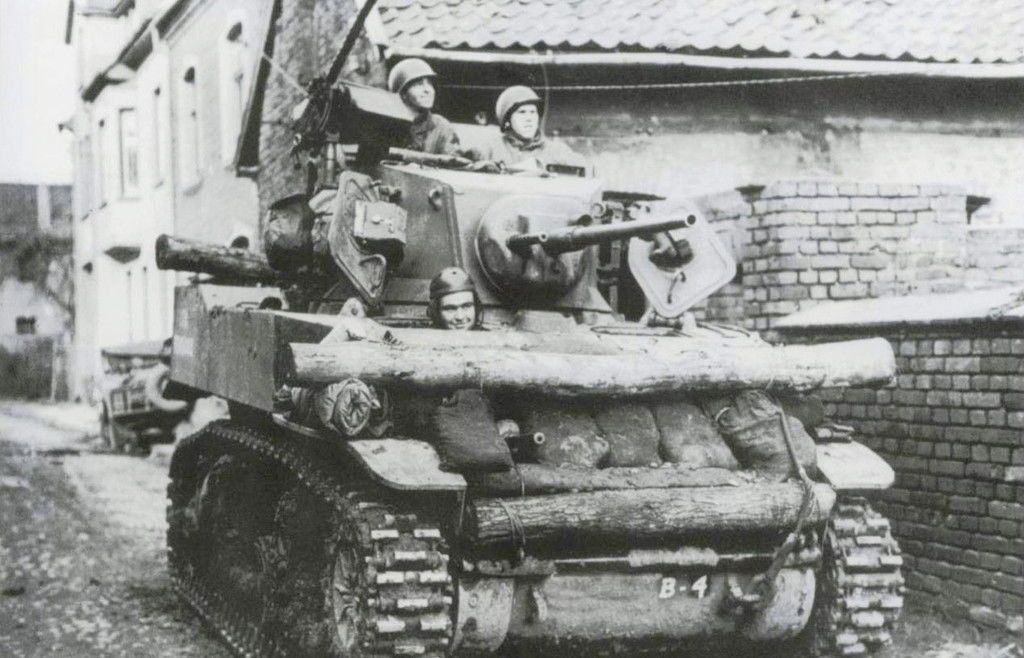
By 1944, the U.S. Army had concluded that the “poor armor protection of the M5A1 resulted in a higher rate of crew casualties than in medium tanks, with a medium tank crew having about a one-in-five chance of becoming a casualty when their tank was knocked out, compared to a one-in-three chance in light tanks,” according to Zaloga.
The Stuart was eventually replaced by the somewhat more successful M24 Chaffee, some of which were air-dropped to the doomed French garrison at Dien Bien Phu. After World War II came the infamous M551 Sheridan, an air-droppable light tank built out of aluminum and armed with a powerful 152-millimeter cannon that could fire Shillelagh infrared-guided anti-tank missile. Deployed to Vietnam in 1969, the recoil of the gun was so hard that it knocked out the vehicle’s electronics.
This doesn’t mean that the new Griffin II light tank will be unsuccessful. But U.S. tanks already face a variety of deadly threats, including new Chinese and Russian tanks such as Russia’s T-14 Armata, as well as anti-tank missiles, long-range artillery, and missile-armed drones that have proved devastating in the Russia-Ukraine war.
Some experts are already writing obituaries for the tank. That’s premature because there is no substitute for a vehicle that combines firepower, protection, and mobility. Yet, it does suggest that the modern battlefield is a heavy burden for a light tank.

George S. Patton was one of the most flamboyant soldiers the United States has ever produced.

Patton stated that there was not anything he would not have given to earn the Medal of Honor.
Some men are born to greatness. George Smith Patton actively cultivated it. A man of truly breathtaking ambition, Patton’s stated lifelong quest for the Medal of Honor was destined for frustration.

Patton was the most feared Allied General Officer of the Second World War.
A marginal student but a rapacious reader, Patton enjoyed an almost pathological drive to succeed. In the final analysis, George Patton became arguably the most effective fighting general in American military history. His combat career, however, was nearly cut short during a vicious engagement with Mexican bandits as part of the 1916 Punitive Expedition to defeat Pancho Villa.
The Setting

Pancho Villa was a murderous bandit whose bloody antics sparked a war.
In March of 1916 a mob of paramilitary cutthroats under the command of Jose Doroteo Arango Arambula, more commonly known as Francisco “Pancho” Villa, attacked and burned the small town of Columbus, New Mexico.

Villa’s followers were marauding thugs.
In the process, Villa killed eight American Cavalrymen stationed there along with another eight to ten civilians. He made off with three hundred captured rifles and shotguns but lost a quarter of his force in the process. He also incurred the fulminant wrath of both President Woodrow Wilson and the American people.

Woodrow Wilson’s response to Villa’s raids was overwhelming combat power.
Five months later there were 100,000 American troops poised on the border.

General John J. “Blackjack” Pershing commanded both the Punitive Expedition into Mexico as well as American forces in Europe during World War 1.
The Punitive Expedition was led by John “Blackjack” Pershing and was tasked with capturing Villa.

In 1916 a large portion of the United States military still relied on horses for mobility.
This military operation was the first in US history to employ motorized ground transport as well as airplanes in a reconnaissance role.
A Hero’s Beginnings

A young George Patton struggled with certain academic subjects but was a born leader.
By 1916 Second Lieutenant George Patton had already etched a deep mark. He attended the Virginia Military Institute for a year before entering the US Military Academy in New York. His academic failure in mathematics necessitated his repeating a year at West Point.

The Patton sword was designed for thrusting rather than slashing.
An avid swordsman, Patton studied experts in the US and Europe and designed the M1913 Cavalry Saber that became known as the “Patton Sword.”

George Patton, shown on the right, was a master swordsman.
He was granted the title “Master of the Sword” for his efforts. I’m not sure exactly what that means, but it sounds awesome.

An accomplished equestrian, Patton competed in the 1912 Stockholm Olympics.
Lieutenant Patton represented the United States in the pentathlon at the 1912 Olympics in Stockholm, Sweden. While the other Olympians ran .22-caliber pistols for the shooting component of the event, Patton elected to wield a .38-caliber Colt target revolver.

Where most pentathlon competitors used a .22-caliber pistol, Patton preferred more serious iron.
The young officer was docked a shot as having missed the target altogether with his final round. Patton claimed that the bullet passed through the ragged hole left by the preceding shots. As he had fired a perfect score the previous day this is not an unreasonable claim.

One man actually died during the 2.5-mile cross-country run that defined the 1912 Olympic pentathlon. This is George Patton during the run.
When the pentathlon was complete, several competitors had fallen away and one actually died. Patton came in fifth overall. Had he gotten credit for shooting up to his typical standard he would have taken the gold.

General Pershing was engaged to George Patton’s younger sister Nita. They eventually broke off the engagement.
Concerned that he might miss the pending military action in Mexico, Patton appealed directly to Pershing. Blackjack agreed and made Patton his personal aide. The fact that Pershing was engaged to Patton’s younger sister Nita likely did not harm his prospects.
The Mission

Patton requested and received a posting to a combat Cavalry command.
Eager to command troops in combat, 2LT Patton requested and received a billet to Troop C of the 13th Cavalry hunting Pancho Villa. Julio Cardenas was a Captain in Villa’s band of rogues and his overall 2IC. Cardenas also commanded Villa’s personal bodyguard.

The US military’s reliance on horses demanded a constant search for fodder.
While out scavenging for corn for the unit’s horses, a small party of ten American cavalrymen along with a pair of civilian guides under Patton’s command came to a ranch near the town of Rubio, Mexico. Realizing that Cardenas had family at the ranch, Patton undertook a detailed recon of the area from a variety of vantages. Lieutenant Patton subsequently identified Cardenas and a pair of his henchmen at the facility.

Patton used Dodge touring cars in the first mechanized assault in US military history.
On May 14, 1916, Patton led his small attack force in three Dodge touring cars cross country in the first motorized assault in US Army history. At around noon, Patton staged two of his vehicles as a blocking force, dismounted, and approached the compound by stealth along with two members of his party. He carried a rifle in his left hand and his ivory-handled engraved Colt Single Action Army revolver in his right.

Patton had a bad experience with John Browning’s classic military automatic that drove him to wheelguns.
Some weeks before, Patton was at a local watering hole enjoying the nightlife with his issue Colt 1911 automatic pistol shoved into his belt. The weapon discharged unexpectedly and soured the young officer to a degree.

Patton’s customized Single Action Army became part of his mythos. The original is on the top. The gun used in the 1970 biographical movie is shown on the bottom.
As a result, he privately purchased his famous Colt SAA revolver for $50 and had it customized with ivory grips and extensive engraving. Patton loaded his wheelgun with five rounds, leaving the chamber underneath the hammer empty. This was the state of the weapon he carried as he approached the San Miguelito Ranch.
Patton’s First Gunfight

The three Mexican bandits rode for their lives trying to escape the encircling Americans.
Patton and his subordinates made their way around the low wall that surrounded the ranch and was eventually spotted by the three bandits. Just as planned, the mounted Mexicans fled the small team only to run into Patton’s well-sited blocking force.

The shootout between 2LT George Patton and the Mexican bandit Julio Cardenas showed the young American officer to be calm and professional under fire.
Wheeling their mounts around, the three charged back at Lieutenant Patton and his soldiers, their guns blazing. George Patton leveled his Colt and emptied all five rounds.

Little quarter was given.
One round struck Cardenas in the arm, shattering it. Another felled his horse. Having recharged his sixgun Patton shot the horse of one of Cardenas’ companions as it galloped by, dropping the animal and spilling its rider. Once the bandit disentangled himself from the wounded animal, Patton and his men gunned him down.

The Winchester lever action rifle was legendarily reliable.
The story goes that this man was armed with a lever action rifle that jammed just as he was about to shoot. The young Lieutenant kept the gun and left it in its choked state, insisting that it never be cleared. The gun with its action locked open was on display at the Patton Museum at Fort Knox for decades. Given the remarkable reliability of lever action rifles, Patton saw this fortuitous failure as an example of divine providence.
The third bandit escaped the compound and galloped away as fast as his mount could run. Patton transitioned to his bolt-action Springfield rifle and, along with his men, blew the retreating Mexican out of his saddle. Meanwhile, the wounded Cardenas was attempting to escape on foot.

Julio Cardenas feigned surrender and died as a result of his subterfuge.
One of Patton’s guides, a turncoat Villa soldier named E.L. Holmdahl, pursued the wounded man into a nearby field. Cardenas feigned surrender only to draw his pistol, fire, and miss. For his trouble, Holmdahl put a bullet through the Mexican bandit’s brain.
The Rest of the Story

General Pershing had no interest in the three dead Mexicans but was mightily impressed with his aide George Patton.
Patton strapped the bodies of the three dead bandits to the hoods of his cars and returned to his encampment forthwith leaving around fifty pursuing Mexican bandits on horseback in his dust. The baking Mexican sun did not improve the state of the three dead men by the time he presented them as spoils of war to his commander, General Pershing. Blackjack wanted little to do with the demised and rapidly ripening Mexicans and had them buried on the spot.

Patton’s ego and refined tactical acumen drove him to rarefied heights of military command.
Pershing was, however, quite impressed with the performance of the firebrand Patton, referring to him as “Bandit” informally from then on and promoting him to First Lieutenant nine days later. The engagement found its way into newspapers the world over and poured kerosene on the smoldering flame that was George Patton’s ego. All these things conspired to secure for Patton a billet alongside Pershing when he deployed to France the following year to join the hemoclysm that was World War 1.

Patton led armored assaults during World War 1 and was shot through the butt in the process.
Patton’s combat acumen as a tank commander in the First World War and his mastery of the art of maneuver warfare in the Second is well-documented.
Tactical Lessons

The pair of custom wheelguns Patton carried during World War 2 became some of the most recognizable firearms ever made.
George Patton carved a pair of notches in the grip of his Single Action Army to commemorate the two Mexican bandits he helped dispatch. While the inimitable reliability of the venerable Colt revolver clearly left a mark, Patton had not enjoyed having to laboriously reload his weapon under fire.

Patton’s frustration with the limited capacity of his SAA led him to pack a pair of six guns when in a combat zone.
For this reason, he typically carried a pair of wheelguns in combat later during World War 2.

Patton’s .357 Smith and Wesson Registered Magnum later became known as the Model 27. He bought the gun directly from S&W in 1935 for $60.
Patton packed a matched pair of Colts for a time but gifted one to a famous USO performer. He replaced the single action .45 with a Smith and Wesson .357 Registered Magnum sporting a 3.5-inch barrel.

Patton carried a variety of backup guns. He once fired at attacking German aircraft with a Remington R51 .380 like this one.
He was also known to carry a Remington R51 .380 as well as a snub-nosed revolver and the occasional M1903 Colt hammerless. During one particularly harrowing engagement, Patton stood in his staff car and fired at attacking Luftwaffe planes with his R51 pocket pistol. What a stud.

Whenever at the front Patton kept this M1A1 Thompson submachine gun handy.
The M1A1 Thompson submachine gun that was his constant companion on trips to the front is on display at West Point today.

General George S. Patton was an enigmatic individual and a skilled combat leader.
George Smith Patton broke the mold. A peculiar man of devout faith and spectacular profanity, it was his strange dichotomy combined with a straight-for-the-throat command philosophy that made him the most feared General Officer in the Allied stable. I had a friend who met him twice. He once told me that Patton was every bit the flamboyant character in person that the history books depict. While he likely would not have made it past Lieutenant in today’s woke Army, General George Patton was clearly the stuff of heroes.

Patton’s grave in Luxembourg is fairly nondescript. It was his wish that he simply be interred among his men.