Category: The Green Machine

“Servicemen” in action near Anzio. The 2.36” M1A1 Bazooka gave the FSSF some anti-tank capability and was also frequently used against bunkers and other hardened positions.
NARA photograph.
Throughout 1941 and 1942, the British military sought to harass and disrupt German operations in occupied Western Europe by any means possible. British commandos raided bases on Hitler’s Atlantic Wall, primarily on the French coast, but also in Norway. In March 1942, “Project Plough” was proposed to Lord Louis Mountbatten, the British chief of combined operations. Project Plough’s target was Norway, and the mission was to land a significant commando force, specially trained and equipped for winter and mountain warfare, to create a base within Norwegian territory that would harass the Germans in Norway while preparing a route to invade Germany from the north.
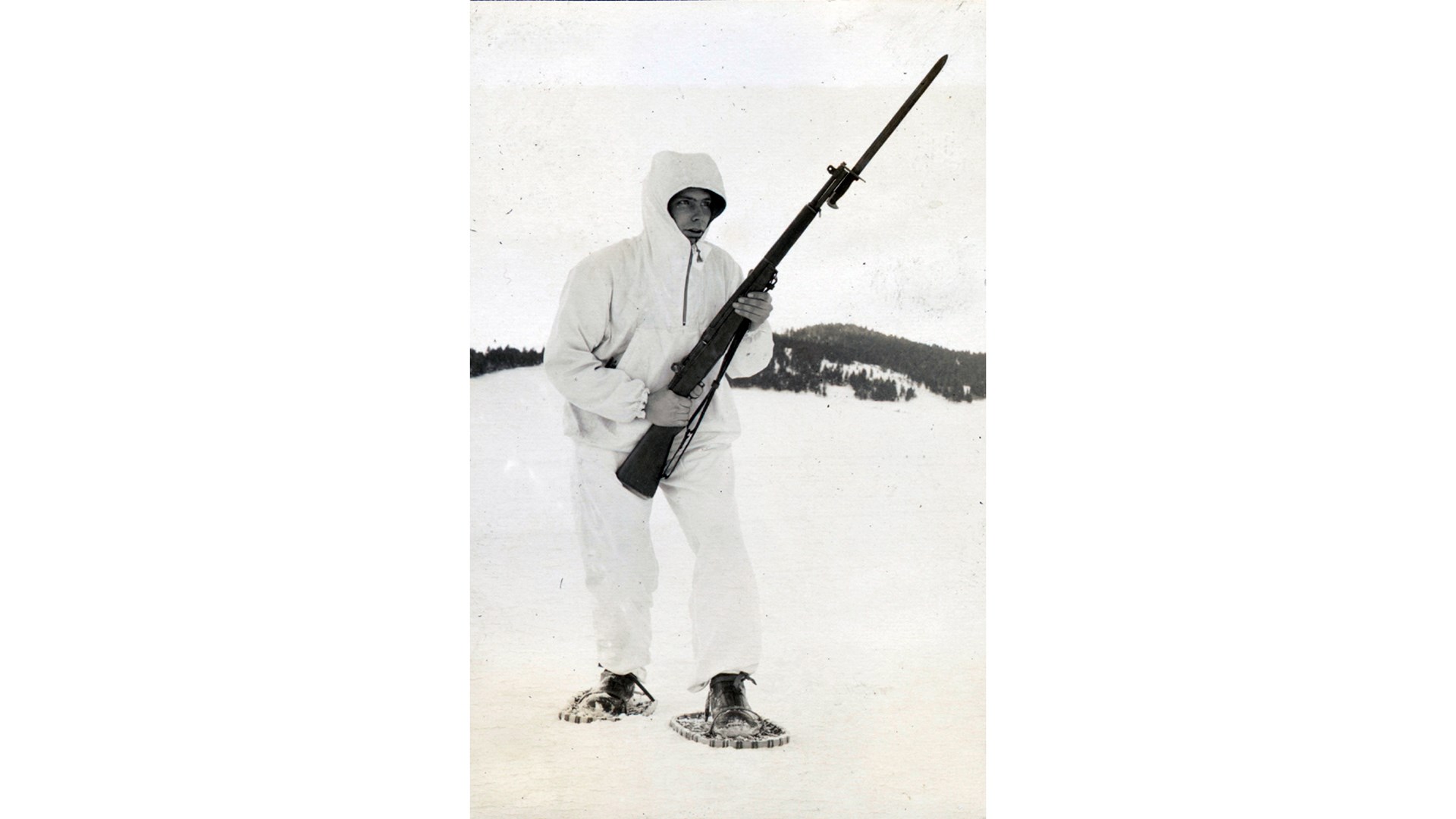
“Plough” was a highly ambitious plan, to say the least, and it demanded far more resources than the British commando organization could provide. Instead, the concept was offered to the Americans and was accepted by Gen. George Marshall, chief of staff of the U.S. Army. By May 1942, the plans for “Plough” had been reviewed by Maj. Robert T. Frederick, an operations officer on the U.S. general staff. Frederick assessed the Project Plough as being unfeasible, with unachievable goals and genuine potential for complete disaster. Even so, Gen. Marshall and Gen. Dwight Eisenhower did not want to back down from the challenge—and the potential to open a coveted second front against Germany.
A Joint Canadian American Force
After a brief period with Lt. Col. Johnson at the helm of the project, Lord Mountbatten suggested that, despite his poor assessment of the plan, Maj. Frederick take over. 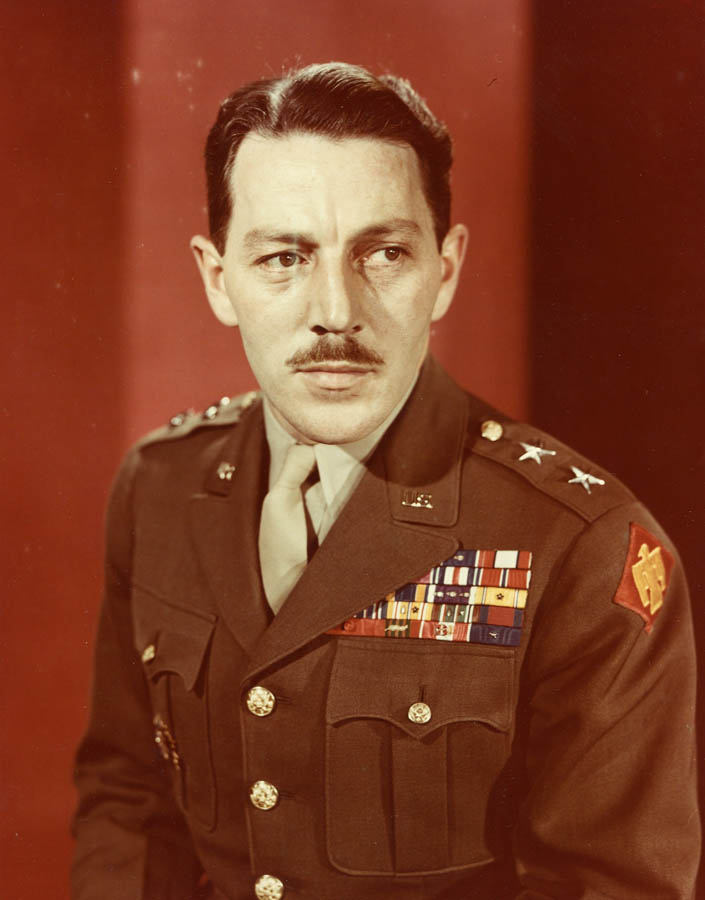 Eisenhower approved, promoted Frederick to colonel, and instructed him to create a fighting force to make it work. On July 9, 1942, the First Special Service Force (FSSF) was activated as a top secret, joint Canadian-U.S. force that answered directly to the joint chiefs of staff.
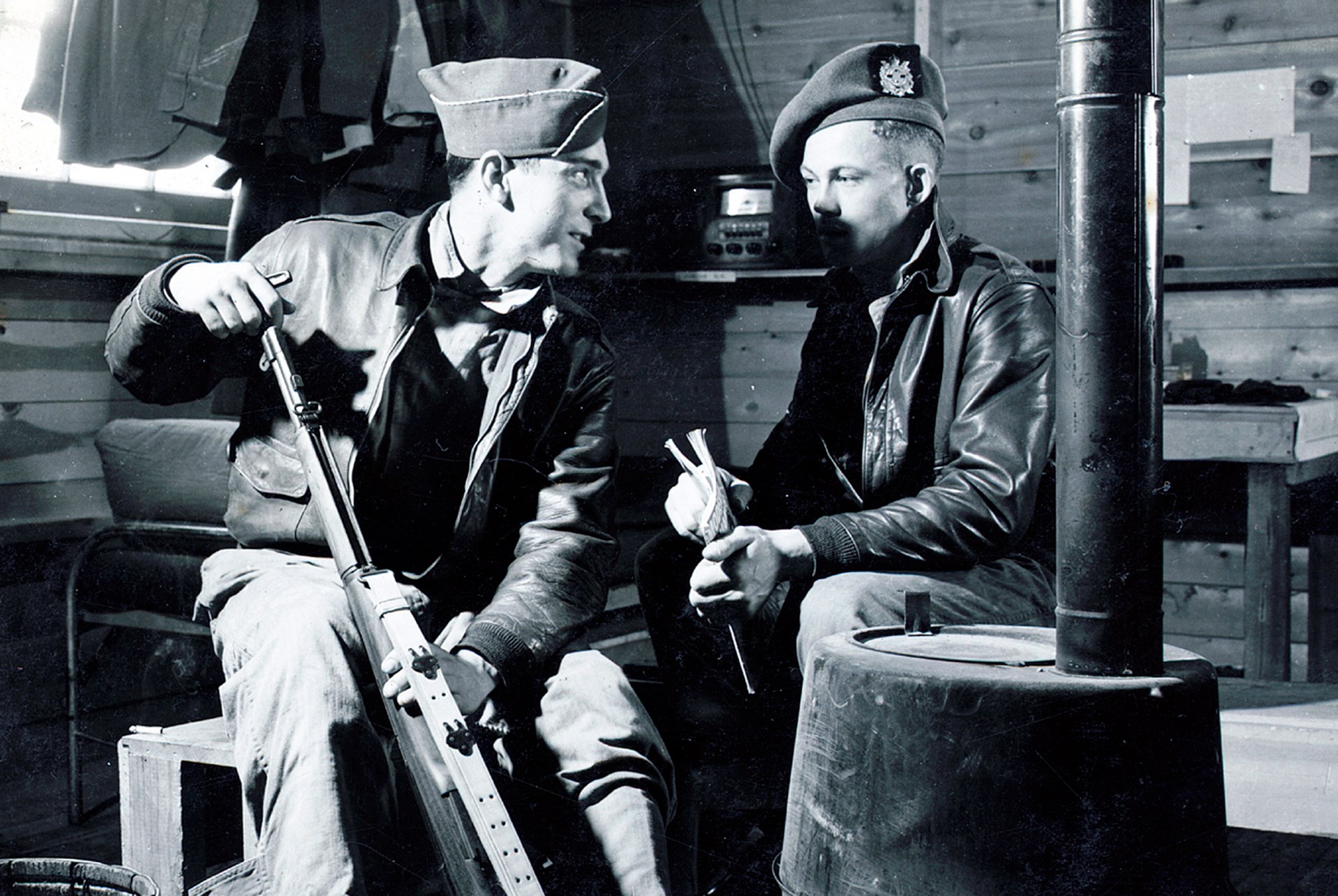 A joint Canadian American strike force: Cleaning an M1 rifle in the FSSF’s Helena barracks. Author’s photo collection.
The American contingent was drawn from officer cadets at Fort Benning and Fort Belvoir, along with men recruited from northern and western areas with experience as hunters, guides, lumberjacks and other hardy outdoorsmen. Canadian volunteers were mostly diverted from a proposed Canadian parachute battalion. The Canadians remained in their own army (and were paid by the Canadian government), but their uniforms, equipment and supplies were provided by the U.S. Army. Training began almost immediately at Fort William Henry Harrison near Helena, Mont.
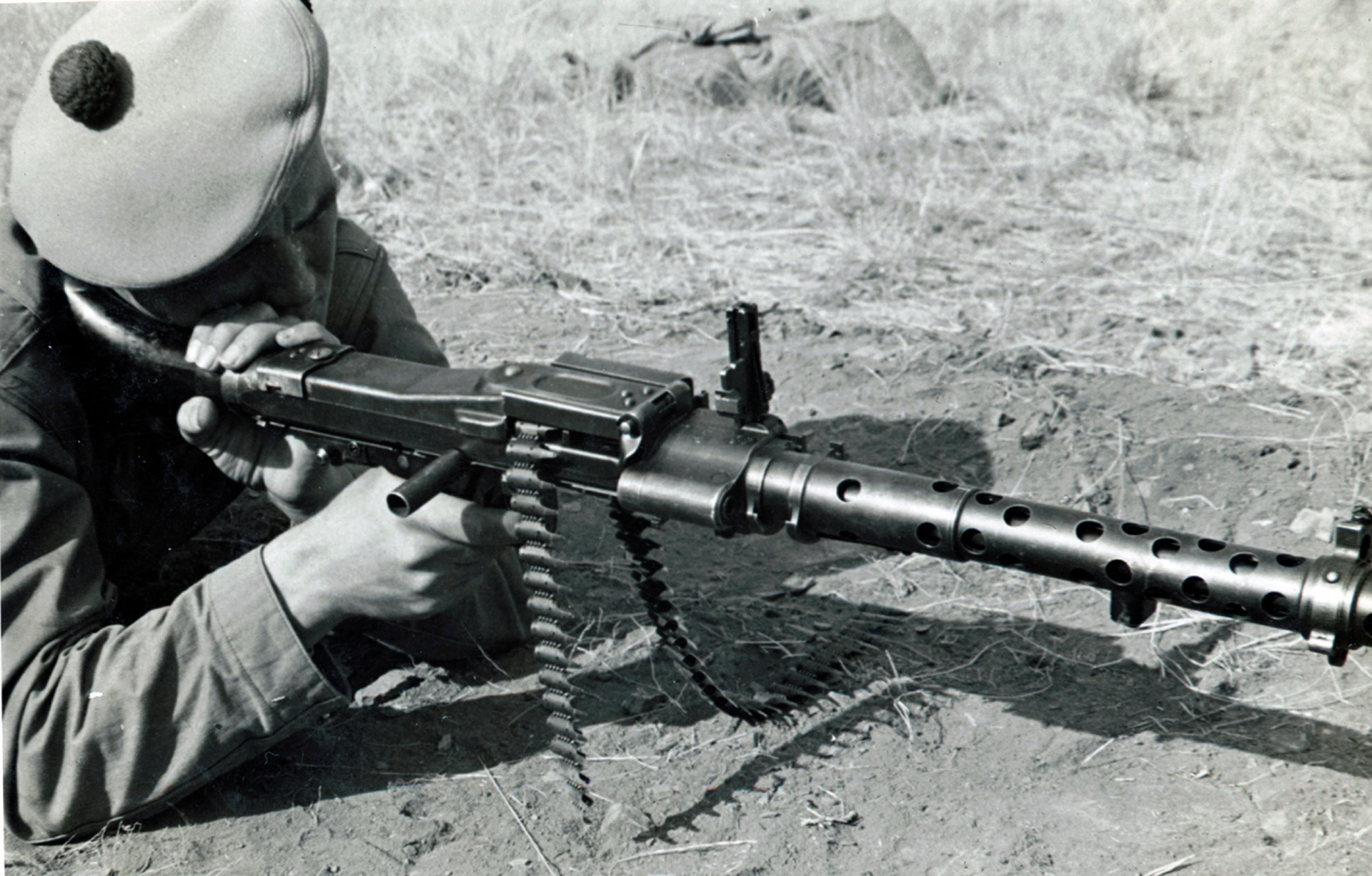 The Canadians provided combat experience including first-hand knowledge of German small arms. Here a Canadian member of the FSSF demonstrates the German MG34. Author’s photo collection.
In the following months, the FSSF members were in for intense training in the rugged mountains of Montana. A high percentage of injuries were incurred in their early parachute training operations, and the coupling of Canadian and American troops created unique challenges for the force leaders. Ski and snowshoe training was provided by Norwegian instructors. Eventually, the unit began to gel, and as the men became a cohesive fighting force, they referred to each other as “Forcemen.”
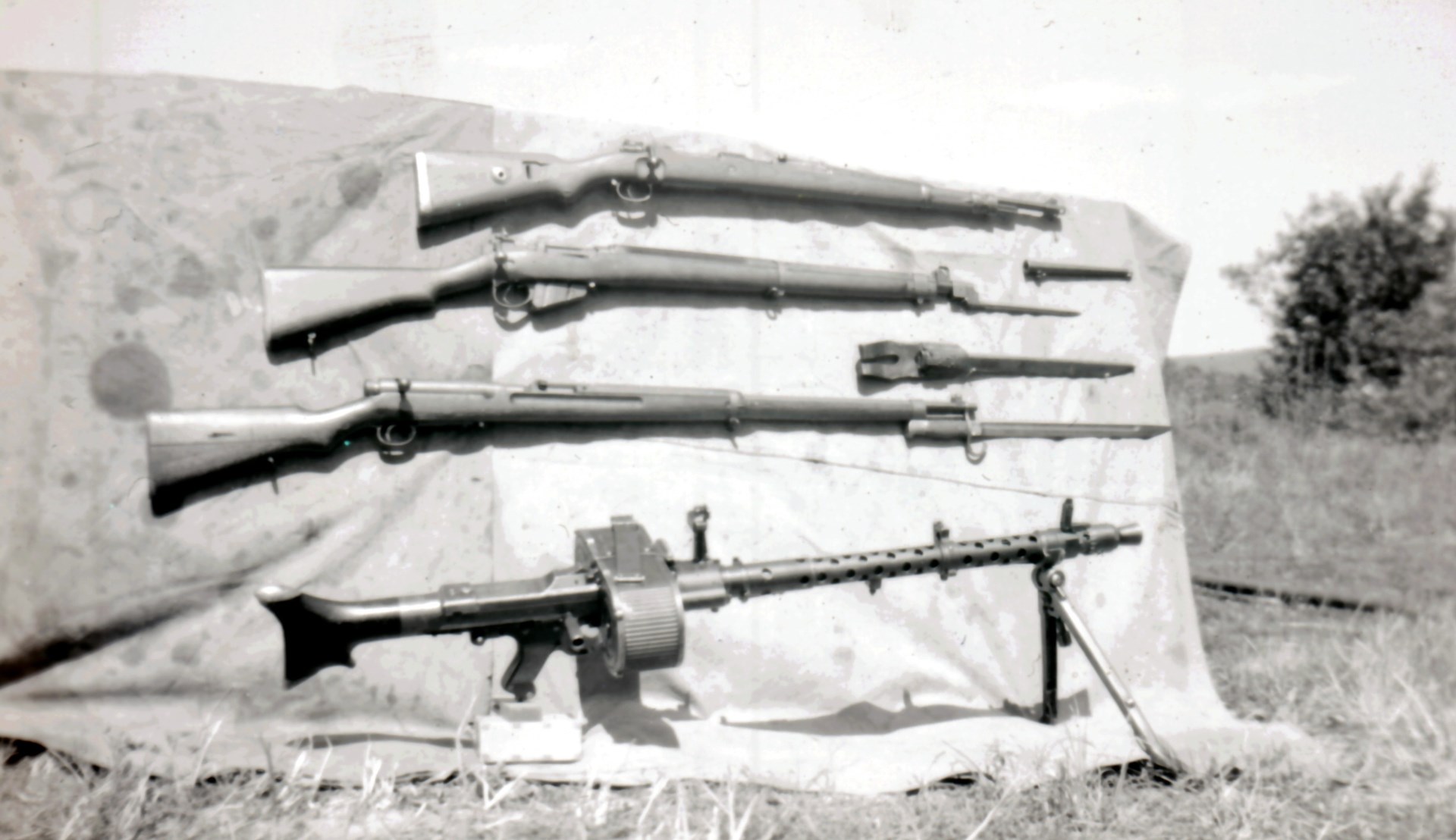
After returning from Kiska: A FSSF display including a captured Japanese Arisaka rifle, along with a German MG34 LMG and Mauser Karabiner 98k rifle, along with a Canadian Lee-Enfield No. 4 Mk I (not used by the Forcemen). Author’s photo collection.
On Aug. 15, 1943, the FSSF was part of the invading force that landed on Kiska in the Aleutian Island chain. But there was no baptism of fire for the Devil’s Brigade on Kiska—the Japanese had abandoned their positions there. By mid-September, the Forcemen had returned to the U.S. assembling at Fort Ethan Allen in Vermont. They were soon to discover that “Project Plough,” and any notion of attacking Germany or occupied Europe through Norway, had been scrapped. The men were trained and ready, and now they were literally looking for a fight. They found it on the Italian front. On Nov. 19, 1943, the FSSF went into the line in the mountains near Naples.
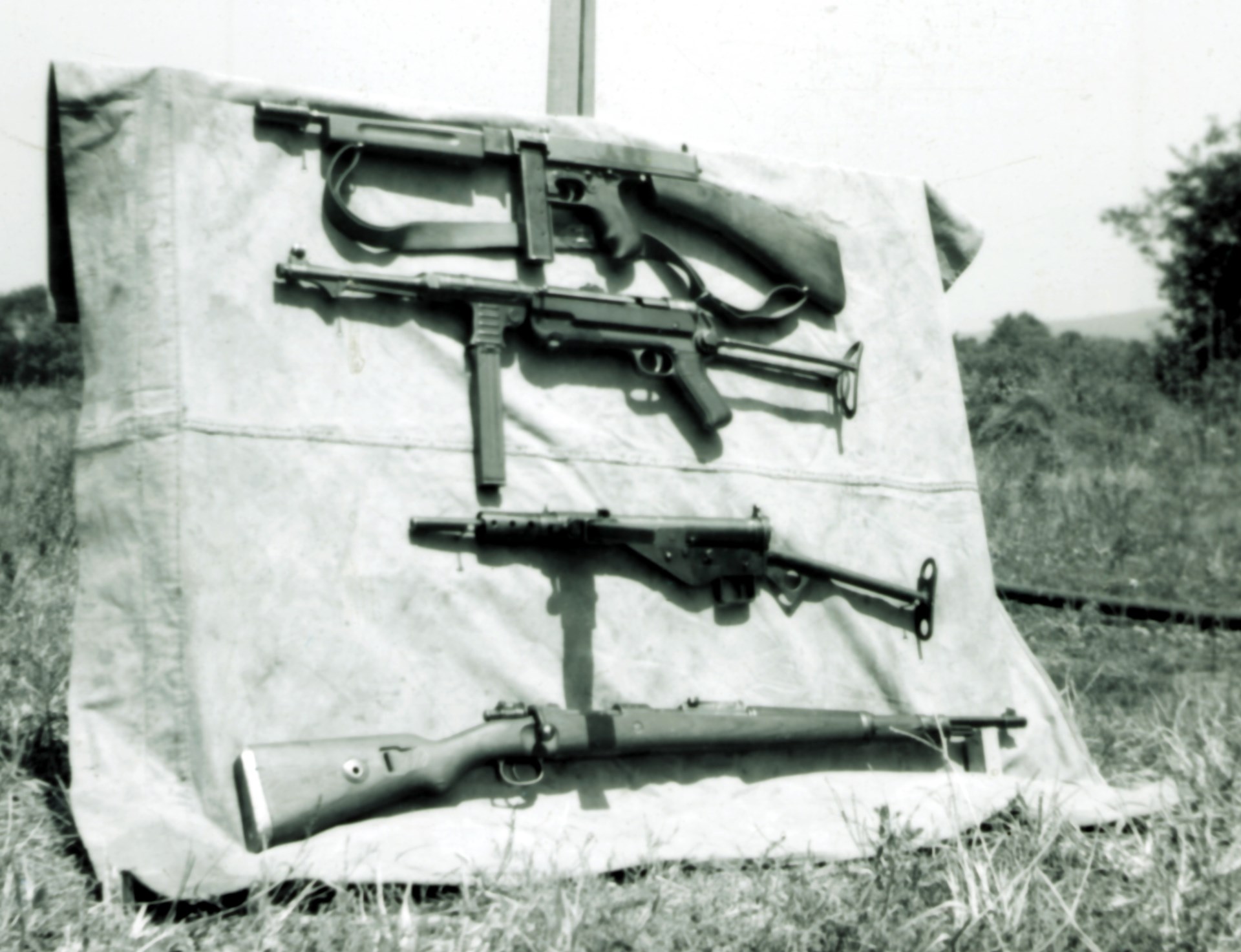 The Thompson SMG provided the short-range firepower for the 1SSF, shown in a Forcemen’s display along with a German MP40, an early Sten Mk II, and a Mauser Karabiner 98k rifle. Author’s photo collection.
Making A Name For Themselves
Beginning with their daring, mountain-climbing attack on German defenses atop Monte la Difensa, and through several other mountain actions, the FSSF earned a reputation for bravery and ferocity. In February 1944, after the Forcemen began their aggressive raids against German positions surrounding the Anzio beachhead, the unit gained the nickname “The Black Devils.”

Whether this originated from their German opponents or was something dreamed up by Col. Frederick and his staff to add to their reputation remains a mystery. Either way, the FSSF ultimately earned the moniker and paid for it in blood—with an overall attrition rate of more than 600 percent. In their relatively short combat career, the 1,800 men of the FSSF created more than 12,000 German casualties, while taking almost 7,000 prisoners.
The Germans consistently over-estimated the size of the force, assuming that it was a division-size formation. A captured German communication describing the FSSF was pointed: “They are treacherous, unmerciful and clever. You cannot afford to relax.” Meanwhile, the Forcemen were noted for leaving a combat “calling card,” a sticker written in German that loosely translated to “The worst is yet to come.” The FSSF was as prophetic as they were deadly.
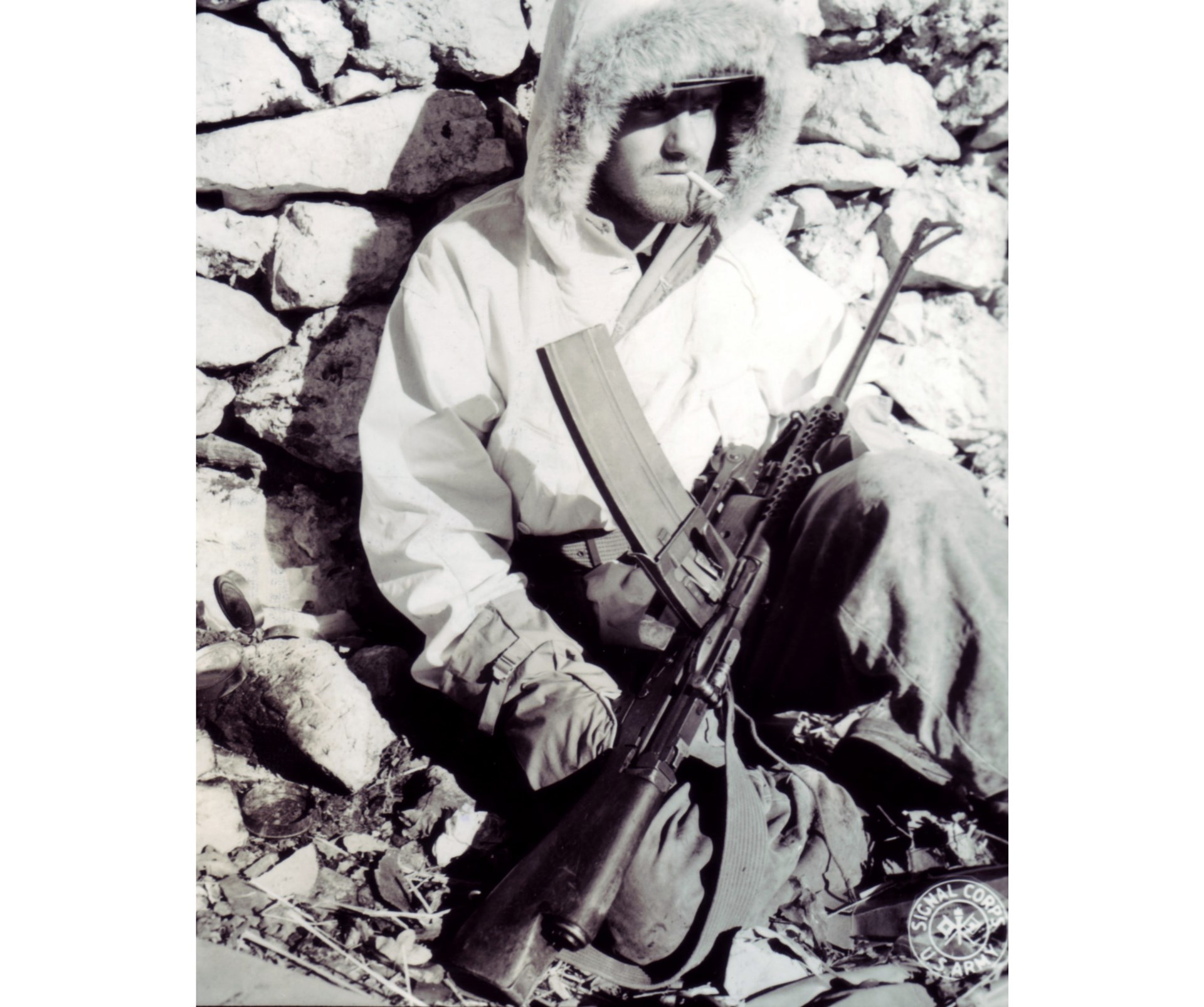
Mountain fighting: The FSSF carried its “Johnny Guns” wherever it went, including their harrowing mountain warfare experiences in Italy. This Forceman with his M1941 Johnson LMG is seen near Radicosa, Italy in January 1944. NARA photograph.
Arming The Forcemen
The FSSF was always envisioned as a strike force, a cross between commandos, paratroopers and light infantry. Consequently, their arms needed to be light enough to be easily carried into any combat environment while delivering the greatest amount of hard-hitting firepower.
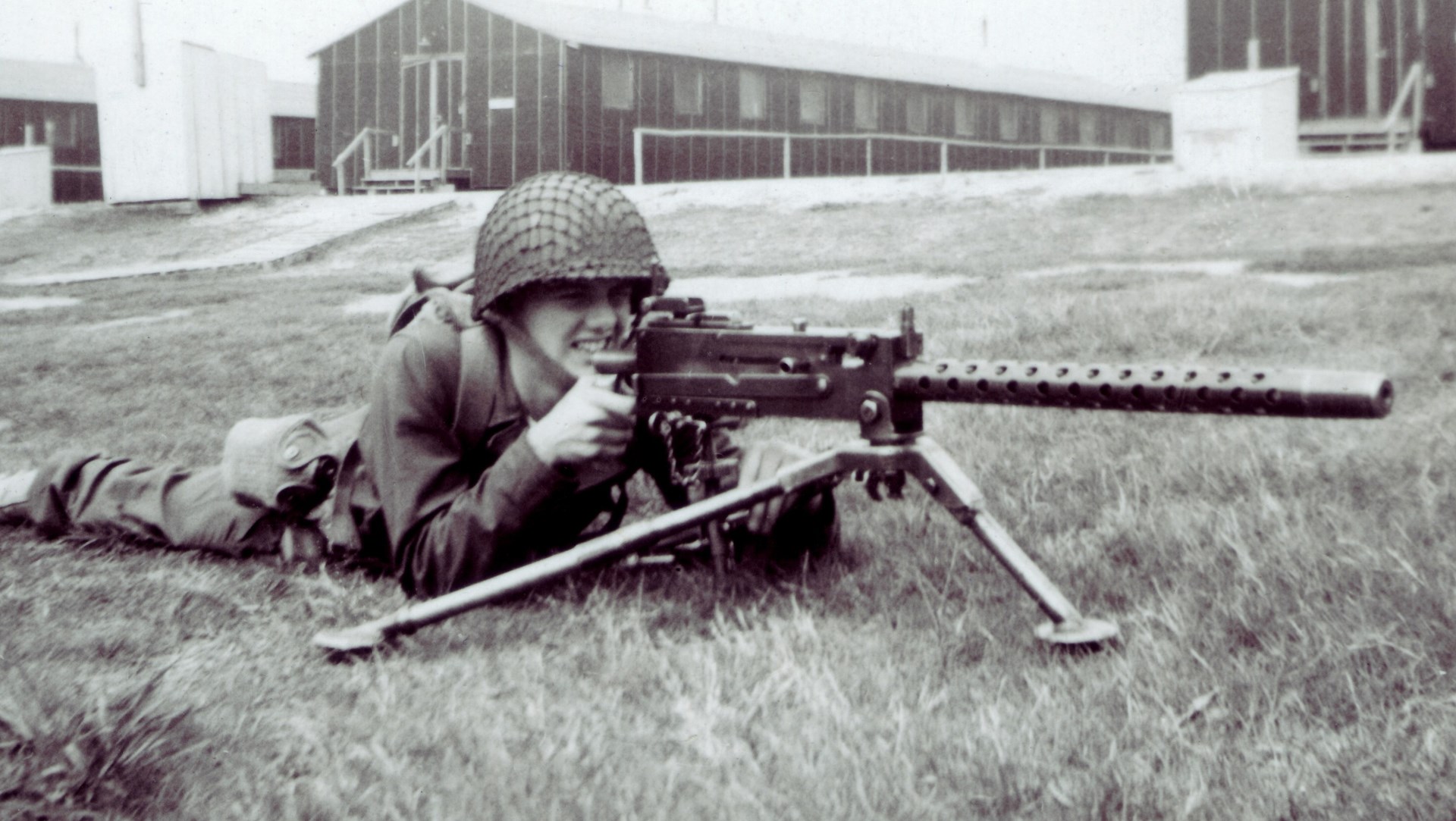 The FSSF used the .30-cal. Browning M1919A4 as its medium machine gun. Author’s photo collection.
The FSSF was equipped with U.S. gear, and despite the Canadian presence in the force, American rifles, submachine gun, and light machine guns were chosen as armament. Colonel Frederick had a direct pipeline to U.S. Army supply, and this gave FSSF priority in their requests. They received the semi-automatic M1 Garand rifle at a time when many American units still carried the bolt-action M1903 Springfield, and their British counterparts carried the bolt-action SMLE.
The Forcemen also received the .45-cal. Thompson SMG in quantity—at a time when British commandos were transitioning to the lighter 9 mm Sten gun. The Browning Automatic Rifle rounded out the initial mix of firearms for the force. The Garand, the Thompson and the BAR were all excellent firearms, offering an excellent combination of firepower, range, and accuracy. Unfortunately, they were all rather heavy for a commando force that was expecting to be committed to battle by air.
The heaviest gun in FSSF firearms arsenal was the Browning .30-cal. M1919A4 machine gun—the gun weighing in at about 31 lbs., with its M2 tripod weighing 14 lbs. The M1919A4 was a capable machine gun (with a steady cyclic rate of 600 rpm), but its overall weight minimized its use in FSSF operations, particularly in mountain fighting in Italy.
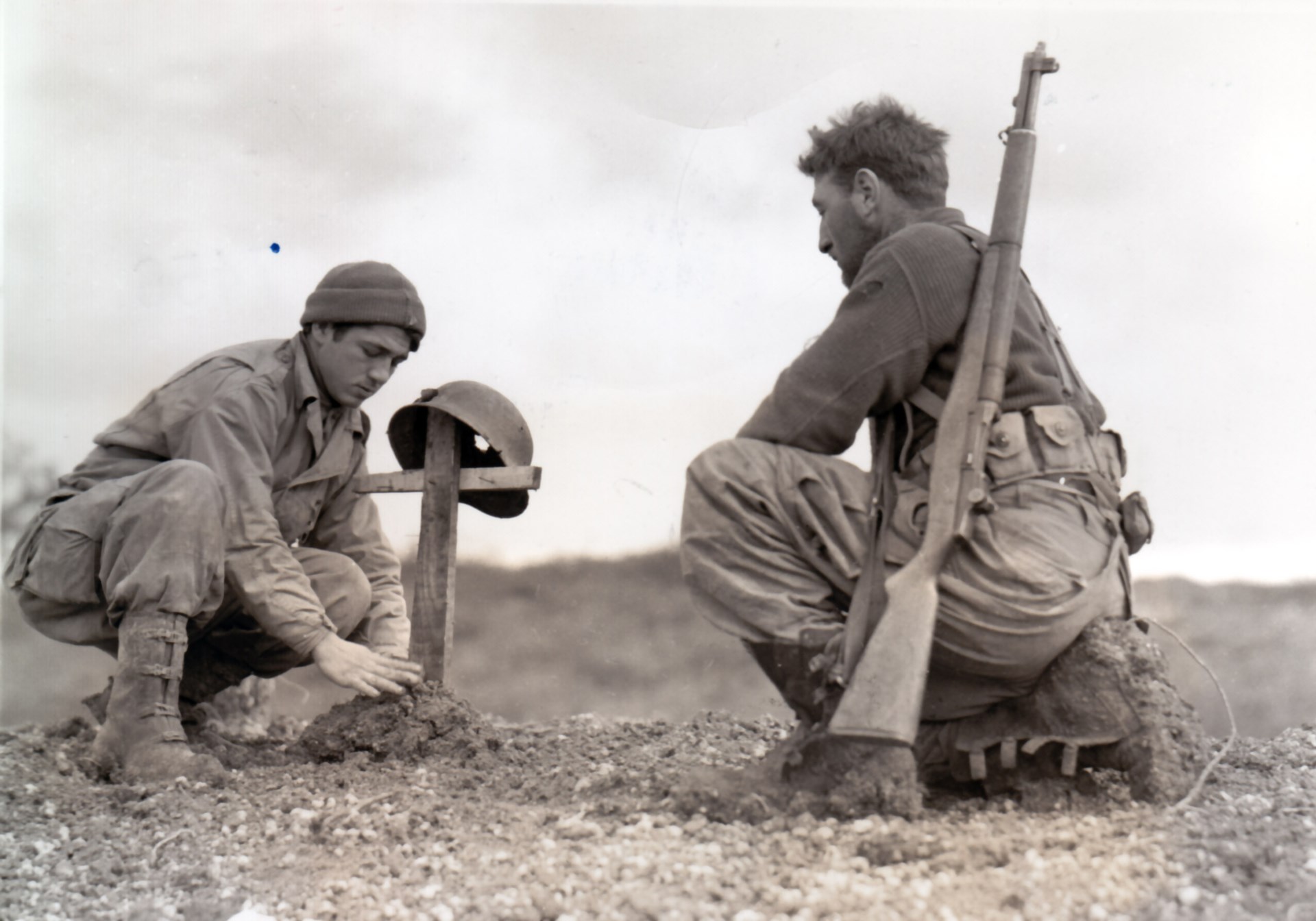 A moment to remember the fallen: FSSF men pause to honor a friend before they move on to the next battle. Anzio area, 1944. NARA photograph.
To help sustain the Force behind enemy lines, FSSF members were trained on the use and maintenance of German firearms, most notably the Mauser 98k rifle (8 mm Mauser), the MP 40 submachine gun (9 mm Luger), and the MG34 GPMG (8 mm Mauser).
The “Johnny Gun”
The FSSF was open to a wide range of infantry arms to suit their needs, and this led them to test the Johnson M1941 LMG during early 1943. Impressed with its unique design, the FSSF requested 125 of the guns. American Rifleman Field Editor Bruce Canfield notes that these were procured by the U.S. Army from the Netherlands Purchasing Commission and not via a trade with the United States Marine Corps (the only other U.S. military user of the M1941 LMG).
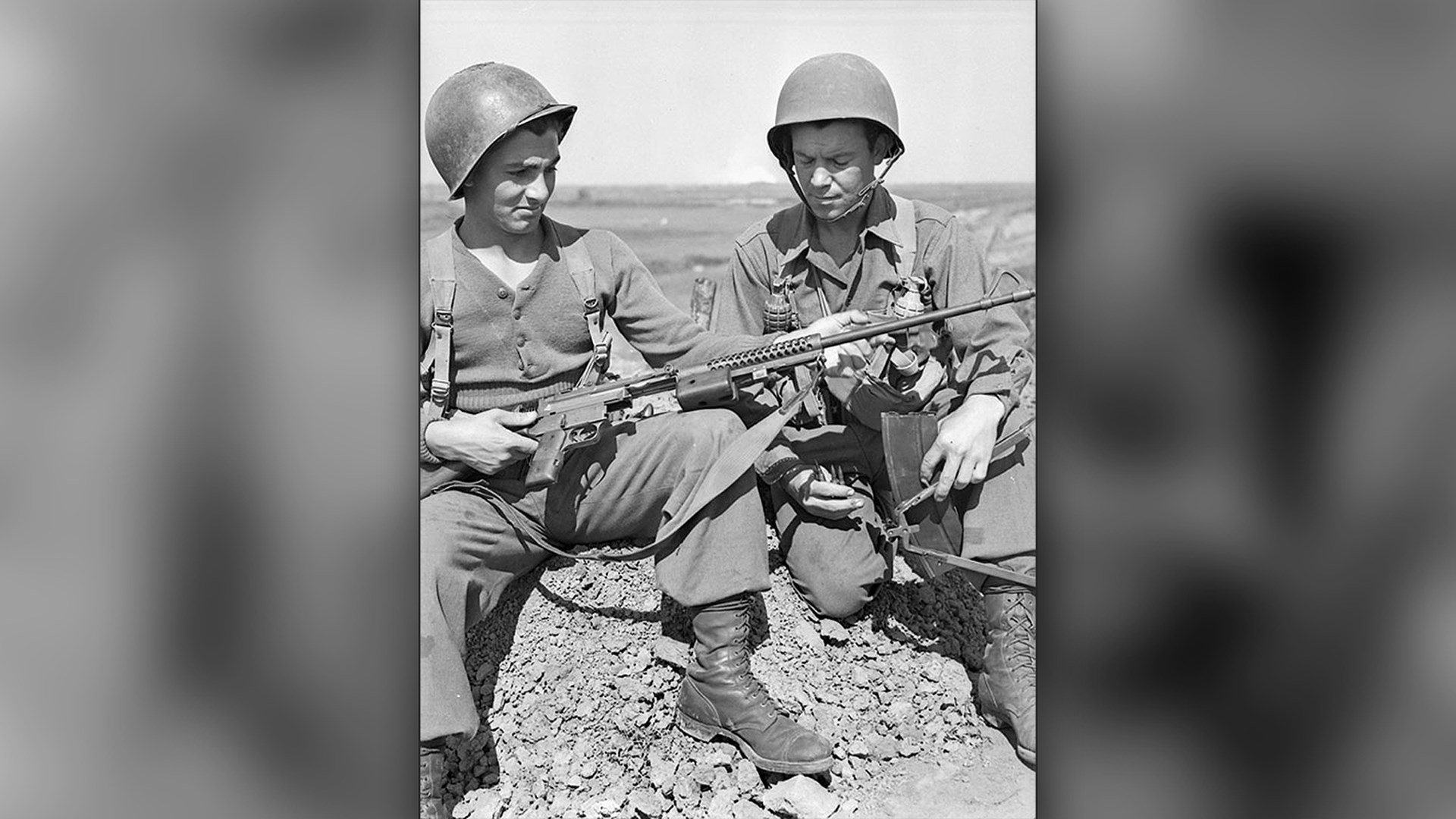 The FSSF used the .30-cal. Johnson M1941 LMG (called the “Johnny Gun” by Forcemen) during their time in Italy. Note the bipod and 20-round magazine held by the man at the right. Anzio area, early 1944. Author’s photo collection.
The FSSF encountered some early problems with their “Johnny Guns” (issues with extractors, bolt handles and magazine springs)—and these concerns were chalked up to limited training and inexperience with the type. As time went on, the FSSF’s maintenance record with the Johnson LMG improved consistently, and the M1941 would perform well in combat in Italy. Johnson LMGs offered an easily replaceable barrel, and a good supply of spare barrels helped keep the rare Johnny Guns in service through the Anzio breakout.
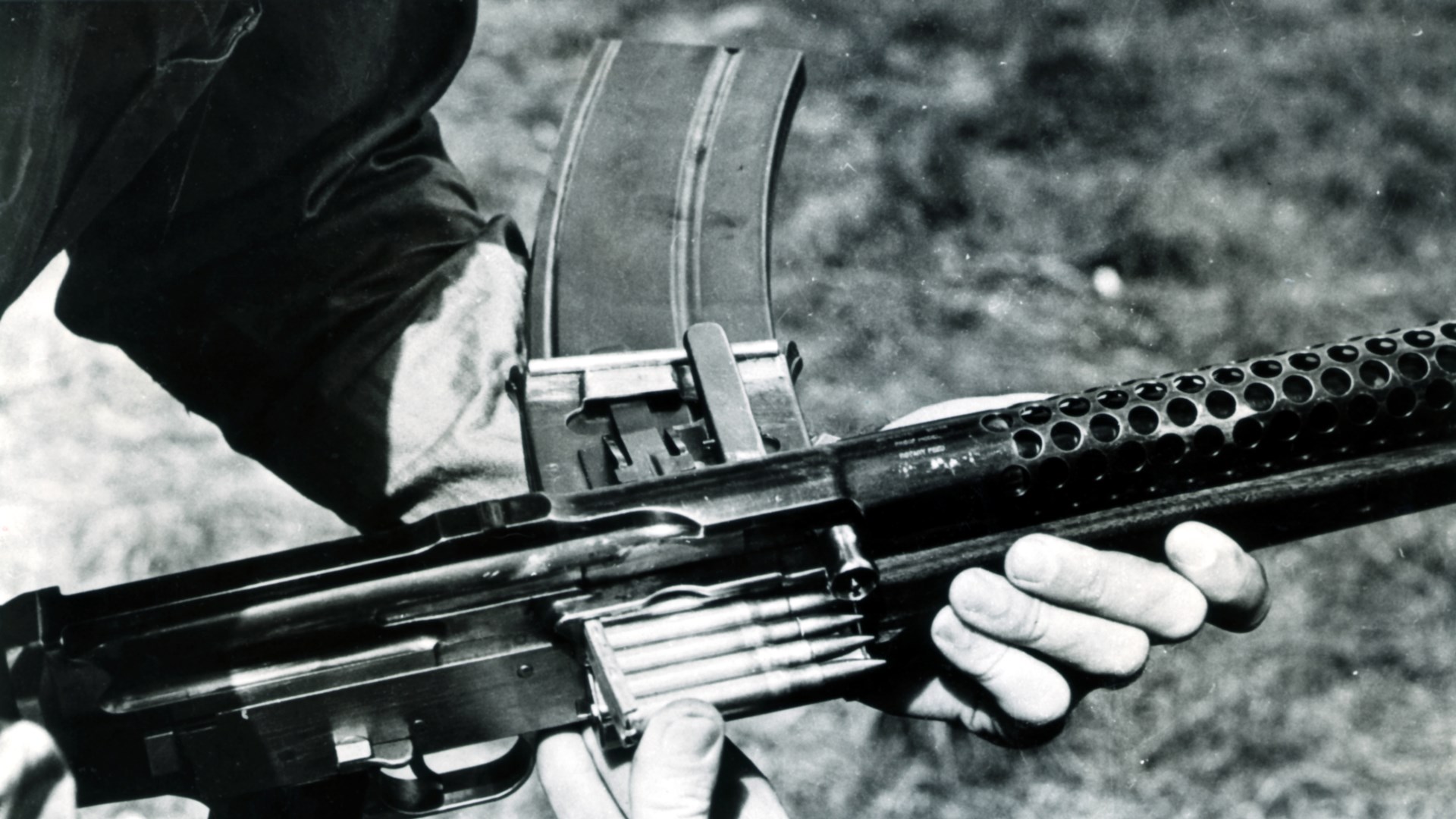 Melvin Johnson demonstrating the Johnson LMG during the summer of 1940. The firearm could be loaded by stripper clips at the ejection port, or single rounds could be loaded into the breech. Author’s photo collection.
Overall reactions from the FSSF to the Johnson LMG showed the men preferred its light and flexible firepower in offensive operations—particularly valuable for aggressive light infantry operating in the rugged Italian terrain. The Johnson LMG’s firepower-to-weight ratio was impressive: it weighed little more than 12 lbs., not much more than a loaded M1 rifle, and about the same as a Thompson submachine gun (the M1A1 Thompson weighed 10 lbs., unloaded). Firing at up to 600 rpm, the Johnny Gun’s firepower often turned the tide in favor of the Devil’s Brigade at critical moments in combat.
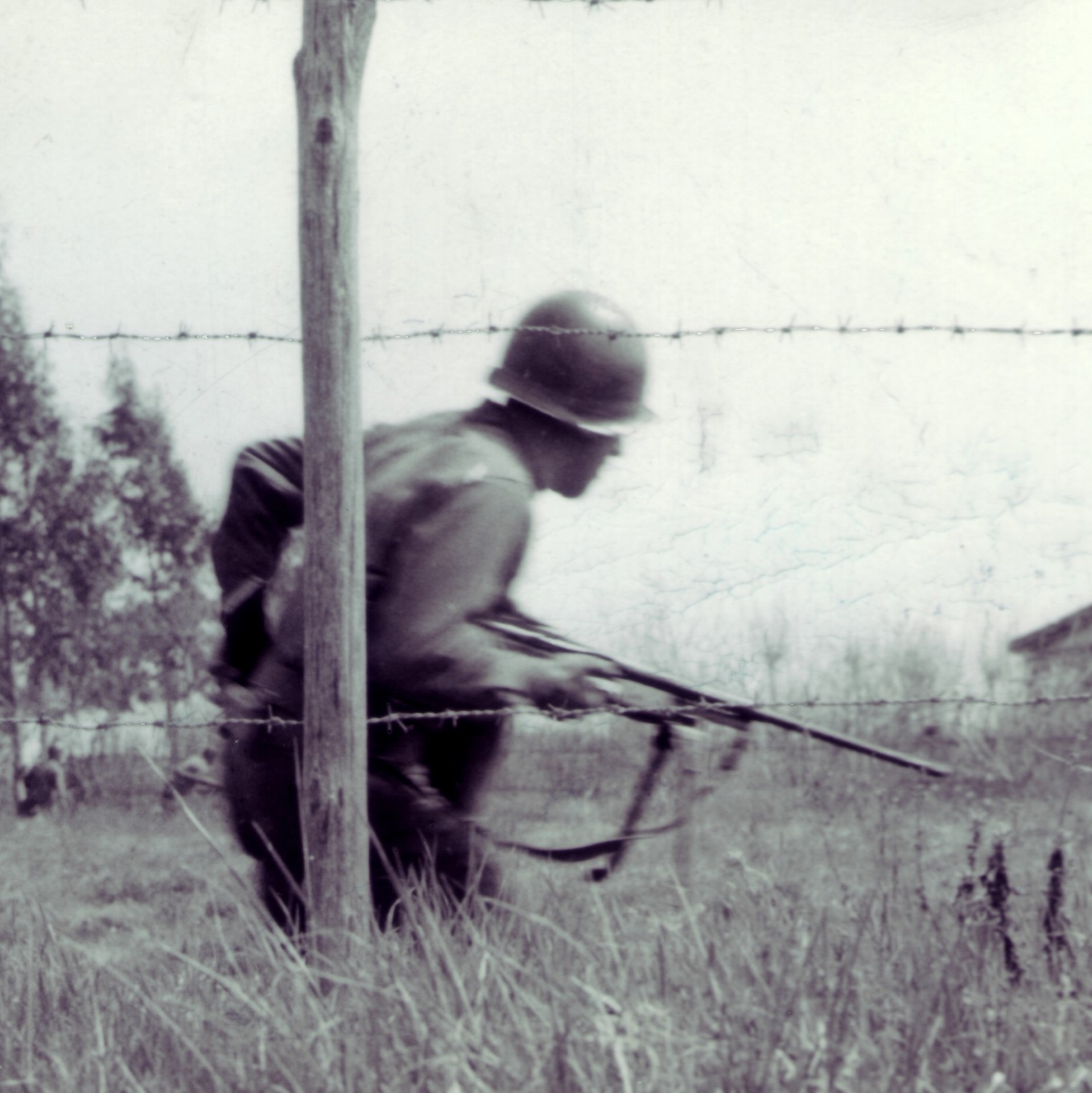 A rare image of the Johnson LMG in action with the FSSF. Anzio area, 1944. NARA photograph.
In his book “The First Special Service Force: A War History of the North Americans” (Infantry Journal Press, 1947), Lt. Col.l Robert Burhans commented on the Johnson LMG’s importance to the Forcemen: “The Johnson was, pound for pound, the most valuable weapon the FSSF possessed.”
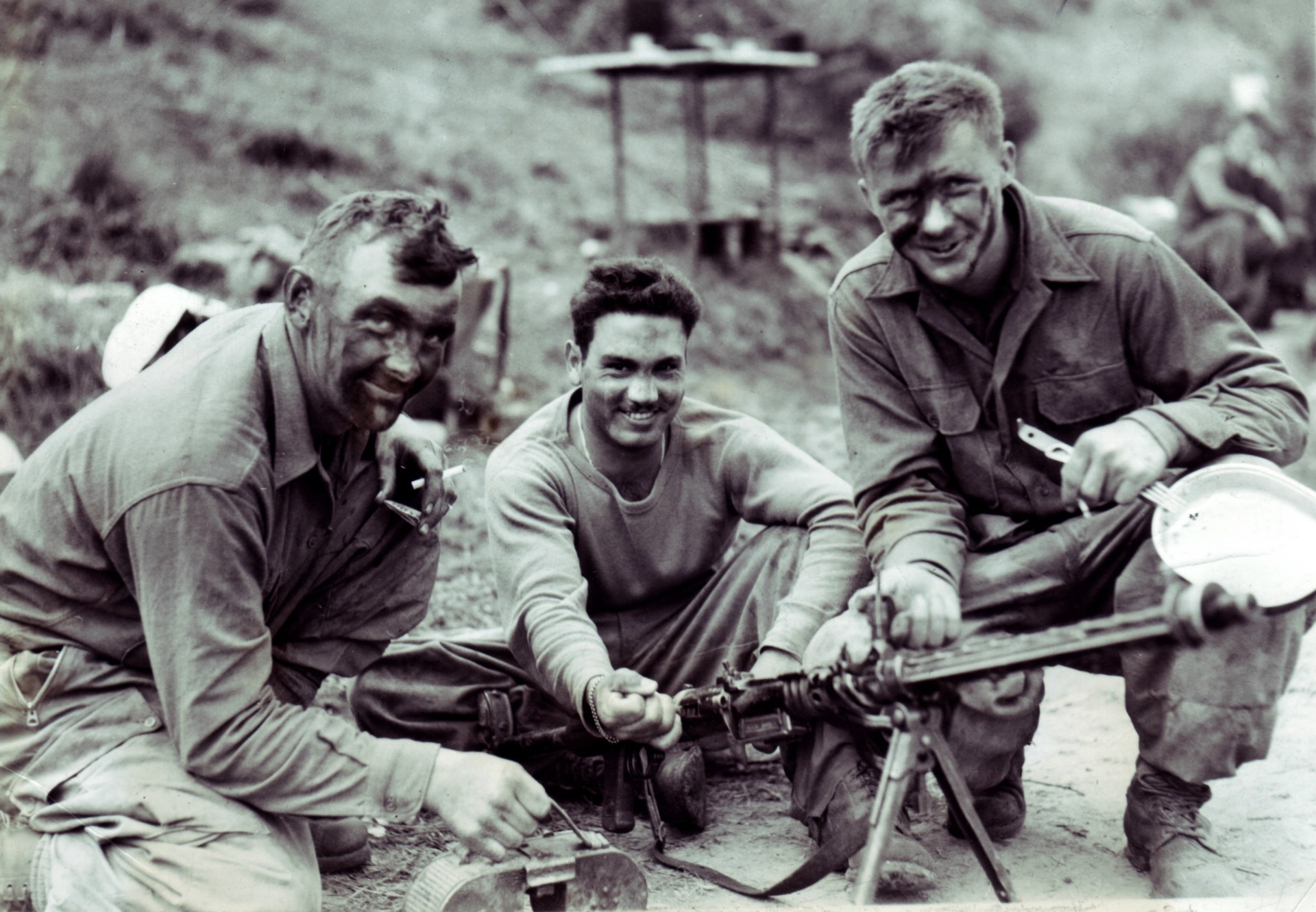 Back from raid: Men of the FSSF examine a captured MG15 light machine gun. Note the 75-round “saddle drum” magazine in the foreground. Anzio area, 1944. NARA photograph.
Hand-to-Hand
Reflecting the true commando spirit, the Forcemen were skilled in hand-to-hand combat. To this end, the FSSF developed its own fighting knife: The Fighting Commando Knife, Type V-42. Colonel Frederick and several other Force officers contributed to the design of the V-42, which was based on the British Fairbairn-Sykes fighting knife. The V-42 stiletto is a frightening bit of gear, particularly in the hands of trained commando—its double-edged, carbon-steel blade could penetrate a German helmet with a single thrust. A pointed steel “skull crusher” was added to the pommel to create one of the most intimidating fighting knives of all time.
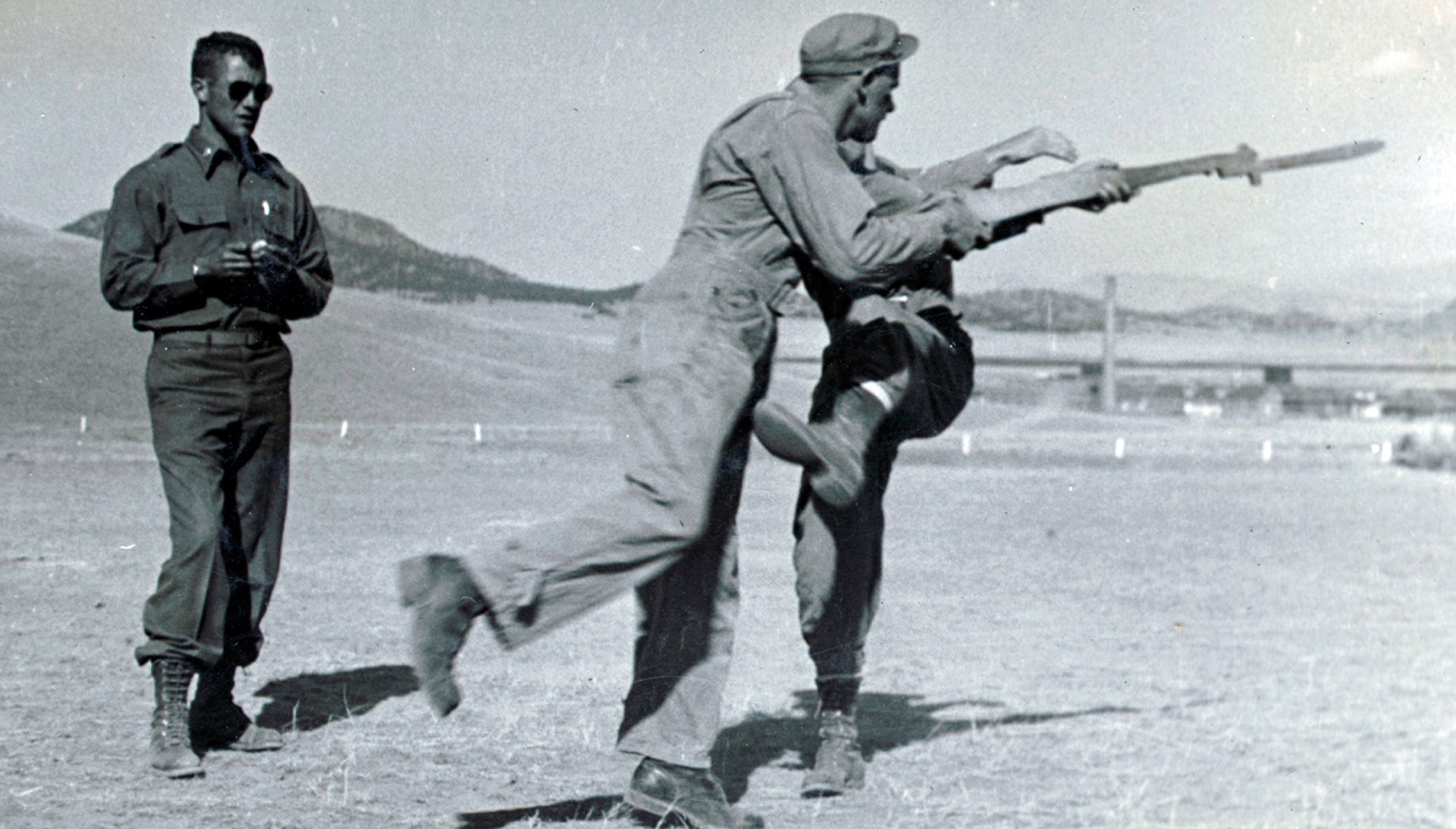 FSSF men in training near Helena, Mont. Note the use of the wooden dummy M1 rifle. NARA photograph.
A Quiet Ending
After participating in the invasion of Southern France during August 1944, the FSSF took up defensive positions on the border of France and Italy. The end of the war came quietly for the First Special Service Force. On Dec. 5, 1944, the FSSF was disbanded in Villeneuve-Loubet. What began as an unfeasible plan to open a second front in frozen Norway, ultimately created one of the finest special forces in the proud history of two armies—American and Canadian.
 All professional soldiers are amateur philosophers. I was once in the desert stretched out across a bunch of lumpy rocks alongside my infantry counterpart listening to his company of exhausted grunts snoring in unison. We had been on the move for a long while already, and had a couple of hours of cherished downtime before we started all over again.
The aircraft I flew then cost more than $100 million in today’s dollars. My buddy’s NODs, weapon, and sundry gear were certainly not cheap. Uncle Sam had invested untold treasure teaching us both how to do our respective jobs.
As we were discussing in soft tones the staggering amount of money spent to get the two of us to that place at that time doing these things, my friend observed, “But they sure didn’t squander much of that on accommodations, hooah?”
Corporate misery is the currency of the US Army. Collective hardship is the tool that the Big Green Machine uses to transform disparate individuals into cohesive tribes. They are lyrically good at that. They can’t technically hit you anymore, but they can sure make you go long periods without food or sleep. Sleep deprivation is a combat analog during peacetime training.
A Particularly Remarkable Repast…
Another time I went around four days without sleep, and I was starting to hallucinate. I could see smells and hear colors. It’s tough to describe. In this sordid state we finally called an admin halt for a little chow. We dropped our rucksacks and plopped down in small clots to trade out MREs.
MRE stands for Meal, Refused-by-Ethiopians. No, it doesn’t. MRE stands for Meal, Ready-to-Eat. They’re actually quite good nowadays. However, it is a soldier’s holy prerogative to gripe about his comestibles. Bartering among your buddies for the tastiest bits was high art. In our sleep-deprived state, these proceedings soon took on a fairly comedic character.
One dude I did not know well staggered up and asked if he could join us. We scooted around to make room as he dropped his heavy rucksack hastily to the ground. Before he sat down he began to gyrate in a weird, unnatural fashion. Just as he began making a spectacle of himself, he gave his right arm a little flick and a foot-long dead lizard shot out of his sleeve. The demised reptile landed unceremoniously atop my neighbor’s Diced Beef with Gravy. The recipient of the dead lizard found this experience justifiably discomfiting.
For a moment everything just stopped. The soldier upon whose MRE the lizard had been deposited then leapt up as though electrocuted. I did not fully comprehend the details myself, but he was clearly about to murder the lizard-throwing guy. Before the aggrieved party could act out his homicidal urges, however, the new man began to grunt maniacally and tear his own clothes off.
A couple of buddies and I restrained them both. Appreciating the half-naked man’s sincere agitation, the guy whose lunch had been irretrievably spoiled now powered down long enough to let things play out. The ghastly details were undeniably fascinating.
A Misunderstanding Most Reasonable…
Some 12 hours or so before, this guy’s patrol had taken a brief halt in the woods. It was pitch dark. This poor unfortunate hunkered down at the base of a tree and leaned forward to take the weight of his rucksack briefly off of his shoulders. Just as his patrol leader called for them to move again, he felt what he assumed to be a big stick fall out of the tree and slide down the neck of his BDU shirt. There was no time to tend to it, so he just wiggled around, squeezing his ruck straps against it until the thing found a handy neutral spot in his armpit. We were all so filthy that he promptly forgot it was there.
Half a day later, he had been about to sit down to eat when he remembered the stick again. Exhausted and unwilling to go to the trouble of taking his shirt off, he had just wriggled until he maneuvered the offending object into his sleeve. The next thing he knew, the big stiff lizard came flying out of his clothes and landed in my buddy’s lunch. It resembled a rigid brown scaly banana. Ever the responsible citizen, I grabbed the dead lizard and threw it into the woods.
We all resumed our meal and had a good laugh about it. Everybody except the guy with the big dead lizard in his shirt. He did not think it funny at all. In fact, he remained noticeably twitchy for some time afterwards.
Ruminations
I learned a lot of stuff in the Army. I came to appreciate the value of teamwork and sacrifice. I enjoyed the fellowship of warriors and the privilege of becoming part of something bigger than myself. More than anything, however, my time in uniform put my problems in perspective.
Nowadays, I get to sleep at home and I eat what I want. I take a shower every single day, whether I need it or not. And I never, ever worry that I might unexpectedly discover a footlong dead lizard in my clothes.


Don’t let the image fool you — D bars were positively ghastly.
Back when dinosaurs roamed the plains and I flew Army helicopters for Uncle Sam, I was afforded the opportunity to attend the U.S. Air Force Arctic Survival School. The colloquial name was “Cool School.” That sounded pretty awesome. As the big day approached, I actually looked forward to the experience. It seems I was an idiot.
Hard Reality
I discovered later that Cool School was informally called the Air Force Food Appreciation Course. Not only did the average temperature hover around 30 below zero, but there also wasn’t much to eat. The mission was to simulate what it might be like to be a stranded military aviator in the frozen Arctic wastes. We were given the contents of an ejection seat survival kit and a single MRE to last the duration of the course.
After a couple of days, that MRE was but a vague memory. I consumed absolutely everything in that tan plastic pouch. I also ate a boiled rabbit. That was about as awesome as it sounds.
The survival kit included these weird compressed food bars. I would liken them to finely-ground sawdust mixed with a little sugar and pressed into a rock-hard, brick-like cube. It took a little effort to gnaw off the edges. At the end of the exercise, I had licked the cocoa beverage powder and instant coffee clean from my MRE, but I still had two and a half of my three survival food bars intact. Those things were ghastly.
That was most likely by design. If they tasted like Toblerone, you’d be tempted to gobble them up right sharpish. As it was, the consistency and flavor meant you tended to make them last. It turns out there was a WWII-vintage precedent.

The thought of having to survive on a D bar kept troops on full alert.
An Army Marches on Its Stomach
We are all rightfully enamored with the guns, planes, tanks, and ships, but it is really the mundane stuff like food and warm clothing that really drive a combat unit’s success in the field.
U.S. Marine Corps General Robert H. Barrow once famously opined that, “Amateurs study tactics; professionals study logistics.” As such, in 1937, the United States Army approached the Hershey’s Chocolate Company with a most curious request.
Pearl Harbor caught the U.S. military acutely unawares, but there were still plenty of folks who could sense that war was coming. As a result, they began reaching out to American industry to modernize weapons and support gear in anticipation of fielding massive expeditionary armies overseas. As part of that, Uncle Sam needed a new government chocolate bar. However, they wanted it to taste, in the words of the Army Quartermaster, “Only a little better than a boiled potato.”

Before these old heroes could be this awesome, they had to be fed. Public domain.
Origin Story
Hershey’s chief chemist Sam Hinkle and Captain Paul Logan of the U.S. Army Quartermaster General’s office established four criteria for what would eventually become the Field Ration D bar. It had to be energy-dense and weigh no more than four ounces. It had to withstand high temperatures without melting. It also needed to taste bad.
The logic was sound. Like those nasty compressed survival bars in Cool School, if the emergency ration chocolate was tasty, troops would consume it recreationally. They needed to save this thing for actual emergencies. The solution was to make it taste awful.
For starters, the Hershey research team dramatically reduced the sugar. Then they increased the chocolate liquor to make it bitter. After that came oat flour to create a dense, dry texture with a killer aftertaste.
The original concoction was so thick it could not be poured into a mold. Every single bar had to be manually pressed in place. The factory workers at Hershey’s reportedly despised making them. However, the resulting compact bar offered 600 calories in a 4-ounce chunk. Troops claimed it was all but impossible to get into the thing without a knife.
Of course it came with instructions. Troops were supposed to eat the quarter-pound bar slowly over the course of half an hour or dissolve it in water to make a drink. Either way, getting a whole D bar down was a gut check.
Practicalities
The Army ordered the first 90,000-bar lot in 1937 for field testing. Troops predictably despised them, but that was the point. By 1941 Hershey’s was producing D rations at scale. By war’s end, Hersey’s had produced more than three billion of the horrible things.
Troops in theater nicknamed the D bar Germany’s secret weapon. This was partly because of their deleterious effect on the human gut. Additionally, hungry civilians who got the D bars in trade often thought them inedible.
In 1943, Hershey produced a specific version of the D ration for the Pacific Theater called the Tropical Chocolate Bar. This awful comestible was designed to withstand temperatures of up to 120 degrees Fahrenheit without melting. It intentionally tasted slightly better than the standard D ration, but troops nonetheless nicknamed the Tropical Chocolate Bar the “Dysentery Bar.”
Performance
D ration bars were standard issue in aircrew survival kits. In 1943, Army Air Corps Lieutenant Louis Zamperini, the Olympic distance runner featured in Laura Hillenbrand’s 2010 book Unbroken, survived 47 days adrift in a life raft in the Pacific Ocean after his B24 Liberator crashed. He survived in part thanks to the D bars he had on board.
Hershey eventually earned five Army-Navy Excellence in Production awards. Before WWII, chocolate was considered a luxury in post-Depression American society. When the 16 million GIs who deployed to fight WWII returned home, they were all addicted to the stuff.
This seismic shift in American culinary tastes drove the explosion of products like candy bars and Coca-Cola in the 1950s. That’s one of several reasons Americans are so blasted fat today.

I do love me some M&M’s. They resulted from WWII-era research into shelf stable chocolate.
Spin-Off Tech
Not all military chocolate was supposed to be nasty. The confections intended for standard rations needed to be as tasty as possible. This was the stuff American GIs handed out to starving kids in liberated war zones.
When Forest Mars needed a snack that could survive high temperatures in transit, he took little gobbets of chocolate and coated them in hard candy. The result was M&M’s. Mr. Mars secured an exclusive military contract, and M&M’s went to war before they were sold to the general public. GIs came home rabid for the things.
A surprising lot of the modern candy offerings tempting you at the Walmart checkout had their genesis during World War II. Environmental stability and the necessity for maximum caloric density often drove that train. In the case of the ghastly D bar, however, it was also engineered to be gross.