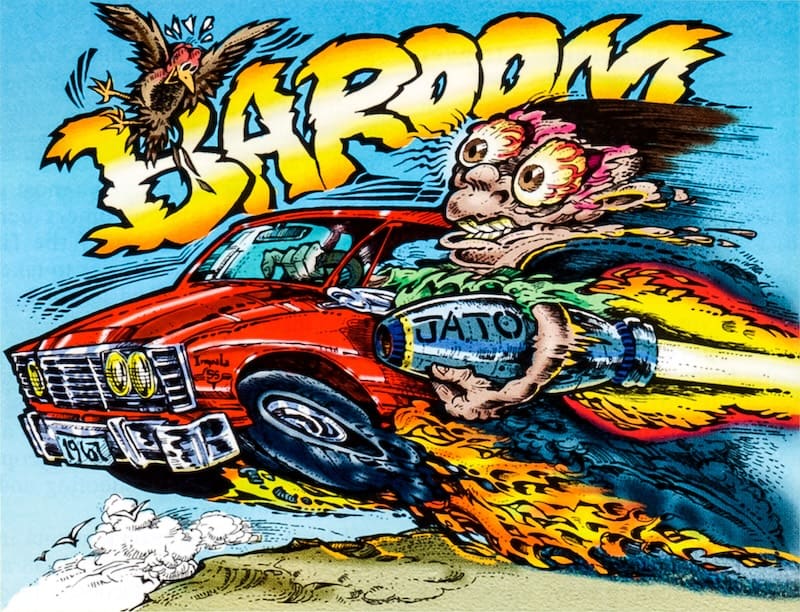
Top honors for “Human Projectile Of The Month” go to an as-yet-unidentified dude who, we’re told, is also a serious contender for the annual Darwin Award. That prestigious prize is given — posthumously — to the person who does the human gene pool the greatest service by removing himself from it in the most extraordinarily stupid fashion. Well, the Darwin folks might see it that way, but we consider it a gallant, if not brainless, form of ballistic research.
Troopers from the Arizona Highway Patrol got involved with this historic event after motorists reported some mysterious scorched and blackened scars on a stretch of deserted highway. The more officers found, the stranger the case got until they pulled back, regrouped, and launched a full-scale investigation.
Here’s what they kinda “pieced” together: JATO units are basically huge canisters of solid rocket fuel used to achieve “Jet Assisted Take Off,” typically lifting big transports into the air from rough-ground short runways or shooting overloaded planes from the decks of aircraft carriers.
They were not, repeat not, designed to augment the inherent boost factor of a 1967 Chevy Impala. But we guess — let’s call him “Zippy”— didn’t know that when he hooked one up to his ride.
Ol’ Zip apparently chose his runway carefully, selecting a nice, long, lonely piece of straight-as-string highway in good repair. Not guessing he might need a bit more than five miles of zoom surface, Zippy’s test track had, that far down the strip, a gentle rise on a sloping turn.
Anyways, the Zipster kicked the tire, lit the fire, and ran his Chevy up to top cruising speed. And then he hit ignition!
Investigators know exactly where this happened, judging from the extended patch of burned and melted asphalt. The pocket-calculator boys figure Zip reached maximum thrust within five seconds, punching that Chevy up to “well in excess of 350 mph” and continuing at “full burn” for another 20 to 25 seconds.
Early in that little sprint, at roughly the 2.5-mile mark, the Human Hydra-Shok stood on the brakes, melting them completely, blowing the tires and rapidly reducing all four ’skins to liquefied trails on the pavement.
Remember that gentle rise on the turn? That’s where Zippy concluded his land-speed record attempt and went for aerial honors, ultimately reaching an altitude of 125 feet and still climbing when his flight was abruptly terminated. We’ll never know how far and how high The Big Zip might have gone. A cliff face of solid rock kind of got in the way, posing a serious violation of the laws of physics vis à vis two chunks of matter attempting to occupy the same space at the same time. Zip gave it hell though, blasting a three-foot deep crater in the terra-very-firma.
The best modern forensic science could do was ID the car’s make, model, and year. As for Zip, only trace evidence was found of bone, teeth and hair in the crater, and splinters of fingernail embedded in what is believed to be a piece of steering wheel. If there ain’t room for this one in the Guinness Book of World Records, there damn sure ought to be an honorable mention in Weatherby’s.
A. Be on a boat in the middle of a large river in Burma during WWII.
B. Go up against Bill Slim’s 14th British Army who REALLY hates you for some reason. Like you not taking any prisoners & making them live in that Hell Hole that is Burma in the 1940’s.
C. Not having control of either river bank. Always a BAD thing
D. Having NO air support around
E. Having some really good small arms & mortars coming to bear on you (Steel on Target) AND having the RAF Ground Support on call.
F. I am sure that the Forward Observer is also calling in Arty on you too. (British Artillery has always had a pretty good reputation BTW)
All of which is going to add up to one really bad day for the members of Imperial Japanese Military on those boats. As their wounded usually wound up suffering a really horrible death. What with no medics or drugs nor any kind of medical support available. So usually your officers would eventually kill you iffen you didn’t die quick enough.
Plus there were cases of Cannibalism too. Since there were no supply lines for your army back then. Nice huh?
So for all those who might wind up one day in command. Try to remember the 6 Pees, Proper Planning Prevents Piss Poor Performance! That & I hope that you have better luck than those Bastards! Grumpy
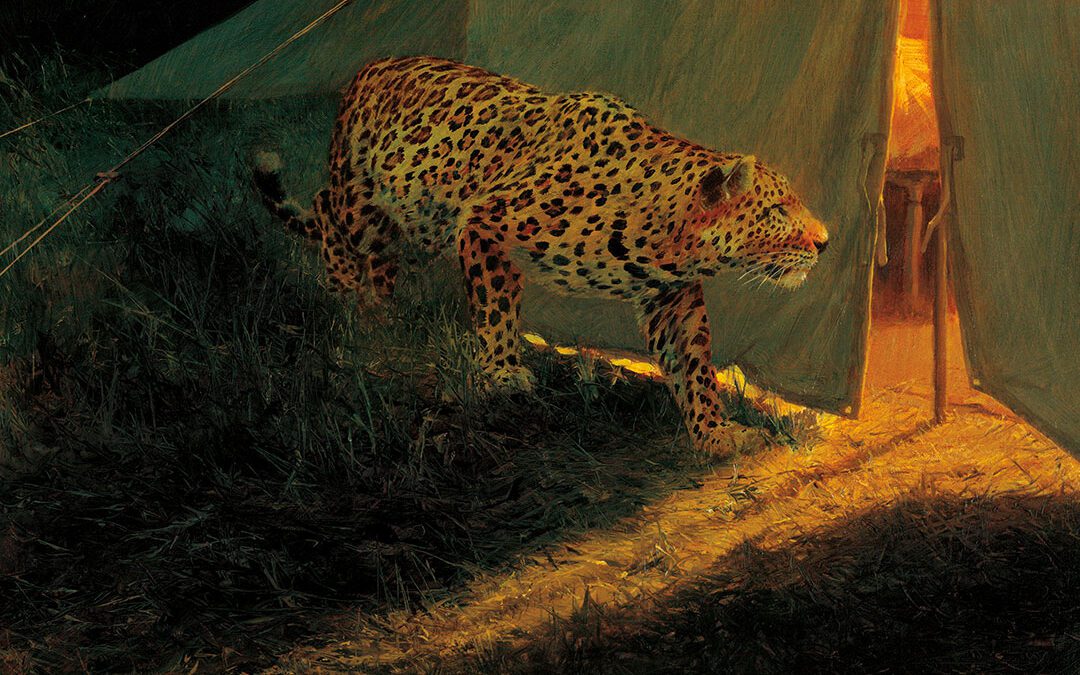
In One Dog Night, the leopard pauses momentarily before slipping through the open tent flap, and then, with unbelievable speed, seizes the unfortunate dog and vanishes into the night.
As the light turned to dark, a male leopard cautiously followed a well-worn path in the shadow of Mount Kilimanjaro. The cat had been here before, perhaps as recently as the previous night. As he slipped in and out of the long grass, the leopard passed the dimly glowing lights from a nearby manyatta (village), then continued on his seemingly purposeful mission, stopping frequently to sniff tracks and check out his surroundings with his superb nighttime vision.
Native voices, possibly herdsmen, faded away as the leopard crept along, now closer to the ground. It stopped and crouched even lower, peering through the grass to watch the comings and goings of people in a tented camp. The big cat waited patiently until the strange voices were silent. Then, beneath a bright, cold Africa moon it started to sneak toward the camp.
The leopard approached one tent and circled it silently before its attention was drawn to another. Still creeping low and undeterred by the flickering light of the campfires, it picked up its pace and, with the brazen audacity common only to leopards, it rushed through the open flap of the tent and in a flash, stole away with its chosen prey.
The year was 1903; the place was German East Africa (later Tanganyika, now Tanzania). The camp was that of two hunters: Kalman Kittenberger, a young Austro-Hungarian sporting gentleman, and an old African military man, a corporal at the Moshi Garrison.
The men, who had pitched their tents about 100 yards apart, had arrived to hunt elephants in the area, which was soon to be a protected reserve. Their tents were pitched adjacent to two separate trails that each hunter would scout separately the next day.
That night Kalman had visited the old African’s tent and had drank and talked well into the wee hours. The old African owned a bulldog named Simba, perhaps for its tenacity, but a strange choice of dog in this climate. The breed’s short nose and breathing passage makes it hard for the dogs to stay cool, and it would probably have had suffered much discomfort in the days to come. The bulldog is also prone to suffering from heatstroke. But the old African loved his dog and it went everywhere with him, usually sleeping under his bed. On this night, however, his loyal companion was snatched from beneath him with unbelievable speed by the marauding leopard.
The African wasted no time in grabbing his 7mm Mauser and firing at the fleeing cat. The commotion brought his colleague rushing from his tent and the two hunters fired in the general direction of the escaping leopard.
Everything was silent as the hunters followed the predator into the inky blackness. Unlike lions, leopards have a habit of doubling back and attacking their pursuers at incredible speed. Knowing this, the two men proceeded with extreme caution, their eyes gradually adjusting to the dark. Intermittent clouds obscured the moonlight, making their task even more difficult. Listening for the leopard’s distinctive cough or the dog to whimper, the two men moved silently through the long grass. The only sound was from their pounding hearts.
After a short time the hunters stumbled across the dog’s body. Their shots had apparently missed, but at least they forced the cat to drop poor Simba. Like a ghost, the leopard had escaped to live and maraud another day.
There were many stories of man-eaters prior to World War I in East Africa, but lions weren’t always to blame. Leopards were, in fact, the bigger culprits, and stories such as this were not uncommon. Cattle and other livestock were in particular danger, but unbeknownst to most Europeans at the time, leopards also accounted for many human injuries and deaths. But their favorite prey was the dog. They snatched them from camps and villages, sometimes in broad daylight right in front of their masters. One has to realize that leopards were far more common than lions; indeed, they could be found almost everywhere on the African continent, but because of their secretiveness, they were seldom seen.
Our alert last week described a recent NBC News article on rising gun ownership in America, which cited national polling numbers showing that “[m]ore than half of American voters – 52% – say they or someone in their household owns a gun.” This represents “the highest share of voters who say that they or someone in their household owns a gun in the history of the NBC News poll, on a question dating back to 1999.” The actual gun owner numbers are likely to be still higher, given that most people are unwilling to discuss their personal details with complete strangers.
Another sign that the American public is still keen on guns is sales data. This year’s Black Friday smashed the previous Black Friday record, with firearm background checks “up over 11,000, or 5.5%, from the previous record set in 2017.” The most recent Federal Bureau of Investigation (FBI) statistics on the “top ten highest days” for National Instant Criminal Background Check System (NICS) gun-related background checks has this year’s Black Friday as the highest “Black Friday” on record, and at third place overall.
The Crime Prevention Research Center (CPRC) has just published its latest annual study on concealed carry permits. Concealed Carry Permit Holders Across the United States: 2023 (Nov. 30, 2023), authored by Dr. John Lott, Carlisle E. Moody and Rujun Wang, examines trends regarding concealed carry permits.
There’s good news here, as well.
Earlier, the CPRC’s 2022 study concluded that an estimated 22.01 million individuals in America had been issued a concealed handgun permit, a 2.3% increase over 2021. This was “the slowest percent and absolute increase that we have seen since we started collecting this data in 2011,” and the study attributed it, in part, to the 24 states at that time that had a permitless carry law in effect. The “number of permits declin[ed] in the Constitutional Carry states even though it is clear that more people are legally carrying.”
The CPRC’s newest study notes that, for the first year since its reporting began, the number of permits declined, albeit by a fraction of less than one percent (down 0.5% from 2022 figures). To put this in context, the number of permits overall has grown from 2.7 million in 1999 to “at least 21.8 million” as of the latest count.
Far from being an indicator of lessening interest in lawful concealed carrying, the dip is due to a change in applicable state laws, which allow qualified individuals to carry without application forms, fees, wait times, and other bureaucratic hoops. “A major cause of the marginal decline is that 27 states now have Constitutional Carry laws,” with Alabama, Florida and Nebraska most recently joining the states that allow permitless concealed carry. Significantly, the study notes that the 27 states with constitutional carry represent “65% of the land in the country and 44% of the population in 2022.”
With more than half of all states having embraced constitutional carry, “the concealed carry permits number does not paint a full picture of how many people are legally carrying across the nation … while permits are increasing in the non-Constitutional Carry states (317,185), permits fell even more in the Constitutional Carry ones even though more people are clearly carrying in those states (485,013).”
For this reason and others, the study cautions that the numbers cited are an underestimate, and that “the scale of that underestimation is increasing over time” due to old or missing data on permit issuance in some jurisdictions, and the continued spread of constitutional carry laws.
The CPRC study provides valuable data on permit holders by state, ranks states by the percentage of permit-holders in each state (with Alabama, Indiana, Colorado, Pennsylvania and Georgia as the top five), and lists the 2023 costs, by state, of getting a permit.
The study also breaks down data on permittees by race and gender for the jurisdictions that make that information available. “Seven states had data from 2012 to 2022/2023, and permit numbers grew 110.7% faster for women than for men.” As has been the trend in previous years, the concealed carry community remains increasingly diverse. “When permit data is broken down by race and gender, we find that black females have had the fast growth, especially during the pandemic. The rates of permit holding among American Indian, Asian, Black, and White females all grew much faster than the rates for males in those racial groups.”
The study points out that “there was a noticeable drop in the percent of permits issued [to] women and blacks after Constitutional Carry was adopted. It appears that both groups were relatively sensitive to the cost of permits.” Even in “shall issue” states, the application, training and other fees required to obtain a permit apparently present a real barrier to the exercise of Second Amendment rights, in many cases for the very people who are most vulnerable to crime and violence.
Another crucially important finding in the CPRC’s study is the relationship between crime and lawful carrying. Concealed handgun permit holders themselves “are extremely law-abiding,” and, [a]t the same time that there has been an exponential growth in permits, there has been a general linear decline in rates of homicide and violent crime offenses.
Except the extraordinary high rates of homicide offenses since the first year of the pandemic in 2020, the rate has dropped around 11% for the past two decades. Violent crime fell from 5.23 per 10 million people in 1999 to 3.81 per 10 million people in 2022, a 27% drop. Meanwhile, the percentage of adults with permits soared by five-fold. Such simple evidence by itself isn’t meant to show that concealed handgun permits reduce violent crime rates, as many factors account for changes in crime rates, but only that there doesn’t seem to be any obvious positive relationship between permits and crime.
In the meantime, the constitutional carry juggernaut presses on. The twenty-eighth state to go permitless is likely to be Louisiana. Republican Jeff Landry, Louisiana’s former Attorney General and new Governor, has made a commitment to secure the enactment of constitutional carry legislation in 2024.
In contrast, President Joe Biden – who has spent a significant part of his term down the gun-control rabbit hole – is running on a reelection platform of even more gun control. (The details are TBA as the “Joe’s Vision” tab, /joebiden.com/joes-vision/, at the official Biden/Harris 2024 website currently features a “Dark Brandon” error message and a graphic of a grinning Biden with two red blotches for eyes.)
Biden’s campaign is circulating a memo (“Trump’s America in 2025: More Guns, More Shootings, More Deaths”) that appears to build on the deceptive message that increased gun ownership means increased violence and crime. “More guns, not less. That’s Donald Trump’s plan to make us safe,” reads a statement from a Biden-Harris 2024 spokesperson.
For those looking for reasons to disagree with the “more guns, less safety” narrative, look to the millions of responsible gun owners across America who know better.
About NRA-ILA:
Established in 1975, the Institute for Legislative Action (ILA) is the “lobbying” arm of the National Rifle Association of America. ILA is responsible for preserving the right of all law-abiding individuals in the legislative, political, and legal arenas, to purchase, possess, and use firearms for legitimate purposes as guaranteed by the Second Amendment to the U.S. Constitution
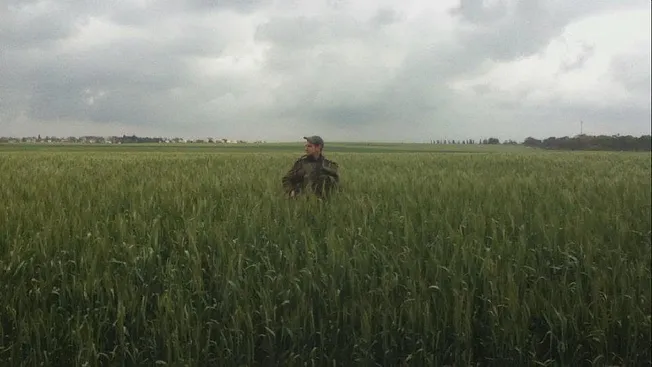
As an IDF soldier stationed near Gaza in 2011, Ilan Benjamin believed he could promote “goodwill with our Palestinian neighbors.” (Photos courtesy of the author)
Once, I Was a Peace Advocate. Now, I Have No Idealism Left.
After terrorists killed my cousin Daniel Pearl, my family called for peace. But after the worldwide celebration of our people’s slaughter, my hope for peace is dead.
The story I’m about to tell is one that many progressive Jews can relate to. In some ways, it’s a prototypical arc of a diaspora Jew who has always advocated for nuance. This week, something broke in us. We watched history repeat itself. Not just on the global scale, with the wanton massacre of our people, the savage mass murders and dismemberments of entire families and communities. But for many, my family included, history is repeating itself on a personal level as well.
In March 2003, I turned 13 and celebrated my bar mitzvah in Walnut Creek, California. By Jewish tradition, I became a man. But the ceremony felt redundant; I had already grown up. Only one year earlier, my older cousin, Daniel Pearl, an investigative journalist for TheWall Street Journal,was kidnapped and beheaded by Islamist jihadis while on assignment in Pakistan.
His killers, like the Hamas killers of last weekend, proudly released a video documenting Danny’s murder. Among Danny’s last words were, “My father is Jewish. My mother is Jewish. I am Jewish.” At first, I was in shock—how had my own cousin become a player in such a large international nightmare? Why did people get murdered simply for being who they are? In this case, for being Jewish?
Danny’s parents did not call for revenge. Instead they set up The Daniel Pearl Foundation that offers fellowships, sponsors cross-cultural music events (Danny was a gifted musician), and brings people together to improve the world. Even after what my family had been through, their work encouraged me to be idealistic and believe that the Jewish people could make peace with our neighbors. I became a fierce advocate for peace.
When I immigrated to Israel at the age of 18 and enlisted in the Israel Defense Forces, I was still driven by ideals. I thought I could promote more goodwill with our Palestinian neighbors. Serving in a combat unit based on the Gaza border, I witnessed the release of the kidnapped Israeli soldier Gilad Shalit, held for five years by Hamas, when his freedom was exchanged for more than 1,000 Palestinian prisoners. One for 1,000. Despite my many criticisms of the Israeli government, I recognized then how much Israel valued the life of every soldier.
The late journalist Daniel Pearl
On my rare free weekend, I spent my time at Kibbutz Be’eri. Because I was a “lone soldier”—that is, an immigrant without much close family in Israel—I was given a host family. They treated me like a son, including teasing me relentlessly for choosing to come to Israel and serve, whereas most Israelis have no choice. They were politically left, just like me. Despite rockets often raining down on them, they believed in peace, just like me. This week, when the terrorists came, ideals didn’t make a difference.
I watched the news in horror as terrorists massacred over 100 people at Kibbutz Be’eri. Women. Children. I frantically messaged my host family and heard nothing back. Like my cousin Danny years ago, my family was being held hostage. The good news: unlike Danny, my host family at Kibbutz Be’eri was saved. They are physically okay. But how can they really be okay, after watching their friends and neighbors being slaughtered?
There was a time when these types of events couldn’t shake my ideals. I used to argue relentlessly for a two-state solution. I fought bitterly with Israeli friends about the decency of the Palestinian people. Even though radical Islamists had murdered my cousin, even though civilians had been blown up in buses daily during the Second Intifada, I refused to give in to nihilism.
In 2012, I returned to the States to study film at University of Southern California, and published a book about my military service that criticized the Israeli government. This didn’t win me many friends, but I continued to advocate for nuance regardless. I proudly supported Black Lives Matter, LGBTQIA+, and feminist causes. I called myself a progressive Jew.
But over the years, I noticed a disturbing trend: With all the atrocities in the world, why did my social justice warrior friends hate Israel so disproportionately? Why did it feel like intersectionality excluded Jews? Why did the left—who supposedly stood up for human rights—put child-murdering Hamas terrorists on a pedestal?
At first, I thought it must be miseducation.
“Ah, they think Palestinians are the indigenous people. I’ll show that Jewish history, and the archaeology to prove it, dates back millennia.”
“Ah, they think we’re white colonizers. I’ll show how many Jews are people of color, including those who are Mizrahi, Sephardi, and Ethiopian.”
“Ah, they’ll get it once I show them that there are fifty Muslim countries, and only one Jewish state.”
But my friends weren’t interested in correcting their misunderstandings.
Ilan Benjamin at his bar mitzvah.
I agreed that the settlements were unlawful, that Gaza was a humanitarian crisis, that Israeli Prime Minister Benjamin Netanyuahu was a dictator. I assumed—if I cared enough, if I mourned for the Palestinian dead, if I put nuance above all else—our neighbors and their allies would give us the same decency.
How wrong I was. This past week, as over 1,300 Jews were slaughtered, the most murderous attack on Jews since the Holocaust, I saw the true face of Palestinians and their allies. All around the world, they celebrate. They gloat. They mock our tears. They do not protest against Hamas. They embrace pure evil.
And so, to the terrorists I now say:
When you killed my family, I forgave you. When you killed my people, I forgave you. But when you killed my idealism, I had no forgiveness left.
To non-Jewish friends who have reached out, thank you. It is simply the human thing to do. To friends who dare justify what has happened, you are not friends. You are nothing but Nazi supporters dressed up in leftist intellectual language. To the Palestinians: you have lost all moral authority to claim victimhood. I will never advocate for you again. To my family, friends in Israel, and Jews around the world hurting right now, I love you. Stay safe.
In Berlin, where I live today with my German-Ukrainian Jewish wife, Germans love to say “Never Again.” Right now, Never Again is happening again in real time, livestreamed for the whole world to see. I find myself looking up my military number in case the IDF reserves call for me. Unlike our enemy, I feel no joy at the prospect of going to war. But if our people’s existence is at stake, I will do what I must. I will be the world’s favorite villain: the Jew who has the audacity to defend his people.
Ilan Benjamin is the founder of FourFront, a social media entertainment business; an award-winning filmmaker; and the author of Masa: Stories of a Lone Soldier. Follow him on Twitter (now X): @ilanibenjamin.