(I wrote this essay in 2012 for Western Rifle Shooters Association, where it quickly racked up over 400 replies and comments. I’m reposting it here in American Partisan on May 31, 2020, during the George Floyd riots, without revision.)
In response to recent articles in mainstream military journals discussing the use of the U.S. Army to quell insurrections on American soil, I offer an alternate vision of the future. Instead of a small town in the South as the flash point, picture instead a score of U.S. cities in the thrall of riots greater than those experienced in Los Angeles in 1965 (Watts), multiple cities in 1968 (MLK assassination), and Los Angeles again in 1992 (Rodney King). New Yorkers can imagine the 1977 blackout looting or the 1991 Crown Heights disturbance. In fact, the proximate spark of the next round of major riots in America could be any from a long list cribbed from our history.
We have seen them all before, and we shall see them all again as history rhymes along regardless of the century or the generation of humankind nominally in control of events. But the next time we are visited by widespread, large-scale urban riots, a dangerous new escalation may be triggered by a fresh vulnerability: It’s estimated that the average American home has less than two weeks of food on hand. In poor minority areas, it may be much less. What if a cascading economic crisis, even a temporary one, leads to millions of EBT (electronic benefit transfer) cards flashing nothing but ERROR? This could also be the result of deliberate sabotage by hackers, or other technical system failures. Alternatively, the government might pump endless digits into the cards in a hopeless attempt to outpace future hyperinflation. The government can order the supermarkets to honor the cards, and it can even set price controls, but history’s verdict is clear: If suppliers are paid only with worthless scrip or blinking digits, the food will stop.
STEP ONE: FLASH MOB LOOTING
In my scenario, the initial riots begin spontaneously across affected urban areas, as SNAP (supplemental nutrition assistance program) and other government welfare recipients learn that their EBT cards no longer function. This sudden revelation will cause widespread anger, which will quickly lead to the flash-mob looting of local supermarkets and other businesses. The media will initially portray these “food riots” as at least partly justifiable. Sadly, millions of Americans have been made largely, or even entirely, dependent on government wealth transfer payments to put food on their tables.
A new social contract has been created, where bread and circuses buy a measure of peace in our minority-populated urban zones. In the era of ubiquitous big-screen cable television, the internet and smart phones, the circus part of the equation is never in doubt as long as the electricity flows. But the bread is highly problematic. Food must be delivered the old-fashioned way: physically. Any disruption in the normal functioning of the EBT system will lead to food riots with a speed that is astonishing. This will inevitably happen when our unsustainable, debt-fueled binge party finally stops, and the music is over. Now that the delivery of free or heavily subsidized food is perceived by tens of millions of Americans to be a basic human right, the cutoff of “their” food money will cause an immediate explosion of rage. When the hunger begins to bite, supermarkets, shops and restaurants will be looted, and initially the media will not condemn the looting. Unfortunately, this initial violence will only be the start of a dangerous escalation.
The ransacked supermarkets, convenience stores, ATMs and gas stations will not be restocked during this period due to the precarious security situation. A single truck loaded with food or gasoline would be perceived to be a Fort Knox on wheels and subject to immediate attack unless heavily protected by powerfully armed security forces, but such forces will not be available during this chaotic period. Under those conditions, resupply to the urban areas cannot and will not take place. The downward spiral of social and economic dysfunction will therefore both accelerate and spread from city to city. These delays, in turn, will lead to more riots with the constant underlying demand that hungry people be fed, one way or another.
Catch-22, anyone? When these demands do not bring the desired outcome, the participants will ratchet up the violence, hoping to force action by the feckless state and national governments.
The “food riots” will be a grass-roots movement of the moment born out of hunger and desperation. It will not be dependent upon leaders or an underlying organization, although they could certainly add to the sauce. Existing cell phone technology provides all the organization a flash mob needs. Most of the mobs will consist of minority urban youths, termed MUYs in the rest of this essay. Which minority doesn’t matter; each urban locale will come with its own unique multi-ethnic dynamic.
Some locales will divide upon religious or political lines, but they will not be the dominant factors contributing to conflict. In the American context, the divisions will primarily have an ethnic or racial context, largely because that makes it easy to sort out the sides at a safe distance. No need to check religious or political affiliation at a hundred yards when The Other is of a different color.
We Americans are all about doing things the easy way, so, sadly, visible racial and ethnic features will form the predominant lines of division.
Would that it were not so, but reality is reality, even when it’s is a bitch.
Especially then.
NEXT STEP: FLASH MOB RIOTS
In order to highlight their grievances and escalate their demands for an immediate resumption of government benefits, the MUY flash mobs will next move their activities to the borders of their ethnic enclaves. They will concentrate on major intersections and highway interchanges where non-MUY suburban commuters must make daily passage to and from what forms of employment still exist. People making a living will still be using those roads to get to where they earn their daily bread.
The results of these clashes will frequently resemble the intersection of Florence and Normandie during the Rodney King riots in 1992, where Reginald Denny was pulled out of his truck’s cab and beaten nearly to death with a cinder block. If you don’t remember it, watch it on Youtube. Then imagine that scene with the mob-making accelerant of texting and other social media technology added to stoke the fires. Instead of a few dozen thugs terrorizing the ambushed intersections, in minutes there will be hundreds.
Rioters will throw debris such as shopping carts and trash cans into the intersection, causing the more timid drivers to pause. The mobs will swarm the lines of trapped cars once they have stopped. Traffic will be forced into gridlock for blocks in all directions. Drivers and passengers of the wrong ethnic persuasions will be pulled from their vehicles to be beaten, robbed, and in some cases raped and/or killed. It will be hyper-violent and overtly racial mob behavior, on a massive and undeniable basis.
Some of those trapped in their cars will try to drive out of the area, inevitably knocking down MUY pedestrians and being trapped by even more outraged MUYs. The commuters will be dragged out of their cars and kicked or beaten to death. Other suburban commuters will try to shoot their way out of the lines of stopped cars, and they will meet the same grim fate once they run out of bullets and room to escape.
The mob will be armed with everything from knives, clubs and pistols to AK-47s. A bloodbath will result. These unlucky drivers and their passengers will suffer horribly, and some of their deaths will be captured on traffic web cameras. Later, these terrible scenes will be released or leaked by sympathetic government insiders and shown by the alternative media, which continue to expand as the traditional media become increasingly irrelevant.
Implausible, you insist?
This grim tableau is my analysis of age-old human behavior patterns, adding flash mobs and 2012 levels of racial anger to the old recipe. Early-teenage MUYs today are frequently playing “The Knockout Game” on full bellies, just for kicks, and proudly uploading the videos. They and their older peers can be expected to do far worse when hunger and the fear of starvation enter their physical, mental, and emotional equations. The blame for their hunger will be turned outward against the greater society, and will be vented at first hand against any non-MUY who falls into their grasp while they are in the thrall of mob hysteria. These episodes of mass psychology we will refer to as “flash mob riots”, “wilding”, or some other new name.
THE OFFICIAL POLICE RESPONSE TO FLASH MOB RIOTS
To gear up for even a single “Florence and Normandie on steroids” flash mob street riot, city police departments will require an hour or longer to stage their SWAT teams and riot squads in position to react. Ordinary patrol cars in small numbers will not venture anywhere near such roiling masses of hysterical rioters, not even to perform rescues. Those citizens trapped in their cars cannot expect timely assistance from local or state authorities.
Even in the first days of widespread riots, when the police forces are well rested, it might take several hours to mount a response sufficient to quell the disturbance and restore order to even one major street intersection riot. In the meantime, scores of innocent commuters will have been attacked, with many of them injured or killed and left at the scene. It will be a law enforcement nightmare to quell the disturbance, mop up lingering rioters, restore security, and bring medical attention to the living and get medical examiners to the dead. And each jurisdiction will face potentially dozens of such scenes, thanks to the ability for MUYs to cross-communicate at will using their wireless devices.
The far more difficult challenge for the police is that by the time they are suited in riot gear, armed and geared up to sweep the intersection, it will probably be empty of rioters. The police, with their major riot squad reaction times measured in hours, will be fighting flash mobs that materialize, cause mayhem, and evaporate in only fractions of hours. This rapid cycle time is a clear lesson taken from massive riots by immigrant French Muslims in their own religious enclaves.
The American flash mob riot will exist almost entirely inside the law enforcement OODA (observe, orient, decide, act) loop. In other words, the rioters will have a much quicker reaction time than the police. Until fairly recently, superior police communications meant that they could use their radio networks as a force multiplier. With their networking advantage and cohesive reactions both within a department and among cooperating local agencies, police could act as shepherds guiding or dispersing a wayward stampeding flock.
Today, the mob has the greater advantage, immediately spreading word of every police preparation by text and Tweet, even in advance of the police movement. Attempts by the authorities to stop the flash mobs by blocking and jamming wireless transmissions will have limited success.
It is at this point that the situation spirals out of control.
The enraged mobs in urban America will soon recognize that their spontaneous street riots cannot be stopped by the police, and then they will grow truly fearsome. For the police, it will be a losing game of Whack-a-Mole, with riots breaking out and dispersing at a speed they cannot hope to match. The violence will spread to previously unaffected cities as an awareness of law enforcement impotence is spread by television and social media. After a few days, the police forces will be exhausted and demoralized. As the violence intensifies and spreads, and in the absence of any viable security arrangements, supermarkets and other stores will not be restocked, leaving the MUYs even more desperate and angry than before. The increasing desperation born of worsening hunger will refuel the escalating spiral of violence.
Nor will violent conflict be only between the inhabitants of the urban areas and the suburbs. The international record of conflict in tri-ethnic cities is grim, making the old bi-racial dichotomy formerly seen in America seem stable by comparison. In tri-ethnic cities the perceived balance of power is constantly shifting, with each side in turn feeling outnumbered and outmuscled. Temporary truces, betrayals and new alliances follow in rapid succession, removing any lingering sense of social cohesion.
The former Yugoslavia, with its Catholic, Orthodox and Muslim divisions, comes starkly to mind. The Lebanese Civil War between the Christians, Sunnis, Shiites and Druze raged across Beirut (at one time known as “The Paris of the Middle East”) for fifteen brutal years. Once a city turns on itself and becomes a runaway engine of self-destruction, it can be difficult to impossible to switch off the process and return to normal pre-conflict life. It’s not inconceivable that the United States could produce a dozen Sarajevos or Beiruts, primarily across racial instead of religious divides.
Vehicle traffic by non-minority suburban commuters through adjoining minority areas will virtually halt, wrecking what is left of the local economy. Businesses will not open because employees will not be able to travel to work safely. Businesses in minority areas, needless to say, will be looted. “Gentrified” enclaves of affluent suburbanites within or near the urban zones will suffer repeated attacks, until their inhabitants flee.
Radically disaffected minorities will hold critical infrastructure corridors through their areas hostage against the greater society. Highways, railroad tracks, pipe and power lines will all be under constant threat, or may be cut in planned or unplanned acts of raging against “the system.” As long as security in the urban areas cannot be restored, these corridors will be under threat. Even airports will not be immune. Many of them have been absorbed into urban areas, and aircraft will come under sporadic fire while taking off and landing.
In the absence of fresh targets of value blundering into their areas, and still out of food, MUYs will begin to forage beyond their desolated home neighborhoods and into suburban borderlands. “Safe” supermarkets and other stores will be robbed in brazen commando-like gang attacks. Carjackings and home invasions will proliferate madly. As I have discussed in my 2010 essay “The Civil War Two Cube,” so-called “transitional” and mixed-ethnic areas will suffer the worst violence. These neighborhoods will become utterly chaotic killing zones, with little or no help coming from the overstretched police, who will be trying to rest up for their next shift on riot squad duty, if they have not already deserted their posts to take care of their own families.
THE SUBURBAN ARMED VIGILANTE RESPONSE
In the absence of an effective official police response to the exploding levels of violence, suburbanites will first hastily form self-defense forces to guard their neighborhoods—especially ones located near ethnic borders. These ubiquitous neighborhood armed defense teams will often have a deep and talented bench from which to select members, and they will not lack for volunteers.
Since 9-11, hundreds of thousands of young men (and more than a few women) have acquired graduate-level educations in various aspects of urban warfare. In the Middle East these troops were frequently tasked with restoring order to urban areas exploding in internecine strife. Today these former military men and women understand better than anyone the life-or-death difference between being armed and organized versus unarmed and disorganized.
Hundreds of thousands if not millions of veterans currently own rifles strikingly similar to those they carried in the armed forces, lacking only the full-automatic selector switch. Their brothers, sisters, parents, friends, and neighbors who did not serve in the military are often just as familiar with the weapons, if not the tactics. Today the AR-pattern rifle (the semi-automatic civilian version of the familiar full-auto-capable M-16 or M-4) is the most popular model of rifle in America, with millions sold in the past decade. Virtually all of them produced in the past decade have abandoned the old M-16’s signature “carrying handle” rear iron sight for a standardized sight mounting rail, meaning that virtually every AR sold today can be easily equipped with an efficient optical sight. Firing the high-velocity 5.56×45 mm cartridge and mounted with a four-power tactical sight, a typical AR rifle can shoot two-inch groups at one hundred yards when fired from a steady bench rest. That translates to shooting eight- to ten-inch groups at four hundred yards.
Four hundred yards is a long walk. Pace it off on a straight road, and observe how tiny somebody appears at that distance. Yet a typical AR rifle, like those currently owned by millions of American citizens, can hit a man-sized target at that range very easily, given a stable firing platform and a moderate level of shooting ability.
And there are a far greater number of scoped bolt-action hunting rifles in private hands in the United States. Keep this number in mind: based on deer stamps sold, approximately twenty million Americans venture into the woods every fall armed with such rifles, fully intending to shoot and kill a two-hundred-pound mammal. Millions of these scoped bolt-action deer rifles are quite capable of hitting a man-sized target at ranges out to and even beyond a thousand yards, or nearly three-fifths of a mile. In that context, the 500-yard effective range of the average semi-auto AR-pattern rifle is not at all remarkable.
So, we have millions of men and women with military training, owning rifles similar to the ones they used in combat operations overseas from Vietnam to Afghanistan. Many of these Soldiers and Marines have special operations training. They are former warriors with experience at conducting irregular warfare and counter-terrorism operations in dangerous urban environments. They are the opposite of unthinking robots: their greatest military talent is looking outside the box for new solutions. They always seek to “over-match” their enemies, using their own advantages as force multipliers while diminishing or concealing their weaknesses. These military veterans are also ready, willing and able to pass on their experience and training to interested students in their civilian circles.
Let’s return to our hypothetical Florence and Normandie intersection, but this time with hundreds of rioters per city block, instead of mere dozens. Among the mobs are thugs armed with pistols and perhaps even AK-47s equipped with standard iron sights, and except in rare cases, these rifles have never been “zeroed in” on a target range. In other words, past a medium distance of fifty to a hundred yards, these MUY shooters will have little idea where their fired bullets will strike—nor will they care. Typically, most of the rioters armed with a pistol, shotgun or an iron-sighted rifle could not hit a mailbox at a hundred yards unless by luck. Inside that distance, any non-MUY could be at immediate risk of brutal death at the hands of an enraged mob, but beyond that range, the mob will pose much less danger.
Taking this imbalance in effective ranges of the firearms most likely to be available to both sides, certain tactical responses are sure to arise, and ranking near the top will be the one described next.
THE SNIPER AMBUSH: THE NEW TACTIC OF CHOICE
The sniper ambush will predictably be used as a counter to rampaging mobs armed only with short- to medium-range weapons. This extremely deadly trick was developed by our war fighters in Iraq and Afghanistan, taking advantage of the significant effective range and firepower of our scoped 5.56mm rifles. Tactics such as the sniper ambush may not be seen early in the civil disorder, but they will surely arise after a steady progression of atrocities attributed to rampaging MUYs.
Street intersection flash mob riots will not be the only type of violence exploding during periods of civil disorder. As mentioned earlier, the number and ferocity of home invasions will skyrocket, and they will be very hard to defend against. Neighborhood self-defense forces will be able to protect a group of homes if they are located on cul-de-sacs or in defensible subdivisions with limited entrances, turning them overnight into fortified gated communities. Individual homes and apartment buildings located in open grid-pattern neighborhoods with outside access from many directions will be much more difficult to defend, and the home invasions will continue.
Carjacking and other forms of armed robbery will proliferate to previously unimagined levels, leading to a total loss of confidence in the government’s ability to provide security across all social lines. Stray bullets striking pedestrians or penetrating houses will take a frightening toll, even in areas previously considered to be safe. The police will be exhausted by constant riot-squad duty, and will not even respond to reports of mere individual acts of violent criminality. They will simply be overwhelmed, and will be forced to triage their responses. The wealthy, powerful and politically well-connected will demand the lion’s share of remaining police resources, further diminishing the safety of average Americans.
In that context, neighborhood self-defense forces will form the nucleus of the armed vigilante direct action groups which will spring up next in the progression. Suburban anger will continue to build against the MUYs, who are perceived to be the originators of the home invasions and gang-level armed looting raids. Survivors of street ambushes, carjackings and home invasions will tell blood-curdling tales and show horrific scars.
The neighborhood defense teams will evolve into proactive suburban armed vigilante groups (SAVs) out of a desire to preemptively take the violence to their perceived enemies, instead of passively waiting for the next home invasion or carjacking. The SAV teams will consist of the more aggressive and gung-ho members of the self-defense forces, who met and compared notes. Often they will be young men with recent combat experience in the armed forces, who will apply their military training to the new situation. Major intersections and highway interchanges where ambush riots have previously occurred will be among the SAV targets. The SAV reaction times will be measured in minutes, compared to the hours required by major police department SWAT teams and riot squads.
A SAMPLE SNIPER AMBUSH SCENARIO
When word is received that a flash mob is forming at one of their pre-reconnoitered intersections or highway interchanges, the SAV team will assemble. Sometimes cooperating police will pass tactical intel to their civilian friends on the outside. Some clever individuals will have exploited their technical know-how and military experience to build real-time intel collection tools, such as private UAVs. Police will have access to urban security camera footage showing MUYs moving barricade materials into position—a normal prerequisite to a flash mob riot intended to stop traffic. Tip-offs to the vigilantes will be common, and where the networks are still functioning, citizens may still be able to access some video feeds. Sometimes, police will even join the SAV teams, incognito and off-duty, blurring the teams into so-called “death squads.”
The operation I will describe (and it’s only one of dozens that will be tried) uses two ordinary pickup trucks and eight fighters. Two riflemen are lying prone in the back of each truck, facing rearward, with removable canvas covers concealing their presence. Their semi-automatic, scoped rifles are supported at their front ends on bipods for very accurate shooting. A row of protective sandbags a foot high is between them and the raised tailgate.
In the cab are a driver and a spotter in the passenger seat who also serves as the vehicle’s 360-degree security. The two trucks don’t ever appear on the same stretch of road, but coordinate their movements using one-word brevity codes over small FRS walkie-talkie radios. Each truck has a series of predetermined elevated locations where the intersection in question will lie between 200 and 500 yards away. Each truck is totally nondescript and forgettable, the only detail perhaps being the non-MUY ethnicity of the suburbanite driver and spotter driving relatively near to a riot in progress.
By the time the two SAV pickup trucks arrive at their firing positions on different streets and oriented ninety degrees to one another, the flash mob riot is in full swing. A hundred or more of the rampaging youths are posturing and throwing debris into traffic in order to intimidate some cars into stopping. The riflemen in the backs of the pickups are waiting for this moment and know what to expect, trusting their spotters and drivers to give them a good firing lane. The spotters in each truck issue a code word on their radios when they are in final position. The tailgates are swung down, and the leader among the riflemen initiates the firing. All-around security is provided by the driver and spotter.
Lying prone and using their bipods for support, the shooters have five to ten degrees of pan or traverse across the entire intersection. Individual rioters are clearly visible in the shooters’ magnified optical scopes. Each of the four snipers has a plan to shoot from the outside of the mob toward the middle, driving participants into a panicked mass. The left-side shooters start on the left side and work to the middle, engaging targets with rapid fire, about one aimed shot per two seconds. Since the two trucks are set at ninety degrees to one another, very complete coverage will be obtained, even among and between the stopped vehicles.
The result is a turkey shoot. One magazine of thirty aimed shots per rifle is expended in under a minute, a coded cease-fire is called on the walkie-talkies, and the trucks drive away at the speed limit. The canvas covering the truck beds contains the shooters’ spent brass. If the trucks are attacked from medium or close range, the canvas can be thrown back and the two snipers with their semi-automatic rifles or carbines will add their firepower to that of the driver and spotter.
Back at the intersection, complete panic breaks out among the rioters as a great number of bullets have landed in human flesh. Over a score have been killed outright, and many more scream in pain for medical attention they will not receive in time. The sniper ambush stops the flash mob cold in its tracks as the uninjured flee in terror, leaving their erstwhile comrades back on the ground bleeding. The commuters trapped in their vehicles may have an opportunity to escape.
This type of sniper ambush and a hundred variations on the theme will finally accomplish what the police could not: put an end to mobs of violent rioters making the cities through-streets and highways impassible killing zones. Would-be rioters will soon understand it to be suicidal to cluster in easily visible groups and engage in mob violence, as the immediate response could come at any time in the form of aimed fire from hundreds of yards away. Even one rifleman with a scoped semi-auto can break up a medium-sized riot.
Many citizens will take to carrying rifles and carbines in their vehicles, along with their pistols, so that if their cars are trapped in an ambush they will have a chance to fight their way out. If their vehicle is stopped outside the immediate area of the flash mob, they will be able to direct accurate fire at the rioters from a few hundred yards away. Inside the fatal hundred-yard radius, unlucky suburbanite drivers and passengers pulled from their cars will still be brutally violated, but the occurrences of large mob-driven street ambushes will be much less frequent once long-range retaliation becomes a frequent expectation.
THE GOVERNMENT RESPONSE TO VIGILANTISM
Where they will be unable to respond swiftly or effectively to the outbreaks of street riots by MUY flash mobs, the police and federal agents will respond vigorously to the deadly but smaller vigilante attacks. These sniper ambushes and other SAV attacks will be called acts of domestic terrorism and mass murder by government officials and the mainstream media. A nearly seamless web of urban and suburban street cameras will reveal some of the SAV teams by their vehicles, facial recognition programs, and other technical means. Some early arrests will be made, but the vigilantes will adapt to increasing law enforcement pressure against them by becoming cleverer about their camouflage, most often using stolen cars and false uniforms and masks during their direct-action missions. Observe Mexico today for ideas on how this type of dirty war is fought.
Eventually, the U.S. Army itself might be called upon to put out all the social firestorms in our cities, restore order and security, pacify the angry masses, feed the starving millions, get vital infrastructure operating again, and do it all at once in a dozen American Beiruts, Sarajevos and Mogadishus.
Good luck to them, I say.
A few hundred “Active IRA” tied down thousands of British troops in one corner of a small island for decades. The same ratios have served the Taliban well over the past decade while fighting against the combined might of NATO. Set aside for a moment the angry starving millions trapped in the urban areas, and the dire security issues arising thereof. Just to consider the official reaction to vigilantism separately, it’s unlikely that any conceivable combinations of local and state police, federal law enforcement, National Guard or active-duty Army actions could neutralize or eliminate tens of thousands of former special operations troops intent on providing their own form of security. Millions of Americans are already far better armed and trained than a few hundred IRA or Taliban ever were. And the police and Army would not be operating from secure fire bases, their families living in total safety thousands of miles away in a secure rear area. In this scenario, there is no rear area, and every family member, anywhere, would be at perpetual risk of reprisal actions by any of the warring sides.
In this hyper-dangerous environment, new laws forbidding the carrying of firearms in vehicles would be ignored as the illegitimate diktat of dictatorship, just when the Second Amendment is needed more than ever. Police or military conducting searches for firearms at checkpoints would themselves become targets of vigilante snipers. Serving on anti-firearms duty would be seen as nothing but pure treason by millions of Americans who took the oath to defend the Constitution, including the Bill of Rights. Politicians who did not act in the security interest of their local constituents as a result of political correctness or other reasons would also be targeted.
A festering race war with police and the military in the middle taking fire from both sides could last for many years, turning many American cities into a living hell. Remember history: when the British Army landed in Northern Ireland in 1969, they were greeted with flowers and applause from the Catholics. The Tommys were welcomed as peacekeepers who would protect them from Protestant violence. That soon changed. Likewise with our tragic misadventure in Lebanon back in 1982 and 1983. Well-intended referees often find themselves taking fire from all sides. It’s as predictable as tomorrow’s sunrise. Why would it be any different when the U.S. Army is sent to Los Angeles, Chicago or Philadelphia to break apart warring ethnic factions?
For a long time after these events, it will be impossible for the warring ethnic groups to live together or even to mingle peacefully. Too much rage and hatred will have been built up on all sides of our many American multi-ethnic fault lines. The new wounds will be raw and painful for many years to come, as they were in the South for long after the Civil War. The fracturing of the urban areas, divided by no-man’s-lands, will also hinder economic redevelopment for many years because the critical infrastructure corridors will remain insecure.
Eventually, high concrete “Peace Walls” like those in Belfast, Northern Ireland, will be installed where the different ethnic groups live in close proximity. That is, if recovery to sane and civilized norms of behavior are ever regained in our lifetimes and we don’t slide into a new Dark Age, a stern and permanent tyranny, warlordism, anarchy, or any other dire outcome.
Dark Ages can last for centuries, after sinking civilizations in a vicious, downward vortex. “When the music’s over, turn out the lights,” to quote Jim Morrison of The Doors. Sometimes the lights stay out for a long time. Sometimes civilization itself is lost. Millions of EBT cards flashing zeroes might be the signal event of a terrible transformation.
It is a frightening thing to crystallize the possible outbreak of mass starvation and racial warfare into words, so that the mind is forced to confront agonizingly painful scenarios. It is much easier to avert one’s eyes and mind from the ugliness with politically correct Kumbaya bromides. In this grim essay, I am describing a brutal situation of ethnic civil war not differing much from the worst scenes from recent history in Rwanda, South Africa, Mexico, Bosnia, Iraq, and many other places that have experienced varying types and degrees of societal collapse. We all deplore the conditions that might drive us toward such a hellish outcome, and we should work unceasingly to return America to the path of true brotherhood, peace and prosperity. Race hustlers of every stripe should be condemned.
Most of us wish we could turn back the calendar to Norman Rockwell’s America. But we cannot, for that America is water long over the dam and gone from our sight, if not from our memories. John Adams said, “Our Constitution was made only for a moral and religious people. It is wholly inadequate to the government of any other.” If that is true, judging by current and even accelerating cultural shifts, we might already have passed the point of no return.
The prudent American will trim his sails accordingly.
Matt Bracken is the author of “When The Music Stops” and other essays in The Bracken Collection, the Enemies Foreign And Domestic trilogy, and his latest novels, Castigo Cay and The Red Cliffs of Zerhoun. They are available at Amazon on his author page in print, Kindle, and Audible formats. Signed copies of his printed books may be obtained through his website, EnemiesForeignAndDomestic.com.
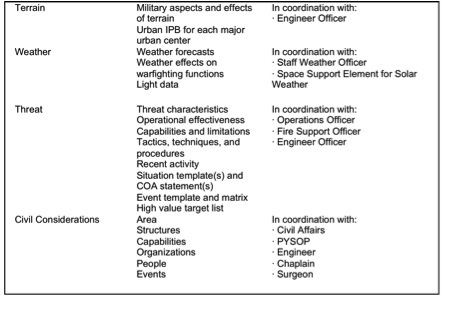 Figure 1: The Intelligence Estimate (