Categories
All About Guns Soldiering

Weaponology – “OSS of World War II”

Categories
Paint me surprised by this Real men Soldiering The Green Machine This great Nation & Its People War

Vietnam: West Virginians Remember

The ones that I met in the Service were some mighty tough troops. That & they would always be welcome in my firing line! Grumpy

Categories
All About Guns Soldiering

Iron Brigade at Gettysburg

Categories
All About Guns Soldiering The Green Machine Well I thought it was neat!

PVT Snafu

Categories
Hard Nosed Folks Both Good & Bad Soldiering War

Texas Rangers vs. Comanche Warriors: The Brutal Battle of Walker’s Creek

Categories
Allies Soldiering

Royal Marines Ranks in Order

Categories
Soldiering War

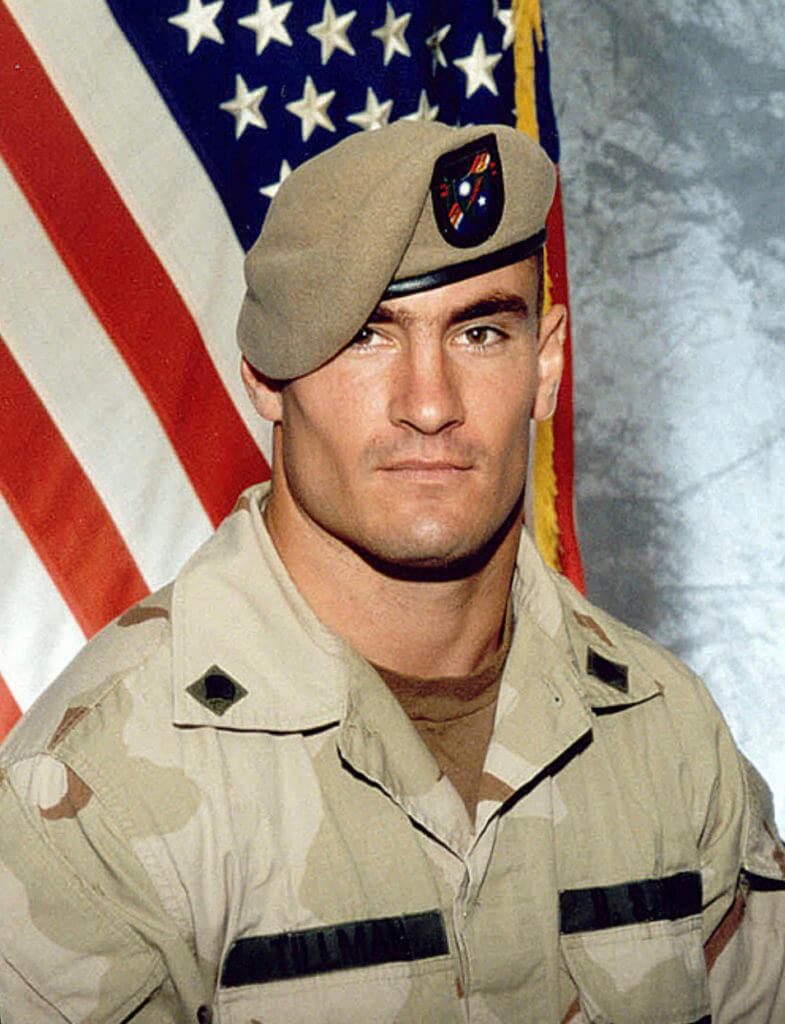
Adelbert F. Waldron III: Most Decorated Vietnam War Sniper by Daniel Ramos

From Ewell and Hunt, Sharpening the Combat Edge, 1995, pg. 124

“Many GIs in Vietnam thought the night belonged to the enemy, but in the Mekong Delta, darkness belonged to Bert Waldron.” Major John Plaster

Staff Sergeant Adelbert Francis Waldron III scored the most confirmed kills by an American sniper during his eight-month tour of duty in Vietnam. He went on to become the most highly decorated sniper of the war. Then he disappeared. As is often the case when a high-profile figure falls into obscurity, the silent void would give rise to hearsay and speculation. Lots of it.

From the Beginning 

Adelbert “Bert” Francis Waldron III was born in Syracuse, New York, on March 14, 1933, to Virginia (née Forderkonz) of Baldwinsville, New York, and Adelbert F. Waldron, Jr. of Phoenix Village, Oswego, New York.1 Waldron’s parents had married in their teens and divorced when Adelbert was seven years old. His father then married Adeline Baxter, with whom he lived until his death at age fifty-six.2 His mother returned to her parents’ home with her son and worked as a waitress and cook at a local diner.Bert was nine years old when Virginia married Ernest J. Searle, a WW II Army infantryman. According to author, Paul Kirchner, who interviewed Bert’s wife, Betty, Bert “despised” his stepfather. Betty revealed to Kirchner that young Bert was an unhappy and lonely child who first honed his marksmanship skills during his hunting forays into the nearby woods. 4 

Waldron’s troubled past marred by family turmoil and loneliness may have been a significant contributor to his erratic and complex personal life. By the time he was twenty-three, Bert had married three times. His third marriage to seventeen-year-old Maude Marie Vincent of Virginia lasted eleven years and produced three children. Marie filed for divorce on grounds of desertion on August 6, 1969, two years after their actual separation.In December, 1969, after a whirlwind courtship, Bert married Betty Wyatt Varner, a divorcee with two children whom he met in Powder Springs, Georgia. Sadly, whatever unresolved emotional issues or post-war trauma he experienced created an irreparable wedge in their marriage. Betty filed for divorce in October, 1980.6

Rise to Glory

Waldron enlisted in the United States Navy on January 3, 1952, and served during the Korean War. He was discharged from the Navy on July 27, 1965, after more than twelve years of service. Despite the fact that America was becoming embroiled in a controversial and increasingly bloody war in Vietnam, thirty-five-year-old Waldron enlisted in the United States Army on May 7, 1968, and was accorded the rank of Staff Sergeant in line with his Navy rank on discharge.7 He attended basic training at Fort Benning, Georgia, and arrived in South Vietnam on November 4, 1968.

Not long after his arrival, Sergeant Waldron was accepted into an eighteen-day sniper training program taught by a team from the Army Marksmanship Unit and led by Major Willis L. Powell, an expert marksman and former instructor at Fort Benning.8 He graduated on January 4, 1969, and was assigned to the 3rd Battalion, 60th Infantry Regiment, 9th Infantry Division commanded by Lieutenant General Julian J. Ewell.9

Waldron’s primary weapon was the XM21, a modified version of the M14 Rifle. The semi-automatic, gas-powered XM21 Sniper Weapon System (SWS) incorporated the strengths of the M14 with modifications to improve its efficiency. The newly designed Leatherwood 3X to 9X Adjustable Ranging Telescope (ART) enhanced its range and accuracy. The XM21 could also be fitted with an AN/PVS-2 starlight night-vision scope. Early in 1969, a Sionics suppressor was added to the XM21 which reduced the muzzle blast to such an extent that one could not tell where the shot came from beyond 100 meters. A detachable magazine held 5 or 20 rounds of ammunition. The rifle was 44 inches long, weighed roughly 12 pounds, and had an effective range of 900 yards. It was renamed the M21 in 1972 when the Army approved it as the official standard for sniper weapons.10

xm21 rifle parts labeled
XM21 Sniper Weapon System. Wikepedia

Lethal Sniper in the Mekong Delta

After graduating from the sniper program, Staff Sergeant Waldron found himself in one of the most dangerous areas in Vietnam. The Mekong Delta was a highly populated agrarian plain in south Vietnam with a virtual maze of streams, canals and rice paddies which made foot travel slow and arduous. The area was heavily infested by the Viet Cong, who used the network of waterways to transport weapons, supplies, and insurgents throughout the region. Not only did these soldiers face an inhospitable environment, with malaria-bearing mosquitoes, snakes, leeches, wasps and microbes and fungi which caused debilitating foot diseases, but also deadly mines and booby traps.

A joint Army-Navy task force consisting of elements of the 9th Infantry Division, which included Waldron’s 3/60th Infantry, and the Mobile Riverine Force (also known as Riverines or the Brown Water Navy), were specifically designated to operate from a base deep within the Communist-controlled Delta with the mission of securing the area. As an Army sniper, Waldron often traveled on Armored Troop Carriers (ATC or Tango Boats), searching for an elusive enemy hidden along the canals, in the jungles, and among the civilians.11

The Viet Cong were homegrown communist insurgents who knew the terrain and blended into the civilian population. They were able to gain support from the South Vietnamese people through a combination of political propaganda, intimidation, and violence. Allied troops would launch countless search and destroy operations throughout South Vietnam in an effort to break the insurgency, but the VC would simply melt away into the jungles and villages, seeking to avoid a pitched battle with superior forces. The VC utilized classic guerrilla tactics of ambushes, hit and run attacks, booby traps, bombings, and snipers to gradually inflict losses on Allied troops. While the Americans and their allies roamed openly in the daylight, the VC and NVA owned the night, launching some of their deadliest attacks. But American snipers were determined to even those odds.

On the night of January 19, 1969, Sergeant Adelbert F. Waldron was conducting a reconnaissance mission with a squad from Company B, 3rd Battalion, 60th Infantry Regiment in Kien Hoa Province, South Vietnam. The group suddenly came under attack by an estimated force of forty heavily armed Viet Cong. As the fighting raged, Waldron made an incredibly bold move by leaving the safety of their defenses to set up a sniper position. Using the starlight night-vision scope on his rifle, he was able to spot the enemy maneuvering in the dark. In the ensuing gunfight, Waldron killed and wounded several VC, inflicting so many casualties that the insurgents broke contact and withdrew. For this action he was awarded the Bronze Star with a “V” for Valor.12

Three days later, while concealed in the sniper position and looking through his night-vision scope, he spotted a large group of Viet Cong moving through the countryside. He carefully maneuvered his way through the rice paddies from one position to another, engaging the VC and making them believe that they were fighting multiple shooters. Waldron single-handedly held off the enemy for over three hours and killed eleven VC before he was forced to withdraw. He earned the Silver Star for “extraordinary heroism in close combat with an armed hostile force.”

On the night of January 30, Sergeant Waldron and a fellow soldier set up a sniper ambush position at a strategic intersection surrounded by a large rice paddy just northeast of Ben Tre. At 8 p.m., Waldron took out a Viet Cong scout maneuvering in the tree line. Forty minutes later, a squad of sixteen VC began moving towards their position. Calls for artillery were denied because of the risk to civilians in a village near their position. Despite the lack of support, Waldron decided to engage the enemy. With eight shots, he took out eight VC during the ensuing firefight at a range of over 500 meters. With half of their men dead, the remaining VC withdrew into the darkness.

Four days later, Sergeant Waldron and his teammate set up a sniper ambush position in a rice paddy just south of Ben Tre. It was just after 9 p.m. when a group of five Viet Cong suddenly appeared from a wooded area at the edge the rice paddy. A nearby ARVN unit was coming under attack and the VC were attempting to outflank their positions. Sergeant Waldron took careful aim and proceeded to pick off the enemy one by one. He killed a sixth VC attempting to gather weapons and equipment from his dead comrades. His actions helped protect the ARVN flank, saving them from further losses. From January 16 to February 4, Waldron had conducted fourteen sniper missions. For his actions in these daring night missions, Sergeant Adelbert F. Waldron III was awarded his first Distinguished Service Cross (DSC).

Waldron was as meticulous and precise as he was unstoppable. On the night of February 14, Waldron was conducting a reconnaissance mission with a squad near Ap Phu Thuan, in Kien Hoa Province. While patrolling the countryside, the team engaged a large force of Viet Cong moving to attack a nearby Allied unit. During the firefight, Sergeant Waldron maneuvered through the brush, firing his rifle from one position to another, killing several VC in the process. Suffering heavy losses, the insurgents were confused over the size and strength of the American unit they had encountered and withdrew. Due to the efforts of Waldron and his squad, the VC were routed, and a major attack was thwarted.13

On February 26, Sergeant Waldron was riding in an ATC with the Mobile Riverine Force through the Mekong Delta. The boat was sailing near Phu Tuc when Waldron noticed something suspicious in the trees along the shoreline. Using his rifle, he spotted a Viet Cong team preparing to fire a Rocket Propelled Grenade (RPG) at their boat. With great skill and accuracy, Waldron eliminated both VC while the Tango Boat was still moving. This was an incredible feat of marksmanship, but it may not have been the only time he accomplished such a shot. According to the commander of the 9th Infantry Division, Major General Julian Ewell:

“One afternoon he was riding along the Mekong River on a Tango boat when an enemy sniper on shore pecked away at the boat. While everyone else on board strained to find the antagonist, who was firing from the shoreline over 900 meters away, Sergeant Waldron took up his sniper rifle and picked off the Viet Cong out of the top of a coconut tree with one shot.” Ewell noted that Tango boats moved at speeds of two to four knots and about 100-150 meters parallel to the shore.14

For numerous acts of heroism in Kien Hoa Province from February 5 to March 29, 1969, Sergeant Adelbert F. Waldron III was awarded his second Distinguished Service Cross. In just a short time, he had developed a reputation as the deadliest sniper in the Mekong Delta, earning him the nickname, Daniel Boone. But Waldron had also gained notoriety among the enemy. To the Viet Cong, he was a major thorn in their side, making him and other snipers priority targets. After serving eight months in the jungles of Vietnam, Sergeant Waldron’s unit returned to the United States in July 1969.15

During his tour of duty in Vietnam, Sergeant Waldron had 109 confirmed kills. To put this into perspective, between December 1968 and May 1969, the 9th Infantry Division snipers were credited with 934 confirmed kills; 12 percent were made by Waldron alone, making him the deadliest American sniper of all time.16 It was a distinction he held for over forty years until his record was surpassed in 2006 by U.S. Navy SEAL Chris Kyle. The most decorated sniper of the Vietnam War, Waldron earned three Bronze Stars, a Silver Star, two Distinguished Service Crosses and a Presidential Unit Citation for actions in the Mekong Delta.17

soldier with wife and children looking at his medal.
Waldron with wife, Betty, and her two children look over Bert’s second Distinguished Service Cross presented at Fort McPherson, September 1970. Columbus Daily Enquirer; Oct 01, 1970; Columbus, GA; 52.


Descent into Oblivion

Much of Waldron’s postwar activities read like a Forsyth cloak and dagger saga, some still sealed in classified FBI records.18 Bert returned to Fort Benning where he briefly served as a senior instructor in the U.S. Army Marksmanship Training Unit (USAMTU) from July 1969 until his discharge in March 1970. While there, he was introduced to Mitchell Livingston WerBell III by Col. Robert F. Bayard, a retired commanding officer of the USAMTU, who had gone into business with WerBell.19  Described by Office of Security documents as “an unscrupulous con man,”20 WerBell, an OSS operative during World War II, co-founded the Military Armament Corporation (MAC), producers of MAC-10 and MAC-11 submachine guns and manufacturers of high-quality suppressors designed by WerBell.21 Waldron worked for WerBell as a counter-sniper advisor.22 When MAC went bankrupt in 1975, WerBell formed a successor company, Cobray International, a paramilitary training camp nicknamed “the farm,” on his sixty-acre estate. Waldron was signed on as chief marksmanship instructor and later as director of the training center.23

two soldiers lying on ground with rifles
Waldron (left) instructs a trainee at the Cobray Training Center; Powder Springs, Ga., 1980. Soldier of Fortune

WerBell would become a highly controversial figure for his involvement in covert mercenary activities in the 1970s. He had been investigated for alleged arms smuggling, Castro assassination plots, and the thwarted takeover of Abaco, an island in the Bahamas, for use as a gambling haven.24 On July 3, 1975, Colonel Bayard, Werbell’s business partner and the man who introduced Waldron to him, was found shot to death near an Atlanta mall.25 His murder remains unsolved. It was in this mysterious miasma of corruption that Waldron became enmeshed. There is evidence that in 1971, he testified before the Department of Defense on an investigation of Werbell with “details on U.S. sniper program in Vietnam and dealings with the Thai government.”26

Bert Waldron struggled to adapt as a civilian and his personal life deteriorated as a result. His paramilitary work with Mitchell WerBell gradually took its toll on his marriage. In October 1980, Betty Waldron filed for divorce.27 According to author, Paul Kirchner, in 1983, Waldron became a marksmanship instructor at a counter-terrorism school, the Starlight Training Center, in Idyllwild, California. Allegedly cofounded by Medal of Honor recipient, Lewis L. Millet, Waldron’s employment there only lasted several months.28 To date, I have been unable to confirm this organization’s existence nor does Colonel Millett refer to it in his many interviews where he discusses his postretirement experience.29 It is at this point that Waldron’s tracks vanish; it has been purported that he flitted from job to job in several states, eventually landing in California.  On October 18, 1995, Adelbert F. Waldron III died of a heart attack at the age of sixty-two. His remains are interred at the Riverside National Cemetery in California.30

Adelbert F. Waldron is a relative unknown among those men considered to be the deadliest snipers in American history. He is officially the top-scoring sniper of the Vietnam War and still holds the record for the most confirmed kills by a U.S. Army sniper. There are no monuments to Bert Waldron and few references about his exploits as a soldier in Vietnam. Like many Vietnam War veterans, he was haunted by his own demons and his personal shortcomings may have led him down a path of self-destruction. According to his ex-wife, Betty, “Bert was a wonderful soldier. He loved his country, he would have died for this country, but he had a lot of problems as a human being.”31

Sources

[1] Birth record source: New York State, Birth Index, 1881-1942 [database on-line]. Lehi, UT, USA: Ancestry.com Operations, Inc., 2018. Marriage record source: New York, County Marriage Records, 1847-1849, 1907-1936 [database on-line]. Lehi, UT, USA: Ancestry.com Operations, Inc., 2016.

[2] Adelbert F. Waldron Jr. obituary: Syracuse Post Standard, Dec 27, 1966, p. 9.

[3] Year: 1940; Census Place: Baldwinsville, Onondaga, New York; Roll: m-t0627-02704; Page: 7B; Enumeration District: 34-43

[4] Paul Kirchner, More of the Deadliest Men Who Ever Lived (Boulder: Paladin Press, 2009), 398. Virginia and Ernest marriage record: Virginia Department of Health; Richmond, Virginia; Virginia Marriages, 1936-2014; Roll: 101169203

[5] Marriage certificates sources: Virginia Department of Health; Richmond, Virginia; Virginia Marriages, 1936-2014; Rolls: 101168589, 101169629, 101168777. Maude Marie Vincent divorce record: Roll 101254585.

[6] Newspaper legal notice of divorce: Marietta Daily Journal, Friday, Oct 24, 1980; Marietta, GA, page 32.

[7] Korea and Vietnam service dates: Beneficiary Identification Records Locator Subsystem (BIRLS) Death File. Washington, D.C.: U.S. Department of Veterans Affairs. Also confirmed via correspondence with the National Personnel Records Center, National Archives; St. Louis, MO.

[8] Lt. Gen. Julian J. Ewell and Maj. Gen. Ira A. Hunt, Sharpening the Combat Edge: The Use of Analysis to Reinforce Military Judgment (Washington D.C.: Gov’t Printing Office, 1974), 120-123. Peter R. Senich, Long-Range War: Sniping in Vietnam (Boulder: Paladin Press, 1994), 34-36.

[9] Ira A. Hunt Jr., The 9th Infantry Division in Vietnam: Unparalleled and Unequaled (Lexington: University Press of Kentucky, 2010), 67-68.

[10] Senich, Long-Range War, 83. J. David Truby, Silencers, Snipers & Assassins: An Overview of Whispering Death (Boulder: Paladin Press, 1972), 98-101. Melvin Ewing, “Hands-on Review: U.S. Army M21 and XM21,” Sniper CentralApril 28, 2016.  Bob Stoner, GMCM (SW) Ret., “XM21 7.62mm NATO Rifle (Sniper’s) with Sionics Suppressor,” Warboats, 2005.

[11] Hunt, 9th Infantry Division in Vietnam, 4-11. Maj. Gen. William B. Fulton, Vietnam Studies: Riverine Operations 1966-1969 (Washington D.C.: U.S. Gov’t Printing Office, 1985), 17-41.

[12] Kirchner, More of the Deadliest Men, quoted Waldron’s Bronze Star citation, 399. However, his Distinguished Service Cross citation, which covered his actions on three dates, including January 19, 1969, stated that “while his company was being resupplied near Ap Hoa, Kien Hoa Province, approximately forty Viet Cong unleashed a heavy barrage of small arms and automatic weapons fire.” Military Times Hall of Valor.

[13] Kirchner, More of the Deadliest Men, after-action reports: 400-403. Military Times Hall of Valor.

[14] Ewell and Hunt, Sharpening the Combat Edge, 122-123.

[15] “9th Infantry Division Unit Histories (Vietnam),” Mobile Riverine Force AssociationAuthor Kirchner (More of the Deadliest Men, 406) claimed Waldron was returned to the U.S. “out of concern for his safety” on July 21, 1969, but this could not be corroborated nor is there a source listed for this information.

[16] Hunt, 9th Infantry Division in Vietnam, 68.

[17] Maj. John Plaster, The History of Sniping and Sharpshooting (Boulder: Paladin Press, 2008), 570. “3d Battalion 60th Infantry Regiment Lineage and Honors Information,” U.S. Army Center of Military History,  Military Times Hall of Valor.

[18] Dept. of Defense, Security Clearance Division, “Security File on Mitchell Livingston Werbell,” Mary Ferrell Foundation22 September 1971. I requested Waldron’s testimony on the sniper program in Vietnam and dealings with the Thai government on June 1, 2019. This article will be updated with pertinent findings when received.

[19] Kirchner, More of the Deadliest Men, 406.

[20] FBI dossier on Mitchell Livingston Werbell; 27 May, 1970; 74-76.  “Incident Report [on Mitchell Werbell],” 14 October 1973, The President John F. Kennedy Assassination Records Collection, National Archives.

[21] Andrew St. George, “The Amazing New Country Caper,” Esquire, Feb. 1, 1975, pg. 62. Of interest is that author St. George was under surveillance by the CIA and was compelled to testify on the activities of Mitchell Werbell along with Waldron (see note 18).  Ron Ecker, “Our Man in Powder Springs: Mitch Werbell,” revised November 30, 2009, Ronald Ecker WebpageMr. Ecker’s well-researched article posits a connection between Werbell and the assassination of JFK.

[22] Truby, Silencers, Snipers and Assassins, 102.

[23] Tom Dunkin, “Cobray: Turning the Tables on Terrorists,” Soldier of Fortune MagazineJanuary 1980, 49-50.

[24] FBI dossier on Mitchell Livingston Werbell; 21 May, 1976; 69-70.

[25] UPI, “Mystery of Ex-Colonel’s Death,” San Francisco Chronicle; July 7, 1975; 37.

[26] See item 18.

[27] Marietta Journal; October 24, 1980; Marietta, GA; 32.

[28] Kirchner, More of the Deadliest Men, 410.

[29] United States. Congress. House. Committee on the Judiciary. Subcommittee on Crime, Fatal Plane Crash in Gander, Newfoundland, December 12, 1985: Hearings Before the Subcommittee on Crime of the Committee on the Judiciary, House of Representatives, One Hundred First Congress, Second Session, December 4 and 5, 1990 (Washington DC: U.S. Gov’t Printing Office, 1991), 47-48. Millett discusses his experience in detail in this speech.

[30] U.S. Department of Veterans Affairs, Nationwide Gravesite Locator.

[31] Kirchner, More of the Deadliest Men, 414.

Categories
Our Great Kids Soldiering

What Was Life Like For A Soldier In Vietnam? | Battlezone | War Stories

Categories
Real men Soldiering The Green Machine War

Zouaves and Chasseurs – American Civil War

Categories
All About Guns Gear & Stuff Soldiering War

P-40 WARHAWK: AMERICA’S AVENGING ANGEL by By Will Dabbs, MD

Pilot Officer Jock Adamson was in a foul temper. A product of the little town of Rockhampton on the northeast coast of Queensland, Australia, Adamson had been flying in North Africa with the Desert Air Force for three months. He was assigned to No. 3 Squadron of the Royal Australian Air Force flying Curtiss P-40E Kittyhawks.

p-40 warhawk airplane
These early P-40B’s sported two cowl-mounted fifties along with four wing-mounted .30-caliber machineguns. Photo: San Diego Air & Space Museum

It had taken him about three minutes to grow weary of this place. Dry, hot, miserable, and bereft of both booze and women, this part of the world had little to commend it. Combine this with the fact that the Germans and Italians tried to kill him both day and night and you had the chemical formula for a sour attitude.

It was April 7, 1943, and Pilot Officer Adamson along with his wingman were on the hunt. The war on the ground swept back and forth as the British 8th Army slugged it out with the Afrika Korps. The Afrika Korps would surrender a short five weeks later, but for now they yet remained a formidable force.

64th fighter squadron p-40 warhawk north africa
A Curtiss P-40 taxis to takeoff in North Africa in 1943. It was part of the 64th Fighter Squadron, 57th Fighter Group. Photo: NARA

On this day a German column was making a rare daylight convoy movement. Jock and his mate spotted the dust cloud a dozen miles away. Dropping down to 100 feet off of the parched arid ground, the two Australians advanced the throttles on their powerful Allison engines and closed in for the kill.

b-24 liberators esorted by curtiss p-40 fighters
On the way to attack Japanese forces, these B-24 Liberator bombers are escorted by Curtiss P-40 fighters over China. Photo: NARA

The combination of their low altitude and the cacophonous noise of the German Maybach engines masked the approach of the two Allied fighters. The first inclination the marching Germans had that something was amiss was when a sleeting hail of heavy fifty-caliber bullets swept over the length of their column. Afrika Korps Landsers leapt off of their tanks and out of their trucks to seek refuge in the sparse cover on the sides of the desert track. Without a proper ditch or any foliage, however, the Germans were all but helpless.

us soldiers deliver p-40 warhawks to free french forces in north africa
U.S. service members present Curtiss P-40 fighters to Free French forces in North Africa during World War II.

The two P-40’s swooped up and over, reversing course for another pass from the opposite direction. This time a few Wehrmacht soldiers fired back with their Kar98k rifles and a handful of MG34 machineguns, but they still stood little chance against the marauding Curtiss fighters. Jock and his wingman once again unlimbered their half dozen .50’s to sow carnage across the German motorized convoy.

p-40 pilots scramble to meet japanese attackers
P-40 pilots of the 14th Air Force scramble to meet a Japanese air raid on 03 MAY 1944. Photo: NARA

Each of Jock’s .50 calibers started the engagement with 615 rounds of linked four-and-one ball and tracer. That gave him a total of 3,690 rounds. The AN/M2 gun cycled at 850 rounds per minute. That equated to about forty seconds of fire until he was out of ammo. With the North African skies dirty with Bf-109F Messerschmitts, Jock and his wingman felt that two passes was enough. They swung their crates toward home and settled back to cruise speed, warily scanning the skies for vengeful Luftwaffe fighters.

loading a bomb on a p-40 warhawk in italy during world war ii
On April 11, 1944, a ground crew loads a 500-pound bomb under the belly of a Curtiss P-40 Warhawk in the 79th Fighter Group. The photo was taken at an air base in Capodichino, Italy. Photo: NARA

Back on the ground, the Afrika Korps troops slowly made their way back to their vehicles to count the cost. Troops caught in the open were torn to pieces by the ferocious half-inch slugs. Several trucks were on fire as was a halftrack. One Panzerkampfwagen Mk IV tank was badly damaged, and a kubelwagen was a total write-off. Alongside the kubel was Oberstleutnant Claus von Stauffenberg.

two seat p-40 observation plane
This Curtiss P-40 was converted to a two-seater observation plane. The photo was taken on February 14, 1944 in Papua, New Guinea. Photo: NARA

Von Stauffenberg was barely alive. His right hand was shot away, as were two fingers on his left hand. One round had bounced off the ground and then torn out his left eye. A beloved officer, his men cared for him as best they could before evacuating him to the rear for medical treatment. After three months in-hospital in Munich, von Stauffenberg was finally back on his feet. He jokingly told his friends that he had never really known what to do with so many fingers when he still had all of them. He was awarded the Wound Badge in Gold as well as the German Cross for gallantry as a result of this action.

p-40 pilots 26th fighter squadron
In China, pilots of the 51st Fighter Group sit on the wing of a P-40 fighter to discuss a mission. Photo: NARA

Fifteen months later, Claus von Stauffenberg deposited a 1-kilogram block of plastic explosive equipped with a time pencil underneath the heavy oak table in the Wolfsschanze during a briefing held for Adolf Hitler in what is modern-day Poland. He had started the operation with two blocks of explosive, but his injuries prevented him from arming the second. Von Stauffenberg excused himself minutes before the bomb detonated. Hitler’s stenographer was killed instantly and three German officers ultimately died of their wounds, but Hitler was saved by the heavy table leg that separated him from the device.

p-40 pilots in alaska
Pilots play cards to pass the time next to a P-40 at their base in Alaska. Photo: NARA

Hitler went on a rage-driven rampage. Heinrich Himmler ultimately killed some 4,980 Germans felt to be disloyal in reprisals. Von Stauffenberg himself was shot outside the Benderblock headquarters in Berlin in the middle of the night while illuminated by the headlights of a military truck. Though the assassination attempt was obviously a failure, the resulting purge and paranoia at the highest levels did substantively advance the Allied cause.

chinese soldier guards a p-40 flying tiger
A Chinese soldier guards a line of American P-40 fighter planes, painted with the shark-face emblem of the “Flying Tigers,” at a flying field somewhere in China. Photo: NARA

Had von Stauffenberg not been so badly injured he could have easily armed both bombs, and Hitler would have died. However, had it not been for his injuries von Stauffenberg might have remained in an operational assignment and never gotten so close to Hitler. Sometimes in war as in life, little things can be big things.

The Plane

The Curtiss P-40 was the primary fighter aircraft of the U.S. Army Air Corps at the outset of World War II. An advanced all-metal design, the Warhawk first flew in 1938 and entered squadron service a year later. The P-40 was the third-most commonly produced American fighter of the war behind the P-47 Thunderbolt and P-51 Mustang. Some 13,738 copies rolled off the lines. New P-40’s cost Uncle Sam about $36,000 back in the late 1930’s. That would be a bit north of $600,000 today.

p-40 flying tiger in china
A P-40 Warhawk, part of the famous Flying Tigers, sits near a runway in China while a C-46 Commando lands in the background. Photo: NARA

The earliest P-40B was equipped with an Allison V-1710 engine producing 1,040 horsepower. These early planes featured two .50-caliber guns in the engine cowling synchronized to fire through the propellor arc along with four wing-mounted .30-calibers. Later P-40E and K models sported half a dozen fifties in the wings. The planes used by the Australians to nearly kill Claus von Stauffenberg would have been the latter sort.

The Warhawks that were so badly ravaged during the attack on Pearl Harbor were B-models. The definitive wartime version was the P-40E. This plane sported an Allison V-1710-39 V-12 liquid-cooled engine producing 1,240 horsepower. Essentially the same engine was used on the P-38 Lightning. In the case of the twin-engine Lightning, one engine was geared to turn the prop in the opposite direction to help offset torque effects.

p-40e cockpit controls
By modern aviation standards, the cockpit of the P-40E Warhawk was fairly austere. Photo: U.S.A.F. Museum

The gaping radiator underneath the big Allison engine lent itself to a shark’s mouth. This flamboyant decoration was pioneered by the P-40’s most famous users, Claire Chennault’s American Volunteer Group — the Flying Tigers. In Commonwealth service, the P-40B and C were called the Tomahawk, while the P-40E and later variants were Kittyhawks.

Impressions

I recently had the opportunity to observe a P-40E up close, and it is a surprisingly large plane. The landing gear struts fold backwards and the wheels rotate to rest flush in their wells. The landing gear of the F4U Corsair has to perform a similar chore. Despite this complexity or perhaps because of it, the Warhawk’s landing track is wide and stable.

author with curtiss p-40 warhawk
The author found the P-40 Warhawk to be a fairly awesome war machine up close.

While the P-40 was heavy for its era and struggled in the close fight with Japanese Zeroes and German Messerschmitts, it was a slippery design that built up speed quickly in the dive. As a result, Allied pilots were trained to engage in slashing attacks at high speed and from altitude whenever possible. This maximized the capabilities of the P-40 while negating some of the advantages of enemy planes.

curtiss p-40e warhawk plane
The P-40E was the definitive wartime model. The Warhawk was an effective fighter for its era that held its own against advanced German and Japanese machines in the early years of the war. Photo: U.S.A.F. Museum

The P-40 Warhawk is a beautiful war machine that just drips history. While such planes were cheap in the immediate aftermath of the war, they are breathtakingly expensive today. Early in the conflict as America struggled to find its war footing, it was the P-40 Warhawk that took the fight to the enemy. The vengeance it wrought eventually led to crushing defeat for the Axis powers.

Special thanks to www.flyaspitfire.com for the rare opportunity to study one up close.