Category: Soldiering
Army Regulation # 1 – DON’T LOSE!!!!!!!!!!!!!!!!!!!!!!!!!!!!
See above !!
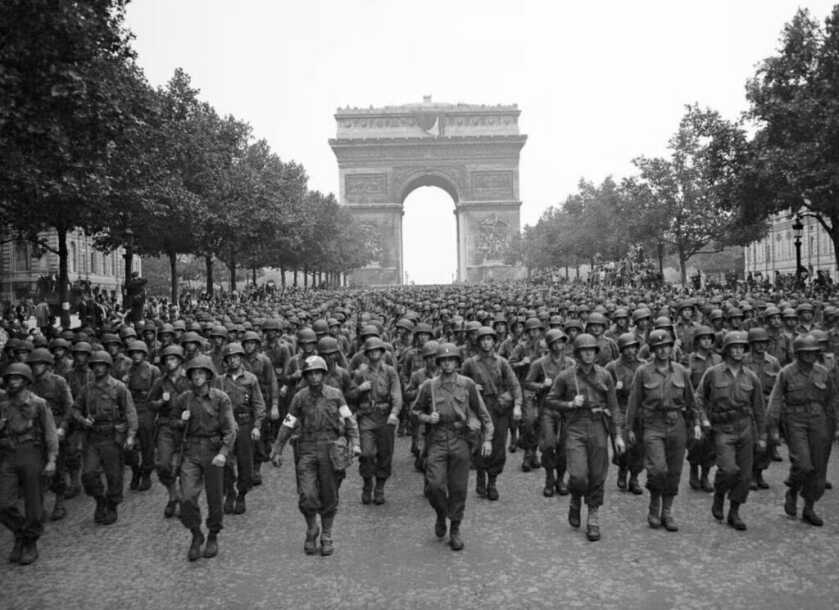
It is difficult to appreciate the scope of World War 2. We modern folk simply have no frame of reference. It was death, tragedy, and destruction on a scale beyond our imagining.
Sixteen million Americans served. More than 400,000 died. Roughly one in every forty American troops who answered the call never came home. One in forty. That’s what it cost to ensure that our world would be free from Nazi death camps, Japanese genocides, and Aryan supermen.
Table of contents
Hidden Treasures In Words
Thanks to Steven Spielberg, Tom Hanks, and Stephen Ambrose, we captured many of those priceless stories before it was too late. Their inspiration drove folks across the country to pin Grandpa down and insist that he tell his stories from the war while he still could. I chased those tales myself at every opportunity. What I discovered was poignant beyond my capacity adequately to describe.
So many of those great old guys were reluctant to revisit that world. However, whenever I saw an old WW2 vet in the clinic I would gently ask. What I got in return for those innocent queries was simply amazing.
One old gentleman ran a local hardware store before he retired. If you saw him in church or walking down the street you wouldn’t give him a passing thought. He looked like everybody’s grandfather—bald and slightly stooped with a shuffling gait. However, back in 1944 this guy was an absolute beast.
The Humanity of Total War
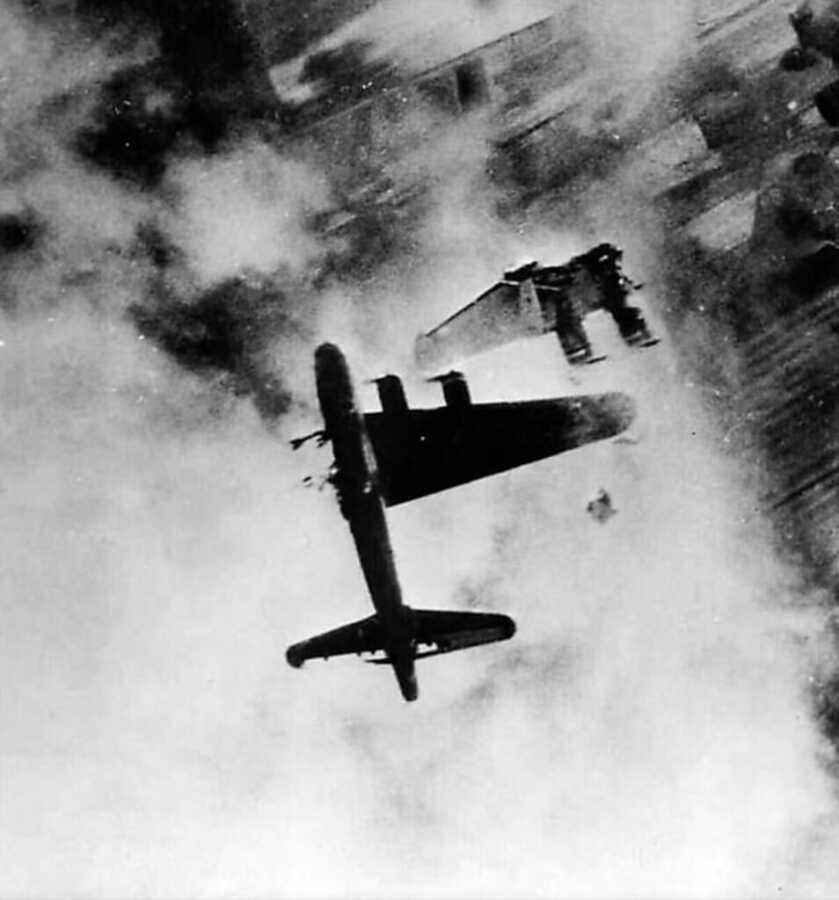
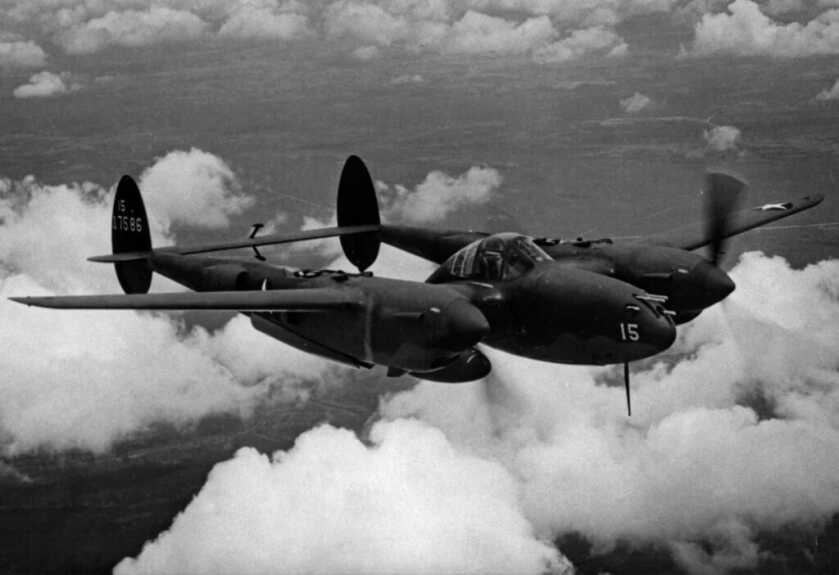
My buddy flew B-17 Flying Fortresses in Europe. He did his twenty-five missions and rotated home. He once mentioned that he had designs on an exceptionally attractive young lady in town before the war. He explained that another boy in his class fancied her, too. The girl chose the other suitor. My buddy then said matter-of-factly, “That other guy became a pilot as well. He flew P-38 Lightnings in the Pacific. He died fighting the Japanese.”
There was no emotion to the statement. It was simply a fact. This kid he went to high school with was blown to pieces in the skies over some forgotten South Pacific island, and he was just gone. That was the world in which he lived.
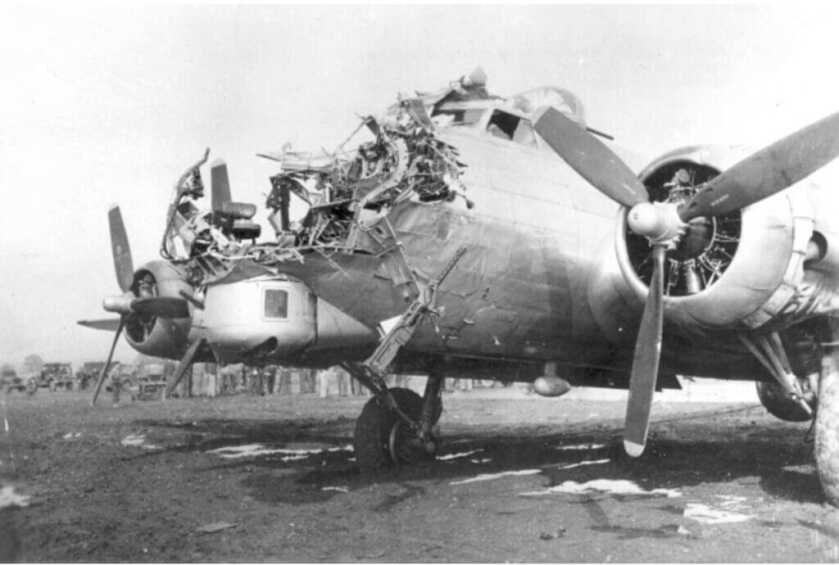
I once asked this man to tell me about his most memorable mission. He said he was in a low formation over Italy when somebody screwed up. The upper bomb group dropped their ordnance, and one errant five hundred pounder struck his Fort just ahead of the cockpit. The bomb did not explode, but it tore the nose off of his airplane, taking his bombardier and nose gunner with it. These were two of his closest friends in the world, and they died horribly five feet in front of his face. He wrestled with the mangled airplane for two interminable hours before landing it safely back at base. He told me this story as though he was describing the weather. There was no bravado or pride. He was simply relating facts.
Connections of Words
I sat mesmerized with him and a dozen or more others, all of whom came to see me for medical care. In my mind’s eye I tried to visualize the scene—the sounds, the smells, and the fear. In each case I’m sure my efforts were woefully inadequate. Some emotions are so intense they just don’t translate well into words.
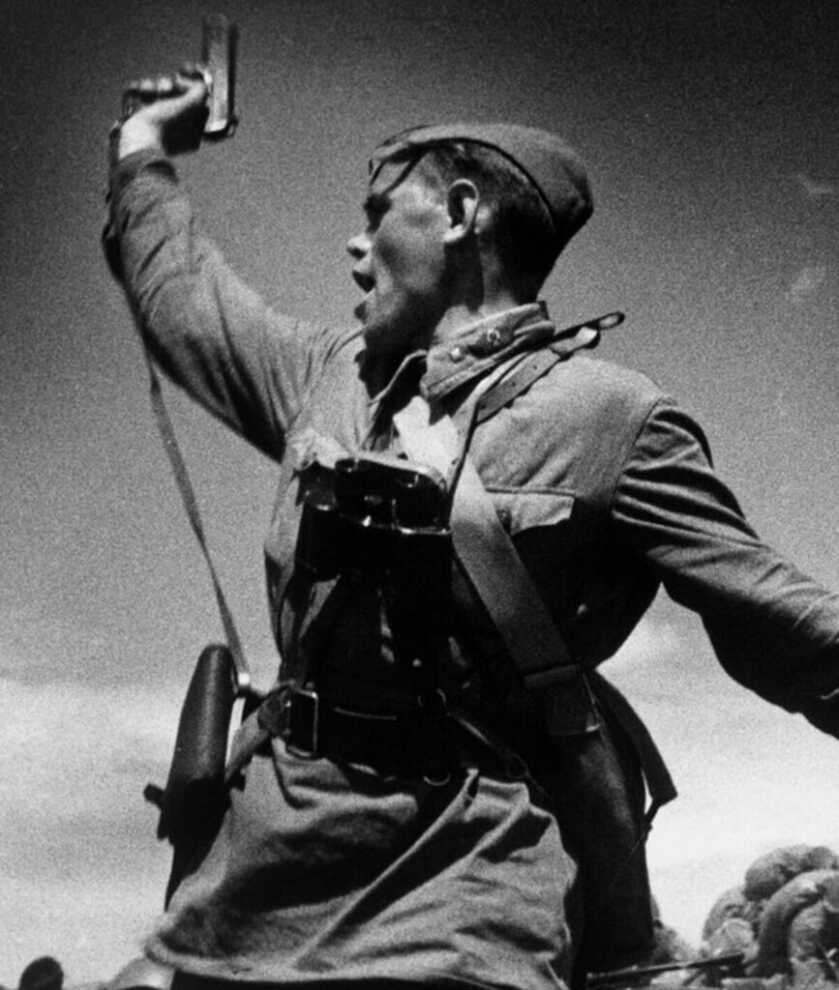
World War 2 was the first of humanity’s countless scraps to be thoroughly documented. All involved knew what they were doing would be studied, dissected, and potentially venerated for generations to come. Cameras were bulky and awkward by modern standards, but they were still available.
Personal Connection
My wife’s grandfather fought in North Africa, Sicily, and Italy. He dropped out of school in ninth grade to feed his family during the Depression, but he was a mechanical savant. He took a nice German camera off of a captured Wehrmacht officer and found undeveloped film in his Battalion S2 Intelligence section. He improvised a darkroom using an Army raincoat and a red lens flashlight and carefully cut the film by hand to fit his liberated camera. He scored a few chemicals and processed his own negatives the same way. After he died we found a shoebox full of little pictures he had taken during the war. They were all intriguing, but he had never been willing to explain the details. Regardless, these images offer some fascinating insights into what his life was really like during those long years of combat in Europe.
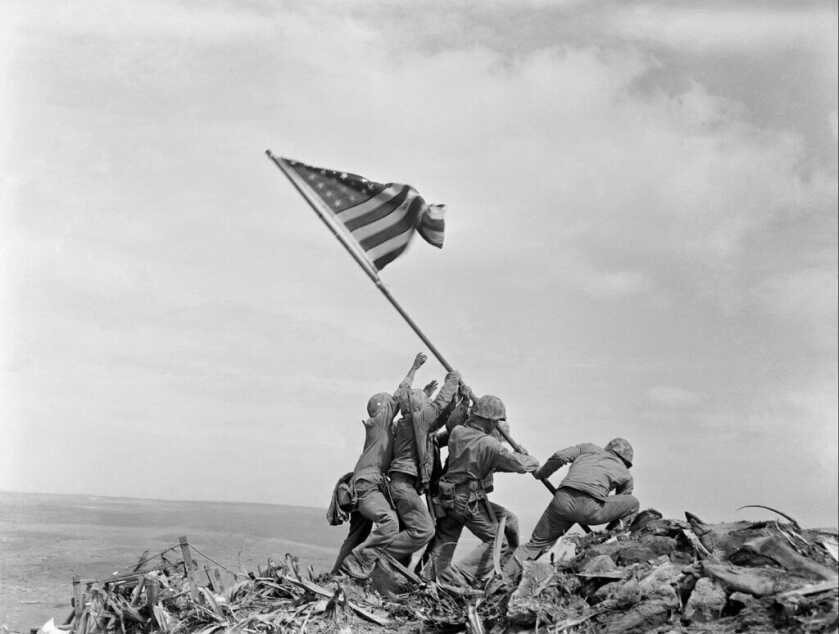
There are literally countless images to have come from WW2. Some were arcane or tedious. Others, like the raising of the flag over Mount Suribachi on Iwo Jima, were quite literally iconic. Each one tells a story. This story that follows was particularly compelling.
The Plane
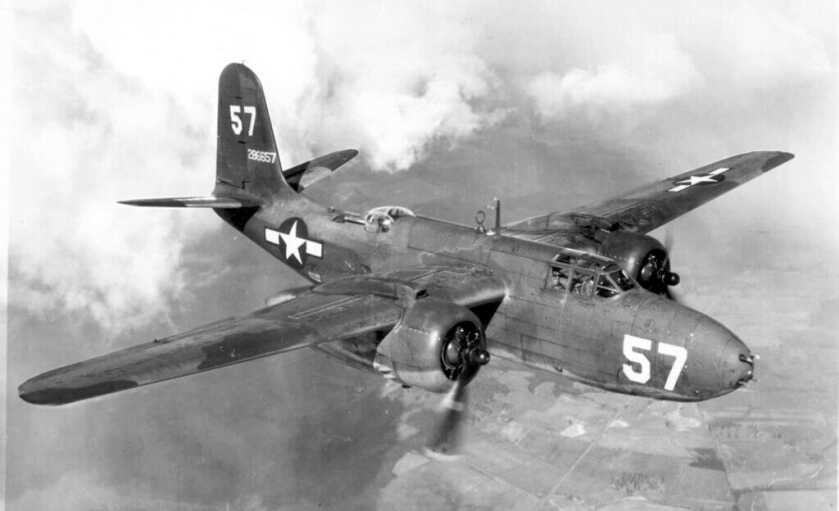
July 22, 1944, was a Friday. 1LT James Knarr and his gunner, SSG Charles Reichley, were up early to preflight their Douglas A-20G-25 Havoc medium bomber. Theirs was one of a dozen Havocs assigned to the 387th Bombardment Squadron of the 312th Bombardment Group. They were slated to attack a sprawling Japanese seaplane station and barge depot on the island of Kokas in the South Pacific. Their aircraft was loaded with 115 kg bombs optimized for attacking small ships in the harbor.
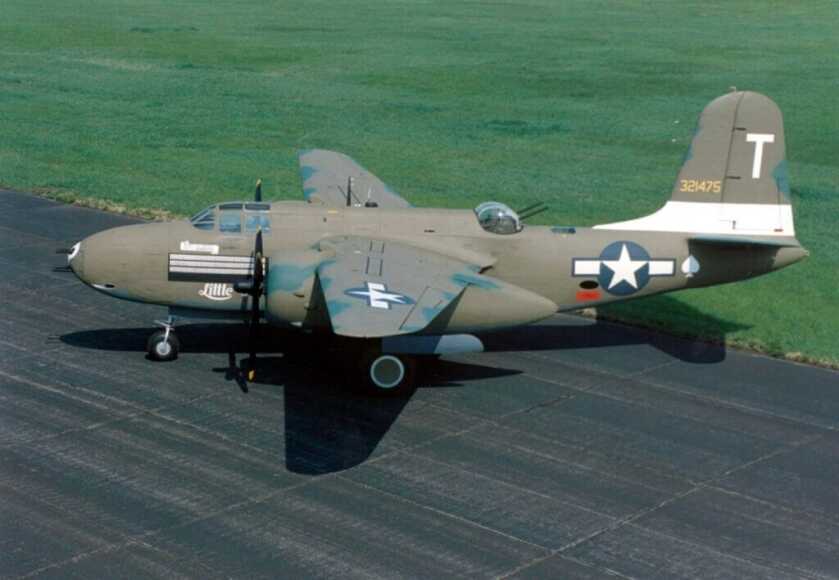
The Douglas A-20 Havoc was not as well-known as were the B-17 Flying Fortresses or B-24 Liberators. It even took a back seat to twin-engine medium bombers like the B-25 Mitchell and B-26 Marauder. However, the A-20 was a potent and effective ground attack platform.
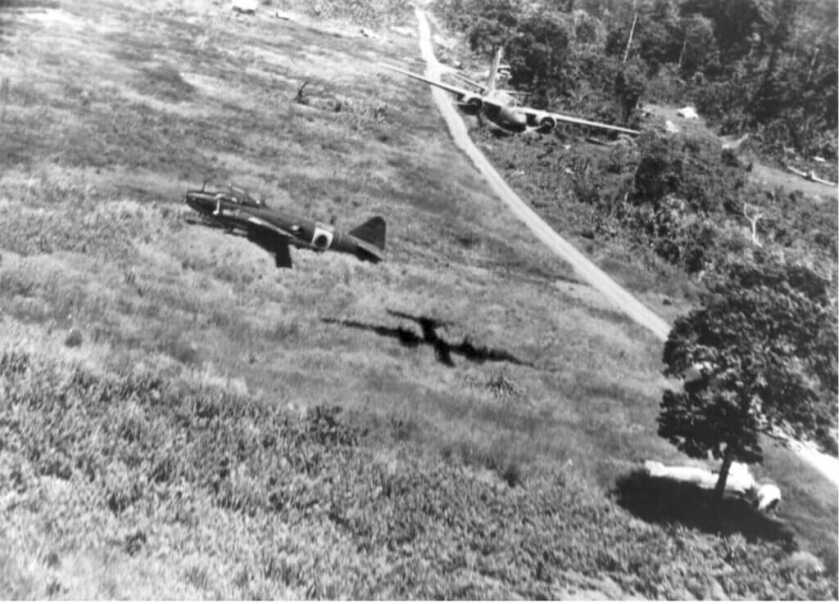
First flown in January of 1939, the A-20 was designed from the outset as an attack plane. It was powered by a pair of 14-cylinder Pratt and Whitney R-2600-7 Twin Cyclone radial engines, each producing 1,700 horsepower. By war’s end some 7,478 airframes had rolled off the lines.
Technical Details
By 1944, the G-model A-20 was being used in the Pacific for low-level attacks against Japanese shipping. Under these conditions the bombardier and his vaunted Norden bomb sight were superfluous. As a result, these Havocs had their noses fared over and the bombardier position replaced with half a dozen Browning .50-caliber machineguns. The typical attack profile involved approaching a target at wavetop level and then skipping bombs into the sides of Japanese ships all the while sleeting the decks with massed machinegun fire. The Havoc was remarkably effective in this role.
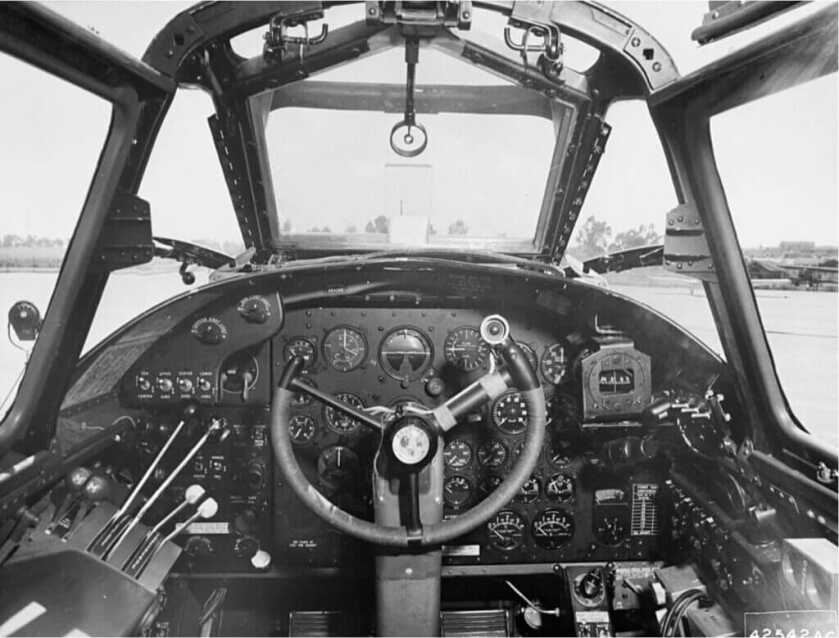
Without the bombardier, the typical crew of the Havoc was just the single pilot and a top turret gunner. With the assistance of their crew chief, 1LT Knarr and SSG Reichley made their mount ready for the day’s mission. Everything about the plane was armed, fueled, and in order.
The Mission
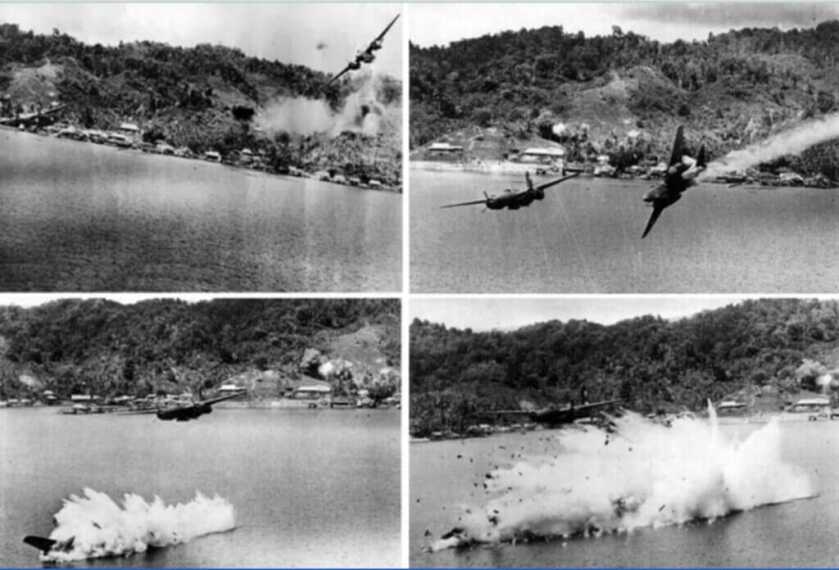
The approach to the target was unremarkable. The weather was perfect, and visibility was unrestricted. The limitless blue of the South Seas skies formed a placid backdrop to the unfettered carnage that was soon to come.
CPT Jack Klein was flight lead. 2LT Melvin Kapson was piloting the second ship. 1LT Knarr’s Havoc, tail number 43-9432, was third. The Havocs delivered their bombs just as they had been trained to do, raining death and destruction down on the Japanese barges and crews held at anchor in the harbor. However, by the time the attack planes turned on their egress the Japanese defenders had found their wits. Before they had a chance to close their bomb bay doors, the Japanese antiaircraft guns were clawing up toward them.
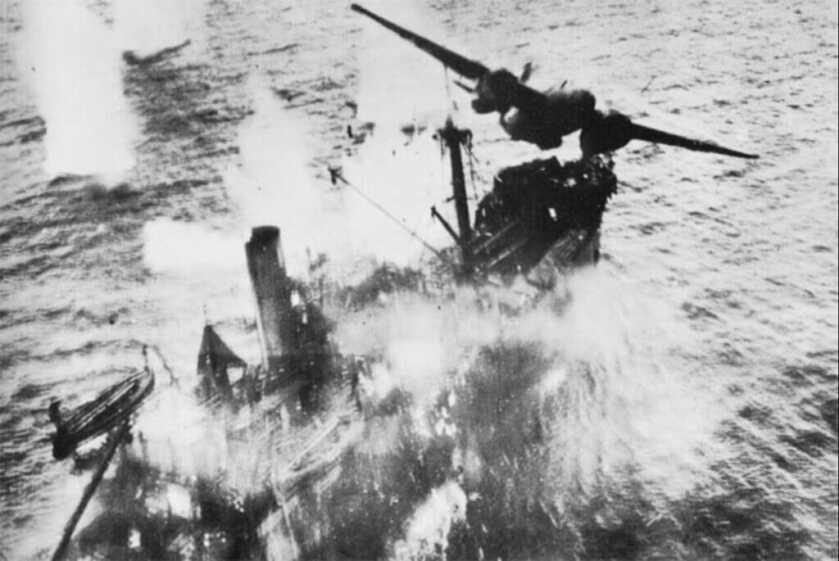
The formation was tight by design. Flying close meant concentrating firepower and shock effect. This also got the attacking aircraft in and out quickly, minimizing their exposure to ground fire. However, it still wasn’t fast enough.
Tragedy
One burst of antiaircraft fire connected with 1LT Knarr’s starboard engine. Both big radials were firewalled during the attack. 1LT Knarr was coaxing every bit of power out of the plants and every scrap of speed out of the plane. Suddenly the number 2 engine sputtered and died streaming oil. The big 11-foot, 3-inch propeller briefly windmilled.
In such close quarters and at such low altitude, there was just no time. 1LT Knarr was unable to get the prop feathered before the big plane began to roll. The ten-ton medium bomber snapped to the right, its wingtip contacting the smooth azure waters of the bay. In a literal instant, what had previously been a state-of-the-art attack plane manned by a pair of American aircrewmen was transformed into 20,000 pounds of debris. And just like that, 1LT Knarr and SSG Reichley were dead, literally pulverized in the impact.
Pictures Are Worth A Thousand Words
CPT Klein had been taking photos of the mission. His camera was remarkably advanced for the time and was capable of sequential frames. As luck would have it, his images captured the final seconds of 1LT Knarr’s airplane. The sequence became one of the most compelling of the war.
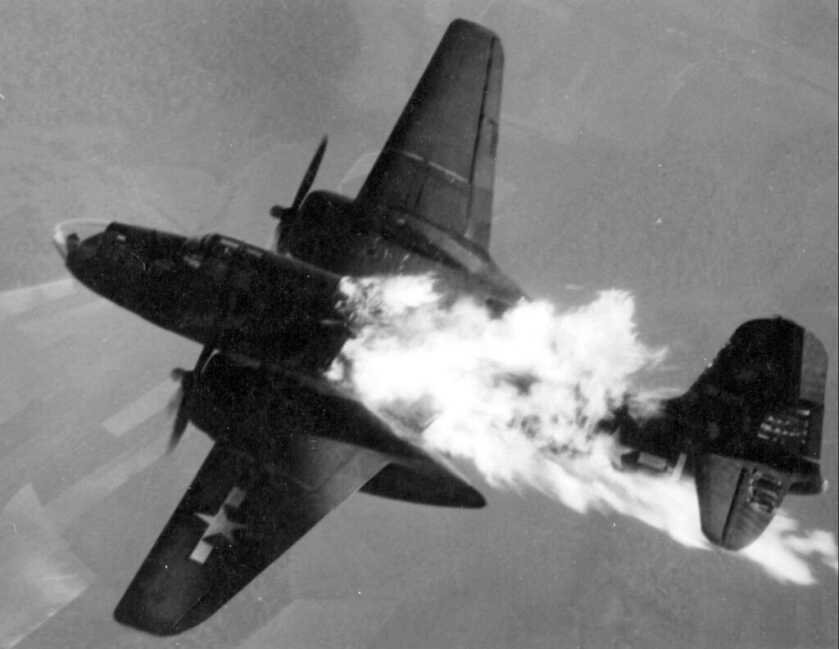
52,173 Americans died in aerial combat in WW2. Many fighter pilots like my friend’s high school classmate perished alone in the rarefied upper atmosphere. Others died as part of a crew with their friends by their sides to the last. The vast majority perished in anonymity, their sacrifice memorialized by nothing more than a heartfelt letter to loved ones from heartbroken friends or overwrought commanders. However, 1LT Knarr and SSG Reichley had their final moments immortalized. Even some eight decades later, those haunting images move me to my core.
Categories
A Victory! All About Guns COOL!!!!!!!!!!!!!!!!! Dear Grumpy Advice on Teaching in Today's Classroom Hard Nosed Folks Both Good & Bad I am so grateful!! Leadership of the highest kind Manly Stuff One Hell of a Good Fight Our Great Kids Real men Soldiering Stand & Deliver The Green Machine This great Nation & Its People War Well I thought it was neat!