
Category: Paint me surprised by this
President Joe Biden called on Congress to pass an assault weapons ban after six people, including three children, were killed in a school shooting in Nashville, Tennessee on Monday, the White House said. “We have to do more to stop gun violence. It’s ripping our communities apart,” Biden said at the White House. “I call on Congress again to pass my assault weapons ban.”
The Nashville shooter, a 28-year-old woman fatally shot by officers at the scene, had at least two semi-automatic rifles and a handgun, police said.
Biden, a Democrat, has repeatedly called for a renewed assault weapons ban and stricter rules on gun sales, measures that need to pass Congress.
The House of Representatives is controlled by Republicans; and any new gun safety legislation is unlikely this year, key lawmakers say.
“How many more children have to be murdered before Republicans in Congress will step up and act to pass the assault weapons ban, to close loopholes in our background check system or to require the safe storage of guns?” White House spokesperson Karine Jean-Pierre told reporters before Biden spoke.
© 2023 Thomson/Reuters. All rights reserved.
Ukraine has demoted a top battlefield commander after he admitted his unit had been decimated in fighting around the city of Bakhmut.

Battalion commander, known by his call sign Kupol, gave an unusually frank assessment of Ukrainian losses in an interview – The Washington Post© The Washington Post
The battalion commander, known by his call sign Kupol, gave an unusually frank assessment of Ukrainian losses in an interview from the front lines earlier this week.
He revealed that all of the original 500 soldiers in his unit had either been killed or injured, a rare acknowledgement from inside the Ukrainian ranks, where losses are kept strictly confidential.
The Ukrainian high command is at pains to present a positive spin on the increasingly bloody defence of the east of the country. US officials have estimated that the Ukrainian army may have taken 120,000 casualties compared with 200,000 by the Russian army.
Kupol told the Washington Post this week that the Ukrainian army training was often poor and that some of the rookie replacements didn’t know how to throw a hand grenade or fire a rifle.
Others had abandoned their positions shortly after arriving at the front line, he said.

Members of a Ukrainian army tank crew check the vehicle at a military base in Zaporizhzhia – Kateryna Klochko/PA© Provided by The Telegraph
“I get 100 new soldiers,” he said. “They don’t give me any time to prepare them. They say, ‘Take them into the battle.’ They just drop everything and run. That’s it. Do you understand why? Because the soldier doesn’t shoot. I ask him why, and he says, ‘I’m afraid of the sound of the shot.’ And for some reason, he has never thrown a grenade. … We need Nato instructors in all our training centres, and our instructors need to be sent over there into the trenches. Because they failed in their task.”
Kupol said what was left of his unit was also facing ammunition shortages.
“You’re on the front line,” he said. “They’re coming toward you, and there’s nothing to shoot with.”
Thousands of Ukrainian soldiers are being trained by the British Army and other Nato countries but thousands more receive more rudimentary training in Ukraine.
Kupol said that he had been motivated to speak out to try to improve training levels but furious Ukrainian generals instead demoted him. The Washington Post said he had consented to have his picture taken but admitted he could face “personal blowback” for his honest assessment.

Kupol told the Washington Post this week that the Ukrainian army training was often poor – The Washington Post© Provided by The Telegraph
Valentin Shevchenko, a spokesman for the Ukrainian military, accused Kupol of “disseminating false information”. “The losses announced in the unit of which he had command are significantly overestimated,” she told Ukrainian media.
Shortly after his demotion, Kupol quit the Ukrainian army.
Within hours of his reassignment to a training camp, dozens of Ukrainian soldiers, politicians and journalists had voiced their support for the battalion commander.
“One of the armed forces finest commanders has just been removed,” Yuriy Butusov, a well-known Ukrainian war correspondent, wrote on Facebook.
“Instead of analysing mistakes that will defeat the Russian army, honest comments are suppressed and those who make them are punished.”
The leak on casualty numbers will be deeply embarrassing for the Ukrainian military which has diligently built up a narrative of its outnumbered but highly motivated and well-trained army taking on hordes of Russian soldiers and convicts.
It also undermines confidence in its much-talked-up counteroffensive planned for spring.
The attritional nature of the war in Ukraine has killed and injured hundreds of thousands of soldiers. Both sides have admitted that they are running out of artillery shells and ammunition.
Ukraine and Russia guard their casualty numbers closely, believing that they could undermine morale, although military commanders still hint at the high death tolls at their evening briefings when they boast of killing hundreds of enemy soldiers.
On Sunday, Volodymyr Zelensky, Ukraine’s president, said that Ukrainian forces had killed more than 1,100 Russian soldiers in the past week. Russia’s ministry of defence said that day that it had killed 220 Ukrainian soldiers in the past 24 hours.
It is not possible to independently verify these numbers. Thousands of Ukrainian civilians have also been killed.
On the battlefield, the British ministry of defence has said that Russian fighters led by Wagner mercenaries have broken over the river in the centre of Bakhmut, in Ukraine’s eastern Donbas region, but that their advance had stalled because they were exhausted.
Oleksiy Danilov, secretary of Ukraine’s Security Council, said that Mr Zelensky was determined to defend the city despite growing pressure to withdraw.
“This is our land, and we have no right not to defend it,” he told Radio Free Europe.
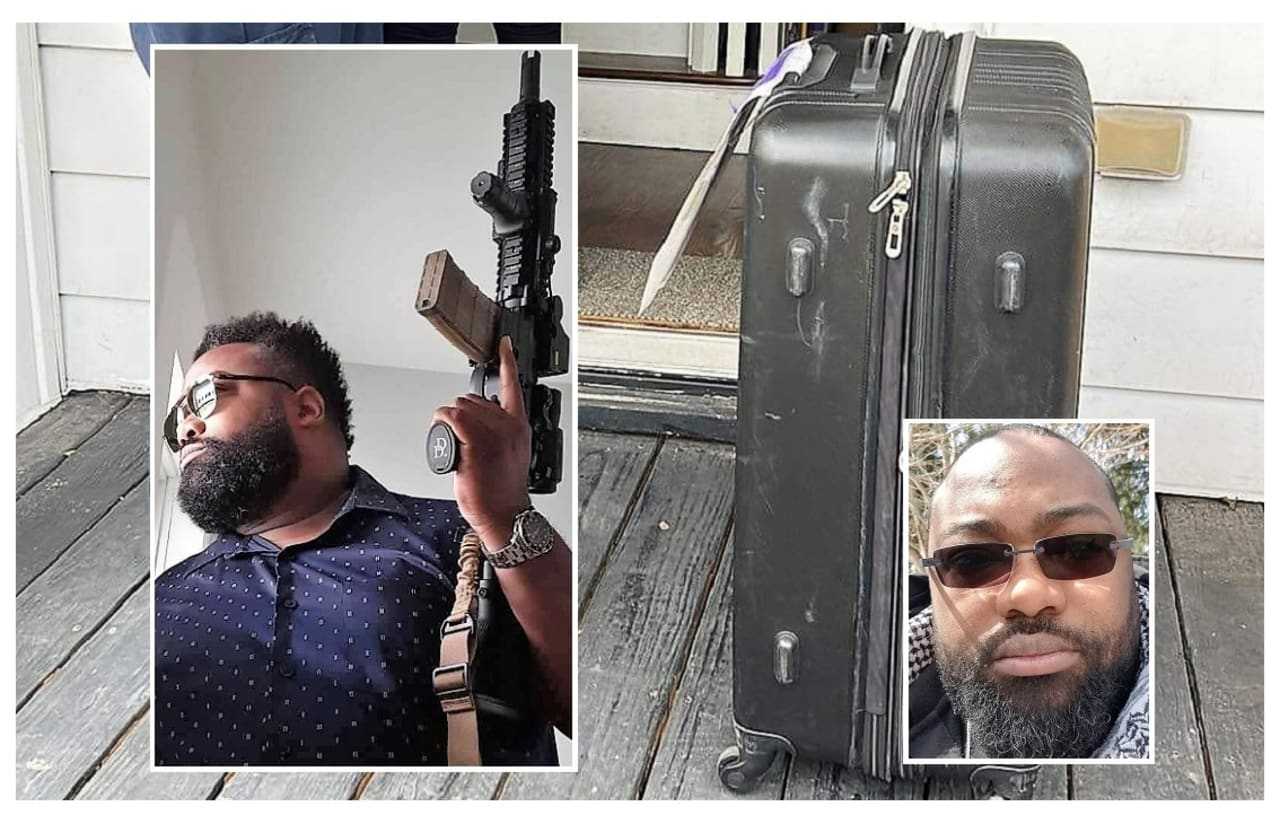
NEWARK, N.J. — A man in New Jersey tried to board a plane with guns, multiple rounds of ammunition, and a fake United States Marshals identification card in his baggage, officials say.
In a news release, the United States Attorney’s Office, District of New Jersey, said that Seretse Clouden, 42, has been charged with unlawful possession of firearms and ammunition by a convicted felon and fraudulent possession of an identification document and authentication features of the United States.
According to court documents, on Dec. 30, 2022, Clouden went to Newark Liberty International Airport in New Jersey for a flight to Fort Lauderdale, Fla.
During the screening process, Transportation Security Administration agents found ammunition along with a ballistic vest with “Deputy Marshal” in one of the bags, according to court documents obtained by The Associated Press.
After agents retrieved more of Clouden’s luggage, they found an AR-15 rifle, another rifle, a handgun, a taser, a knife, a baton, a “United States Marshal” badge, and U.S. Marshal credentials with his name and his photo on it, FBI agent Christopher Granato said, according to the AP.
Granato also told the AP that Clouden was convicted in 2016 of unlawful possession of a weapon in New Jersey.
One of the rifles that were found “meets the definition of a machine gun,” according to officials.
The U.S. Marshals Service confirmed that Clouden is not and was never employed with them, according to authorities.
If convicted, Clouden could face up to 15 years in prison for unlawful possession of firearms and ammunition by a convicted felon. Fraudulent possession of an identification document and authentication features of the United States has a maximum of five years in prison along with a $250,000 fine, according to the U.S. Attorney’s Office, District of New Jersey.
———————————————————————————- Here is what Einstein looks like according to Google. Grumpy

You cannot make this up, and even if you could, the actual facts would read like something out of a really strange movie script about good versus just plain dumb.
When Illinois Gov. J.B. Pritzker last month rushed to sign a brand new gun control bill before the Legislature adjourned (only to re-convene about 24 hours later), something happened nobody saw coming. County sheriffs up and down the Prairie State loudly declared they would not enforce the new law, which banned so-called “assault weapons” and “high-capacity magazines.” It requires current owners to register their guns with the Illinois State Police.
How this may play out is ripe for speculation. By the time you read this, at least one federal lawsuit involving the Illinois State Rifle Association, Second Amendment Foundation and Firearms Policy Coalition will have been filed. There could be more. It all means that the new Illinois law might be headed for a collision with the Constitution’s Second Amendment.
This certainly appears to be what the sheriffs of at least 80 Illinois counties were thinking when they posted letters saying essentially the same thing.
“As your duly elected Sheriff,” the letter says, “my job and my office are sworn to protect the citizens … This is a job and responsibility that I take with the utmost seriousness. The right to keep and bear arms for defense of life, liberty and property is regarded as an inalienable right by the people of this country …”
“Therefore, as the custodian of the jail and chief law enforcement official, I proclaim that neither myself nor my office will be checking to ensure that lawful gun owners register their weapons with the State, nor will we be arresting or housing law-abiding gun individuals that have been arrested solely with non-compliance of this Act.”
Published reports, and reliable sources, confirm Pritzker was furious when the sheriffs went public with their opposition. When he intimated the lawmen would lose their jobs, at least two different Illinois sources told me between laughs that the governor does not have the authority to fire elected sheriffs.
Meanwhile, Out West
When sheriffs in Washington State got wind of the gun control package put forth by Gov. Jay Inslee, which also involves a ban on semi-auto rifles, the Washington State Sheriff’s Association circulated a letter signed by Kittitas County Sheriff Clay Myer —president of the group — and it was not congenial.
“Governor Inslee,” Sheriff Myers wrote, “has announced plans for significant new restrictions on the ownership of firearms by law-abiding Washingtonians. We, members of the Washington Sheriffs’ Association, believe the proposed restrictions will serve to erode constitutionally protected rights without addressing the root causes of violent crime. We are particularly concerned with the proposed so-called ‘assault weapons ban’ and ‘permit to purchase’ laws.”
A few paragraphs later, Myers put it bluntly: “The rise in violent crime that so concerns citizens has happened even as regulations and restrictions on firearm ownership have grown. Of course, this is because the people who commit violent crimes simply don’t concern themselves with obeying rules about guns.”
Murder and mayhem is up in Washington, and so is the number of concealed pistol licenses. As the year wrapped up, there were just short of 697,000 active CPLs in circulation, according to data from the state department of licensing.
It’s not the first time county sheriffs have “just said no.” Back in 2018 and early 2019, many Washington sheriffs announced they would not actively enforce provisions of Initiative 1639, an extremist gun control measure passed by voters.
Some sheriffs in New York State say they will not “aggressively” enforce that state’s new gun law, which is being challenged by at least two federal lawsuits. A few sheriffs in Oregon have said essentially the same thing about provisions of Measure 114, the gun control initiative passed there last November.

A Good Man Gone
The problem with being an old gun guy is that it becomes more frequent we must say “goodbye” to a good friend, who happens to have also been just a plain good person.
Robert E. “Bob” Hodgdon, whose family name is part of the fabric of American metallic cartridge reloading, passed away Jan. 13. Having been born in August 1938, Hodgdon had a good run that covered a lot of ground. He and his brother, J.B. helped build the company founded by their father, Bruce Hodgdon, and today that name is iconic in the industry for the variety of reloading propellants for rifles, shotguns and handguns. According to an obituary the family posted, he “also assisted with the design and lead the team constructing the Pyrodex Plant in Herington, Kan. in 1979 and helped to design and build The Bullet Hole, a 44-station indoor shooting range in 1967.”
I served with Hodgdon on the NRA board of directors more than 20 years ago, and you could not find a more devoted fellow where perpetuation of the shooting sports, and protection of the Second Amendment, was concerned. He was a kind and gentle soul, a person you’d be delighted to share a campfire with, and someone who was as devoted to his family as his professional pursuits. He was father to four children, Chris (Adele) Hodgdon, Heidi (Erwin) Rodriguez, Stacie (Bryant Larimore) Hodgdon and Alisa Hodgdon — and grandfather of 11 and great-grandfather to eight.
A native of Kansas, he grew up in suburban Kansas City. He attended Baker University in Baldwin City, Kan., and graduated Summa Cum Laude from the University of Kansas. He served in the U.S. Air Force and the Air Force Reserves.
He served as president of Hodgdon for more than 20 years and then as board chairman from 2014 to 2017.
Hodgdon volunteered in several civic organizations, and was a member of the Westside Family Church in Lenexa, Kan.
Additionally, he was a founding member of the National Shooting Sports Foundation, a member of the Kansas State Rifle Association, and founding member of the Kansas Sportsmen’s Alliance.
Men like Bob Hodgdon are very rare.
The bill would also ban anyone younger than 21 from having a permit to carry their gun concealed and would require all permit holders to have more training, including on how to safely store and transport guns.
California Gov. Gavin Newsom wants to limit where people can carry concealed guns after multiple mass shootings left dozens dead across the state in January, calling for more restrictions in a state that already has some of the nation’s toughest gun laws.
He endorsed legislation Wednesday that would ban people from carrying concealed guns into churches, public libraries, zoos, amusement parks, playgrounds, banks and all other privately owned businesses that are open to the public. The rule wouldn’t apply if the business owner puts up a sign that says concealed guns are allowed.
Democratic state Sen. Anthony Portantino, the bill’s author, called that exception “a legal nuance that I think helps it with constitutional muster.”
“This is not window dressing. This is to put a strong bill on the governor’s desk to withstand a legal challenge that is sure to come,” Portantino said.

It would also ban anyone younger than 21 from having a permit to carry their gun concealed and would require all permit holders to have more training, including on how to safely store and transport guns.
California and half a dozen other states previously had laws that required people to give a reason if they wanted to carry a concealed gun in public — like citing a direct threat to their public safety.
But a U.S. Supreme Court ruling last year struck down those laws, making it easier for people in those states to get a permit to carry a concealed weapon.
California Democrats tried to pass new rules last year — and they would have succeeded, had it not been for a strategic blunder requiring a two-thirds vote of the Legislature so the bill could take effect immediately. Democrats could not round up enough support, and the bill died.
“That’s not going to happen this year,” Newsom said. “I will be signing this legislation.”
Newsom and legislative Democrats vowed to double down on passing a new law this year. Their cause came with renewed urgency, after mass shootings in Monterey Park and Half Moon Bay left 18 people dead and 10 others wounded. In total, the state had six mass shootings in January and at least 29 people were killed.
When asked by a reporter if there is evidence that recent mass shootings are linked to the state’s concealed carry process, Newsom said investigators are still analyzing the specifics of the shootings.
“None of us came up here today asserting that this was in response to them,” Newsom said of the concealed carry proposal.
“Then what’s the point?” said Republican Assemblyman and former Riverside Deputy District Attorney, Bill Essayli. “He’s pandering, this is all politics and we’re tired of politics, we want solutions for Californians.”
Essayli and other Republicans have said the state needs to do a better job of enforcing gun and public safety laws already on the state’s books.
“This bill goes after law-abiding concealed carry weapons owners who we know are the safest and most responsible gun owners in society, we need to be going after the people who should not be having guns,” Essayli said.
This content is imported from Twitter. You may be able to find the same content in another format, or you may be able to find more information, at their web site.
This content is imported from Twitter. You may be able to find the same content in another format, or you may be able to find more information, at their web site.
This content is imported from Twitter. You may be able to find the same content in another format, or you may be able to find more information, at their web site.
This content is imported from Twitter. You may be able to find the same content in another format, or you may be able to find more information, at their web site.
This content is imported from Twitter. You may be able to find the same content in another format, or you may be able to find more information, at their web site.
This content is imported from Twitter. You may be able to find the same content in another format, or you may be able to find more information, at their web site.
This content is imported from Twitter. You may be able to find the same content in another format, or you may be able to find more information, at their web site.
Here is a look at some firearm-related bills state lawmakers will consider this year:
AB 97: Makes possession of an unserialized, or ghost gun, a felony.
SB 2: Sets new limits for concealed carry permit holders
AB 303: Requires the state attorney general to create an online database for the state’s Armed and Prohibited Persons System.
AB 328: Would reinstate harsher penalties for those who use a gun in the process of committing a violent crime.
AB 28: Creates a new tax on firearms and ammunition to fund gun violence protections.
–KCRA 3’s Ashley Zavala contributed to this story.
Categories
The Wolf Truce
Myths, lies and old wives’ tales loom large in the outdoor pursuits. Here at MeatEater, we’re dedicated to separating facts from bullsh*t, so we created this series to examine suspect yarns. If there’s a belief, rumor or long-held assumption you’d like us to fact check, drop us a note at factchecker@themeateater.com.
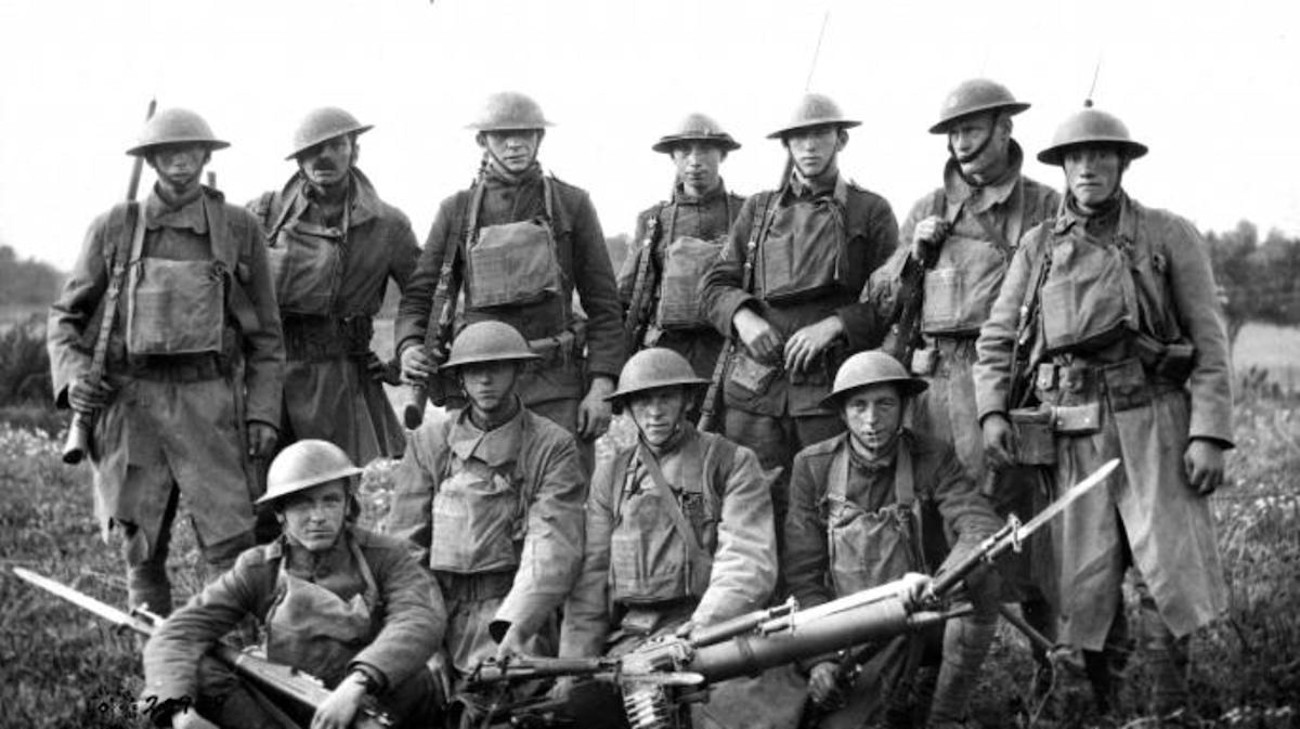
Claim During World War I, German and Russian forces declared a temporary ceasefire and banded together to hunt wolves. The voracious animals were attracted to the prolific and gruesome scavenging available in the warzone, attacking soldiers and civilians alike.
Origin Multiple newspapers in 1917 reported on this story, including the El Paso Herald, Oklahoma City Times, and New York Times. Since then, it’s become a favorite bit of bar room banter among amateur historians, like the powerful Joe Rogan.
Facts In February of 1917, a dispatch from Berlin noted large packs of wolves moving into populated areas of the German Empire from the forests of Lithuania and Volhynia. Locals hypothesized that war efforts displaced the wolves, so the canines started seeking out new hunting grounds.
The hungry wolves infiltrated rural villages, attacking calves, sheep, goats, and in two cases, children. They also showed up on the front lines, feeding on the fallen and sometimes taking advantage of incapacitated fighters.
“Parties of Russian and German scouts met recently and were hotly engaged in a skirmish when a large pack of wolves dashed on the scene and attacked the wounded,” reported a 1917 Oklahoma City Times article. “Hostilities were at once suspended and Germans and Russians instinctively attacked the pack, killing about 50 wolves.”
The Russian and German soldiers temporarily stopped being enemies once they found a common foe. Both sides agreed to a cease fire if the wolves interrupted another battle.
“Poison, rifle fire, hand grenades, and even machine guns were successively tried in attempts to eradicate the nuisance,” according to a 1917 New York Times article. “But all to no avail. The wolves—nowhere to be found quite so large and powerful as in Russia—were desperate in their hunger and regardless of danger.
“As a last resort, the two adversaries, with the consent of their commanders, entered into negotiations for an armistice and joined forces to overcome the wolf plague.”
Takeaway Though seemingly far-fetched, it turns out these claims are mostly accurate. Historians estimate that soldiers killed hundreds of wolves during the war, and that the surviving wolves fled to escape a “carnage the like of which they had never encountered.”
For a brief moment, a kind of peace spread across the battlefield, even though gunshots and grenade explosions continued to ring out.
The opinions expressed by contributors are their own and do not necessarily represent the views of RedState.com.
The Second Amendment remains under attack, and it’s time for Congress to demand that “Fair Access to Banking Services” rules be re-prioritized by the banking industry.
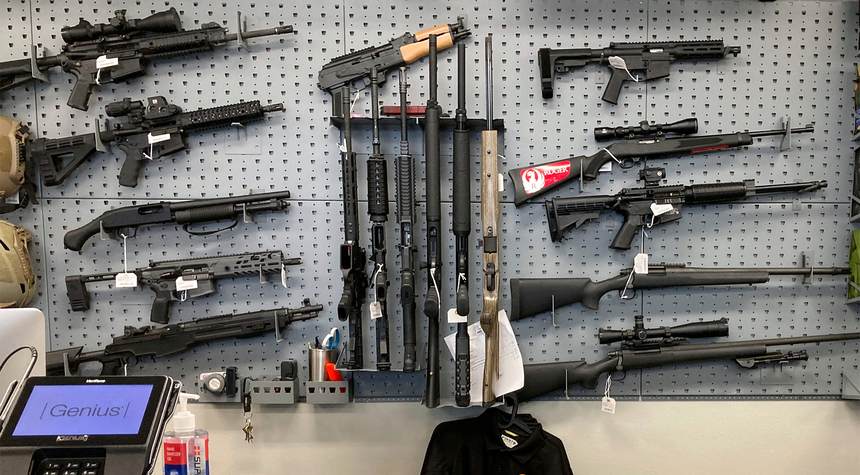
Earlier on Saturday, my colleague Kira Davis reported that Wells Fargo canceled the accounts of Del Ray, Florida-based Wex Gunworks. Reportedly, Wells Fargo deemed the dealership, which supplies a full range of firearm services to Floridians, too risky for a banking relationship with the company.
Of note to students of 2A politics, in the case of Wex Gunworks, is that it is a federally-licensed NFA Class III dealer in machine guns and silencers, which are legal for Floridians to own. But gun control activists have been pushing ESG departments to act against companies, regardless of state law or business legality. Reportedly, Wells Fargo went further and severed the personal accounts of owner Brandon Wexler as well.
According to a report in The Reload by journalist Stephen Gutowski,
Wexler, who has been cited in stories by the New York Times, Washington Free Beacon, CNN, ABC, and many more publications, said nothing had changed with his business. He said he believed the move by Wells Fargo was motivated entirely by animus against the gun industry.
“It feels like it’s a direct attack against gun dealers,” he said. “This all just happened recently, and we have been in business for many years. I’ve never ever seen anything like this.”
Except this isn’t the first time Well Fargo has been in the news doing this.
Back in July 2020, I penned an article on RedState titled “Wells Fargo Risks Reputation Over Private “Chokepoint” Policy Against Gun Industry,” noting that the bank was under scrutiny that it might be changing its stance on accounts with the firearms industry to follow the policies of what is known in policy circles as a privatized version of the discredited government initiative known as Operation Chokepoint.
This was when banks turned to adopting discriminatory Environmental, Social, Governance (ESG) policies that effectively redline certain impolitic industries, which includes the firearms industry, under the nebulous definition of “too risky to do business with.” My article at that time noted that in 2020, it was already official bank regulatory policy that financial institutions had been instructed to cease this type of business/industry redlining practice since 2015.
But some banks chose to carry on with the practice while being careful not to document the political reasons for cutting ties with a booming firearms industry. This article reported that a US Senate committee had expressed concern and was making inquiries to bank regulators as to why this practice was being allowed to continue.
By December 2020, I reported in my RedState article, “As Gun Industry Continues to Be Shunned by Banks, Regulators Move to Enforce Fair Access,” that the Office of the Comptroller of the Currency was responding to the call for fair access to banking services by the hampered industries and was in the process of issuing a new rule that would ban such practices. That rule was passed in January 2021 and was then put on hold, following the transition from the Trump to the Biden presidency.
This continuing hold on enforcing fair access enabled this latest incident to happen to Mr. Wexler’s company. I recently updated my coverage of this saga on December 25, 2022, in an article in America’s 1st Freedom, “The Financial War on Our Freedom,” which describes how some banks have continued to weaponize their ESG to attack politically incorrect companies. Mr. Wexler’s company became a victim of this ideology war around the same time the article was published, proving the concern remains a present danger and deserves attention by Congress and regulators in 2023.
It’s redlining when banks attack otherwise healthy businesses in economically robust industries and cause them to be less viable in the marketplace. Using the excuse that internal risk calculations by the bank as the basis for non-participation in a credit, lending, or account services relationship is the same excuse that some banks have used in the past to avoid establishing accounts or making loans to minority or impoverished communities.
When a bank does the latter, forces are set into motion where a government enforcement agency begins to compile evidence of a pattern of discrimination, eventually leading to enforcement actions and payments of fines or settlements, often amounting to millions of dollars, as part of reparation of harm done.
Congress should demand the same type of aggressive enforcement for fair access principles in business credit and lending that the massive federal apparatus is doing for housing and community development. Impolitic or not, every healthy business is a vital part of keeping the US economy afloat, particularly during an inflationary and recessionary phase. Washington should be asking why the “Fair Access to Banking Services” rules that would punish banks for weaponizing their ESG departments against their customers are in a state of limbo in the Code of Federal Regulations.