Category: Paint me surprised by this
 Beatrice “Tilly” Shilling.
The Supermarine Spitfire is nearly synonymous with Britain in World War II. It was a superb fighter plane, beloved of its pilots for its speed and agility, and by the British public as a bona fide national icon and war winner. That status was in no small part thanks to its elegant elliptical wings and the evocative roar of its Merlin engine.
But it was also fundamentally broken. Its engine would often cut out just when the dogfights of the Battle of Britain got interesting: in diving, a staple defensive and attacking maneuver. Unfortunately for the British, the Luftwaffe’s Messerschmitt 109s suffered no such shortcoming, giving the 109s a decisive edge in combat against British fighters.
Britain won the Battle of Britain by the narrowest of margins, and so it was imperative that a solution was found if British fighters were to contribute to the liberation of Europe. Found one was, and from the most unlikely of sources: a female engineer named Beatrice Shilling. That a solution came from a woman circa 1940 was improbable enough, but perhaps as improbable was the simplicity of her solution.
Miss Shilling’s orifice, as it came to be known, arrived just in time for the bitterly fought European offensive that paved the way for the D-Day invasion of Normandy. It without question saved the lives of British pilots. Arguably, it helped turn the tide of the war.

The problem with the Spitfire’s Rolls-Royce Merlin engine was first spotted in 1938 when the first production models of Spitfire rolled off the factory lines at Woolston, Southampton. At the time, it wasn’t seen as much of a problem: diving simply wasn’t something pilots did much before World War II. But by the height of the Battle of Britain in 1940, it was a matter of basic survival.
Also typically glossed over in post-war recollection is the Spitfire’s troubled beginnings. It arrived years later than planned, and at great expense, due to administrative bungling that originated at the top levels of the British government, cascaded down through incompetent captains of industry, before crashing onto factory floors and their chaotic organization of labor. If and when there was any organization of labor, that is.
Despite a prototype Spitfire having first flown in March 1936—the same year that work began on Castle Bromwich for the sole purpose of Spitfire production—things only improved in May 1940 when, upon becoming Prime Minister, Winston Churchill appointed Lord Beaverbrook as Minister for Air Production. Beaverbrook immediately transferred ultimate responsibility of Spitfire production to the engineering firm Vickers. Under Vickers, production would eventually ramp up to 300 planes a month.
In July 1940, Alex Dunbar, the newly appointed manager at the Castle Bromwich Spitfire factory, wrote, “Incidentally, we are sacking 60 jig and tool draughtsmen next week. We have tried to find out what they are doing but the answer’s not a lemon. In the meantime, we build the odd Spitfire or two.”
But the problems with the Spitfire were only beginning. The Battle of Britain was a success despite a serious flaw in the Rolls-Royce Merlin engine used in both the Spitfire and the Hurricane. The Hurricane was still the workhorse fighter of the Royal Air Force (RAF), thanks in part to production issues with the Spitfire. It was a more than capable machine except for the engine issues it shared with its glamorous sibling.
That flaw was a tendency for the engine to falter under so-called negative gravity, when powering into a dive. Negative gravity is a confusing term because the problem wasn’t one of gravity, or even force, but rather of acceleration and inertia. When an aircraft accelerates downward faster than it would in free fall, anything not bolted down, like the blood surging through the pilot’s vessels, will accelerate more slowly due to its own inertia. In relative terms, so far as life aboard the aircraft is concerned, those things are moving upward rather than downward.
Inertia’s a tricky thing, particularly when it comes to liquid fuel. Imagine the skin of a pilot’s face going into a dive, engines at full power. Now imagine the same thing happening to the liquid fuel in the engine, and specifically the chamber of the carburetor designed to regulate the flow of fuel: fuel effectively flows upward. Unfortunately, the fuel outlet holes in Merlin engines were at the bottom of the chamber while, when accelerating into a dive, the fuel was forced to the top, unable to reach the engine. The engines were being starved of fuel, causing what was known as a “weak cut” and resulting in a tendency to stutter, or even to cut out completely, under negative gravity. Either way, the result was loss in power. It was just a question of how long that loss would last.
The trouble could also strike when hitting turbulence. “I opened fire at about three hundred yards, and seemed to hit the one I was aiming at because he pulled up sharply,” Wing Commander Bob Doe later recalled. “At that moment (I must have been down to about a hundred yards), I hit his slipstream and my engine cut—stone dead.” Dogfights are presumably made all the more memorable with the added frisson of engine trouble.
This was problematic for RAF pilots for a number of reasons. First among them was that, by 1940, it was becoming increasingly evident that diving at full tilt was actually rather a good idea, tactically speaking, not to mention an intuitive reaction to being chased down by the fearsome Messerschmitt Bf 109E and Bf 110C fighters of the German Luftwaffe. Diving had the distinct advantage of making it harder to be shot down. Second was that Luftwaffe pilots being tailed by a British fighter did much the same thing to evade their pursuers, and there was really only one way to stay in hot pursuit of a diving fighter plane: dive straight after it. The third was that the Daimler-Benz engines of the Messerschmitts did not share the Merlin’s fuel-system flaw.
Luckily, the British pilots had home-court advantage. The proximity of their fuel supply meant that they could remain in combat for longer than the Luftwaffe, who had to travel some distance to theaters of war across the English Channel, fight, then fly home again.
Overall, then, the sixteen-week-long Battle of Britain was characterized by its numerous narrow margins. Though the battle was over by November 1940, the war in Europe was not. There was still the task of liberating large swathes of mainland Europe, and both the Spitfire and the Hurricane would play vital roles. Quite simply, an answer to the stalling problem needed to be found, and quickly.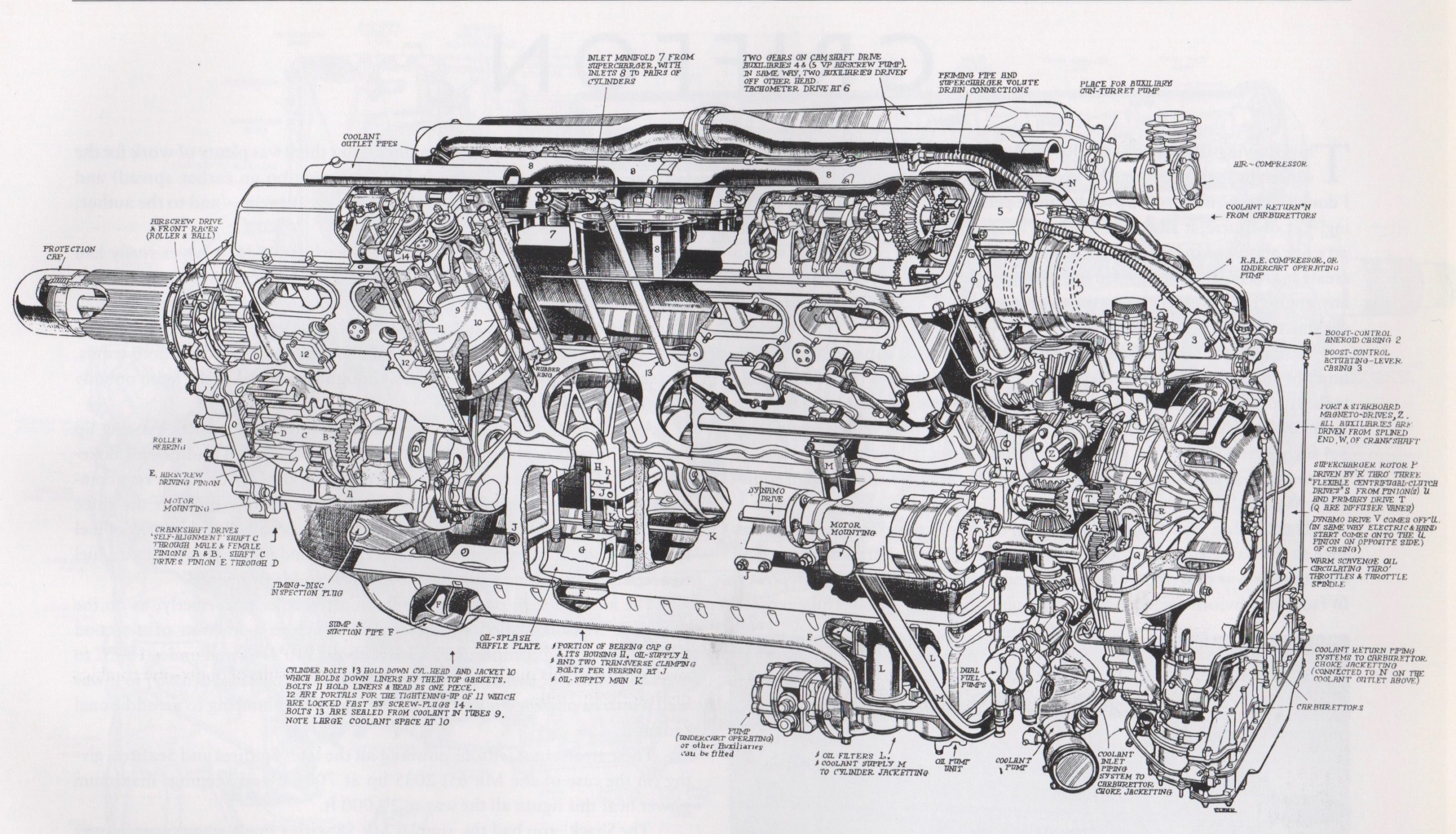
Naturally, the war effort put its finest minds to the task, including Cyril Lovesey of Rolls-Royce and A.D. Fisher of the Royal Aircraft Establishment. Both devised ingenious technical solutions, both of which failed utterly in solving the problem. Their valves and diaphragms may have solved the weak cut, but this was only the start of the trouble. It was swiftly followed by a longer and more dangerous “rich cut”—when the chamber floods with excess fuel, giving a ratio of fuel to air that is too high, or too rich, to actually burn.
It would take an intimate knowledge of engines to identify the more serious problem. So it was remarkable for any number of reasons that, in 1940s Britain, the ultimate solution would come from a woman.
It was around the time of the first production Spitfire test flights of 1938 that Beatrice “Tilly” Shilling rebuilt and tested her own beloved machine: a 490cc Norton motorcycle. The same machine saw her become the fastest woman ever to ride a motorcycle at Brooklands: the first purpose-built race track in the world, which had opened near Weybridge in Surrey in 1907. Shilling was an exceptional racer, but an even better engineer.
To say that women tended not to be engineers in the early part of the 20th century would be stretching the definition of understatement to its very limits. The same stretch could be made for politicians, doctors, land owners, or indeed any role of influence.
But, even in childhood, there were signs that Beatrice Shilling would not conform to societal norms. When Shilling was still small enough to be known as Baby among the family, she was reported to have had this short exchange with her mother:
Mother: “Baby, you mustn’t bite your sister.”
Beatrice: “Have.”
Mother: “Well, say that you’re sorry.”
Beatrice: “Shan’t.”
Around 1919, the 10-year-old Beatrice grew tired of being left behind by her sisters on cycling trips and began to save for a motorcycle. Aged 12, she built a working Meccano model spinning wheel and promptly won a national competition set by Meccano Magazine.
By the age of 14, she’d achieved her goal, her chosen bike a two-stroke Royal Enfield. When she wasn’t giving her sister Anne pillion rides, she was taking it to bits and putting it back together again, engine and all. Physically speaking, Beatrice was small, which would later prove advantageous.
At 15, she decided engineering was the career for her. The problem was that it was 1924. “The average woman does not possess the same engineering instinct as the average man,” was one opinion recorded in the Daily News at around that time. It belonged to the manager of the Education Research Department at British Westinghouse. “For a woman in the 1920s a career in lion-taming would have been more realistic,” observes Shilling’s biographer, Matthew Freudenberg.
But there was a glimmer of hope in the form of the Women’s Engineering Society. It was borne, in 1919, out of the need to protect the right to work of women who had been allowed to work in arms manufacture and other engineering trades during World War I.
In May 1926, the Society distributed a letter to girls schools throughout the country. Shilling’s mother convinced her to reply. By age 17, she became an apprentice electrical engineer learning the ropes, or more accurately cables, in the new electrical power plant at Bungay, Suffolk.
With support from the Women’s Engineering Society, Shilling joined the Department of Electrical Engineering at the Victoria University of Manchester in October 1929. She was one of only two women accepted that year; up from the none that had been accepted before. So her student record card didn’t allow for the possibility of female titles or honorifics.
Fortunately, her education afforded her the freedom to attend classes in thermodynamics and mechanical engineering, closer to her true interest: engines. Shilling received her Master of Science in 1933, and promptly joined a lecturer, Dr G.F. Mucklow, in researching fuel consumption, heat loss, and supercharger performance in Rolls-Royce and Napier single cylinder engines.
When Beatrice Shilling turned up at Brooklands Race Track on 24 August 1934, no one thought much of her new 490cc Norton motorcycle. Like the regular riders, Shilling had come for the Hutchinson 100 event and its attractive prize pot.
It takes two things to race at Brooklands: a motor vehicle, and the intestinal fortitude to use it at tremendous velocity. Even in 1906, it was a track built for sheer speed. More or less egg-shaped in plan, it consists of little more than long straights and even longer, steeply banked bends. And by 1934, the track had lost its smooth concrete complexion, having had potholes gouged out of it by decades of hulking racing cars.
Brooklands’ resulting holes were patched, but they still made for a bumpy surface, which was disconcerting at those 100-mph speeds. Worse, a section of the track crosses the river Wey, creating undulations capable of throwing fast racers clear of the track. To complicate matters further, this was on one of the banked turns. Those chasing the fastest lap times would race near the steepest, highest edge of the bank—circumstances under which staying in contact with the ground is, according to conventional wisdom, a good idea.
Having given the Norton the once over, course handicapper “Ebby” Ebblewhite sent Shilling off as one of the first riders in the three-lap race. Because the event saw great power discrepancies between the competing machines, it was Ebby’s job to let the slowest bikes out first, with the most powerful 1,000cc “scratch bikes” starting last. An extract from the contemporary publication Motor Cycling records what happened next:
“A feature of the first handicap was the brilliant riding of Miss B. Shilling on a very standard-looking 490cc Norton. After a slowish first lap, she made up for lost time with a second circuit of 101.02 mph, thus joining the select ranks of Gold Star holders, being the second woman motorcycle racer to do so.”
Evidently impressed, Ebby put her on scratch for the next race, making her the first woman to do so when racing against men. She promptly lapped at 101.85 mph. Shilling was not the first woman to claim a Brooklands Gold Star—that honor was accorded to Fanny Blenkiron in April 1934—but Shilling would go on to set the record for the fastest woman to lap the circuit at 106 mph. Her record stands today.
Shilling was fast for several reasons. Her size was one advantage. At five feet tall, she was short enough to lie more or less flat, reducing drag. And though history doesn’t record all the specifics of the tweaks and modifications Shilling made to her machine, they were numerous. Freudenberg indicates that, in later letters to friends, she experimented with the length of inlet tract. This is the part of the engine that supplies the potent mixture of air and fuel to the cylinders, its length affecting power, torque, and fuel efficiency. Though she wouldn’t have known it at the time, Shilling was gaining the unique understanding that would prove so pivotal in saving the Spitfire and Hurricane in the depths of World War II: the physics of providing fuel to engines.
The following years saw more tweaks, greater speeds, and more impressive wins, including against professional racers, and track record holders like Ben Bickell and Noel Pope. It was 1935 when she set her enduring speed record.
In 1938 and 1939, the Norton motorbike was rebuilt from scratch with a homemade supercharger, and a new fuel tank where the saddle once was. Unfortunately, Shilling was too short to ride it. By then she was married, and her husband George Naylor, who stood a whole foot taller, took to racing instead. He became an able rider with the help of Shilling’s coaching, which was certainly unique: when they married in 1938, it had been on the condition that Naylor first earn himself a Brooklands Gold Star. It came in the nick of time. Racing at Brooklands ended forever in 1939. World War II had begun.
By the outbreak of war, Shilling had been working at the Royal Aircraft Establishment for more than three years. She initially wrote technical documentation, work that the hands-on Shilling found tedious. But, Freudenberg writes:
“By then Beatrice’s professional gifts had been recognized. She could identify the physical laws involved in a new problem or requirement, quantify them and design a mechanical solution. She could also design the tests that ensured that the instrument or engine performed as intended, and if not, why not.”
By November 1939, after a series of promotions, she had reached the position of Technical Officer in charge of carburettor research and development work. In other words, she was perfectly positioned to tackle the skittish Merlin engines of the Hurricane and the Spitfire.
In lieu of a fix, pilots had devised their own workarounds: dramatic maneuvers deployed if and when the engine cut out. Peter Brothers, a flight lieutenant with No. 32 Squadron, later recalled his own novel solution:
“When an enemy fighter dived from behind, fired and carried on diving past, one could not immediately dive in pursuit without the engine temporarily cutting and causing one to be left far behind. This could be avoided by rolling upside down, pulling back on the stick into a dive (positive g) then rolling level in the dive. […] Similarly, on sighting a target below, one suffered momentarily if one pushed the nose down to attack, a grave disadvantage.”
Tests ordered and overseen by Shilling identified the true problem: the rich cut that followed the weak cut addressed by Lovesey and Fisher.
Shilling worked out the precise volume and pressure of fuel being pumped into the chamber by the Merlin engine and designed a brass restrictor with a hole precisely the diameter needed to allow maximum flow of fuel, and therefore maximum power, without flooding the engine. Crucially, Shilling’s solution could be fitted without the removal of the carburettor, so the fix could be made in situ at operational airfields. Though it didn’t eliminate engine cut-outs altogether, it did minimize it to an acceptable degree.
This left only the logistical problem of how to get the restrictors to Fighter Command airfields in good time. Shilling organized a small band of engineers to assist, though inevitably she travelled up and down the country solo, and by her preferred mode of travel: her trusty Norton motorcycle. By then she’d made the small concession, perhaps under duress, to detune the Norton somewhat to make it more suitable for public roads.
“Her appearance at airfields with a bag of tools and a brisk manner became something of a legend,” Freudenberg writes. “Thanks to Sir Stanley Hooker, the engineer who led supercharger development at Rolls-Royce at the time, the restrictor became known as Miss Shilling’s orifice to pilots and fitters of the RAF.”
Early versions of the restrictor have been described as cone-shaped, though in her 2018 book Women of Invention: Life-Changing Ideas by Remarkable Women, Charlotte Montague describes the original restrictors as brass thimbles. They were later refined to a flat washer design, though inevitably Shilling and team would go on to eliminate them, and the entire negative gravity problem, by redesigning the carburettor outright.
Her efforts were of inestimable value to Fighter Command. Though the Battle of Britain, which prevented a Nazi invasion of Britain, was doubtless its crowning achievement, the ever-improving Spitfire would go on to perform operations for the rest of the war.
But fighting over mainland Europe, it was the British fighters that suffered from their limited range, and in some operations, losses were catastrophically high. It was due to these ongoing narrow margins in battle that we can be sure Shilling’s innovation saved lives.
Years later, Keith Maddock, chief engineer at Hangar 42, an RAF base during the war, went so far as to describe the restrictor as a war-winning modification. “Beatrice Shilling helped us to win World War II—of that there is no doubt,” he told the BBC in 2017. Her war efforts weren’t limited to improvements to the Merlin engine. She also contributed to a range of engines to improve starting in freezing conditions, and operation at higher altitudes.
Though she undoubtedly deserved to rise to the top of the Royal Aircraft Establishment, this was prevented by the organization’s leadership, which was entirely male. She disliked formality and bureaucracy, joking after the war that Britain had been on the winning side due to a shortage of paper. Yet Freudenberg records that she was as capable of dealing with senior members of government and industry as successfully as anyone. Her technical knowledge was very possibly unsurpassed. If nothing else, she was eventually awarded the Order of the British Empire for her wartime efforts.
Biographer Montague likewise argues that a case can be made that Shilling helped to win the war. Unfortunately, it’s impossible to quantify her contribution. But at least as significant is the trail Shilling blazed as a pioneering woman in British engineering. She later served on the committee of the Women’s Engineering Society, and actively encouraged young women into engineering careers. She is often described as “a flaming pathfinder of Women’s Lib,” including by her alma mater, now Manchester University. (Though in Spitfire: The Biography, writer Jonathan Glancey attributes the descriptor to a colleague of Shilling’s.)
After the war, Shilling was compelled to work in the burgeoning fields of rocketry, ramjets, and guided weaponry. The war may have been won, but with NATO powers vying with Russia, military and aeronautical supremacy remained high on Britain’s agenda. In 1955, she was promoted to be the Royal Aircraft Establishment’s Senior Principal Scientific Officer. By 1957, she was in charge of heat tests on scale models of the liquid oxygen tanks of what would become the Blue Streak missile: initially developed as part of Britain’s nuclear deterrent and later repurposed as the European Space Agency’s Europa satellite launch system.
Shilling died on 04 November 1990 from cancer of the spine. Her husband George Naylor, who himself had gone on to fly Lancaster bombers during World War II, died six years later. He had always been proud of Shilling, and especially her solution to the problem of negative gravity.
The question remains as to what Shilling herself thought of the dubious term “Miss Shilling’s orifice.” Freudenberg reckons that it “probably amused her, recognising the language of familiarity rather than disrespect.” By the time the words were being bandied about Britain’s airfields she was certainly held in high esteem, and Freudenberg records her dry sense of humor and “unrepentant brevity.”
He has a point. After the war, Shilling had taken to racing cars rather than bikes, but that came to a sudden end in a bad crash on 23 June 1962. Naylor noted at the time that Shilling “was virtually pushed off course by a clot who could not drive and who was determined not to be beaten by a woman.”
Shilling’s take? “He was an ex-RAF pilot, so he was too busy checking the instruments to look where he was going.”
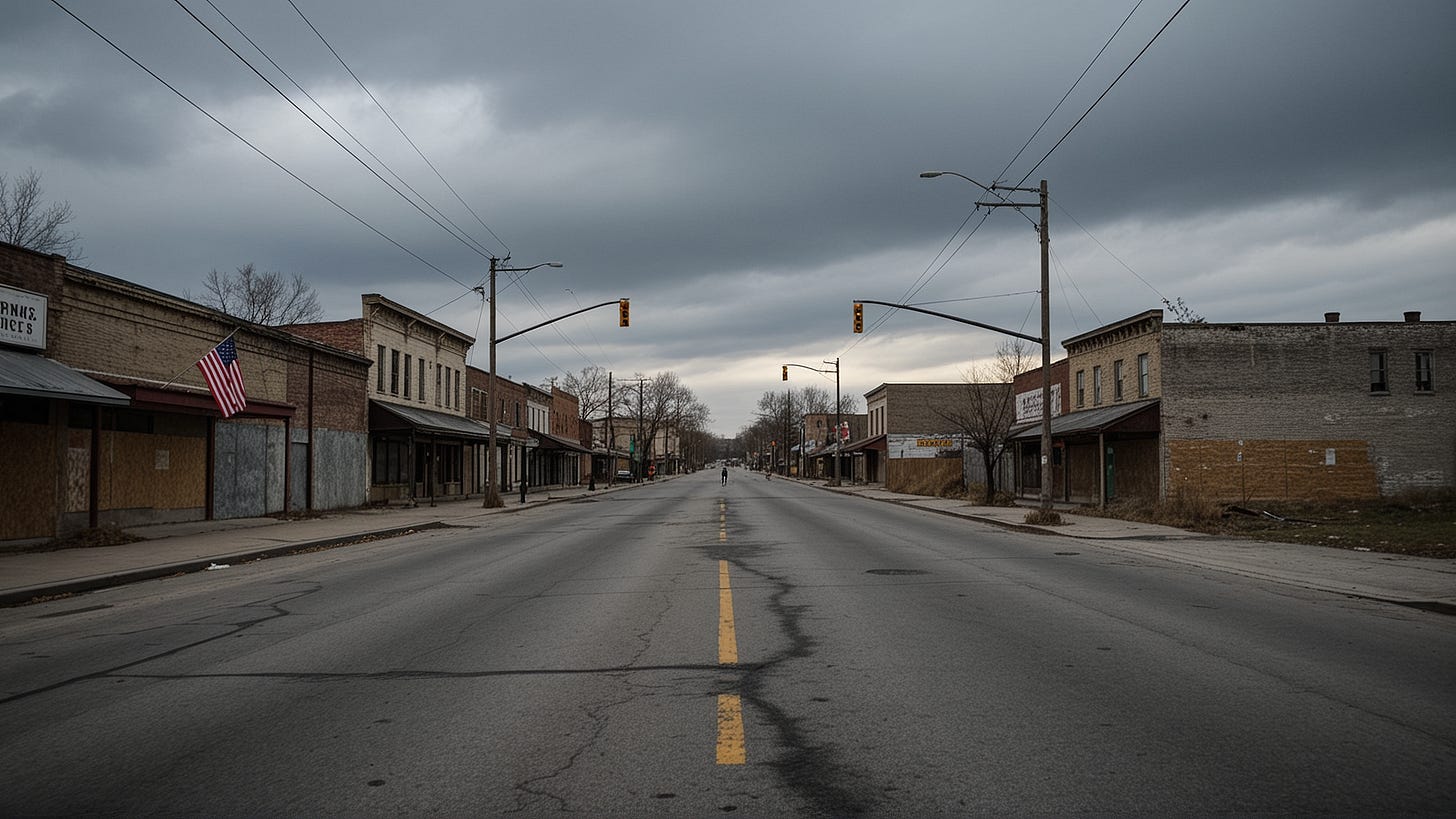
Between the moment a system begins to crack and the moment people realize something has broken beyond repair exists a window of delusion. You notice the signs but interpret them as temporary anomalies.
The supermarket shelves that sit empty for a day, two, then refill with different products, packaging you don’t recognize. The electricity bill that jumps from two hundred to four hundred dollars in one July. That news story about a California city running dry for three days, quickly replaced by a political scandal or a championship game. Collapse doesn’t scream. It whispers.
When we speak of the end of the world as we know it, we usually imagine spectacular explosions: nuclear bombs, killer pandemics, cyber attacks that extinguish the lights in an instant.
But history teaches us that civilizations more often die in whispers, through gradual erosion, through the accumulation of micro-failures that, on a certain morning, transform into catastrophic system failure.
The supply chain that has delivered your breakfast cereal every Tuesday for twenty years simply stops. The water treatment plant that has purified your tap water since 1967 shuts down because a replacement part that used to take three days to arrive is now back-ordered for eighteen months. The pension check that has arrived reliably for fifteen years bounces.
If—when—these systems begin to cascade into mutual failure, your coordinates will matter more than your preparations, more than your supplies, more than your intentions. Geography becomes destiny in ways that no amount of individual resilience can overcome.
The United States contains approximately 3.8 million square miles of territory, yet the majority of its population clusters in regions that share common vulnerabilities: dependence on distant supply chains, exposure to extreme weather events, limited local food production, and infrastructure maintained on budgets that have been deferred since the 1970s.
What follows examines five such regions where the convergence of these factors could create conditions that overwhelm individual and community capacity to adapt. The selection criteria include population density metrics, infrastructure fragility assessments, supply chain dependency ratios, and environmental risk factors.
However, the analysis also incorporates something less quantifiable: the quality of constraint. Some places trap their inhabitants through geography, others through economics, still others through the sheer inertia of accumulated human settlement that cannot be unwound quickly.
These are not prophecies. They are inventories of possibility, weighted by current data and expert projections. The scenarios described represent what could happen, what experts warn might happen, if the systems we take for granted begin to falter in earnest. The observations come from extensive travel through these regions, conversations with residents, engineers, emergency managers, and the growing number of people who sense that the ground is shifting beneath their feet.
So where does that leave us? Five places stand out—places where, if the wrong domino falls, getting out may be harder than anyone expects:
Northeastern Density: The Trap of Interdependence

Approximately fifty million Americans occupy the corridor stretching from Washington D.C. to Boston, packed into a settlement pattern that represents less than two percent of the nation’s landmass. Drive this route on an ordinary Tuesday and you will encounter something cartographers rarely emphasize: the absence of empty space.
One metropolitan area bleeds into the next with only the thinnest membrane of suburbia separating them. Baltimore becomes Philadelphia becomes Trenton becomes Newark becomes the Bronx, and somewhere around Stamford you realize that you have not seen uninterrupted horizon for hours.
This density creates a particular vulnerability that rural preppers rarely grasp. When the systems that feed this organism hiccup, the hiccup becomes strangulation. Consider the Port of New York and New Jersey, which processes roughly thirty-two percent of the East Coast’s container traffic.
In 2026, this facility operates on infrastructure that engineers have assessed as “functionally obsolete” at rates exceeding forty percent in some corridors. The phrase sounds technical, almost reassuring. What it means is that the roads, bridges, and rails were built for a different era—lighter trucks, less traffic, more forgiving maintenance schedules—and have been kept in service through patches and emergency repairs that accumulate technical debt.
A transportation planner I interviewed in New Haven explained the mathematics that keep her awake. The just-in-time delivery networks that keep supermarket shelves stocked now operate with margins so thin that a three-day delay triggers cascading shortages. “We used to have warehouses full of backup,” she noted, gesturing toward the stacked containers visible from her office window. “Now we have algorithms. Algorithms don’t eat, but they also don’t care if you do.”
One scenario that emergency management officials have modeled involves a moderate hurricane—Category 2 or 3—making landfall near Sandy Hook and tracking northward. Such storms have occurred historically and will occur again. The difference now lies in the margin of error.
Previous decades maintained redundancy that could absorb localized damage. Today, according to a 2025 report from the American Society of Civil Engineers, the Northeast’s infrastructure operates with minimal redundancy and maximal interdependence.
Damage to particular bridges, specific switching yards, certain pumping stations could propagate failure across networks that residents assume are separate but are in fact intimately connected.
The electrical grid presents similar fragility. The Northeast operates as an integrated system managed by regional transmission organizations. In theory, this allows power to flow from surplus areas to deficit areas.
In practice, according to power systems researchers, the grid has become increasingly brittle. The addition of renewable sources has introduced variability that aging infrastructure struggles to balance.
Transformers that step voltage up for transmission and down for distribution have average ages exceeding forty years. Replacement parts for some models are no longer manufactured and must be scavenged from decommissioned facilities or fabricated to order, extending outage durations from days to weeks.
If such an outage occurred during winter—and climate scientists suggest that extreme cold events may become more frequent as Arctic warming disrupts the jet stream—the consequences could exceed emergency response capacity.
During the 2024 cold snap affecting Buffalo and Rochester, approximately two hundred thousand residents lost power. Most were restored within seventy-two hours. But edge cases revealed systemic fragility: elderly residents in high-rise buildings unable to descend stairs to reach warming centers, individuals dependent on electrically powered medical equipment, apartment complexes where frozen pipes burst and rendered buildings uninhabitable even after power returned.
Multiply these edge cases across fifty million residents, and you begin to see why experts warn that sustained outage could trigger population movements overwhelming remaining infrastructure.
The highways serving as evacuation routes—primarily I-95 and tributaries—operate at capacity during normal traffic. During the 2021 evacuation ahead of Hurricane Ida, portions of I-95 experienced stationary traffic for fourteen hours. If such conditions persisted for days, with vehicles running out of fuel and occupants unable to reach shelter, humanitarian implications become severe.
Water infrastructure presents equally concerning vulnerabilities. New York City’s aqueduct system includes the Delaware Aqueduct, completed in 1944, which has been leaking approximately thirty-five million gallons daily since at least the 1990s.
Engineers have proposed a bypass tunnel, but construction has faced delays due to geological challenges and funding constraints.
If the original tunnel were to fail before bypass completion—a scenario that the city’s Department of Environmental Protection acknowledges as possible—the city would have approximately sixty to seventy-two hours of stored water before distribution would need rationing or suspension.
The social dimensions prove harder to model but equally important. The Northeast Corridor contains extreme wealth alongside concentrated poverty. Manhattan’s Upper East Side and the Bronx’s South Bronx exist within the same administrative boundaries but experience radically different service levels.
If municipal capacity degraded, social control would likely degrade unevenly, with private security and wealth concentration providing insulation for some while others faced increasing precarity. Historical precedents from other urban crises suggest that social order can deteriorate rapidly when expectations of response are violated.
Gun laws throughout this region vary but tend toward restriction. Connecticut, New York, New Jersey, Massachusetts, and Maryland maintain licensing requirements, magazine capacity limits, and assault weapon bans that would complicate armed self-defense for residents who had not navigated these requirements in advance.
If law enforcement capacity degraded alongside other systems, residents would face security dilemmas with constrained options.
For those considering relocation from this region, geography itself presents challenges. The Appalachian Mountains form a barrier to the west that funnels movement into limited corridors. The coastal plain to the east offers no escape from sea-level rise and storm surge. The corridor’s residents are committed to infrastructure that supports them, dependent on its continued functioning in ways that preclude easy exit.
California’s Agricultural Mirage: When the Water Stops

The view from the airplane window reveals the contradiction immediately. Descending into Los Angeles, you see brown mountains giving way to dense urbanization stretching to the horizon, a carpet of development that seems to deny the aridity beneath it.
Then you notice the emerald golf courses, the shimmering swimming pools, the imported vegetation requiring constant irrigation to maintain the illusion of garden climate. This civilization was built on the premise that water can be made to flow uphill, toward money, indefinitely.
Three weeks in the Central Valley during spring 2026 revealed the reality behind the mirage. Towns that coastal Californians never visit—Mendota, Firebaugh, Dos Palos—sit surrounded by some of the most productive agricultural land in the world.
Or rather, they used to. Unemployment rates in these towns exceed thirty percent, not because residents lack work ethic, but because the work has evaporated. Water allotments that made the region’s agriculture possible have been cut, then cut again, as the Colorado River entered its third decade of drought and Sierra Nevada snowpack declined to fractions of historical averages.
A third-generation farmer in Mendota showed photographs on his phone of his family’s former orchards. The almond trees had been removed in 2024, shredded and buried because no water existed to support them and no market for the wood.
The land now lies fallow, blowing dust that coats windows and lungs alike. “We used to feed the country,” he said, though the phrase seemed as much ritual as statement of fact. Now the region imports food from Mexico and Central America, the irony apparently lost on policymakers who spent decades restricting the immigration that made the agricultural economy possible.
The Central Valley produces approximately one-third of the nation’s vegetables and two-thirds of its fruits and nuts. This output has been made possible by the largest water engineering project in human history—dams, aqueducts, and pumps that move water from the wet north to the dry south, from the Colorado River eastward across desert, from underground aquifers being pumped faster than natural recharge can replace.
Aquifer depletion has caused land subsidence—the ground literally sinking—as voids left by extracted water collapse. In some areas, land has dropped more than two feet in a single year. This subsidence damages the very infrastructure—canals, roads, pipelines—that makes water movement possible, creating feedback loops of degradation.
If water deliveries were significantly disrupted—and multiple scenarios could produce such disruption, from earthquake damage to aqueducts to political conflict over Colorado River allocations to electrical grid failures disabling pumps—the agricultural economy would collapse within a single growing season.
The implications extend far beyond the Central Valley. The nation’s food system has become concentrated to a degree unrecognizable to previous generations. Four companies control approximately eighty percent of beef processing. Three companies dominate grain exports. The lettuce appearing in Maine in January comes from this valley, transported by logistics assuming continuous fuel availability and functioning refrigeration.
Los Angeles and San Diego present different but related vulnerabilities. These cities exist in permanent water deficit, maintained only by imports traveling hundreds of miles. The Metropolitan Water District of Southern California has warned that if imports from the Colorado River and Sacramento-San Joaquin Delta were simultaneously reduced—a scenario climate models suggest becomes more likely as warming progresses—the region would face shortages that local supplies and conservation cannot address.
Desalination plants have been proposed and partially constructed, but these facilities require enormous energy inputs and cannot scale quickly enough to replace lost imports.
The wildfire situation has evolved beyond catastrophic into chronic. The 2025 fire season burned approximately 4.5 million acres in California alone, and smoke from these events created air quality hazards extending across state lines.
Insurance companies have begun withdrawing from high-risk areas, making homeownership impossible without state-backed coverage that may itself prove unsustainable.
If a fire season coincided with water shortages and grid instability—if, for example, a major transmission line were disabled by fire, cutting power to pumping stations that could not be restored because of ongoing fire danger—the confluence could overwhelm emergency response capacity.
The San Andreas fault system presents seismic risks extensively studied and inadequately addressed. The USGS estimates approximately seventy percent probability of a magnitude 6.7 or greater earthquake in the San Francisco Bay Area before 2045, with similar probabilities for Southern California.
Such an event would damage not merely buildings but the infrastructure making urban life possible. Aqueducts crossing the fault zone would likely rupture. Ports handling forty percent of the nation’s imports would face liquefaction damage. Buildings constructed before modern seismic codes—numbering in the hundreds of thousands—would experience failure rates rendering hundreds of thousands homeless simultaneously.
Social fabric has been strained by housing costs that have driven the middle class inland or out of state entirely. Coastal cities have become increasingly bifurcated, with technology wealth concentrated in specific neighborhoods and poverty spreading in others.
The homeless population in Los Angeles County exceeded seventy-five thousand in the 2025 count, many living in encampments that have become semi-permanent settlements. If municipal services degraded, these populations would face immediate survival crises, and geographic constraints of the coastal plain would limit options for dispersal.
Gun laws in California are among the most restrictive in the nation, with assault weapon bans, magazine capacity limits, and waiting periods complicating armed self-defense for residents who had not navigated these requirements in advance. If law enforcement were overwhelmed by crisis conditions, residents would face security challenges with constrained options.
For those considering exit from this region, geography presents the barrier of the Sierra Nevada to the east and the Mojave Desert to the southeast. Routes out—Interstate 5 northward, Interstate 15 eastward—would likely become congested quickly in any mass movement scenario. The assumption that one can simply drive to safety may not hold when millions attempt the same journey simultaneously.
Florida’s Sinking Peninsula: The Physics of Water and Salt

The real estate listing described the property as “waterfront” without specifying that water now laps at the foundation during high tides. This particular house in Miami Beach’s Sunset Harbour neighborhood had begun flooding on sunny days with increasing regularity.
The asking price was $2.3 million, down from $3.1 million two years prior, though the seller’s agent preferred emphasizing “opportunity” rather than trend. The garage had been converted to living space after flooding made parking impossible, and the ground floor sat empty, tiled and waterproofed against the inevitable.
Florida’s vulnerability begins with geology. The peninsula sits atop porous limestone, karst topography resembling Swiss cheese more than solid rock.
This porosity means sea level rise does not simply advance across land like a wave; it percolates upward through bedrock, contaminating freshwater aquifers from below.
The Biscayne Aquifer, providing drinking water to approximately six million South Florida residents, has experienced saltwater intrusion as far as fifteen miles inland in some areas. The boundary between fresh and salt water moves inland at rates varying with rainfall and pumping, but the trend is unambiguous.
A hydrogeologist at the University of Miami explained that standard responses to saltwater intrusion—building desalination plants—face insurmountable energy constraints. Reverse osmosis requires approximately ten megawatt-hours per million gallons produced. At scale, this would require power generation capacity that does not exist and cannot be built quickly enough to address accelerating intrusion.
“We are not facing a technological problem,” she noted. “We are facing a thermodynamic problem. The energy required to maintain this population in this location exceeds available supply.”
Hurricane risk is well understood but inadequately prepared for. The 2024 season demonstrated that even moderate storms can produce cascading failures when intersecting with aging infrastructure. Hurricane Helene, a Category 4 storm, caused approximately $85 billion in damage and left portions of the state without power for weeks.
The 2026 hurricane season, according to NOAA’s forecast, is expected to be “extremely active,” with eight to ten major hurricanes predicted. Warm water temperatures in the Gulf of Mexico and Atlantic—reaching ninety degrees Fahrenheit in some measurements—provide fuel for storms that could exceed historical intensity records.
If a major hurricane made direct landfall on Miami or Tampa, storm surge could reach heights overwhelming existing seawalls and surge barriers. Evacuation routes—primarily Interstate 75 north and Interstate 95 north—would face immediate congestion.
Unlike other regions, Florida’s peninsula geography offers no lateral escape. Residents cannot drive west to avoid a storm approaching from the east; the peninsula is only a few hundred miles wide at its broadest point. The Keys are connected by a single highway that becomes impassable with moderate surge, trapping residents who did not evacuate early.
The insurance market has already begun retreating from Florida. Most major carriers have stopped writing new policies in Miami-Dade, Broward, and Palm Beach counties.
State-backed Citizens Property Insurance has become the insurer of last resort for hundreds of thousands of properties, creating risk concentration that could bankrupt the state if a major storm season occurs. If the insurance market collapsed entirely, property values would plummet, destroying wealth residents have accumulated and potentially triggering financial crisis extending beyond the state.
Heat and humidity create dangers often underestimated by those who have not experienced them without air conditioning.
Wet-bulb temperature—a measure combining heat and humidity to indicate the body’s ability to cool through sweating—has approached dangerous thresholds in South Florida during recent summers. If the electrical grid failed during a heat wave, elderly and vulnerable populations would face immediate health risks.
The 1995 Chicago heat wave killed approximately seven hundred people; Florida’s larger vulnerable population and higher baseline temperatures suggest that a similar event could produce casualties in the thousands.
Social dynamics include a large elderly population that retired to the state for climate and tax advantages. This population is particularly vulnerable to service disruptions, dependent on electricity for medical equipment, air conditioning, and mobility.
Gun laws are relatively permissive compared to the Northeast, but concentration of population in coastal areas would complicate any attempt at self-sufficiency through hunting or fishing, as game populations would be quickly exhausted by millions attempting to subsist.
For those considering exit from Florida, geography presents barriers of the Gulf of Mexico to the west and Atlantic to the east. Evacuation must occur northward, through Georgia and Alabama, which would face their own challenges absorbing millions of refugees. The assumption that one can wait for FEMA to arrive may not hold when disaster affects the entire peninsula simultaneously.
The Desert Southwest: Phoenix and the Thermodynamic Ceiling

The swimming pool had evaporated to a greenish puddle at the deep end, surrounded by cracked concrete suggesting abandonment rather than disuse.
This particular house in a Phoenix suburb had seen foreclosure rates spike in 2025 and continue climbing through 2026. The “For Sale” sign had bleached in the sun, the phone number faded to illegibility. The realtor had stopped returning calls months ago. The house represented a bet on permanent abundance that had been lost.
Phoenix exists in violation of thermodynamic common sense. The metropolitan area has grown from approximately 100,000 residents in 1950 to nearly five million today, all living in a valley receiving less than eight inches of rainfall annually and experiencing summer temperatures reaching 120 degrees Fahrenheit.
This existence has been made possible by the Central Arizona Project, a 336-mile canal system pumping Colorado River water uphill across desert, and by air conditioning systems consuming electricity generated primarily by plants requiring water for cooling.
Lake Mead, the reservoir storing water for the Lower Colorado River Basin, reached “dead pool” status in May 2026. This term does not mean the lake is empty; it means the water level has dropped below intake valves feeding the Las Vegas Valley and Central Arizona Project.
The Southern Nevada Water Authority has been extending “straws” deeper into the reservoir, but they are now approaching bedrock. When water can no longer be pumped—and this could occur within years if current trends continue—cities of the desert Southwest will face a reckoning that no technology can postpone.
A week in Phoenix in July 2026 revealed the reality behind the air conditioning. Staying in a motel where cooling functioned only intermittently, when it failed the room temperature rose to 95 degrees within an hour.
Outside, pavement radiated heat making walking impossible after 9 AM. The heat was not merely uncomfortable; it was hostile, an active force pressing against skin, making breathing laborious, transforming every task into an ordeal of endurance. And this was with a functioning grid. When power fails in Phoenix—and it does, with increasing frequency as demand outstrips capacity—the city becomes lethal within hours.
You might be living in one of America’s deathzones and not have a clue about it
What if that were you? What would YOU do?

The human body cannot survive temperatures above approximately 95 degrees Fahrenheit for extended periods without cooling mechanisms.
In dry heat, evaporation provides cooling as long as water is available to replace sweat. Phoenix combines dry heat with extreme intensity, creating conditions where shade provides only partial relief. The elderly, the very young, and those with cardiovascular conditions face immediate risk. Hospitals fill with heatstroke victims. Morgues require additional refrigeration capacity.
Water situation compounds thermal danger. Phoenix has approximately three days of water in local reservoirs if Colorado River imports cease.
Groundwater has been pumped so aggressively that land is subsiding, cracking infrastructure carrying water and power. When taps run dry, there is no alternative source. The desert offers no streams to drink from, no springs to tap. Water that exists is deep underground, requiring energy to pump that will not exist when the grid fails.
Evacuation routes from Phoenix lead through desert that kills the unprepared. I-10 east toward Tucson, I-17 north toward Flagstaff, US-60 toward Globe—all pass through terrain where a broken-down vehicle becomes a death sentence in summer. When collapse comes, and fuel deliveries stop, and vehicles break down, roads out of Phoenix will become dotted with the stranded and the dead. The desert does not forgive miscalculation.
Social fabric has been strained by housing boom and bust cycles, by influx of retirees seeking affordable living, by concentration of poverty in areas with least tree cover and highest heat exposure. Gun laws are relatively permissive, but the environment itself provides the most severe constraints. One cannot hunt what does not exist; desert game populations are sparse and would be quickly exhausted by residents attempting to subsist.
For those considering exit from this region, timing presents the crucial variable. Leaving in October, when temperatures moderate, is feasible. Leaving in July, when heat makes outdoor exposure lethal within hours, may be impossible. The desert creates a window of opportunity that closes with the rising sun.
The Industrial Midwest: When the Pensions Run Dry

Snow fell on streets where streetlights had not worked for months, transforming the urban landscape into something resembling a nineteenth-century lithograph rather than a twenty-first-century city.
Walking through this South Side Chicago neighborhood in February 2026 revealed vacant lots stretching for blocks, former residential areas now returned to prairie, buildings demolished for code violations and never replaced. Remaining structures were fortresses, barred and boarded, occupants huddled against cold seeping through walls no matter how high thermostats were set.
Chicago’s crisis is financial before environmental, though environment compounds difficulties. The state of Illinois owes approximately $140 billion to retired public workers and has roughly $25 billion in assets to cover these obligations.
The city of Chicago owes another $47 billion. In 2026, the Illinois Supreme Court ruled that pension benefits cannot be reduced constitutionally, effectively guaranteeing municipal bankruptcy within two years. When Chicago declares bankruptcy—and most municipal finance experts agree this is inevitable—it will become the largest municipal failure in American history.
Implications extend beyond abstract realms of bond ratings and credit defaults. Police and fire departments will face cuts rendering them unable to respond to routine emergencies, let alone systemic shocks.
Snow removal keeping streets passable in winter will become unreliable. Water infrastructure, already ancient and leaking, will face deferred maintenance accelerating failure. Schools, already struggling, will close or operate on reduced schedules. Social services maintaining safety nets for vulnerable populations will fray.
A firefighter with twenty-three years of service described equipment shortages already beginning: engines that cannot be repaired because parts are no longer manufactured, protective gear exceeding rated lifespan, training curtailed for budgetary reasons.
“We are one bad fire away from catastrophe,” he said, immediately qualifying: “Actually, the disaster is already here. People just don’t see it yet.”
Winter weather of the Midwest presents dangers coastal residents often underestimate. The polar vortex collapse of February 2026 brought temperatures of minus thirty-two degrees Fahrenheit to Chicago, with wind chills of minus sixty-five.
The electrical grid failed for eighteen hours in some areas. Two hundred forty-seven people froze to death in their homes, most elderly, many discovered only when neighbors noticed mail accumulating. This event was not an anomaly. Climate models suggest Arctic warming may destabilize the jet stream, causing more frequent intrusions of polar air into mid-latitude regions.
If such cold events coincided with infrastructure failures—if natural gas pipelines supplying heating fuel failed, or the electrical grid collapsed under demand—death tolls could reach thousands.
Emergency warming centers have capacity for thousands, not tens of thousands. Hotels that might serve as backup require functioning infrastructure and payment mechanisms. Social networks allowing neighbors to shelter each other have been attenuated by decades of population loss and neighborhood abandonment.
Detroit presents an even starker vision of municipal failure. The city has lost approximately sixty percent of its population since 1970, leaving a sprawling urban area with infrastructure sized for nearly two million residents serving fewer than seven hundred thousand.
The water department has shut off service to entire neighborhoods where maintenance costs exceeded revenue from ratepayers. Streetlights do not function in many areas. Police response time in some districts exceeds an hour.
When collapse accelerates, Detroit will not have a riot problem; it will have a “feral city” problem, where entire districts operate under autonomous control and remaining infrastructure is stripped for scrap by organized crews.
The Great Lakes, which seem like advantages, have become liabilities. PFAS “forever chemicals” have rendered most fish inedible, and algae blooms in Lake Erie now cover approximately forty percent of the lake’s surface annually.
The “fresh water” advantage is illusory when filtration technology requires energy and replacement parts that will not exist after supply chains break. Water is present but poisoned, accessible but undrinkable without treatment infrastructure that may not survive systemic shock.
Gun laws in Illinois are restrictive compared to national averages, with licensing requirements and waiting periods complicating armed self-defense for residents who had not navigated these requirements in advance.
Social dynamics include deep segregation, concentrated poverty, and history of industrial abandonment leaving many residents with skills mismatched to available economy.
For those considering exit from this region, geography presents the barrier of winter. Leaving in January requires functioning vehicles, clear roads, and destinations with heating capacity.
The assumption that one can simply drive south ignores the reality that millions may attempt the same journey simultaneously, overwhelming infrastructure of receiving regions.
The Geography of Survival
The five regions examined share characteristics making them particularly vulnerable to systemic collapse: high population density, infrastructure dependency, environmental stress, and limited exit options. They are not the only vulnerable regions in the United States, but they represent concentrations of risk exceeding national averages by significant margins.
For those finding themselves in these regions, questions become ones of timing and preparation. Relocation is optimal strategy, but it requires resources, flexibility, and willingness to abandon social networks and economic opportunities that may have taken decades to build.
For those who cannot relocate, preparation takes form of redundancy: water storage, food reserves, alternative heating or cooling, communication plans, and community networks providing mutual aid when formal systems fail.
But beyond the practicalities of preparation lies a deeper recognition that we have built our civilization on assumptions of permanence that geology and physics do not guarantee.
The Northeast Corridor assumes that water can be moved hundreds of miles indefinitely. California assumes that desert can be made to bloom through engineering will. Florida assumes that the ocean can be held back by pumps and walls. Phoenix assumes that heat can be air-conditioned into submission. The Industrial Midwest assumes that pension promises can be kept through financial alchemy.
These assumptions have persisted because, for decades, they have worked well enough. The water has flowed, the crops have grown, the cities have functioned, the checks have cleared.
But systems operating at the edge of their capacity have no margin for disruption. They are, in the terminology of engineers, “brittle”—strong under normal conditions but prone to catastrophic failure when stressed beyond design parameters.
What the next decade may bring is unclear. Perhaps the infrastructure investments that have been promised for generations will finally materialize.
Perhaps the climate models are too pessimistic, and the jet stream will stabilize, and the rains will return, and the aquifers will recharge. Perhaps the financial wizards will discover some mechanism for making the mathematics of pension obligations work. Perhaps.
But perhaps not. And if the systems do begin to cascade into mutual failure—if the water stops flowing, and the power goes dark, and the trucks no longer arrive, and the temperature does things that human bodies cannot survive—then your location will determine whether you are among those who adapt or among those who become statistics in a catastrophe that future historians will struggle to explain.
The choice, for now, remains yours. The window, according to those who watch these systems most carefully, may be narrower than we wish to believe. The ground is shifting. The question is whether we will feel it in time to move our feet.
The Mathematical Warning That Refused to Fade
When the shelves empty and the streets change, stockpiles may not be enough!!!
(What you’re about to see reveals just how quickly the world we know can unravel.)

Affiliate Disclosure: This post contains affiliate links. If you make a purchase through these links, I may earn a small commission at no additional cost to you. Thank you for your support!
Follow for more market & economic analysis:
📌 Pinterest — Charts, market insights & economic analysis.
📰 Flipboard — Follow my curated market & macro coverage.


California has passed AB 2047, the California Firearm Printing Prevention Act, and the bill is now on Governor Gavin Newsom’s desk.
The measure, authored by Assembly Member Rebecca Bauer-Kahan, would eventually require consumer 3D printers sold or transferred in the state to include “firearm blocking technology” intended to identify and stop print jobs for firearms and certain illegal parts, including machine-gun conversion devices. After weeks of amendments, the Legislature sent the enrolled bill to the governor in the closing hours of the 2026 session. Newsom has until the end of September to sign or veto it.
The version that reached his desk is far narrower than the bill that first cleared the Assembly in May. The Senate stripped several of the most aggressive enforcement tools after lawmakers and industry groups argued they were technologically infeasible or overbroad. Gone are the original criminal misdemeanor for disabling the software, the $25,000-per-violation civil penalties, the mandatory manufacturer self-attestation process, and a public roster of “compliant” models.
The final text keeps an exemption for printers used exclusively to make entertainment-industry props and lets the California Department of Justice create additional exceptions by regulation. It also shields people who share digital firearm files solely to test or develop blocking software.
What remains is a delayed, contingent mandate. Beginning no later than July 1, 2027, the DOJ must check quarterly whether ASTM International has published industry standards for firearm-blocking technology on 3D printers. If ASTM issues qualifying standards, the department then has 24 months to publish its own written guidance or regulations describing minimum performance requirements. One year after those state standards appear, it would become unlawful to sell, offer for sale, or transfer a 3D printer in California that lacks compliant blocking technology. If ASTM has not published standards by July 1, 2029, the department is relieved of further duties under the act, and the sales restriction may never take effect.
The bill does not operate in a vacuum. California already prohibits unlicensed people from using a 3D printer or CNC mill to manufacture a firearm under Penal Code § 29185. Separate statutes restrict machines whose “sole or primary function” is to make guns and create civil liability for distributing “digital firearm manufacturing code” to unlicensed persons. AB 1263 and related 2025–26 measures further expanded definitions of firearm manufacturing machines and accessories effective January 1, 2026. AB 2047 tries to move one step upstream by making the printer itself refuse certain files.
California is not the first state down this path. New York enacted a similar blocking-technology law earlier this year. Sacramento modeled AB 2047 on that approach, then made the California version more conditional after the Senate rewrite.
Critics say the concept still fails on both technology and law. 3D-printing companies, the ACLU of California, Hollywood prop shops, the Electronic Frontier Foundation, and gun-rights groups argue that detection algorithms are easy to evade with slightly modified files, offline machines, older printers already in circulation, or out-of-state purchases. They also raise First Amendment concerns about treating design files as something the state can force hardware makers to censor, and they warn that unreliable software would burden schools, small businesses, and hobbyists. Several analyses noted that the Senate rewrite left the actual sales ban hanging on a private standards body that may never act.
Supporters, including Everytown for Gun Safety and the bill’s author, frame AB 2047 as a response to recovered 3D-printed guns and unfinished frames. They describe it as a way to cut off a pipeline for untraceable weapons before a file becomes a firearm.
Even if Newsom signs the bill, nothing changes at the store counter tomorrow. The mandate is years away, if it arrives at all. The practical fight now is whether ASTM writes a standard the state can adopt—and whether software that must inspect every print job can ever work well enough to survive both evasion and a courtroom.

Don’t let the image fool you — D bars were positively ghastly.
Back when dinosaurs roamed the plains and I flew Army helicopters for Uncle Sam, I was afforded the opportunity to attend the U.S. Air Force Arctic Survival School. The colloquial name was “Cool School.” That sounded pretty awesome. As the big day approached, I actually looked forward to the experience. It seems I was an idiot.
Hard Reality
I discovered later that Cool School was informally called the Air Force Food Appreciation Course. Not only did the average temperature hover around 30 below zero, but there also wasn’t much to eat. The mission was to simulate what it might be like to be a stranded military aviator in the frozen Arctic wastes. We were given the contents of an ejection seat survival kit and a single MRE to last the duration of the course.
After a couple of days, that MRE was but a vague memory. I consumed absolutely everything in that tan plastic pouch. I also ate a boiled rabbit. That was about as awesome as it sounds.
The survival kit included these weird compressed food bars. I would liken them to finely-ground sawdust mixed with a little sugar and pressed into a rock-hard, brick-like cube. It took a little effort to gnaw off the edges. At the end of the exercise, I had licked the cocoa beverage powder and instant coffee clean from my MRE, but I still had two and a half of my three survival food bars intact. Those things were ghastly.
That was most likely by design. If they tasted like Toblerone, you’d be tempted to gobble them up right sharpish. As it was, the consistency and flavor meant you tended to make them last. It turns out there was a WWII-vintage precedent.

The thought of having to survive on a D bar kept troops on full alert.
An Army Marches on Its Stomach
We are all rightfully enamored with the guns, planes, tanks, and ships, but it is really the mundane stuff like food and warm clothing that really drive a combat unit’s success in the field.
U.S. Marine Corps General Robert H. Barrow once famously opined that, “Amateurs study tactics; professionals study logistics.” As such, in 1937, the United States Army approached the Hershey’s Chocolate Company with a most curious request.
Pearl Harbor caught the U.S. military acutely unawares, but there were still plenty of folks who could sense that war was coming. As a result, they began reaching out to American industry to modernize weapons and support gear in anticipation of fielding massive expeditionary armies overseas. As part of that, Uncle Sam needed a new government chocolate bar. However, they wanted it to taste, in the words of the Army Quartermaster, “Only a little better than a boiled potato.”

Before these old heroes could be this awesome, they had to be fed. Public domain.
Origin Story
Hershey’s chief chemist Sam Hinkle and Captain Paul Logan of the U.S. Army Quartermaster General’s office established four criteria for what would eventually become the Field Ration D bar. It had to be energy-dense and weigh no more than four ounces. It had to withstand high temperatures without melting. It also needed to taste bad.
The logic was sound. Like those nasty compressed survival bars in Cool School, if the emergency ration chocolate was tasty, troops would consume it recreationally. They needed to save this thing for actual emergencies. The solution was to make it taste awful.
For starters, the Hershey research team dramatically reduced the sugar. Then they increased the chocolate liquor to make it bitter. After that came oat flour to create a dense, dry texture with a killer aftertaste.
The original concoction was so thick it could not be poured into a mold. Every single bar had to be manually pressed in place. The factory workers at Hershey’s reportedly despised making them. However, the resulting compact bar offered 600 calories in a 4-ounce chunk. Troops claimed it was all but impossible to get into the thing without a knife.
Of course it came with instructions. Troops were supposed to eat the quarter-pound bar slowly over the course of half an hour or dissolve it in water to make a drink. Either way, getting a whole D bar down was a gut check.
Practicalities
The Army ordered the first 90,000-bar lot in 1937 for field testing. Troops predictably despised them, but that was the point. By 1941 Hershey’s was producing D rations at scale. By war’s end, Hersey’s had produced more than three billion of the horrible things.
Troops in theater nicknamed the D bar Germany’s secret weapon. This was partly because of their deleterious effect on the human gut. Additionally, hungry civilians who got the D bars in trade often thought them inedible.
In 1943, Hershey produced a specific version of the D ration for the Pacific Theater called the Tropical Chocolate Bar. This awful comestible was designed to withstand temperatures of up to 120 degrees Fahrenheit without melting. It intentionally tasted slightly better than the standard D ration, but troops nonetheless nicknamed the Tropical Chocolate Bar the “Dysentery Bar.”
Performance
D ration bars were standard issue in aircrew survival kits. In 1943, Army Air Corps Lieutenant Louis Zamperini, the Olympic distance runner featured in Laura Hillenbrand’s 2010 book Unbroken, survived 47 days adrift in a life raft in the Pacific Ocean after his B24 Liberator crashed. He survived in part thanks to the D bars he had on board.
Hershey eventually earned five Army-Navy Excellence in Production awards. Before WWII, chocolate was considered a luxury in post-Depression American society. When the 16 million GIs who deployed to fight WWII returned home, they were all addicted to the stuff.
This seismic shift in American culinary tastes drove the explosion of products like candy bars and Coca-Cola in the 1950s. That’s one of several reasons Americans are so blasted fat today.

I do love me some M&M’s. They resulted from WWII-era research into shelf stable chocolate.
Spin-Off Tech
Not all military chocolate was supposed to be nasty. The confections intended for standard rations needed to be as tasty as possible. This was the stuff American GIs handed out to starving kids in liberated war zones.
When Forest Mars needed a snack that could survive high temperatures in transit, he took little gobbets of chocolate and coated them in hard candy. The result was M&M’s. Mr. Mars secured an exclusive military contract, and M&M’s went to war before they were sold to the general public. GIs came home rabid for the things.
A surprising lot of the modern candy offerings tempting you at the Walmart checkout had their genesis during World War II. Environmental stability and the necessity for maximum caloric density often drove that train. In the case of the ghastly D bar, however, it was also engineered to be gross.
Fresno mulls letting prosecutors carry concealed firearms after stabbing rocks California
Fresno County officials are pushing to let prosecutors carry concealed firearms after a shocking daylight stabbing of a senior deputy district attorney last week.
Supervisor Garry Bredefeld is working with Sheriff John Zanoni and DA Lisa Smittcamp on an ordinance allowing them to be armed on county property, according to Your Central Valley.


The proposal is expected to go before the Fresno County Board of Supervisors in the coming weeks.
“All of our law enforcement — whether they’re prosecutors, the sheriffs or the police officers — get up and work to make this community safe,” Bredefeld said. “The least we can do is make sure they have the means to protect themselves.”
The push comes after a senior deputy district attorney was stabbed three times in the back Thursday while outside Courthouse Park in Downtown Fresno.
Smittcamp questioned the county’s current restrictions Friday, noting that she is prohibited from carrying a firearm on county property despite her position.


“I am the chief law enforcement official in the county of Fresno … if I want to carry a weapon on county property I can’t under a current ordinance,” Smittcamp said. “Kind of ridiculous … people like Mr. Crawford are empowered by the weakness of the criminal justice system.”
Supervisors Nathan Magsig and Luis Chavez also backed the proposed change, according to the outlet, with Chavez calling it “long overdue.”

“I know for a fact that prosecutors have received death threats,” Chavez said. “We need to start recognizing our prosecutors as part of our public safety family.”
Magsig said the change would require the county to work with state officials. Bredefeld said he was not optimistic the attack would change lawmakers’ attitudes in Sacramento.

Dustin Crawford, 42, allegedly approached the prosecutor and others while they were outside Courthouse Park shooting a campaign commercial.
Crawford allegedly recognized the group before singling out the prosecutor and stabbing him three times in the back.

by Lee Williams
Saturday was supposed to be a big sales day for Lock N’ Load Firearms, which is located in Southington, Connecticut. The gun shop has two major sales each year, and Saturday was its “Customer Appreciation Day.” The store spent a lot on advertising the event and on party goods. Several vendors came out for the sale.
The fun ended around 11:40 a.m., when the state’s computer system went down, and it stayed down throughout most of the day.
Josh, who works at the gun shop, estimates they lost thousands of dollars.
“Guns aren’t $200 or $300 anymore. They cost $600 or $800,” he said. “To set up an event like that, all the advertising, and then to not be able to sell firearms definitely hurt us. But here, it happens all of the time.”
The State of Connecticut does not allow gun dealers to run their own NICS computer checks. It insists on running the checks for them, as well as a half-dozen other state checks.
Josh said the state’s computer shutdowns are becoming far too common.
“I don’t know how to hold the state accountable,” he said. “I hate to think that a lawsuit is the answer, but that’s where we are at. We can’t flip the state reps and senators to get more fair representation at the state capitol.”
Matt, who works at The Gun Store in Waterbury, Connecticut, said the state’s computer shutdowns have become “random but consistent.”
“You can expect to go down every couple of days,” Matt said. “It’s more than I’ve ever experience in the past 20 years. I’m not saying that the State of Connecticut is intentionally doing it, but it’s been consistent enough lately.
If only they used NICS and circumvented all the other six or seven checks they use. The problem is that the state legislature added all these checks. It’s created massive amounts of confusion.”
Common names, he said, like “John Smith” have become a serious issue for the state’s computer systems, which lack the clarity of a NICS Unique Personal Identification Number or UPIN, which gun owners can apply for.
“If they have a NICS UPIN, you find out quickly that it’s not the ‘John Smith’ wanted for murder in Idaho,” he said.
At Central Connecticut Arms in Portland, Connecticut, staffer Ronnie said the shop lost thousands of dollars.
“We couldn’t sell any firearms. It was not a very good day,” he said. “Some customers put their purchases on layaway, which helped.”
The state had another major shutdown just a few weeks ago, Ronnie said.
“We were down for three days. They don’t explain when it’s going to be back up,” he said. “We just sit around here hoping it will be back up soon. It’s a major pain in the ass, man.”

Holly Sullivan is president of the Connecticut Citizens Defense League and serves on the board of the Citizens Committee for the Right to Keep and Bear Arms.
She said there is growing speculation on whether the shutdown was an effort to prevent state residents from purchasing firearms.
“Unlike other states, FFLs are not allowed to use the NICS system themselves. The State of Connecticut acts as a middleman between the FFLs and the NICS system,” she said.
“The state does NICS and state-level checks. Usually, if there’s an IT issue, every FFL gets an email. None were sent on Saturday. This ‘breakdown’ was unusual. Generally, the state will say it’s an IT issue, but they didn’t do that this time.”
Hundreds of Connecticut gun shops were affected, she said.
“This is a symptom of a much larger problem,” she said. “The state wants to control us, but they’re not adequately doing their job. They don’t trust FFLs to do their job. People are denied their Constitutional rights. Let’s say if someone works offshore, it could be months before they get this opportunity again. And besides, Saturday at noon is prime time to buy guns!”
The state has an extreme anti-gun history, Sullivan explained.
“Attorney General William Tong—his hobby is being anti-gun,” she said. “Every legislative session, every anti-gun bill was proposed by Tong. And then he’d bring in his Mom’s Demand action crew. It’s an ongoing problem. Dealers lost a lot of money.”
Neither Connecticut Attorney General Tong nor Connecticut Department of Emergency Services and Public Protection commissioner Ronnell A. Higgins, whose office is responsible for conducting the background checks, returned calls seeking their comments for this story.
The Second Amendment Foundation’s Investigative Journalism Project wouldn’t be possible without you. Click here to make a tax-deductible donation to support pro-gun stories like this.