Categories
All About Guns EVIL MF Grumpy's hall of Shame Gun Info for Rookies Paint me surprised by this that’s too bad” You have to be kidding, right!?!

West Virginia Senate President Kills Machine Gun Bill by John Crump

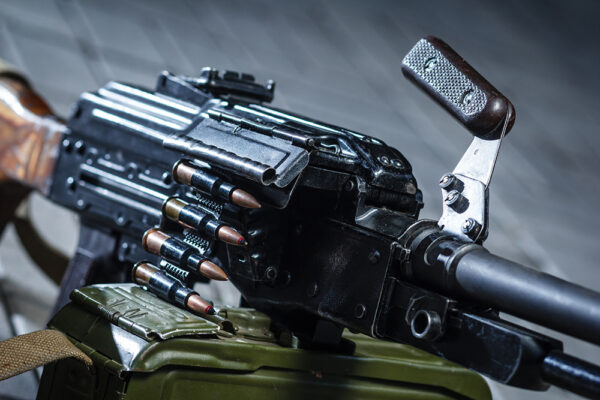
PKM Machine Gun
West Virginia Senate President Kills Machine Gun Bill, iStock-525735226

In a move that has triggered debate among gun rights advocates and lawmakers, West Virginia Senate Bill 1071, commonly referred to as the “Machine Gun Bill,” will not proceed in the current legislative session. Senate President Randy Smith (R-Preston) announced his decision to block the bill, citing what he calls significant legal and drafting issues rather than any opposition to Second Amendment rights.

The bill, introduced late in the session, aimed to expand access to fully automatic machine guns for eligible West Virginia residents.

Specifically, it advocated creating the Office of Public Defense within the West Virginia State Police, which would oversee the purchase, sale, and distribution of machine guns to individuals for state defense purposes. Supporters contend the bill aligns with Second Amendment protections, bolsters personal and community security, while complying with federal background check requirements.

SB 1071 initially cleared the Senate Judiciary Committee on Monday, March 2, following a contentious meeting that ended in confusion.

Committee Chairman Tom Willis called for a recess, and after discussions, the bill appeared to advance with strong support.

However, it never reached the full Senate floor or the Finance Committee, stalling ahead of the crossover day deadline on Wednesday, March 4, the point by which bills must pass their originating chamber to remain viable.

Smith explained his rationale in statements released today, describing the legislation as “poorly drafted” and submitted on the final day for Senate bills.

He consulted with multiple attorneys, members of West Virginia’s National Rifle Association, and the West Virginia Citizens Defense League (WVCDL), all of whom reportedly advised that the bill would likely fail in the House of Delegates and invite court challenges. “This bill, as it was submitted to us, would be unable to pass the House of Delegates and would face numerous judicial challenges to its implementation upon passage,” Smith stated.

Speaking to multiple senators, WVCDL lobbyist Art Thomm implied that the NRA does not support the bill.

Ammoland News spoke to NRA-ILA President John Commerford, who denied that the NRA had anything to do with killing the bill.

In fact, Commerford stated that the NRA is looking forward to working with the sponsor of the bill to improve it for next year.

Mr. Commerford also confirmed to AmmoLand News that Thomm does not work for the NRA and hasn’t worked for the gun rights organizations for a few years.

The NRA has a new West Virginia State Director starting Monday. The lawmakers AmmoLand News spoke to said they believed the NRA was opposed to the bill’s passage.

Critics of the decision, including bill sponsor Sen. Chris Rose (R-Monongalia) and Sen. Laura Chapman (R-Ohio), voiced frustration over the lack of transparency.

Rose noted that reviving the bill would require suspending constitutional rules and obtaining a two-thirds majority, a hurdle he deemed unlikely at this stage. “Traditionally speaking, this bill would be dead at this time,” Rose said. Chapman reiterated these sentiments, calling the process opaque: “The bill is dead, and it was killed without transparency and without consensus, despite the fact that this bill had overwhelming support by this body.”

Gun Owners of America (GOA) has mobilized supporters to pressure Smith for a floor vote.

In an urgent call to action, GOA claimed the bill “mysteriously disappeared” despite passing committee and urged constituents to contact the Senate President, pointing out that 93% of West Virginia gun owners reportedly support such measures. “We have an extremely small window to get this done,” GOA stated.

The bill’s failure emphasizes continuing tensions in West Virginia’s Republican-dominated legislature over gun rights legislation.

While the state has some of the most permissive gun laws in the nation, including permitless carry, efforts to challenge federal restrictions on machine guns, which have been tightly regulated since the 1934 National Firearms Act (NFA) and further restricted by the 1986 Hughes Amendment, commonly experience scrutiny for possible conflicts with national law.

During committee discussions, concerns were raised that the bill may unintentionally expose residents or state police to federal violations, with West Virginia Troopers Association President Lonnie Faircloth voicing concerns about transferring machine guns to private citizens.

Opposition within the committee was limited but notable. Sen. Ryan Weld (R-Brooke) voted against the bill, and Sen. Joey Garcia (D-Marion) questioned its adherence to federal regulations. Despite this, the measure had obtained considerable backing from gun rights groups and some lawmakers who viewed it as a stand against supposed federal overreach.

As the legislative session winds down, the fate of SB 1071 acts as a reminder of the procedural and statutory hurdles even popular ideas can face. Smith reasserted his commitment to Second Amendment issues, suggesting that a better-drafted version could be considered in future sessions.

For now, however, West Virginians seeking machine guns have to navigate the existing National Firearms Act licensing process, which remains stringent and costly.

This change has fueled discussions on social media platforms such as X, where users and news outlets have shared updates on the bill’s demise.

Gun rights advocates continue to rally, but with the session’s end approaching, the window for revival appears to be closing fast unless a super majority of the Senate votes to suspend the rules.

Categories
All About Guns Our Great Kids Paint me surprised by this Real men This great Nation & Its People War

Medal of Honor Hero Royce Williams’ Story

Categories
Paint me surprised by this

Anybody out there have a clue on what kind of tools these are?

Yeah I know, I guess that one is beer opener! Grumpy

Categories
A Victory! COOL!!!!!!!!!!!!!!!!! Hard Nosed Folks Both Good & Bad I am so grateful!! If I was in Charge Interesting stuff Leadership of the highest kind Manly Stuff One Hell of a Good Fight Our Great Kids Paint me surprised by this Real men Soldiering Some Red Hot Gospel there! Stand & Deliver This great Nation & Its People War

Another, this man is one Hell of a stud!! William Frederick Harris

William Frederick Harris (March 6, 1918 – December 7, 1950) was a United States Marine Corps (USMC) lieutenant colonel during the Korean War. The son of USMC General Field Harris, he was a prisoner of war during World War II and a recipient of the Navy Cross for extraordinary heroism during the breakout in the Battle of Chosin Reservoir. He was last seen by American forces on December 7, 1950, was listed missing in action and is presumed to have been killed in action. Harris was featured in the book and film Unbroken.[1][2]

Biography

William Frederick Harris was born on March 6, 1918, at Good Samaritan Hospital in Lexington, Kentucky, to Field Harris (1895–1967) and Katherine Chinn-Harris (1899–1990).[1]

Harris graduated from the United States Naval AcademyAnnapolis, Maryland, in the class of 1939. He was in A Company, 1st Battalion, 4th Marines[3] and was captured by Japanese forces during the Battle of Corregidor in May 1942.

He escaped with Edgar Whitcomb, future governor of Indiana,[4] and on May 22, 1942, swam 8+12 hours across Manila Bay to Bataan, where he joined Filipino guerrillas fighting Japan just after the Battle of Bataan.[5] In the summer of 1942, Harris and two others left Whitcomb and attempted to sail to China in a motorboat, but the engine failed and the boat drifted for 29 days with little food or water. The monsoon blew them back to an island in the southern part of the Philippines where they split up and he joined another resistance group.[6] Harris headed towards Australia hoping to rejoin American forces he heard were fighting in Guadalcanal, but he was recaptured in June[7] or September 1943[8] by Japan on Morotai island, Indonesia, around 1,000 miles (1,600 km) from Bataan.[9][10]

Harris was taken to Ōfuna POW camp, arriving February 13, 1944[11] and became acquainted with Louis Zamperini. Harris experienced malnutrition and brutal treatment at the hands of his jailers, notably by Sueharu Kitamura (later convicted of war crimes). Due to malnutrition, by mid-1944 the over 6 feet (180 cm) tall Harris weighed only 120 pounds (54 kg) and had beriberi.[12] In September and November 1944, Harris was beaten severely, to the point of unconsciousness, by Kitamura.[13][14] According to fellow captive, Pappy Boyington, Harris was knocked down 20 times with a baseball bat for reading a newspaper stolen from the trash.[15] Harris was near death when he arrived at a POW camp near Ōmori in early 1945. Zamperini provided Harris with additional rations and he recovered.[16] William Harris was chosen to represent prisoners of war during the surrender of Japan, aboard USS Missouri on September 2, 1945.

After World War II, Harris remained in the Marines. He married Jeanne Lejeune Glennon in 1946 and had two daughters.[1]

He was recalled to active duty during the Korean War.[2] He was the commanding officer of Third Battalion, Seventh MarinesFirst Marine Division (Reinforced) in the Korean War. During the breakout in the Battle of Chosin Reservoir, his unit stayed behind as a rear guard to protect retreating forces. Despite heavy losses, Harris rallied his troops and personally went into harm’s way during the battle. Harris was last seen by American forces on December 7, 1950, walking and carrying two rifles on his shoulders. He was listed as missing in action, but after the war when former POWs had neither seen nor heard of him, Harris was declared to be dead. He was awarded the Navy Cross in 1951 for his actions at Chosin. Because of his penchant for escape and survival exhibited during World War II, his peers and family were reluctant to accept his death. A superior officer held on to his Navy Cross for a number of years, expecting to be able to give it to Harris personally.[17]

Remains thought to be his were eventually recovered. His family doubted the remains were his, and conclusive testing using DNA had not been attempted as of 2014.[1]

Awards

Navy Cross

For his leadership and heroism on December 7, 1950, Harris was awarded the Navy Cross.

The President of the United States of America takes pride in presenting the Navy Cross (Posthumously) to Lieutenant Colonel William Frederick Harris (MCSN: 0-5917), United States Marine Corps, for extraordinary heroism in connection with military operations against an armed enemy of the United Nations while serving as Commanding Officer of the Third Battalion, Seventh Marines, FIRST Marine Division (Reinforced), in action against enemy aggressor forces in the Republic of Korea the early morning of 7 December 1950. Directing his Battalion in affording flank protection for the regimental vehicle train and the first echelon of the division trains proceeding from Hagaru-ri to Koto-ri, Lieutenant Colonel Harris, despite numerous casualties suffered in the bitterly fought advance, promptly went into action when a vastly outnumbering, deeply entrenched hostile force suddenly attacked at point-blank range from commanding ground during the hours of darkness. With his column disposed on open, frozen terrain and in danger of being cut off from the convoy as the enemy laid down enfilade fire from a strong roadblock, he organized a group of men and personally led them in a bold attack to neutralize the position with heavy losses to the enemy, thereby enabling the convoy to move through the blockade. Consistently exposing himself to devastating hostile grenade, rifle and automatic weapons fire throughout repeated determined attempts by the enemy to break through, Lieutenant Colonel Harris fought gallantly with his men, offering words of encouragement and directing their heroic efforts in driving off the fanatic attackers. Stout-hearted and indomitable despite tremendous losses in dead and wounded, Lieutenant Colonel Harris, by his inspiring leadership, daring combat tactics and valiant devotion to duty, contributed to the successful accomplishment of a vital mission and upheld the highest traditions of the United States Naval Service.

— Board of Awards, Serial 1089, 17 October 1951[18]

Harris also received the Purple Heart, the Prisoner of War Medal, the Combat Action Ribbon, the Korean Service Medal, the United Nations Service Medal, the National Defense Service Medal, the Republic of Korea Presidential Unit Citation, the Korean War Service Medal and the World War II Victory Medal.[19]

 
Bronze star

Bronze star

1st Row Navy Cross Purple Heart
2nd Row Combat Action Ribbon Prisoner of War Medal Asiatic-Pacific Campaign Medal World War II Victory Medal
3rd Row National Defense Service Medal Korean Service Medal Republic of Korea Presidential Unit Citation United Nations Korea Medal
Categories
Blessed with some of the worst luck COOL!!!!!!!!!!!!!!!!! Karma can be a bitch! Paint me surprised by this Some Scary thoughts Well I thought it was funny! You have to be kidding, right!?!

It would interesting to find out what Old Walter did to deserve this!

Walter Summerford

The Electrified Man

This is Walter Summerford. This poor schmuck got struck by lightning four times, once after he was already dead.

It’s an old wives’ tale that lightning doesn’t strike twice in the same place. Lightning is completely random. In the US alone, there are an average of 40 million lightning strikes per year. The odds of being hit by lightning in America are about one in a million in a given year. However, those numbers are, curiously, not consistent around the globe.

In the UK, there are only around 300,000 lightning strikes per annum. The United Kingdom is markedly smaller than the US, but its weather is way crappier. As a result, the odds of getting struck over there are closer to 1-in-15,300.

Lightning is some seriously nasty stuff. It’s basically just a big honking spark. Electrostatic energy builds up in the atmosphere and can discharge either from cloud to cloud or from a cloud into the ground. A typical lightning bolt runs about 50,000 degrees F, or five times the temperature of the surface of the sun. They pack millions of joules of energy. That stuff is undeniably pretty to look upon. However, you really don’t want to get any of it on you.

Around the globe, there are roughly 6,000 lightning strikes each and every minute. Nearly a quarter million people are struck by lightning every year. Roughly ten percent of those are killed.

On a certain level, those seem like pretty decent odds. If only one in every million Americans gets struck by lightning every year and, of those, nine out of ten live to tell the tale, that doesn’t sound so bad.

Those are indeed reassuring numbers, unless you happen to be Walter Summerford. Walter Summerford has been described as the unluckiest man in the universe. He was struck by lightning four times. One of those strikes was actually after he was already dead.

Background

Walter Summerford served as a British officer in World War I. In 1918, Major Summerford was riding a horse through a Belgian field when he caught a bolt of lightning.

This massive electrical shock rendered the poor man paralyzed from the waist down. However, he gradually recovered. With the war over and his recovery nearly complete, Summerford was demobilized and sent to Vancouver for further rehabilitation.

Six years later, in 1924, Summerford was enjoying a little quiet time out fishing by a river. A storm came up, so the man took refuge underneath a nearby tree. A bolt of lightning struck the tree and tracked down his body and into the ground. The strike left Summerford almost completely paralyzed on his right side.

After two long years, Summerford finally regained the use of his legs. The man was an inveterate outdoorsman and loved wandering about the wilderness hiking, hunting, and fishing.

However, in 1930, whilst taking a stroll in a public park, he was struck by lightning a third time. This bolt rendered him completely paralyzed. It was also markedly worse than the previous two. Summerford was destined to spend the rest of his natural life in a hospital bed.

Summerford’s physicians were amazed the man had survived this third blow. He fought valiantly for another two years before finally succumbing to the cumulative effects of these three lightning strikes in 1932.

As to whether he enjoyed some kind of unique body chemistry or had somehow offended his Maker, no one will ever know. Regardless, it was undoubtedly the cumulative effect of these three lightning strikes that ultimately did Walter Summerford in.

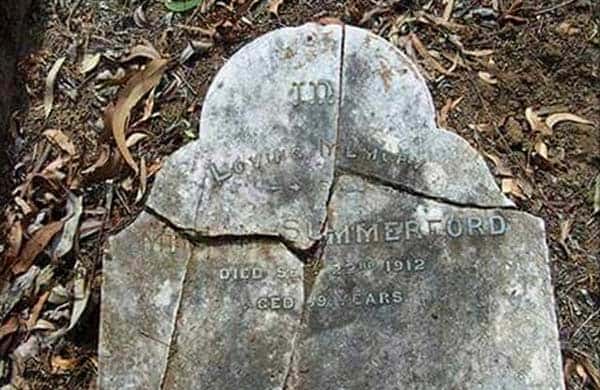
Four years after he was buried in a public cemetery in Vancouver, Canada, Walther Summerford’s gravestone was itself struck by lightning and split into pieces.

I’m not much into conspiracy theories myself. However, it is tough not to believe that there was something supernatural and spooky going on with that unfortunate guy.

The truly curious bit was that Walther Summerford was struck every six years starting in 1918, just like clockwork. Even after he died, when his six years were up, that’s when lightning struck his tombstone. The cyclical nature of the thing strains credulity, but his tale is well-documented.

The brother of one of the soldiers with whom I served was actually struck three times. Once the poor guy was in the shower. I can only imagine what that might do to somebody’s emotional well-being, not to mention your perspective on general hygiene.

My colleague was from rural Texas. He said that every time it got a little bit stormy out, his brother would retreat to the living room away from the television and read a book. Who can blame him?

Walter Summerford got struck by lightning once after he was already dead. This is his shattered tombstone. Image: Public domain.

Ruminations

As kind of an amateur science guy myself, I always gravitated toward basic physics. I can get my head around the way things move. However, chemistry and electricity always kind of made me itch. I struggled to visualize these disciplines, so they held little fascination for me.

However, I have long appreciated that electricity is best appreciated at a distance. If Walter Summerford has taught me anything, it is that I’d really sooner not get struck by lightning.

Categories
Paint me surprised by this

China’s ‘Miracle’ Is ROTTING From Within: Anatomy of a DYING SUPERPOWER

Categories
Cops Grumpy's hall of Shame Paint me surprised by this that’s too bad” You have to be kidding, right!?!

Todays Darwin Award

FAFO: Minneapolis rioter loses part of her hand after reportedly trying to throw a flash bang back at federal Ice agents

Categories
Paint me surprised by this The Green Machine

Why 20,000 Tanks are Abandoned in the California Desert

Nothing like putting something aside for a rainy day! The Marines did that after WWII and that stuff came in mighty handy when Korea lit up 5 years later! Grumpy

Categories
Paint me surprised by this Well I thought it was neat!

Only Man Awarded Both Victoria Cross & Iron Cross

Categories
Ammo Born again Cynic! Paint me surprised by this You have to be kidding, right!?!

Winchester’s New Long-Range Hunting Bullet: Real Breakthrough or Just Marketing?

OR as grumpy , old & very cynical me is thinking. The Gun Makers want to sell some more guns. So they invent this new round that will do everything but go around corners, never miss, clean it and then cook it.

Sorry folks but as the late Master Gunner Ian Hogg said a very long time ago. We have taken small arms ammo as far as it can go . So stick with the classics and you really cannot go too far! Grumpy