Categories
Other Stuff

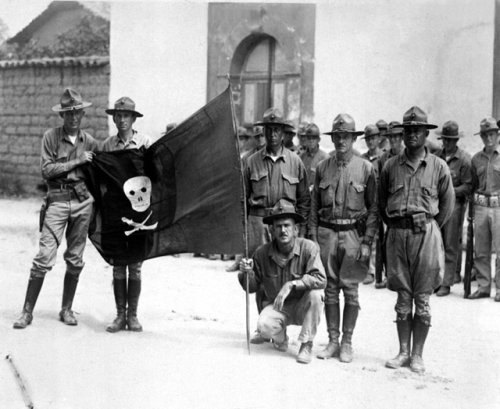
Booty & The USMC in the Banana Wars

U.S. Marines holding Sandino’s Flag during the American intervention in Nicaragua, 1932

U.S. Marines holding Sandino’s Flag during the American intervention in Nicaragua, 1932
The saying goes, That the French fight for Glory, The Russians out of fear, The British for King & Country and the Americans for Souvenirs.
Categories
Other Stuff Related Topics

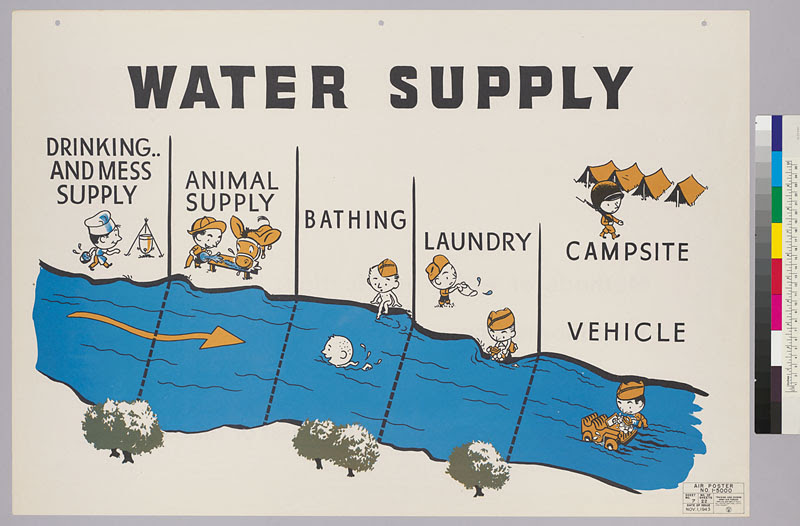
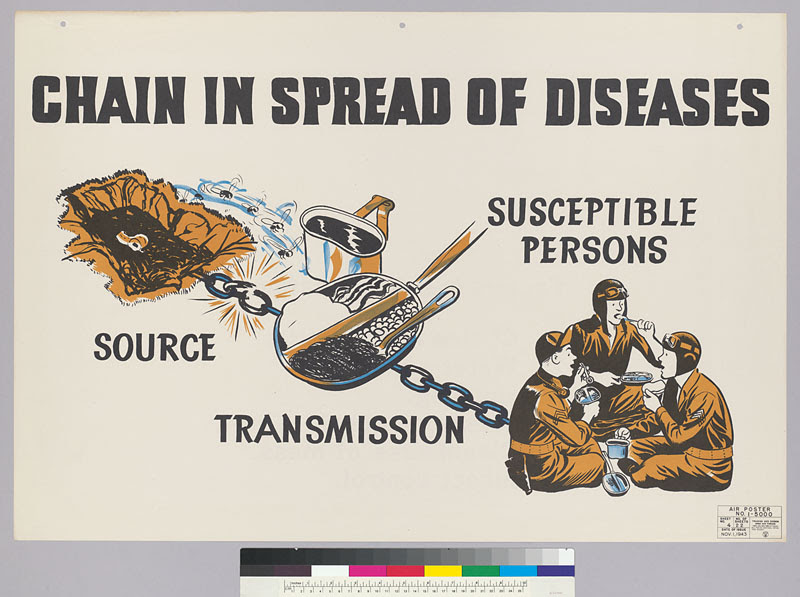
Personal hygiene in the field

Or as we use to say in the Army. How to keep your shit together!Image result for got their shit together
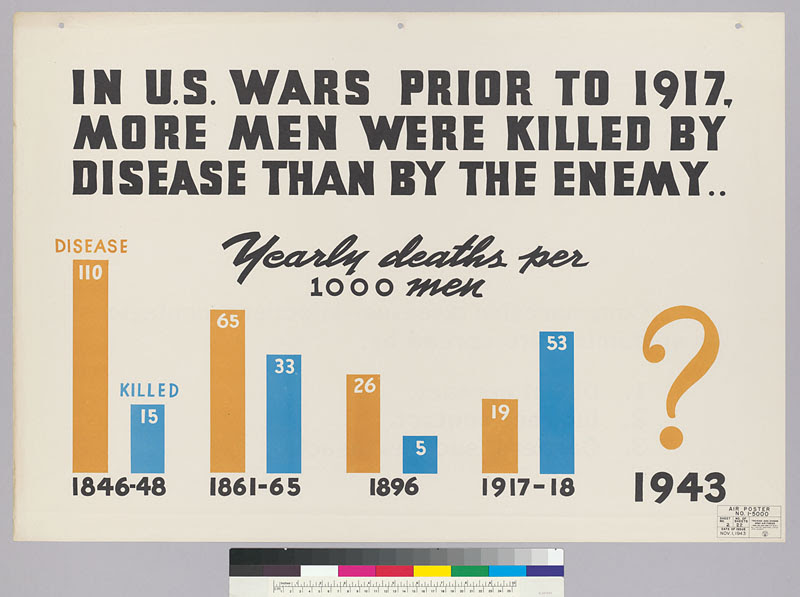
Now I know this is a yucky subject. But if one ignores taking care of business in the field. You and others can & will get quickly very sick or die. No kidding!Image result for cholera
Because before WWI. Most soldiers died from disease not from Bullets, Bayonets etc etc. That is why today the Military is very fanatical about cleanliness & for good reason.
Enjoy
Grumpy
 

Categories
Other Stuff Related Topics

So you want to go off the grid? Then you might want to read this.

Image result for got their shit together memes
Now some may consider this yucky but if you ignore this shit then you are in for a world of hurt down the road.Image result for going off the grid memes
As this stuff is just as important as your rifle, Ammo and other field skills.
Related image

http://www.armystudyguide.com/content/army_board_study_guide_topics/field_sanitation/field-sanitation-study-gu.shtml
Image result
Image result
Related imageRelated image
Related image
Related image
Categories
Born again Cynic! Other Stuff

A sad sign about how one starts to imitate your enemy after a while!

View image on Twitter
Categories
Other Stuff Well I thought it was funny!

Some Gun Safety Memes

Image result for gun safety
Just kidding! The rest of this stuff is Red Hot Gospel!
Image result for gun safety
Related image
Image result for gun safety
My worst nightmare!Image result for gun safety
Related image
that or really stupid folksImage result for gun safety

Categories
Other Stuff

The Arsenal of Venice – Birth of the Modern Industrial Military Complex

Inline image 1
Now a days. Folk if & when they think of the military and its toys. Would be shocked to know that up to quite recently. The State had very little to do with the making of the weapons of war.
Inline image 5
Inline image 6
  It wasn’t until the Venetians of all folks thought up of the idea of the state being the font of armaments. Now Venice today is a vastly different pace from being the Tourist stop of Today.
Image result for venetian military
  Back a few centuries ago. It was a major player in the Balance of Power in Europe. Especially with its vast wealth from its trade with the Near East.Image result for venetian medieval military
  Also since it was a small population country. It had to be a very cunning bunch of folks. So being no fools, They set up the Arsenal. Which was the place for the building of warships and all the stuff they required.Image result for venetian medieval military
It was here that the idea that was to bring forth the Industrial revolution was to spring forth from. Like this scene from WWII.Inline image 7
 Which allowed a small, mosquito infested bunch of islands to punch way above their weight. What with gear, ships and weapons of a standard issue for its armed forces. Which in US Army terminology a force multiplier.
Go figure! It will be here that I endth the lesson.
Inline image 2
Inline image 3Inline image 4
Here is some more information about this neat place!

Venetian Arsenal

From Wikipedia, the free encyclopedia

The Porta Magna at the Venetian Arsenal.

Stone Lion above the Portale at the Arsenale

Entrance to the Arsenale. Ca. 1860/70. Photo by Carlo Ponti.

Radicchio at a street market near the Arsenale, 2017

The Venetian Arsenal (ItalianArsenale di Venezia) is a complex of former shipyards and armories clustered together in the city of Venice in northern Italy. Owned by the state, the Arsenal was responsible for the bulk of the Venetian republic‘s naval power during the middle part of the second millennium AD. It was “one of the earliest large-scale industrial enterprises in history”.[1]

Overview[edit]

Construction of the Arsenal began around 1104, during Venice’s republicanera.[2][3] It became the largest industrial complex in Europe before the Industrial Revolution,[4] spanning an area of about 45 hectares (110 acres), or about fifteen percent of Venice.[2] Surrounded by a 2-mile (3.2 km) rampart, laborers and shipbuilders regularly worked within the Arsenal, building ships that sailed from the city’s port.[5] With high walls shielding the Arsenal from public view and guards protecting its perimeter, different areas of the Arsenal each produced a particular prefabricated ship part or other maritime implement, such as munitions, rope, and rigging.[6] These parts could then be assembled into a ship in as little as one day.[7] An exclusive forest owned by the Arsenal navy, in the Montello hills area of Veneto, provided the Arsenal’s wood supply.
The Arsenal produced the majority of Venice’s maritime trading vessels, which generated much of the city’s economic wealth and power, lasting until the fall of the republic to Napoleon‘s conquest of the area in 1797.[8] It is located in the Castello district of Venice, and it is now owned by the state.[2]

History[edit]

The Byzantine-style establishment may have existed as early as the 8th century, though the present structure is usually said to have been begun in 1104 during the reign of Ordelafo Faliero, although there is no evidence for such a precise date. It definitely existed by the early 13th century.
Initially the state dockyard worked merely to maintain privately built naval ships, but in 1320 the Arsenale Nuovo (ItalianNew Arsenal) was built, much larger than the original. It enabled all the state’s navy and the larger merchant ships to be both constructed and maintained in one place. The Arsenal incidentally became an important center for rope manufacture, and housing for the arsenal workers grew up outside its walls.
Venice developed methods of mass-producing warships in the Arsenal, including the frame-first system to replace the Roman hull-first practice. This new system was much faster and required less wood. At the peak of its efficiency in the early 16th century, the Arsenal employed some 16,000 people who apparently were able to produce nearly one ship each day, and could fit out, arm, and provision a newly built galley with standardized parts on a production-line basis not seen again until the Industrial Revolution.

View of the Entrance to the Arsenal by Canaletto, 1732.

The staff of the Arsenal, who were united by their distinct professional identity,[9]also developed new firearms at an early date, beginning with bombards in the 1370s and numerous small arms for use against the Genoese a few years later. The muzzle velocity of handguns was improved beyond that of the crossbow, creating armor-piercing rounds. Arsenal-produced arms were also noteworthy for their multi-purpose utility; the Venetian condottieri leader, Bartolomeo Colleoni, is usually given credit as being the first to mount the Arsenal’s new lighter-weight artillery on mobile carriages for field use.
The Arsenal’s main gate, the Porta Magna, was built around 1460 and was the first Classical revival structure built in Venice. It was perhaps built by Antonio Gambello from a design by Jacopo Bellini. Two lions taken from Greece situated beside it were added in 1687. One of the lions, known as the Piraeus Lion, has runic defacements carved in it by invading Scandinavian mercenaries during the 11th century.
In the late 16th century, the Arsenal’s designers experimented with larger ships as platforms for heavy naval guns. The largest was the galleass, already used at the Battle of Lepanto against the Ottoman Turks, and developed from the old merchanting “great galley”. It was huge, propelled by both sails and oars, with guns mounted on wheeled carriages along the sides in the modern fashion. It was slow and unwieldy in battle, however, and few were ever built. The galleon, also developed at the Arsenal, was an armed sailing ship, a slimmer version of the merchant “round ship“. It was useful in major naval battles, but not in the small bays and off the extensive lee shores of the Dalmatian coast.
Significant parts of the Arsenal were destroyed under Napoleonic rule, and later rebuilt to enable the Arsenal’s present use as a naval base. It is also used as a research center and an exhibition venue during the Venice Biennale, and is home to a historic boat preservation center.

Mass production[edit]

The Venetian Arsenal’s ability to mass-produce galleys on an almost assembly-line process was unique for its time and resulted in possibly the single largest industrial complex in Europe prior to the Industrial Revolution. So much so, that it was mentioned in Dante‘s Inferno:

As in the Arsenal of the Venetians
Boils in winter the tenacious pitch
To smear their unsound vessels over again
For sail they cannot; and instead thereof
One makes his vessel new, and one recaulks
The ribs of that which many a voyage has made
One hammers at the prow, one at the stern
This one makes oars and that one cordage twists
Another mends the mainsail and the mizzen…[10]

The Arsenal’s capacity for production was rare in a time when “most of Europe had no manufacturing abilities more efficient than the guild system, the slow and tradition-bound way craftsmen had of passing on skills to their sons or apprentices while monopolizing production and sale of craft pieces in a given region… The Arsenal was something different, a harbinger of future times.”[11]
The Venetian Arsenal was not the mass production facility that it was to be until about 1320 with the creation of the Arsenale Nuovo. The Arsenale Nuovo was simply a larger and more efficient version of the original. Prior to this time the Arsenal had served mainly as a place to maintain privately built ships. With the creation of the Arsenale Nuovo, and the development and introduction of the Great Galley, the Venetian Arsenal would start to take on its industrial form. The invention of the Great Galley itself is significant because they were able to be built frame-first. This process used less timber than the earlier hull-first building system, resulting in much faster build times. This was crucial to the process that would lead to the Arsenal becoming a mass-production center. By the 16th century, the Arsenal had become the most powerful and efficient shipbuilding enterprise in the world. Not only did it supply ships, rigging, and other nautical supplies, it was also a major munitions depot for the Venetian navy and was capable of outfitting and producing fully equipped merchant or naval vessels at the rate of one per day.[11]
In the rest of Europe the production of a similar sized vessel could often take months. This large production capacity was a result of the massive number of people that the Arsenal employed, almost 16,000, and the streamlining of production within the Arsenal itself. Production was divided into 3 main stages: framing, planking and cabins, and final assembly. Each stage employed its own workers who specialized in that particular stage of production as well as using standardized parts to produce an almost assembly-line process. The Arsenal often kept up to 100 galleys in different stages of production and maintenance. That way, once a galley was launched, another could be immediately put into the finishing stages of production. The layout of the Arsenal itself was modified to enable minimal handling of materials during the stages of production. The Arsenal also saw the use of standardized, interchangeable parts.
One revolutionary aspect of the Arsenal was its employment of the moving assembly line. The galleys, through the use of a canal, were moved along during their stages of construction, allowing them to be brought to the materials and workers, instead of the materials and workers going to the galley itself. This assembly approach was repeated in the rest of the world only starting from the early 20th century when Henry Ford began using the modern assembly line.

Galileo and the Arsenal[edit]

Statue of Galileo Galilei.

In 1593, Galileo became a consultant to the Arsenal, advising military engineers and instrument makers and helping to solve shipbuilders’ problems, many of them relating to matters of ballistics. He was also responsible for creating some major innovations in the production and logistics of the Arsenal. As a result of his interactions with the Arsenal, Galileo published a book later in his life addressing a new field of modern science, that concerned with the strength and resistance of materials. This science largely saw its roots in the knowledge of the shipwrights of the Venetian Arsenal. It is also supposed that Galileo‘s initial visits to the Arsenal were as a result of his initiative to further investigate Aristotle‘s questions concerning shipbuilding and navigation, found in the Mechanical Questions of Aristotle. As a result of these investigations, which were pursued by observing the work of the shipwrights, Galileo was asked to help in resolving a specific problem with the rowing units of the galleys. As a result of his study of Aristotle, and in particular Question 4 regarding the propulsion of ships by oar, Galileo was able to produce a response to this question and ended up becoming a major source of information for the shipbuilders of the Arsenal concerning matters of rowing, instruments, and ballistics.[12]

Venice’s naval power[edit]

Venice‘s wealth and power rested in its ability to control trade in the Mediterranean. This would not have been possible without an extremely large navy and merchant force. By 1450, over 3,000 Venetian merchant ships were in operation, both as supply ships for Venetian merchants and as warships for the Venetian navy. The fleet required constant maintenance and outfitting. The Venetian Arsenal was not only able to function as a major shipyard, but was also responsible for these routine maintenance stops that most Venetian galleys required. This required financing, for which the Venetian government spent almost 10% of its revenues. This naval power resulted in the domination of Mediterranean commerce. Venice’s leading families, largely merchants and nobleman, were responsible for creating some of the grandest palaces and employing some of the most famous artists ever known. This opulence and wealth would not have been possible without the naval force constructed by the Arsenal. With the creation of the Great Galley and the mass production capacity of the Arsenal, “the fleets of Venice were the basis for the greatest commercial power the European world had yet seen”.[13]

Greece[edit]

The Venetian arsenal at Govino Bay, Corfu

Venice built an arsenal in Corfu as part of a network of Venetian arsenals, serving primarily the purpose of repair, and naval stations in Greece, including shipyards in the Aegean SeaEpirus, the Peloponnese and the Kingdom of Candia (modern Crete). Aside from Corfu, such locations in Greece included MethoniKoroniChalkisPrevezaChania and Heraklion.[14]
The arsenal at Gouvia in Corfu was supposed to be used for ship repairs during the winter after the two fleets stationed on the island had returned from their yearly campaign during peacetime.[15][16] The arsenal was also used as storage for the Venetian ships.[17] However, the Venetian Senate, in order to protect the operations of its own arsenal in Venice, chose to limit the kind of repair activities undertaken at the Corfu arsenal.[16] Consequently, the shipyard operations at Gouvia were restricted to basic maintenance such as cleaning and caulking,[15][16] and many captains instead of repairing their damaged ships at the arsenal chose to sink them.[15] As time went on, the number of ships being serviced at the location declined.[15]

Categories
Dear Grumpy Advice on Teaching in Today's Classroom N.S.F.W. Other Stuff

A Different way to Look at the Education System

 
Here is something to think about here on National Teachers Day. Sadly it has a lot of truth in it.
 
Image result for national teachers day
 
The most erroneous assumption is to the effect that the aim of public education is to fill the young of the species with knowledge and awaken their intelligence, and so make them fit to discharge the duties of citizenship in an enlightened and independent manner.
Nothing could be further from the truth. The aim of public education is not to spread enlightenment at all; it is simply to reduce as many individuals as possible to the same safe level, to breed and train a standardized citizenry, to put down dissent and originality. That is its aim in the United States, whatever the pretensions of politicians, pedagogues and other such mountebanks, and that is its aim everywhere else. – H.L Mencken Journalist and Born again Cynic
Related image

H. L. Mencken

From Wikipedia, the free encyclopedia
H. L. Mencken
H-L-Mencken-1928.jpg

H. L. Mencken in 1928
Born Henry Louis Mencken
September 12, 1880
BaltimoreMaryland, U.S.
Died January 29, 1956 (aged 75)
Baltimore, Maryland, U.S.
Occupation Journalist, satirist, critic
Notable credit(s) The Baltimore Sun
Spouse(s) Sara Haardt
Relatives August Mencken, Jr.
Brother
Family August Mencken, Sr.
Father

Henry Louis Mencken (September 12, 1880 – January 29, 1956) was an American journalist, satirist, cultural critic and scholar of American English.[1]Known as the “Sage of Baltimore”, he is regarded as one of the most influential American writers and prose stylists of the first half of the twentieth century. He commented widely on the social scene, literature, music, prominent politicians and contemporary movements. His satirical reporting on the Scopes trial, which he dubbed the “Monkey Trial”, also gained him attention.
As a scholar, Mencken is known for The American Language, a multi-volume study of how the English language is spoken in the United States. As an admirer of the German philosopher Friedrich Nietzsche, he was a detractor of religion, populism and representative democracy, which he believed to be a system in which inferior men dominated their superiors.[2]Mencken was a supporter of scientific progress, skeptical of economic theories and critical of osteopathic and chiropractic medicine.
Mencken opposed American entry into World War I and World War II. His diary indicates that he was a racist and anti-semite, and privately used coarse language and slurs to describe various ethnic and racial groups (though he believed it was in poor taste to use such slurs publicly).[3]Mencken also at times seemed to show a genuine enthusiasm for militarism, though never in its American form. “War is a good thing,” he once wrote, “because it is honest, it admits the central fact of human nature… A nation too long at peace becomes a sort of gigantic old maid.”[4]
Mencken’s longtime home in the Union Square neighborhood of West Baltimore was turned into a city museum, the H. L. Mencken House. His papers were distributed among various city and university libraries, with the largest collection held in the Mencken Room at the central branch of Baltimore’s Enoch Pratt Free Library.[citation needed]

Early life[edit]

Mencken was born in BaltimoreMaryland, on September 12, 1880. He was the son of Anna Margaret (Abhau) and August Mencken, Sr., a cigar factory owner. He was of German ancestry and spoke German in his childhood.[5] When Henry was three, his family moved into a new home at 1524 Hollins Street facing Union Square park in the Union Squareneighborhood of old West Baltimore. Apart from five years of married life, Mencken was to live in that house for the rest of his life.[6]
In his best-selling memoir Happy Days, he described his childhood in Baltimore as “placid, secure, uneventful and happy.”[7]
When he was nine years old, he read Mark Twain‘s Huckleberry Finn, which he later described as “the most stupendous event in my life”.[8] He became determined to become a writer and read voraciously. In one winter while in high school he read Thackeray and then “proceeded backward to AddisonSteelePopeSwiftJohnson and the other magnificos of the Eighteenth century”. He read the entire canon of Shakespeare and became an ardent fan of Kipling and Thomas Huxley.[9] As a boy, Mencken also had practical interests, photography and chemistry in particular, and eventually had a home chemistry laboratory in which he performed experiments of his own devising, some of them inadvertently dangerous.[10]
He began his primary education in the mid-1880s at Professor Knapp’s School, located on the east side of Holliday Street between East Lexington and Fayette Streets, next to the Holliday Street Theatre and across from the newly constructed Baltimore City Hall. The site today is the War Memorial and City Hall Plaza laid out in 1926 in memory of World War I dead. At fifteen, in June 1896, he graduated as valedictorian from the Baltimore Polytechnic Institute. BPI was a mathematics, technical and science-oriented public high school, founded in 1883, which was then located on old Courtland Street just north of East Saratoga Street. This location is today the east side of St. Paul Street in St. Paul Place and east of Preston Gardens.
He worked for three years in his father’s cigar factory. He disliked the work, especially the sales aspect of it, and resolved to leave, with or without his father’s blessing. In early 1898 he took a class in writing at one of the country’s first correspondence schools, the Cosmopolitan University.[11] This was to be the entirety of Mencken’s formal education in journalism, or in any other subject. Upon his father’s death a few days after Christmas in the same year, the business reverted to his uncle, and Mencken was free to pursue his career in journalism. He had applied in February 1899 to the Morning Herald newspaper (which became the Baltimore Morning Herald in 1900) and had been hired as a part-timer there, but still kept his position at the factory for a few months. In June he was hired as a full-time reporter.

Career[edit]

Mencken served as a reporter at the Herald for six years. Less than two and a half years after the Great Baltimore Fire, the paper was purchased in June 1906 by Charles H. Grasty, the owner and editor of The News since 1892, and competing owner and publisher Gen. Felix Agnus, of the town’s oldest (since 1773) and largest daily, The Baltimore American. They proceeded to divide the staff, assets and resources of The Herald between them. Mencken then moved to The Baltimore Sun, where he worked for Charles H. Grasty. He continued to contribute to The Sun, The Evening Sun(founded 1910) and The Sunday Sun full-time until 1948, when he stopped writing after suffering a stroke.
Mencken began writing the editorials and opinion pieces that made his name at The Sun. On the side, he wrote short stories, a novel, and even poetry, which he later revealed. In 1908, he became a literary critic for The Smart Set magazine, and in 1924 he and George Jean Nathan founded and edited The American Mercury, published by Alfred A. Knopf. It soon developed a national circulation and became highly influential on college campuses across America. In 1933, Mencken resigned as editor.

Personal life[edit]

Marriage[edit]

In 1930, Mencken married Sara Haardt, a German American professor of English at Goucher College in Baltimore and an author eighteen years his junior. Haardt had led efforts in Alabama to ratify the 19th Amendment.[12] The two met in 1923, after Mencken delivered a lecture at Goucher; a seven-year courtship ensued. The marriage made national headlines, and many were surprised that Mencken, who once called marriage “the end of hope” and who was well known for mocking relations between the sexes, had gone to the altar. “The Holy Spirit informed and inspired me,” Mencken said. “Like all other infidels, I am superstitious and always follow hunches: this one seemed to be a superb one.”[13] Even more startling, he was marrying an Alabama native, despite his having written scathing essays about the American South. Haardt was in poor health from tuberculosis throughout their marriage and died in 1935 of meningitis, leaving Mencken grief-stricken.[14]He had always championed her writing and, after her death, had a collection of her short stories published under the title Southern Album.

Great Depression, war and after[edit]

Mencken photographed by Carl Van Vechten, 1932

During the Great Depression, Mencken did not support the New Deal. This cost him popularity, as did his strong reservations regarding US participation in World War II, and his overt contempt for President Franklin D. Roosevelt. He ceased writing for the Baltimore Sun for several years, focusing on his memoirs and other projects as editor, while serving as an adviser for the paper that had been his home for nearly his entire career. In 1948, he briefly returned to the political scene, covering the presidential election in which President Harry S. Trumanfaced Republican Thomas Dewey and Henry A. Wallace of the Progressive Party. His later work consisted of humorous, anecdotal, and nostalgic essays, first published in The New Yorker, then collected in the books Happy DaysNewspaper Days, and Heathen Days.

Last days[edit]

On November 23, 1948, Mencken suffered a stroke, which left him aware and fully conscious but nearly unable to read or write and able to speak only with difficulty. After his stroke, Mencken enjoyed listening to Classical music and, after some recovery of his ability to speak, talking with friends, but he sometimes referred to himself in the past tense, as if he were already dead. During the last year of his life, his friend and biographer William Manchester read to him daily.[15]

Legacy[edit]

Preoccupied as Mencken was with his legacy, he organized his papers, letters, newspaper clippings and columns, even grade school report cards. After his death, these materials were made available to scholars in stages in 1971, 1981, and 1991, and include hundreds of thousands of letters sent and received; the only omissions were strictly personal letters received from women.
The H.L. Mencken Club was founded in Elizabethtown, Pennsylvania in 2008.[16] The organization was founded by Paul Gottfried, the current president.[17]

Death[edit]

Mencken died in his sleep on January 29, 1956.[18] He was interred in Baltimore’s Loudon Park Cemetery.[19]
Though it does not appear on his tombstone, during his Smart Set days Mencken wrote a joking epitaph for himself:

If, after I depart this vale, you ever remember me and have thought to please my ghost, forgive some sinner and wink your eye at some homely girl.[20]

Man of ideas[edit]

In his capacity as editor and man of ideas, Mencken became close friends with the leading literary figures of his time, including Theodore DreiserF. Scott FitzgeraldJoseph HergesheimerAnita LoosBen HechtSinclair LewisJames Branch Cabell, and Alfred Knopf, as well as a mentor to several young reporters, including Alistair Cooke. He also championed artists whose works he considered worthy. For example, he asserted that books such as Caught Short! A Saga of Wailing Wall Street (1929), by Eddie Cantor (ghost-written by David Freedman) did more to pull America out of the Great Depression than all government measures combined. He also mentored John FanteThomas Hart Bentonillustrated an edition of Mencken’s book Europe After 8:15.
Mencken also published many works under various pseudonyms, including Owen Hatteras, John H Brownell, William Drayham, WLD Bell, and Charles Angoff.[21] As a ghostwriter for the physician Leonard K. Hirshberg, he wrote a series of articles and (in 1910) most of a book about the care of babies.
Mencken admired German philosopher Friedrich Nietzsche (he was the first writer to provide a scholarly analysis in English of Nietzsche’s views and writings) and Joseph Conrad. His humor and satire owe much to Ambrose Bierce and Mark Twain. He did much to defend Dreiser despite freely admitting his faults, including stating forthrightly that Dreiser often wrote badly and was a gullible man. Mencken also expressed his appreciation for William Graham Sumner in a 1941 collection of Sumner’s essays, and regretted never having known Sumner personally. In contrast, Mencken was scathing in his criticism of the German philosopher Hans Vaihinger, whom he described as “an extremely dull author” and whose famous book Philosophy of ‘As If’ he dismissed as an unimportant “foot-note to all existing systems.”[22]
Mencken recommended for publication libertarian philosopher and author Ayn Rand‘s first novel, We the Living, calling it “a really excellent piece of work.” Shortly afterward, Rand addressed him in correspondence as “the greatest representative of a philosophy” to which she wanted to dedicate her life, “individualism,” and later listed him as her favorite columnist.[23]

Mencken is fictionalized in the play Inherit the Wind (a fictionalized version of the Scopes Monkey Trial of 1925) as the cynical sarcastic atheist E. K. Hornbeck (right), seen here as played by Gene Kelly in the Hollywood film version. On the left is Henry Drummond, based on Clarence Darrowand portrayed by Spencer Tracy.

For Mencken, Adventures of Huckleberry Finn was the finest work of American literature. Much of that book relates how gullible and ignorant country “boobs” (as Mencken referred to them) are swindled by con men like the (deliberately) pathetic “Duke” and “Dauphin” roustabouts with whom Huck and Jim travel down the Mississippi River. These scam-artists swindle by posing as enlightened speakers on temperance (to obtain the funds to get roaring drunk), as pious “saved” men seeking funds for far off evangelistic missions (to pirates on the high seas, no less), and as learned doctors of phrenology (who can barely spell). Mencken read the novel as a story of America’s hilarious dark side, a place where democracy, as defined by Mencken, is “the worship of jackals by jackasses.”
Such turns of phrase evoked the erudite cynicism and rapier sharpness of language displayed by Bierce in his darkly satiric Devil’s Dictionary. A noted curmudgeon,[24] democratic in subjects attacked, Mencken savaged politics,[25]hypocrisy, and social convention. Master of English, he was given to bombast, once disdaining the lowly hot dog bun’s descent into “the soggy rolls prevailing today, of ground acorns, plaster of paris, flecks of bath sponge and atmospheric air all compact.”[26]
As a nationally syndicated columnist and book author, he commented widely on the social scene, literature, music, prominent politicians and contemporary movements, such as the temperance movement. Mencken was a keen cheerleader of scientific progress but very skeptical of economic theories and critical of osteopathic/chiropractic medicine.
As a frank admirer of Nietzsche, Mencken was a detractor of populism and representative democracy, which he believed was a system in which inferior men dominated their superiors.[2] As did Nietzsche, he also spoke out against religious belief (and as a fervent nonbeliever, against the very notion of a deity), particularly Christian fundamentalismChristian Science and creationism, and against the “Booboisie,” his word for the ignorant middle classes.[27][28][29] In the summer of 1925, he attended the famous Scopes “Monkey Trial” in Dayton, Tennessee, and wrote scathing columns for the Baltimore Sun (widely syndicated) and American Mercury mocking the anti-evolution Fundamentalists (especially William Jennings Bryan). The play Inherit the Wind is a fictionalized version of the trial, and, as noted above, the cynical reporter E.K. Hornbeck is based on Mencken. In 1926, he deliberately had himself arrested for selling an issue of The American Mercury that was banned in Boston under the Comstock laws.[30] Mencken heaped scorn not only on the public officials he disliked, but also on the contemporary state of American elective politics itself.
In the summer of 1926, Mencken followed with great interest the Los Angeles grand jury inquiry into the famous Canadian-American evangelist Aimee Semple McPherson. She was accused of faking her reported kidnapping and the case attracted national attention. There was every expectation Mencken would continue his previous pattern of anti-fundamentalist articles, this time with a searing critique of McPherson. Unexpectedly, he came to her defense, identifying various local religious and civic groups which were using the case as an opportunity to pursue their respective ideological agendas against the embattled Pentecostal minister.[31] He spent several weeks in HollywoodCalifornia, and wrote many scathing and satirical columns on the movie industry and the southern California culture. After all charges had been dropped against McPherson, Mencken revisited the case in 1930 with a sarcastically biting and observant article. He wrote that since many of that town’s residents acquired their ideas “of the true, the good and the beautiful” from the movies and newspapers, “Los Angeles will remember the testimony against her long after it forgets the testimony that cleared her.”[32]
In 1931 the Arkansas legislature passed a motion to pray for Mencken’s soul after he had called the state the “apex of moronia.”[33]
In the mid 1930s Mencken feared Franklin Roosevelt and his New Deal liberalism as a powerful force. Mencken, says Charles A. Fecher, was, “deeply conservative, resentful of change, looking back upon the ‘happy days’ of a bygone time, wanted no part of the world that the New Deal promised to bring in.”[34]

Views[edit]

The striking thing about Mencken’s mind is its ruthlessness and rigidity … Though one of the fairest of critics, he is the least pliant. … [I]n spite of his skepticism, and his frequent exhortations to hold his opinion lightly, he himself has been conspicuous for seizing upon simple dogmas and sticking to them with fierce tenacity … true skeptics … see both truth and weakness in every case.

— Literary critic Edmund Wilson (1921)[35]

Theology: An effort to explain the unknowable by putting it into terms of the not worth knowing

— H. L. Mencken[36]

Racism and elitism[edit]

In addition to his identification of races with castes, Mencken had views about the superior individual within communities. He believed that every community produced a few people of clear superiority. He considered groupings on a par with hierarchies, which led to a kind of natural elitism and natural aristocracy. “Superior” individuals, in Mencken’s view, were those wrongly oppressed and disdained by their own communities, but nevertheless distinguished by their will and personal achievement, not by race or birth.

External video
 Booknotes interview with Charles Fecher on The Diary of H.L. Mencken, January 28, 1990C-SPAN

In 1989, per his instructions, Alfred A. Knopf published Mencken’s “secret diary” as The Diary of H. L. Mencken. According to an Associated Press story, Mencken’s views shocked even the “sympathetic scholar who edited it,” Charles A. Fecher of Baltimore.[37] There is a club in Baltimore called the Maryland Club which had one Jewish member, and that member died. Mencken said, “There is no other Jew in Baltimore who seems suitable,” according to the article. The diary also quoted him as saying of blacks, in September 1943, that “it is impossible to talk anything resembling discretion or judgment to a colored woman. They are all essentially child-like, and even hard experience does not teach them anything.”
Mencken opposed lynching. For example, he had this to say about a Maryland incident:

Not a single bigwig came forward in the emergency, though the whole town knew what was afoot. Any one of a score of such bigwigs might have halted the crime, if only by threatening to denounce its perpetrators, but none spoke. So Williams was duly hanged, burned and mutilated.

Mencken also wrote: “I admit freely enough that, by careful breeding, supervision of environment and education, extending over many generations, it might be possible to make an appreciable improvement in the stock of the American Negro, for example, but I must maintain that this enterprise would be a ridiculous waste of energy, for there is a high-caste white stock ready at hand, and it is inconceivable that the Negro stock, however carefully it might be nurtured, could ever even remotely approach it. The educated Negro of today is a failure, not because he meets insuperable difficulties in life, but because he is a Negro. He is, in brief, a low-caste man, to the manner born, and he will remain inert and inefficient until fifty generations of him have lived in civilization. And even then, the superior white race will be fifty generations ahead of him.”[38]

Democracy[edit]

Rather than dismissing democratic governance as a popular fallacy or treating it with open contempt, Mencken’s response to it was a publicized sense of amusement. His feelings on this subject (like his casual feelings on many other such subjects) are sprinkled throughout his writings over the years, very occasionally taking center-stage with the full force of Mencken’s prose:

Democracy gives [the beatification of mediocrity] a certain appearance of objective and demonstrable truth. The mob man, functioning as citizen, gets a feeling that he is really important to the world—that he is genuinely running things. Out of his maudlin herding after rogues and mountebanks there comes to him a sense of vast and mysterious power—which is what makes archbishops, police sergeants, the grand goblinsof the Ku Klux and other such magnificoes happy. And out of it there comes, too, a conviction that he is somehow wise, that his views are taken seriously by his betters—which is what makes United States Senators, fortune tellers and Young Intellectuals happy. Finally, there comes out of it a glowing consciousness of a high duty triumphantly done which is what makes hangmen and husbands happy.

This sentiment is fairly consistent with Mencken’s distaste for common notions and the philosophical outlook he unabashedly set down throughout his life as a writer (drawing on Friedrich Nietzsche and Herbert Spencer, among others).[39]
Mencken wrote as follows about the difficulties of good men reaching national office when such campaigns must necessarily be conducted remotely:

The larger the mob, the harder the test. In small areas, before small electorates, a first-rate man occasionally fights his way through, carrying even the mob with him by force of his personality. But when the field is nationwide, and the fight must be waged chiefly at second and third hand, and the force of personality cannot so readily make itself felt, then all the odds are on the man who is, intrinsically, the most devious and mediocre—the man who can most easily adeptly disperse the notion that his mind is a virtual vacuum.
The Presidency tends, year by year, to go to such men. As democracy is perfected, the office represents, more and more closely, the inner soul of the people. We move toward a lofty ideal. On some great and glorious day the plain folks of the land will reach their heart’s desire at last, and the White House will be adorned by a downright moron.[40]

Science[edit]

Mencken supported biology and the theory of evolution by Charles Darwin but spoke unfavorably of physics and mathematics. In Charles Angoff’s record, Mencken said:

[Isaac Newton] was a mathematician, which is mostly hogwash, too. Imagine measuring infinity! That’s a laugh.[41]

In response, Angoff said: “Well, without mathematics there wouldn’t be any engineering, no chemistry, no physics.” Mencken responded: “That’s true, but it’s reasonable mathematics. Addition, subtraction, multiplication, fractions, division, that’s what real mathematics is. The rest is baloney. Astrology. Religion. All of our sciences still suffer from their former attachment to religion, and that is why there is so much metaphysics and astrology, the two are the same, in science.”[41]
Elsewhere, he spoke of the nonsense of higher mathematics and “probability” theory, after he read Angoff’s article for Charles S. Peirce in the American Mercury. “So you believe in that garbage, too—theories of knowledge, infinity, laws of probability. I can make no sense of it, and I don’t believe you can either, and I don’t think your god Peirce knew what he was talking about.”[42]
Mencken also repeated these opinions multiple times in articles for the American Mercury. He said mathematics is simply a fiction, compared with individual facts that make up science. In a review for Vaihinger’s The Philosophy of “As If”, he said:

The human mind, at its present stage of development, cannot function without the aid of fictions, but neither can it function without the aid of facts—save, perhaps, when it is housed in the skull of a university professor of philosophy. Of the two, the facts are enormously the more important. In certain metaphysical fields, e.g. those of mathematics, law, theology, osteopathy and ethics—the fiction will probably hold out for many years, but elsewhere the fact slowly ousts it, and that ousting is what is called intellectual progress. Very few fictions remain in use in anatomy, or in plumbing and gas-fitting; they have even begun to disappear from economics.[43]

Mencken repeatedly identified mathematics with metaphysics and theology. According to Mencken, mathematics is necessarily infected with metaphysics because of the tendency of many mathematical people to engage in metaphysical speculation. In a review for A. N. Whitehead’s The Aims of Education, Mencken remarked that despite his agreement with Whitehead’s thesis and approval of his writing style, “now and then he falls into mathematical jargon and pollutes his discourse with equations”, and “[t]here are moments when he seems to be following some of his mathematical colleagues into the gaudy metaphysics which now entertains them”.[44] For Mencken, theology is characterized by the fact that it uses correct reasoning from false premises. Mencken also uses the term “theology” more generally, to refer to the use of logic in science or any other field of knowledge. In a review for both A. S. Eddington’s The Nature of the Physical World and Joseph Needham’s Man a Machine, Mencken forcefully ridiculed the use of reasoning to establish any fact in science, because theologians happen to be masters of “logic” and yet are mental defectives:

Is there anything in the general thinking of theologians which makes their opinion on the point of any interest or value? What have they ever done in other fields to match the fact-finding of the biologists? I can find nothing in the record. Their processes of thought, taking one day with another, are so defective as to be preposterous. True enough, they are masters of logic, but they always start out from palpably false premises.[45]

Mencken also wrote a review for Sir James Jeans’s book, The Mysterious Universe, in which he said that mathematics is not necessary for physics. Instead of mathematical “speculation” (such as quantum theory), Mencken believed physicists should just directly look at individual facts in the laboratory like chemists:

If chemists were similarly given to fanciful and mystical guessing, they would have hatched a quantum theory forty years ago to account for the variations that they observed in atomic weights. But they kept on plugging away in their laboratories without calling in either mathematicians or theologians to aid them, and eventually they discovered the isotopes, and what had been chaos was reduced to the most exact sort of order.[46]

In the same article which he later re-printed in the Mencken Chrestomathy, Mencken primarily contrasts what real scientists do, which is to simply directly look at the existence of “shapes and forces” confronting them instead of (such as in statistics) attempting to speculate and use mathematical models. Physicists and especially astronomers are consequently not real scientists, because when looking at shapes or forces, they do not simply “patiently wait for further light”, but resort to mathematical theory. There is no need for statistics in scientific physics, since one should simply look at the facts while statistics attempts to construct mathematical models. On the other hand, the really competent physicists do not bother with the “theology” or reasoning of mathematical theories (such as in quantum mechanics):

[Physicists] have, in late years, made a great deal of progress, though it has been accompanied by a considerable quackery. Some of the notions which they now try to foist upon the world, especially in the astronomical realm and about the atom, are obviously nonsensical, and will soon go the way of all unsupported speculations. But there is nothing intrinsically insoluble about the problems they mainly struggle with, and soon or late really competent physicists will arise to solve them. These really competent physicists, I predict, will be too busy in their laboratories to give any time to either metaphysics or theology. Both are eternal enemies of every variety of sound thinking, and no man can traffic with them without losing something of his good judgment.[46]

Mencken also ridiculed Einstein’s theory of general relativity, saying “in the long run his curved space may be classed with the psychosomatic bumps of Gall and Spurzheim”.[47] In his private letters, he said:

It is a well known fact that physicists are greatly given to the supernatural. Why this should be I don’t know, but the fact is plain. One of the most absurd of all spiritualists is Sir Oliver Lodge. I have the suspicion that the cause may be that physics itself, as currently practised, is largely moonshine. Certainly there is a great deal of highly dubious stuff in the work of such men as Eddington.[48]

Anglo-Saxons[edit]

Mencken countered the arguments for Anglo-Saxon superiority prevalent in his time in a 1923 essay entitled “The Anglo-Saxon”, which argued that if there was such a thing as a pure “Anglo-Saxon” race, it was defined by its inferiority and cowardice. “The normal American of the ‘pure-blooded’ majority goes to rest every night with an uneasy feeling that there is a burglar under the bed and he gets up every morning with a sickening fear that his underwear has been stolen.”[49]

Jews[edit]

In the 1930 edition of Treatise on the Gods, Mencken wrote:

The Jews could be put down very plausibly as the most unpleasant race ever heard of. As commonly encountered, they lack many of the qualities that mark the civilized man: courage, dignity, incorruptibility, ease, confidence. They have vanity without pride, voluptuousness without taste, and learning without wisdom. Their fortitude, such as it is, is wasted upon puerile objects, and their charity is mainly a form of display.[50]

That passage was removed from subsequent editions at his express direction.[51]
Author Gore Vidal later deflected claims of anti-Semitism against Mencken:

Far from being an anti-Semite, Mencken was one of the first journalists to denounce the persecution of the Jews in Germany at a time when The New York Times, say, was notoriously reticent. On November 27, 1938, Mencken writes (Baltimore Sun), “It is to be hoped that the poor Jews now being robbed and mauled in Germany will not take too seriously the plans of various politicians to rescue them.” He then reviews the various schemes to “rescue” the Jews from the Nazis, who had not yet announced their own final solution.[52]

As Germany gradually conquered Europe, Mencken attacked President Roosevelt for refusing to admit Jewish refugees into the United States and called for their wholesale admission:

There is only one way to help the fugitives, and that is to find places for them in a country in which they can really live. Why shouldn’t the United States take in a couple hundred thousand of them, or even all of them?[53]

However, Jewish historian Michael Kazin accused Mencken of being “a lifelong anti-Semite with a reverence for German culture so strong it blinded him to the menace of Nazism.”[54]

Memorials[edit]

Home[edit]

Mencken’s home at 1524 Hollins Street in Baltimore’s Union Square neighborhood, where he lived for sixty-seven years before his death in 1956, was bequeathed to the University of Maryland, Baltimore on the death of his younger brother, August, in 1967. The City of Baltimore acquired the property in 1983, and the H. L. Mencken House became part of the City Life Museums. It has been closed to general admission since 1997, but is opened for special events and group visits by arrangement.

Papers[edit]

Shortly after World War II, Mencken expressed his intention of bequeathing his books and papers to Baltimore‘s Enoch Pratt Free Library. At his death, it was in possession of most of the present large collection. As a result, his papers as well as much of his personal library, which includes many books inscribed by major authors, are held in the Library’s Central Branch on Cathedral Street in Baltimore. The original third floor H. L. Mencken Room and Collection housing this collection was dedicated on April 17, 1956. The new Mencken Room, on the first floor of the Library’s Annex, was opened in November 2003.
The collection contains Mencken’s typescripts, newspaper and magazine contributions, published books, family documents and memorabilia, clipping books, large collection of presentation volumes, file of correspondence with prominent Marylanders, and the extensive material he collected while he was preparing The American Language.
Other Mencken related collections of note are at Dartmouth CollegeHarvard UniversityPrinceton UniversityJohns Hopkins University, and Yale University. In 2007, Johns Hopkins acquired “nearly 6,000 books, photographs and letters by and about Mencken” from “the estate of an Ohio accountant.”[55]
The Sara Haardt Mencken collection at Goucher College includes letters exchanged between Haardt and Mencken and condolences written after her death. Some of Mencken’s vast literary correspondence is held at the New York Public Library. “Gift of HL Mencken 1929” is stamped on the Marriage of Heaven and Hell, Luce 1906 edition of William Blake, which shows up from the Library of Congress online version for reading.

Works[edit]

Books[edit]

  • George Bernard Shaw: His Plays (1905)
  • The Philosophy of Friedrich Nietzsche (1907)
  • The Gist of Nietzsche (1910)
  • What You Ought to Know about your Baby (Ghostwriter for Leonard K. Hirshberg) (1910)
  • Men versus the Man: a Correspondence between Robert Rives La Monte, Socialist and H. L. Mencken, Individualist(1910)
  • Europe After 8:15 (1914)
  • A Book of Burlesques (1916)
  • A Little Book in C Major (1916)
  • A Book of Prefaces (1917)
  • In Defense of Women (1918)
  • Damn! A Book of Calumny (1918)
  • The American Language (1919)
  • Prejudices (1919–27)
    • First Series (1919)
    • Second Series (1920)
    • Third Series (1922)
    • Fourth Series (1924)
    • Fifth Series (1926)
    • Sixth Series (1927)
    • Selected Prejudices (1927)
  • Heliogabalus (A Buffoonery in Three Acts) (1920)
  • The American Credo (1920)
  • Notes on Democracy (1926)
  • Menckeneana: A Schimpflexikon (1928) – Editor
  • Treatise on the Gods (1930)
  • Making a President (1932)
  • Treatise on Right and Wrong (1934)
  • Happy Days, 1880–1892 (1940)
  • Newspaper Days, 1899–1906 (1941)[56]
  • A New Dictionary of Quotations on Historical Principles from Ancient and Modern Sources (1942)
  • Heathen Days, 1890–1936 (1943)
  • Christmas Story (1944)
  • The American Language, Supplement I (1945)
  • The American Language, Supplement II (1948)
  • A Mencken Chrestomathy (1949)

Posthumous collections

  • Minority Report (1956)
  • On Politics: A Carnival of Buncombe (1956)
  • Cairns, Huntington, ed. (1965), The American Scene.
  • The Bathtub Hoax and Blasts & Bravos from the Chicago Tribune (1958)
  • Lippman, Theo jr, ed. (1975), A Gang of Pecksniffs: And Other Comments on Newspaper Publishers, Editors and Reporters.
  • Rodgers, Marion Elizabeth, ed. (1991), The Impossible HL Mencken: A Selection of His Best Newspaper Stories.
  • Yardley, Jonathan, ed. (1992), My Life As Author and Editor.
  • A Second Mencken Chrestomathy (1994)
  • Thirty-five Years of Newspaper Work (1996)
  • A Religious Orgy in Tennessee: A Reporter’s Account of the Scopes Monkey TrialMelville House Publishing, 2006.

Chapbooks, pamphlets, and notable essays[edit]

  • Ventures into Verse (1903)
  • The Artist: A Drama Without Words (1912)
  • The Creed of a Novelist (1916)
  • Pistols for Two (1917)
  • The Sahara of the Bozart (1920)
  • Gamalielese (1921)
  • “The Hills of Zion” (1925)
  • The Libido for the Ugly (1927)

Categories
Other Stuff

The Most Dangerous Women

https://youtu.be/TeHatNCAB2khttp://https://youtu.be/TeHatNCAB2khttps://youtu.be/TeHatNCAB2k Attachments area Preview YouTube video 10 Most Dangerous Women Of All Time

Categories
All About Guns Other Stuff

I found these on You Tube about Tanks & thought you might like them!

Categories
Other Stuff

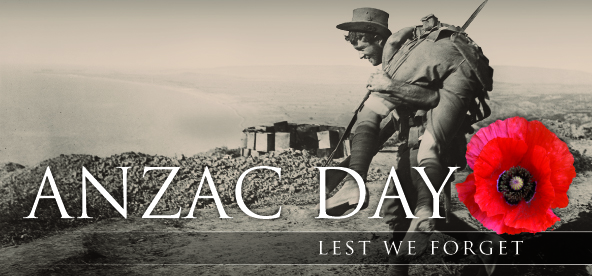
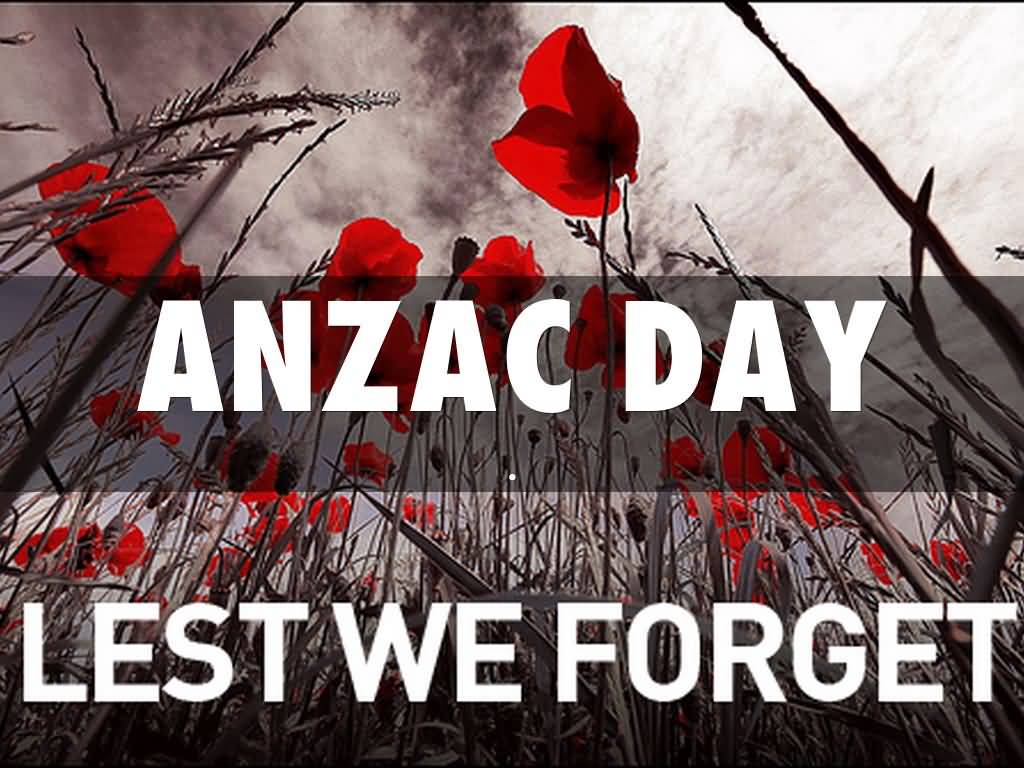
To all our Friends across the Pacific, Happy ANZAC Day!

Image result for anzac day

Thanks Folks!

Grumpy

Anzac Day

From Wikipedia, the free encyclopedia
Anzac Day
Dawn service gnangarra 03.jpg

Anzac Day Dawn Service at Kings Park, Western Australia, 25 April 2009, 94th anniversary
Observed by Australia
New Zealand
Type Commemorative, patriotic, historic
Significance National day of remembrance and first landing of the Anzacs at Gallipoli
Observances Dawn services, commemorative marches, remembrance services
Date 25 April
Next time 25 April 2018
Frequency Annual
Related to Remembrance Day(Commonwealth of Nations),
Armistice DayVeterans DayMemorial Day

Anzac Day /ˈænzækˈdæi/ is a national day of remembrance in Australia and New Zealand that broadly commemorates all Australians and New Zealanders “who served and died in all wars, conflicts, and peacekeeping operations” and “the contribution and suffering of all those who have served”.[1][2] Observed on 25 April each year, Anzac Day was originally to honour the members of the Australian and New Zealand Army Corps(ANZAC) who fought at Gallipoli against the Ottoman Empire during World War I.
Anzac Day is also observed in the Cook IslandsNiuePitcairn Islands, and Tonga, and previously was a national holiday in Papua New Guinea and Samoa.[3][4]

History[edit]

An Australian veteran on Anzac Day.

Anzac Day marks the anniversary of the first campaign that led to major casualties for Australian and New Zealand forces during the First World War. The acronym ANZAC stands for Australian and New Zealand Army Corps, whose soldiers were known as Anzacs. Anzac Day remains one of the most important national occasions of both Australia and New Zealand,[5] a rare instance of two sovereign countries not only sharing the same remembrance day, but making reference to both countries in its name. When war broke out in 1914, Australia and New Zealand had been dominions of the British Empire for thirteen and seven years respectively.

Gallipoli campaign[edit]

In 1915, Australian and New Zealand soldiers formed part of an Allied expedition that set out to capture the Gallipoli Peninsula to open the way to the Black Sea for the Allied navies. The objective was to capture Constantinople, the capital of the Ottoman Empire, which was an ally of Germany during the war. The ANZAC force landed at Gallipoli on 25 April, meeting fierce resistance from the Ottoman Army commanded by Mustafa Kemal (later known as Atatürk). What had been planned as a bold strike to knock the Ottomans out of the war quickly became a stalemate, and the campaign dragged on for eight months. At the end of 1915, the Allied forces were evacuated after both sides had suffered heavy casualties and endured great hardships. The Allied casualties included 21,255 from the United Kingdom, of which were some 4000 Irish soldiers from the Royal Irish Fusiliers, an estimated 10,000 dead soldiers from France, 8,709 from Australia, 2,721 from New Zealand, and 1,358 from British India. News of the landing at Gallipoli made a profound impact on Australians and New Zealanders at home and 25 April quickly became the day on which they remembered the sacrifice of those who had died in the war.
Though the Gallipoli campaign failed to achieve its military objectives of capturing Constantinople and knocking the Ottoman Empire out of the war, the actions of the Australian and New Zealand troops during the campaign bequeathed an intangible but powerful legacy. The creation of what became known as an “Anzac legend” became an important part of the national identity in both countries. This has shaped the way their citizens have viewed both their past and their understanding of the present. The heroism of the soldiers in the failed Gallipoli campaign made their sacrifices iconic in New Zealand memory, and is often credited with securing the psychological independence of the nation.[6][7]

Foundations of Anzac Day[edit]

Anzac Day at Manly, Queensland, 1922

On 30 April 1915, when the first news of the landing reached New Zealand, a half-day holiday was declared and impromptu services were held.[8]
In South Australia, Australia’s first built memorial to the Gallipoli landing was unveiled by Governor-General Sir Ronald Munro Ferguson on “Wattle Day“, 7 September 1915, just over four months after the first landings. The monument was originally the centrepiece of the Wattle Day League’s Gallipoli Memorial Wattle Grove, later known as “Wattle Grove”, on Sir Lewis Cohen Avenue in the South Park Lands but in 1940 the Adelaide City Council moved the monument and its surrounding pergola to Lundie Garden, a lawned area off South Terrace near the junction with Anzac Highway. The original native pines and remnant seedlings of the original wattles still grow in “Wattle Grove”.[9] Also in South Australia, Eight Hour Day, 13 October 1915, was renamed “Anzac Day” and a carnival was organised to raise money for the Wounded Soldiers Fund.[10][11]
The date 25 April was officially named Anzac Day in 1916; in that year it was marked by a wide variety of ceremonies and services in Australia and New Zealand, including a commemorative march through London involving Australian and New Zealand troops. In New Zealand it was gazetted as a half-day holiday.[8] Australian Great War battalion and brigade war diaries show that on this first anniversary, units including those on the front line, made efforts to solemnise the memory of those who were killed this day twelve months previously. A common format found in the war diaries by Australian and New Zealand soldiers for the day commenced with a dawn requiem mass, followed mid-morning with a commemorative service, and after lunch organised sports activities with the proceeds of any gambling going to Battalion funds. This occurred in Egypt as well.
In Queensland on 10 January 1916 Canon David John Garland was appointed the honorary secretary of the Anzac Day Commemoration Committee of Queensland (ADCCQ) at a public meeting which endorsed 25 April as be the date promoted as “Anzac Day” in 1916 and ever after. Devoted to the cause of a non-denominational commemoration that could be attended by the whole of Australian society, Garland worked amicably across all denominational divides, creating the framework for Anzac Day commemorative services.[12] Garland is specifically credited with initiating the Anzac Day march, the wreath-laying ceremonies at memorials and the special church services, the two minutes silence, and the luncheon for returned soldiers.[13] Garland intended the silence was used in lieu of a prayer to allow the Anzac Day service to be universally attended, allowing attendees to make a silent prayer or remembrance in accordance with their own beliefs. He particularly feared that the universality of the ceremony would fall victim to religious sectarian disputes.[14]
In London, over 2,000 Australian and New Zealand troops marched through the streets of the city.[15] A London newspaper[which?] headline dubbed them “The Knights of Gallipoli”. Marches were held all over Australia in 1916; wounded soldiers from Gallipoli attended the Sydney march in convoys of cars, accompanied by nurses. Over 2,000 people attended the service in Rotorua.[8] For the remaining years of the war, Anzac Day was used as an occasion for patriotic rallies and recruiting campaigns, and marches of serving members of the AIF were held in most cities. From 1916 onwards, in both Australia and New Zealand, Anzac memorials were held on or about 25 April, mainly organised by returned servicemen and school children in cooperation with local authorities.

Flags on the cenotaph in Wellington for the 2007 Dawn March. From left to right, the flags of New Zealand, the United Kingdom and Australia

Anzac Day was gazetted as a public holiday in New Zealand in 1920, through the Anzac Day Act, after lobbying by the New Zealand Returned Soldiers’ Association,[16] the RSA.[17] In Australia at the 1921 State Premiers’ Conference, it was decided that Anzac Day would be observed on 25 April each year. However, it was not observed uniformly in all the states.
During the 1920s, Anzac Day became established as a National Day of Commemoration for the 60,000 Australians and 18,000 New Zealanders who died during the war. The first year in which all the Australian states observed some form of public holiday together on Anzac Day was 1927. By the mid-1930s, all the rituals now associated with the day—dawn vigils, marches, memorial services, reunions, sly two-up games—became part of Australian Anzac Day culture. New Zealand commemorations also adopted many of these rituals, with the dawn service being introduced from Australia in 1939.[17]

Anzac Day since World War II[edit]

With the coming of the Second World War, Anzac Day became a day on which to commemorate the lives of Australians and New Zealanders lost in that war as well and in subsequent years. The meaning of the day has been further broadened to include those killed in all the military operations in which the countries have been involved.
Anzac Day was first commemorated at the Australian War Memorial in 1942, but, due to government orders preventing large public gatherings in case of Japanese air attack, it was a small affair and was neither a march nor a memorial service. Anzac Day has been annually commemorated at the Australian War Memorial ever since.[5]

A large commemoration march in Wagga Wagga, New South Wales(April 2008)

In New Zealand, Anzac Day saw a surge in popularity immediately after World War II. However this was short-lived, and by the 1950s many New Zealanders had become antagonistic or indifferent towards the day. Much of this was linked to the legal ban on commerce on Anzac Day, and the banning by many local authorities of sports events and other entertainment on the day. Annoyance was particularly pronounced in 1953 and 1959, when Anzac Day fell on a Saturday. There was widespread public debate on the issue, with some people calling for the public holiday to be moved to the nearest Sunday or abolished altogether. In 1966 a new Anzac Day Act was passed, allowing sport and entertainment in the afternoon.[18]
From the 1960s, but especially in the 1970s and 1980s, Anzac Day became increasingly controversial in both Australia and New Zealand. Protests against the Vietnam War were common Anzac Day occurrences during the 1960s and 1970s.[19][20] In 1967, two members of the left-wing Progressive Youth Movement in Christchurch staged a minor protest at the Anzac Day ceremony, laying a wreath protesting against the Vietnam War. They were subsequently convicted of disorderly conduct. In 1978, a women’s group laid a wreath dedicated to all the women raped and killed during war, and movements for feminism, gay rights, and peace used the occasion to draw attention to their respective causes at various times during the 1980s.[21] In the 1980s, Australian feminists used the annual Anzac Day march to protest against rape and violence in war and were banned from marching.[22][23]
From about the late 1980s, however, there was an international resurgence of interest in World War I and its commemorations. Anzac Day attendances rose in Australia and New Zealand, with young people taking a particular interest. Protests and controversy became much rarer.
Until 1981 Papua New Guinea commemorated its war dead on Anzac Day; however, since then Remembrance Day has been observed on 23 July, the date of the first action of the Papuan Infantry Battalion against the Japanese at Awala in 1942 during the Kokoda Track campaign.[24]

Revival[edit]

Royal Victoria Regiment marching through Melbourne on ANZAC Day 2008

Anzac Day at Darwin, 25 April 2013

Following Australia’s involvement in the Vietnam War, interest in Anzac Day reached its lowest point. On 26 April 1975 The Australian newspaper covered the passing of Anzac Day in a single story.[25] However, in recent years Anzac Day has drawn record crowds,[26] with an increasing number of those attending being young Australians,[27][28] many of whom attend ceremonies swathed in Australian flags, wearing green and gold T-shirts and beanies and with Australian flag tattoos imprinted on their skin.[29][30][31][32] This phenomenon has been perceived by some as a reflection of the desire of younger generations of Australians to honour the sacrifices made by the previous generations.[33]

Hobart Cenotaph, Tasmania, Australia – with wreaths for ANZAC Day

Australians and New Zealanders recognise 25 April as a ceremonial occasion to reflect on the cost of war and to remember those who fought and lost their lives for their country. Commemorative services and marches are held at dawn, the time of the original landing, mainly at war memorials in cities and towns across both nations and the sites of some of Australia and New Zealand’s more-recognised battles and greatest losses, such as Villers-Bretonneux in France[34]and Gallipoli in Turkey.[35]
One of the traditions of Anzac Day is the “gunfire breakfast” (coffee with rumadded) which occurs shortly after many dawn ceremonies, and recalls the “breakfast” taken by many soldiers before facing battle. Later in the day, ex-servicemen and ex-servicewomen meet and join in marches through the major cities and many smaller centres.

Dawn service[edit]

Poppies, a symbol of remembrance

The wreath laying at the 2008 dawn service at the Australian War Memorial at Hyde Park Corner, London.

After the First World War, returned soldiers sought the comradeship they felt in those quiet, peaceful moments before dawn. With symbolic links to the dawn landing at Gallipoli, a dawn stand-to or dawn ceremony became a common form of Anzac Day remembrance during the 1920s.
The first official dawn service was held at the Sydney Cenotaph in 1927. Dawn services were originally very simple and followed the operational ritual; in many cases they were restricted to veterans only. The daytime ceremony was for families and other well-wishers and the dawn service was for returned soldiers to remember and reflect among the comrades with whom they shared a special bond.
Before dawn the gathered veterans would be ordered to “stand-to” and two minutes of silence would follow. At the start of this time a lone bugler would play the Last Post and then concluded the service with Reveille. In more recent times the families and young people have been encouraged to take part in dawn services, and services in Australian capital cities have seen some of the largest turnouts ever. Reflecting this change, the ceremonies have become more elaborate, incorporating hymns, readings, pipers and rifle volleys. Others, though, have retained the simple format of the dawn stand-to, familiar to so many soldiers.

Australian War Memorial Anzac Day dawn service, 25 April 2013. The crowd of around 35,000 people is addressed by Corporal Ben Roberts-Smith VC MG who is reading stories and anecdotes from Australian service men and women relating to the war in Afghanistan.

Typical modern dawn services follow a pattern that is now familiar to generations of Australians, containing the following features: introduction, hymn, prayer, an address, laying of wreaths, recitation, the playing of the Last Post, a minute of silence, Reveille, and the playing of both the New Zealand and Australian national anthems. At the Australian War Memorial, following events such as the Anzac Day and Remembrance Day services, families often place artificial red poppiesbeside the names of relatives on the Memorial’s Roll of Honour. In Australia, sprigs of rosemary are often worn on lapels[36] and in New Zealand poppies have taken on this role.[37]

Commemoration[edit]

The Last Post is played at an Anzac Day ceremony in Port Melbourne, Victoria, 25 April 2005. Ceremonies like this are held in virtually every suburb and town in Australia and New Zealand on Anzac Day each year.

In Australia and New Zealand, Anzac Day commemoration features solemn “Dawn Services” or “Dawn Marches”, a tradition started in Albany, Western Australia on 25 April 1923 and now held at war memorials around both countries, accompanied by thoughts of those lost at war to the ceremonial sounds of the Last Post on the bugle. The fourth stanza of Laurence Binyon‘s poem For the Fallen (known as the “Ode of Remembrance“, or simply as “the Ode”) is often recited.

Australia[edit]

Anzac Day is a national public holiday and is considered by many Australians to be one of the most solemn days of the year. Marches by veterans from all past wars, as well as current serving members of the Australian Defence Force and Reserves, with allied veterans as well as the Australian Defence Force Cadetsand Australian Air League and supported by members of Scouts AustraliaGuides Australia, and other service groups, are held in cities and towns nationwide. The Anzac Day March from each state capital is televised live with commentary. These events are generally followed by social gatherings of veterans, hosted either in a public house or in an RSL club, often including a traditional Australian gambling game called two-up, which was an extremely popular pastime with ANZAC soldiers. In most Australian states and territories, gambling is forbidden outside of licensed venues. However, due to the significance of this tradition, two-up is legal only on Anzac Day.
Despite federation being proclaimed in Australia in 1901, it is argued that the “national identity” of Australia was largely forged during the violent conflict of World War I,[29][38]and the most iconic event in the war for most Australians was the landing at Gallipoli. Dr. Paul Skrebels of the University of South Australia has noted that Anzac Day has continued to grow in popularity;[39] even the threat of a terrorist attack at the Gallipoli site in 2004[40] did not deter some 15,000 Australians from making the pilgrimage to Turkey to commemorate the fallen ANZAC troops.[41]
Although commemoration events are always held on 25 April, most states and territories currently observe a substitute public holiday on the following Monday when Anzac Day falls on a Sunday. When Anzac Day falls on Easter Monday, such as in 2011, the Easter Monday holiday is transferred to Tuesday.[42] This followed a 2008 meeting of the Council for the Australian Federation in which the states and territories made an in-principle agreement to work towards making this a universal practice.[43] However, in 2009, the Legislative Council of Tasmania rejected a bill amendment that would have enabled the substitute holiday in that state.[44]

Australian postage stamps[edit]

Australia Post has issued stamps over the years to commemorate Anzac Day, the first being in 1935 for the 20th anniversary of the Gallipoli landings.
The full list of issued stamps is as follows:

  • 1935 – 20th Anniversary (2 values) 2d Red and 1/- Black featuring the London Cenotaph.
  • 1955 – the then current 3½d Purple Nursing commemorative stamp was privately overprinted with the words “ANZAC 1915–1955 40 YEARS LEST WE FORGET” and a value ranging from 1d to £1 was also added which was the fundraising amount in addition to the legal cost of stamp of which the denomination was 3½d. Eight values were issued and were intended to raise funds for the Anzac commemorations. It is believed these stamps were authorised by the secretary of a leading Melbourne RSL club.
  • 1965 – 50th Anniversary (3 values) 5d Khaki, 8d Blue and 2/3 Maroon featuring Simpson and his donkey.
  • 1990 – 75th Anniversary (5 values) 41¢ x 2, 65¢, $1, and $1.10 all featuring various Anzac themes.
  • 2000 – ANZAC legends (4 values) 45¢ x 4 featuring Walter ParkerRoy LongmoreAlec Campbell and the Anzac medal.

Australian football[edit]

During many wars, Australian rules football matches have been played overseas in places like northern Africa, Vietnam, and Iraq as a celebration of Australian culture and as a bonding exercise between soldiers.[45][46][47]
The modern-day tradition began in 1995 and is played every year between traditional AFL rivals Collingwood and Essendon at the Melbourne Cricket Ground. This annual match is often considered the biggest of the AFL season outside of the finals, sometimes drawing bigger crowds than all but the Grand Final,[48] and often selling out in advance. A record crowd of 94,825 people attended the inaugural match in 1995.[49][50][51] The Anzac Medal is awarded to the player in the match who best exemplifies the Anzac spirit – skill, courage, self-sacrifice, teamwork and fair play. Collingwood hold the advantage 11 wins to 8 with one draw (in the inaugural year, 1995).
In 2013, St Kilda and the Sydney Swans played an Anzac Day game in Wellington, New Zealand, the first AFL game played for premiership points outside of Australia.[52] The winning team, Sydney, were presented with the inaugural Simpson-Henderson Trophy by the Prime Minister of New Zealand. The trophy was named after two notable Anzac soldiers: John Simpson Kirkpatrickand Richard Alexander Henderson.[53]

Rugby League football[edit]

Beginning in 1997, the Anzac Test, a rugby league test match, has commemorated Anzac Day, though it is typically played a week prior to Anzac Day. The match is always played between the Australian and New Zealand national teams, and has drawn attendances of between 20,000 and 45,000 in the past.
Domestically, matches have been played on Anzac Day since 1927 (with occasional exceptions). Since 2002, the National Rugby League (NRL) has followed the lead of the Australian Football League, hosting a match between traditional rivals St George Illawarra Dragons and the Sydney Roosters each year to commemorate Anzac Day in the Club ANZAC Game, although these two sides had previously met on Anzac Day several times as early as the 1970s. Since 2009, an additional Anzac Day game has been played between the Melbourne Storm and New Zealand Warriors.

New Zealand[edit]

Each year on ANZAC Day in Te Awamutu, New Zealand the graves of War Veterans are decorated

New Zealand’s Commemoration of Anzac Day[54] is similar. The number of New Zealanders attending Anzac Day events in New Zealand, and at Gallipoli, is increasing. For some, the day adds weight to the idea that war is futile.[55]

Dawn service in Wellington, New Zealand on the 100 year anniversary of the landing at Gallipoli

Dawn Marches and other memorials nationwide are typically attended by the New Zealand Defence Force, the New Zealand Cadet Forces, members of the New Zealand PoliceNew Zealand Fire ServiceOrder of St John Ambulance Service (Youth and Adult Volunteers) as well as Scouting New ZealandGirlGuiding New Zealand and other uniformed community service groups including in most places the local Pipe Bandto lead or accompany the March, and sometimes a Brass Band to accompany the hymns.
Anzac Day now promotes a sense of unity, perhaps more effectively than any other day on the national calendar. People whose politics, beliefs and aspirations are widely different can nevertheless share a genuine sorrow at the loss of so many lives in war.
Paper poppies are widely distributed by the Returned Services Association and worn as symbols of remembrance. This tradition follows that of the wearing of poppies on Remembrance Sunday in other Commonwealth countries.[56]
The day is a public holiday in New Zealand. Shops are prohibited from opening before 1 pm as per the Anzac Day Act1966. A prior Act passed in 1949 prevented the holiday from being “Mondayised” (moved to the 26th or 27th should the 25th fall on a weekend),[57] although this drew criticism from trade unionists and Labour Party politicians.[58] In 2013, a member’s bill introduced by Labour MP David Clark to Mondayise Anzac Day and Waitangi Day passed, despite opposition from the governing National Party.[59]
New Zealand’s reason for having Anzac Day as its national commemoration day is different to Australia. In 1921 the poppies were ordered by the RSA for Armistice Day but arrived too late on the ship Westmorland. The RSA was stuck with the cost of 350,000 of these French made poppies and to get its money returned quickly it chose the next commemoration date available to sell them – Dardanelles Day, 25 April 1922. This date then stuck in the psyche of New Zealanders ever since. So Anzac Day in New Zealand was used by accident and not as a direct association to Anzac, Australia or Gallipoli. New Zealand did copy Australia in having dawn services 16 years later, despite New Zealand not landing at dawn at Gallipoli. Attempts have been made to revert to Armistice Day, commencing with the “Tomb for the Unknown Warrior” parade in 2004. But New Zealanders have resisted, unaware of its history. The reason for some wanting to revert is that other bigger battles and losses have since been ignored. Gallipoli accounted for 8% of New Zealand’s war losses and 60% of those were not the result of direct combat.[60]

Turkey[edit]

In Turkey the name “ANZAC Cove” was officially recognised by the Turkish government on Anzac Day in 1985. In 1934, Kemal Atatürk delivered the following words to the first Australians, New Zealanders and British to visit the Gallipoli battlefields. This was later inscribed on a monolith at Ari Burnu Cemetery (ANZAC Beach) which was unveiled in 1985. The words also appear on the Kemal Atatürk Memorial, Canberra, and the Atatürk Memorial in Wellington:[61]

“Those heroes that shed their blood
And lost their lives.
You are now lying in the soil of a friendly country.
Therefore rest in peace.
There is no difference between the Johnnies
And the Mehmets to us where they lie side by side
Here in this country of ours.
You, the mothers,
Who sent their sons from far away countries
Wipe away your tears,
Your sons are now lying in our bosom
And are in peace
After having lost their lives on this land they have
Become our sons as well.”
[62]

In 1990, to mark the 75th anniversary of the Gallipoli landing, Government officials from Australia and New Zealand (including Australian Prime Minister Bob Hawke[63][64] and New Zealand Governor-General Paul Reeves[65]) as well as most of the last surviving Gallipoli veterans, and many Australian and New Zealand tourists travelled to Turkey for a special Dawn Service at Gallipoli. The Gallipoli Dawn Service was held at the Ari Burnu War Cemetery at Anzac Cove, but the growing numbers of people attending resulted in the construction of a more spacious site on North Beach, known as the “Anzac Commemorative Site” in time for the year 2000 service.
A ballot was held to allocate passes for Australians and New Zealanders wishing to attend Anzac Day commemorations at Gallipoli in 2015. Of the 10,500 people that could be safely, securely and comfortably accommodated at the Anzac Commemorative Site, in 2015 this comprised places for 8,000 Australians, 2,000 New Zealanders and 500 official representatives of all nations involved in the Gallipoli campaign. Only those who received an offer of attendance passes attended the commemorations in 2015.[66]

Other overseas ceremonies[edit]

The High Commissioners of Australia and New Zealand lay wreaths at an Anzac Day ceremony at the Canadian War Museum in Ottawa.

Anzac Day ceremony in Montreal, Quebec

Anzac Day dawn service at the New Zealand Memorial, Hyde Park Corner, London, 25 April 2008.

Boys Brigade review on 25 April 2005 (Rarotonga)

Antarctica[edit]

Belgium[edit]

  • In Ypres – Belgium, the ANZAC-Day Ceremony is held at the Menin Gate at 11 A.M.

Canada[edit]

Cyprus[edit]

  • In Nicosia, the ANZAC Day dawn service is held at the Nicosia War Cemetery(Waynes Keep) at 05:00. The ceremony is usually attended by expatriates from both countries and by high-ranking officials of the UN peacekeeping mission deployed on the island.

Egypt[edit]

  • In Cairo, Egypt, Anzac Day is remembered by the expatriate New Zealand and Australian communities with a dawn ceremony held at the Old Cairo War Graves Cemetery, Abu Seifen Street, Old Cairo. New Zealand and Australian Embassies rotate hosting the service.

United Kingdom[edit]

  • In London, England, a 5 am Dawn Service is held, alternating between the Australian War Memorial, and the more recently constructed New Zealand War Memorial, both of which are at Hyde Park Corner. The day is also marked by a 9 am Wreath Laying Ceremony and service at the Gallipoli Memorial in the crypt of St Paul’s Cathedral[70] and an 11 am Wreath Laying Ceremony and Parade at The Cenotaph, Whitehall, both of which are attended by official representatives and veterans associations of Australia, New Zealand, the United Kingdom and other countries. The Wreath Laying Ceremony at the Cenotaph is directly followed by a Service of Commemoration and Thanksgiving at Westminster Abbey.[71] The Dawn Service, ceremony at the Cenotaph and the Service of Commemoration and Thanksgiving are usually attended by a member of the Royal Family representing the Queen, and by the High Commissioners of Australia and New Zealand.[72] Anzac Day has been officially observed in London since 1916, when King George V and Queen Maryattended the first commemorative service at the Abbey.[73]
  • In TetburyGloucestershire, England, a March is held on the nearest Sunday to Anzac Day. The service is held in a graveyard with several war graves of service men from Australia and New Zealand. Veterans and cadets from the local ATC squadron attend.
  • In OxfordOxfordshire, England, an Anzac Day service is organised by the Oxford University Australia New Zealand Society. In 2015 the service was held at the University Church on 25 April, followed by dinner in Somerville College Hall.[74] Representatives of the Australian and New Zealand High Commissions attend and Australian, New Zealand, and Turkish students are all involved in the service.
  • A service of remembrance to commemorate Anzac Day and Gallipoli is held at the National Memorial Arboretum in Staffordshire, England, UK. This commences with a service in the chapel followed by wreath laying at the Gallipoli memorial.

France[edit]

  • In France in the towns of Le Quesnoy and Longueval[75] and in the town of Villers-Bretonneux (on the next closest weekend) because on 25 April 1918, the village of Villers-Bretonneux was liberated by the Anzacs. The Australian Government holds an annual dawn service[34] at the Australian National Memorial just outside the small town of Villers-Bretonneux.
  • In French Polynesia, Anzac Day has been commemorated with an official ceremony held in Papeete since 2006.[76]The 2009 ceremony was attended by French Polynesia President Oscar Temaru, who praised the “courage and liberty” of Australian and New Zealand soldiers in a statement.[76]

Germany[edit]

  • In Germany, Anzac Day is commemorated in Berlin, at the Commonwealth Kriegsgräber, Charlottenburg. (Commonwealth War Graves).[77]

Hong Kong[edit]

Ireland[edit]

  • In Ireland, Anzac Day is remembered by the expatriate New Zealand and Australian communities. In the absence of an official World War I remembrance, and in honour of Irish soldiers who fought and perished in the Dardanelles and elsewhere, Anzac Day commemorations are also attended by members of veterans groups and historical societies, including the Royal Dublin FusiliersO.N.E.T., the Royal British Legion, UN Veterans, and more. Since the mid-1980s, an evening service has been organised by the New Zealand-Ireland Association,[79] which currently takes place in St Ann’s Church, Dawson St, Dublin 2. For the 90th anniversary in 2005, a daylight service was held for the first time in the re-furbished Grangegorman Military Cemetery, Dublin 7. A Turkish Hazel tree, planted by the Ambassadors of Australia, New Zealand and Turkey, commemorates this occasion. It can be found to the south of the limestone Memorial Wall. Since this date, a dawn service has been held at this location. At the Ballance House in County Antrim, the official New Zealand centre in Northern Ireland, a midday Anzac reception and act of remembrance takes place.

Israel[edit]

  • In Israel, a commemorative service is held at Jerusalem British War Cemetery on Anzac Day, attended by the ambassadors of Australia and New Zealand.

Kiribati[edit]

  • In Kiribati, Anzac Day is commemorated at the Coast Watchers Memorial on the islet of Betio, Tarawa, hosted by the New Zealand and Australian High Commissions.

Malaysia[edit]

The Sandakan Memorial Parkwhere the ANZAC Day is annually commemorated in the site of the former Sandakan Death Marches in Sabah, Malaysia.

The Australian Borneo Exhibition Group organises annual trips for ANZAC veterans and students to commemorate World War II in the states of Sabah and Sarawak.[80]

  • In Kuala Lumpur and Sandakan,[81] Anzac Day is a memorial day to honour the Australian, British, New Zealand and local soldiers who perished during the Second World War. A commemorative service will be held like Dawn Service and Gunfire Breakfast.
  • In Kota Kinabalu, a ceremony is held on 26 April at Jalan Tugu (Monument Street) to honour and remember the sacrifices of all freedom fighters including the contribution of Australia and New Zealand to the state of Sabah.[82]
  • In Kuching, a commemorative service was held at the World War II Heroes Graves Memorial in Jalan Taman Budaya (Culture Park Street) on 25 April.[83]

Malta[edit]

  • In Malta Anzac day is commemorated at dawn in Floriana at the Anzac Monument at the Argotti Gardens.

Poland[edit]

Sudan[edit]

  • In South Sudan, Anzac Day is commemorated in the capital Juba at a dawn service at DaVinci by the Nile River by expats and friends of Australia alike.

Thailand[edit]

  • In Kanchanaburi, Thailand, a dawn service is held at Hellfire Pass, a rock cutting dug by allied Prisoners of War and Asian labourers for the Thai-Burma Railway. This cutting is where the greatest number of lives were lost during railway construction. The dawn service is followed by a “gunfire breakfast” (coffee with a shot (or two) of rum) recalling the ‘breakfast’ taken by many soldiers before facing battle. At 11 am a second ceremony is held at the main POW cemetery in the city of Kanchanaburi, where 6,982 POWs are buried, mostly British, Australian, Dutch and Canadians. Over the years, both services have been attended by some Anzac ex-POWs and their families travelling from Australia, as well as ambassadors from the Australian and New Zealand consulates, the Kanchanaburi Provincial Governor, and others. The closest Saturday to Anzac Day also sees the ex-POWs attend an Australian Rules football match between the Thailand Tigers AFL club and a team invited from neighbouring Asian countries.

United States[edit]

Anzac Day is commemorated at morning ceremonies at Rockefeller Center on Manhattan‘s Fifth Avenue, pictured here.

  • In the United States, Anzac Day is commemorated at the Los Angeles National Cemetery in Westwood, California. The New Zealand and Australian Consulates-General rotate hosting the service. The largest expatriate community of New Zealanders and Australians are in Southern California, hence this location.
  • In Santa Barbara, California, Anzac Day is remembered by the expatriate Australian and New Zealand communities. In the absence of an official World War I remembrance, several dignitaries from many countries including Australia, New Zealand and the U.S. attend an 11.11 am morning service held at the Elings Park Veteran’s Memorial Walk on 25 April of each year.
  • In New York City, a small mid-morning tribute to Anzac Day is held in the roof garden at the Rockefeller Center British Empire Building in Rockefeller Plaza, 620 Fifth Avenue, overlooking St. Patrick’s Cathedral, on the Sunday nearest 25 April; it is an annual tradition that has been held at this locale since 1950.
  • In Washington DC, Australian and New Zealand servicemen and women observe Anzac Day at a dawn service at the Korean War Veterans Memorial on 25 April each year.
  • In Hawaii the Marine Corps hosts an Anzac Day ceremony at the National Memorial Cemetery of the Pacific, known as “The Punchbowl”, where several dignitaries from many countries including Australia, New Zealand, Canada, and the U.S. attend to commemorate the memory of all who have fallen for their country.
  • In San Francisco, there is an 11am service at the Log Cabin in the Presidio on the Sunday nearest 25 April. Dignitaries from Australia, New Zealand, Turkey, USA and England attend. It is followed by a BBQ picnic.

Criticism[edit]

Anzac Day has been criticised by a number of Australians and New Zealanders.[85][86] At its inception, Anzac Day faced criticism from the Australian labor movement, and in the country at large, there was opposition to political exploitation of what was seen as a day of mourning.[87] One controversy occurred in 1960 with the publication of Alan Seymour‘s classic play, The One Day of the Year,[88] which dramatised the growing social divide in Australia and the questioning of old values. In the play, Anzac Day is critiqued by the central character, Hughie, as a day of drunken debauchery by returned soldiers and as a day when questions of what it means to be loyal to a nation or Empire must be raised. The play was scheduled to be performed at the inaugural Adelaide Festival of Arts, but after complaints from the Returned Services League, the governors of the Festival refused permission for this to occur.[89]
In October 2008, former Australian Prime Minister Paul Keating stated that he believes it is misguided for people to gather each year at Anzac Cove to commemorate the landing at Gallipoli, because it is “utter and complete nonsense” to suggest that the nation was “born again or even, redeemed there.”[90] The then Australian Prime Minister Kevin Rudd rejected Keating’s views, saying the Gallipoli campaign is “part of our national consciousness, it’s part of our national psyche, it’s part of our national identity, and I, for one, as Prime Minister of the country, am absolutely proud of it.”[91]
In April 2015, Australian men’s magazine ZOO Weekly created controversy by marking the centenary of Anzac Day with an image of a bikini-clad model holding a poppy. The magazine was regarded as “inappropriate” by the Australian Department of Veteran’s Affairs and by many ordinary Australians, and many stores, including Target, were forced to recall it from shelves.[92]

Criticisms of the revival of public participation[edit]

Some critics have suggested that the revival in public interest in Anzac Day amongst the young results from the fact that younger Australians have not themselves experienced war.[93][94][95] Critics see the revival as part of a rise of unreflective nationalism in Australia which was particularly fostered by the then Australian Prime Minister John Howard.[96][97][98][99][100][101][102]
For decades, there have been concerns that the participation of young people in Anzac Day events has injected a carnival element into what is traditionally a solemn occasion. The change was highlighted by a rock concert-style performance at the 2005 Anzac Cove commemoration during which attendees drank and slept between headstones. After the event the site was left strewn with rubbish.[103][104][105] In 2013, historian Jonathan King expressed concern about the rising popularity of Anzac Day, arguing that “escalating commercial pressures threaten to turn the centenary [of the landing at Gallipoli] into a Big Day Out.”[106]

Insufficient remembrance of the contribution of New Zealand[edit]

Other criticisms have revolved around a perceived overzealousness in Australian attachment to the event, either from participants unaware of the loss or when the focus is at the expense of remembrance of the contribution of New Zealand.[106] In 2005, then Prime Minister John Howard was criticised for shunning the New Zealand Anzac ceremony at Gallipoli,[107] preferring instead to spend his morning at a barbecue on the beach with Australian soldiers. In 2009, New Zealand historians noted that some Australian children were unaware that New Zealand was a part of ANZAC.[108] In 2012 a New Zealand journalist caused controversy following comments that Australian World War I soldiers were bludgers and thieves.[109]

 
Related image