Category: One Hell of a Good Fight

Doris “Dorie” Miller was supposed to have been a girl. Born October 12, 1919, to sharecroppers Connery and Henrietta Miller, he got the name Doris when the midwife assisting with his delivery became somehow convinced he would be female. Doris was the third of four sons accustomed to hard work on the family farm. Miller’s grandparents had been slaves.

Doris dropped out of school in the eighth grade and completed a correspondence course in taxidermy. Few ridiculed him over the effeminate nature of his name, however. By his 17th birthday, Doris was 6 foot 3 inches tall and weighed more than 200 pounds.

Miller enlisted in the US Navy in 1939. At this point in history, there were few billets open to African-American sailors. As a result, Doris trained as a mess attendant and was assigned to the USS Pyro, an aptly named ammunition ship.

In January of 1940, Miller transferred to the battlewagon USS West Virginia. There he found that he had a gift for boxing, a wildly popular sport among Navy personnel at the time. In short order, Miller had earned the coveted position of heavyweight champion of the ship, a vessel whose complement typically ran some 1,300 men.

Nobody is really sure where the name Dorie originated. Some claimed it was a typographical error made by some nameless clerk who simply could not believe that a 200-pound musclebound black man might actually be called Doris. Others asserted it was a nickname bequeathed by loyal shipmates following his boxing exploits.
One Fateful Sunday…

On Sunday morning, December 7th, 1941, Dorie Miller arose at 0600 to serve breakfast mess and begin collecting laundry. Two hours later his day was interrupted when Lieutenant Commander Shigeharu Murata, a Kate torpedo bomber pilot launched from the Japanese aircraft carrier Akagi, released the first of seven torpedoes to eventually strike the West Virginia.

West Virginia’s steel hull armor varied between 8 and 13.5 inches. One torpedo failed to explode. However, six is still a whole lot of torpedoes.

Miller’s battle station was an antiaircraft magazine amidships. He reported there only to find that it had been destroyed in a torpedo strike. Now looking for trouble, Dorie subsequently headed to “Times Square,” the confluence between fore-and-aft and starboard-to-port passageways. Lieutenant Commander Doir Johnson snatched up Miller and took him to the bridge to help move the injured Captain.

Captain Mervyn Bennion had been essentially eviscerated by shrapnel while running the fight from the bridge. Captain Bennion was a Mormon from Salt Lake City who had graduated third in his 1910 class at Annapolis. Bennion used one arm to hold his entrails in place while he directed the fight against the attacking Japanese.

Dorie Miller and others attempted to evacuate Captain Bennion to a position of safety amidst the attack. Despite the pleading of his men, Bennion remained at his post and ultimately bled out. Captain Bennion was posthumously awarded the Medal of Honor for his actions.

Under constant attack by Japanese dive bombers, torpedo planes, and fighters, the situation on the West Virginia’s bridge was dire. There were two unmanned Browning M2 .50-caliber machineguns mounted on the aft aspect of the bridge structure. Lieutenant Frederic White grabbed Miller along with Ensign Victor Delano and moved to these two guns amidst sleeting fire from the attacking Japanese planes.

Miller had never before seen a .50-caliber machinegun up close, so the two young Navy officers gave him a quick block of instruction under fire. They had expected Miller to feed ammunition, but he was manning the starboard gun and firing at the Japanese before they could intervene. Dorie Miller ran his gun until they had expended all available ammo.

By now the West Virginia had been struck by seven torpedoes and two armor-piercing bombs. Fast action on the part of damage control parties counter-flooded the ship such that she sank to the harbor bottom on an even keel. This maneuver saved countless lives.

His gun rendered useless by a lack of ammo, Dorie Miller then turned his attention to rescuing injured sailors. He helped move the wounded through the oily water to the quarterdeck and safety. Eventually, the crew abandoned the ship. Miller was among the last three to leave.
Dorie Miller’s Gun

The M2 .50-caliber machinegun was born on the blood-soaked battlefields of WW1. General John “Blackjack” Pershing commanded the American Expeditionary Forces in Europe and was alarmed over the introduction of armored aircraft like the German Junkers J.1 to the modern battlespace. Airplanes of this sort combined with observation balloons operating beyond conventional rifle range necessitated a new Infantry weapon. Pershing compiled the criteria for the new gun himself.

The weapon needed to be of at least .50-caliber and fire a 670-grain bullet at a minimum of 2,700 feet per second. The French 11mm was used as inspiration but was found to be too slow. Winchester designed the new cartridge, while the legendary John Moses Browning crafted the gun to fire it.

The end result was the .50BMG 12.7x99mm, itself essentially a scaled-up version of the standard .30-06 service round. After a bit of tweaking, this cartridge offered about the same performance as that fired by the German T Gewehr 1918 antitank rifle but in a rimless configuration. The rimless design made it much easier to cycle in an autoloading mechanism compared to previous rimmed designs.

Browning’s M1921 heavy machinegun was a water-cooled beast of a thing that weighed 121 pounds and fed solely from the left. However, the recoil-operated action was a legitimate stroke of genius. Browning died in 1926 but purportedly delivered the prototype on November 11, 1918, the day of the armistice.

After the great man’s death, other engineers tweaked his design into the world’s seminal heavy machinegun. Using a single common receiver the gun could be configured into seven disparate weapons, each of which could feed from either the left or the right by reversing a few parts. Series production began in 1933.

The air-cooled version was titled the M2 HB (Heavy Barrel) and tipped the scales at a more manageable 84 pounds. The M2HB sported a cyclic rate of around 500 rounds per minute. This gun sat atop most everything that rolled or crawled during WW2 and unleashed holy hades against the German and Japanese forces who faced it.


The AN/M2 was a “Light Barrel” aircraft version that weighed 60 pounds and cycled at a blistering 1,250 rpm. “AN” stands for “Army/Navy.” This gun armed just about every American combat aircraft of the war. Updated versions soldier on in aircraft mounts today.

There have been several concerted efforts to improve upon the design. However, the M2 sits minimally unchanged atop JTLV and MRAP vehicles currently serving downrange today. Trust me, running one of these puppies off of a military vehicle is the textbook definition of tactical overmatch.

I had always assumed that Dorie Miller’s gun was the water-cooled variant. However, a narrative I found concerning the Pearl Harbor defense of the USS Nevada, a sister ship to the West Virginia, described the bridge guns as air-cooled M2 HB’s. The Nevada burned through some 65,000 rounds of .50-caliber ammunition during the attack. One first-hand anecdote described changing out barrels when tracers began to veer off precipitously after protracted firing.
The Rest of the Story

Two weeks after the attack Miller was transferred to the USS Indianapolis. The recommendation that made it to President Roosevelt’s desk was that the Distinguished Service Cross be awarded to an “Unnamed Black Sailor.” Miller was eventually positively identified and there resulted Congressional efforts to have Miller awarded the Medal of Honor. In 1942 America, this would have been an earth-shaking event.

Secretary of the Navy Frank Knox ultimately recommended against the award and instead suggested the Navy Cross, then the third-highest commendation for valor in Naval service. Admiral Chester Nimitz decorated Doris Miller aboard the aircraft carrier USS Enterprise in May of 1942. Three months later Congress revised the ranking of medals for valor, placing the Navy Cross just below the Medal of Honor.

While white sailors were awarded officer’s commissions for similar valorous actions, Dorie Miller was promoted to Mess Attendant First Class in June of 1942. He continued his service aboard the Indianapolis before eventually being recalled to the states to help sell war bonds. His stocky visage ultimately graced a recruiting poster.

In 1943 Cook First Class Dorie Miller was assigned to the escort carrier USS Liscome Bay. During the Battle of Makin in June of that year the Liscome Bay caught a torpedo to the stern fired by the Japanese submarine I-175. The bomb magazine subsequently detonated, sinking the ship in 23 minutes. All but 272 of the 900-man ship’s complement were lost. Dorie Miller was among the dead.


In 1973 the US Navy launched the Destroyer Escort, USS Miller. The Gerald Ford-class supercarrier CVN-81 to be commissioned in 2030 will be named the USS Doris Miller. This will be the first aircraft carrier in American history named for an enlisted sailor.


What makes a person successful in life? It’s not being born into money. The road to hell is paved with rich spoiled kids bereft of initiative or ambition. It isn’t intelligence, either. A genius lacking in common sense will frequently not advance much past, “You want fries with that?” Someone markedly smarter than I am once opined that the best predictor of success in life is the capacity to control one’s emotions.

To use a Star Trek analogy, you want to be more like Mr. Spock than Captain Kirk. Kirk has his place, to be sure. Were it not for Kirk the Kobiashi Maru simulation would yet still be unbested at Starfleet Academy. However, it is the cerebral Vulcan you really want by your side in a proper fight.

Generally speaking, the kinds of folks who stop traffic on the interstate so they can vent their road rage on random drivers are not typically neurosurgeons, billionaires, or captains of industry. If you’re the sort who does stuff like that, then I hate it for you. I just call it like I see it.

In years past there was a formal process by which the more hotheaded among us could vent their frustrations. Dueling as a method for gaining satisfaction or defending one’s honor against perceived affront is as old as mankind. The gory practice was first outlawed by the Fourth Council of Lateran convoked by Pope Innocent III with the papal bull Vineam domini Sabaoth of April 12, 1215. Since then society has strived to suppress dueling with varying degrees of success.

Though executed first with swords and later with pistols, the point of the duel was not necessarily to kill an opponent per se, but rather to satisfy an affront. On many occasions, the participants would intentionally fire wide so that honor could be regained with no harm to one’s person. On September 19, 1827, however, there was a duel staged on a sandbar in the Mississippi River near present-day Vidalia, Louisiana, that did not have such a tidy outcome.
The Background

Wealthy and influential, the Cuny and Wells families were interrelated by blood and a notoriously contentious mob. Central Louisiana was growing during this period, and business and personal interests would inevitably collide. New families would move into the area and find out the hard way that the Wells and Cuny clans could be tough folks with whom to deal.

The details have been lost to history. Allegations of vote-rigging in a local sheriff’s election, bank loans both defaulted and denied, competing business interests, and the honor of an unnamed woman have all been suggested. The end result had already seen multiple duels, uncounted fistfights, and at least one spontaneous exchange of gunfire. The stage was set for a simply epic showdown.

Samuel L. Wells III and Dr. Thomas H. Maddox were the primary players on this fateful day. They were attended, as was the custom, by seconds who helped manage weapons. These intimate supporters also ensured that the exchange remained fair and civilized, within the reasonable limits of the pursuit’s gory nature. The broad sandbar in the river was selected as a location because dueling was manifestly illegal. It was assumed that hosting the event on a sandbar in the river between Louisiana and Mississippi might insulate the players to a degree from the attention of local law enforcement.

On the fateful day, the Wells troupe arrived by boat from the Louisiana side. The Maddox crew forded over from nearby Natchez, Mississippi. There were seventeen men known to be present along with an unknown number of slaves. Included in the group were two nearby plantation owners, a local guide, and a pair of neutral physicians. Several Army officers ranging in rank from Major to General were in attendance as was Jim Bowie, the father of the eponymous Bowie knife. On this particular day, Bowie had one of his big mean knives on his person.
The Duel

The actual duel was a big nothing-burger. There were codified rules governing the prosecution of such an affair that included fairly lengthy periods between exchanges of fire. Both Wells and Maddox fired two rounds apiece to no effect, undoubtedly by design. The primary participants, by now relieved not to have had their brains blown out, approached each other and effectively resolved their disagreement with a handshake. No harm, no foul.

Once the duel formally concluded the two participants, their seconds, and the two physicians, a total of six men, prepared to celebrate the event’s happy resolution. However, some members of the extended Wells mob weren’t quite ready to let things go. The specific details of what happened next are drawn from multiple conflicting accounts.
The Real Fight

Colonel Robert Crain was Tom Maddox’s second and carried the two dueling pistols, by now reloaded. General Cuny, a friend of Sam Wells who had previously gotten sideways with Crain, purportedly said, “Colonel Crain, this is a good time to settle our difficulty.” Crain then fired at Cuny, missed, and struck Jim Bowie in the hip, knocking him to the ground. Cuny and Crain then unloaded on each other with verve. Crain caught a round to the arm, while the belligerent General was shot through the chest and died on the spot. At that point, all decorum was lost.

Jim Bowie, a man’s man if ever there was one, drew his massive knife and charged Colonel Crain. Crain turned and broke his now empty pistol over Bowie’s head, dropping the big man to his knees again. Major Norris Wright, a Maddox acolyte, drew his pistol, fired at Bowie, and missed. Wright then produced a sword cane and attempted to run Bowie through. Wright’s thin blade deflected off of Bowie’s sternum and just left him mad.

Bowie then took a firm hold on Wright’s shirt and yanked him down onto the point of his big knife. The disemboweled Wright bled out in short order. Bowie was subsequently both shot and stabbed again by other members of Team Maddox.

Carey and Alfred Blanchard, both of the Maddox tribe, then fired at the apparently indestructible Jim Bowie, striking him in the arm. Bowie responded by cutting off a major part of Alfred Blanchard’s forearm with his epic knife. Carey fired at Bowie again and missed. Then both of the Blanchard boys ran away screaming like little girls. In the process, Jefferson Wells shot Alfred Blanchard through what was left of his arm.

The entire exchange took about ninety seconds. Sam Cuny and Norris Wright were killed outright. Alfred Blanchard and the apparently unkillable Jim Bowie were grievously injured. One of the unfortunate unarmed attending physicians caught a round in his thigh and another in his finger.

Depending upon what you read, Bowie was shot either two or three times and received between four and seven separate stab wounds. Colonel Crain, the man who shot him in the first place, helped the injured Bowie off of the field. Bowie supposedly said, “Colonel Crain, I do not think, under the circumstances, you ought to have shot me.”
The Knife

The true origins of the Bowie knife are shrouded in controversy. The primary knife Bowie carried to his death was crafted by an Arkansas knife maker named James Black. Black created his knives behind a heavy leather curtain so as to protect his proprietary technique.

The design was described thusly at the time, “The back perfectly straight in the first instance, but greatly rounded at the end on the edge side; the upper edge at the end, for a length of about two inches, is ground into the small segment of a circle and rendered sharp…The back itself gradually increases in weight of metal as it approaches the hilt, on which a small guard is placed. The Bowie knife, therefore, has a curved, keen point; is double-edged for the space of about two inches of its length, and when in use, falls with the weight of a bill hook.”
The Rest of the Story

Sam Wells III died a month later of an unrelated fever. While it took several months, Jim Bowie eventually recovered. A grand jury was convened in Natchez to ascertain the details of this gory exchange, but they returned no indictments.

The Bowie knife subsequently became an international icon. These distinctive blades were manufactured and sold all around the world, most commonly advertised with the Bowie moniker. Jim Bowie subsequently relocated to Texas where he married a wealthy woman and searched unsuccessfully for a lost silver mine. His new family ultimately fell victim to a cholera epidemic.


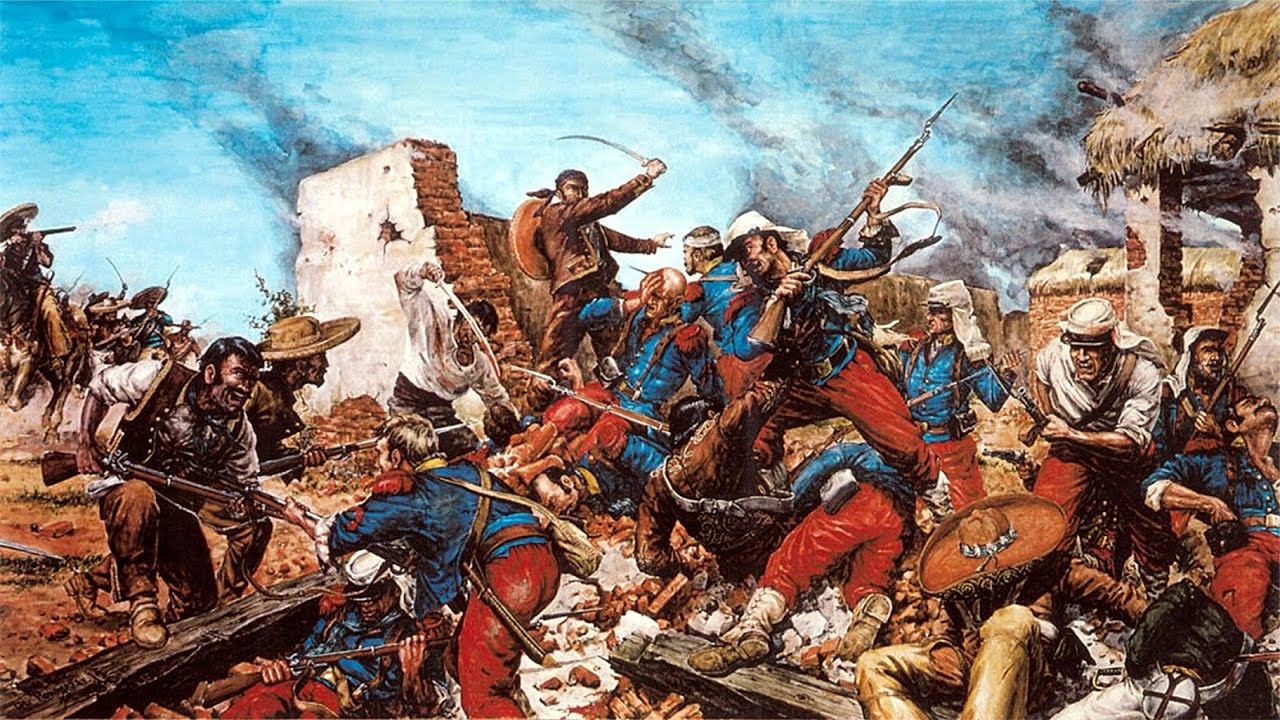
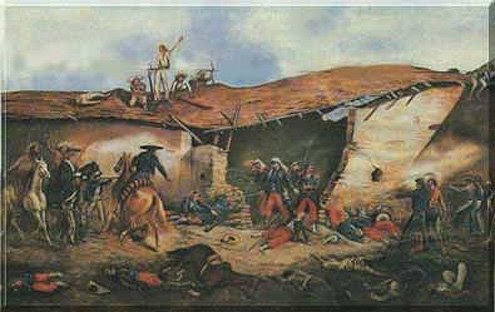
Bowie later took a leadership position in the Texas Revolution and achieved notoriety thanks to his remarkable knife and rugged frontier swagger. Jim Bowie ultimately died in 1836 at age 40 defending the Alamo. Grievously ill at the time, the most likely version of events had him propped up in his cot with his back to the wall, cut down by the attacking Mexicans after fighting to the death armed with a pair of pistols and his remarkable knife.

WAS YOUR PRIVATE INFORMATION LEAKED BY THE DEPARTMENT OF JUSTICE?
IF SO, PAY ATTENTION TO THIS URGENT ALERT AND UPDATE
REMEMBER WHAT HAPPENED? On June 28, 2022, it was reported that California gun owners had been put at risk by the Attorney General’s office after a new “dashboard” disclosed the personal data of CCW holders and applicants for the past ten years, as well as those on the Assault Weapons Registry, plus the entire Dealer Record of Sale database and those on the Gun Violence Restraining Order list.
WHAT STEPS WERE IMMEDIATELY TAKEN? Gun Owners of California as well as other Second Amendment groups immediately got to work informing gun owners of this egregious and illegal release of private data, and began to collect information as to what would be the most effective way to hold the DOJ responsible. Research on how to proceed with a class action lawsuit was set in motion and it was ultimately determined that this path would not stand up in court as the damages from the leak would vary between affected individuals.
WHAT IS THE STATUS NOW? An out-of-state Second Amendment group filed a class action lawsuit last summer, but this was recently dropped, which means that there is no legal action currently being pursued against the DOJ for the release of confidential data.
THESE ARE THE NEXT STEPS FOR THOSE WHOSE DATA WAS LEAKED: We know – this is frustrating, but it is important. If you want to protect your right to pursue legal action in the future, it is imperative that you fill out an Administrative Claim Form (link to form below). An Administrative Claim Form puts the state on notice that a claim may be filed.
DOES THIS MEAN I WILL BE OBLIGATED TO PURSUE LEGAL ACTION? NO, it simply preserves your right should you want to pursue it in the future.
WHAT GOC RECOMMENDS: As infuriating as this is, this is the most appropriate legal recourse at this time. We strongly believe every single person whose confidential data was leaked to the internet and beyond should protect their future interests and fill out the form. There is a cost of $25 and there is no binding obligation, but it is important that the State of California hears from all of us. This is a small cost to pay to preserve your rights.
THE ADMINISTRATIVE CLAIM FORM MUST BE FILED BY DECEMBER 27, 2022. It is self-explanatory, is fillable online and includes details where to send it.
For more detailed information and instructions, you can call Gun Owners of California at (916) 984-1400 or click on the following link: https://crpa.org/wp-content/
If you are, however, interested in pursuing an immediate lawsuit against the Department of Justice for this extraordinary violation of privacy, the legal team at Michel and Associates have provided a draft legal complaint HERE.
Remember, the deadline to preserve your right to sue the Department of Justice is December 27, 2022.
Here is the forms for it Grumpy
https://www.documents.dgs.ca.gov/dgs/fmc/dgs/orim006.pdf
Petty Officer Michael Thornton was a highly decorated career Navy SEAL who distinguished himself in combat in Vietnam.
Michael Thornton was born in 1949 in South Carolina. He graduated from high school in 1966 and immediately enlisted in the US Navy.
In 1968 Thornton was one of sixteen BUD/S (Basic Underwater Demolition/SEAL) graduates out of a starting class of 129.
Four years later on a bullet-swept beach in North Vietnam, Petty Officer Thornton made John Rambo look like a Sunday School teacher.
Naval Special Warfare soldiers were still pulling covert missions at the very end of the war in Vietnam. Mike Thornton is in the center. Note the blue jeans.
The war in Vietnam was winding down, and Michael Thornton was one of only a dozen Navy SEALs remaining in the country. On October 31, 1972, Thornton formed a team along with a SEAL officer named Thomas Norris and three South Vietnamese Special Forces operators.
Their mission was to gather intelligence and capture prisoners for interrogation from the Cua Viet Naval Base north of Quang Tri. Thornton had worked with his three South Vietnamese counterparts before and trusted them as brothers.
The plan was to insert via rubber boat launched from a South Vietnamese junk. At dusk, they launched their small boat and then swam the last mile to reach their objective. In the darkness, they found that they had made a navigation error and landed well within North Vietnam. Advancing inland past numerous enemy positions they simply continued the mission.
Though the mission was a quiet reconnaissance and prisoner snatch, Thornton’s SEAL detachment was loaded for bear.
Their intelligence gathering complete, the small Naval Special Warfare team encountered a pair of North Vietnamese soldiers patrolling on the beach and attempted to capture them. When this operation went awry one of the NVA troops escaped and ran toward the jungle to alert his comrades. Thornton gave chase and was forced to shoot the man with a handgun, drawing the attention of some fifty NVA regulars located nearby. The result was a simply epic firefight.
Aggressive fire and maneuver kept the enemy confused concerning the size of Thornton’s small unit. The effective use of LAW (Light Antitank Weapon) rockets by the South Vietnamese SEALs helped slow down the attacking NVA troops.
Thornton picked up a load of shrapnel in his back from an NVA grenade early on but kept on fighting. The five allied warriors fired and moved constantly to keep the attacking NVA troops confused about the modest size of their small detachment.
Thornton attempted to call in friendly naval gunfire from American destroyers offshore but return fire from NVA shore batteries pushed the warships out of range. Over the next four hours, the five frogmen kept around 150 enemy troops at bay. With the coming dawn, however, things began to look bleak.
The five sailors charged toward the water’s edge with Thornton in the lead and Norris taking up the rear. In the process, the unit commander took a round to the head and was presumed dead. When one of the South Vietnamese operators informed Thornton he ran back through blistering NVA fire to recover the body of his fallen friend. He arrived to find four NVA soldiers gathered around Norris’ inert form and killed them all.
As he lifted the limp man to his shoulders he observed that the whole side of his head seemed to be missing. Norris was, however, still breathing.
Thornton killed several of the pursuing NVA soldiers by firing his CAR15 assault rifle one-handed while carrying his severely injured commander to the water’s edge.
Running four hundred yards under fire carrying Norris on his shoulders, Thornton still managed to effectively engage the attacking NVA soldiers by firing his CAR15 assault rifle one-handed.
Mike Thornton’s extraordinary feat of heroism is memorialized in bronze outside the Navy UDT/SEAL Museum in Fort Pierce, Florida. Mike Thornton is on the left. Tommy Norris is on the right.
Tom Norris had previously called naval gunfire in on his position from a nearby heavy cruiser requesting a five-minute delay on the fire mission. When he was struck in the head and immobilized the timeline for the extraction fell apart. The supporting cruiser ultimately fired 104 five-inch high explosive rounds onto the beach.
When Naval gunfire support finally impacted, the two SEALs were blown fully twenty feet into the air. Petty Officer Thornton regained his senses, again hefted his buddy, and charged for the ocean. Once at the water’s edge Thornton found that one of his South Vietnamese comrades had been shot through the buttocks and was unable to swim.
Mike Thornton was not the sort of man to quit just because he was peppered with shrapnel and abandoned on a hostile Vietnamese beach.
Shoving both the severely wounded Norris and the South Vietnamese soldier into the surf, Thornton dragged them both out into open water. Once out of small arms range, Thornton bandaged Norris’ head wound as best he could. He subsequently trod water, keeping himself and his two injured comrades afloat for another three hours. The supporting vessels had presumed the patrol lost and retreated to safety.
Tommy Norris had an AK47 strapped to his body as Mike Thornton carried him into the surf. Thornton used this weapon to alert friendly troops in a South Vietnamese junk.
One of the South Vietnamese frogmen was eventually picked up by a friendly junk and reported both Americans killed. In desperation, Thornton fired Norris’ AK47 into the air and got the attention of an American SEAL onboard. Once taken aboard the South Vietnamese junk, the team was transported to the USS Newport News, the heavy cruiser that had recently fired in support of their extraction.
The heavy cruiser USS Newport News provided fire support to the beleaguered SEAL detachment. Surgeons onboard the vessel were the first to treat injured SEAL Thomas Norris.
Mike Thornton personally carried his friend Tom Norris into the big warship’s operating room only to be told that the severely injured man was beyond saving. Thornton insisted that the surgeon try his best regardless.
Mike Thornton was awarded the Medal of Honor roughly one year after his actions that saved his fellow operators.
A year later Michael Thornton was presented with the Medal of Honor by President Richard Nixon.
Mike Thornton eventually served as an instructor at the BUD/S course in Coronado. He also did an exchange program with the elite British Special Boat Squadron and became a founding member of SEAL Team Six. Thornton was eventually commissioned and left the Navy as a Lieutenant in 1992.
Tom Norris’ story did not end in the operating room of the Newport News in 1972. He survived his ordeal after a nineteen-hour emergency surgery. Multiple surgical procedures and many months of hospitalization later he was medically discharged from the Navy.
Tom Norris went on to complete training at the FBI academy despite the grievous nature of his injuries.
Not satisfied with medical retirement Norris applied for and received a waiver to attend the FBI academy at Quantico, Virginia. He went on to serve twenty years as a special agent in the FBI.
Tom Norris was eventually awarded the Medal of Honor for his actions on a previous mission. The details of his exploits were memorialized in the movie BAT21.
Tom Norris was himself awarded the Medal of Honor for an extraordinary mission to rescue downed American pilots some six months prior to his wounding on that North Vietnamese beach. His exploits were immortalized in the book and movie BAT21. Thornton and Norris were two of only three Navy SEALs to be awarded the Medal of Honor during the Vietnam War. Norris’s MOH mission was incredible in its own right and will likely be the focus of our efforts at some point in the future.
The Guns
Vietnam-era Navy SEALs carried a variety of unconventional weapons. Note the Stoner Light Machine Guns and AK 47 rifles in this team photo.
Vietnam-era Navy SEALs had great latitude in selecting their personal weapons.
A good friend who served as a SEAL in Vietnam in 1970 carried an M14, a Colt 1911A1, and a Browning pump 12-gauge shotgun stoked with buckshot whenever he went downrange. The shotgun carried a total of nine rounds onboard and was the product of a particularly successful night of poker soon after he arrived in the country. He cut the wooden buttstock down into a pistol grip and slung the gun over his shoulder on a makeshift single point sling.
The SEAL on the right is packing a Stoner 63 LMG. The one on the left has a highly modified M60 machine gun.
While the Stoner 63 light machinegun was a SEAL favorite, Michael Thornton carried a COLT CAR15 during his MOH mission.
The technical designation for the CAR15 was the XM177E2 Colt Commando. Issued with two slightly different barrel lengths, this stubby little carbine eventually evolved into today’s M4.
This compact carbine was a shortened version of the standard M16A1 that armed most of the conventional troops deployed during the war.
Sporting either a 10 or 11.5-inch barrel, a telescoping aluminum stock, and a sound moderator, the 5.56mm CAR15 was popular among aircrews, dog handlers, and Special Forces troops. By the end of the war, there were only about one thousand 30-round magazines available for these weapons in Vietnam. Special operators like Navy SEALs typically got first dibs.
The AK47 saw its first widespread use against American forces during the Vietnam War. American soldiers developed a healthy respect for the gun’s extraordinary reliability and exceptional firepower.
Tom Norris carried a captured AK47 during this mission. Special Forces troops frequently employed enemy weapons on clandestine operations. This practice would minimize the possibility of hostile troops distinguishing them by the sound of their gunfire. The AK47 was a rugged and effective assault rifle that was readily available in the latter stages of the war.
Mikhail Kalashnikov developed the most widely distributed combat rifle in human history as he recovered from wounds incurred fighting the Germans on the Eastern Front during World War 2.
Mikhail Timofeyevich Kalashnikov developed the gun that would become the AK47 during the waning months of the Second World War. Firing a true intermediate 7.62x39mm cartridge via an unnaturally reliable long-stroke gas-operated system, the AK47 found its way into the hands of communist soldiers and insurgents around the globe. With more than 100 million of these tough guns in service, these weapons will be found anyplace men kill each other for untold generations to come.
Denouement
Mike Thornton’s dedication to country, mission, and teammates was awe-inspiring. He is shown here along with Tommy Norris, the SEAL whose life he saved during his MOH operation. If that picture doesn’t move you then something about you is broken.
Michael Thornton’s superhuman display of courage and stamina eclipses anything depicted in a Hollywood epic. That the man he rescued did himself earn the Medal of Honor on an unrelated mission simply speaks to the caliber of the warriors that served with the US Navy SEALs during the protracted war in Southeast Asia.
While the causes and prosecution of the war in Vietnam are certainly open for debate, none could dispute that Michael Thornton’s actions on that dark Vietnamese beach were the stuff of legend. Mike Thornton was and is a true American hero.
Testimony of Pilot #32
On Nov. 18, 1952, Royce Williams became the top-scoring carrier-based naval aviator and the top-scoring naval aviator in a Navy jet of the Korean War.

A signed print by prominent military aviation artist Stan Stokes displayed on a wall in the home of the veteran Royce Williams depicts a U.S. Navy F9F-5 Panther fighter jet, which was the plane Williams flew in a dogfight against seven Soviet MiG-15 fighters. (Charlie Neuman/For The San Diego Union-Tribune)
On Nov. 18, 1952, during the Korean War, Navy Lt. Royce Williams, along with three other pilots from his fighter squadron, VF-781, launched from the USS Oriskany into the stormy skies over the Sea of Japan. There were more than 250,000 sorties flown by the Navy during that conflict, but the ensuing engagement would end in one of the great feats of aerial combat, yet it was covered up for decades due to the tense political environment of the Cold War.
Background
BY NOVEMBER 1952, the air and ground war in Korea had been raging for two years and five months. The People’s Republic of China (PRC) had committed hundreds of thousands of soldiers to help their North Korean allies.
Four Soviet air force fighter divisions had been deployed to People’s Republic of China air bases near the mouth of the Yalu River on the western edge of the peninsula. Equipped with state-of-the-art sept wing MiG-15s, they were there to support the North Korean People’s Army (KPA) as well as the PRC’s People’s Liberation Army (PLA).
Almost every day, Soviet MiGs engaged F-86 Sabers from USAF 4th, 18th and 51st Fighter Interceptor Wings over the mouth of the Yalu River on the west side of the Korean Peninsula. On the ground, the war had stalemated to a line almost identical to the current border between the Democratic People’s Republic of Korea (North Korea) and the Republic of Korea (South Korea).
In the Yellow Sea, planes from Task Force 95 made up of Royal Navy, Royal Australian Navy and U.S. Navy escort carriers flew interdiction and close air support sorties while their U.S., Royal Navy, Canadian Navy, and Australian Navy escorts provided naval gunfire support.
In the Sea of Japan, the U.S. Navy’s Task Force 77 roamed up and down the coast. Generally, its carriers and escorts launched close air support and interdiction strikes a from within 50 miles of the coast to cut off supplies to the PLA and what was left of the KPA. By 1952, the Navy was rotating the three Essex-class carriers it had in theater so two carriers were on station off the east coast of Korea with a third refitting/rearming in Japan.
The USS Oriskany (CV-34) as part of that Navy Task Force was striking at logistics centers in North Korea and on 18 November was off the northeast coast of North Korea about 50 miles east of Chongjin and less than 100 miles southwest of the Soviet air and naval bases at Vladivostok. Chongjin was a hub for roads and railroads from the PRC and Vladivostok in the Soviet Union that allowed supplies to flow to the KPA and the PLA.
The carrier and its Air Group 102 had been on station since October 1952. Air Group 102’s pilots roamed northeastern North Korea on armed road reconnaissance missions during which they strafed convoys and trains as well as flying bombing missions to destroy bridges on the road and rail lines.
The Mission
On board Oriskany, the task force commander received a top-secret message indicating that MiGs were expected to fly south from Vladivostok and over Task Force 77. Standard U.S. Navy doctrine was then, and is today, to intercept any intruder before they reach their weapon launch envelop and escort them until they depart. The target on the 18th was the city of Hoeryong, right along the Yalu River where the borders of China, North Korea, and what was then the Soviet Union met. This made the bombing missions a risky proposition, given the possibility of violating each nation’s airspace. The weather that day was terrible. On top of the heavy snowfall that blanketed Task Force 77’s ships, the air temperature was in the 20s and the water temperature was in the mid-thirties. Without an exposure suit in 30-degree water, a pilot has about two minutes or less to get into his raft before the cold immobilized his body. Once in his raft, he still could die from exposure.
Lt Royce Williams, on his second mission of the day, was tasked as part of a combat air patrol in a Grumman F9F-5 Panther. Williams, a Naval Reservist and three others from VF-781 manned their F9F-5s and launched at 1300.
“We started to rendezvous with each other as we climbed out of the clouds,” Williams recalled “And that’s when we heard from the combat information center that there were inbound bogeys from the north.” They had been detected on radar roughly 80 nautical miles north-northeast of the task force. There appeared to be seven Russian MiG-15 fighters that were heading toward them (probably) from a Soviet base in Vladivostok. Williams’ flight was soon vectored toward the MiGs .
In this time frame, division leader Elwood reported his fuel pump warning light had come on. The Fighter Direction Officer (FDO) directed him to break off and report overhead Oriskany. Elwood passed flight lead to Williams as he and his wingman turned away and dived toward the clouds. Williams and his wingman, Lieutenant Junior Grade John Middleton, were now a two plane section.
The F9Fs had broken out in the clear at 12,000 and were climbing past 16,000 feet when Williams spotted the enemies’ contrails, 45 miles from the carrier. He estimated the Soviet fighters to be above 30,000 feet higher. Williams kept climbing and radioed to the Oriskany that he had a “tallyho” on the MiGs which were split into a three plane and a four plane group. The CIC on board Oriskany radioed Williams not to engage when suddenly the MiGs opened fire with their 23mm and 37mm cannon. Both were diving on the two F9Fs from different directions.
With tracers streaming past his F9F-5, Williams replied as he made sure his cannon were armed and ready to fire. “We are already engaged!”
The attackers were indeed swept wing MiG-15s. Comparable to the U.S. Air Force F-86, the MiGs outclassed Williams’ Panther in speed, maneuverability, climb rate, and weapons range.
Note : At that time air-air engagements were generally confined to the western half of the Korean peninsula, where the Air Force’s F-86 Sabres would patrol the approaches from China known as “MiG Alley.” The location this far to the east was one indication that these MiGs were almost certainly launched from the Soviet Union.
While the Navy had scored some early kills against the MiGs, their mission had switched to one of mostly ground attack. Williams had trained as a fighter pilot since 1944, but the primary mission of the Panthers in Korea was air-to-ground engagements.
“I flipped on my gunsight and fired a burst to test my guns,” he recalled.
“We were just going through 26,000 feet when the MiGs split up and dove out of the contrail layer,” Williams remembered. “The first ones came at us from the right side in a four-plane formation and opened fire. I pulled into a hard climbing left turn and came around on the Number Four MiG. I fired a burst and hit him solidly in the rear fuselage. He went down smoking, and my wingman then followed him, leaving me alone.” Williams, now alone, faced six fighters, probably Soviet.
As the MiGs, now in two formations, climbed for altitude to make attacking dives, Williams found himself on the tail of one and downed a second aircraft. He now had to choose his shots carefully given that the Panther carried less ammunition than the MiGs.
“In the moment I was a fighter pilot doing my job,” said Williams. “I was only shooting what I had.”
The five remaining Soviet jets were now taking turns climbing and then making passes at Williams. He could only twist and turn the Panther to the limits of its abilities, engaging a Soviet jet when it passed in front of his sights or rapidly turning to face them head on. “I was engaged mentally at the time. A lot of it was awareness of where they were and how I had to maneuver to avoid them. They were taking turns. I decided if I concentrated on shooting them down, then I’d become an easy target. So, my initial goal was to look for defensive opportunities when they made mistakes,” he said. Williams fired at another MiG and it banked out of the fight. As that Soviet pilot’s wingman turned towards Williams, he fired a long burst as the two jets passed belly-to-belly, with the Soviet aircraft crashing into the sea.
The three remaining MiGs of the first group easily accelerated away from the Panther and climbed to position themselves for another firing run. Williams saw their left wings come up as they reversed course. “They had me cold on maneuverability and acceleration – the MiG was vastly superior on those counts to the F9F. The only thing I could do was out-turn them.” He managed to cut loose a burst of fire as the MiGs flashed past, but failed to score any hits. As the first three pulled away again, the other three joined in. Williams sweated as he reversed, jinked and rolled to get away from each firing run. He glanced over his shoulder and saw a MiG locked on his six o’clock. Pulling the stick back into his gut, he threw it against his right leg as he stomped right rudder and executed a very hard wings-vertical right turn with contrails spinning off his wingtip fuel tanks. The MiG flashed past his tail.
In the rush of adrenaline, the fight seemed like it had been going on for an hour. The enemy formations became ragged and Williams got several opportunities to track an individual MiG as the pilot bored in to attack. Some rounds seemed to hit, but he couldn’t follow up as he stomped rudder and slammed ailerons to keep his six o’clock clear. “I was firing at every MiG that passed within gun range as they came by.”
Turn. Turn again. Not a second spent straight and level. Fire a quick burst to throw off their aim. Turn some more. Then again.
“Finally, the leader and his wingman went off to the right and I went after the section leader of the plane I’d shot down. He pulled up into the sun and I lost him, then I saw the leader and his wingman come around for a diving attack. I turned into them and fired at the leader. He turned away and the wingman rolled down on me and we went past belly-to-belly as I raked him with a long burst. He caught fire and went down. The section leader then came around and I turned into him and fired at him practically pointblank and he went down. The (flight) leader then came around again and I fired and parts came off him as he dove away.”
Getting Home
Eventually, Williams ran out of ammunition, and cannon fire from a MiG took out control of his rudder and hydraulics. By that point, only one of the seven original Soviet planes was still in the air with him. He managed to escape by playing cat-and-mouse in the clouds with the MiG all the way back to the protection of the fleet
“As I maneuvered to avoid the wreckage, I porpoised to try and clear my tail. I was tracking another wounded MIG when I suddenly spotted one of the other two as he slid in on my six. He fired a burst with his 37mm cannon and hit me in the wing. The shell went into the engine area and messed up the hydraulic unit in the accessory section. I suddenly lost rudder and flaps and only had partial aileron control. The only thing that really worked were the elevators. I dove toward the cloud deck below at 13,000 feet, and he was 500 feet behind me and still shooting all the way down. It seemed like it was taking forever to drop that 10,000 feet! My wingman finally got back in the fight and came in on the MiG and he pulled away as I went into the clouds.”
Williams fought to control the Panther, hoping he could pull out of the dive. “I came out of the clouds at around 400 feet. I was way too low to eject – you had to be above 1,200 feet and in a climb to successfully eject from a Panther – so I was stuck with staying in the airplane, like it or not. I soon discovered it was uncontrollable below 170 knots, so I had to maintain high speed regardless.” which made the approach precarious considering the Panther’s normal landing speed was 105 knots, or roughly 120 miles per hour. As he passed over the fleet a few hundred feet above the freezing ocean, several escorting destroyers opened fire as he flashed past.
Aboard Oriskany, the deck was ordered cleared for what was obviously going to be a crash landing. “I told them I couldn’t fly slower than 170 knots and I could see the ship visibly speed up as she turned into the wind.” Williams set himself up on final approach; the carrier was taking spray over the bow as the stern rose and fell through a 20-foot arc. “I didn’t want to ditch, because I wasn’t sure I could make a successful ditching, and that water was cold enough I knew I wouldn’t last ten minutes even in my poopy suit.”
Flying a conventional turning approach to the back end of the carrier was not possible, given his lack of control. After learning of Williams’ predicament, the captain of the Oriskany turned the ship so the Panther could make a straight in approach. “The Oriskany’s captain headed the ship just away from the wind, which gave me the opportunity to come aboard.” He kept the bucking Panther under control and continued the straight-in approach at 170 knots. With his canopy now open he flew a “Roger pass” to a three wire trap. “I caught the three wire and shut her down.”
After taking a moment to catch his breath, Williams climbed out of the riddled jet and was surprised he’d made it back when he saw the damage.
“They counted 263 holes in the airplane, mostly from 23mm hits and some 37mm hits, including the one in the wing that went into the engine accessory section. If it had been six inches forward, it would have hit the spar and blown my wing off. Eight inches to the rear and it would have blown up the engine. I had fired off all 760 rounds of 20mm I had aboard. I wouldn’t have had a chance if I hadn’t been armed with those cannons.” After the airedales pulled everything of value from F9F-5 BuNo 125459, the broken carcass was heaved overboard, where it disappeared into the dark sea.
In the fight of his life, Royce Williams had accomplished what no other American fighter pilot would ever accomplish: shoot down four MiG-15s in one fight. Given that the F9F-5 Panther was outclassed and outperformed on all points – speed, maneuverability and firepower – by the MiG-15, which was nearly 100mph faster and had a superior thrust-to-weight ratio, it was truly a performance for the record books. Williams’ air battle is now known as the longest dogfight in Naval history. Before that, the longest one was five minutes. Even in the most extreme circumstances, pilots know that if you can run, you run. And you only ever train for 3 on 1. To go 7 on 1 is beyond imagining.
“If I told you, I’d have to shoot ya”
It was then that the national security implications of the encounter began to take hold. While Soviet volunteers were known to be flying in Korea, Williams had engaged the actual Soviet Air Force. There was real fear at the highest levels of the US government and UN command that such an “incident” could change the Korean “police action” into World War III. As far as the United States Navy was concerned, the fight had never happened.
It is now known that the message to the USS Oriskany warning of the MiG flight came from a National Security Agency (NSA) team on board the heavy cruiser USS Toledo (CA-133), more than likely, the intelligence from a communications intercept. At the time, the mere existence of the newly formed NSA was still considered Top Secret which earned it the moniker “No Such Agency.”
After ordering Williams to tell no one, Vice Admiral Robert P. Briscoe, Commander Naval Forces Far East, informed him the NSA team had proof from recorded radio transmissions that he had gotten at least three of the MiGs, while the fourth had crashed in Siberia. Unfortunately, the gun camera footage had been “edited” aboard Oriskany, leaving only a portion showing two MiGs hit solidly.
Naval commanders ordered a version of the mission created that became the official account as found in the Oriskany and Air Group 102 Action Reports, though it had little connection with the facts: Williams was credited with one kill and a probable/damaged while Lt (jg) John Middleton, wingman to division leader Elwood, who had never been anywhere near the fight, was credited with a kill on the basis that, at the end of the 35-minute fight, he had been vectored toward a descending MIG whose pilot had ejected when Middleton approached it and fired a burst from out of range. Both pilots were awarded the Silver Star for their “accomplishments.” Dave Rowlands, who never fired a shot in the entire fight, was awarded a probable and the Distinguished Flying Cross. The history books have told the story that way ever since.
Royce Williams remained silent about the event for nearly 50 years, flying 70 missions during the Korean War, commanding VF-33 and then, during the Vietnam War, flew 110 missions as commander, Carrier Wing 11 (CAG), retiring as a Captain. The only official record of the engagement was Williams’ one confirmed kill and a Silver Star.
Four decades later, with the collapse of the Soviet Union, records began to emerge from Moscow confirming the engagement. Following the end of the Cold War in 1992, the Russians opened their records and revealed that Williams had indeed gotten four: Captain Belyakov, Captain Vandalov, Lt Pakhomkin and Lt Tarshinov of the VVS-PVO, the Air Defense Forces of the Red Air Force. Vandalov, Pakhomkin and Tarshinov were directly shot down in the fight, while flight leader Belyakov was badly shot up and was killed when he attempted to crash-land as soon as he was over Soviet territory. The dogfight was covered in a 2014 book by Russian historian Igor Seidov, Red Devils Over the Yalu: A Chronicle of Soviet Aerial Operations in the Korean War.
On the USS Midway, now a museum ship in San Diego, as a tribute to Williams, there is an F9F Panther with the silhouettes of four MiGs on the side under the cockpit.
There’s now a long-simmering campaign for Williams to receive the Medal of Honor. Navy veteran Steve Lewandowski gathered signatures from nearly 100 Navy, Marine, and Army flag officers supporting the action, as well as resolutions from the American Legion and Distinguished Flying Cross Association. That effort has been pushed to Congress. Please See Part 2.
***********************
Note: This post is based on multiple sources owing credit and thanks to Skip from the “The List,” Pam Kragen, Marc Liebman, Dario Leone, Max Hauptman, including The San Diego Union, and the websites Militaryhistorynow.com and Task and Purpose.
Against All Odds – Killing MiGs in the Korean War with Naval Aviator Royce Williams (Part 2 of 2)
Testimony of Pilot #33
Will he finally receive the Medal of Honor?
In San Diego Harbor on the USS Midway, now a museum ship , Capt. Royce Williams (USN, Ret) stands next to an F9F Panther with the silhouettes of four MiGs under the cockpit. The aircraft and its markings are there as a tribute to the man who downed at least four Russian MiGs in an extraordinary 35+ minutes on one mission on Nov. 18, 1952.
For over half a century his achievement was classified; nobody knew what he did that day over the skies of Korea. If you don’t know his story please see Part One.
Now retired he is one of the Korean War’s forgotten heroes. Royce Williams’ heroics in the Korean War flew under the radar for more than a half-century. Now, after his heroic engagement with seven Soviet MiG 15s – kept secret for decades – the 97-year-old retired Navy captain could be in line for the Medal of Honor based on a movement, sponsored by a U.S. Senator and several Navy flag officers.
Royce Williams accomplished what no other American fighter pilot would ever accomplish: shoot down four MiG-15s in one fight. Given that the F9F-5 Panther was outclassed and outperformed on all points by the MiG-15 – speed (nearly 100mph faster), superior thrust-to-weight ratio, maneuverability and firepower – it was truly a performance for the record books.
This was the only time that a US Pilot in a US aircraft engaged Soviet pilots in Soviet aircraft during the Korean War, and was covered up for decades due to the tense political environment of the Cold War. The event was immediately declared Top Secret and Williams was directed by the Navy to not reveal the incident.
There were more than 250,000 sorties flown by the Navy during the Korean conflict, and classification or not the ensuing engagement would end in one of the great feats of aerial combat.
There is now an effort underway to see him awarded the Medal of Honor for his actions that day.
******
There was real fear at the highest levels of the US government and UN command that such an “incident” could change the Korean “police action” into World War III. The national security implications of the encounter began to take hold. While Soviet volunteers were known to be flying in Korea, Williams had engaged the actual Soviet Air Force. Furthermore, his flight had been made aware of the Soviet jets based on intelligence from a small detachment from the National Security Agency — then less than a year old — operating on one of the other ships in the task force. As far as the United States Navy was concerned, the fight had to have never happened.
After ordering Williams to tell no one, Vice Admiral Robert P. Briscoe, Commander Naval Forces Far East, did inform him the NSA team had proof from recorded radio transmissions that indeed he had gotten at least three of the MiGs, while the fourth had crashed in Siberia. Unfortunately, the gun camera footage had been “edited” aboard Oriskany, leaving only a portion showing two MiGs hit solidly.
Rather than acknowledge an air battle that might have had the effect of drawing the Soviets into the Korean War, National Security Agency and Naval commanders ordered a version of the mission created that became the “official account” as found in the Oriskany and Air Group 102 Action Reports, though it had little connection with the facts. Both planes’ gun camera footage was immediately taken by the intelligence officers and later, Williams learned, was passed along to the newly formed National Security Agency.
The dogfight scrubbed from its records and Williams sworn to secrecy for more than 50 years, when the nation awarded 146 Medals of Honor to U.S. servicemen for extraordinary valor in the Korean War, Williams didn’t make the list.
He was credited with one kill and a probable/damaged while Ltjg John Middleton was credited with a kill on the basis that, at the end of the 35-minute fight when vectored back from Oriskany toward a descending MIG, the pilot had ejected when Middleton approached it and fired a burst from out of range. As the wingman to the division leader who had been forced to return to the Oriskany by mechanical problems he had never been anywhere near the real fight. Both pilots were awarded the Silver Star for their “accomplishments.” Dave Rowlands, who never fired a shot in the entire fight, was awarded a probable and the Distinguished Flying Cross. The history books have told the story that way ever since.
Williams went on to fly a total of 70 missions during the Korean War, later flying F-8 Crusaders and commanded VF-33 and Carrier Wing 11. He flew 110 missions during a Vietnam deployment as the “CAG,” retiring as a Captain (O-6) in 1980.
The only official record of the engagement is Williams’ one confirmed kill and a Silver Star. His aerial heroics have been a legend for decades among pilots coming up through the Navy’s Top Gun school. But no trace of Williams’ daring flight on Nov. 18, 1952, exists in the U.S. military archives.
*****************
For decades, as noted, the entire incident itself remained shrouded in mystery but over the years, pieces of the story began to emerge. In 1992, with the collapse of the Soviet Union, records began to emerge from Moscow confirming the engagement. The Russians opened records that revealed that Williams had indeed gotten four kills: Captain Belyakov, Captain Vandalov, Lt Pakhomkin and Lt Tarshinov of the VVS-PVO, the Air Defense Forces of the Red Air Force. Vandalov, Pakhomkin and Tarshinov were directly shot down in the fight, while flight leader Belyakov was badly shot up and was killed when he attempted to crash-land as soon as he was over Soviet territory.
Other unconfirmed reports surfaced that the Soviet’s actually lost six airplanes in the encounter. A fifth crashed in Soviet territory as it was limping home. Another aircraft and pilot were listed as MIA because the plane never returned to its base. All six were members of Soviet Naval Aviation.
True to his word, Williams although long since retired, had refused to discuss the dogfight. He had never told anyone about the dogfight — not even his wife, Camilla, or his pilot brother until the Russians released the downed pilots names.
But while Williams thus became the top-scoring carrier-based naval aviator and the top-scoring naval aviator in a Navy jet in the Korean War, several attempts to set the record straight have failed. The problem persists on the grounds that there is no longer an American witness alive to verify Williams’ account, this despite the Russian publication of the names of the Soviet pilots who died in the fight.
The dogfight has now been covered in a 2014 book by Russian historian Igor Seidov, “Red Devils Over the Yalu: A Chronicle of Soviet Aerial Operations in the Korean War.”
He wrote that of the seven MiGs that left Vladivostik that morning, only one returned to base. Four were shot down by a single U.S. aircraft, one plane was shot up and crashed on its way back and the seventh plane was never found.
There’s now a long-simmering campaign for Williams to receive the Medal of Honor. But because the incident officially didn’t happen, finding the necessary documentation is still an uphill battle. Nominations for the Medal of Honor are required within three years of the event. Any later nomination requires Congressional action.
Over the past eight years, after reading Seidov’s book, retired Rear Adm. Doniphan “Don” Shelton of Del Mar has tried repeatedly to get the Navy and Department of Defense to award the medal to Williams, but by not involving Congress members early enough in the process to receive a congressionally awarded medal, Shelton’s efforts ultimately failed and last October Shelton passed away .
A newly assembled delegation’s effort, nicknamed “Operation Just Reward,” is now seen as the last chance to get the medal to Williams before he passes away.
Navy veteran Steve Lewandowski who assisted Shelton’s efforts for three years has gathered signatures supporting the action from nearly 100 Navy, Marine, and Army flag officers, as well as resolutions from the American Legion and Distinguished Flying Cross Association. All five members of the San Diego U.S. Congressional delegation have joined forces to not only bring Williams’ heroism to the public’s attention, but also to right what they see as a historic wrong. Congress members Darrell Issa, Scott Peters, Sara Jacobs, Juan Vargas and Mike Levin have prepared an amendment to the 2023 National Defense Authorization Act to include the Medal of Honor for Williams,
“To me and everyone who learns his story, Royce Williams is more than the Navy’s Top Gun pilot for all time,” said Rep. Issa who initially proposed a bill to award Williams the Medal of Honor last fall and sponsored the House NDAA amendment. “His courage under fire and service to our country in a time of war should be an inspiration for all Americans. While Royce seeks neither fame nor recognition, those of us who know him and know what he did won’t give up until our mission to honor him is a success.”
“Royce Williams is a hero like no other, and his uncommon valor and resolute courage in battle is a history everyone should know,” Issa continued. “His recognition with the Medal of Honor is overdue and we’re going to get it done.” But even with the support of the bipartisan delegation, the medal award is no sure thing. Lewandowski said there are still hurdles to overcome, as the Navy and Department of Defense have already twice rejected the application. He hopes the battle for the medal can now be fought in the court of public opinion and the bipartisan coalition’s support will turn the tide.
“This is it, ‘once more unto the breach.’ It’s a ragtag, zero-resources effort, but it’s the right thing to do. This old man needs to be recognized for this unbelievable dogfight, when quite frankly anyone else would’ve run the other way. He’s the real Top Gun,” said Lewandowski, who is past commander of American Legion Post 416 in Encinitas.
Now 97 and long retired, Williams lives in a scenic mountainside home in Escondido’s Hidden Meadows community. Spinal injuries from a long-ago plane crash in El Centro make it hard for Williams to maneuver around his home, but his memory of the 1952 dogfight remains as fresh today as it was seven decades ago. Asked how it would feel to be awarded the Medal of Honor now, Williams takes a few seconds to consider his answer.
“If it happened, I would be awed,” Williams said. “I wish my dad could know. It would mean even more to my friends to know that I finally received it.”
****************
The House has passed the version of the FY 2023 National Defense Authorization Act (NDAA) that includes the amendment authorizing the award of the highest military award for valor to Williams for the California resident’s courageous actions against such long odds on November 18, 1952.
The Senate version has yet to go through that chamber’s full amendment process.
Actions Speak Louder Than Medals – the Royce Williams Story – https://www.youtube.com/watch?v=q0RzrNkx4iQ
He’s a senior NCO in the Delta Force. SGM Payne enlisted in 2002, serving as a sniper in the 75th Ranger Regiment until 2007, when he joined the Delta Force.
(SGM Payne in Afghanistan)
In 2015, then-SFC Payne’s unit was deployed to Iraq to help combat ISIS. His unit advised and trained the newly formed Kurdish Counter Terrorist Group. One day, fresh graves are seen outside of a known ISIS prison. The joint team is given the green light.
Payne’s team arrives with the CTG at night time. Upon arrival, they’re hit with volleys of gunfire. The Kurds not having conducted any operations before, are nervous and don’t move forward. The Deltas lead the way, giving their friends courage to press forward. Master Sergeant Joshua Wheeler is killed leading his comrades into battle.
Meanwhile, SFC Payne and his team press into the building. They reach a bolted door that holds in the Iraqi hostages. The team attempts to break it, but there is too much fire coming their way. Payne braves the fire and breaks the bolt. The joint team then starts getting all of the hostages out. As the firefight continues, ISIS terrorists start setting off bomb vests, causing fires which cripple the building’s stability. After securing multiple hostages, they move outside.
(Then-SFC Payne, left or center)
However, plenty of hostages are left. SFC Payne keeps moving back inside to make sure no man is left behind. By doing so, he is risking getting crushed or burnt to death. At one point, a tired hostage believes he is going to die in the fire and can no longer walk to the outside. Payne helps him up and gets him outside.
Overall, due to then-SFC Payne’s actions, over 75 Iraqis are rescued. At first, he is awarded the Distinguished Service Cross, the second highest American military award. However, on September 11, 2020, SGM Payne was awarded the Medal of Honor, the highest military award in the US.
(President Trump awarding SGM Payne the MoH)