Category: Interesting stuff

Per the backstory, Dr. Henry Walton “Indiana” Jones was an esteemed professor of archaeology with a diagnosable wanderlust. Professor Jones was bored with teaching and found himself trekking across the globe in search of priceless artifacts and powerful totems. Through four feature films and a television series, the adventures of Indiana Jones have captivated kids and grownups alike. Rumor has it there is yet another installment due out in 2023. I personally can’t wait.

George Lucas of Star Wars fame first imagined the character and story arc. Steven Spielberg directed all four movies. John Mangold is on tap to direct the pending fifth. Lucas purportedly drew his inspiration from several sources.

The Field Museum of Natural History in Chicago supposedly served as inspiration for Indy’s home base. If you’ve not had the pleasure, the Field Museum is simply an incredible place. Acres of taxidermied creatures all harvested from the golden age of naturalism grace countless exhibits. Back when this collection was amassed if you wanted an example of some animal or other you just went out and shot it. Their menagerie is amply stocked with stuffed pandas, for example. We live in a different time today.

Their collection is full to bursting with such stuff as a massive African bull elephant and Sue, the world’s best-preserved Tyrannosaurus Rex. Everything from whales to bugs is meticulously cataloged and on display. My favorites were the preserved hides of the maneaters of Tsavo. In the late 19thcentury, these two maneless male African lions killed and devoured between 31 and 100 peasant workers who were building a trans-African railroad. I’ll likely do a piece on that sordid tale eventually.
The Real Deal

While Lucas was inspired to build the Indiana Jones tales from a variety of sources, one guy stands out as the archetype for the fearless naturalist explorer genre. Roy Chapman Andrews was a rare breed of man. Born in 1884 in Beloit, Wisconsin, Chapman felt his calling from a very early age.

Roy Andrews grew up in the Wisconsin wilderness exploring the forests, creeks, and farmers’ fields surrounding his home. Along the way, he learned marksmanship and taught himself taxidermy. He made enough on mounted animals to put himself through college.

After graduation, Andrews applied for a position with the American Museum of Natural History in New York City. There were no openings available, so he took a job instead as a janitor in the taxidermy department. Along the way, he also earned a Master of Arts degree in Mammalogy from Columbia University. In 1909 Andrews embarked upon his first overseas trek.

Andrews took the USS Albatross to the East Indies gathering examples of lizards, snakes, and similar reptiles for the museum’s collection. In 1913 he explored the arctic aboard the schooner Adventuress in search of a specimen of the bowhead whale. While he returned with the best film of seals in their natural habitat ever obtained, he remained nonetheless whale-less.

Andrews married Yvette Borup in 1914, and the couple struck out for the Far East. Over the next several years the two naturalists led the Asiatic Zoological Expedition across China. In 1920 the pair departed Peking aboard a fleet of Dodge automobiles. Along the way, they found countless fossils of prehistoric animals that had been previously uncategorized.

In 1923 Andrews and his wife discovered the world’s first fossilized dinosaur eggs, fundamentally changing the way science regarded dinosaurs. While these eggs were originally assumed to be from a sort of ceratopsian dinosaur called Protoceratops, they were further identified in 1995 to belong to a theropod called Oviraptor. The extraordinary finds Andrews made were duly shipped back to his museum for study.

By the late 1920’s the political situation in China was deteriorating, and the Great Depression was having its inevitable impact. Andrews’ final trip to China was in 1930. While there he recovered an exceptional series of mastodon fossils.

Throughout his adventures, Roy Chapman Andrews was armed. Where today’s naturalists might find themselves emotionally distraught over the prospect of fresh government oil leases, Andrews was the very image of the indestructible manly man. I found reference to two rifles and a handgun that were his regular companions during his travels.

Back in those days if you wanted to have a gun in a foreign country you just packed it in your suitcase. Gun control was really not a thing around the globe, and folks appreciated the unique utility of these indispensable tools. We really cannot imagine such today.

One of Andrews’ primary hunting rifles was a 6.5×54mm Mannlicher–Schönauer. Introduced at the 1900 World’s Fair in Paris, this novel bolt-action rifle sported a rotary magazine and saw military service with the Greek and Austro-Hungarian armies. After World War I, these rugged accurate rifles were sold widely to civilians and sporterized. Civilian sporting versions were marketed aggressively.

Ernest Hemingway was a fan and mentioned the rifle in his writings. The famed elephant hunter Walter Dalrymple Maitland “Karamojo” Bell killed more than 1,000 elephants during his long career, many of which he took with this rifle. The bullet’s high sectional density offered exceptional penetration through thick muscle and bone.

The other rifle Andrews was reported to have used was the Savage Model 99 in .250-300. First developed in 1892, the Savage 99 was a hammerless lever action design that fed from a six-shot rotary magazine. The Model 99 was originally floated as a replacement for the GI-issue Springfield Model 1873 Trapdoor rifle but failed to win the contract. The basic design was nonetheless represented in the Model 99 “Musket” issued to the Montreal Home Guard during World War 1.

The Model 99’s rotary magazine made it one of the first lever-action rifles that could safely feed spitzer (pointed) bullets. Spitzer rounds in tubular magazines run the risk of a primer strike by the bullet tip of follow-on rounds and subsequent uncontrolled detonation. The Model 99 action includes a modest pin that protrudes above the action as an indicator that the rifle is ready to fire.

Roy Andrews also packed a .38 revolver as a sidearm. I found an anecdotal reference claiming it was a Colt Army Special. During a 1928 foray through the Gobi Desert, he had an accidental discharge as he drew the gun to dispatch a wounded antelope. The round created a through-and-through wound to the man’s left leg. In the immediate aftermath, Andrews described himself as “almost happy” when he realized the bullet had missed his knee. His immediate concern had been that he might have a “stiff leg for the rest of my life.”

With the able assistance of his head mechanic McKenzie Young, the camp doctor operated on the wound to clean it out and staunch the bleeding. Andrews later observed that Dr. Perez, “Had given me such a dose of morphine that the world looked bright and rosy; in fact, I was rather pleased with myself.” The subsequent arrival of a severe sandstorm combined with the passing the morphine’s effects “obscured my particular sun.” Fortunately, the wound healed without further difficulty.
The Rest of the Story

Most normal folk do not court danger or hardship. Most of us, after a lifetime vigorously invested, will have had a close scrape or two but nothing that might pass for true regular peril. Roy Chapman Andrews, by contrast, was definitely not normal folk.

When asked to describe some of his most memorable moments he responded thusly, “In the fifteen years I can remember just ten times when I had really narrow escapes from death. Two were from drowning in typhoons, one was when our boat was charged by a wounded whale, once my wife and I were nearly eaten by wild dogs, once we were in great danger from fanatical lama priests, two were close calls when I fell over cliffs, once was nearly caught by a huge python, and twice I might have been killed by bandits.” Wow.

When Andrews finally returned to the US after that final expedition he and Yvette divorced. By that point, they had two sons. Andrews subsequently married Wilhelmina Christmas in 1935.

To an impoverished world so encumbered by chaos and hardship, the exotic life of Roy Chapman Andrews provided a welcome respite. He penned several books on his exploits, and his visage graced the cover of Time Magazine in 1923. In 1927 he was given the title Honorary Scout by the Boy Scouts of America. This award was bestowed to, “American citizens whose achievements in outdoor activity, exploration, and worthwhile adventure are of such an exceptional character as to capture the imagination of boys…” Sigh. Nowadays we cannot even intelligently articulate exactly what a boy is.

Once China was closed to exploration, Roy Chapman Andrews did not sit idle. He helmed The Explorer’s Club from 1931 through 1934. Afterward, he assumed the position of Director for the Natural History Museum.

In reminiscing over his long and storied career, Andrews wrote, “I was born to be an explorer…There was never any decision to make. I couldn’t do anything else and be happy.” In 1942 he and Wilhelmina retired to their rural farm in Connecticut. On March 11, 1960, Roy Chapman Andrews died of heart failure in Carmel, California at age 76. His was a vigorous life exceptionally well-lived.

You cannot make this up, and even if you could, the actual facts would read like something out of a really strange movie script about good versus just plain dumb.
When Illinois Gov. J.B. Pritzker last month rushed to sign a brand new gun control bill before the Legislature adjourned (only to re-convene about 24 hours later), something happened nobody saw coming. County sheriffs up and down the Prairie State loudly declared they would not enforce the new law, which banned so-called “assault weapons” and “high-capacity magazines.” It requires current owners to register their guns with the Illinois State Police.
How this may play out is ripe for speculation. By the time you read this, at least one federal lawsuit involving the Illinois State Rifle Association, Second Amendment Foundation and Firearms Policy Coalition will have been filed. There could be more. It all means that the new Illinois law might be headed for a collision with the Constitution’s Second Amendment.
This certainly appears to be what the sheriffs of at least 80 Illinois counties were thinking when they posted letters saying essentially the same thing.
“As your duly elected Sheriff,” the letter says, “my job and my office are sworn to protect the citizens … This is a job and responsibility that I take with the utmost seriousness. The right to keep and bear arms for defense of life, liberty and property is regarded as an inalienable right by the people of this country …”
“Therefore, as the custodian of the jail and chief law enforcement official, I proclaim that neither myself nor my office will be checking to ensure that lawful gun owners register their weapons with the State, nor will we be arresting or housing law-abiding gun individuals that have been arrested solely with non-compliance of this Act.”
Published reports, and reliable sources, confirm Pritzker was furious when the sheriffs went public with their opposition. When he intimated the lawmen would lose their jobs, at least two different Illinois sources told me between laughs that the governor does not have the authority to fire elected sheriffs.
Meanwhile, Out West
When sheriffs in Washington State got wind of the gun control package put forth by Gov. Jay Inslee, which also involves a ban on semi-auto rifles, the Washington State Sheriff’s Association circulated a letter signed by Kittitas County Sheriff Clay Myer —president of the group — and it was not congenial.
“Governor Inslee,” Sheriff Myers wrote, “has announced plans for significant new restrictions on the ownership of firearms by law-abiding Washingtonians. We, members of the Washington Sheriffs’ Association, believe the proposed restrictions will serve to erode constitutionally protected rights without addressing the root causes of violent crime. We are particularly concerned with the proposed so-called ‘assault weapons ban’ and ‘permit to purchase’ laws.”
A few paragraphs later, Myers put it bluntly: “The rise in violent crime that so concerns citizens has happened even as regulations and restrictions on firearm ownership have grown. Of course, this is because the people who commit violent crimes simply don’t concern themselves with obeying rules about guns.”
Murder and mayhem is up in Washington, and so is the number of concealed pistol licenses. As the year wrapped up, there were just short of 697,000 active CPLs in circulation, according to data from the state department of licensing.
It’s not the first time county sheriffs have “just said no.” Back in 2018 and early 2019, many Washington sheriffs announced they would not actively enforce provisions of Initiative 1639, an extremist gun control measure passed by voters.
Some sheriffs in New York State say they will not “aggressively” enforce that state’s new gun law, which is being challenged by at least two federal lawsuits. A few sheriffs in Oregon have said essentially the same thing about provisions of Measure 114, the gun control initiative passed there last November.
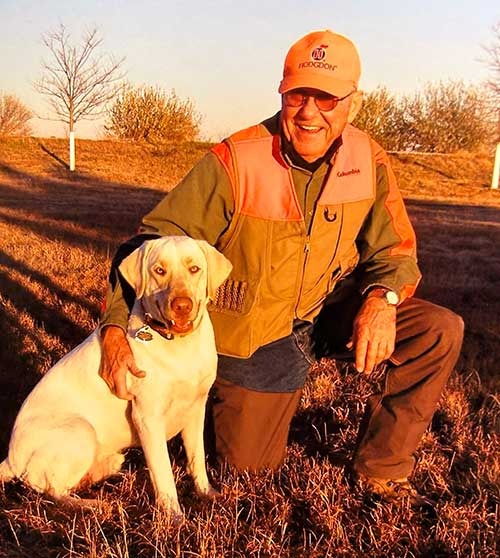
A Good Man Gone
The problem with being an old gun guy is that it becomes more frequent we must say “goodbye” to a good friend, who happens to have also been just a plain good person.
Robert E. “Bob” Hodgdon, whose family name is part of the fabric of American metallic cartridge reloading, passed away Jan. 13. Having been born in August 1938, Hodgdon had a good run that covered a lot of ground. He and his brother, J.B. helped build the company founded by their father, Bruce Hodgdon, and today that name is iconic in the industry for the variety of reloading propellants for rifles, shotguns and handguns. According to an obituary the family posted, he “also assisted with the design and lead the team constructing the Pyrodex Plant in Herington, Kan. in 1979 and helped to design and build The Bullet Hole, a 44-station indoor shooting range in 1967.”
I served with Hodgdon on the NRA board of directors more than 20 years ago, and you could not find a more devoted fellow where perpetuation of the shooting sports, and protection of the Second Amendment, was concerned. He was a kind and gentle soul, a person you’d be delighted to share a campfire with, and someone who was as devoted to his family as his professional pursuits. He was father to four children, Chris (Adele) Hodgdon, Heidi (Erwin) Rodriguez, Stacie (Bryant Larimore) Hodgdon and Alisa Hodgdon — and grandfather of 11 and great-grandfather to eight.
A native of Kansas, he grew up in suburban Kansas City. He attended Baker University in Baldwin City, Kan., and graduated Summa Cum Laude from the University of Kansas. He served in the U.S. Air Force and the Air Force Reserves.
He served as president of Hodgdon for more than 20 years and then as board chairman from 2014 to 2017.
Hodgdon volunteered in several civic organizations, and was a member of the Westside Family Church in Lenexa, Kan.
Additionally, he was a founding member of the National Shooting Sports Foundation, a member of the Kansas State Rifle Association, and founding member of the Kansas Sportsmen’s Alliance.
Men like Bob Hodgdon are very rare.
 (AP Photo/Markus Schreiber)
His name is Carsten Linke and he was recently promoted to a top post in Germany’s intelligence service, the B.N.D. The NY Times reports he was the “director of technical reconnaissance — the unit responsible for cybersecurity and surveilling electronic communications.” He was also a double-agent being paid cash to pass information to Russia. He was apparently asked for specific information on the location of US HIMARS launchers in Ukraine:
Russia’s FSB spy service asked Carsten Linke last autumn via a courier to pass on precise information on the positioning of the Himars and Iris-T rocket systems that had been supplied to Ukraine by the US and Germany, Der Spiegel reported on Friday.
German prosecutors are said to believe that it is unlikely that Mr Linke was able to pass on the information.
In return, the FSB likely paid the suspected German spy in cash. Investigators have found an envelope with a six figure sum in euros in a locker that belonged to him, the magazine reports.
But the question being asked in Germany now is how many more double agents are there.
As a Russian mole, he would have had access to critical information gathered since Moscow invaded Ukraine last year. He may have obtained high-level surveillance, not only from German spies, but also from Western partners, like the C.I.A…
Privately, three officials familiar with the investigation — who requested anonymity in order to share details because discussing the inquiry publicly is illegal — worry the case could be the tip of an ominous iceberg.
“Recruiting other spies is the top tier of espionage,” one of the officials said. “And our technical reconnaissance unit is one of the most important departments of the B.N.D. To find someone relatively high up there? That makes this case explosive.”
The case has already led to a second arrest — that of a Russia-born accomplice, who acted as a courier, and, according to one official, brought some 400,000 euros in cash to Mr. Linke from Moscow for his information.
That’s a lot of money, but early indications don’t show Linke living beyond his means or having any debt. He didn’t need the money in other words. Instead, Der Spiegel and the NY Times are suggesting his motive may have been political.
At work, Mr. Linke had openly told colleagues he felt the country was deteriorating, and he was particularly disdainful of its new center-left government, one of those following the inquiry said…
One German politician following the investigation worries that some military and intelligence officials still admire Russia and aspire to closer relations, even after the invasion of Ukraine.
“It’s a kind of conviction, wanting to cooperate with Russia — it’s a romantic belief,” the official said. “I worry there are many others who hold that conviction in our security services.”
Apparently this isn’t a new problem. Russian infiltration of German intelligence has been going on since the Cold War. The Washington Post has a story today about some of the behind the scenes efforts to root out Russian spies that have been taking place around the world.
Over the past year, as Western governments have ramped up weapons deliveries to Ukraine and economic sanctions against Moscow, U.S. and European security services have been waging a parallel if less visible campaign to cripple Russian spy networks. The German case…followed roll-ups of suspected Russian operatives in the Netherlands, Norway, Sweden, Austria, Poland and Slovenia…
While the German case centers on a European accused of betraying his country for the Kremlin, others have involved Russian nationals seeking to infiltrate the West.
Among them are so-called “illegals” sent abroad not as diplomats — with accompanying legal protections — but under more elaborate cover arrangements designed to conceal any connection to Russia.
Authorities in the Netherlands last year confronted a passenger who presented a Brazilian passport when he arrived at Schiphol Airport in Amsterdam, having accepted a position as an intern at the International Criminal Court. In reality, he was a Russian military officer named Sergey Cherkasov who had been sent overseas more than a decade earlier by Russia’s GRU spy agency, its main military intelligence service, according to officials and court records…
In October, authorities in Norway arrested an accused Russian spy under similar circumstances. The suspect had posed as a Brazilian researcher focused on Arctic security issues at a university in northern Norway, credentials that enabled him to gain access to European experts and officials. Like Cherkasov, Mikhail Mikushin was a Russian “illegal” who had spent years abroad developing an elaborate cover for his GRU assignment, according to Norwegian authorities.
And of course we’ve had our own problems with federal agents selling out to Russia. There are probably quite a few more of these guys out there. Here’s a photo of Carsten Linke.
Earlier this week, the always excellent and interesting Baldilocks shared a thread on Twitter dealing with the perceptions and thoughts of a certain class of Russians in regards the war. The thread is well worth reading, as are some of the comments to her tweet and my retweet.
What was reported matches what I am seeing and hearing from that class, and from others. For all that one must support the war in public, or face draconian consequences, even in private it has a lot of support. As in a WAG on my part of better than fifty percent. Yes, there are segments that don’t support and are not thrilled with things, and they tend to fall more on ethnic lines from what I’m seeing. Overall, the war has a surprising strong, wide, and deep level of support within Russia. Not universal, but pretty darn significant.
Support for Vladimir remains quite high. This varies as one goes through demographics and ethnicities, but overall strong. Two areas where this may not be true are in what I call the political oligarchia: the politicians, power brokers, oligarchs, and wanna-be oligarchs who make up the upper levels of power. The old nomenklatura concept is dead and gone. In public, this upper level is very pro-Vladimir. In private, well, it’s still not clear to me if some of what is going on behind the scenes is simply preparation for his retirement or death, or if there is something more active going on. To be fair, there are days I’m not sure those playing the great game in Russia truly know themselves. The other area is the bottom of the demographics pile, which tends to be ‘yeah, support, whatever; none of them give a damn about us.’ That may be as close to a universal concept across cultures as anything.
An important point within this is the response of that educated class to the pushback by Ukraine, NATO, and others. Note the surprise, shock even, that Europe and others not only opposed the invasion, but that they are helping Ukraine (most of whom are sadly misled and should be welcoming the return of Russia) resist. That they would potentially gut their economies to do so. This is seen as bigotry and ignorance by that class of Russians. And by others within Russia, to be honest.
That plays almost perfectly into the great Russian paranoia that everyone is out to get them. That has been a hallmark of Rus/Slav psychology going back into ancient times. They have always been treacherously set upon by others, even as they were peacefully raping, murdering, and pillaging those that set upon them. Now, Russia does have a few legitimate times when they weren’t doing something like that at the time they were attacked, but I am overall reminded of a certain criminal class here in the U.S. that was never ‘doing nothing’ when “attacked” by those they were robbing, etc.
It also brings to the fore a concept that seems to continue to elude far too many: outside reactions and considerations were not and are not a factor of consideration. The war was not started with Western or other reaction in mind, other than that it was felt that the Biden Regency and others would just go along with it and not do anything of significance against it. Token reparations maybe, but that was it. Given that the Regency and the Meat Puppet seemed to be egging it on at one point, I can see how they thought that. But, that was only a fleeting thought to them and not even a serious point of consideration.
The dynamics that drove the decision to invade are almost entirely internal. They are based in culture, politics, and other areas that create the internal dynamics that are not understood and not even being considered by far too many outside of Russia. There is no path to peace without taking those dynamics, and the overwhelming support for the war and for creating a new Russkiy Mir, into consideration.
Therein lies the problem. Outside opinions and even responses do not matter to the large majority of the population of the Russian Federation. At best, such are seen as bigotry and an attack. At worst, they were not even a consideration. That holds true for the leadership as well. For all intents and purposes, the people of the Russian Federation live in a bubble, and the upper leadership lives in an even more dense and impenetrable bubble.
Stephen Green, who does some truly great coverage I do recommend reading, has two (sadly VIP) posts up, here and here, on “Putin’s Stupid and Unnecessary War.” By our standards, completely true and valid statements. The war is stupid, unnecessary, and even foolish. From a Russian societal perspective, however, it is extremely necessary and even overdue. Stephen asks a good question that I can see before it hits the paywall, about the military leadership should have known the military was not ready and should have prevented the war as a result.
Again, by our standards and culture, an obvious point. By the standards of Russian culture, however, invalid. Keep in mind the two bubbles already mentioned, as there are more. Vladimir sacked a lot of real generals a while back so that various apparatchiks, oligarchs, and wanna-be oligarchs could get in on the fun of what we would see as outright corruption. Russians today just see it as how business is done. Those that were smart cut officers in on the take, and smart officers made sure the men didn’t starve. As it was, the troops often looted items to sell on the black so they got pay, food, etc. Gundecking reports has a long and honorable tradition in Russia going back almost to the very earliest days. Yet more bubbles, and people who needed to know things didn’t. Given the lack of esteem given to the military these days, the general public and leadership really didn’t care if they starved or not, or what was happening to them. Or what would happen if they had to go to war.
It was only when war came, and some people got a cold douche of reality, that anything began to change. Part of that change was that a number of people in demographics and ethnicity that meant they would be called up to fight decided to beat feet. Quite a few citizens of the Russian Federation, and not just the government, consider them traitors to be dealt with later and who should never ever think of returning to the Rodina. Understand, your average citizen of the Russian Federation has no problem with people dying for the war and the cause of Russkiy Mir — so long as it’s not them. Marginalized groups or ethnicities? Who cares, it will improve the gene pool.
Nuclear war? Go for it. Our mighty Russian military will protect us while devastating our enemies. We have far more bombs and missiles than they do. We have far greater, more powerful, and more accurate defenses against missiles and other attacks.
That their nuclear and nuclear defense forces might be in a shape similar to their other weapons and stockpiles has penetrated few if any bubbles as far as I can tell. How many will work (on either side)? Who knows, and I’d really rather not find out. That said, I’m in the camp of 20 percent, i.e. an 80 percent failure rate. In light of this, I also highly recommend reading this from Sgt. Mom. Our own military is in many ways in no better shape. We are not capable of fighting a one front war for more than a few days (if that), much less a two-front war as we are supposed to be able to do.
Which leads us, finally, to the growing “peace at any price crowd.” I’m seeing it a lot on social media these days, and from some surprising quarters. As I noted in posts before, putting in place a cease fire or a forced peace as things stand will only guarantee a far worse war with far worse consequences later. Even one that gives Ukraine the Donbas and Russia the Crimea will result in the same. See this post and this post for some of the previous discussion on outcomes.
Right now, I do not see any easy, good outcomes. Far too much of what is being discussed and pushed is not in touch with the reality of Russian culture and internal dynamics, much less that of Ukraine. Anything that does not take such into consideration will fail. Spectacularly. Creating something viable, or at least make each step suck the least, requires strong, informed, and capable leadership. Looking at the Biden Regency, Castreaux, Macaroon, Charles/Sunak, Shultz, Vladimir, etc., yeah, right.
Prepare, pray, and hope for the best. It’s about all we truly can do right now.
Getting hit by lightning is not fun! If you w

Back when I was loading trucks I used to look for this shit in pallets.
I’d snatch a can out and wait until lunch, then I’d go back to the dock about halfway through my break. I’d grab that can and find a trailer that one of my buddies (usually Greg The Whiny Li’l Bitch) was loading, then I’d depress the stem and tape it down before tossing it into the trailer and shutting the trailer door.
All the loaders would come back from lunch and the victim would pop his trailer door and stagger backwards with his eyes watering and screaming “LANE, YOU SORRY MOTHERFUCKER!!!” before shutting the door and stalking off to the shipping office.
Next thing you know, the hostler would pull the trailer away from the dock door about 3 feet, fire up the reefer and open the trailer door to blow that shit out.
The bosses made me quit doing it – not because I was wasting product but because the stench would spread over 150 yards of loading dock, gagging the entire workforce.
The only loader that didn’t mind it was Brotherman Jerome who went to an all black high school in Stockton – said that it reminded him of his first high school dance.
Staff Sgt. Joyce B. Malone: Malone was originally a Fayetteville civic leader who enlisted in the Marines in 1958, where she served four years. Following her service in the Marine Corps in 1962, Malone got married and finished college at Fayetteville State University.
A few years went by and while working at Fort Bragg, she decided to join the Army Reserve – Fort Bragg’s 82nd Airborne Division in 1971. In 1974, Malone became the first and the oldest black woman to earn Airborne wings in the United States Army Reserve.
By age 38, Malone completed 15 parachute jumps during her time in the Army Reserve “#WMA #womenmarines #womenmarinesassociation”
British fighter ace Robert Roland Stanford Tuck, shot down and captured on 28 Jan 1942, escaped from his prisoner of war camp, subsequently making his way through the Russian lines to the British Embassy in Moscow and then home.
On January 28th, 1942, while on a low-level mission over northern France, his Spitfire was hit by enemy flak near Boulogne and he was forced to crash land.
He was captured by German troops and spent the next three years in several POW (prisoner of war) camps until he made a successful escape on February 1st 1945. After spending some time fighting alongside the advancing Russian troops as an infantry officer he found his way to the British Embassy in Moscow. He eventually boarded a ship from Russia to Southampton, England
Robert Stanford Tuck died on May 5th 1987 at the age of 70