
Back when I was loading trucks I used to look for this shit in pallets.
I’d snatch a can out and wait until lunch, then I’d go back to the dock about halfway through my break. I’d grab that can and find a trailer that one of my buddies (usually Greg The Whiny Li’l Bitch) was loading, then I’d depress the stem and tape it down before tossing it into the trailer and shutting the trailer door.
All the loaders would come back from lunch and the victim would pop his trailer door and stagger backwards with his eyes watering and screaming “LANE, YOU SORRY MOTHERFUCKER!!!” before shutting the door and stalking off to the shipping office.
Next thing you know, the hostler would pull the trailer away from the dock door about 3 feet, fire up the reefer and open the trailer door to blow that shit out.
The bosses made me quit doing it – not because I was wasting product but because the stench would spread over 150 yards of loading dock, gagging the entire workforce.
The only loader that didn’t mind it was Brotherman Jerome who went to an all black high school in Stockton – said that it reminded him of his first high school dance.
Category: Interesting stuff
Staff Sgt. Joyce B. Malone: Malone was originally a Fayetteville civic leader who enlisted in the Marines in 1958, where she served four years. Following her service in the Marine Corps in 1962, Malone got married and finished college at Fayetteville State University.
A few years went by and while working at Fort Bragg, she decided to join the Army Reserve – Fort Bragg’s 82nd Airborne Division in 1971. In 1974, Malone became the first and the oldest black woman to earn Airborne wings in the United States Army Reserve.
By age 38, Malone completed 15 parachute jumps during her time in the Army Reserve “#WMA #womenmarines #womenmarinesassociation”
British fighter ace Robert Roland Stanford Tuck, shot down and captured on 28 Jan 1942, escaped from his prisoner of war camp, subsequently making his way through the Russian lines to the British Embassy in Moscow and then home.
On January 28th, 1942, while on a low-level mission over northern France, his Spitfire was hit by enemy flak near Boulogne and he was forced to crash land.
He was captured by German troops and spent the next three years in several POW (prisoner of war) camps until he made a successful escape on February 1st 1945. After spending some time fighting alongside the advancing Russian troops as an infantry officer he found his way to the British Embassy in Moscow. He eventually boarded a ship from Russia to Southampton, England
Robert Stanford Tuck died on May 5th 1987 at the age of 70

Target Acquisition is the location, detection, and identification of a target in sufficient detail to permit the effective employment of lethal and non-lethal means.
It takes more than a good eye, it takes a combination of vision, resolve and strength. I know that when I first starting shooting rifles, I could do a pretty good grouping for those first few rounds, then it went south. That was simply a matter of muscle strength. I got a couple of five pound weights, holding one out where a support hand would be, one where my grip would be. At home each morning, I’d pull them up, like I was pulling the rifle up quickly to target and hold 30 seconds or so, drop, rest, hold, repeat, 80’s music sounding out a rhythm on the stereo.

“Hammer Time!”
But it’s seeing what you are doing that’s the most important element of target acquisition, not just maintaining it.
When I was a child, we’d take a vacation every year to the Oregon Coast, renting a small cottage with a view of the beach. Coming down a steep hillside into Cannon Beach, the station wagon dissolving into damp grey light, streams of fog pouring over the road to lie like barely congealed oil, we kids would have all eyes glued to the front windshield. It was always a contest to see who first could spot the water and call it out.

There it is! We’ll pull ourselves up in the seat seeing that ocean as if for the first time. You’ve never seen small children so focused, so concentrated. It was something our parents taught us early on. There is fun, and there is play, but there are times, that for your safety, you need to be able to sit still and truly look.
Eighteen years later, I’m in the left seat of a transport, shooting down the barrel of an instrument approach into a tight runway in the mountains. We have enough fuel to give it just one try and then go to our alternate airport. But thanks to a weather system that didn’t bother to read the accu-hunch forecast, there were some serious thunderstorms drifting in that moat between us and our only other option. We needed to get into this airport, now, this once. If we blew it, we’d not get a second shot.
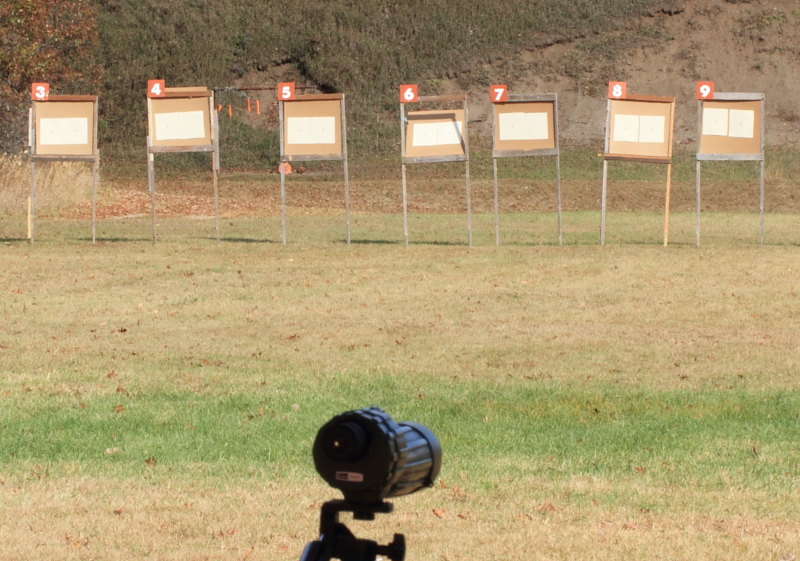
There is no range concentration that can match that of pilots that have just one shot at getting in to land or face a dire horizon. If you’re lucky, you can pick up the tease of the approach lights and stay in the clouds til you’re a hundred or so feet from the ground. But if you break out of that ragged overcast at that point, rain splatting on the windshield like a thousand guppies, doing 130 miles an hour, you’d better have your target in clear view or your day is not going to go well.
As the shotguns and Daisy’s of my youth gave way in my middle years to pistols and AR’s and a cranky Mauser or two, the ability to see and quickly lock on to a target became more of a priority. Things like humidity and breath suddenly become issues, safety glasses fogging up and things like foliage becoming more than shade when hunting from a blind. Even eyewear was an issue. I wear contacts, deciding to get rid of glasses that could be used for vision as well as setting ants on fire. There’s no fogging, and although my vision isn’t as “crisp” as glasses when I’m tired, I have the peripheral vision to see the target coming into view if it’s a moving one. As nearsighted as I am now, a Beluga whale could sneak up on me from the side if I wear glasses.

Be sure of your target and what is behind it. Wise words, especially with distance. How often do we hear of someone accidentally shot and killed while hunting because someone mistook them for a moose. Frankly if some someone mistook me for a moose, I’d be visiting Weight Watchers after I wrapped their firearm around their ears. But it happens , first a sound, a rustle of brush, and some muttonhead fires, not waiting to notice that his target is sporting a Cabelas hat, not a full rack.
It is so easy to just react without a true target (patience grasshopper). I’ve sat in more than one blind, feet freezing, stomach growling, just waiting for it. You can hear everything, the retreating darkness, the smell of first light, the delineation of leaves, the Morse code of squirrels chattering their warnings. But you can’t really see. Then the forest emerges into smooth, bright shapes, light and shadow and movement, and your eyes can only scan, looking with that tense, unmoving sobriety that is a blind man listening. If you are lucky you will see it, a flash of fur, a mass of bone that is more fight than surrender. You make sure it is all there, all four dimensions, solidity, mass, a shape that could be no other than an animal, and something else. Not hesitation, not fear, but pure and intent assurance as you draw up your weapon.

If you don’t CLEARLY know what your target is, keep your finger off the trigger. If you do, and ONLY when you do, use the front sight of the gun as a guide to aim. If you are after multiple bogies (i.e. kevlar vested doves) leave your front sight as soon as your next target approaches and as the gun approaches it, sight again and pull the trigger. Always know where your front sight is. It will tell you almost anything you could want to know about a shot. If you’re new to shooting, just practice watching the sight, no targets. When you get used to seeing the sight in recoil, move onto paper. If the shot needs to be dead center precise, the sight needs to be clear.
I know many people that can shoot faster than their sight picture and do so with the accuracy needed to stop a human target in most situations. But that involves the instinct of practice and an intimacy with their weapon that someone that takes that firearm out of the nightstand drawer a couple of times a year is not going to have.
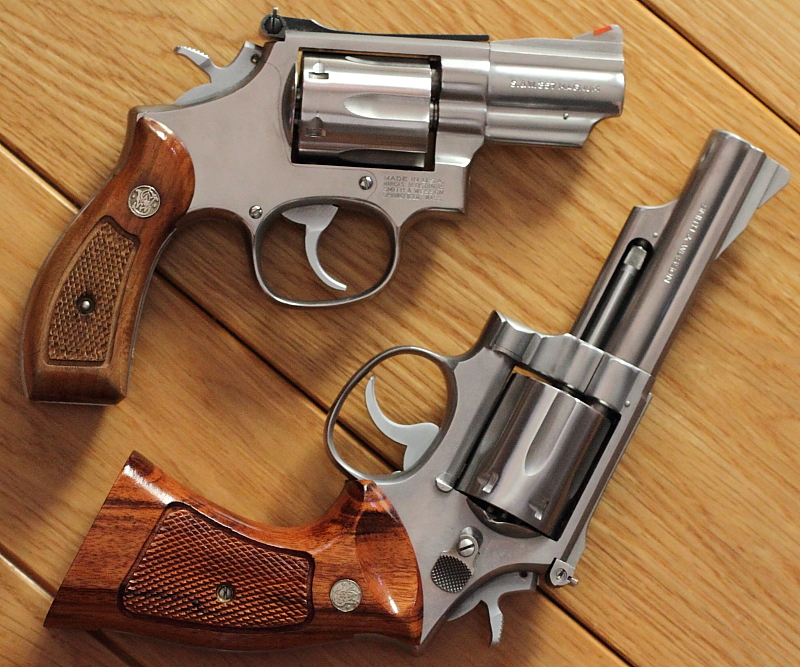
Unless you are being mugged by a 18 inch tall paper squirrel, your target is going to be moving. Remember, as far as triggers- mechanical things all happen at the same speed for each given piece of machinery. You need to learn to act upon what your eyes tell you. Like anything else with shooting, that requires practice and concentration.
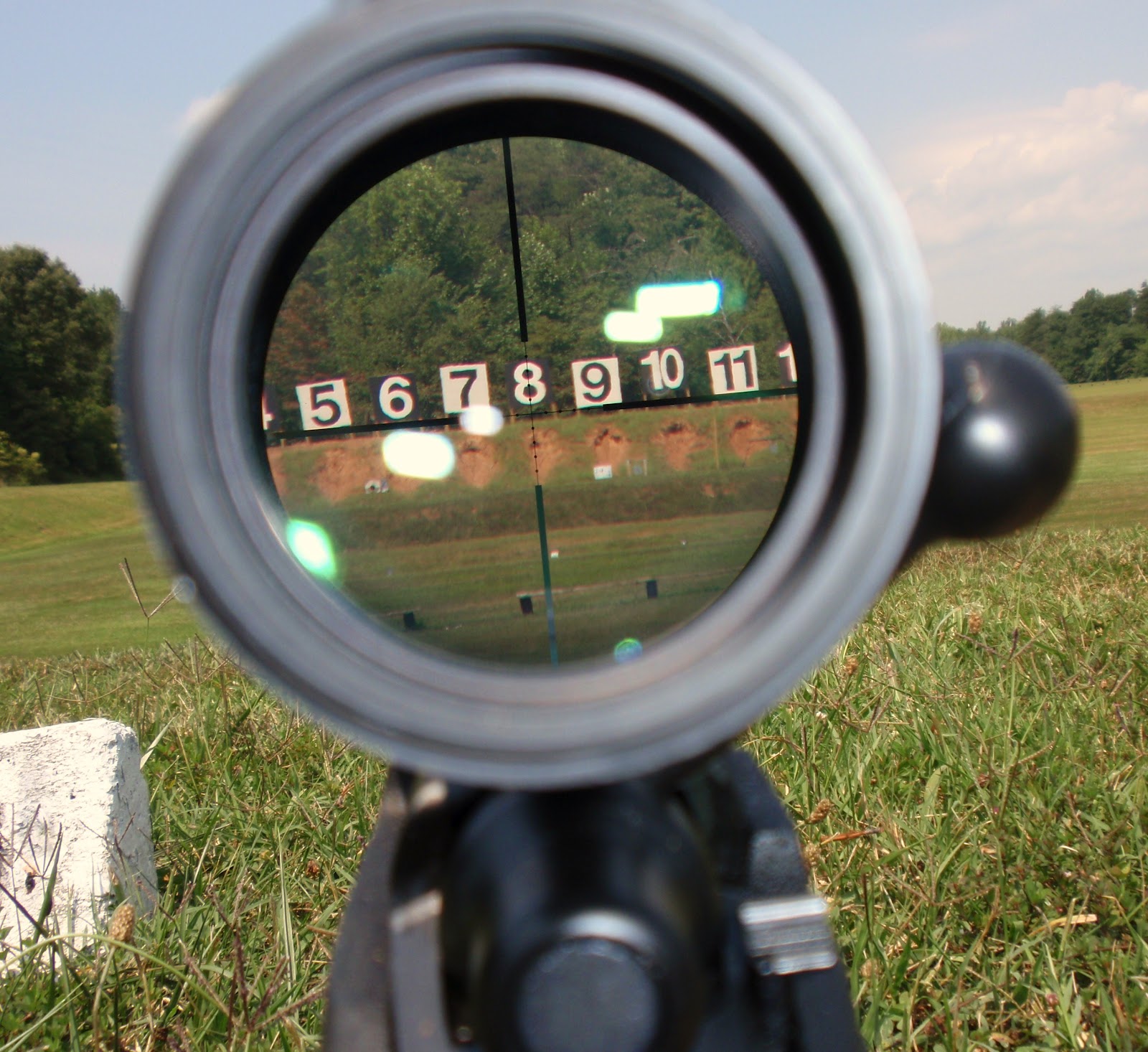
Practice close up. Practice at a distance. If you have never shot long range, you won’t ever forget it, a moment whispered and dreamt about, laid out flat in front of you. In that fleeting moment, you will hold your breath in the presence of power. You count that pulse between heartbeat and breath, compelled into an aesthetic deliberation you don’t quite understand but fully desire, faced for the first time in your living history with something proportionate with your capacity for awe.
Target acquisition is when what you have been waiting for comes from an enormous distance. It sometimes comes directly, sometimes coming as if by magic from no where when you least expect it, giving you a clear view after long dark, days of solitary combat.
My weapons are at rest and dinner is simmering on the stove. Coming up the long road, the sunlight streaming off of it like shining wind, is an SUV, its form and windows giving no hint of what it brings.

Inside, a rescue Lab gives a gentle “woof”, recognizing the sound and what it means before human ears can even hear its echo. We look up through the light, beyond the drive, beyond the wasted years in which we looked, but never really did see.
We stand in the drive as the vehicle comes into view, bringing up an arm in greeting, in that moment between heartbeat and breath.
https://youtu.be/VOHYrA1UzpY
I recognize a lot of places that were in LA & San Francisco from long lost youth. Back when the insanity was just starting out. Enjoy a brief look back when this was a great place to live! Grumpy


David Niven was an esteemed English actor and novelist. During the course of his long and storied acting career, Niven played a leading man, a world explorer, the villain in a Pink Panther movie, a soldier, a sailor, an action hero, and even James Bond in the first Casino Royale. He won the Oscar for Best Actor in 1958 for his role as Major Pollock in Separate Tables.

Today’s crop of actors is, with few exceptions, a bunch of vapid amoral losers. Their standard of accomplishment is running about naked and flying on private jets to A-lister conferences while telling the rest of us what we should be sacrificing to battle climate change. By contrast, David Niven was a real-live warrior.

Born March 1, 1910, at Belgrave mansions, Grosvenor Gardens, London, Niven came from a long line of British soldiers. His father LT William Niven was killed in Turkey during the Gallipoli Campaign serving with the Berkshire Yeomanry in 1915. His maternal grandfather, CPT William Degacher, was killed in 1879 at the Battle of Isandlwana during the Zulu Wars. His great grandfather was LTG James Webber Smith CB.

Two years after the death of his father, Niven’s mother remarried, this time to a prominent British Conservative politician. At age six, young David was remanded to boarding school. His experience there was rocky, predominantly the result of his proclivity toward pranks.

At age 18, Niven impregnated a fifteen-year-old socialite named Margaret Whigham while she was on holiday. Given the puritanical mores of the day this held the potential for great scandal. The young woman’s family arranged for an abortion, but she revered Niven until his death. Whigham was among the VIP guests at his memorial service in London after he died.
Finding Himself

David Niven was educated at the Royal Military College at Sandhurst, graduating in 1930 as a Second Lieutenant in the British Army. This experience was said to be foundational to his developing the refined unflappable bearing that held him in good stead on the stage and screen. However, the peacetime Army did little to hold Niven’s attention.

LT Niven once ditched a lecture on machinegun tactics delivered by a British Major General in favor of a social engagement with a young woman. Niven was subsequently arrested for insubordination but killed a bottle of whisky with Rhoddy Rose, the officer tasked with guarding him. Rose later went on to become a decorated Colonel in the British Army. With Rose’s assistance, Niven escaped out a window and caught a ship for America, resigning his commission via telegram once underway. Upon his arrival in the United States he tried and failed to make a living first selling whisky and then as a rodeo promoter.

After stints in both Mexico and the Caribbean, Niven eventually made his way to Hollywood, securing a role as an extra in such films as Barbary Coast and Mutiny on the Bounty. His designation as an extra was, “Anglo-Saxon Type No. 2,008.” More serious roles followed until, by the late 1930’s, he had become an A-lister leading man. Niven and Errol Flynn shared a house for a time. By 1939 David Niven was on top of his game, having earned top billing for big budget Hollywood productions. Then Hitler invaded Western Europe, and Niven gave it all up to return to England and rejoin the British Army. At the time, David Niven was the only British movie star working in America to do so.
The Humble Warrior

I watched a couple of interviews with David Niven on YouTube in preparation for this project. Despite his refined, almost haughty British demeanor, you cannot help but be struck by the man’s humility when he was elaborating on his military experience. Once during an interview with Dick Cavett he was asked to relate the most perilous experience he had while serving in World War 2. He prefaced his answer that many other men had done much greater things than had he and that he was likely the most terrified man in Europe during the war. However, cutting through the fluff, David Niven was the real freaking deal.

After being recommissioned as a Lieutenant, Niven was assigned to the motor training battalion of the Prince Consort’s Own Rifle Brigade. The British have some of the most adorable unit designations. Dissatisfied with the pace of that assignment, he volunteered for the Commandos. Niven trained at Inverailort House in the Western Highlands, eventually coming to command “A” Squadron of the General Headquarters Liaison Regiment.

The British Commandos during World War 2 were an elite light infantry unit specializing in small unit operations. A modern counterpart might be the US Army Rangers. Their training was notoriously grueling, and they were relied upon to execute the toughest missions, often with minimal support. Commando training and operational experience laid the foundation for much of the world’s modern Special Operations capabilities.

Niven was an acting Lieutenant Colonel by the time he landed on the continent several days after D-Day. He served with a unit called “Phantom” that was tasked with covertly locating and reporting enemy positions in the chaos following Operation Overlord. One of the few war stories that he was willing to relate publicly concerned his being shelled while attempting to cross a bridge between the American 1st and British 2d Armies.
LTC Niven Earns the Iron Cross

LTC Niven was crossing a bridge just as the Germans began dropping artillery on it. He dove out of his jeep and into a nearby foxhole with heavy German artillery fire impacting all around. Amidst the unfettered chaos of the moment he looked up to see John McClain, an old friend and drama critic, hunkered down the next foxhole over.

The Germans obliterated the bridge, but Niven and McClain emerged unscathed. McClain was uniformed as a Lieutenant in the US Navy. After a happy reunion McClain produced a sack filled with German Iron Crosses. The German forces at Cherbourg were cut off and surrounded. Their commander, Generalleutnant von Schlieben, had requested a sackful of Iron Crosses be air dropped into the salient to be distributed to his men in an effort at shoring up their morale. The Luftwaffe attempted to drop the sack from a fighter plane but inadvertently deposited it in McClain’s hole.

These men were in show business, after all, and were ever on the lookout for an opportunity at levity. Niven’s friend formally presented him with a German Iron Cross for bravery right there in their foxhole. Niven said that he affixed the decoration to his shirt underneath his combat jacket and wore it for the rest of the war.

Though Niven was tight-lipped concerning the details of his wartime service, it was undeniably extensive. He was evacuated as part of the British Expeditionary Force at Dunkirk. When once he was preparing his men for an assault he attempted to allay their jitters with,”Look, you chaps only have to do this once. But I’ll have to do it all over again in Hollywood with Errol Flynn!”

During the Battle of the Bulge, Niven was challenged by a nervous American sentry jumpy over stories of Otto Skorzeny’s commandos infiltrating Allied lines in American uniforms. The trigger-happy American asked him who had won the World Series in 1943. Niven responded with, “Haven’t the foggiest idea, but I did co-star with Ginger Rogers in Bachelor Mother.” The sentry let him pass.

Many Hollywood actors had actively avoided combat. When pressed about his wartime service, Niven said this, “Anyone who says a bullet sings past, hums past, flies, pings, or whines past, has never heard one – they go crack!”

Niven ended the war a Lieutenant Colonel and returned to Hollywood. Among his several decorations was the American Legion of Merit. Like most combat veterans of that era, Niven seemed ready to put the war behind him and move on with his life.
The Rest of the Story

Soon after his return to Hollywood, the Niven family was enjoying an evening as guests of Tyrone Power. While playing Sardines, a lights-out version of hide and seek with the accumulated kids, Niven’s wife Primmie took a tumble down some stairs, fractured her skull, and was tragically killed. The distraught man immersed himself in his work to compensate. Prominent roles alongside the likes of Cary Grant, Ginger Rogers, and Shirley Temple followed.

David Niven’s career waxed and waned as is often the custom for movie stars. He played on Broadway opposite Gloria Swanson in Nina as a respite from movies. His fortunes lagged for a time until he was cast as Phileas Fogg in the smash 1956 hit Around the World in 80 Days. Around the World took home Best Picture that year.

David Niven holds the distinction of being the only person ever to win a Best Actor award at a ceremony he was hosting. Appearing on-screen for only 23 minutes in Separate Tables, his performance was also the briefest ever to be afforded this honor. Niven’s Oscar proved to be the key that opened all the doors in Hollywood.

Niven shined in movies like The Guns of Navarone, Death on the Nile, Rough Cut, and Seawolves. While hosting the 46th Academy Awards ceremony in 1974, Niven was interrupted when a naked man went streaking past in the background. Streaking was considered quite the popular pastime in the early 1970’s. His classic off-the-cuff response was, “Isn’t it fascinating to think that probably the only laugh that man will ever get in his life is by stripping off and showing his shortcomings?” David Niven was ever the refined English gentleman.

This quote lends insight to this remarkable man’s worldview, “I will, however, tell you just one thing about the war, my first story and my last. I was asked by some American friends to search out the grave of their son near Bastogne. I found it where they told me I would, but it was among 27,000 others, and I told myself that here, Niven, were 27,000 reasons why you should keep your mouth shut after the war.” What a stud.

David Niven died in 1983 at the age of 73 from complications of Lou Gehrig’s disease. The archetypal English gentleman on the silver screen, Niven was also quite the British patriot when it counted.

Bobby Dan Davis Blocker was born in 1928 in De Kalb, Texas, to Ora “Shack” and Mary Arizona Blocker. He attended military school as a child and excelled at football. Blocker played ball in college as well. The fact that he was 6’4” and weighed 320 pounds didn’t hurt his gridiron prospects.

While in college Blocker parlayed his immense size into jobs as both a rodeo performer and a bouncer in a bar. Despite his intimidating habitus, friends described him as good-natured and soft-hearted. Upon his graduation from college in 1950 Blocker received a letter from Uncle Sam.
Bobby Blocker Goes to War

Bobby Blocker was drafted in 1951. He took his basic training at Fort Polk, Louisiana, and was there molded into an infantryman. He spent another nine months honing his craft in Sapporo, Japan. In December of 1951, Blocker deployed to Korea with F Company, 2nd Battalion, 179th Infantry Regiment, 45th Infantry Division—the Thunderbirds. He served in-country through August of 1952.

Blocker landed at Inchon and by Christmas was in the thick of the fighting. In short order, he found himself near Chorwon in what is today North Korea. The series of fortifications that Blocker’s regiment manned was called the Jamestown Line. He remained in combat for 209 days.

The Jamestown Line was a series of trench systems. Where much of World War 2 had been a war of mobility, Korea frequently devolved into a bloody stalemate fought in foxholes and static trenches more akin to those of the First World War. Add to this the bitter cold and penetrating wind and you had a recipe for misery on a scale most modern folk cannot imagine.

Opposing units seesawed back and forth assaulting hills and taking fortifications in a war where success was measured in yards. Allied troops designated the dominating terrain feature Old Baldy, a distinctive promontory that held a commanding vantage over the entire area. The most critical piece of dirt in the area became known as Pork Chop Hill.

Bobby Blocker’s part in this sordid bloody production was simply the opening act. The Thunderbirds seized Pork Chop Hill, so named because of its geometric similarity to the familiar porcine comestible, in May of 1952. A seriously bloody fight took place between Allied troops and the Chinese the following year.

In April and July of 1953, some 347 Americans died against an estimated 1,500 Chinese dead. The two major battles for Pork Chop Hill gained notoriety due to their apparent utter pointlessness. Men bled out to hold terrain that had little significance in the real world. This fight unfolded while the UN Command was negotiating with the leadership of China and North Korea over the Korean Armistice Agreement. Both sides wanted the hill as a bargaining tool. Of all the reasons a man might have to die in battle, this was a really crappy one.

Back when Bobby Blocker called this desolate scrap of real estate home things were still plenty horrible. Blocker was acting First Sergeant on May 25, 1952, when his company manned positions on Hill 200 near Outpost Eerie. In the frenetic combat that followed six Americans were killed and a further 21 were wounded. At the same time, 132 Chinese soldiers fell.

Gordon Abts, an American grunt who earned the Silver Star for gallantry in May of that year, served under Sergeant Blocker. He later said, “(Blocker) was a great guy. He was very strong. He could take a beer can between two fingers and crush it. He was very athletic. He was loud, but very friendly and got along with everybody. He was a great leader.”

SGT Blocker was wounded rescuing his men under fire. He was credited with saving the lives of several members of his unit during combat. At a time when most Chinese attacks occurred at night, Blocker and his men fought gallantly against the infiltrating Communist hordes.

Blocker’s 179th Infantry Regiment was taken off the line in July of 1952. Only then was SGT Blocker finally evacuated to a hospital. The Thunderbirds went into reserve, and by the end of the summer Blocker was headed home. When he left the Army he had been awarded the Purple Heart, the National Defense Service Medal, the Korean Service Medal with two bronze campaign stars, the Republic of Korea Presidential Unit Citation, the United Nations Service Medal, the Korean War Service Medal, and the Combat Infantryman Badge.
Now What?

When he returned to the US the gigantic combat veteran taught high school English and drama before taking over a sixth-grade classroom at Eddy Elementary School in Carlsbad, New Mexico. Now married to his new wife Dolphia, the couple eventually moved to Los Angeles.

Blocker had a Master’s degree in drama and began pursuing his doctorate at UCLA. Blocker was from Texas and typically dressed the part. At one point he was standing in a phone booth arrayed in his typical Texan attire when the casting director for a television western spotted him. Things got busy from there.

One of his first credited roles was as the Goon in the Three Stooges short Outer Space Jitters in 1957. He made the playbill as Don Blocker for reasons that have been lost to history. At the same time, he was cast as the blacksmith in two episodes of Gunsmoke. Small parts in Colt .45, The Restless Gun, The Sheriff of Cochise, Cheyenne, The Rifleman, Cimarron City, Sergeant Preston of the Yukon, Wagon Train, and Have Gun Will Travel followed. This was the Golden Age of TV Westerns, and Bobby Blocker rode the wave. Throughout it all Blocker parlayed his impressive size into screen-filling characters alongside most of the major actors of the day.

In 1959 Bobby Blocker landed his dream job. He was cast as Eric “Hoss” Cartwright in the hit NBC Western series Bonanza. He by now marketed himself as Dan Blocker professionally. Blocker played the iconic role through 415 episodes.

When interviewed about the unique combination of power and compassion he poured into the character of Hoss Cartwright, Blocker said he tried to channel Stephen Grellet, the prominent 18th-century French-American Quaker missionary. Grellet once wrote, “We shall pass this way on Earth but once, if there is any kindness we can show, or good act we can do, let us do it now, for we will never pass this way again.” This was Hoss Cartwright’s mantra.
The Rest of the Story

While Hoss was by far Blocker’s most famous role, he logged a little time on the big screen as well. He starred alongside Frank Sinatra in the 1963 comedy Come Blow Your Horn and again five years later as a seasoned tough guy with Sinatra in Lady in Cement. Potentially his most thought-provoking Hollywood encounter involved the esteemed director Stanley Kubrick.

Kubrick was casting his bizarre anti-war film Dr. Strangelove and needed somebody large and menacing to play Major TJ “King” Kong. Peter Sellers carried the film playing multiple parts, but he felt that the role of Kong should be a standalone character. Blocker’s agent perused the script and refused to allow him to read for it. The iconic part subsequently went to Slim Pickens. Dr. Strangelove would have had an entirely different flavor had it been Hoss Cartwright riding that thermonuclear bomb while maniacally waving his cowboy hat.

Blocker worked regularly into the 1970s on projects as disparate as The Cockeyed Cowboys of Calico County and The Flip Wilson Show. Along the way, he was gifted partial ownership in several Bonanza Steakhouse restaurants in return for his service as the chain’s commercial spokesman while in character as Hoss.

Dan and his wife Dolphia had four children. One son, Dirk Blocker, became an actor of some renown in his own right. Dirk’s most familiar role was that of Marine pilot Jerry Bragg in the awesome 1970’s-era TV epic Black Sheep Squadron. Black Sheep Squadron was a staple of my childhood. Looking back on it I can see the family resemblance. Dan’s son David became an Emmy-winning TV producer. One of his twin daughters was a visual artist.

Dan Blocker was a great fan of high-performance automobiles. He maintained a 1965 Chevrolet Chevelle Z-16 as well as a 1965 Huffaker Genie Mk 10 racer he christened the Vinegaroon. The Vinegaroon raced for Chevrolet in 1965 and 1966 as part of the US Road Racing Championship series as well as the 1966 Can-Am championship.

In May of 1972 Blocker went into the Daniel Freeman Hospital in LA to have his gallbladder removed. A cholecystectomy is a common surgical procedure that should have been fairly routine. The hulking combat veteran who played the lovable Hoss Cartwright suffered a pulmonary embolus post-operatively and died both suddenly and unexpectedly. He was only 43.

In an unprecedented effort, the writers of Bonanza wrote Hoss Cartwright’s death into the show’s narrative. More commonly when a major character died during the production of a TV show the writers and producers would simply gloss over it. In the later series Bonanza: The Next Generation it is explained that Hoss drowned saving a man’s life.

Bonanza sputtered on for one more year without Hoss, but it never was quite the same. That 14thseason wrapped in January of 1973 and has been the least popular of the show’s protracted run. Dan Blocker–actor, war hero, father, and cowboy–is buried in the Woodmen Cemetery in De Kalb, Texas, alongside his father, mother, and sister. His is a fairly unassuming grave for a truly outsized guy.