The South Korean Army
The Army of the Republic of Korea uses wall-to-wall counseling in its daily operation. It is sanctioned and approved by the Ministry of Defense. South Koreans feel that the harsher peacetime is, the less the soldier will notice the hardships of combat with North Korea Wall-to-Wall counseling rises to its zenith with the ROK discipline board This group wall-to-wall counseling session is convened for offenses that would result in punishment by court-martial in the US Army. The soldier walks into the discipline board. Is wall-to-wall counseled, and is carried out of the board, either on a stretcher or on ice. While US Army waIl-to-wall counseling is not likely to result in serious death to the soldier, the Korean discipline board is a model to be emulated by all US Army units.
When should you wall-to-wall counsel?
You should wall-to-wall counsel a soldier when he needs it And all soldiers occasionally need wall-to-wall counseling.
Determining when this most severe of leadership techniques is warranted requires the leader to intimately know his soldiers and be aware of when a soldier is far enough gone that a swat in the head is the only thing that will adjust his behavior.
Minor offenses
Simple infractions can be dealt with quickly by a simple ass-beating. Soldiers appreciate this, as it saves them the hassle of having to visit the commander for UCMJ action.
Lateness
Soldiers arriving late for military functions should be screened carefully before being wall-to-wall counseled. A soldier who has never before been late would not benefit from having the shit beat out of him; indeed, it will only destroy his motivation. A soldier who has been late for the past four months, on the other hand, is possibly incorrigible and a well-deserved ass-beating would not only be profitable, but enjoyable. Especially if the soldier has caused you to visit the company commander on less-than-friendly terms.
Incompetence
Soldiers who have proven themselves incapable of performing the demands of their chosen profession may indeed be candidates for wall-to-wall counseling. The source of their incompetence must be determined before harsh measures are implemented, though. If a soldier has just graduated from Initial Entry Training and has never performed his job, corporal punishment would not be a good idea. If, on the other hand, he has performed his MOS for the last two years and still does not know shit from Shinola, the soldier deserves his ass beat and it should be performed at the earliest possible opportunity.
Challenging or defying Authority
Soldiers who harass their leaders are prime candidates for ass-beating. In this case, the soldier should not be given an opportunity to try to pull anything on you the second time. If the soldier harasses or ignores you, kick the shit out of him. Enough said.
Sponsored By: NCOER.COM
Farting
Off Soldiers who fart off should be treated the same as those who fuck with their leaders. Any soldier found sleeping in the back seat of their vehicle in the motor pool instead of working on it should be immediately taken in front of his whole platoon and have the shit kicked out of him. No slack can be placed on soldiers of this nature. The rest of the platoon will appreciate you.
Major offenses
Soldiers found guilty of major transgressions will be punished by the military authorities.
A soldier who kills another soldier will probably be shot. However, long wall-to-wall counseling sessions prior to the arrival of the military police are appropriate in cases where the transgression was against another soldier, and are best conducted in the presence of the wronged soldier. If the wronged soldier is still alive, he or she should be invited to join in to the session, as he or she will feel that revenge is called for and participating in the session will help to heal mental wounds caused by the perpetrator.
Rape
No offense is as damaging to the victim as rape. Murder does not come close, since the victim is dead and knows nothing. A raped soldier will have psychological scars for the rest of his or her life. A male soldier who is the victim of a homosexual rape is especially damaged, and many commit suicide rather than live with this burden immediate wall-to-wall counseling is required, and it must be so severe that bones are broken. Dimension lumber must be used during this session, and the minimum length of the session is three hours. If any part of the rapist’s body has not been hit with the board, the session is not complete. At least one arm and one leg will be broken during the session and the testicles will be hit at least ten times.
Murder
Coming close to rape in its severity is murder. The victim will not be able to participate in the counseling, of course. A long counseling session with a baseball bat and jackboots will be initiated and will continue only until the perpetrator is unconscious. Then the murderer must be revived and beat on some more.
Arson
Arson, of course, affects us all. Besides the possibility of losing your life, seeing all your shit go up in smoke and having to sleep in the street for the next three years, arsonists steal unit morale, cohesion and esprit de corps. After all, if you can’t trust someone to not burn your place down, how can you trust him in a combat situation? Arsonists are very simple to counsel. They are to be placed in the burning building and the doors are to be locked.
Robbery, burglary and barracks thievery
These crimes also affect unit morale. When a soldier rips off your stuff, all you want to do is kill him. Well, if it’s your shit, go ahead and do him in. In fact, do more than that. If however, it wasn’t your shit he took, you should let the wronged do the little shit head. Popular punishments for barracks thieves include the soldier falling down the stairs twenty or thirty times. Soldiers have also been penned into their rooms and tear gas powder blown under the door with a hair dryer. Anything cruel is good barracks thieves. In fact, it is best if you hold a formation to make the entire battalion observe the barracks thief being killed. People who do shit like this do not deserve to live, as they are far below contempt. I would rather have Russians distroing message traffic than a barracks thief in the company. And I definitely do not want Russians pulling WSC.
Other serious offenses
There are many serious offenses that require only moderate amounts of wall-to-wall counseling.
These are normally simple offenses, but are compounded by their circumstances. WaIl-to-wall counseling is demanded before these things get out of hand.
Failure to make coffee for the dayhos
A coffeeless dayho is a grouchy dayho, and grouchy dayhos tend to think of stupid shit for us to do. Any trick worker aware that the dayho coffeepot is empty who does not take steps to remedy this condition will immediately be hit in the head with dimension lumber. If they do it twice, they will be sent to ORMA for the next six months to make coffee and type memorandums which forbid trick workers to breathe.
Excessive errors on reports
Reporters who make excessive errors on their reports cause extra work for their QCs. All reporters who are found to have made more than three errors on a report will be hit on the side of the head with a base ball bat.
Snobbishness
Some soldiers believe that they are God’s gift to the Army. They believe that they do not need to do Army things, like going to formation and doing PT. Some are so bad, they think they are better than their superiors. This is especially bad when the soldier in question is a college graduate and the super-visor is a high school graduate. These soldiers believe their leaders are bone headed morons and will not listen to them. Others believe that the only measure of a soldier is whether that soldier has been to the Defense Language Institute in Monterey, California. The linguist-nonlinguist battle occasionally gets so bad that there are verbal abuses thrown around in several languages, none of them clean. What is the leader to do? The leader has no one to blame but himself if he does not use wall-to-wall counseling to correct this problem. A quick Jap slap will straighten out this bullshit before it gets any worse.
Determining when wall-to-wall counseling is inappropriate
Although an effective technique when properly used, there are some places where wall-to-wall counseling is the wrong thing to do.
Conducting a wall-to-wall counseling session in front of the 7th Army commander, for instance, would probably not be the wisest decision, as it would probably lead to the initiation of a relief for cause NCOER. However, the presence of high level VIPs should not be the only determinant in the decision to delay or withhold a wall-to-wall counseling session.
Soldier’s physical size
Always consider the size of the soldier before initiating a wall-to-wall counseling session. If the soldier is twice your size and his forearms are bigger than your thighs, and the soldier still requires wall-to-wall counseling, a partner will be required. Details on selecting a partner will be covered in the chapter titled “Preparing for a wall-to-wall counseling session.”
Soldier’s hobbies and interests
While leadership actions rarely require you to take into account the soldier’s hobbies, this is one place where knowledge of what the soldier does for fun may prove immensely helpful. If the soldier is heavily involved in kick boxing, martial arts or just happens to be the world heavyweight wrestling champion, a simple wall-to-wall counseling session may turn into a trip to the hospital for both the leader and his assistants. In such cases, restraint and discipline will prove profitable for all concerned.
Wall-to-wall counseling after drinking binges
Leadership actions should never be conducted while you are impaired by alcohol. Ass-beatings given after a six-pack have three drawbacks:
The soldier will not realize the purpose of the session. He will, instead, believe that you got wasted and beat the shit out of him for no reason whatsoever. You will lose respect m the soldier’s eyes as well as in the eyes of the rest of your unit. The soldier may decide to reciprocate and wall-to-wall counsel you at a later time on your transgression. Since wall-to-wall counseling is a tool only the wise leader who knows his troops intimately can properly use, its use by subordinates who may decide to rashly apply it is inadvisable.
The soldier may decide he has been assaulted and call the military police. Since the MPs take a dim view of leaders who get drunk off their asses and beat up on subordinates, you may find yourself facing a court-martial you never intended to face.
Perhaps most importantly, the leader may have gotten so drunk that the subordinate is able to turn the counseling session into a first-rate ass beating directed against the leader.
Since the hospital will treat your injuries as an “alcohol related incident,” they will call your commander (who may have never read this field manual) who will enroll you in the detox program. The detox program, especially if they put you on Track III (residential treatment facility) rates in the entertainment department right up there with getting checked for the clap.
When counselee is counselor’s sexual partner
In the section about conducting wall-to-wall counseling while under the influence of alcohol, we pointed out that the leader must know his troops intimately in order to effectively counsel them. When the leader knows the counselee too intimately, though, there are bound to be inherent problems with the session. First, you can safely figure that you will never again get into this lady’s pants after the session is done. Second, she will probably tell the commander what the two of you have been doing for the last six months, and then you will have some very heavy explaining to do. Third, but not least, she will tell every other female on post what you did, and then you will get no more pussy for the rest of the time you are stationed at that post…even in the red light district with a fifty dollar bill pinned to your jacket. Therefore, the best advice at this stage of the game is: don’t sleep with your subordinates.
Preparing for a wall-to-wall counseling session
More counseling sessions have been ruined by poor preparation than by anything else.
Wall-to-wall counseling is no different from any other counseling in this respect. However, wall-to-wall counseling imposes its own special considerations due to its violent nature.
Sponsored By: NCOER.COM
Dress for success–mean and lean
A leader must be properly dressed to gain the respect and confidence of his subordinates. A wall-to-wall counselor’s dress must also inspire confidence. The soldier must be very confident not only that he is going to get his ass beat, but that this man who is standing in front of him preparing to beat his ass is in fact the one who will do it. A military uniform is very much the wrong garment to wear to a waIl-to-wall counseling session, though. More radical dress is called for. A stop by a clothing store catering to members of the Hell’s Angels Motorcycle Club is in order. Basically, you want to look like Attila the Hun. Full leathers are good for extra protection should the soldier attempt to fight back. Proper jewelry is important. Spiked wristlets not only enhance the terror you want to instill in the soldier, but if properly weighted can increase the pain and damage which a sidearm blow to the solar plexus can cause. Wearing a large Eric the Red biker’s ring will not only make you look tough, but the half pound of metal it contains will increase the effectiveness of punches. Wearing a Hell’s Angels’ deaths-head earring, though, isn’t such a good idea. Although it’s an intimidating item, the counselee may grab it and pull, and then you are in a world of hurt. If you plan to conduct many wall-to-wall counseling sessions, interesting in some large tattoos of Vikings beheading people with blood-covered swords would be a good idea. Additionally, the pain endured while they are being done will toughen you up and make you a more effective counselor. Watching films like The Road Warrior; The Last Boys and Conan the Barbarian will give you more apparel ideas.
Location
The room in which waIl-to-waIl counseling sessions are conducted has a great deal to do with the success of the session. Not only do you not want to be interrupted during the session, but you do not any large objects behind which the soldier can hide or which the soldier can push you into and hurt you.
Modern construction standards, in which large amounts of sheet rock are used, have changed the face of waIl-to-wall counseling. When was were built of plaster and lath, you could bounce the soldier off the walls a few times, kick him in the nuts once or twice, swat him in the head and that would be the end of it There were no worries that the room would survive the counseling session, because you knew that it would. However, you can easily throw a soldier through a sheet rock wall. The Army will make you pay for any walls you damage during counseling. Therefore, you want a large, strong room to conduct your wall-to-wall counseling sessions in.
Before calling the soldier in for his wall-to-wall counseling session, inspect the room thoroughly. Make sure the door is of good quality and is equipped with a working door lock. The lock is important not only to keep the session from being interrupted prior to its conclusion, but also to hinder the soldier’s leaving prior to having received the full impact of the lessons you are teaching him. Try to find a room without any windows.
If this cannot be attained, windows placed high on the wail are acceptable. Not only will the lack of windows prevent others from looking in and observing the wall-to-wall counseling session, but if the session gets really intense, the soldier could accidentally push you into the window, breaking it and injuring you. The purpose of a wall-to-waIl counseling session is to impart the maximum learning and pain upon the counselee with the least amount of damage to the counselor’s body, and a glass shard in your ass is a poor reason to prematurely terminate a session.
However, in a windowless room lighting takes on prime importance. You need to see the soldier so that you know where to hit him next, and the soldier needs to see you hitting him. Make sure the lights work and that the light switch is covered with a piece of green tape to prevent the soldier from easily turning the lights off.
Inform the soldier
After the area is selected and prepared, but before you dress for the session, find the soldier inform him of the time and place of the session. Also give a reason for the session. Don’t approach the soldier and tell him “You’re a fuck up and I’m going to beat your ass at 1530 in the first sergeant’s office.” This puts the soldier on the defensive. Instead, tell the soldier “Meet me in the first sergeant’s office at 1530. I want to talk to you about your performance at NTC last month.” (You can tell him that he’s a fuck up and is going to get his ass beat when he gets to the first sergeant’s office.)
Find counseling assistants
You usually want to conduct wall-to-wall counseling sessions on a one-to-one basis. This is fine you’re counseling a 120 pound basic trainee who doesn’t know shit anyway. If, however, you’re counseling the captain of the Fort Hood Boxing Team and you are a 135-pound woman, you may want to get two or three assistants.
It is simple to find them. Visit the gymnasium and go to the weight room. If you see someone is there putting many fifty-pound plates on a bar and then doing curls and 20 bench presses then you’ve found your man. It’s even better if he is in your unit and hasn’t yet been instigated in an assault case.
If you can’t find anyone like that, though, look for boxers, wrestler or anyone else who fights for fun. The ideal waIl-to-waII counselor has a six-foot reach, fists the size of volleyballs, can bench 35-pounds, runs ten miles a day and has over 20 knockouts.
If you can’t get Mike Tyson to assist you in your counseling session, though, anyone who maxs his PT test would be good too.
The wall-to-wall counselor’s toolkit
Although many successful wall-to-wall counselors have conducted sessions using nothing but their bare hands, a small toolkit will ease your job, especially in those critical first few sessions.
A wall-to-wall counseling toolkit does not have to be elaborate or expensive. In fact, you probably have all materials in your unit right now, and all that it takes to use them is a little imagination.
Baseball bats
No leader can consider himself a wall-to-wall counselor without possessing a good baseball bat technique. A regulation baseball or softball bat is good. Wood or aluminum, short or long, any bat will do as long as it is not splintered. A splintered bat may break during those long swings. Viewing the film The Untouchables will give you ideas on baseball bat technique. You can invent new techniques as you go along.
Dimension lumber
Although dimension lumber is usually used in the same manner as baseball bats, other techniques for its use are easily devised. A two-by-four is a handy thing to have. Cut two of them. One needs to be three feet long, while the other should be four to five feet long. Drive six nails into the longer one so that the sharp ends of them stick out of the board. This is nailed high on the wall of the counseling morn and is primarily there for shock effect.
If a baseball bat is also available, have your assistant grab the counselee’s arms and pull them be-hind his back. Place the board even with the elbows, pull the arms dawn to the body and secure with green tape. This prevents the soldier from attempting to assault his leader.
If two-by-twelves can be obtained, get one about six feet long. While it is not suitable for swinging, the counselee can be secured to it with green tape, lifted high in the air with the aid of your assistant and dropped.
Pool cues
Pool cues are quickly falling out of favor among the modern wall-to-waIl counselor. It is still effective for barroom brawls when the proprietor will not allow you to bring in your toolkit. It is also good for when immediate wall-to-wall counseling is called for and you can’t go out to your car to get a tire iron or a jack handle.
The pool cue sits in a strange and unenviable position among weapons: If held so that it can do some good, it is easily broken; if it is held so that it will not break during blows, it is not long enough to do much good. It is also more expensive than either a two-by-four or a baseball bat. In all, the baseball bat is a much more satisfying tool than the pool cue.
Restraints
Although wall-to-wall counseling is much more challenging and rewarding when a soldier is free to move and fight back, many counselors prefer the expediency of beating someone’s ass while he is tied up.
By taping the arms to the sides as detailed in the Dimension Lumber section, counseling may be accomplished quicker and with less hassle. Many items may be used for restraints; here we list but a few.
Handcuffs
Available at all police supply stores, handcuffs are an easy, effective way to restrain the counselee. Two pairs should be used if no assistant is available. One end of the cuffs is attached to the soldier, the other to a pipe or other support. The soldier may also be hand cuffed to an object by putting his hands behind the object and the cuffs snapped on from there. The new “cable-tie” style handcuff is a cost-effective and useful restraint. It is usually long enough to secure the feet and is available for mere pennies. Its only drawback is that it is only usable once; it must be cut off cut off after the session and thrown away.
Green tape
The Army standby, green tape, better known as hundred-mile-an-hour tape, is effective as a short-term restraint, providing the soldier is not strong enough to break it. It is available in several widths; the standard 2″ width is sufficient for most soldiers. The almost-unobtainable 6″ width is not good for wall-to-wall counseling due to its extreme width and liability to twist at the slightest provocation. It is also more expensive.
Ropes
Ropes are only marginally acceptable as restraints, but are good for tying the soldier to trees in the field and for dangling him from fire escapes by the ankles or wrists. If the counselor intends to hang the soldier from a fire escape, though, special care must be taken in the selection of the rope to insure that the weight of the soldier will not break the rope and cause him to land on his head and die. Army issue rappelling rope is the best obtainable wall-to-wall counseling rope due to its high strength and easy availability.
Conducting the wall-to-wall counseling session
Wall-to-wall counseling can be conducted in many ways.
For on-the-spot counseling, a quick swat across the back of the head with a closed fist or a slap in the face will probably be sufficient. For prolonged periods of misconduct by the soldier, prolonged periods of wall-to-wall counseling are in order. All wall-to-wall counseling sessions, though, are notable for their intensity and aggressiveness. The counselor should have a broad range of counseling methods available to him. He would be wise to study boxing manuals for additional suggestions. Enrolling in a martial arts class would also be a good idea, if he has the time to spare. In addition to improving counseling skills, the martial arts teach patience, discipline and self-control…all desirable traits for any leader.
Basic blows
The basic blows used in wall-to-wall counseling are the jab, hook, uppercut and knee to the nuts. These are also basic street fighting techniques
Jab
The jab is performed by pulling the closed fist back and striking the counselee with a generally straight motion. It is a quick and handy technique. Which will find much use in your daily counseling.
Hook
A hook is a sideways-curving stroke. It may be performed with either hand. It is best to know which hand the counselee prefers, so that you can use the same band to hit him with. In this manner, the danger of the counselee blocking your shot is greatly reduced. It is another blow which will prove itself worthy of inclusion in your counseling repertoire.
Sponsored By: NCOER.COM
Uppercut
Similar to the book, the uppercut is an upward-curving stroke. It is best used on the solar plexus and the jaw. If the counselee sticks his tongue out at you, the best cure is a swift upper-cut. If you are sufficiently forceful, you can succeed in clipping off the counselee’s tongue, and therefore prevent him from talking back, at least until they sew it back on. Although a good blow, the jab and hook are generally more useful and therefore should receive more of your training hours. However, the uppercut will find use in your sessions, and so you must be prepared to use it.
Knee in the nuts
Needless to say, this doesn’t work very well with female soldiers! However, most wall-to-wall counselees are male, and on them it is probably your most effective blow. Just flex the knee upward until it hits the balls. Alternately, if you can get your foot up that high, you can kick them in the balls with it. If you have performed this hard enough, the counselee will immediately drop to his knees. It will be the only blow you will need. If the soldier does not drop to his knees, you are counseling either an extremely flat and ugly woman or a eunuch. In neither case will this blow work, and in both cases you have just entered a world of shit.
Advanced blows
Advanced blows include the Jap slap, boot to the head and tool techniques. These are effective, but more-limited, counseling techniques.
Jap slap
Everyone has seen karate movies, How can the jap slap, which is performed by slapping the soldier on one side of the face and immediately following it with a backhand to the other side of the face, be considered an advanced move? Simple. Both blows must be of equal intensity to have the greatest effect. If one blow knocks the head out of the socket, the other must put it back in. The backhand is usually the most intense blow, and is performed last. It takes much practice to make them equal.
The ideal object to practice with is the heavy punching bag found in all Army gymnasiums. On any given day, you will find many wall-to-wall counselors practicing their Jap slaps against this bag, so you may need to wait in line. Rest assured that the wait is well worth it.
If your unit’s leaders embrace wall-to-wall counseling as a common leadership technique, you may be able to convince the Unit Fund Council to install its own heavy bag. If you are in an in an infantry unit or are in charge of many O5Ks, though, the sheer number of counselees will provide sufficient opportunity to practice and hone your technique. Still, there is no substitute for the heavy bag. Not even an 05K can rep lace it, though some of the new ones come dose.
Boot to the head
This is just what it sounds like…you kick the standing soldier in the side of the head with your foot. Whether you have a boot on will depend on the circumstances. If you are counseling a soldier during a field problem, you most definitely will have on a boot, and the extra mud caked in the sole will enhance the effectiveness of the blow. If, however, you find a soldier smoking grass in the barracks, you may not have a boot on, though you might want to go put one on. In fact, you might not have anything at all on. It’s obvious why this is an advanced blow: can you raise your foot six feet in the air without falling on your ass? Martial arts training is a definite asset to counselors employing this technique.
Tool techniques
These include baseball bat blows, dimension lumber work, and chains. They also include the use of restraints. They are easy to use but also require great discipline to ensure that the soldier survives the counseling. No directions will be given here. We leave that for the counselor to figure out for himself. Creativity is one of the hallmarks of a good leader.
Using these techniques
Wall-to-wall counseling is much like any other counseling.
You choose the place, inform the counselee, meet him there, counsel him until his problem is solved and conduct follow-up actions. In wall-to-wall counseling, though, how you determine when his problem is solved is when he screams for mercy. Then you hit him once or twice more to reinforce the counseling session and make sure the problem stays solved, and only then end the counseling session.
Determining how much wall-to-wall counseling is enough
The successful wall-to-wall counselor needs to be able to determine how much wall-to-wall counseling to give. A soldier who misses one formation can be sufficiently counseled by hitting them once in the back of the head. A soldier who missed every formation since he arrived at the unit two years ago, however, will require counseling with dimension lumber and a baseball bat. The counselor will quickly learn the proper amount of counseling to give.
Of course, if the soldier is a rapist, robber or murderer, just start your wall-to-wall counseling session and continue until the military police arrive.
Follow-up actions
No counseling is complete without follow-up actions. This is especially true in wall-to-wall counseling. Following up a wall-to-wall counseling session is covered in the chapters entitled “Triage” and “Legal problems.”
The counselor should be prepared to wash his hands of the whole matter, especially if the session drew blood. The counselor should, therefore, place a bar of Lava soap in the latrine prior to the session. Its gritty consistency will remove all traces of blood from your fingers, and it will help to dean off your baseball bat, too.
Triage
The soldier may need immediate medical attention following a wall-to-wall counseling session, especially if you used a baseball bat during it.
If the soldier is a true fuck up, broken bones, internal injuries and hemorrhaging may have occurred. Inspect the soldier to make sure he is still conscious, still breathing and does not appear to have any external damage or signs of internal damage (blood or cranial fluid leaking from the ears is generally a sign that the counseling session was a little too thorough). One of the three is generally sufficient. If the soldier can still move following the session, immediately restrict him to his room. If he is not breathing and will not obey a direct order to resume breathing, perform rescue breathing and then beat his ass some more after you revive him. If his heart stops, apply CPR and then recounsel him for inability to remain alive during a counseling session. Not hitting the soldier right over the heart or the top of the head may cut down on the frequency and severity of death among your counselees.
If the soldier beats your ass during counseling, though, there is little you can do. If you aren’t fucked up too badly, you can just lick you wounds and hope the bruises heal before your wife sees you. If you need to be ambulanced off to the hospital, though, you can tell the judge that the soldier hit you first. If the judge believes your integrity (and he should…after all you outrank the soldier who kicked your ass. If you don’t, you may be in deep kimchi…) you should be all right, especially if the soldier actually did hit you first If you hit the counselee first and he still beat you up, then you need to spend more time in the gym.
Legal problems
Some unenlightened legal personnel, including the MPs and JAG, may not have read this manual.
Therefore, they might not recognize the corrective nature of your actions and instead term them “brutal, heartless assault,” which is also true. The solution to this problem is preparedness: Requisition sufficient copies of this manual so that everyone on post that can legally fuck you over can have one. Once these people have read this manual, they will respect you for having made the wise and just decision to wall-to-wall counsel.
If, on the other hand, you are dumb or overanxious and hold a wall-to-wall counseling session without having made the proper preparations, you need to be prepared for the worst. Simply bring this manual to your court-martial. After the judge reads it, you are certain to be acquitted.
There is one very large proviso, though: if you have to bring the soldier back from the dead as a result of your wall-to-wall counseling session, however, you are up shit creek and have no paddle. If you succeed in killing the soldier and he stay dead no matter how strict your order to resume living is, then you way be certain that you are going to jail. In this case, you will not get fucked with too badly. Just inform all the inmates that you are in jail because you beat another man to death with your bare hands and no one will even think about touching or going near you. No one likes the idea of being the next in line.
Special circumstances
Wall-to-wall counseling is an effective leadership technique when it is properly applied.
Unfortunately, not every situation is the same. What works well in one instance way get you killed under other circumstances. We present some sample situations for your perusal and study.
Armed soldiers
Soldiers who are armed (for example, military police) with loaded weapons present special challenges and problems to the wall-to-wall counselor. The problem is the gun. “Guns don’t kill people, people kill people” is a favorite slogan of the National Rifle Association. No shit. However, the gun is going to be used to kill you if you start beating on the soldier who has it. Therefore, the first step in this counseling session is to get the gun away from the soldier. If the soldier will voluntarily surrender his gun, he is a disciplined individual. He is also a stupid motherfucker. If the soldier is dumb enough to give you his gun, he deserves to have his ass beat. If the soldier is not dumb enough to give you his gun you will be forced to take it from him. The best things to use for this are larger guns and partners. Your partner can hold the soldier from behind in a full-nelson while you relieve the soldier of his lethal burden. If you have no partner, larger guns are handy. If the soldier carries a .38-caliber revolver, pull out a .45 auto. If the soldier has a .45, you need an M-16. If he has an M-16, you need an M-60 machine gun (If the soldier is the gunner on a Vulcan, Chaparral missile system or field artillery piece, you’re really fucked…) Once the soldier is free from things that can kill you, feel free to beat the living fuck out of him.
Lieutenants
Most lieutenants require daily wall-to-wall counseling for the first three years of their Army career. Unfortunately, the Army frowns on beating up lieutenants in your chain of command. In fact, it disapproves of beating up any lieutenants. Something about them outranking you. Therefore, the easiest solution is to find someone in another unit to come over in civilian clothes and counsel your lieutenant.
Dayhos
Dayhos a-re especially fun to wall-to-wall counsel because they act like they are God. In fact, God has decreed that we beat up dayhos whenever they fuck up. For some, this is two or three times a day. For others, it’s hourly. And then you have the dayhos who are really stupid mother fuckers. The only distinction you need to make is whether the dayho out ranks you. If he does not, feel free to beat the holy shit out of them. If they do on rank you, only counsel them once a day, whether they need it or not They usually do.
Civilians
The problem with wall-to-wall counseling civilians is that there are actually such a thing as civilian policemen, and they will actually throw you in a civilian jail where you will be immediately considered fresh meat and fucked right up the ass by some AIDS-infested Hell’s Angel, and then you will die. Therefore, it may be a good idea to bring the civilian on post, where civilian cops have no jurisdiction. Then you are more than welcome to work them over in any manner you like. A big secondary problem is that some civilians carry guns and/or do drugs. People carrying guns fall into two categories: those who are members of the police and those who are not. Those who are police are generally more disciplined but are better trained in the use of their guns. This means that they might not shoot at you but will definitely hit you if they do. Drug pushers, bank robbers, murderers and other common rabble will probably shoot at you but may not hit you. Unfortunately, some well-heeled cruds are buying black market submachine guns and carrying them under their jackets. These guns, whose ranks include the Uzi and the Ingram MAC-10, are equipped with large-capacity magazines and can pump out more lead per minute than an M-60 machine gun. When the criminal pulls one of these, he will use it to hose down targets of opportunity, which in this case means you.
If you feel the urge to wall-to-wall counsel a drug dealer, use a shotgun. It’s easier and faster. It does make a mess, but you can console yourself with the fact that you are helping to make America a safer place.
Wall-to-wall Career Counseling
Every leader has been through it. We all know the soldier who can’t seem to make up his mind as to what he wants to do with his life. One day he wants to be an Airborne Ranger. Two days later he wants to go to DLI to study Urdu. And the next week he wants to get out of the Army and grow marijuana in 0regon. What do you do? What can you say? This is what you do and what you say.
When the soldier makes the eighteenth decision on the same day, you take him behind the racks, grab his collar, slam him into a rack door, and yell in his face, “What the fuck are you doing? Make up your God-damned mind what you want to do! Now!” In those words, and at the top of your voice. Swat him twice across the head for GP and put him back to work. I can more than guarantee he will decide to stay in the Army within ten minutes and figure out what he wants to do within twenty minutes, especially if you inform him you are going to kick his ass some more in an hour if he does not.
Wall-to-wall child care and upbringing
There is no parent alive or dead who has not been faced with a child who wants to do nothing but cause his parents and everyone around him grief. From their incessant “Momma, can I have a puppy?” whine to the temper tantrums they throw when they’re not allowed to stay up to watch Behind the Green Door on the Playboy Channel at three in the morning, their entire life seems to be designed to piss off everyone around them. And the worst part is that they don’t learn when you spank them. In fact, some of the more incorrigible youths of today seem to become more rebellious when you spank them or ground them. And with the overcrowding in our prisons as bad as it is, having the police pick them up usually won’t help, as they’ll be released on their-own recognizance in an hour.
However, there is an easy, quick way to deal with your frustrations and anxieties caused by the upbringing of undisciplined little brats. Needless to say, it involves wall-to-wall counseling. First, leave this manual on the coffee table so that they can read it and learn what you will do to them the next time they fuck up. Then, next time they make even the slightest slip, let them have it with both barrels. Baseball bats, dimension lumber, hundred-mile-an-hour tape, bare fists, anything you can think of is good. The only thing you need to be aware of is that wall-to-wall counseling a child to death is quite a bit easier than with that private you hit in the privates this morning. So go a little easy on them But just a little.
“It shouldn’t hurt to be a child,” the AFN commercial admonishes. Well, it shouldn’t hurt to be a parent, either! After you wall-to-wall counsel your children two or three times, your life will become much easier. And if you counsel your little girl on top of the head enough times, her head will become flat, and she will be able to get a lot more boyfriends. So it works out better for everyone.
A sample wall-to-wall counseling session
The following is a true story. Only the names have been changed to protect the guilty.
SGT Joe Snuffy was out with his friends across from a small Army base in a foreign country. After having a few beers, but not enough to cloud his judgment, he observed a soldier in the small restaurant he was in acting like a fool. The soldier was being obnoxious, yelling at the top of his lungs, embarrassing the women in the restaurant, and generally degrading the image of the Army. SGT Snuff decided to take action.
SGT Snuffy had SPC John Holmes summon the obnoxious soldier to come outside the restaurant for a simple talk. The soldier, SPC Jack Meoff, came outside in a very belligerent manner. SPC Meoff took off his jacket in a threatening manner and unprofessionally swore at SGT Snuffy. SPC Meoff was rip roaring drunk. He hit and pushed SGT Snuffy, SPC Holmes, and several of their friends. He even hit two of them with a plastic chair. SGT Snuffy took action. He wall-to-wall counseled SPC Meoff striking him with two punches. SPC Meoff fell to the ground. The MPs came and took the unrestrained SGT Snuff to the MP station in a squad car. SPC Meoff had to be cast into irons for his trip to the MP station.
Lessons learned by this wall-to-wall counseling session:
1) Never conduct a wall-to-wall counseling session when you are drunk, unless you have to.
2) Never conduct one in plain sight of the front gate of a military installation.
3) And, most importantly, when wall-to-wall counseling is called for, DO IT. |


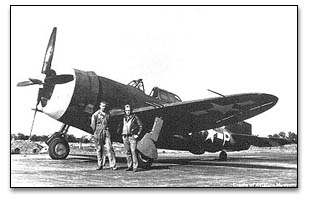 Now just imagine doing this in some Sunny Clime like say Burma. With its 90 plus degrees and almost 100% humidity.