Category: Gun Info for Rookies

Regardless if you procured an outdated rifle from an older family member, via a gun-show purchase or through some other method, you hope the vintage shooting iron still hurtles projectiles downrange accurately. You may get lucky with that classic gun, but you also may struggle with it spitting bullets irregularly like a malfunctioning baseball pitching machine. You might address the issue via a gun shop visit or DIY gunsmithing. Additionally, consider these five upgrades as possible remedies for errant rounds.
Before you give your old friend a major makeover, do some research. Use the serial number, model number and other details of the rifle to determine its age. First, the firearm may be an actual antique, and if you have ever watched the PBS program “Antiques Roadshow,” you understand that modifying the character of an item typically decreases its value.
Second, older firearms were not manufactured with the same specifications as their counterparts today. Those older designs may not be up to the task when launching the higher pressures of modern ammunition. Risk of injury or even death could result in a mismatch. Seek out advice from the manufacturer and trusted firearm experts to determine whether your old rifle should return to the field or rest comfortably above the fireplace mantle.
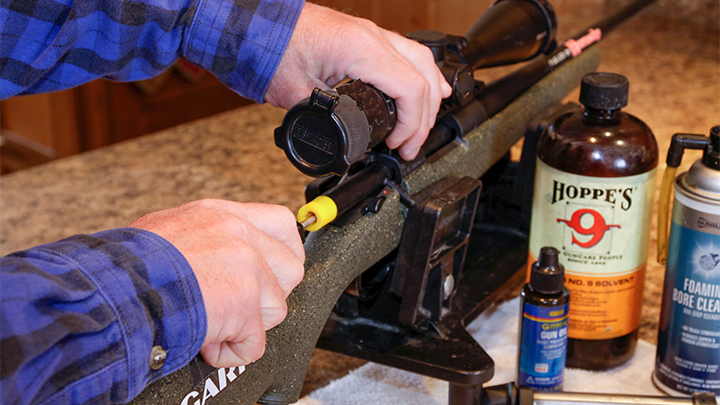
Spring Cleaning
If given the green light to transform an elderly rifle, you can start easily with spring cleaning. Give that old firearm a good scrubdown from end to end. Whether the past owner neglected regular cleanings or simply put the rifle away after the last deer season without cleaning it, a good cleaning could remove performance-affecting gunk throughout.
Make sure the firearm is unloaded and then disassemble, with the help of manufacturer guidelines. This gives you access to all nooks and crannies containing crud. Clean from the breech end with the help of a bore guide as you push your cleaning rod toward the bore. Your goal is to remove all deep-seated copper fouling in the barrel. Repeat until your patches come out clean.
Using gunsmithing tools and solvents, clean the bolt, action, trigger assembly and any mechanisms that hold cartridges, including springs. Afterwards, lubricate lightly with rust prevention products and foul the barrel with one or two shots before assessing accuracy. Fouling removes traces of oil and cleaning solvents, plus it pads the rifling with copper and powder residue. If your rifle shoots accurately and you are happy, your improvements may be complete.
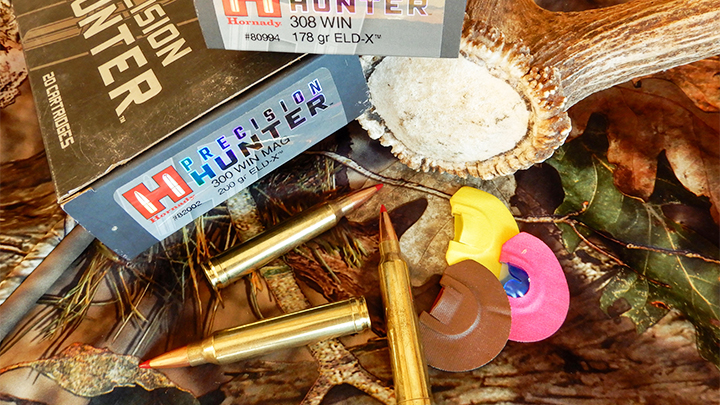
New Fuel
After your lawn mower sits all winter, a dose of new fuel helps spark it back to life. New ammunition could do the same for that older rifle, especially after a deep cleaning. Set aside any stockpiles of nostalgic ammunition that may have come with the rifle and explore the latest options. After establishing that your rifle can handle newer advancements in ammunition, research selections that are receiving kudos in articles, forums and blogs. A lot has changed since the original Peters deer hunting cartridges were last available. Technological boosts, such as Hornady’s revolutionary use of Doppler radar to aid bullet design, have led to projectiles that fly more accurately and expand with consistent results.
Handloading may be your thing, and it provides an environment where you can safely create your own recipe for accuracy success. Not only can you tailor loads to match the era of your rifle’s specifications, but you can also tweak them until a bullet flies to your objective.
Whether you test with factory updates or handloaded perfection, new ammunition can make an older rifle shine in performance.
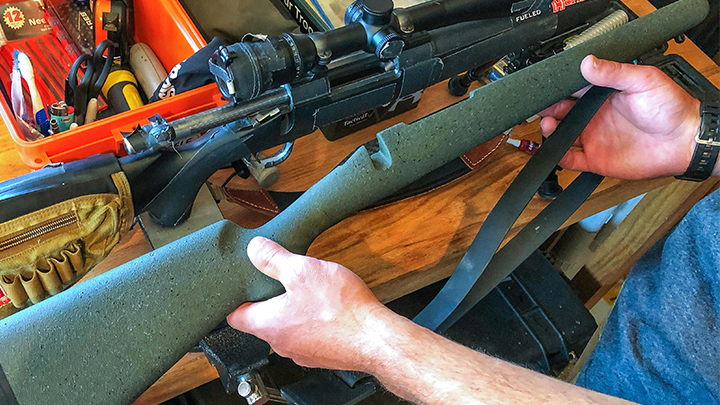
Stock It
Rifles of yesteryear traditionally featured stocks crafted from wood. Some of these were elegant examples of artistic craftsmanship. Others might be held together with a firm wrapping of electrical tape. Unfortunately, the wood stock could be a major culprit in marginalizing your rifle’s precision usefulness.
With weather variables (humidity being the worst), wood could swell and apply pressure to the barrel or receiver, affecting accuracy. Fortunately, you have several easy fixes to the issue. The first fix is to glass- or pillar-bed the action along with free-floating the barrel. Order either kit from Brownells and do it yourself or find a gunsmith for the job. Before you chart this course, consider again the antiquity value of the rifle. This alteration could reduce its value with the “Pawn Stars” employees.
To protect vintage value, ditch this option and shop for a replacement stock. Technically advanced stock systems, crafted of a single component or layers of polymer, graphite and even Kevlar, provide a quality replacement for pressure issues. You can even peruse laminated wood options if you favor that feel. Plus, if you ever wish to sell your heirloom, simply swap back the stock and advertise it as original. Magpul, Hogue, Boyds and others manufacture stocks that are bedded and easy to install.
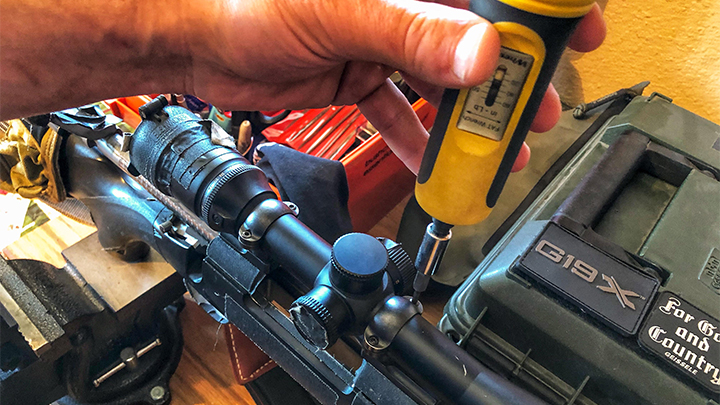
I See Clearly Now
Despite a reemerging spotlight on open-sight rifles, most of us rely on a riflescope to perfect our aim. Your rifle may have arrived with a scope on it, but evaluate the optic to see if it is better gifted or tossed. Improved glass and multilayer coatings, trajectory reticles, focusing abilities and first- and second-focal plane reticle choices can improve your aim.
Technologically advanced optics systems, like SIG Sauer’s Sierra3BDX system, Bluetooth communicate between the riflescope and the rangefinder to automatically adjust the reticle. The 1970s Weaver riflescope that tops your grandfather’s rifle cannot do that trick. While swapping scopes, consider upgrading hardware, including new rings and bases. If yesteryear tugs at your heart, save the old hardware and scope to restore that rifle to a past era when it completes your tour of duty.
Crisp and Clean
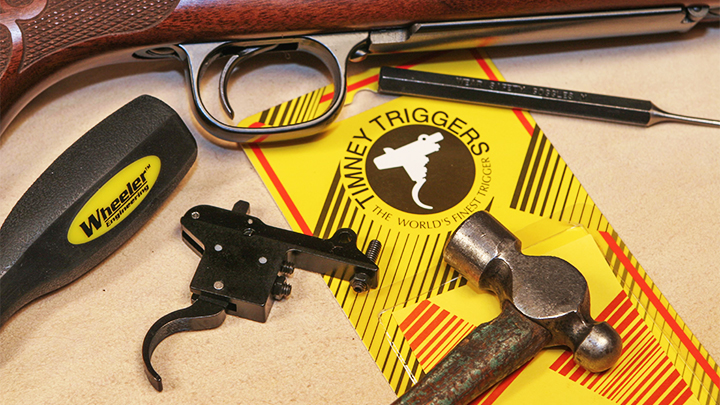
Lastly, like NASA, a clean launch ensures a good start to your mission. A new trigger can guarantee a good bullet launch. It is possible your earlier cleaning returned the trigger to a quality state or a gunsmith could tune the old trigger into a functioning mechanism with a sweet spot. Companies such as Timney and Geissele manufacture replacement trigger systems for a variety of firearms. Study up on an upgrade for your project rifle and consider having work completed by a competent gunsmith. A trigger needs to be adjusted according to manufacturer recommendations or you need to be responsible if you decide to set your trigger for a more sensitive release.
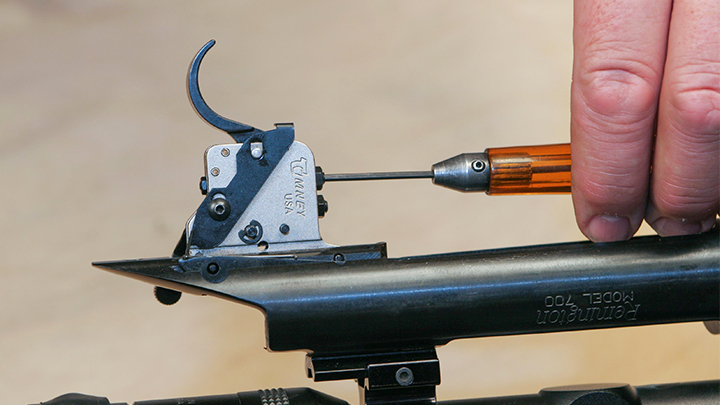
Many precision rifles have adjustable triggers from 1.5 to 4.5 pounds. A setting between 2.5 and 3.5 allows you to depress without jerking and keeps your rifle safe. This is critical, as a trigger adjusted too light could accidentally go off simply by slamming the bolt closed.
A rifle with senior-citizen status does not have to be sent to the display case. With some creative ingenuity, it can still play a major part in your future hunts.


Learning your way around a modern American gun shop for the first time can seem a little bit like a college physics class, only with more facial hair and testosterone. This is particularly true of those who might not have grown up in this world, with the terminology alone bring seemingly overwhelming. Sometimes certain things that should be simple are not. As a case in point, let us consider the humble handgun.
A particularly insightful five-year-old once entertained me in my medical clinic extolling the many manifest virtues of frogs. He patiently explained that all toads were frogs but not all frogs were toads. So it is with handguns.
Revolver vs. Pistol
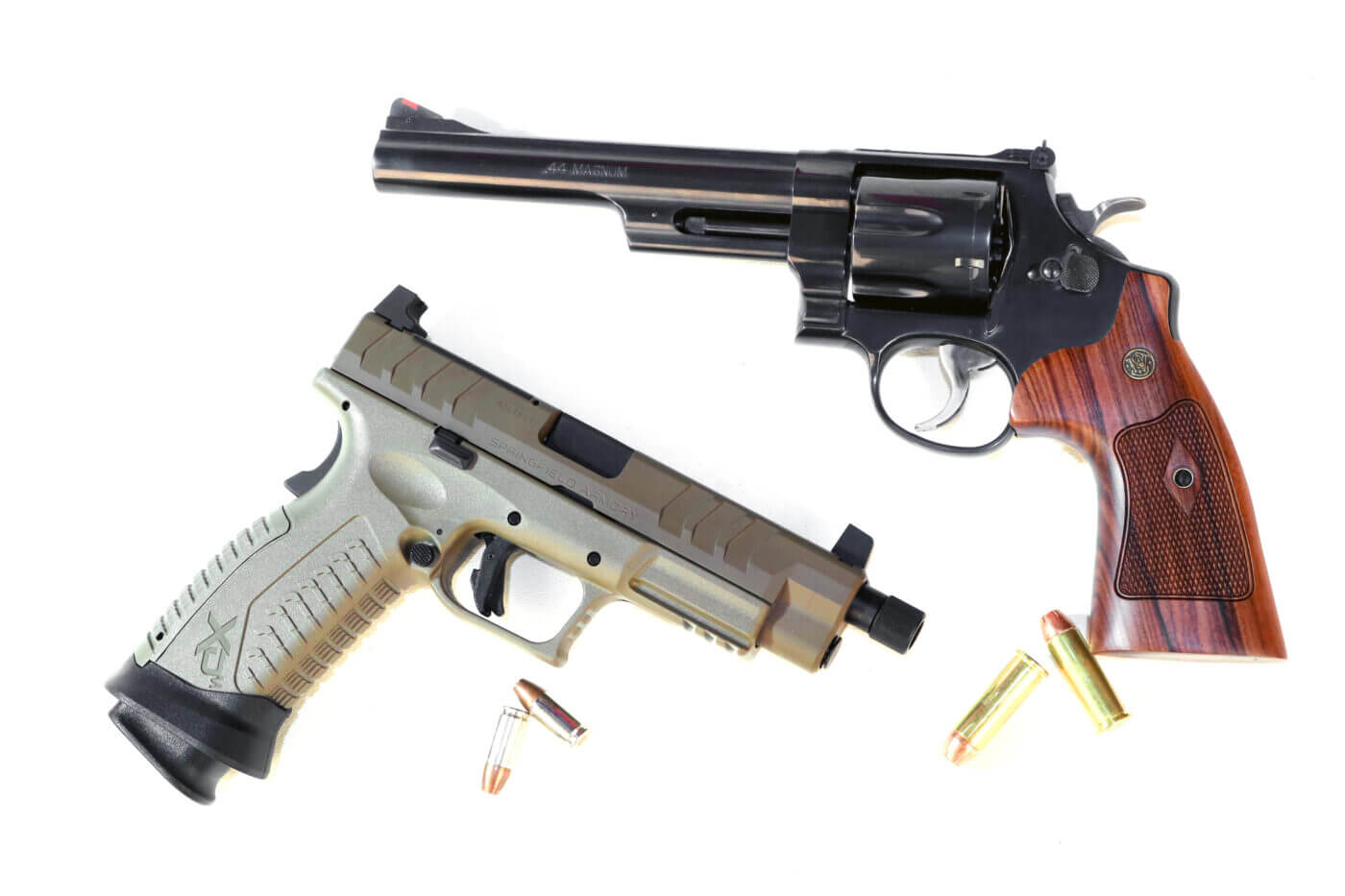
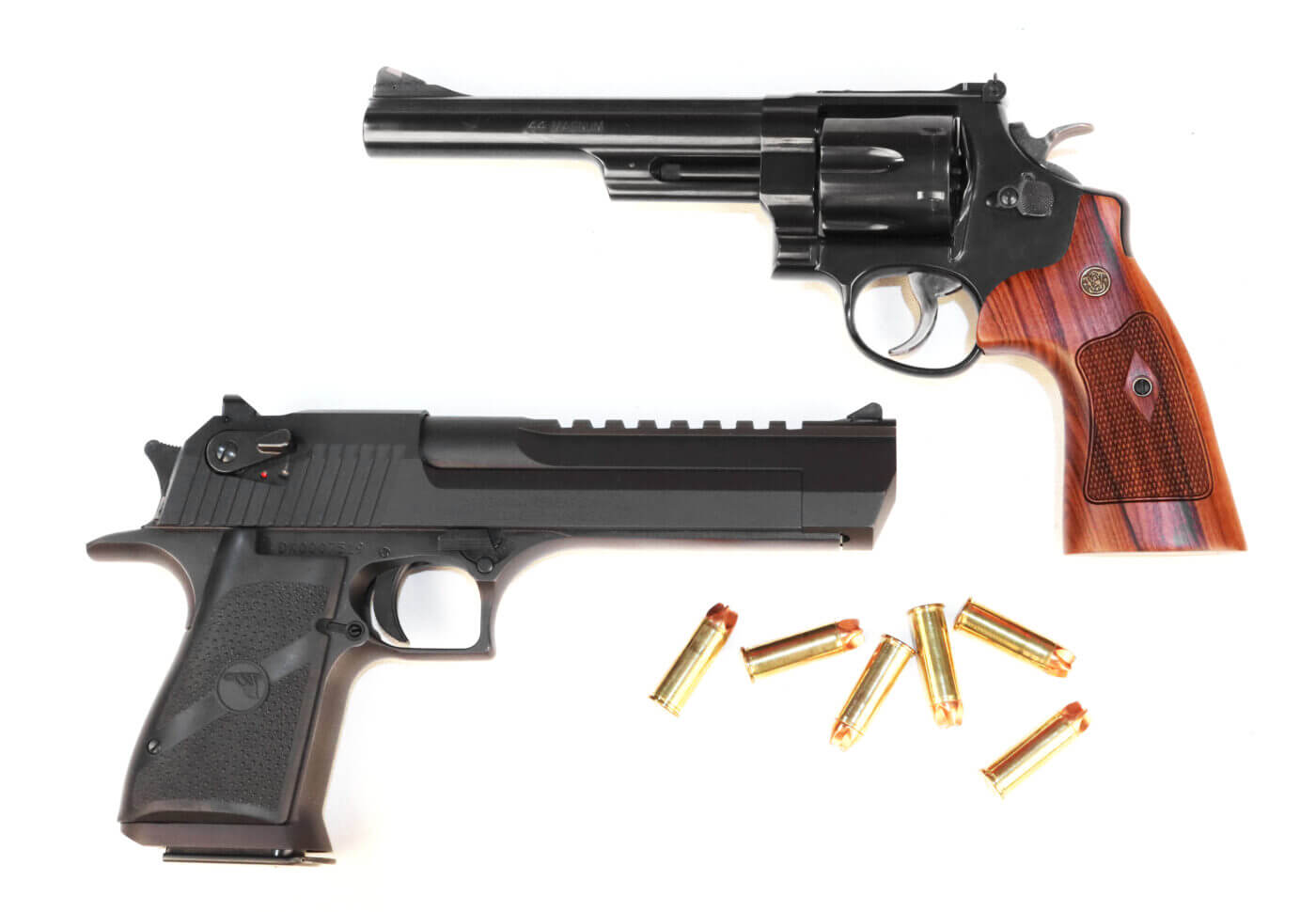
Any small-statured firearm designed to be fired with the arms outstretched is termed a handgun. In general, a handgun can be a pistol or a revolver. The origins of the term pistol hearken back to 16th century France. The French “pistolet” at that time meant a small gun or knife.
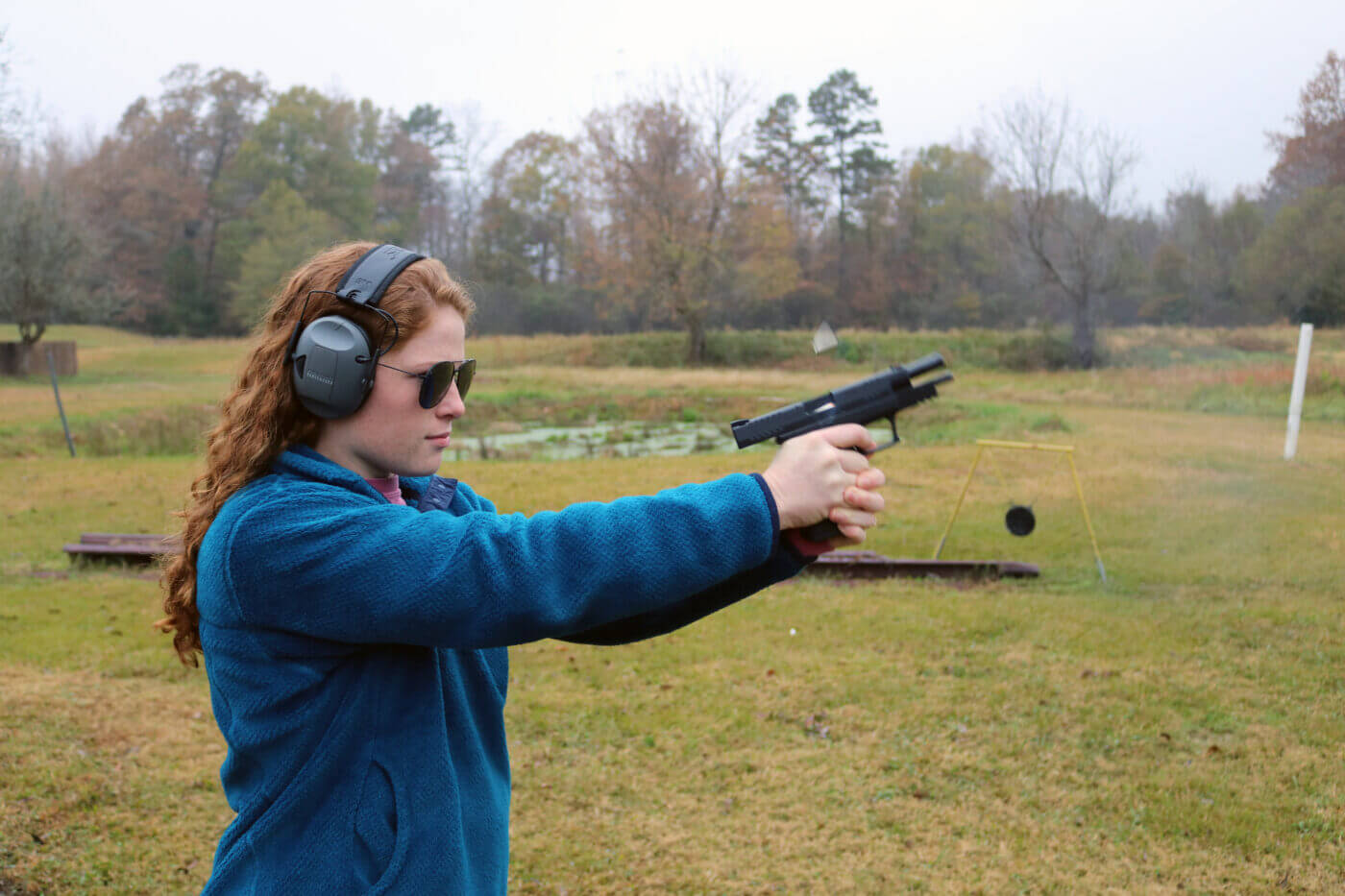
In modern parlance, the word “pistol” is typically used to describe a semi-automatic autoloading handgun. Semi-automatic means that the gun fires one shot with each pull of the trigger. Autoloading means that the gun’s mechanism ejects the spent case and loads a fresh cartridge using the gun’s intrinsic recoil energy.
By contrast, the word “revolver” is shorthand for revolving pistol. This particular design dates back to before the American Civil War. While the first revolving gun actions arose some 500 years ago, the mechanism was not made truly useful until Sam Colt designed his eponymous Colt revolver in 1836.
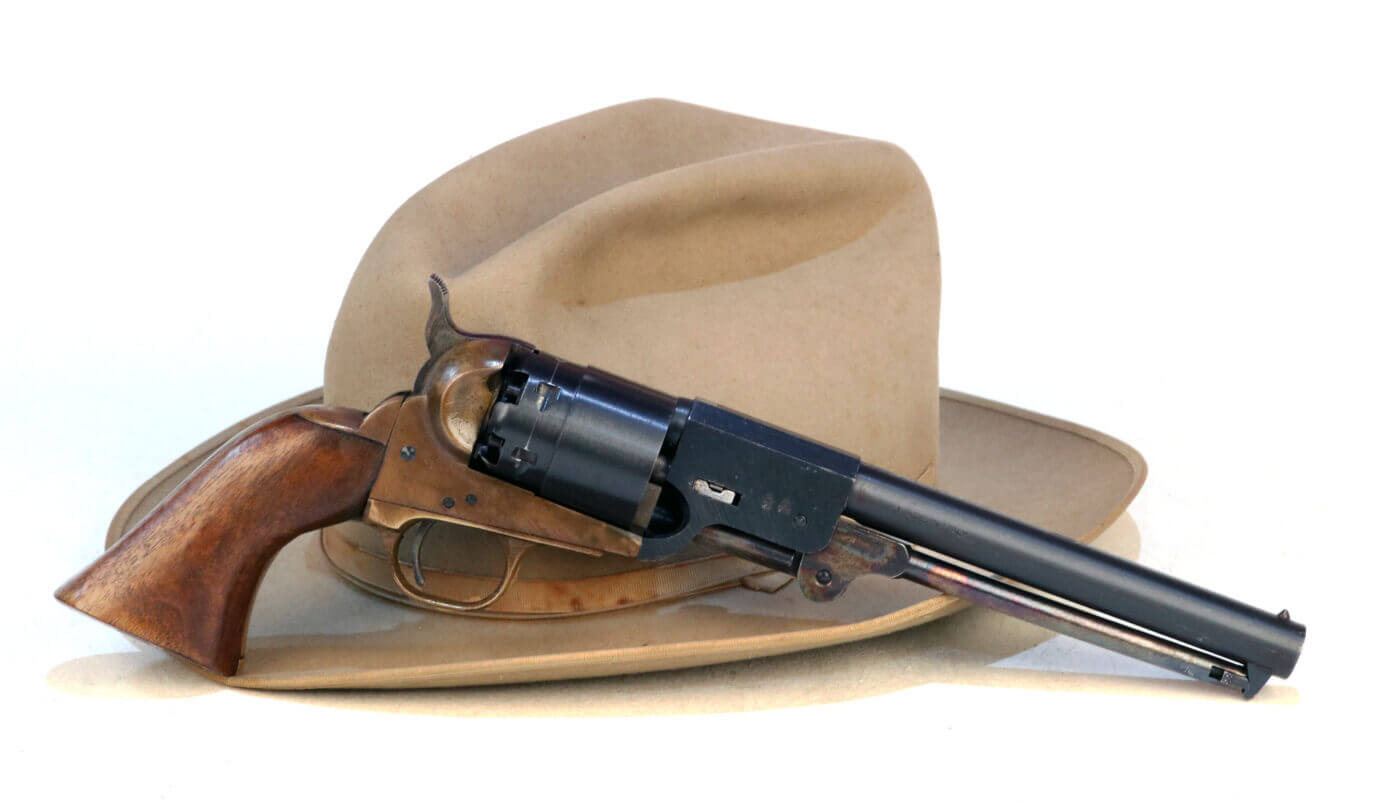
So, in terms of name alone, the revolver vs pistol debate should simply note that the revolver is a subset of the pistol genre.
The Semi-Automatic Pistol
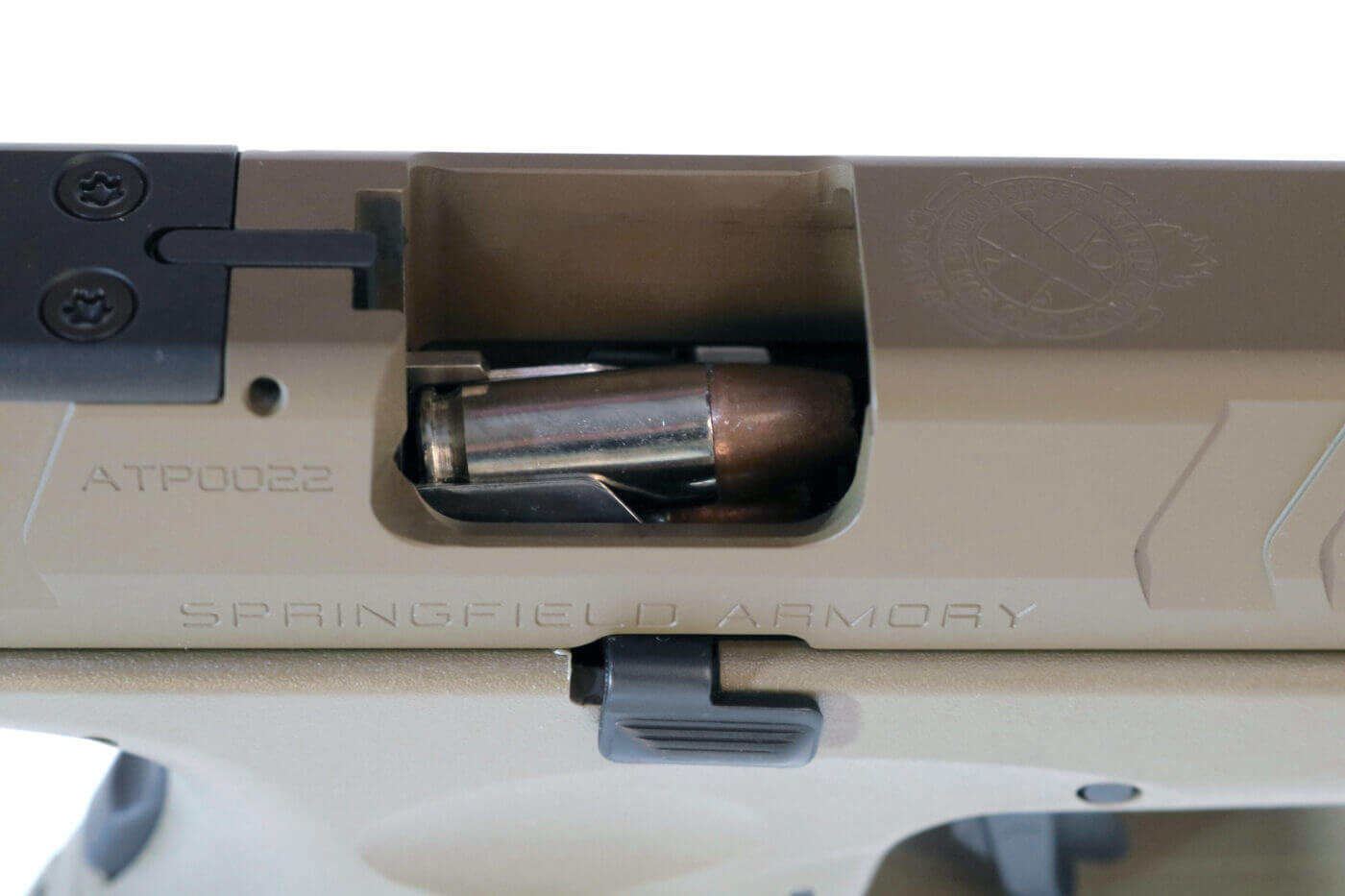
The world’s first autoloading pistol was the obscure Salvator-Dormus semi-automatic handgun patented in July of 1891. There have been lots of different kinds since then, but today’s pistols follow certain common conventions. The typical modern autoloading pistol feeds from a spring-loaded box of cartridges called a magazine that is retained within the grip of the gun.
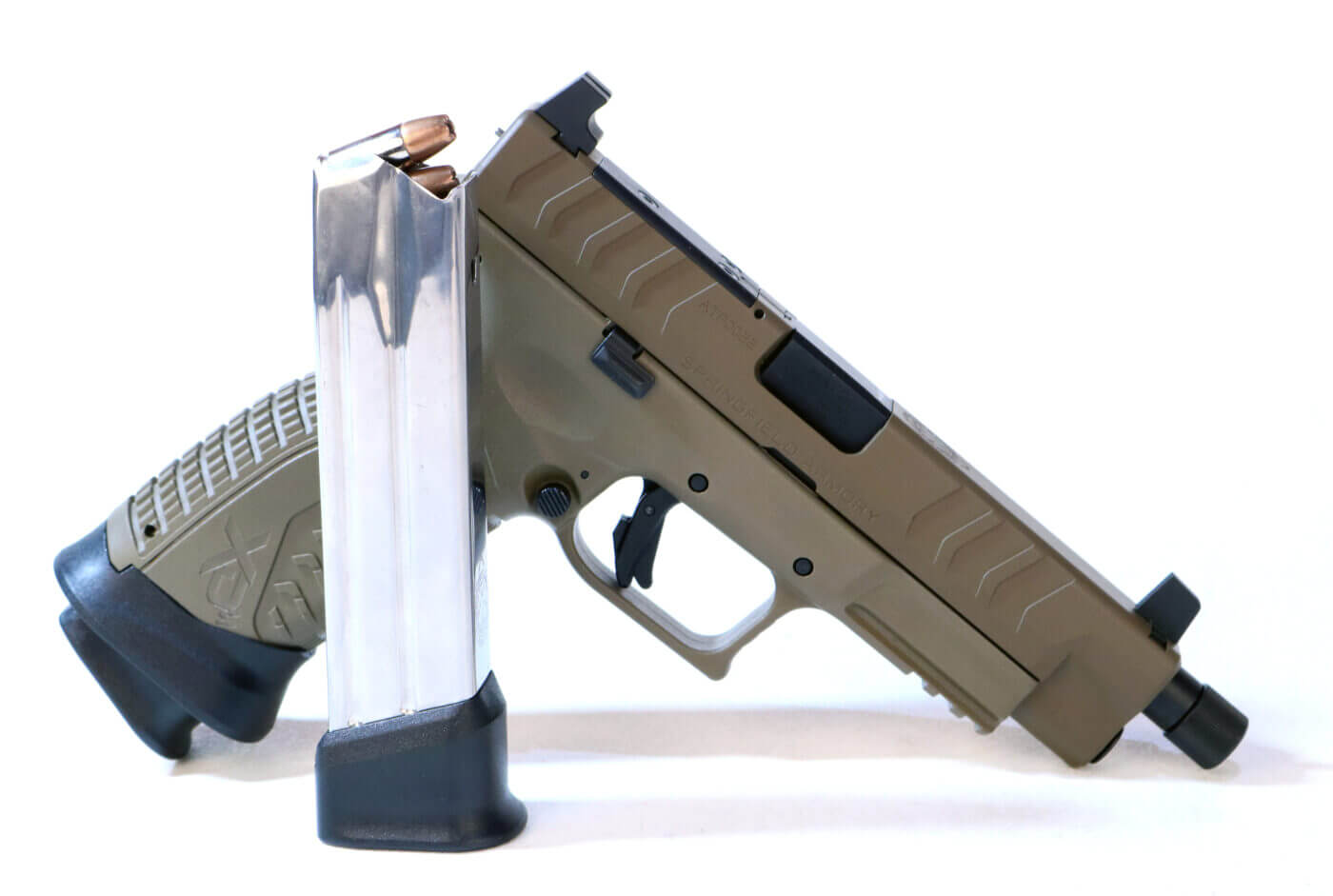
When you pull the trigger of a semi-automatic pistol, the cartridge fires, propelling the bullet out of the barrel. Recoil energy pushes a reciprocating slide backwards to extract and eject the empty cartridge case. Spring pressure then drives the slide forward to push another cartridge into the firing chamber. Pressing the trigger again repeats the cycle. This process can continue until the ammunition in the magazine has run dry.
The Revolver
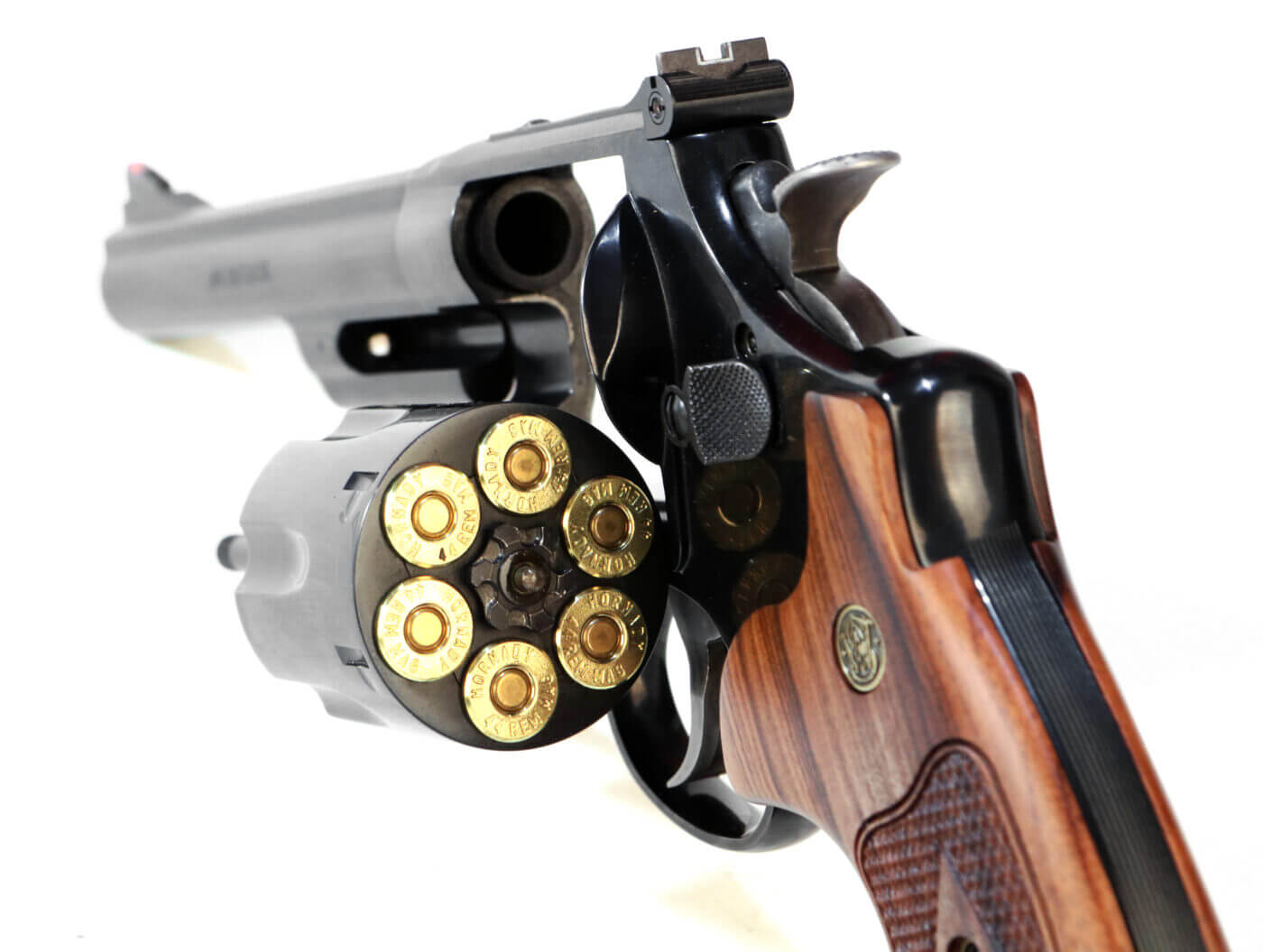
Most modern revolvers carry six cartridges circumferentially in a round steel cylinder that rotates around a central shaft. In most cases, you activate a latch on the side of the gun that allows the cylinder to swing out of the frame. You then load the round cylinder with individual cartridges and snap it back in place.
Most revolvers can be fired two ways. When fired in the double-action mode, you simply pull the trigger. This maneuver rotates the cylinder, indexes an individual chamber in line with the barrel, and cocks the hammer and then drops it to fire the round. Releasing and then pulling the trigger again repeats the process.
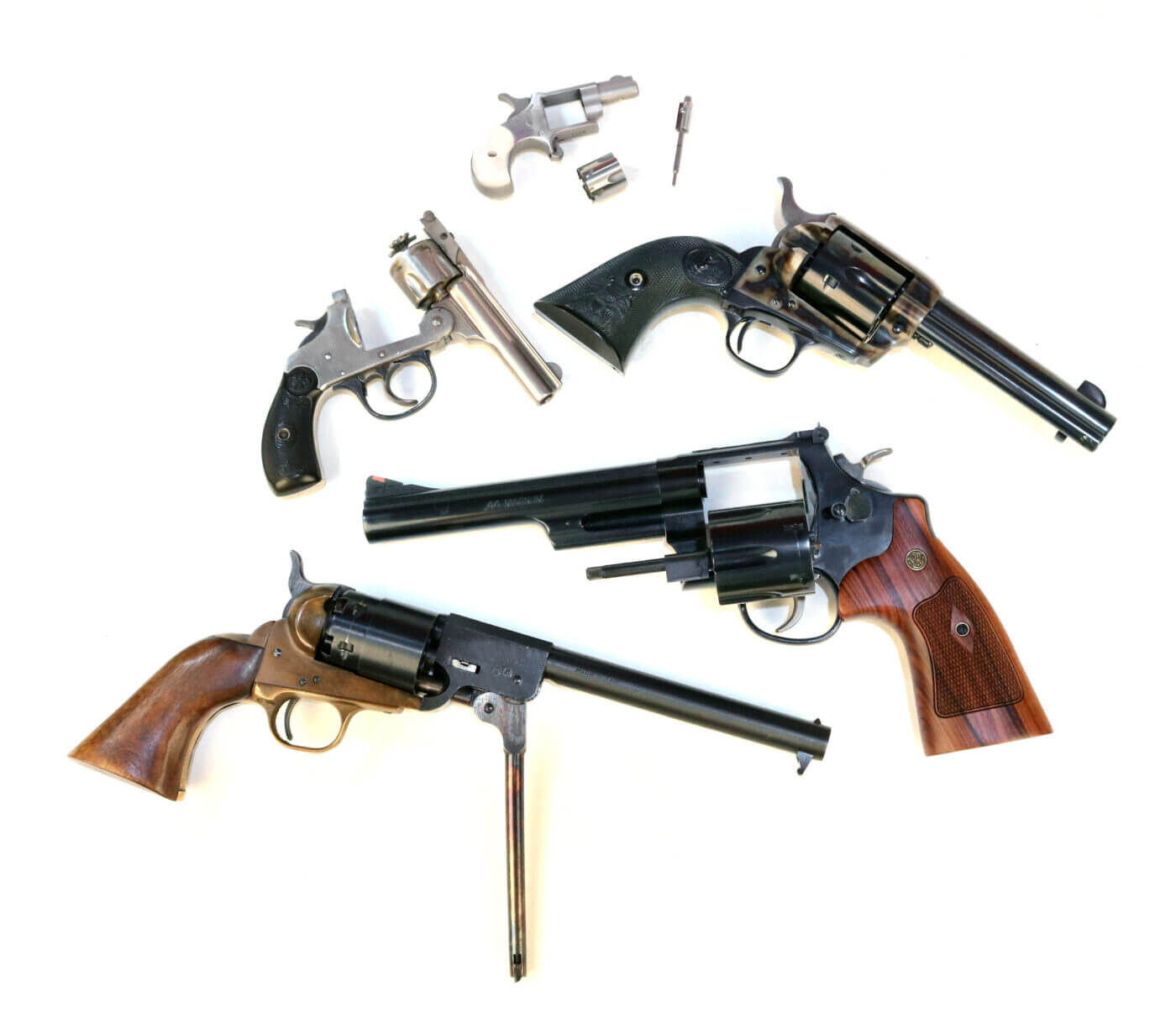
As an alternative, most revolvers also allow you to manually cock the hammer back with your thumb. This mode of fire is called single-action. This maneuver automatically rotates the cylinder and aligns a cartridge with the barrel when you use your thumb to cock the hammer. Pulling the trigger then simply drops the hammer, firing the shot. As the hammer is manually cocked in this mode, single-action fire produces a shorter, lighter, crisper trigger pull over double-action operation which is longer and heavier. This is because the gun’s mechanism has so much less work to do when compared to the double-action mode.

Despite its age, the classic revolver still maintains a healthy following even today. Revolver actions are exceptionally strong and are as a result generally able to manage heavier cartridges than might reasonably fire in a semi-automatic pistol. The heavy nature of the design also lends itself to excellent accuracy. Lastly, the nature of the firing mechanism is such that revolver triggers are amenable to exceptionally crisp performance. Downsides include bulk, weight, and limited ammunition capacity.
Denouement
While revolvers are still widely used for target shooting and hunting applications, most modern shooters use semi-automatic pistols for concealed carry and personal defense. Advances in metallurgy and design have made these autoloading pistols comparably reliable to revolvers, and they are almost invariably easier to carry and conceal. However, variety is the spice of life.
Some shooters gravitate towards trim pocket pistols. Others will run a revolver or nothing at all. In shooting like most human pursuits our innate individuality expresses itself in our personal preferences.
Categories
Arty Shock Wave
