Categories
All About Guns EVIL MF Grumpy's hall of Shame Gun Info for Rookies Paint me surprised by this that’s too bad” You have to be kidding, right!?!

West Virginia Senate President Kills Machine Gun Bill by John Crump

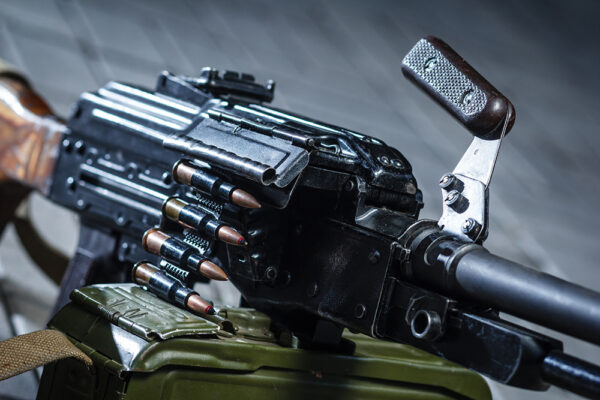
PKM Machine Gun
West Virginia Senate President Kills Machine Gun Bill, iStock-525735226

In a move that has triggered debate among gun rights advocates and lawmakers, West Virginia Senate Bill 1071, commonly referred to as the “Machine Gun Bill,” will not proceed in the current legislative session. Senate President Randy Smith (R-Preston) announced his decision to block the bill, citing what he calls significant legal and drafting issues rather than any opposition to Second Amendment rights.

The bill, introduced late in the session, aimed to expand access to fully automatic machine guns for eligible West Virginia residents.

Specifically, it advocated creating the Office of Public Defense within the West Virginia State Police, which would oversee the purchase, sale, and distribution of machine guns to individuals for state defense purposes. Supporters contend the bill aligns with Second Amendment protections, bolsters personal and community security, while complying with federal background check requirements.

SB 1071 initially cleared the Senate Judiciary Committee on Monday, March 2, following a contentious meeting that ended in confusion.

Committee Chairman Tom Willis called for a recess, and after discussions, the bill appeared to advance with strong support.

However, it never reached the full Senate floor or the Finance Committee, stalling ahead of the crossover day deadline on Wednesday, March 4, the point by which bills must pass their originating chamber to remain viable.

Smith explained his rationale in statements released today, describing the legislation as “poorly drafted” and submitted on the final day for Senate bills.

He consulted with multiple attorneys, members of West Virginia’s National Rifle Association, and the West Virginia Citizens Defense League (WVCDL), all of whom reportedly advised that the bill would likely fail in the House of Delegates and invite court challenges. “This bill, as it was submitted to us, would be unable to pass the House of Delegates and would face numerous judicial challenges to its implementation upon passage,” Smith stated.

Speaking to multiple senators, WVCDL lobbyist Art Thomm implied that the NRA does not support the bill.

Ammoland News spoke to NRA-ILA President John Commerford, who denied that the NRA had anything to do with killing the bill.

In fact, Commerford stated that the NRA is looking forward to working with the sponsor of the bill to improve it for next year.

Mr. Commerford also confirmed to AmmoLand News that Thomm does not work for the NRA and hasn’t worked for the gun rights organizations for a few years.

The NRA has a new West Virginia State Director starting Monday. The lawmakers AmmoLand News spoke to said they believed the NRA was opposed to the bill’s passage.

Critics of the decision, including bill sponsor Sen. Chris Rose (R-Monongalia) and Sen. Laura Chapman (R-Ohio), voiced frustration over the lack of transparency.

Rose noted that reviving the bill would require suspending constitutional rules and obtaining a two-thirds majority, a hurdle he deemed unlikely at this stage. “Traditionally speaking, this bill would be dead at this time,” Rose said. Chapman reiterated these sentiments, calling the process opaque: “The bill is dead, and it was killed without transparency and without consensus, despite the fact that this bill had overwhelming support by this body.”

Gun Owners of America (GOA) has mobilized supporters to pressure Smith for a floor vote.

In an urgent call to action, GOA claimed the bill “mysteriously disappeared” despite passing committee and urged constituents to contact the Senate President, pointing out that 93% of West Virginia gun owners reportedly support such measures. “We have an extremely small window to get this done,” GOA stated.

The bill’s failure emphasizes continuing tensions in West Virginia’s Republican-dominated legislature over gun rights legislation.

While the state has some of the most permissive gun laws in the nation, including permitless carry, efforts to challenge federal restrictions on machine guns, which have been tightly regulated since the 1934 National Firearms Act (NFA) and further restricted by the 1986 Hughes Amendment, commonly experience scrutiny for possible conflicts with national law.

During committee discussions, concerns were raised that the bill may unintentionally expose residents or state police to federal violations, with West Virginia Troopers Association President Lonnie Faircloth voicing concerns about transferring machine guns to private citizens.

Opposition within the committee was limited but notable. Sen. Ryan Weld (R-Brooke) voted against the bill, and Sen. Joey Garcia (D-Marion) questioned its adherence to federal regulations. Despite this, the measure had obtained considerable backing from gun rights groups and some lawmakers who viewed it as a stand against supposed federal overreach.

As the legislative session winds down, the fate of SB 1071 acts as a reminder of the procedural and statutory hurdles even popular ideas can face. Smith reasserted his commitment to Second Amendment issues, suggesting that a better-drafted version could be considered in future sessions.

For now, however, West Virginians seeking machine guns have to navigate the existing National Firearms Act licensing process, which remains stringent and costly.

This change has fueled discussions on social media platforms such as X, where users and news outlets have shared updates on the bill’s demise.

Gun rights advocates continue to rally, but with the session’s end approaching, the window for revival appears to be closing fast unless a super majority of the Senate votes to suspend the rules.

Categories
All About Guns Gun Info for Rookies

Installation of MFI WWII Style Period Correct Cocking Handle for Blue Line Solutions MP40 .22 LR

Categories
All About Guns Gun Info for Rookies

Precision Pillar Bedding a Hunting Stock – 375 H&H Magnum – Custom African Safari Hunting Rifle

Categories
All About Guns Gun Info for Rookies

Mauser “One-Finger” Field Strip Tip

Categories
All About Guns Gun Info for Rookies

Applying Tung Oil to an M1 Garand | CMP | Expert

Categories
All About Guns Gun Info for Rookies

Sporterized Mausers: Doing it Right

Categories
All About Guns Fieldcraft Gun Info for Rookies

How to Use Iron Sights By Robert A. Sadowski

Nothing in life is perfect — and this is especially true with a sight picture with iron sights. For centuries, iron sights — also called open sights — have been the de facto device for aiming both rifles and handguns. If you take one thing away from this how-to on irons sights, it should be this: focus on the front sight. If done correctly, the rear sight and the target will both be fuzzy — and that’s okay. Like I said; nothing in life is perfect.

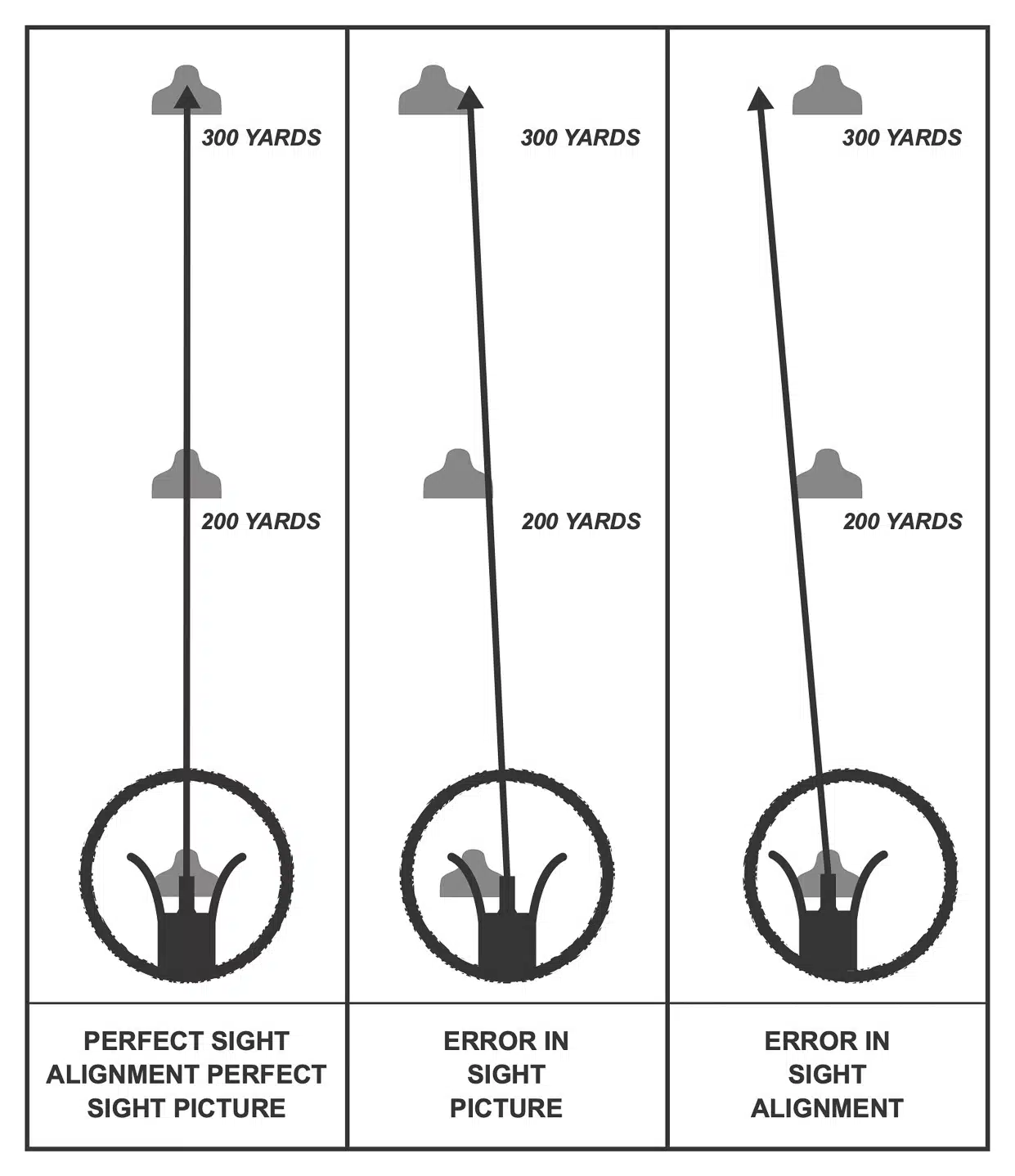
At close range, incorrect sight alignment has minimal effect on bullet impact. However, at long range a small error in sight alignment means a shot that hits off target. Image: U.S.M.C.

What Are Iron Sights?

Let’s discuss handgun sights first. While there’s a wide variety of iron sights, all have the same primary features: a rear sight with a notch in it, and a front post that’s aligned in that notch to aim the pistol.

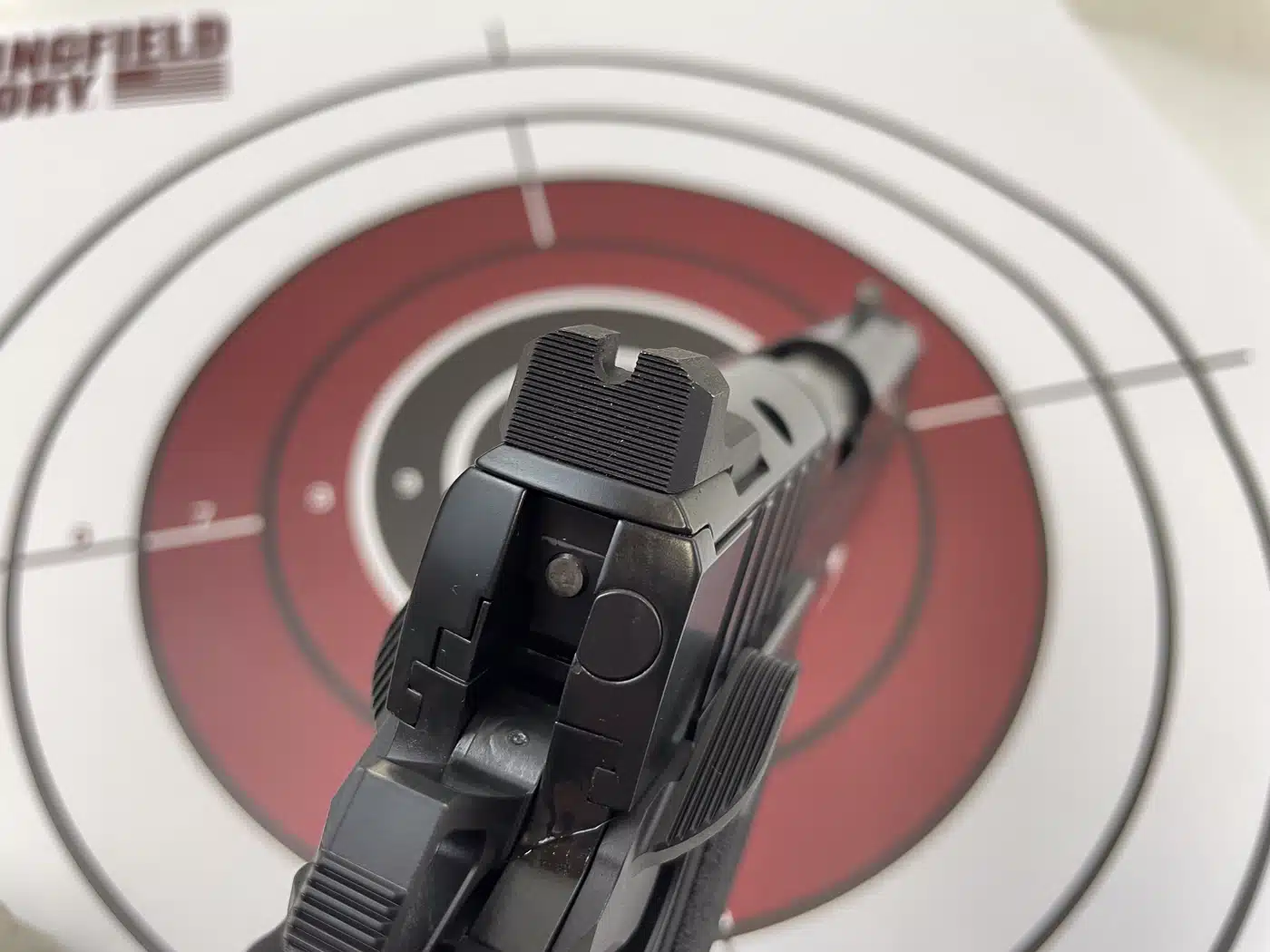
The rear notch can range from a square notch to a V- or U-shaped notch. On a handgun, in many cases there is a dot — either painted white or luminescent — on either side of this notch. The dots help the shooter more quickly locate the rear notch (and align the front sight).

The rear sight on a handgun like this 1911 can be fixed, as in this example, or adjustable. This suppressor-height rear sight features a U-shaped notch.

Rear sights on handguns can be fixed or adjustable. Adjustable sights are usually found on target handguns and allow the user to adjust windage (left or right) and elevation (up and down) via a turn of a screw.

Fixed sights are just that fixed. Most can be drifted left or right to adjust windage (unless it is machined directly into the slide of the pistol), but most come from the factory adjusted to hit anywhere from 10 to 25 yards depending on the size, caliber, and type of pistol. The front sight post can be plain, or have a dot or a bead.

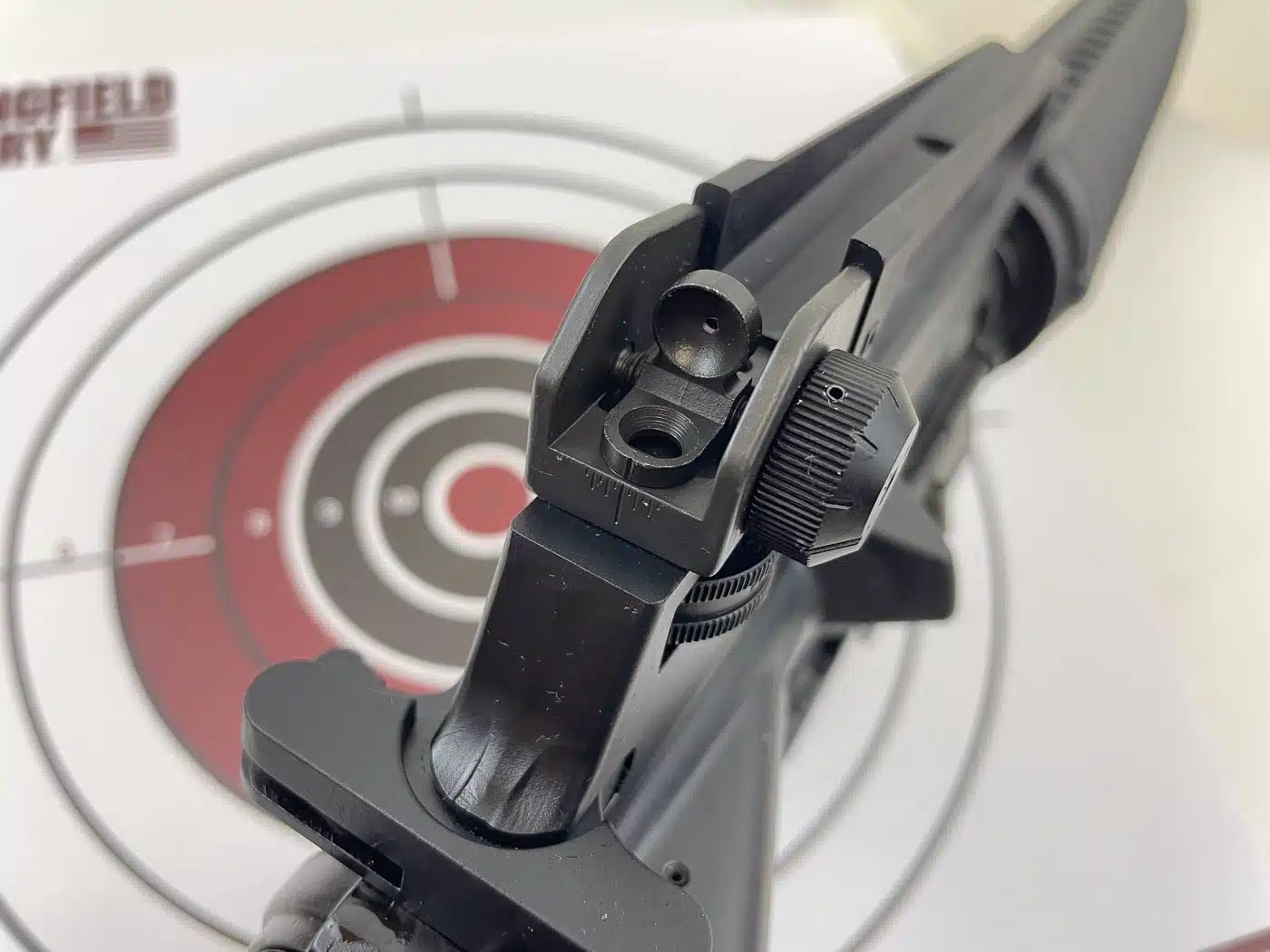
Rifle sights are similar, but different. The rear sight on an AR-15 and M1A is typically an aperture sight, also called a peep sight. This is a disc with a hole in the center. Usually, the rear sight can be adjusted for both windage and elevation.

The rear sight on an AR-15 (like this Springfield Armory SA-16A2) is an aperture, which is a small disc with a hole in the center.

On some AR-15 rifles, there are two rear aperture sights; one with a small hole and one with a larger hole. The small hole rear aperture sight is used for normal shooting while the large aperture rear sight is used for close quarters when fast target acquisition and a larger field of view is needed. The front sight is typically a post.

On rifles like the M1A and AR-15, there are protective wings on either side of the front post to protect it in the event the rifle is dropped. The wings ensure the post is unscathed during an accidental drop. On an AR-15, the front sight can typically be adjusted for elevation.

Now that you know a front sight from a rear sight, let’s discuss the sight alignment process.

Step 1: Equal Height, Equal Light

The key to aligning open sights on a handgun is to align the front post in the notch of the rear sight. The top of the front sight should be flush with the top of the rear sight. That’s where the “equal height” part comes in.

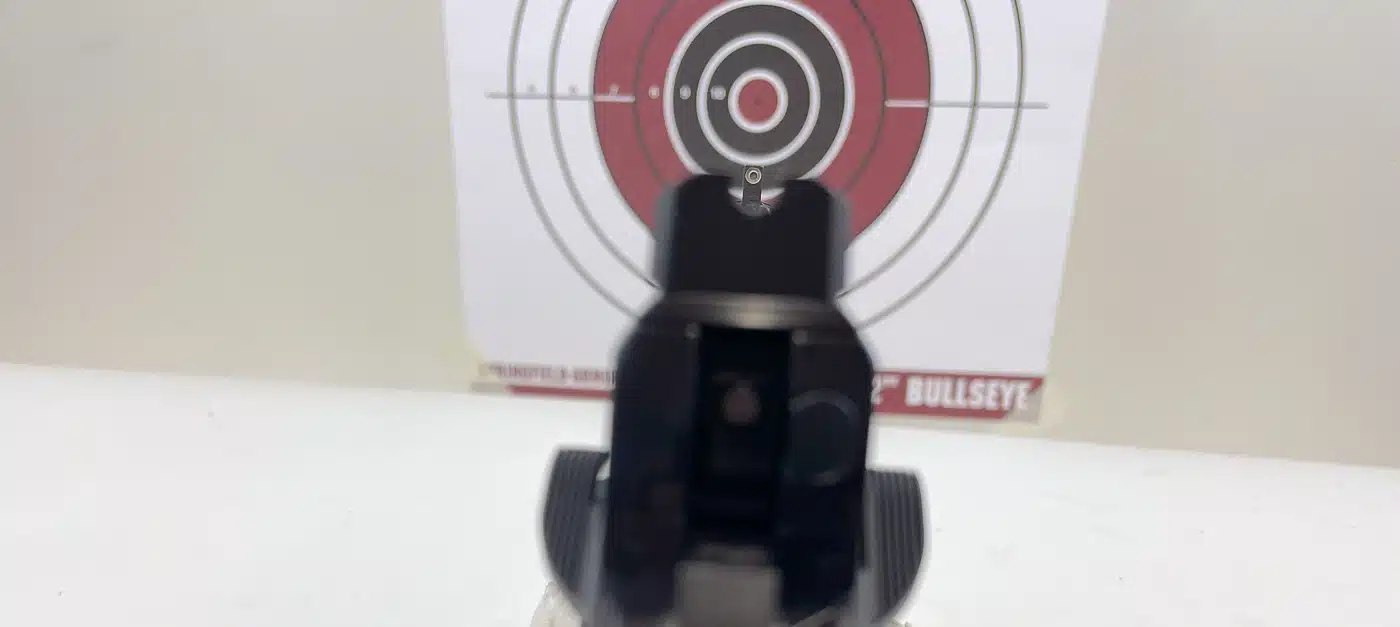
This is an example of proper sight alignment. Note there is equal space on either side of the front sight.

Next is to ensure the front sight post is positioned in the center of the notch. The “equal light” phrase means there should be the same amount of space or light on each side of the front sight post when it is aligned in the notch.

I know this may sound complicated, but once you understand the concept, sight alignment happens ultra-fast. In a rifle, the process is basically the same. The shooter looks through the rear sight aperture and centers the top of the front sight post in the center of the aperture.

Now that you know how to align handgun and rifle open sights, let’s talk sight picture.

Step 2: Sight Picture

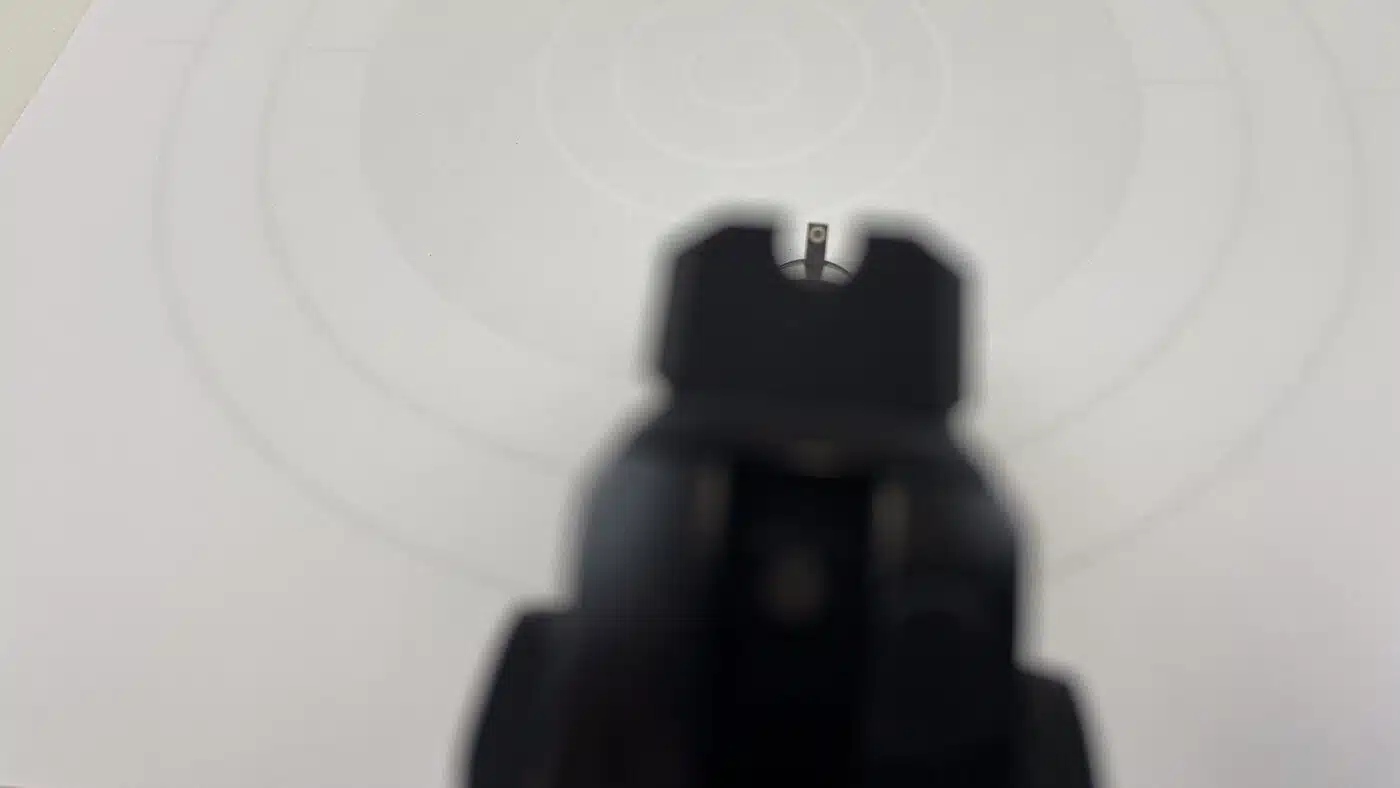
What does “sight picture” mean? Sight picture is when the shooter aligns the sights while focusing on the front sight and placing the front sight on the target. This is the “imperfect” part I mentioned since, while the front sight is in clear focus, the rear sight and target are fuzzy or even blurry.

This is a proper sight picture for AR-15 open sights. Note both the target and the rear circular peep sight are fuzzy while the front sight post is clearly in focus. Image: U.S.M.C.

Don’t be bothered by the fuzzy rear sight and target. Our eye can only focus on one thing at a time when aiming a gun, and when aiming with open sights there are three planes our eye is using: one at the rear sight, the second at the front sight, and the third is the target. Remember to focus on the front sight.

This is what sight alignment and sight posture look like. Notice that the front sight is in focus while the rear sight and target are fuzzy.

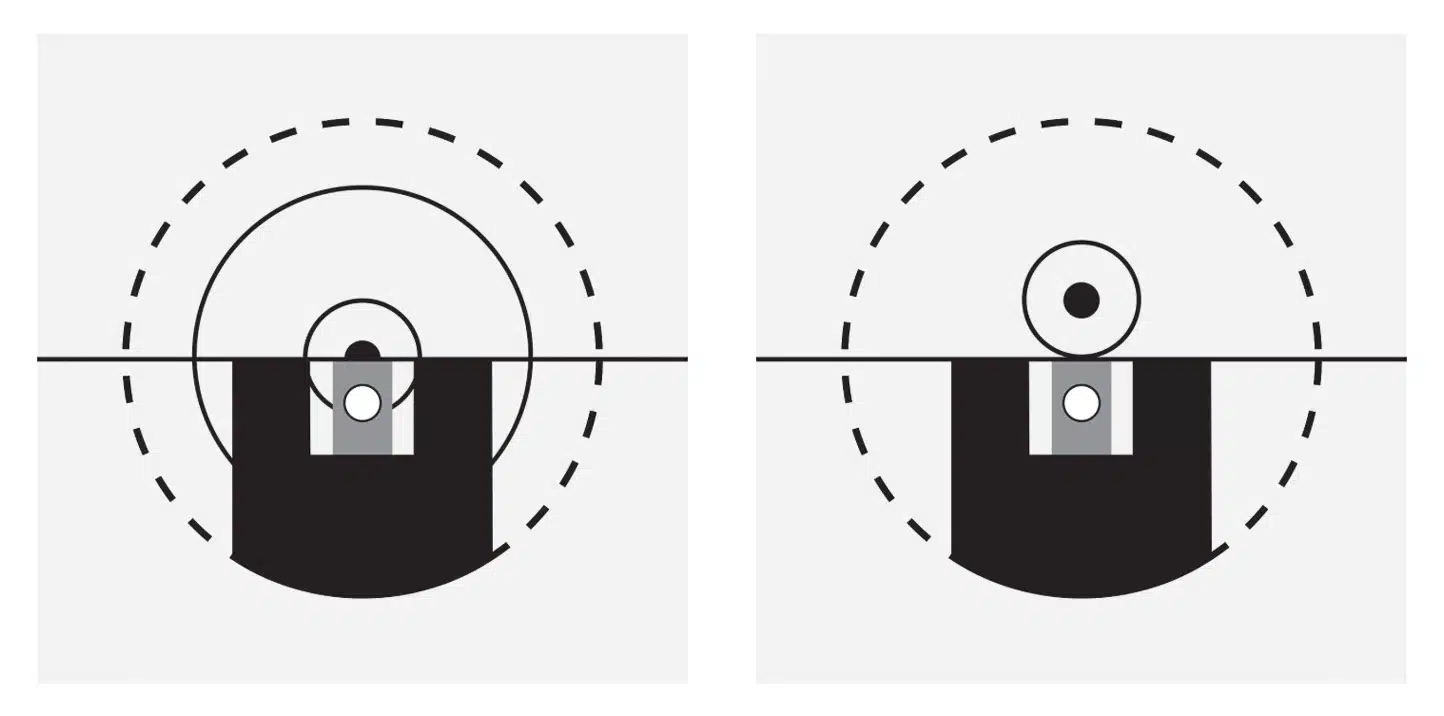
There are different types of sight picture depending on the spot where you place the front sight. For instance, a center-of-mass sight picture is when the front sight is placed on the target so the bullet strikes the exact point of aim.

Aim at the middle of the target, and (if you do your part) the bullet will hit the middle of the target. Center-of-mass sight pictures are typically used in defense and combat shooting, and generally speaking most fixed sight handguns will shoot center of mass.

A six o’clock hold is when the front sight is placed just below the desired point of impact, and the bullet’s point of impact is the center of the bullseye. A six o’clock sight picture is usually used by target shooters who have adjustable sights on their firearm and can adjust the point of impact to be slightly above the aiming point.

This approach allows you to see the desired targeting point more clearly (rather than obscuring it behind the sights). In my opinion, if you conceal carry for defense, the center of mass method should be used.

Step 3: Firing the Shot

Now that the sights are aligned and you have a sight picture, you are ready to fire the shot. This is the tricky part. With a firm grip on the handgun, press the trigger back while keeping the sights aligned and holding the sight picture. Assuming there are no jerks or flinching, the shot should hit according to your sight picture.

Shown here are the center of mass (left) and six o’clock holds (right) frequently used in shooting handguns with iron sights.

Sight picture and point of impact are dependent on the ammunition used. Try shooting center of mass at a specific distance and see where the bullet impacts. You may need to adjust your sight picture depending on where the bullet hits when using fixed sights; with adjustable sights, you will be able to dial in the hits to your sight picture as needed.

Sight alignment is crucial. At close distances like 10 yards, sights that are not perfectly aligned will have minimal effect on point of impact. At longer distances, as with rifle shots at hundreds of yards, a small error in alignment will cause the shot to miss dramatically.

Why Shoot with Open Sights

In today’s age of optics, a red dot on a handgun or a scope on a rifle are so common that you might ask if it’s even worth practicing with open sights. Here’s why — batteries die, lenses crack, and optics can come loose. When it comes to a defensive firearm, it’s simply sound reasoning to have a back-up in case your technology fails. In that case, open sights can save the day.

Categories
All About Guns Allies Gun Info for Rookies

How to Pillar Bed a Rifle Stock Presented by Larry Potterfield | MidwayUSA Gunsmithing

Categories
Gun Info for Rookies

What is Caliber?

Categories
All About Guns Gun Info for Rookies

Gun Ownership 101: Must-Know Basics for Beginners