Category: Gear & Stuff
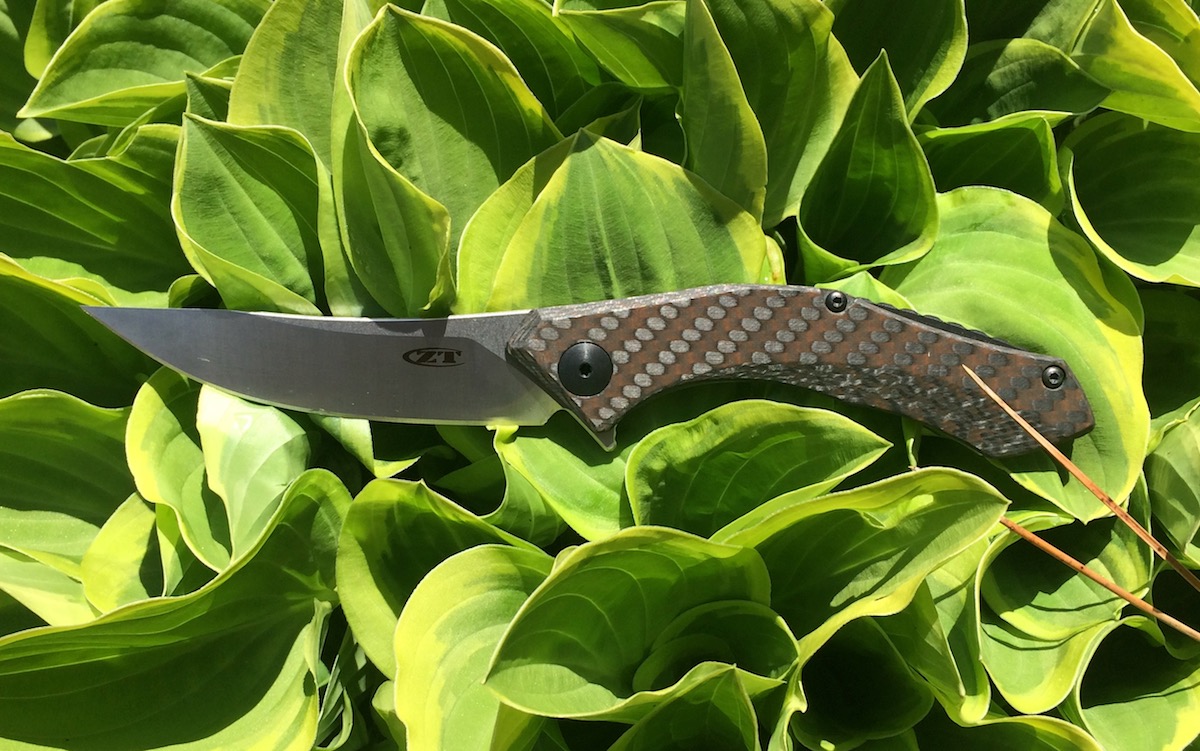
The Zero Tolerance 0460.
I need another folding knife like a cat lady needs another kitten. Which is to say, I don’t need another one at all. According to my girlfriend, I’m really, really good on that front. I’ve been scolded on more than one occasion for having knives splayed out all over the house, on the coffee table, the kitchen counter, the bathroom sink. You name it.
Anyways, despite having more blades than I will ever “need,” when I saw the Zero Tolerance 0460 at SHOT Show last year I knew I had to get my paws on it. It checked all the boxes. It was nothing like I currently owned, it was incredibly cool looking, it was well built. And it was priced just right.
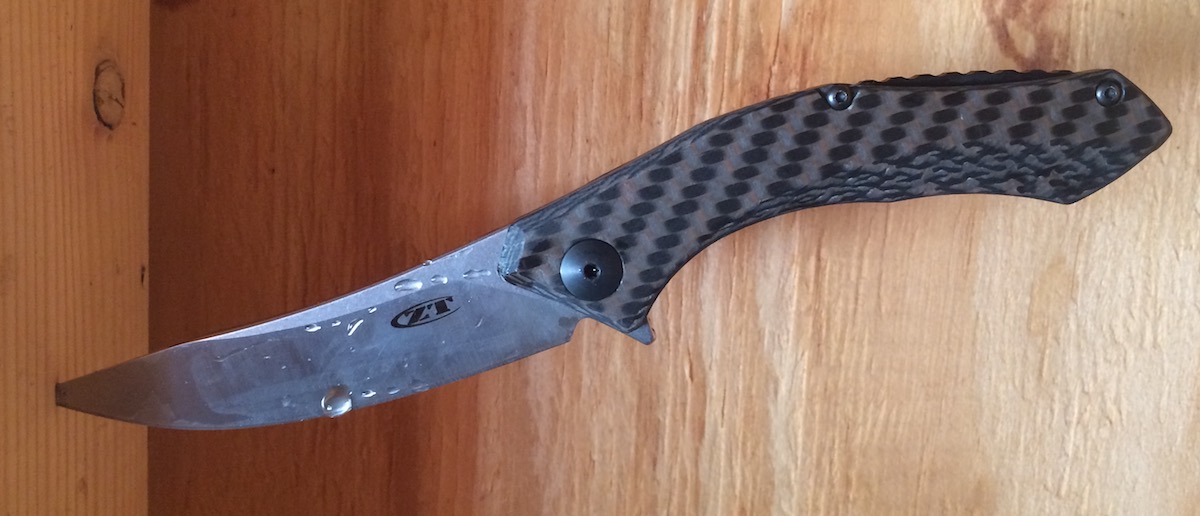
A solid option for EDC.
Overview
The 0460 is the evolution of one of Zero Tolerance’s best-selling knives, the 0450CF. ZT wanted to get more radical with this iteration so they turned to its creator Russian knifemaker Dimitry Sinkevich and asked for a knife with more curves, more carbon fiber, and more flair.
What results is a frame-lock folder with an unswept blade and a dramatically curved handle. The blade steel on the 0460 is S35VN, an excellent choice given its toughness and ability to hold an edge. For reference, S35VN is what Chris Reeve uses on his production folders. It’s top notch.
The handle is carbon fiber on the front scale and titanium on the rear scale. To make the knife really pop, the front scale was 3D machined for dimensionality and texture. It’s a cool bronze color. Really catches the eye. The blade is deployed with a simple flick of the flipper.
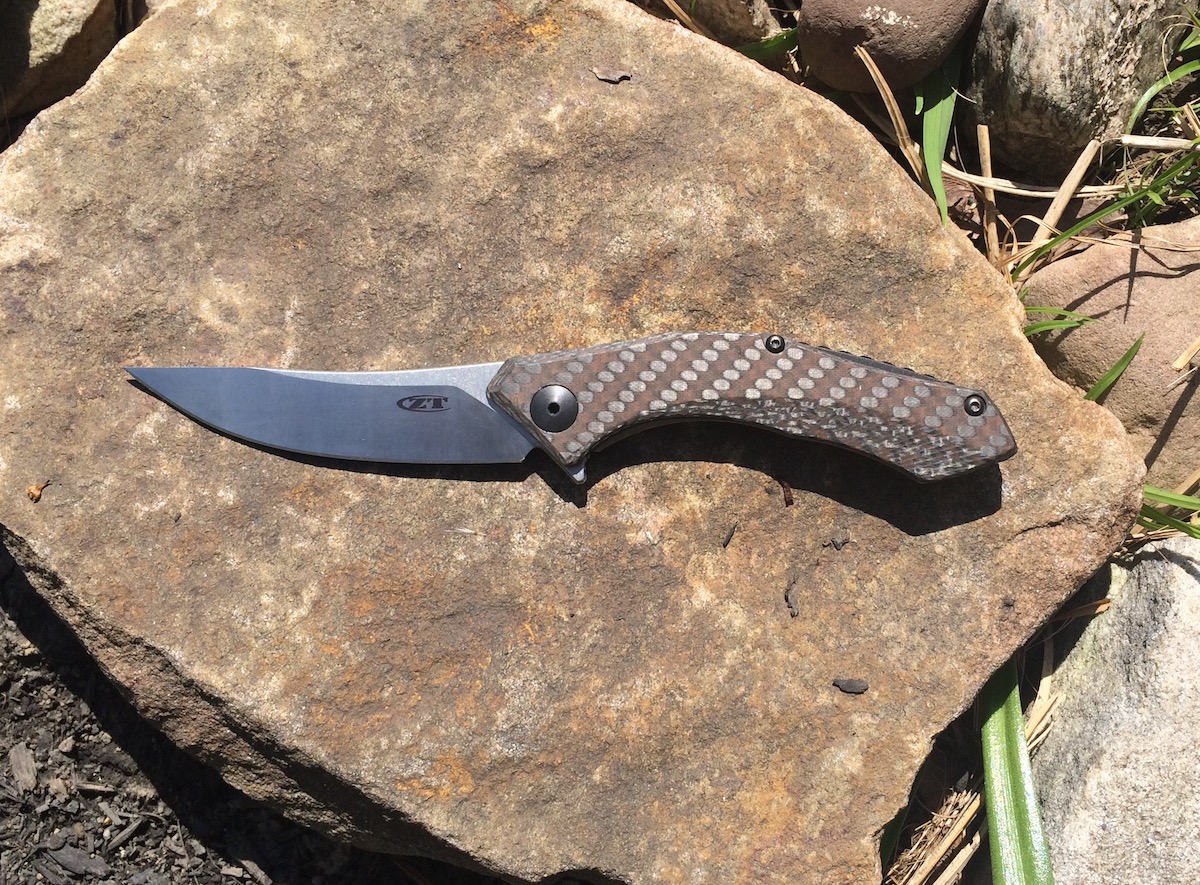
Carbon fiber front scale was 3D machined for dimensionality and texture.
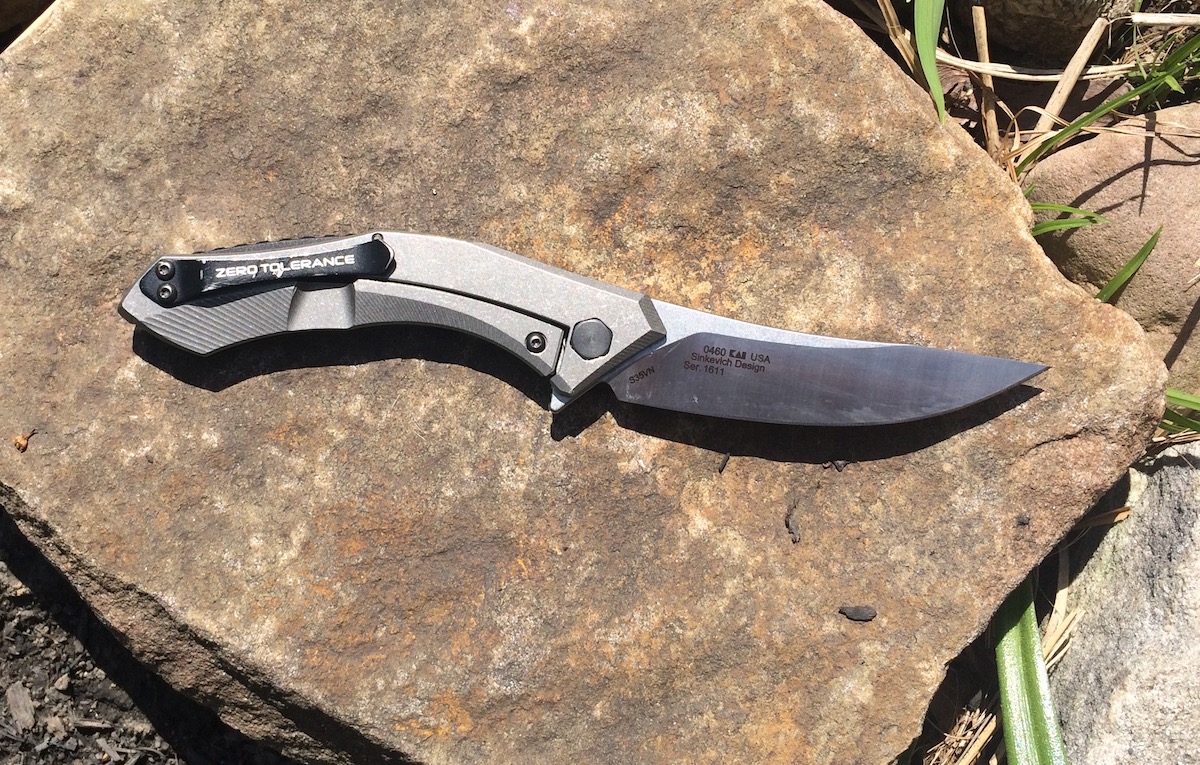
Titanium on the rear scale.
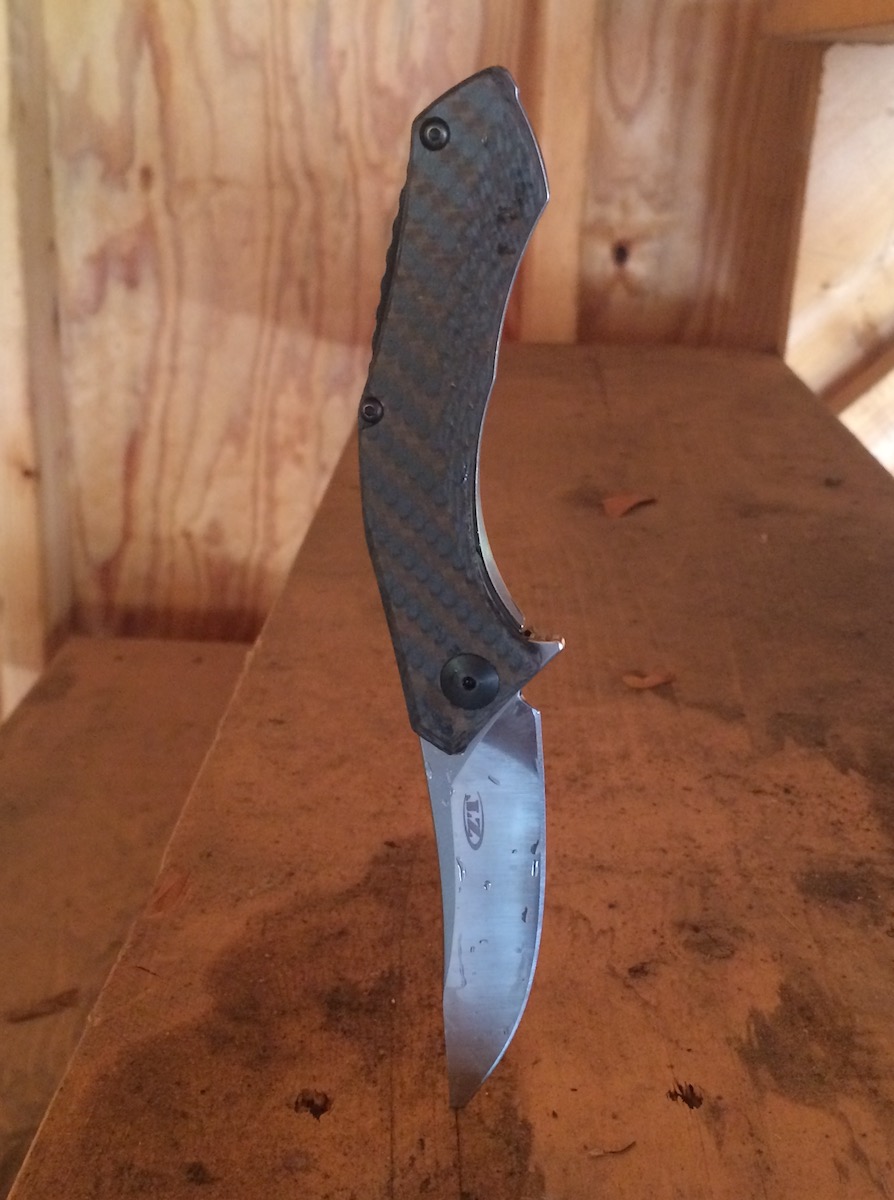
Length is 7.5 inches with a blade length of 3.25 inches.
Specs
- Overall Length:7.50″
- Blade Length:3.25″
- Blade Thickness:0.12″
- Material: CPM-S35VN
- Blade Style: Trailing Point
- Grind: Flat
- Finish: Satin
- Edge Type: Plain
- Handle Length: 4.25″
- Handle Material: Carbon Fiber
- Frame/Liner: Titanium
- Weight: 2.30 oz.
- User: Right Hand
- Pocket Clip: Tip-Up
- Opener: Flipper
- Lock Type: Frame Lock
- Designer: Dmitry Sinkevich
Utility
The best use for this knife is every day carry. What I like about this knife, though, is that it’s a four-season knife. Carries just as well in the summer as it does in the winter.
SEE ALSO: Chris Reeve Small Inkosi Insingo – Full Review
Normally, I rotate my knives and carry gear around the seasons because, as we all know, lighter clothes require lighter gear. Sometimes toughness and size are sacrificed as a result of the rotation. Like, resting my stout Chris Reeve Sebenza for my svelte Spyderco Positron when temps rise and vice versa when temps cool.
But with the 0460 I never feel under-knifed when I’m wearing jeans and a jacket and could carry a larger blade, nor do I ever feel burdened by its bulk and weight (2.3 ounces) when I’m wearing shorts and a T-shirt. The 0460 is the perfect size for me. It’s tough. It’s reliable. And it really carries well regardless of the conditions.
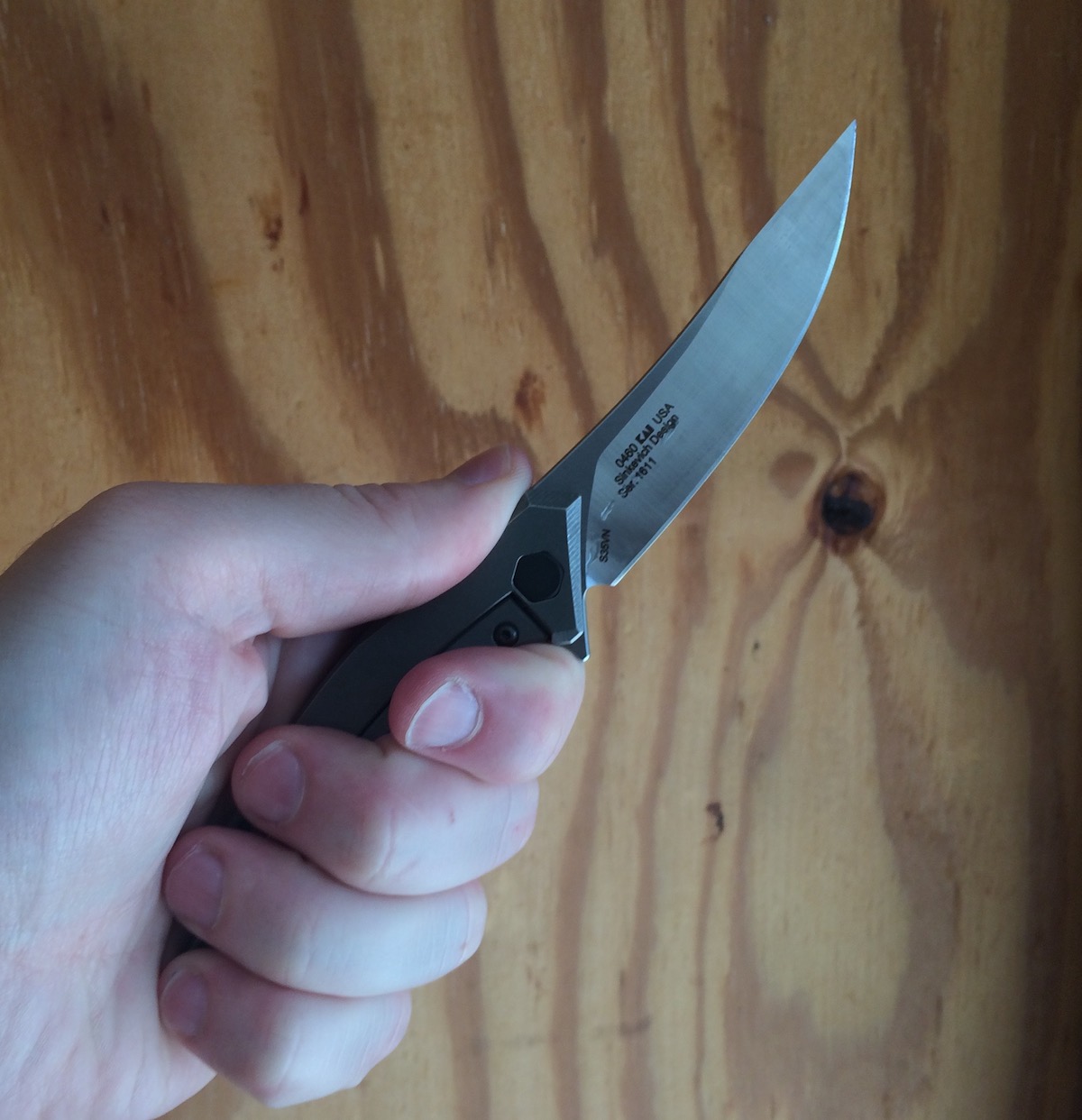
In the hand. the curved handle acts as a guard and prevents the hand from sliding up onto the blade.
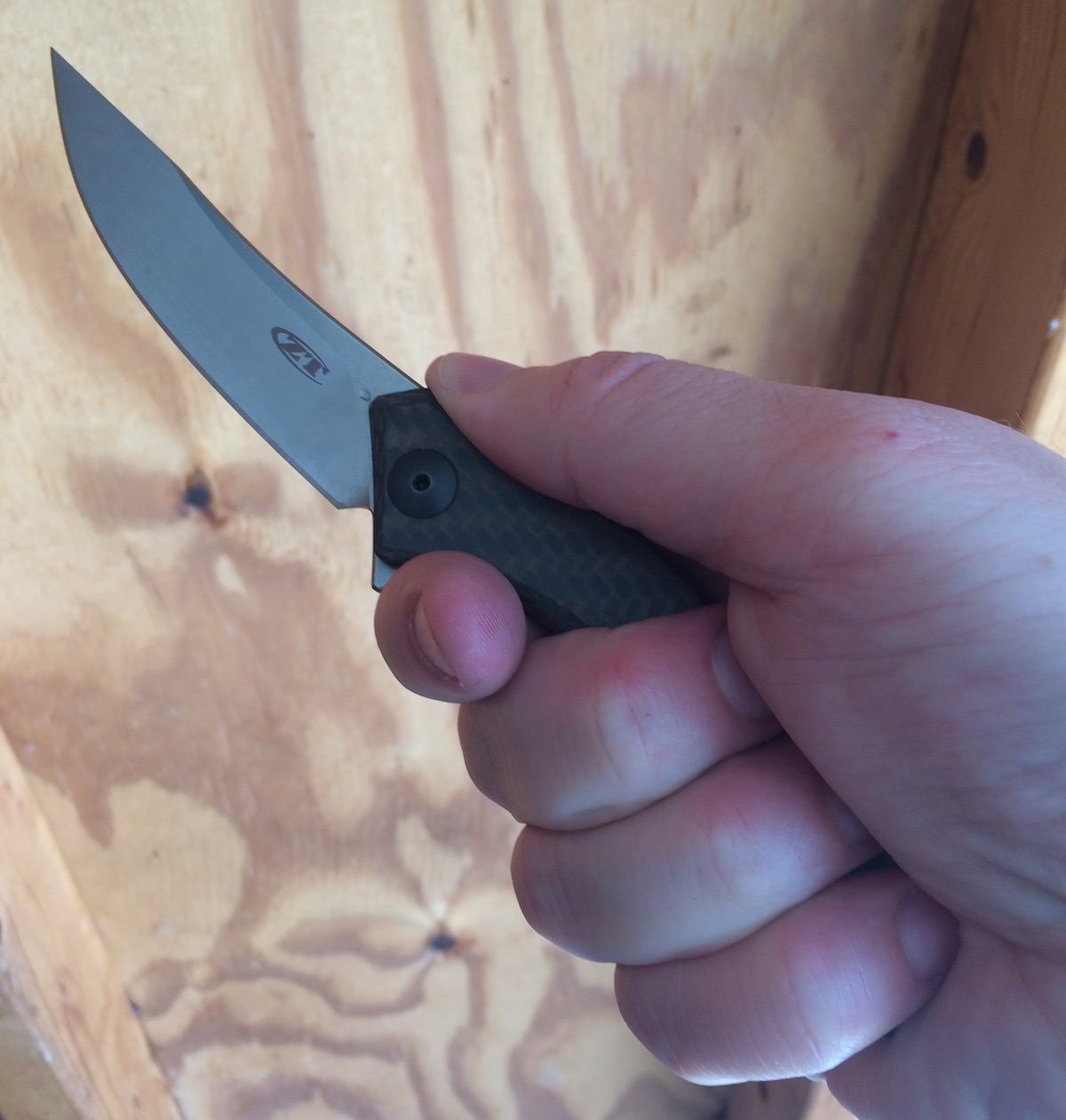
In my dominant hand. It’s more than just a tool — it’s a weapon in waiting if the SHTF.
The 0460 has been on my person through two moves. The move I made going from Kentucky back to New York (Don’t ask why I left KY to go to, of all places, NY). And then a move from my GF’s parents house in New York to an apartment in New York. It’s made its way through a lot of boxes and packaging tape, needless to say.
Performance has been stellar. No chips, no rolled edges, no breakdown in the integrity of the frame lock. The curved handle is comfortable to use. It has the added bonus of acting like a guard, which prevents your hand from slipping down the handle and onto the blade. Straighter handles, particularly ones without textured grip or stippling, don’t have this advantage. That’s especially true when using edged tools in inclement weather.
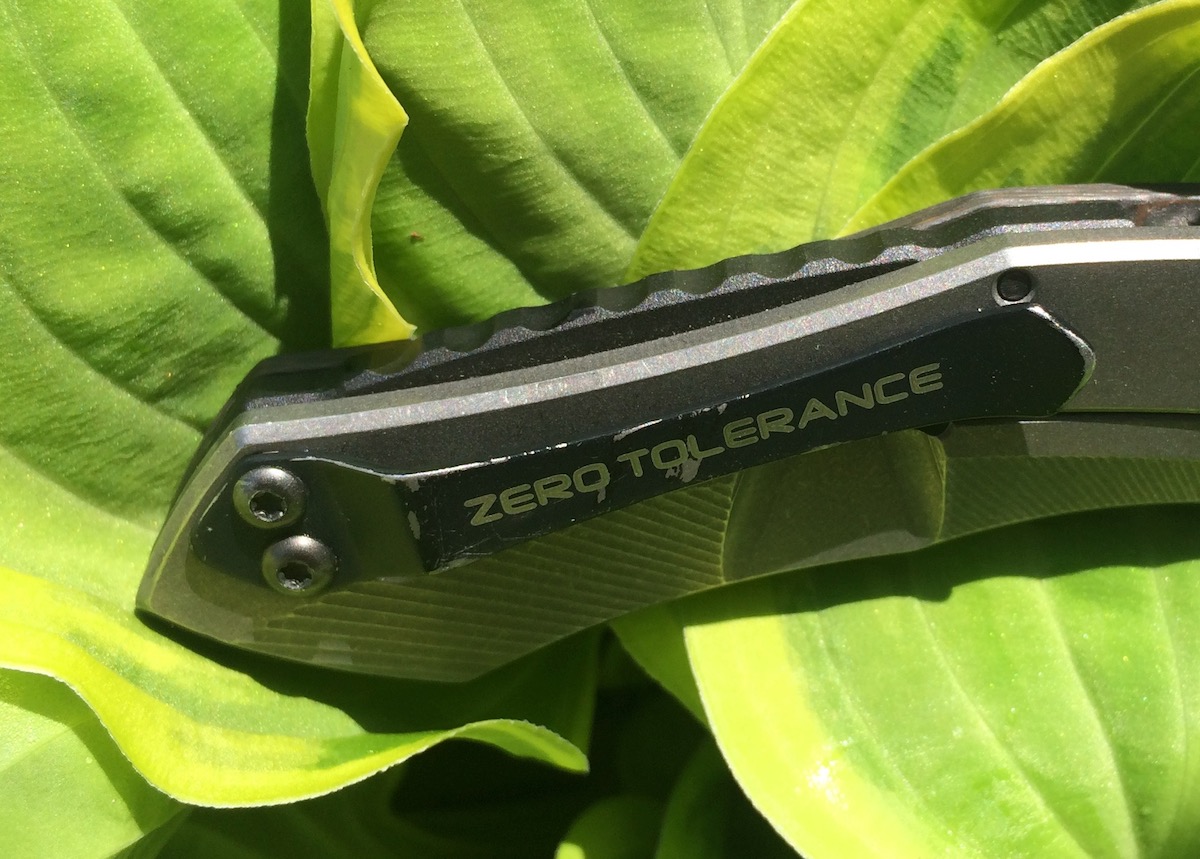
The only discernable wear is on the pocket clip. I need to stop bumping into things.
Drawbacks
The only issue I had with the 0460 was the flipper took awhile to break-in. When I first got the knife, it took a lot of pressure from the index finger on the tab to deploy the blade. So much so that it would hurt the pad of my finger. Maybe I just have sensitive fingers. I do spend the majority of my days, indoors, tapping away on a computer keyboard.
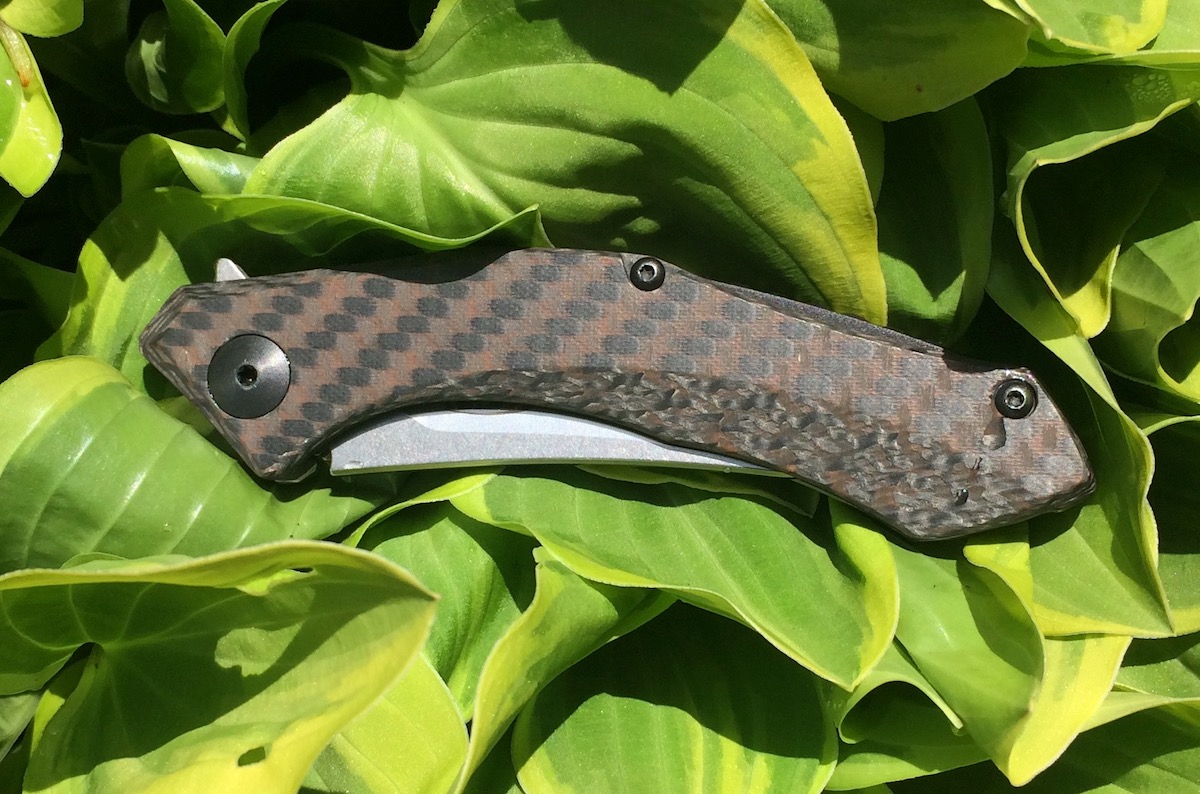
The flipper took awhile to break in and get used to.
After sustained use, though, the problem went away. The knife became easier to open and my finger no longer hurt. Part of it, methinks, was the muscle memory of knowing exactly where the sweet spot was on the tab, and part of it was it just needed some time in my hands. Now the action is, well, I want to use the word “hydraulic,” as in liquid in motion in a confined space, but it’s actually lighter than that. It’s almost evanescent in the sense of the force required to pop a soap bubble. A little pressure on the tab and — CLACK! — the blade is deployed (you can see the video from SHOT above)!
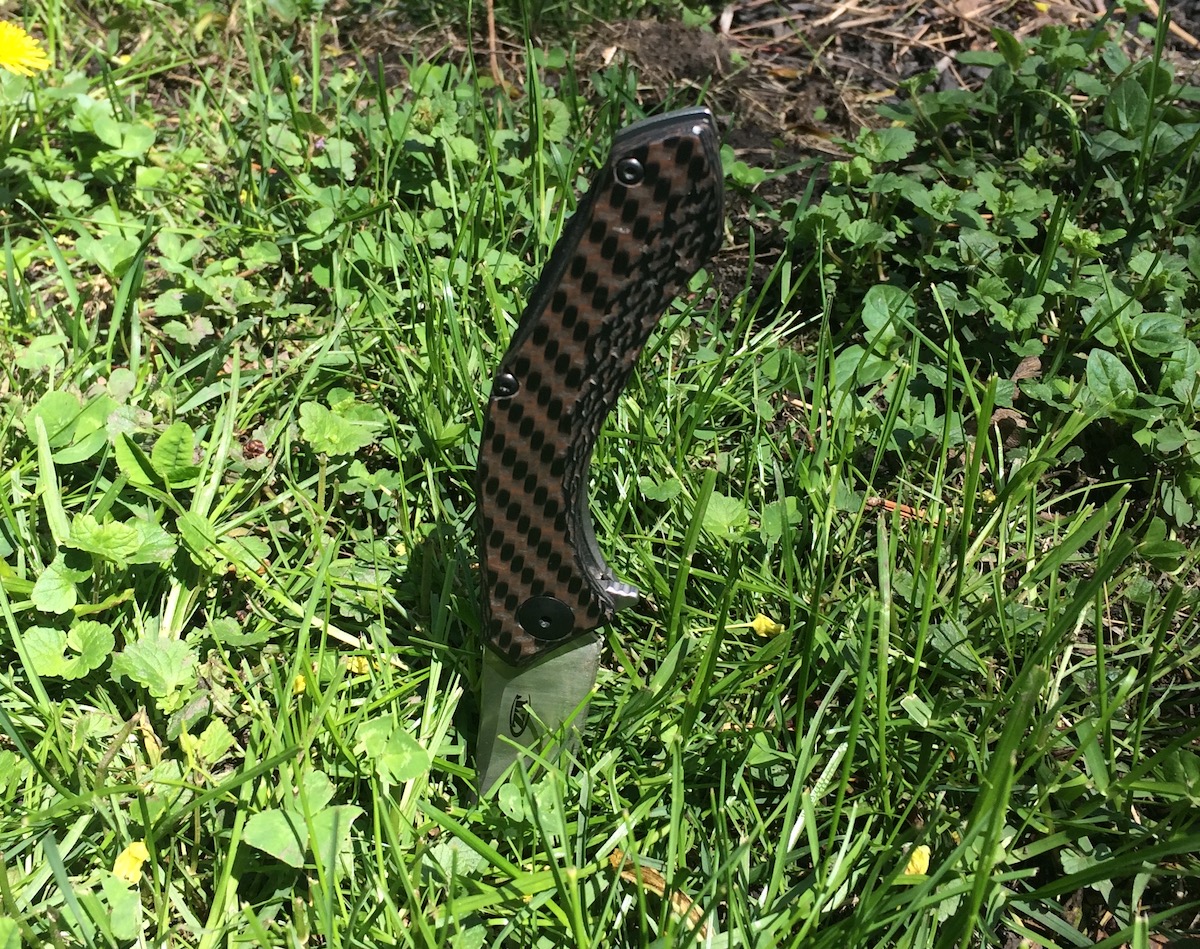
Like a snake in the grass.
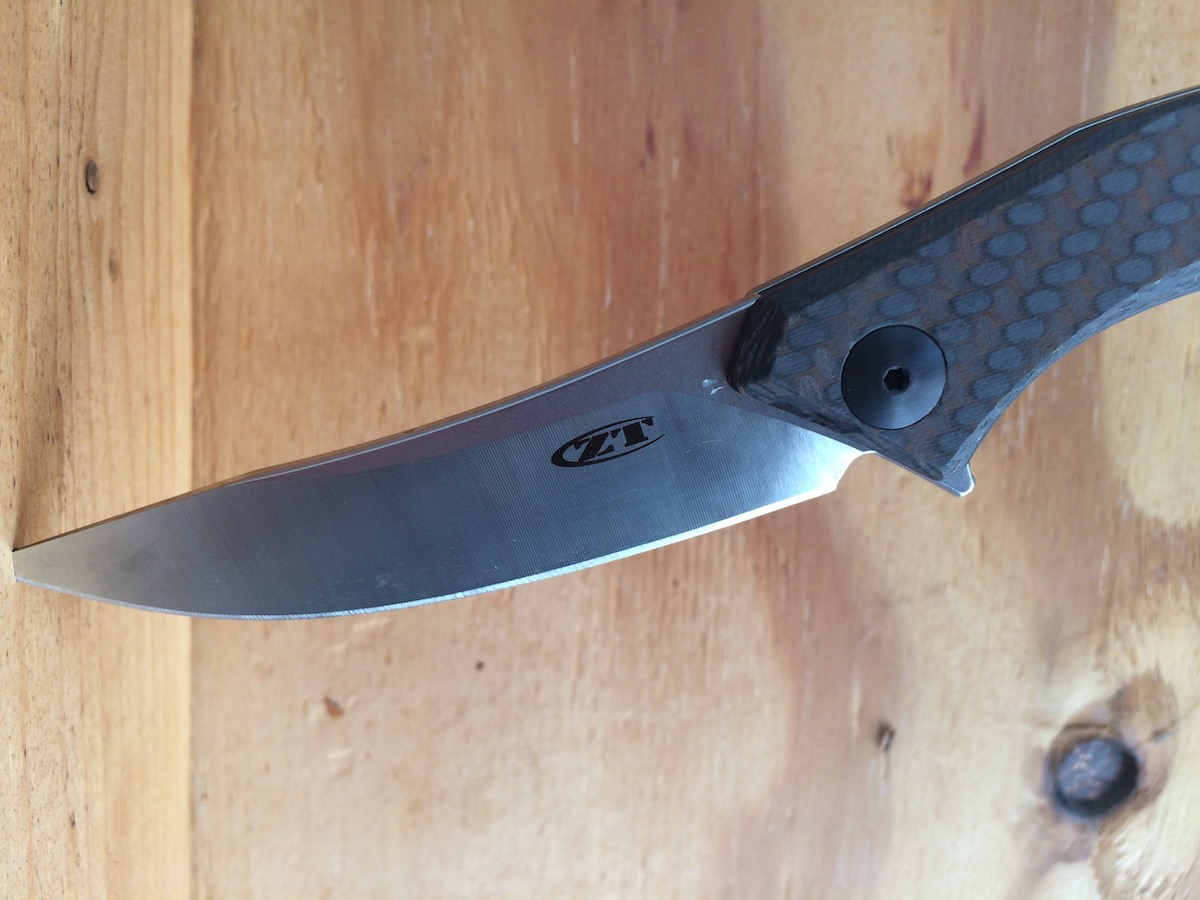
The blade is made from CPM-S35VN. A great all-around blade steel.
Conclusion
I really love this knife. And would highly recommend it. For those who are looking to cut their teeth (forgive the pun) on a high-end folder but don’t want to drop 400 bills (the price of a Chris Reeve), this is an excellent option. Coming in at the sub-$200 range, you get all the materials you would in a premium folder but for half the price.
What’s even cooler is that ZT this year debuted a larger version of the 0460. For those who like bigger, stouter knives. They have one in the lineup, it’s known as the “0462.” For more information visit https://zt.kaiusaltd.com/. You can also shop for Zero Tolerance knives at KnifeArt.com.
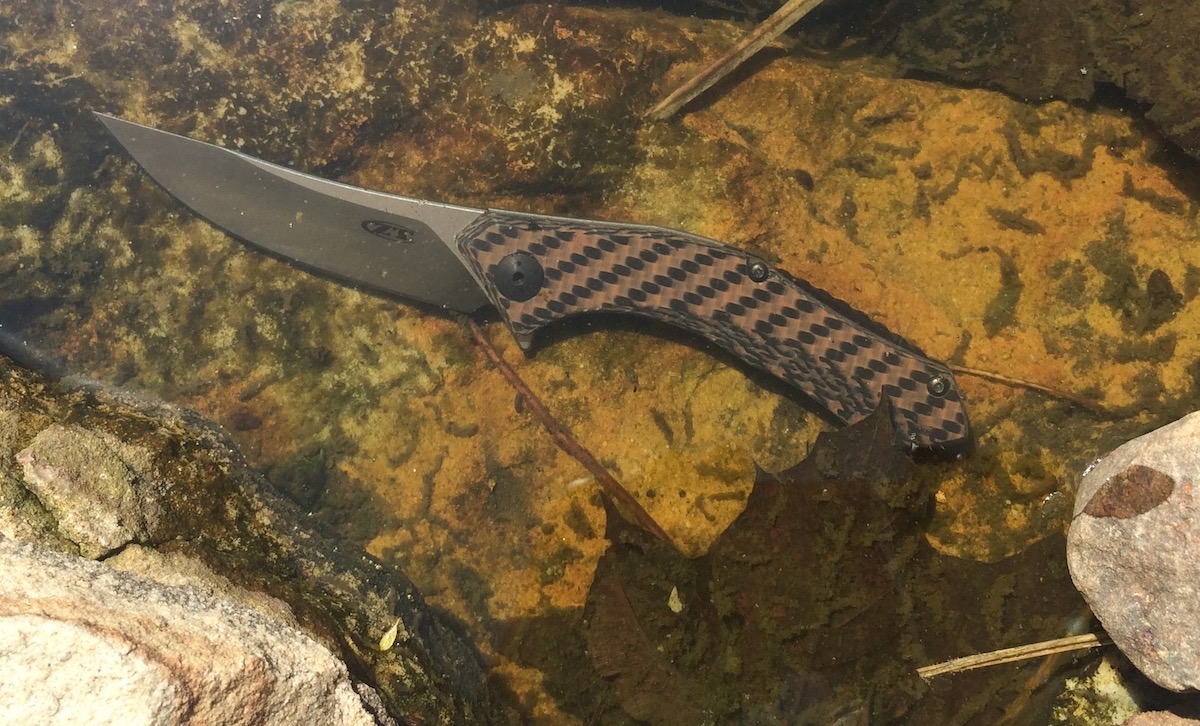
Submerged.
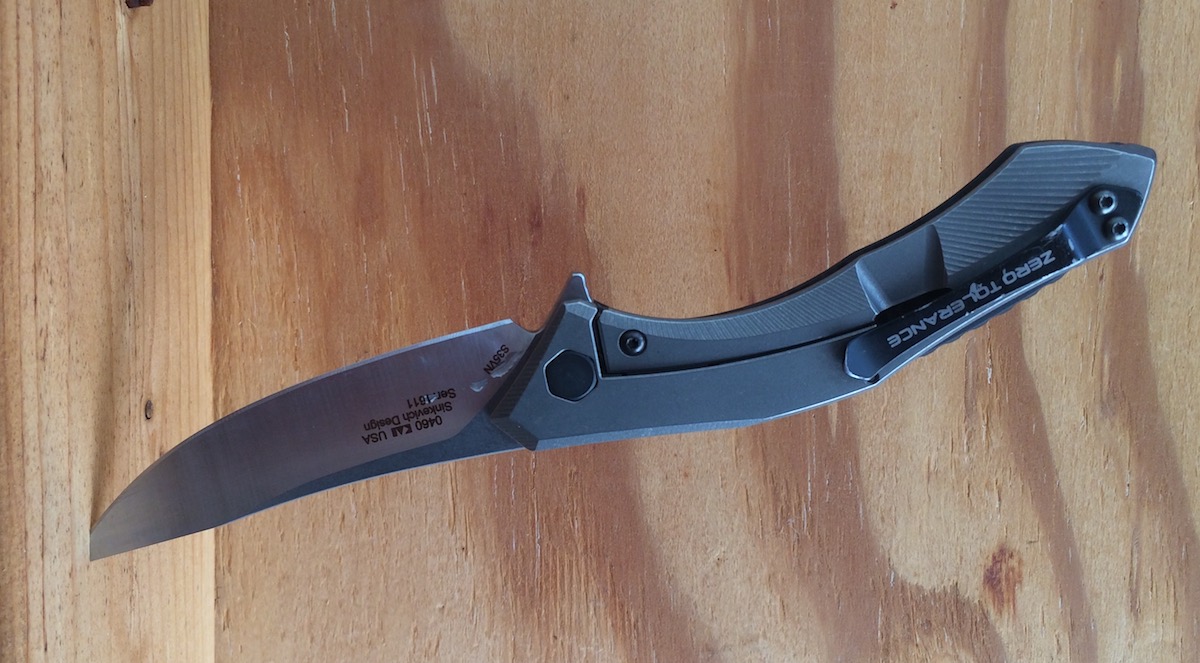
Weight is only 2.3 ounces.

The 1st Combat Aviation Brigade, 1st Infantry Division providing air support at the 7th Army Training Command’s Grafenwoehr Training Area, Germany. (Photo: U.S. Army/Matthias Fruth)
Military leaders are putting new munitions programs into gear to prepare for a bigger fight. The Army, specifically, is canceling hundreds of weapons programs to free up cash for what it’s calling the “Big Six.”
The Army has cut or canceled 186 different smaller weapons programs to focus on artillery and surface-to-surface weapons and munitions, improving their howitzers and rocket systems, developing their next-generation combat vehicles, replacing their vertical lift aircraft, developing a military-wide communications system, shoring up their surface-to-air defense networks and finally, completing their future soldier programs.
All of these are to prepare for war with a near-peer military, such as Russia or China. By focusing on these six major fronts the Army is moving away from its counter-insurgency role.
The Army is now focused more on research and development, and improving its ability to mobilize in large numbers. Part of that will include strategic placement of munitions and how Army depots are organized in the U.S.
“This means having the right munitions – small-caliber to precision munitions – where we need them at the right time and the right place,” said Gen. Gus Perna. “That means we must first ensure that the capability we have here in [the U.S.] can receive, store and issue munitions in a timely, effective manner.”
“We know where they are going to distribute ammunition when the time comes, and we know what they have to replace in time of war. This is the first time this has been done, and I am very proud of where we are at” said Perna. “With that said, we have a lot of work to do.”

A U.S. Army Paratrooper during a live-fire exercise in Postonja, Slovenia. (Photo: U.S. Army/Paolo Bovo)
Perna credited the National Guard for doing the bulk of the lifting. “They are lined up to support us,” Perna said. “They are executing moves around the country as we relocate ammunition … where it needs to be.”
The Army expects to buy 5,112 Hellfire missiles this year, up from 2,309 last year. The Army is also upping its small- and medium-caliber munitions budget from $382 million last year to $508 million this year.
“The Army has had challenges with major defense acquisition programs in the last 20 or so years, because we don’t lock in threat, operating concept and ultimately material and have it all come together,” said Army under-secretary Ryan McCarthy.
“That’s where you see big weapons systems fail, is if the operators aren’t saying how we’re going to use it to prosecute a target in this type of fight,” said McCarthy. Each of the Big Six programs has a 1- or 2-star combat veteran as the lead.
The Army has laid out a five-year plan to heavily invest in those six programs. The long-range precision fire program is their top priority and will receive $5.7 billion over 2020-2024.
The Next-Generation Combat Vehicle program will receive $13.2 billion over the five-year course and the Army has earmarked $4.7 billion for the Future Vertical Lift program.
The network is the biggest expense and will receive $12.5 billion. One important aspect of the network is that the Army is building it in-house using commercial, off-the-shelf hardware and will no longer use government-led IT programs.
The Air and Missile Defense program will get a 90 percent boost and receive $8.8 billion over five years, starting with $1.4 billion in 2020.
The Soldier Lethality program also gets a 90 percent increase to $6.7 billion through 2020-2024.
____________________________________ Sounds like the Snuffies are not going to get any new & improved Rifles soon to me! Grumpy


Or President Theodore Roosevelt’s Place of Retreat
By the by, If you are near his place in Oyster Bay New York. I most highly recommend that you go & see his home. As it is well worth the effort! Grumpy
Categories
Sone thoughts on Rifle Slings

Language: The M16 Comic Book Manual
by Jeremiah Knupp – Sunday, March 24, 2019

Photo credit: Holly Marcus and National Archives photos

The classic M16 comic book manual (PAM 750-30), originally published in 1968 and issued to troops throughout the Vietnam War, is now being re-printed.
The widespread issue of the M16 rifle to troops in Vietnam, beginning in the mid-1960s, was fraught with problems. As reports of M16s failing in combat began to filter in, the U.S. Army scrambled to address the crisis. They found part of that solution in the most American of places—the world of comic books. The M16A1 Rifle: Operation and Preventive Maintenancewas the title of Pamphlet (PAM) 750-30. Combining comic book-like illustrations and humor with invaluable technical information and tips, the pamphlet sought to use a format with which G.I.s were familiar to teach them how to properly maintain their M16s. It would go on to become a classic part of the M16’s story and a contributor to the design’s ultimate success.
Early problems with the M16 had two sources—the propellant specified in the original technical data package for the 5.56×45 mm NATO cartridge was changed, and there was a lack of training and cleaning materials provided for proper maintenance.

Operation “Bang Dong”—PFC Fred L. Greenleaf, Co “C”, 3rd Bn, 7th Inf, 199th Light Inf Bde, crosses a deep irrigation canal along with other members of the company who are enroute to a Viet Cong controlled village. The field conditions that soldiers encountered in Vietnam made daily maintenance of their M16 rifles a life or death necessity. PAM 750-30, the comic book-style M16 manual, gave tips about things like how to drain the water out of one’s rifle.
” … these troops started going overseas, that were trained with another rifle, and suddenly given this new rifle with no equipment, no training manuals or anything, just said ‘Go get ’em, fellows,’ ” Eugene Stoner said in his 1988 interview with small-arms expert Edward Ezell. ” … when you put lack of training, lack of maintenance equipment, and the new propellant, pour them into the same situation all at one time, that’s what caused the big problem.”

A reprint of the classic M16 comic book manual (PAM 750-30), included with each of the rifles in Brownells’ Retro line, is as authentic as the waffle-type magazine that comes with the Brownells BRN-601 pictured.
The June 1968 report of the U.S. Army M16 Review Panel concluded, “The lack of cleaning materials and the lack of proper training contributed heavily to the high M16A1 malfunction rates experienced in Vietnam in late 1966 and early 1967.” PAM 750-30 sought to remedy this.

Members of Co D, 2nd Bn, 35th Inf, 3rd Bde, 4th Inf Div, who came in on the first wave of helicopters secure the landing zone for the remainder of company during a helicopter combat assault and a one day search and destroy mission in the Quang Nagi Province, 8km west of Duc Pho, 10/26/1967.
The 1960s were a period of time that aficionados call the “Silver Age of Comic Books.” That decade saw the introduction of such characters as Daredevil, Spider Man, Iron Man, the X-Men and the Fantastic Four. Most American boys of that generation had grown up reading comic books. The average U.S. infantryman in Vietnam was in his early 20s … and still reading comics. What better way to get him to learn about maintenance than to make a manual in the form of a comic book?

A WWII poster illustrated by Will Eisner that encouraged soldiers to keep their rifles cleaned. Eisner worked on Army Motors, a monthly preventative maintenance magazine, that would later evolve into PS Magazine, The Preventive Maintenance Monthly.
The artistic talent behind PAM 750-30 was Will Eisner. No stranger to the world of comic books, Eisner had gotten his start as an author and illustrator in the earliest days of American comics in the 1930s, and was the creator of the urban crime fighting character, “The Spirit.” During World War II, Eisner was drafted into the U.S. Army, which quickly found a use for his skills in the production of training manuals. Eisner was assigned to Holabird Ordnance Depot in Baltimore where Army Motors, a preventive maintenance magazine, was being printed.
“Together with the people there … I helped develop its format. I began doing cartoons—and we began fashioning a magazine that had the ability to talk to the G.I.s in their language,” Eisner said in a 1978 interview in Comics Journal. “So I began to use comics as a teaching tool, and when I got to Washington, they assigned me to the business of teaching—or selling—preventive maintenance. Preventive maintenance required voluntary cooperation on the part of the readers—the G.I.s. The military was faced with the problem of getting voluntary performance from its troops, so I proposed that one teaching tool that would be very viable would be comics—and they allowed me to try it.”

A World War II poster illustrated by Will Eisner that encouraged soldiers to keep their rifles cleaned. Eisner worked on “Army Motors,” a monthly preventative maintenance magazine, that would later evolve into “PS Magazine, The Preventive Maintenance Monthly.”
Following the war, Eisner established American Visuals Corporation (AVC), a business focusing on what he called “the commercial application of comics.” When the Korean War started, the Army asked AVC to make a successor to Army Motors. Called PS Magazine, The Preventive Maintenance Monthly, Eisner and AVC would produce it for the U.S. Army from 1951 to 1972. An archive of all of Eisner’s issues of PS Magazine is available online through the Virginia Commonwealth University Library.

An article on using the M60 machine gun in helicopters from Issue 172 in 1967 of “PS Magazine, The Preventive Maintenance Monthly,” a series of U.S. Army technical bulletins that used comic book-style illustrations by Will Eisner from 1951 to 1972.
“WE HAVE THE WORLD’S BEST EQUIPMENT … Take care of it,” PS Magazine declared. It covered topics that ranged from adjusting the headspace on 155 mm howitzers to sample checking aircraft oil. As a “post script” to official Army technical manuals it also gave tips on making field expedient fixes or constructing improvised tools. Many of the articles focused on small arms care, with titles like “Don’t Double Cross Your BAR” and “Winterize Your Shooter When You Anti-Freeze Your Scooter.” A 1965 issue (#150) introduced maintenance for the rifle the magazine called the “Sweet 16.” “There ‘re not too many 5.56×45 mm NATO M16 and XM16E1 rifles around as yet,” it stated. “But they’re where they do the most good.”

A reprint of the classic M16 comic book manual (PAM 750-30) is included with retro-style AR-15 rifles from companies like Troy Industries and Brownells (the Brownells BRN-601 pictures).

PFC John Henson (Columbia, South Carolina) of the 1st Battalion, 327th Infantry, 101st Airborne Division, cleans his XM16E1 rifle while on an operation 30 miles west of Kontum, Vietnam, 12 July 1966.
In 1968, in response to the problems the M16 was having in Vietnam, Eisner was called upon to produce a standalone maintenance manual specifically for the M16. The result was PAM 750-30. Like PS Magazine of that time period, the modern reader will find the illustrations and innuendo used in the manual hardly PC. It started out with detailed instructions for disassembly and reassembly (“How to Strip Your Baby”), then on to immediate action drills in case of a stoppage (“What to Do in a Jam”) and on to detailed instructions on everything from magazine maintenance (“Putting Maggie Together”) to clearing out a water logged M16 (“Drain Before Shooting”). The result was invaluable information presented in a format that appealed to the 20-something 1960s male. Was Eisner’s comic book M16 manual a success? Over 50 years later the M16 design still soldiers on in the U.S. military.

A reprint of the classic M16 comic book manual (PAM 750-30) is included with retro-style AR-15 rifles from companies like Troy Industries and Brownells (the Brownells BRN-601 pictures).
After his work with PS Magazine ended in 1972, Eisner returned to the world of traditional comics. He continued to write and illustrate comic books, helped establish the modern graphic novel genre, and served as a teacher and comic book historian until his death in 2005. His M16 comic book manual ranks up there with “The Spirit” as one of his most lasting and well-known achievements. An entire generation of American G.I.s were familiar with it and, recently, it has been introduced to a whole new generation of M16/AR-15 users. Long out of copyright, the manual has been placed back in print, with manufacturers like Brownells and Troy Industries supplying one with each of the retro-style rifles that they sell.
Though its style and language are dated, the technical advice and tips given in PAM 750-30 are still some of the best preventive maintenance information you can get on the M16/AR-15 series of rifles. The comic book manual was a uniquely American solution to a serious crisis and contributed a small part to the success of the design now considered “America’s Rifle.”
© by Sniper’s Hide
Mils or MOA
This debate is never going to end, but we should agree on the facts. Every day we see the uninformed arguments how one angular unit of measurement is better than the other. The truth of the matter is, one is not better, they are just different ways of breaking down the same thing.
Personally, outside of the disciplines like Benchrest Shooting and F Class, I think Minutes of Angle should be retired. We have bastardized the unit to the point people have no idea a true MOA is not 1″ at 100 yards, or 10″ at 1000, but 1.047″ and 10.47″ at 1000. If you round this angle, you create errors at the longer distances. Today we shoot a lot farther than before, 5% of error compounding at an extended range will cause a miss. In fact, this is one of the main reason your ballistic software does not work. You default to MOA when in reality your scope adjusts in Inches Per Hundred Yards.
Shooter MOA or Inches Per Hundred Yards (IPHY) is not a True MOA, and yes it does matter when companies mix them. Having someone question how IPHY is different when they don’t understand we don’t use 1 MOA or even 10 MOA to hit a 1000 yard target is frustrating to explain. If we consider a 308 as a point of reference, we are looking at almost 17″ of variation between the two units of adjustment.
We can quickly point to the adoption of Mils here with the Military to demonstrate the ease of use, but then the Americans reading this will argue how they think in Inches and Yards as if Mils only work with the metric system. Mils are base 10 and unfortunately Mr & Mrs. America thinking in fractions is nowhere as simple.
3600 inches is 100 yards, 1/1000 of that is 3.6″ and adjusting in .1 mils means we moved the bullet .36″ per click at 100. See what we did there, we moved the decimal point. Some people believe an MOA is a finer unit of adjustment. Failing to note that: .3 Mils is 1.08″ at 100 yards. Contrary to popular belief you can get a Mil Based scope that moves the reticle .18 Inches per click. Mil based scopes usually adjust in .1 Mil Increments; however, they do make scopes that adjust in .05 Mils.
While Milliradians were added to the metric system many years ago, it was never designed to be a metric only unit and works outside the metric system as this is an angle. Every angle has a linear distance between it. You should be ignoring this fact and using the angle vs. picking a linear value to adjust your correction. If I am shooting 873 yards away, saying the bullet 6″ off the target is neither honest or accurate. You’re guessing; in your mind, it looked six inches away, but what if it was 9″? Using the linear value is more work, why not just adjust the angle?
Minutes of Angle started out like that too, but unfortunately, companies took shortcuts and ruined it for everyone. It was easier to manufacturer 1″ vs. adding in the .047″. Long range back in the day was between 400 and 800 yards. Read any old school book on ballistic, and it rarely goes past those ranges in their examples. Today we are shooting beyond 1000 yards, so it matters more than ever, you have to take it into account.
Defaulting your program to MOA when you are using IPHY is a significant point of error. JBM online is a great place to demonstrate this as you can include both MOA and IPHY in the output. The same amount of adjustment is accomplished with two different values. Mix these numbers, and the result is a miss. Did you dial 40.1 or 38.3 MOA?
I highly recommend you map and calibrate your MOA scope to confirm it’s actual value. It works both ways, not every MOA based scope is TMOA, some are SMOA. The compounding error is a lot bigger than .47 inches.
One is not more accurate than the other. I can hit the center of any target using either unit of adjustment. Using JBM the same way we can see that both correctly move us to the target. The difference is less than a bullet width. I have no trouble zeroing or hitting the center of a Shoot N C target keeping me squared away.
Which unit of adjustment is right for me?
This is the ultimate question; it should not be up to someone else to answer it for you. Communication is your number one consideration.
What are your friends and fellow competitors shooting?
You want to be able to communicate and understand what a fellow competitor is talking about when he walks off the line. You can convert using 3.43, by multiplying or dividing the competing unit of adjustment against the other. That will give you a direct conversion.
12 MOA / 3.43 = 3.5 Mils
4.2 Mils x 3.43 = 14.4 MOA
Next, you have your reticle choices. You will find more versatile options when it comes to Mil Based scopes vs. an MOA one. That is changing a small amount as manufacturers adapt. But a reticle with 1 MOA hash marks is not as fine as a scope with .2 Mil lines in it. You now have to break up an already small 1 MOA into quarters. The Mil based scope is already breaking up the Milliradian for you.
Pick the reticle based on your initial impression as well as your use. You don’t need a Christmas tree reticle to shoot F Class. You don’t want to use a floating dot bench rest scope for Tactical Style Competition. Put your intended use into the proper context.
There are a lot of articles about the nuts and bolts of Mils and MOA. You can dig deep or understand we are using the angle and there is no need to convert to a linear distance. A Mil is a Mil, and an MOA is an MOA (Unless it’s not because you didn’t check) Today I don’t even teach, 1″ at 100, 2″ at 200 yards, 5″ at 500 yards. It’s an unnecessary step and confusing to a lot of people. Not to mention, it’s not right, that is IPHY, not MOA.
We match our scope reticle to our turret adjustment, so at the end of the day, “What you See is What You Get.” It matches what we see in the reticle so we can dial the correction on the turret. A super simple concept that allows the shooter to use the calibrated ruler 3 inches in front of their nose. That calibrated ruler is called a reticle taking away the need to “Think” about the adjustment, you just read it.
If the impact is off in any direction, you measure with the reticle and then translate that reading directly to the turrets. 1 Mils is always 1 Mil, and 1 MOA in any direction is a 1 MOA correction on the turret.
If you have not made the change to Mils, consider it. You will find it’s much more intuitive. You do not have to be a resident of Germany to understand it, and you do not have to use it with Meters. All my data is in yards, and mils directly translate to whatever range you use.
Sniper’s Hide mission is to uphold the traditions of those who came before us by expanding on the Science of Long Range Shooting while developing the Art of Precision Rifle Marksmanship.

The sad thing is that if I owned this fine looking knife. It would never leave the gun safe! Grumpy