Categories
All About Guns Fieldcraft Gear & Stuff Gun Info for Rookies

Mils or MOA which is right for you …or why bigger is better by Frank Galli

© by Sniper’s Hide

Mils or MOA

This debate is never going to end, but we should agree on the facts. Every day we see the uninformed arguments how one angular unit of measurement is better than the other. The truth of the matter is, one is not better, they are just different ways of breaking down the same thing.
Personally, outside of the disciplines like Benchrest Shooting and F Class, I think Minutes of Angle should be retired. We have bastardized the unit to the point people have no idea a true MOA is not 1″ at 100 yards, or 10″ at 1000, but 1.047″ and 10.47″ at 1000. If you round this angle, you create errors at the longer distances. Today we shoot a lot farther than before, 5% of error compounding at an extended range will cause a miss. In fact, this is one of the main reason your ballistic software does not work. You default to MOA when in reality your scope adjusts in Inches Per Hundred Yards.
Shooter MOA or Inches Per Hundred Yards (IPHY) is not a True MOA, and yes it does matter when companies mix them. Having someone question how IPHY is different when they don’t understand we don’t use 1 MOA or even 10 MOA to hit a 1000 yard target is frustrating to explain. If we consider a 308 as a point of reference, we are looking at almost 17″ of variation between the two units of adjustment.
We can quickly point to the adoption of Mils here with the Military to demonstrate the ease of use, but then the Americans reading this will argue how they think in Inches and Yards as if Mils only work with the metric system. Mils are base 10 and unfortunately Mr & Mrs. America thinking in fractions is nowhere as simple.
3600 inches is 100 yards, 1/1000 of that is 3.6″ and adjusting in .1 mils means we moved the bullet .36″ per click at 100. See what we did there, we moved the decimal point. Some people believe an MOA is a finer unit of adjustment. Failing to note that: .3 Mils is 1.08″ at 100 yards. Contrary to popular belief you can get a Mil Based scope that moves the reticle .18 Inches per click. Mil based scopes usually adjust in .1 Mil Increments; however, they do make scopes that adjust in .05 Mils.
While Milliradians were added to the metric system many years ago, it was never designed to be a metric only unit and works outside the metric system as this is an angle. Every angle has a linear distance between it. You should be ignoring this fact and using the angle vs. picking a linear value to adjust your correction. If I am shooting 873 yards away, saying the bullet 6″ off the target is neither honest or accurate. You’re guessing; in your mind, it looked six inches away, but what if it was 9″? Using the linear value is more work, why not just adjust the angle?
Minutes of Angle started out like that too, but unfortunately, companies took shortcuts and ruined it for everyone. It was easier to manufacturer 1″ vs. adding in the .047″. Long range back in the day was between 400 and 800 yards. Read any old school book on ballistic, and it rarely goes past those ranges in their examples. Today we are shooting beyond 1000 yards, so it matters more than ever, you have to take it into account.
Defaulting your program to MOA when you are using IPHY is a significant point of error. JBM online is a great place to demonstrate this as you can include both MOA and IPHY in the output. The same amount of adjustment is accomplished with two different values. Mix these numbers, and the result is a miss. Did you dial 40.1 or 38.3 MOA?
I highly recommend you map and calibrate your MOA scope to confirm it’s actual value. It works both ways, not every MOA based scope is TMOA, some are SMOA. The compounding error is a lot bigger than .47 inches.
One is not more accurate than the other. I can hit the center of any target using either unit of adjustment. Using JBM the same way we can see that both correctly move us to the target. The difference is less than a bullet width. I have no trouble zeroing or hitting the center of a Shoot N C target keeping me squared away.
Which unit of adjustment is right for me?
This is the ultimate question; it should not be up to someone else to answer it for you. Communication is your number one consideration.
What are your friends and fellow competitors shooting?
You want to be able to communicate and understand what a fellow competitor is talking about when he walks off the line. You can convert using 3.43, by multiplying or dividing the competing unit of adjustment against the other. That will give you a direct conversion.
12 MOA / 3.43 = 3.5 Mils
4.2 Mils x 3.43 = 14.4 MOA
Next, you have your reticle choices. You will find more versatile options when it comes to Mil Based scopes vs. an MOA one. That is changing a small amount as manufacturers adapt. But a reticle with 1 MOA hash marks is not as fine as a scope with .2 Mil lines in it. You now have to break up an already small 1 MOA into quarters. The Mil based scope is already breaking up the Milliradian for you.
Pick the reticle based on your initial impression as well as your use. You don’t need a Christmas tree reticle to shoot F Class. You don’t want to use a floating dot bench rest scope for Tactical Style Competition. Put your intended use into the proper context.
There are a lot of articles about the nuts and bolts of Mils and MOA. You can dig deep or understand we are using the angle and there is no need to convert to a linear distance. A Mil is a Mil, and an MOA is an MOA (Unless it’s not because you didn’t check) Today I don’t even teach, 1″ at 100, 2″ at 200 yards, 5″ at 500 yards. It’s an unnecessary step and confusing to a lot of people. Not to mention, it’s not right, that is IPHY, not MOA.
We match our scope reticle to our turret adjustment, so at the end of the day, “What you See is What You Get.” It matches what we see in the reticle so we can dial the correction on the turret. A super simple concept that allows the shooter to use the calibrated ruler 3 inches in front of their nose. That calibrated ruler is called a reticle taking away the need to “Think” about the adjustment, you just read it.
If the impact is off in any direction, you measure with the reticle and then translate that reading directly to the turrets. 1 Mils is always 1 Mil, and 1 MOA in any direction is a 1 MOA correction on the turret.
If you have not made the change to Mils, consider it. You will find it’s much more intuitive. You do not have to be a resident of Germany to understand it, and you do not have to use it with Meters. All my data is in yards, and mils directly translate to whatever range you use.
Sniper’s Hide mission is to uphold the traditions of those who came before us by expanding on the Science of Long Range Shooting while developing the Art of Precision Rifle Marksmanship.

Categories
Gear & Stuff

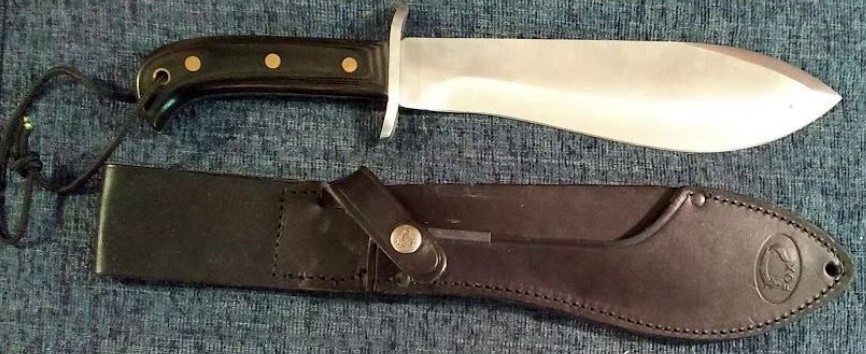
Now that is what I call a serious blade!


The sad thing is that if I owned this fine looking knife. It would never leave the gun safe! Grumpy

Categories
All About Guns Dear Grumpy Advice on Teaching in Today's Classroom Gear & Stuff

Some Battle-wagon Porn

The Bismarck, Iowa, Yamato

Categories
Gear & Stuff

Ten more toys that I want someday

https://youtu.be/lu0zSACvlDEhttps://youtu.be/lu0zSACvlDE
Image result for 10 Powerful Machines That Are On Another Level

Categories
All About Guns Gear & Stuff Gun Info for Rookies

Long-Range Caliber, How to Choose the Best for You

Disclosure: Some of the links below are affiliate links, meaning at no additional cost to you, Ammoland will earn a commission if you click through and make a purchase.
If you ever had a school teacher that swore that you would use and even appreciate math one day, then that promise is finally about to come true while picking a long-range caliber.

Step one is to define exactly what "long range" means for you. It might be anywhere from a few hundred yards to this.
Step one is to define exactly what “long range” means for you. It might be anywhere from a few hundred yards to this.

USA –-(Ammoland.com)- So, you want to shoot long-range. Excellent! I can offer a 100% money-back guarantee that you’re going to have lots of fun while learning all sorts of cool stuff.
If you ever had a school teacher that swore that you would use and even appreciate math one day, then that promise is finally about to come true. Yes, you’ll need to embrace a bit of math to master the long-range game, but it’s practical and even borders on enjoyable.

Yes, I know. I used “math” and “enjoyable” in the same sentence. On purpose. Just trust me, OK? The first time you press the trigger to nail a distance target, you’ll get a big kick out of hearing that “clang” several seconds later.

Step one is figuring out which caliber is best for you. Notice that I didn’t say “best” but rather “best for you.” There are a lot of great long-range cartridges available, and it’s pointless to try to figure out which is “best” because the answer is always… it depends. The correct question is this: Which ones are good for your intended use?
Here are a few factors to ponder before making your caliber decision

How long is the “long” in Long-Range Caliber?

Depending on where you live and plan to shoot, “long-range” might be anywhere from 200 to 2,000 yards.
Contrary to widespread assumption, bullet drop doesn’t matter all that much because it’s very predictable. That’s because gravity is reliable. Today, tomorrow, and until the world ends from some future Supreme Court pick, gravity will work exactly the same. Whether your bullet drops eight or 18 feet doesn’t matter all that much. With a good rifle, scope, and ammo, you can still make a precise hit every time, regardless of the amount of bullet drop. What does matter is the point down range at which your projectile transitions from supersonic to subsonic speeds. Up to that point on the velocity curve, bullet flight is amazingly predictable. During the subsonic transition and after, the math gets much harder and the results less precise.

The safe bet for caliber selection is to determine your realistic shooting distances and choose a caliber that remains supersonic past the distance of your longest anticipated shots.

Here’s a quick example. While 77-grain .223 Remington bullets are far better for longer range shooting than 55-grain ones, they only remain supersonic for about 750 yards here where I live. Your mileage may vary depending on your altitude and weather conditions. On the other hand, the new .224 Valkyrie, which uses the same bullet diameter, will remain supersonic past 1,000 yards here and out to 1,300 or so yards at higher altitudes.

Where will you be shooting?

Depending on where you shoot, the trajectory changes significantly. This solution is for sea level.

When shooting at 50 or 100 yards, elevation and local atmospheric conditions don’t make a whole lot of difference.
When shooting at 1,000 yards, your location means everything. To illustrate the point, let’s consider an example using the 6.5mm Creedmoor cartridge.
One load I’ve been using flings a Hornady 140-grain ELD Match bullet at 2,780.3 feet per second.
Where I shoot, elevation is about 30 feet above sea level. At 1,000 yards, this bullet will have dropped 305.39 inches and still be moving at 1,444 feet per second. If I were to travel to Denver with the same rifle and ammo, the bullet drop at 1,000 yards would be significantly less – 244.25 inches.

Also, the velocity would be much faster with the bullet sailing at 1,882 feet per second as it passes the 1,000-yard mark.

Are you hunting or target shooting?

As you can see from the previous example, velocity can vary – a lot – depending on where you will be shooting. In a hunting scenario, it’s up to you to make sure that you’re using a bullet of sufficient weight and velocity, not at the muzzle, but at the anticipated distance down range where it will strike the target. While the Hornady ELD Match in the previous example isn’t a hunting projectile, we can still use it as an example. In South Carolina, it’s carrying 648 foot-pounds of energy at 1,000 yards. In Denver, that bullet delivers 1,100 foot-pounds on the same 1,000-yard target. Don’t get hung up on the illustrations here as realistic hunting distances, we’re just illustrating the point that energy varies not only with distance, but location. It’s up to you to make sure you keep your shots ethical and within your capabilities.
As for target shooting, as long as your bullets don’t miss the safety berm, the energy delivered down range doesn’t matter so much. It doesn’t take much kinetic energy or momentum to perforate paper or ding a steel target. For these uses, you’ll be more concerned with factors like wind drift.

Are you going to buy or reload your long-range caliber ammo?

Depending on the caliber you choose, your costs can vary widely, at least for factory-loaded ammunition. If you decided that you just have to shoot .338 Lapua Magnum, plan on spending five to seven bucks per round for quality pre-loaded ammo. Unless your day job title is Shady Hedge Fund Manager, that can put a severe dent in your wallet. On the other hand, reloading specialty rounds like this can save you a ton if you’re willing to invest some time in the process. We’ll get into details on that in a later article in the long-range shooting series.

Not all long-range caliber rounds are expensive. The .224 Valkyrie fits in standard AR-15 lower receivers and is affordable to buy from the factory.

If you’re not ready to take a bite from the long-range caliber reloading foot-long sub, no worries. You can find great long-range calibers with excellent factory loads that are available for reasonable prices. For example, the hot new .224 Valkyrie cartridge lists for $.50 to $1.25 per round. Even the larger 6.5mm Creedmoor round comes in around $1.25 a shot for match-grade ammo.

Semi-auto or bolt-action?

If you have strong desires on the type of rifle action, that will help narrow the universe of possible calibers too. In the semi-automatic area, most long-range rifles are members of either the AR-15 or AR-10 family. Those two lower receiver types tend to limit the numbers of choices because the magazine wells are only so big, so if you plan to fire more than one shot, cartridges will need to fit in either the AR-15 or AR-10 lower receivers. In the bolt action world, things are more flexible.

If you go the semi-automatic route, you may be deciding between the AR-10 and AR-15 platforms to fit your desired cartridges. These two rifles from Palmetto State Armory reflect one of each for the 6.5mm Creedmoor and new .224 Valkyrie.
If you go the semi-automatic route, you may be deciding between the AR-10 and AR-15 platforms to fit your desired cartridges. These two rifles from Palmetto State Armory reflect one of each for the 6.5mm Creedmoor and new .224 Valkyrie.

Ballistic Coefficient

Here comes the dreaded math, but we’re going to keep it simple. We’re going to drill into Ballistic Coefficient in a different article, so for now, think of it this way. This numerical value assigned to every unique bullet defines how “slippery” it is while flying through the air. Stated differently, it corresponds to a bullet’s ability to retain velocity as it flies. If you could fire a Yeti cooler (with the door open) that would have a very low ballistic coefficient number. Of course, it would have the added benefit of bringing joy to Second Amendment advocates everywhere when it self-destructed on impact.  On the other hand, an oversized sewing needle launched from a high-tech magnetic rail gun would have a very high ballistic coefficient.
To get practical, the new .224 Valkyrie 90-grain Sierra Matchking bullet has a ballistic coefficient of 0.563. A .308 caliber flat nose, 150-grain bullet for a .30-30 lever-action has a ballistic coefficient of just 0.185. So, yes, the ballistic coefficient number is (almost) always between zero and one, although the Yeti probably carries a BC of negative 113.9.
So, long-range caliber bullets with higher ballistic coefficients tend to carry their velocity better and as a result, act more predictably at longer ranges. That may or may not be relevant to your scenario. For example, if your goal is to knock over steel silhouette targets at 500 yards, you might be better off using a big, heavy, and fat bullet that doesn’t top the coefficient charts. Like the other factors mentioned here, the ballistic coefficient is one of many things to consider depending on what you want to do.
So, these are a few things to consider when choosing your long-range caliber. Most importantly, think about your typical use case and work backward from that.


Tom McHale
Tom McHale

About Tom McHale

Tom McHale is the author of the Practical Guides book series that guides new and experienced shooters alike in a fun, approachable, and practical way. His books are available in print and eBook format on Amazon. You can also find him on FacebookTwitterInstagram and Pinterest.

Categories
Ammo Darwin would of approved of this! Gear & Stuff

50 Cal vs Body Armor


You just know that some idiot will try this out even after being told to not do it, Right?

Categories
All About Guns Gear & Stuff

224 Weatherby Magnum

Image result for 224 Weatherby Magnum
Now I am sure that this is a good round. But & it’s a BIG but! Like all Weatherby gear. What happens if you are out in the big beyond & the following happens?
You forget to bring enough ammo? I have done that!
Or God forbid! You have a malfunction & the local Gun Witch Doctor does not have the parts to fix it? Oops!
It kind a puts a crimp on your hard earned fun time doesn’t it? Something to think about huh?
Grumpy

224 Weatherby Magnum

From Wikipedia, the free encyclopedia
.224 Weatherby Magnum
Type Rifle
Place of origin USA
Production history
Designer Roy Weatherby
Designed 1963
Specifications
Parent case None, proprietary
Case type Belted, bottleneck
Bullet diameter .224 in (5.7 mm)
Neck diameter .252 in (6.4 mm)
Shoulder diameter .394 in (10.0 mm)
Base diameter .415 in (10.5 mm)
Rim diameter .430 in (10.9 mm)
Case length 1.923 in (48.8 mm)
Overall length 2.330 in (59.2 mm)
Rifling twist 1-12″
Primer type Large rifle
Ballistic performance
Bullet mass/type Velocity Energy
45 gr (3 g) SP 3,457 ft/s (1,054 m/s) 1,194 ft·lbf (1,619 J)
50 gr (3 g) SP 3,415 ft/s (1,041 m/s) 1,295 ft·lbf (1,756 J)
55 gr (4 g) SP 3,242 ft/s (988 m/s) 1,284 ft·lbf (1,741 J)
60 gr (4 g) SP 2,958 ft/s (902 m/s) 1,166 ft·lbf (1,581 J)
Test barrel length: 24″
Source(s): Hodgdon [1]

.224 Weatherby Magnum maximum C.I.P. cartridge dimensions. All sizes in millimeters (mm) plus Imperial (inches).

 
The .224 Weatherby Magnum (5.56×49mmB) is a sporting cartridge that was developed in 1963 by Roy Weatherby after about 10 years of development.[2]
It is a proprietary cartridge with no major firearms manufacturers chambering rifles for it other than Weatherby.
It was originally called the .224 Weatherby Varmintmaster when it was introduced alongside the Weatherby Varmintmaster rifle, but the rifle was discontinued in 1994 and the cartridge was renamed.

Design

The cartridge design began years earlier but its introduction was delayed, at least in part, because of the unavailability of a suitable action.
An earlier high-velocity .22 caliber round from Weatherby called the .220 Weatherby Rocket was based on the .220 Swift though it was unsuccessful and never manufactured.[3]

Performance

Performance is similar to the popular .22-250 and the lesser used .225 Winchester putting it in between the .220 Swift and .223 Remington cartridges.
Possibly because of the similar performance and popularity of the .22-250, this round has never gotten a very large following. Costs for ammunition and rifles for this round also tend to be much more expensive.

Performance for 55 grain bullet (BC of 0.235)
Muzzle 100 Yds 200 Yds 300 Yds 400 Yds 500 Yds
Trajectory 2.8 3.7 0 -9.8 -27.9
Energy (ft·lbf) 1627 1244 944 705 516 370
Velocity ([[Feet per second ft/s]]) 3650 3192 2780 2403 2056 1741

Sporting Use

.22 caliber rifles are legal in some areas for big game up to the size of deer or larger. Convention holds the .224 Weatherby and similar cartridges are better suited to long-range varminting.[4]
Similar statements are made concerning other “big” 22 caliber cartridges like the 220 Swift and .223 WSSM.
Currently many states in the United States do allow 22 caliber rifles on big game, but the majority require a minimum of 6mm.[5]
Well known firearms author P.O. Ackley believed that fast 22 caliber cartridges were suitable for medium-large game.[6] Craig Boddington has said that such cartridges are suitable for smaller deer.[5]
Bullets suited for hunting big-game are available from major manufacturers such as Nosler and Barnes.[7]

See also

References

  1. Jump up^ Hodgdon Online Reloading Data
  2. Jump up^ .224 Weatherby at the Reload Bench[self-published source]
  3. Jump up^ Cartridges of the World 8th Edition, Book by Frank C. Barnes, DBI Books, 1997, ISBN 0-87349-178-5 p. 23
  4. Jump up^ .224 Weatherby at Norma
  5. Jump up to:a b “Centerfire .22s For Big Game”Archived from the original on 15 April 2010. Retrieved 2010-06-29.
  6. Jump up^ Handbook for Shooters & Reloaders vol II, Book by P.O. Ackley; Plaza Publishing, 1966, ASIN B000BGII48
  7. Jump up^ “Nosler’s Big-Game Bullets”. Retrieved 2010-06-29.

External links

Categories
Gear & Stuff Related Topics

Toys for Boys!

https://youtu.be/XcIBSSnblbU

Categories
Born again Cynic! Darwin would of approved of this! Gear & Stuff

The Real King of the Road & knows it!

https://youtu.be/YubibcX0HbEImage result for A bear on a walk - Denali National Park for

Now I don’t know about you. But I would want at least a 300 H&H around about then or my Sig- Saur P-220! GrumpyImage result for 300 H&H

Categories
All About Guns Gear & Stuff Gun Info for Rookies

Wildcats

NO NOT THIS! As this is not a cute Kitty Blog!Image result for Wildcat

As a side bar and at the risk of losing readers. I hate Cats!
No what I am talking about this the subjects of Wildcat Cartridges. So let us dig in and get going on to this subject!
Now when I was growing up in the Old Days. All real Americans were tinkerers of some sort. Always looking to improve things. So it was with the Gun Folks.Image result for garage gun shop
The big thing was to make a round go faster or what not. Usually of course most of these rounds never really took off.
So now a days you will see on the racks of Gun shops with the odd & sod gun with one really real weird one of a kind round.
Usually the inventor / owner having gone to their reward. (I.E. Died & the family wants the money)Related image
But on the up side. This is how we got some really great round too. Like the 22 Hornet, 25-06, 257 Roberts or the 35 Whelen.
So like life itself, It’s a mixed bag of the good, bad and the so-so. Here is some more information about this odd annex of the story of things that go boom.

Wildcat cartridge

From Wikipedia, the free encyclopedia

.243 Winchester Ackley Improved(left) and .243 Winchester (right)

 
wildcat cartridge, often shortened to wildcat, is a custom cartridge for which ammunition and/or firearms are not mass-produced.
These cartridges are often created in order to optimize a certain performance characteristic (such as the power, size or efficiency) of an existing commercial cartridge.
Developing and using wildcat cartridges does not generally serve a purpose in military or law enforcement; it is more a hobby for serious shooting, huntinggunsmithing and handloading enthusiasts, particularly in the United States.[1]
There are potentially endless amounts of different kinds of wildcat cartridges: one source of gunsmithing equipment has a library of over 6,000 different wildcat cartridges for which they produce equipment such as chamber reamers.[2]

Development of a wildcat

Often, wildcats are commercially sold rounds that have been modified in some way to alter the cartridge’s performance. Barrels for the caliber are originally manufactured by gunsmiths specializing in barrel making.
Generally the same makers also offer reloading dies, tools to custom-load bullets into cases.
Because changing the barrel of a gun to accommodate custom cartridges requires precision equipment, most wildcats are developed by or in association with custom barrel makers.
Ammunition is handloaded, using modified parent cases and the gunsmith-provided wildcat dies. Generally the supplier of the barrel or dies will also provide the buyer with basic reloading data, giving a variety of powders, charge weights, and bullet weights that can be used for developing loads.
Handloaders use the data to develop a load by starting with minimum loads and carefully working up.
Wildcat cases and cartridges can be found for sale, but only from small makers.
Larger manufacturers usually do not produce wildcats because there is such a limited market for them and because there are no established CIP(Commission Internationale Permanente Pour L’Epreuve Des Armes A Feu Portatives – Permanent International Commission for the Proof of Small Arms) or SAAMI standards, which causes liability concerns.

Wildcat goals and methods

From left to right: cross sectioned and normal .338 Yogi wildcat cartridge cases compared to a factory .338 Lapua Magnum case.

 
Wildcat cartridges are developed for many reasons. Generally, the goal is to optimize some characteristic of a commercial cartridge in a given context.
Higher velocities, greater energy, better efficiency, greater consistency (which yields greater precision) and complying to a minimal permitted caliber or bullet weight for the legal hunting of certain species of game in a particular jurisdiction are the top reasons.
The sport of metallic silhouette shooting, has given rise to a great number of wildcats, as several rifle rounds are adapted to fire from a handgun.[3]
In using auto pistols for hunting or competitive shooting, improved feeding of soft nosed or hollow point bullets is also an issue; the bottlenecked .45/38, for instance, was created because the straight-cased .45 ACP had trouble feeding hollowpoints.[4]
Wildcat cartridges are generally developed because:

  • Higher velocities can be obtained by increasing the case capacity, or reducing the caliber.
  • Greater energy can be attained by increasing the caliber or the case capacity.
  • Better efficiency can be achieved by increasing the shoulder angle, shortening the case, and reducing case taper (see internal ballistics).
  • Greater consistency can be achieved by tuning the case capacity to a certain bullet diameter, weight, and velocity that give consistent results.
  • Feeding problems can be fixed.

Some methods used to develop a wildcat are:

  • Cold forming. The parent case is well lubricated and forced carefully into the reloading die for the wildcat caliber. This will swage the case into the new shape. This type of operation is used for reducing case dimensions, such as reducing the neck diameter or pushing the shoulder back, or changing the neck diameter.
  • Fire forming. This consists of taking the parent case, or a partially cold formed case, loading it with a light bullet and light load of powder, and firing it in the firearm it will be used in. Another technique uses a charge of fast burning powder topped with a case full of Cream of Wheat and a wad, to form a special blank cartridge that will expand the case. This technique is used for increasing case dimensions, such as pushing the neck forward, increasing the neck angle, or straightening the case walls.[5]
  • Trimming to length. Generally, after either a cold forming or a fire forming operation, the mouth of the case will be longer than ideal, and the case will be trimmed back to the “trim to” length. Trimming is a normal reloading operation, as high pressure cartridges will flow each time they are fired, and periodically need trimming to remove the brass that flows to the mouth.
  • Changing the diameter of the case (to suit a new caliber). Called “necking up” or “necking down”, this is the most common way of making a wildcat. The new caliber allows a much different range of bullet weights, and can greatly increase the velocity or the power or the resistance to wind drift as compared to the parent cartridge.
  • Necking back. This is a cold forming operation in which the neck is pushed back to reduce case capacity. This is often done when developing rounds for shorter barrels, such as turning a rifle cartridge into a handgun cartridge.
  • Blowing out. This is a fire forming operation that moves the shoulder forward to increase case capacity.
  • Changing the shoulder angle. By making the shoulder closer to square, the resulting space is closer to the ideal spherical shape, resulting in a more efficient burn. If the shoulder is also to be moved back, this is a cold forming operation; if the shoulder is to stay or be moved forward, it is a hot forming operation.
  • Reducing the case taper. This hot forming operation makes the cartridge more cylindrical, giving similar results to a shoulder angle change.
  • Changing the rim. While this is a wildcatting operation, it is generally only done by commercial operations, due to the precision turning needed. Generally this is a conversion from rimmed to rimless cartridge, or from rimless to rebated, and is done to allow a larger parent case than the firearm action was designed for. The opposite operation, adding a rim to a case, is also generally only done by major manufacturers; examples are the .45 Auto Rim, a rimmed .45 ACP allowing ejection in .45 revolvers without the use of moon clips, and the .307 Winchester, a rimmed .308 Winchester, developed for use in lever-action rifles. A handloader can add a rim, by swaging a ring of metal onto a rimless case, then turning it down, but this is very labor-intensive process and requires a special swaging die and precision metalworking lathe.[6] It is far easier for most handloaders to simply start with a rimmed case, either of the desired diameter or reamed out as desired.
  • Increasing the case length. This process (which allows the cartridge to contain more propellant and thus increases potential energy of the bullet) was used to make the powerful .357 Magnum cartridge from the much weaker .38 Special: A .357 magnum bullet has more than 3 times more energy than a .38 special bullet of the same weight. Increasing the length of a bullet’s case usually involves getting rid of the old case and making a completely new one from scratch, which all but limits the feasibility of this kind of modification to commercial manufactures. It is possible to draw an existing case into a slightly longer form, thinning and stretching the existing case, but this is an operation requiring special equipment and expertise.[6] It is far easier and more common to reduce, not extend the length of a case.

Example wildcat cartridges

In terms of sheer numbers of varieties, there are more wildcat cartridges than there are production cartridges.
Most wildcats are custom made, and therefore are not generally well-known. Some wildcat cartridges, however, are produced commercially in small quantities by small manufacturers. This is a list of some representative wildcats.

  • .30 Herrett. Based on the .30-30 Winchester, necked back and with a sharper shoulder angle. Developed for use in pistols with barrels as short as 10 inches (25 cm), it develops the same power as a .30-30 with greater efficiency and less muzzle blast.[7]
  • .357 Herrett. Like the earlier .30 Herrett, this cartridge is based on the .30-30 Winchester, shortened and necked up to .357 (9 mm). Designed for use in short barrels, the resulting cartridge is more efficient and more powerful than the .30-30. Often considered one of the best medium game hunting calibers available in the 10″ (25 cm) barrelled Thompson Center Arms Contender pistol.[8][9]
  • .10 Eichelberger Long Rifle. This is one of a smaller number of wildcats based on rimfire cartridges. It is made by disassembling a .22 Long Rifle cartridge, and re-using the case. The .10 caliber (2.5 mm) is the smallest rifled barrel made. The tiny .10 caliber bullets produce almost no recoil and travel at very high velocities. While it can be used on small game at short ranges, this cartridge is more of a curiosity than a practical hunting or target round.[10]
  • 5.7 MMJ, or 5.7mm Spitfire. A .30 Carbine case necked down to .223 caliber (5.56 mm), this cartridge was developed to convert military surplus M1 Carbines into short range varmint guns.[8]
  • 6mm PPC. Based on the .220 Russian, which is in turn based on the 7.62×39mm intermediate-power cartridge. The 6mm PPC was developed in 1975 specifically for benchrest shooting. While it is anything but common anywhere else, the 6mm PPC unseated the .222 Remington from its 20-year spot as the best benchrest cartridge available. Chambered only in single-shot rifles due to its short, fat case and sharp shoulder angle, the 6mm PPC is still going strong in benchrest after 30 years.
  • .22 Eargesplitten Loudenboomer. This humorously named cartridge was developed by P. O. Ackley specifically to exceed 5,000 ft/s (1,500 m/s) muzzle velocity. Based on a .378 Weatherby Magnum case, the case is impractically overpowered for the bore diameter, and so the cartridge remains a curiosity.[11][12]
  • 7 mm TCU (also known as 7TCU). Based on the .223 Remington case, the 7 mm TCU is popular in single-shot handguns such as the Thompson Center Arms’ Contender and G2 Contender. It is but one of a family of wildcat TCU cartridges.

Wildcat cartridges in Australia

In Australia, wildcat cartridges were relatively common.]
Most are made primarily for hunting species such as deerkangaroo, are generally based on the .303 British because of the post war popularity of that round and of the cheap surplus Australian Lee–Enfield MkIII military rifles available.
Many of these surplus rifles were rebarreled to .257 caliber, known as the 303-25.
One of the unique features is that these cartridges relied less on handloading – and instead were offered as proprietary cartridges from gunsmiths.
Since having an existing barrel rebored and rechambered was (at that time) less expensive than fitting a new barrel, a 303-25 rifle with a shotout barrel could be economically converted to .277 caliber, known as the 303-270.
The .222 Remington – a .222 Rimmed in a Martini was also commonly found. As too were the “Tini-Mite” and “Mini-Mite” cartridges, .17 caliber rimfire cartridges based on the .22 Long Rifle case.[2]

Commercially accepted wildcats

Some cartridges started out as custom-made (non-commercially developed) wildcats, and gained wide enough acceptance or popularity to become commercial cartridges.
Generally, cartridges become popular commercially after a commercial firearms maker begins offering a weapon chambered in the cartridge.
Once popular enough, funding is generated for SAAMI standards development. After SAAMI standards are in place, any firearms or ammunition maker can be sure that any products manufactured to the SAAMI standards can be safely used.
Some examples of custom cartridges that became commercially accepted are:

  • .22-250. Based on a .250 Savage case, the .22-250 is still one of the fastest shooting .22 caliber (5.56 mm) cartridges available. First offered in a factory firearm by Browning in 1963 (the first factory gun chambered for a wildcat), the .22-250 was later adopted by Remington as the .22-250 Remington.[13][14]
  • .22 CHeetah. A .308 BR (Bench Rest) case necked down to .22 caliber, the .22 CHeetah provides a flat trajectory with a .22 caliber bullet that has a relatively high speed of 4,000 ft/s. Hard on barrels, it provides a very effective 300 yard varmint round.[15]
  • .303/25. A .303 British cartridge necked down to fire a .25 calibre projectile, developed in Australia during the 1940s as a Kangaroo culling and pest control round. Popularised in the late 1940s and 1950s in New South Wales, owing to restrictions in that state on ownership of .303 British calibre firearm and the difficulties of obtaining commercial hunting arms and ammunition from overseas. Now largely obsolete, but there are still large numbers of converted Lee–Enfield rifles chambered for this round in Australia.[8]
  • 6.8 mm SPC. This cartridge was developed by American military special operations soldiers in search of a more lethal round than the 5.56×45mm NATO. It is based on the .30 Remington cartridge necked down to .270 caliber, and sized to fit in the M16 rifle. The 6.8 SPC is currently deemed unlikely for official military adoption, but is fielded by special operations troops in Afghanistan and Iraq and is gaining popularity as a commercial round.[14]
  • 7 mm-08. A .308 Winchester necked down to 7 mm (.284 caliber), the 7 mm-08 provides a flatter trajectory with lighter, more aerodynamic 7 mm bullets. It provides nearly the performance of a 7 mm Magnum, but can use a shorter rifle action and does not need a belted case.[14]
  • 7-30 Waters. Designed to improve the performance of lever-action rifle designs dating back to the 1890s, the 7-30 Waters is a .30-30 Winchester necked down to 7 mm (.284 caliber). Even with the lower chamber pressures allowed by the lever-action rifle and the flat tipped bullets necessitated by the tubular magazines, the 7-30 Waters offers a significant gain in velocity and sectional density with little loss in bullet weight. This cartridge has also developed a following among handgun hunters using single-shots such as the T/C Contender or G2, which can take advantage of spitzer (pointed) bullets that are unsafe in tubular magazines. It is very efficient on small to medium-sized game including whitetails and mule deer.[14]
  • .454 Casull. This magnum revolver cartridge, a lengthened .45 Colt, was developed by Dick Casull and Jack Fulmer in 1957 as a high-powered big game hunting round. For many years, the small Wyoming manufacturer Freedom Arms was the only substantial maker of guns for the cartridge. In the mid-1990s, two major manufacturers, Ruger and Taurus, started selling guns chambered in .454 Casull because it was popular due to its extreme power. It was finally commercialized in 1998, when SAAMI published its first standards for the cartridge.[16][17]

Commercially developed wildcats

Though a cartridge technically has to not be developed commercially to be considered a wildcat, some commercial cartridges were developed by ammunition and firearm manufacturers by modifying existing cartridges – using essentially the same process used to make wildcats.
Cartridges that are modified by being made longer (usually to make them more powerful) are for the most part only created commercially because of the difficulty of the process.
One example of such a cartridge is the .357 Magnum, which was developed from the .38 Special in 1934 by firearms manufacturer Smith & Wesson.

  • .38-40. One of the oldest wildcats, the .38-40, introduced by Winchester Repeating Arms Company in 1874, was made by necking down a .44-40. Actually a .401 in (10.2 mm)[18] cartridge, the .38-40 had faded into obsolescence before being revived with the growing popularity of Cowboy action shooting. The ballistics of the .38-40 are close to those of the .40 S&W.[19]
  • .221 Fireball. This cartridge was developed by Remington Arms for the XP-100 pistol, which was a single shot bolt action pistol. The .221 Fireball was a necked back .222 Remington, designed for greater efficiency in the 10 in (25 cm) barrel of the XP-100. Even loaded with a smaller load of faster powder for the short barrel, the .221 Fireball lived up to its name, with a massive muzzle flash; the performance, however, was unheard of for its day: over 2700 feet per second (885 m/s) out of the short XP-100 barrel. It remains the fastest SAAMI approved handgun cartridge, and the cartridge is so efficient and accurate that it has been chambered in rifles as well.
  • .22 Remington Jet. This cartridge was developed by Remington for a Smith & Wesson Model 53 revolver and a Marlin Model 62 lever-action rifle, but the rifle was never produced in this calibre. The .22 Remington Jet was a necked down .357 Magnum case.[20] The .22 Jet is no longer manufactured by Remington or other commercial manufacturers.
  • .357 SIG. This now-popular pistol cartridge was developed by Swiss weapons company Sig Sauer in an attempt to produce ballistics matching the powerful .357 Magnum revolver load, but in a semi-automatic pistol cartridge. The cartridge was made by necking down and slightly stretching the .40 S&W case, which itself derived from the 10mm Auto.
  • .400 Corbon. This cartridge was designed to produce 10mm Auto ballistics in a cartridge that could be chambered in a .45 ACP pistol with a simple barrel swap. It was made by necking a .45 ACP down to .40 (10 mm). Initially, no firearms were available in .400 Cor-Bon, but barrels in the new caliber were produced for the M1911 pistol.
  • .41 Action Express. Developed in 1986 by Action Arms for the Jericho 941 pistol. It, like the .357 SIG, attempted to make a magnum-power cartridge for a semi-automatic pistol. It started with a .41 Magnum case and cut it down to fit in a semi-automatic pistol chambered for 9×19mm. The rim was then turned down to the same dimensions as the 9×19mm, making it a rebated rim cartridge. This allowed a unique switch up to a larger caliber. The .41 AE never saw huge commercial success because of the creation of the similarly-powerful .40 S&W in 1990.[21]
  • .204 Ruger. Introduced in 2004 by Ruger, in its time it held the title of fastest production cartridge with a velocity of 4225 ft/s (1290 m/s) with a 32-grain (2.1 g), .204 bullet from a 24-inch (610 mm) barrel. Intended as a varmint riflecartridge, the .204 was based on the .222 Remington Magnum, which is slightly longer than the .223 Remington and offers about 5% more case capacity. Designed to have a very long point blank range, the factory loading offers impressive ballistics, 1.5 inches high at 150 yards (140 m), and 1.5 inches (38 mm) low at 277 yards (253 m).[citation needed]

Second (and later) generation wildcats

Some wildcats are based not on commercial rounds, but on other successful wildcats. The .308 × 1.5″ Barnes, a wildcat from noted cartridge author Frank Barnes made by simply necking a .308 Winchester back to 1.5 inches (38 mm) in length (38.1 mm) is probably the best example of a wildcat that has spawned many other successful wildcats.
The .308 x 1.5″ case is available from a number of case manufacturers, and differs from a homemade .308 x 1.5″ in that it has a small primer pocket, where the original .308 Winchester case has a larger primer pocket (the smaller primer is more suited to the smaller case capacity of the short round).
There are at least 8 wildcats that are made from the small primer .308 x 1.5″ brass, including some very successful benchrest rounds, including the Benchrest Remington family of cartridges, .22 BR6mm BR6.5mm BR7mm BR.30 BR.
Another example is the .220 Russian, based on the 7.62×39mm. Since nearly all 7.62×39mm ammunition made in the 1970s used the complex-to-reload Berdan priming, and often steel cases, it made a poor choice for wildcatting.
The .220 Russian, however, was and still is readily available in Boxer-primed, brass cases of high quality. The .220 Russian is still the parent cartridge of choice for the PPC line of cartridges, such as the .22 PPC and 6mm PPC, even though there are far more PPC chambered firearms available than .220 Russian chamberings.
Likewise, the PPC line of cartridges were the parent case of the 6.5 Grendel, a long-range, high-energy cartridge for the AR-15.[22]

See also

References

  1. Jump up^ “Guns per Capita in the US”Reuters. 2007-08-28. Retrieved 2009-03-03.
  2. Jump up to:a b Frank C. Barnes. Stan Skinner, ed. Cartridges of the World, 10th Ed. Krause Publications. ISBN 0-87349-605-1.
  3. Jump up^ Robinson, John. “Wildcats”Sporting Shooters’ Association of Australia. Retrieved 1 October 2010.
  4. Jump up^ Barnes, Frank C. Cartridges of the World (Northfield, Illinois: DBI, 19776), p. 140, “.45-38 Auto Pistol”.
  5. Jump up^ Case-Forming Top Contender Hunting Loads, Performance Shooter, May 1997; includes information on cold forming and fire forming, including the “Cream of Wheat” fire forming method.
  6. Jump up to:a b Nonte, Jr., George C. (1978). Basic Handloading. USA: Times Mirror Magazines, Inc. LCCN 77-26482.
  7. Jump up^ “.30 Herrett”. Archived from the original on 2007-11-01. Retrieved 2007-11-14.[self-published source]
  8. Jump up to:a b c “Wildcat Cartridges”. Retrieved 2007-11-14.[self-published source]
  9. Jump up^ “.357 Herrett”. Archived from the original on 2007-11-01. Retrieved 2007-11-14.[self-published source]
  10. Jump up^ AmmoGuide.com, free registration may be required.
  11. Jump up^ “.22 Eargesplitten Loudenboomer”. RelaodersNest.com.
  12. Jump up^ Ackley, P.O. (1927) [1962]. Handbook for Shooters & Reloaders. vol I (12th Printing ed.). Salt Lake City, Utah: Plaza Publishing. p. 442. ISBN 978-99929-4-881-1.
  13. Jump up^ “The Great .22-250”. Rifle Shooter Magazine. Retrieved 2007-11-14.
  14. Jump up to:a b c d “Rifle Cartridges”. Retrieved 2007-11-14.
  15. Jump up^ Cartridges of the World p. 188.
  16. Jump up^ Chuck Hawks. “.454 Casull”. Retrieved 2007-11-14.
  17. Jump up^ “.454 Casull”. Retrieved 2007-11-14.
  18. Jump up^ Barnes, Frank C., ed. by John T. Amber. Cartridges of the World (Northfield, Illinois: DBI Books, 1972), p.67.
  19. Jump up^ John Taffin. “TAFFIN TESTS: THE .38-40 (.38WCF)”. Retrieved 2007-11-14.
  20. Jump up^ Barnes, Frank C., ed. by John T. Amber. Cartridges of the World (Northfield, Illinois: DBI Books, 1972), p.148, “.22 Remington Jet”.
  21. Jump up^ “Pistol Cartridges”. Retrieved 2007-11-14.
  22. Jump up^ Chuck Hawks. “The 6 mm PPC-USA”. Retrieved 2007-11-14.

External links