Category: Fieldcraft
Your most powerful weapon doesn’t need batteries and never runs out of ammunition. What are the secrets of the professionals when it comes to recognition and rapid assessment of a developing threat? Even more effective, how can you see it, hear it and sense it coming?
Our society is divided into two groups: those who don’t care about or are unaware of the possibility something bad can happen to them and are unprepared to handle it, versus those who are aware and prepared if something bad does happen. Learning how to use your most powerful weapon places you in the latter group and prepares you by increasing your knowledge and decreasing your vulnerability.

Protection professionals will tell you that your mind is your most effective weapon. Knowing what to look for, how to look for it and what to do if you see a threat is paramount. In most situations, you can remain proactive and take preventative measures against a potential threat.
A threat refers to any range of behaviors that can result in both physical and psychological harm to oneself in the environment. This type of environmental interaction centers on harming another person, either physically or mentally.
Threat Identification
The most immediate tool we have on board for threat identification is our situational awareness. Environmentally speaking, situational awareness is knowing what goes on around you. Whether at home, in your car or on foot, applying good situational awareness eliminates such potential threats as being taken by surprise or placing yourself behind the action-reaction power curve of an undesired event occurring around you. As such, it can be used to control your environment.

Protection experts use situational awareness as a deterrent. When a predator knows that you are on to them, the element of surprise has been eliminated. This awareness deflates their motivation.
Situational awareness also keeps you informed of what your environment is telling you and a step ahead of events that are emerging around you. It keeps you connected to your surroundings and prepared. When effectively applied, situational awareness can be used to take control of your environment, act as a deterrent and make you a harder target.
Threat Indicators
If you are not aware of something, then that something is invisible to you.

What goes unseen can sometimes be the one thing that causes the biggest problem. Being able to identify a threat by using your situational awareness is what affords you the most time and opportunity to control that threat and formulate an immediate response to your environment that could save lives. Once a threat has been identified, this information can then be used to determine your best course of action. How can you do this?

The key to preventing a potential threat from developing into an active threat is to first identify threat indicators. Such indicators are often your only visible clues or observable pre-attack behaviors that something bad is about to happen. Some examples of threat indicators include body posture, eye contact and an intercept course.
Body Posture
How people carry themselves can be an indicator of their intentions. To a trained observer, how and where a person positions their body may indicate a potential threat.
In typical non-threatening situations, most people carry themselves calmly and without tension. They are usually standing “squarely” in front of you with both feet even with their shoulders, commonly referred to as a neutral position.
If you find their feet in a bladed position — with one of their feet set back or braced and with the other in front — this affords the attacker a tactical advantage in preparation for a physical strike or rapid aggressive movement.
Eye Contact
Eye contact is one of the earliest detectable indicators of a potential or developing threat. Normal people make normal eye contact. They look you in the eye — but not too intently.

Someone who intends you harm may look intently at you or start sizing you up. Known as giving you the “hairy eyeball”, this will look and feel different than normal eye contact.
Intercept Course
Normal people walk about with self-determination and specific purpose. They generally tend to their own business and are focused on shopping, running errands, or their movement to and from their car.
Should their attention shift to you and your movements, such as what you are doing or where you may be going, then this is a pre-attack indicator that should not be ignored.

If you accelerate your pace and they match or exceed your pace, then these are red flags that may very well indicate an intercept course to initiate an attack.
Conclusion
Although, they may sometimes be subtle, threat indicators can provide enough information for you to orient yourself to your surroundings, spot a potential threat, make your tactical decision based on updated information and then act on that decision. Threat indicators should be considered red flags and treated as such.
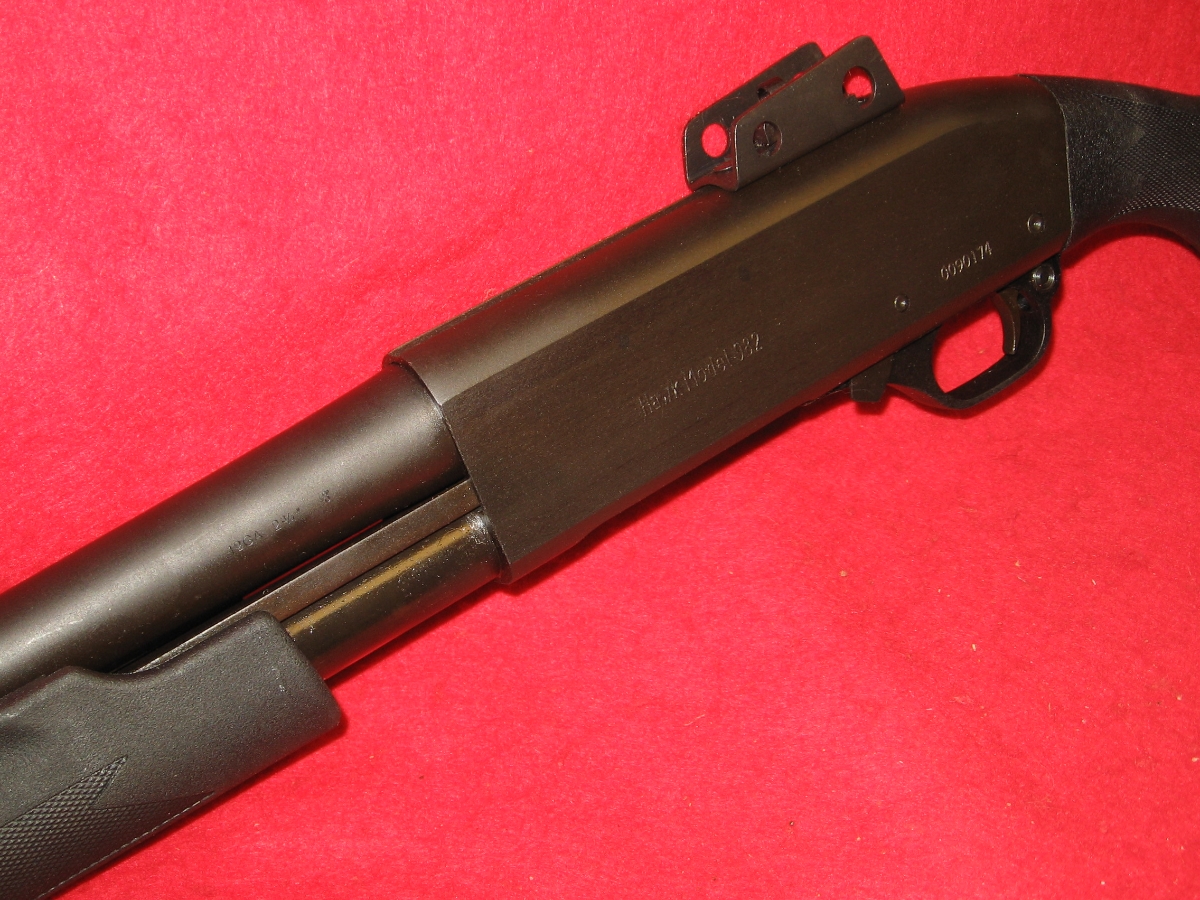
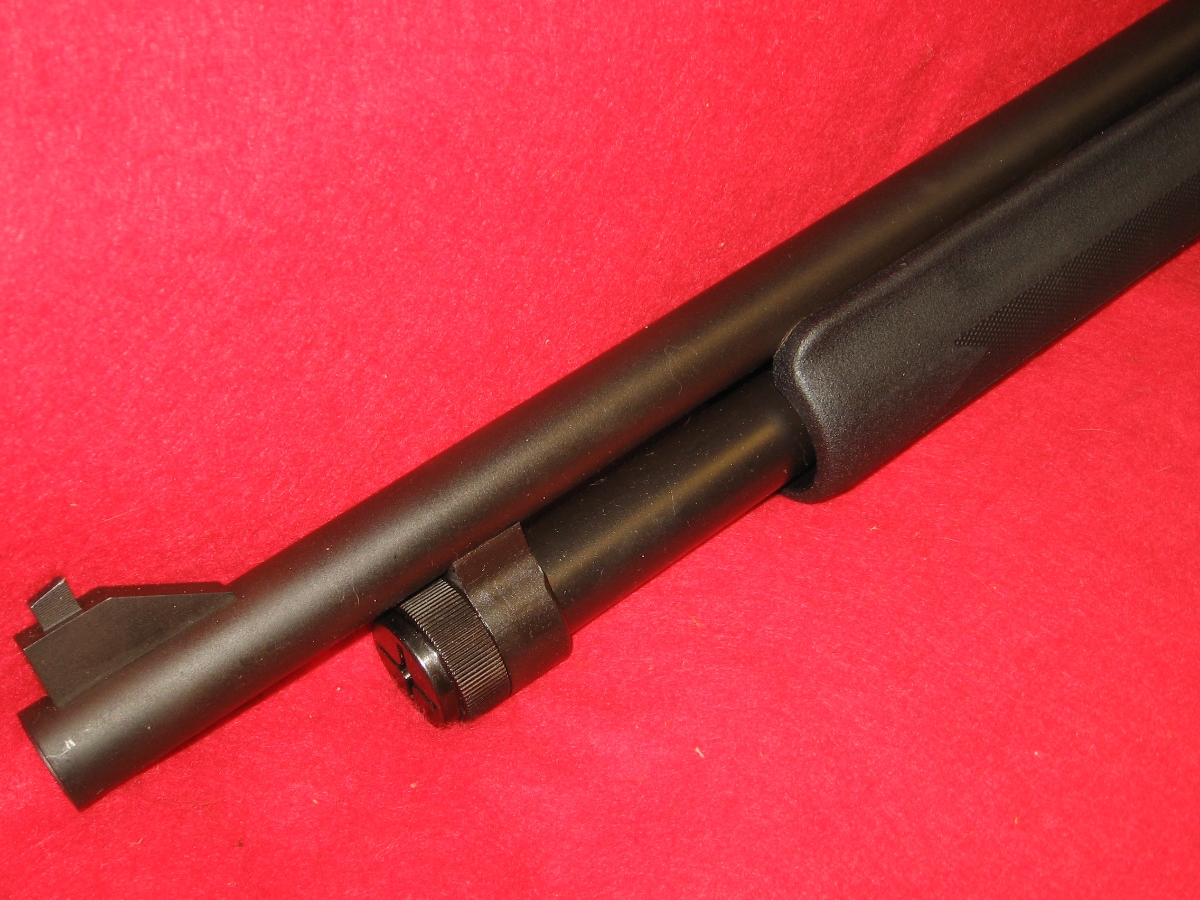
Its a Interstate Arms Corps Model Hawk in 12 GA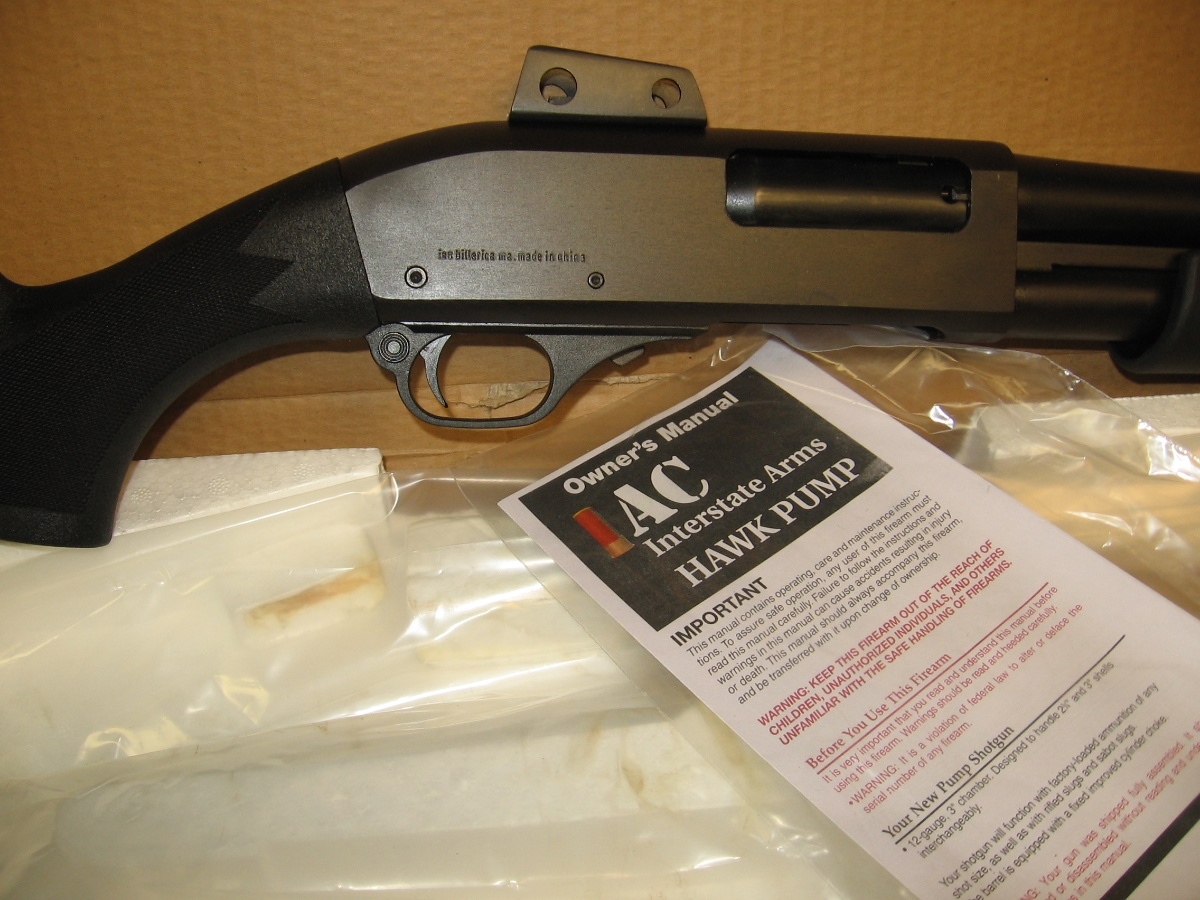

I took this photo myself. Those Alaskan brown bears can become absolutely enormous.
I spent my last three years in the Army stationed at Fort Wainwright, Alaska. For a substantial portion of that time, I was the operations officer for a CH-47 Chinook helicopter unit.
I picked flight crews and assigned mission responsibilities. That also meant I got to do some really cool flying all across the last frontier. If you were paying taxes back in the 1990s, sincerely and from my heart, thank you for that.
Megafauna
When you encounter moose while flying out over the vast Alaskan muskeg, they typically either ignore you or run. These things are as big as Clydesdales and quite deadly up close, but they’re herbivorous ungulates. They don’t hunt people for food. Alaskan brown bears, by contrast, will gladly make a meal of you.
One fine day, I was piloting a Chinook helicopter north to south just east of the Salcha River on the far side of Eielson Air Force Base. We were flying nap-of-the-earth right above the trees at maybe 160 knots (about 185 mph). In this configuration, I serendipitously happened upon an absolutely enormous cinnamon grizzly bear.
I wasn’t trying to molest the wildlife. He just happened to be right in my flight path. I popped the cyclic back and cleared him by scant feet.
A CH-47 tops out at 50,000 pounds, and it makes the devil’s own racket. Most animals are rightly terrified of it. In this case, my flight engineer reported that, as we passed over this big gentleman’s head, he stood up on his hind legs and swatted at us. Human beings are not the apex predators in this space.
The Monster
In 1923, along the Unuk River near Cripple Creek north of Ketchikan, Alaska, a young fur trapper named Jess Sethington struck out to make his fortune. He packed a .38-caliber revolver and a .33-caliber rifle for personal protection and subsistence. He was never heard from again.
For years afterwards, trappers reported a particularly large bear in the area that regularly stalked them and molested their camps. The bear was unique for the strange groaning sound it seemed to make. Locals named the beast “Old Groaner.”
Old Groaner operated mostly at night and showed little fear of man. Several prospectors and trappers had fired at him, but none had connected in the dark. With all this in mind, in November 1935, two grizzled prospectors struck out into Old Groaner’s territory to stake a claim, accompanied by their dog.

The Attack
One of the miners ventured out alone with the dog and his rifle to post signage establishing his claim. Setting his rifle aside to erect the sign, he was surprised when his dog rushed past him barking furiously.
Grabbing his weapon, he saw a massive grizzly swat the dog away effortlessly and charge. With no time to shoulder the weapon, he fired from the hip instinctively. The muzzle was mere inches from the animal at the time.
The impact threw the man backwards, but his shot had connected. As the bear struggled to rise, the prospector gauged his angles and shot the enormous beast two more times. Old Groaner was done.
The Aftermath
The massive bear’s paws were more than ten inches across. However, that wasn’t what made the animal memorable. Once they got the big bruin dressed out, they found its jaw and skull to be grossly deformed. This accounted for the weird groaning sounds.
The two miners dug three .38-caliber pistol bullets out of the animal’s jaw along with a pair of .33-caliber rifle rounds. It seems that Jess Sethington had connected five times before the monster bear killed him. That was the sole physical evidence of Sethington’s gory demise that was ever discovered.

This was my bear gun while I was stationed in Alaska. It took a BATF Form 1 to build it legally, but when stoked with sabot slugs it was easy to carry while offering some proper downrange thump.
Ruminations
Alaska plays home to some 140,000 bears of all sorts. That’s an estimated 100,000 black bears, 30,000 brown/grizzly bears, and a further 4,700 polar bears. However, Alaska is a really big place. If you split Alaska in half, Texas would be the third-largest state.
Despite the space over which these animals are distributed, they are hardly rare. Attacks on humans are quite unusual, but I met two men during my time there who had been mauled while out hunting.
I never left the confines of the Army post without a serious gun. More often than not, that was a registered short-barreled 12-bore stoked with sabot slugs. I still felt underequipped at times.
An adult male brown bear can reach 10 feet long and weigh 900 pounds in the summer. What purportedly determines whether you survive a violent encounter with one of these creatures is the relative size of your head to his jaws. If he can get his teeth around your skull, he will pop it like a grape. If not, you only get scalped.
There is an amazing series of books that were required reading for those of us planning to spend any time in the bush, titled simply, “Alaskan Bear Tales.”
There are three volumes, and you can find them on Amazon. Be forewarned, these stories can be pretty gruesome. However, they serve as a reminder that there are some places where man is not always at the top of the food chain.
Categories
Knife what knife!?!

Its a Colt New Frontier L-Series Made in 1974 Case Colored in caliber .22 Magnum. I loved mine until the tragic boat incident! Grumpy