
Category: Cops

I am so glad to be RETIRED from The Game!
Grumpy
Armed suspect robs convenience store, gets shot by every customer inside.
Getting perforated. Taking the lead pill. DRT.
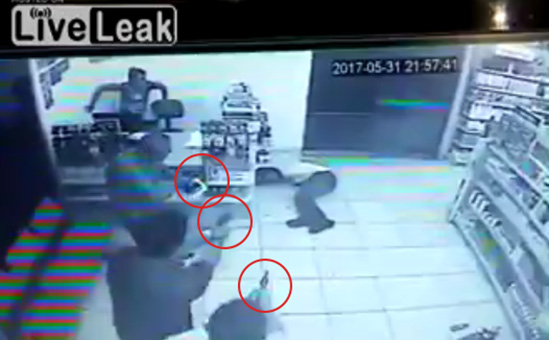
This happened in Brazil.
Inside the store were four off-duty plain clothes police officers carrying concealed weapons.
The suspect, wearing a white shirt and a motorcycle helmet, entered the store and produced a handgun.
One of the cops took cover behind a display shelf and drew his service revolver.
A 2nd camera angle shows the same officer fire 2-3 shots at the robber who dropped his gun on the floor.
As the wounded suspect went for his gun he was shot by the other officers.
___________________________________ I see that there crooks are just as dumb as ours. Reaching for his gun, what a dumbass! Grumpy

There are a lot of things your car can get stuck in: mud, snow, even a ditch. While every situation is different, there are some principles you can follow that may help you become unstuck without needing to call for a tow. So, we enlisted Wyatt Knox from Team O’Neil Rally School to help us put this guide together should you ever find yourself in one of these sticky situations.
Like this illustrated guide? Then you’re going to love our book The Illustrated Art of Manliness! Pick up a copy on Amazon.
Illustration by Ted Slampyak
Wilson, last seen in Thailand, is now considered a fugitive by US authorities
:format(webp)/cdn.vox-cdn.com/uploads/chorus_image/image/61463757/TNR_STILL_06.0.png)
Defense Distributed founder Cody Wilson — known for his fight with the US government over 3D-printed guns — has been charged with sexually assaulting a minor, according toThe Austin American-Statesman.
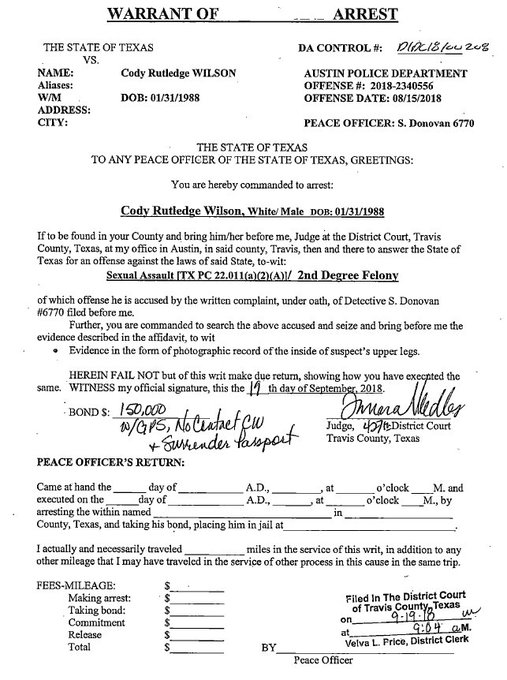
The Statesman reports that police filed an arrest warrant for Wilson today in Travis County, Texas, alleging that a girl under 17 years old (the state’s age of consent) said Wilson paid her for sex after meeting on a site called SugarDaddyMeet.com.
The Statesman reports that jail records show Wilson had not been booked as of Wednesday morning, but police had corroborated the story with hotel records and surveillance footage. Wilson did not immediately respond to a phone call requesting comment.
According to the Statesman, Wilson began corresponding with the girl (whose identity has not been revealed) in August under the name “Sanjuro.”
He then revealed his name and described himself as a “big deal,” and the pair allegedly exchanged nude photos before meeting at an Austin coffee shop on August 15th, then returning to a hotel room.
The girl later told a counselor that she had been paid $500 for sex with a 30-year-old man, and the counselor reported the incident to police, who interviewed the girl in late August and identified Wilson from his account profile pictures.
The affidavit for the arrest warrant states that Wilson is charged with second-degree felony sexual assault.
 Steve Dorsey
✔@steve_dorsey
A very detailed affidavit for arrest warrant in Travis County, Texas, alleges 3D printed gun blueprints maker Cody Wilson met a 17-year-old girl through http://SugarDaddyMeet.com , and they had sex in an Austin hotel.
In a press conference Wednesday afternoon, the Austin Police Department stated that Wilson’s last known whereabouts were in Taiwan, where he had skipped a flight back to the United States. “We don’t know why he went to Taiwan, but we do know that he was informed that he was being investigated,” said Commander Troy Officer, according to Ars Technica.
Officer also said that the victim was 16 years old, and that detectives who had interviewed the girl found it unlikely that Wilson would have mistaken her for someone over the age of consent. “If someone mistakes their age, it’d be because she’s younger not older,” he said.
Austin police are now cooperating with US Marshals and international partners to arrest Wilson.
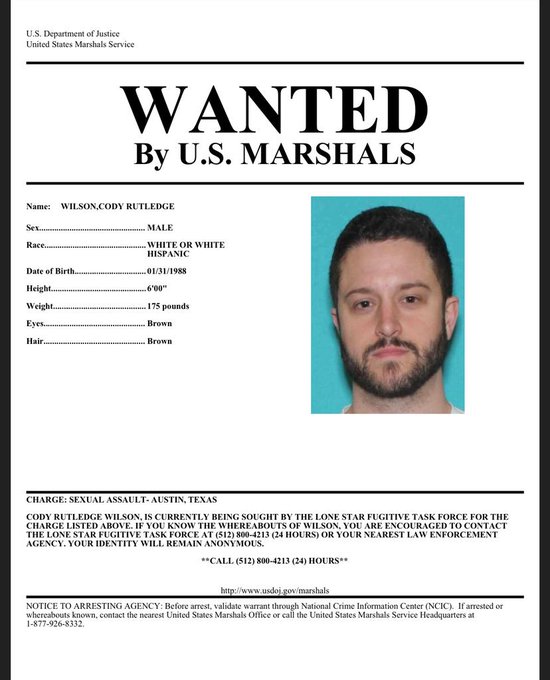
Later on Wednesday evening, the US Marshals Service released a “wanted” posted for Wilson, detailing the charge against him and encouraging people to contact the Lone Star Fugitive Task Force with information about his whereabouts, according to reporter Tony Plohetski for the Austin American-Statesman:
 Tony Plohetski
✔@tplohetski
NOW: U.S. Marshals release “wanted” poster for Cody Wilson, maker of so-called 3D guns.
Wilson, who describes himself as a crypto-anarchist, has fought a years-long battle to distribute blueprints for 3D-printed firearms in an attempt to make American gun regulations unenforceable.
His company Defense Distributed developed a working 3D-printed single-shot pistol called the Liberator in 2013, drawing the attention of the State Department, which ordered him to pull the blueprints offline.
Wilson later sued the government, and the case went to a settlement in mid-2018, granting him the right to distribute printable gun files, which he eventually started doing last month via flash drives.
Wilson has also worked on a cryptocurrency project called Dark Wallet and is the creator of Hatreon, a currently defunct crowdfunding platform that supported “alt-right” white nationalists who were kicked off more mainstream funding sites like Patreon.
Update 9/19 6:00PM ET: Updated with details from press conference.
Update 9/19 8:22PM ET: Updated with details about Wilson now considered a fugitive by the US Marshals Service
________________________________
Okay let me get this right. A Man makes something the Government really does not like. So it does its best to stop him. But the Man puts up one Hell of a fight over it. Right so far?
However the Man then does something really stupid. By letting his little head do his some of his thinking, With a 16 year old Hooker no less.
I am also willing to bet that if she was a 17+ “girl”. There would not be a problem here. I also hope that she gave him a hell of a good ride for his $500. But I kind of doubt it. However that is another story for another day.
So call me Cynical, But here is how I see it so far.
Because of this stupidity. The Feds then sees their chance to nail this Old Boy & make him a guest of the State.
But The man, who has been probably tipped off by somebody. Wisely flees the scene by going to Asia. Before they can introduce him to his cellmate called Bubba & tossing the salad.
(You really do not want to know what that means by the way!)
We also will soon find out how much cash the guy has & how quickly it disappears then the G Men are after you!
Bottom Line – This sounds and smells like a huge pile of brown sauce to this old fart.
Anyways, Your comments are welcome by the way! Grumpy
Categories
the Real Thunderbolt & Lightfoot
Shades of “Thunderbolt & Lightfoot”: The 20 mm Brinks Heist.
by Tom Laemlein – Wednesday, August 15, 2018

This story begins in late March 1965, when Jack Franck, an auto mechanic from New York City, purchased two Lahti 20 mm anti-tank rifles and 200 rounds of armor-piercing ammunition at the Alexandria, Va., offices of Interarmco.
He paid approximately $800 for the two massive firearms (each Lahti L-39 AT rifle weighs in at 109 pounds and is more than seven feet long).

The Lahti is a massive rifle at more than seven feet long and weighing nearly 110 pounds. Image courtesy of SA-Kuva.
Franck requested that the rifles be delivered to a Plattsburgh, N.Y., address. Plattsburgh is a small community in northern New York state, about 70 miles due south of Montreal. Interarmco employees were suspicious, and Franck’s story didn’t seem quite right, so they contacted the FBI.
After some cursory investigation, the FBI believed that Franck was attempting to smuggle the guns into Canada to help equip the “Federation du Liberation du Quebec” (FLQ), the Quebec Liberation Front.
The FLQ was a militant Marxist revolutionary group intent on establishing Quebec as an independent state by any means necessary.
The terrorist organization began operations in the early 1960s, and by the time they were eliminated in 1970, the FLQ had killed eight people and wounded several others (many during their infamous bombing of the Montreal Stock Exchange in February 1969). The FBI notified Canadian authorities about their concerns.
Waiting for the Lahti AT rifles to arrive in Plattsburgh was Joel Singer. Singer, 22, was a native of Montreal, and young man with a criminal record in Canada. Jack Franck was his uncle.
The big rifles in their crates arrived in Plattsburgh on April 5, 1965, and were held in a storage facility, awaiting pick-up. Singer apparently suspected that the firearms were being watched by the police, and made no move to claim them.
Instead, Singer waited until the weekend, and under the cover of darkness on a Sunday night, broke into the warehouse and removed the rifles his uncle had purchased. The break-in was discovered on Monday morning as employees reported to work.
Six months passed. On Oct. 23, 1965, Singer and up to five accomplices traveled from Montreal to Syracuse, N.Y. Singer’s gang had targeted the Brinks armored car facility located at near the intersection of Lodi Street and Lemoyne Avenue.
On the night of Oct. 24, Singer’s gang carried out their break-in. It was suspected that Singer’s men had a strong understanding of the layout of the building, and they carefully skirted the Brinks’ alarm systems.

The Lahti anti-tank rifle linked to the Syracuse robbery. The FBI pulled it from the waters just off the shore of Garden City, Long Island.
They managed to open the garage door and then were able to drive their DeSoto wagon, carrying the Lahti AT rifle and the rest of their burglary tools, directly into the building. The gang had modified the Lahti for their purposes.
They created a large canister-like suppressor and attached it the end of the barrel. They also used several mattresses and heavy blankets to help muffle the blast of the 20 mm cannon. Singer’s men had also developed a special mount for the AT rifle to help them blast through the foot-thick cement and steel reinforced vault wall.
Singer’s gang fired up to 33 armor-piercing rounds in a circular pattern through the vault wall, creating an approximately 18” x 24” passageway. A tight fit, but large enough for a small gang member to crawl through.
Evidence collected by police showed that the burglars brought along nitroglycerin, gas masks, welding equipment, and other heavy duty tools to force their way into the vault. The penetrating power of the Lahti did the trick and the spent 20 mm shell casings were left on the floor.
Singer’s gang gathered up almost $425,000 in cash, coins and checks, and drove away from the crime scene, amazingly unseen and unheard.
They left behind several tools though, including a number marked “Made in Canada.” Initially, police developed a multi-state search for the gang, but Canada soon became the primary search area when it was learned that an unsuccessful burglary attempt was made in Quebec earlier in the year, and a Lahti 20 mm AT rifle was found at the scene.
Within a day or two of the crime, Joel Singer visited his uncle Jack Franck in the New York City area. Franck would later testify that Singer gave him $200 for his help in acquiring the firearms, and described that he was behind the Syracuse robbery.
Shortly after Singer left, Franck contacted the FBI and asked for immunity in exchange for his testimony. Franck became the key witness for the prosecution, and described how he and Singer had dumped the Lahti anti-tank rifle into the ocean near Jones Beach on Long Island.
The gun was quickly recovered, and ballistic tests linked the weapon to the shell cases left behind at the scene of the Brinks robbery in Syracuse.
The FBI put Singer on their “Ten Most Wanted” list on Nov. 19, and by early December Singer was apprehended in Montreal, and was later extradited to Syracuse to stand trial.
On Jan. 31, 1967, after a two-month trial in Onondaga County in which his attorney attempted to portray him as a “lovable idiot,” Singer was convicted of third-degree burglary and first-degree grand larceny.
He was sentenced to serve five to 10 years in the maximum security Attica State Prison. Throughout his trial, Singer remained silent as to the identity of his accomplices.
He was the only person convicted in connection with this robbery, and only $166 worth of coins (found at Franck’s residence) was ever recovered from the stolen cash.

The Lahti AT rifle from the Syracuse robbery displayed outside the courtroom of the Onondaga County Courthouse in January 1967.
Singer was serving time in Attica when the massive prison riot broke out during September 1971. This violent incident apparently scarred Singer deeply.
He was transferred to a psychiatric facility in July 1972, and was released from custody in October. Singer returned to Montreal, but could not escape his demons. On Feb. 6, 1973 he committed suicide by taking cyanide, closing the book on a strange-but-true crime, and a bizarre application of a rare firearm.

Thunderbolt & Lightfoot
There is a significant plot point similarity between this United Artists film and the Brinks robbery in Syracuse. “Thunderbolt & Lightfoot” starred Clint Eastwood, Jeff Bridges, George Kennedy and Geoffrey Lewis, and was released in May 1974.
The film was written and directed by Michael Cimino. The main character is a bank robber called “The Thunderbolt” (played by Eastwood), known for his use of a 20 millimeter cannon to blast his way into a bank vault.
Thunderbolt is described as a Korean War veteran, credited with destroying several Communist tanks using a 20 mm anti-tank gun. That’s an unfortunate error, as the 20 mm Oerlikon gun used by Lightfoot in the film was never issued to American forces as an anti-tank gun.
Regardless, the use of the 20 mm cannon in the movie is quite similar to Singer’s concept to blast his way into the Brinks vault.
Overall the movie is well done and an enjoyable action film. The unique (and plausible) firearms tie-in is simply armor-piercing icing on the cake.
The 20 mm Lahti L-39 Anti-Tank Rifle
The L-39 was created by Finland’s famous arms designer Aimo Lahti, just in time for a handful of the new AT rifles to see service during the Soviet invasion of Finland (the “Winter War”) of November 1939-March 1940.
The semi-automatic, gas-operated Lahti AT rifle proved quite effective against the Soviet tanks deployed during the Winter War, its 20mm AP shot traveling at 2,600 FPS. When Finland committed to the “Continuation War” against the Soviet Union in the late June 1941, Soviet tanks had grown in size, armament and armored protection.
The effectiveness of the Lahti AT rifle became limited to sniping at hatches and optics, along with shots at the thinner armor on the lower side of the chassis and rear of the Soviet tanks.
The Finns continued to put the big 20mm rifle to use by using it in the counter-sniper role, often baiting Soviet marksmen into shooting at strawman targets to reveal their position, and then subjecting them to 20 mm AP shot in return fire.
The powerful 20 mm rounds were particularly effective at penetrating cover, and were often used against machine gun bunkers and hardened artillery positions.

Studio shot of the Finnish 20mm L-39 AT rifle, showing details of the combination sled-and-clawfoot bipod. Image courtesy of SA-Kuva.

The L-39 is semi-automatic, and gas operated. The 20 mm rounds feed from a 10-round magazine. Image courtesy of SA-Kuva.

The L-39 packed in its transit case. This was essentially how the firearm was sold in the USA beginning in the mid-1950s. Image courtesy of SA-Kuva.
Beginning in the mid-1950s, the Lahti AT rifles began to be advertised by American surplus arms dealers. For several years the Lahti L-39 was priced at $99 in its transit case and with a full complement of accessories.
The Lahti was originally available without restriction*, but since it is larger than .50 caliber (12.7 mm), it was labeled a “destructive device” and subject to NFA regulations by the Omnibus Crime Control and Safe Streets Act of 1968, and the Gun Control Act of 1968.
(*I was born about 30 years too late! Grumpy)
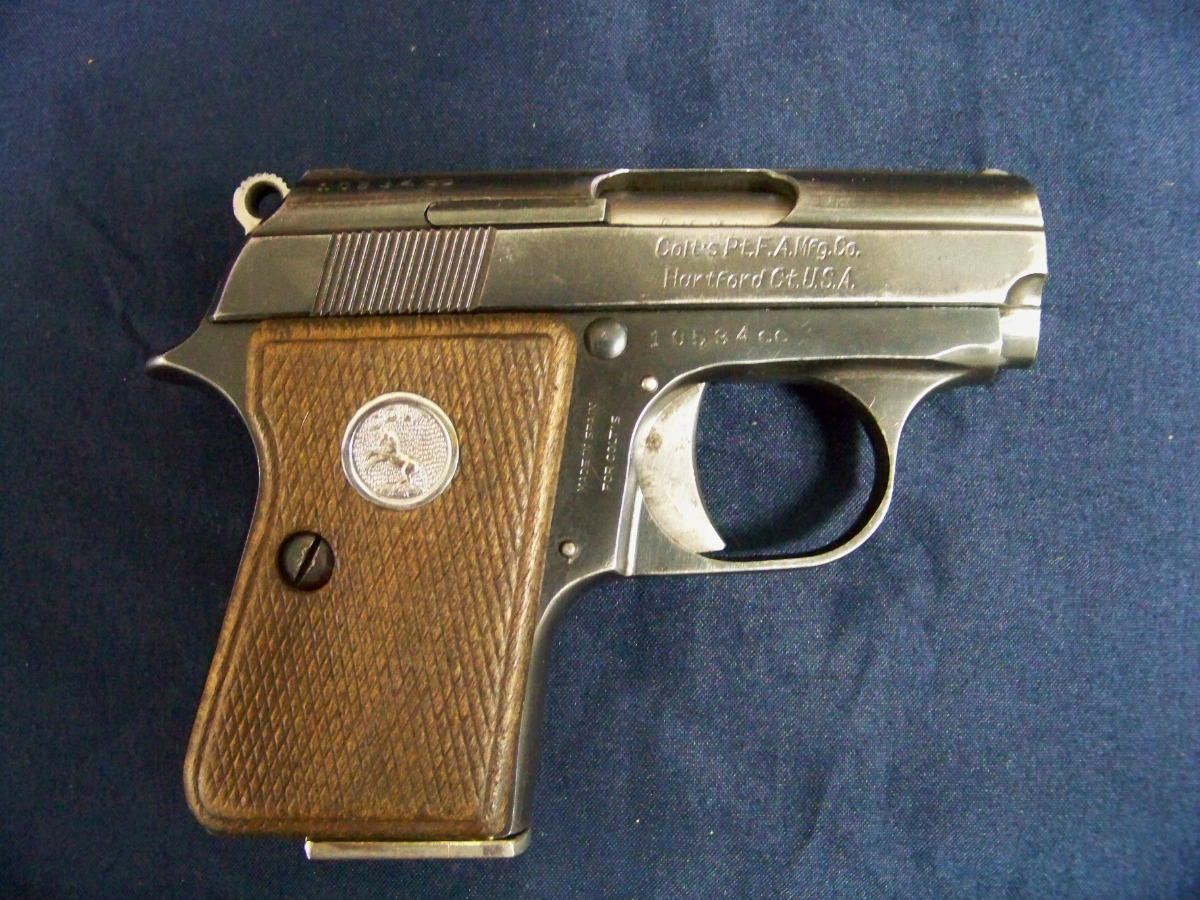
If I was living in the United States, instead of being in California. I would not think twice in slipping one of these nice & handy back up pistols into my pocket. If say I had to go out on a quick errand at night time.
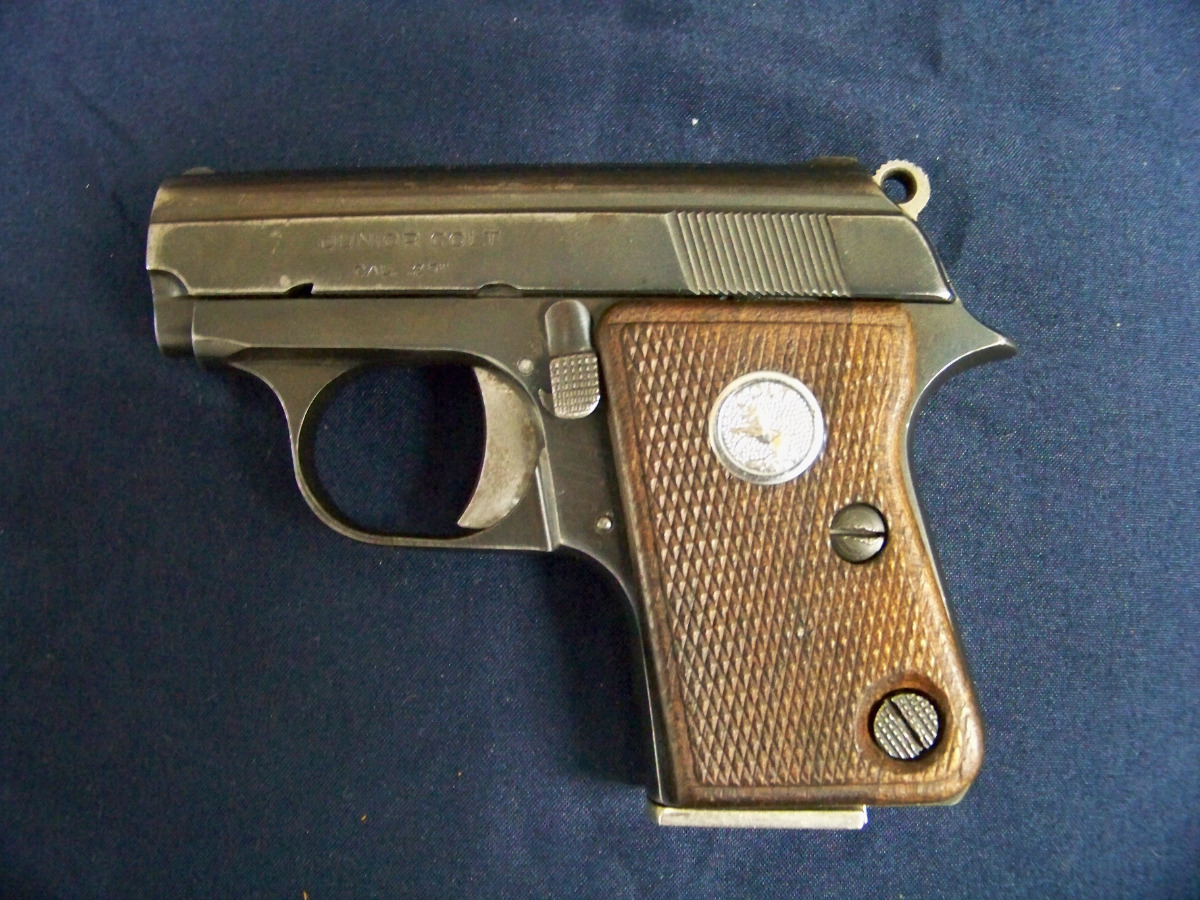
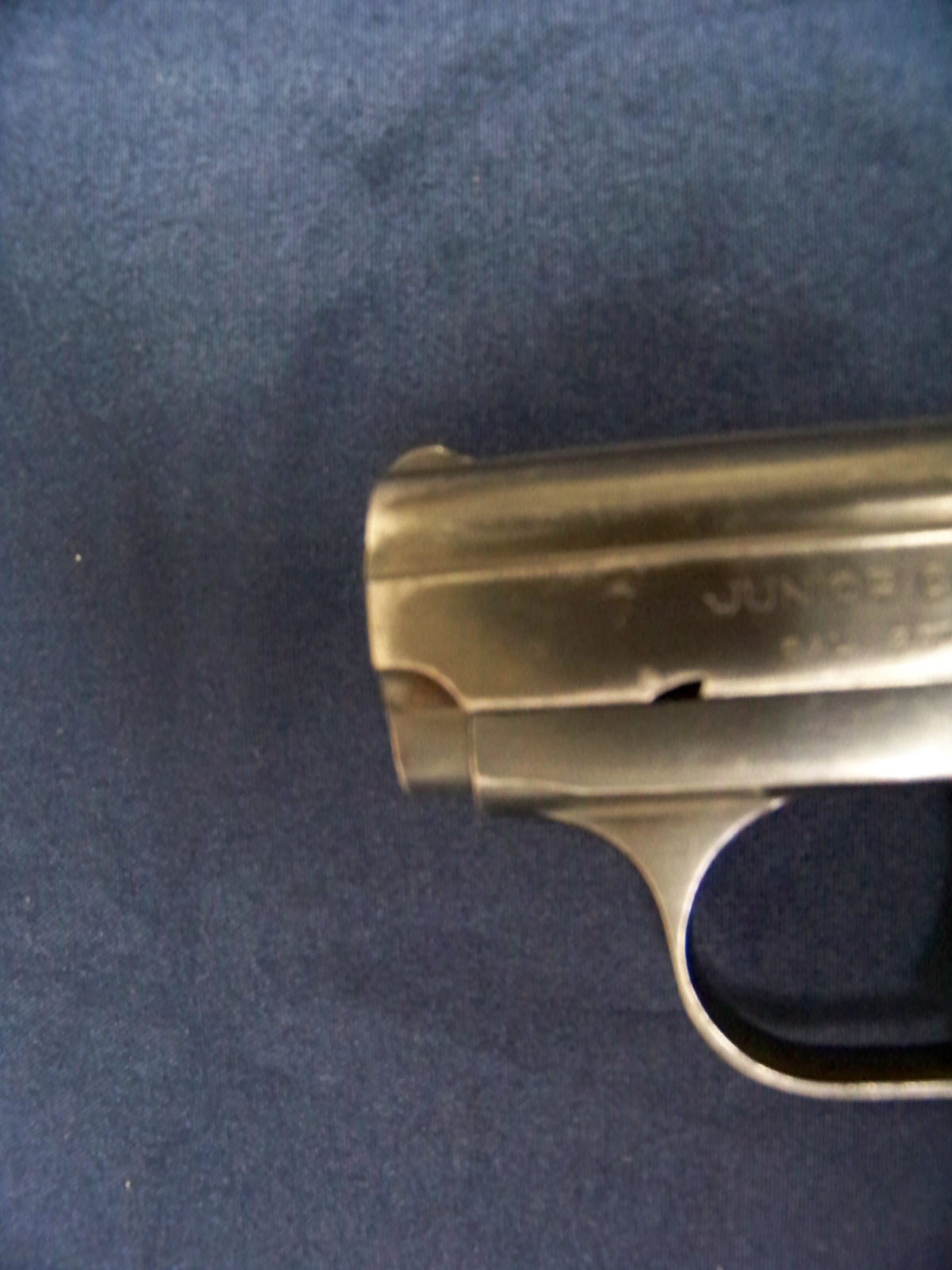
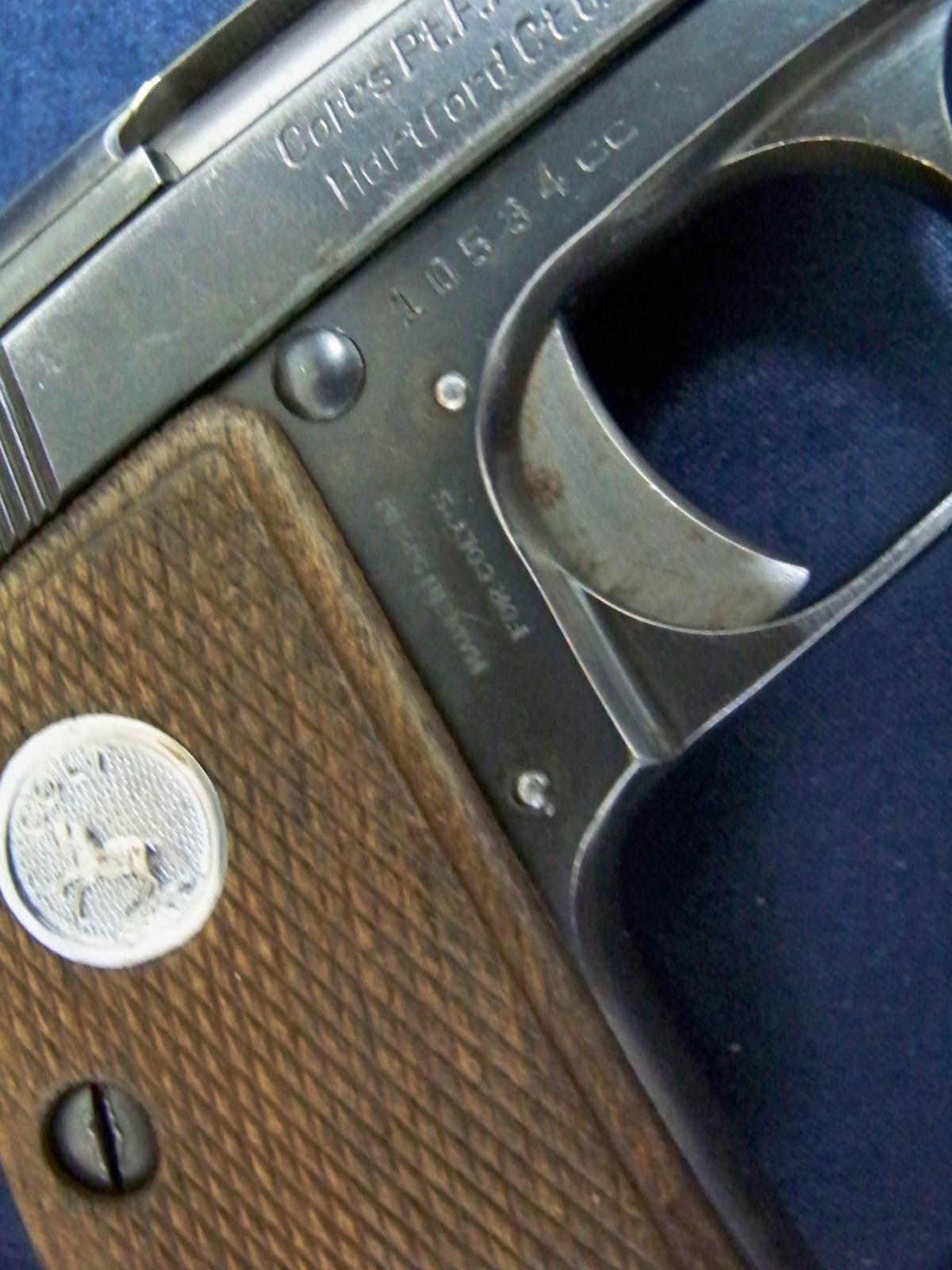
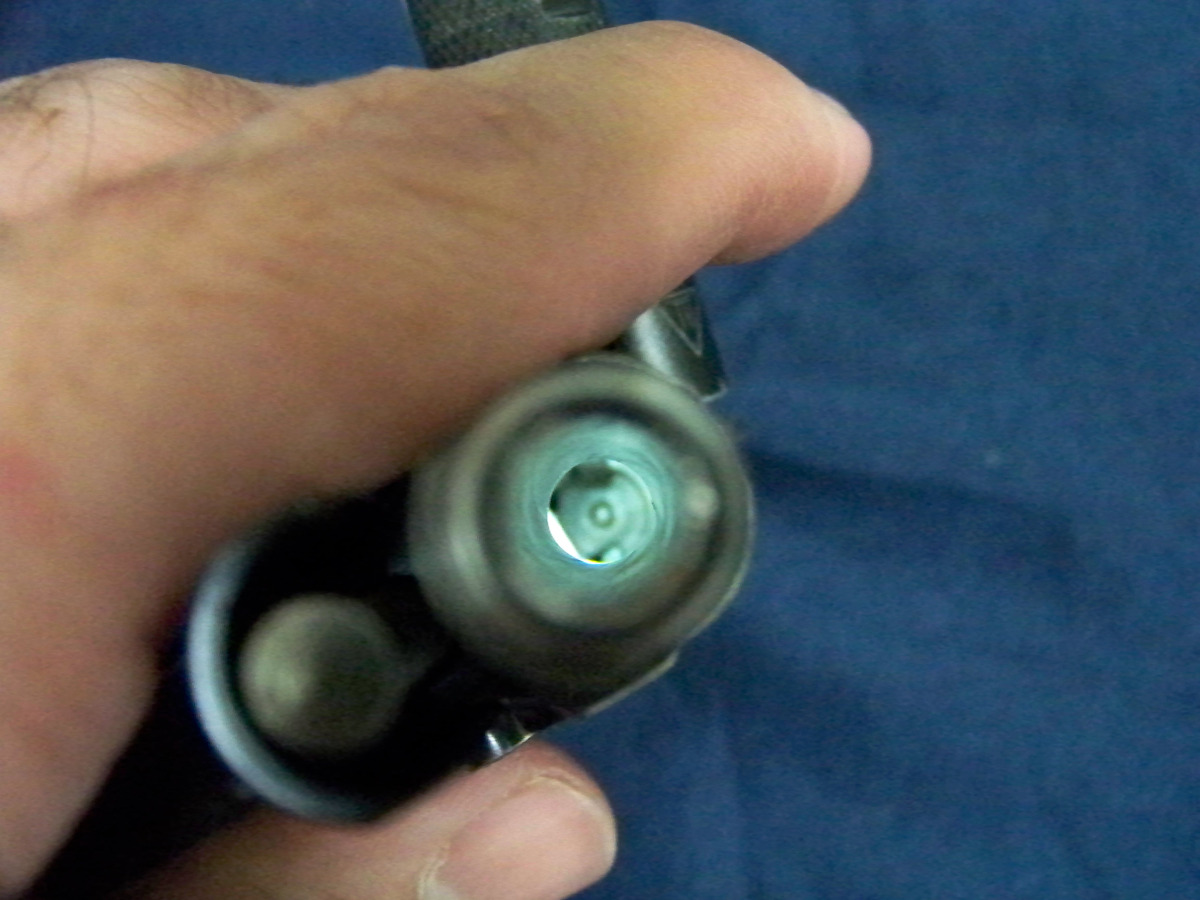
Now granted it would take some real skill on my part. Which at this stage of my game is not so high any more. But If I had to kill somebody in self defense.
But it sure would hurt like hell, to anybody that tried to make his or hers day. By f**king with some Retired Teacher, who was just minding their own business.
Plus it would make it a lot easier for the Cops to track them down. Like when they got to the Local Emergency Room.
Grumpy

Arizona -(Ammoland.com)- A firearm turn-in event is scheduled in New Jersey for 22 September 2018. The term “buyback” is an Orwellian propaganda word. The government cannot ‘buyback” something it never owned before.
These events have been fading away in most of the United States. In most of the country, private gun buyers attend these events and purchase expensive firearms at a higher price than the event offers.
This destroys the propaganda value of the event. It shows that guns are a valuable property that many law-abiding citizens find desirable and useful.
In states that have either outlawed private sales or made them very cumbersome, such as New Jersey and California, gun turn-in events still have some propaganda value. From courierpostonline.com:
Participants are permitted to turn in up to three guns each, no questions asked, and do not have to be residents of Burlington or Mercer counties. Ammunition is not accepted and firearms dealers are not allowed to participate in the buyback.
The county agencies are offering cash payments $250 for assault rifles, $150 for handguns, $100 for a rifle or shotgun, and $20 for an inoperable firearm.
The Burlington County Prosecutor’s Office and the Mercer County Prosecutor’s Office will host a regional gun buyback event on September 22, 2018 from 8am-4pm.
The organizers of the event in Burlington County have put some further restrictions on the event to preserve its propaganda value.
Notice only residents may turn in firearms, even though they will not ask for ID. In fact, they claim no questions will be asked.
They say that firearm dealers will not be allowed to participate. If they are not asking questions, how will they know who is a dealer and who is not?
They limit the number of firearms turned in to three per person.
At such an event I would be leery of claims of anonymity. New Jersey firearms laws are multitudinous and penalties are severe.
If the authorities decided to renege on the promises of “no ID” and “no questions” who is going to hold them to account? Could a person file a lawsuit for false arrest? Remember, law enforcement officers are allowed to run sting operations, and to lie to suspects in order to obtain convictions.
It will be interesting to see what is turned in at this event. It would be informative if an activist could video most of it, or at least the interesting parts.
Six circuits have ruled it is a First Amendment right to video public officials in the performance of their public duties. New Jersey is in the third circuit, which has upheld the First Amendment right to record video. Only the Eighth Circuit has ruled the public does not have a right to video public officials on public property.
It might be sad to see a classic Webley pistol (commonly bringing $500- $1,000 on the collectors market, be turned in to be destroyed for a mere $150.
There have been many collectible, historical, and lovely items turned in for destruction.
Most of the firearms turned in at these events are from people who inherited the firearms, know nothing about them, and are not interested in finding out how much they are actually worth.
It is common to see widows effectively tricked out of hundreds of dollars of value.
About Dean Weingarten:
Dean Weingarten has been a peace officer, a military officer, was on the University of Wisconsin Pistol Team for four years, and was first certified to teach firearms safety in 1973. He taught the Arizona concealed carry course for fifteen years until the goal of constitutional carry was attained. He has degrees in meteorology and mining engineering, and recently retired from the Department of Defense after a 30-year career in Army Research, Development, Testing, and Evaluation.
____________________________________ I just wish I could be there with a fistful of Fifties. As I am willing to bet that some good deals could be made there! Grumpy
A State Of Emergency Does Not Affect Gun Rights In Virginia
Virginia – -(AmmoLand.com)- With the pending hurricane warnings it is a good time to remind Virginians that their right to keep and bear arms is unchanged, even in a declared state of emergency.
After the gun confiscations that took place in Louisiana immediately after Hurricane Katrina, Virginia Citizens Defense League pushed for protections in Virginia law against such a thing happening here.
The following year those protections were signed into law. In Virginia, a state of emergency has no effect on our right to keep and bear arms, unless you are in a government-run shelter:
https://law.lis.virginia.gov/vacode/title44/chapter3.2/section44-146.15/
§ 44-146.15. Construction of chapter.
Nothing in this chapter is to be construed to:
…
(3) Empower the Governor, any political subdivision, or any other governmental authority to in any way limit or prohibit the rights of the people to keep and bear arms as guaranteed by Article I, Section 13 of the Constitution of Virginia or the Second Amendment of the Constitution of the United States, including the otherwise lawful possession, carrying, transportation, sale, or transfer of firearms except to the extent necessary to ensure public safety in any place or facility designated or used by the Governor, any political subdivision of the Commonwealth, or any other governmental entity as an emergency shelter or for the purpose of sheltering persons;
 About Virginia Citizens Defense League, Inc. (VCDL):
Virginia Citizens Defense League, Inc. (VCDL). VCDL is an all-volunteer, non-partisan grassroots organization dedicated to defending the human rights of all Virginians. The Right to Keep and Bear Arms is a fundamental human right.
For more information, visit: www.vcdl.org.
The next time some whining liberal tells you that capital punishment doesn’t prevent murder, feel free to quote this article (once you have done kicking them in the balls, that is):
In March, two men were convicted in Newcastle Crown Court of the murder of a 29-year-old mother of two, Quyen Ngoc Nguyen. In a pre-meditated crime of unimaginable depravity, Stephen Unwin and William McFall robbed, raped and bludgeoned this 5ft-tall nail bar manager.
They dumped her — possibly still alive — in her own car, which they then set alight. They posed for ghoulish selfies at the scene.
Both men were already convicted killers, released as a result of parole board hearings.
McFall, now 51, had been freed after serving 13 years for battering to death with a hammer an 86-year-old woman whose home he had burgled.
Unwin, ten years younger, had been released after serving 14 years of a ‘life sentence’ for stabbing to death a 73-year-old retired pharmacist in the course of a burglary — on Christmas Day, 1998. Unwin had sought to cover up his tracks by setting fire to his victim’s bungalow.
There is no parole board on earth which can know if someone is truly remorseful (pictured: Nick Hardwick, former Parole Board chair) +6
There is no parole board on earth which can know if someone is truly remorseful (pictured: Nick Hardwick, former Parole Board chair)
He was released in 2012, because the parole board had believed his claim to feel ‘deep remorse’.
Yeah, he was remorseful, all right. It bears no reminding that had these two bastards (and the others in the article) been executed, their subsequent victims would still be alive. Prevention at its finest.
Frankly, I think that the parole boards who freed these animals should also face the needle / chair / gallows. This was a basic precept of Hammurabic Law, and I for one regret its passing, in this respect at least.
Remember too that our Liberal Class want us to be more like Europe or Britain, and the modern-day “democratic socialists” have included the abolition of the prison system in their election manifesto.
Communistatis delenda est.
***From Splendid Isolation