Categories
Cops You have to be kidding, right!?!

And I thought Sunny California was bad!

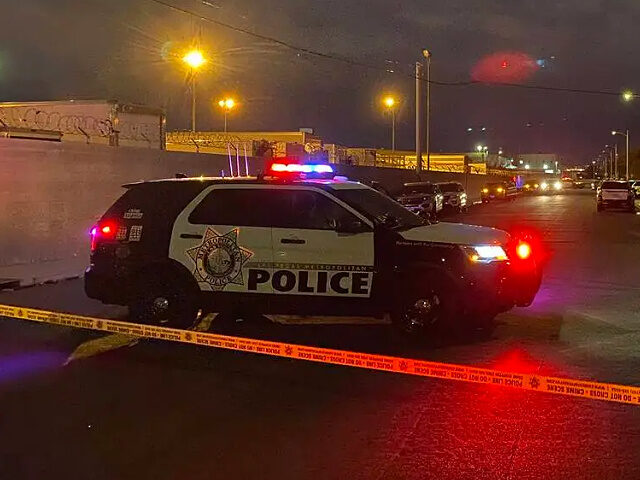
Detroit police officer in full uniform attacked inside gas station

Detroit Police said two men attacked an officer in full uniform Saturday evening at a Detroit gas station.

An off-duty Detroit Police Officer who was in full uniform and on his way to work the Taylor Swift concert was attacked at a Detroit gas station Saturday evening.

Detroit Police Chief James White said the officer stopped at a gas station on Joy Road around 5:30 p.m. on Saturday for gas and was in full uniform.

According to White, the officer was paying for his fuel inside the gas station when two men attacked him. One of the two was armed with a Glock, White said, and they were able to wrestle the officer’s gun away from him.

The officer fought back and they fought over the gun, which the officer was able to eventually get back.

White said the two suspects then fled from the scene and no shots were fired.

“Mama, sister, auntie, somebody turn them in tonight. We’re not going anywhere,” White said.

According to White, the officer was heading to work the Taylor Swift concert when he was attacked

The police were initially offering a $1,000 reward but upped to $5,000 just a few minutes later.

Detroit Police said two men attacked an officer in full uniform Saturday evening at a Detroit gas station.

Categories
All About Guns Cops Darwin would of approved of this!

The Hotheaded Hitman Preferred a Wheelgun! by WILL DABBS

This guy was an actual hitman. Aside from perhaps the tattoos, the fantasy versions we see in the movies bear little similarity to the real world.

It’s become a trope in movies and television. For reasons that I struggle to articulate we seem to be irresistibly drawn to stories about hired killers. The steely-eyed assassin who lurks in the shadows ruthlessly taking money to end a life is simply mesmerizing. We can’t look away.

Keanu Reeves’ John Wick does have an undeniable screen presence.

While Hollywood has served up countless stories orbiting around professional hitmen, John Wick is arguably the most compelling. Wick is a retired assassin formerly in the employ of the Russian mob in New York City. He has recently lost his wife to cancer. His prized possessions are a cherry 1969 Mach 1 Mustang and a beagle puppy that had been a gift from his deceased bride. Wick encounters a headstrong young Russian mafia figure at a gas station, and things go pear-shaped from there.

Leftist film reviewers called it gun porn or bullet ballet. John Wick established a genre of hyper-violent stylized chaos.

The upstart Russian and his thugs break into Wick’s house, beat him up, steal his car, and kill his dog. In so doing they awaken a sleeping giant. John Wick’s close combat skills are superhuman. What follows is 101 minutes of unfettered choreographed mayhem. John Wick: Chapter 2 came out three years later. John Wick: Chapter 3—Parabellum debuted two years after that. John Wick: Chapter 4 is due to hit theaters in March of 2023. I, for one, cannot wait.

John Wick is what most folks think of when they ponder the persona of the professional assassin. The real deal is a good bit different.

Keanu Reeves’ John Wick fits the expected stereotype. He is fast, calculating, ruthless, and unkillable. He has extraordinary hand-to-hand skills and packs absolute state-of-the-art firepower. John Wick is a cold-hearted killer enraged by the loss of the things he loves. However, it turns out that John Wick is just a movie. Out here in the real world, contract killing is seldom quite so tidy.

The Philosophy of Death

Nobody who actually does what this guy is purported to do ever turns out normal.

We are not really designed to take human life. For normal people who might fudge on their tax deductions or cut the tags off their mattresses, cold-blooded murder is a bit of a red line. Those who actually engage in such stuff do so at a terrible emotional cost.

Most people suffering from Antisocial Personality Disorder end up here or worse.

Antisocial personality disorder (ASPD) is a complicated medical malady diagnosed via a discrete set of pathological behaviors. Distilled to its essence, those with ASPD have an inability to empathize with the pain of others. They are essentially born without a conscience. Most folks with ASPD end up in prison or dead. It’s a bad problem. However, there are actually those who monetize their malady. ASPD can be a useful tool if your job involves killing for cash.

The Making of a Monster

This guy looks like a normal-enough Joe. He wasn’t. Andrew Veniamin was a stone-cold killer.

Andrew Veniamin went by Benji. Born in November of 1975, Benji came of age in the Australian community of Sunshine, a suburb of Melbourne. His parents were Greek Cypriot immigrants. He served as an altar boy in the St. Andrews Greek Orthodox Church. Later evidence suggests that his early religious training didn’t really take.

Benji Veniamin’s was a driven personality. He also had a wicked temper.

Veniamin was a gifted boxer. He trained relentlessly five days a week and was a compulsive runner. Though he only weighed 110 pounds when he boxed, he was considered quite competitive. However, as he grew older Benji came to see crime as a more lucrative career than professional boxing.

Benji Veniamin’s curious mental illness manifested at a young age.

When he was young, Benji Veniamin worked in the West Melbourne wholesale fruit and vegetable market. As near as I could ascertain he was never married, but he did father a daughter. His peculiar emotional malady ensured that he had criminal convictions for both theft and assault in short order.

Carl Williams, the big guy on the left, gave the hitman Benji Veniamin a steady job.

Like most folks with his problem, Benji gravitated toward the kind of places his particular skills were considered valuable. He began a steady association with the Carlton Crew, a notorious organized crime ring active in Melbourne starting in the late 1970’s. Through this organization, Benji developed a close friendship with local crime boss Carl Williams and his wife Roberta.

Roberta Williams, now ex-wife of the mob boss Carl Williams, likely had a thing going with the family assassin.

People with ASPD can be inexplicably charming. That and, for reasons I will never comprehend, attractive women frequently find psychopathic nutjobs irresistible. Along the way, Williams’ wife Roberta developed quite a fondness for Benji. As a mob enforcer with access to the gang’s leadership and their families, Benji routinely delivered the Williams daughters to their religion classes every Tuesday before bringing them home and supervising their baths. The youngest daughter Dhakota held Benji in particularly high regard. There were allegations that the relationship between Benji and Roberta went a bit beyond regular reliable childcare, but those details don’t matter. What really characterized Benji’s professional life was the way he exercised his peculiar mental illness.

Bloodbath Down Under

This guy could emotionally go from zero to sixty in an instant. He had a fulminant anger problem.

In addition to a lack of conscience, Benji was prone to emotional outbursts. At one point Benji and a childhood friend harbored affection for the same girl. As the details came to light, Benji shot up the man’s house, set fire to his parents’ home, and threatened to murder the guy’s sister to bring the conflict to a head. By mutual acclimation, both men eventually agreed to settle their differences via a good old-fashioned fistfight. The friend later testified in court, “A friend of mine promised me that there’d be no guns, as long as I brought no gun as well…I promised him (Veniamin) I’d bring no gun and he promised me the same thing. He just stood there until I got close to him and then produced a gun.”

After all that buildup, before the fight could even begin Benji simply shot the other man in the leg and declared victory.

Though a fairly small man by any objective standard, Benji Veniamin was full of fight.

On another occasion, Benji approached a local nightclub accompanied by friends. When two large and imposing bouncers attempted to prevent his entry the physically smaller hitman beat them both senseless. Such stuff earned the wiry little man an outsized reputation.

It really didn’t help if you were Benji Veniamin’s buddy. If he was ordered to kill you he just took care of business.

Despite his obvious skills as a chauffeur and nanny, Benji Veniamin was first and foremost a hired killer. His targets could be total strangers or intimate friends. If directed to take a life, he did so without apparent remorse. This was a marketable skill in this particular place and at this particular time.

Dino Dibra was Benji’s mate and business partner, right up until he got in the way of the hitman’s plans.

By 1999, Veniamin and a school buddy named Dino Dibra were running a lucrative marijuana racket and netting a fair amount of money. Whenever others would attempt to muscle in on their business, Veniamin simply shot them. Throughout it all, Veniamin developed an enthusiasm for both the lifestyle and the product.

Apostolos “Paul” Kallipolitis was a boyhood chum of Benji Veniamin, and then Veniamin blew him away.

In May of 2000, it was alleged that Benji shot and killed a local businessman named Frank Benvenuto as he sat in his car. Five months later he killed his business partner Dino Dibra after a disagreement over control of the business. Two years after that he killed another childhood buddy named Paul Kallipolitis over something or other. His reputation grew to the point that he was eventually paid $20,000 NOT to kill a man who offended his brother.

The relationship between Mick Gatto and Benji Veniamin was warm and cordial for a time.

Benji eventually developed a professional relationship with a proper villain named Dominic “Mick” Gatto. Gatto had been a competent boxer himself in his youth before becoming a successful and wealthy businessman. Along the way, he developed an intimate association with a variety of criminals. These relationships supposedly substantially enhanced his commercial success. Gatto was known to make generous charitable donations to children’s causes. It was said that Benji looked up to Gatto and viewed him as a sort of father figure.

The Hitman’s Demise

Australia’s 1996 gun confiscation netted some 650,000 weapons.

By this point in Australia, the private ownership of firearms was strictly controlled. In the 1990’s the Aussie government enacted blanket gun confiscation that disarmed most law-abiding Australian citizens. These laws unsurprisingly had little effect on Melbourne’s organized crime gangs.

This is the S&W Model 10-5 that Benji had on him when he was killed. He preferred wheel guns for their absolute reliability.

Benji Veniamin was by now a seasoned shooter. He told friends that he favored revolvers to autoloaders for wet work for their innate reliability. It was therefore a four-inch Smith and Wesson Model 10-5 .38 that Benji had handy as he met with his boss Carl Williams and his buddy Mick Gatto at the La Porcella restaurant on March 23, 2004. I have found Australians to be fairly casual. On this fateful evening, Benji had his wheelgun concealed underneath a pair of shorts and a t-shirt.

This is Graham Kinniburgh. They called him The Munster, for obvious reasons. A dispute over who killed him led to conflict between Mick Gatto and Benji Veniamin.

Rumors were swirling that Benji had killed a friend of Gatto’s named Graham Kinniburgh. In retrospect, it turned out that he had nothing to do with this particular gangland slaying. Veniamin called Gatto over to a quiet corridor behind the kitchen so they could have a private conversation on the subject. Benji’s epic temper manifest itself, and the conversation grew heated.

Mick Gatto has been described in print as a George Clooney look-alike. I don’t see it myself. They both have gray hair, but then again, so do I. I seldom get mistaken for George Clooney myself.

Benji drew his weapon intending to kill Gatto, and the two former boxers struggled for the gun. From the subsequent trial transcript: “I never seen where he got it from but he pulled a gun out and that’s when…I had hold of his hand with both my hands and I sort of pushed it towards him and…I forced — he had his hands on the trigger and I just forced his hands — squeezed his hands to force him to pull the trigger. When I pushed the gun towards him and I was squeezing his hand he sort of pulled me off balance and I nearly fell over on top of him and the gun was going off. It was just bang, bang. I’ve got to be honest, I thought I was a dead duck. I thought I was gone.”

Benji Veniamin died both young and hard. His boss Carl Williams, manning the casket on the front right, was a pallbearer.

That all sounds pretty fishy to me, but I obviously wasn’t there. Regardless of the particular circumstances, five rounds were fired. Benji was hit once in the head and twice in the neck. He bled out on the spot. The contract killer responsible for at least seven known murders died as he lived at age 28, in some ways a victim of his own unfortunate disease.

Categories
A Victory! All About Guns COOL!!!!!!!!!!!!!!!!! Cops

Homeowner Shoots Intruder Attempting Break-In in Louisiana by F Riehl, Editor in Chief

Armed Citizen Shoots Armed Fugitive During Home Invasion, iStock-1354938183
Homeowner Shoots Intruder Attempting Break-In in Louisiana, iStock-1354938183

U.S.A. –In an incident that took place in Ascension Parish, Louisiana, a homeowner shot and killed a man who was attempting to break into their residence. The tragic event unfolded early Sunday morning when the homeowner’s swift actions resulted in the death of the intruder, identified as 20-year-old Kameron Serigny from Gonzales, LA.

The Ascension Parish Sheriff’s Office was alerted to the attempted break-in at around 6 a.m. Deputies arrived at the scene and discovered Serigny deceased. The homeowner, whose identity remains undisclosed, reported firing several shots at Serigny in response to his forceful entry.

According to investigators, the chain of events began when the Serigny first targeted a car parked in the driveway, setting off the alarm and drawing the homeowners’ attention. The residence was equipped with multiple security cameras, which captured footage of the suspect engaging in bizarre behavior, such as eating grass and striking his chest.

Video evidence showed Serigny subsequently attempting to break the glass door of the home. At this point, the homeowner discharged a single shot, causing the intruder to collapse. However, Serigny managed to regain his footing, puncturing another hole in the door before eventually breaking it open. The homeowner responded by firing three to four additional shots, ultimately leading to Serigny’s death.

Detectives examining the security footage corroborated the homeowner’s account of the events, providing strong support for the homeowner’s claim of self-defense. As a result, no charges have been filed against the homeowner at this time, as confirmed by the Ascension Parish Sheriff’s Office.

Sheriff Bobby Webre of the Ascension Parish Sheriff’s Office shed light on the incident, noting that Serigny appeared to have been under the influence of psychedelic drugs during the attempted break-in. Witnesses reported the intruder exhibiting erratic behavior, including pulling his hair and consuming grass. Despite repeated warnings from the homeowner, Serigny persisted in his attempt to enter the domicile.

Webre further revealed that the homeowner’s wife had remained on the phone with emergency services throughout the ordeal, providing real-time information on the unfolding situation. When Serigny finally managed to break through the glass door, the homeowner fired shots at him multiple times, leading to his demise inside the living room.

Law enforcement officials have not uncovered any substantial criminal history related to the deceased intruder, suggesting that this was not a premeditated home invasion. While investigations into the incident are ongoing, the evidence thus far has supported the homeowner’s actions as a justifiable response to a threat to their personal safety and property.


By Fred Riehl and AI tools. Note: This article was generated using AI technology and may contain some automated content aggregation and analysis.

Categories
All About Guns Cops

The MAC-10 Submachine Gun: Everything You Need to Know by the Good Doctor Dabbs

The Ingram Model 10, better known as the MAC-10 (Military Armament Corporation) submachine gun, was produced in both 9mm and .45 ACP versions. Here’s everything you need to know about it.

The MAC-10 Submachine Gun: Everything You Need to Know

With a current starting price tag of $7,000, the MAC-10 is one of the least expensive machine guns one can legally own in the USA. In the early 1980s, the $200 Tax Stamp cost more than the actual price of the gun.

On July 11, 1979, a white Ford Econoline van cruised through the parking lot of Dadeland, urban Miami’s largest shopping mall. Dade-land was fifty acres of late 1970s awesome, populated with niche shops, anchor stores, and throngs of families out doing what Americans did in the years immediately prior to Ronald Reagan.

Among the many shoppers enjoying the mall that day was one German Jimenez Panesso and his bodyguard, Juan Carlos Hernandez. (German was his name, not his nationality.) German Jimenez Panesso was a Colombian drug lord.

MAC-10 Submachine Gun Closeup and Scarface 1

Hollywood would have us believe that every two-bit 1980s-era thug in America had a full auto MAC-10 tucked in his gym bag. In reality, the criminal use of full auto weapons has always been vanishingly rare. (Scarface, MovieStillsDB.com)

Panesso traveled in an armored Mercedes limousine befitting the stature of one of Miami’s top drug dealers. At 37, Panesso was handsome, rich, powerful, and on top of his game. At 2:30 pm on this torrid Miami afternoon, Panesso and Hernandez made their way into Crown Liquors to procure their weekly supply of Chivas Regal. Both men were sufficiently at ease for Hernandez to leave his 9mm Browning Hi-Power behind in the Mercedes.

MAC-10 Submachine Gun Scarface 2

In the late ’70s and early ’80s colorful drug kingpins offed each other with wanton abandon in disagreements over turf, women, and customers. They still rarely used actual machine guns. This one is shown with the MAC two-stage suppressor. (Scarface, MovieStillsDB.com)

The Ford van pulled up and parked outside the liquor store. The astute observer would have noted that one side of the van read “Happy Time Complete Party Supply.” The other declared, “Happy Time Complete Supply Party.” The question of whether the van supplied the party or was the party itself I shall leave to the philosophers.

MAC-10 Submachine Gun Thompson and BAR

Even back when you could buy full auto Thompsons and BARs, cash and carry, criminals most frequently just stole theirs.

Two men left the van and followed Panesso and Hernandez into the shop. The larger of the two then produced a .380 Beretta pistol equipped with a sound suppressor and shot Panesso four times in the face. His companion hosed the store down with a fully automatic .45ACP MAC-10 submachine gun, in the process killing Panesso’s associate, Juan Carlos Hernandez.

The two assassins returned to the van and liberally sprayed the parking lot and surrounding shops with gunfire apparently just for meanness. Authorities later found the van abandoned behind the shopping center. In addition to quarter-inch armored plate affixed around the vehicle, there were also several gun ports covered with nondescript plastic covers.

Inside the van, the cops found more than twenty firearms including shotguns, handguns, and automatic weapons. Panesso and Hernandez were the 37th and 38th Miami homicides for 1979. At a time when there were untold millions to be made moving drugs into south-central Florida, the MAC-10 submachine gun found its most sinister applications.

MAC-10 Submachine Gun State of the Art

The MAC-10 was indeed a tidy little bullet hose, but it reflected the state of the art at the time of its introduction.

Reality

Such sordid stuff as this makes for popular copy. Prose describing unfettered violence catches the eye, and I just crafted a bit of it myself. However, the dirty little secret is that criminal usage of legitimate automatic weapons was and is actually vanishingly rare in the United States. In fact, Thompson submachine guns and Browning Automatic Rifles could be found in Sears and Roebuck stores as well as conventional gun shops prior to the passage of the blatantly unconstitutional National Firearms Act of 1934.

MAC-10 Submachine Gun Cover of Para Poser Mags

The MAC-10 graced the cover of many a paramilitary poser gun magazine back in the 1980s. My attic floor sags under the weight of such stuff today.

Before the passage of that law, machineguns were sold over the counter and uncontrolled wherever there was money enough to purchase them. It was simply that following on the heels of the Great Depression nobody had any money. A Thompson sold for $225 back then. That’s about $4,400 today. A BAR was the equivalent of about $6,000.

Categories
All About Guns Born again Cynic! Cops

Nine people shot as Denver Nuggets win NBA title and riot police try to control crowds

DENVER (KDVR) — Multiple shootings sent 11 people to the hospital early Tuesday morning after thousands flocked downtown in celebration of the Denver Nuggets’ historic NBA Finals win, celebrating into the early morning hours.

Just before 1 a.m., the Denver Police Department tweeted that they were investigating a shooting in the 2000 block of Market Street.

DPD said nine gunshot victims were located and that they identified a suspect who also had a gunshot wound.

Three victims were in critical condition at a local hospital, and the other victims appeared to have non-life-threatening injuries, according to DPD.

At around 1:11 a.m., DPD said they were investigating a shooting in an area where one person was shot. However, officers provided an update that the victim was actually shot in a different location and self-transported to the hospital.

In total, 10 people were injured in the 2000 block of Market Street, which is next to Coors Field.

DPD said this shooting is complex and the investigation is in its early stages. Early information suggests that multiple shots were fired during an altercation that involved several people.

Around 11:50 p.m. Monday, DPD said they were also investigating a shooting in an area a block away from the 16th Street Mall and several downtown hotels.

One person was taken to a local hospital, but their injuries were not immediately known.

Officers were working to obtain suspect information.

Aaaaand Its Gone Meme - Imgflip

Categories
Anti Civil Rights ideas & "Friends" Cops You have to be kidding, right!?!

Never ever agree to allow the cops to search & here is why

RENO, Nev. (KRNV) – There’s a new push to change Nevada law to stop the alleged abuse of power by civil forfeiture. This sparked more interest in the wake of a high-profile case where Nevada troopers confiscated a man’s life savings.

Push to change Nevada law after troopers confiscate man’s 80k life savings (KRNV)

One year ago, Stephen Lara was driving behind a semi truck he wanted to pass. He was driving the speed limit, east of Sparks along Interstate 80. Dash camera from a Nevada State Police showed the trooper, in the fast lane, following Lara for several miles. Lara said he didn’t feel safe cutting in front of the trooper to pass the semi, so he trailed behind the truck. After several miles the trooper pulled him over for tailgating.

“We’re seeing a bunch of crashes out here, I’m just trying to educate people,” the trooper said. “You got your driver’s license with you?”

That’s when he started peppering Lara with questions. The trooper learned that Lara is a retired Marine who was traveling from Texas to Portola, California, to see his daughters. The trooper asks if he has any drugs, guns or large amounts of cash in the car.

“Officer: Okay. How much money you got in there?

Lara: A lot.

Officer: Okay.

Lara: [unintelligible] So-

Officer: Fair enough. Fair enough. Um, would you give me permission to search your vehicle today?

Lara: Sure.”

The trooper found nearly $87,000 in cash in Lara’s car. He also had a stack of receipts proving the money was withdrawn from the bank over time. Lara said it was his life savings. He said he doesn’t trust banks, doesn’t have a credit card and it’s his way of living within his means, without carrying debt.

Officer: Why do you transport bulk currency like that?

Lara: Well there’s nothing illegal about it.

Officer: No.”

More than an hour later, troopers confiscated the cash, suspecting it may be drug money.

“I knew at the time he didn’t have probable cause to search my vehicle but at the same time I was like, ‘You know I have nothing to hide, I’ll just be totally transparent and then just be on my way,'” Lara later told KRNV.

Lara was left with just a few dollars in his pocket and a desperate desire to make some changes.

Will a lawsuit force a change?

Lawyers from the non-profit group Institute for Justice took on Lara’s case and filed a federal and state lawsuit. The group fights what it calls abuse of power through its lawyers on staff.

Six months after a national media group reported on this case, the feds gave Lara his money back.

Most innocent people will never see redemption like Lara did. About half of forfeitures involves less than $1,000. It would cost more money to hire an attorney than the amount lost.

Lara’s federal court case was dropped after he got his money back. The case in the Second Judicial District Court in Washoe County is still pending.

“The real problem here is that the highway patrol officials didn’t forfeit the money under Nevada law, they used a federal program called Equitable Sharing to get around the protections of Nevada law and the Nevada constitution,” said Ben Field, attorney with Institute for Justice.

The Institute for Justice said this is a form of theft – highway robbery. Field said the abuse happens when officers don’t even have to charge somebody with a crime and confiscate their money. He added that they put the burden on that person to prove they are innocent.

There’s big financial gains for agencies to do forfeitures.

“When you have highway patrol officers like this pulling Steven over and forfeiting his money through the federal government, they get to take up to 80% of the back which they can use for their own salary for their own equipment. So they have a personal financial stake in forfeiting money,” Field said.

Forfeitures and seizures bring in big bucks for Nevada agencies

Agencies report their seizures and forfeitures to the Nevada Attorney General. In the last fiscal year from July 1, 2020–June 30, 2021, Nevada agencies took in more than $9 million.

  • Reno Police Dept.: $269,299.56
  • Sparks Police Dept.: $74,620.12
  • Washoe County Sheriff’s Office: $198,890.35
  • Dept. of Public Safety: $415,316.19

Reno and Sparks Police as well as the Washoe County Sheriff’s Office didn’t provide a comment for this story. The Department of Public Safety that oversees State Police previously told KRNV it won’t comment on pending litigation.

Law enforcement have been vocal about the benefits of asset forfeitures.

“They say openly, ‘Hey, if you take away this tool that we have, you’ll probably need to raise taxes because we’re so reliant on this,'” said Robert Fellner with the Nevada Policy Research Institute.

Lawmakers continue to push for a change

Nevada lawmakers have introduced many bills to reform this law. All fell flat.

In 2019, AB420 was supported by all democrats and half the republicans in the Assembly. But Senate Majority Leader Nicole Cannizzaro killed it. She is a Clark County Deputy District Attorney and has strong law enforcement backing.

“I don’t think I’ve ever seen an issue with such widespread support and you listen to all that testimony and the only constituency on the other side of the lawn enforcement community,” Fellner said. “They have an unbelievably strong voice.”

Republican Assemblyman Jim Wheeler backed AB420 in 2019.

“I think but the civil forfeiture is important, don’t get me wrong. It’s a good law enforcement tool but there needs to be some checks and balances in there,” Wheeler said.

Wheeler said he’d like to talk to law enforcement agencies and police unions to to see if there could be some kind of adjudication before taking someone’s property or money.

“The constitution says nobody’s property should be taken without adjudication,” Wheeler said. “What I’d like to see is maybe a special master available for the police to call in to say should we or shouldn’t we.”

All proponents to change the law admit it’s going to be a hard push to pass a reform bill in the legislature. It’s failed too many times in the past, and it’s likely Senator Cannizzaro will kill it again.

It also brings in a lot of money for agencies. Without the forfeitures, law enforcement has said taxes would have to go up to make up the money in the budget.

Below is what each Nevada agency reported in seizures and forfeitures to the Attorney General’s Office from July 1, 2020–June 30, 2021.

Categories
All About Guns Cops

The Dangerous Life of a Stagecoach Driver in Georgian England

Categories
Cops You have to be kidding, right!?!

44 tickets, one excuse: Chicago cop’s go-to alibi helps highlight troubles with police accountability by Jennifer Smith Richards, Chicago Tribune

Each time he stood before a Chicago traffic court judge and told his story, the judge asked his name.

“Jeffrey Kriv,” he’d say. That was true.

Then he’d raise his right hand and get sworn in. What came next was also consistent.

“Well, that morning, I broke up with my girlfriend and she stole my car,” Kriv, who had been ticketed for running a red light, testified in January 2021.

“Yeah, I broke up with my girlfriend earlier that morning, had a knock-down, drag-out fight, verbally, of course. She took my car without my knowledge,” he told a different judge when fighting a speeding ticket in August 2021.

“I broke up with my girlfriend that day and she took my car without my knowledge. … I didn’t get my car back for like three days. But it was her driving the car,” he said while contesting a speeding ticket, once again under oath, in May 2022.

The excuse worked, just as it had many times before.

At the ticket hearings, Kriv often provided what he said were legitimate police incident reports as evidence of the car thefts; they had officer names and badge numbers, and he explained that he got the reports at police headquarters.

But Kriv did not let on that he, himself, was a Chicago cop.

As bold as he was when fighting his tickets, he was equally brazen in his professional life. He attracted a remarkable number of complaints from citizens he encountered — and even from other officers. And just as he did in his personal life, he defended himself vigorously against the allegations.

Kriv doesn’t register as one of Chicago’s most notorious corrupt cops — those who tortured suspects for confessions or shook down drug dealers. But his on-duty conduct regularly flouted rules and disrupted lives. Once, he punched a handcuffed man in the back of his patrol car, records show.

But given Chicago’s long-standing and dramatic shortcomings in police discipline, none of his on-duty misconduct cost him his badge and gun.

It took a tip to an outside agency and questions about Kriv’s testimony as a private citizen in traffic court to unravel his career.

A spokesperson for the Chicago Police Department would not comment for this story or answer any questions.

A lawyer for Kriv, informed of the reporting by the Tribune and ProPublica, said “many of the facts you compose are incomplete or not true,” though he did not say what was inaccurate. The lawyer, Tim Grace, said Kriv had received nearly 150 commendations and recognitions and had earned two awards for saving lives.

“Officer Kriv has served his city with honor for over 25-plus years,” Grace said.

Note: If you can’t see the video above, click here.

His troubles begin

In 1996, Kriv was sworn in as a Chicago police officer. The first complaint about him came about eight months later, while Kriv was still a probationary hire. A man said Kriv broke his car window with a flashlight while directing traffic; Kriv was not disciplined in that incident.

Supervisors reprimanded him a few months later, however, after Kriv failed to notice there was a marijuana cigarette on the back seat of his squad car.

But there was more to come, records show: being rude, offensive or physically abusive; flipping someone off; and writing in a police report that one woman was “white trash” and a “raving lunatic.”

He was held in contempt of court and arrested after he flung papers into the air and called the judge’s ruling “a joke.” He apologized in court the next day, and the contempt charge was vacated. An assistant deputy superintendent recommended against removing his police powers after the incident, records show. In another case, a different judge ordered him removed from a courtroom after he wouldn’t stop talking.

Most officers face only a handful of complaints over the course of their careers. But at least 92 misconduct complaints were filed against Kriv, according to city and police disciplinary records compiled and analyzed by the Tribune and ProPublica. Even more exceptional: About 28% of complaints against Kriv were found to have merit, compared with about 4% of complaints against all Chicago police officers going back decades.

In 2005, after a city Streets and Sanitation Department employee towed his illegally parked personal car, Kriv sent a letter via the city’s interoffice mail system threatening to ticket the cars of Streets and Sanitation workers in retaliation. He was suspended for 20 days. In 2006, he left the scene of a vehicle fire he had responded to, removed the numbers that identified his squad car and went into a strip club to visit a waitress, according to internal police investigation records. He was issued a 90-day suspension that was later knocked down to 45 days.

In 2009, Kriv was accused of punching a woman whom he’d arrested after seeing her arguing with her husband on the street. The woman was found not guilty at trial on charges of domestic battery and resisting arrest.

“I had to have surgery. I had to have plastic implanted under my eye because of this,” said Jessie Wangeman, who lives in Indianapolis. “My face is not symmetrical anymore. He really messed me up on the outside. And inside it was a really traumatic experience.”

Wangeman sued Kriv and the city of Chicago over the encounter; the city paid her $100,000 to settle in 2011. Wangeman declined to talk with investigators looking into Kriv’s alleged misconduct, and Kriv wasn’t disciplined.

Meanwhile, Kriv’s personal vehicles — a BMW sedan and a Harley-Davidson motorcycle — were ticketed 22 times between 2008 and 2013. He paid some of those tickets, records show.

At a traffic court hearing in December 2013, Kriv used the girlfriend alibi for the first time, authorities now allege.

“May I ask you why you’re contesting this ticket, Mr. Kriv?” the judge asked.

“Yes, my ex-girlfriend, well, took my car two days prior after I broke up with her. I filed a police report that it was stolen and they recovered it approximately a week after the fact,” he testified. “Here’s the police report that was done. I did have her arrested approximately three weeks ago and I got a court date coming up in January.”

The judge reviewed the report and dismissed the ticket.

Multiple investigations

Kriv was investigated at least 26 times over allegations of dishonesty as a police officer. That included accusations of falsifying records, writing unwarranted tickets, performing improper searches, making false arrests.

One man accused Kriv of writing him false parking citations. A woman complained that Kriv issued her eight baseless citations in two weeks while her vehicle was parked in an assigned space on private property. And another man made two other complaints accusing Kriv of repeatedly writing tickets to him at his business as a way to harass him. Department investigators concluded that Kriv wrote unwarranted tickets to that man; investigations into the other allegations could not be pursued because the accusers did not sign formal complaints.

As a cop, Kriv’s specialty was DUI enforcement. He made more DUI arrests in Chicago than any other officer in 2021, and he topped the list statewide the same year, according to one anti-drunken-driving group.

But one woman sued him over her 2015 drunken driving arrest after she was acquitted at trial. The lawsuit alleged that Kriv falsely arrested her and made false statements against her. Kriv denied the allegations.

“He would lie under oath for a piece of bubble gum,” the woman, who spoke on condition of anonymity for fear of retaliation from Kriv, told a reporter.

The woman later dropped the lawsuit because she said Kriv was disparaging and intimidating her.

Even outside of his job and his chutzpah in traffic court, Kriv’s history is notable.

While Kriv was growing up in Highland Park, his father, an attorney, funded a messy fraud scheme, survived an assassination attempt meant to silence him about it, and was sent to federal prison for a second fraud racket that involved sending falsified accident claims through the mail, according to court records at the National Archives. Kriv’s father testified at trial in the first fraud case and did not face charges for his role in that scheme.

Kriv then attended the University of Iowa for six years. A university spokesperson said he never graduated — though he claimed that he had in an application for another city job in 2013. Kriv’s attorney did not respond to a question about his educational history.

When Kriv was in his late 20s, the unemployment insurance division of the Illinois attorney general’s office sued him to recoup about $3,800 in benefits for which the government claimed he wasn’t eligible, records show. Details about what led to the attorney general’s claim are missing from court files, and there’s no public record of how it was resolved.

Neither the Police Department nor the city’s human resources division could locate Kriv’s initial application to the Police Department, so it’s unclear how much hiring officials knew about his background.

It’s also unclear whether the department knew how often Kriv was being ticketed for traffic violations — nine times in 2014 alone, records show. He got all of those tickets dismissed, including a speeding ticket issued in the fall for going 21 miles an hour over the speed limit near a school.

“My ex-girlfriend stole my car,” Kriv told the judge. “There is this police report over here that was done and, a matter of fact, I had another ticket I contested last week … another speed camera.

“They only charged her with trespassing because it was my girlfriend. She stole my key and racked up all these tickets here.”

The judge reviewed the report and dismissed the ticket.

Other cops complain

Kriv’s conduct as a cop stands out in yet another way: Even other cops complained about him.

Internal affairs records show that a police lieutenant filed a complaint against Kriv in 2016 accusing Kriv of failing to arrest an off-duty sergeant who was involved in a crash, even though the sergeant was unsteady, was slurring his speech and had urinated in his pants — “wasted,” according to a police report. Kriv was suspended for 15 days for violating five department rules in that incident.

His police partner once reported that he made her get out of their squad car after an argument, forcing her to walk more than a half-mile back to their station. Investigators concluded there wasn’t enough evidence in that case to discipline Kriv.

In 2014, supervisors — including the head of the DUI task force that Kriv was on — filed a complaint against Kriv alleging that he disobeyed commands from a higher-ranking officer and impounded a car without justification after a traffic crash.

Over the other officers’ objections, Kriv declared that the driver of the car involved in the crash was drunk, handcuffed him, and put him in the back of his squad car, according to accounts from the driver, Jaime Garcia, and other officers. He also ordered Garcia’s Nissan Altima towed and impounded.

“He kept telling me, ‘I know you’re drunk, I know you’re drunk.’ I didn’t know what to do, I was in shock, I was scared,” Garcia said in an interview.

The officers on the scene filed the complaint against Kriv.

“For some reason, he was trying to put a false arrest on this guy. I apologized to him, said, ‘Sorry you had to go through this.’ I told him about filing a complaint,” said retired Lt. David Blanco, the supervisor that night. After its investigation, the department acknowledged Kriv was wrong to have impounded Garcia’s car, knowing there would be no DUI charges against him.

Kriv ultimately wasn’t disciplined for his behavior that night, once again benefiting from the Police Department’s feeble accountability system, which has long been marked by delays, red tape and lax punishment.

Though he regularly escaped punishment altogether for alleged misconduct on the job, in some cases, he was reprimanded or received suspensions of between one and 45 days. The department suspended Kriv at least 20 times for 170 days total, according to a Tribune-ProPublica analysis of his disciplinary records.

One citizen told the investigating agency that Kriv was unconcerned when he threatened to file a complaint. Kriv, the man said, told him that complaints “are not going to go anywhere,” no matter how many an officer was facing. The man’s complaint was closed after he declined to participate in the investigation.

Kriv appealed disciplinary decisions at least eight times over his career, including through the department’s grievance system. A 2017 investigation by the Tribune and ProPublica found that 85% of disciplinary cases handled through the department’s grievance process since 2010 had led to officers receiving shorter suspensions or, in many cases, having their punishments overturned entirely.

“It doesn’t hurt to grieve it. Why wouldn’t I?” Kriv told the Tribune and ProPublica for that story.

Kriv got a five-day suspension reduced to a reprimand, another five-day suspension reduced to two days, and a 90-day suspension — for going to the strip club while on duty — cut in half.

“It sounds to me like several of these cases — each of them standing on its own, independently — should have triggered a discharge case,” said Mark Iris, who until 2004 was the executive director of the Chicago Police Board, the civilian body that decides disciplinary cases involving Chicago officers. He also studied the use of mathematical analysis to prevent police misconduct and taught at Northwestern University.

“The unit commanders had to have known this guy was a headache,” Iris said in an interview.

Records show the department never tried to fire Kriv.

Blanco, like many of the people Kriv encountered, said he doesn’t get how Kriv remained on the force.

“That’s what I couldn’t understand — with all the suspensions, why they didn’t get rid of this guy. There’s obviously a red light flashing over this guy’s head,” Blanco told ProPublica and the Tribune.

During Kriv’s career, the Chicago Police Department had eight superintendents, three iterations of an independent police investigation body and at least two versions of an internal affairs division. The Police Department has stalled on at least two attempts to implement an early-warning system to spot problem behavior.

In its 2019 consent decree with the Justice Department, the Police Department agreed to develop a system to identify officers at risk of misconduct, alert their supervisors and provide training. That system still has not been implemented, according to the latest consent decree update.

In addition, for most of Kriv’s career, the police union’s contract with the department allowed investigators to consider only the most recent five years of an officer’s disciplinary history. (The current union contract eliminates that requirement). That meant that even officers with extensive histories of misconduct could have looked problem-free when department leaders weighed discipline options.

As a result, when investigators in 2013 looked into a complaint against Kriv, his recent disciplinary history was clean, so they proceeded as if he’d never been disciplined. The truth was that, by then, he had been suspended or reprimanded for at least 15 different incidents, but the most recent complaints were more than five years old or didn’t appear on his record yet because they were still under investigation.

As Kriv successfully appealed Police Department discipline, he also was successfully beating more and more traffic tickets.

From 2015 through mid-2022, Kriv got 51 tickets but paid only two.

Other tickets — issued for reasons including exceeding the speed limit by at least 11 miles an hour, running red lights, blocking an area and parking where he shouldn’t — were dismissed.

He got some tickets dismissed by making technical arguments — claiming a ticket wasn’t filled out properly, for example — but most were dismissed after he blamed his girlfriend, records show.

Kriv contested tickets using that defense before at least 23 different judges. Sometimes he went before the same judge with the same story, but those appearances were typically years apart.

At a hearing in 2018, he tried to get out of a speeding ticket issued in a school zone.

“My girlfriend and I got in an argument that morning,” he told the judge. “We broke up. She took my fob and she took my car and I do have a police report.”

“I didn’t get it back until later that night around 9 o’clock. And I did have her arrested about a week later. We went to her workplace, but here’s a copy of the police report.”

The judge reviewed the report and dismissed the ticket.

‘The system’s like a joke’

Citywide, it’s rare for people to succeed in getting their tickets dismissed. In a typical year, the city issues about 1 million automated-camera tickets for speeding and red-light violations. People contest about 4% of those tickets, and about 1 in 10 win, according to an analysis of city ticket data.

There’s no indication the Police Department knew how often Kriv was contesting his tickets in court. There’s also no indication in records that the girlfriend he used as his alibi was real.

Last year, the city’s Office of Inspector General received a tip to look at Kriv — not for his work in uniform, but for a potentially fraudulent defense of a parking ticket he had received, records show.

The OIG followed that tip and concluded that Kriv had provided false testimony and fraudulent documentation related to parking and traffic violations since 2009, according to prosecutors. Since 2013, he had contested 44 tickets by saying his girlfriend had stolen his car. All 44 had been dismissed.

The office notified the Police Department that it was investigating Kriv.

The Cook County state’s attorney’s office in October barred Kriv from testifying in court as a witness, placing him on a list of police officers whose truthfulness is in question. Nonetheless, the police department kept him on the streets and he continued to write tickets and make DUI arrests.

The final time Kriv took an oath to tell the truth and then blamed his girlfriend for a speeding ticket was in September of 2022, records show. Once again, the story worked.

“Well, I had her arrested,” Kriv said when the judge asked what happened to the woman. “They charged her with a misdemeanor trespassing to a vehicle. That pretty much went nowhere.

“She got, like, three months’ supervision or something like that. It’s kind of a, I don’t want to say the system’s like a joke, but it didn’t really do anything.”

As Kriv, who is 56, was defending himself in traffic court last year, he also was eyeing retirement, going back and forth with the Policemen’s Annuity and Benefit Fund of Chicago to sort out his pension benefits. He was told he’d gain another year of seniority — and a larger pension — if he stayed on the force until Jan. 15.

On Jan. 12, the department collected his badge and stripped him of police powers.

On Jan. 14, Kriv got another speeding ticket.

On Jan. 17, Kriv retired.

The next day, Kriv’s car was ticketed again for speeding.

On Jan. 31, Cook County prosecutors charged Kriv with four counts of perjury and five counts of forgery, all of them felonies, for allegedly lying to judges under oath and providing fictitious police reports in four traffic ticket cases.

The girlfriend story, prosecutors allege, was fake. Prosecutors calculated that, by getting out of 44 tickets, Kriv saved himself $3,665.

The state’s attorney’s office declined to comment about its case against Kriv.

Kriv emailed the pension board the day after he was charged and released on $10,000 bond, writing: “When do I start getting my pension checks and does it come biweekly or once a month?” His pension started at about $6,000 a month, according to the board.

Deborah Witzburg, the inspector general whose office helped build the case against Kriv, declined to comment for this story. In a news release about the charges, she said: “The truthfulness and credibility of police officers is foundational to the fair administration of justice, and to CPD’s effectiveness as a law enforcement agency.”

Grace, Kriv’s attorney, noted that the criminal charges are not related to his duties as a police officer. “He understands the importance of accountability by all citizens when it comes to paying his outstanding tickets and looks forward to resolving this matter by making good on any oversights he may have,” Grace said.

In late March, a Cook County judge called out, “Jeffrey Kriv,” and the former officer stepped forward to be arraigned. He pleaded not guilty. Each offense is punishable by up to five years in prison.

When reached by phone, Kriv said he didn’t want to talk because “nobody gets a fair shake with the media” and his attorney had advised him not to say anything.

“When it is all said and done, this will be dismissed,” he said. “There is nothing to it.”

Kriv got three speeding tickets soon after he retired in mid-January. He didn’t contest any of them, and he paid the fines.

Then he got three more speeding tickets.

ProPublica reporter Melissa Sanchez contributed to this story

—————————————————————————————-One word, CHICAGO!!!! Grumpy

Categories
A Victory! COOL!!!!!!!!!!!!!!!!! Cops

Violent attacker meets his match when pregnant mom pulls her pistol by Chris Donaldson

An Arkansas thug who tried to victimize an out-of-town family during their Memorial Day visit to Little Rock got more than he bargained for when an armed mom reacted to being attacked in a parking garage by fighting back, with the pregnant mom pulling a gun and shooting the attacker.

The incident went down at a River Market public garage when the family was packing up after spending the day celebrating the birthday of a seven-year-old girl. They were confronted by the criminal who assaulted them, striking the father several times as he was loading a wagon onto the top of the vehicle.

When the assailant then got into the front seat of the vehicle and hit the woman, she then acted in self-defense by utilizing her Second Amendment rights, producing the pistol that she, fortunately, was carrying in her purse, and ended the threat by putting a bullet into the man who picked the wrong family to mess with.

“Taking her to the water parks, and the Zoo, just having a little family time with her,” the father told local news outlet KARK-4, recalling how he was suddenly attacked from behind while packing up and preparing to leave with his pregnant wife and two daughters.

(Video: YouTube/KARK)

The police report states that the mom told officers that her husband “was hit multiple times and tackled to the ground by another man,” who then went to the driver’s seat of the vehicle and struck her.

“Just a fractured rib, and my wife’s got a couple of knots on her forehead where he apparently punched her,” the dad said.

The report said that that the woman stated “that she feared for her and her family so she drew her pistol and shot,” discharging one round that struck the thug in the head/neck area, causing him to fall to the ground.

“A lot of things could’ve happened and we never know what he was really planning or anything, if he was trying to kidnap our girls or just trying to steal the car or what,” the father told the outlet, saying that he’s just thankful that his wife was packing heat and was able to act to protect the family, saying that despite the attack, they won’t be discouraged from visiting again in the future.

“We live in Memphis and this kind of happens to people here all the time so I mean it’s not something we are going to let shine down or shadow down on our lives because we do like to travel,” he said.

The attacker has been identified as 37-year-old Markevious King who police found on the ground at the scene and was taken to the hospital where he remains in critical condition for his gunshot wound.

Democrats and their stooges in the media have been waging a war against law-abiding gun owners by amplifying the crimes of murderous criminals but it is stories like this that get little attention and show why the preservation of gun ownership rights is so important.

Categories
A Victory! COOL!!!!!!!!!!!!!!!!! Cops

The moral of story? Don’t f*ck with the St Louis PD!!!!