Category: California

Make no mistake: California’s politicians are rabidly anti-Second Amendment. They will attempt any and every gun control policy on law-abiding Americans no matter how absurd or unconstitutional. California’s Gov. Gavin Newsom set the stages for a national political run at some point by launching a dead-end effort to adopt a new Constitutional Amendment to do away with the pre-existing common law rights enshrined within the Second one.
Now, despite the tidal wave of gun control laws coming every year from the supermajorities in Sacramento, California Attorney General Rob Bonta wants to nickel-and-dime the Californians who do follow the laws even more to suppress even further their ability to exercise their Second Amendment rights.
Under a newly-announced policy and as TTAG recently covered, AG Bonta is increasing the fee charged to law-abiding Californians who follow all the laws to purchase ammunition, including undergoing a background check, from one dollar to five dollars. Sure, he says there’s an open public comment period for his office to receive feedback, but we all know the writing’s on the wall.
The Background
Fortunately, in January of this year, U.S. District Court Judge Robert Benitez of the U.S. District Court for the Southern District of California struck down the gun control law in California that required law-abiding gun owners to submit to a background check verification and pay a $1 fee every time they wanted to purchase ammunition.
“The ammunition background checks laws have no historical pedigree and operate in such a way that they violate the Second Amendment right of citizens to keep and bear arms,” Judge Benitez wrote in his decision in Rhode v. Bonta.
It was welcome news. For recreational target shooters who want to spend time practicing at the range, or young shooters participating in the highly popular youth shooting leagues or just regular hunters who enjoy heading to the fields and woods to get out and enjoy America’s greatest outdoor pastime, that additional cost can add up quickly.
Unfortunately, the U.S. Court of Appeals for the Ninth Circuit followed up shortly after and granted a stay on the permanent injunction issued by Judge Benitez, meaning all ammunition purchases in California were again required to be performed with background checks administered by California’s Department of Justice (CalDOJ) and all ammunition must be obtained solely through a government-licensed firearm and/or ammunition retailer.
AG Bonta celebrated the ruling, saying it meant California’s “life-saving ammunition laws will remain in effect as we continue to defend them in court.” There is no data that demonstrates charging law-abiding Californians a fee to run a background check on the purchase of ammunition has saved lives.
400% Fee Hike
With the ammunition background check and fee scheme remaining in place even as Rhode v. Bonta works through the courts, AG Bonta hasn’t had his fill and isn’t letting his foot off the gun control gas pedal.
In an announcement posted on the CalDOJ’s website on Aug. 23, AG Bonta proposed jacking up the ammunition check fee cost from one dollar to five dollars – a 400 percent increase that all law-abiding Californians will bear each and every time they want to buy ammunition.
“As authorized by Penal Code section 30370, subdivision (e), the Department’s current regulations established a $1.00 fee for a Standard Ammunition Eligibility Check (SAEC) and $1.00 fee for a COE Verification check. This fee has not been sufficient to cover the Department’s operating costs for the ammunition authorization program,” CalDOJ website states. “The proposed regulation raises the fee for a SAEC and COE Verification check from $1.00 to $5.00.”
AG Bonta is holding a 45-day public comment period that ends on Oct. 8, 2024. This is obviously political theater. If you believe AG Bonta will actually take into consideration any comments from law-abiding Californians who oppose this blatant nickel-and-diming of their Second Amendment rights, well then I have a Golden Gate bridge to sell you. All of this while he does nothing to prosecute and get tough on the criminals who actually perpetuate criminal gun violence.
Not Stopping the Fence-Jumpers
All the myriad of gun control laws in California are already on the books and those still being pursued by Gov. Newsom and AG Bonta haven’t – and won’t – decrease crime in the Golden State. And they aren’t stopping law-abiding Californians from purchasing firearms, either. According to current NSSF-adjusted National Instant Criminals Background Check System (NICS) data, more than 650,000 Californians bought a gun in 2024 alone. Industry estimates reveal that could include as many as 190,000 first-time buyers who have had enough and decided to take responsibility for their personal safety.
August of 2024, marked the 61st month in a row that more than 1 million background checks have been processed for the purchase of a firearm nationally and more than 22 million Americans have become first-time gun owners since 2020. That’s about the same as the population of Florida.
Even with the nickel-and-dime gun control coming from the likes of AG Bonta, Americans are exercising their God-given rights to keep and bear arms for lawful purposes, including self-defense. If they register to vote and get to the polls and #GUNVOTE on Nov. 5, gun owners will make a difference in the election, even possibly in California.

Categories
Japan’s Attack on California


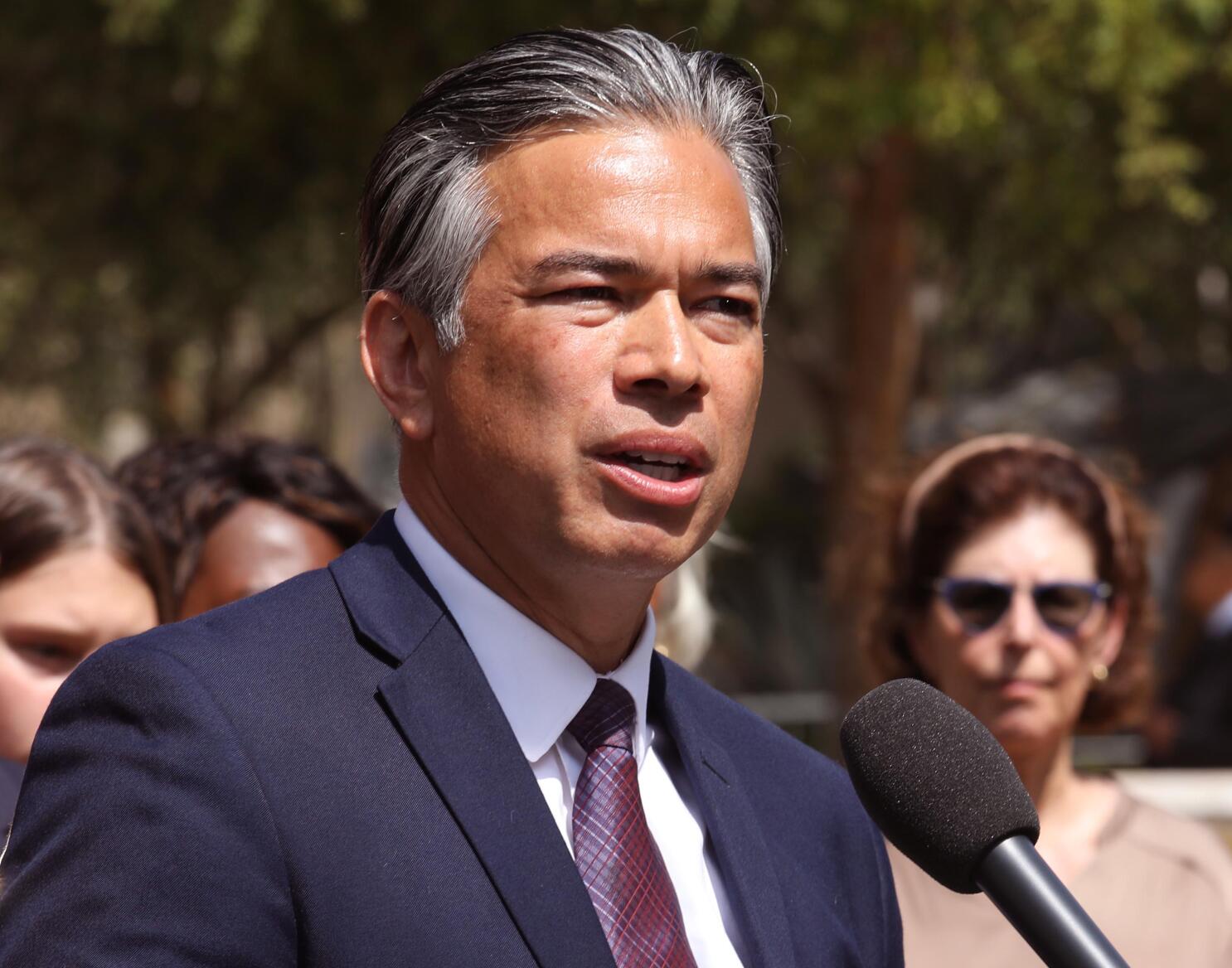
Attorney’s with the State of California are meeting with some pushback over their recent testimony before the 9th Circuit Court of Appeals on the state’s one-gun-a-month law.
On Wednesday, Deputy Attorney General Jerry T. Yen attempted to make his case in Nguyen v. Bonta, but some justices on the court seemed skeptical about his claims. In fact, in defending the law, Yen tried to make the case that it was intended to stop straw buyers, but at least one of the judges didn’t find that assertion credible.
“Do arms traffickers buy two at a time?,” asked U.S. Circuit Judge Danielle Forrest. “It seems like no.”
According to Yen, the law is a regulation on when you can own a gun, not if you can do so. But that argument didn’t sit well with Judge Forrest, either.
“It would be absurd to think that a government could say you can only buy one book a month because we want to make sure that you really understand the books you read, or you could only attend one protest a month because, you know, there’s some societal drawbacks from having protests so we want to kind of space those out. People would say that’s absurd,” Forrest said during the proceeding.
Judge John Owens further tore into Yen’s reasoning on one-gun-a-month law by using the scenario of a liquor store owner who might be threatened by a gang both at his business and his home. If the owner wanted two guns but didn’t have any, he would have to buy one, then wait 30 days to buy another. And Owens believes in that case the law would keep him from defending himself under the Second Amendment.
The appeal before the 9th Circuit comes after a U.S. District court ruled the law to be unconstitutional earlier this year. Of course, California is only too happy to spend taxpayer money to continue defending the law.
As the National Rifle Association argued in a brief filed in the case in June: “This Court has twice held that the Second Amendment protects the right to acquire arms. This Court’s prior holdings are supported by Supreme Court precedent. First, the Supreme Court has determined that ‘keep Arms’ in the Amendment’s text means to ‘have weapons,’ and the plain meaning of ‘have’ encompasses the act of acquisition.
Second, the Supreme Court has acknowledged that certain rights are implicit in enumerated guarantees. In the Second Amendment context, four Justices have recognized—and none have disagreed—that firearms training is ‘a necessary concomitant’ of the right to keep and bear arms. As this Court, the Third Circuit, and many district courts have recognized, acquiring a firearm must be a necessary concomitant as well.”
The state is also trying to meet the second Bruen standard by arguing that there is historic precedence for limiting gun purchases to one every 30 days. But it’s likely that assertion will fall on deaf ears, too.
As the NRA also pointed out in its brief: “The State argues that a more nuanced analogical approach is required because historically firearms were too laborious to manufacture and too expensive to purchase for firearms to be available for bulk purchase.
In fact, firearms were ubiquitous in early America, and affordable enough for every militiaman and many women to be required to purchase one or several firearms. Indeed, newspaper advertisements regularly offered large quantities of firearms for sale.”
Further bolstering that point, the brief continued: “In any event, California does not merely prohibit ‘bulk’ purchases; it prohibits the purchase of even two firearms in one month. Americans commonly purchased multiple firearms in a single transaction in the colonial and founding eras—and no law ever forbade it.”