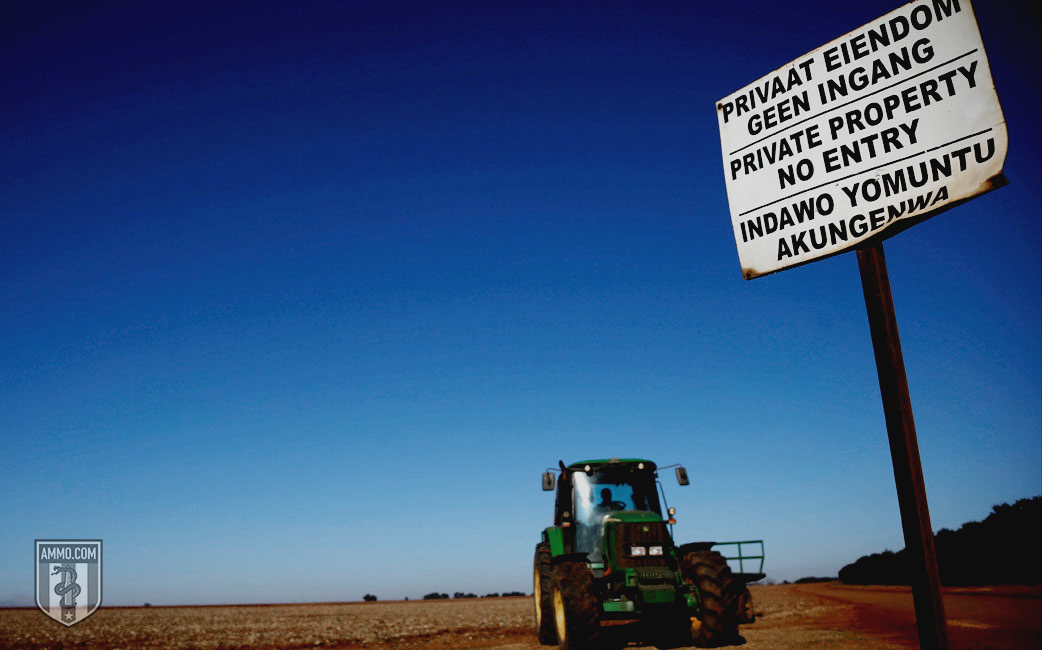
South African farm murders have long been a niche cause on the Internet, and the country has made headlines again due to a South African government plan to seize the land of white farmers under the guise of “South African land reform.”
News of these farm murders and land seizures have gained steam with the release of Lauren Southern’s documentary
Farmlands. And United States President Donald Trump has brought even more attention to the plight of Afrikaners with his tweet that
he would be looking into the South African land and farm seizure.
Most people don’t know much about the history of South Africa beyond the simplistic propaganda of the 1980s – white South Africans bad, ANC good. The history and current situation of South Africa, however, is much more complex.
Defining Terms: Who Are the Key Players?
Before going any further, terms should be defined and the key players identified:
- ANC: The African National Congress, the leading party in South Africa since the end of apartheid.
- Afrikaners: Dutch-, German- and French Huguenot-descended white South Africans who primarily speak a language called Afrikaans.
- Bantu: A group of black South Africans including the Xhosa (of which Nelson Mandela was a member) who originally lived in the northeast of the country.
- Boers: A subset of Afrikaners who still lead a rural and agricultural existence.
- Democratic Alliance: Currently the second-largest party in the South African parliament, the Democratic Alliance is a broad-based centrist party that is comparatively economically liberal for South Africa. It enjoys broad, multiracial support, though it is most popular among all racial minorities – white, Coloured and Indian. Its black supporters are often derided as “clever blacks” by ANC supporters.
- EFF: The Economic Freedom Fighters, a far-left political party in South Africa that has pushed the South African government to seize land from white farmers. Sometimes derisively called “Everything for Free,” the EFF is the third-largest party in South Africa, but is poised to become the second.
- Khoisan: A popular name for the original inhabitants of most of the territory now known as South Africa. This is not an ethnic designation, but a linguistic one. These are who the Dutch settlers first encountered.
A Brief History of South Africa: From Early Settlement to the Boer War
To understand the current situation in South Africa, it is important to first understand the country before, during and after apartheid.
South Africa’s modern history begins with the Dutch East India Company, which established trading posts for sailors along the coast. Dutchmen soon started settling the area, with little, if any, conflict with the native Khoisan population. Dutch settlers, however, quickly came into conflict with the Dutch East India Company’s authoritarian rule.
Freedom-seeking Dutch settlers moved north starting in the 17th Century. In 1852, Boers founded the South African Republic (known as the “Transvaal Republic”) and then the Orange Free State in 1854.
These are called “Boer Republics” and they, in turn, came into conflict with both southward-expanding Bantu tribes (most notably the Zulu, who were in the process of conquering other nearby Bantu tribes) and the British Empire.
“White South Africans” are typically treated as a monolith, but there are two main, distinct groups: The Afrikaans-speaking Afrikaners and the English-speaking British. Indeed, there were intense hostilities between these two groups, especially after the Second Boer War when the Boer Republics were reforged as British colonies.
Telling the Afrikaners to “go home” is a nonsensical statement. They are not Dutch. They do not hold Dutch passports, nor would they at any point have been welcomed back by the Kingdom of the Netherlands.
In many regions of South Africa, the Afrikaners have been around longer than the Bantus and have a stronger claim on the land, having purchased it from Khoisans. On the other hand, traditionally Bantu land was conquered from other Bantu tribes or taken by the Bantus from the Khoisans.
A Brief History of South Africa: The Boer Wars
“The Boer Wars” refers to two wars between the Boer Republics and the British Empire, but mostly the second one. The first was a rout for the Boers and left the British Empire with egg on their face. They would not be embarrassed a second time.
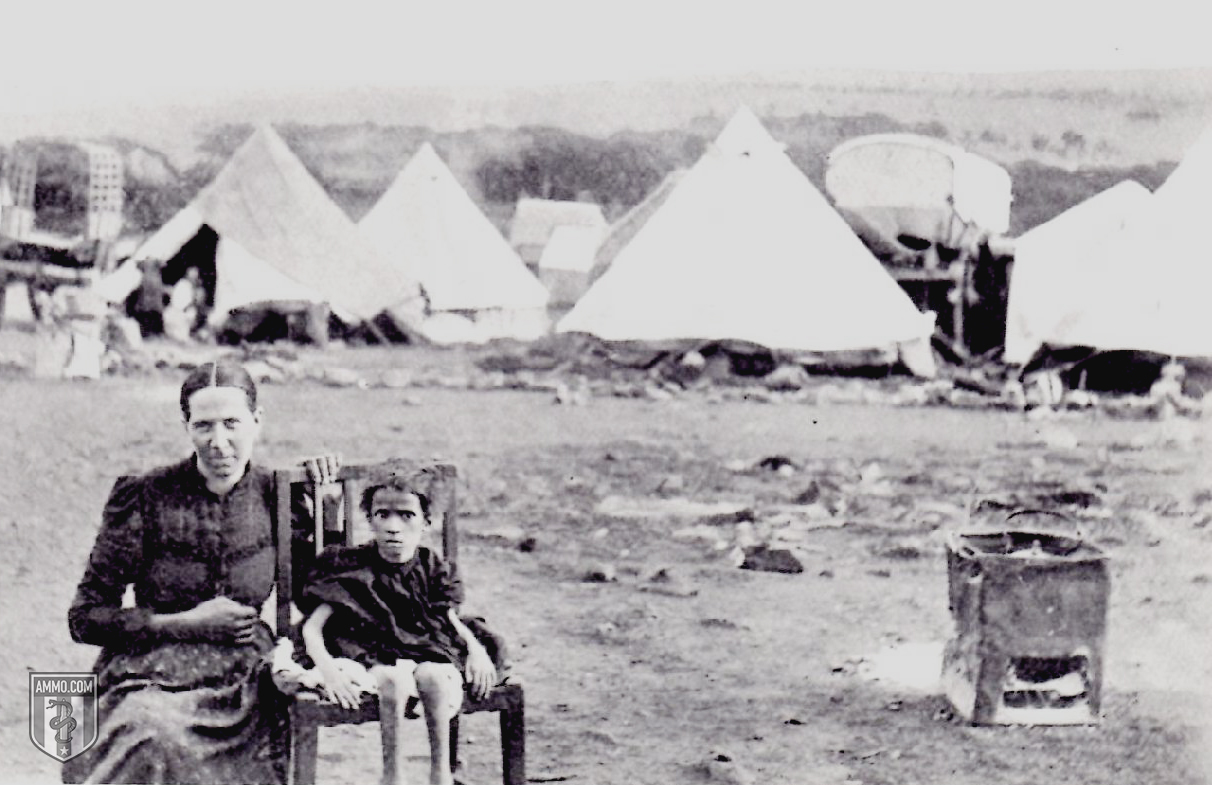
The first concentration camps were built for Boers. Not just any Boers, but primarily the wives and children of Boer Commandos (irregular guerilla troops) fighting the British Empire. The strategy was simple: Lock up their women and children, and they will lose their will to fight.
It worked. Adding insult to injury, the most publicized photo of the concentration camps, a picture of seven-year-old Lizzie van Zyl nearly starved to death, was touted in the British press as evidence of parental neglect by the Boers. There was great international outcry against the British during the Boer War, but it never amounted to much.
Boer Republics were reconstituted as British colonies. In 1910, three British colonies were unified as the Union of South Africa. After World War I, South West Africa, today known as Namibia, was administered effectively as a fifth province of South Africa, but for obscure reasons never integrated.
South Rhodesia voted on membership, nearly joining, but the argument that it would become “the Ulster of Africa” proved too powerful. The history of South Africa is largely that of a rebellious and unhappy British Dominion until 1948.
A Brief History of South Africa: Enter Apartheid
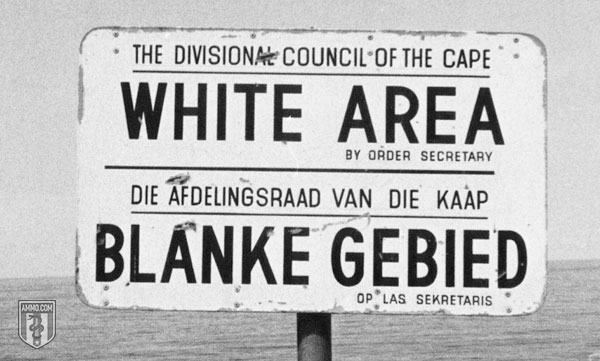 “Apartheid” is an Afrikaans word meaning “separateness.” It was a series of laws drafted beginning in 1948, after the success of the Afrikaner-heavy National Party in the national elections.
There was a split in the party between those who favored apartheid as it happened versus those who favored complete separation, including parallel governance. The former won out in no small part due to a thirst for cheap black labor.
Most people know the basics of apartheid, but they are worth going over briefly here: South Africans were classified into one of four racial categories: white, black, Coloured (a non-pejorative term in South Africa, meaning roughly “mixed race”) and Asian or Indian. In 1949, mixed marriages were outlawed with cross-racial intercourse outlawed the following year. In 1953, amenities were segregated by law.
Increasingly, the blacks of South Africa were segregated into townships and Bantustans, the latter being nominally independent “homelands” for Africans. This meant that as foreign nationals, in the eyes of the Union of South Africa, they were required to carry documentation to work in South Africa and needed to leave after they were done.
Coloureds, who had the vote, were slowly disenfranchised. Indians and other Asians were never allowed to vote.
Between the end of World War II and the declaration of a republic in 1961, internal politics were dominated by the division between conservative republican Afrikaners and liberal monarchist British whites.
Apartheid enjoyed greater support among Afrikaners and less among British South Africans. British Prime Minister Harold Macmillan’s “Wind of Change” speech increased support for apartheid among British South Africans because of a sense of abandonment by the homeland.
Many were upset at being forced by the British government to choose between South African and British citizenship and passports.
Still, none of this amounted to what the National Party hoped to achieve – a cohesive and united white South African identity. Support for apartheid was always tepid among British South Africans.
It is certainly true that notions of racial superiority were a prime motivator for apartheid, but there was another factor in play: Communism.
The Suppression of Communism Act was passed by the first apartheid government, banning any Communist organization. The Act took a broad view of what constituted “Communism.”
However, given the infiltration of mass movements, particularly in the developing world at the beginning of the Cold War, this is perhaps less cynical than it is commonly made out to be. The Act was used to suppress the African National Congress, something we will talk about in detail later.
Finally, it’s worth mentioning that Afrikaner society is fundamentally and deeply conservative. Pornography and gambling were illegal in apartheid-era South Africa.
Most businesses could not open on Sundays. Abortion, homosexuality and reproductive education were tightly regulated.
There was no television until 1976, as this was believed to be immoral and a vehicle of Communism. English-language programming was seen as a threat to Afrikaans culture.
A Brief History of South Africa: The Rise of the ANC and Nelson Mandela
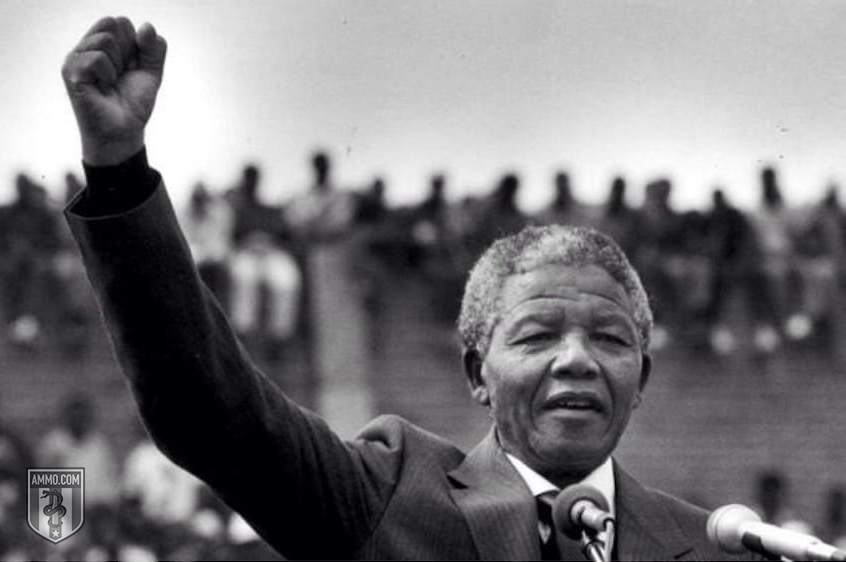
The Suppression of Communism Act was the instrument used to outlaw the African National Congress. While the ANC is typically thought of as a democratic-liberal organization, this is simply not true.
The ANC’s closest ally was the South African Communist Party. Indeed, Nelson Mandela, the face of anti-apartheid resistance, was not only a member of the SACP, he served on its Central Committee, something he denied for decades.
The SACP has never to this day contested its own candidates in South Africa, instead fielding their people on ANC slates.
What’s more, the SACP partnered with the ANC in forming Umkhonto we Sizwe (“Spear of the Nation”), the paramilitary wing of the anti-apartheid movement.
The average person on the street likely thinks that Nelson Mandela was imprisoned simply for being black or opposing apartheid.
In fact, he was imprisoned for a bombing campaign carried out by Umkhonto we Sizwe, of which he was the head. In fact, Nelson Mandela was convicted of 193 acts of terrorism.
He was offered his freedom multiple times on the simple condition that he condemn terrorist attacks against the apartheid regime. He refused every time.
The ANC was not the only organization in South Africa opposed to apartheid. Many white South Africans saw the system as unsustainable.
However, outside of South Africa, the situation was largely posed by the media as a question of “apartheid forever or the ANC.”
The ANC and its allies in the Communist Party and the trade union congress COSATU (known as the tripartite alliance) were not the only alternative to the ruling National Party and thus apartheid.
The Progressive Federal Party was the main parliamentary opposition to apartheid, which, as the name implies, was in favor of a federated South Africa. The New Republic Party was likewise in favor of power sharing and oriented toward reconciliation with the Commonwealth.
The New Republic Party and the Progressive Federal Party were also bitter enemies. The New Republic Party was a conservative party denounced as racists by the Progressive Federal Party.
The Progressive Federal Party was a liberal party derided by the NRP with the nickname “Packing for Perth,” due to the impression that their members were all emigrating to Australia.
Two-thirds of South African whites supported some sort of federalism or power sharing, but moderate elements never received any international support.
Nor was the ANC the sole representative of South African blacks. Zulu nationalists, currently represented by the Inkatha Freedom Party, were often bitter enemies of the ANC by the 1980s.
Many black South Africans served in the police force and other aspects of the government, leading to the rise of a barbaric form of retribution known as “necklacing.”
This is filling a tire with gasoline, hanging it around the neck of a suspected collaborator or political opponent, and lighting the tire on fire. Death can take several hours.
Winnie Mandela, then-wife of Nelson Mandela, declared that “With our boxes of matches, and our necklaces, we shall liberate this country.” This caused the ANC to create some distance between itself and her, but ultimately she was given further positions in the movement and the ANC government.
A Brief History of South Africa: The ANC in the Saddle
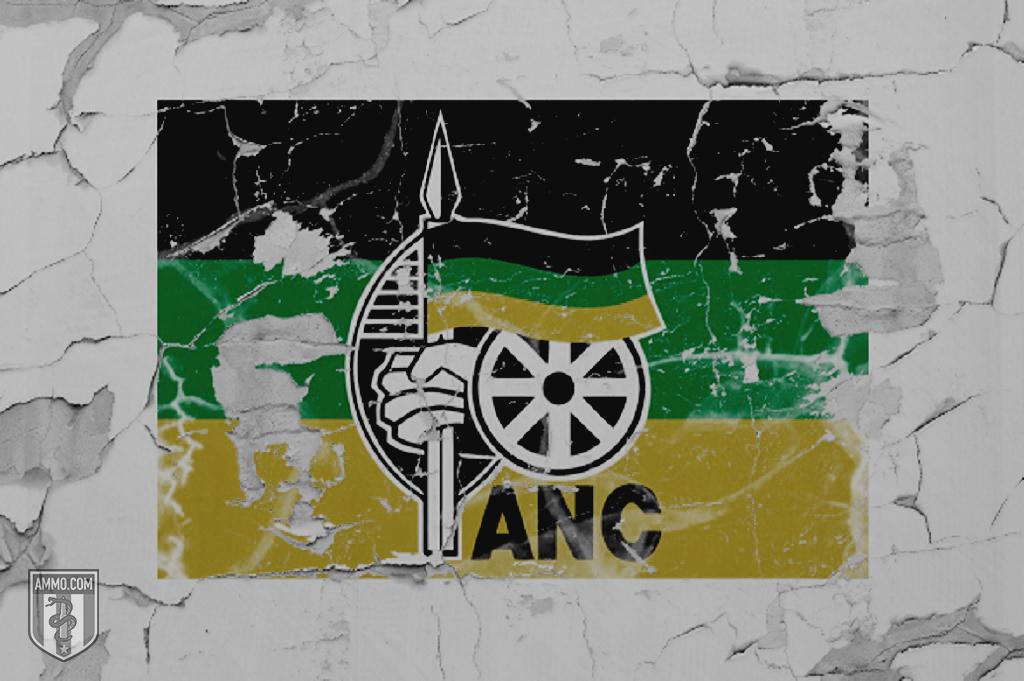
In 1994, the African National Congress took power in South Africa.
At this time, its paramilitary organization was integrated into the country’s regular defense forces. Convicted bomber Robert McBride, praised by no less than IRA terrorist Martin McGuinness, is the Executive Director of the Independent Police Investigative Directorate.
Touted as the “Rainbow Nation,” the fall of apartheid in South Africa was part of an overall feeling of optimism throughout the world surrounding the Fall of Communism.
However, not everything was roses in the new Republic of South Africa. The Truth and Reconciliation Commission was an attempt to lay bare the crimes of the apartheid regime.
The tribunal, which did not dispense with sentences, but merely sought to find the truth, has been criticized for not dispensing any justice. Neither former National Party government members nor ANC partisans were punished by the Commission.
The elephant in the room at all times was an overwhelming increase in the crime rate. The term “rape gate” entered popular parlance as South Africans installed panic room doors on their bedrooms.
Crime is the main reason for emigration from South Africa. The 2013 murder rate was seven times that of the United States, the 11th highest in the world. Between 2005 and 2015, over 200,000 South Africans were murdered – this in a country of about 50 million. There were over 17,000 murders in 2013 alone.
Compare this to just over 14,000 in the United States during the same year, despite the fact that South Africa’s population is approximately equivalent to two states – California and Texas.
This is only the official murder rate. Many suspect that the rate is higher, due to a disengagement from formal policing and a reliance upon private security firms.
Quality of public services has likewise deteriorated, with rolling blackouts being the norm in South Africa.
The ANC presides over what is potentially the largest welfare state in the world, according to economist Mike Schussler in 2010. Six percent (3.3 million South Africans) of the population pays 99 percent of the taxes, while 31 percent (16.4 million) receive social grants.
This means there are five South Africans receiving welfare for every one paying taxes. 71 percent of South African children live in houses where no adult is employed.
South Africa has a sweeping affirmative action quota program. Employee demographics must, under the South African Employment Equity Act, represent the racial demographics of South Africa as a whole.
This means that, for example, the national power company was pressured to fire a number of skilled white engineers, while the country was going through rolling blackouts. The country currently has a labor shortage of approximately 800,000 skilled workers.
The affirmative action program has not lead to a significant increase in the number of skilled black technical workers. In 1994, 15 percent of black South Africans held skilled technical positions.
In 2014, this percentage had increased to 18. Meanwhile, between 1992 and 1997, the number of skilled technical degrees dropped by 13 percent while the number of degrees in public administration and social services skyrocketed by 199 percent.
Finally, the specter of corruption has hung over the ANC regime. Scandals surrounding the ANC government have included bribery in arms deals, the abolition of a task force dedicated to organized crime and corruption, sexual misconduct including criminal charges, and using government and civil organizations to fight its political opponents, particularly those in the Democratic Alliance.
What Are the South African Farm Murders?
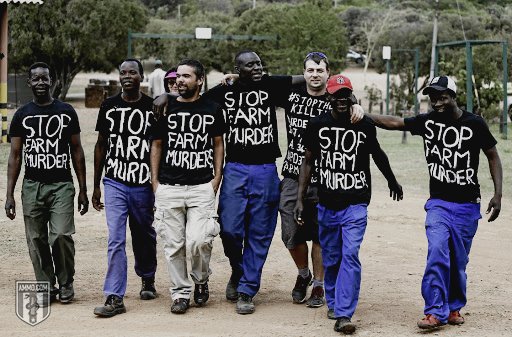
It is currently twice as dangerous to be a South African farmer than a South African police officer. The murder rate among South African farmers is three times that of the standard murder rate in South Africa, which is already one of the highest in the world.
The government claims the motives for the farm attacks are robbery. However, this does not pass muster. Farm attacks frequently include raping the female members of the household – including young children – while forcing the male members of the household to watch.
The victims are often then tortured to death in front of each other. Farmers claim police response to these attacks is sluggish at best and nonexistent at worse. The government stopped collecting statistics about farm murders in 2008.
What’s more, the attacks on white farmers in South Africa tend to have pitched levels of brutality about them. Without getting too lost in the weeds of the grizzly details, it’s worth mentioning some of the more grotesque attacks on farmers at least in passing:
Another common form of attack is the land invasion. In one example, 100 men began squatting land. The farmer did the sensible thing and left. Who could blame him in the kind of environment described above?
Far from being a “white nationalist conspiracy theory,” farm attacks have been reported on and denounced by Human Rights Watch and former Australian Prime Minister Tony Abbot. Afriforum, a wing of Christian trade union Solidarity, likewise reports on farm attacks regularly.
What Is Behind the South African Farm Attacks?
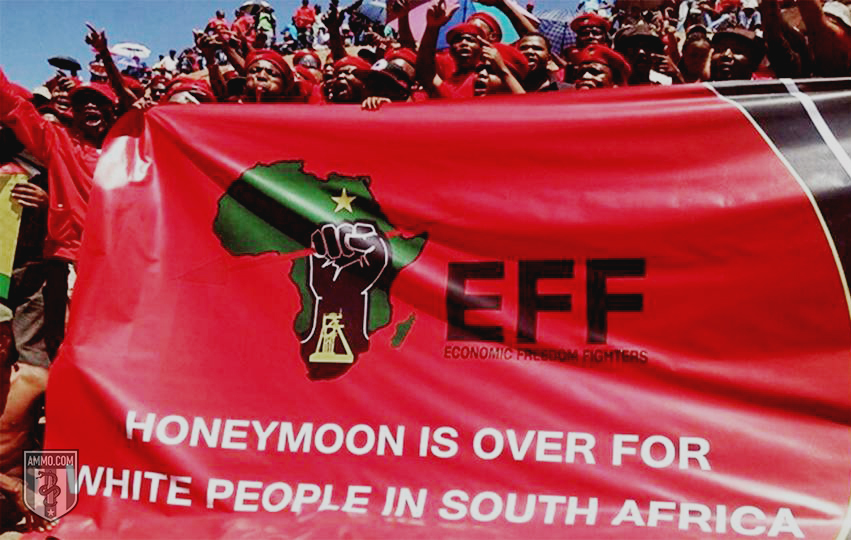
Anti-white racism is a popular current in mainstream South African politics. The song “Kill the Farmer, Kill the Boer” is still publicly sung, despite this being declared a hate crime.
The traditional means of protecting rural South Africans, the commando units, were disbanded in 2003, leaving many South African farmers with no protection.
Anti-white rhetoric in South Africa is very real and very mainstream. Here are a few examples:
Compare this with the woman sentenced to three years in prison for calling someone a “kaffir.” It’s not surprising that some South Africans have begun getting trained by Israeli commandos to protect themselves and their property.
What Are the Farm Seizures?
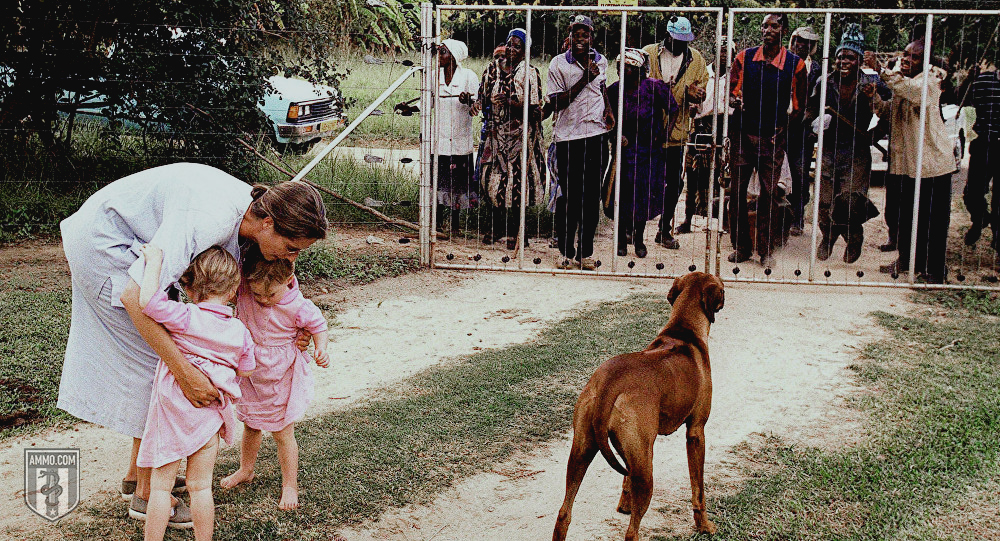 The South African Constitution has recently been amended to allow for Soviet-style expropriations of farms without compensation. Zulu lands are specifically exempted.
This is a bit nonsensical for two reasons. Many white South Africans have been in South Africa longer than most Americans have been in America.
Second, the dominant black ethnic group, the Bantus, doesn’t have a strong claim to most of the land in South Africa – the Khoisans would, but they sold it to the Boers or had it conquered by the British.
This is as if the U.S. government started seizing land from white families in upstate New York traditionally belonging to the Iroquois and giving it out to the Cherokee.
Still, despite the fact that farm seizures are precisely the means by which Zimbabwe ended up in such a failed state, there seems to be no stopping farm seizures in South Africa.
Perhaps worst of all, there are rumors that South Africa’s banks intend to collect mortgage payments even after properties have been confiscated.
In the final analysis, the farm seizures in South Africa aren’t just about dispossessing an unpopular, market dominant racial minority – though that would be disturbing enough. It’s also a threat to South Africa’s incredibly fragile democracy.
The ANC is a dominant party with little chance of losing elections and thus, little reason to behave accountably. Add to this the lack of a broad-based middle class with a vested interest in strong property rights, and you have a recipe for kleptocracy and starvation.
Bibliography