Second Amendment supporters already see court rulings strike down laws that violate the Second Amendment across the country – it’s a good start. IMG iStock-1060256694
USA -(AmmoLand.com)- Second Amendment supporters already see court rulings strike down laws that violate the Second Amendment across the country – it’s a good start. But they also swing good reasons to make addressing financial deplatforming a priority.
With JP Morgan Chase deciding to close Kanye West’s business accounts and Bank of America going after conservative social media commentator Catturd, the alarm is buzzing again – and Second Amendment supporters cannot afford to keep hitting the snooze button with regards to financial deplatforming.
The stakes aren’t just whether or not buying guns becomes a case of using cash. It also has the potential to cripple our ability to exercise the First Amendment to protect the Second Amendment. This is right out of a playbook long run by anti-Second Amendment extremists.
They tried and failed with McCain-Feingold, especially in the wake of Citizens United. They’ve been unable to pass other legislation that would expose donors. Letitia James and Andrew Cuomo’s jihad against the NRA ran into a First Amendment brick wall regarding their desire to dissolve the group.
However, the CEOs and top executives of big financial services corporations – be it banks, credit cards, or insurance companies – can act independently (or after prodding from anti-Second Amendment extremists in office), and there are not many Second Amendment supporters can do. Sure, some smaller banks might be safe havens for the short-to-medium term, but the only long-term security is the passage of strong legislation to address financial deplatforming in as many Second Amendment-friendly states as possible.
Think it won’t happen? There are two likely scenarios for a massive surge of financial deplatforming of the Second Amendment community – the first would be a SCOTUS ruling explicitly striking down bans on modern multi-purpose semi-automatic long guns. In that case, anti-Second Amendment extremists would likely push for corporate gun control due to a lack of other options.
The second scenario would be repeated school shootings like those in Uvalde or Sandy Hook. This time, we could see financial services companies cite “reputational risk,” with or without pressure from government officials (again, see Andrew Cuomo and Letitia James) or lawmakers.
The financial deplatforming can be halted firmly with strong legislation in the form of state-level versions of the Freedom Financing Act as a bare minimum. The fact of the matter is that Second Amendment supporters have to defeat the ability of banks to financially deplatform them in order to defeat anti-Second Amendment extremists via the ballot box at the federal, state, and local levels.
About Harold Hutchison
Writer Harold Hutchison has more than a dozen years of experience covering military affairs, international events, U.S. politics and Second Amendment issues. Harold was consulting senior editor at Soldier of Fortune magazine and is the author of the novel Strike Group Reagan. He has also written for the Daily Caller, National Review, Patriot Post, Strategypage.com, and other national websites.
NASHVILLE, Tenn. (AP) — Public housing agencies in Tennessee can no longer include provisions in their leases that bar tenants from having guns in their homes, a state appeals panel has ruled.
A three-judge panel of the Tennessee Court of Appeals made the unanimous decision Thursday, saying that the prohibitions in public housing violate the 2nd Amendment rights of its residents.
In the ruling, the judges cited a prominent U.S. Supreme Court decision from June that expanded gun rights, while striking down a New York law requiring people to demonstrate a particular need for carrying a gun in order to get a license to carry a gun in a concealed way in public.
The Tennessee decision could set up an appeal to the state Supreme Court, which has a majority appointed by Republican governors.
The case centers on a lawsuit by Kinsley Braden, who signed a lease agreement with Columbia Housing & Redevelopment Corporation in April 2018 that barred him from having a gun on the premises.
In November 2020, housing officials sought to evict Braden when they found out he had been keeping a handgun in his residence at the Creekside Acres low-income housing complex. Lower court judges ruled in favor of Columbia Housing in the initial case and an appeal, then Braden sought another review, the ruling states.
In the latest decision, Judge Frank Clement wrote that “a total ban on the ability of law-abiding residents — like Mr. Braden — to possess a handgun within their public housing unit for the purpose of self-defense is unconstitutional under the Second Amendment.”
The ruling reasoned that public housing is not similar to other types of “sensitive” government buildings where guns can be banned, including statehouses, polling places and courthouses.
Clement also acknowledged that it is “largely unsettled whether public housing developments could constitutionally prohibit firearm possession under both the Second Amendment to the United States Constitution and nearly identical provisions of certain state constitutions.” He wrote that states have come to different conclusions on whether such bans are allowed.
CNN sounded the alarm Sunday, warning that the pro-Second Amendment makeup of the Supreme Court of the United States (SCOTUS) portends an end to gun control “nationwide.”
CNN’s Tierney Sneed pointed to the June 23, 2022, SCOTUS decision in NYSRPA v. Bruen, noting that it not only struck down New York’s proper cause requirement but also set forward stringent rules for how lower courts must decide cases related to the Second Amendment.
On July 1 Breitbart News noted that SCOTUS remanded a number of cases, vacating the decisions and ordering them to be reconsidered in light of Bruen. The cases centered on an “assault weapons” ban in Maryland, a “high capacity” magazine ban in California, and carry restrictions in Hawaii, among other things.
Roughly two weeks later Breitbart News pointed to a Washington Times article suggesting the Bruen decision puts all types of gun control in the crosshairs of gun rights groups.
The Washington Times paraphrased Justice Clarence Thomas’s emphasis on the important of decisions like Bruen, McDonald v. Chicago (2010), and District of Columbia v. Heller (2008), saying, “The test courts must apply is whether a firearms restriction would have seemed reasonable to the founding generation that crafted and ratified the Second Amendment. If not, the law must give way to the Constitution.”
In light of this framework for testing restrictions, CNN warns that gun control in every state is in jeopardy:
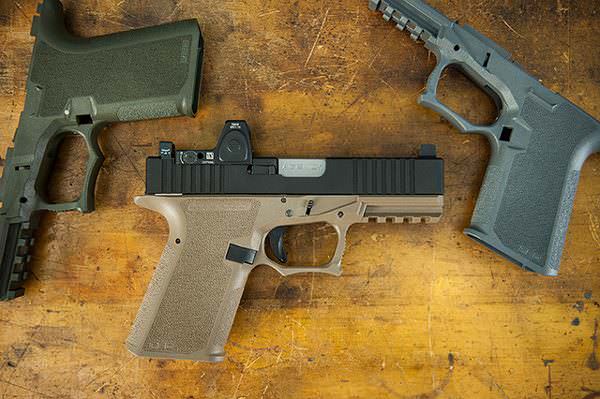
Since the June ruling, federal judges in at least a half-dozen different cases have already cited the Bruen decision to rule against gun restrictions that have included local assault weapons bans, prohibitions on the manufacture of homemade firearms and bans on older teenagers publicly carrying handguns.
Several other laws now face new legal challenges under the precedent, among them zoning restrictions barring shooting ranges, licensing and training laws and the federal ban on certain misdemeanor offenders from possessing firearms.
CNN noted changes that have already occurred in jurisprudence in light of Bruen:
A federal district judge cited the ruling last month when halting Delaware restrictions on possessing and manufacturing untraceable firearms, saying that the law’s defenders failed to provide persuasive evidence that similar restrictions existed in the historical record. The precedent was also referenced when local assault weapon bans in two Colorado jurisdictions were put on hold this summer; the judges in both cases were each appointed by Democratic presidents.
CNN also noted a decision handed down on Thursday to “pause” new gun controls New York enacted in response to Bruen.
Breitbart News indicated the New York controls were paused via a temporary restraining order issued by U.S. District Judge Glenn T. Suddaby.
AWR Hawkins is an award-winning Second Amendment columnist for Breitbart News and the writer/curator of Down Range with AWR Hawkins, a weekly newsletter focused on all things Second Amendment, also for Breitbart News. He is the political analyst for Armed American Radio and a Turning Point USA Ambassador. AWR Hawkins holds a PhD in Military History, with a focus on the Vietnam War (brown water navy), U.S. Navy since Inception, the Civil War, and Early Modern Europe. Follow him on Instagram: @awr_hawkins. You can sign up to get Down Range at breitbart.com/downrange. Reach him directly at awrhawkins@breitbart.com.
SPRINGFIELD, VA-(Ammoland.com)- When the Bureau of Alcohol, Tobacco, Firearms and Explosives (ATF) told Representative Michael Cloud’s (R-TX) office that it held nearly one billion out of business records, Gun Owners of America (GOA) called it an illegal gun registry. The legacy media newspaper, USA Today, issued a “fact check” stating that the claim was false. Now thanks to a Freedom of Information Act (FOIA) request filed by GOA and Gun Owners Foundation (GOF), we know how much of a role the ATF played in determining the rating.
Last January, the ATF answered an inquire by Rep Cloud’s office stating that it held nearly one billion records in its Out of Business Office in Martinsburg, West Virginia. The vast majority of the records were digitized, and the ATF’s Firearms Trace Center had access to the documents. Although the ATF claims the records are not searchable by anything other than the former federal firearms licensee (FFL) name, by just selecting a few options in the software, those records could be usable by using optical character recognition (OCR).
A new FOIA request by GOA and GOF shows the communication between the USA Today fact checker, ATF’s former Chief of the Public Affairs Division, April Langwell, and former ATF Associate Deputy Director Thomas Chittum. Mr. Chittum has left the ATF to work for ShotSpotter. Ms. Langwell also recently left the ATF to work as the Director of Communications for the United States Marine Corp (USMC).
In the exchange, the unnamed fact-checker asked about the alleged registry. Ms. Langwell and Mr. Chittum denied the existence of the gun registry. Mr. Chittum replied that there was no firearms registry and handed off the conversation to Ms. Langwell. Ms. Langwell repeated the claim that the database is only searchable by FFL name. She stated that the ATF doesn’t consider the digitally scanned records to be a gun registry. The fact checker did not follow up on how easy it would be to turn on optical character recognition. The fact checker seemed to accept Ms. Langwell’s claims at face value.
The issue the fact checker overlooked is that according to the email exchange, the records are stored in PDF format. The PDF file format is the product of Adobe. Adobe Acrobat is needed to read the documents in the file format. The ability to OCR documents is built into Adobe Acrobat and can be applied to a PDF in as little as two clicks.
The ATF also told USA Today that all records had been digitized as of 2017. This claim contradicts what the ATF told Congressman Michael Cloud (R-TX). The fact checker did ask Ms. Langwell about the discrepancy. The ATF repeated the claim to the fact checker that the ATF completed the move to a digital format in 2017. The fact checker never followed up on why the ATF told USA Today something different than what the Bureau told Congress. Someone received the wrong information from the ATF, and it is unclear who has the incorrect information.
GOF and GOA were deeply troubled by USA Today’s “fact checking” methods. They point out that the paper discounted the mountains of evidence and the ATF’s own statements on the matter.
“ATF openly admitted to USA Today that ‘scanning out of business records began in 2005’ and now ATF ‘processes an average of 5.5 million’ records containing private gun and owner information into its database per month,” said Aidan Johnston, Director of Federal Affairs, Gun Owners of America. “We are disappointed that this ‘journalist’ simply reported ATF’s denial of an illegal gun registry as truth, without any critical thinking whatsoever.”
USA Today did not respond to AmmoLand’s request for comment.
About John Crump
John is a NRA instructor and a constitutional activist. John has written about firearms, interviewed people of all walks of life, and on the Constitution. John lives in Northern Virginia with his wife and sons and can be followed on Twitter at @crumpyss, or at www.crumpy.com.
Last summer, Governor Gavin Newsom expressed outrage over a Texas law he found objectionable. In fact, Mr. Newsom was so incensed that he bought billboards outside California to air his frustrations (and annoy potential national political rivals). Then, he decided to copy that law and aim it at something he found even more objectionable: gun culture. He even tipped the scales to make sure those who object would be at a distinct disadvantage.
Last week, CRPA filed suit to roll back the most insidious aspect of Mr. Newsom’s gambit. In the complaint, CRPA and a host of plaintiffs point out not only the logical fallacies behind the Governor’s ill-fated attack, but the many reasons that the law is patently unconstitutional. Making those who challenge new Second Amendment restrictions pay all legal costs unless they win EVERY argument in their case while the state can recover their costs if they win ANY part of their case is, of course, in direct violation of the Constitution (not to mention all sense of fairness).
In this case, the Governor wants to use a law he himself views as outrageous to attack your rights. The Constitution is not a vehicle for wannabe Presidential candidates to send messages to rivals.
The ATF “brace amnesty” is a study of how a bureaucracy can maneuver around elected officials, in this case, to ban and register pistol-braced firearms. You either cough up all data on yourself and your gun or face jail and exorbitant fines.
September 30, 2022By David Codrea
“The Biden-Harris Administration and the ATF are cracking down on your right to own a pistol,” Gun Owners of America declares. “The upcoming ‘Amnesty Registration’ rule for pistol braces will facilitate the banning and registration of millions of pistol-braced weapons.”
Owners will be faced with two choices, GOA warns, “Give the ATF your name, Social Security number, address, phone number, email, payment information, FINGERPRINTS, as well as the make, model, and serial number of your firearm – and provide photographic evidence of your compliance OR Face jail time and pay a $250,000 fine.”
Our Story Thus Far
How things got to this point is a case study in the Bureau usurping powers to effectively “legislate” through often contradictory rule changes. Nowhere has this been more apparent than with braces, and ATF’s on again/off again reversals on their “legality.”
“ATF initially welcomed the advent of pistol arm braces,” Rep. Matt Gaetz noted in a June 2020 letter cosigned by half-a-dozen Republican colleagues and sent to ATF, to then Attorney General William Barr (see Firearms News, Aug. 2020, Issue #15). “In 2012, ATF correctly determined that the attachment of arm braces to large pistol platforms does not constitute the manufacture of a short-barreled rifle … subject to registration requirements under the National Firearms Act…”
They repeated that assessment in a 2014 advisory to a Colorado police department, noting “certain firearm accessories such as the SIG Stability Brace have not been classified by [Firearms Technology Branch] as shoulder stocks and, therefore, using the brace improperly does not constitute a design change.” Then in 2015, everything changed.
“Any person who intends to use a handgun stabilizing brace as a shoulder stock on a pistol (having a rifled barrel under 16 inches in length or a smooth bore firearm with a barrel under 18 inches in length) must first file an ATF Form 1 and pay the applicable tax because the resulting firearm will be subject to all provisions of the NFA,” ATF declared in its “Open Letter on the Redesign of ‘Stabilizing Braces.”
Not so, a 2017 press release from SB Tactical asserted. “To the extent that the January 2015 Open Letter implied or has been construed to hold that incidental, sporadic, or situational ‘use’ of an arm-brace (in its original approved configuration) equipped firearm from a firing position at or near the shoulder was sufficient to constitute ‘redesign,’ such interpretations are incorrect and not consistent with ATF’s interpretation of the statute or the manner in which it has historically been enforced.’”
“Unbeknownst to the general public, ATF has ordained in private determination letters that it considers ‘any firearm with a length of pull over 13-1/2 inches to be designed to be fired from the shoulder,’ thereby making it a short-barreled rifle,” Gaetz continued in his letter. “However, ATF has also privately proclaimed that even firearms under this length of pull can be classified as a short-barreled rifle, if ATF identifies other (and often unspecified) applicable ‘indicators.’”
So why all the back-and-forth, and why is ATF getting ready to pull this new and unheard of “amnesty” now? Recalling the vulgar joke about why a dog licks itself, the answer here seems to be the same: Because they can.
But Can They? Really?
“NFA Division personnel will use the information collection on ATF Form 1 to determine the legality of the application under Federal, State and local law,” ATF states in its Office of Management and Budget Justification.
“Oh my, this may break the NFRTR [National Firearms Registration and Transfer Record],” a friend and colleague responded in an email group of firearms and firearms law advisors I regularly corresponded with. We’re basically a group that compares notes, offers insights and occasionally acts in concert, prompting U.S. attorneys defending ATF against one of our Freedom of Information Act requests to disparage and dismiss us as “a tangled web of connections between a small cadre of firearms activists…”
ATF’s OMB Supporting Statement assumes its “total annual IC [information collection] burden is 102,808 hours.” That’s 2,570 40-hour weeks.
“In fiscal year (FY) 2020, ATF had 5,082 employees, including 2,653 special agents and 760 industry operations investigators,” ATF notes. How many of those will be put on Brace duty to clear out the backlog is unclear, especially since before this all the rage has been to complain about how they’re understaffed and take forever to perform traces because the mean old Republicans won’t let them put everything into one big registration database (allegedly necessitating some creative cellphone camera work by lawbreaking inspectors caught on video snapping bound book pics).
Is Help on the Way?
“The President has already proposed to increase funding for the Bureau of Alcohol, Tobacco, Firearms and Explosives (ATF) by 13% so ATF can hire new agents and investigators,” the White House announced in July as part of its “The Safer America Plan.” So, what are we really talking about in terms of making all this doable?
“Currently, there are at least four million braced pistols in the United States,” investigative journalist John Crump writes on AmmoLand. Crump is the reporter who broke this story after he uncovered and analyzed ATF’s budget request. His number estimate comports with ATF’s Notice of Proposed Rulemaking, which claims “Anecdotal evidence from the manufacturers of the affected ‘stabilizing braces’ indicates that the manufacturers have sold between 3 million and 7 million ‘stabilizing braces’ between the years 2013 to 2020 or over the course of eight years. For the purposes of this analysis, ATF uses 3 million as the low estimate and primary estimate of affected ‘stabilizing braces.’”
“It remains to be seen if the system can withstand millions of additional form submissions,” Crump observes. “This influx of millions of new applications for the ATF Pistol Brace registration would also backlog any other forms submitted through the same processing.”
GOA, for its part, kicks that number up by an order of magnitude, noting “According to the ATF itself, completing a Form 1 takes approximately four hours. That means, the owners of up to 40,000,000 braced weapons will spend up to a collective 160,000,000 hours registering their lawfully acquired firearms … “
“The ATF reportedly processed 512,315 National Firearms Act forms in 2020,” GOA relates from ATF’s OMB statement. “At that rate – assuming no further backlog and assuming all affected gun owners comply with gun registration – it would take the ATF over 78 years to process all the pistol registration forms.”
“While there are no available statistics to gauge authoritatively the number of stabilizing braces already made and sold in the United States, unofficial estimates suggest that there are between 10 and 40 million stabilizing braces and similar components already in civilian hands, either purchased as accessories or already attached to firearms made at home or at the factory,” the report states. Since CRS is the Library of Congress’ official research group working “primarily and directly for members of Congress and their committees and staff,” GOA chose to use the same data lawmakers rely on.
Noting how the citizen disarmament powers-that-be operate, it’s not out of line to anticipate worst-case scenarios where what they can get today metastasizes into “everything” tomorrow.
But There’s a Bigger Issue at Play
“MAYBE what it will do is get some Member(s) of Congress to request GAO to do a forensic audit of the NFRTR to determine its accuracy and reliability,” another one of my “small cadre” advisors chimed in, pointing out the elephant in the room that “amnesty” proponents don’t much want to talk about.
There is much to talk about, but there’s much to read about first. One data-and history-rich resource is the NFA Owners Association website, and for the purposes of this article, a new entry titled “Amnesty: Documents and ATF activities relevant to §207(b) and § 207(d) of the Gun Control Act of 1968” offers many relevant insights. Foremost among those is a 2005 CRS report (the research group discussed above) by analyst William J. Krouse titled “ATF’s National Firearms Registration and Transfer Record: Issues Regarding Data Accuracy, Completeness and Reliability.”
Or to put it in the vernacular: Garbage In/Garbage Out. And it’s been that way for a long time.
“We continuously discover discrepancies and inaccuracies in the registration file which, if discovered during trial, would destroy the future credibility of such evidence,” the then-NFA Branch Chief admitted in a 1975 internal memorandum. “If the court should discover that our negligence caused an unwarranted arrest and trial, the resultant loss of public trust would be irreparable.”
Things had not improved 20 years later when another NFA Branch Chief made a telling admission in an ATF “roll call” training session.
“Let me say that when we testify in court, we testify that the database (NFRTR) is 100% accurate. That’s what we testify to, and we will always testify to that,” he declared. “As you probably well know, that may not be 100% true.”
There’s a word for that, isn’t there? A legal term that starts with “p”…?
“Stephen Halbrook – an attorney who specializes in firearms law – has advised that in NFA-related criminal proceeedings the defense should file discovery motions for U.S. government documents… that he maintains cast a reasonable doubt as to whether the NFRTR database is accurate, complete, and reliable,” the CRS report noted.
Halbrook’s not the only one.
“In a major victory for those of us arguing that the National Firearms Registration and Transfer Record (NFRTR) is insufficient for criminal proceedings, Dr. Fritz Scheuren, ‘the’ statistician in the United States (possibly the world), today informed the United States District Court, Western District of Oklahoma … that the NFRTR is insufficient for criminal proceedings,” Prince Law Blog reported in 2008. “[T]his is a MAJOR defeat for the BATFE, who, over the years, has argued that although the NFRTR is flawed, it still can be used in criminal proceedings.”
That was the case of US v. Larry Douglas Friesen, pitting the feds against an Oklahoma City attorney and concealed carry course instructor accused of illegal machinegun possession and lying to authorities, with five counts returned by a grand jury and Friesen facing serious prison time if convicted.
The lies and inaccuracies cited above were brought to bear in the “Defendant’s Motion in Limine to Prohibit Government’s Introduction or Reference to Records Maintained in the National Firearms Registration and Transfer Record.”
For those unfamiliar with the term, Cornell Law School’s Legal Information Institute tells us a Motion in Limine is “A pretrial motion asking that certain evidence be found inadmissible, and that it not be referred to or offered at trial.”
It worked, and an interested private citizen who had filed a FOIA request yielding much of the documentation the successful motion relied on — and incidentally, a “senior founding member” of our “small cadre” – tells Firearms News “Here’s the Motion in Limine that got four felonies plea bargained down to a single $25 misdemeanor.”
The government really doesn’t want this widely known.
It’s a Trap!
Admiral Ackbar’s famous epiphany from Star Wars is echoed by Washington Gun Law President and attorney William Kirk in a YouTube video asking “Is Pistol Brace Amnesty About to Become the Biggest Trap Ever Set?”
“When examining the plain language used by the ATF on three important ATF documents, we’ve come to not only a conclusion that many of you have arrived at already, but we think we know how the trap will be sprung,” Kirk claims in the video description. “If true, this will be one of the greatest acts of deceit by any modern government.”
How?
“The dots are connected from three documents,” Kirk explains, identifying the ATF Budget Request, ATF Form 1, Application to Make and Register a Firearm, “as it currently exists and what could be added to it,” and ATF “worksheet” Form 4999 (FACTORING CRITERIA FOR RIFLED BARREL WEAPONS WITH ACCESSORIES* commonly referred to as “STABILIZING BRACES”).
“That is the form that ATF is going to be used to score an AR pistol to determine is it really an AR pistol or a federally-regulated short barrel rifle, buying you a $200 tax stamp,” Kirk elaborates, noting how photos and fingerprints will be used in the determination of if a weapon qualifies for amnesty registration, and anticipating modification of Form 1 to accommodate the new requirements.
“When you submit all that information to ATF on what will clearly be the new and improved Form 1, ATF is going to run that firearm through its 4999 checklist, and if – and trust me, most of you will be in this category – if you score four points or more on the 4999, you are going to receive a letter from ATF saying ‘your firearm does NOT qualify for amnesty registration, you OWE us a $200 tax stamp, otherwise, you can forfeit the weapon.’”
“That, my friends, is the great trap that is being set by amnesty registration,” Kirk concludes, noting that rather than being “a wild conspiracy theory,” he is “taking the language directly form ATF’s Budget Request … taking language directly form ATF’s Form 1 and … taking the criteria directly from ATF’s 4999.”
After the trap is sprung, what then? By now, all informed gun owners have seen the reports and videos of ATF showing up at people’s houses without warrants asking to see guns they have records on. Look for that to increase and look for warrants going out on people they figure they now have “probable cause” to investigate.
Remember we are dealing with enforcers of infringements who are not above entrapment, and as we see from the history of NFRTR administration, cover-ups and outright perjury. If they do show up at our doors, let’s not forget the advice of Regent Law Professor James Duane in his video presentation wherein he gives probably the most important piece of legal advice a citizen approached by law enforcement will ever hear:
Columnist David Codrea is the winner of multiple journalist awards for investigating/defending the RKBA and a long-time gun owner rights advocate who defiantly challenges the folly of citizen disarmament. In addition to being a regular featured contributor for Firearms Newshe blogs at “The War on Guns: Notes from the Resistance,” and posts on Twitter @dcodrea and Facebook.
Judge Benitez Issues Ruling to Save Magazine Owners from Government Confiscation and Prosecution
On Monday, September 26, 2022, Judge Roger T. Benitez proved once again that he is ten steps ahead of the California government and its anti-gun leaders when he re-issued his ruling to protect “traditional” magazine owners from prosecution.
If you have been following the “merry-go-round” that has been the life of Duncan v Bonta (formerly Becerra), it’s entirely possible that you have been confused.
Let’s break this down:
Initially, the case of Duncan v Becerra (ban on 10+ round magazines which originated from legislation and an initiative) went before Federal District Court Judge Roger T. Benitez. He said that it violated the text, history and tradition of the Second Amendment using the test that Justice Scalia established in Heller v DC and was therefore unconstitutional. Knowing that the crazy 9th would use a different standard, Benitez ruled that it would still be unconstitutional regardless of what standard was used.
This opened what became known as “Freedom Week” where Californians legally purchased between one and two million magazines.
California threatened to appeal the ruling to the 9th Circuit Court of Appeals, so Judge Benitez issued an order staying his decision from going into effect until all legal proceedings were completed, thus preventing the California government from banning any “Freedom Week” magazines.
The 9th assigned the case to a 3-judge panel who agreed with Judge Benitez that the mag ban was unconstitutional.
Angered by this defeat, the State immediately asked for an 11-judge en banc panel who as expected, reversed the previous pro 2A decisions and sided with the State.
The pro-gun forces – which included Gun Owners of California– appealed to the Supreme Court of the United States (SCOTUS). SCOTUS kept the case alive pending their decision in NYSRPA v Bruen. Once the court declared that the only rule that lower courts can use to test Second Amendment challenges, that being text, as informed by history and tradition and nothing else, the court accepted the case (granted Certiorari which means it could be heard), then vacated the anti-2A decision of the 9th Circuit and remanded the case back to them, with the instructions to reconsider the case with the new one-step standard.
At this point, the 9th Circuit en banc panel could have reversed its decision and declared the mag ban unconstitutional. Of course, they did not. Instead, they returned the case to Judge Benitez who had already declared the law unconstitutional.
Is your head swimming by now?
In doing so, the 9th essentially “erased” Judge Benitez’ original decision and directed him to start from scratch.
Given this turn of events, we are confident the State of California had been preparing to begin the confiscation of magazines and enforcing the ban because forcing Benitez start from scratch meant that his original order that protected “Freedom Week” magazine buyers from prosecution was no longer in place.
As we’ve said time and time again, Judge Benitez doesn’t pussy-foot around; he was one step ahead of the gun mag grabbers, and re-issued his order protecting magazine owners from prosecution by the state.
Bottomline? We are free to own, possess and in many cases use our 10+ magazines (as long as they are not used on “California Compliant Semi-Autos”).
What happens next? The entire convoluted process is set to begin again, but with one huge difference: lower courts MUST follow the rules for deciding Second Amendment case as established by the Supreme Court in the Bruen decision. This changes everything. Both SCOTUS and Judge Benitez have come to the rescue, not only of citizens who abide by the law, but of the Constitution itself.
Get off the merry-go-round/rollercoaster of confusion and join Gun Owners of California; we will keep you up-to-speed and continue to march ahead to fully restore, then defend and protect the Second Amendment. We will accept NO COMPROMISE!
Guiseppe “Joe” Zangara stood all of five feet tall and spoke poor English. Back in 1933 this angry little guy very nearly killed the President.
It’s tough for the modern mind to appreciate how bad the Great Depression actually was. It’s not that Americans did without cell phones, the latest sneakers, or Netflix, American citizens back then knew true hunger. Those that had work did OK. However, there wasn’t a great deal of work to be had. If you didn’t work, you just went hungry. In 1933 the national unemployment rate hit 24.9%. By contrast, on the heels of the worst planetary pandemic in a century US unemployment hovers around 6% today. We really have no idea.
During the Great Depression Americans knew real hunger. This Chicago soup kitchen was bankrolled by the infamous gangster Al Capone.
These extraordinary economic trials catalyzed a series of watershed changes to the very fabric of our great republic. In the guise of battling the Great Depression and organized crime, President Franklin Roosevelt undertook unprecedented social reforms. The consolidation of power with the central government, the manipulation of the sundry branches to further his agenda, and the country’s first solid taste of gun control all arose under FDR’s leadership.
Franklin Delano Roosevelt was one of the most influential Presidents in American history. The social reforms he instituted altered the course of our society.
Franklin Roosevelt was an undeniably enigmatic figure. FDR ultimately served twelve years through some of the nation’s darkest history. His was the longest tenure of any American President in history.
FDR’s disability was a poorly-held secret.
In the summer of 1921 at the age of thirty-nine, FDR developed a severe form of migratory paralysis. While his symptoms were attributed to poliomyelitis at the time, there has been some subsequent conjecture that it might have actually been Guillain-Barre Syndrome. Regardless, from that point forward FDR could stand and walk only short distances and that only with extreme difficulty. However, great pains were taken to avoid photographing him in his wheelchair out of concern for portraying an image of weakness during WW2.
FDR’s New Deal was a groundbreaking concept.The Civilian Conservation Corps built state parks like this one near my home all across the country. This cool swinging bridge is a lasting tribute to American industry in the 1930s.
FDR’s New Deal consisted of two separate legislative overhauls that consolidated unprecedented power within the federal government. The Civilian Conservation Corps, the Agricultural Adjustment Administration, the Public Works Administration, the Social Security Administration, and the Federal Emergency Relief Administration were but a few of the massive new government agencies birthed underneath the umbrella of the New Deal. FDR was the initial architect of the Big Government solutions to societal problems so championed by the Left today. It all started here. However, that was a very iffy thing indeed.
FDR was hoping for one last meet and greet before retiring to a friend’s yacht for a brief vacation.
On February 15, 1933, President-Elect Roosevelt, the fifth cousin to former President Theodore Roosevelt, was seventeen days shy of his inauguration as the 32d President of the United States. He was in Miami, Florida, anticipating a cruise to clear his head prior to assuming responsibility for the country. Briefly detouring to the Bayfront Park neighborhood for a quick address to an assembled crowd of some 25,000 supporters, FDR gave an impromptu speech from the back of his green Buick. Surrounding the President-elect were ample straphangers to include Anton Cermak, the mayor of Chicago.
The Shooter
This poor little guy just had a tough life.
Giuseppe “Joe” Zangara was a man simply cursed. Born in Italy in 1900, Zangara fought in World War 1 before immigrating to the United States in search of a better life. He had worked at hard labor from childhood starting on his father’s hardscrabble Italian farm.
By the standards of the day, Guiseppe Zangara had done fairly well for himself. However, when he lost his life’s savings gambling, it kind of pushed him over the edge.
Zangara toiled as a bricklayer to make ends meet in the US and did well for himself through extreme frugality. He made $15 per week laying bricks and had by 1933 accumulated some $3,000. However, in the days and weeks leading up to February 15th, he lost his job and gambled away most of his savings betting on dog races.
Chronic medical problems compounded Zangara’s sordid lot.
Additionally, Zangara suffered mightily from chronic belly pain beginning around age six. He had his appendix removed prophylactically, but that just made it worse. Post-mortem evaluation placed the blame on gallbladder adhesions. However, given the primitive state of the medical arts at the time, there was little to be done about that. He was therefore a chronically bitter and broken man.
On this fateful day in 1933 FDR just represented a handy outlet for Joe Zangara’s frustrations.
Giuseppe Zangara stood but five feet tall, and he blamed all of his myriad problems on capitalists and politicians. Though he apparently knew little about FDR, he held the newly-elected President responsible for his sordid state. A few days before the President’s visit, Zangara bought a five-shot .32-caliber revolver made by the United States Revolver Company from a local pawn shop for $8. That’s about $159 today. Zangara was later quoted as having said, “I don’t hate Mr. Roosevelt personally. I hate all elected officials and anyone who is rich.”
The Shooting
Joe Zangara was one of the thousands in attendance at FDR’s impromptu speech.
Zangara was in the third row some thirty feet from where FDR was speaking. However, given his diminutive stature, he was unable to see above the crowd to get a clear shot. As a result, he found an old rickety chair and mounted it to gain a better vantage. He teetered atop the chair behind a woman named Lillian Cross. Zangara then shouted, “Too many people are starving!” produced his tiny pistol, and opened fire.
This is Chicago Mayor Anton Cermak right after Joe Zangara shot him in the chest with a cheap .32-caliber revolver.
After the first shot, Ms. Cross struck Zangara’s arm, throwing his aim wide. The Chicago Mayor Anton Cermak caught a round to the lungs. Another shot hit Mrs. Joseph Gill, wounding her badly. Follow-up rounds struck Russell Caldwell, Margret Kruis, and a New York Detective named William Sinnott. President-elect Franklin Roosevelt was unhurt.
The Gun
These inexpensive little revolvers were everywhere back in the 1930s.
Zangara’s .32-caliber handgun was likely an inexpensive 5-shot top-break design. The United States Revolver Company was a subsidiary of Iver Johnson. Johnson was a Norwegian-born gunsmith who started the Iver Johnson Gun Company in 1871. The company operated out of Fitchburg, MA, and employed O.F. Mossberg. Mr. Mossberg ultimately went on to form a familiar gun company of his own.
We would call this a transfer bar action today. Iver Johnson was quite proud of the efficacy of this mechanism.Holy crap. Do you think anyone might speak up if a gun company advertised their products as being safe enough to be left in bed with a child today?
These little pocket pistols were known for their top-latching mechanism and the “Hammer-the-Hammer” ignition system. This was an early transfer bar safety system that prevented the gun from firing accidentally without the trigger having been pulled. Similar designs are commonplace among revolvers today.
The sights were an afterthought, but these old US Revolver Company pistols were indeed reliable and handy.
The sights on this pistol are uselessly small. Breaking the top latch free allows the gun to open up and kick out its empties via an automatic ejector. My copy is indeed compact, handy, rugged, and comfortable.
The Rest of the Story
Joe Zangara was apprehended at the scene.
The crowd threw themselves on Zangara, threatening to dismember him on the spot. Only through personal intervention by Roosevelt were they prevented from beating him to death. A nearby policeman smacked Zangara with a sap, and he was taken into custody.
Anton Cermak’s selfless observations in the moments following the shooting were likely the musings of some imaginative political aide.
The Secret Service transported Mayor Cermak to the hospital in the green Buick, Roosevelt cradling him as they sped along. Cermak purportedly stated, “I’m glad it was me instead of you.” This is inscribed on his tombstone today. However, modern scholars suspect the report of such terminal gallantry to have been apocryphal.
Joe Zangara didn’t seem to show a great deal of remorse during his legal proceedings.
The wheels of justice were a bit better lubricated back then. Zangara pled guilty to four counts of attempted murder at the Dade County Courthouse and was immediately sentenced to 80 years in prison. He taunted the judge as he left the courtroom suggesting perhaps it should be an even hundred. However, on March 6, 1933, two days after FDR’s inauguration and twenty-one days after the shooting, Anton Cermak died of sepsis. The charge against Zangara was then upgraded to murder in the first degree. He pled guilty to this as well and was sentenced to death in the electric chair.
Florida’s Death Row back then was just two guys. That’s because convicts were pretty much ganked as soon as they were convicted back in the 1930s.
At this time folks didn’t linger awaiting their appointment with Old Sparky. However, there was already one man ahead of him in Florida. As such prison officials expanded the single pre-execution holding cell to create the state’s first Death Row to house the two condemned men. Zangara languished there an aggregate of ten days.
I’ve mounted one of these before. Suffice it to say they weren’t designed with the sitter’s comfort in mind.
On March 20, 1933, a mere thirty-three days after the shooting, Joe Zangara was strapped into the chair. His final words were, “Viva l’Italia! Goodbye to all poor peoples everywhere!… Push the button! Go ahead, push the button!” Witnesses said the words came out as “Pusha da button!”
Conspiracy Theories
The notorious mobster Frank Nitti was suspected of playing a part in the assassination attempt at the time, but this theory has since been discredited.
Despite not having the Internet to feed the inevitable lunatic fringe, then as now folks’ imaginations occasionally got the better of them. As mayor of Chicago, Anton Cermak naturally had a nexus to organized crime. The exploits of Chicago gangsters captured the imagination. It was then postulated that Zangara might actually have been in the covert employ of Chicago mob boss Frank Nitti who had staged the whole assassination attempt as a cover to waste Mayor Cermak.
Though conspiracy theorists suspected otherwise, it turned out that Joe Zangara was just another garden-variety, run-of-the-mill loser.
Subsequent scholarship stretching into the 21st century reliably indicates that Joe Zangara’s story was actually just as simple as it seems. He was poor, down on his luck, and angry. FDR was apparently just a handy target upon whom to vent his frustrations.
Folks linger on Death Row for decades nowadays. Things moved more quickly back in the 1930s.
Giuseppe Zangara died in the electric chair just one month after he pulled the trigger. The average stay on death row in America today is fifteen years. Unlike today, the expeditious death penalty back then was an effective deterrent to crime.
Alexandria Ocasio-Cortez and I have absolutely nothing in common except perhaps our species. Her peculiar brand of cultural revolution all began back in the 1930s with FDR.
It is thought-provoking to imagine how the world might have been different had Giuseppe Zangara connected with his intended target that day. On June 26th of the following year, FDR signed the National Firearms Act of 1934. This legislation established the National Firearms Registry and Transfer Record, subjecting machineguns, short-barreled weapons, and sound suppressors to registration and a $200 transfer tax. FDR also laid the foundation for most of the Left-wing big government that was to follow. AOC is his heir apparent today. FDR’s inspirational leadership also ably carried America through World War 2. However, sometimes the most profound stuff turns on the smallest things, like an old wobbly chair and a really short angry man.
The myriad laws governing this quirky little hobby of ours all began back in 1934 during the Roosevelt Administration.
You may have heard of Stephen Hunter. He won a Pulitzer Prize as the chief film critic for The Washington Post. He also wrote the Bob Lee Swagger novels on which the movie Shooter is based. There’s also a Netflix TV series of the same name.
Stephen Hunter with America’s first “assault rifle.” (AP Photo/ The Bellingham Herald, Philip A. Dwyer via Bearing Arms)
Hunter didn’t know much about guns until he began researching Point of Impact, the first in the Swagger series. But he hung out at shooting ranges, gun clubs, and frequented online forums to learn what he needed. If you’re looking for a good adventure story with lots of guns, Hunter’s books might be your next good read.
Hunter recently made an astute observation in the wake of the anti-gun uproar of the last month or so, writing in a column: “Possibly you’re old enough to remember the great massacre spree of 1964? Classrooms shot up, strip malls decimated, Scout troops blown away, fast food restaurants turned into mortuaries. And all because, in its infinite stupidity, the U.S. Government dumped 240,000 high-capacity .30-caliber assault rifles into an otherwise innocent America.”
Remember when that happened? No? Me neither, despite being a historian. That’s because it didn’t happen, despite hundreds of thousands of M-1 Carbines being dumped on an unsuspecting public in 1963 for less than a hundred bucks apiece. NRA members could buy them for a 20-dollar bill. No background check either.
You could even have them shipped right to your door, complete with a “high capacity” 15-round magazine. Ultra-high catastrophic murder capacity 30-round mags were also available for little or nothing. .30 Carbine ammo was cheap and widely available. I’ll bet some of those bullet casings even had a shark’s mouth painted on it to make it extra scary and more able to blow lungs out of the body.
And that’s not all, as Hunter recalls:
(powerlineblog.com)
Hunter correctly notes that the M-1 Carbine was essentially America’s first “assault rifle.” It didn’t have all the features of the M-16, but it filled that role when the US military was still trying to field a battle rifle, resulting in the less than successful M-14. The walnut stock doesn’t make gun controllers lose bladder control like Eugene Stoner’s rifle, but since that has no effect on the gun’s performance, the Carbine did just fine, thanks.
Hunter’s point is that capable, concealable, inexpensive rifles were widely available in 1964 had anyone decided to shoot up schools, grocery stores, parks, or whatever. They came with 15 or 30-round detachable mags that could be changed quickly. Some had a dreaded folding stock and pistol grip. The ammo was light but effective. A shooter could easily carry hundreds of rounds on his person. But no one did that.
The M-1, M-1A1, and M-2 Carbines had everything a mass murderer could want. But no one took advantage of them. It’s almost like something different drives murderers these days. (gunsmagazine.com)
Why not? After all, we’re told that it’s easier to buy a gun than to vote. And that if guns weren’t so easy to get, bad people wouldn’t do bad things. Yet, guns were far easier to buy in 1964 than they are today. There were no background checks of any kind. The mailman would drop it at your door if you wanted. No questions asked. You could literally buy guns at gas stations. I know because I bought my first gun at a gas station in the 1970s.
There were no background checks of any kind in 1964. (Shutterstock)
Does that mean there were no bad people around in 1964? Doubtful. But maybe, just maybe, people are bad in a different way now. Could it possibly be true that something other than access to firearms could be driving these twisted individuals to kill innocent people? Even children? Gun owners are often pilloried in the media for not offering solutions to these horrific trends. But what have the gun controllers offered? Ban “assault weapons.” Ban “high capacity” magazines. Tax ammunition. Ban all the guns. Run a microscope up your ass and wait 30 days before allowing the sale. That’s literally all they have.
But 1964 exposes the lie. This is a relatively recent trend. There are multiple causative factors at work here. For instance, those of us who pay attention are aware of what some medications do to people susceptible to their side effects. I witnessed firsthand the complete loss of inhibition in a close friend. The consequences were ugly. Does that mean that medications are solely responsible? No, but I’d bet everything I own that some of them are part of the puzzle. Not to mention how quickly they’re pumped into kids at the first sign of the latest trendy diagnosis.
One thing that didn’t exist in 1964: psychotropic medications for teenagers. (Shutterstock)
There are many possibilities and I’m not qualified to address most of them in detail. But we have a pretty good idea what they might be. How about the crippling lack of a strong father figure in the lives of many young men? Think that just might have something to do with it? Or perhaps the social media obsession over views and likes pushes some weak-minded people to do anything for fame. After all, we know the media will plaster a mass murderer’s face all over the place for at least a week. And bad stuff lasts forever on the internet. Think maybe some of these losers see that and think it’s a good trade? Again, I’ll wager that notoriety looks better than anonymity to many.
I could go on, but you get the point. I don’t hear a peep about that stuff from the gun controllers. Just watch their heads explode when a pro-gun advocate dares to bring up mental health or the destruction of the nuclear family. But it’s just more proof that the operative word in gun control is “control.”
I can’t close any better than Hunter, so I’ll leave you with his final thought. Regarding the M-1 Carbine, Hunter writes:
“Either Peyton Gendron [Buffalo] or Salvador Ramos [Uvalde] could have employed it to the same results. So, in 1964, the guns were there— lots of them, everywhere, dirt cheap. But Gendron and Ramos were not. We must look elsewhere for the reason why.”