Categories
All About Guns Ammo Well I thought it was neat!

Here for the Boom: How I Learned to Love the Big-Bores by Tamara Keel

Fear of recoil can turn into a longing for more kick.
muzzle blast

I have a confession to make. For years after I first started shooting, I was a little apprehensive about recoil. I’d grown up on a steady diet of mythology, folk wisdom and clichés.

I was pretty sure that a .45 ACP, as fired from an M1911, was a lot of recoil. After all, Ian Hogg described it as being some sort of brutish hand-howitzer in all the coffee-table, military-firearms history books I’d read.

It didn’t help that I barely knew how to properly grasp a handgun at the time, holding it way too low on the grip and thereby giving old Isaac Newton’s laws plenty of fulcrum to have their way with my pipestem forearms. Therefore, for a long time, my personal recoil ceiling in pistols was somewhere in the .40 S&W or .45 ACP range.

At the first gun store where I worked, my horizons started to broaden. I picked up my first .357 Mag., in the shape of a Rossi M971, and then a 7.5-inch Ruger Blackhawk in .45 Colt. Some friends were kind enough to correct my … uh, “half-fast” grip technique on the gun, and my boss convinced me to try a couple of magazines through his Desert Eagle in .50 AE.

I won’t say I was turning into a recoil junkie, but I was progressing beyond more than just social recoil enjoyment. So much so, I purchased a compact Glock G29 in 10 mm.

There was still a frontier I was scared to cross. I’d grown up on a steady diet of the dialog in “Dirty Harry” movies, and the hype and mythology surrounding the .44 Mag. cartridge had seeped deeply into my hindbrain, somewhere down around the medulla oblongata. If it was the most powerful handgun in the world that would “blow a man’s head clean off,” what would it do to my poor hands?

Ah, but then we got a nice-looking, stainless-steel Ruger Bisley Vaquero in on trade. It was in like-new condition, all shiny and chambered in the forbidden .44 Mag. I was hypnotized by that wheelgun.

The Blackhawk already had me kinda digging single-actions, and I was in the middle of a phase of binge-watching modern Westerns like “Young Guns” and “Unforgiven” and, of course,  I had watched “Tombstone” until I’d about worn the magnetic particles off the VHS tape and had the dialog all-but memorized.

I’d read a bunch of Taffin and Spangenberger. I knew that the Bisley grip shape was supposedly aces for taming recoil in old-school Single Action Army clones. My rationalization motors went into high gear and, before I knew it, I’d talked myself into buying a .44 Mag.

Unfortunately, the very day I bought that Ruger, I had a motorcycle wreck on the way home from the shop. While the gun escaped with minor scuffs, I broke my right radius and ulna (among other bones) and so I got to occupy the summer recuperating and working up an existential dread about what that recoil would be like on my freshly knit wrist.

Finally, that autumn, the fateful range trip arrived and—hey!—it wasn’t bad at all! In fact, with regular 240-grain range fodder, it was just loud and thumpy enough to be fun. I’d spent all that time and energy worrying about nothing.

Fast-forward a couple of decades and I’m living in Indiana. The Vaquero’s long gone, and the only .44 Mag I now have is a 3-inch Smith & Wesson Model 629. I’m in the process of thinning the herd of a lot of my more modern wheelguns in favor of older, more collectible pieces—but I just can’t let that Smith go.

There’s no practical reason for me to be holding onto a short-barreled .44 Mag. If a bear is sighted in the Hoosier state, it’s probably lost and will wander back into Michigan shortly.

It’s not really any good for hunting—or, rather, if I decided to take up handgun hunting for whitetail, I can think of dozens of better choices, like the .243 Win. T/C Encore I have in case that specific contingency arises.

(Besides, it’s one of those 1980s pre-Endurance Package 629-1s, so using anything hotter than typical 240-grain commercially loaded range fodder risks the old gun doing the “Wheee! My cylinder’s turning backwards!” trick under recoil.)

Yet, I just can’t bring myself to part with it. For starters, it’s fun to shoot, and as I have written many times before, “it’s fun” is a legitimate reason to own a firearm.

Secondly, if I sold that 629, then I wouldn’t own a .44 Mag., and what would Inspector Harry Callahan think of me? Not much, that’s what. It’d feel—un-American, somehow. Plus, y’know, I have all that .44 Mag. ammo in storage and I need something nice to fire it through, so there’s that.

While it’s interesting to look back at how my perceptions of recoil have changed over time, it is also worth noting that everyone’s perceptions have shifted. The recoil Overton Window—the range of “normal”—has been moved, if you will.

Reading the firearm literature from the 1930s, when together Elmer Keith and Daniel B. Wesson developed the .357 Mag., it was described as being only suitable for the most hairy-chested he-men due to its mighty recoil energy.

Granted, original .357 Mag. loads were spicier than the typical generic range loads of today, launching a 158-grain Keith semi-wadcutter at something like 1,500 fps. However, that was being fired out of a classic  all-steel, long-barreled, large-frame Smith & Wesson Registered Magnum.

Nowadays we’ve seen the same cartridge offered in compact five-shooters with exotic alloy frames that weigh less than a pound. Now, those have some nasty recoil to them. But .357 Mag. in a steel N-frame is seen as a pussycat. Meanwhile the big-bore world has seen a similar recalibration. When there are both .454 Casull and .500 S&W Mag. revolvers loose upon the land—to say nothing of scandium-frame, lightweight .44 Mag. revolvers—suddenly a steel .44 Mag. doesn’t seem that bad.

Oh, and that T/C Encore? It turns out they made a .405 Win. barrel for those. If I have a Model 629 for just in case a bear wanders down from Michigan, then it makes sense to have a rifle chambered in Teddy Roosevelt’s “big medicine” for just in case a lion escapes from the zoo, so I got a 209×50 Encore muzzleloading rifle (Practical! Can be used for deer hunting!) and a .405 Win. barrel for it (Silly! Just for fun at the range!).

The .405 Win. isn’t all that outrageous in the recoil department, at least in the grand scheme of rifle cartridges, but when fired out of a lightweight single-shot, it’ll get your attention. I’ve got a couple of hundred rounds of ammo, and I’m not ashamed to say that’s probably a lifetime supply.

Categories
Ammo

9 vs 40 vs 45: Big Difference?

Categories
Ammo

308 Win vs 277 FURY: We Have A Problem!

Categories
Ammo Interesting stuff

American Icon Andy Griffith reloading shotgun shells. I’m sure not many celebrities do this today….just a guess.

My guess is that what with the high price of Ammo in LA. That a few of those folks do! Grumpy

Categories
All About Guns Ammo

Highwall in 40-65 Win

Categories
All About Guns Ammo The Green Machine War

155mm ERFB Shell: Faster, Farther, Deadlier

Categories
Ammo Well I thought it was funny!

Oh Dear!

Categories
All About Guns Ammo

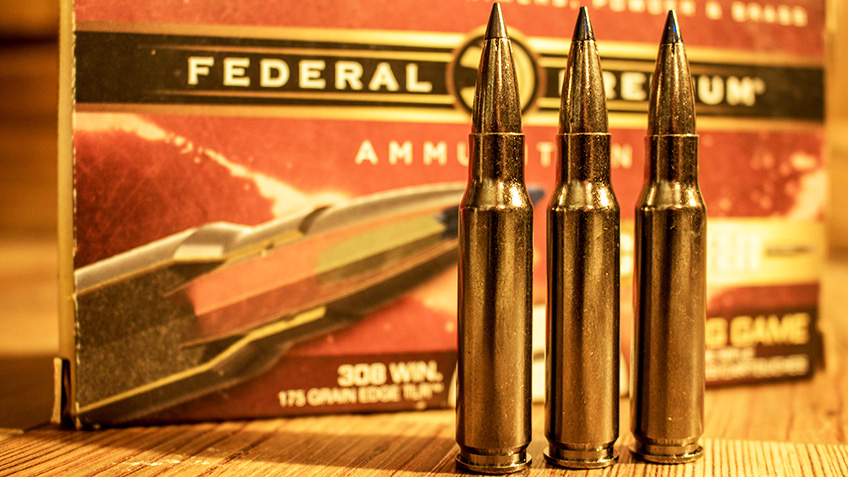
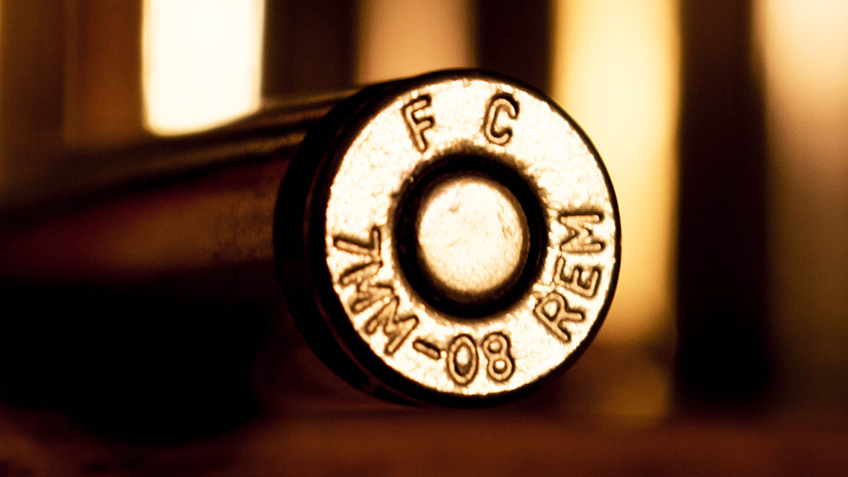
Head to Head: .308 Winchester vs. 7mm-08 Remington by Philip Massaro

h2h-308winvs7mm-08rem_lead.jpg

Here we have a pair of short-action gems, and two of the handiest cartridges ever to grace the deer woods. Both are are easy to shoot, can be housed in easy-to-carry, lightweight rifles and neither cartridge requires a country mile of barrel length to get the best performance. One was bred for war, and the other was a target cartridge, but both serve the hunter well, especially as an all-around rifle. Let’s look at the pros and cons of both cartridges, to see what they do and don’t have to offer.

The .308 Winchester was released as a sporting cartridge before it was officially adopted as a military round; the comparisons between the new, shorter case and the .30-06 Springfield were immediate, and continue to this day. Using the same .473-inch case head diameter of the Springfield (which in turn was borrowed from the 8x57mm Mauser, the Patrone 88 design), the .308 Winchester uses a case measuring 2.015 inches, in comparison to the Springfield’s 2.494 inches. The .308’s overall length is 2.800 inches, compared to the Springfield’s 3.340 inches; those two measurements have come to define our short- and long-action rifle receivers, respectively.

Equipped with a 1:12ʺ twist rate on most of the early rifles, the .308 Winchester could stabilize bullets weighing up to 200 grains; the heavy 220-grain round nose requires a 1:10ʺ twist to be properly stabilized. The .308 works very well with bullets in the range of 125 to 200 grains, with the 150-, 165- and 180-grain choices being the most popular. The rimless case uses a 20-degree shoulder for headspacing, and has a neck measuring 0.303-inch, or just short of one caliber, sufficient to hold bullets in place without needing a heavy roll crimp.

The 165-grain load—probably the most popular of the lot—leaves the muzzle at between 2650 and 2700 fps, depending on the load and the rifle. With a 200-yard zero, a decent spitzer will drop 9 inches at 300 yards and 26 inches at 400 yards, making it a solid contender for an all-around big-game rifle.

The lighter 150-grain loads make a sound choice for deer and antelope hunters, and for those who want to take their .308 for heavier game like moose, elk and bear, there are a good number of 180- and 200-grain loads to choose from.

Just a few years after the introduction of the .308, the wildcatters mated the case with 7mm bullets. The 7mm/308 wildcat showed all kinds of promise, especially among the target shooters who appreciate any reduction in recoil.

It stayed a wildcat for over two decades until Remington—long famous for adopting wildcat cartridges like the .257 Roberts, .22-250 Remington, .25-06 Remington and .35 Whelen—made an honest cartridge out of the 7mm/308; in 1980, the 7mm-08 Remington saw the light of day.

The 7mm-08 case is just slightly longer than the parent .308—2.035 inches vs. 2.015 inches—but maintains the same 20-degree shoulder of the .308 Winchester. The 7mm-08 can use the full spectrum of 7mm bullets, from the short, frangible 100-grain hollowpoints designed for varmints, up through the 120-, 140- and 150-grain bullets which handle deer and similar-sized game so well, to the heavier 160- and 175-grain projectiles that will sort out moose, elk and black bear.

The 140-grain loads—the most popular among the factory loads for the 7mm-08—leave the muzzle at right around 2800 fps, and with a 200-yard zero, will drop 8 inches at 300 yards, and 24 inches at 400 yards.

You can see the similarity in trajectory with the 165-grain .308 load, as both the 140-grain 7mm bullet and 165-grain .308-inch bullet share the same sectional density at .248. With comparable muzzle velocities (the 7mm-08 is a bit faster with the 140-grain load) the difference in holdover is negligible.

The difference between these two cartridges is going to come down to a couple of simple questions. Do you, as the prospective owner of one or the other of these cartridges, prefer 7mm bore diameter over .30 caliber, or vice versa? And, does the increase in felt recoil of the .308 Winchester make a difference?

Tackling the latter question first, I can report that there is a noticeable difference in felt recoil between the two—not enough to make me think twice about it, but it is there. If you’re considering one of the two for a young hunter, the 7mm-08 Remington will be easier to master.

Regarding the bullet diameter issue, the 7mm versus .308-inch debate has raged for over a century, with no apparent victor. In the case of these two cartridges, the choices top out at 175 grains in 7mm and 200 grains in .30; I suppose the decision could come down to whether or not you intend to use the heaviest bullets for the respective calibers, and use them routinely.

With modern bullet construction, the premium 160-grain 7mm bullets and 180-grain .30-caliber bullets are no joke at all, and will probably handle any game animal you’d hunt using either bore diameter. If you felt you needed a bit more, a premium 175-grain 7mm or 200-grain .30 would make serious medicine, albeit at a lesser velocity.

I have spent decades behind the trigger of a .308 Winchester, having used my Ruger 77 MKII since 1993 for all sorts of hunting here in New York and abroad, as well. I’ve used that rifle for factory ammunition testing, as well as developing dozens of handloads for it.

I’ve also acquired a sweet Tikka T3 Lite in 7mm-08 Remington, and have spent a considerable amount of time with that rifle, with both factory loads and handloads. For my own hunting, I’d feel comfortable taking either afield.

The .308 is the more popular of the two cartridges, based on the availability of surplus ammunition, and its military background. The 7mm-08 gives better ballistic coefficient and sectional density values when comparing bullets of the same weight, the .308 will offer a greater frontal diameter. Which gets the nod?

I’ve got to give it to the .308 Winchester, and only by a hair, because of the wide array of rifles and ammo available just about anywhere.

I was raised on a .303—my Dad has shot the same Mossberg Model 100A in .308 since he got out of boot camp in 1969—and with a proper bullet, it can do just about anything you’d ask it to. That said, if I were shopping for a rifle and found one that fit me well, and I loved, but was chambered in 7mm-08 Remington instead of .308, I’d be bringing it to the checkout counter without hesitation.

Categories
All About Guns Ammo

M1 Garand Rifle Grenades – How, Why, What?

Categories
All About Guns Ammo

The .32-20 An Acurate Gentleman’s Cartridge. By John Taffin

47

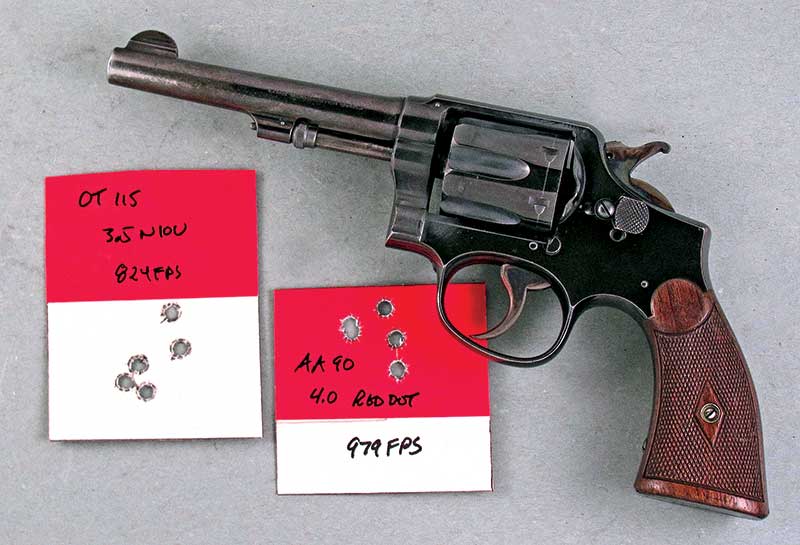
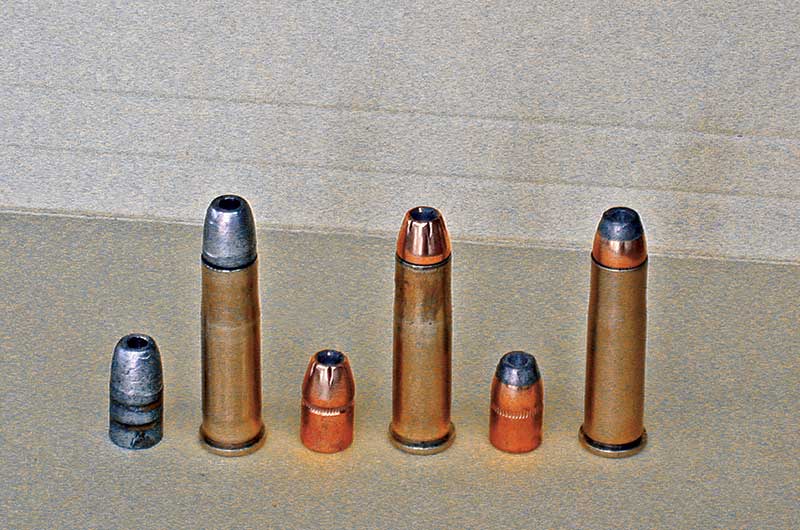
Above: The S&W Military & Police .32-20 is elegant, offers modest recoil and dependable accuracy. What’s not to like about this classic gun/cartridge combo?  Far left: The .32-20 works well with both cast and jacketed bullets.

The .32-20 started life in the Winchester Model 1873 and then shortly after was chambered in the newer Model 1892 rifle. The two other members of the Winchester bottle-necked levergun trio, the .44-40 and .38-40 were more serious cartridges for hunting and self-defense, while the .32-20 was obviously designed for small game and varmints.

By the time it arrived the West was much tamer than it had been in the 1870’s–1880’s and rifles were needed by farmers and ranchers mainly to keep the varmint population down.

Colt, just as they had with the .44-40 and .38-40, chambered their Colt Single Action and their Bisley Model for the .32 WCF (.32-20) and it became the fourth best-selling chambering behind the .45 Colt, .44-40 and .38-40 respectively. They would also offer it in their Model 1878 Double Action as well as the Army Special. Over at Smith & Wesson the number one vehicle for the .32-20 was the Military & Police.

Custom 81/2″ Colt Single Action by Hamilton Bowen. Even in factory guns, the .32-20 can offer guilt-edges accuracy.

Choices

Today the .32-20 can be found in replica single actions from Uberti and in the recent past has been offered in the 3rd Generation Colt Single Action, the Ruger Buckeye Commemorative, the Dan Wesson Heavy Barrel Double Action and the USFA Single Action.

When it was obvious I was not going to find the .32-20 I had long been looking for since my high school days, I had Hamilton Bowen build me the perfect sixgun. Starting with a Colt Single Action Army, Hamilton made a new cylinder, fitted an 81/2″ barrel along with an S&W adjustable rear sight and a post front sight.

It shoots just as accurately as expected, too. The Dan Wesson .32-20 is also exceptionally accurate, as is the Freedom Arms Model 97 .32 Magnum when fitted with an auxiliary .32-20 cylinder.

Just as with the .44-40 and .38-40 I load my .32-20 cartridges on the RCBS Model 2000 Progressive Press using separate dies for seating and crimping. The bottle-necked .32-20 cases are spray lubed with Hornady wax-based lubricant putting about 100 at a time in a cardboard tray. They slide in and out of the sizing die even easier than if it was carbide.

For some reason there’s a lot of variation in the overall length of .32-20 cartridge cases from various manufacturers. This means they must be separated as to headstamp or the bullets will not seat and crimp properly.

I only purchase new brass from Starline and keep my dies at the length of this cartridge case while separating the other manufacturers’ brass to use for loads safe in such older .32-20 sixguns as the Colt Army Special and the S&W Military & Police. For these two older sixguns my most-used load is the Oregon Trail 100-gr. SWC over 4.0 grains of Unique for right at 800 fps and groups well under 1″ for five shots at 20 yards.

Getting Serious

Heavier loads are saved for the Colt Single Action, the Dan Wesson and the Freedom Arms Model 97. Way back before I ever had a .32-20 I had the load I was going to use, which was 10.0 grains of #2400 and it hasn’t changed. I use cast bullets sized to 0.312″-0.313″ with excellent accuracy.

In my long-barreled Colt Single Action this load under the Oregon Trail 115-gr. SWC does over 1,450 fps and groups into a very tiny 3/4″. The same bullet using 5.0 grains of Unique results in 1,180 fps and a group of 7/8″. Jacketed bullets also perform very well with the #2400 load with Speer’s 100 JHP doing 1,313 fps and a 7/8″ group; while the Hornady 100 XTP gives 1,374 fps and a 3/4″ group.

The Dan Wesson 8″ Stainless Steel Heavy Barrel is absolutely monotonous in its accuracy. Loads well under 1″ are the norm. Lyman’s #31116HP over 10.0 grains of #2400 gives 1,300 fps in the Freedom Arms Model 97 with 3/4″ groups.

For a while Thompson/Center offered a 10″ Contender barrel in .32-20 using a 0.308″ barrel. Using the Speer 110 grain Varminter JHP over 13.0 grains of #2400 (only for use in the Contender!) muzzle velocity is close to 2,000 fps with groups of 0.5″!

With the arrival of the .327 Federal Magnum, the .32-20 is not quite as necessary as it once was for those who want to shoot varmints and small game with a revolver. It is, however still an excellent cartridge which connects us to the past.