Categories
All About Guns Ammo Fieldcraft

These are the best deer hunting ammo options Brady Kirkpatrick

With close to a dozen more modern choices, the .30-30 Winchester remains the best deer hunting ammo. If you grew up hunting, you have likely used .30-30 Winchester rounds at some point. It is one of the most used types of ammunition for deer hunting due to its history and reliability. Hunters have used lever-action .30-30 rifles to hunt deer for over 125 years. Yet, a lever action rifle may not be your preferred type of rifle. You may also want ammo suited for longer ranges. Other considerations when choosing the right ammo for deer hunting include muzzle velocity, energy, recoil, and compatible rifles.

Here are the best deer hunting ammo options based on your needs

.30-30 Winchester – Best Overall 

The .30-30 Winchester is the best overall choice when it comes to deer-hunting ammo. It was used in the Winchester Model 1894 lever-action rifle, making it one of the oldest types of ammo still produced. The 30-30 remains popular due to its limited recoil. The average 150-grain or 160-grain 30-30 rounds produces 9 pounds to 11.7 pounds of recoil while the typical rifle produces up to 15 pounds of recoil. The lack of recoil allows you to stay on target. You can also enjoy deep penetration, which is important for taking down your target with a single shot. 30-30 Winchester is a great choice for deer hunting but isn’t ideal for large game hunting, such as moose and elk. It’s also not often used for long-range hunting, as 30-30 rounds are commonly found in lever-action rifles made for close-range and medium-range targeting.

Pros

  • Deep penetration
  • Limited recoil

Cons

  • Not typically used for long-range hunting
  • Offers less stopping power

.243 Winchester – Best deer hunting ammo for Reduced Recoil 

Using .243 Winchester cartridges is a great alternative to the .30-30 Winchester for those with a bolt-action rifle that still want limited recoil. The .243 Winchester rounds are used in bolt-action rifles and offer a little less recoil compared to the 30-30 rounds. You can find .243 Winchester in lightweight, bolt-action rifles with great accuracy. It’s a good choice for younger hunters and those that are new to hunting. However, it lacks the power and energy needed for long-distance shooting. The barrel of the typical .243 rifle is often shorter compared to larger caliber rifles. Yet, the .243 Winchester is a top recommendation for distances up to a few hundred yards.

Pros

  • Significantly less recoil
  • Great accuracy
  • Found in lightweight rifles

Cons

  • Limited stopping power for big game
  • Not often used for long-range targeting

.308 Winchester – Most Affordable Deer Hunting Ammo 

Purchasing .308 Winchester cartridges can save money compared to other rounds. The .308 is one of the most affordable cartridges available. The low cost of this ammo may appeal to those that hunt frequently or spend time honing their shooting skills.

.308 Winchester rounds also produce a lot of energy. They have a total energy of about 2,600 pounds per foot and drop just 15 inches at 300 yards. .308 Winchester rounds may be more accurate in medium ranges of 300 to 500 yards compared to the previous types of ammo.

The drawback to using .308 Winchester rounds is the recoil. These rounds produce more recoil compared to the .30-30 and .243 cartridges, which can slow your firing rate.

Pros

  • Most affordable option
  • Well-suited for medium-range hunting

Cons

  • Produces more recoil
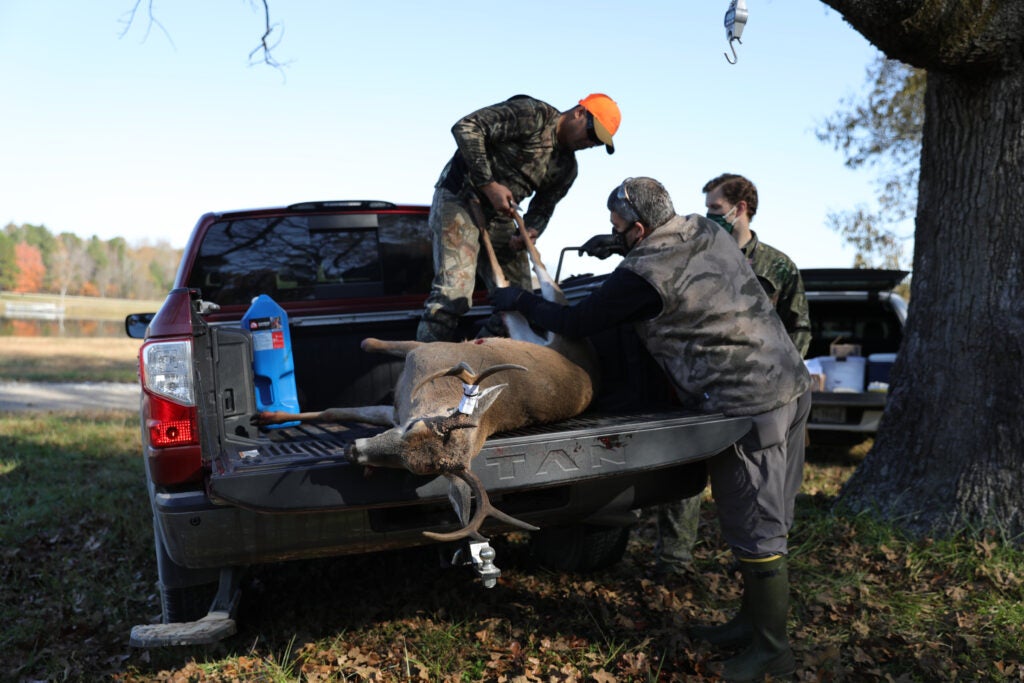
best deer hunting ammo fort campbell
Fort Campbell Public Affairs Office photo.

6.5 Creedmoor

The 6.5 Creedmoor cartridge is manufactured by Hornady, which is an American company based in Nebraska. The company specializes in making high-quality ammunition. 6.5 Creedmoor rifles are suited for big game hunting while the previous options lack the stopping power needed to take down larger animals. These rounds are also made to maintain energy across long distances, making them well-suited for targeting animals at further ranges. A rifle with 6.5 Creedmoor should have an effective range of about 1,000 yards. However, other options may provide a little more accuracy for long-distance shooting.

Pros

  • Suited for deer and larger animals
  • Offers an effective range of 1,000 yards

Cons

  • Less accuracy compared to other long-range ammo

Conclusion about the best deer hunting ammo options

The .30-30 Winchester is a common choice for deer hunting, as it’s the ammo used in one of the most traditional lever-action deer-hunting rifles. It works well for close-range and medium-range hunting but tends to drop significantly at longer ranges. Using .243 Winchester rounds is an alternative to .30-30 rounds. Instead of lever-action rifles, the .243 rounds are often used in bolt-action rifles. Bolt-action rifles tend to offer greater accuracy. 308 Winchester is one of the most affordable options. If you spend a lot of time at the range between hunting trips, you may prefer using cheaper ammo. 6.5 Creedmoor cartridges are lightweight and made specifically for long-range shooting. It’s a heavier caliber compared to the previous options, making it more versatile. Along with deer hunting, you can use 6.5 Creedmoor for hunting larger animals, such as moose.
Categories
All About Guns Ammo Fieldcraft

BETTER SHOOTING: JUST SAY NO TO RIMFIRE DEFENSE WRITTEN BY DAVE ANDERSON

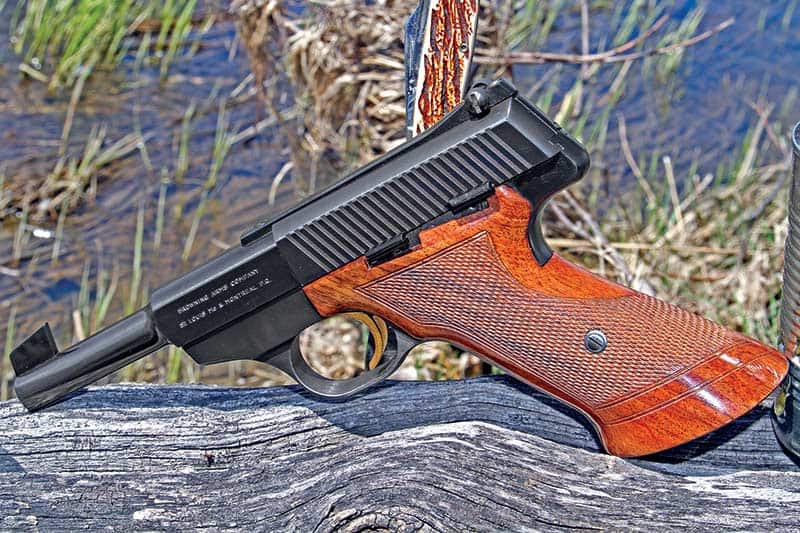
Dave remembers when the original Browning Challenger was introduced.
It remains, in his view, the best all-around .22 pistol ever made.

Rimfire pistols and revolvers are among the most useful tools handgunners can own. They are outstanding for training new shooters and maintaining shooting skills. Ammunition is (or was) relatively cheap compared to centerfire ammunition and with virtually no recoil.

They are excellent for pest control and informal small game hunting around a farm or ranch, or to pack while camping, fishing, or hunting big game. But most of all, .22s are fun to shoot.

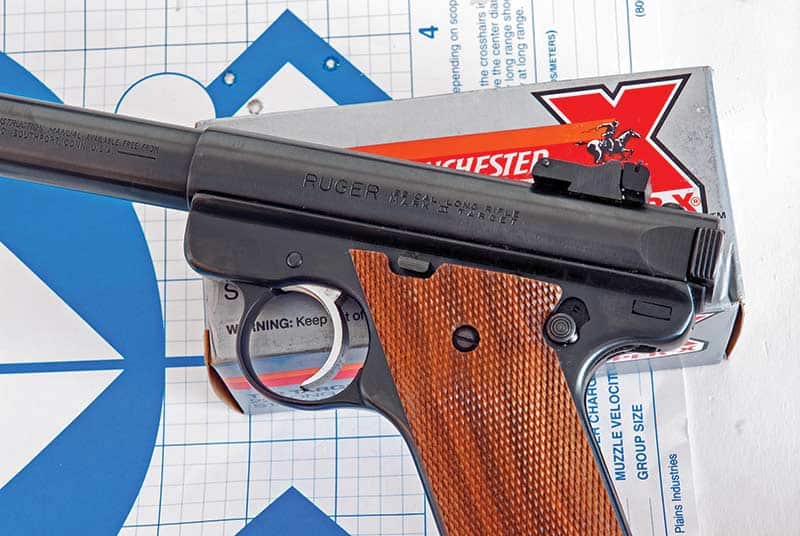
In all its forms, the Ruger .22 pistol provides excellent value and performance for its cost.

But What About Carry?


What about .22s as carry guns? I’m not talking about them as backup or last-ditch firearms but as primary personal defense weapons. The short answer is don’t do it. No. End of story.

Except there has to be a story. Yes, any gun is better than no gun. In the vast majority of instances in which a firearm is used defensively, no shots are fired. The person being threatened displays a firearm and the assailant either flees or surrenders. No sensible person wants to be shot. Most foolish people don’t want to be shot either.

The .22LR is no toy. There’s hardly a species on earth that hasn’t at one time or another been killed with a precisely placed .22 bullet. I’ve killed quite a few animals ranging from 300 to 1,200 lbs. with .22 rifles. For years on the farm, we butchered at least two steers and two hogs annually, meat for ourselves and a close relative or two.

Dad didn’t mind shooting vermin from around the barn but found it hard to shoot animals he’d raised. On butchering day, he’d always go to the house for a forgotten knife or sharpening stone, and it was understood the animal would be dead by the time he got back. One shot with the muzzle of the .22 rifle a couple of feet from its head and even a 1,200-lb. steer dropped instantly.

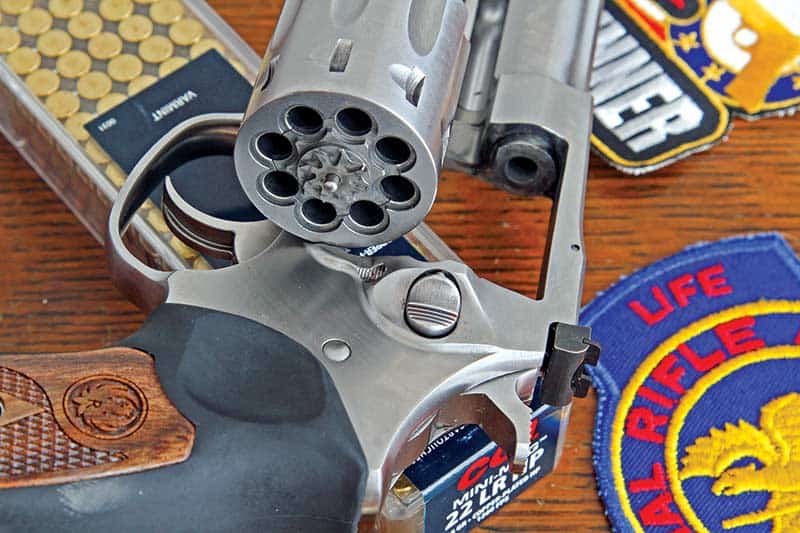
One of the best revolvers for the outdoor person today is the Ruger SP-101 in .22LR.
With stainless steel construction, it is nearly impervious to the elements and is an
accurate, dependable outdoor companion.

Feeding

Don’t think I don’t have respect for the .22LR cartridge. But I cannot recommend a .22 handgun as a primary defensive arm. There are two fundamental reasons: reliability and power. In a semiautomatic action, the .22LR has two strikes against it. It is a rimmed case, not well adapted to being stacked in box magazines. And it is long for its diameter, making reliable feeding more problematic.

I have many .22 rifles, which have been completely reliable. Almost always, they are models with tubular or rotary magazines. Semiauto .22 rifles I’ve used with complete success include the Winchester 63 and 74, Browning takedown model, Remington Nylon 66 and 550, Marlin 60 and Ruger 10/22, among others. Box magazine semiautos have been less reliable.

The standard Remington Nylon 66 is legendary for its reliability, while the Nylon 77 with a detachable box magazine I once owned was nothing but trouble. Among detachable magazines, the only ones I can recommend unreservedly are the Ruger and Browning rotary design

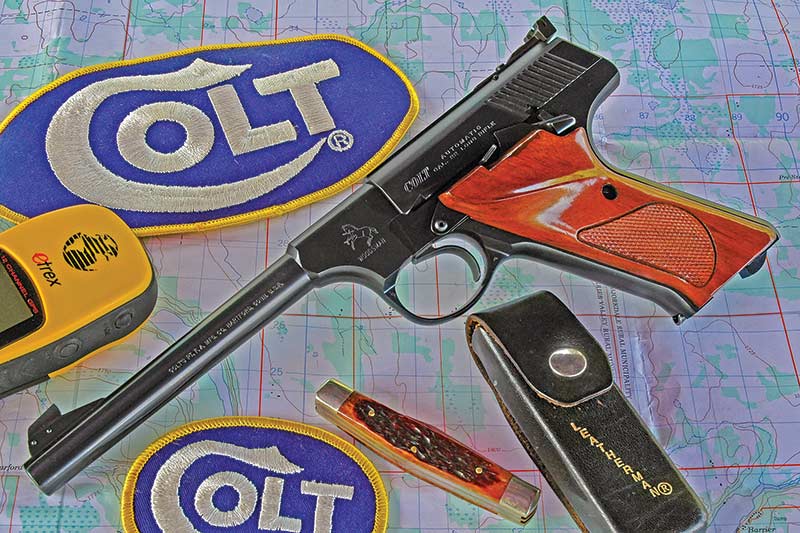
Colt Woodsman’s name suggested the role for which it was intended. This is a Series 3 Target Model.

Ammo Reliability


I believe rimfire ignition is less reliable than centerfire ignition. I’ve had far more misfires with rimfire cartridges. Often, they will fire on a second strike, especially if you rotate the cartridge, so the firing pin strikes a different location. I’ve fired hundreds of thousands of centerfire rounds and can recall only two or three misfires.

There’s very little to go wrong with a centerfire primer other than a missing pellet of priming compound or missing anvil. Quality control is rigorous and the chances of a bad primer are remote. One reason I use Black Hills ammunition whenever possible is they visually inspect every primer before it goes to the loading machines, reducing the chances of a misfire to near zero. The handloader can do likewise by inspecting primers before loading. And do keep your oily fingers from touching the primer. There’s a good chap.

There are reliable .22s, most revolvers, for example. Some semiauto .22 pistols are as reliable as the best centerfires, including, in my experience, the Beretta 70 series, the Ruger .22 model, the S&W, 41 and the Browning Buckmark. I’m sure there are others. But that doesn’t solve the lack of power issue. I’ve conceded the effectiveness of the .22LR with precise shot placement.

Can you achieve such precision on what will likely be a moving target? Can you hit a rolling baseball — make that a golf ball — every time, on-demand, at speed and under great stress? Surviving a gunfight will take all the skill, courage and coolness you can muster, the most effective weapon you can manage and probably a good dose of luck. Unless you have no other choice, don’t handicap yourself with a .22.

Categories
All About Guns Ammo

The GIANT .460 Magnum Revolver – Breanna shows how it’s done

Categories
Ammo

The 280 Remington: Overlooked…. but good!

Categories
All About Guns Ammo

The Best .38, .357, .44 Snub Nose Revolvers Ever (Epic Carry Guns) by LJ BONHAM

LJ Bonham is a semi-subsistence hunter, hunting magazine editor, and firearms enthusiast who lives in the Rocky Mountains.

Learn all about the best .38, .357, and .44 caliber snub-nosed revolvers.

Learn all about the best .38, .357, and .44 caliber snub-nosed revolvers.

Creative Commons License_No Attribution_Free to Use

The Best Snub-Nosed Revolvers

What are the best .38, .357, and .44 caliber snub-nosed revolvers—ever? Tough question, there are and have been so many good ones. However, which are the true greats?

Regardless the brand, snub-nosed revolvers have one definitive characteristic: barrels three inches or shorter. Between two and two and a half inches is most common, though. Why do snubbies exist, anyway? Short barrels make them easier to conceal than their long-barreled brethren.

A secondary benefit is a shorter barrel clears a holster’s mouth quicker on the draw than a longer weapon. This reduces time to target, and in gun fights, milliseconds often separate the living from the dead.

Snubbies have been around since handguns were first developed. Small, concealable wheel lock, flint lock, and percussion cap muzzle loaded pistols were quite popular in their day. They were also favored as last ditch problem solvers by well-heeled gentlemen, women, lawmen, gamblers, and general riff-raff alike.

When Samuel Colt introduced the world’s first viable mass produced revolver in the 1830s, it didn’t take long before he, and many other gun makers who followed, developed short barreled versions. By the late 19th century, snubbies (the British called them “Bulldogs”) evolved with the then new double-action revolver into the form we recognize today.

Snub nosed revolvers have been produced in almost every handgun caliber ever invented. Today, snubbies are, in the main, offered in just a few: .38 Special, .357 Magnum, and either .44 Special or .44 Magnum. There is some overlap when you consider the magnums can fire their special counterparts (but not vis-a-versa).

Here, then, are the best snub nose revolvers—ever—in each caliber.

19th century British Webley "Bulldog."

19th century British Webley “Bulldog.”

Wiki Commons_Commander Zulu

The Best .38 Caliber Snub Nose

Most snub nose revolvers on the market today are .38s. They are, as a rule, built on a gun maker’s smallest revolver platform so they are the most concealable snubbies available. The good news is there are so many to choose from, the bad news is it’s difficult to tell the exceptional ones.

The runners up in this segment are the Ruger LCR, the classic Colt Detective Special, the new Colt Cobra, various Taurus models, some from Rock Island Arsenal, and Rossi, to name a few. These are all fine revolvers. The Ruger brought innovative polymer frame technology to the revolver world. The tried and true Detective Special and a Rock Island model offer six shot cylinder capacity as opposed to the segment’s normal five.

As good as these guns are, there is one snubbie which still dominates and looks poised to maintain the lead for a long time. It is Smith and Wesson’s ubiquitous J-frame. The diminutive J-frame evolved from the company’s I-frame in 1950. Dubbed the “Chief’s Special,” the original Model 36 offered a carbon steel frame and cylinder, a two-inch barrel, a strong two lug locking mechanism, and a five shot cylinder.

J-frames have been produced in many variations: shrouded hammer; DAO concealed hammer; aluminum frames; even lighter Scandium frames and cylinders; stainless steel frames and cylinders; and many grip options.

I once owned a blue steel Model 36. The gun did have some short comings—which lead me to sell it. J-frames are so small, even the heavier all steel guns are a bit snappy to shoot with standard pressure .38s. I also felt the gun weighed too much to justify the .38’s reduced punch when fired from so short a barrel.

Things have changed, though. It took a while, but Smith got the formula right when they debuted the alloy-framed, steel cylinder Model 642 in the 1990s. The 642 is the old Airweight Centennial (1952) but without the questionable grip safety. The 642 is near perfect. The hammer shroud’s fluid design means it won’t snag when drawn. Plus, you can fire it from inside a coat pocket in an emergency! The concealed hammer can’t get caught on anything. The 642 is also rated for +P ammunition so it gives a bit more thump at the business end than my old Model 36—with increased recoil, though. Its light weight means you stash it just about anywhere on your person as either a primary or backup gun.

Some complain the factory trigger is a bit heavy, but if you carry it in a pocket or handbag, you’ll appreciate the extra safety margin this provides. In my experience, the triggers lighten up a bit as they are used, and some basic practice will let you master what is still a smooth, even, pull.

Smith and Wesson Model 642.  The ultimate snub nose .38 in author's opinion.

Smith and Wesson Model 642. The ultimate snub nose .38 in author’s opinion.

Creative Commons License_Gte893m

The Best .357 Magnum Snub Nose

In a bygone era (the mid to late 20th century) a person had just a few choices when it came to snubbies chambered for the fabled .357 Magnum. For the most part, you picked either a K-frame Smith & Wesson, such as the Model 19, or Colt’s magnificent Python. Since these guns were just short barrel service-sized revolvers with steel frames, they were on the large and heavy side compared to a J-frame.

As a former S&W Model 19 owner, I can attest a 2-1/2-inch barreled .357 Magnum is a challenge to shoot. Think enough muzzle blast to induce a migraine, muzzle flash akin to a flamethrower, and ballpeen hammer recoil. The undersized ejector rod wouldn’t always free stubborn spent cases, either. Yeah, I sold it. If I ever go this route again, I’ll get a Model 65 with a three-inch barrel and its attendant full-length ejector.

In 1988, Bill Ruger stood the snub nosed .357 world on its head when his eponymous company introduced the SP-101. No one had ever seen anything quite like it. The SP-101 had a five shot cylinder which made it thinner by a significant margin than the six-shooter Smiths and Colts. It weighed less, too. Even with the optional, easier to shoot three-inch barrel it still took up less room in a waistband than its rivals. Over-engineered, all stainless steel construction meant you could carry it next to sweat soaked skin and it wouldn’t corrode. It could digest the stoutest .357 loads as a steady diet and not shoot itself loose like some medium framed guns will.

Today, there even more choices. Ruger’s newer LCR comes in .357 as do several S&W J-frames, and Kimber’s new K6s offers the smoothest trigger in the segment. Still, these other guns don’t offer the SP-101’s wonderful balance between size, weight, power, and price. The trigger is pretty good, to boot.

Ruger SP-101. Author's pick for best .357 Magnum snub nose.

Ruger SP-101. Author’s pick for best .357 Magnum snub nose.

Public Domain

The Best .44 Caliber Snub Nose

.44 caliber snub nose revolvers lay moribund for decades after World War Two. Once a popular bore size, and epitomized by the .44 Special, it fell on hard times until the .44 Remington Magnum hit the scene. The major motion picture, Dirty Harry, catapulted it back into the mainstream in 1971. However, despite the .44 Mag.’s celebrity, the market offered few snubbies.

You could get S&W’s large N-frame with a three-inch barrel, but this gun proved big and quite heavy. Not the best to cart around tucked into a waistband when you’re in summer attire. The other option lay in Charter Arms’ .44 Special Bulldog model. A good enough gun, but not the Smith’s equal in overall quality. Plus, use by infamous “Son of Sam” serial killer, David Berkowitz, in the 1970s cast a pall over the Bulldog in many people’s minds.

In the past decade the .44 Special has risen from the ashes. Some people want a big bore carry gun and the market has responded. Ruger offers the Super Redhawk .44 Magnum with a two-inch barrel and their GP-100 in .44 Special. Smith and Wesson have their ubiquitous N-frame available with three or even one-inch tubes and now the Model 69, a five-shot L-frame, both in .44 Magnum. Taurus has several .44s suitable for carry, in particular the Tracker and M445. Charter Arms is still around and has improved the Bulldog. There are other, less well known gun makers with .44 snubbies as well.

The .44 snub noses present unique challenges for designers and shooters both. It is difficult to balance size with power due to a .44 cartridge’s diameter. Lighter, more compact guns, such as the Bulldog and M445, ramp up the .44 Special’s recoil and they intimidate some shooters. This can be said about all the .44 Magnum snubbies, the Tracker and S&W’s scandium offerings in particular. The large frame guns are less than comfortable to carry concealed all day, but they offer the best shooting dynamics when stuffed with .44 Specials.

I’ve shot a custom three-inch barrel S&W Model 57 in .41 Magnum. It’s not as bad as you might imagine. My guess is a similar size and weight .44 Mag. would prove just as manageable as the .41 if stuffed with moderate 185 or 200 grain loads.

The best .44 snub nose revolvers offer a balance between bulk and power. Based on this metric, the S&W Model 69 is the best in the lot. Its medium frame and five-shot cylinder allow it to carry as well as a big bore can, yet it has enough heft to dampen recoil. The fact it can shoot either specials or magnums gives it a versatility which the dedicated .44 Special guns do not possess.

Categories
All About Guns Ammo Born again Cynic! Karma can be a bitch! The Green Machine

Shooting the EM-2 in .280 British

Its just a pity that we did not adopt this round back then instead of playing politics with our Allies! But now we have adopted the 6.8 round. Which is a sorta, kinda version. Oh well better late than never!

Grumpy

Categories
All About Guns Ammo

Spanish M93 & Chilean M95: Early 7mm Mauser Rifles & Carbines (C&Rs Are Fun)

Categories
All About Guns Ammo

Shooting reduced 30-06 loads in M1 Garand

Categories
All About Guns Ammo

Matt D. 2020 yards 7mm Dakota

The 7mm Dakota

By Chuck Hawks

7mm Dakota
Illustration courtesy of Dakota Arms
Dakota Arms offers a line of proprietary magnum hunting cartridges designed by Don Allen and based on the .404 Jeffery case shortened to function in standard (.30-06) length actions. These come in a variety of calibers including 7mm. Factory loaded ammunition is supplied only by Dakota.

The 7mm Dakota uses standard .284″ diameter bullets. It is based on a rimless, bottleneck case with a rim diameter of .545″. This case is 2.50″ long and has a sharp 30-degree shoulder. The cartridge overall length is 3.33″.

Because the 7mm Dakota has a larger rim diameter than the standard belted magnum cartridges, it requires a bolt specially manufactured or modified to match. No doubt this will continue to limit the cartridge’s popularity.

7mm Dakota factory loads are offered with a 140 grain and two 160 grain bullets. Dakota also offers unfired 7mm brass to reloaders, priced at $175/100 cases.

The 140 grain bullet has an advertised muzzle velocity (MV) of 3400 fps and muzzle energy (ME) of 3593 ft. lbs. The 160 grain bullets have an advertised MV of 3200 fps and ME of 3637 ft. lbs.

The handloader has many more bullet choices, of course. Projectiles from 100 to 175 grains are commonly available, but for a case the size of the 7mm Dakota the 139-140, 150-160 and 175 grain bullets probably make the most sense. Slow burning powders work best with these bullets in the 7mm Dakota.

The Sixth Edition of the Hornady Handbook of Cartridge Reloading shows 7mm Dakota loads for their various 154 grain bullets at MV’s from 2700 fps to 3200 fps with a number of powders. IMR 7828 seems like a reasonable choice for the 7mm Dakota. 66.7 grains of IMR 7828 behind a 154 grain Hornady Spire Point Interlock bullet gives a MV of 2700 fps. A maximum charge of 76.7 grains of the same powder gives a MV of 3200 fps and a ME of 3501 ft. lbs. with the 154 grain bullet.

The trajectory of that load looks like this: +2.4″ at 100 yards, +3″ at 150 yards, +2.4″ at 200 yards, +0.7″ at 250 yards, -2.1″ at 300 yards, and -6.3″ at 350 yards. The MPBR (+/- 3″) of that load is 311 yards. These Hornady loads used Dakota cases and Federal 215 primers and were chronographed in the 25″ barrel of a Dakota 76 rifle

Categories
Ammo

The Moving Sniper Bullet

https://youtu.be/fWtjZo0Ya5c