Category: Ammo
In an article titled simply “How Much Ammo?” Divemedic offers his opinion on how much ammunition you should be stockpiling against the day that it may no longer be available. I generally support his conclusions.
Some people seem to think this is a silly question; that there’ll always be ammunition available in stores, and from US manufacturers. That’s a dangerous assumption. There have been innumerable threats made to shut down online ammunition vendors, and some states no longer allow it (or surround it with so many restrictions and conditions that it’s burdensome and time-consuming to meet them all). There’s also the ATF’s ongoing crusade to shut down as many firearms dealers as possible, based on paper problems rather than actual crimes (which they get to define as such). Finally, every shooting increases pressure on supermarkets such as Walmart to stop selling ammunition at all, removing a major source of supply from the market. As such pressures ratchet up, the day may come that ammunition becomes vastly more expensive than it is now, with a much reduced selection and severe restrictions on how much you can buy. It’s to safeguard against that potential problem that we should maintain a useful reserve of ammunition for ourselves.
I emphasize the utility of .22 Long Rifle ammo and weapons. You can get .22LR adapters to fit AR-15 rifles and others, and there are many .22LR handguns that handle in ways very similar to defensive handguns. Furthermore, .22LR is relatively cheap compared to centerfire ammunition. If you accept that a minimum (I emphasize, minimum) annual training requirement is 500 rounds (which is nowhere near enough to maintain full competency with rifle and handgun), then I think putting aside ten years’ worth of .22LR is not a bad idea. Personally, I plan on at least 1,000 rounds per year, and want more than a decades’ worth of ammo on hand to support that. YMMV, of course. That can substitute for quite a lot of centerfire ammo, but not all. After all, the recoil, report, etc. of full-house rounds is much greater than rimfire, and one has to become (and stay) accustomed to that. I’d say that for every 10 rounds of rimfire ammo we fire, we should be shooting one round of centerfire ammo. Again, YMMV.
There’s also the unpleasant thought that if a state of emergency is declared, the authorities may try to confiscate guns and ammunition from civilians. We all know what happened in New Orleans during Hurricane Katrina, and “woke” states in particular probably won’t hesitate to do the same thing given any excuse that comes to hand. I therefore suggest that one should conceal at least part of one’s stash in a safer place, where it’s less likely to be found and more secure against confiscation. How you do that is your business. I think off-site storage is probably a good starting point – and I don’t mean a storage unit, because those are most likely to be targeted by both looters and law enforcement during a crisis when they’re looking for stuff. The same goes for storing stuff with friends – their homes are just as likely to be searched as yours is. Use your imagination. Think outside the box – and stash enough ammo and firearms that if all the rest of yours are no longer available, you’ll still be able to defend yourself and your loved ones.
(I’m not encouraging you to break any laws that may forbid such steps, of course. I’m not going to condone criminal conspiracy. Perish the thought!)
Peter
Categories
How Much Ammo? Published by Divemedic
Once you pick your flavor of ammo as we did earlier this week, how much of it should we have on hand? Some people say that the most handgun ammunition that you need on hand is 250 or 500 rounds. That’s ridiculous. I have more than that in any given caliber.
For starters, there are two types of ammo: range ammo and war shots. PewPew Tactical recommends 500 rounds as a starting point, with 150 of those rounds being war shots. I still think that’s low. So what do I consider to be a good amount of ammo?
For range ammo, I buy in bulk because it’s cheaper, meaning in 1,000 round cases. If I find a good deal, I snap it up. That’s how I scored 9mm FMJ for 15 cents a round back in January of 2020, when I got 2,000 rounds for $300. Of course, that was pre-COVID. Good luck getting 9mm at that price now.
For starters, .22lr comes in bricks of 500 rounds. I own a few .22 firearms, both pistols and rifles. You will seldom see me with less than a couple of thousand rounds of .22 lying about. Of course, there is really no such thing as a “war shot” with .22lr. A brick of .22 will cost you about $30 at today’s prices, making it the cheapest way to shoot. It’s also great for squirrels and rats. That’s why I keep a bunch on hand.
When it comes to range ammo, I try to stock a minimum of 500 rounds per caliber. For the high use calibers of 9mm and .45, I find that 1,000 rounds on hand is a minimum.
For defensive handguns, we need to consider war shots. For semi-autos, I try to keep a minimum of 500 war shots per handgun. For revolvers, 150 war shots per handgun. So if I have a pair of 9mm handguns, that’s 1,000 rounds.
When we get into 5.56mm and 7.62x51mm, we get into a whole different ballgame. For the AR, all I stock in 5.56mm is Green Tips. I don’t do different war shots and range ammo, because I want my war shots to perform identically to my range ammo. For that reason, I try to keep a minimum of 5,000 rounds on hand of 5.56mm.
Likewise for the 7.62x51mm, but my round count there is lower simply because it is more expensive and takes up more room. So I want my minimum there to be no less than 2,500 rounds. With the 7.62, I look for nothing but the 147 grain. That way, every round is similar in performance to every other round.
For shotguns, all I have are 12 gauges. I stock 250 defense rounds in buckshot and slug, and 250 rounds of #7 shot (for hunting).
Toss in a few smoke grenades and a couple of pepper grenades, and the fire marshal’s office will shit themselves if they ever find out about that stash.
So as you can see, that means a lot of ammo on hand. We are talking about more than 20,000 rounds of ammo. I didn’t get there by buying it all at once. I just buy ammo on a regular schedule, buy a case at a time when I do buy, and try to get more than I shoot. Eventually, you get a decent stockpile.
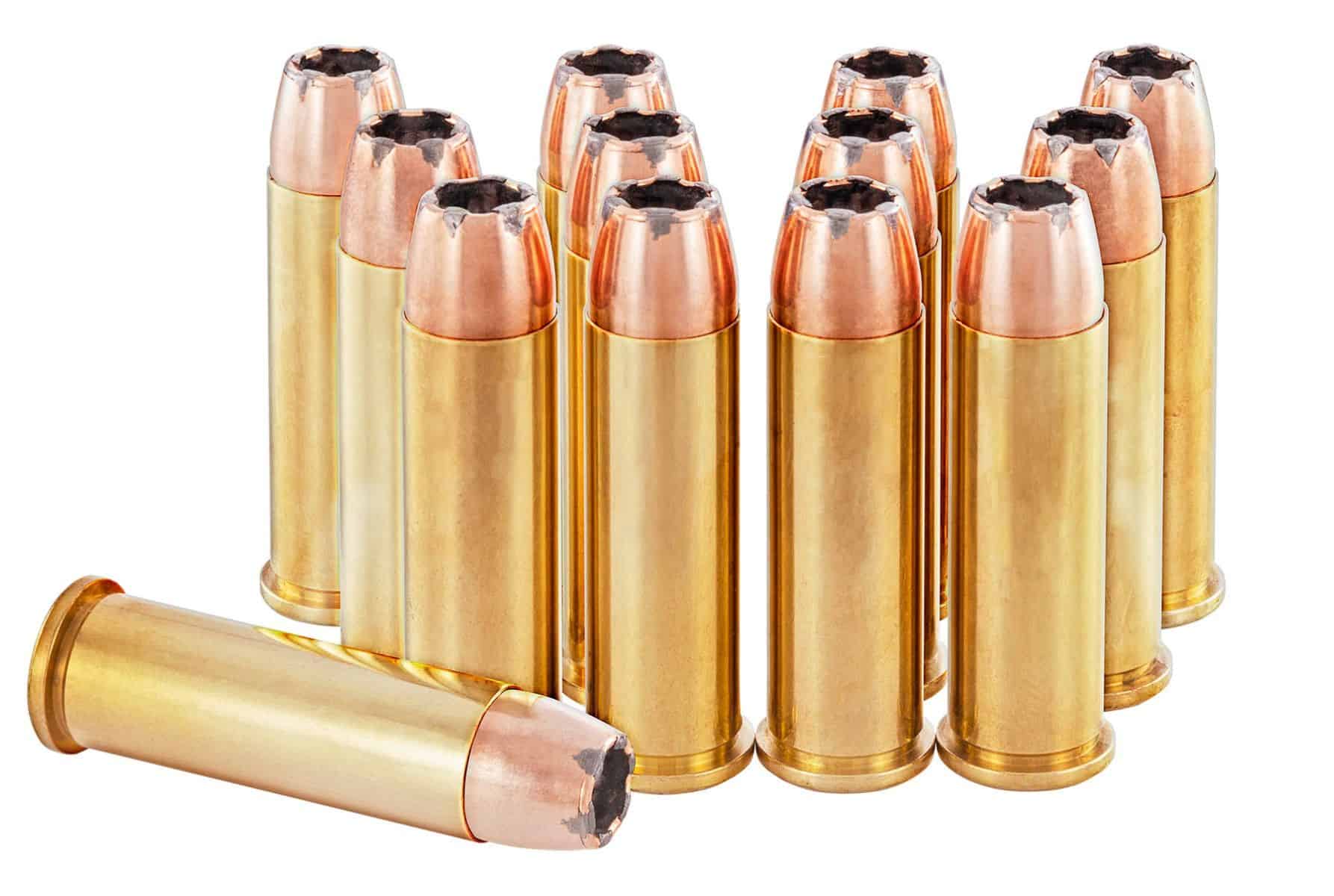
Freedom Munitions continues to expand its X-DEF defense line with the addition of the .38 Special caliber.
Like all X-DEF products, Freedom’s X-DEF .38 Special hollow point ammunition has been designed from the ground up by Freedom Munitions with optimum penetration and weight retention in mind.
X-DEF ammunition is intended for personal protection. The cartridges utilize a brass case with X-Treme Bullets’ copper plated, 158-grain X-DEF hollow point expanding bullet and are loaded with premium, low-flash powder.
Tested in Freedom Munitions’ own underground ballistics lab, the 158-grain projectile travels at a velocity of 925 fps with a 6” barrel and penetrates 13”-15” in clear ballistic gelatin.
Earlier in 2023, Freedom Munitions also released .357 Mag X-DEF in two weights and a 200-grain 10MM X-DEF round.
X-DEF .38 Special is available now in 50 count at FreedomMunitions.com.
Categories
Winchester’s WSSM’s: Is It A Total Fail?
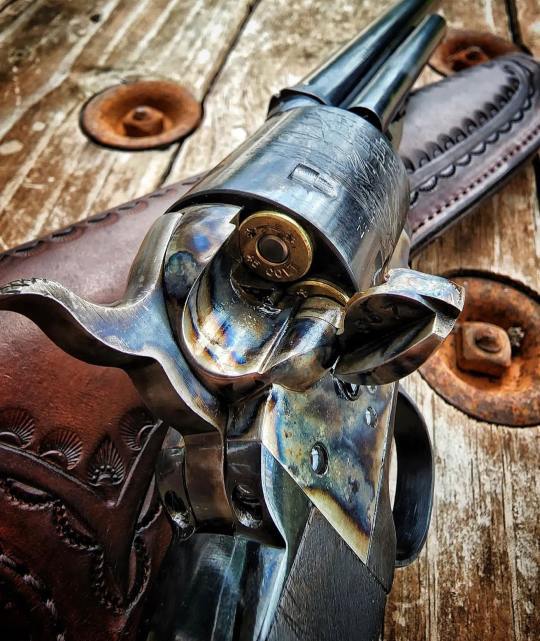
The .280 British was an experimental rimless bottlenecked intermediate rifle cartridge. It was later designated 7 mm MK1Z, and has also been known as 7 mm NATO, .280/30, .280 Enfield, .280 NATO, 7 mm FN Short, and 7×43mm.
Like most armed forces in the immediate post-World War II era, the British Army began experimenting with lighter rounds after meeting the German StG 44 in combat. The Army began development in the late 1940s, with subsequent help from Fabrique Nationale in Belgium and the Canadian Army. The .280 British was tested in a variety of rifles and machine guns including the EM-2, Lee–Enfield, FN FAL, Bren, M1 Garand and Taden gun.
Despite its success as an intermediate cartridge, the .280 British was not considered powerful enough by the U.S. Army and several variants of the .280 British were created in an attempt to appease the U.S. Army. However, the U.S. Army continued to reject these variants, ultimately adopting the cartridge that was then designated the 7.62×51mm NATO.
History[edit]
Impetus[edit]
During World War II the standard British rifle and machine gun round was the venerable .303 British. Efforts to replace the .303 with a more modern round predated even World War I, but a series of events kept it in service in spite of its rimmed design causing a number of alleged problems[citation needed].
During the war the Allies encountered the new 7.92 “Kurz” cartridge on the battlefield and noted its effectiveness. The Kurz was an “intermediate power” round, less than a conventional rifle round like the .303, but more than pistol rounds like the 9mm Parabellum. This gave the Kurz rifle-like performance in close-range encounters, while still having a small enough recoil that it could be fired in fully automatic fire. This led British small arms designers to begin the development of their own intermediate round.
The goal of the British designers was to create a cartridge that would replace all small arms in .303 calibre including the Bren, the No.4 Rifle and the Vickers medium machine gun with a cartridge suitable for a “light rifle”. Thus the cartridge had to demonstrate ballistic performance equal to that of a full powered rifle round, yet exhibit as little recoil and blast as possible. This appeared possible through improved bullet shaping. A shorter cartridge producing lower recoil also enabled the weapon to be shorter and lighter, and hence easier to use.
Selection of the .280[edit]
After extensive tests by the “Ideal Cartridge Panel” in 1945, the British decided upon two 7 mm cartridges – the .270 and the .276. Both designations reflected the measurement of the distance between the rifling lands in the cartridges’ respective barrels; the .276 bullet‘s actual diameter was .284 inches (7.2 mm). In order to focus their efforts, the British ceased research on the .270 and concentrated their efforts on the .276. The .276 was later renamed the .280 British even though no dimensions were changed.
Recoil of the .280 British cartridge was calculated to be a little under half of the .303. Long range performance actually surpassed that of the .303, and shooters reported that it was much more comfortable to fire with the reduced recoil and reduced blast. It seemed that the British designers had accomplished their goals, and proceeded to introduce the cartridge to their NATO allies.

.280/30 British sectioned cartridges. Bullet types from left to right: type C mild steel core, type B 140 gr ball and type S12 140 gr ball based on the 1913 pattern 7×57mm Mauser spitzer bullet that was chosen for the 7 mm MK1.[3]

From left to right: .30-06 Springfield, .280 British and 7.62×51mm NATO cartridges.
Counterparts in Belgium and Canada proved very interested, and the Belgian company FN would introduce their own gun designs based on the .280 as well as produce the rounds in quantity. However, the Americans refused to adopt a calibre under .30 inch, or with ballistics inferior to the then-standard .30-06 Springfield round. The British then attempted to appease the Americans though a series of changes to the round. The first was a small change to the rim diameter of the .280 to the size of the .30-06 Springfield to produce the .280/30 cartridge, which was produced in large numbers and is the basis of the dimensions listed to the right. The .280/30 cartridge weighed 20.3 grams (313 gr), making it a rather heavy cartridge by intermediate standards.
When the .280/30 was rejected by the Americans as being too weak with too great a drop in trajectory beyond 800 yards (732 m), the British and Belgians made larger changes to the cartridge design. These resulted in several different variations; one was just a .280/30 with the bullet seated less deeply so more powder could be put in the case, another was a T65 cartridge case necked down to 7 mm. The different cartridges that the British and Belgians eventually came up with fired 140-grain (9.1 g) bullets at around 2,700 to 2,800 feet per second (820 to 850 m/s), but with a much greater blast and recoil than the .280/30, which defeated the design parameters of the initial .280 concept.
Unsatisfied with the U.S. Army’s response on the issue, the British adopted the EM-2 and the .280/30 as their primary rifle and ammunition in 1951 with the .280/30 being re-designated as the “7 mm MK1Z”.
Selection of 7.62 NATO[edit]
Britain, Canada and the United States, founding members of NATO, had all signed an agreement that member states would develop and deploy common small arms and cartridges, developed through competitive trials in co-operation together. Britain and Canada had been open about their developments, and the Americans claimed they were not developing a round of their own and were known to be trialing the British designs.
In fact, Colonel Rene Studler, head of the US Small Arms Bureau of Ordnance had been diametrically opposed to a bullpup design and the .280 cartridge, and had started two secret projects on a .30 calibre cartridge. These were the T25 rifle at Springfield Armory under the direction of Earle Harvey, firing the T65 cartridge being developed at Frankford Arsenal. Between 1947 and 1952 the British and Canadians made clear to the United States they were aware of their secret work, stating that it was against the open, collaborative nature of the agreement, making their disapproval clear.
Matters took a turn for the worse when Rene Studler went on record, stating that, any non-American design was “a waste of time” and refused point blank to accept any “foreign” design.[4] It was learned that Studler had gone so far as to bury reports that suggested the .280 was superior in US testing. During firing tests in 1950 at the Aberdeen Proving Ground the Maximum Average Pressure (MAP) for .280 British ball ammunition was measured at 43,600 psi (300.6 MPa). The highest measured maximum pressure was 47,300 psi (326.1 MPa).[5]
A change of government meant that the 7 mm, EM-2 and Taden gun projects were abandoned soon afterwards by Winston Churchill, who returned as the prime minister and desired commonality between the NATO countries. Small amounts of .280 British ammunition were later produced during the 1960s for various small arms trials. At the same time, the British and Canadians, who were very impressed with the cartridge originally planned to have their FN FAL rifles chambered in .280. However, eventually, they agreed to a quid pro quo where the British would use the US-derived .30 (by now the 7.62) while the Americans accepted the FN FAL. This too proved not to be the case, and the US eventually chose their M14 rifle over the FAL.
After .280[edit]
The .280 British concept would later prove to have been far ahead of its time, as the U.S. itself adopted an intermediate cartridge — 5.56×45mm NATO — by the end of the following decade. Soon after America’s large-scale involvement in Vietnam commenced in 1965 the 5.56×45mm NATO ArmaLite AR-15 rifle, later standardised as the M16, was purchased in ever increasing numbers and by the late 1960s had displaced the 7.62×51mm NATO M14 rifle in combat units. After insisting on a .30 calibre round with full-power ballistics almost identical to those of the existing .30-06 Springfield, the U.S. then adopted the 5.56×45mm NATO intermediate cartridge, which demonstrated the emergence and dominance of intermediate cartridges on the battlefield (the other notable one being the 7.62×39mm AK-47 round). The adoption of the 7.62×51mm NATO round and the adaptation of the intermediate cartridge CETME (later developed into the Heckler & Koch G3) and FN FAL designs to fire it, produced rifles that were relatively longer and heavier and had greater recoil. The result was weapons that performed well as longer-range semi-automatic rifles, but were more cumbersome and only marginally controllable in automatic fire. These guns also had a higher training burden and were not well suited to soldiers of smaller stature, again due to the recoil. Coincidentally, in 2002 the Americans developed a military calibre intended for the M4 version of the M16 family called the 6.8mm Remington SPC — with similar ballistic properties to the .280 British cartridge — which was intended to provide better ballistics than the 5.56×45mm NATO.
In the late 1960s, a version of the .280 British was created using a 6.25 mm bullet in a necked-down .280 British case. It was designed in response to experiments in the U.K. trying to find an ideal military small-arms round. Large caliber bullets were calculated to need more energy to penetrate various levels of body armor to inflict disabling wounds on soldiers. Out of several “optimum solutions” ranging from 4.5 mm to 7 mm, the 6.25 mm was the preferred solution. The 100 gr (6.5 g) bullet had a muzzle velocity of 2,680 ft/s (820 m/s) and 2,160 J (1,590 ft⋅lb) of muzzle energy. While the 7.62×51mm NATO required 700 joules (520 ft⋅lb) of force on impact to penetrate helmets and heavy body armor, the 6.25 mm required only 580 joules (430 ft⋅lb) of impact force to deliver the same penetration effects out to 600 m. It remained effective for a longer distance and produced recoil closer to that of the 5.56×45mm NATO.[6] However, it was not designed for very long range and its bullet was relatively light.[7] Testing of the 6.25×43mm was conducted from 1969 to 1971, when development ceased in favor of the smaller 4.85×49mm.[8]
In April 2022 in recognition of the decreased effectiveness of the NATO 5.56mm round particularly against personnel in body armour the American Army let a ten year contract to Sig Sauer for production of the XM5 rifle, XM250 Automatic rifle and 6.8mm (.277”) cartridge.