Category: Ammo
Note: This was one of Skeeters early articles for Shooting Times and he had not starting using his nickname of “Skeeter” in his byline.
In the uncomplicated days before the Great Misunderstanding of December 7, 1941, no one I knew had a .44 Special because no one I new could afford to by a gun. Although plenty of Smith & Wesson’s New Century (Triplelock), 1917 Hand Ejector, and 1926 Military models must have been around somewhere, I couldn’t find ’em.
Handgunnery in my Dust Bowl social circle was carried on with creaky old Colt single actions and modestly priced Iver Johnson Owlheads in .32 caliber . Forward-thinking pistoleros, a lot of them Texas Rangers, favored 1911 Colt .45 autos – mostly marked “United States Property,” relics of the Argonne Forest or some such.
Colt catalogs of the period mentioned that New Service, New Service Target, and Single Action Army models were in the .44 Special dimension, but the only ones I ever located reposed in the displays of affluent postwar collectors.
It was a situation to drive a man to the jug, and the inflated prices of a gunless, wartime market did nothing to help. Every year or two, if you were lucky, you might glimpse a classified ad offering a .44 Special revolver, at prices that would bankrupt a bricklayer. The postwar boom helped little. Years went by before any gunmaker got around to dishing up a good forty-four.
Through this whole mess, my appetites were honed by a dedicated group of individualists who called themselves “The .44 Associates.” At the time I thought these aficionados of the .44 Special rather smug. They already had their guns, and interchanged loading information and jokes about .357 shooters in a regular newsletter. My simmering envy of the .44 Associates was finally boiled over by the excellent magazine articles of Gordon Boser and the flamboyant Elmer Keith.
I sold my .38 Special. I sold my saddle. I cashed in my War Bonds and quit smoking. With bulging pockets, I walked to Polley’s Gunshop in Amarillo and paid my friend, Tex Crossett, $125 for a clean, tight .38-40 Colt single action. This was in the late ‘forties, and the thumbusters’ prices were still held high by the Colt factory’s refusal to tool up and produce them for their postwar fans.
Trying not to think of my stripped bank account, I shipped the old Colt to Christy Gun Works, who installed a matched .44 Special barrel and cylinder of their own manufacture. California’s old King Gunsight Company added a lowslung adjustable rear sight and a mirrored, beaded, ramp front. Somebody else did me a trigger job, and bright blued the whole package. Panting for breath, I plunked down 20 bucks for a pair of one-piece ivory grips, $20 more for bullet molds, sizers, and loading dies, and started a charge account to get empty cases. It had taken ten years, but I had my .44 Special.
Any handgunner who got his start less than ten years ago may well wonder what all the fretting was about. The .44 Magnum completes its first decade this year. A longer, stronger version of the .44 Special, it eclipses the performance of the Special even more than that cartridge overshadowed its own father, the .44 Russian. All fire bullets of the same diameter, of approximately the same weight, and revolvers of the newer calibrations will efficiently handle the older factory loadings.
The .44 S. & W. Special is simply a longer version of the .44 Russian, throwing the same bullet at the same velocity. It is inherently more accurate than any other pistol cartridge that I have fired, as loaded by the ammunition factories. This trait can be improved upon by handloading. Therein lies its fascination.
As a defense or hunting load, the factory .44 Special is on a par with the .45 ACP and the .38 Special – both notoriously poor performers. Commercial cartridges in .45 Colt, .44-40, .38-40, and .357 Magnum far outshine the leisurely moving, roundnosed .44, which for generations has maintained its staid, 760 fps pace. But put a bullet of the right configuration over a .44 Special case, crackling with enough of the right, slow burning powder, and its superiority to any of the above-named killers is so apparent as to make comparison a waste of time.
The .357 Magnum, with much justification, has enjoyed a heyday since 1935. Smith & Wesson’s advertising for this revolver used to proclaim, “The S & W ‘.357’ Magnum Has Far Greater Shock Power Than Any .38, .44, or .45 Ever Tested.” With factory loads, this was true. Handloaded, the .44 Special made the .357 – also handloaded to peak performance – eat dust. It was the case of a good big man beating hell out of a good little man.
Basic mathematics made it obvious to experimenters that if the .44 Special were loaded up to its maximum velocity – generally accepted as 1,200 fps at the muzzle with 250-grain bullets – it could skunk the 158-grain .357 slug at 1,500 fps.
Topped with cast bullets in Hollow-point form, both the .357 and .44 Special handloads ran several times higher than their closest competitors on General Julian Hatcher’s scale of relative stopping power. Significantly, the .44 had almost double the stopping effect of the .357 when this scale was applied, in spite of its moving at 300 less velocity.
Homebrewed work loads for my .44 were originally based on the excellent Lyman 429244 cast bullet, in both solid and hollowpoint form. For me, this was a natural choice of bullets after having found the .357 version of the same design – 358156 – to be an extremely accurate one in my guns of that caliber, and to shoot at maximum velocities without leading.
My gorgeous custom Colt ate up many hundreds of heavy loads with this bullet before I realized that the gascheck, so necessary to prevent leading in hot .357 loads, served no good purpose in the .44 Special. Lyman 429421 molds, throwing the well-known Keith Semiwadcutter bullets in both solid and hollowpoint forms, were acquired. The Keith Bullet, cast in a 1 in 15 tin-to-lead mixture, gives minimal leading problems in the .44 Special, and is fully as accurate as the gaschecked 429244 when care is taken in casting.
Some critics of the 429244 say that this gascheck bullet, designed by Ray Thompson, can’t be as accurate as a plain base bullet because the copper cup at its bottom prevents it from slugging out and forming a gas seal in the barrel. This, the detractors claim, allows hot gases to squeeze by the bearing surfaces of the slug, misshaping it and prematurely eroding the bore of the revolver. I have not found this to be so, and heartily recommend the gascheck version to everyone who is willing to go the extra trouble nad expense necessary to produce it. Because of the perfect bullet bases provided by the preshaped gaschecks, the Thompson guarantees accuracy, and I Supect still slugs out to form as good a gas seal as any plain base bullet.
I chose the Keith design because I found it possible, through careful casting, to produce bullets that would perform as well without the necessity of fiddling with the little copper cups.
Solid or hollowpoint, these forty-fours are deadly, and can’t be bettered as manstoppers by any cartridge other than the .44 and .41 magnums, equally properly loaded. My heavy load for police work or big game shooting is an easy one to put together. Size either the Thompson or Keith bullet to .429″ for Smith & Wesson or Ruger guns, .427″ for Colts. Seat this bullet over 17½ grains of Hercules 2400 powder and cap with CCI Magnum primers. If you can shoot a pistol, this load will arm you better than you would be with a 30-30 rifle.
This is a maximum load, and it is unlikely that it will be employed exclusively by men who shoot a great deal. For an intermediate cartridge of around 1,000 fps, 8½ grains of Unique serves well, and outperforms most factory pistol cartridges of any caliber. Charges of 6½ grains of 5066 or 5 grains of Bullseye with either the Lyman 429244 or 429421 bullets will give fine, about-factory-velocity, performance.
For normal to medium-heavy charges, almost any pistol, shotgun, or fast rifle powder may be used for the .44 Special. The Alcan and Red Dot Shotgun powders give singular performance, as well as such slow burners as Du Pont’s IMR4227. A comprehensive list of un-tempermental .44 loads will fill books.
The .44 Special is versatile. Although recommended by some of the more magnum-minded as being a fine deliverer of such small table game as cottontails, squirrels, and grouse, it is a bit severe on these edibles when loaded with full or semiwadcutter bullets, usually leaving a great deal of good meat mangled or bloodshot. Lyman, as well as other mold makers, offers several roundnosed bullet styles and weights that penetrate your entree with no more damage than a .38 Special
If making your own bullets holds no appeal, excellent commercial ones are available. The 240-grain Norma, jacketed in mild steel under a soft nose, serves well as an all-around number, although it doesn’t expand spectacularly at lower velocities. The various swaged bullets, with copper base cups covering their pure lead cores, are very good. Speer Bullets, among many others, merchandise an excellent .44 Semi-wadcutter. And don’t forget the super accurate factory load’s usefulness for small game. The cheapest cases for reloading can be obtained by fireing these loads that shoot so pleasantly.
I’m a little saddened by the fate of the .44 Special sixguns. My first custom Colt cost almost $200 just a few years ago. Acceding the rule of supply and demand, it was worth the price in terms of enjoyment and education. Smith & Wesson finally got some of their 1950 Target Models on dealer’s shelves in 1954.
I bought one of the first, and immediately returned it to the factory to have its 6½” barrel cut to 5″ and a ramp front sight installed. The factory later offered these revolvers with 4″ barrels and ramp sights on special order, and they were a superb law enforcement weapon, selling at a discount to police officers. Hunter who knew handloading grabbed eagerly for these target-quality revolvers and recorded many big-game kills, form deer to Alaskan brown bear.
Scarcely two years of readily available .44 Specials were enjoyed by those who wanted them before the .44 Magnum was foaled in 1956. There can be no argument the the Big One did in all others who vied for top berth in the power department.
Remington’s sensational 240-grain lead bullet at 1500 fps gave even the most power-mad pistolero more than he bargained for. Whimpers were heard from effete shooters who allowed that shooting the .44 Magnum compared to the sensation of burning bamboo splinters being driven into the palm.
While touching off the Magnum is far from being that rough, it is true that few want to shoot a steady diet of full charge loads in it. It results in .44 Magnum shooters loading their big guns down to more palatable levels. A favorite “heavy” cartridge for .44 Magnum devotees is comprised of the Keith or Thompson bullet over 18 grains of Hercules 2400, although the acceptable maximum with these balls is 23 grains. This about duplicates the old, proven .44 Special handloads, and is, in truth, adequate for about any situation a six-shooter man may face.
Hearkening to their siren cry I bought every variation of the .44 Magnum that was commercially produced. In the process I rid myself of all my fine, proven .44 Special guns. Sheriff of a Texas County, I felt the need of a powerful holster gun, and dallied with the S & W .44 Magnum in 4″ length.
With factory Magnum or full-powered handloads, its recoil was so pronounced (although not painful) as to make it a poor choice for strings of double action shots in combat situations. Loading it down rendered it no more potent than a .44 Special, and I soon traded it for one. Along with others, I hounded Smith & Wesson for a .41 Magnum, whose two factory loadings would bracket the needs of police officers who did not handload. Since introduction of this revolver in 1964, it has been the best choice for that purpose.
The .44 Magnum is odds-on the selection as a hunting handgun. Because that is what it is, there is small reason to ever load anything but heavy loads for it, and so is my Ruger loaded.
So now the fallen knight, the one-time expensive glamour boy can come out of hiding. Forty-four Specials dirt cheap, with used 1950 Military Smith & Wessons and rebuilt Colt New Service and Single Action Armies going for 50 to 60 bucks. Smith still makes their 1950 Target Models, but rumor has it they may stop. This will leave only the horse-and-buggy Colt single action available in that caliber, if you crave a brand new gun.
Cops need sidearms that will use powerful, store-bought ammunition, and thus should stick with the .357 and .41 Magnums. The everyday man who bolsters a handgun for come-what-may eventualities cannot improve on a .44 Special revolver.
If he owned a higher-priced .44 magnum, he would likely load it down to Special capabilities. With factory ammunition, the Special shoots as accurately as any revolver yet made. Although capable of taking any game that the Magnums can, the old .44 carries half the price of its Magnum “betters.”
A big, holstered sixgun is no longer part of my work, but when I get the chance, I roam in the brush country where a rattler, a whitetail buck, or a javelina might join me at any moment. I have a .44 Magnum, but my .44 Special seems more relaxed – and prettier. Buying a Colt New Frontier Model, with its beautiful blue and old style, mottled, casehardened colors took me back 15 years.
A lot of money is being spent by romantic types who want a big pistol and a little, lever action saddle carbine chambered for the same round. The general approach toward satisfying this craving is to have a Model 92 Winchester .44-40 rebarreled to handle .44 Magnum cartridges. This is expensive and results in a rifle very little more effective than it would have been with hot .44-40 loads. Further, the straight cases of the Magnum rounds often cause exasperating feeding problems in these little actions.
My solution is simpler – change the revolver instead of the rifle. Digging around in my bag of tricks, I fished out an old, but solid, .44-40 cylinder from a forgotten Colt single action. It slipped readily into battery in my sleek New Frontier Model, indexed crisply, and locked up tight. Groups fired with factory .44-40 ammo are adequately tight, opening up another career for my Frontier.
This finely fitted single action suits me well, and is the epitome of the forty-fours I dreamed of for fruitless years. At $150, it seems at first of little overpriced. But then – I once spent more.
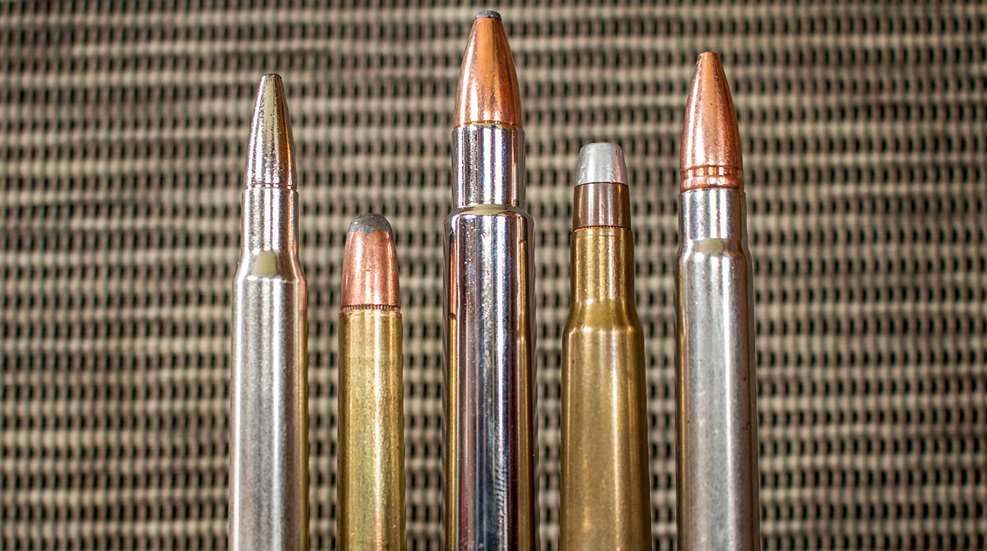
If I were pressed to name the two greatest modern advancements in rifle technology, it’d be optics and projectile technology. While I am the first to admit that a return to the optics of a half-century ago would be a terrible idea, I’ll also say that I could cover a lot of ground with the bullets of the mid-to-late 20th century. Yes, the shortcomings of many of the earliest jacketed designs were what led to the development of some of our most revered premium bullets. And yes, some of the 21st century developments are absolutely stellar. But I feel there are many classic designs that just never went out of favor. Here are my top five classic big-game bullets.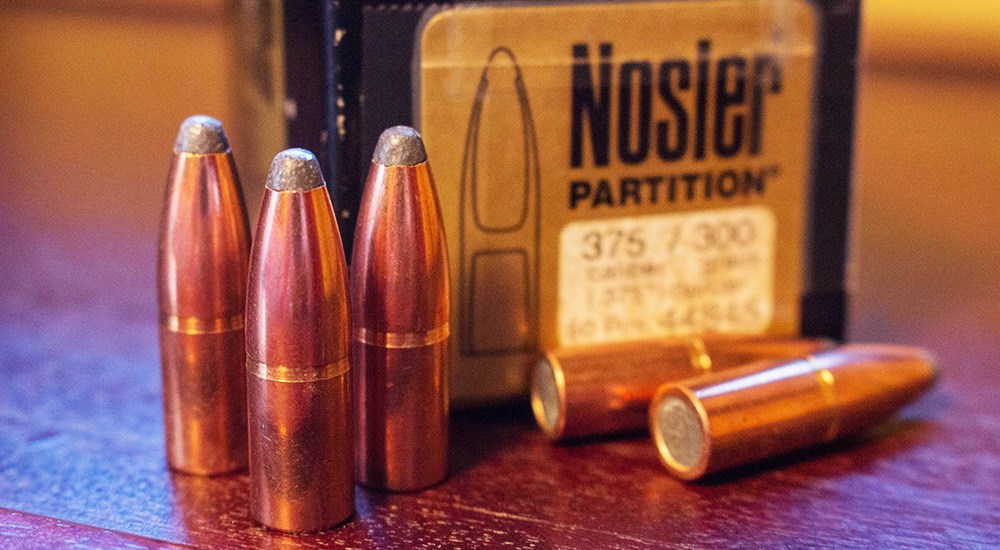
1. Nosler Partition
John Nosler’s frustration with a 300 H&H Magnum and a mud-caked bull moose was much like that apple that hit Mr. Newton in the grape: it was a game changer. Nosler’s concept of using a partition of gilding metal to separate the lead core into two pieces—allowing the front core to expand, yet keeping the rear core intact—was genius. Almost 80 years later, the Partition in still a fantastic choice for all-around big game hunting. I like the fact that the front core is on the softer side in comparison to some models, as it always expands reliably, yet still penetrates deep into the vital organs of even the biggest species which warrant a softpoint. The Partition is stiff enough for elk, moose, and bear, yet is soft enough for deer and pronghorn. Though it is a flat-base design, it still flies pretty flat, especially at the most common hunting ranges. It is available in component form, and offered in factory ammunition from both Nosler and Federal Premium.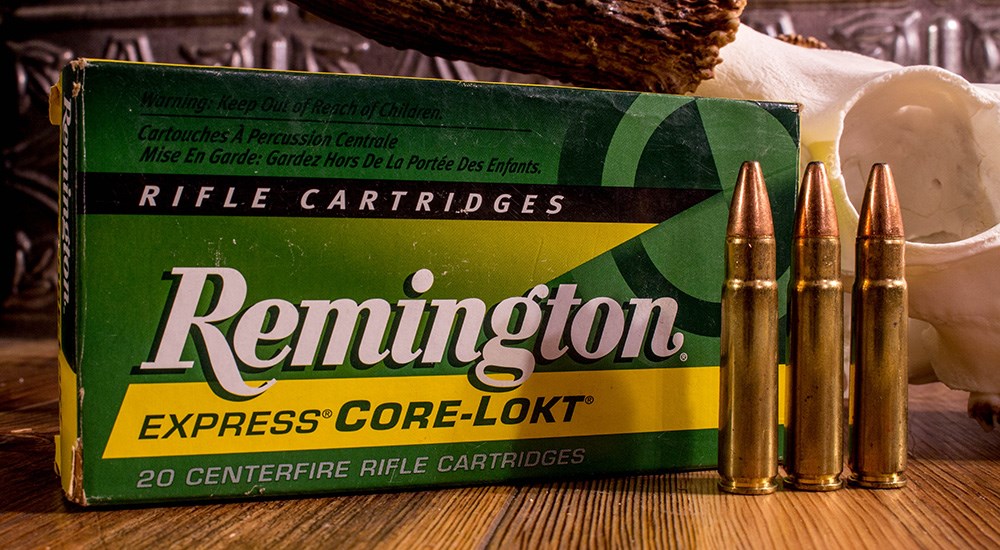
2. Remington Core-Lokt
Released in 1939, the “Deadliest Mushroom in the Woods” is a simple jacketed softpoint, with a crimping groove which ‘locks’ the core and jacket together. Is it the go-to projectile for a bull elk across a canyon? Perhaps not, but for the whitetail hunter who spends the majority of his or her time in the woods, this bullet is lights-out. I do prefer this bullet to be on the heavier side, to ensure penetration, and avoid shallow penetration. It is affordable and effective, and can be surprisingly accurate. For years the 165-grain Core-Lokt in my .308 Winchester was my go-to for filling the freezer with venison, and this bullet is responsible for putting many, many bear rugs in homes and cabins across the Northeast. 85 years after its release, I’d still take a Core-Lokt into the deer and bear woods.
3. Trophy Bonded Bear Claw
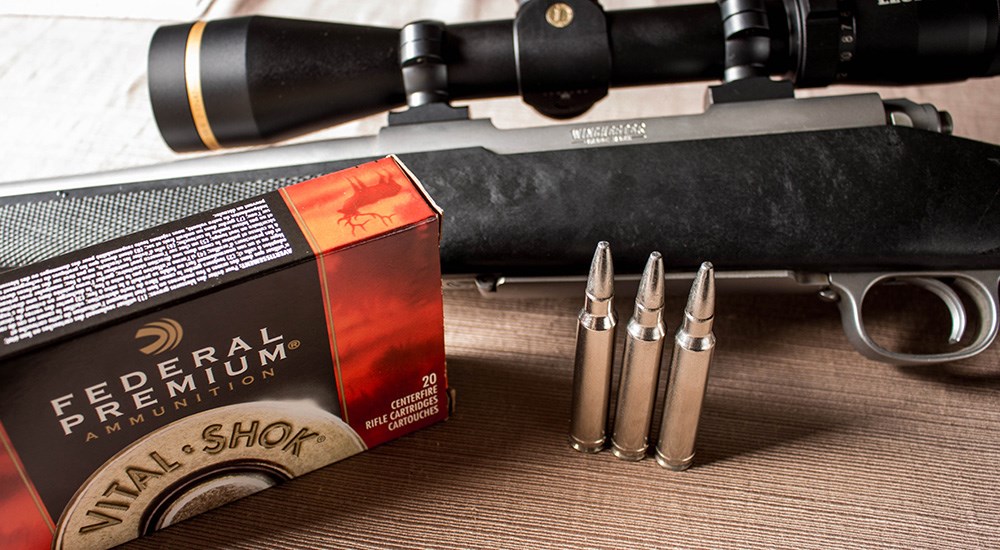
Jack Carter is credited with designing the Trophy Bonded Bear Claw, using an abbreviated lead core at the nose, over a long copper shank. This keeps the center of gravity forward, resulting in straight line penetration. Definitely geared toward larger species with heavy bone and thick hide, the Trophy Bonded Bear Claw is a great choice to carry for any game, when in dangerous game country. If you’re serious about coastal grizzly, you’ll be properly kitted if you have a magazine full of TBBCs. Picked up by Federal Premium, the Trophy Bonded Bear Claw is available in both component form and in Federal’s excellent loaded ammunition.
4. Barnes TSX
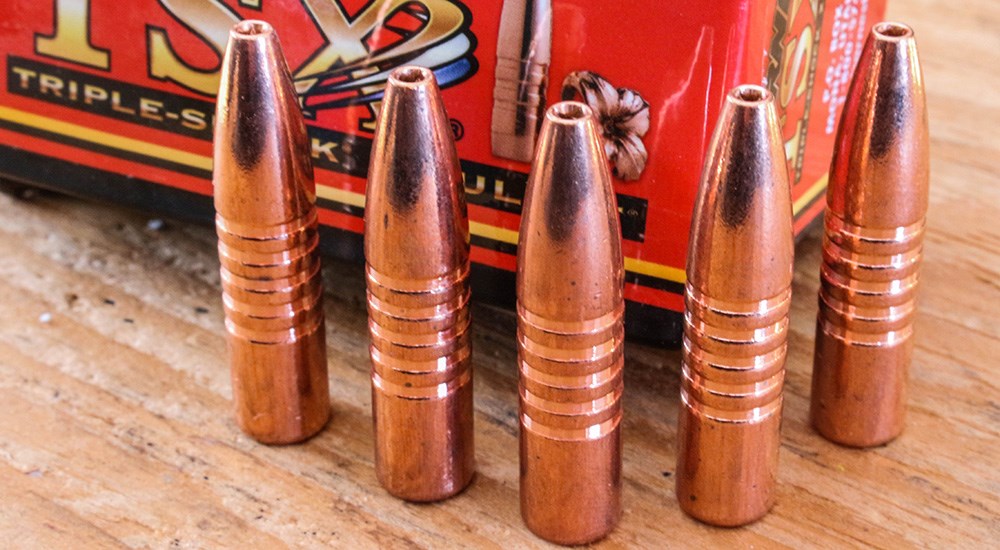
Though the original Barnes X is no longer in production—and I’m not upset about that—the Barnes TSX represents the modern culmination of that concept. Randy and Coni Brooks acquired Fred Barnes’ bullet company (ironically famous for heavy-for-caliber lead-core projectiles) and Randy had the brilliant idea of completely removing the lead core. While nearly every company now offers a copper-alloy monometal, when the Barnes X hit the market it was absolutely revolutionary. There is no jacket or core to separate, and the hollowpoint is responsible for expansion. Do I miss the horrendous copper fouling and lack of accuracy (in my rifles, anyhow) of the original Barnes X variant? No, no I don’t. But do I like the revised TSX version, with the grooves cut in the shank—to reduce pressure and fouling simultaneously—and more reliable expansion? Hell yes I do. The TSX, and its offspring, have been very good to me. Barnes offers the bullet in their loaded ammo, as does Federal Premium, and in component form the Barnes TSX can be a handloader’s dream.
5. Winchester Silvertip
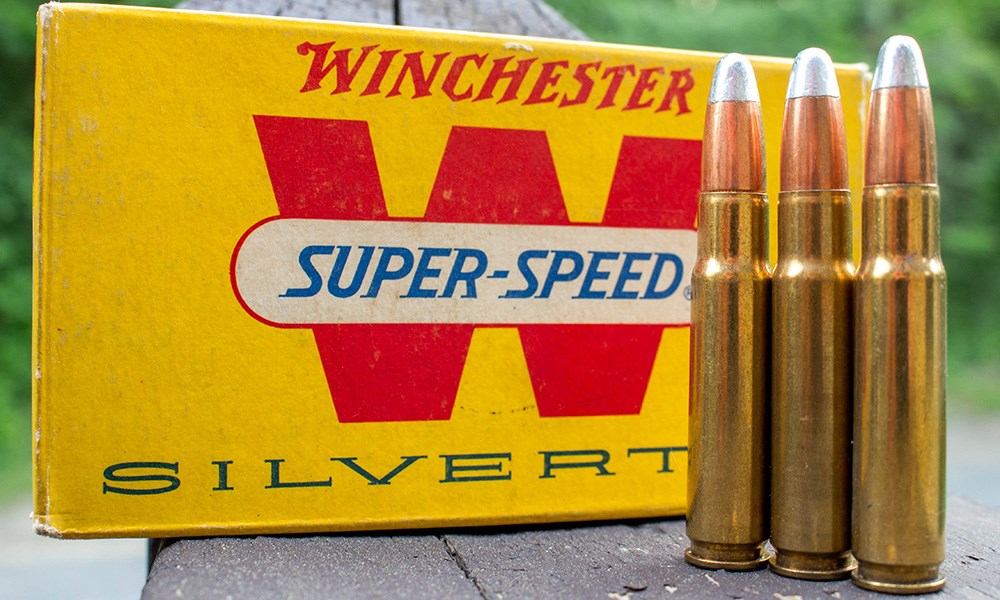
Another development brought to market in 1939, Winchester’s attempt at mitigating premature bullet breakup saw a special aluminum alloy cap at the nose of the projectile. While my own experiences with this older design are limited to exactly one whitetail deer (the 170-grain .30-30 Winchester did the job just fine), reports from across the decades are assuredly mixed. Some found the Silvertip to be a miracle projectile, dropping big bucks in their tracks, while others found them extremely frangible, virtually blowing up on a deer’s shoulder. One thing is for sure: they looked really cool, and to me they represented adventure. Ol’ Grumpy Pants bought me a couple of boxes which I’d squirreled away for the once-a-year excursions to the Catskill Mountains, where we had an honest chance at a bear. The design was very popular in .358 Winchester—perhaps that was the ammo most readily available for that cartridge—and I’ve found many .270 Winchester shooters who had positive things to say. Sadly, it is discontinued, replaced by the Ballistic Silvertip, which is a dressed up Nosler Ballistic Tip.

Honorable Mention: Sierra GameKing
I clearly remember being too young to hunt, and watching my Dad sight in his Mossberg 800A .308 Winchester before deer season. Even as a youngster—albeit soaking all the details up like a sponge—I could see that Dad’s rifle printed smaller groups than all the other hunters. He’d wink at me and tap the box of Federal Premium ammo, loaded with 165-grain Sierra GameKing spitzer boattail bullets. To my knowledge, this 1970s release represents the first time an ammunition manufacturer loaded projectiles other than their own brand, and certainly led to Federal’s wide use of premium projectiles in their factory ammo. A good Sierra GameKing still gets the job done to this day.
Categories
Plain enough for me!

Categories
.410 shotguns in the REAL WORLD!
Categories
Remington Model 700 BDL in 260 Rem
I myself always thought that the 270 Win was a fine caliber. That and when one is really out there in the boondocks, that finding 270 ammo is a lot easier to find. But thats just me. Grumpy
Categories