Categories
All About Guns Ammo Anti Civil Rights ideas & "Friends"

THE FACTS ABOUT NEW YORK’S AMMUNITION LAW By WILL DABBS, MD

I was born in 1966 and grew up in the Mississippi Delta. When I was a kid I bought most of my ammo at Magic Mart, a now-defunct chain department store once common across the Deep South. I just dropped by after school to pick up .22 shells as the need arose. The old guy behind the counter would drag out a spiral-bound notebook and dutifully log the type of rounds and quantity I was purchasing along with the identifying information from my driver’s license. The process was tedious, but our interactions were always cordial.
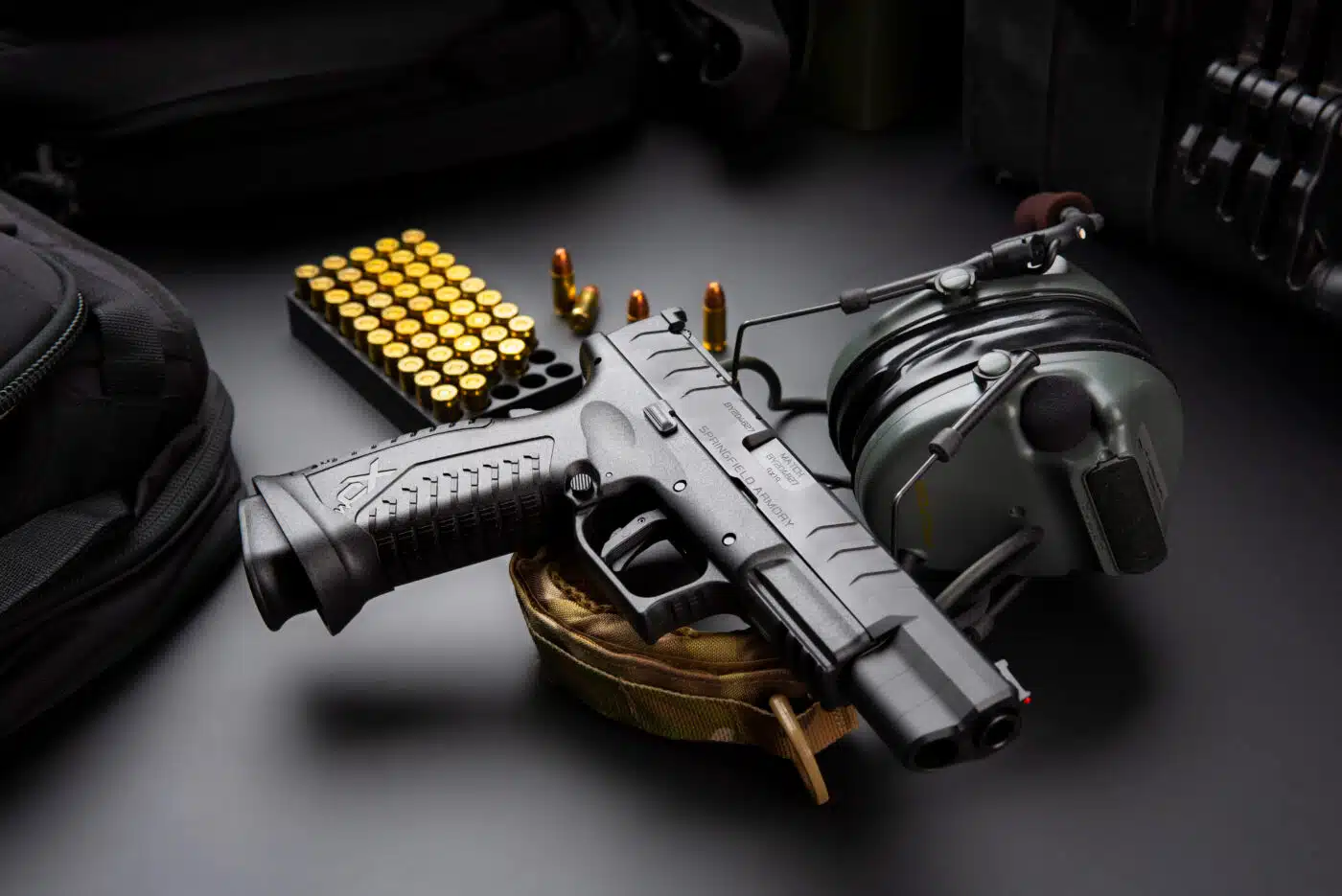
As much of the country moves toward placing fewer unfair burdens on the lawful ownership of firearms, the state of New York seems to be bent on suppressing Second Amendment freedoms.

I recall once asking him what was done with that information. He said nothing. He wrote it all down because that was the law, but nobody ever looked at it.

Now just imagine how many times that exchange took place every day in America. Logging ammo sales began with the Gun Control Act of 1968 and, in most places, ended with the curiously titled Firearms Owners’ Protection Act (FOPA) of 1986. Here’s the 1968 verbiage, “It shall be unlawful for any licensed importer, licensed manufacturer, licensed dealer, or licensed collector to sell or deliver…any firearm or ammunition to any person unless the licensee notes in his records…the name, age, and place of residence of such person…”
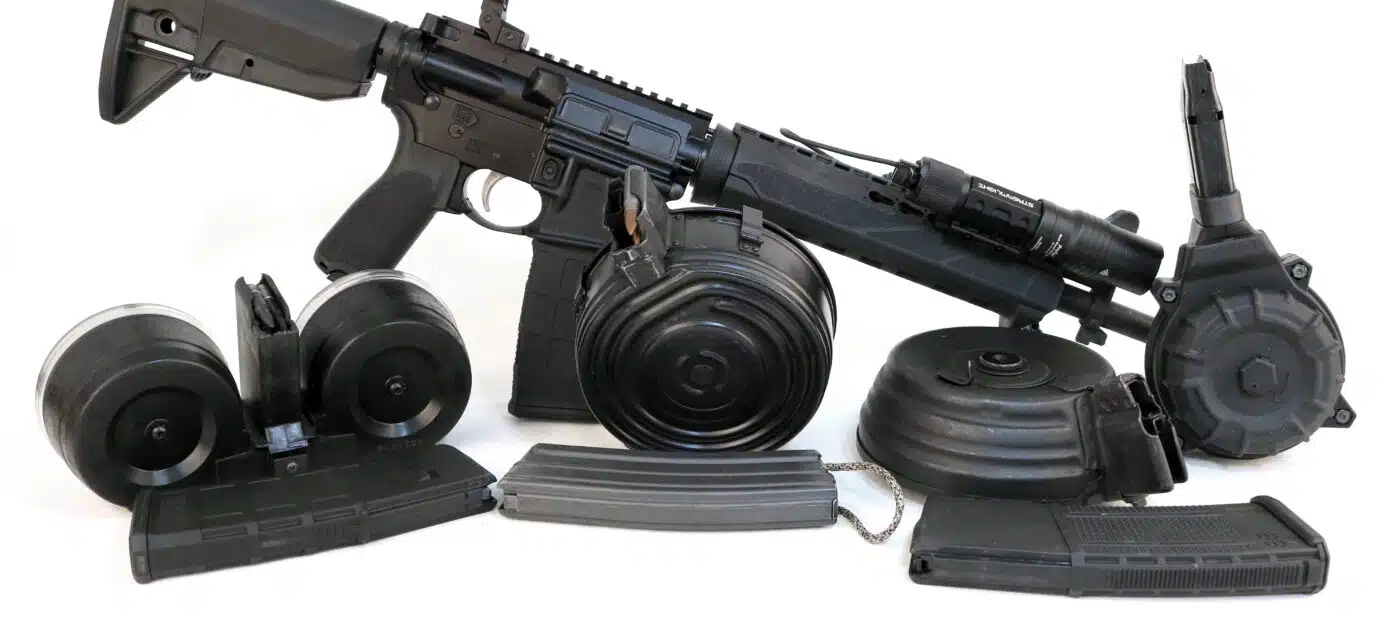
Both ammunition and magazines are heavily regulated in New York — something that disproportionately impacts lawful citizens and not criminals.

Untold billions of transactions were dutifully logged from sea to shining sea. Countless innocent trees gave their lives. Thousands of aggregate man hours were expended, and for what? While the FOPA did indeed streamline the sale of ammunition, it also outlawed the further manufacture of select-fire firearms for sale to civilians.

That is a tale for another day. However, in the lead-up to the FOPA, I read that there had not been a single documented crime solved as a result of all those ammo records. Not one. Now fast forward 38 years to the Empire State, and history seems to be repeating itself.

Comparative Taxonomy

Comparing gun ownership in my native Mississippi against that of New York is like contrasting two entirely different planets. As a free man in a free state I find it all kind of tough to comprehend. We should all fall under the same U.S. Constitution, yet my brethren in New York just don’t perceive the words the same way we do down here.
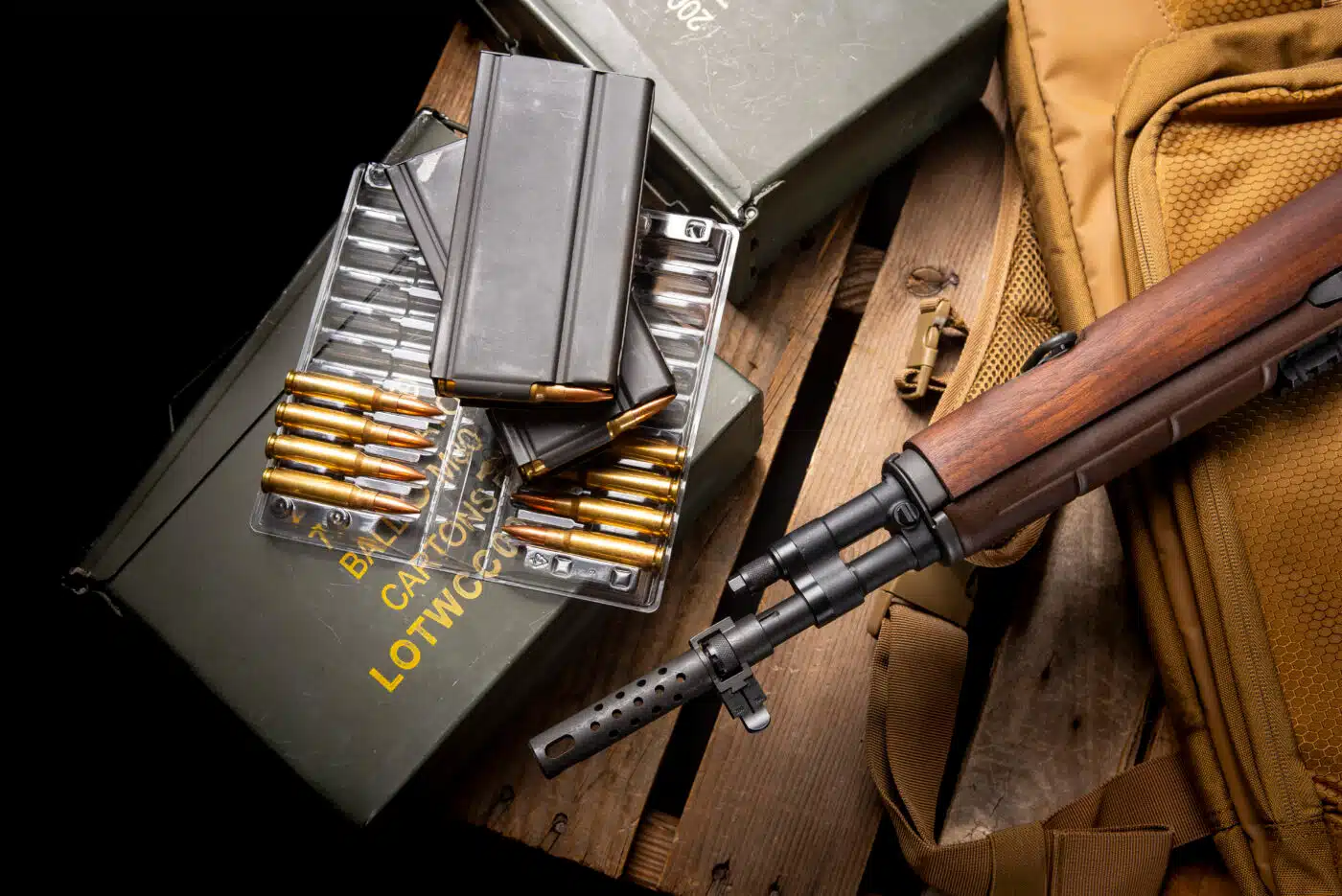
Even common rifle ammunition for target shooting, competition and hunting are weighed down with draconian restrictions.

Mine is a constitutional carry state. Fully half the states in the Union now allow some form of permitless concealed carry of a firearm for personal protection. By contrast, up until recently it was essentially impossible to obtain a concealed carry permit in New York unless you were independently wealthy or politically connected. All that should have changed with the recent NY State Rifle and Pistol Association Supreme Court Ruling. Only it didn’t.

In response to the landmark SCOTUS ruling, the New York legislature went into special session and passed an emergency bill specifically intended to drastically limit the freedoms implicit in the new SCOTUS ruling. While New York must indeed now issue concealed carry licenses more liberally, the hurdles one must clear to obtain such a license are yet more draconian.

In addition, per the new legislation, most everywhere in New York is considered a prohibited place where concealed carry is still not allowed. Specifically, private businesses must specifically post that concealed carry is allowed, otherwise it is presumptively illegal. It’s all honestly fairly sad. Amidst all the new whirlwind gun restrictions, the New York state government also now demands a background check on all ammunition sales. Records of these transactions must also be maintained by the state. Here we go again.

Do You Need a Permit to Buy Ammunition in NY?

Yes. The state of New York requires a license for ammo sales.

Here are the high points of the “Ammunition Records Requirement” — “There shall be a statewide license and record database specific for ammunition sales which shall be created and maintained by the division of state police…the licensee or seller contacts the statewide license and record database and provides the database with information sufficient to identify such…transferee…as well as the amount, caliber, manufacturer’s name and serial number, if any, of such ammunition…
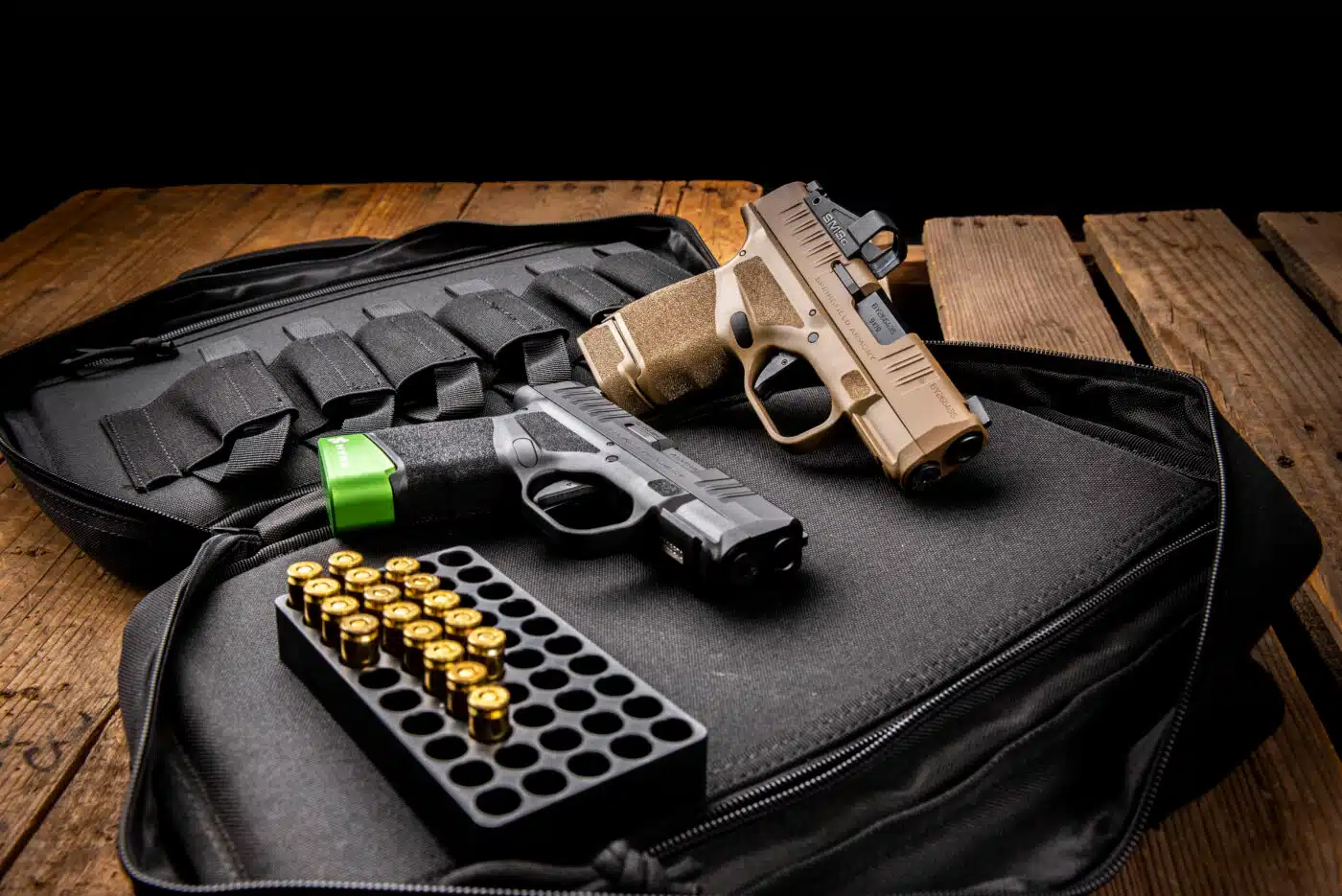
New York requires a license to purchase consumable ammo for your firearm.

“Any seller of ammunition or dealer in firearms shall keep…an electronic record…In the record [book] shall be entered at the time of every transaction involving ammunition the date, name, age, occupation and residence of any person from whom ammunition is received or to whom ammunition is delivered, and the amount, calibre (sic), manufacturer’s name and serial number…

“If the superintendent of state police certifies that background checks of ammunition purchasers may be conducted through the national instant criminal background check system…use of that system by a dealer or seller shall be sufficient…provided that a record of such transaction shall be forwarded to the state police in a form determined by the superintendent.”

Condensed Version

Legalese is by its nature obfuscating. However, as near as I can tell from researching a wide variety of sources, to my reading it’s illegal in New York to possess ammunition unless it fits a specific weapon registered to you. Under the new law purchasers of ammunition must undergo a background check essentially identical to that required to purchase a firearm. Each and every ammunition purchase must also be dutifully logged and reported to the state. State agencies will then maintain a centralized database of ammunition along with to whom it was sold.
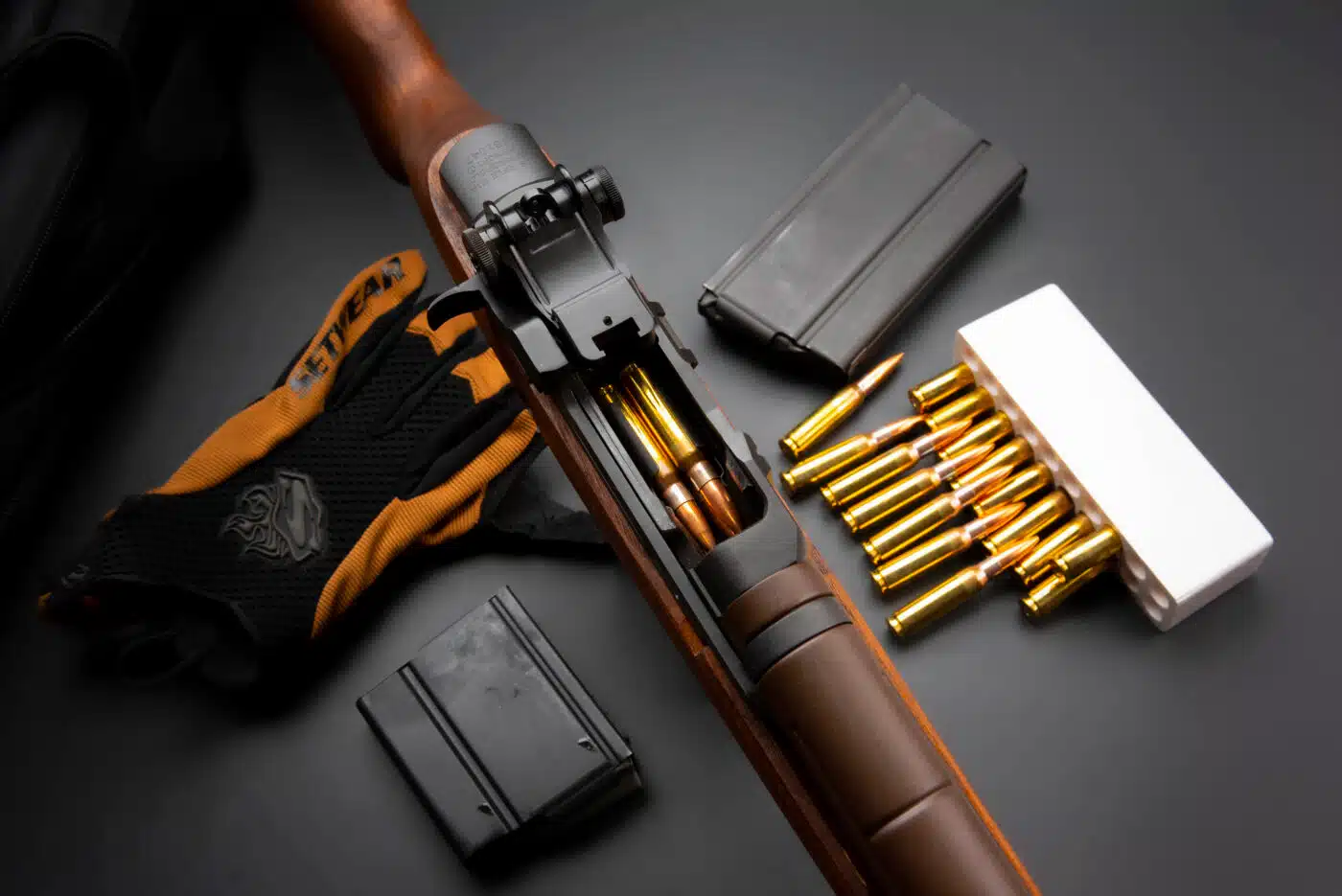
Own a rifle in New York? You cannot, under state law, have ammo mailed to you. This artificially drives up the prices paid by gun owners.

Considering that ammunition is by definition consumable, it’s curious to imagine what this database will look like a decade from now. Fairly cumbersome would be my guess, but I doubt the New York state legislators gave that much thought. By contrast, down here in Mississippi when I run short I order ammo by the case online and have it shipped to my doorstep.

Poring over the details of these new laws I was struck by the pervasive use of terms like license, background check, restrictions and database. Personally, I don’t want the government keeping an inventory of the weapons and ammunition I maintain in my home. I don’t think it’s a particular logic leap to say the founding fathers wouldn’t want the government doing that, either.

I will admit that I take my ammo for granted. If I need a little I can pick it up cash and carry from any number of sources here in town. If I need a lot, it’s just a few clicks away online. I look at my brethren in New York and feel the same pathos I might feel toward those unfortunates trapped in North Korea, Syria or Iran. For those of us fortunate enough not to live behind New York’s new Iron Curtain made of lead, the price of freedom is eternal vigilance.

WILL DABBS, MD

Will was raised in the Mississippi Delta and has a degree in Mechanical Engineering. After eight years flying Army helicopters, he left the military as a Major to attend medical school. Will operates an Urgent Care clinic in his small Southern town and works as the plant physician for the local Winchester ammunition plant. He is married to his high school sweetheart, has three adult children, and has written for the gun press for a quarter century.

Categories
All About Guns Ammo

Story of the .308 Win. By Wayne van Zwoll (308 is one of my Favorites BTW Grumpy)

Another step, and two deer scooted from a foggy clearing. But their dash into the alders suggested they’d not go far. Circling downwind, I drifted onto a deer trail, pausing at each step, glassing not yards ahead but feet. Then: a glint from the shadows. Stay still! Presently, beside the eye, an antler came clear. My bullet struck below the burr.

Almost any rifle and load could have claimed that blacktail. But hunters don’t bet their fortunes on arms that suffice only for brain shots at 20 feet.

308 Winchester cartridges from Federal for hunting
New game bullets with polymer noses and high ballistic coefficients help the .308 extend its reach.

So it was that a .308 also joined me in the Uintas. The elk were winning when, the last morning, a distant bellow sifted through the aspens. Dodging deadfall, I closed at a run. There! A long tine winked. A short dash ahead, a tree steadied the rifle. My Nosler drove from flank to scapula. The bull crashed away, then faltered. A second shot felled him.

professional hunter in Africa with 308 rifle
Professional hunters in Africa like rifles in .308 caliber because of their good performance and easy shooting: “Instead of flinching and missing, clients kill game.”

After six decades afield, I’ve found no cartridge more useful than the pedestrian .308 Winchester. It hurls a ton of punch 250 yards to drop tough beasts with a point-blank hold. Eland twice as heavy as elk wilt to its jab. Indeed, Africa’s PHs say: “Clients with .308s — theirs or loaners — kill game. The violence of magnums makes hunters flinch. The .308 helps them hit.”

Its ancestor appeared nearly three decades after Arthur W. Savage, then 35, invented a spool-fed lever rifle to fire his rimmed .303 Savage cartridge. In ordnance trials, this repeater lost to the bolt-action .30-40 Krag-Jorgensen, which became the U.S. service arm in 1892.

308 Winchester load from Black Hills Ammunition
The world is awash in good .308 loads for competition. This Black Hills Ammunition load is a champ for targets at 600 to 1,000 yards.

Reconfigured for hunters, Savage’s rifle thrived. In 1920, a new .300 cartridge made it a top seller.

In 1944, Springfield Armory and Remington were asked to design a selective-fire rifle to replace the autoloading M1 Garand, in service since 1936. Shorter and lighter than the .30-06, the cartridge would have comparable reach and power. The .300 Savage came to mind. But some mechanisms balked at its 30-degree shoulder. Also, claims that its stubby .221-inch neck would enable the 1.871-inch case to bottle the oomph of the ‘06 (2.494-inch brass) proved fanciful. A slightly bigger case than the .300’s, with a 20-degree shoulder, evolved as the T-65.

This cartridge would earn the U.S. Army’s approval in 1954, two years after Winchester tapped its potential as a hunting cartridge and, with appropriate blessings, cataloged it as the .308. Other NATO countries would adopt it as the 7.62×51 in 1957. Given the 40,000-CUP pressure cap honored for .30-40 loads in period rifles, the .308’s 52,000-CUP thrust sends 180-grain bullets 170 fps faster. It trounces the .300 Savage by a wider margin.

From the Battlefield

The T44E4 became the 7.62mm Rifle M14 in June of ’54, departing from the Garand’s design in several ways. Its cycling was less abrupt. The gas block moved 8 inches back from the muzzle to improve accuracy. A detachable box held more cartridges than the M1’s internal clip and was easier to top off. But the M14 kept the Garand’s two-lug rotating bolt, its operating rod and forward recoil spring. The stock’s profile was similar, the M1’s walnut handguard ultimately giving way to polymer. Sights were essentially identical.

comparing 300 Savage to 308 Winchester cartridge
The Army considered the .300 Savage (left, circa 1920) in the ‘40s; the .308 was developed in its stead.

The M14’s high cyclic rate could empty a 20-shot box in 1.6 seconds in full-auto, recoil flinging successive bullets wildly off-target. So, the rifle was fitted with a lock to nix full-automatic fire. A switch made full-auto capability a quick choice.

Production of 7.62×51 military and hunting ammo continued unabated after the M16’s ascension in the 1960’s. National Match loads with 41.7 grains IMR 4895 sent 174-grain BTHP bullets at 2,548 fps. Handloaded 168-grain Sierra MatchKings from a bolt rifle helped me through the National Match course. Bench Rest shooters embraced the .308 too. In the 1968 National Matches, Ferris Pindell won the sporter class with a tiny .3594-inch group, topping Dave Hall’s .4612 knot that drew gasps the year before. The .308 also brings out the best in hunting rifles. Many fine rifles later, I’ve come to like Springfield Armory’s Boundary, a hunting rifle of traditional profile but with a carbon-fiber stock and barrel. It’s therapy when only snug groups can bring a smile.

Note: Don’t miss Mark Hampton’s article on reloading .308 ammo.

M1A rifle chambered for 308 Win cartridge
In 1974, the Geneseo-based Springfield Armory began building the M1A, based on the U.S. Military’s M14 rifle.

Game loads proliferated as the .308 overtook the .30-06 in popularity. Credit its 2.015-inch case. It fits myriad actions designed around a loaded length of 2.750 inches. (Ammo for the .30-06 measures 3.340 inches.) The .308 case holds about half the powder of the .300 Weatherby Magnum, 20 percent less than the ‘06. At 2,620 fps, 180-grain bullets from .308 factory loads fall 100 fps shy of .30-06 velocities, but I’ve chronographed 180-grain .308 handloads driven by 42.5 grains H335 at 2,700 fps with no signs of strain. It’s easy to wring 2,400 fps from 200-grain bullets.

A Broad Breadth

The .308 warms to a wide range of bullet weights. In a recent range session, a .6-inch knot with Hornady’s 110-grain TAP load at 3,200 fps matched my groups from 150- and 165-grain bullets, all fired in a Springfield Boundary with standard 1:12 rifling. (Its nimble 20-inch barrel predictably yields slightly lower velocities than published for 24-inch barrels.)

Ammunition Velocity 3-Shot Group
Hornady 110 TAP FPD 3,198 fps 0.6″
Black Hills 150 Hornady GMX 2,723 fps 1.2″
Fiocchi 150 Swift Scirocco II BT 2,788 fps 0.6″
Hornady 150 InterLock 2,768 fps 0.9″
Winchester 150 Power-Point 2,812 fps 1.5″
Lehigh 152 CC HP 2,808 fps 1.1″
Sako 162 Powerhead Tipped Copper 2,703 fps 1.0″
Barnes/Sierra 165 TKG 2,654 fps 0.6″
Federal 165 Sierra GameKing BTSP 2,660 fps 0.9″
Hornady Outfitter 165 GMX 2,585 fps 0.8″
PMC 165 XHP 2,578 fps 0.6″
Winchester 168 BTHP Match 2,668 fps 1.3″
Federal 180 Trophy Bonded Tip 2,561 fps 1.0″
Lapua 185 Scenar 2,445 fps 1.1″
Range results using the Springfield Armory Model 2020 Boundary chambered for the .308 Winchester cartridge and fitted with a Leupold 3-15 VX-5HD scope. Velocity measured using a Garmin Xero C1 chronograph.

For most hunting, 165-grain bullets offer a useful balance of bullet weight and speed that’s hard to beat in a .308. A Superformance Hornady load hurls 165-grain InterBonds at 2,840 fps. Another high-octane Hornady option wrings 3,000 fps from 150-grain SSTs, trumping some .30-06 loads! But a quick start is just one measure of the lethality of hunting ammo. For some tasks, heavier bullets excel.

Comparing Ballistics for .308, .30-06 and .300 Win. Mag.

Recoil Muzzle 100 yards 200 yards 300 yards
.308 Winchester
17.5 ft-lbs Velocity 2,600 fps 2,443 fps 2,291 fps 2,145 fps
Energy 2,671 ft-lbs 2,358 ft-lbs 2,074 ft-lbs 1,818 ft-lbs
Arc -1.5″ +2.2″ 0″ -8.8″
.30-06 Springfield
20.3 ft-lbs Velocity 2,750 fps 2,588 fps 2,431 fps 2,280 fps
Energy 2,988 ft-lbs 2,646 ft-lbs 2,335 ft-lbs 2,054 ft-lbs
Arc -1.5″ +1.8″ 0″ -7.7″
.300 Winchester Magnum
24.5 ft-lbs Velocity 2,960 fps 2,789 fps 2,625 fps 2,467 fps
Energy 3,463 ft-lbs 3,075 ft-lbs 2,723 ft-lbs 2,405 ft-lbs
Arc -1.5″ +1.5″ 0″ -6.6″
All loads use Hornady 178-grain ELD-X bullets. Recoil measured using an 8-pound rifle.

Note here that while the .308 starts with a speed deficit of 150 fps compared to the .30-06, and a 360-fps deficit compared to the .300, these disparities shrink with distance. Ditto differences in bullet energy. At the muzzle, the .308 has 317 ft-lbs less punch than the .30-06; but 300 yards out the gap has narrowed to 236 ft-lbs.

Springfield Armory Boundary in 308 Winchester
Springfield’s agile Model 2020 Boundary shot this tight group with a Barnes load of 165-grain Sierra MatchKings.

The .308 starts 792 ft-lbs behind the magnum; but reels in more than 200 ft-lbs over 300 yards, reducing its deficit to 587 ft-lbs. Drag has a big effect on downrange speed and energy. The faster a bullet starts, the greater the drag. A .308’s bullet sacrifices less killing effect to drag than do identical bullets driven faster. And shooters endure less recoil. In 8-pound rifles, the .308 is about 14 percent less violent than the .30-06, 29 percent less than the .300. Gentle rifles keep the focus on accuracy, not liniment.

Note: Gunspot wrote a great article on the .308’s effective range that is an excellent resource.

Bucking the Trend

The magnum faithful should note too that .308 bullets drift little more than those from .300’s. There’s less than 2 inches difference in drift at 300 yards between the .308 and the .300 magnum with the same bullet. Even at 500, farther than many hunters will risk a shot at game, the disparity is just 1 m.o.a.! Bullet type has much greater effect on drift than does starting velocity. The blunt .30-30 bullet loses on both counts. Slow to start, it yields rapidly to drag, drift increasing apace.

Springfield Boundary rifle with 308 Winchester loads used in testing
The author’s Springfield Boundary with a Leupold VX-5HD scope and a few of the myriad .308 ammo options.

The .308’s versatility and its performance across a wide range of short-action rifles have placed it on more chambering rosters than any other centerfire cartridge. The number of commercial loads is eye-popping too: At this writing I count 118 for the .308 — from just seven U.S. manufacturers! Only the .223 can challenge that tally.

Factories the world over produce .308 ammo and ship it to far-flung game fields.

Read Massad Ayoob’s article on why he picks .308 for his SHTF rifle.

What About 7.62 NATO?

The cases are identical: 2.015 inches long, .473 at the rim, a 20-degree shoulder between same-length bodies and necks. Loaded, the .308 and 7.62×51 mic’ 2.800 inches, as specified by SAAMI and its European equivalent, CIP. “We use the same brass and primers for commercial and military loads,” says a Hornady spokesman. “Officials approve or tweak service specs. We hew to them.”

Differences in maximum average pressures — 62,000 psi for the .308 and 50,000 psi for the 7.62 — can be laid to disparities in measurement. Gun-maker Fred Zeglin notes copper crushers registered early 7.62×51 pressures. Current piezo-electric reads on .308 loads are more repeatable, often higher. I’m told Hornady meets velocity targets with piezo-checked pressures held comfortably under 60,000 psi.

Jeff Hoffman at Black Hills Ammunition notes differences in measurement location. “Pressures for the 7.62×51 NATO may be taken at the mouth instead of mid-case. We see slightly lower values at the mouth.” He adds that 7.62×51 velocities are often taken at 78 feet, not SAAMI’s standard 15.

308 Winchester Hornady SST bullet expansion in ballistic gelatin
A 150-grain Hornady .308 load cut this channel through ballistic gelatin. Note the shape of the expanded SST.

SAAMI diagrams show a headspace measure of 1.630 to 1.640 for the .308. A Frankfurt Arsenal diagram indicates a range of 1.628 to 1.634 for the 7.62×51 NATO case. I’m told JGS reamers are held to 1.630-.640 for the .308 and 7.62×51. Free-bore and leade angle in the chambers differ. JGS reamers yield .900 inch freebore of .3100 diameter, with 1-45 leade angle for the .308. Chambers in 7.62×51 have 1.355 inch of 3.095 freebore, 5-40 leade.

308 Win Remington Core-Lokt ammo
Since the ‘30s, hunters have chosen Remington Core-Lokts. This mushroomed .308 bullet shows why it is so effective.

Current U.S-loaded .308 and 7.65×51 ammo should fit and fire safely in either chamber. Be sure to read my prior article .308 vs. 7.62 NATO for additional details.

Conclusion

Claiming the .308 is the best hunting cartridge is pointless. Others are popular, widely chambered and loaded with bullets of many types. Others recoil civilly as they flatten game with a ton of swat at 250 yards and point-blank aim. Other cartridges seem inherently accurate. But few offer all that with factory loads that rank among the most affordable. Feeding .308’s is as easy as liking the results. There’s a reason the .308 is so popular.

Categories
Ammo

Testing the LONGFELLOW 12ga. Slug – PAINFUL to Watch

Categories
All About Guns Ammo

220 Swift – The Speed King of the Factory 22 Centerfire Cartridges

Categories
All About Guns Allies Ammo

Marlin Model 95 SBL .45-70 by Ruger

Categories
All About Guns Ammo

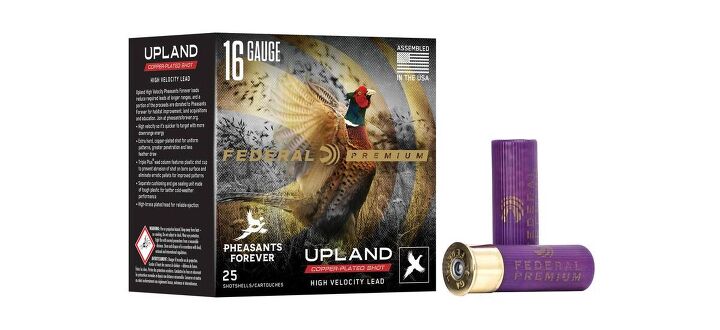
Fudd Friday: What Happened To The 16 Gauge? by Zac K

When I was a kid growing up around marshes in the northeast, I used to pick up empty shotgun shells whenever I found them in the weeds, left there in duck season. 12 gauge was the norm, with the occasional 10 gauge hull spotted. I never found 20 gauge shells back then, but I did find my fair share of 16 gauge empties—but if I searched those same marshes today, I doubt I’d find any. What happened to the 16 gauge, and will it ever come back to popularity?

Why did people love 16 gauge shotguns?

Like we’ve told you before, the diameter of a shotgun gauge, or bore, gets larger as the gauge number gets smaller. A 10 gauge has a larger-diameter barrel than a 28 gauge. And since the 16 gauge is therefore larger than a 20 gauge but smaller than a 12 gauge, it was long favored by hunters and shooters who wanted a gun that “hit like a 12, but carried like a 20.”

In other words, the 16 gauge was a compromise, with a heavier payload than a 20 gauge, but a lighter frame and barrel than a 12 gauge. Or at least, that was the theory.

With older shotgun designs, this theory was indeed valid. One of the most famous examples would be the Browning Auto Five Sweet Sixteen (as used by Phil Robertson in some of his earlier videos). This shotgun was built on a dedicated frame matched to the 16 gauge cartridge, so it was indeed lighter than a 12 gauge but could put more pellets downrange than a 20 gauge—at least, that was the case before magnum shells became popular.


This wasn’t the case for all vintage repeater shotguns, but you could find a quality double or semi-auto with specific 16 gauge frames for much of the 20th century.

Interestingly, I remember watching a hunting show filmed in the Amazon jungle, and despite never being exposed to a gun magazine, the natives there were using 16 gauge shotguns for that same reason; they wanted a light gun that still had decent hitting power. Maybe it wasn’t all in North American and European shooters’ imaginations.

There was one other good reason to go with 16 gauge—supposedly, it put out a superior shot column when compared to other cartridges.

We don’t have time for an in-depth look at shot columns here, but the basic, oversimplified outline is this: Your pattern spread tells how big an area your shotgun’s pellets cover at a specific distance. Your pattern density tells how the pellets are distributed inside that area. And the length of your shot column determines at what time the pellets reach the target—ideally, you want all pellets to be arriving at the same time, but in reality, that doesn’t happen.

Your pellets don’t exit the barrel at the same time; your shot column (the shape of all your pellets as they exit the barrel) is a 3D shape, not a 2D shape. Physics interferes further with the shot column once your payload is hurtling towards the target.

Theoretically, the physics of bore sizing and cartridge performance mean a 16 gauge is able to produce a superior shot column, getting more clay-breaking or bird-busting pellets on target at the same time, which means better scores on the range or more birds in your bag.

Admittedly, only true shotgun nerds care about this. I never hear talk about shot columns among other waterfowl hunters. And yet, I’ve seen first-hand that it matters. My old 10 gauge killed far better at long distance than any 3.5-inch 12 gauge I’ve owned. Most crusty old goose shooters would claim that is because of the superior shot columns from the 10 gauge.

If you’d like to learn more about how shot columns matter, check out Bob Brister’s book Shotgunning: The Art And Science. Brister based his research on actual field research, shooting at targets his wife towed behind a car.

Decline of the 16 gauge

For decades, the 16 gauge was a respectable cartridge for ducks and upland game, so what happened? To put it bluntly: The 16 gauge was killed by money.


In the decades after World War II, the American manufacturers emphasized cheap guns over nice guns. Most mass-produced shotguns never came out in a specific 16 gauge frame; they were 12 gauge guns with a 16 gauge barrel, and the 16 gauge’s superior handling was repressed.

The 16 gauge might still have survived, but when Winchester developed the 3-inch magnum 20 gauge load in the 1950s, shooters could now have a shotgun that “hit like a 16, carried like a 20.” Or so they thought, at least. That mid-range between the 20 gauge and 12 gauge loads had now been taken up by a more powerful 20 gauge. The 16 gauge never came in a 3-inch load, because that would be silly with the 12 gauge already in existence, and interest withered.

Finally, the 16 gauge was also mostly ignored by clay shooters, who increasingly opted for 12 gauge or 20 gauge to fit into the rulebook and to find cheaper bulk-priced shells.

The 16 gauge today

You can still buy brand-new 16 gauge shotguns, but they’re harder to find, especially in North America. The only 16 gauges in Mossberg’s lineup are over/unders. It’s the same for Savage Arms. Remington’s website will trick you into thinking you can buy a 16 gauge Wingmaster, but they have no SKUs for such a gun. Winchester doesn’t sell a 16 gauge either. At least Browning has 10 different 16 gauge models in its lineup right now; take your choice of the new A5 platform or a Citori over/under.

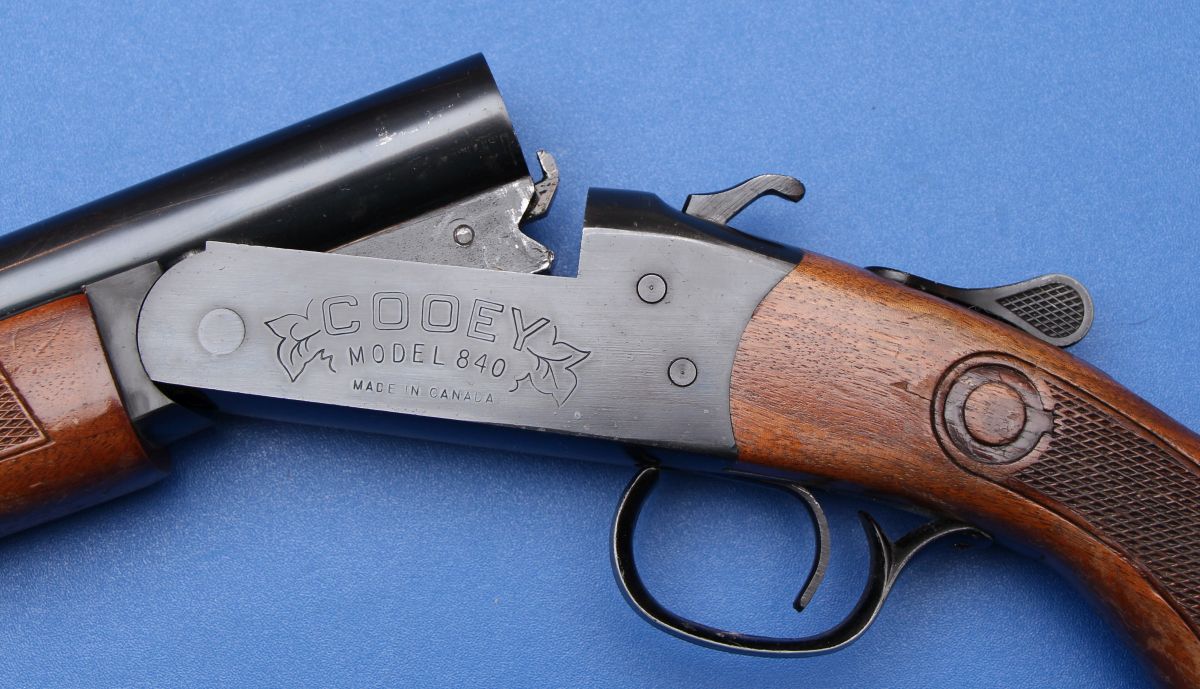
I haven’t owned a 16 gauge for a long time myself. The last one I had was a bolt-action Mossberg that I gave away to a friend so he’d be set for deer season. I will confess that I’ve been looking for another one lately, though, especially a Cooey Model 84. They’re an old-fashioned gun, but the 16 gauge is now an old-fashioned cartridge, and I think it would be a perfect match.

Categories
All About Guns Ammo Real men

The Big Bore Cartridges of John Buhmiller On-The-Job Tusker Training By Jeff “Tank” Hoover

John Buhmiller checking out a Zulu warrior’s spear point in Africa.

Imagine getting a letter from a farmer looking for someone to handle varmint duties halfway around the world in Tanganyika in exchange for room and board. In 1954, John Buhmiller did just that. At the time, he was 62 years old, recently widowed and seeking adventure to fill his loneliness.

The varmints weren’t the type you and I think of when hearing the word — these varmints were elephants and Cape buffalo! Buhmiller, a barrel maker from Kalispell, Mont. was up for the challenge.

When he arrived, he learned he was only allowed to buy two permits for elephant, costing $490, but that was all he needed to become fascinated hunting the large pachyderms.

An abundance of rogue elephants were destroying his farmer friend’s crops, the only food source for the many surrounding villages. Not having the proper guns needed to kill such large crop raiders, the farmer friend wrote a letter to Buhmiller asking for help.

New Beginnings

Buhmiller arrived in Africa in 1955. The real purpose of the trip for him was to test the killing power of rifles he made. Just as now, there was much controversy regarding the proper rifles for African use. Buhmiller wanted to obtain firsthand knowledge on the subject and he did so by hunting by himself while having no experience with the dangerous African game.

Over his eight trips to Africa, from 1955 to 1964, Buhmiller killed 183 elephants, 18 rhinoceros, 71 Cape buffalo and one hippopotamus. Talk about experience!

His hunts lasted anywhere from 2–4 months. After filling his first two tags on his first hunt, Buhmiller had his farmer friend contact the Game Commission asking for more tags. The Commission told him they were too busy to eradicate the elephant but allowed Buhmiller to do the task — but without pay. This was fine for Buhmiller. Room and board for his services was enough. Most of us would agree!

Another nuisance tusker down for the count.

Action!

Buhmiller built experimental guns using large Brevex Magnum Mauser actions for most of his rifles. Later, he switched to Enfield 1917 actions after a close call with an elephant. Running his Brevex-actioned rifle nearly dry, he dropped a round in the chamber with a wounded elephant in pursuit but couldn’t close the action since the cartridge wasn’t fed from the magazine.

The Enfield action held up to six of Buhmiller’s cartridges after magazine modification and the action allowed him to drop a cartridge in the chamber and close the bolt when a fast load was needed.

Big Bores Galore

Buhmiller liked cartridges in the 0.45″ to 0.51″ range. He stated, “The .510 is a very satisfactory gun when loaded with 85–90 grains of 3031 and 570-grain Kynoch bullet. I never needed more than 90 grains of 3031. It killed better than the .505 Gibbs because of the better bullet. Solids are okay, they have steel jackets and heavy points and will go through an elephant’s head.”

Buhmiller’s best day in the field included killing 10 elephants with 10 shots. Remember, these were rogue, nuisance elephants destroying the entire food source for local villages. If the elephants weren’t killed, it would indeed be tough times for the area natives to survive.

On his first safari, Buhmiller took his .375 Magnum and .505 Gibbs. On the second, he brought his .458 Winchester, a .450 Buhmiller wildcat and another magnum wildcat made from a necked-up .378 Weatherby Magnum to .458 caliber, essentially a .460 Weatherby. On his third trip, Buhmiller used his .450 Magnum and .458 Winchester. On his fourth he brought his .470 Magnum and .500 Magnum.

Buhmiller says, “The bullet is a big factor in this shooting. These .470 and .510 bullets have a tendency to tumble after heavy bones are struck and this makes them even more deadly than a slug that drills straight through, especially on shoulder shots.”

Primed

Powder ignition could be futile at times with such heavy loads. These were the days before Magnum primers. Buhmiller’s solution was to load half his powder charge, drop a live primer in the case and finish dumping the rest of the charge. Innovative indeed!

Standing at just over 5 feet and weighing 127 lbs., Buhmiller wasn’t the biggest of men. He was a big believer in muzzle brakes and stated his “ears had calluses” from using them. He was a respected barrel maker, making barrels for men such as Elmer Keith, Jack O’Connor, Charlie O’Neil and Iver Henrikson. They thought highly of his barrels and used them on custom builds.

Times were certainly different back then, but not so different that overpopulation of elephants is still occurring in certain parts of Africa. Game management is always a useful tool to remedy the problem.

Hunting is game management. Buhmiller made his first trip to Africa at age 62 and continued until he was 70, showing it’s never too late to achieve your dreams, learn firsthand what works and lend a helping hand all at the same time.

===============================================   What a STUD!! I’m 67 and I can barely make it to the bathroom in time!!! Grumpy

Categories
All About Guns Ammo

Winchester Model 670, Sighting in for Hunting (300 Win. Mag.)

Categories
Ammo Well I thought it was funny!

My kind of a family!

Categories
All About Guns Ammo

The Giant .458 Socom