Category: Allies
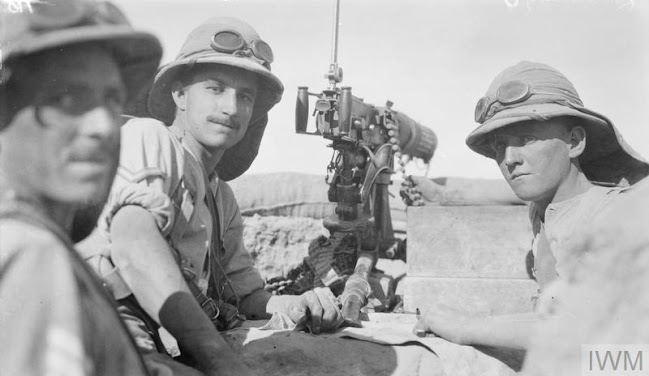
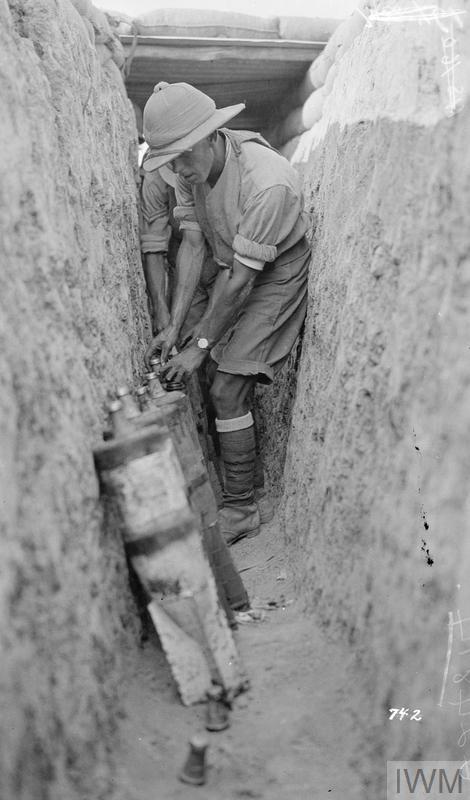
While I was looking at this Troop & His corporal by his side. A thought hit me about them. By this I mean look at how skinny this kid is. Now granted that Western Folks have ballooned up quite a bit in my lifetime. That and he is in a combat zone and all. But that still is one mighty skinny soldier you got there. I guess that Bully Beef is not the be all and end all of food for these folks.
That and I would not bet on the possibility that his Great Grand Kids was and maybe still soldiering in that War Blighted area. (Just like our military, The British Army has some Army Families with some VERY long Fighting Histories & Traditions)
Grumpy
A few post ago, I had talked about the “Virginius affair” and “Great White Fleet”, The American Battle cruisers were a next generation evolution from the ships used in the great white fleet.
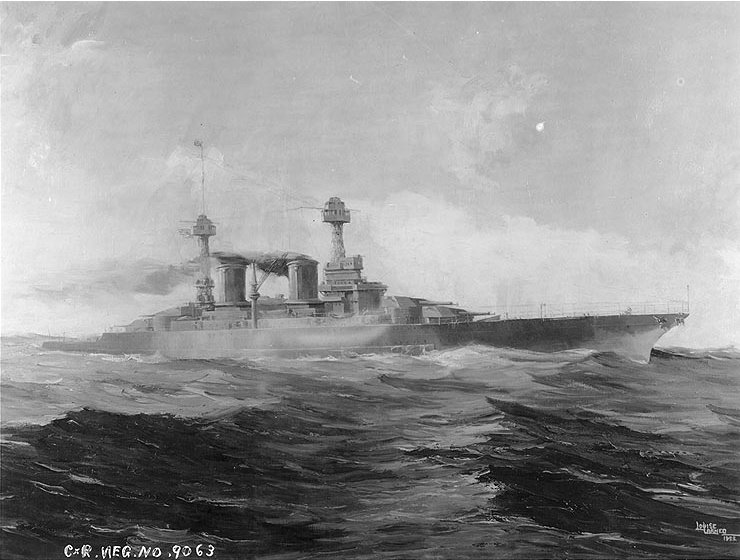
Artist rendering of the proposed Lexington Class Battle Cruisers.
The United States Navy’s only planned battlecruisers, six Lexington class ships authorized by the Naval Act 1916, were cancelled by the Five Power (‘Washington’) Treaty of 1922. Two – Lexington and Saratoga – were completed as aircraft carriers instead. The battlecruisers have often been considered something of a side-issue for a US Navy that was primarily interested in well-armed and armored battleships.
In fact, these battlecruisers had a central place in US naval thinking at the time. Their concept reflected a prevailing US Navy battle doctrine of ‘aggressive offensive action’. The same style of thinking was also applied to the designs of the first US ‘Treaty’ cruisers of the early 1920s. And the Lexingtons drew from specifically American tactical naval needs and thinking.

So how did they come about? The origins of US battlecruiser thinking can be traced to the naval ferment around the turn of the twentieth century when, like the British, French, Germans and Japanese – among others – US naval authorities were looking at the implications of a recent jump in the power of large warships. Heavy ships of the mid-late 1890s typically came in two flavors: battleships with a few heavy guns and a range of smaller weapons, backed with faster armored cruisers that carried a few medium guns and a usually similar array of smaller weapons.
By the last years of the nineteenth century, however, battleships were gaining medium guns on top of the rest – literally in the United States, where the medium guns were at times housed atop the main armament. The rise in fire-power also influenced armored cruiser designs, which gained displacement and scale of fire-power comparable to second-class battleships, yet retained greater speed. These developments then fed into emerging thinking about how the design components – protection, fire-power, sea-keeping, speed, range, displacement and habitability – could be mixed. Tactics and technology, in short, were entwined; and a conceptual revolution involving both was well under way by 1901-02.
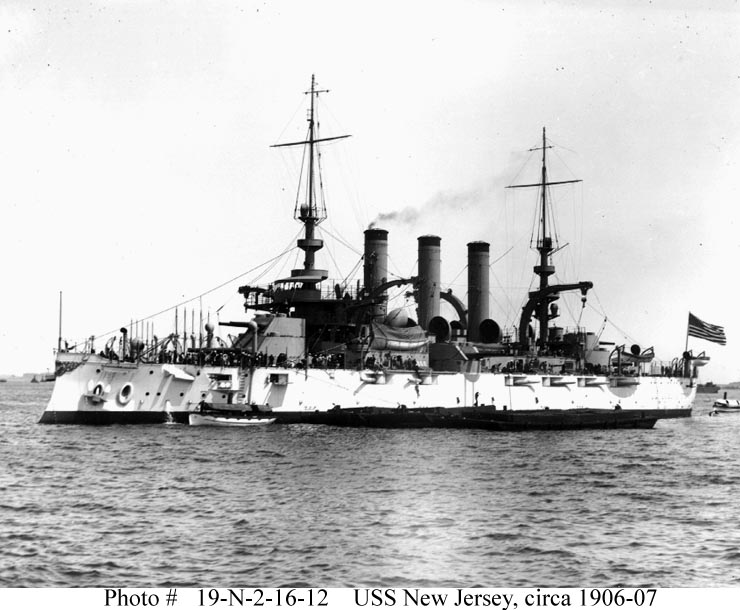
Although a relative late-comer as a nineteenth century naval power, the United States was well up with the play. In 1902, Lieutenant Matthew Signor proposed a new type of battleship featuring six 13-inch guns and a battery of 10-inch. That was followed in 1903 with other proposals for a heavier armored cruiser – essentially a fast battleship, in terms of the standards of the day. The idea was further endorsed by the Naval War College Summer Conference of 1904. But cost was an issue. Into this was mixed warring theories about how naval battles might be fought. One result was tension between the conceptual ship proposals of the Naval War College and the more conservative designs prepared by the Bureau of Design and Repair. In a way it was predictable; the College could engage in blue-sky exercises, whereas the Bureau had the task of making warships reality, which included managing financial constraints and the political views that drove them.
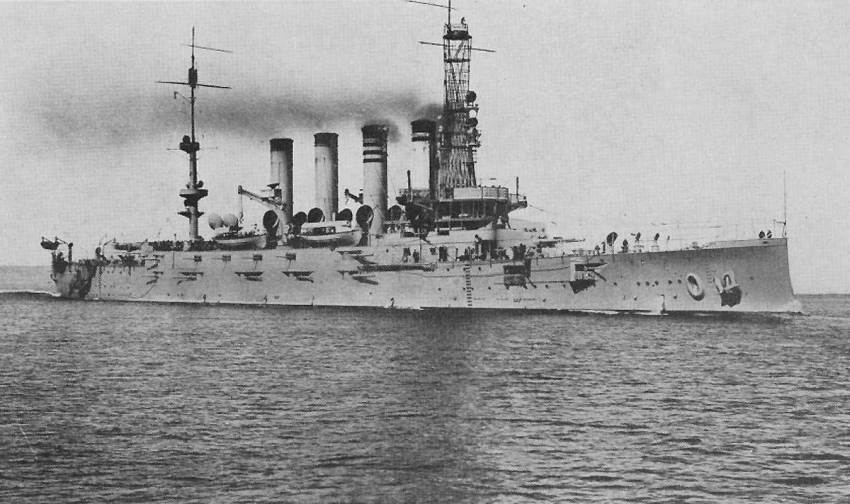
By 1904-05, all-big-gun battleships were on drawing boards in Japan, the United States and Britain. However, the British, pushed by Fisher – as First Sea Lord – added turbine propulsion, completed their prototype, Dreadnought, ahead of the rest, and extended the concept to an all-big-gun cruiser design. These ships, the Invincibles , were initially classed as armored cruisers – the ‘battlecruiser’ designation was not formally applied by the British until 1911. Exactly what Fisher intended has been debated. Beating the latest armored cruisers was one motive, demanding a significant step-up in fire power but no increase in armor. There was also the concept of such ships being a fast scouting wing, able to deliver heavy punch to the enemy battle-fleet.
This thinking was shared across the Admiralty. However, Fisher also felt the heavy gun had won the gun-vs-armor race. Because ships were going to be size-limited, primarily for cost reasons, he felt it better to put displacement into speed and massive guns. Heavy armor was unnecessary. So too was anything other than minimal lighter weaponry. As Norman Friedman observes, by 1915 Fisher even opposed the heavier secondary guns required for anti-destroyer work.
The crucial point is that Fisher felt that all heavy construction should go into such faster ships. As early as 1902 he was arguing that there was little distinction between armored cruisers and battleships. ‘The Armored Cruiser…is a swift battleship in disguise’. And this is the point: to Fisher, the evolved armored cruiser became a replacement for the battleship. As First Sea Lord from late 1904 he put a good deal of effort into trying to persuade the rest of the Admiralty and the Cabinet to agree. In a way, he had a point. A fast ship with monster guns could keep a safe distance while dealing out massive blows. Fisher was not the first to come up with this idea: the Italian naval designer Benedetto Brin had explored it in the 1870s.

However, while this gained ground in Fisher’s circles – a group dubbed the ‘Fishpond’, the rest of the Admiralty disagreed. All an enemy had to do was build faster ships with larger and longer-ranged guns. And ships with speed superiority on paper might not be able to choose the range, thanks to weather or a raft of other factors such as loss of speed due to damage, or operational issues such as hull fouling, break-down or damage. For these reasons, Admiralty thinking leaned towards armor. The obvious answer was the fast battleship. However, although designs were mooted as early as 1906, they were unacceptably expensive to British governments trying to constrain military spending.
In the end, Fisher never convinced either the Admiralty or the British government to authorize battlecruisers in number. The original three were a windfall; the 1904-1905 building program called for one battleship and three armored cruisers on the basis that Britain was under-strength in the latter. Before any were laid down, Fisher’s Committee on Designs produced the Dreadnought and its cruiser homologue, the Invincible – and so Britain got one all big-gun battleship and three all big-gun armored cruisers, later dubbed battlecruisers. But aside from the 1908 ‘naval panic’ with the ‘contingency’ program approved in August 1909, only one battlecruiser was then usually authorized in each annual schedule, and the type was abandoned altogether in the 1912 program Battlecruisers were not re-visited until Fisher’s return to the Admiralty in 1914.
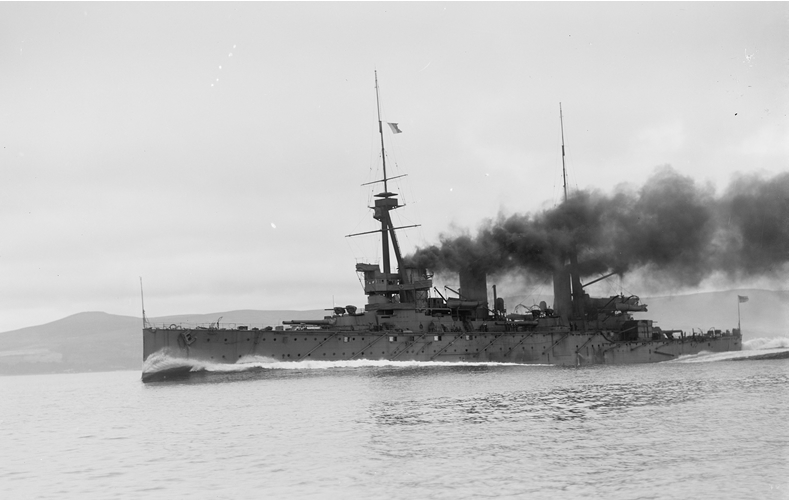
There was similar tension in the United States, where Britain’s Invincible design of 1905 seemed to meet aspects of Naval War College thinking about faster and more heavily armed cruisers. However, proposals from various American naval pressure groups, publications and the Naval War College during 1907-08 to build Invincible-class ships instead of new US armored cruisers were apparently an academic and profile-raising exercise. In fact, there was no chance even of indigenous US battlecruiser designs being authorized. More than one historical analysis argues that the US government had no clear naval policy at the time. More crucially, budgets were constrained. Congress typically authorized about half the number of battleships variously recommended by the General Board or the Bureau of Construction and Repair.

But in any case, while professional opinion within the US Navy was better-defined than in government – thanks in part to the Naval War College– thinking leaned towards heavily armed and armored battleships with moderate speed but good unrefuelled range. This was largely to meet US strategic commitments of the day, which focused on trans-Pacific interests. Such ships were intended to form a solid battle-line, to which the enemy would have to come if they were to defeat the United States at sea. This influenced the occasional foray into faster vessels. In 1910, the Chief Constructor of the Bureau of Construction and Repair, Rear-Admiral Washington L. Capps, organized six potential designs for fast all-big-gun armored cruisers, which had relatively modest speed by the British battlecruiser standards of that period – 25.5 knots – but with armor closer to contemporary US battleship scale. These were rejected by the General Board, which felt such ships were cruisers, and what the US Navy needed were more battleships.
Yet, within a few years, the US Navy was indeed pursuing the idea of battlecruisers – and, furthermore, battlecruisers with the massive fire-power, remarkable speed and thin armor that Fisher thought ideal. But this was for wholly US-developed motives, which diverged from Fisher’s reasoning. Proposals along the way included a surreal 1,250 foot long monster displacing over 60,000 tons. We shall pick up the story of how that happened, and how the latest mainstream British ideas about heavier armor then infused themselves into US battlecruiser thinking, in the next article.
The Virginius affair
I had wondered what had happened that caused the U.S. Navy to modernize after the Civil War, I know that the Army was neglected after the civil war and one year they were not paid because congress “Forgot” to appropriate money for payroll. The Army was outgunned by the Indians during the frontier wars, but the Americans wore down the Indians and forced them into the reservations. Virginius affair where the Spanish had a far better ironclad and there was nothing in the American inventory that could stop the Spanish from shelling New York City. the U.S Navy modernized far better than the U.S Army and they got embarrassed by the superior weapons that the Spanish had during the Spanish-American War. The U.S Navy perforned excellently during the war and expanded after the war with a slew of new ships that eventually became the “Great White Fleet” that President Roosevelt(Teddy) sent round the world to showcase the new American ships.


Following the Civil War, the United States Navy had languished as funding was diverted to efforts aimed at rebuilding a wounded nation. Only a small handful of ships were kept to serve as a coastal defense force. Elsewhere, nations had observed the power of Ironclads during the Civil War and hastily began building fleets of iron plated warships. Somewhat Ironically, the United States had largely abandoned the development of the ironclad following the War. While they relied on leftovers from the Civil War, other nations began introducing more advanced ironclad models. This caused the United States to fall behind in quality as well as quantity. The United States needed a reminder that the Navy was an important component in strengthening the country. That reminder would come in the 1870s when the country found itself at odds with Spain during the Virginius affair.
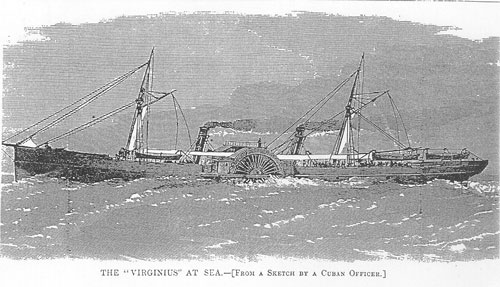
In 1868, war broke out in Cuba as landowners rebelled against Spain. Though the United States maintained stable relations with Spain, many in the country rose in support of the Cuban rebels. One such individual was John Patterson, an agent acting on behalf of the rebels. He desired to bring ammunition and supplies to the rebels. To accomplish this, he purchased a Confederate blockade runner named Virgin in 1870. Renaming the ship Virginius, she was used to transport supplies and men to Cuba in support of the rebellion. For three years, Virginius successfully delivered supplies to Cuba. Spain was aware of the ship and made many attempts to stop the ship.
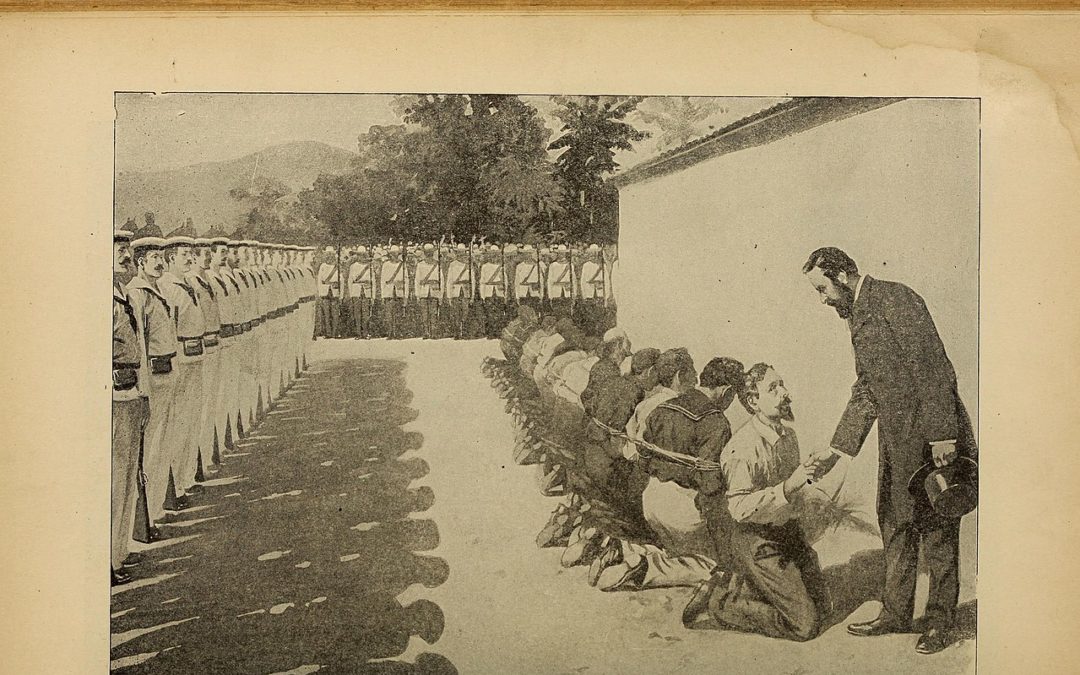
53 people were executed with several then being decapitated while the bodies were trampled under horses.

HMS Niobe was a “Screw-Slope” design like the ship pictured above.
Fortunately, the British Government had become aware of what was happening and dispatched a warship to Cuba to investigate. The warship, HMS Niobe, arrived at the city of Santiago where the executions were taking place. The commander of the ship, Sir Lambton Loraine, immediately ordered the Spanish to cease the executions. Loraine even went so far as to threaten to bombard the city if his demands were not met. Spain relented and halted the executions, sparing the surviving crew of the Virginius.
The United States public, upon learning of the executions, immediately began calling for war against Spain. Luckily, the United States Government was able to diplomatically resolve the crisis. They secured reparations for the victims as well as the return of Virginius and her crew. This victory in diplomacy served to quell public anger and prevent the out brake of further hostility.
While the American public was demanding war, the United States Navy was no doubt dreading the prospect. At the time, a Spanish ironclad was in New York Harbor awaiting repairs. A more modern ironclad, the United States Navy had no warship in its inventory capable of engaging it. This led to the sickening realization that if war had broken out, the Spanish warship could have begun shelling New York City with impunity, the US Navy powerless to stop it. Had Spain sent its fleet to battle, the US Navy would be fighting an enemy with a larger number of more advanced ships. The US Navy was surpassed by Spain both in quality and quantity. To make matters worse, the few warships the United States had were incapable of fighting abroad

U.S.S Manhattan, an example of a Civil War Era Ironclad that was retained for postwar service through the 1880’s.
The available ironclads were originally designed for operation in coastal areas and on rivers. They could hardly make the 100 mile journey to Cuba much less sail to Spain from across the Atlantic.
While diplomacy was hailed as the driving force that settled the Virginius Affair, the US Government no doubt noted the effect that gunboat diplomacy had in preventing further executions. Spain had continued executing captives despite demands by the United States. The executions only stopped when a British warship arrived and issued a threat that Spanish authorities could not ignore. Military power had succeeded where diplomacy had not. The United States must have realized the weight of power a blue water fleet would provide on the negotiating table.
Luckily, the lessons of the Virginius Affair had not gone unnoticed. George M. Robeson, then serving as the Secretary of War, determined that the United States Navy must begin rebuilding itself into a more capable force. He immediately began calling for a new fleet of warships capable of matching those found in foreign navies. However, he faced stiff opposition from the United States Congress. Through clever tricks and outright deception, Robeson would eventually get his fleet. His efforts laid the groundwork that saw the United States Navy rise from a poorly equipped coastal defense force into a large, modern blue water navy able to project United States power abroad.
When the Virginius affair first broke out, a Spanish ironclad—the Arapiles—happened to be anchored in New York Harbor for repairs, leading to the uncomfortable realization on the part of the US Navy that it had no ship capable of defeating such a vessel. US Secretary of War George M. Robeson
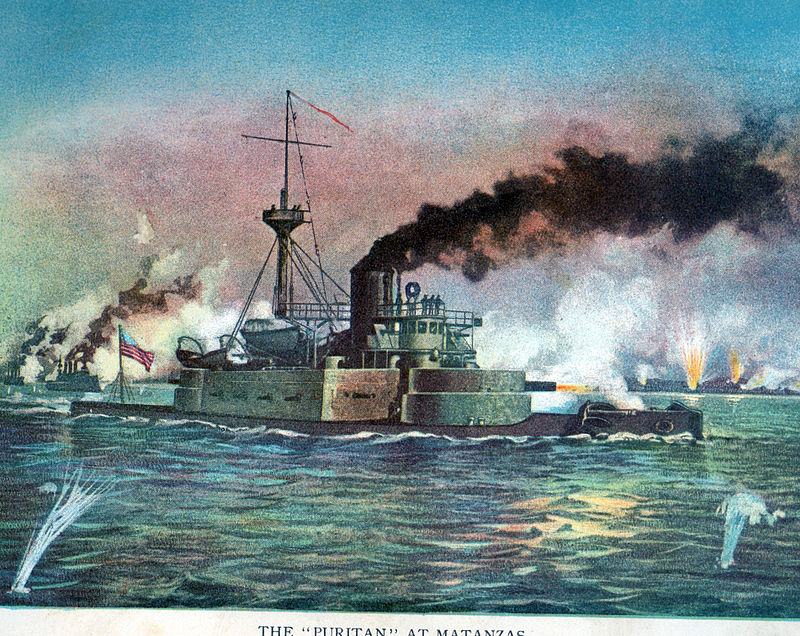
U.S.S Puritan in action during the Spanish American War in 1898
believed a US naval resurgence was necessary. Congress hastily issued contracts for the construction of five new ironclads, and accelerated its existing repair program for several more.USS Puritan and the four Amphitrite-class monitors were subsequently built as a result of the Virginius war scare.All five vessels would later take part in the Spanish–American War of 1898.

Amphitrite Class Monitor U.S.S Monadnock crossing the Pacific on the way to the Philippines
Categories
Happy Fathers Day!
 Yeah I know but I could not help myself! Grumpy
Categories
One of my loyal supporters!
Categories
How the navy cranks one off

Categories
Commentary: I Need an AR-15
Commentary: I Need an AR-15
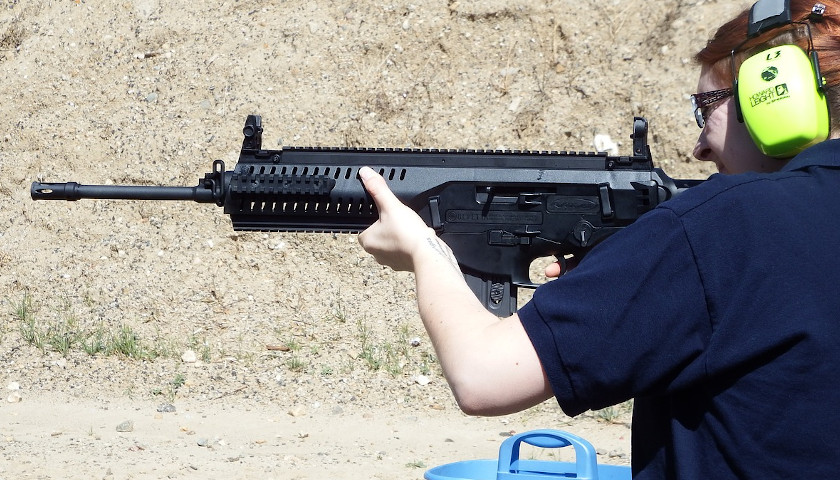
I don’t need an AR-15 for hunting: It’s not even legal to take a deer with one in my state—the caliber is too small. I also don’t need an AR-15 for self-defense, though I’d want to have one if someone broke into my house. And I certainly don’t need one just because it’s a beautiful piece of engineering. I need an AR-15 because the government doesn’t want me to have one.
Governments hate private weapons, and have always hated them. In Europe, traditionally only gentlemen (that is, originally, only knights) were allowed to carry a sword. In Japan, the samurai’s right to carry his sword came along with the right to kill any commoner who offended him—uchisute or “strike and abandon.” In Soviet Russia, private weapons were illegal, as they still are in China. And when Hitler’s Germany swept through Holland, Belgium, and France in 1940, they put up notices giving the locals 48 hours to hand over private firearms or face death (by shooting).
When England prepared to defend herself against a threatened Nazi invasion, the Home Guard was armed in part with private weapons, as well as by rifles donated by Americans, who were the only people in the world with guns to spare. These were among the weapons confiscated and destroyed when Britain banned firearms in 1997.
There are only two forms of government: One where the people are afraid of the government, and one where the government is afraid of the people. Whoever has the weapons is the ruling class, and there is only one case in all history, only in America, that the ruling class has actually been the common man.
Controlling Guns, Controlling People
Our federal government has been trying to undo this remarkable fact for at least the last 100 years. The first serious blow came in 1934, justified by the rise of organized crime at the time. As I outlined in a recent piece on plea bargains, organized crime was a midway point in the cascade of unintended consequences from Prohibition. The government thought the best way to keep machine guns, short rifles, and silencers out of the hands of the mafia would be to make a national registry and require anyone buying one of these items to pay a $200 tax.
It may come as a shock that organized crime largely ignored the new registration requirements. And neither were they punctilious in the matter of paying taxes. For law-abiding citizens in 1934, however, when the average annual income was $1,600, the National Firearms Act had the practical effect of restricting ownership of certain weapons to the wealthy and, of course, to the government.
When viewed from the standpoint of limiting crime, the National Firearms Act is patently ludicrous: Requiring criminals to register and pay taxes on the weapons with which they are about to commit murder, or else forcing them to acquire these weapons illegally is crazy. When viewed from the standpoint of controlling people, however, the NFA makes perfect sense.
Every action taken by the federal government has one purpose in mind: To protect the government from its citizens by transferring power from those citizens to the government. It is a striking and horrifying fact that, in this eternal quest, criminals and the government are in perfect alignment. Criminal acts of a certain magnitude are necessary in order to make emergency government measures plausible.
Criminals Are Exempt
The government never lets a crisis go to waste—just try replacing the word “crisis” with “crime” to get an accurate picture of the history of gun control. In a twisted quid pro quo, the government has protected professional criminals from the laws it passes in answer to their crimes.
If you have any doubt on this score, a 1968 Supreme Court ruling confirmed that felons are exempt from registration under the National Firearms Act. And this is not a joke: Citing the Fifth Amendment’s protection against self-incrimination, the court ruled in Haynes v. United States that only noncriminals were required to register NFA weapons and pay the tax.
The government’s legal gymnastics and lies concerning firearms laws are staggering. In 1939, the government argued in court that short-barreled shotguns could be regulated because such guns are not military weapons, and only military weapons are protected by the Second Amendment. The NFA, they explained, was purely a revenue measure conducted by the Department of the Treasury. (The very popular “it’s just a tax” argument.) The Supreme Court agreed.
But in 1968, the federal government banned importing military weapons on the grounds that the Second Amendment only protects guns with a “sporting purpose.” The Supreme Court agreed with that as well. In 1986, the government banned the manufacture of full-automatic and select-fire weapons. And since the only way to get one of these guns today is to buy one made and registered before 1986, a full-auto equivalent of the AR-15 will now cost you around $50,000. So unless you’re a wealthy person, or a member of the police (who can buy a new one for what it’s actually worth—around $1000) you can forget it.
The Last Resort Exists
The real problem is that a government with a monopoly on force might do anything. They might respond to your home-schooling plan by confiscating your children, as happened in Germany. They might jail you for making an offensive joke on your Facebook page, as happened in Britain. They might use a pandemic to force you to close your business indefinitely, as happened in New York. A man disarmed by his government is not a citizen—he’s a subject.
The individual American’s best friends in this fight are those states and counties that refuse to implement unconstitutional federal laws. Montana started the ball rolling in 2009 with its Firearms Freedom Act, and numerous other states subsequently passed similar laws. These laws, of course, were ruled out of order by the federal government, but it ultimately remains up to the states to insist that the federal government is operating outside its authority.
The question regarding dangerous weapons is not whether it’s safe for citizens to own them, but whether—or why—we might consider it safe for the government to own them. When the FBI descended on Waco, they managed to kill more people in one day than the most prolific serial killer they ever caught had killed in his whole career. The Branch Davidians at Waco were actually gun dealers and were well-armed, but of course the FBI brought a tank. The FBI should not have had a tank to bring.
The current administration in Washington, D.C. is not elected and is not legitimate. As if confirming this fact, they’ve surrounded themselves with barbed wire and soldiers carrying machine guns. In so doing they implicitly acknowledge the danger posed—to them—by an armed and angry population. An AR-15 is not just a tool of last resort: It is a declaration that the last resort exists, a reminder that there are outer limits to the abuse of power.